







Abstract
This study examined attitudes toward marriage, perceptions of partner availability, and attitudes toward interracial dating among Black male and female college students at two historically Black colleges/universities (HBCUs) and one predominately White institution (PWI). Most students had positive attitudes toward marriage, with women significantly more favorable than men. While both men and women reported insufficient romantic partner options, female students at PWIs were significantly more likely to report insufficient partner options than male students and those at HBCUs. Most students (72.6%) were favorable toward interracial dating, but males at HBCUs had more positive attitudes. However, students at HBCUs were more unsupportive of interracial dating than those at PWIs, and females at both types of institutions reported more unfavorable attitudes toward interracial dating than males. Findings reveal gender and contextual differences in attitudes and suggest a need for more nuanced studies of Black college student attitudes.
Introduction
Life-course approaches suggest discrete developmental stages as individuals age (Macmillan & Copher, 2005). Recently, Arnett (2015) focused renewed attention on young adults as they emerge into adulthood. During this time of transition, young adults are thought to retain the life goals of their parents, including the traditional trajectory of committed relationships, marriage, and childbearing (Barber, 2001; Hall, 2006; Manning, Longmore, & Giordano, 2007; Sassler, 2010; Whitehead & Popenoe, 2001). Young people see marriage as a life choice, rather than a requirement for adulthood (Furstenberg, 2007), and the vast majority value marriage and think it is important to get married someday (Cohn, 2013; Riggio & WeiserScott, Schelar, Manlove, & Cui, 2009). College students express moderately positive views to marriage in general (Riggio & Weiser, 2008).
This model of adulthood, however, is more ideal than real, and changes have been particularly pronounced in the Black community. For example, 36% of Blacks 25 years and older were never married in 2012, compared with 9% in 1960, with rates particularly low among poor Blacks (Wang & Parker, 2014). Despite these declines in marriage rates, 58% of Black Americans report that marriage is very important if individuals plan to spend their lives together (Wang & Parker, 2014). We know relatively little, however, about the attitudes of young Black college students’ attitudes toward marriage and partner choice.
Rates of college enrollment among Blacks have risen, especially among Black women (National Center for Education Statistics, 2004). Despite this increase, most research on Black family development has tended to concentrate on the struggles of poor Black families (Landry, 1987; G. Wilson & Roscigno, 2010; G. Wilson, Sakura-Lemessy, & West, 1999; Witherspoon & Speight, 2009). For example, the decline in marriage rates for Blacks has been attributed to economic and social factors, including higher rates of incarceration, lower educational achievement in high school, and lower rates of college matriculation (Haskins, 2009; Holzer, 2009; Miller & Browning, 2000; W. J. Wilson, 1996) among Black males. Black college students, however, are quite a different population with their potential to enter the middle class and secure higher social and economic positions; these young adults are poised to build strong marriages and families, but a specific focus on their attitudes to marriage and mate selection is rare.
Because of the importance of forming intimate relationships at this stage, we investigate attitudes of Black college students toward marriage, partner availability, and interracial dating. We also compare attitudes by gender and by institution type (predominately White institution [PWI] or historically Black college or university [HBCU]).
Blacks and Marriage
While marriage rates have gone down among all Americans, they have dropped even lower among Blacks. In 1960, 61% of all Black and 74% of all Whites in the United States were married; by 2010, only 31% of Blacks were married compared with 55% of Whites (Hummer & Hamilton, 2010; Pew Research Center, 2010; U.S. Census Bureau, 2012). Gender differences exist: About 35.6% of Black women were married, compared with 55.1% of White women (U.S. Census Bureau, 2012). Similarly, marriage rates for Black men trail behind those of their White counterparts (Chaney & Marsh, 2009; Lichter, McLaughlin, Kephart, & Landry, 1992).
Black women, relative to other demographic groups, are more likely to want to marry (Pew Research Center, 2010), but attitudes toward the importance of marriage generally and relative to career vary by age and education (King, 1999). Similarly, Black men have positive attitudes to marriage overall, but younger, less educated, and unmarried men have more negative attitudes (King, 2013). Black women, whose upward mobility has been more marked than that of Black men (A. T. Davis, 2009), face particular challenges in finding suitable partners. Both lower-income Black women and their college-educated counterparts converge at this critical point—the seeming absence of adequate numbers of potential mates (L. E. Davis, Williams, Emerson, & Hourd-Bryant, 2000; Holland, 2009). For both groups of women, finding stable, long-term marital partners with whom to share their lives, raise their children, and find emotional and financial support is too often an unrealized dream. Partner availability, therefore, is of major importance.
Partner Availability
The availability of suitable mates affects the likelihood of marriage. This “pool of eligibles” is the number of economically and socially viable mates available to women in a given geographical locale at any given time (W. J. Wilson, 1996). Black women report fewer available partners than Black men (Medley, Reviere, Stackman, Gipson, & Manning, 2011), and as they move up the educational ladder in comparison with Black males, they report a smaller and smaller group of available partners (Dixon, 2009; McDaniel, DiPrete, Buchmann, & Shwed, 2011; Saunders, Davis, Williams, & Williams, 2004). Women attaining baccalaureate and higher degrees typically seek mates with similar education (Crowder & Tolnay, 2000; King & Allen, 2009; Schoen & Weinick, 1993). For these women, the lack of college-educated men increasingly means that they must be willing to wait longer to marry (Goldstein & Kenney, 2001), if they marry. Black males with higher levels of education are more likely to marry than those with less education (Wong, 2003). While many strong, stable marriages occur with partners of lesser educational or achievement levels (Lichter, Anderson, & Hayward, 1995), the preference in marriage is often for greater homogamy. Other options include considering alternatives to their traditional pool of eligibles, including partners from a different race, an option typically more available to Black men than Black women. We investigate attitudes to interracial dating here.
Interracial Dating
Interracial romantic relationships have become a topic of increasing interest in academia due to increased interracial interaction, more positive racial attitudes, and reduced social distance between racial groups. Current national surveys indicate that about 85% of people ages 18 to 29 approve of interracial dating, and few young Americans say that similar racial and ethnic backgrounds are important in their choice of mates (Wang & Parker, 2014). Data from national surveys and focus groups suggest that about 40% of college-aged students have been in a relationship with someone outside of their race (Knox, Zusman, Buffington, & Hemphill, 2000). The main predictors of interracial dating are education and meaningful social contact with people of another race (Clark-Ibanez & Felmlee, 2004; Jacobsen & Johnson, 2006).
Blacks’ interracial dating patterns and attitudes have been of particular interest because of the significance of racial identity in American society. Lopez (2004), in a study of first-year college students, found that the majority of Black students supported the idea of dating interracially, consistent with Pew Research Center (2010) findings that about 88% of Blacks ages 18 to 29 support interracial marriage.
As Blacks reach higher levels of education, they are more likely to meet and date interracially or interethnically. Greater exposure to different groups of people generally leads to more comfort and improved relationships with people from diverse backgrounds (Pelligrew & Tropp, 2000). For example, Black males who attended college had substantially higher approval ratings of interracial marriage than Black males who had not attended or graduated from college (Gullickson, 2006; Qian, 1997). Black women of all ages, for a number of reasons, report less positive views of interracial relationships (Childs, 2005).
College students’ attitudes and behavior toward interracial dating varies, however, based on the characteristics of the institution in which they matriculate. Harris and Kalbfleisch (2000), for example, found at one Southern university that 85% of the Black men were hesitant about dating interracially. Childs and Laudone (2005) noted in a similar study that for Blacks in one predominantly White college, dating outside one’s race resulted in isolation from the small Black student population, an unwelcome situation for some students, leading to less willingness to pursue such relationships. In a comparison of Black students at HBCUs and PWIs, researchers (Field, Kimuna, & Straus, 2013) found that students at the HBCU were more disapproving of cross-group relationships than those at the PWI; furthermore, students at the HBCU reported that their parents would be more disapproving. There were no gender differences. Black students at a PWI who were more socially distant from the larger Black population reported more favorable attitudes to interracial relationships than the larger Black student body (Smith & Moore, 2000).
Black college students are often overlooked in research on college students and on relationships; research tends to detail findings on White students or students of unspecified race (assumed, therefore, to be White). Furthermore, most studies on Black college students take place on predominately White campuses even though racial and other attitudes operate differently in different college settings (Chavous, Harris, Rivas, Helaire, & Green, 2004). Here, we compare student attitudes at two types of schools, HBCU and PWIs as research suggests that experiences vary for Black students depending on school type. For example, stress levels among college students varied by school type, gender, and race, and Black students reported lower levels of social support at a PWI compared with students at an HBCU (Neggen, Applewhite, & Livingston, 2007). Black males also differed in internalized racial attitudes, as well as physical and social self-wellness depending on what type of school they were attending (Spurgeon & Myers, 2010), and reported higher levels of love and friendship at an HBCU (Spurgeon, 2009). Importantly, here as we saw above, college students’ attitudes and behaviors toward interracial dating depend on the characteristics of the institution (Childs & Laudone, 2005; Field et al., 2013; Harris & Kalbfleisch, 2000; Smith & Moore, 2000).
Accordingly, it is clear that type of institution is related to gender and racial attitudes, which are also related to attitudes toward interracial dating and romantic relationships in general. Few studies to date have been able to examine these important factors in one investigation, and fewer yet are the number of studies that have been able to centrally focus on these complex relationships among Black college students. We contribute to the existing literature by examining the attitudes of Black college students by gender and by type of institution (HBCU or PWI).
In sum, in investigating the multidimensional nature of romantic relationships, we simultaneously consider whether the perception of a sufficient or insufficient pool of eligibles and attendance at an HBCU or PWI affect attitudes toward interracial dating for male and female Black college students; a similar focus among Black college students, particularly focusing on the potentially interactive effects of perceptions of partner availability, has not yet been reported in the literature.
Research Questions
We address a gap in the extant research by focusing on how attitudes to marriage and interracial dating are related to perceptions of partner availability. In this study, we explore the following research questions:
Method
After IRB approvals, we gave students in introductory sociology classes the opportunity to take a survey regarding attitudes toward interpersonal relationships, including but not limited to, the importance of marriage, perceptions of suitable partner options and availability, and interracial dating. Students were asked to voluntarily complete the survey either online or in class. As there were no personal identifiers on the questionnaire, all collected data were anonymous and confidential.
Sample
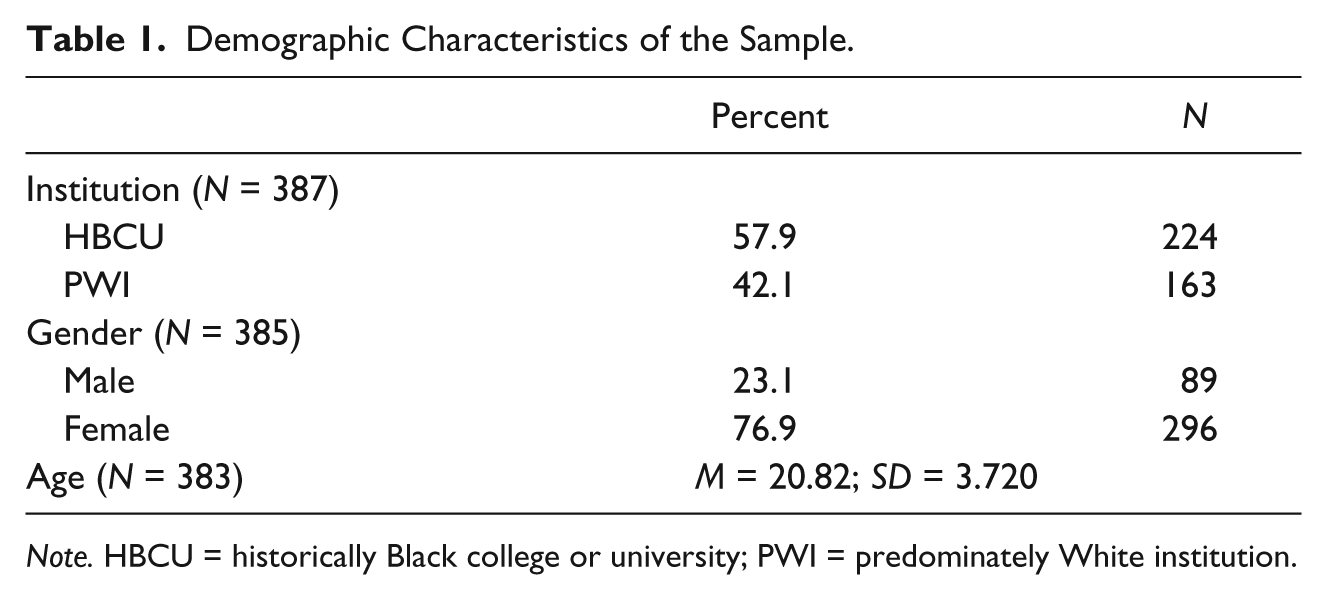
Our nonprobability sample was composed of 387 self-identified Black college students from both predominately Black (n = 224) and White (N = 163) colleges (see Table 1). Three institutions were included in the sample here because of the availability to the authors; two authors were affiliated with Howard University, a co-ed institution in Washington, DC. Howard University has a student population that is disproportionately female (approximately 70%). The second HBCU in the sample was Morehouse College, which is the only all-male HBCU of higher education in the United States, and was included to provide a larger sample size of Black college males for analysis in this study. Both HBCU institutions draw from a national and international pool of applicants. The PWI included here was the University of Tennessee at Chattanooga, a co-ed institution, which was also included because of the availability to the authors. The University of Tennessee at Chattanooga draws mainly from a single state with a largely southern applicant pool and also has a larger female than male student population, though the disparity is smaller (55.2% compared with 44.8%).
Demographic Characteristics of the Sample.
Note. HBCU = historically Black college or university; PWI = predominately White institution.
The response rate for this sample was approximately 37% including all the students who could have answered the survey online as well as on paper. The majority were women (N = 296; 76.9%); the mean age of the sample was 20.82 (SD = 3.72 years). All respondents identified as undergraduates and Black/African American except 5.2% (N = 20) who selected bi-racial/mixed race or ethnicity. All were unmarried.
Questionnaire
The questionnaire contained 79 questions from a larger study of emerging adults; only a subsection of five of those questions were analyzed here. The full survey included demographic questions and sections on future career and relationship goals, relationships with others, beliefs about children, the student’s relationship with their parents, and parental educational levels. Most of the questions were quantitative with closed-ended answer options.
Variables
Attitudes toward marriage were assessed using two questions with 5-point Likert-type scale response options. The first question asked, “What do you think about the idea of marriage?” Respondents indicated a range from “strongly favorable” to “strongly unfavorable.” The second question asked, “How interested are you in getting married?” Respondents indicated a range from “very interested” to “very opposed.” These questions were combined to create a scale score (Cronbach’s α = .858) and recoded to three categories reflecting “favorable attitudes toward marriage,” “neutral attitudes or undecided toward marriage,” and “unfavorable attitudes toward marriage.”
Partner availability was assessed with a question asking respondents to indicate their feelings about availability using a three-item scale (i.e., there are not enough available men who would interest me, there are not enough available women who would interest me, or there are enough available men or women who would interest me). This variable was then recoded into two categories reflecting the belief in enough available partners and not enough partners (“there are enough available men/women who would interest me” and “there are not enough available men/women who would interest me”).
Two questions assessed attitudes toward interracial dating. One question, “How do you feel about interracial dating?” used a 5-point Likert-type scale to measure degree of positive or negative attitudes (“I am strongly positive” to “I am strongly negative” toward interracial dating), as well as the option “I am undecided about interracial dating.” Respondents were also asked if they would personally date interracially, with the options given of “yes,” “no,” and “I don’t know.” These questions were recoded and collapsed to indicate “favorable,” “undecided,” and “unfavorable” attitudes toward interracial dating.
Findings
Attitudes Toward Marriage by Gender and Type of Institution
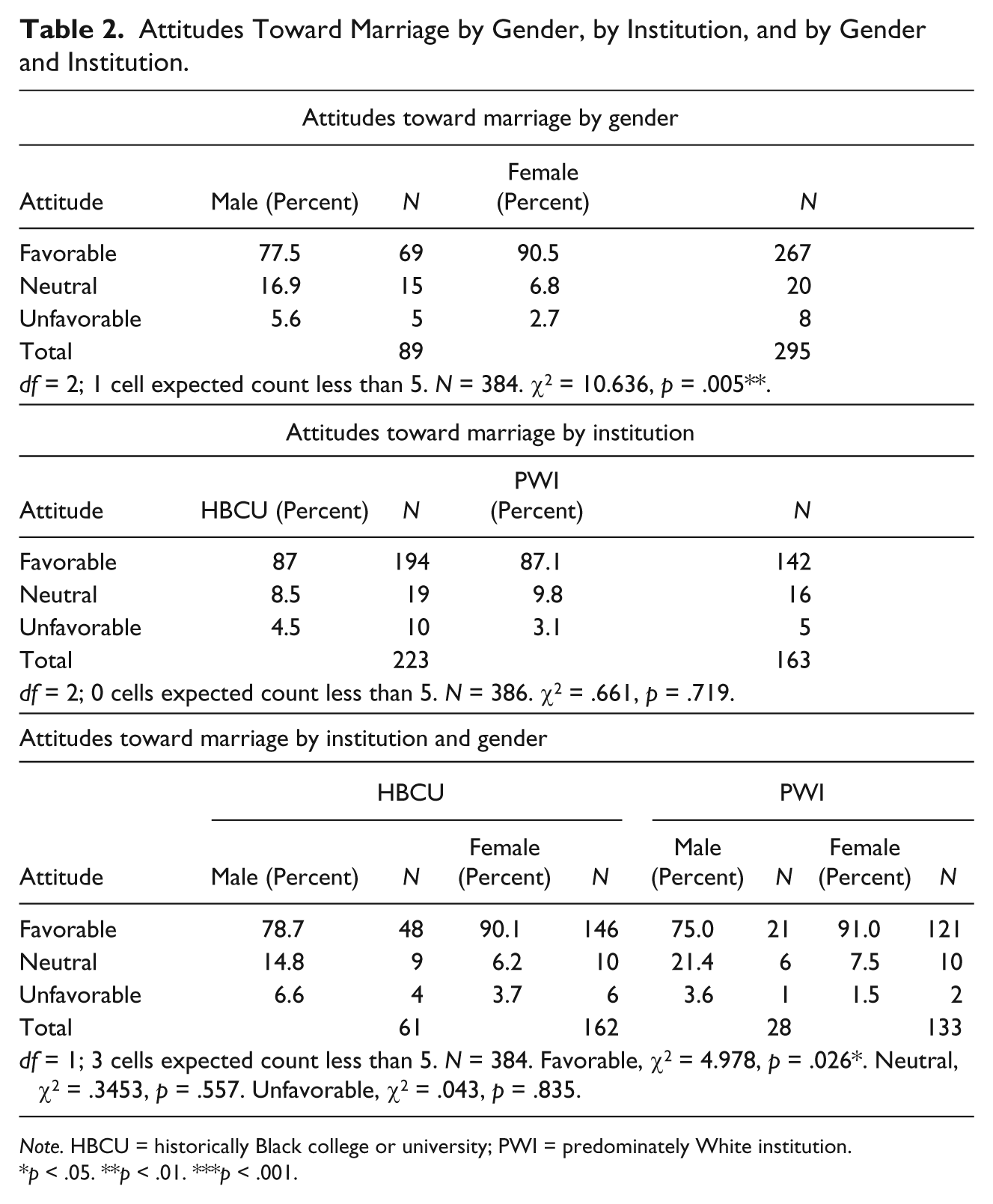
The majority of the students surveyed held favorable attitudes toward marriage, though our chi-square analyses indicated that these attitudes differed significantly by gender (χ2 = 10.636, p = .005). According to Table 2, the majority of students (90.5% of females and 77.5% of males) reported a strongly favorable attitude toward marriage, and these differences were somewhat large. Male and female students were fairly similar in reporting attitudes toward marriage as unfavorable (5.6% and 2.7%, respectively). Another marked difference was found among the students who reported neutral or undecided attitudes, with males (16.9%) reporting neutral or undecided more than females (6.8%).
Attitudes Toward Marriage by Gender, by Institution, and by Gender and Institution.
Note. HBCU = historically Black college or university; PWI = predominately White institution.
p < .05. **p < .01. ***p < .001.
When looking at student attitudes toward marriage by institution, again, the majority of the students held favorable attitudes toward marriage. According to Table 2, the majority of HBCU and PWI students reported very similar favorable attitudes toward marriage (87.0% and 87.1%, respectively). Students who were neutral or undecided toward marriage were also similar (8.5% HBCU and 9.8% PWI), as were students who reported attitudes toward marriage as unfavorable (4.5% HBCU and 3.1% PWI). Accordingly, these differences in attitudes by institution type were not significant (χ2 = .661, p = .719).
Examining overall attitudes toward marriage by gender and institution, females at both types of institutions, HBCUs and PWIs, reported more favorable attitudes toward marriage (90.1% and 91.0%, respectively), than men at both types of institutions (78.7% and 75%, respectively), and these differences were statistically significant (χ2 = 4.978, p = .026). Table 2 also shows that students with neutral/undecided (χ2 = .3453, p = .557) and unfavorable attitudes (χ2 = .043, p = .835) toward marriage were not statistically different by institution and gender.
Attitudes Toward Partner Availability by Gender and Institution
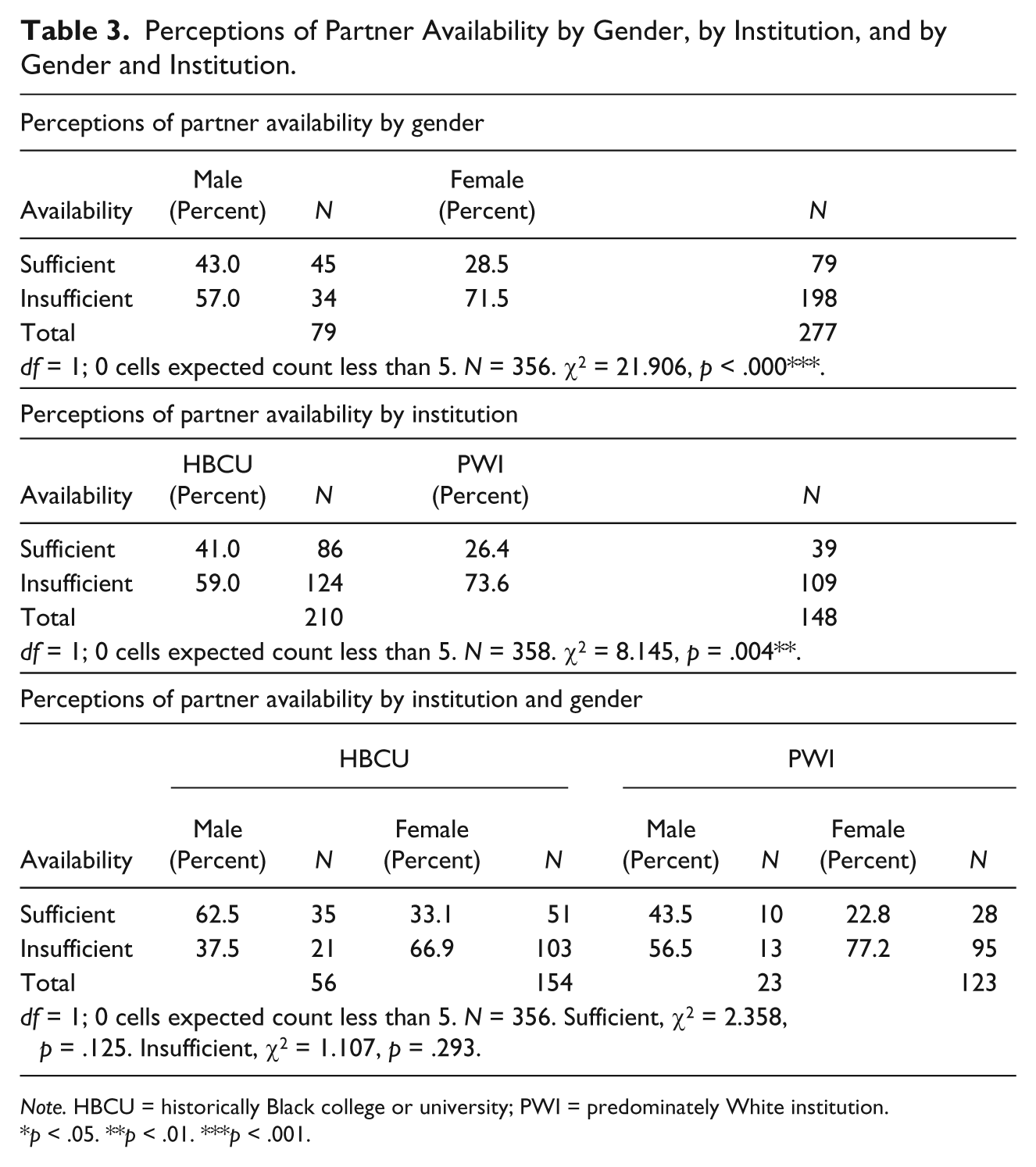
In examining the degree to which Black college students felt they had sufficient chances to find suitable partners (partner availability) in Table 3, we looked at differences by gender and then by institution. Black student belief in partner availability differed significantly by gender (χ2 = 21.906, p < .000); males were more likely to report sufficient partners available (43.0%), while only 28.5% of female students felt the same. There were also more females who felt that partner availability was insufficient (71.5%), compared with males (57.0%).
Perceptions of Partner Availability by Gender, by Institution, and by Gender and Institution.
Note. HBCU = historically Black college or university; PWI = predominately White institution.
p < .05. **p < .01. ***p < .001.
With regard to comparisons by institution type, students’ perceptions of sufficient partner options were significantly related to being at either an HBCU or a PWI, where 41% of HBCU students reported sufficient partner availability compared with only 26.4% at PWIs (χ2 = 8.145, p = .004). However, there was a trend that more than 50% of students at both types of institutions reported they did not think there were enough suitable partners available.
Looking at differences by gender and institution reveals similar findings. Following the above pattern, 62.5% of male students at HBCUs felt that they had sufficient partner options, compared with 33.1% of female students. In contrast, 37.5% of male students and 66.9% of female students at HBCUs believed that there are insufficient options for partners, though these differences were not significant (χ2 = 1.107, p = .293). Gender differences also existed for the PWI students; however, the response pattern was different. At the PWI, both male and female students were more likely to report insufficient partner availability. However, females reported insufficient partners at a higher rate (77.2%) compared with 56.5% of men who reported insufficient partners, though these differences were not significant (χ2 = 2.358, p = .125; see Table 3).
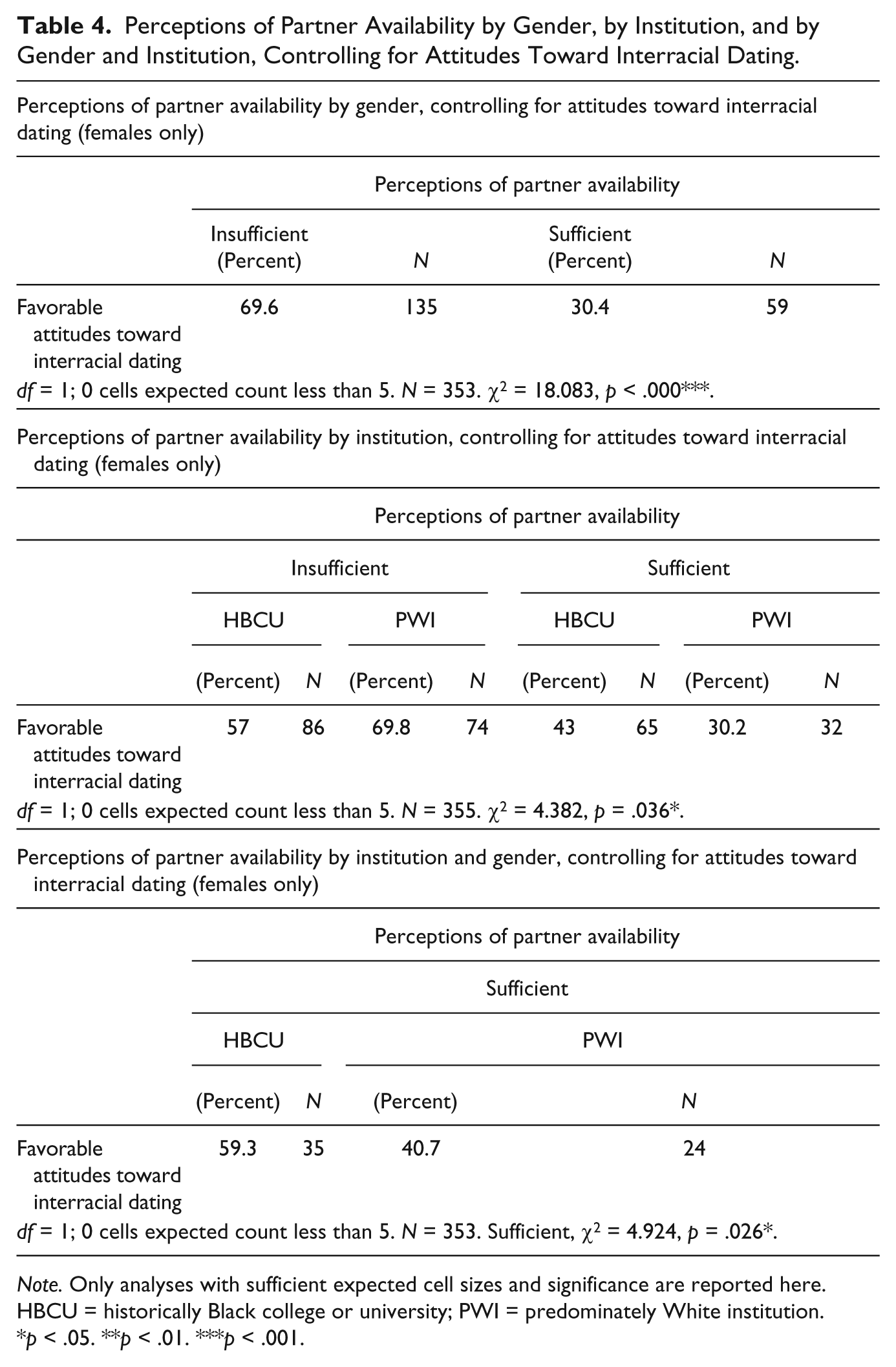
Post hoc analyses of attitudes toward partner availability by gender and institution, while controlling for attitudes toward interracial dating, were also conducted to determine whether any interrelationships between partner availability and interracial dating might exist. Specifically, the post hoc analyses here sought to uncover whether student’s attitudes toward interracial dating might be determined at least in part by their perceptions of partner availability; we investigated whether students who felt that their potential dating pool was limited or insufficient would be more or less likely to be favorable toward interracial dating. Also, we examined whether students who were favorable toward interracial dating were more likely to feel that there were sufficient partner options, considering that students who were open to dating partners of both the same and different racial or ethnic categories might perceive more sufficient dating partners than those students who would restrict themselves to the same racial and ethnic groups.
Most of the remaining cells in these crosstabs post hoc analyses had too few expected counts to definitively determine whether attitudes toward partner availability by gender, by institution, and by gender and institution, were affected by attitudes toward interracial dating, regardless of their attitudes toward interracial dating; this was of pronounced significance for male students, whose attitudes should be re-evaluated with a larger sample in the future as the expected cell sizes were too small to continue with any interpretations of findings for males.
The expected counts for female students were also very small for nearly all these post hoc analyses, but there is some very limited and preliminary support for the suggestion that partner availability and attitudes toward interracial dating might be interrelated among female students, as shown in Table 4. Specifically, female students who reported favorable attitudes toward interracial dating also felt that there was a limited dating partner pool (69.6%), but the directionality of this association is unclear; female students might be favorable toward interracial dating because they believe their dating pool is of insufficient size, or it could be that because female students think that there are not enough partners available, they are more likely to be favorable toward interracial dating as a way to increase their options for dating partners (χ2 = 10.083, p < .000).
Perceptions of Partner Availability by Gender, by Institution, and by Gender and Institution, Controlling for Attitudes Toward Interracial Dating.
Note. Only analyses with sufficient expected cell sizes and significance are reported here. HBCU = historically Black college or university; PWI = predominately White institution.
p < .05. **p < .01. ***p < .001.
Similar findings were revealed for the institutional analyses, as shown in Table 4. HBCU students who reported favorable attitudes toward interracial dating felt that there were insufficient dating partner options as well (57.0%), but the directionality of this association is again unclear; HBCU students might be favorable toward interracial dating because they believe their dating pool is of insufficient size, or it could be that because HBCU students think that there are not enough available partners, they are more likely to be favorable toward interracial dating as a way to increase their options for dating partners. The percentage of students at the PWI who believed there were insufficient partner options was much larger than those who felt that they had sufficient partner options (69.8% compared with 30.2%, respectively), and again, these results can be interpreted in a similar manner as those of the HBCU students (χ2 = 4.382, p = .036).
The analysis of partner availability by gender and institution, controlling for attitudes toward interracial dating, revealed some unexpected findings. Female HBCU students were more favorable toward interracial dating than those at PWIs (59.3% and 40.7%, respectively), but felt that there were enough available dating options (χ2 = 4.924, p = .026), which is a reversal of the trend seen earlier when examining gender and institution each alone. At this point, these findings cannot be explained without further and deeper investigation of these variables and their interrelationships, which should be examined more closely in future investigations. However, it is important to recall the limited cell sizes and that there were not enough cases available in these post hoc analyses to provide definitive answers, and accordingly, these findings should be interpreted with caution.
Attitudes Toward Interracial Dating by Gender and Institution Type
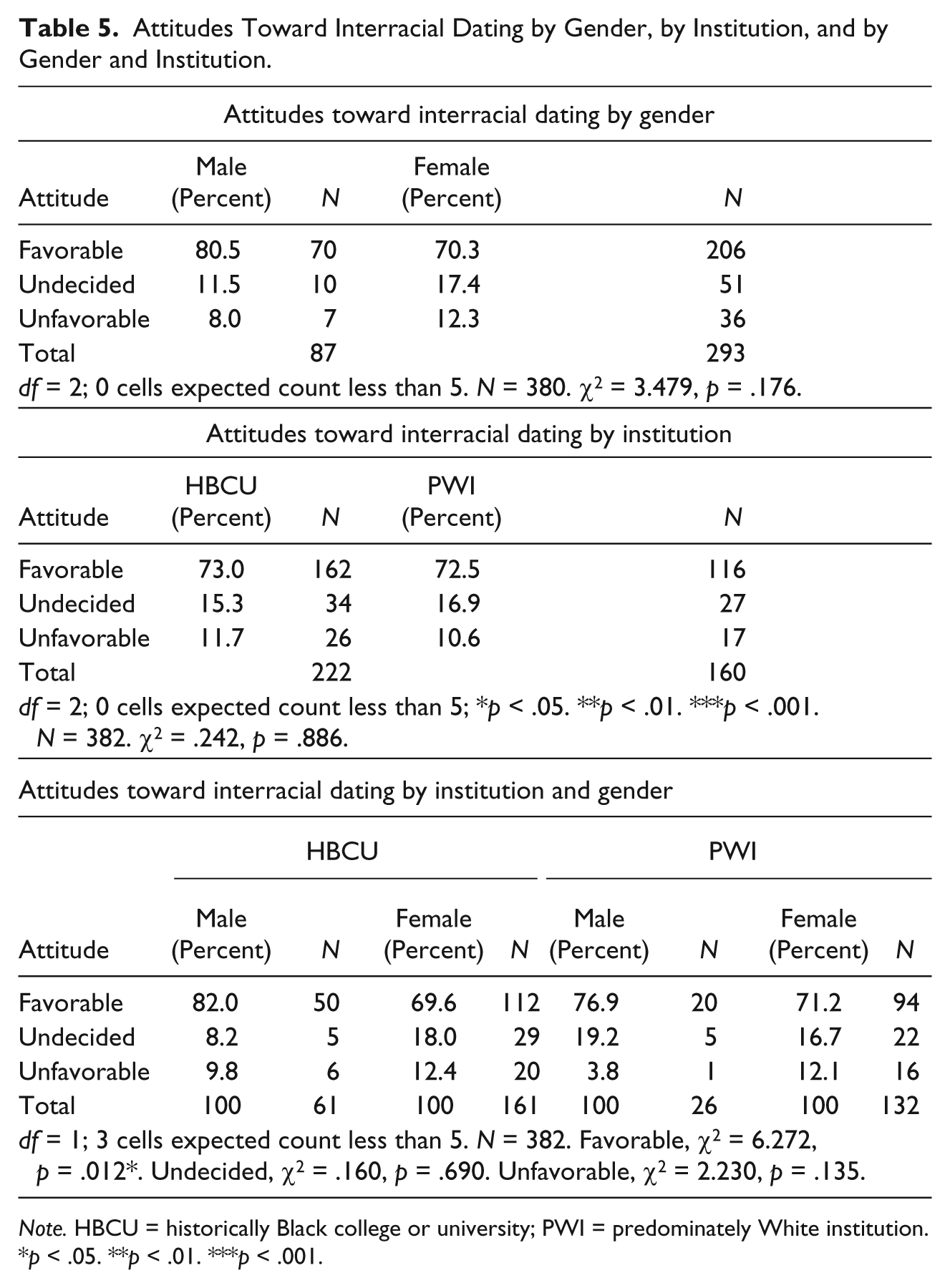
As shown in Table 5, a significant majority of the students (72.6%) were favorable toward interracial dating, while only 11.3% were opposed; 16.1% of the sample reported being undecided about interracial dating. Male students (80.5%) reported more favorable attitudes toward interracial dating than female students (70.3%). Females reported more unfavorable attitudes (12.3%) than males (8.0%) and more undecided feelings than males (17.4% compared with 11.5%, respectively). However, these differences by gender were not significant (χ2 = 3.479, p = .176).
Attitudes Toward Interracial Dating by Gender, by Institution, and by Gender and Institution.
Note. HBCU = historically Black college or university; PWI = predominately White institution.
p < .05. **p < .01. ***p < .001.
When looking at attitudes by institution type, we found that similar rates of students at HBCUs (73.0%) and PWIs (72.5%) were in favor of interracial dating. Students that were undecided were also similar by institution with 15.3% of students at HBCUs and 16.9% of students at PWIs reporting they were unsure or neutral about interracial dating. Students at HBCUs were slightly more likely to report being unfavorable toward interracial dating than those at PWIs (11.7% compared with 10.6%, respectively). However, none of these differences by type of institution were significant (χ2 = .242, p = .886).
Observing differences in attitudes toward interracial dating by both gender and institution revealed some interesting findings. Males and females did have significantly different attitudes toward interracial dating by type of institution (χ2 = 6.272, p = .012), with males more likely to report favorable attitudes than females at both types of institutions; 82.0% of males and only 69.6% of females at the HBCUs reported favorable attitudes compared with 76.9% of males and 71.2% of females at the PWIs. As can be seen in Table 5, at both types of institutions, males were more likely to be favorable toward interracial dating than females, and females at the PWI were more favorable than those at the HBCUs.
In another interesting dynamic, females at HBCUs (18.0%) were much more likely than males (8.2%) to be undecided toward interracial dating, but males at PWIs were somewhat more likely to be undecided (19.2%) compared with females (16.7%), though these differences were not significant (χ2 = .160, p = .690). Females at HBCUs reported only slightly higher unfavorable attitudes toward interracial dating than those at PWIs (12.4% compared with 12.1%, respectively), but males at HBCUs more often reported the same unfavorable attitudes toward interracial dating than those at PWIs (9.8% compared with 3.8%), though this was also not significant (χ2 = 2.230, p = .130). This last comparison of unfavorable attitudes, though, should be taken cautiously as only one male at a PWI reported being unfavorable toward interracial dating.
Discussion
First, we investigated attitudes toward marriage. As expected (Pew Research Center, 2010), women reported more favorable attitudes to marriage than men in this sample. There were no differences by institution. However, women were significantly more likely to be favorable toward marriage than men at both HBCUs and PWIs. Second, we looked at perceptions of partner availability. Women reported significantly fewer available partners; men reported a sufficient number of partner options. When compared by type of institution, Black students at the PWI were significantly more likely to indicate that there were not enough available partners than those at HBCUs. There were no differences by institution type and gender.
Our third set of research questions addressed interracial dating. We would expect that students who reported a smaller pool of available partners to be more open to interracial dating. Despite reporting insufficient partners, Black women in this study were more unfavorable to dating outside their race, though this is consistent with previous research (Childs, 2005). We plan to further explore the reasons behind these attitudes with qualitative and more open-ended responses available in our data set. Our findings differ somewhat from research conducted by Field et al. (2013), who found that students in their sample at the HBCU were more disapproving of interracial relationships than students at the PWI. Here, we found gender had a strong influence on attitudes and should be considered independently of a combined gender attitude; Black women at the HBCUs were more likely to disapprove of interracial dating, but the Black men at the HBCUs were the group who reported the most favorable attitudes toward interracial dating. Furthermore, we did not find that students on the predominately White campus were negative toward interracial dating as suggested by other researchers (Harris & Kalbfleisch, 2000) or big differences in general between the two types of campuses as reported by Chavous et al. (2004).
Research on Black students’ attitudes in diverse settings has been inconsistent. These HBCU students are from a much wider geographic sample; as a result, they might be more open-minded and politically liberal. Students at the PWI, in comparison, were from a fairly circumscribed Southern area, suggesting more conservative attitudes overall. Our findings would partially support the findings of Eastwick, Richeson, Son, and Finkel (2009); in their sample of Black college students, and consistent with system-justification theory, those with more conservative attitudes were less biased toward dating outside their race than more liberal Black students. In our study, students at the PWI were only slightly less favorable (72.5%) toward interracial dating than those at the HBCUs (73%). However, students at the PWI reported fewer unfavorable attitudes than those at HBCUs toward interracial dating (10.6% compared with 11.7%), in contrast with the Eastwick et al. (2009) study. Research also indicates that more racially diverse social groups foster greater interest in interracial relationships (Clark-Ibanez & Felmlee, 2004), and students at the PWI are exposed to other students outside their race more than students at the HBCU, which also might influence their attitudes. Differences in attitudes and behaviors between Black college students in different types of institutions (HBCUs and PWIs), present study included, have not been fully explained. Despite differences in perceptions of partner availability, both groups (independent of gender) were fairly favorable to interracial dating, suggesting that geography and diversity of setting may not be as important as other factors.
Another possible influence on college students’ attitudes toward interpersonal relationships is their developmental stage and, in particular, the impact of family. College students may be sensitive to their parents’ relationships (Trotter, 2010), to their parents’ attitudes to relationships, and to their parents’ expectations regarding relationships (Clark-Ibanez & Felmlee, 2004). Previous research suggested that Black college students at an HBCU reported that their parents would disapprove of an interracial relationship at higher levels than Black students at a PWI (Field et al., 2013). It may be that parents who encourage their children to attend a HBCU are more invested in a racial identity. Again, future research can explore differences in the importance and direction of Black parents’ attitudes on the attitudes of their college-aged students.
While interracial attitudes have become more tolerant and dating behavior has increased, intermarriage rates between Blacks and other racial groups still represent a small fraction of unions in America. The percentage of interracial marriages between Blacks and Whites in the United States has risen from 0.7% of all marriages in 1970, to 1.8% in 1990, and up to 4.0% of all marriages in 2009 (U.S. Census Bureau, 2010). As a whole, Blacks have married outside of their race less than other groups (U.S. Census Bureau, 2010). However, Black men marry outside their race at higher rates than Black women, and Black women are the least likely group to enter into an interracial marriage (Batson, Qian, & Lichter, 2006; Gullickson, 2006). Our findings suggest that Black students’, and possibly their parents’, more negative attitudes toward relationships outside their own race, prevent students from exploring possible partners of another racial identity. A long social history of racial oppression and sexual assault cannot be discounted as possible influences on these attitudes.
The United States faces a growing wealth inequity between Black and White households (Kochhar & Fry, 2014), and this is particularly true of income inequality between couples with relatively high and low levels of education (Morin, 2014). When more educated women marry more educated men, their lifetime earnings increase. Black women, who have a smaller pool of educated Black men and who are less likely to marry outside their race, may feel their marriage gap financially as well as socially, and this disadvantage can spill into future generations. As Black women continue to outnumber Black men in higher education (National Center for Education Statistics, 2013), policies that protect young Black men in lower grades from the prison pipeline and provide quality public education can improve marriage opportunities for educated Black women and moderate the damages of income/wealth inequality.
A few methodological limitations within this study should be noted. The relatively modest sample size, and particularly the small number of male respondents, creates difficulties in generalizing our findings to all Black male college students; we recognize these potential limitations with regard to generalizability and further studies should utilize a randomized design to pull larger, and ideally national, samples of Black college students to replicate this study and lend further support or clarification to the findings revealed here. Social desirability bias is always a possibility, although anonymity should mitigate that problem somewhat. Many combinations of different relationships among the variables of interest here might also be at play, as suggested by our post hoc analyses of partner availability, and future studies should have large enough sample sizes to adequately investigate the nature of these complex relationships. In addition, the possible influence of sexual orientation was not explored in this study. Our analysis of perceived partner availability was based on a single indicator and it may be that the multidimensional and nuanced nature of social beliefs and interactions cannot be fully understood with single item measures; future studies should incorporate more robust multi-item measures. And finally, we look at one point in the life course for these emerging adults; we would expect that their openness to interracial relationships would decline with age (Joyner & Kao, 2005) and interest in a specific partner. These factors, as well as various combinations of these factors with variables we examined here, would be ideal future investigations as it is unclear how they could potentially affect the attitudes Black college students have toward marriage, partner availability, and interracial dating.
Despite these limitations, our research highlights the need for more refined research on young Black college students. It appears from our analyses here and trends in the extant literature that gender and attendance at different types of institutions (HBCU or PWI) play a role in determining attitudes toward romantic relationships, including interracial dating, and that these relationships are significantly affected by perceptions of sufficient or insufficient partner options. However, we were not able to determine in what order variables were causally affected, and future studies should pay particular attention to temporal ordering. It could be that attitudes toward interracial dating predicted attendance at different types of schools with students who were more favorable toward interracial dating being more willing to attend a PWI; conversely, students who were already more unfavorable toward interracial dating may have decided to attend an HBCU to increase their chances for more homogamous pairings, however, we were not able to make those distinctions here.
We were able to confirm that Black college female attitudes toward interracial dating, which are of central interest in the contemporary literature, were significantly influenced by very fine distinctions between and interactions among the factors we examined. For these Black college women, the belief of a sufficient or insufficient pool of eligibles seems to both affect, and be affected by, attitudes toward interracial dating, which might also influence initial and continued matriculation at different institutional types (HBCUs or PWIs). In addition, given that attendance at an HBCU or PWI significantly interacts with perceptions of partner options for Black college females in our study, it would make sense that perceptions of an insufficient partner pool might also affect attitudes toward interracial dating, which could be seen as a way to mitigate or address limited dating partner options. Findings here suggest the importance of, and need for, more finely nuanced and detailed studies of attitudes toward interpersonal relationships and family development in an increasingly global world.
Understanding attitudes toward marriage and interracial dating among Black college students through examinations such as the present study allow researchers to compare findings from similar investigations among other social groups, where the literature may reveal commonalities in the impact of other factors on family formation in the United States. One such factor, for example, would be social class. It may be, as Furstenberg (2007) argues, that “some features of Black family life thought to be associated with race are, in fact, more likely expressions of social class, although they may still take different forms depending on time, place, and distinctive cultural patterns” (p. 430). Moreover, as Furstenberg points out, if “qualitative studies continue to reveal that a family’s location in the class system has and continues to trump its racial or ethnic status” (p. 430), then future investigations should continue to focus on the ways in which social class and gender are both deeply intertwined with family formation in the United States.
Footnotes
Authors’ Note
Any underlying research materials regarding this article can be accessed by contacting the corresponding author.
Declaration of Conflicting Interests
The author(s) declared no potential conflicts of interest with respect to the research, authorship, and/or publication of this article.
Funding
The author(s) received no financial support for the research, authorship, and/or publication of this article.