







Abstract
The existence of race-based stigma among minority populations in the United States has been well-documented. Notably, the acting White accusation has garnered considerable attention in relation to the African American population. Interestingly, studies related to this accusation have been primarily centered around Black students at Predominately White Institutions. Comparably, a focus on African American college students at Historically Black Colleges and Universities is limited. The purpose of this study is to determine the extent to which student characteristics (i.e., age, classification) are associated with the acting White accusation. Utilizing a quantitative method design, we analyzed over 100 student surveys which identified a number of significant outcomes. Through the use of ANOVA, findings indicate that both student classification and age are significantly associated with a number of aspects related to the race-based stigmatization. Limitations, policy implications, and areas of further research are discussed.
Keywords
“There’s no authentic way to be Black!” Relative to the subject at hand, there is no statement so true about the diversity of the African American community, or any group of people. Even with such conviction, the magnitude of this statement, made by President Barack Obama as he discussed his “My Brother’s Keeper” initiative with CNN (Wright, 2014), has yet to be fully realized. Finding authenticity in Blackness has yet to be achieved by many in the Black community, particularly among African American youth as they navigate our educational system.
The racialization of high intellectual intelligence and academic performance within the Black community is not new and has been the subject of much research examining the achievement gap that plagues the African American community (see Cokley, 2005; Tyson, Darity, & Castellino, 2005). Such research has suggested that the “acting White” hypothesis—the premise that Black students are driven toward low school performance because of racialized peer pressure—may explain much of the Black-White achievement gap. This theory suggests the fear associated with “Acting White” has diminished the pursuit and experience of academic achievement among African Americans. In comparison to the average 42% of White males that earn bachelor’s degrees, fewer than 25% of African American males earn bachelor’s degrees as well. This phenomenon is linked to success later in life, such as poorer employment opportunities (Kena et al., 2015; Perna, 2005). The question we tackle here is does context matter as it relates to the impact of the burden of “acting White”?
Interestingly, most research related to the “acting White” accusation has been primarily concentrated on Black students at Predominately White Institutions (PWI). Comparably, a focus on African American college students at Historically Black Colleges/Universities (hence forth, denoted as HBCUs) is limited. Considering that enrollment of Black students at top-tier universities across the United States has decreased (McGill, 2015), while HBCUs over the last few decades have seen a significant increase in enrollment of African American students, it is vital to consider whether students at such schools have moved beyond the stigma of “acting White.” Although HBCUs constitute just 3% of the nation’s institutions of higher learning, they graduate nearly 20% of African American students earning undergraduate degrees. Moreover, more than 50% of African American professionals and public school teachers matriculate from HBCUs (Jones, 2014). Despite such great success, the necessity of these institutions continues to preoccupy both the U.S. Supreme Court and educational policymakers. The viability of any educational institution should be closely related to its ability to facilitate student development. Thus, it is important to document the institutional effectiveness of HBCUs on student outcomes.
In this work, we attempt to understand one possible mitigating imperative in the presence of having HBCUs still serving our communities, both Black and non-Black. More specifically, we explore the impact such environment may have on the pervasiveness of the burden of “acting White.” Are students at HBCUs still affected by the stigma of “acting White”? If so, is age or student classification important in the presence of such an academic impediment at HBCUs? While considering identity and social development, as suggested by Vignoles (2011), we consider structural differences between PWIs and HBCUs that may affect student achievement and the deterioration or presence of the stigma associated with the burden of “acting White.”
Literature Review
Early research on the Black-White achievement gap revealed that Black youths sabotage their educational careers by taking an oppositional stance toward academic achievement. Fordham and Ogbu (1986) claimed that the choice between representing an authentic “Black” self and striving for academic success creates a “burden of acting White” and contributes to the relatively low academic performance of Black students. In some cases, students attempted to downplay or camouflage their ability using such strategies as being the class clown, being involved in athletics, or doing just enough to get by.
Although it has been quite some time since Fordham and Ogbu’s claim, there has been limited refutation of this theory. In fact, although understandings of what is defined as “acting White” may vary (by region, social class, and so on, for example), some understandings remain remarkably constant. Among African Americans, the term “acting White” is used in reference to Blacks who use language or ways of speaking; display attitudes, behaviors, or preferences; or engage in activities considered to be White cultural norms (Bergin & Cooks, 2002; Neal-Barnett, 2001; Perry, 2002; Tatum, 1997).
The dilemma of high achievement is neither new nor unique to African Americans. It is important to note that in regard to high academic achievement, students from all racial and ethnic groups confront similar dilemmas with respect to academic achievement, and they tend to use similar coping strategies (Cookson & Persell, 1985; Kinney, 1993; Steinberg, 1996). Despite the experience of ridicule for high achievement not being unique to African Americans, it is, however, not identical in nature for all groups. Some issues, which are often missed, are peculiar to Blacks (i.e., the Black-White achievement gap), and worth exploring further. Consider, for example, that Asian American students are rarely accused of “acting White” for doing well in school, nor do they face a particular stigma associated with this.
In more recent years, exploration of the burden of acting White hypothesis has led to conflicting results. These contradictory findings have been blamed on methodological differences; however, methodological variations provide an insufficient explanation. Neal-Barnett’s (2001) research with focus groups comprised of Black adolescents showed that high-achieving Black students often encounter charges of acting White and some respond in ways that undermine their academic performance. In contrast, Tyson et al. (2005) showed that Black adolescents are generally achievement oriented. They discovered that there was a higher prevalence of a fear of failure than of success. Average and lower achieving students also had a desire to do well academically, and for some, avoiding advanced classes was one strategy to ensure that they would. A concern with poor academic performance is the opposite of what might be expected in a peer culture that demeans academic achievement.
Racialized peer pressure against high academic achievement, it seems, is not prevalent in all schools. School structures (social structures) and student body selection and composition, rather than culture, have been used to help explain how the stigma surrounding academic achievement has become racialized, producing a burden of acting White for African Americans. This has also helped explain the role of class when a similar burden of “acting high and mighty” develops for low-income Whites, who are similarly stigmatized for being “nerds” or “geeks.” In some schools, Black students expressed concern over racial isolation in advanced classes, supporting Ferguson’s (2001) assumption that “honors and AP courses may be socially isolating for Black students” (p. 352). Tyson et al. (2005) argued that what creates this burden of acting White among Black students is not necessarily ridicule or fear of academic achievement; it is more closely related to the underrepresentation of minority students in school’s advanced courses that links this burden to aspects of oppositional culture among minority students. With a lack of people like them in their classes, it is uncomfortable because they feel isolated by both their classmates and their racial peers, who accuse them of acting White. This accusation acknowledges that this experience is real, and it can be extremely difficult and painful for some.
This isolation is also what makes this “burden of acting White” a distinct experience for Black students. The sense that students enrolled in the accelerated classes were arrogant may partly explain why these students were ridiculed by others, and why being smart might be burdensome in some schools. So, this sense of standing apart from the dominant population in advanced courses, especially a population perceived as arrogant, causes particular discomfort for some Black students. Part of the burden of this underrepresentation is that it can perpetuate stereotypes about minorities’ intellectual abilities and the value of education in the Black community, or lack thereof. This can leave high-achieving Black students vulnerable to being perceived as arrogant by their White counterparts and their racial peers. To ease this isolation burden, some schools (those with predominately White-student populations) have created clubs for Black students to come together.
Such organizations have proven to be invaluable to the Black experience at PWIs. Prior studies have acknowledged the favorable effects of engagement in student organizations and out-of-class activities on identity and psychosocial development, participation, retention, and other outcomes produced in college for African American students (Cokley, 2001; Evans, Forney, & Guido-DiBrito, 1998; Flowers, 2004; Harper, 2006; Harper, Byars, & Jelke, 2005; Howard-Hamilton, 1997; Mitchell & Dell, 1992). Harper and Quaye (2007) noted that student organizations for Black students at PWIs functioned as methods of dispelling stereotypes, breaking down barriers, and opening new doors for other African American students. They offered venues through which the voices of African American students could be shared and the needs of racial/ethnic minority students could be advocated, while enhancing the development of the participants’ Black identities.
Compounded with the usual school pressures, a Black student must also typically handle cultural biases and learn how to link his or her African American culture with the prevailing one at the PWI. So, beyond being great venues for African American students’ racial identity formation, Black-student organizations provide a buffer against racism, isolation, sociocultural challenges, and academic obstacles that many of these students face at PWIs (Sedlacek, 1987). These organizations help students connect with the institution and others like them there. Sedlacek and Brooks (1976) and Astin (1982) concluded that noncognitive variables such as identification with an institution more positively affect retention for Blacks than for other students at PWIs.
Early research on self-concept has shown that seeing oneself as part of a school, or identifying with it, has been a crucial and common thread for successful Black students for several decades. The way Black students feel about themselves is related to their adjustment and success at their institution (Dixon-Altenor & Altenor, 1977; Gruber, 1980; Stikes, 1975). Because Black students are dealing with racism and face difficult adjustments to PWIs, they are particularly in need of Black-student organizations to help buffer the impacts and connect them with other students on campus like them, which, in turn, connects them to the university. Despite all this, it is important to note that for Black students at PWIs and HBCUs alike, completion of college is both directly and indirectly related to a blend of individual, environmental, and racial experiences which, speculatively, may be affected by interventions designed to reduce Black student dropout rates (Hamilton, 2009).
Although prior literature has done a great deal in the effort to understand the “burden of acting White” for African American high achievers in secondary education and at PWIs, there has been little to no attention given to “acting White” at HBCUs. Furthermore, there is arguably no trace of literature trails exploring Black-student organizations at HBCUs. Harper (2006) found that high-achieving Black students attributed much of their college success to the support offered by their same-race peers; however, this research was done at PWIs. Is this true for HBCUs? Is there a need for similar structural creations to support students accused of “acting White” or is there greater acceptance of high-achieving Black students in an environment of their peers? Moreover, does the “burden of acting White” diminish with age and/or classification (freshman, sophomore, etc.)?
In the current work, we tackle understanding whether HBCUs are among the type of educational environment that exacerbate the impact of racialized stigma in high achievement among Black students because there is “no real need” to create clubs for Black high-achieving students because most students at HBCUs come from supposedly similar cultural backgrounds. We explore the extent to which the stigma of “acting White” is age and/or classification limited or whether it persists despite maturation of students. We conclude with implications about the findings and suggestions about the presence/absence of Black clubs/organizations at the undergraduate and/or graduate level and whether they serve similar purposes at HBCUs as they do at PWIs. If academic striving and high achievement has been viewed as antithetical to Black cultural authenticity and has been negatively sanctioned, it is important to understand its persistence, or lack thereof, at HBCUs where African American students thrive and can easily find others like themselves on campus (Flowers, 2002; Outcalt & Skewes-Cox, 2002).
Method
This research study took place at an HBCU located in the southeastern region of the state of Louisiana. The time period of this research project originated during month of January 2015 and concluded during the month of December of the same year. During this time period, the institution had approximately 2,500 students, 76% of whom were female. This educational setting offers a host of academic programs including Business and Public Administration, Education and Human Development, Social Work, and Graduate Studies. Within the College of Arts and Sciences, the University offers a variety of undergraduate- and graduate-level courses within a number of disciplines including Criminal Justice, Sociology, Psychology, and Addictive Behaviors. Authorization to conduct the research was provided by the University’s Institutional Review Board (IRB) Committee.
A convenience sample of social science students from the primary investigator’s courses were surveyed. Students in the principal investigator’s courses ranged in thier major area of study, and were not necessarily enrolled in a social science major, thus, students who completed the survey represented a variety of academic disciplines.
In relation to recruitment measures, a number of steps were completed. This included the selection of numerous criminal justice and psychology courses with the Department of Social Sciences. These courses were selected due to the nature of the study as well as the availability and interest of faculty members who facilitated such courses. The majority of the recruitment measures included both formal and informal verbal solicitations by both students and faculty. Student-based incentives included the provision of extra credit points to various assignments as deemed appropriate by faculty who solicited opportunities and distributed surveys among students within their respective classes. Approximately, 220 student surveys were distributed and received. Due to the low number of freshmen students as well as incomplete surveys, a total of 20 surveys were excluded from the sample. The data within this study represent the opinions of approximately 200 students who are categorized in the following academic classifications: sophomores, juniors, seniors, first-year graduate-level students, and second-year graduate-level students.
For the purpose of identifying student characteristics associated with the acting White stigma, students completed a survey comprised of questions associated with various components of the racially based label. This included a total of 15 questions designed to identify their attitudes related to numerous behavioral dimensions of the stigma. In particular, this consisted of eight questions associated with various aspects of the acting White accusation. These questions were geared toward behaviors, personal experiences, and responses to the stigma. The additional seven questions were designed to identify the individual student characteristics (i.e., age, gender, etc.) of each respondent. All questions are visible in the tables that follow. The instrument that was employed in this study uses a 6-point Likert-type scale. This tool was selected due to its capacity to identify generalized findings. The listed questions within the scale were based on the following selections: 1 = strongly disagree, 2 = disagree, 3 = somewhat disagree, 4 = somewhat agree, 5 = agree, and 6 = strongly agree.
As mentioned previously, the aim of this research is to determine if student characteristics are associated with the acting White accusation at an HBCU. Within this study, the independent variable is the group characteristic of the student. This includes the academic classification as well as the age of the student. Unfortunately, the low number of males in relation to females discouraged investigating the role of gender in association with the accusation. The dependent variables are the actual responses as derived from the student surveys. The ANOVA statistical test is employed in this study due to the ordinal nature of the data collected. This measure also determines and identifies the existence of differences in relation to student-group averages. As alluded to previously, our student survey data are based upon identifying behaviors, personal experiences, and attitudes related to the stigma of “Acting White” with regard to academic and age-related characteristics within an HBCU setting.
Results
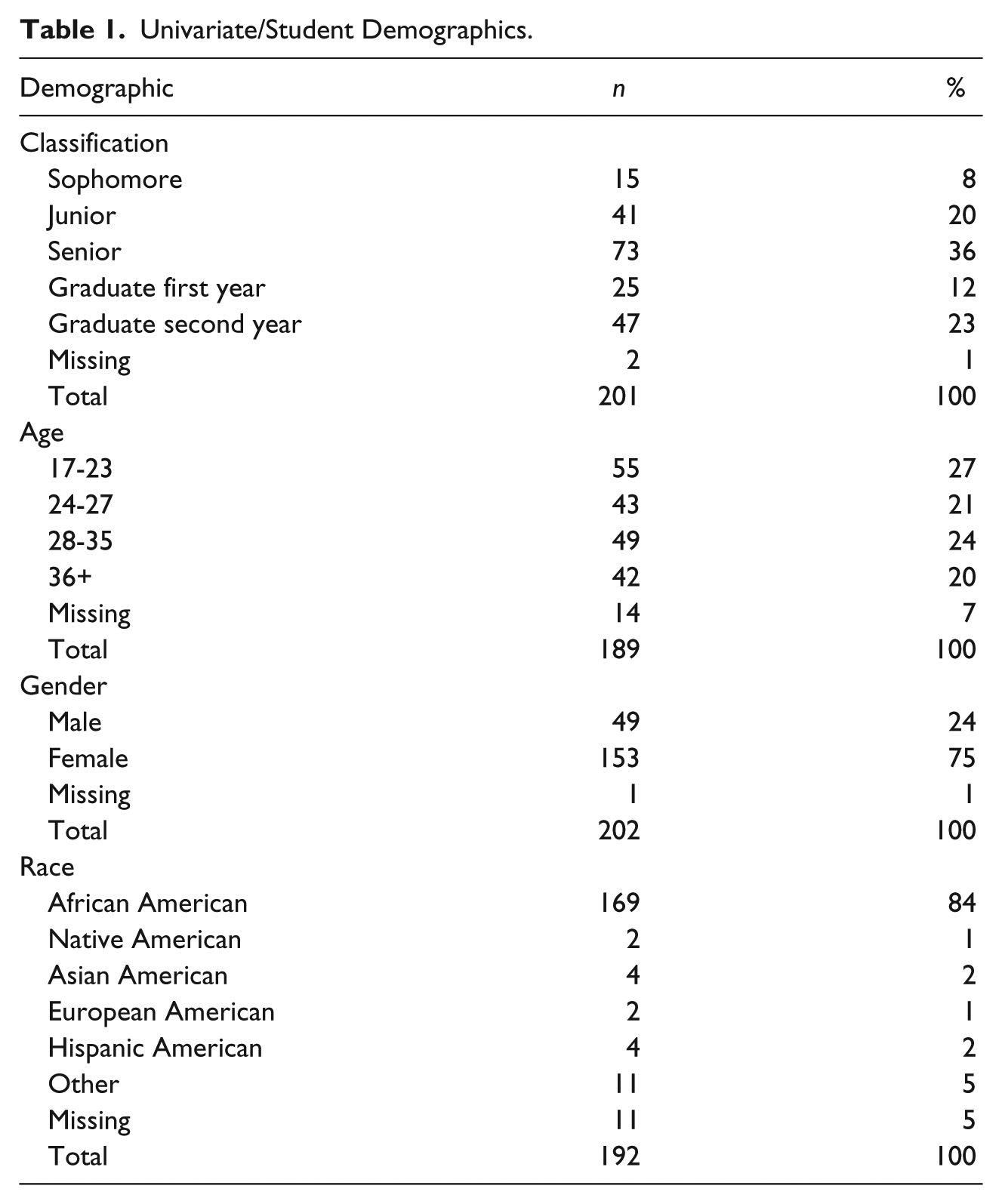
In relation to the student-academic classification, nearly two thirds (64%) of the sample is comprised of undergraduate students compared with graduate students at 36% (see Table 1). The majority (52%) of students range between the ages of 17 and 27 years with 27% between the ages of 17 and 23 years. With respect to gender, three fourths (75%) of the sample consists of females and over four fifths (84%) identify as African American.
Univariate/Student Demographics.
Average student responses in relation to being accused of the acting White accusation are identified in Table 2, which includes responses based on four available options. Only two out of five academic classification categories reported significant differences in response to being accused. Within the response category of ignoring the accusation, the average sophomore student response is reported at 3.1 compared with the average senior student response at 4.9. This finding reveals that sophomore students are less likely to ignore being accused of acting White in relation to seniors, which may reflect evidence of maturation on the basis of academic classification.
Mean Responses of Being Accused of the Acting White Accusation Phrase According to Class Standing.
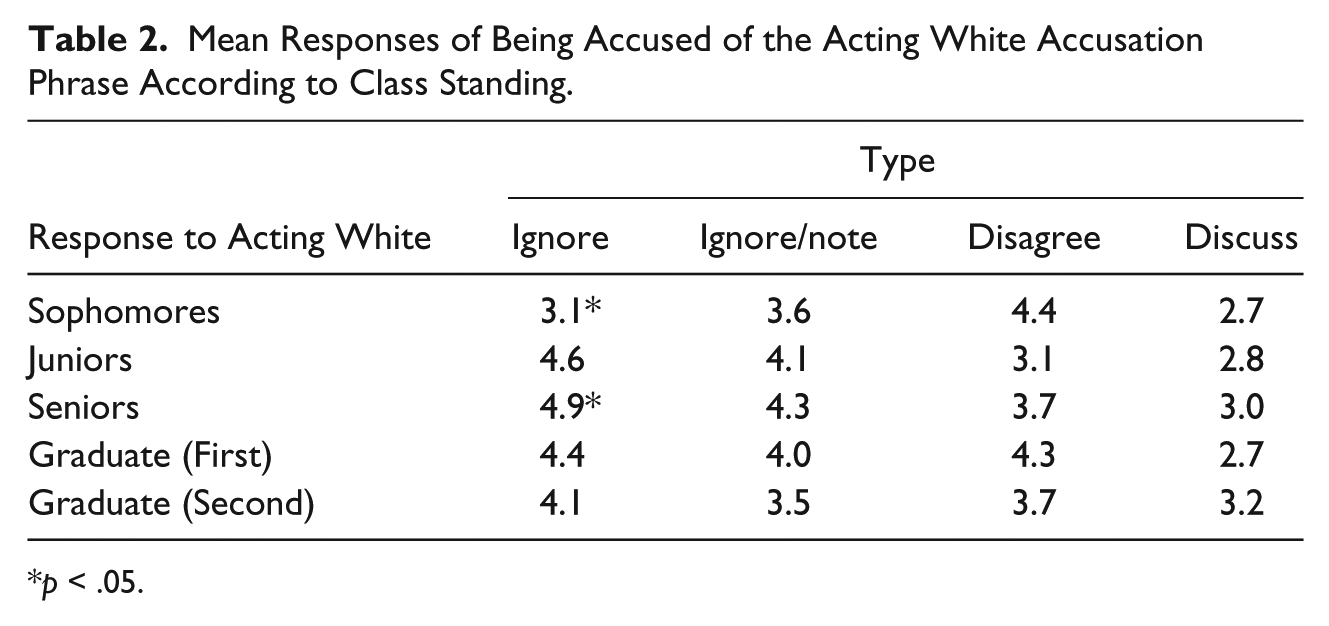
p < .05.
In Table 3, student responses in relation to being accused as a result of associating with individuals of different races are provided. Three out of five academic categories reported significant differences in relation to experiencing the stigma. With regard to associating with individuals of different races, the average sophomore student response is reported at 2.1 compared with the senior and first-year graduate student response at 2.6 and 3.6. Compared with first-year graduate students, this suggests that sophomore students are less likely to believe that they are accused of acting White on the basis of associating with individuals who possess different racial characteristics. This finding may be interpreted in a number of ways. For instance, it may serve as evidence which defies the assumption that maturation is not exclusively based on the progress as revealed through one’s academic classification status.
Mean Responses of Being Accused of the Acting White Accusation Phrase According to Class Standing and Associating With Individuals of Different Races (ANOVA).
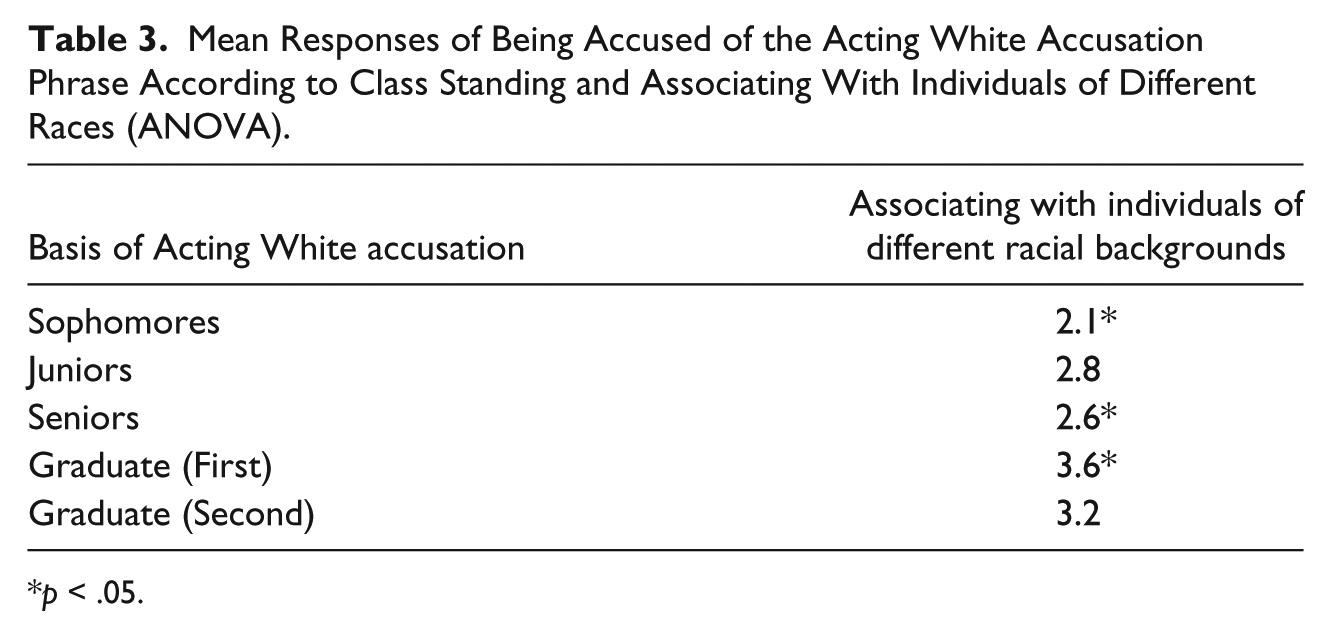
p < .05.
Table 4 provides student responses in association with being stigmatized because of one’s commitment to academic activities. Two out of five academic categories conveyed significant differences in association with race-based accusation. In relation to commitment to academic activities, the average sophomore student response is reported at 1.9 compared with the first-year graduate student response at 3.0. Compared with sophomore students, first-year graduate students are less likely to believe that they are accused on the basis of commitment to academic activities. This finding may suggest that students who enter graduate school have self-selected as high academic achievers. These same students may find the acting white accusation less relevant to their identities and experiences, having elected to enroll in an additional degree program. In other words, a student wo elects to apply to and attend graduate school may assume that all of thier peers, regardless of race, would have a notable academic focus.
Mean Responses of Being Accused of the Acting White Accusation Phrase According to Class Standing and Commitment to Academic Activities (ANOVA).
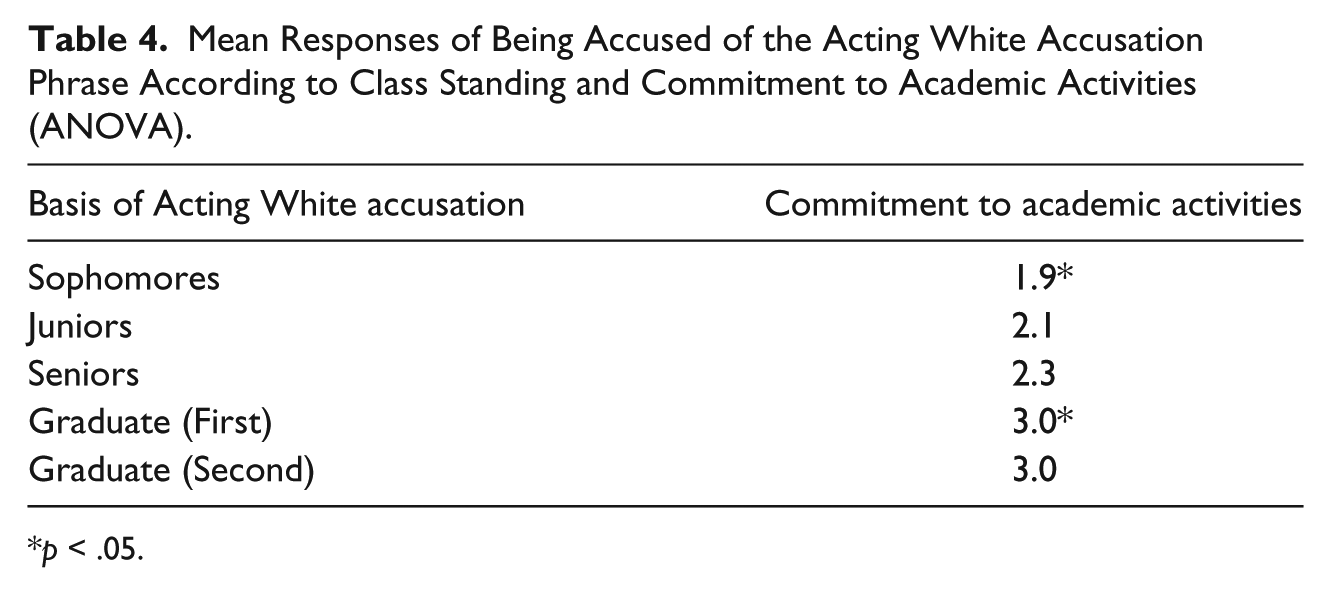
p < .05.
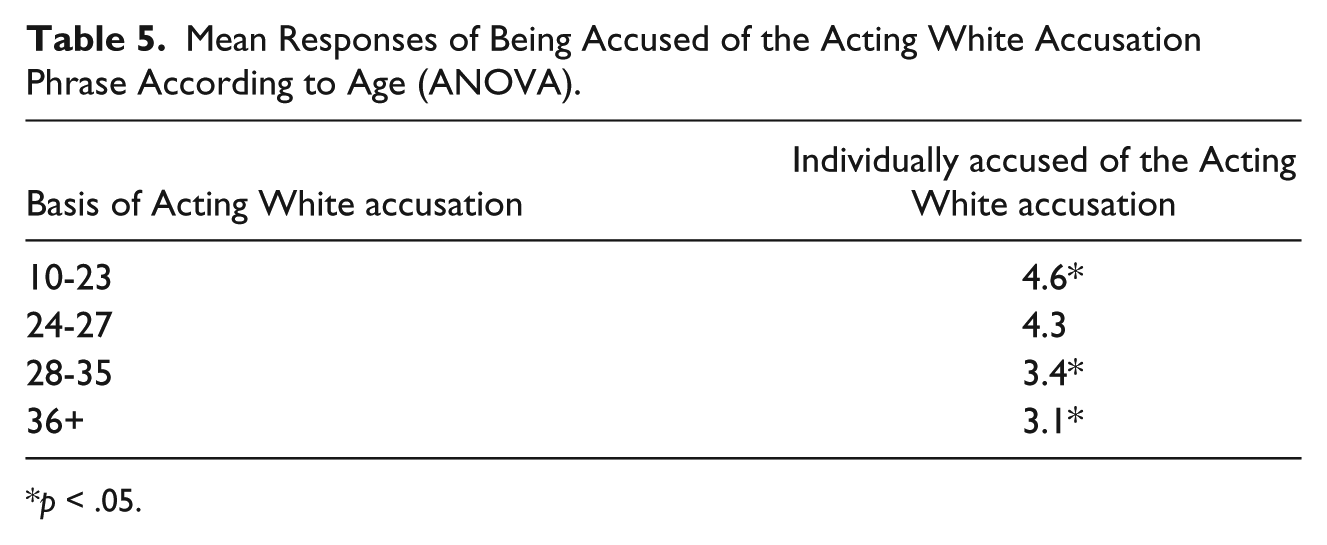
Student responses in relation to the accusation on the basis of age are identified in Table 5. This includes three out of four age categories reporting significant differences in association to being individually accused. In particular, students between the ages of 10 to 23 years report being accused at 4.6 while students between the ages of 28 to 35 years as well as 36 years and above report averages of 3.4 and 3.1. In general, this indicates a progressive trend in which older students are less likely to be accused in comparison with younger students.
Mean Responses of Being Accused of the Acting White Accusation Phrase According to Age (ANOVA).
p < .05.
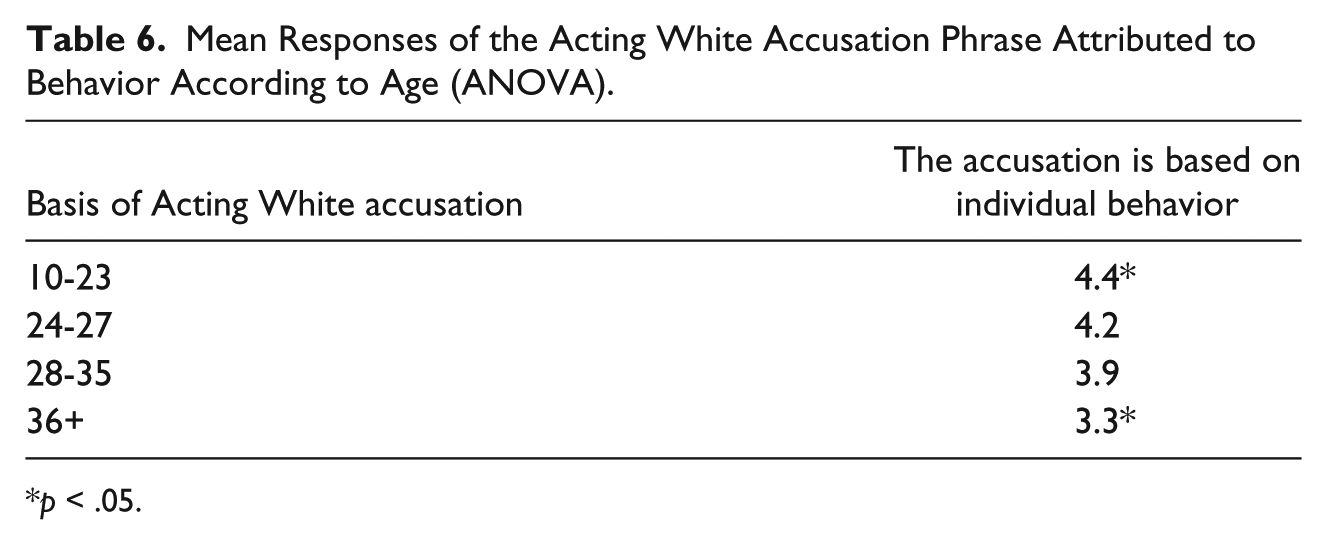
Age-based student categories and accusations attributed to behavior are provided in Table 6. With 50% of the categories yielding a significant difference in relation experiencing the accusation, this includes students between the age of 10 and 23 years reporting 4.4 and those at least 36 years of age at 3.3. Notably, this amounts to younger students being accused more often than older students. As in Table 5, this finding demonstrates an inverted relationship between the likelihood of experiencing the acting White accusation and age.
Mean Responses of the Acting White Accusation Phrase Attributed to Behavior According to Age (ANOVA).
p < .05.
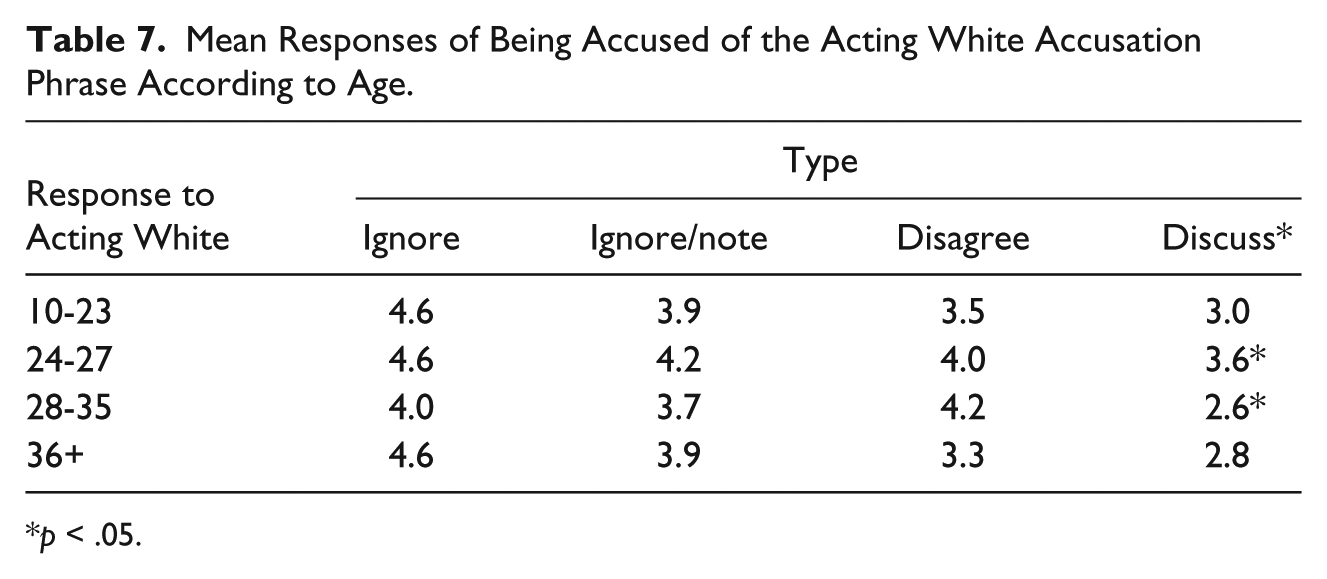
Table 7 identifies the student responses to the acting White accusation on the basis of age. This involves the identification of significant difference in two out of the four listed age categories. Students between the ages of 24 and 27 years report an average of 3.6 in comparison with students between the ages of 28 and 35 years at 2.6. In relation to older students, this finding reflects that younger students are more likely to respond to the accusation by discussing the incident.
Mean Responses of Being Accused of the Acting White Accusation Phrase According to Age.
p < .05.
Discussion
The purpose of this study was to identify which student characteristics are associated with the acting White stigma among students at an HBCU. Specifically, this research attempted to uncover the extent to which perceptions of racial identity is associated with student-academic classification and age. Benefits related to this inquiry may offer insight regarding student attitudes, retention, and graduation measures among minority populations in higher educational settings, especially where African Americans represent the predominant population. Furthermore, advantages include the identification of behaviors that may be called into question within the context of racial identity within minority-group populations. Finally, this, and similar studies, may lead to the identification of protective factors in response to race-based stigmatization measures.
Overall, results related to student-academic classifications and the acting white accusation (AWA) indicate that a total of four statistically significant differences are identified. These distinctions are noted between all academic classifications including graduate-level students. General trends in relation to these categories indicate that older students are more likely to experience the accusation when compared with younger students. In addition, they are also more likely to respond to such by ignoring as opposed to any other listed response. With respect to student-age categories, four statistically significant differences are also identified in regard to student-age categories, which include noted differences among all listed ages. In contrast to academic distinctions, these categories reveal that older students are less likely to experience the accusation in comparison with younger students. In light of such, it is possible that the behaviors we requested information on, or their wording in the survey, did not correctly isolate which behaviors undergraduates found most salient. Importantly, future research should explore these preliminary findings using more advanced levels of quantitative and qualitative methods to better capture exploratory data and inform future surveys.
In terms of limitations, given the areas in which we did not find significant results, we anticipate we need a larger sample size to have sufficient power for detecting between-group differences. Furthermore, our sample was nonrandom and we are assuming normality, which may further bias our results. This study represents data from one HBCU and may not be representative beyond this particular college campus. Nonetheless, given the paucity of data on these Black experiences from within HBCU’s, we believe this work provides an important stepping stone for future research. Additional areas of inquiry may include the existence of unique student characteristics in relation to conceptualizations of racial identity. Examples of such include sexual orientation, political affiliation, and self-identity attributes. Policy implications related to this and similar research findings may be advantageous in identifying recruitment, retention, and matriculation measures among minority students within higher education institutions in the United States.
Footnotes
Acknowledgements
An expression of appreciation is extended to the students of Southern University at New Orleans for their contributions to the study of racial identity within Historically Black Colleges and University settings.
Declaration of Conflicting Interests
The authors declared no potential conflicts of interest with respect to the research, authorship, and/or publication of this article.
Funding
The authors received no financial support for the research, authorship, and/or publication of this article.