







Abstract
Black mothers experienced heightened concern about their children returning to in-person learning following COVID-19 related remote learning. Guided by critical race theory and racial protectionism, we sought to deepen our understanding of Black mothers’ concerns and experiences related to their preschoolers’ return to in-person learning during the 2021 to 2022 academic school year. We conducted five focus groups. Eighteen Black mothers (mean age = 32.90 years) of children enrolled in prekindergarten in the recently ended school year participated in a focus group with an average of 4 participants per focus group. Using reflexive thematic analysis, researchers generated the following themes: children contracting COVID-19, classroom closures and instructional concerns, bullying from other students, and school shootings. Study findings provide insight into Black mothers’ protectionism and concerns about educational systems, emphasizing the need to address health and physical safety concerns in early childhood settings to reduce educational disparities.
Plain language summary
The concerns that Black mothers had about their children returning to school in person during the pandemic We talked with Black mothers about concerns they had during the 2021-2022 academic school year when their children returned to school in person. Mothers shared that they were concerned about their children getting COVID-19, their children’s classroom being closed repeatedly due to someone getting COVID-19, their children being bullied by other students, and the thought that a school shooting could occur.
As Black mothers navigate educational environments for their children, they often encounter unique challenges buoyed by the interplay of racism, sexism, and other prejudices including negative perceptions of their parental participation in school activities, parental fitness, emotional regulation, and parenting practices (Cooper, 2009; Rosenthal & Lobel, 2016). Intersectionality, a key tenant of Critical Race Theory (CRT), states that these challenges cannot simply be explained by one marginalized identity, but rather exist because the influence of Black mothers’ race and gender cannot be disentangled (Crenshaw, 1995). Moreover, Black mothers described how the intersection of Black identity and low socioeconomic status (SES) lead to inflexible jobs (Cooper, 2009). The influences of these identities overlay to create the breeding grounds for educators’ prejudiced views that Black mothers, particularly from communities impacted by structural inequities, do not participate in school activities because they do not care about their children (Cooper, 2009). Prior experience with racism and awareness of others’ perceptions informs the context within which Black mothers navigate their children’s schooling.
Theoretical Framework
This study aims to investigate how Black mothers experienced their children’s return to in-person learning, following COVID-19 related school closures, and navigated schooling-related decision-making through the lens of CRT. CRT emphasizes how racism is embedded in social and legal systems (e.g., schools, healthcare, employment), perpetuating racial inequality through intersections of oppression (Boddie et al., 2019; Crenshaw, 1995). CRT is useful in understanding how the historical and ongoing effects of racism and discrimination in educational and other systems influence Black mothers’ perceptions of returning to in-person learning as a racialized and gendered experience. Additionally, CRT calls for examining power dynamics in schools that maintain racial inequality, such as administrators’ control over educational decisions and policies and how these imbalances of power further constrain the agency of Black mothers while caring for their children. Additionally, our study is informed by racial protectionism, which highlights the desire and agency of Black parents to protect their children from racism in educational settings (Mazama & Lundy, 2012). Engaging in protection practices is rooted in an awareness of the negative impacts of institutional and individual racism on Black children’s well-being and academic success. Racial protectionism recognizes the rich history of Black parental involvement in shaping children’s educational and socialization experiences (Mazama & Lundy, 2012). Guided by CRT, we explored Black mothers’ experiences related to their children’s schooling during the COVID-19 pandemic.
COVID-19 and School Closures
During the COVID-19 pandemic, school closures were an important community mitigation effort recommended by the U.S. Centers for Disease Control and Prevention (CDC; Centers for Disease Control, 2020). The pandemic resulted in a near-total shutdown of all early childhood care and education (ECE) centers in the U.S., with most schools remaining closed through the end of the 2019 to 2020 school year (Map: Coronavirus and School Closures, 2020) and the majority of students continuing to receive remote instruction during the 2020 to 2021 school year (Henderson et al., 2021). Accordingly, most ECEs shifted to remote instruction without previous precedent for providing online instruction for preschoolers. Among ECE programs for three-to-five-year-olds, only 10% of students remained in-person (Barnett & Jung, 2021). Notably, Black and Hispanic students impacted by structural inequities were the most likely to attend school fully remote or hybrid (Henderson et al., 2021) due to myriad logistical, economic, educational, and safety concerns.
Additionally, the national rate of preschool enrollment declined from 51% to 39% for 3-year-olds and from 71% to 54% for 4-year-olds during the 2020 to 2021 school year, with Black children experiencing the greatest decline in enrollment (Barnett & Jung, 2021; Weiland et al., 2021). Reasons for the declines in enrollment included ECE closures, class size reductions, lack of affordability due to recent job loss, parental hesitation regarding their young children participating in remote learning, and concerns about contracting the virus (Weiland et al., 2021). These declines represent missed learning and socialization opportunities for young children, which is especially concerning as early childhood education predicts later school outcomes, career opportunities, economic stability and overall well-being (Agostinelli et al., 2022). Given the importance of early childhood education on children’s long-term outcomes, the present study sought to assess Black mothers’ concerns related to preschoolers’ return to in-person learning.
Disparities in Pandemic-Related Learning and Social Emotional Development
Remote learning is associated with delayed academic achievement among children of all ages and racial-ethnic backgrounds, but this impact was not equal (McCoy et al., 2021). The rapid transition to remote learning severely impacted Black and Brown students, as it exacerbated existing educational disparities due to the digital divide (i.e., a systemic inequity in access to technology; Ong, 2020). Black households were 1.3 times more likely to experience limited access to necessary remote learning technology (computers and internet connectivity) as compared to White households (Ong, 2020). Additionally, almost half of households earning less than $20,000 reported not having the necessary technology for children to complete schoolwork (Potter & Thrash, 2021). Students marginalized by racial and social inequities being unable to access necessary technology resulted in unavailable educational materials, missed school lessons, and fewer learning opportunities. Falling behind educationally has long term social, health, and economic implications that threaten to widen racial disparities as children transition into adulthood (Agostinelli et al., 2022; Ong, 2020).
Remote learning also had a profound impact on young children’s social emotional development (Guevara, 2022). Throughout the school closures, parents reported an increase in aggression, anxiety, and emotional dysregulation (Barnett & Jung, 2021; Duran & Ömeroğlu, 2022; Hanno et al., 2022). Preschool closures disrupted young children’s opportunity for social interactions and play-based learning activities that are vital for developing social skills that are necessary for long-term academic and life success (Ferreira et al., 2021). Lags in social and emotional development are more likely to harm children already marginalized by racial and social inequalities due to their higher likelihood to experience extended remote learning.
Black Parents’ School Hesitancy
Broadly, a considerable proportion of parents were concerned about children’s return to in-person learning, with Black and Hispanic parents expressing the highest levels of school hesitancy (Schwartz et al., 2021). From a CRT perspective, one might understand these concerns in the larger context of the early pandemic during which Black people were more likely to die from a COVID-19 infection and had inequitable access to vaccines (Tai et al., 2022). Further, CRT calls for situating Black parents’ responses within a long history of medical racism and malpractice, as well as educational discrimination wherein Black adults and children were denied access to proper medical care and educational opportunity (Samuels, 2020; Scharff et al., 2010; Shapiro et al., 2021).
The heightened health and economic risk that children returning to schools with inadequate safety measures posed to minoritized families, in particular, was weighed against the negative academic and social consequences of children’s extended remote learning (Levinson et al., 2021). Since children younger than five could not receive a vaccination until June 2022, vaccinations for teachers and school staff were an important step in allaying Black parents’ concerns about the risk of preschoolers’ contracting COVID-19 (CDC, 2021). For example, a study found that 80% of Black parents expressed their desire for schools to delay reopening until teachers were vaccinated, as compared to only 51% of White parents (Horowitz, 2021).
Parents were also concerned about children’s safety beyond contracting COVID-19. Studies show that prior to the pandemic, Black children experienced the highest rates of race-based bullying among all racial-ethnic groups (U.S. Department of Education, 2019). The significant decrease in bullying during remote learning led 43% of Black parents to cite bullying as one of their main concerns with children’s return to in-person learning (Speak Up, 2021). Thus, several sociocultural factors influenced Black parents’ school hesitancy.
Black Mothers’ Schooling Decisions as Racial Protectionism
Previous research has explored various aspects of Black mothers’ specific experiences during the crisis of the COVID-19 pandemic. Research on middle-class Black academicians found that remote work and school, resulting from the COVID-19 pandemic, allowed many Black mothers the ability to “re-center” the homeplace for themselves and their children by creating learning spaces that promoted children’s racial consciousness and resilience (Coleman-King et al., 2023). However, many Black mothers were not afforded this opportunity, as Black women were disproportionately employed as essential employees or in positions not offering remote work opportunities (Obinna, 2021). Research conducted in the summer of 2020 found that approximately two-thirds of Black mothers with low SES selected home care for their children, highlighting fear of COVID-19 and mistrust in information provided by healthcare providers and government officials, work requirements, and children’s needs as primary consideration points (Radey et al., 2021). Similarly, Chua et al. (2020) found that Black families were more likely to choose home-based schooling for their children and take heightened precautions regarding the virus in the early pandemic.
Additionally, the nation’s ongoing reckoning with race in the form of multiple hypervisible murders of Black people by police alongside the COVID-19 pandemic acted as a catalyst for many Black families to transition their children to homeschool (Anderson, 2022). Stated reasons for homeschooling included unsafe or unsupportive school environments, disproportionate discipline and referrals to special education for Black students, and culturally insensitive and White-washed curricula (Anderson, 2022). For these reasons, homeschooling Black children has been conceptualized as a form of racial protectionism in that Black parents shield their children from potential harm by removing them from environments where they are highly likely to encounter racism (Mazama & Lundy, 2012). It is important to understand the role of Black mothers’ racial protectionism as schools transitioned back to in-person learning following the prevalence of remote instruction.
Current Study
This study aims to understand Black mothers’ navigation of their children’s school experience around the midpoint of 2022 during the COVID-19 pandemic. While previous research has explored early pandemic experiences of Black mothers and the experiences of Black women in academia, our study sought to understand the continued experience of Black mothers following the end of COVID-19 related remote learning. This period also followed numerous high-profile anti-Black murders and the initial roll-out of COVID-19 vaccines. The sociohistorical conditions provide key information to contextualize Black mothers’ protection practices.
Using CRT principles, researchers center the voices of Black mothers while appreciating their distinctive, racialized and gendered experience during the COVID-19 pandemic. CRT recognizes the ability of Black mothers to protect and care for their children is threatened by multiple systems of oppression that intersect with their racial, class, and gender identities (Crenshaw, 1995). The disproportionate effects of the pandemic on academic achievement for Black children, particularly from families with limited financial resources, demonstrates how the intersectionality of race and class have lasting impacts on parents’ and families’ experiences with education and highlight the need to hear directly from those most impacted about how they navigated limited options during an unprecedented time.
Method
Research Design and Data Collection
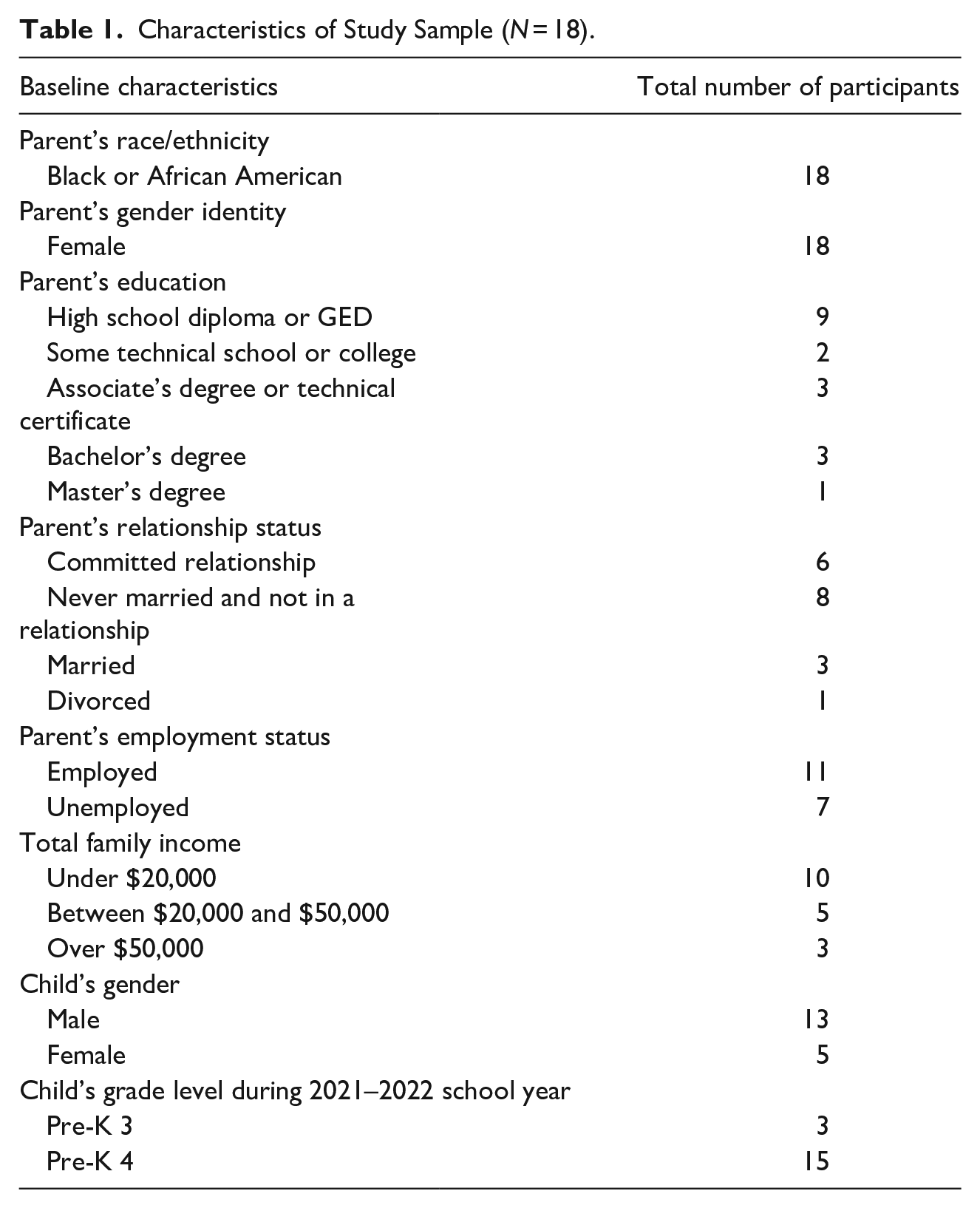
We conducted culturally responsive focus groups (CRFGs) with 18 Black women who had children enrolled in preschool in the DC metropolitan area during the 2021 to 2022 school year (see Table 1 for sample characteristics). In describing the components of CRFGs based in CRT, Rodriguez et al. (2011) highlight the following tenets for researchers: maintaining social consciousness, operating from an asset-based perspective seeing participants’ stories as important to co-constructing reality, holding awareness of and acknowledging participants’ social identities, engaging in reflexive practice to situate themselves and their identities within the research experience, and creating a comfortable experience for participants. These principles were interwoven into each step of the research process via race-matching between researchers and participants, virtual participation for participants’ optimal flexibility and comfort, appropriate compensation for participants time and knowledge, and directly quoting participants in our findings to illustrate themes in participants’ own words.
Characteristics of Study Sample (N = 18).
Five focus group sessions were conducted at various times and days over an 8-week period from July to September 2022; therefore, mothers provided retrospective accounts of their experiences during the 2021 to 2022 school year. Mothers participated in one of five focus groups with an average of four women participating in each focus group and were compensated $50 for their time. The focus groups lasted approximately 60 to 90 min over Zoom. Participants were recruited from community agencies and public and charter preschools in underserved communities with whom the first author had long-term partnerships, community outreach events, and advertisements posted in the DC-metropolitan region’s Craigslist pages. Interested participants contacted us and were screened for eligibility according to their residence, race, and child’s enrollment in prekindergarten during the 2021 to 2022 school year.
Two Black-identifying female research assistants co-facilitated each focus group. During the focus group, parents logged onto the Zoom link they received after registering. The participants were encouraged to have their video on to increase engagement. Since focus group questions were sensitive in nature, participants were instructed to contact a moderator if they experienced distress at any point. Moderators began asking questions after completing the focus group overview. Parents completed the demographic survey at the end of the focus group session.
All participants identified as being Black or African American and female, with an age range of 23 to 43 (M = 32.87). Slightly more than half of the sample (n = 10) were married or in a committed relationship and completed at least some technical school or college. Over half of the participants were employed (n = 11) with family incomes under $20,000 (n = 11). The majority (n = 15) of participants’ children were in PreK4 with the remaining (n = 3) in PreK3. The gender of participants’ children included 70.6% male and 29.4% female.
Focus Group Questions
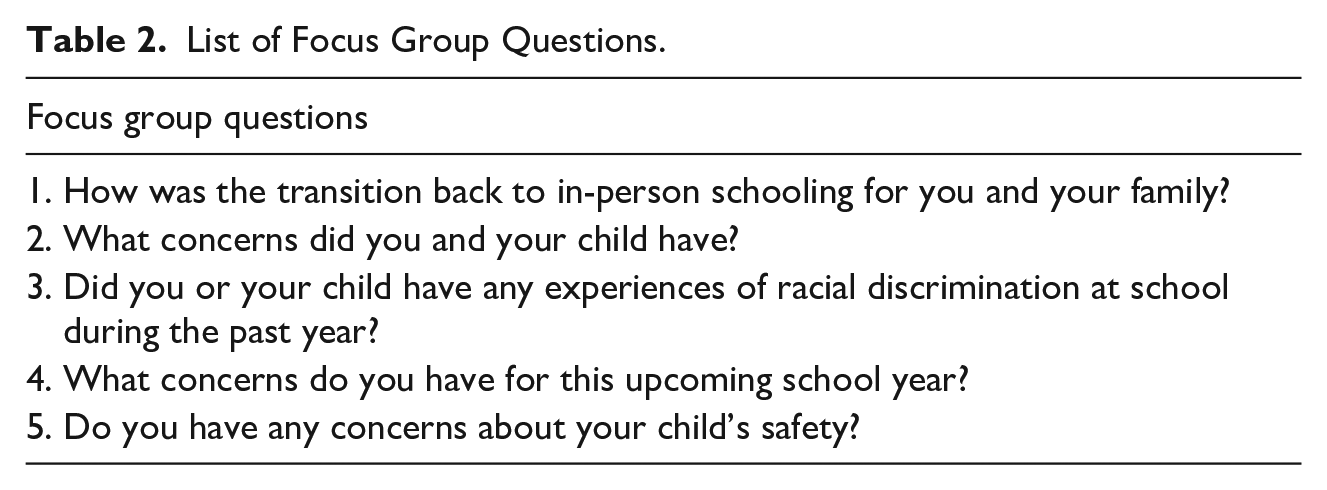
The purpose of the focus groups was to understand Black mothers’ concerns about their children’s return to in-person instruction during the 2021 to 2022 school year. Development of focus group questions for this study involved an iterative process. The first author drafted an initial set of questions according to identified areas of interest, which were reviewed and edited by members of the research team. Questions were edited to ensure that they were clear, relevant, and aligned with research objectives. The research team agreed on the final set of questions. See Table 2 for the list of focus group questions.
List of Focus Group Questions.
Data Analytic Section
Focus groups were recorded and transcribed via Zoom. Following each one, the Zoom transcript was cleaned for accuracy by the research team. The data collected from the transcripts of each of the focus groups were analyzed in alignment with the guidelines set forth by Braun and Clarke (2021) for reflexive thematic analysis. Specifically, coders undertook the following process in an iterative manner: familiarizing themselves with the data, creating codes that assign meaning to pieces of data, constructing themes that describe those codes, reviewing and refining the themes, and labeling the themes to connect them to a broader narrative (Braun & Clarke, 2021). Two Black female researchers underwent an iterative process of reading the transcripts and reflecting on their interpretations of the data considering their own social positionings and theoretical assumptions. Through a collaborative and reflexive process, the coders generated themes to illustrate parents’ concerns related to their children’s return to in-person instruction.
Limitations
Although the study has numerous strengths, there are also several notable limitations. The majority of participants had children that attended predominantly Black, ECE centers. Due to convenience sampling, our sample’s economic and geographic homogeneity limits the generalizability of our findings to a broader population of Black families. Specifically, most of our sample had low socioeconomic resources given the first author’s established relationships with ECEs and other community agencies in underserved areas of the DC-metropolitan region. We also had a relatively small sample size of parents in our focus groups including one focus group with two participants. However, this focus group provided valuable insight and generated the same themes as our focus groups comprising 3 to 5 participants. Additionally, this smaller group elicited greater detail and depth into the experiences of the participants, and smaller focus groups are suggested as best practice for virtual formats (Daniels et al., 2019). It is also worth noting that our study relied on retrospective accounts from parents about their experiences with ECE settings during the 2021 to 2022 school year. While this is a common approach in qualitative research, it is important to acknowledge that retrospective accounts may be subject to biases and may not accurately reflect the experiences of parents (Wengraf, 2001). Specifically, participants’ responses to their experience with the transition back to in-person learning and concerns they had about the transition reflect participants’ recollection of that time and circumstance and may not be an accurate reflection of responses they would have provided if asked earlier in the school year or prior to the 2021 to 2022 school year beginning. We believe, however, that the insights gained from our study are valuable given the limited research that focuses specifically on the experiences of Black families in ECE settings.
Findings
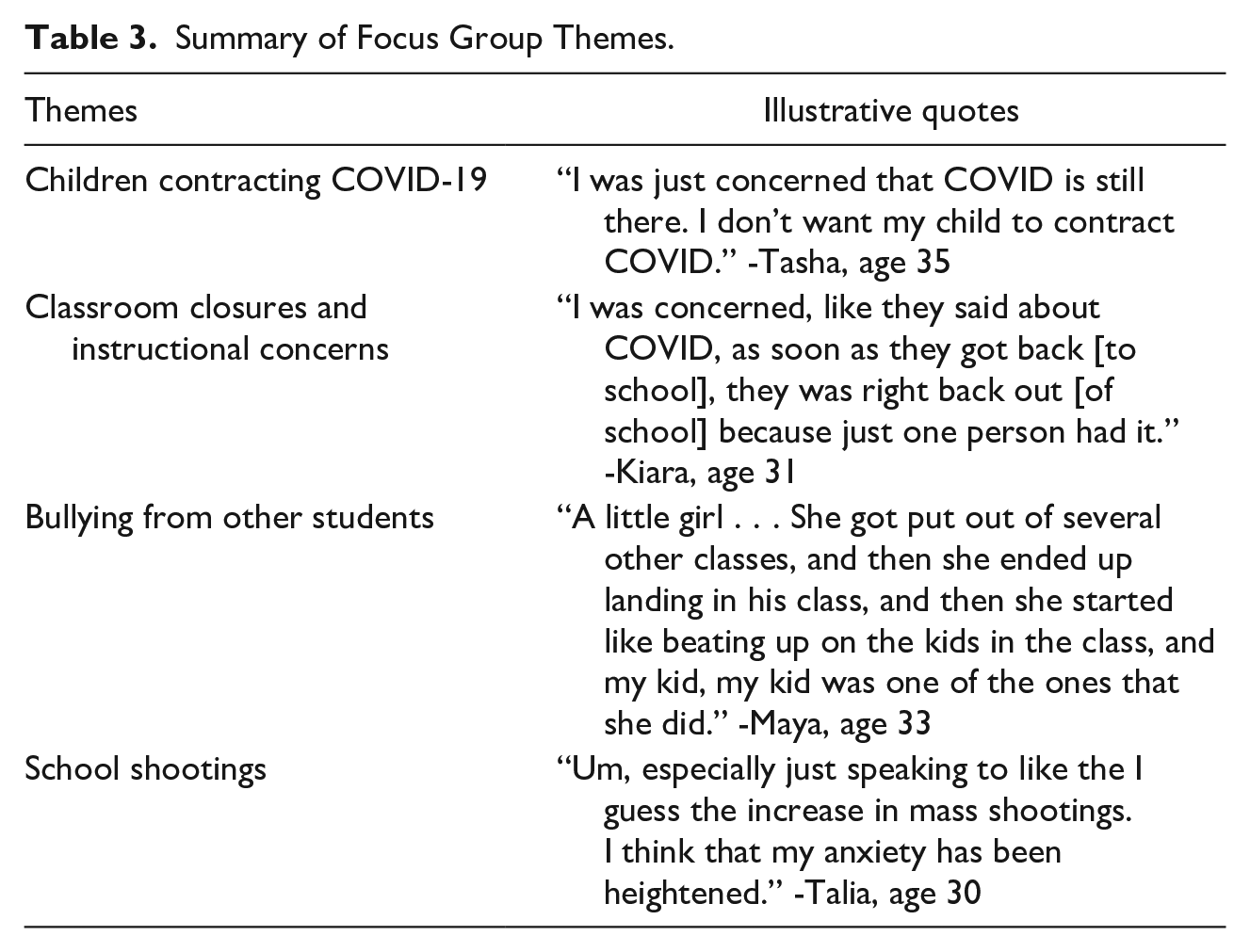
Researchers generated the following themes to summarize Black mothers’ concerns shared during the focus groups regarding their experiences with children returning to in-person learning during the 2021 to 2022 school year: children contracting COVID-19, classroom closures and instructional concerns, bullying from other students, and school shootings. See Table 3 for a summary of themes and illustrative quotes.
Summary of Focus Group Themes.
Children Contracting COVID-19
Overall, the possibility of their children contracting COVID-19 was the most prevalent safety concern among mothers in our sample during the 2021 to 2022 school year. Six mothers noted they worried about possible health risks associated with children’s in-person contact at school. Tasha, a 35-year-old, employed married mother, had a masters’ degree and a 4-year-old daughter who received hybrid instruction during the 2020 to 2021 school year, expressed her concerns, noting, “I was just concerned . . . that COVID is still there. I don’t want my child to contract COVID.” This same concern was echoed throughout all five focus groups.
Mothers worried about inadequate COVID-19 safety measures in schools. Since mothers in our sample all had children between ages three and five, one large concern was the inability of schools to enforce mask wearing policies. This concern was captured by Tonya, a 38 year-old single, mother with full time employment who completed some technical school/college and had a 4-year-old son who received remote instruction during the 2020 to 2021 school year: “It’s really hard to have, you know, children in a classroom trying to wear their masks for 8 hours, I think that was probably literally impossible for them to do.”
Due to the possible ineffectiveness of masking young children, much of our sample focused on how schools implemented safety protocols beyond masking during the 2021 to 2022 school year. Sanitization, staff vaccination policies, testing policies for staff and children, and staff mask wearing adherence were all top concerns of mothers in our sample. The worries regarding safety measures beyond masking were illustrated further by Tonya:
How are they keeping the children away from other kids? How are they cleaning the playgrounds? Just those concerns about keeping the building clean. So what else could they have done and were they doing it was my biggest concern.
Mothers’ most prevalent concern expressed for their children was their contracting COVID-19 and both the schools’ and young children’s inability to comply with safety measures that would prevent the spread of COVID-19. This finding is consistent with Black mothers’ racial protectionism and previous literature finding that a higher percentage of Black parents, compared to White parents, wished to delay reopening in-person school until teachers were vaccinated (Horowitz, 2021) due to compounded concerns surrounding inadequate safety measures and the disproportionate devastating toll of COVID-19 on Black and minoritized communities (Levinson et al., 2021; Tai et al., 2022). This finding is also aligned with prior research outlining significant, reasonable mistrust that many Black community members have for government, medical, and school officials due to decades of disinvestment and malpractice in Black communities and schools (Scharff et al., 2010). Previous reports on Black perspectives during the COVID-19 pandemic showed that Black people were not always trusting of the information provided about COVID-19 safety. This mistrust could reasonably extend to Black mothers’ concerns about schools’ investment in keeping their children safe and healthy when children returned to in-person learning environments (Samuels, 2020; Shapiro et al., 2021).
Classroom Closures & Instructional Concerns
Four mothers expressed apprehension about the amount of time their children were absent during the 2021 to 2022 school year due to sickness or classroom closures after COVID-19 exposures. This loss of instructional time was a concern for the mothers in our sample both for children’s missed learning opportunities and for disrupted schedules and routines caused by classroom closures. This issue of missed school was compounded even further for mothers with multiple children in the household. Maya, a 33-year-old, cohabiting, unemployed, mother that completed some technical school/college and had a 3-year-old son who received remote instruction during the 2020 to 2021 school year, shared her experience of frequent classroom closures:
He started back in school. He was out more than he was in, because he kept getting sick and classrooms shut down because of COVID, and it had nothing to do with him. But of course, it shut down because of the 14-day quarantine, and you had to do it. So . . . it was kind of stressful and unstable.
Tiffany, a 31-year-old, single, mother with a high school education and full-time employment who had a 4-year-old son that received hybrid instruction during the 2020 to 2021 school year, expressed overarching concerns related to her children’s instruction in the classroom: “I just have concerns about making sure that they’re actually teaching, and it’s not just play time all day. That’s just my main concerns - that they are learning something.”
The finding that mothers had instructional concerns for their children is consistent with Black mothers’ racial protectionism regarding children’s consistent and adequate learning environment given the long term social and economic implications that inadequate learning environments can have on children of color by contributing to educational racial disparities (Agostinelli et al., 2022; Ong, 2020). This finding is also aligned with research showing some Black mothers worried about prejudiced views toward them and their care impacting teachers’ perceptions of whether or not their children deserve time and effort (Cooper, 2009).
Overall, mothers reported increased instructional time compared to the previous 2020 to 2021 year when most children received either hybrid or remote instruction. Instruction times reported during the 2020 to 2021 were as low as 30 min per day with 12 out of 18 mothers reporting between 2.5 hours and 20 hours of instructional time per week. Relative to the 2020 to 2021 school year, Black mothers’ concerns regarding children’s learning may have been tempered. Mothers may have also been more assured regarding their children’s academic progress at the end of the school year when focus groups were held.
Bullying from Other Students
Three mothers in our sample noted instances of their children being “bullied” at school (i.e., physically aggressed upon by other children such as by punching or pushing) and perceived that teachers did not adequately address the situation. Mothers also reported feeling helpless to resolve the situation after unsuccessful initial attempts to work with school staff. Maya, described advising her 3-year-old son on how to respond to bullying after her attempts to rectify her child’s conflict with a peer by first talking to the teacher did not end the behavior:
I had to explain to him. Mommy took the steps. This is what mommy did to try to stop this and prevent this. But now I have to tell you to defend yourself because you’re not a punching bag. So . . . it was hard for me, but I had to.
Kiara, a 31-year-old, cohabiting, mother with a high school education who works part-time and had a 4-year-old daughter who received remote education during the 2020 to 2021 school year, also noted her hopelessness after unsuccessful attempts to protect her child against physical harm from another child. She expressed, “So, it’s just like if you [parents] not protecting your babies, and the teacher is not protecting your babies. Then who’s protecting your babies?”
Mothers expressed that the policy of prohibiting parents in the building further complicated the situation by preventing in-person parent-teacher conferences along with the bullying child’s parents to resolve the situation. This concern is consistent with racial protectionism and Black mothers’ pre-existing concerns regarding their children experiencing bullying at school, which may have been amplified by students’ decreased opportunities for social emotional development among same aged peers during remote learning (Ferreira et al., 2021). An important avenue for racial protectionism among Black mothers is advocacy for their children and Black children more broadly (Cooper, 2009). In past research, Black mothers have expressed concerns that if they are not present or able to advocate for their children, school personnel will give up on their children or think they can be disregarded (Cooper, 2009). Thus, not being able to access teachers regarding their children being bullied by other children brought this worry starkly into the forefront for some Black mothers.
School Shootings
Three mothers in our sample expressed fear of the possibility of school shootings. Michelle, a 37-year-old, married, mother with an associates/technical degree who is disabled and had a 4-year-old son who received remote instruction during the 2020 to 2021 school year, detailed her fear, stating, “Safety is always a concern . . . especially with all that be going around with the schools and everything. People just can walk up in school and, you know, start shooting.” Another parent, Alisha, a 34-year-old, cohabiting, mother with a college education who is unemployed and had a 3-year-old son who received hybrid instruction during the 2020 to 2021 school year, also described her worry, stating, “Yeah my only concern is the shootings . . . [I get] very, very worried . . . I’m always praying that God will let them [my children] come back safely. That’s a really, really great concern for me.” The third mother, Talia, a 30-year-old, cohabiting, mother with a college education who is working full-time and had a 4-year-old son who received remote instruction during the 2020 to 2021 school year, described her fear in the following way, “. . . especially just speaking to the increase in mass shootings, I think that my anxiety has been heightened.” The importance of protective safety measures such as only allowing students and teachers in the school buildings and keeping doors locked was mentioned by multiple parents. These safety measures helped to reduce some of the worry parents experienced when sending their children back to school, and one mother expressed hope that her child’s school would continue implementing those safety precautions.
This finding represents an area of racial protectionism that Black mothers with children in school experience, particularly considering that Black children are overrepresented in schools that have been impacted by gunfire (Everytown Research and Policy, 2022). That is, two-thirds of shooting incidents at schools occur in majority-minority schools, with a disproportionate impact on Black students (Everytown Research and Policy, 2022). Further, in acknowledging these findings within the larger context that Black mothers are parenting Black children, their concerns about school shootings and the safety of their children both during the incident and the response come into focus. Black mothers contend with fear of their children being perceived as less deserving of protection because of adultification bias (Epstein et al., 2017) as well as their children being mistaken as a threat by first responders due to anti-Black racism making Black people more likely to be the victims of fatal police shootings (Zare et al., 2022). Given this context, there are multiple notable aspects of school shootings wherein Black mothers may be worried about harm befalling their children.
Discussion
Guided by CRT, the present study aimed to understand Black mothers’ experiences and concerns about their preschoolers returning to in-person learning during the 2021 to 2022 school year. Study findings highlighted mothers’ concerns surrounding the health and physical safety of their children, represented by the following themes: children contracting COVID-19, classroom closures and instructional concerns, bullying from other students, and school shootings. These are consistent with studies finding high levels of school hesitancy among Black parents (Schwartz et al., 2021). Our findings contribute to understanding how Black families respond to and navigate a heavily racialized society.
Results are aligned with CRT as they illustrate how systemic racism across multiple sectors (education, employment, healthcare) created a context in which Black families were more susceptible to contracting COVID-19 and suffering greater negative consequences during return to in-person learning (Tai et al., 2022). Black families had to perform rational calculations about individual and community vulnerability levels, in which the disproportionate negative effects of delayed academic instruction for Black children were weighed against the heightened risk Black families had of contracting and suffering from COVID-19 infections (Levinson et al., 2021). Social determinants of health and learning such as unequal access to quality health care and increased likelihood to live in low-income neighborhoods with under-resourced schools contributed to parents’ concerns, illustrating how race intersects with social systems to reinforce racial disparities.
COVID-19 Risks and Disruptions
Effective attempts to mitigate the spread of COVID-19 in the school environment were a major source of apprehension in our sample. Mothers expressed concern about the inability for young children to stay masked throughout the school day and the schools’ diligence in following safety protocols. Consistent with mothers’ worries, school staff reported that young children required frequent reminders to stay masked (Kamenetz, 2022). Mothers’ skepticism regarding the school’s safety protocols also aligned with studies showing that minoritized families were distrusting of the changing safety protocols and concerned about schools’ resources to effectively prevent the spread of COVID-19 given a long history in the U.S. of inequitable practices disadvantaging and harming Black students (Levinson et al., 2021).
Mothers’ concerns about the loss of instructional time aligns with research showing that frequent classroom exposures during the 2021 to 2022 year interrupted academic growth and slowed the ability for students to academically recover from these interruptions (Cohodes et al., 2022). Notably, school closures significantly reduced Black mothers’ labor market activity, evidenced by disparities in post-pandemic employment between White and Black women (Fortuna et al., 2020). This may have deepened Black mothers’ unease about unanticipated and frequent classroom closures.
Physical Safety Risks
Mothers shared experiences of their young children being bullied by other students and their schoolteachers’ and administrators’ ineffective responses. This finding aligns with previous research showing that 40% of Black parents reported their child was bullied (Speak Up, 2021). Importantly, this is likely an underestimate because Black students are least likely to report being bullied, despite being more likely to experience bullying (Lai & Kao, 2018). Mothers’ reports of children being bullied may be related to young children’s under-developed social and emotional skills needed for positive peer relationships and self-regulation (Guevara, 2022). This possibility is supported by reports of children’s increased aggression since the start of the pandemic (Duran & Ömeroğlu, 2022). Mothers’ perceptions of ineffective responses to bullying by teachers and schools is consistent with previous qualitative findings (Sapouna et al., 2022). These ineffective responses can create an atmosphere where Black mothers navigate attempting to advocate effectively for their children without being placed into the pervasive stereotype of an angry Black woman not worthy of full consideration.
Mothers also expressed concern about possible school shootings. The devastating mass shooting of 19 students and 2 teachers at an elementary school in Texas had taken place a few months prior to the focus groups, so it is unsurprising that school shootings were a major concern for families. Our findings are consistent with studies indicating that Black and Hispanic mothers living in urban areas affected by racial and social injustices are most worried about a shooting happening at their children’s schools (Hurst, 2022). Validating prior research is important due to possible assumptions that Black parents are less worried about school shootings than other racial/ethnic groups which our findings show is not entirely true.
Racism Risks
Of interest, parents in the focus groups did not mention concerns about racism or biased curriculum with three mothers explicitly denying their children experienced any incidents of racial discrimination. Relative to medical and physical threats, concerns surrounding racism experienced by their preschoolers may have been less of an immediate concern for parents at the time of the focus groups. Research has found that Black parents worry less about the impact of racism on their younger children compared to older children and underestimate their young children’s ability to understand race (Sullivan et al., 2021). These factors may have contributed to parents in our sample not expressing concern about their preschoolers experiencing racism or biased curriculum. Moreover, the majority of participants’ preschoolers were enrolled in schools with majority Black staff and students. The demographic makeup of the schools may have lessened concerns related to racism in children’s school environments. Lastly, as preschool is not a requirement, parents most concerned about structural racism in education may not have enrolled their children in an ECE center.
Implications
Numerous policy options should be considered to address the health and physical safety concerns elicited by this study. Recommendations to protect children’s health include creating larger physical and more outdoor spaces, decreasing class sizes, improving ventilation, and implementing effective hygiene practices (CDC, 2022). Certain expenditures during the height of the COVID-19 pandemic, such as the American Rescue Plan funds for schools and ECE centers, could be used for physical upgrades. Policymakers should consider regular investments to bolster pandemic-preparedness infrastructure, particularly in under-resourced areas. As families of color are more likely to live in these areas, equitable funding is essential to address exacerbated racial educational disparities (Levinson et al., 2021).
Improving the ability of women of color to balance employment and comply with health recommendations is another critical area for policy advancement. Educators and families must keep updated on vaccinations and stay home when sick (CDC, 2022). Women of color were least likely to have paid sick leave and more likely to experience income loss because of the pandemic, compromising their ability to prioritize their health or children’s return to school (Hill & Artiga, 2022). There must be policies ensuring that women of color have access to paid time off for vaccinations and sick leave so Black mothers are not pressured to weigh children’s return to school against health and economic consequences.
To address challenging behaviors associated with bullying, schools are recommended to implement evidence-based social emotional learning programs, develop the skills of teachers through high-quality, ongoing training, and provide mentors and early childhood educator peer learning groups (Powell & Dunlap, 2009). These strategies are particularly important for schools serving large percentages of minoritized students (Weiland et al., 2021). Critically, any policy to address bullying behavior must not inadvertently exacerbate existing inequities in disciplinary and expulsion practices. Federal and state policy should continue to support the implementation of early childhood mental health consultation (ECMHC). ECMHC is a prevention-based intervention that pairs a mental health consultant with adults working with young children to support the adult’s ability to advance children’s social and emotional development. Emerging findings indicate that ECMHC may reduce racial disparities in disciplinary practices, however, further research is needed (Partee et al., 2023).
Research is needed to develop tailored strategies for securing school facilities for the safety of ECE students and staff. Current recommendations for educational facilities apply, including implementing physical security measures, such as access control measures that keep potential perpetrators of violence out of buildings and locking doors from the inside (Everytown Research and Policy, 2022). A critical policy solution is adequate funding for ECE facilities, particularly those in under-resourced communities.
Conclusion
This study highlights Black mothers’ hesitancy to send their children back to in-person learning, stemming from racial inequalities that place Black families at greater health and economic risk. These findings advance our understanding of Black mothers’ school hesitancy as a form of racial protectionism against medical, physical, and emotional harm disproportionately threatening Black children in school environments. We add meaningful contributions to the field of Black studies by examining how in the context of an evolving pandemic, systemic racism remains the source of disparities in health care access and affordability as well as social inequalities related to economic outcomes, which both contribute to disparities in educational opportunities and outcomes for Black children. The intersection of Black mothers’ race, sex, and class interplay to amplify typical parental concerns, regarding children returning to in-person learning during the pandemic, that disproportionately burden Black children due to systemic and structural inequities. It remains imperative that policymakers address the specific concerns of Black mothers, ensure the wellbeing of Black students, and promote equitable access to healthy development opportunities. Dismantling structural barriers and achieving education equity benefit all children and remain central issues within the field of Black studies.
Footnotes
Declaration of Conflicting Interests
The authors declared no potential conflicts of interest with respect to the research, authorship, and/or publication of this article.
Funding
The authors disclosed receipt of the following financial support for the research, authorship, and/or publication of this article: This work was supported by the MedStar Health Research Institute Early Stage Investigator Grant.
Research reported in this publication was also supported by the National Center For Advancing Translational Sciences of the National Institutes of Health under Award Number KL2TR001432. The content is solely the responsibility of the authors and does not necessarily represent the official views of the National Institutes of Health.
