







Abstract
In this paper, the tensile and flexural behaviors of structural polymer foams with integrated skin layer are studied. Several models are reviewed to show the dependence of Young’s modulus of cellular solids on void fraction. Effective flexural modulus of structural foam is computed based on the Euler–Bernoulli beam theory and results are compared with experimental data available for uniform density core. The effects of skin thickness, core relative density, and density transition profile on the elastic modulus are investigated for symmetrical structural foams. Lower and upper bounds of effective moduli are obtained to evaluate the role of structural foams in increasing specific mechanical strength of polymeric structures. The optimum thickness of solid skin is then estimated in terms of relative density of cellular core to get maximum specific tensile or flexural modulus. Density profile of structural foams with graded density core is also optimized to find the most possible value of specific flexural modulus. The present study is expected to provide some useful information for evaluation and designing of structural foams with the aim of material saving and improvement in mechanical properties.
Introduction
Ever-increasing consumption of plastic materials has been persuading modern industries to reduce the weight of manufactured plastic and composite products. So, weight reduction is one of the primary challenges, faced by manufacturing technologies in various industries such as automotive, transportation, floating devices, aerospace, construction, packaging, sporting goods, and furniture. Weight reduction not only allows less consumption of fuel and energy but also promotes performance and duration of servicing, as well as conserves the natural resources. A variety of processing techniques have been developed for light-weighting plastic-made components. One way is structural foam molding, which produces parts with a solid integral skin and a cellular core. The general process to produce structural foams is the low-pressure injection molding, where a physical or chemical blowing agent is mixed with melted polymer.
The resin is shot into the mold, but not completely filled or packed out. The blowing agent then expands to fill the mold cavities. Several factors are involved in controlling the morphology of structural foams, such as type and concentration of blowing agent, melt extrusion temperature, melt viscosity and elasticity of the polymer, pressure profiles in the extruder and extrusion die, and solubility and diffusivity of gas in the polymer. This technology offers more advantages besides weight reduction, over the conventional high-pressure injection molding, such as elimination of sink marks that allows molding large complex shapes with wall thickness from about 0.150 to 0.500 inch, lower internal stresses, and less warpage as a result of reduced melt viscosity, high stiffness to weight ratio, increased chemical resistance, superior impact resistance, and improved thermal and acoustical properties. On the other hand, since outer surface of the material remains unfoamed, the final product would have an excellent surface finish as well as improved flexural properties due to its sandwich-like structure.
To understand thermal and mechanical properties of structural foams, it is essential to know not only the properties of base material and apparent density of part but also the morphological structure, such as thickness of solid skin and the transition in density and cell size from the skin to the core. So, since 1970, numerous experimental or theoretical studies have been carried out to bridge their mechanical properties, specifically flexural modulus to structural parameters.1–6
The primary models for flexural modulus were the same as those for uniform density foams which related mechanical behavior to the bulk relative density (ratio of overall reduced density to density of the base material) only, such as the rule of mixture, 7 the power-law relationship,8,9 and micromechanical methods originally developed for reinforced composite materials.5,10–12 More accurate predictions were obtained by treating structural foams as three-layer sandwich structures and taking into account the skin-core morphology as well as the core relative density. Gonzalez 13 assumed that the beam stiffness can be obtained from the sum of the uniform core and unfoamed skins stiffness. The I-beam model of Hobbs 14 was based on the assumption that the stiffness of structural foam beam is equal to that of a one-component equivalent beam.
To predict the behavior of structural foams with a higher accuracy, some authors have introduced the spatial change of foam core density from the skin to the core center. For example, modified I-beam model of Hobbs 14 and I-beam model of Wasserstrass and Throne 15 assumed a linear transition zone within the foam core. Barzegari and Rodrigue 3 compared these and more complicated density profiles16,17 with a new continuous and continuously differentiable profile and showed that their proposed model had minimum deviation from the experimental data. For the special case of asymmetric structural foams, where the skins have different thicknesses, all the studies conducted so far reveal that the apparent flexural modulus is higher when the thicker skin side is under loading.18–21
This paper was conducted to evaluate and optimize the response of structural foams under tensile and flexural loadings using some of the most well-known theoretical and empirical models. Assuming uniform density distribution in the core region, effective flexural Young’s modulus of structural foam is computed based on the Euler–Bernoulli beam theory and results are compared with available experimental data. The skin thickness of structural foam beams with symmetric rectangular section is then optimized in order to get maximum effective tensile or flexural stiffness to weight ratio. Real structural foams with graded density core are also studied to find the optimum density profile that yields the most possible value of specific flexural modulus.
Models for uniform foams
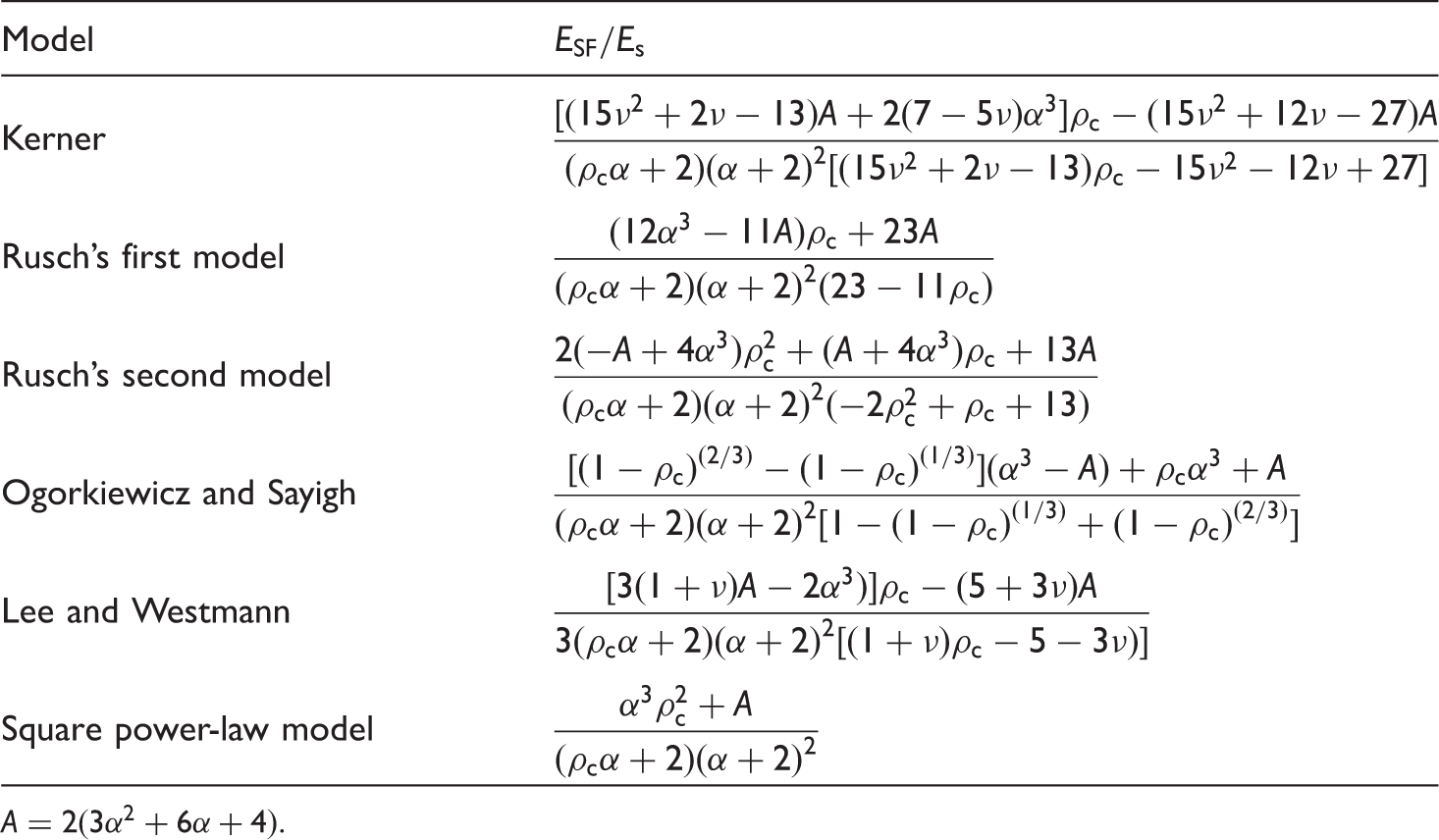
A considerable number of theoretical and semi-theoretical approaches on predicting the modulus of uniform density foams have been reported in the literature. 5 A category of models consider the polymer-gas system as an open network of interconnecting polymeric girders. Meinecke and Clark 22 in a review article on the mechanical properties of foams concluded that the girder network models are only applicable to foams at density levels below those experienced in structural foam applications. The second category includes micromechanics-based approaches by assuming that particles (voids) have negligible mechanical properties and cannot support shear or tension/compression.5,10–12,23–25 They include semi-empirical models with arbitrary constants or expressions evaluated from experimental data and purely empirical relationships derived from a curve fit analysis of experimental data. The density-squared relationship8,9 is of this last category. Some reliable models of the last two categories are reviewed in the remaining of this section.
Kerner model
Kerner
23
developed a model for a multi-particulate-reinforced composite based on the assumption that the reinforcing particles are spherical in shape, randomly distributed, and suspended in, and bonded to, a uniform elastic medium. Assuming the total change in volume in the composite will be the sum of the volume changes of its constituents, Kerner obtained bulk and shear moduli of a multi-phase composite. Modification of this model for uniform density foams results in the elastic modulus of foamed polymer as

Rusch models
Rusch26,27 presented some relations for elastic properties of high-density foams in terms of volume fraction, based on the theoretical results of Kerner 23 and MacKenzie. 28
In the first model, air bubbles were assumed as reinforcing particles with zero shear modulus. Using an empirical relationship for the volume dependence of foam Poisson’s ratio, Rusch obtained Young’s modulus as a function of the volume fraction of polymer
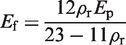
Rusch’s second model assumed that the shear modulus should approach zero as the volume fraction of polymer approaches zero. Using this approximation, Rusch determined Young’s modulus of a cellular solid as a function of its relative density
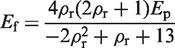
Ogorkiewicz and Sayigh model
Ogorkiewicz and Sayigh
29
modeled the foam structure as a hollow cube in a cube of base material. Assuming strains along any section normal to the direction of the tensile stresses are constant, Young’s modulus of uniform density foam was obtained as

Lee and Westmann model
Based on the theoretical model of Lee and Westmann
30
for the case of a spherical gas-filled inclusion, Young‘s modulus is given by
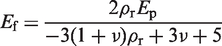
Square power-law model
Moore et al.
31
compared experimental data of 14 different foams with Kerner’s,
23
Lederman’s,
32
and Ogorkiewicz and Sayigh’s
29
theoretical models. They found that the following empirical square relationship had a very good agreement with their experimental results for thermoplastic foams

Properties of structural foams
For theoretical analysis, the structural foam can be considered as a three-layer sandwich panel having solid (unfoamed) skins on both sides and a foamed core section, as shown in Figure 1.
Geometry of a structural foam beam with rectangular cross-section.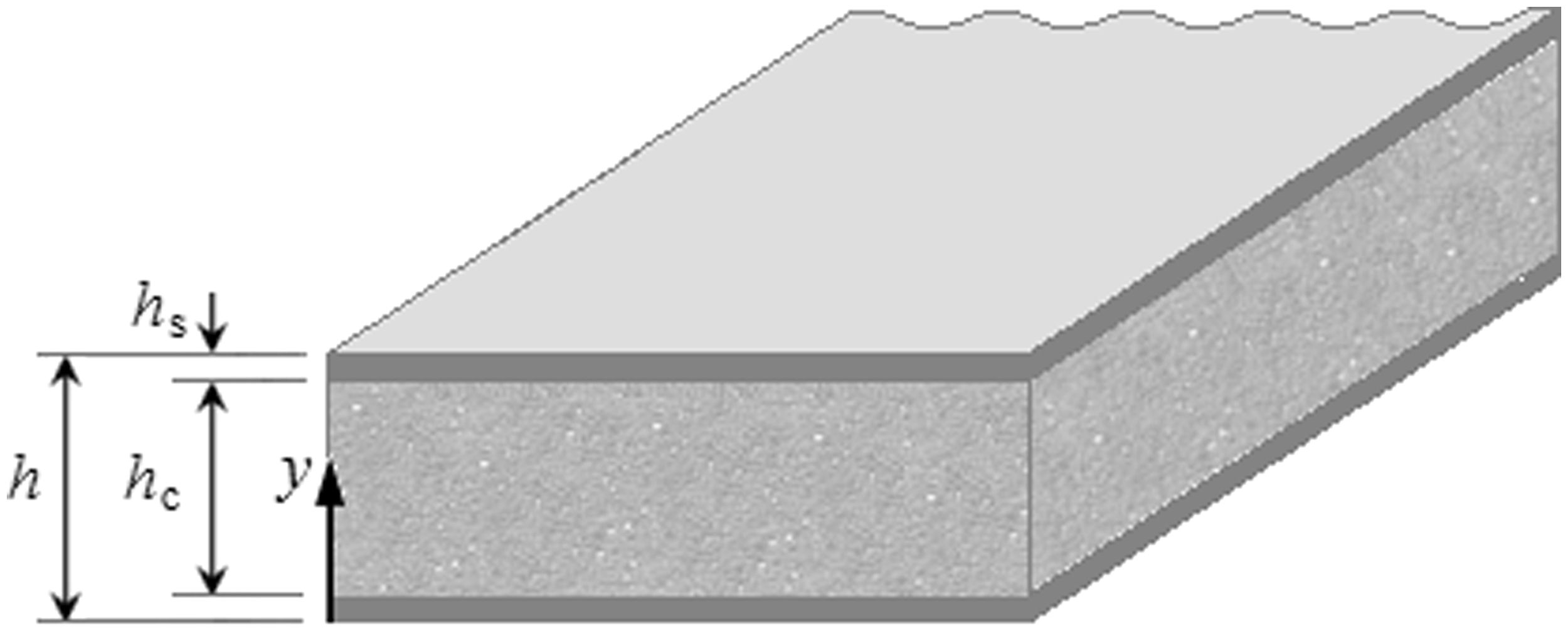
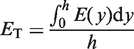
Tensile modulus
Assuming a general distribution function
Flexural modulus
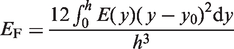
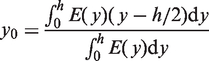
Following the Euler–Bernoulli beam theory for the general case of a nonhomogeneous prismatic bar with arbitrary cross-section under pure bending, Stokes
33
has defined the effective flexural modulus
Properties of structural foams with uniform core
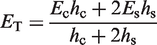
Tensile modulus
For the case of structural foams with uniform core of thickness
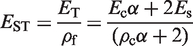
Specific tensile modulus is defined as the ratio of tensile modulus to overall relative density

By defining thickness ratio
Normalized specific tensile modulus Contours of normalized specific tensile modulus predicted by different models: Kerner model (a), Rusch’s first model (b), Rusch’s second model (c), Ogorkiewicz and Sayigh model (d), Lee and Westmann model (e), and square power-law model (f). Normalized specific tensile modulus.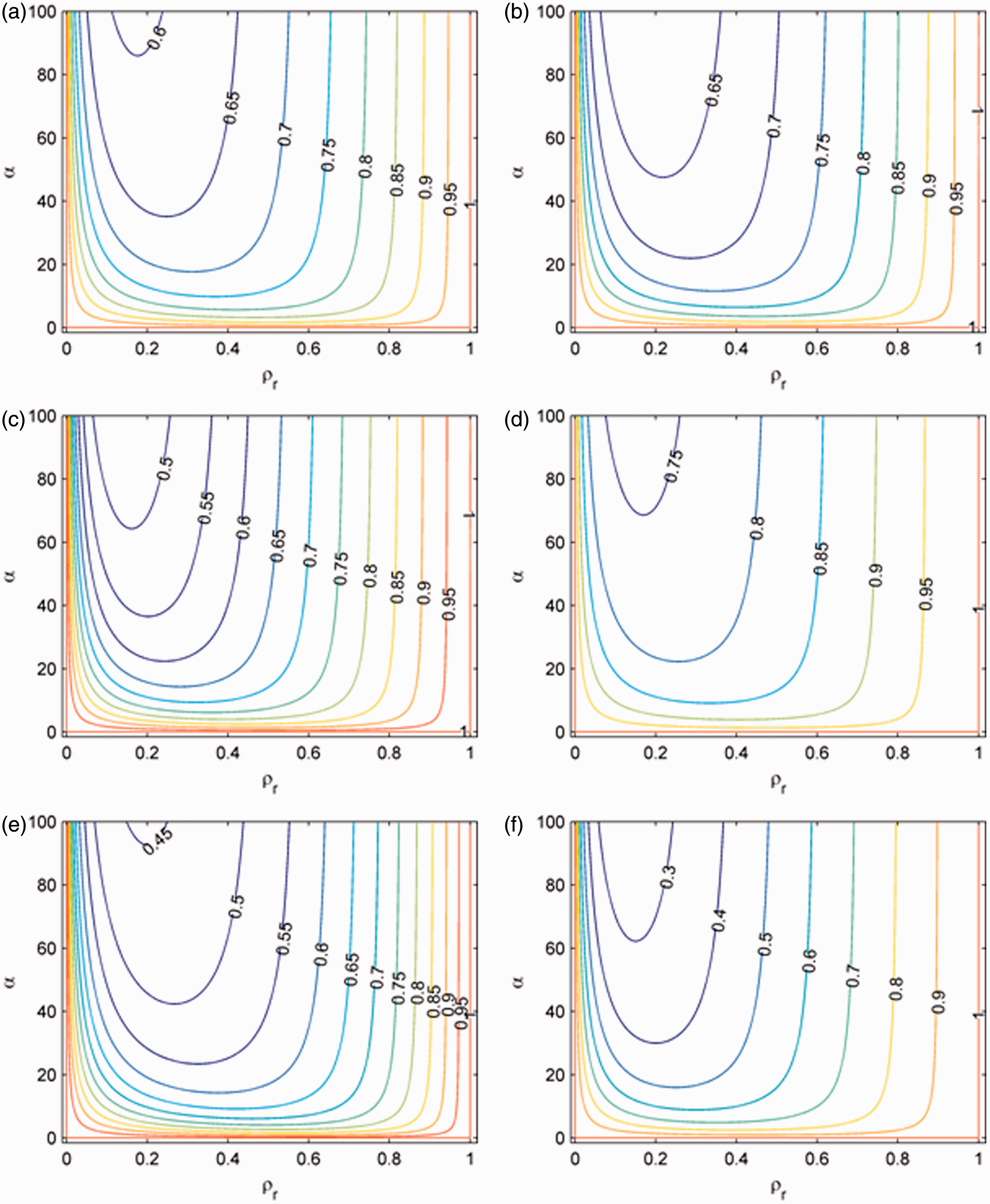
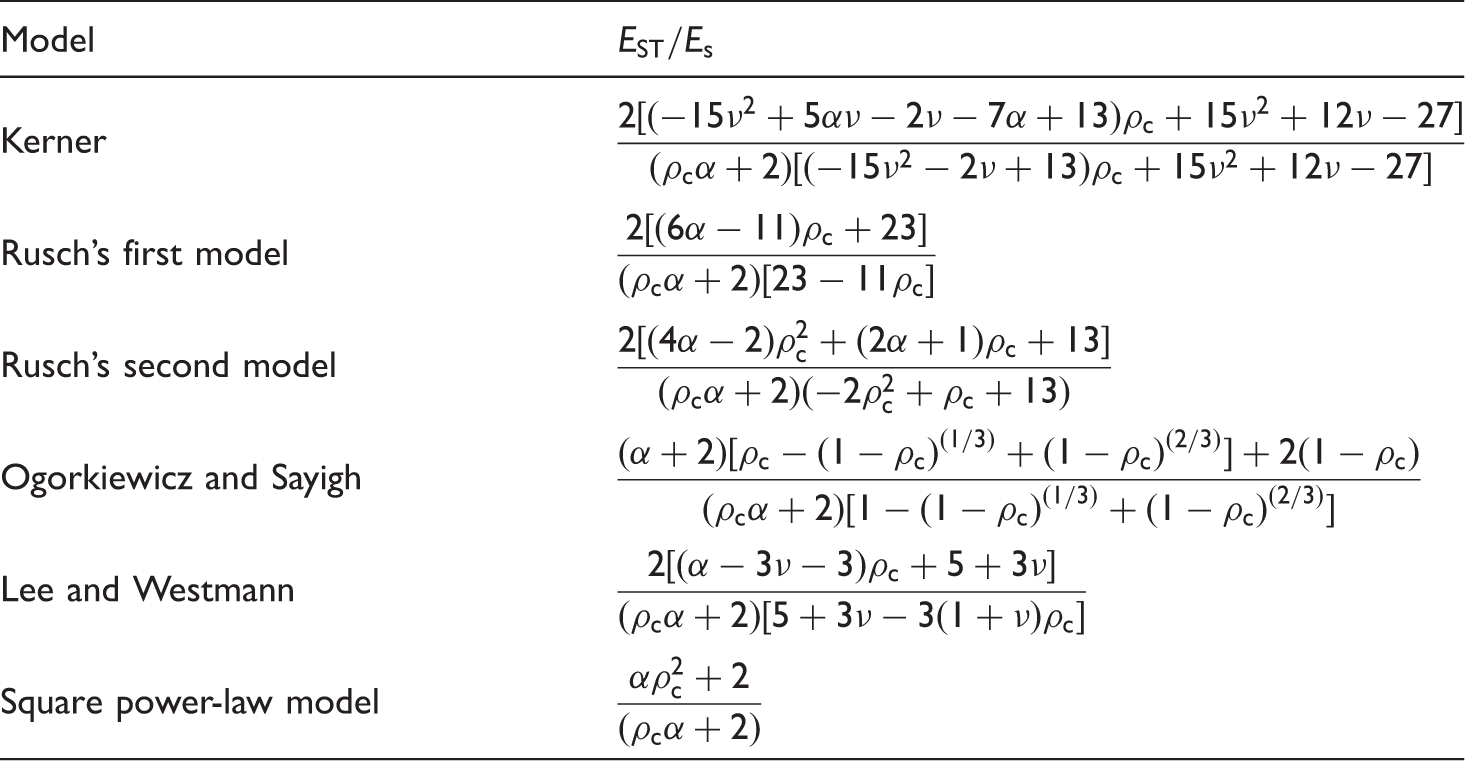
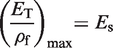
It is obvious that although all models possess similar behaviors, Ogorkiewicz and Sayigh model gives the maximum values for
Flexural modulus
For the structural foam with rectangular cross-section shown in Figure 1 the specific flexural modulus can be written as

Normalized specific flexural modulus Contours of normalized specific flexural modulus predicted by different models: Kerner model (a), Rusch’s first model (b), Rusch’s second model (c), Ogorkiewicz and Sayigh model (d), Lee and Westmann model (e), and square power-law model (f). Normalized specific flexural modulus.
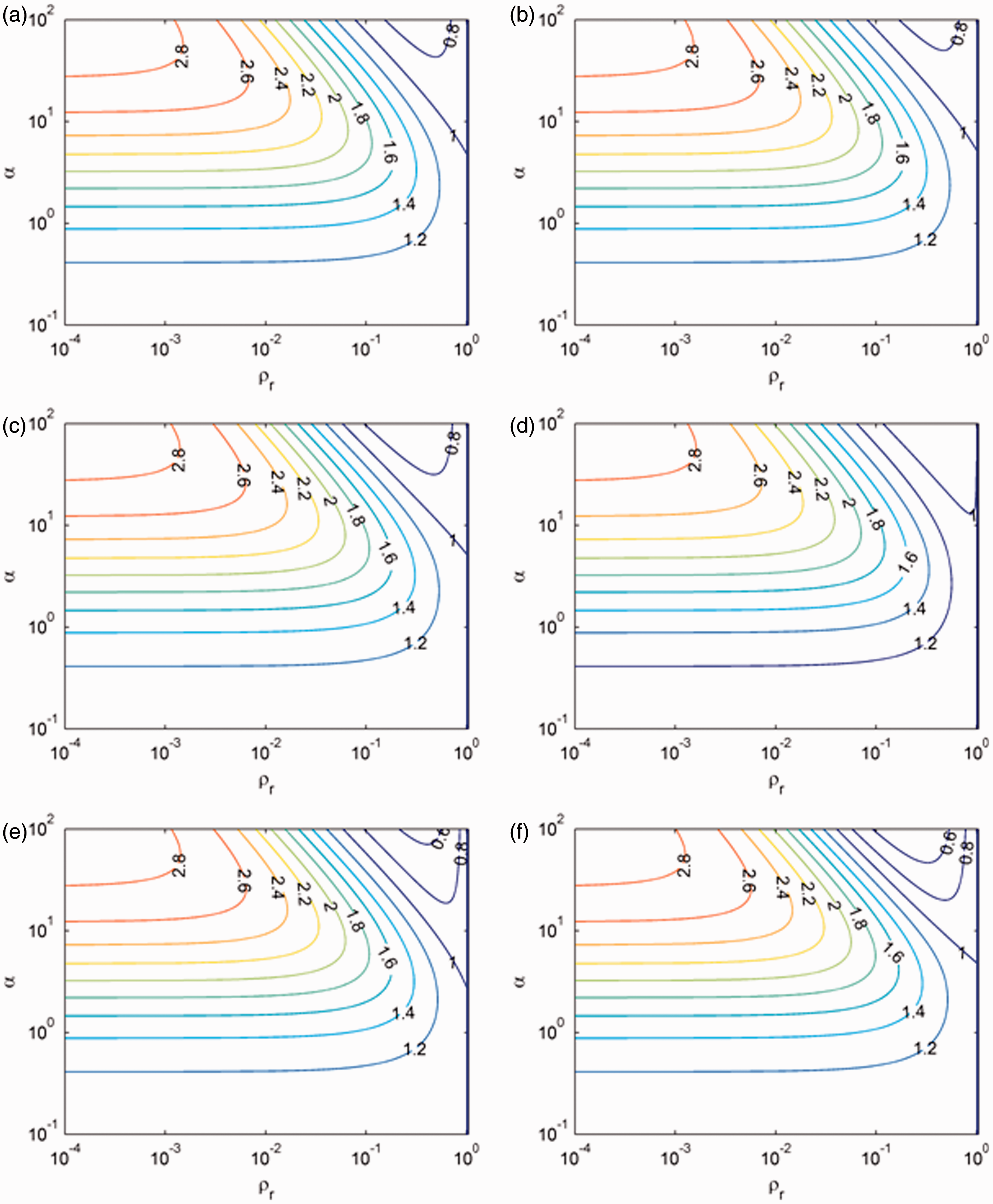
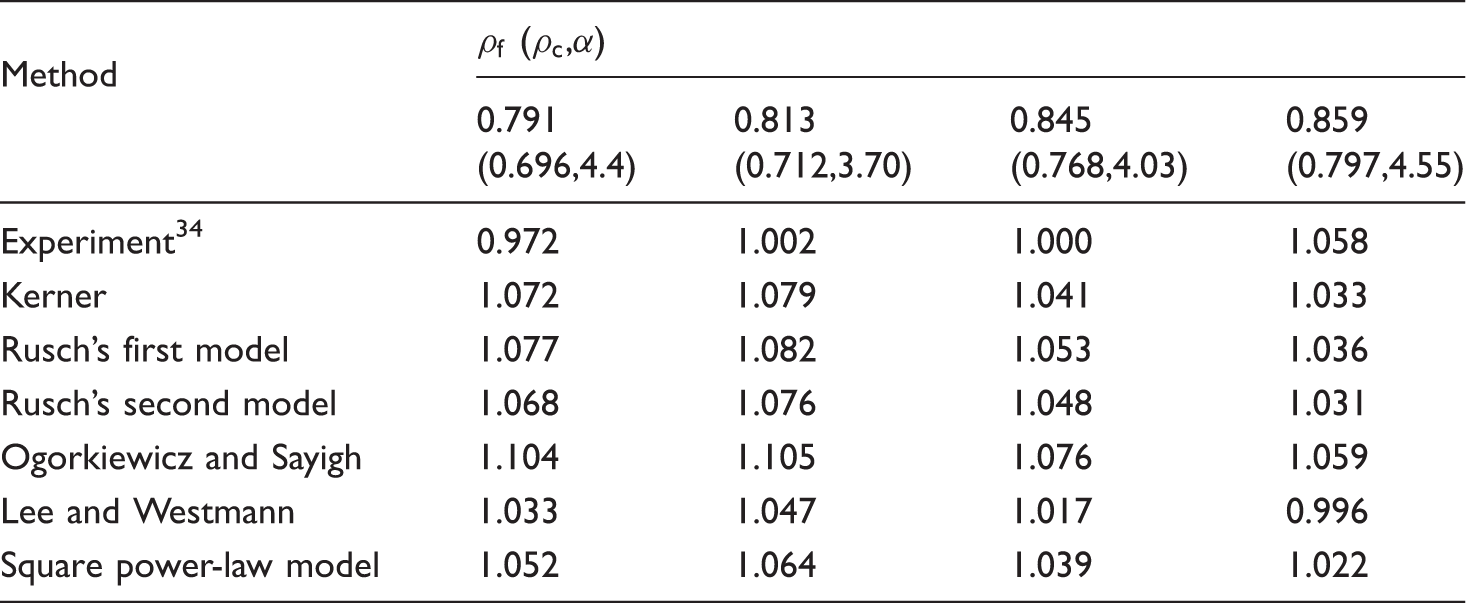
As observed, the results of different models for flexural modulus are closer to each other than those for the tensile modulus. This is because the coefficient of
Experimental data and theoretical predictions for the normalized specific flexural modulus of structural foams.
Structural foam with maximum specific tensile modulus
The optimization problem is defined as finding the thickness ratio 

Substituting Kerner formula from Table 1 gives the boundaries of problem domain as the global optimum, that is,
The second and third optimum conditions correspond to a solid beam with specific modulus of unity, whereas the first condition corresponds to a hollow-core panel. These conditions are found the same for other theoretical models, as can be seen in Figure 2(b) to (f). By directly substituting any of these optimum conditions in equation (12) one obtains
This means that the specific tensile modulus of structural foam does not exceed that of a solid beam of the same material. As can be seen in Figure 2(a) to (f), for the case of hollow-core panel, even the thickness of its skins or the distance between them does not impact on its specific tensile modulus.
Structural foam with minimum specific tensile modulus
To obtain the minimum condition for 
Thus, the optimization problem is defined as finding 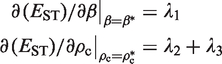
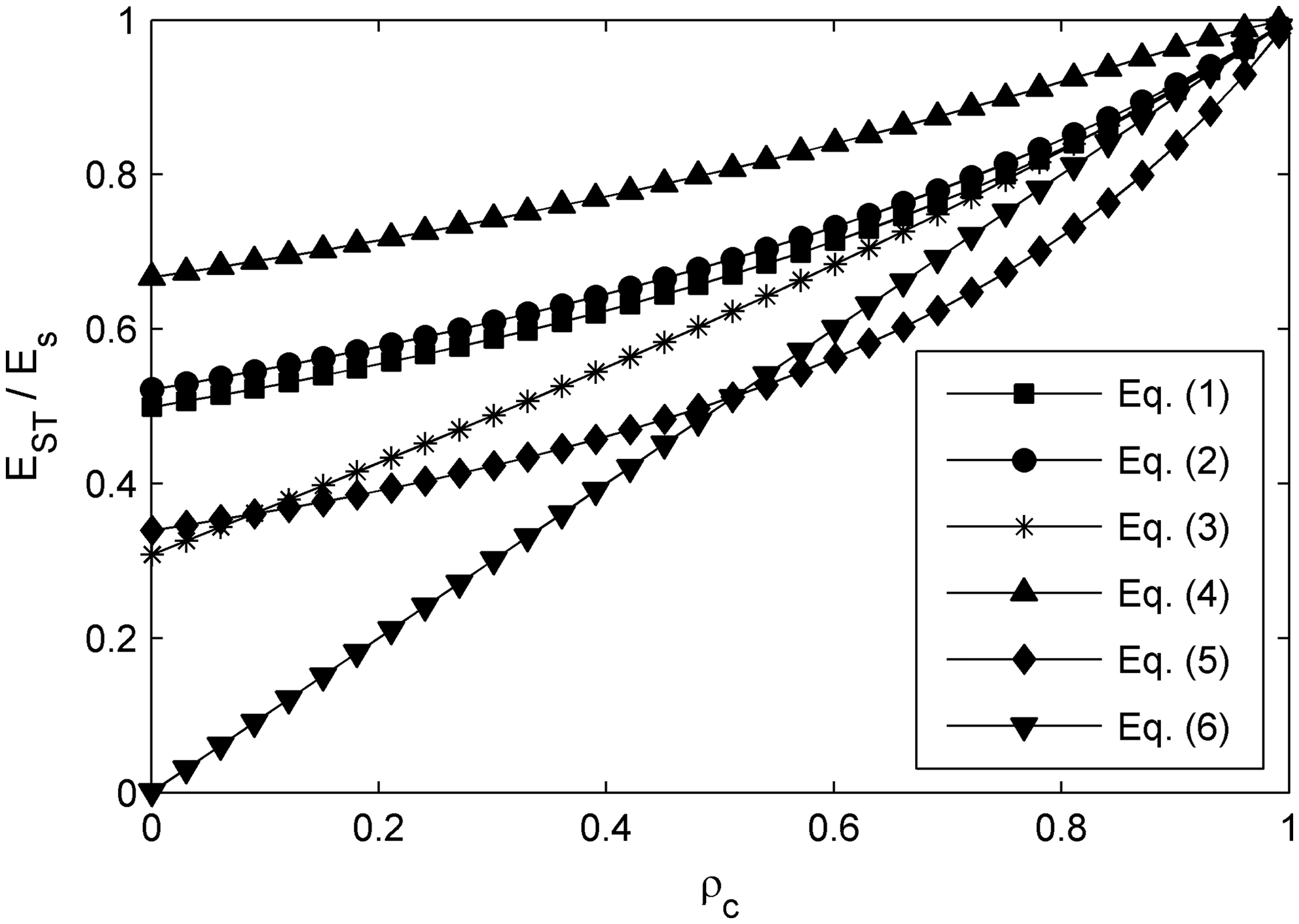
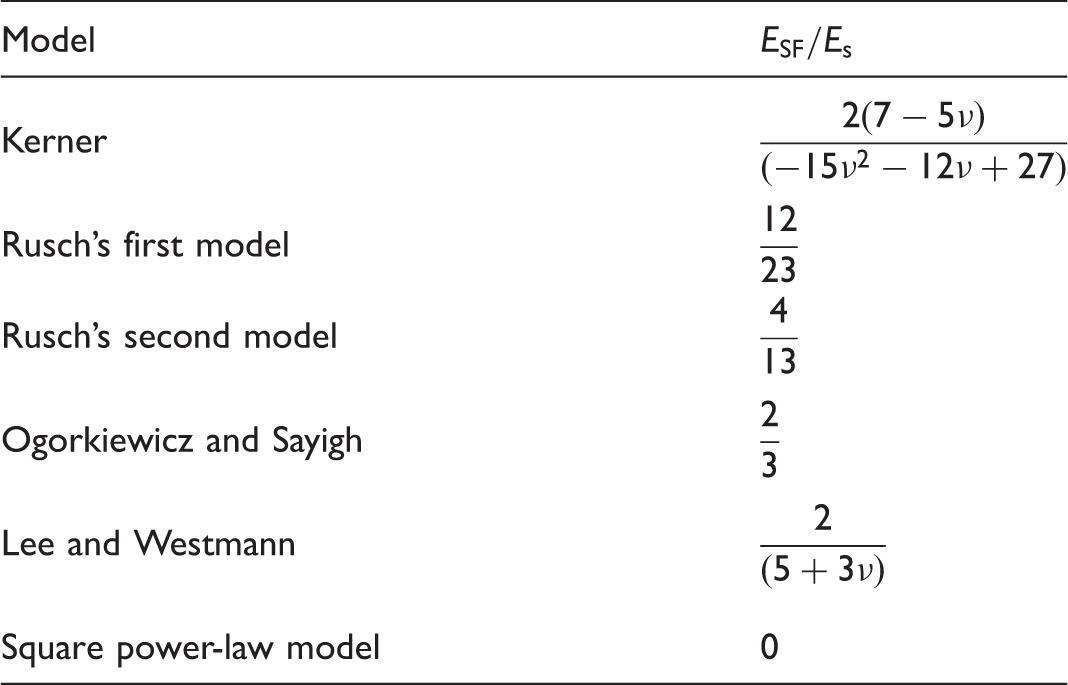
By applying Kerner formula from Table 1, the optimal solution can be found at Diagram of normalized specific tensile modulus vs. foam core density at Minimum value of specific tensile modulus.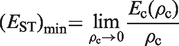
Structural foam with maximum specific flexural modulus
Definition of the optimization problem is similar to that for tensile modulus, except that 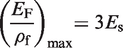
This means that the specific flexural modulus of a hollow-core panel is three times that of a solid beam of the same material.
Structural foam with minimum specific flexural modulus
The optimization problem is defined in a similar manner to that for tensile modulus, except that
Optimum skin thickness for maximum specific flexural modulus
The optimization problem is defined as finding the positive ratio 
By substituting the foam core modulus from any of equations (1) to (6) one could analytically obtain the corresponding Dependence of optimal core to skin ratio on relative core density estimated by different models.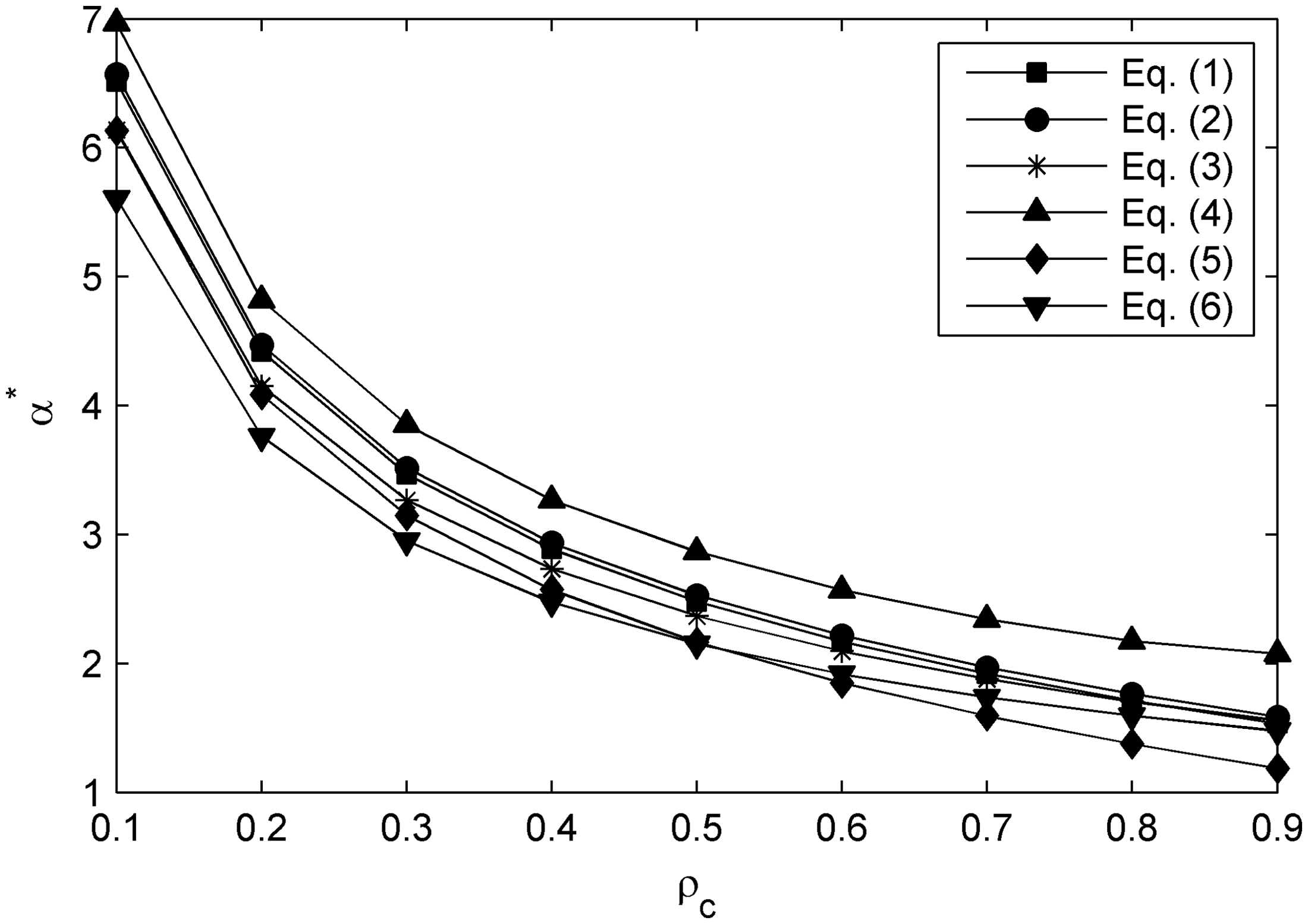
Structural polymer foams with graded density
Density profile
Rodrigue
35
proposed a generalized Fourier series to predict the flexural modulus of symmetric structural polymer foams. He represented the density variation from the surface of the foam to its center in the following general form

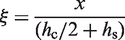
Here, m, n, and
Overall foam density 
Optimum density profile
Assuming the square power-law relation between the local density and the flexural modulus, contours of normalized specific flexural modulus for different values of foam core density are given in Figure 6. As can be seen, there is a reverse relation between the maximum value of normalized specific flexural modulus and the value of relative density at the center of foam core.
Contours of normalized specific flexural modulus for different values of foam core density: 0.2(a), 0.4(b), 0.6(c), and 0.8(d).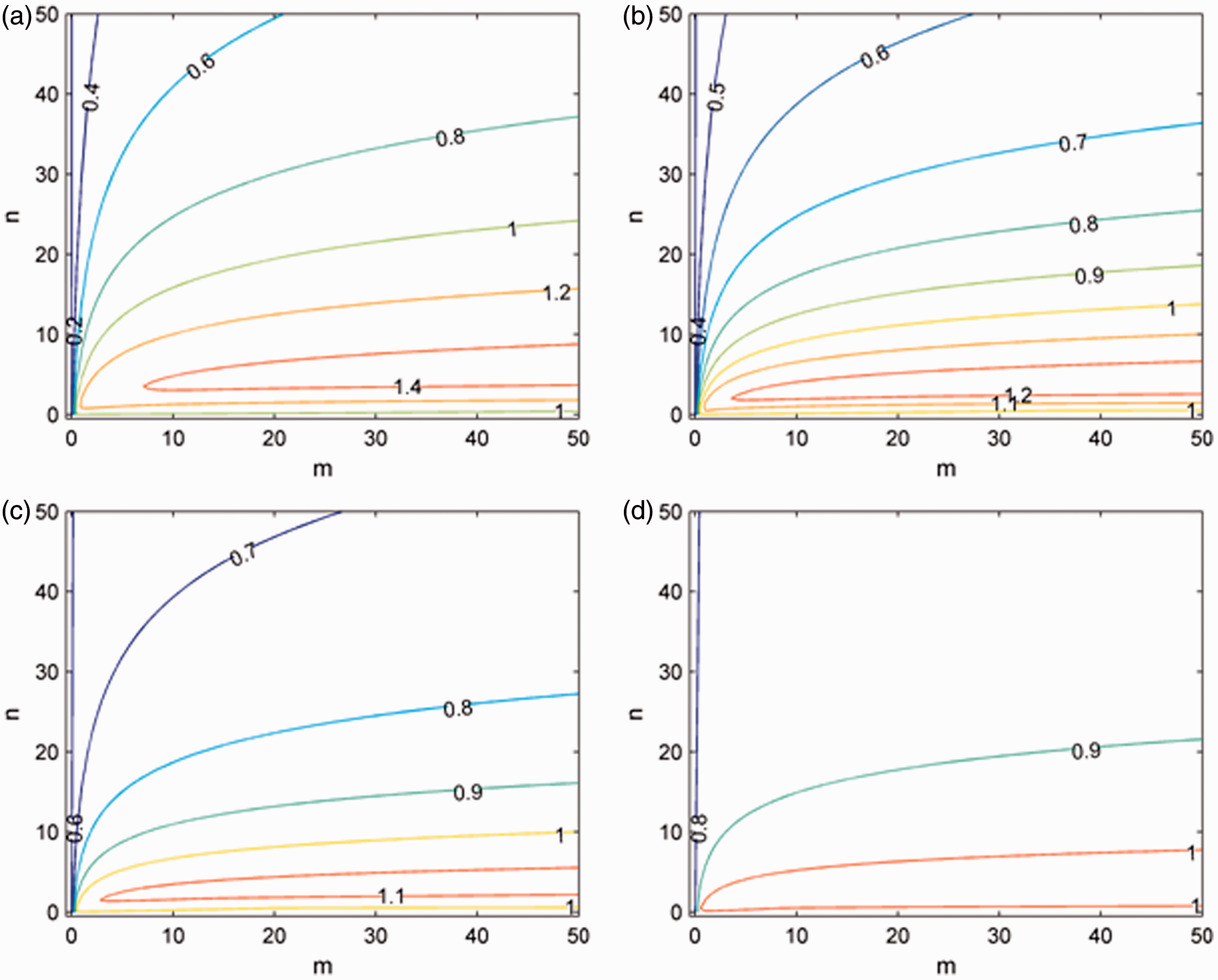
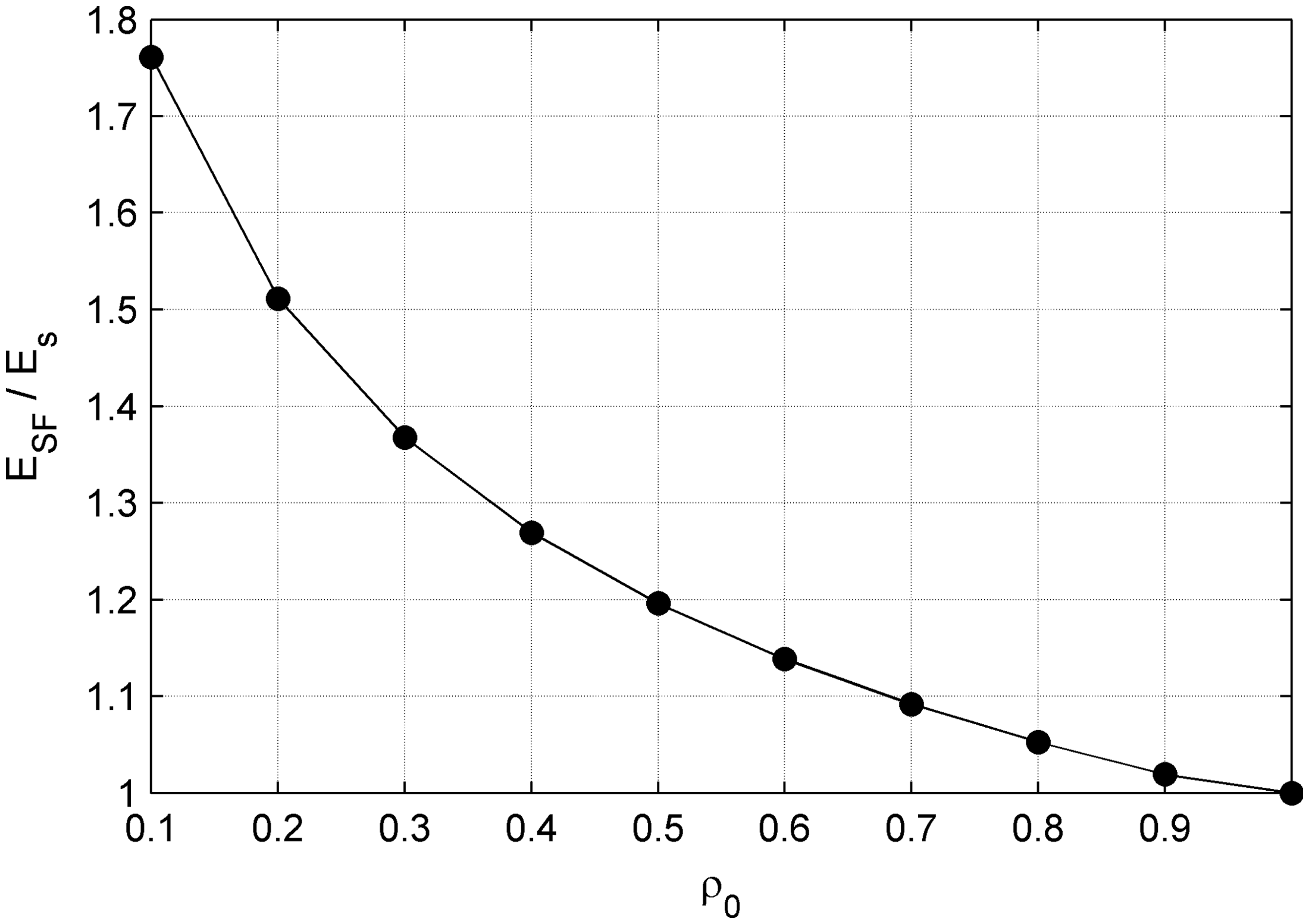
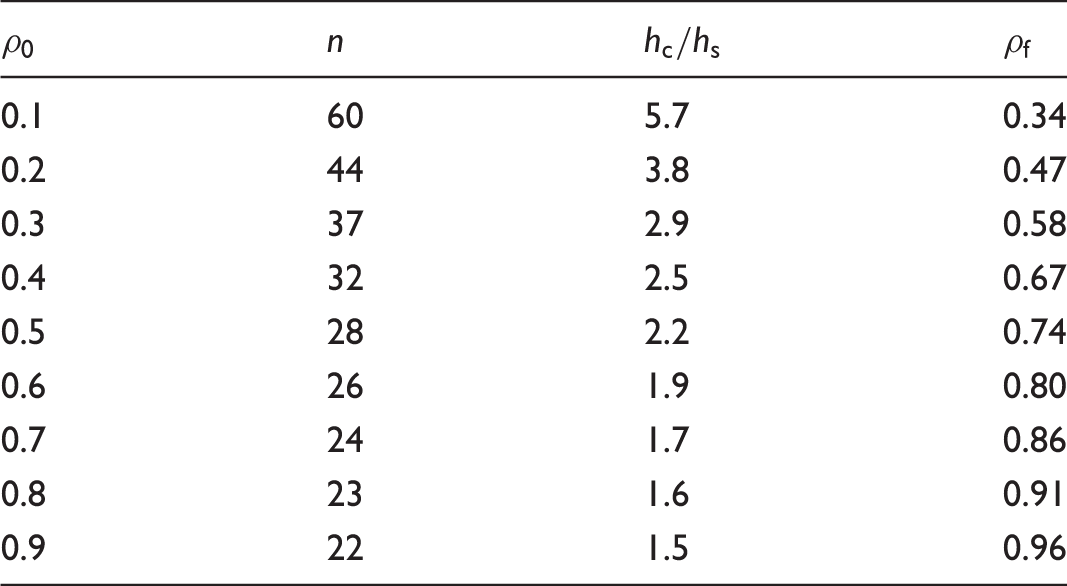
The optimization problem is defined as finding the values of m and n for a specific Optimum density profiles for different values of foam core density. Maximum values of normalized specific flexural modulus in terms of Optimum values of density profile parameters and corresponding foam relative density for a given core density.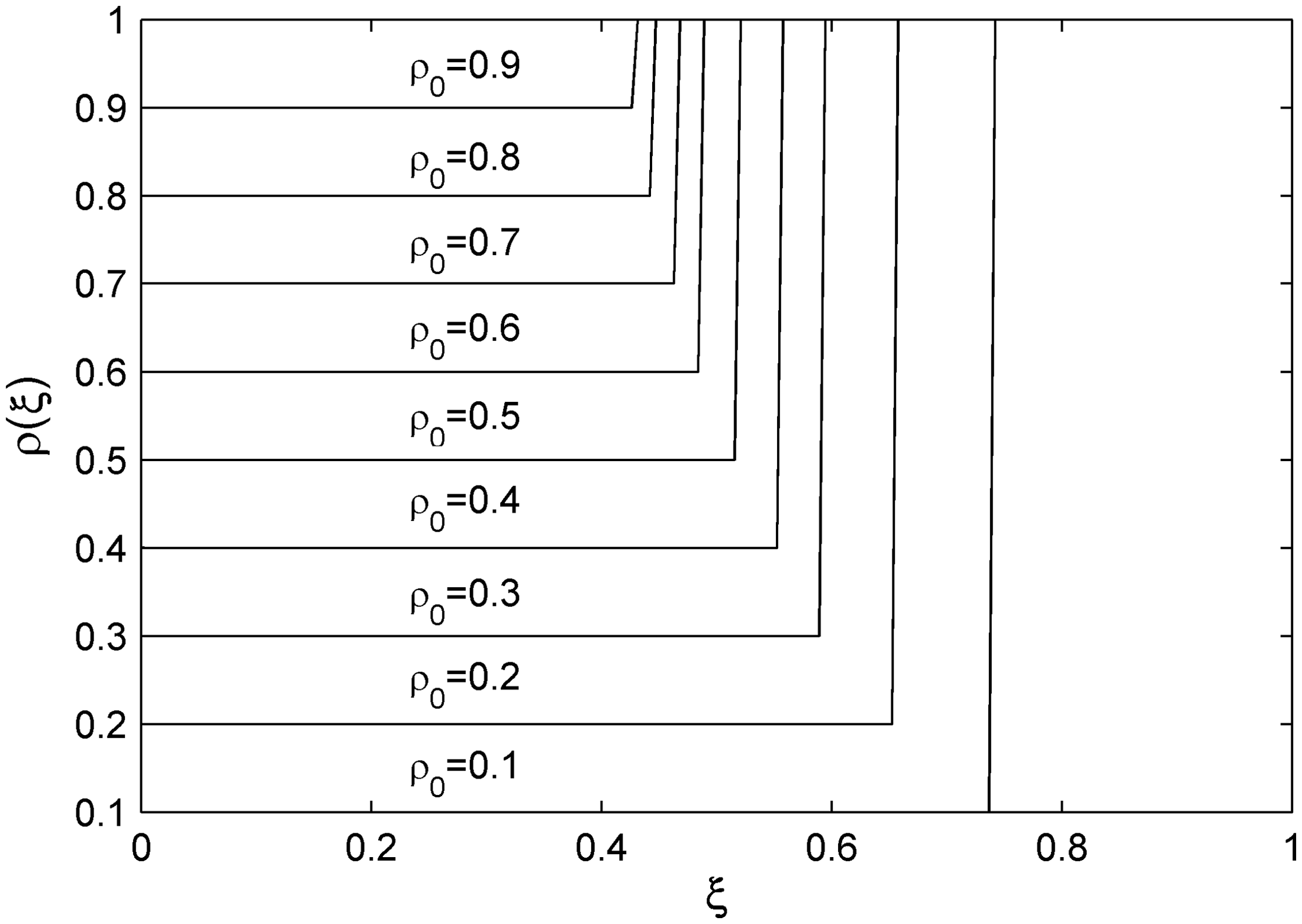
Conclusion
A study was carried out on different models to predict the tensile and flexural moduli of structural polymer foams with uniform or graded density core. The effects of skin thickness, core void fraction, and transition profile on the flexural modulus were investigated for symmetrical structural foams. It was concluded that the dependence of both tensile and flexural moduli on the thickness ratio decreased with increasing relative density of foam core. On the other hand, the effect of relative density on tensile and flexural moduli decreased with increasing thickness ratio.
The structure of structural foam beams was optimized seeking the maximum specific tensile and flexural moduli. The results showed that the tensile modulus per weight of structural foam was at most equal to that of a solid beam made of the same material. Such case corresponded to a hollow-core panel, that is, structural foam with zero-density core. A hollow-core panel was also predicted to have the most amount of specific flexural modulus up to three times of that in a solid beam made of the same material.
Although the specific tensile modulus of hollow-core panel was shown to be independent of its skins thickness or the distance between them, its flexural modulus strongly depended on its cross-section geometry, so that the greater the distance between skins or the lower their thickness, the larger the specific flexural modulus. The minimum tensile and flexural moduli were found equal and observed when the relative core density was close to, but not exactly, zero and core to skin thickness ratio tends to infinity. In such case, every model had its own prediction of tensile or flexural modulus, but the power-low model seemed not to give a realistic result, since it predicted zero normalized specific modulus for vanished value of foam core density. The optimal skin thickness corresponding to maximum flexural modulus was computed and found to be in inverse relation with the foam core density. For structural polymer foams with graded density core, the optimum density profile concerned with maximum flexural modulus was obtained in the form of a step function. Although such abrupt change may not be provided in practice, it can give a reference to what the real density profile is desired to be. On the whole, the purpose of this study was to evaluate different theoretical and empirical models for estimating the tensile and flexural moduli of structural foams, as well as to predict the optimal structural foam with optimum specific mechanical properties. The present study is expected to guide the manufacturer toward the ideal foam structure, which can result in material saving and improvement in mechanical properties.
Footnotes
Funding
This research received no specific grant from any funding agency in the public, commercial, or not-for-profit sectors.
Conflict of interest
None declared.