






Abstract

European Patent Office Erhardtstrasse 27 D-80331 Munich, Germany
http://www.european-patent-office.org
Japanese Patent Office 3-4-3 Kasumigaseki Chiyoda-ku, Tokyo 100-8915, Japan U.S. Patent and Trademark Office General Information Services Crystal Plaza 3, Room 2C02 Washington, DC 20231 World Intellectual Property Organization 34 chemin des Colombettes P.O. Box 18 CH-1211 Geneva 20, Switzerland EP—European Patent Office JP—Japanese Patent Office No Designation—U.S. Patent and Trademark Office WO—World Intellectual Property Organization
Functional Foamed Resin Multilayer Molded Board and Manufacturing Method Thereof
Inventor(s): S Tetsuya; O Takahito; S Yuji
Sources: JP 2018144332
Corporate/Assignee: Tohoku Rubber Industry Co; Ltd.
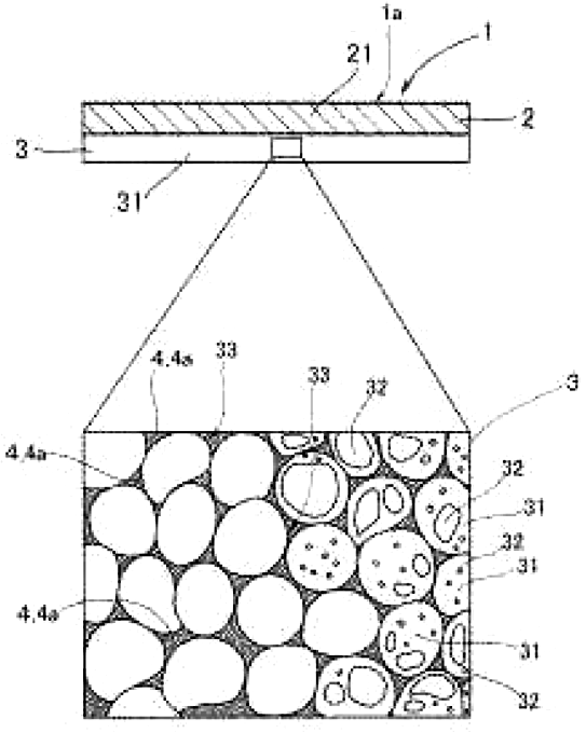
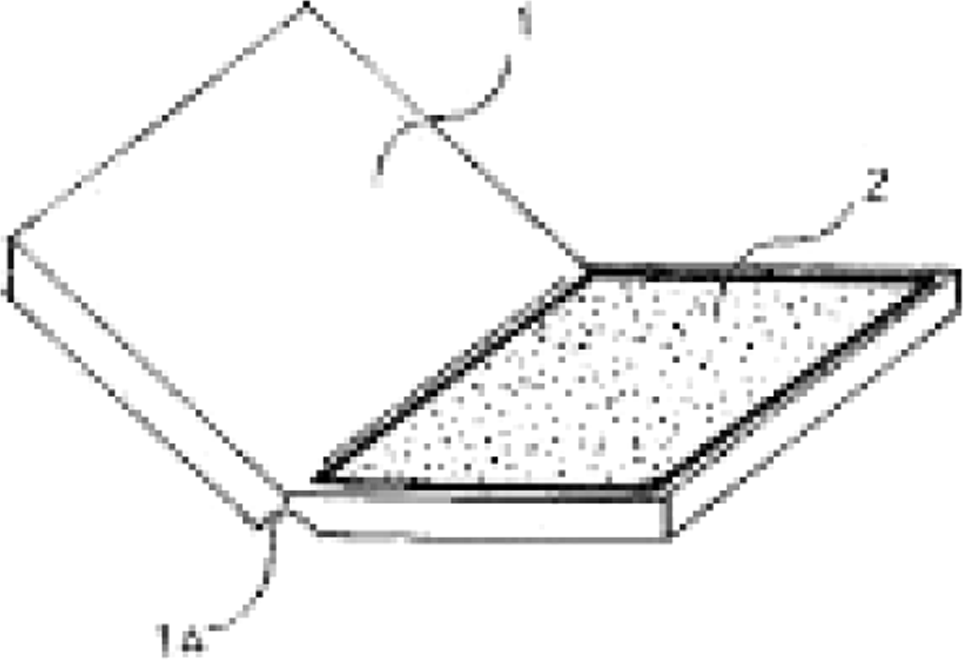
To provide a low cost and a manufacturing method of a new functional foamed resin multilayer molded board capable of obtaining a functional foaming resin multilayer molded board which allows conveniently various functionalities of sustained expression. A least a MenToru adhesive layer 2 obtained by fusing the pre-expanded particles 21 in the planar, the foamed resin multilayer molded board 1a and a porous layer 3 that were fused prefoamed particles 31 in dots, at least a portion of the porous layer 3, the functional agent 4 is filled.
2,3,3,3-Tetrafluoropropene, 1,1,2,3-Tetrachloropropene, 2-Chloro-3,3,3-Trifluoropropene or 2-Chloro-1,1,1,2 – Compositions Comprising Tetrafluoropropane
Inventor(s): MJ Nappa
Sources: JP 2018141159
Corporate/Assignee: The Kemer's Company Efsi Limited Liability Company
A refrigerated, used in air conditioning and heat pump apparatus, the blowing agent may be useful as aerosol propellants, provides a composition comprising a compound of the novel low global warming potential. And a HFO-1234yf, HCO-1250xf, HCC-260da, HCC-260db, HCC-240aa, HCO-1230xa, HCFO-1233xf, HCFO-1233zd, HCFC-244bb, HCFC-244db, HFO-1234ze, HFC -245cb, HFO-1243zf, HCFO-1223za, HCFO-1224zb, HFO-1225zc, HCFC-241db, HCFC-242dc, HCFO-1232xf, HCFO-1231xf, and at least one selected from the group consisting of HCFO-1233yf a composition comprising an additional compound.
Blowing Agents for Extruded Polystyrene Foam, and Extruded Polystyrene Foam, and the Foaming Process
Inventor(s): JE Bowman; DJ Williams
Sources: JP 2018141167
Corporate/Assignee: Honeywell International Incorporated
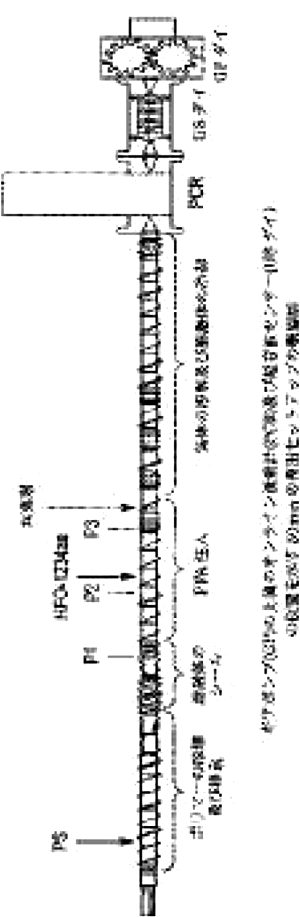
A good thermal insulation properties, chemical stability, low toxicity, provide a method for forming an extruded low-density polystyrene foam also has flame retardancy. (a) A foamable resin containing a polystyrene, and (i) trans -HFO-1234ze and (ii) provide a blowing agent comprising trans HCFO-1233zd; and (b) the foamable composition through a die to extruding; includes a method of forming a foam polystyrene foam is disclosed.
Use of Cis-1,1,1,4,4,4-Hexafluoro-2-Butene Foam-Forming Composition, and a Polyisocyanate-Based Foam Composition in the Manufacture of
Inventor(s): R Gary; JA Crazzo
Sources: JP 2018150554
Corporate/Assignee: The Kemer's Company Efsi Limited Liability Company
A cis-1,1,1,4,4,4-hexafluoro-2-butene, and an active hydrogen-containing compound poorly compatible with two or more active hydrogen, the composition for foam molding containing both providing of things. And a cis-1,1,1,4,4,4-hexafluoro-2-butene, foam-forming composition comprising an active hydrogen-containing compound poorly compatible with two or more active hydrogen a is, the active hydrogen compound is a polyester polyol, also, the solubility of cis-1,1,1,4,4,4-hexafluoro-2-butene does not exceed 25 wt%. Effective amount of the foaming and molding composition, suitable polyisocyanates closed-cell polyurethane or polyisocyanurate polymer foam prepared from the reaction of also disclosed. Method for producing a closed-cell polyurethane or polyisocyanurate polymer foam by reacting an effective amount of a foam-forming composition and a suitable polyisocyanate is also disclosed.
Composition Containing a Fluorine-Substituted Olefin
Inventor(s): RE Shin; HT Fam; DP Wilson; RH Thomas; MW Spats; DA Metcalf
Sources: JP 2018150556
Corporate/Assignee: Honeywell International Incorporated
A heat transfer composition, fire extinguishing/fire suppression compositions, blowing agents, provided the solvent composition 及相 solvent. (A) A formula: XCFzR3-z compound represented by (X is unsaturated, substituted or unsubstituted group, R is Cl, F, Br, I or H, z is 1 and 3), (b) lubricants, stabilizers, metal passivators, corrosion inhibitors, burn suppressing agent, trichlorofluoromethane (CFC-11), dichlorodifluoromethane (CFC-12), difluoromethane (HFC 32), pentafluoroethane (HFC-125), HFC-134, HFC-134a, HFC-152a, HFC-227ea), HFC-236fa, HFC-245fa, HFC-365mfc, water, CO2 and two or more thereof composition comprising at least one additional component selected from a combination of.
Protective Helmet for Lateral and Direct Impacts
Inventor(s): A Straus
Sources: US Pat.: 10,143,256
Corporate/Assignee: AES R&D, LLC
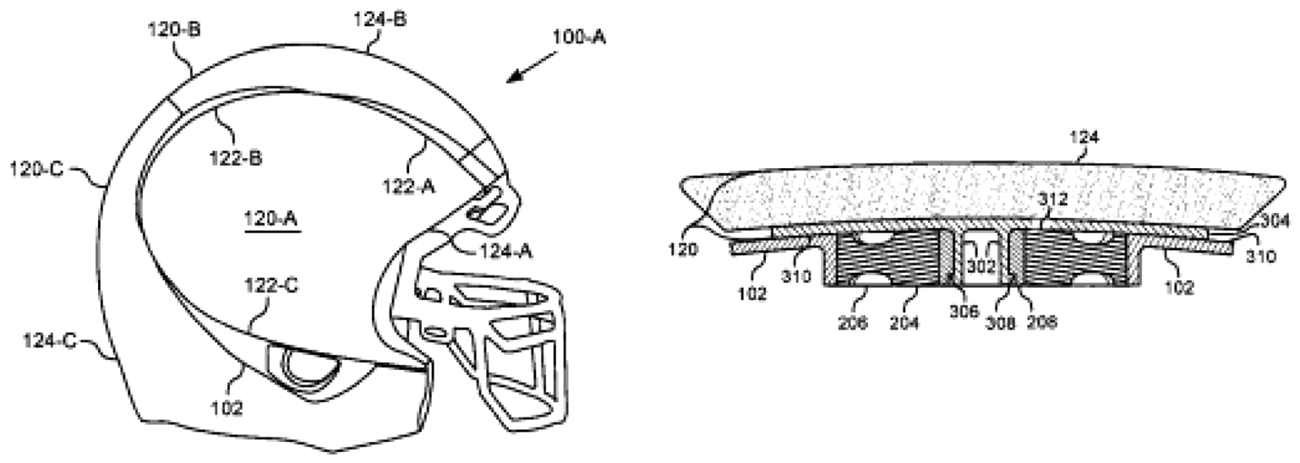
Apparatus for protecting a user from impacts to the head. The apparatus includes a shell configured to receive a human head and a plurality of structures attached to the outer surface of the shell, where each structure is independently coupled to the shell with a respective assembly. The structures move independently of one another but are restricted to moving laterally along the outer surface of the shell. The structures each include a foam cell that reduces the magnitude of a head-on impact as the impact transfers from the foam cell to the shell. The assemblies each include an elastomeric donut that reduces the magnitude of a lateral impact as the impact is transferred from the foam cell to the donut assembly to the shell. Thus, a user is protected from the concussive effects of a head-on impact and the rotational acceleration injuries of a lateral impact.
Particle-Containing Foam Structure
Inventor(s): S Areskoug; M Prydz; M Nolmark
Sources: US Pat.: 10,143,595
Corporate/Assignee: Molnlycke Health Care AB
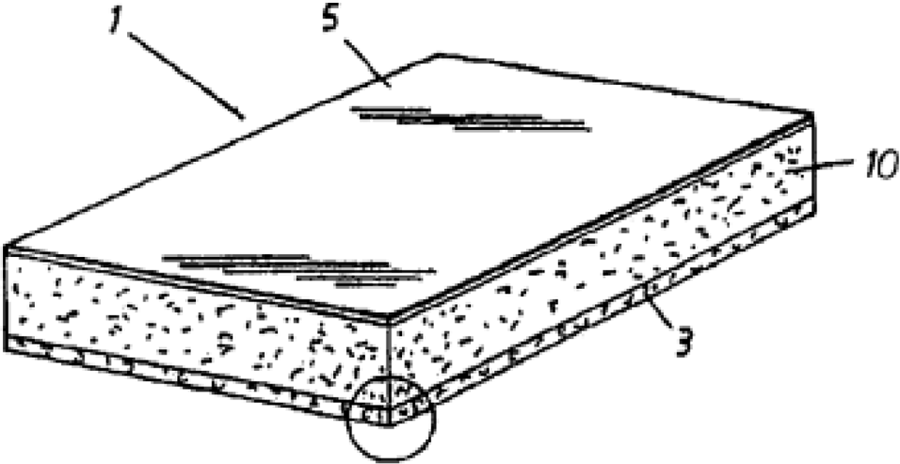
A method of producing a hydrophilic polyurethane foam structure containing inert activated carbon particles, includes the steps of: (a) providing a water phase containing a surfactant and dispersed inert particles; (b) providing a isocyanate-terminated polyether having functionality of more than 2; (c) mixing the water phase and the isocyanate-terminated polyether, immediately transferring the resulting mixture to a mold or a continuous web, whereby a foam structure is obtained; and (d) drying the foam structure until it has a moisture content of at most 10% (wt). A foam structure produced by the method and a wound dressing containing the foam structure are also disclosed.
Nucleation Efficiency of Talc in the Foaming Behaviour and Cellular Structure of Polymer-Based Foams
Inventor(s): G Meli
Sources: US Pat.: 10,160,843
Corporate/Assignee: Imerys Talc Europe
A polymer-based foam composition includes a polymer and up to 20 wt.% talc particles, based on the total weight of the composition. The talc particles include microcrystalline talc.
Foam Composites
Inventor(s): W Bracegirdle; S Clarke; S Mcmillan; M Orpin
Sources: US Pat. App.: 20180346680
Corporate/Assignee: XFLAM PTY LTD
Polystyrene–phenolic foam composites and processes for their preparation are provided. The composites have very low density yet retain advantageous mechanical properties. The composites have excellent fire resistance properties and find application in the production of insulation panels.
Method of Preparing Vinyl Chloride-Based Polymer and Apparatus for Preparing Vinyl Chloride-Based Polymer
Inventor(s): KJ Kim; SY Ahn; SW Lee; HK Ha
Sources: US Pat. App.: 20180355079
Corporate/Assignee: LG CHEM, LTD.
The present invention relates to a method of preparing a vinyl chloride-based polymer, which may prepare a vinyl chloride-based polymer with excellent surface properties by adjusting a foam level generated during a polymerization reaction to an appropriate value, a vinyl chloride-based polymer prepared thereby, and an apparatus for preparing a vinyl chloride-based polymer which may prepare the vinyl chloride-based polymer. The method of preparing a vinyl chloride-based polymer according to the present invention may prepare a vinyl chloride-based polymer with excellent surface properties, for example, fewer occurrences of fish-eyes and excellent transparency, by performing a polymerization reaction while maintaining the level of a foam generated during the polymerization reaction at an appropriate value.
Polymeric Foam Board with Flexible Water Resistant Intumescent Coating
Inventor(s): X Song; D Ren; H Chen; JM Alcott; MA Barger; Y Zhang; EJ Herst
Sources: US Pat. App.: 20180355140
Corporate/Assignee: Dow Global Technologies LLC
An article contains a polymeric foam board having a primary surface and an intumescent coating on a primary surface of the polymeric foam board, the intumescent coating containing a polymeric binder, expandable graphite particles, a phosphorous material and a boron-containing compound and wherein the article is free of an object that is in contact with the intumescent coating and that sandwiches the intumescent coating between it and the polymeric foam board and wherein the intumescent coating has a tensile elongation of at least 50 percent and less than 100 percent at 23°C as measured according to ISO 37, has a storage modulus of less than 1 × 10⁶ Pa at 250°C, is halogen-free, free of sodium silicate, free of polyurea elastomer, and free of formals of pentaerythritol and dipentaerythritol.
Polyolefin Resin Foam Sheet and Adhesive Tape
Inventor(s): K Nagai; S Matsuki
Sources: US Pat. App.: 20180355219
Corporate/Assignee: Sekisui Chemical Co. Ltd.
There is provided a polyolefin resin foam sheet formed by foaming a polyolefin resin, wherein the expansion ratio of the foam sheet is 1.5–20 cm3/g, the average cell sizes in the MD direction and the TD direction of the foam sheet are 130 µm or less, and the following formulas (1) and (2) are satisfied: TM/D ≥ 6 (1); and TT/D ≥ 5 (2), where TM denotes the tensile strength at 90°C. in the MD direction, TT denotes the tensile strength at 90°C. in the TD direction, and D denotes the density (g/cm3) of the foam sheet.
Process for Preparing Thermoplastic Elastomer Foam and Foamed Article
Inventor(s): Y Chang; RL Watkins
Sources: US Pat. App.: 20180362721
Corporate/Assignee: NIKE, Inc.
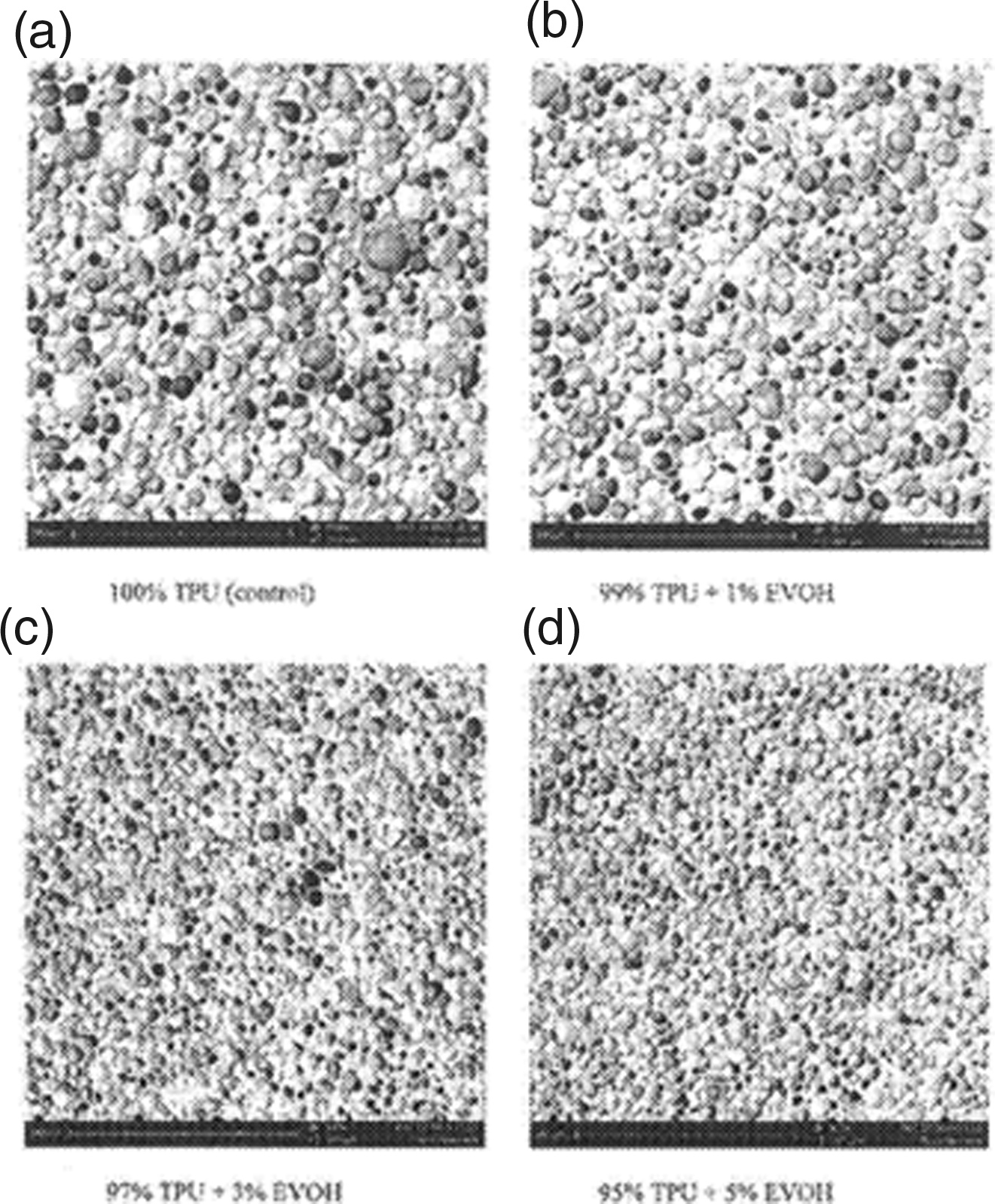
A thermoplastic elastomer foam is made by incorporating a gaseous or supercritical blowing agent under pressure into a molten thermoplastic elastomer comprising polymeric crystalline domains, then releasing the pressure to foam the thermoplastic elastomer.
Adhesive Articles that Include a Polymer Foam and Methods of Making the Same
Inventor(s): RD Waid; S Cheng; TT Tran; DJ Yarusso
Sources: US Pat. App.: 20180362811
Corporate/Assignee: 3M Innovative Properties Company
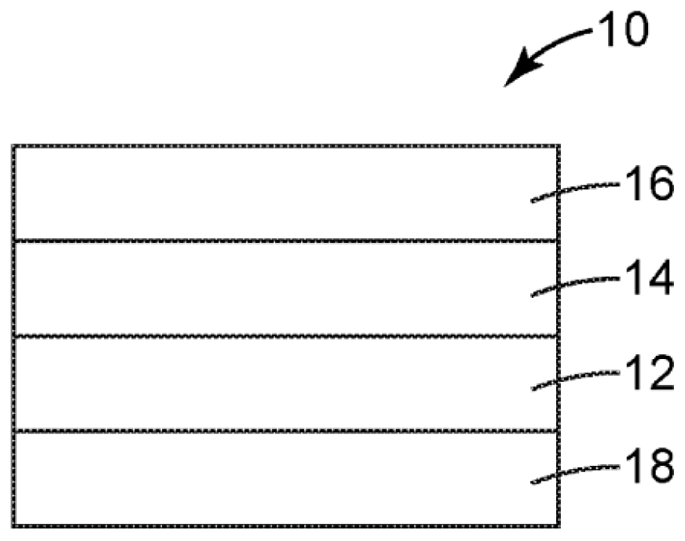
Described herein is a foam adhesive article comprising: a closed cell foam layer comprising an extruded thermoplastic polymer foam and particles distributed therein, wherein the particles comprise a plurality of hollow particles, wherein the hollow particles comprise at least one of thermoplastic expanded polymeric particles, glass particles, and mixtures thereof; and a plurality of sorbent particles. Also disclosed herein are precursor compositions and methods of making such constructions.
Foam Molded Body
Inventor(s): T Takashima; K Yamaoka; T Ishikawa
Sources: US Pat. App.: 20180371160
Corporate/Assignee: Mitsubishi Chemical Corporation
An object of the present invention is to provide a molded body that is easy to produce and obtained by foaming a polycarbonate copolymer containing, as a raw material, isosorbide that is lightweight and excellent in mechanical properties and like. The present invention relates to a foam-molded body containing a polycarbonate copolymer having a structural unit derived from a dihydroxy compound represented by the following formula (1): ##STR00001## and a structural unit derived from other dihydroxy compounds, and having a glass transition temperature (Tg) of less than 145°C.
Coated Closed-Cell Foam Tube Insulations and Methods for Producing the Same
Inventor(s): BV Thomas
Sources: US Pat. App.: 20180372260
Corporate/Assignee: L'Isolante K-Flex S.p.A.
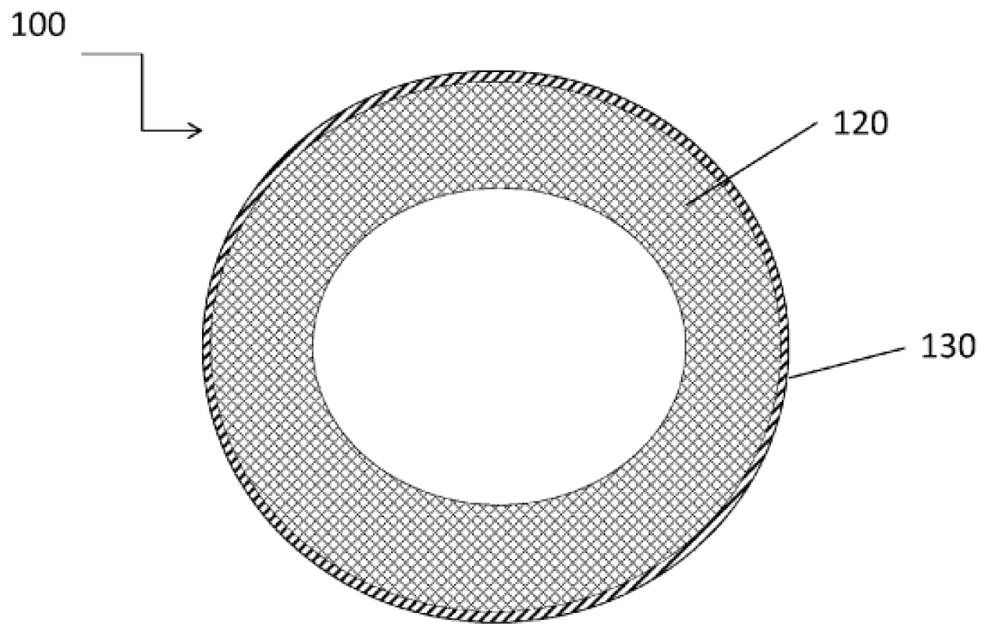
Provided is an insulation product, optionally in a tubular form, that includes a coated foam insulation layer, where the foam insulation layer has a closed-cell structure. The coating can comprise a thermoplastic elastomer that seamlessly covers and is bonded to an outer surface of the elastomeric foam layer in the absence of an adhesive bonding material to protect the foam insulation layer, e.g. during outdoor insulation applications. A pipe where the insulation product is installed is also provided, as is a method of installing the insulation product, and a method of producing the insulation product.
Wallpaper
Inventor(s): M Nanaoki; Y Takei
Sources: JP 2018145621
Corporate/Assignee: Toppan Printing Co; Ltd.
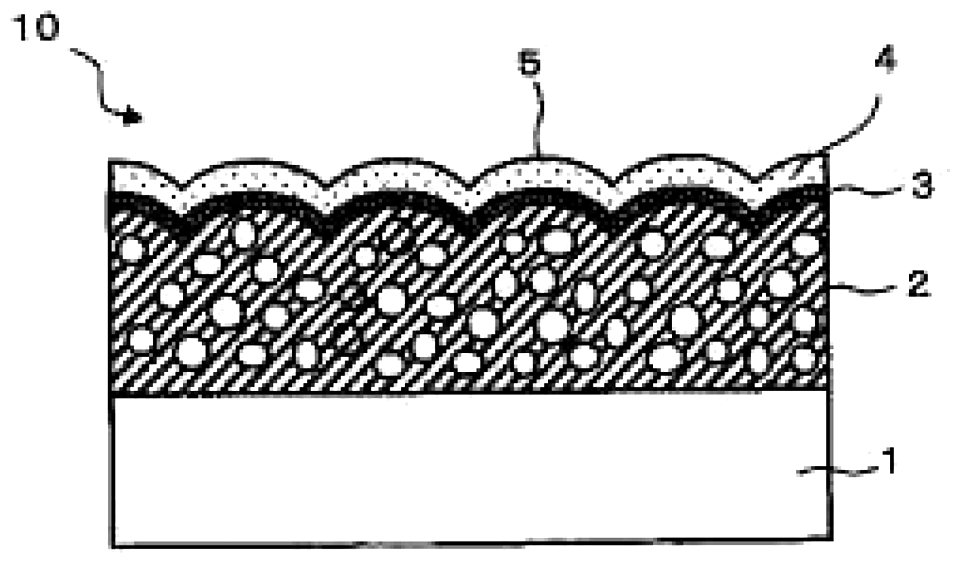
A paper was used as a base material, in wallpaper foamed and foamed resin layer and a picture-printed layer laminated on the base material, to provide a hard wallpaper occur stretch by water absorption. A paper substrate 1, the foamed resin layer 2, picture printed layer 3 and the surface protective layer 4 are laminated in this order, using a mixed paper containing a hydrophobic synthetic fiber and natural pulp as a paper substrate 1, wallpaper surface protective layer 4 is composed mainly of acrylic resin. Since the synthetic fibers have poor elasticity due to water absorption, even when the water-based adhesive has penetrated the paper substrate, preventing its extended. Since the surface protective layer 4 is composed mainly of acrylic resin, it is less elastic due to water absorption.
Conductive Foamed Member and a Manufacturing Method Thereof, Transfer Roll, Process Cartridge, and an Image Forming Apparatus
Inventor(s): K Kentaro
Sources: JP 2018146742
Corporate/Assignee: Fuji Xerox Co; Ltd
A good ozone resistance and resistance stability, provide permanent deformation of small conductive foamed member. A nitrile rubber, at least one member selected from the group consisting of chloroprene rubber and hydrogenated nitrile rubber and the resin A, at least one selected from styrene-butadiene rubber and epichlorohydrin-based group consisting of rubber and resin B, an ethylene – propylene – a diene rubber obtained by peroxide cross-linking and foaming the foaming resin, and a conductive foam member containing carbon black.
Composite Sound-Absorbing Material and a Manufacturing Method and Improved Method of Sound Absorption Thereof
Inventor(s): T Yoichiro; O Akihiro
Sources: JP 2018146746
Corporate/Assignee: Dm Nova Form Corporation
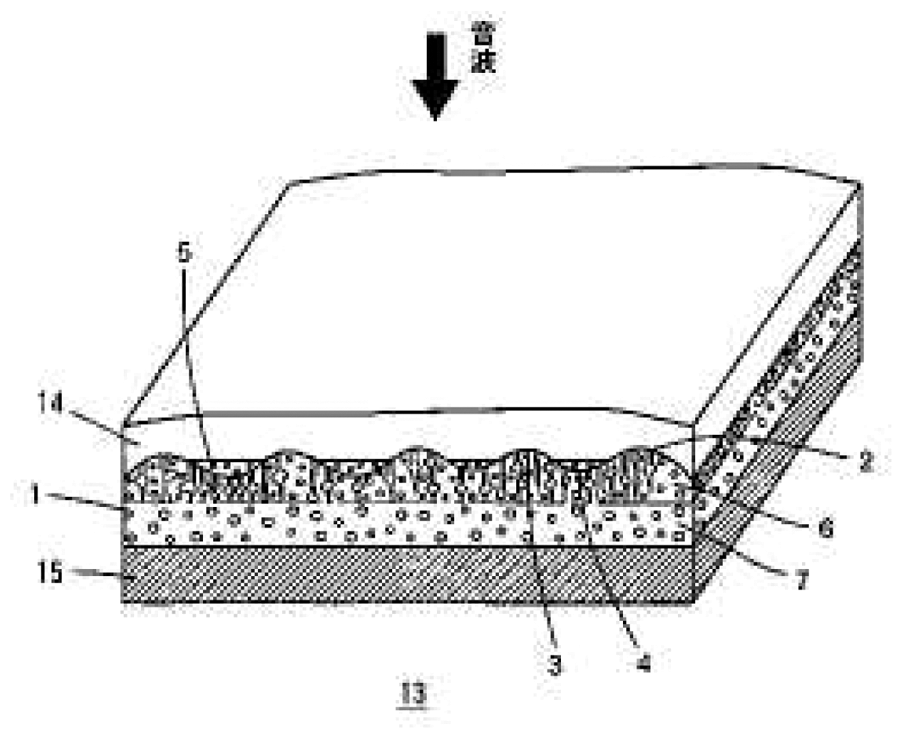
A wide improve the frequency range of the sound waves of the sound absorbing properties to provide a composite sound-absorbing material and manufacturing method, and sound-absorbing method for improving the. A composite sound absorbing material 13 is a nonwoven fabric 14, a plate-shaped resin foam 1, a composite sound absorbing material having a rubber-based foam 15, the plate-like resin foam 1 and the rubber foam 15 has at least open cell structure, the rubber foam 15, the nonwoven fabric 14 or the plate-like resin foam 1 are stacked. Further, the nonwoven fabric 14, the plate-shaped resin foam 1 may be arranged in the order of the rubber-based foam 15.
Styrene Resin Extruded Foam and a Method for Producing
Inventor(s): O Takahashi; K Takenani; K Shunji
Sources: JP 2018150474
Corporate/Assignee: Kaneka Corporation
An object of the present invention has an excellent heat insulating property and flame retardancy, further, in beautiful appearance, and is to obtain easily styrene resin extruded foam having a sufficient thickness suitable for use. That it contains less 5.0 parts by weight or more 0.05 part by weight of polyethylene glycol, polyhydric alcohol fatty acid ester 0.05 parts by weight or more 5.0 parts by weight with respect to A styrene resin 100 parts by weight and wherein it can be achieved by a styrene resin extruded foam. Furthermore, using at least hydrofluoroolefin as a foaming agent, it is preferable amount of hydro fluoroolefin is less than 14.0 parts by weight 3.0 parts by weight or more relative to 100 parts by weight of styrene resin.
Concrete Block Insulation
Inventor(s): RA Porter
Sources: US Pat.: 10,151,111
Corporate/Assignee: CFI FOAM, INC.
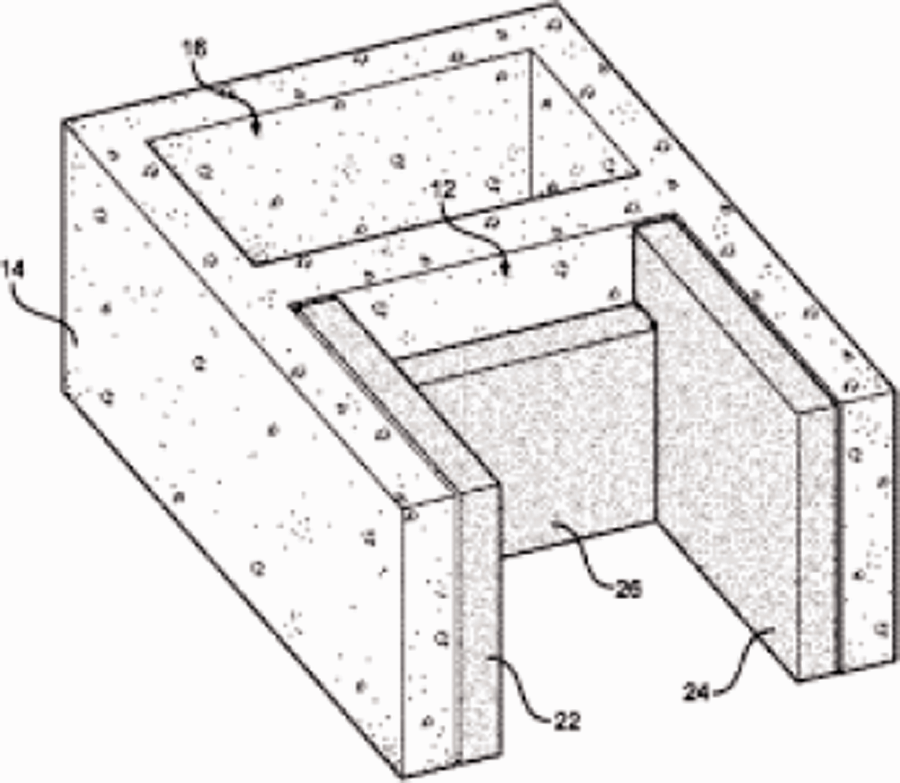
An insulation system for a concrete block having an open end and a closed end, the insulation system including a single sheet of a foam material configured to have opposite end portions with a middle portion intermediate the end portions and a hinge defined between each of the end portions and the middle portion to enable the sheet to be folded so that the middle portion is disposed perpendicular to the end portions to render the sheet in a u-shaped orientation so as to be insertable into the open end of the concrete block; and a panel of foam material configured as a rectangle to conform to the closed end of the concrete block. The sheet of foam material is sized to provide a snug interference fit with the open end of the concrete block when folded into the u-shaped orientation and the panel is sized to provide a snug interference fit with the closed end of the concrete block. The sheet of foam material and the panel of foam material are each made of a closed cell flexible foam.
Hybrid Acoustic EMI Foam for Use in a Personal Computer
Inventor(s): ET Sweet; JS Guterman; HR Farahani; JD Crosby; DK Boothe
Sources: US Pat.: 10,162,390
Corporate/Assignee: Apple Inc.
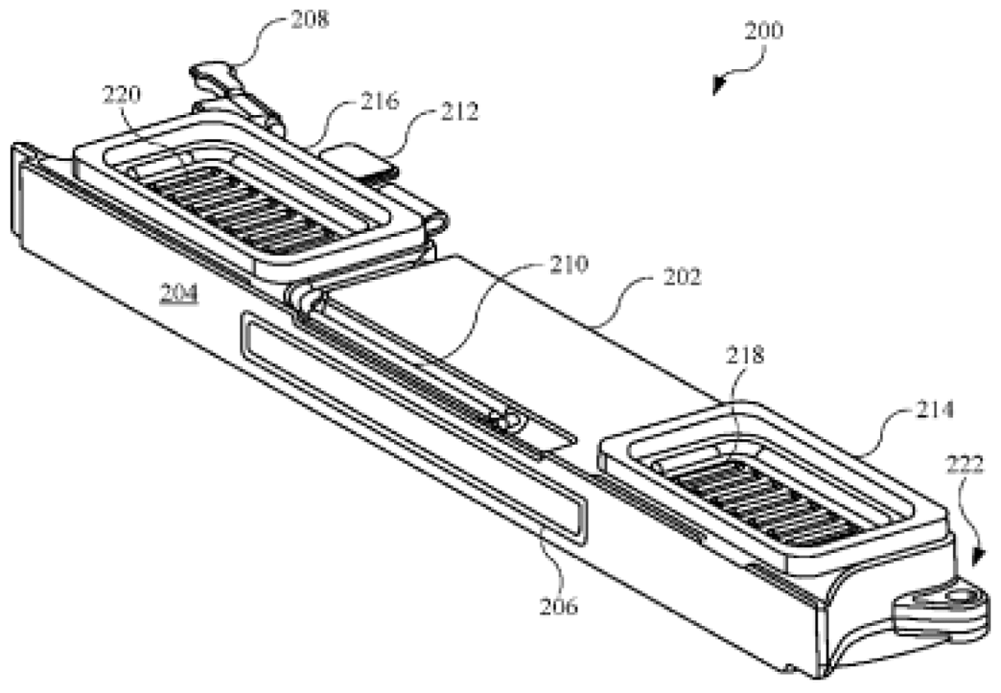
The described embodiments relate to an electronic assembly that includes multiple varied electrical components. In some embodiments, the electronic assembly can include electrical components susceptible to electromagnetic interference (EMI). In one particular embodiment, an antenna can be positioned along an exterior surface of an enclosure of the electronic assembly and another electrical component can be disposed within the enclosure. When the other electrical component is a speaker component, a port or opening for emitting audio output can be protected from EMI by surrounding the port with a conductive gasket that includes a closed cell foam substrate wrapped in an electrically conductive fabric. In some embodiments, the closed cell foam substrate defines a number of perforations that are plated with an electrically conductive material.
Cap with Memory Foam
Inventor(s): S Cunliffe
Sources: US Pat. App.: 20180343949
Corporate/Assignee: N/A
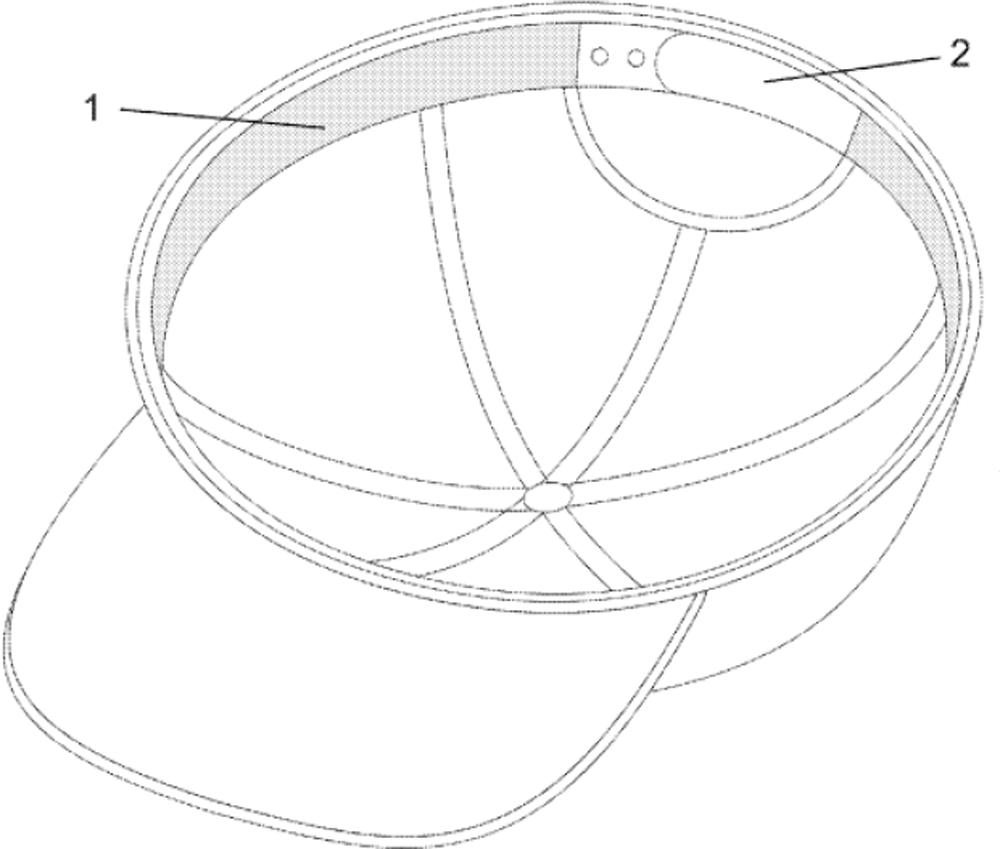
This invention provides a cap with a superior comfort feature. The cap teaches a sweat band with a pellon attaching the band to the cap, a layer of memory foam, and a layer of wicking fabric. The goal behind the cap is to wick away perspiration from the user and at the same time enhance the comfort of the fit with memory foam. The memory foam ban extends approximately 280 degrees around the inside of the cap, thereby providing support and comfort on all sides of the user's head. The memory foam can be infused with a variety of substances, ranging from biologically-reactive chemicals to aromatherapy agents.
Wound Dressing
Inventor(s): R Rovaniemi
Sources: US Pat. App.: 20180344533
Corporate/Assignee: Absorbest AB
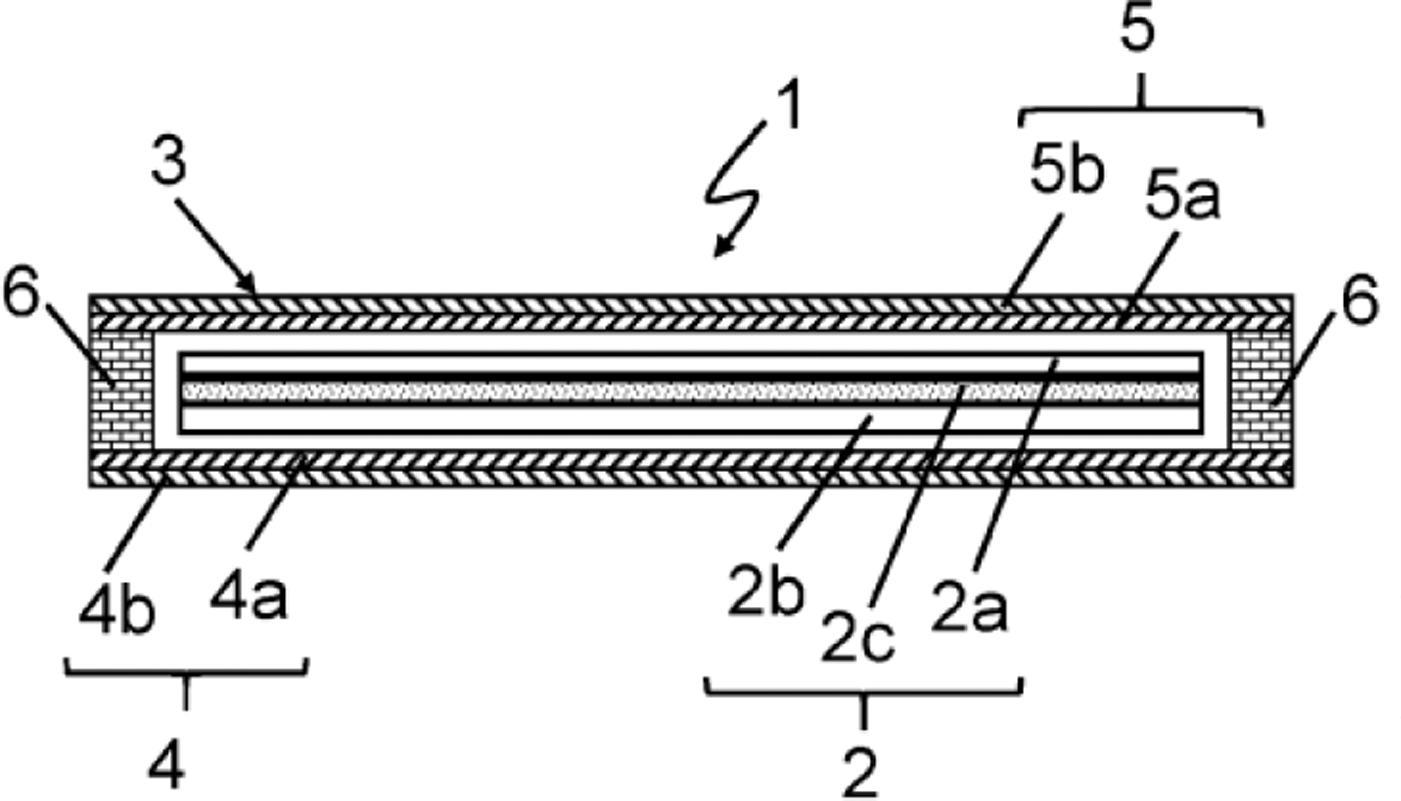
A would dressing includes an absorbent core including a top carrier layer and a bottom carrier layer, a superabsorbent substance dispersed between the top carrier layer and the bottom carrier layer and the bottom carrier layer, and a shell formed by a facing layer and a backing layer. The absorbent core is located in the shell between the facing layer and the backing layer. The facing layer and the backing layer each can include a supporting structure. The supporting structure of the facing layer and the supporting structure of the backing layer each can include an inner surface facing towards the absorbent core and an outer surface facing away from the absorbent core. The outer surface of the supporting structure of the facing layer and/or the outer surface of the supporting structure of the backing layer can be laminated with a foam layer.
Methods of Manufacturing Articles Utilizing Foam Particles
Inventor(s): J Constantinou; H Doremus; L Folgar; B Kvamme; D Schiller
Sources: US Pat. App.: 20180345576
Corporate/Assignee: NIKE, Inc.
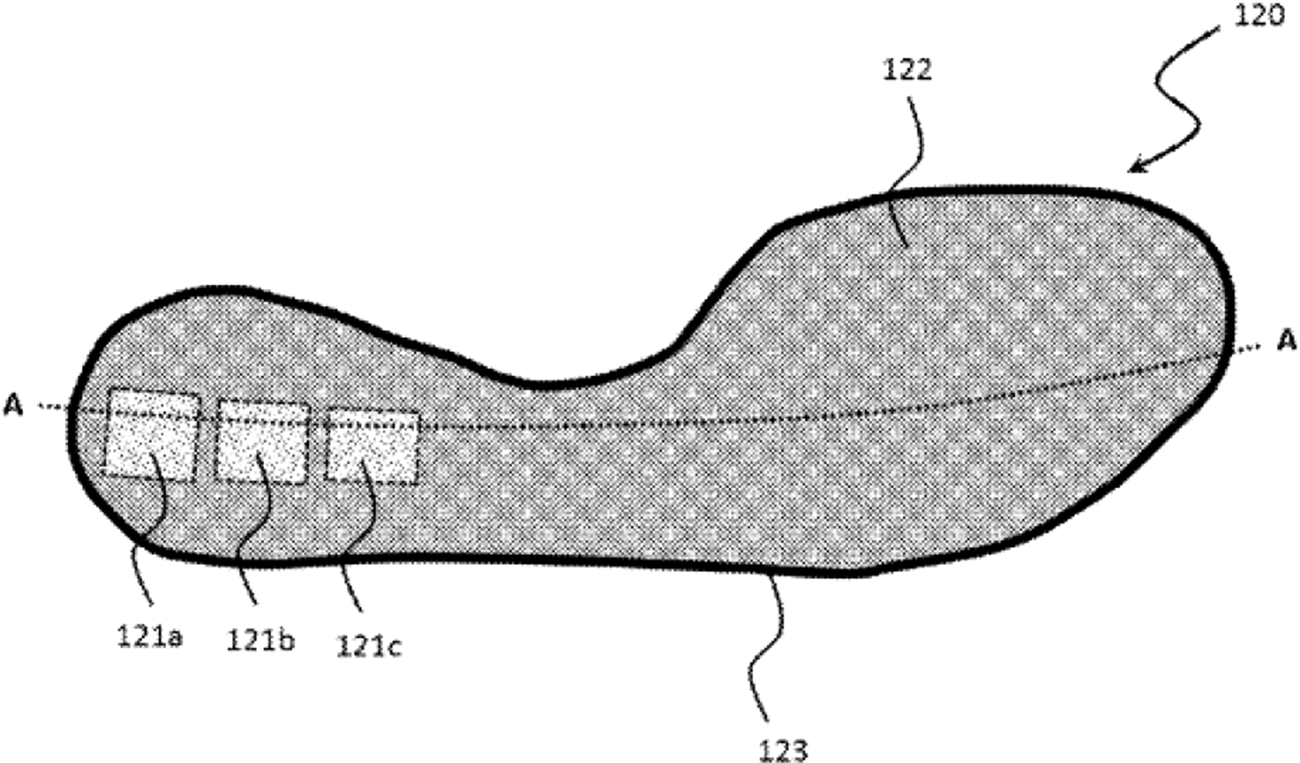
Methods for manufacturing articles of footwear are provided. In various aspects, the methods comprise utilizing additive manufacturing methods with foam particles. In some aspects, the disclosed methods comprise selectively depositing a binding material on foam particles in a target area such that the binding material coats at least a portion of defining surfaces of the foam particles with the binding material. The binding material is then cured to affix foam particles in the target area to one another. In various aspects, the disclosed methods can be used to manufacturer articles with sub-regions that differential levels of affixing between the foam particles, and thereby resulting in sub-regions with different properties such as density, resilience, and/or flexural modulus. This abstract is intended as a scanning tool for purposes of searching in the particular art and is not intended to be limiting of the present disclosure.
Three-Dimensional Sock-Shoe
Inventor(s): C Chang
Sources: US Pat. App.: 20180352895
Corporate/Assignee: Shuang Bang Industrial Corp.
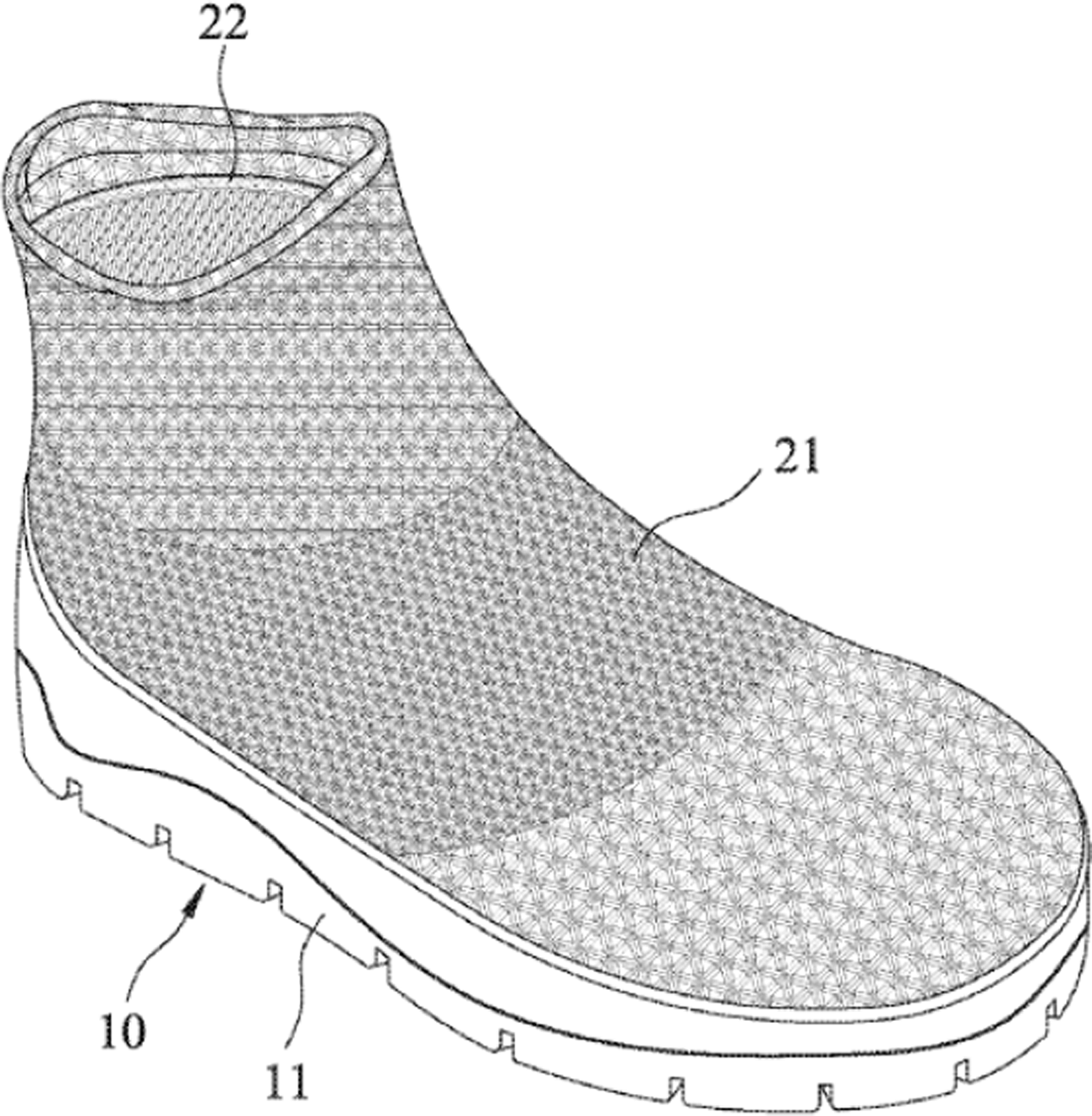
A three-dimensional sock-shoe includes a shoe sole, a sock body having a bottom portion connected to the shoe sole, and a foam sleeve inserted into the sock body. The foam sleeve has a shape corresponding to that of the sock body, defines a three-dimensional foot space, and is made by stitching together at least two layered structures. The foam sleeve successively consists of an inner lining layer, a foam layer and an outer fabric layer. At least one adhesive layer is disposed between the outer fabric layer and the sock body to adhere the outer fabric layer to the sock body.
Processes for Preparing Foam Composites
Inventor(s): W Bracegirdle; M Monti; G Smyth; S Clarke; S McMillan; J Glynn; M Orpin
Sources: US Pat. App.: 20180355137
Corporate/Assignee: XFLAM PTY LTD
Processes for preparing polystyrene-phenolic foam composites and precursor compositions are described. The processes yield composites having advantageous properties particularly useful in insulation and fire resisting applications.
Process for Manufacturing Base Board of High-Speed Rail Equipment Cabin Using Composite Material
Inventor(s): J Zhu; B Wang; S Zhang; M Wang; C Xie; J Luo
Sources: US Pat. App.: 20180361686
Corporate/Assignee: Shanghai Cedar Composites Technology Co. Ltd.
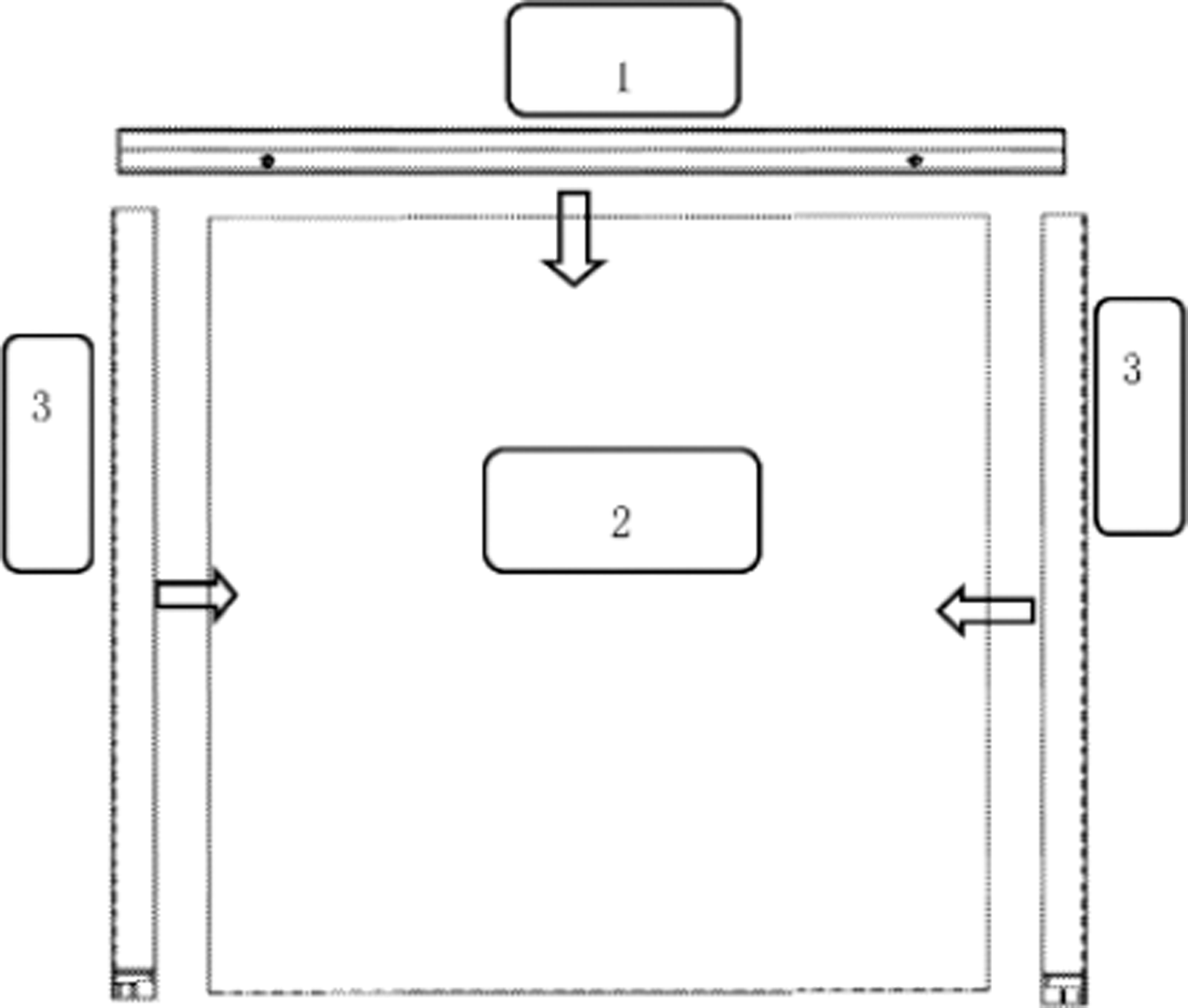
A process for manufacturing a base board of a high-speed rail equipment cabin using a composite material is disclosed. The composite material includes: aramid honeycomb, PET foam, 3K twill carbon fiber flame retardant prepreg, unidirectional carbon fiber flame retardant prepreg, glass fiber flame retardant prepreg, aramid flame retardant prepreg, and 300 g/cm2 single component medium temperature curing blue epoxy adhesive. The process includes manufacturing a base-board main plate (1), a base-board handle (2) and two base-board sliders (3). While installation, the base-board handle (2) is stuck to one side of the base-board main plate (1), and the two base-board sliders (3) are respectively stuck to another two opposite sides of the base-board main plate (1). The weight of the base board made from the composite material is 35–40% lower than the base board made from the aluminum alloy material, which leads to a good prospect of application.
Shoe Sole Member and Shoe
Inventor(s): T Yamade; K Harano; Y Hoshino; M Takano
Sources: US Pat. App.: 20180368515
Corporate/Assignee: Sekisui Plastics Co. Ltd.
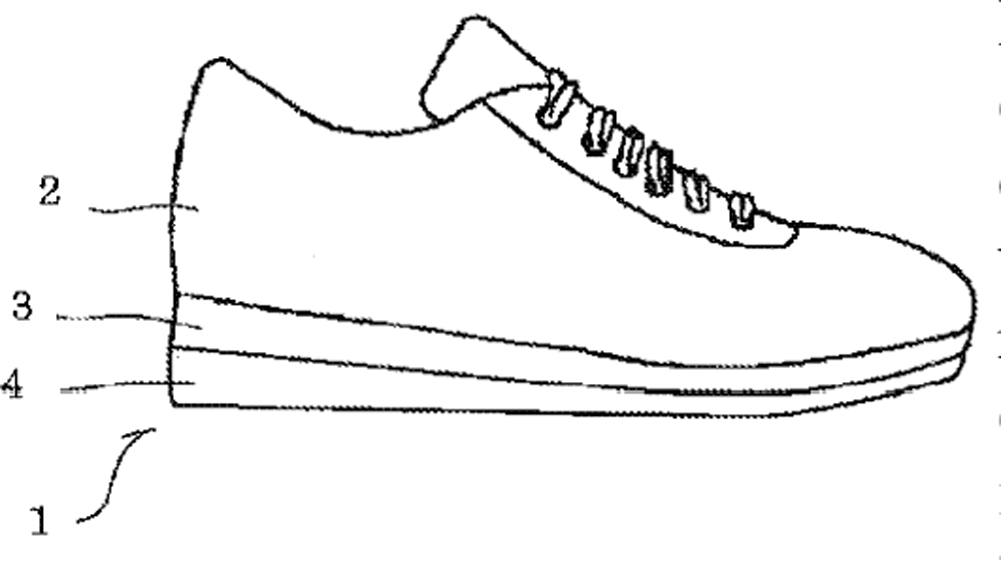
Provided is a shoe sole member that is partially or entirely formed from a resin foam product constituted by integrating of resin foam particles, wherein the resin foam particles are composed of a resin composition containing a polyamide elastomer, and the resin foam product satisfies all formulas (1) to (4) below, when a loss factor at –20°C. tan δ [–20°C], a loss factor at 25°C is tan δ [25°C], a storage elastic modulus at 25°C of the resin composition is E′ [25°C], the minimum value of a complex viscosity at 100°C to 130°C. of the resin composition is ηmin, and the maximum value thereof is ηmax, in a dynamic viscoelasticity measurement: 1 ≤ tan δ [–20°C.]/tan δ [25°C] ≤ 5 (1); 50 MPa ≤ E' [25°C.] ≤ 400 MPa (2); 0.05 MPa s ≤ ηmin (3); and ηmax ≤ 0.6 MPa s (4).
Method of Making Foams Using Partial Molds
Inventor(s): BN Farris; D Turner
Sources: US Pat. App.: 20180370115
Corporate/Assignee: NIKE, Inc.
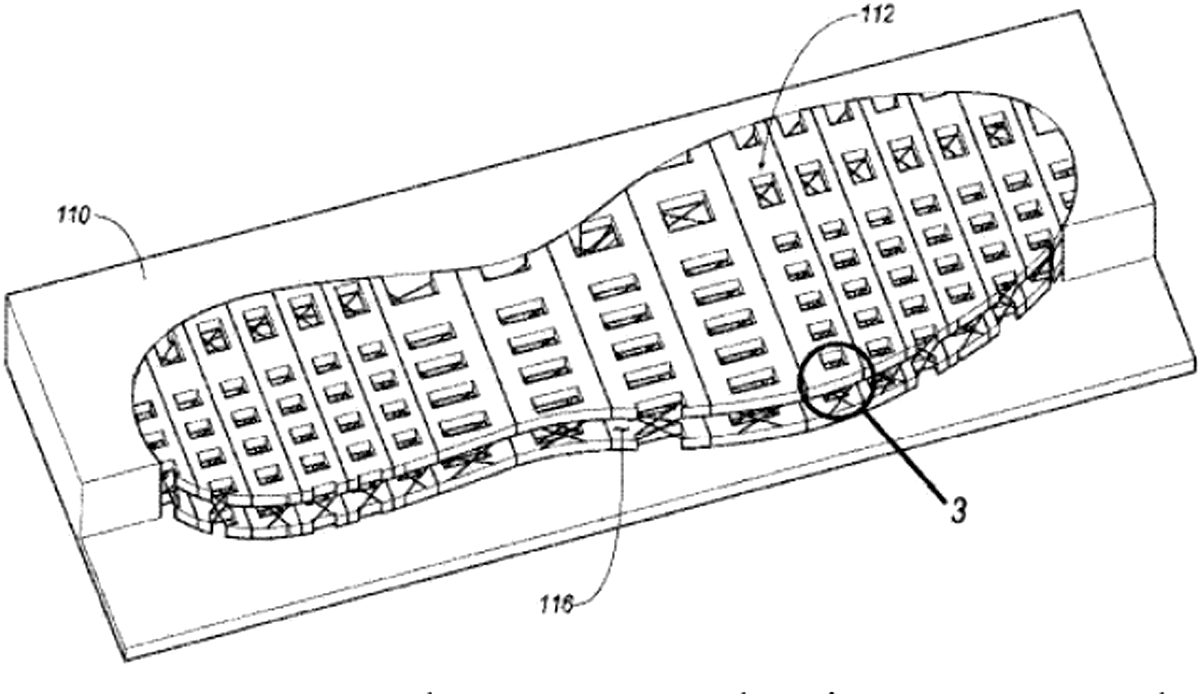
A method of making a foamed article, for example a foamed component for an article or footwear, comprises depositing an unfoamed, thermoplastic polymer onto a support surface in a three-dimensional printing process to form an unfoamed article; heating the article to soften the article and infusing the softened article with at least one inert gas at a first pressure greater than atmospheric pressure that is sufficient to cause the at least one inert gas to permeate into the softened article; and reducing the pressure to second pressure below the first pressure while the article is softened to at least partially foam the article, wherein a surface of a partial mold limits foam expansion in at least one direction but less than all directions. The article or a part of the article may be made by printing a thermoplastic polymeric material with a three-dimensional printer in a structure of interconnected, unfoamed, thermoplastic polymeric members spaced to define openings between the thermoplastic polymeric members.
Roofing Systems and Methods
Inventor(s): WA Johnson; JE Hazy; D Paradis; CJ Griffin; RC Swann; BC Burdic
Sources: US Pat. App.: 20180371758
Corporate/Assignee: N/A
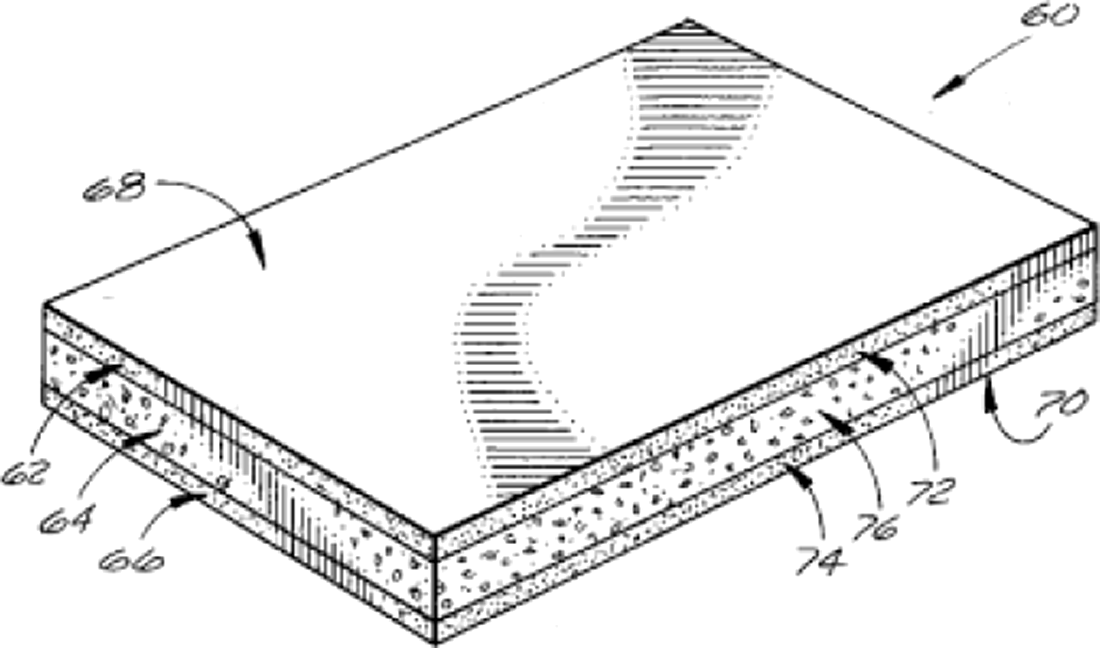
A roofing system includes a plurality of insulation boards adapted for overlying a roof deck to form a layer of insulation, and a plurality of cover boards adapted for overlying the layer of insulation. Each of the plurality of insulation boards has opposing planar surfaces and has a facer on at least one planar surface, and each of the plurality of insulation boards includes polyisocyanurate foam having a first polyisocyanurate foam density. Each of the plurality of cover boards has opposing planar surfaces and has a facer on at least one planar surface, and each of the plurality of cover boards includes polyisocyanurate foam having a second polyisocyanurate foam density greater than the first polyisocyanurate foam density. Each of the plurality of cover boards also includes 1% to 25% by weight one or more fillers selected from the group consisting of organic fillers and inorganic fillers.
Headrest of the Vehicle Seat
Inventor(s): H Kensu; K Yoshiaki
Sources: JP 2018140691
Corporate/Assignee: Tachi's Corporation
A even when the skin of the headrest 1 layer structure, when the foaming by injecting urethane into the pouch-like skin, can be relatively easily prevented from leaking to the outside from the opening so as to. The skin portion of the headrest A vehicle seat has a portion that is not sutured to a portion of the portion superposed skin member, one portion superimposed skin member in the stitched portions not side of the first piece portion and the other skin member portion superposed skin member in a portion which is not sewn folded back inside the skin portion formed in the sutured bag shape extending from the side skin member the second section part inside the first piece portion and both end portions near along the first superimposed sectioned portion by folding direction of the epidermis portion formed in the sutured pouched was sutured extending from has the door, by bonding the first section and the second section to the urethane foam, urethane foam was made to prevent the leaking out from the opening.
Production Process and Foam Structure of the Foam Structure
Inventor(s): K Ryuichi
Sources: JP 2018144455
Corporate/Assignee: Toyota Motor Kyushu Co. Ltd.
Disclosed is a air relief technique for from foam molding process air relief foam molding space by passage of, and prevent from adhering to the foam molding mold foamed resin material leaks without reducing the yield, to improve the enhancement and productivity of the quality of the foam structure. A method for manufacturing a foam 4 instrument panel 1 which has been interposed between the substrate 2 and the skin material 3, air escaping groove forms an air release passage 20 for communicating the inside and outside of the molding space 13 a step of preparing a substrate 2 having a 30, and forming a molding space 13, the foam resin material 14 into the molding space 13 is injected, the molding space while missed air molding space 13 from the air release passage 20 in 13 it is filled with foam resin material 14 and forming a foam 4, as an air release passage 20 is provided with a passage having a longitudinal passage 21 extending along the extending direction of the sealing surface 2c, the foam 4 in the step of forming, fasten the foam resin material 14 in the longitudinal passage 21 by the reaction solidified.
System and Method for Analyzing the Athletic Activities
Inventor(s): F Jay Dojan; D Johnson; HW Stephen; J Raisu
Sources: JP 2018149377
Corporate/Assignee: Nike Innovate Sheboy
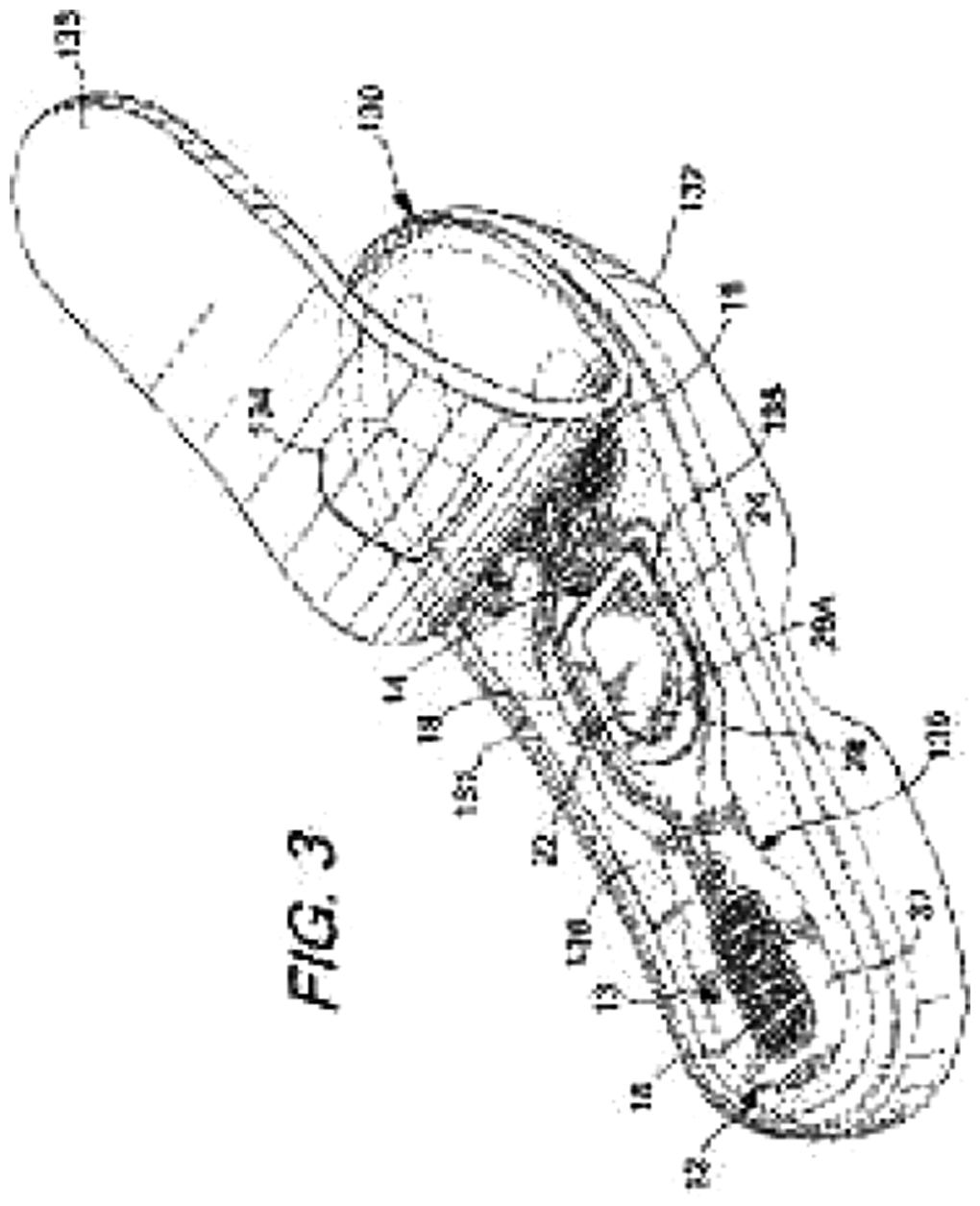
A detecting athletic activities or other movement available data inputted from the sensor system incorporated into article of footwear and a system for monitoring, to provide a device and method. In a footwear of implementing the sensor system 12, foot contacting member 133 is configured to cover the insert 37 is disposed on the foam member 138. The sensor system 12 includes an insert member 37 which forces and/or pressure sensor assembly 13 is connected. Outlet port 14 is configured to data received from the sensor 16 to transmit to an electronic module 22. Module 22 processes to connect to an external device.
Coextruded, Crosslinked Multilayer Polyolefin Foam Structures from Recycled Metallized Polyolefin Material and Methods of Making the Same
Inventor(s): JJ Baldwin; KM Bock; P Sieradzki
Sources: US Pat.: 10,150,273
Corporate/Assignee: Toray Plastics (America), INC.
A physically crosslinked, closed cell continuous multilayer foam structure comprising at least one polypropylene/polyethylene coextruded foam layer is obtained. The multilayer foam structure is obtained by coextruding a multilayer structure comprising at least one foam composition layer, irradiating the coextruded structure with ionizing radiation, and continuously foaming the irradiated structure.
Sugar-Based Polyurethanes, Methods for their Preparation, and Methods of Use Thereof
Inventor(s): J Luna
Sources: US Pat. App.: 20180355094
Corporate/Assignee: Innovative Urethane, LLC
Polyurethane foams which are highly flame resistant are described, as well as the production of such polyurethane foams by the reaction between a natural polyol, such as sucrose or a blend of mono- or disaccharides in place of the standard hydrocarbon-based polyol component, a polyisocyanate and water in the presence of a suitable polyurethane forming catalyst and a non-halogenated flame retardant, and optionally one or more components such as surfactants and/or emulsifiers. The resultant polyurethane foam has a bio-based solid content ranging from about 17% to 30%, may be formulated in a variety of foam densities for a variety of applications, and exhibits a high degree of fire and burn resistance, as exhibited by the flame spread index, flash over resistance determination, and the smoke spread values.
Methods for Designing Polyisocyanurate Foam-Forming Compositions, Related Polyisocyanurate Foam-Forming Compositions, and Foams Produced Thereby
Inventor(s): G Combs; GW Phelan
Sources: US Pat.: 10,144,798
Corporate/Assignee: Covestro LLC
Disclosed are methods for designing a polyisocyanurate foam-forming composition with good low temperature insulation performance. The methods include: (a) measuring the LTTR of a first polyisocyanurate faced foam laminate prepared from a first polyisocyanurate foam-forming composition comprising a blowing agent composition, wherein the LTTR is measured at a plurality of temperatures to identify a calculated inflection point temperature below which defines a first mathematical correlation between temperature and the LTTR of the first polyisocyanurate faced foam laminate and above which defines a second mathematical correlation between temperature and the LTTR of the first polyisocyanurate faced foam laminate; (b) identifying a plurality of predicted mathematical correlations between temperature and the LTTR of the first polyisocyanurate faced foam laminate at a plurality of reduced inflection point temperatures below the calculated inflection point temperature; and (c) using the plurality of predicted mathematical correlations identified in step (b) to design a second polyisocyanurate foam-forming composition that comprises a blowing agent composition and produces a second polyisocyanurate faced foam laminate that has a LTTR satisfying a threshold value at all mean insulation temperatures within a temperature range of 10°F to 75°F (–12.2°C to 23.9°C).
Polyurethane Foam Production Process, Pre-Mix Formulation, and Product
Inventor(s): JJ Burdeniuc; B Leng; T Panitzsch; SH Wendel; RJ Keller
Sources: US Pat.: 10,144,811
Corporate/Assignee: Evonik Degussa GmbH
Disclosed are a process of producing a polyurethane foam product, a polyurethane foam product pre-mix, polyurethane foam product formulation, and a polyurethane foam product. The process of producing the polyurethane foam product includes contacting a halohydrin component with a polyurethane foam product pre-mix. The polyurethane foam product pre-mix includes the halohydrin component. The polyurethane foam product formulation includes a polyol component, an isocyanate component, and a halohydrin component. The polyurethane foam product is formed by the pre-mix having the halohydrin component.
Flame Retardant Additive Composition Comprising Cyclic Phosphonate Blend and Bis-Phosphate Ester, and Polyurethane Foam Containing the Same
Inventor(s): JK Stowell; A Piotrowski; M Nagridge; G Symes
Sources: US Pat.: 10,144,872
Corporate/Assignee: ICL-IP America Inc.
There is provided herein a flame retardant additive composition comprising (a) a cyclic phosphonate mixture of (i) (5-ethyl-2-methyl-2-oxido-1,3,2-dioxaphosphorinan-5-yl)methyl methyl ester of P-alkylphosphonic acid and (ii) bis[(5-ethyl-2-2-methyl-2-oxido-1,3,2-dioxaphosphorinan-5-yl)methyl]ester of P-alkyl phosphonic acid; and, (b) an aryl bisphosphate ester of the general formula (I) herein. There is also provided herein a polyurethane foam containing the flame retardant additive composition as well as articles made comprising said polyurethane foam.
Soft Polyurethane Foam and Seat Pad
Inventor(s): K Yoshitomi; H Seguchi
Sources: US Pat. App.: 20180345838
Corporate/Assignee: Bridgestone Corporation
The present invention provides a soft polyurethane foam obtained by foam molding a foaming stock solution containing a polyol, a polyisocyanate, a foaming agent, and a catalyst. The polyol includes a polyether polyol A having a weight average molecular weight (Mw) of 3000–8000 and 3–4 functional groups and a polyether polyol B having a weight average molecular weight (Mw) of 1000–4000 and two functional groups. The polyisocyanate includes diphenylmethane diisocyanate.
Polyether Polyol Compositions and Polyurethane Foams Formed Therefrom
Inventor(s): AR Loveday; EC Martinez; JL Lambach; RR Romero; UE Younes; RJ Anderson
Sources: US Pat. App.: 20180362701
Corporate/Assignee: Covestro LLC
Disclosed are compositions that comprise water and a polyether polyol derived from sucrose and an alkylene oxide, as well as polyurethane foam systems comprising such compositions, methods for their production, and the resulting polyurethane foams.
Soft Polyurethane Foam and Seat Pad
Inventor(s): K Yoshitomi; H Seguchi
Sources: US Pat. App.: 20180362702
Corporate/Assignee: Bridgestone Corporation
The present invention provides a soft polyurethane foam that is obtained by foam molding a foaming stock solution containing a polyol, diphenylmethane diisocyanate, a foaming agent, and a catalyst. The polyol includes a polyether polyol A having a weight average molecular weight (Mw) of 3000–8000 and 3–4 functional groups. The diphenylmethane diisocyanate (MDI) includes monomeric MDI in an amount of 80 mass % or more with respect to the total mass of the MDL The monomeric MDI includes 4,4-MDI in an amount of 70 mass % or less with respect to the total mass of the MDI.
Composition for Polyurethane Foam Containing Polyrotaxane, Polyurethane Foam Derived from Composition, and Method for Producing Polyurethane Foam
Inventor(s): Y Hayashi; M Takaoka; M Komatsuzaki; R Wongnak
Sources: US Pat. App.: 20180371199
Corporate/Assignee: Advanced Softmaterials INC.
The present invention provides: a polyurethane foam having excellent viscoelastic characteristics and/or excellent feeling; a composition for the polyurethane foam; and a method for producing the polyurethane foam. The present invention provides a composition for a polyurethane foam, the composition containing: (A) a polyol having three or more OH groups; (B) a compound having two or more isocyanate groups; and (C) a polyrotaxane obtained as a result of arranging, on both ends of a pseudo-polyrotaxane formed through skewering-like inclusion of a linear molecule through the openings of cyclic molecules, stopper groups so that the cyclic molecules do not dissociate from the pseudo-polyrotaxane.
Phenolic Resin Foam Plate
Inventor(s): K Masami
Sources: JP 2018138388
Corporate/Assignee: Asahi Kasei Construction Materials Co. Ltd.
A bleed less of phenolic resin foam plate foamable phenolic resin composition during the production of, and providing adhesive strength is extremely high phenolic foam board face material. A nonwoven fabric having at least a fiber fixing portion on one side of the plate-like phenolic foam is laminated, the area ratio in the surface of the sum the nonwoven fabric of the area of the fiber fixing portion 2% or more 17% or less There, the plate-like phenolic foam is phenolic foam board with more than 80% of closed cell ratio. The shortest distance between the individual fibers fixed portion in the nonwoven fabric surface is not less 1.0 mm or more, the average area of individual fibers fixed part is 0.1 mm2 or more 5.0 mm2 or less.
Flexible Polyurethane Foam Molding for a Polyol Composition
Inventor(s): I Keita; Y Naoya
Sources: JP 2018141118
Corporate/Assignee: Tosoh Corporation
Be added a large amount of water in the polyol composition, the polyol composition capable of ensuring the stability over time, low-density flexible polyurethane foam molding composition with the polyol composition, and the composition to provide a low density flexible polyurethane foam were used.
The polyol component, a catalyst, a foam stabilizer, a blowing agent, and a flexible polyurethane foam molding polyol composition comprising a compatibilizing agent, a compatibilizing agent, an anionic surface active agent having a hydrophilic portion and a hydrophobic portion, its hydrophilic portion has a salt comprising an anionic polar group and an alkali metal, an anionic surfactant having a hydrophobic portion comprising an aromatic ring, or an aromatic ring 8 or more in total of carbon atoms does not have a hydrophobic portion and characterized in that, to solve the flexible polyurethane foam molding polyol composition.
The Process for Producing a Flexible Polyurethane Foam
Inventor(s): S Satoshi; H Tomohiro
Sources: JP 2018141147
Corporate/Assignee: Sanyo Chemical Industries, Ltd.
Disclosed is a low-density area, elongation at break, to provide a method of manufacturing a tensile strength and excellent in durability flexible polyurethane foams. A polyol composition (A) and an organic polyisocyanate (B), a process for producing a flexible polyurethane foam is reacted in the presence of a blowing agent (C) and a urethane catalyst (D), (A) There contains alkylene oxide adducts of dihydric alcohol (a) to (P), satisfies the requirements (1) to (4), based on the weight of the content of (a) in the (P) is (a) 35–100 weight%, and the process for producing a flexible polyurethane foam is water (C) as a.
Polyurethane Foam
Inventor(s): M Yuzu
Sources: JP 2018150460
Corporate/Assignee: Inoac Corporation
An object of the present invention to provide a polyurethane foam having excellent high resilience. And A isocyanate component, a compound having an active hydrogen group, in the polyurethane foam obtained from a polyurethane foam of a composition comprising a catalyst, an isocyanate component has a number average molecular weight of the hydroxyl value is at 2500–5600 and polytetramethylene glycol 20–45 mgKOH/g, a hydroxyl value in the functionality of 3 and a crosslinking agent 500–2000 mgKOH/g, NCO% was obtained from 1,5-naphthalene diisocyanate from 4.0 to 5. a urethane prepolymer having 0% of the isocyanate groups, the density of the polyurethane foam (JIS K6268) is configured at 0.35–0.45 g/cm3, modulus of repulsion elasticity (JIS K6255) of 80% or more.
High Porosity Microcellular Polyethylene
Inventor(s): C Chen; G Sun; M Esseghir; JM Cogen; Z Du; J Zhang
Sources: US Pat. App.: 20180346676
Corporate/Assignee: Dow Global Technologies LLC
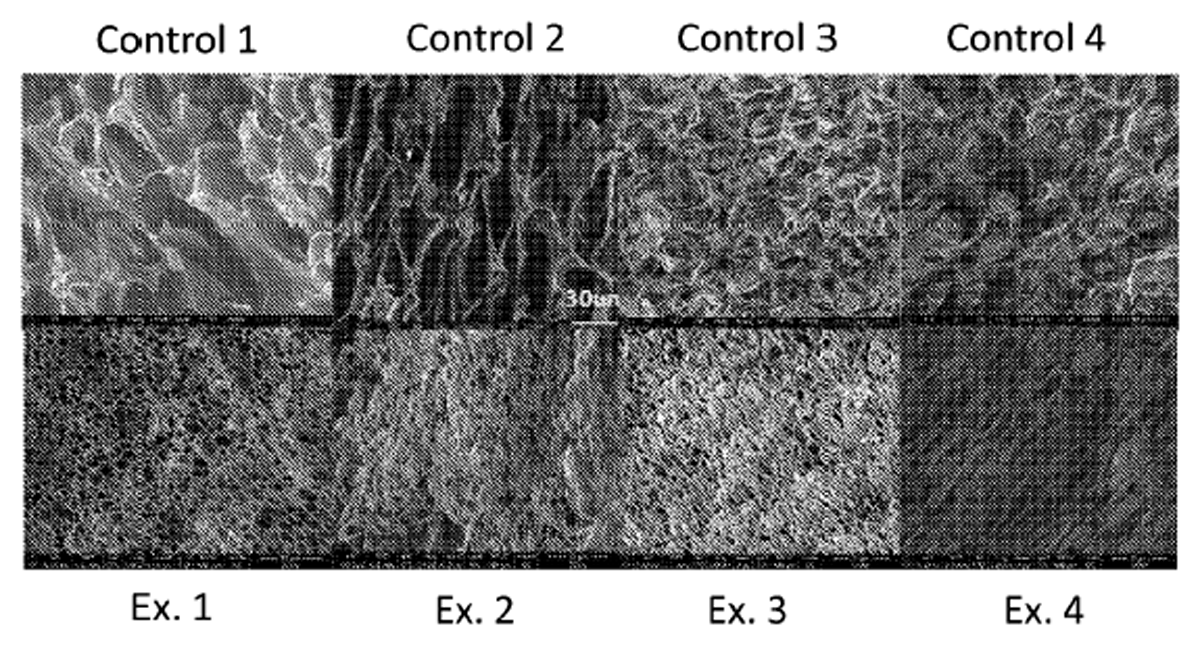
A process for making a foam composition, the process comprising the steps of: (A) forming a mixture comprising high density polyethylene (HDPE), low density polyethylene (LDPE) and a peroxide; and (B) contacting the mixture of (A) with carbon dioxide (CO2) at a pressure greater than or equal to 15 MPa. In one embodiment, the peroxide is DTAP. In one embodiment the mixture of (A) further comprises a CO2-philic compound such as PDMS.
Manufacturing Method of Preparation and Foamed Molded Article of Expanded Beads
Inventor(s): T Hiroyoshi; O Katsuki
Sources: JP 2018141087
Corporate/Assignee: Sekisui Plastics Co. Ltd.
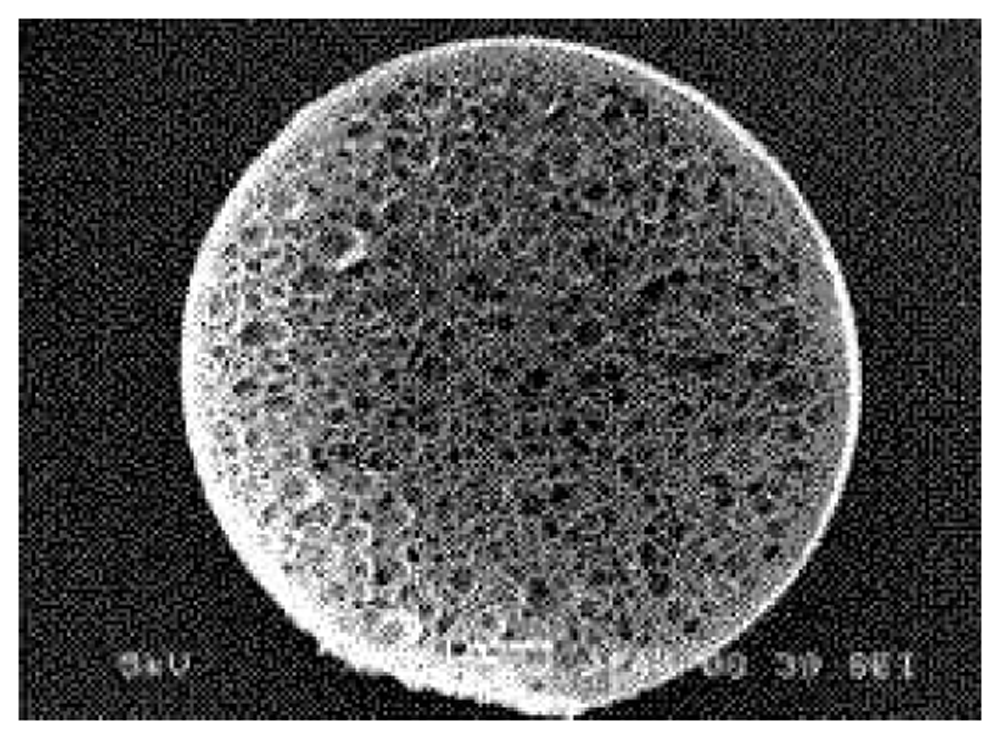
Disclosed is an object to provide a method for producing foamed particles usage may reduce the environmental impact of high hydrocarbon blowing agent. An obtaining a primary foamable particles a hydrocarbon blowing agent in 100 parts by weight of the resin particles 5–9 parts by impregnating comprising a polyolefin resin and a polystyrene resin, said primary expandable particles obtaining a 0.1–1.0 MPa introduced secondary expandable particles of an inorganic gas and obtaining a primary foamed particles by foaming, as blowing agent in the primary foamed particle, the secondary expandable particles the and a step of obtaining the expanded beads by foaming, the expanded particles, the production of expandable particles characterized by having a 2.5–10 times the volume expansion ratio of the bulk expansion ratio of the primary foamed particles to solve the above problem by the method.
Expandable Polystyrene Resin Particles, Pre-Expanded Particles, Moldings
Inventor(s): N Yuiro; S Maruhashi; S Ryuta; Y Yano; S Ryohei
Sources: JP 2018145212
Corporate/Assignee: Kaneka Corporation
A be foamed at a high magnification are possible high expansion ratio shrinkage hardly occurs in the pre-expanded particles, providing the expandable polystyrene resin particles that may have a polystyrene type resin foamed molded product having high thermal insulation performance.
Solution: The expandable polystyrene resin particles made of polystyrene resin composition and foaming agent containing carbon-based radiant heat transfer inhibitor, the blowing agent comprises pentane and butane, per 100 weight of pentane and butane isobutane is more than 20 wt% 50 wt% with respect to %, normal butane is 3 wt% or less, expandable polystyrene resin particles. After said foamed polystyrene resin particles were prefoamed to a bulk ratio of 80%, and at 30°C for 24 hours curing and the average cell diameter of pre-expanded particles 350 μm when the following, the thermal conductivity of the foamed molded λ 0 a .0330 W/m·K, expandable polystyrene resin particles.
Method for Producing Expandable Thermoplastic Resin Particles
Inventor(s): Y Yano; S Maruhashi; S Ryuta
Sources: JP 2018145264
Corporate/Assignee: Kaneka Corporation
A expansion ratio when the expandable thermoplastic resin particles were prefoamed that can give high pre-expanded particles, further, to provide a large foamed molded fusion rate by fusing the pre-expanded particles together that can provide a method for producing expandable thermoplastic resin particles. A method of producing the expandable thermoplastic resin particles, particles of cut by rotating cutter immediately after the blowing agent-containing thermoplastic resin melt from a die having a plurality of small holes extruded in pressurized water and includes a step of performing cooling and solidification, the diameter of the small hole is 0.5–1.0 mm, shear rate of the blowing agent-containing thermoplastic resin melt as it passes through the small hole land portion of the die 8000 it is a 11,000 s–1.
PP Bead Molding
Inventor(s): K Makoto
Sources: JP 2018145302
Corporate/Assignee: J SPEC Corporation
A short time of recovery of the shape after compression to provide good foamed bead molded article. The present invention is a foamed bead molded article obtained by in-mold molding of the thermoplastic elastomer foamed particles, the foamed bead molded article having a void density of the foamed bead molded article is 150–300 kg/m3 and porosity of 10–70 vol%.
Method for Producing Expandable Thermoplastic Resin Particles
Inventor(s): S Maruhashi; A Kajiko
Sources: JP 2018145344
Corporate/Assignee: Kaneka Corporation
To provide a method for producing a productive good expandable thermoplastic resin particles. A hot melt-kneading step of melt-kneading the thermoplastic resin and introduced into an extruder, the thermoplastic resin extruded melt blowing agent is added from a die having a plurality of small holes in a pressurized cooling water, in the method for manufacturing expandable thermoplastic resin particles comprising a granulation step of particles by cutting the melt immediately after the extrusion, for remelting a part of the expandable thermoplastic resin particles obtained by the granulation step It was selected as expandable thermoplastic resin particles, comprising the step of re-melting and kneading mixed in the range of 1–30 parts by weight based on the thermoplastic resin 100 parts by weight of the melt-kneading step, expandable thermoplastic resin particles the method of production.
Foam Structure with Nominally-Aligned Arrays of Carbon Nanotubes
Inventor(s): A Misra; C Daraio; JR Raney
Sources: US Pat.: 10,125,022
Corporate/Assignee: California Institute of Technology
A foam structure with nominally aligned arrays of carbon nanotube is described. The foam structure also includes a functionalization substance associated or attached to carbon nanotube surfaces.
Use of a Foamable Polymer Filament, and Foamed Fabric
Inventor(s): FJ van der Gaag; FAL Harmeling
Sources: US Pat.: 10,138,575
Corporate/Assignee: Ten Cate Thiolon B.V.
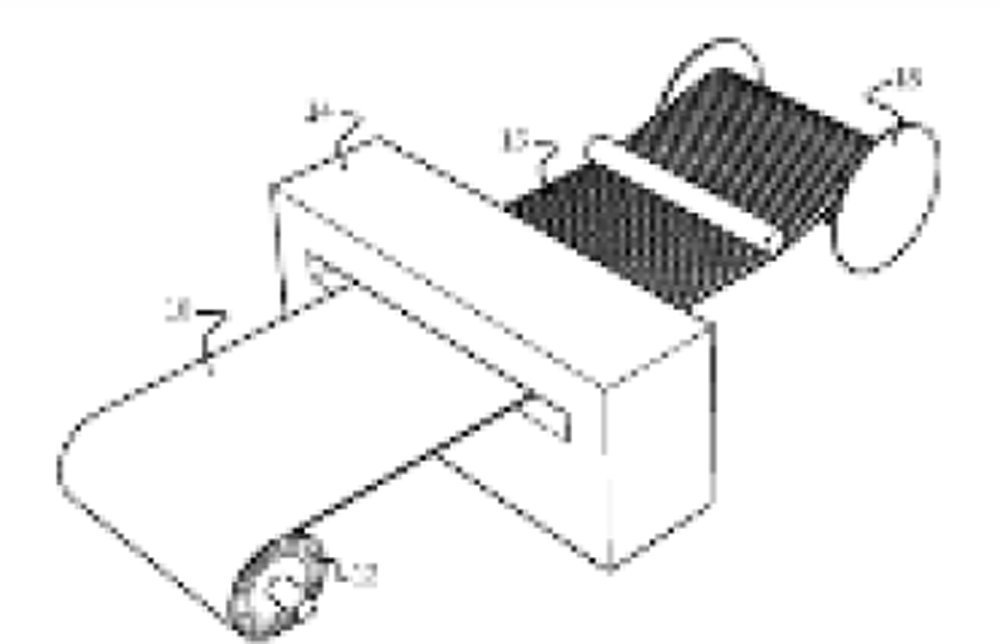
A foamed fabric comprising filaments of closed-cell foam of cross-linked polymeric material is formed by integrating the filaments into a precursor textile and subsequently foaming the material at a foaming temperature at which the filaments expand. The foamed fabric can be used for protective garments, pads, mats and the like.
Production of Complex Hollow Foam or Sandwich Structures by Means of a Mold Core
Inventor(s): A Kraatz; D Holleyn
Sources: US Pat. App.: 20180311869
Corporate/Assignee: Evonik Roehm GmbH
The invention relates to a process for producing complex, mould-foamed rigid foam materials, more particularly of poly(meth)acrylimide (P(M)I) cores, preferably of polymethacrylimide (PMI) cores, which may be employed, for example, in carmaking or aircraft construction. A feature of the process is that through use of a particulate core during foam, it is possible to achieve an additional weight saving relative to foam materials or sandwich materials of the prior art.
Method and Apparatus to Produce Auxetic Foam
Inventor(s): J Condon; B Condon; S Andrews; M Andrews; J Raysin
Sources: US Pat. App.: 20180333903
Corporate/Assignee: Auxadyne, LLC
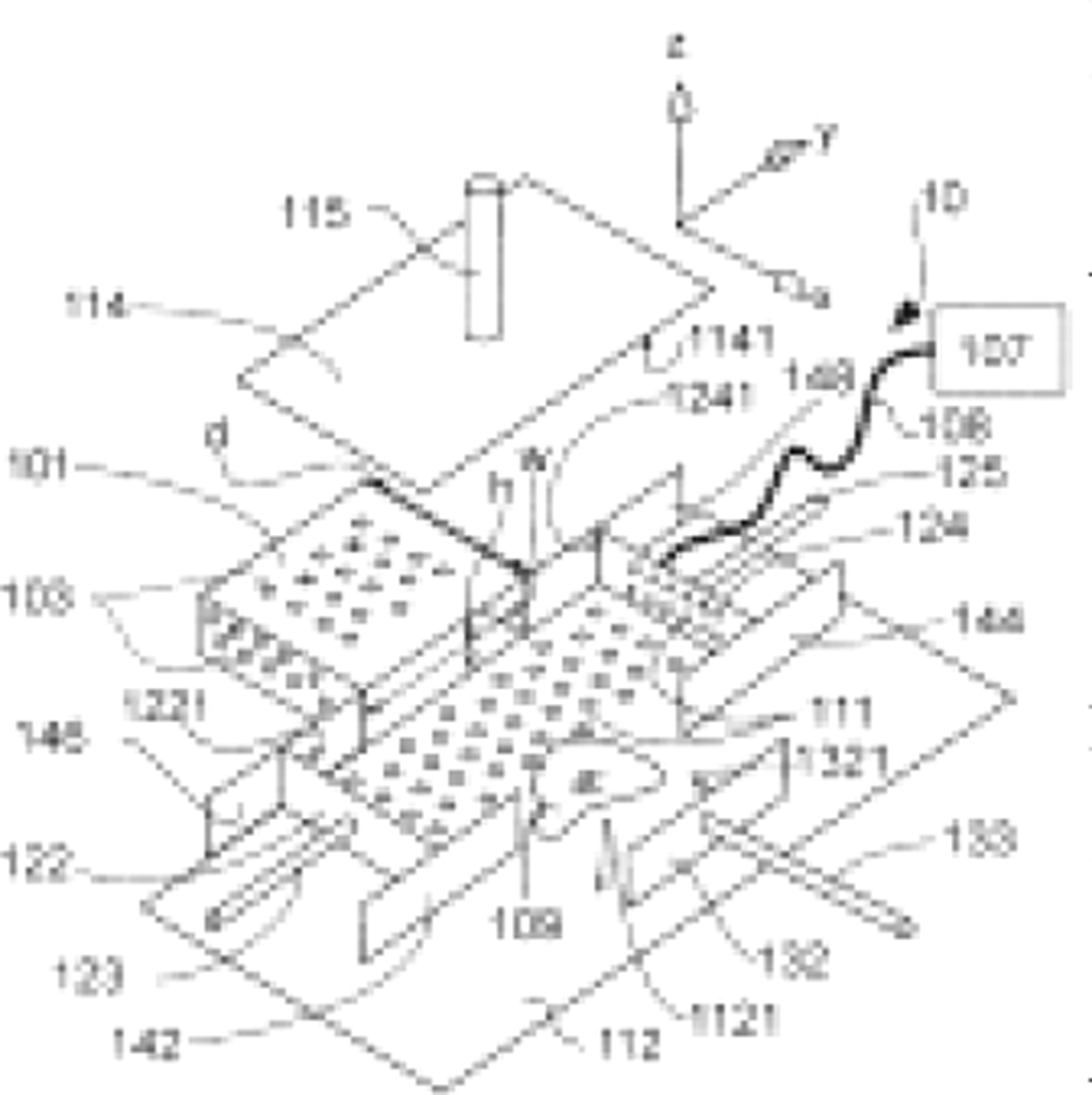
In methods and apparatuses for producing auxetic foam from conventional foam, conventional foam is compressed into a mold before thermal, chemical or thermo-chemical treatment processes are performed. A segmented mold is accommodated in a compressing apparatus. After compressing the foam between the mold segments, the mold is fastened shut and removed from the compressing apparatus. The forces applied to any given volume of foam and the amounts by which the foam is compressed while being processed are controlled to impart desired mechanical properties to the produced foam. Poisson's ratio and density of discrete portions of finished foam shapes are reliably predicted and controlled to achieve uniform and non-uniform mechanical properties within a single continuous quantity of foam.
Foams and Articles Made from Foams Containing HCFO or HFO Blowing Agents
Inventor(s): DJ Williams; YK Ling; S Qin; B Lu; R Pan
Sources: US Pat. App.: 20180312651
Corporate/Assignee: Honeywell International INC.
The present invention relates to polyurethane foams having a polymeric foam structure including a plurality of closed cells therein; and an HFO or HCFO blowing agent, including HCFO-1233zd or HFO-1234ze. In certain aspects, the present invention relates to foam premixes, and the resulting foam structures, that include HCFO-1233zd as blowing agent used alone, or in certain aspects, in a blend with a co-blowing agent such as methyl formate.
Z-HFO-1336MZZ Blowing Agent Blends for Foaming Thermoplastic Polymer Comprising Polystyrene
Inventor(s): K Kontomaris; T Mcrae
Sources: US Pat. App.: 20180327565
Corporate/Assignee: The Chemours Company FC, LLC
A process is provided for preparing a thermoplastic polymer foam, comprising providing a foamable composition comprising a thermoplastic polymer and a blowing agent, wherein the blowing agent comprises from 10% to 60% by weight Z-1,1,1,4,4,4-hexafluoro-2-butene (Z-HFO-1336mzz) and from 40% to 90% by weight 1,1-difluoroethane (HFC-152a), and wherein said thermoplastic polymer comprises polystyrene homopolymer, a polystyrene copolymer, styrene-acrylonitrile copolymer, or blends thereof expanding said foamable composition to produce a closed cell, smooth skin polymer foam, having a density of less than 42 kg/m2. Also disclosed is a thermoplastic polymer foam composition comprising a thermoplastic polymer selected from the group consisting of polystyrene homopolymer, a polystyrene copolymer, styrene-acrylonitrile copolymer, or blends thereof, defining a plurality of cells having an average cell size, and a blowing agent comprising from 10% to 60% by weight Z-1,1,1,4,4,4-hexafluoro-2-butene (Z-HFO-1336mzz) and from 40% to 90% by weight 1,1-difluoroethane (HFC-152a), having a density of less than 42 kg/m2, according to ISO method 845-85, wherein the thermoplastic polymer has a melt flow rate of less than 25 g/10 min.
Fluorinated Compounds Useful as Foam Expansion Agents
Inventor(s): G Loh; S Ata
Sources: US Pat. App.: 20180334547
Corporate/Assignee: The Chemours Company FC, LLC
The present application discloses compositions comprising (i) a foam blowing component and (ii) a polymer component, and more particularly to compositions comprising a (i) foam blowing component comprising a hydrofluoroolefin (i.e. HFO), a hydrofluorocarbon (i.e. HFC), or any mixture thereof and (ii) a polymer component which is selected from polystyrene and acrylonitrile butadiene styrene.
Blowing Agents and Compositions and Foaming Process Contains Fluorine Substituted Olefin
Inventor(s): JE Bowman; DJ Williams
Sources: JP 2018127628
Corporate/Assignee: Honeywell International Incorporated
A foaming agent, foaming compositions, foams and, including products made from or foam using the foam, compositions having utility in numerous applications, methods, and provides a system. A one or more C2–C6 fluoroalkene, more preferably one or more C3–C5 fluoroalkene, even more preferably the formula I: in XCFzR3-z (I) (wherein, X is C1, C2, C3, C4, or C5 unsaturated, substituted or unsubstituted group, each R is independently Cl, F, Br, I, or H, and z is 1 comprising one or more compounds having a 3), blowing agents, foamable compositions, foaming method, and/or, foamed product. Fluoroalkenes has at least four halogen substituents, it is generally preferred that of which at least three are F, even more preferably of which Br is not present.
Cis-1,1,1,4,4,4 Composition Hexafluoro-2-Butene and Use
Inventor(s): R IuKei; MS Bogdan; Y Bin; W David; DJ Williams
Sources: JP 2018131599
Corporate/Assignee: Honeywell International Incorporated
A unexpected low thermal conductivity thermosetting insulation panels foam and spray foam having, or used to produce foams in accordance with the arrangement, and/or compositions employed, the mode of, and providing the system. (A) A thermosetting foam forming component, and include a foaming agent to form a closed cell in the foam, the blowing agent is cis-1,1,1,4,4,4-hexafluoro – 2-butene include (HFO-1336mzzm (Z)) and water, comprise at least about 50% by weight of the sum of all components of the HFO-1336mzzm (Z) and water together in the foaming agent in the foaming agent; foam the weight ratio of water HFO-1336mzzm (Z) in the agent is from about 90:10 to 98: less than 2 is provided a foamable composition; and (b) the panel from a given foamable composition foams or spray to form a foam; includes, panel foams and a manufacturing method of a thermosetting insulation foam is selected from the spray form.
E-1,1,1,4,4,4 Azeotropic and Azeotrope-Like Compositions of the Hexafluoro-2-Butene
Inventor(s): ML Robin
Sources: JP 2018131635
Corporate/Assignee: The Kemer's Company Efsi Limited Liability Company
A does not participate in the destruction of stratospheric ozone, and, provided the low global warming potential (GWP) is also a composition having.
A (a) E-1,1,1,4,4,4-hexafluoro-2-butene, (b) E-1-chloro-3,3,3-trifluoropropene and 2-consisting essentially as component selected from the group consisting of chloro-3,3,3-trifluoropropene, wherein at a temperature of 140°C from –40°C. E-1,1,1,4,4,4 composition forming the azeotrope-like combination with hexafluoro-2-butene. The composition can be used as a blowing agent, or refrigerant in the production of thermoplastic or thermoset foams.
High-Performance Heat-Insulating Materials
Inventor(s): A Dekoninck; ND Denkov; II Lesov; SS Tcholakova; KN Golemanov
Sources: US Pat.: 10,119,775
Corporate/Assignee: Saint-Gobain Isover
The present invention relates to a heat-insulating material, in particular in the form of a solid foam, based on silica particles of submicron porosity, this material incorporating two different ranges of porosities, advantageously including a first range consisting of (macro)pores with diameters of between 10 µm and 3 mm, and a second range consisting of submicron pores with diameters greater than 4 nm and less than 300 nm, the pore volume of said submicron pores being at least 1 cm3/g and the mass per unit volume of said insulating material being less than 300 kg/m3, and also relates to the process for obtaining the same.
Polyolefin Resin Foam Sheet and Adhesive Tape
Inventor(s): K Yachi; S Matsuki; A Matsumoto
Sources: US Pat.: 10,125,201
Corporate/Assignee: Sekisui Chemical Co. Ltd.
There is provided a polyolefin resin foam sheet having a plurality of cells which is formed by foaming a polyolefin resin composition, wherein the polyolefin resin composition contains a polyolefin resin (A) having relatively high density and a polyolefin resin (B) having relatively low density, and the weighted average resin density of the polyolefin resin (A) and the polyolefin resin (B) is 0.900 g/cm3 or less; and wherein a ratio (TD strength at break/MD maximum cell size) and a ratio (MD strength at break/TD maximum cell size) are both 45 kPa/µm or more.
Triple Shape Memory Composite Foams
Inventor(s): PT Mather
Sources: US Pat.: 10,125,233
Corporate/Assignee: Syracuse University
A triple shape memory polymeric foam that is open cell in nature and features a two phase, crosslinked SMP with a glass transition temperature of one phase at a temperature lower than a melting transition of the second phase. The resulting soft material features high fidelity, repeatable triple shape behavior, and is useful for complex deployment using a combination of foam compression and bending.
Method to Direct Compound Extruded Structure for the Production of Irradiation Crosslinked Polypropylene Foam
Inventor(s): JJ Baldwin; P Sieradzki; P Geibler
Sources: US Pat.: 10,137,624
Corporate/Assignee: Toray Plastics (America), INC.
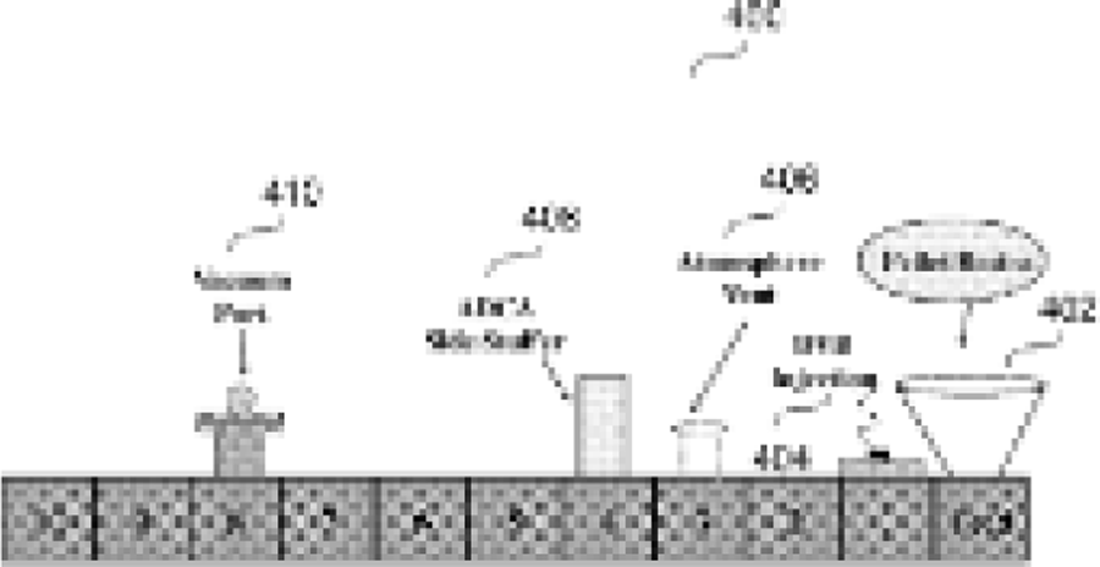
Described herein are methods and processes of manufacturing irradiation crosslinked polypropylene foam. In some embodiments, this includes extrusion of all material components, including a liquid crosslinking agent, to manufacture extruded structures for production of irradiation crosslinked polypropylene foam.
Modified Silicone Resin Foam
Inventor(s): C Katano
Sources: US Pat. App.: 20180312653
Corporate/Assignee: Kaneka Corporation
A modified silicone resin foam is obtained by curing a foamable liquid resin composition including: 100 parts by weight of a base material resin (A) composed of 65–95 parts by weight of a polymer (a) and 5–35 parts by weight of a reactive plasticizer (b); 0.1–5 parts by weight of a silanol condensation catalyst (B); and 2–40 parts by weight of a chemical foaming agent (C). The polymer (a) contains 1.0–2.0 reactive silicon groups in a molecular chain and has a main chain comprising oxyalkylene-based units. The reactive plasticizer (b) is a polymer containing 1.0 or fewer reactive silicon groups at one terminal end of a molecular chain and has a main chain comprising oxyalkylene-based units. A percent elongation of the foam is 300–1000% in a 25°C atmosphere.
Foam Materials Resistant to High Temperatures
Inventor(s): F Hupka; W Friedrichs; T Hagen; M Niesten; R Kramer; S Menon
Sources: US Pat. App.: 20180312655
Corporate/Assignee: Covestro Deutschland AG
The invention relates to foam materials that are resistant to high temperatures, to the production of same from aromatic polyisocyanates and polyepoxides, and to the use of said foam materials.
Crosslinked Foamed Thermoplastic Elastomer Compositions and the Use Thereof
Inventor(s): C Ting; WC Wen; F Jan; S Lynn; I To
Sources: JP 2018119145
Corporate/Assignee: SRC Corporation
A lightweight and flexible, split tear strength, compression set, tear strength, provide superior crosslinking foamed thermoplastic elastomer composition and a manufacturing method resilience like. (A) A ethylene copolymer; (B) a first copolymer; (C) a second copolymer, where component (B) and (C), the vinyl aromatic mono a copolymer containing dimers and conjugated diene monomer, the first copolymer has at least 80% of the conjugated diene hydrogenation degree, the second copolymer is 10% or less of conjugated having a diene hydrogenation degree; (D) an organic peroxide; and (E) a blowing agent, where component (a): component (B) and the component weight ratio of the combination of (C) (a/(B + C)) is 95/5–5/95, and component (B): weight ratio of component (C) (B/C) is crosslinked made from the composition is 4.5/1 to 1/9 foam and a method of manufacturing.
Styrene Resin Composition, and Method for Producing Expandable Styrene Resin Particles
Inventor(s): S Ryuta; S Maruhashi; Y Yoshino
Sources: JP 2018127612
Corporate/Assignee: Kaneka Corporation
An object of the present invention, a high expansion ratio, and low thermal conductivity, i.e., a styrene-based resin composition which can give a styrene resin foamed molded product having high thermal insulation performance, and, expandable styrene resin particles to provide a method of manufacturing. The A styrene resin and carbon and fed to a twin-screw extruder to melt-kneading, a process for the preparation of the styrene resin composition, in the twin-screw extruder, in the specific energy 0.13 kWh/kg or more there can be achieved by the method for producing a styrene resin composition.
Heat Conductive Foam Sheet
Inventor(s): M Ria
Sources: JP 2018127617
Corporate/Assignee: Sekisui Chemical Co. Ltd.
A high thermal conductivity, and it is an object to provide a lightweight material reducing the load on the electronic device. A containing a main agent 100 parts by mass consisting of resin or resin and a plasticizer and the carbon fiber 40–300 parts by mass, a heat conductive foam sheet.
Functional Open-Cell Foam and a Method of Manufacturing the Same
Inventor(s): Y Ryuhei
Sources: JP 2018135501
Corporate/Assignee: Sanwa Kako Co. Ltd.
A utilizing conventional open cell foam, without blending a special raw material, also material and the blowing agent, without the manufacturing difficulties by changing the mixing ratio of such crosslinking agent to obtain a heat-resistant open-cell foam having heat resistance. A fluororubber resin paint, or in a solution containing a fluorine rubber resin coating impregnated open cell foam, removing the dried solvent celled foam containing a fluorine rubber resin paints, curing by heating by performing, obtain a continuous cell foam having heat resistance.
Molded Foam Article, Foamed Sole, and Shoe
Inventor(s): J Tateishi; K Harano; K Yamada; M Nasako
Sources: US Pat.: 10,113,045
Corporate/Assignee: ASICS Corporation

There is provided a molded foam article including a foam obtained by foaming a formation material wherein the formation material contains a resin component, an Asker C hardness of the foam is 10 degrees or more, and a ratio E40/E0 of the foam is 0.5 or more, the ratio E40/E0 being a ratio of an elastic coefficient E40 at a strain of 40% in relation to an elastic coefficient E0 at a strain of 0% of the foam. The molded foam article has appropriate softness with a small change in hardness under compressive deformation.
Tire
Inventor(s): S Ishikawa
Sources: US Pat.: 10,124,627
Corporate/Assignee: Bridgestone Corporation
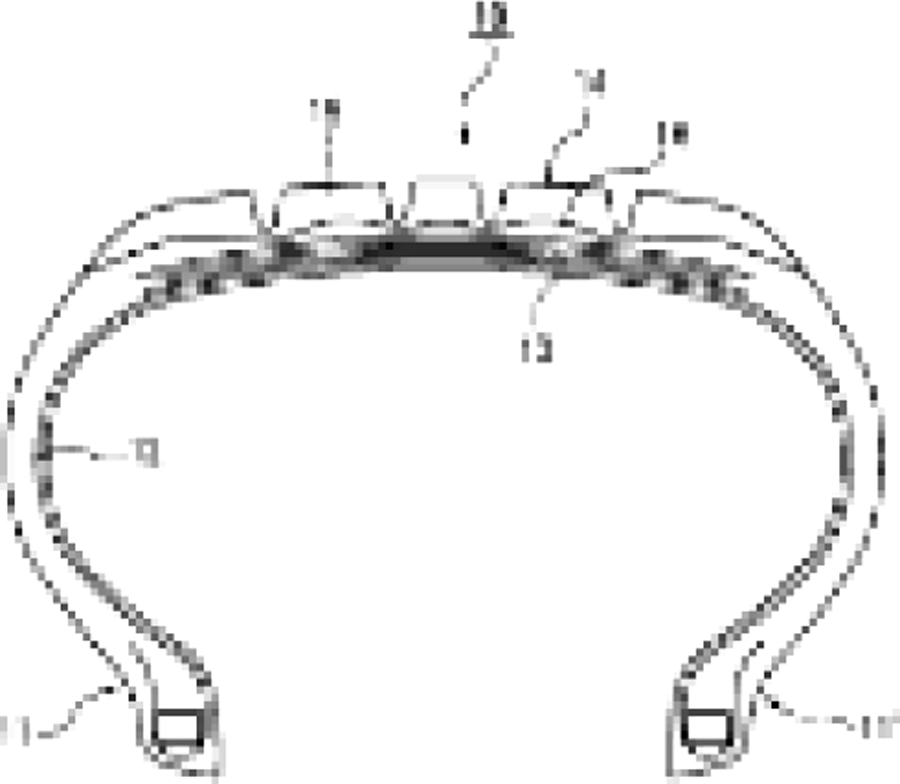
A tire can deliver improved on-ice performance with a reduced rolling resistance. The tire includes a foam rubber layer in a tread that comes into contact with a road surface, wherein a foaming ratio of the foam rubber layer is in a range from 3% to 50%, a rubber composition forming the foam rubber layer includes ethylene-vinylalcohol copolymer fiber coated with a resin having affinity for a rubber component, and the rubber composition forming the foam rubber layer includes 5 to 30 parts by mass at least one type of inorganic compound powder with respect to 100 parts by mass the rubber component, the inorganic compound powder having an average particle diameter greater than or equal to 10 µm and expressed by the following general formula (I). M.xSiO2.yH2O (I)
System and Method for Primarily Erecting Curvilinear Buildings Using a Plurality of Interconnected Structural Tubes/Sandwich Panels
Inventor(s): JE Purdy
Sources: US Pat.: 10,125,515
Corporate/Assignee: N/A
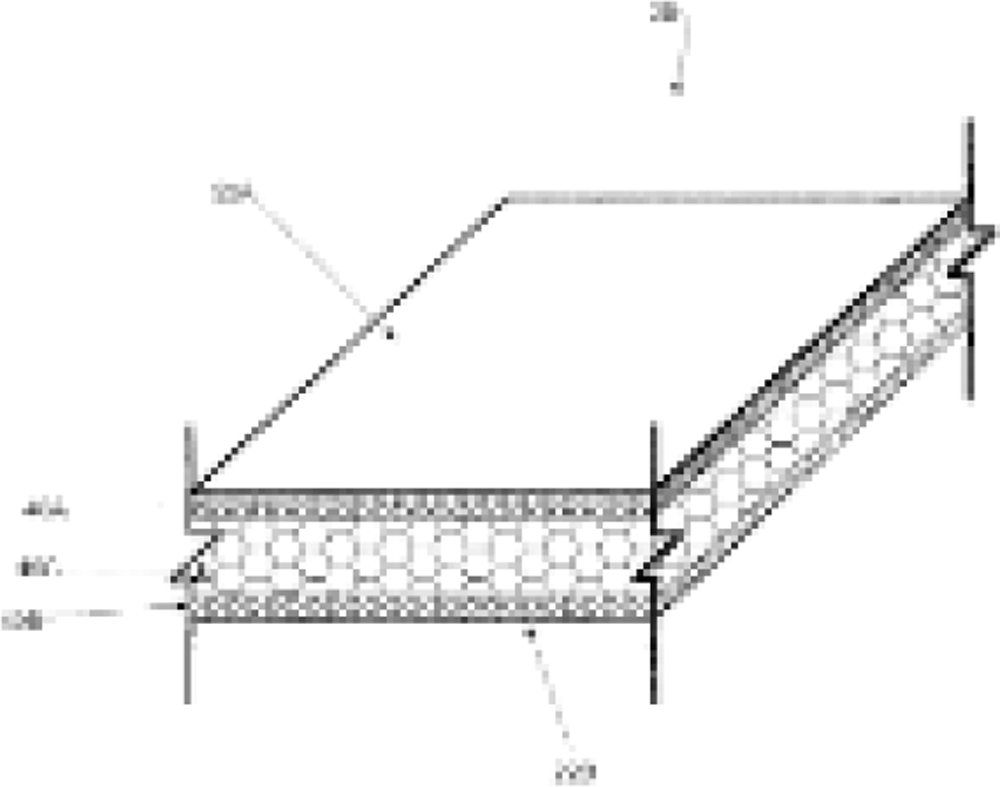
A system and method for primarily erecting curvilinear buildings using a plurality of interconnected structural tubes/sandwich panels is provided. Fabricating structural tubing comprises: connecting a fibrous and flexible lining to an inner surface of a flexible outer membrane, wherein the lining is saturated in a curable material that forms into a solid foam material when cured; and curing the curable material. Fabricating a sandwich panel comprises: connecting a first fibrous and flexible lining to an inner surface of a first flexible outer membrane, wherein the first lining is saturated in a curable material that forms into a solid foam when cured; connecting a second fibrous and flexible lining to an inner surface of a second flexible outer membrane, wherein the second lining is saturated in a curable material that forms into a solid foam when cured; and curing the curable material of the first lining and second linings.
Systems and Methods for Ignition Source Testing with Flammable Foam
Inventor(s): E Kwon; JS Damazo
Sources: US Pat.: 10,132,722
Corporate/Assignee: The Boeing Company
Disclosed are ignition source testing systems and methods that utilize a foam with flammable components to indicate the presence of an ignition source on a test article (such as metallic components of a fuel system). Foam is applied to the test article and an energy discharge (such as a simulated lightning strike) is applied to the test article with the foam. The energy discharge may create an ignition source (such as an arc) on the test article that is sufficient to ignite the foam. Test methods comprise determining whether the foam ignited in response to the energy discharge. Test systems comprise the foam, the test article at least partially covered by the foam, and an energy source configured to discharge energy into the test article.
Footwear Upper Having Selectively Located Padding
Inventor(s): TJ Smith; S Cavaliere; G Adami
Sources: US Pat.: 10,136,695
Corporate/Assignee: NIKE, Inc.
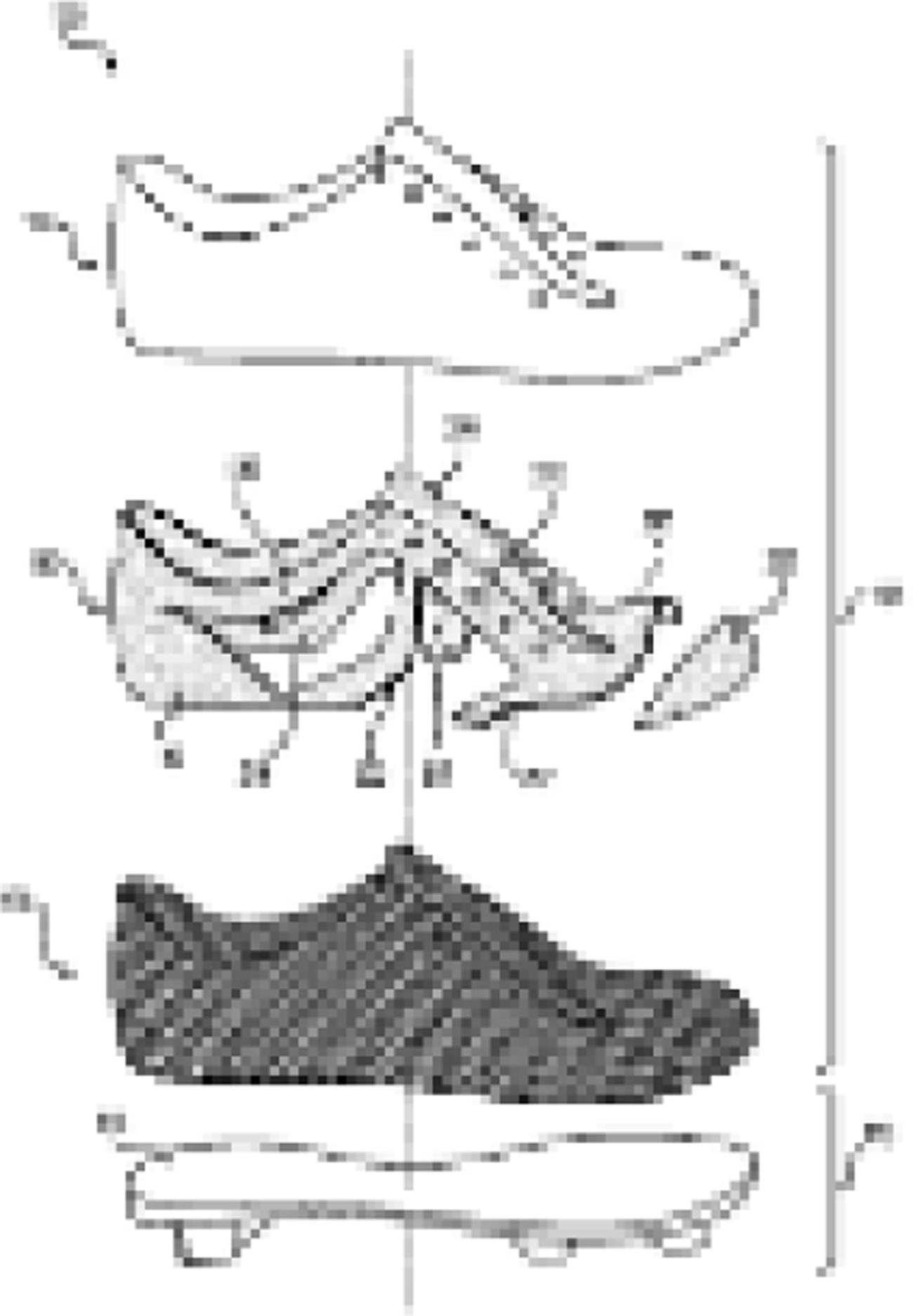
An article of footwear is provided, which may include an upper and a sole structure. The upper may include an exposed outer layer forming at least a portion of an external surface of the upper. The upper may also include a polymer foam material selectively located on an inner side of the exposed outer layer and adjacent portions of the exposed outer layer, thereby forming padded portions of the upper. The padded portions of the upper may be located in areas of the article of footwear that correspond with predetermined bones of a foot of a wearer of the article of footwear.
Contoured Support Insole
Inventor(s): J Martinez; DB Granger; P Lewis
Sources: US Pat.: 10,136,697
Corporate/Assignee: Implus Footcare, LLC
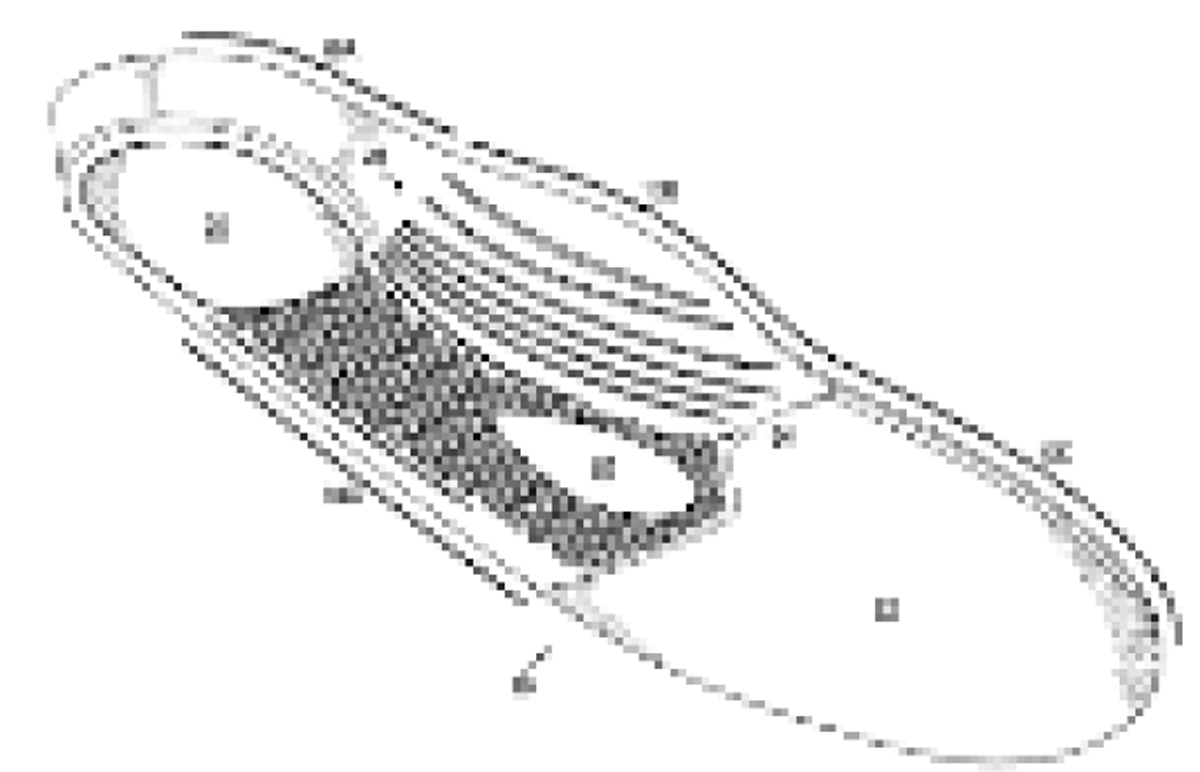
A contoured insole especially advantageous for users with medium to high arches is disclosed. It comprises a generally foot-shaped base extending from a heel end to a toe end, which comprises a top surface and a bottom surface. The bottom surface of the base preferably further comprises two indentations formed integrally therein in a forefoot area and a heel area. A forefoot pad and a heel pad are secured to each of said indentations. Preferably, the base is made from a polyurethane foam. The pads are made from rubber or synthetic rubber. A top sheet is coextensive with and secured to the top surface of the base. The top sheet is generally a fabric which preferably has antimicrobial characteristics. In use, the foot of the wearer, with or without a sock or stocking thereon, rests upon the top sheet in the foot-receiving compartment of a user's shoe.
Pre-Duct Devices and Methods for Making Air Ducts
Inventor(s): D Bianchi; BJ Hazen
Sources: US Pat.: 10,139,018
Corporate/Assignee: Unique Fabricating INC
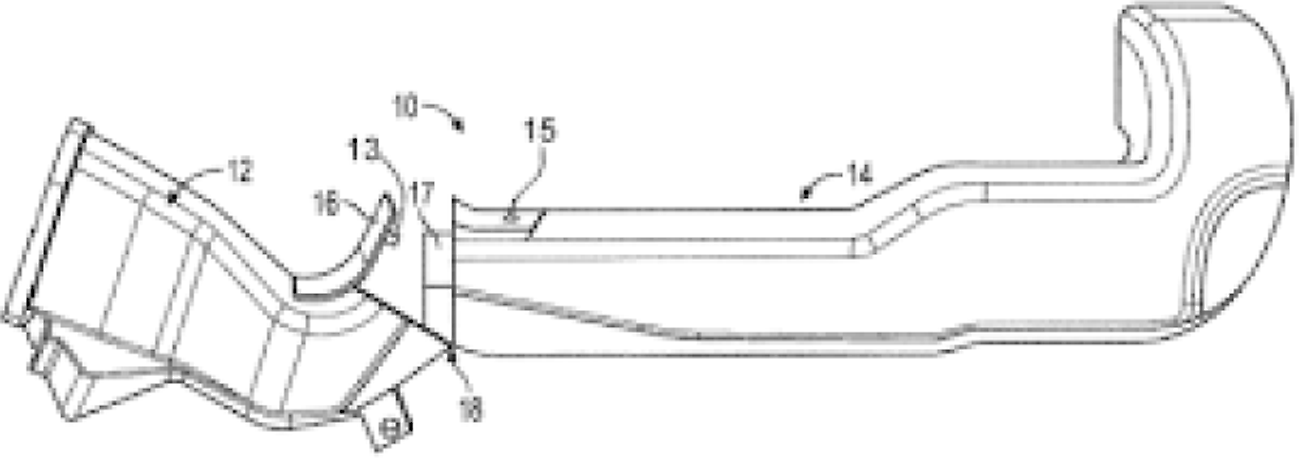
A foam duct is provided. Among other applications, it may be used in automotive HVAC systems. The method of making this duct reduces material waste and provides an unexpectedly reliable joint in a duct at a sharp or rounded corner. In place, the airflow further supports the joint. In the method, a first portion of a hollow pre-duct is joined with a second portion of a hollow pre-duct by bending the portions at a cut-out positioned between the portions. The bending is complete when the portions form a mechanical connection, which may be signaled by tactile or audible feedback.
Insulation Material Arrangement and Method for Forming an Insulation Material
Inventor(s): BA Schmetzer; SJ Schmetzer
Sources: US Pat. App.: 20180313080
Corporate/Assignee: Schmetzer Industries Holdings Pty Ltd
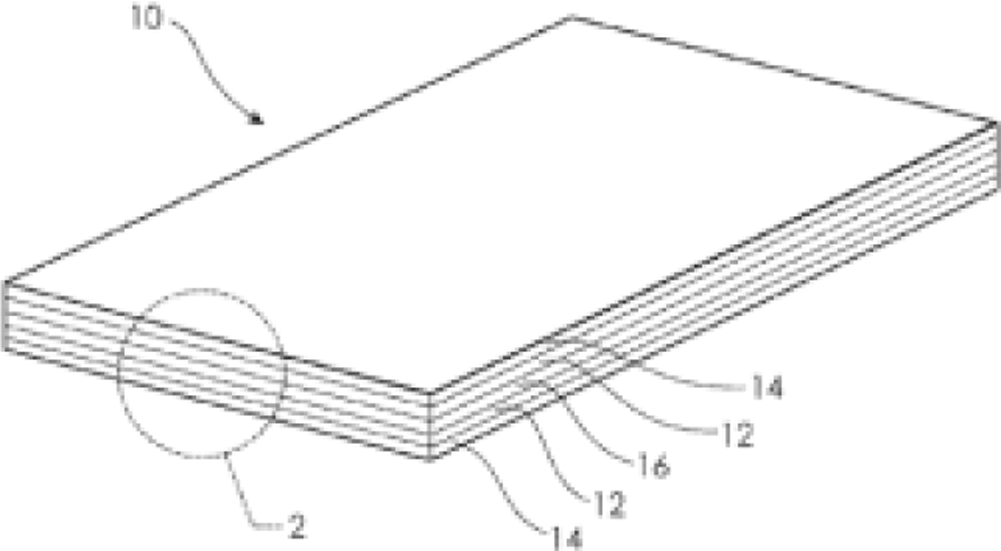
A material arrangement (10) for insulating a building structure (50) in an installed condition, the material arrangement (10) including first and second flexible polymer foam layers (12) and a flexible phase change material layer (16) between the first and second flexible polymer foam layers (12), and at least one flexible reflective layer (14) extending over at least one of the first and second flexible polymer foam layers (12). A method of forming and installing such a material arrangement (10) is also disclosed.
Footwear Including Sole Assembly
Inventor(s): A Guyan
Sources: US Pat. App.: 20180317601
Corporate/Assignee: Under Armour, Inc.
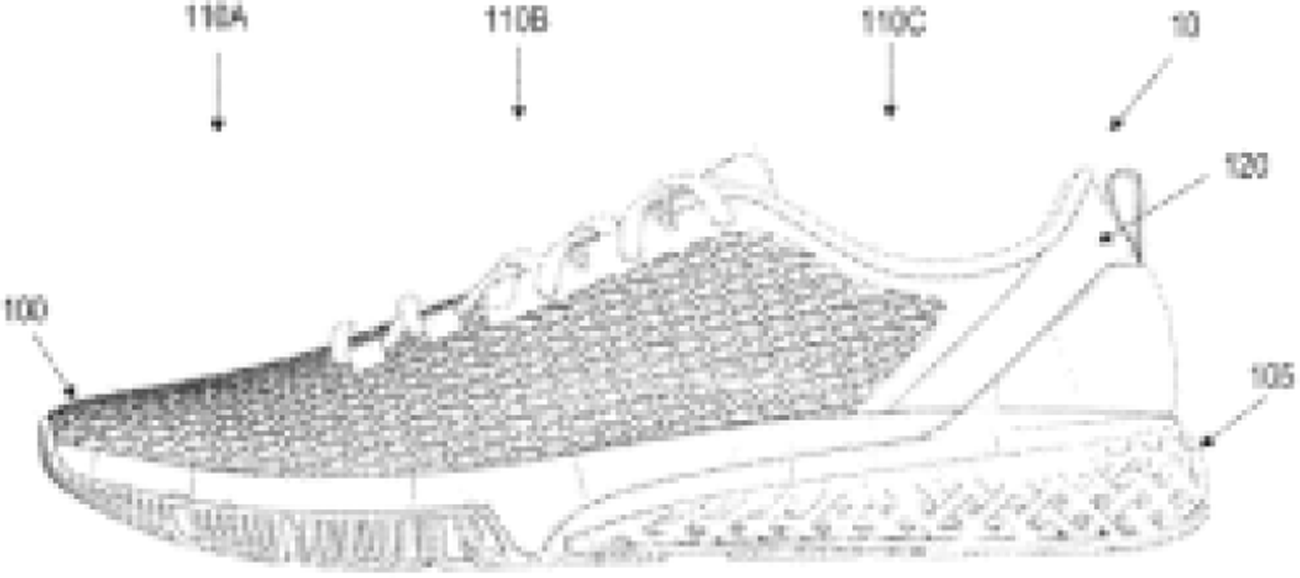
An article of footwear includes an upper and a sole assembly. The sole assembly includes a unitary, open-celled structure. Specifically, the sole assembly includes a lattice structure having an interconnected network of struts and nodes that cooperate to define voids. The struts and nodes are configured to generate predetermined support and flexure properties within the network. The lattice may be configured as a conformal lattice, being contoured to receive accessories or complementary support structures. The sole assembly may further include an insert formed of compression material (e.g. foam). In operation, the lattice and foam insert cooperate to provide stability and cushioning to the article of footwear.
Wound Dressing
Inventor(s): W Fleischmann
Sources: US Pat. App.: 20180318136
Corporate/Assignee: Biowim Products GmbH
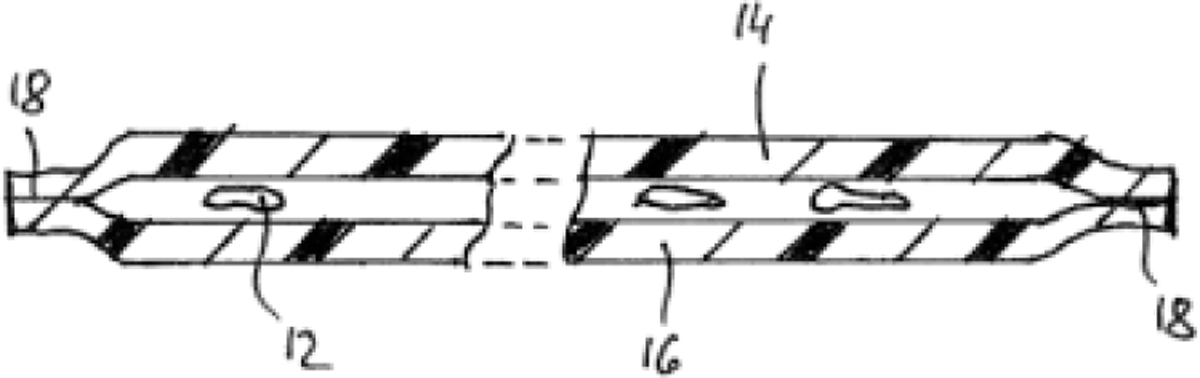
A wound dressing in the form of a bag enclosing fly maggots, having a porous wall made from plastic, the wall having a membrane made from an open cell polyurethane foam, the pore diameter of which is approximately 0.1 mm to approximately 1 mm.
Molded-Foam Production Process and Molded Foam
Inventor(s): S Jindai; T Ichiki
Sources: US Pat. App.: 20180319062
Corporate/Assignee: Bando Chemical Industries, LTD.
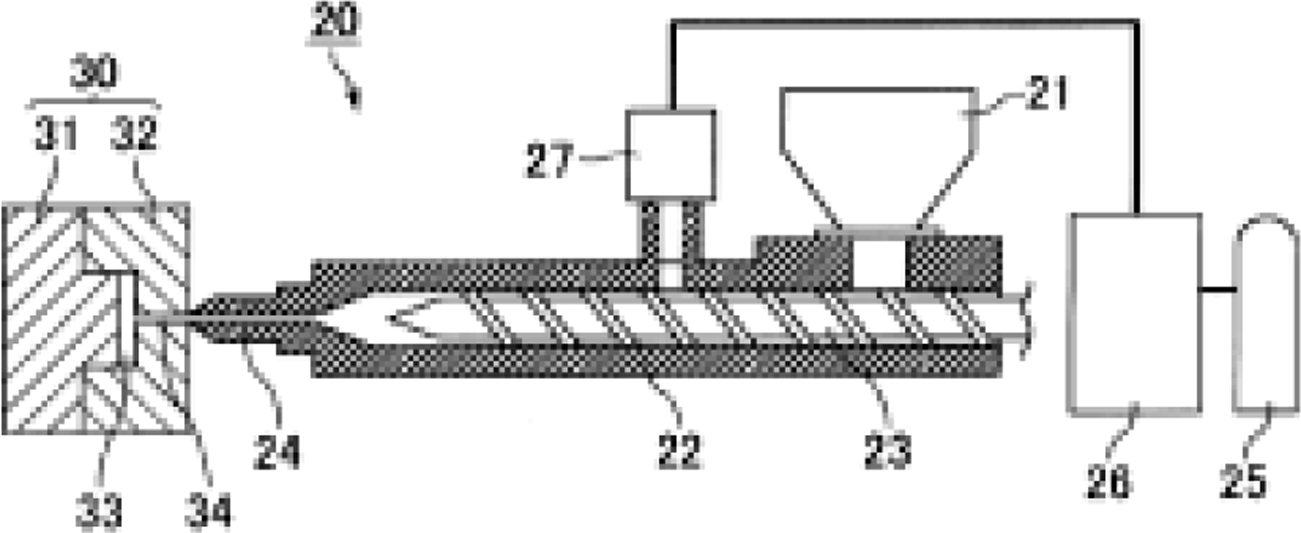
The present invention provides a method for efficiently manufacturing a molded foam product having excellent heat insulation, and a molded foam product obtained by such a method. The method of the present invention is a method for manufacturing a molded foam product, including the steps of: melting a resin composition containing a polyolefin and a polylactic acid and impregnating the resin composition with a fluid in a supercritical state to prepare a molten resin, and injecting the molten resin into a cavity formed in a mold and moving a portion of the mold to increase the volume of the cavity before the molten resin injected into the cavity completely solidifies, the fluid impregnated into the resin composition being a fluid of 0.05–4.0 wt% inert gas, the molded foam product at least partially having a five-layer cross-sectional structure of a first unfoamed layer, a first foamed layer, a hollow space, a second foamed layer, and a second unfoamed layer included in the given order.
Shoe with Composite Upper and Foam Element and Method of Making Same
Inventor(s): FJ Dojan; DA Johnson; SS Kohatsu; C Huang
Sources: US Pat. App.: 20180325217
Corporate/Assignee: NIKE, Inc.
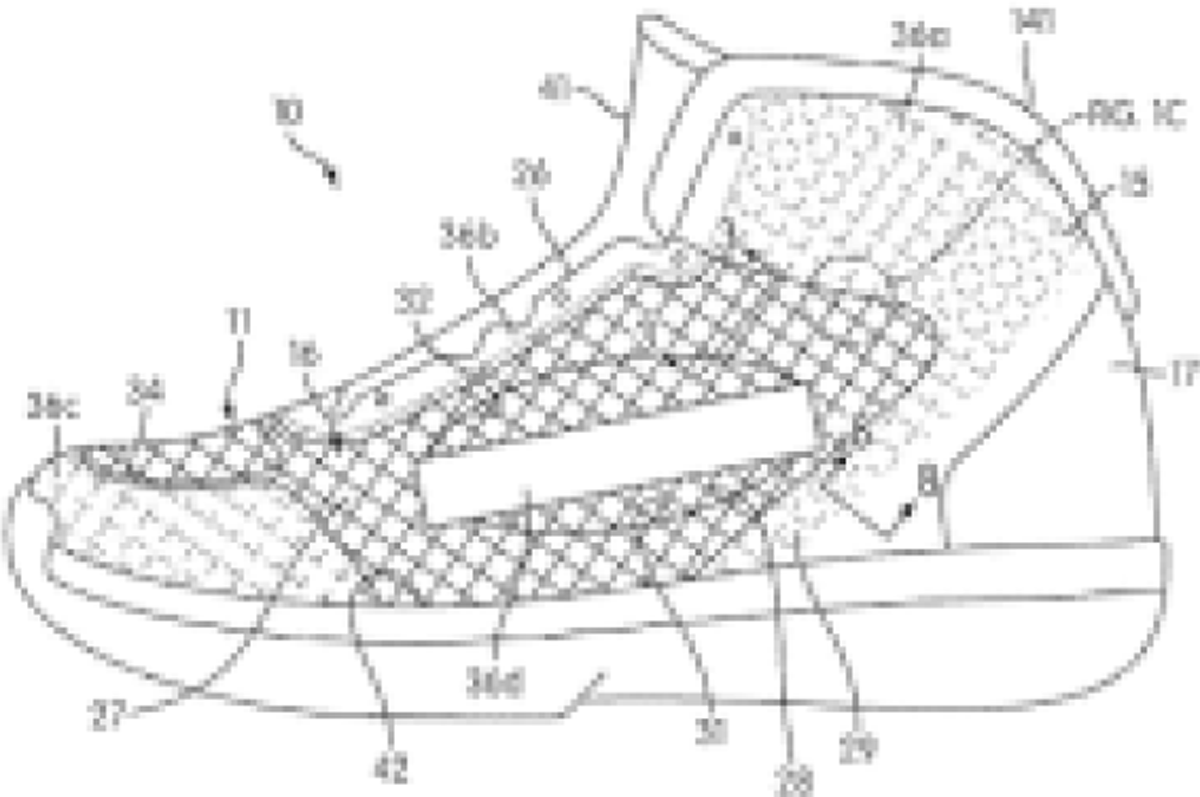
A bonded mesh composite panel can be used to form a three-dimensional upper shell that includes extensions used for double-lasting and/or to otherwise provide a shelf to support foam padding. The foam padding may be, e.g. a foam midsole. The extensions of the upper shell may be located in a lower portion of the shell and may be bonded to the foam midsole in a heel, midfoot and/or forefoot regions.
Foam Exercising Roller
Inventor(s): D Earls; A Smith; C Lewis
Sources: US Pat. App.: 20180326254
Corporate/Assignee: N/A
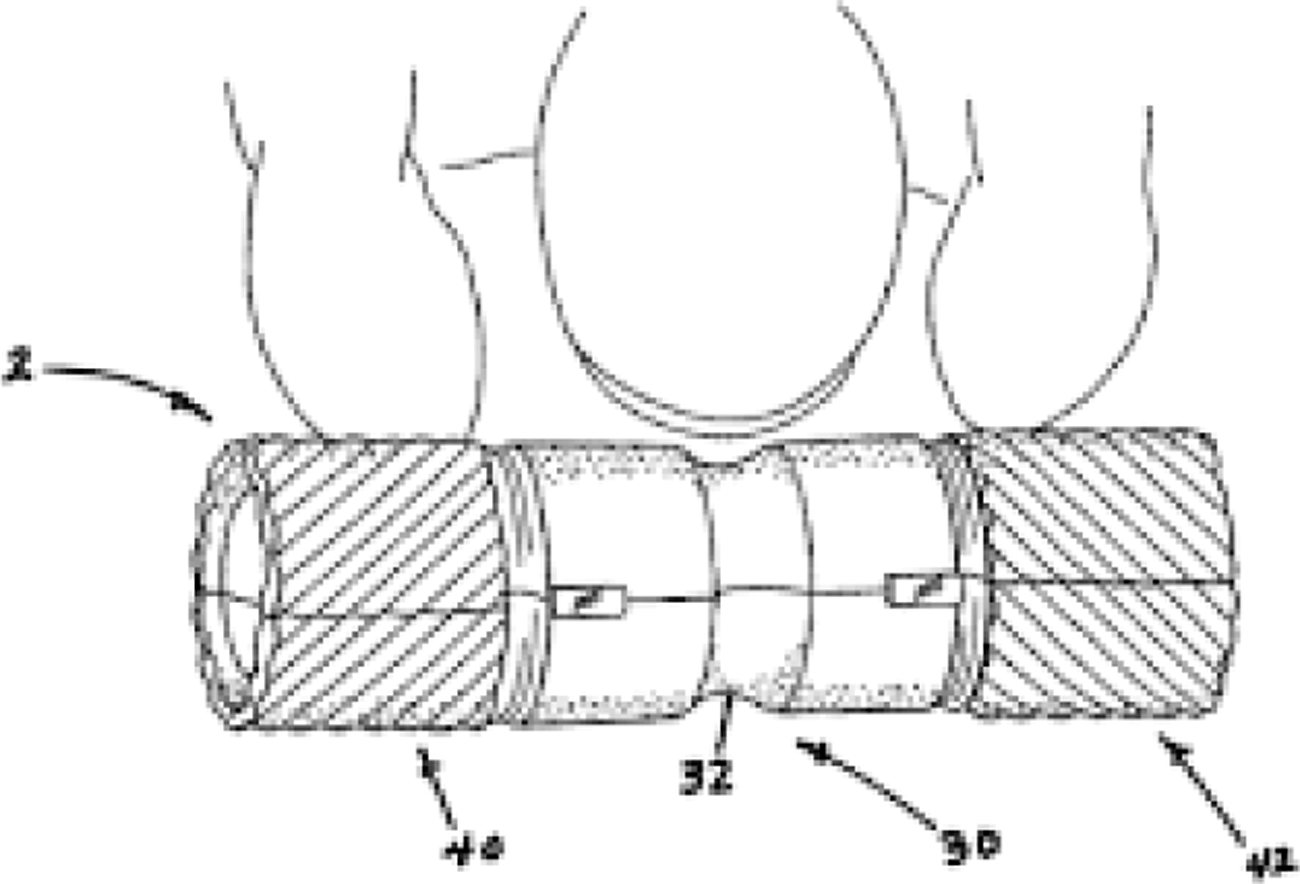
An exercise foam roller having a plurality of elongated tube sectors where each sector has first and second longitudinal edges with at least a portion of the outer surface covered with foam and hinges interconnecting the tube sectors along their first longitudinal edges and fasteners detachably interconnecting the tube sectors along their second longitudinal edges.
Foam Ionomer Compositions and Uses Thereof
Inventor(s): HA Baghdadi; J Constantinou; K Killops; B Prevo; ZC Wright
Sources: US Pat. App.: 20180327564
Corporate/Assignee: NIKE, Inc.
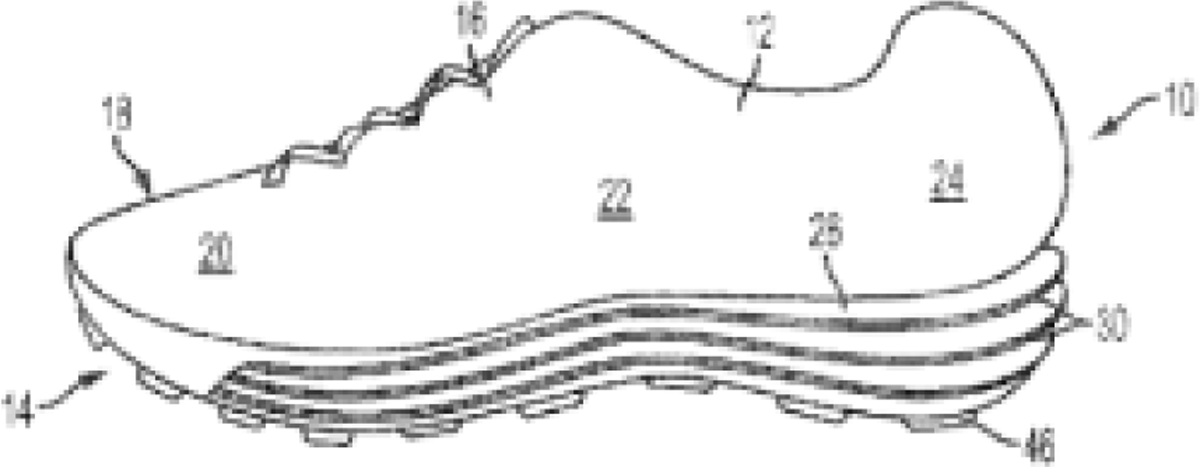
Components for articles of footwear and athletic equipment are provided including a foam. A variety of foams and foam components are provided. The articles include a composition having a foam structure, wherein the composition includes an ionomeric polymer and a plurality of cations, wherein the ionomeric copolymer is crosslinked by the cations. The crosslinks are ionic, so in some aspects the composition is free or essentially free of any covalent crosslinks between the ionomers. In particular, midsoles including the foams are provided for use in an article of footwear. Methods of making the compositions and foams are provided, as well as methods of making an article of footwear including one of the foam components. In some aspects, the foams and foam components can be made by injection molding or injection molding followed by compression molding.
Spray Foam Additive Manufacturing
Inventor(s): M Gerbut
Sources: US Pat. App.: 20180334792
Corporate/Assignee: N/A
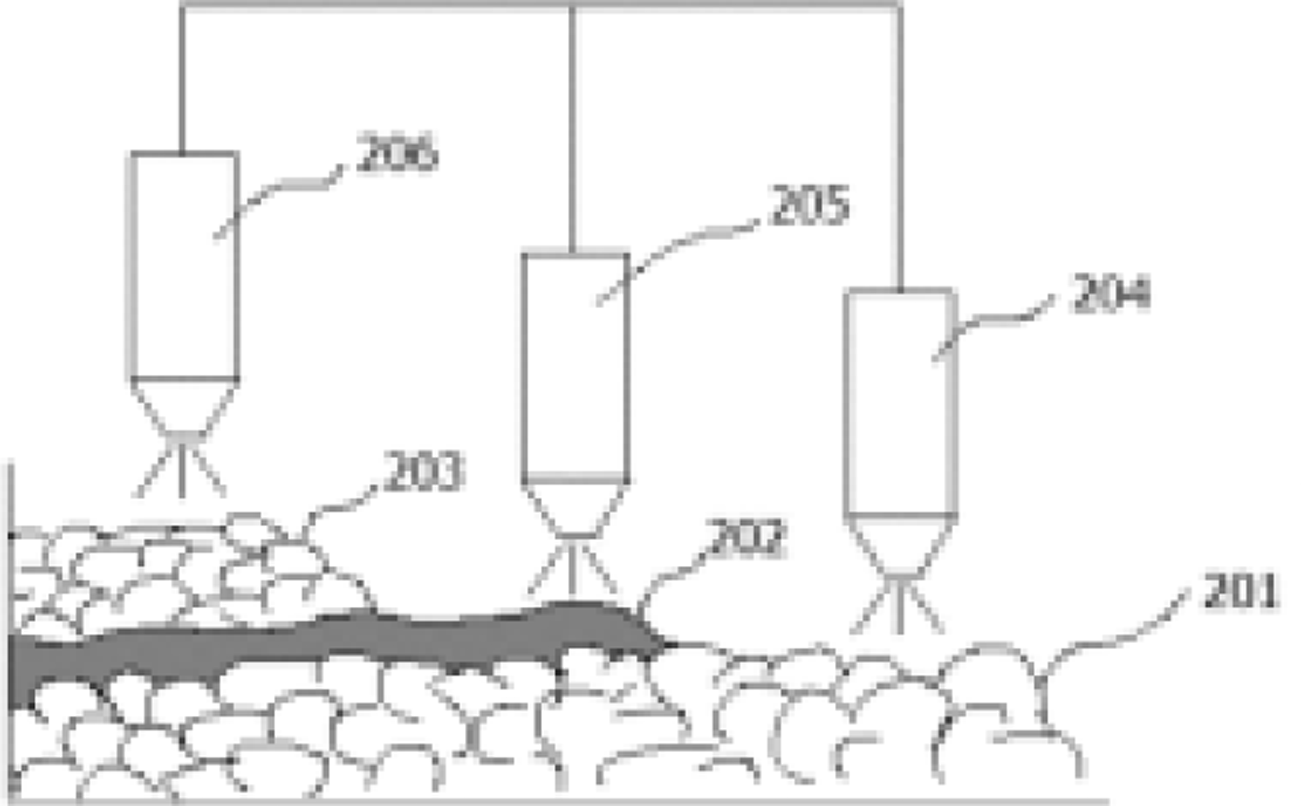
A multi-layered structure with improved stability and insulation is disclosed. Methods for making the multi-layered structure are also disclosed. The structure comprises layers of foam and layers of solid material which are sprayed onto each other via an industrial robot having spray nozzles. The layers of foam are sprayed onto a supporting structure of a building, and the process of spraying is such that each consecutively sprayed layer is initiated after only a short lag in time from the initiation of the previous layer. The structure comprises at least two layers (preferably at least three layers), each layer having different mechanical properties. The layers may further be reinforced with reinforcing fibers and/or fiber fragments. An additional layer of fibrous material may comprise outer and/or inner layers of the structure. The disclosed structure is built faster and has significantly higher load-bearing and insulative capacities than the state of the art.
Composite Materials
Inventor(s): E Le Gall; F Ostrowsky; D Souvay
Sources: US Pat. App.: 20180339488
Corporate/Assignee: Zephyros, Inc.
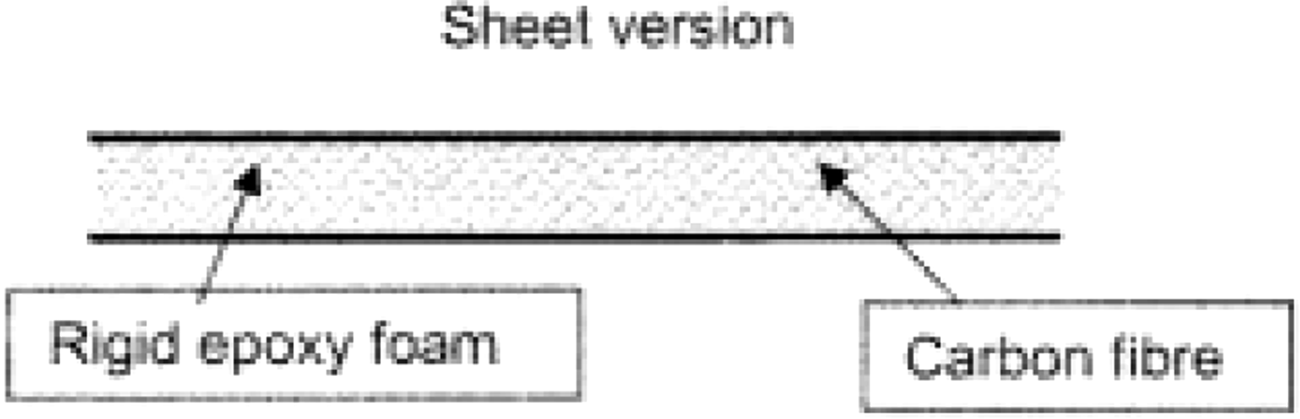
Light weight composites with high flexural strength comprise epoxy foam sandwiched between two layers of facing material have high strength and low weight and can be used to replace steel structures. The facing layer may be fibrous material especially glass or carbon fibres, the facing material is preferably embedded into the epoxy matrix. Alternatively they may be matching box structures or concentric metal tubes. The sandwich structures may be prepared by laying up the fibre; coating and/or impregnating the layer with epoxy resin, laying a layer of heat activatable foamable epoxy material, providing a further layer of the fibrous material optionally coated and/or impregnated with epoxy resin on the foamable material and heating to foam and cure the epoxy materials. Alternatively they may be formed by extrusion of the foamable material between the surface layers.
The Foam Panel and Prefabricated House
Inventor(s): T Naoto
Sources: JP 2018123493
Corporate/Assignee: N/A
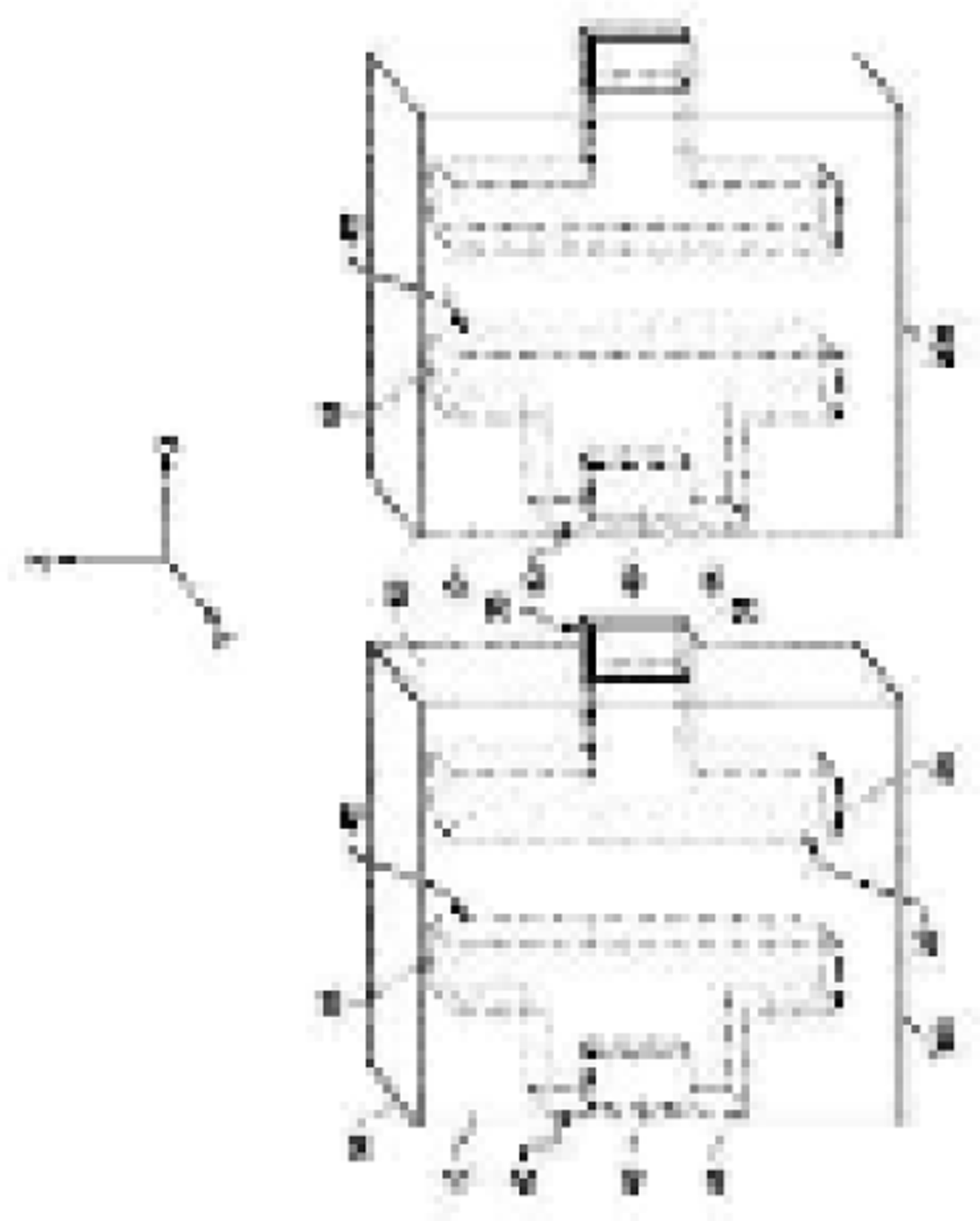
Provided fastening or other foam panel and easy foam panel fastening, and a prefabricated house using the same with the other member. Solution: The foam panel, the base material of the foamed synthetic resin, and a fastening portion which is the other end and one end is embedded in the base material is exposed, covering the surface of the substrate, a polyurea resin layer provides a foam panel with. Prefabricated house has a plurality of foam panels are formed by connecting a plurality of foam panels. Since the fastening portion the foam panels are embedded, it can be fastened through the fastening portion with another member or other foam panel.
Washable Melamine Foam and a Method of Manufacturing the Same
Inventor(s): T Toshibun
Sources: JP 2018123289
Corporate/Assignee: N/A
The present invention than the melamine foam and compressed melamine foam, tensile strength, excellent tear strength, and challenges that can be used as repeated cleaning equipment, washing machine by a general washing products (dehydration also included) can be mass-produced at a low cost did. A tension in the melamine foam itself by heat compression strength, pull the tear strength maximum, by a suitable thermoplastic resin, to produce a product having the strongest the intensity at present, common by the washing machine as a result laundry (including dehydration) is possible, now it is repeated cleaning action.
Foam Formulations
Inventor(s): C Girotti; P Golini; G Vairo
Sources: US Pat.: 10,113,026
Corporate/Assignee: Dow Global Technologies LLC
Embodiments of the present disclosure are foam formulations. As an example, foam formulation can include a polyol composition having an amine-imitated polyol that is from 10 percent to 20 percent of a total weight of the polyol composition and an additional polyol that is from 80 percent to 90 percent of the total weight of the polyol composition, a polyisocyanate, a blowing catalyst, and a gel catalyst, where a combination of the blowing catalyst and the gel catalyst is from 0.5 percent to 1.5 percent the total weight of the polyol composition and where the blowing catalyst is from 50 percent to 100 percent of a total weight of the blowing catalyst and the gel catalyst.
Polyurethane Gel Particles, Methods and Use in Flexible Foams
Inventor(s): BW Peterson; ML Crawford
Sources: US Pat.: 10,113,043
Corporate/Assignee: Twin Brook Capital Partners, LLC
Combinations of open cell flexible foams with polyurethane gel particles, and methods of making the combinations are described using a variety of procedures. The open cell flexible foam may partially or wholly comprise polyurethane foam and latex foam.
Additives for Improving Polyurethane Foam Performance
Inventor(s): JJ Burdeniuc; JD Tobias; RJ Keller; Y Jeon
Sources: US Pat.: 10,119,002
Corporate/Assignee: Evonik Degussa GmbH
Polyurethane foam compositions and processes to make flexible polyurethane foams are disclosed. Polyurethane foam is produced in the presence of additives comprising guanidine derivatives. Improvements in physical properties such as air flow, dimensional stability, tensile, tear, elongation and foam hardness is observed when these additives are present in polyurethane formulations. In addition, these additives can minimize polymer degradation under humid ageing conditions resulting in foam products with better mechanical properties.
Foam, Composition, and Method
Inventor(s): ZS Petrovic; IJ Javni; M Ionescu; I Cvetkovic; A Zlatanic; N Bilic; K Song; D Hong; JJ Bozek; MS Toas
Sources: US Pat.: 10,119,004
Corporate/Assignee: Certainteed Corporation
A method of producing a foam is disclosed. The method includes providing an epoxy-containing compound, a cationic catalyst, an optional blowing agent, and at least one additive. The method further includes combining the epoxy-containing compound with the cationic catalyst, the optional blowing agent, and the at least one additive, wherein the epoxy-containing compound and the cationic catalyst react to polymerize the epoxy-containing compound to provide the foam having a density from about 0.3 lbs/ft3 to about 5.0 lbs/ft3 as measured by ASTM D1622. Further disclosed are the foam and a method for installing the foam.
Polyurethane Composite System Having High Compressive Strength and Rigidity
Inventor(s): F Prissok; M Balbo Block; F Felix
Sources: US Pat.: 10,125,230
Corporate/Assignee: BASF SE
The present invention relates to a polyurethane composite system comprising a rigid polyurethane foam and a coating material composed of a compact polyurethane or a compact polyurea, wherein the rigid polyurethane foam comprises a porous three-dimensional reinforcing material which forms a network, where the network encloses at least 50% of the volume of the rigid polyurethane foam, or at least two layers of a porous, at least two-dimensional reinforcing material. The present invention further relates to a process for producing the polyurethane composite system and also a sports article, cladding part or furniture item comprising such a polyurethane composite system.
Catalyst Compositions and Methods for Making Foam
Inventor(s): RF Hoffman; JD Tobias; JL Vincent; TJ Miller
Sources: US Pat.: 10,125,234
Corporate/Assignee: Evonik Degussa GmbH
A composition and process to make polyisocyanurate or polyurethane foam using a catalyst composition comprising at least one bismuth carboxylate catalyst and one or more co-catalysts selected from the group of alkali metal carboxylates and quaternary ammonium carboxylate salts, such that the resultant foam has improved insulation properties. The polyisocyanurate or polyurethane foams produced by this catalyst composition and method are useful for laminated boardstock, construction panels, appliance insulation, and spray-applied insulation.
Polyurethane Foam-Forming Compositions, Methods of Making Low Density Foams Using Such Compositions, and Foams Formed Therefrom
Inventor(s): U Younes; R Romero; K Riddle; T Pike
Sources: US Pat.: 10,131,758
Corporate/Assignee: Accella Polyurethane Systems, LLC
Disclosed are polyurethane foam-forming compositions with a phase stable isocyanate-reactive composition that includes a halogenated olefin blowing agent that has low or no ozone depletion potential and low global warming potential. Such polyurethane foam-forming compositions are suitable for spray application to produce polyurethane foams that are believed to exhibit good fire resistance properties, low smoke generation and low or no scorch due to reduced exotherm, thereby making them particularly suitable for use, for example, as relatively thick wall and/or roof insulation.
Flexible Polyurethane and Polyurethane/Polyorganosiloxane Foam Materials that Absorb Impact Energy
Inventor(s): G Dehni
Sources: US Pat.: 10,138,373
Corporate/Assignee: Virfex, LLC
A polyurethane foam, a polyurethane/polyorganosiloxane foam, and a polyurethane foam polyurethane/polyorganosiloxane foam material are disclosed and described herein. The materials are formed in the presence of a polymerization reaction initiator (an isoprenoid compound), and a polymerization reaction accelerator. The polyurethane foam is formed from an isocyanate and a polyol. The polyurethane foam polyurethane/polyorganosiloxane foam material comprises the polyurethane foam which is cross-linked to the polyurethane backbone to a polyurethane/polyorganosiloxane foam. Optional gelling agents, emulsification control agents, reinforcement fillers, cross-linkers, reinforcement polymers, rubber reinforcers, silk proteins, emollients, stabilizers and colorants are also described. The polyurethane and polyurethane-polyorganosiloxane foam materials exhibit a high degree of flexibility, resilience and excellent impact absorption.
Polyurethane Foam for Noise and Vibration Absorption
Inventor(s): S Fregni; J Cai; S Landi
Sources: US Pat. App.: 20180319926
Corporate/Assignee: Dow Global Technologies LLC
The present invention relates to a reactive formulation used to make a polyurethane foam which is particularly suited for use in under the hood vehicle applications which require sound deadening and vibration management and a process to make said foam. In particular, the polyurethane foam is made from a reactive formulation comprising an A side comprising (i) one or more organic isocyanate and a B side comprising (ii) one or more isocyanate-reactive component, (iii) a carbon nanofiller; and (iv) one or more additional component selected from a catalyst, a blowing agent, a cell opener, a surfactant, a crosslinker, a chain extender, a filler, a colorant, a pigment, an antistatic agent, reinforcing fibers, an antioxidant, a preservative, or an acid scavenger.
Polyisocyanurate Coverboards with Improved Fire Resistance
Inventor(s): JB Letts; C Yao; MJ Hubbard
Sources: US Pat. App.: 20180320370
Corporate/Assignee: Firestone Building Products Co; LLC
A construction board comprising a foam body having first and second planar surfaces, said foam body including a polyisocyanurate foam matrix defining a plurality of closed cells, said closed cells being at least substantially devoid of hydrocarbon blowing agents, and said foam body being characterized by a density, pursuant to ASTM C303, of at least 2.5 lbs/ft3; and a facer disposed on a planar surface of said foam body, said facer including a glass substrate having an internal planar surface proximate to said foam body and an external planar surface opposite said foam body, a first coating disposed on said external surface, and a second coating disposed on or proximate to said internal surface, where said first coating disposed on said external surface includes an inert filler, and where said second coating disposed on or proximate to said internal surface includes intumescent material.
Method for Producing a Rigid Polyurethane Foam
Inventor(s): H Wada; T Tanabe; K Sakata
Sources: US Pat. App.: 20180327536
Corporate/Assignee: Covestro Deutschland AG
Provided is a method for producing a light rigid urethane foam superior in moldability (cell interconnection, spraying thickness, adhesiveness, etc.), heat-insulating efficiency, and others by a spraying method, using water as foaming agent. A method for producing an open-cell polyurethane foam, comprising obtaining the open-cell polyurethane foam by mixing and reacting a polyol composition containing a polyol compound, water as a foaming agent, a foam stabilizer, a catalyst, and a flame retardant with a polyisocyanate compound by a spraying method, the polyol compound containing polyols (A), (B), and (C) at a polyol (A) content of 10–40 wt parts, a polyol (B) content of 10–70 wt parts, and a polyol (C) content of 10–70 wt parts.
Production of Fine Cell Foams Using a Cell Aging Inhibitor
Inventor(s): M Klostermann; C Schiller; J Venzmer; C Eilbracht
Sources: US Pat. App.: 20180327563
Corporate/Assignee: Evonik Degussa GmbH
The use of an Ostwald hydrophobe in the production of polymer foams, preferably polyurethane foam, in particular rigid polyurethane foam, from liquid reaction mixtures, to retard cell ageing, in particular to retard cell ageing caused by Ostwald ripening, is described.
Polyisocyanurate Foam Board Incorporating RFID Tags
Inventor(s): RJ Marciello; I Alovert; C Solarczyk; Cipiti, JR; AJ
Sources: US Pat. App.: 20180330219
Corporate/Assignee: Building Materials Investment Corporation
Polyisocyanurate boards are disclosed that comprise an RFID tag that is capable of storing identifying information. The RFID tags may be embedded in the polyisocyanurate foam. By appropriate positioning of the embedded RFID tags in the boards, non-specialized RFID tags can be used without the tags being damaged by the heat and dynamic forces encountered during manufacturing. A method of manufacturing the boards is also disclosed.
Catalyst Composition for Producing Polyurethane Foam, and Method for Producing Flexible Polyurethane Foam Using it
Inventor(s): Y Sesoko; H Kiso
Sources: US Pat. App.: 20180334526
Corporate/Assignee: Tosoh Corporation
To provide a catalyst composition to obtain a flexible polyurethane foam from which substantially no amine compound is discharged and which has sufficient resistance to compressive strain, and a method for producing a flexible polyurethane foam using the catalyst composition. A polyurethane foam is produced by using a catalyst composition for producing a polyurethane foam, which comprises an amine compound represented by the following formula (1) and at least one glycol selected from the group consisting of ethylene glycol and polyethylene glycol, provided that when the compound of the formula (1) has enantiomers, diastereomers or geometric isomers, both a mixture thereof and isolated isomers are included: ##STR00001## wherein R1, R2, R3 and R4 are each independently a hydrogen atom, a C1–4 alkyl group, a hydroxy group, a hydroxymethyl group or a C1–4 alkoxy group, and m is an integer of 1 or 2.
PUR/PIR Rigid Foams Made of Polyaddition Oligoesters
Inventor(s): H Nefzger; T Hagen; K Lorenz; R Abels
Sources: US Pat. App.: 20180334530
Corporate/Assignee: Covestro Deutschland AG
The invention relates to a method for producing PUR/PIR rigid foam materials, having the steps of reacting at least one polyester polyol (a), which can be obtained by reacting (a. I.) at least one cyclic carboxylic acid anhydride; (a.2.) at least one low-molecular dial with a molecular mass of 62–450 Da; and (a.3.) at least one alkylene oxide; by esterifying the components (a.I.) and (a.2.) and subsequently oxalkylating the resulting carboxylic acid half-ester using component (a.3.); wherein at least the oxalkylation is carried out using (a.4.) at least one amine catalyst in which (the) nitrogen atom(s) is/are part of an aromatic ring system, with (b) at least one polyisocyanate-containing component, (c) at least one propellant, (d) at least one or more catalysts, (e) optionally at one flameproofing agent and/or other auxiliary agents, and (f) optionally at least one additional compound with at least two groups which are reactive towards isocyanates and which differ from polyester polyol (a). The invention also relates to a PUR/PIR rigid foam material which can be obtained using a method according to the invention, to a composite element comprising the PUR/PIR rigid foam material according to the invention, at least one cover layer selected from concrete, wood, press board, aluminum, copper, steel, stainless steel, paper, non-wovens, and plastic, and multilayer composites or a combination thereof. The invention also relates to the use of the PUR/PIR rigid foam materials according to the invention or the composite element according to the invention for heat damping.
High Strength Polyurethane Foam Compositions and Methods
Inventor(s): SD Allen; V Sendijarevic; A Sendijarevic
Sources: US Pat. App.: 20180340038
Corporate/Assignee: Saudi Aramco Technologies Company
Disclosed are high strength polyurethane foam compositions and methods of making them. In one aspect, the inventive polyurethane foams include strength enhancing additives comprising one or more polycarbonate polyols derived from the copolymerization of CO2 and one or more epoxides. In one aspect, the inventive methods include the step of substituting a portion of the polyether polyol in the B-side of a foam formulation with one or more polycarbonate polyols derived from the copolymerization of CO2 and one or more epoxides.
Polyurethane Foam
Inventor(s): M Omoto; T Hara; S Takayama; T Hara
Sources: US Pat. App.: 20180340064
Corporate/Assignee: INOAC Corporation
Provided is a polyurethane foam having excellent heat resistance and the like. The polyurethane foam is obtained from a material that contains a polyol and a polyisocyanate, in which the polyol contains a polyester polyol, the polyisocyanate contains a diphenylmethane diisocyanate-based isocyanate, it is preferable that the polyester polyol has one or more side chains composed of an alkyl group, and the polyurethane foam may be used as a soundproof material for vehicles.
Method for Producing a Rigid Polyurethane Foam Compositions and Rigid Polyurethane Foams
Inventor(s): N Yuhei
Sources: JP 2018119034
Corporate/Assignee: Tosoh Corporation
A high heat insulating performance, a sufficient compressive strength, rigid polyurethane foam Polyol composition can have excellent rigid polyurethane foam appearance, and provides a method for producing a rigid polyurethane foam in the continuous line. A polyol comprising a catalyst, a foam stabilizer, and a specific amount of hydro fluoroolefin as a blowing agent, by using the following polyol composition specific viscosity were fixed point injection at one point in a continuous line even if good compression strength, high thermal insulation performance, and good rigid polyurethane foam compositions rigid polyurethane foams can be obtained that combines product appearance.
Flame-Retardant Polyurethane Resin Composition
Inventor(s): O Yosuke; K Okada; K Yasunari
Sources: JP 2018119168
Corporate/Assignee: Sekisui Chemical Co. Ltd.
A can express flame retardancy with a small amount of addition, and to provide excellent handling flame retardant polyurethane composition. A flame-retardant urethane resin composition, polyisocyanate compound, a polyol compound, trimerization catalyst, blowing agent, a flame-retardant urethane resin composition containing a foam stabilizer and additives, flame retardant in the cured product of the urethane resin composition, the intensity ratio of the peak of the carbonyl group of the isocyanurate to the peak of the group of the urethane when measured by 13 C NMR is between 0.3 and 3.5.
Phenolic Foam Laminate and Manufacturing Method Thereof
Inventor(s): K Hiroyuki; M Kotobuki
Sources: JP 2018123292
Corporate/Assignee: Asahi Kasei Construction Materials Co. Ltd.
A even when increasing the thickness of the phenolic foam, without decreasing the closed cell ratio, provide a technique for improving the compression resistance. And A phenolic foam, the phenolic foam of a phenolic resin foam laminates having at least upper and lower surfaces provided with surface material, the phenolic foam of thickness 50 mm or 300 mm or less an average cell diameter 20 μm or 200 μm or less, and a closed cell ratio of 85% or more, the ratio X of the compressive strength (N/cm2) with respect to the density of the phenolic foam (kg/m3) is 0. It is 67 or more, phenolic foam laminate.
Flame Retardant Urethane Resin Composition
Inventor(s): Y Makoto; Y Toshinori
Sources: JP 2018131555
Corporate/Assignee: Sekisui Chemical Co. Ltd.
To provide a flame-retardant polyurethane resin composition having excellent flame retardancy. A flame-retardant urethane resin composition comprising a polyisocyanate compound, a polyol compound, a catalyst, a blowing agent, a foam stabilizer and a phosphite.
Extruded Expanded Thermoplastic Polyurethane Elastomer Bead and Preparation Method Therefor
Inventor(s): B Huang; R Wang; G Wang; S Zhang; W Zhao
Sources: US Pat.: 10,137,601
Corporate/Assignee: Miracll Chemicals Co. Ltd.
The present invention relates to an extruded expanded thermoplastic polyurethane elastomer bead and a preparation method therefor. The bead consists of components of the following parts by weight: 100 parts by weight of a thermoplastic polyurethane elastomer, 0.01–0.5 parts of a foaming nucleating agent, and 0.01–0.2 parts by weight of an antioxidant. The preparation method comprises: mixing materials, then putting the mixture into an extruder for granulation to produce a particle raw material suitable for foaming, finally, putting the particle into a foam extruder, and die foaming then underwater pelletizing, thus obtaining a product bead. The present invention utilizes an extrusion method to prepare expanded thermoplastic polyurethane beads. Control of the working conditions of the foaming process could lead to acquiring an expanded = bead of a controllable density, the cell density evenly distribute. The overall production process is easy to operate. Without any special limit or requirement placed on the equipment, this method is suitable for industrial continuous production.
Process for the Production of Expanded Polyester Foam Beads
Inventor(s): U Keppeler
Sources: US Pat.: 10,138,345
Corporate/Assignee: BASF SE
A process for the production of expanded foam beads that are prepared from pellets comprising polyester mixture comprising (a) from 50 to 99% by weight, based on components a and b, of a biodegradable polyester based on aliphatic, or a mixture of aliphatic and aromatic, dicarboxylic acids and an aliphatic diol, and (b) from 1 to 50% by weight, based on components a and b, of polylactic acid, the process comprising the following steps: (i) providing an aqueous suspension of the polyester pellets, (ii) impregnating the pellets in the suspension of step (i) with at least one physical or chemical blowing agent to provide blowing-agent-loaded pellets in suspension, wherein the impregnation of the at least one blowing agent includes heating the mixture to a depressurization temperature IMT with stirring, and (iii) depressurizing the suspension obtained in step (ii) to provide the expanded foam beads. The at least one blowing agent is added to the suspension in step (i), or in step (ii) during the heating phase, or immediately after the heating phase, and following the heating of step (ii), the suspension is maintained at a temperature in the range from IMT minus 5°C. to IMT plus 2°C. for a period of 3–100 minutes. The invention further relates to expanded foam beads obtained by the process, and to the production of moldings from the expanded foam beads.
Apparatus for Producing Expandable Thermoplastic Resin Particles, and a Manufacturing Method of the Expandable Thermoplastic Resin Particles
Inventor(s): S Maruhashi; A Kajiko
Sources: JP 2018127537
Corporate/Assignee: Kaneka Corporation
A realizing stable production of expandable thermoplastic resin particles. An apparatus for producing expandable thermoplastic resin particles (100) is an extruder for melt-kneading the thermoplastic resin and (10), blowing agent supply portion for adding a foaming agent to the thermoplastic resin (30) When, a provided with a die (20) having a plurality of holes, the temperature control unit for controlling the temperature of the foaming agent (34).
Expanded Polymer Pellets
Inventor(s): P Smith; J Hill; A Wordrow; D Stephan; J Tarrier; C Robertson; C Edward Holmes; F Mintulle; S Curling; D Kilpanantum; V Altstadt; A Fati; D Raps; C Kielholz; T Couple
Sources: JP 2018127642
Corporate/Assignee: Adidas AG
Disclosed is an object of the present invention can be prepared in the widest possible working range, and in order to form stable parts can be used in a wide range of applications, for the production of parts having, for example, attenuation characteristics and low weight, it can be further processed to provide a swollen polymer pellets. The invention relates to step to melt the polymer comprising polyamide; to produce the expanded polymer, step is expanded through at least one die melt; step of adding at least one blowing agent and, expanded polymer a step of the pellet; including, relates to a process for producing expanded polymer pellets.
Method of Manufacturing a Sparkling Methyl Methacrylate Resin Particles
Inventor(s): O Shinobu; T Kobayashi; Y Ohara
Sources: JP 2018135408
Corporate/Assignee: Kaneka Corporation
Disclosed is a good moldability at a high expansion ratio, the gap (unevenness) is small in the expanded particles of the molded foam product surface, to provide a method of manufacturing a sparkling methyl methacrylate resin particles is there. In particular, there is provided a method of manufacturing a sparkling methyl methacrylate resin particles suitable for use in fugitive pattern for use in metal casting. A foamable methacrylate resin particles obtained by suspension polymerization of acrylic monomers consisting of methyl methacrylate 90 wt% or more 98 wt% or less and less than 10 wt%, 2 wt% or more of butyl acrylate a manufacturing method, when the conversion of the acrylic monomer has reached 95% or less 80%, foaming of methyl methacrylate, which comprises causing the foaming agent is impregnated in the following impregnation temperature 120°C, 95°C or higher It can be achieved by the production process of the system resin particles.