







Abstract
This study aims to comprehensively investigate the X-ray shielding performance of bio-based rigid polyurethane foam (bPUF) composites incorporated with amorphous boron, using both experimental measurements and theoretical modeling approaches. A series of foam samples with different boron content (0–20 wt%) were fabricated via one-shut free-rise method and, the variation in X-ray attenuation capabilities of the produced foams depending on boron content were analyzed meticulously. The key parameters such as linear and mass attenuation coefficients (LAC, MAC), half-value layer (HVL), tenth-value layer (TVL), mean free path (MFP), effective atomic number (Zeff), and radiation protection efficiency (RPE) were evaluated. The findings showed that the inclusion of boron led to slightly improvement in X-ray radiation shielding, particularly at low photon energies, primarily attributed to both the increment in the foam density and presence of boron having relatively higher atomic number in the foam matrices. The best-performing composite (with 20% boron) demonstrated slight enhancements in LAC, Zeff, and stopping power performance for charged particles. The addition of boron also increased the electrical conductivity (Ceff) of the foams, as boron particles acted as a semiconductive bridge promoting conduction. Although low atomic number of boron limited its direct interaction with high-energy X-rays, its contribution to foam densification supported secondary interaction mechanisms to shield radiation. All in all, these findings highlighted the boron-filled bPUFs could be used as environmentally friendly, lightweight, and moderately effective X-ray shielding materials.
Keywords
Introduction
The growing concern for radiation exposure in various fields such as medical imaging, nuclear energy, space exploration etc. has spurred the need for effective radiation shielding materials. Among lots types of radiation, X-rays, a form of high-energy electromagnetic radiation, are particularly challenging to shield against due to their ability to penetrate most conventional materials depending on dose, exposure time and sensitivity of the materials etc.1,2 The use of X-ray has become quite widespread due to its peculiar applicability on food sterilization, medical imaging, nuclear application, space exploration and scientific research disciplines in today world.3,4 Depending on these common usage in such application area, the increment in the length of exposure brings about dangerous diseases such as cancer, birth defect, mutation, tissue damages and serious health issues etc. 5 Thus, the development of novel and high-performance shielding materials has become a significant major focus for researchers. 6 With this purpose, one can encountered the organic and metalic foams, ceramics, bricks, coatings, concrete, nanocomposites, sludge-based materials etc. for the radiation shielding in the literature.7–10 Additionally, polymer composites filled with metal oxides like PbO, CdO, WO3 were also used for effective shielding of X-ray radiation.11–13 Moreover, in the pursuit of developing advanced materials for radiation shielding applications, researchers have increasingly turned their attention to the utilization of bio-based shielding materials for sustainable development since the production of environmentally friendly, lead-free and sustainable materials contribute to environmental protection. 14 Moreover, These materials are lightweight, innovative and easy applicable in various shapes, which makes them more preferable for especially construction, building and space applications etc. 13 Correspondingly, for this purpose, bio-based organic foamy polymer composites can be considered as a green route due to their dominant prominence features like lightweight, perfect mechanical endurance, low cost, greener, good chemical resistance etc.15,16
Among polymeric foamy materials, rigid polyurethane foams (RPUFs) with regular cellular porous morphology are widely used one offering excellent mechanical properties, low density, and easy applicability to desired location and good compressive strength.17–19 Besides, the peculiar insulation performance (0.023–0.040 W/mK 20 ) due to their uniform honeycomb-like microstructure also make them indispensible for heat insulation applications. 21 They are also used as a critical component in the areas where X-ray is used extensively. Thanks to these peculiar features, it is expected that their commercial demand will be roundly 28 million tons in 2026. 22 RPUFs are fabricated by using isocyanate and polyol with the existence of a blowing agent, a catalyst, and a surfactant in the reaction medium, 23 which enables to have honeycombed cellular morphology.18,24 Moreover, by adding fillers, the fundamental properties of RPUF could be modified.25,26 Especially, polyols as one of the key raw materials play a critical role in the production of RPUFs, and are responsible for polymer backbone by creating urethane bonds. Furthermore, the cell structure, insulation capability, rigidity and mechanical performance of final foams highly depend on the used polyol. 27 In more details, the molecular structure and functionality of the polyol influence the cell size and density of the foam. Namely, higher-functionality polyols (those with more reactive sites) result in a more cross-linked structure, increasing rigidity and thermal insulation properties and also, polyols with specific properties contribute to the thermal stability and insulation efficiency of the final foams. 28 Unfortunately, traditional polyols are commonly produced from crude oil. At this point, when considering insufficient feedstock risk of petroleum and its environment and ecosystem damages, it is undoubtedly required bio-based polyols obtained from renewable and greener sources. Plant oils with their triacylglycerol structure, derived from soybean, corn, sunflower, canola, rice bran, palm, olive, rapeseed, and linseed, can be considered as an alternative, environmentally friendly, and biodegradable feedstock for the production of bio-based polyols in order to reduce the potential hazards of petroleum. 29 When such oils were exposed to some chemical modifications like epoxidation-ring opening, hydroformylation, ozonolysis, transesterification and hydrogenation,30,31 the biopolyols can be produced with acceptable hydroxyl numbers (200–550 mg KOH/g). 32
On the other hand, RPUFs has recently been studied to fabricate radiation attenuation shielding materials as well as their superior features mentioned above. Namely, in our previous study, traditional RPUFs filled with PbO with high atomic numbers and colemanite showed superior X-ray radiation attenuation properties. 13 Furthermore, El-Khatip A.M. et al. produced polyurethane foams including Pb nano and microparticles to improve their gamma rays shielding properties. 33 In another foregone study, RPUFs with various percentage of iron slag was produced and, the improvement in gamma-ray and neutron attenuation performance was recorded in the samples. 15 As seen, incorporation of heavy metals or fillers make RPUFs more durable against high energy radiations. Moreover, the formation of secondary effective bonds between polyurethane matrix and filler contribute radiation shielding performance of the final foams. 34 Correspondingly, chemically modified biopolyols also create positive effect on radiation attenuation capacity of the foams since biopolys including lots of C and H atoms in their aliphatic molecular backbone primarily interact radiation by elastic scattering.35,36
With this perspective, the present study deals with the preparation of amorphous boron-incorporated rigid polyurethane foams (bPUFs) by using biopolyol derived from soybean oil and examine X-ray shielding performance of the produced foams via employing both experimental and theoretical approaches across the certain range of the energy. The best of our knowledge, there is no study in the literature, focusing on investigation on X-ray shielding performance of boron-filled bio-based RPUF. Thus, this research presented a way to provide insights into the feasibility of using bio-based high-performance eco-friendly X-ray shielding foamy composites. As such, the findings obtained from this research especially enables the potential usage of boron in foamy materials. Such shielding materials can play a critical role in the nuclear power plants, military defense, aerospace, medical and nuclear waste management applications.
Materials and methods
Materials
The main starting product, epoxidized soybean oil (ESO) to obtain biopolyol was generously provided from Akkim Kimya (Türkiye). Additionally, other reagents for this synthesis anhydrous sodium sulfate (ACS grade, 99.0%), ethyl acetate (ACS reagent, ≥99.5%), triethanolamine (reagent grade, 99.0%), zinc acetate dihydrate (ACS reagent, ≥98%) were kindly obtained from Sigma-Aldrich. Moreover, the amorphous boron particles (PVT. Boron 95) as a filling material with 95–97% of the purity grade were taken from Pavezyum Technical Ceramics (Pavtec) in Türkiye.
pMDI (IZOKIM RD 001) and traditional polyol (KIMPOL 4110) were kindly supplied from KIMPUR in Türkiye. According to the company data, NCO content, viscosity and density values were 31.5%, 200 MPa.s and 1.23 g/cm3 for the pMDI, respectively. Hydroxyl number, viscosity and density values of the polyol were 430 mg KOH/g, 3500 MPa.s and 1.10 g/cm3, respectively.
Furthermore, the catalyst (N,N-dimethylcyclohexylamine) and the surfactant (Tegostab B 8476) were obtained from Evonik Industries. All the compounds were utilized as supplied forms without any further purification.
Synthesis of the soybean-based biopolyol
The soybean oil-based polyol was prepared using epoxidized soybean oil (ESO) as previously. Namely, ESO (300 g), triethanolamine (330 g) and zinc acetate (0.75 g) were mixed in a three necked flask. The prepared mixture was agitated mechanically and heated to 120°C for 2 h since the ring-opening reaction occurred. After the temperature increased until 150°C, the mixture was allowed to mix for extra 3 h. Then, after the temperature of the mixture reached to the room temperature, the mixture was extracted five times with ethyl acetate in separation funnel and, anhydrous sodium sulfate was used to dry the organic phase including biopolyol. Finally, ethyl acetate was evaporated via rotary evaporator. The obtained biopolyol was characterized by ATR-FTIR and 1H-NMR. Additionally, The iodine number, hydroxyl number and acid number of the produced biopolyol were determined according to ASTM D5554, 37 ASTM D4273 Method A, 38 and ASTM D4662, 39 respectively. All the obtained data in this study were presented in the supporting files.
Preparation of bio-based RPUF composites
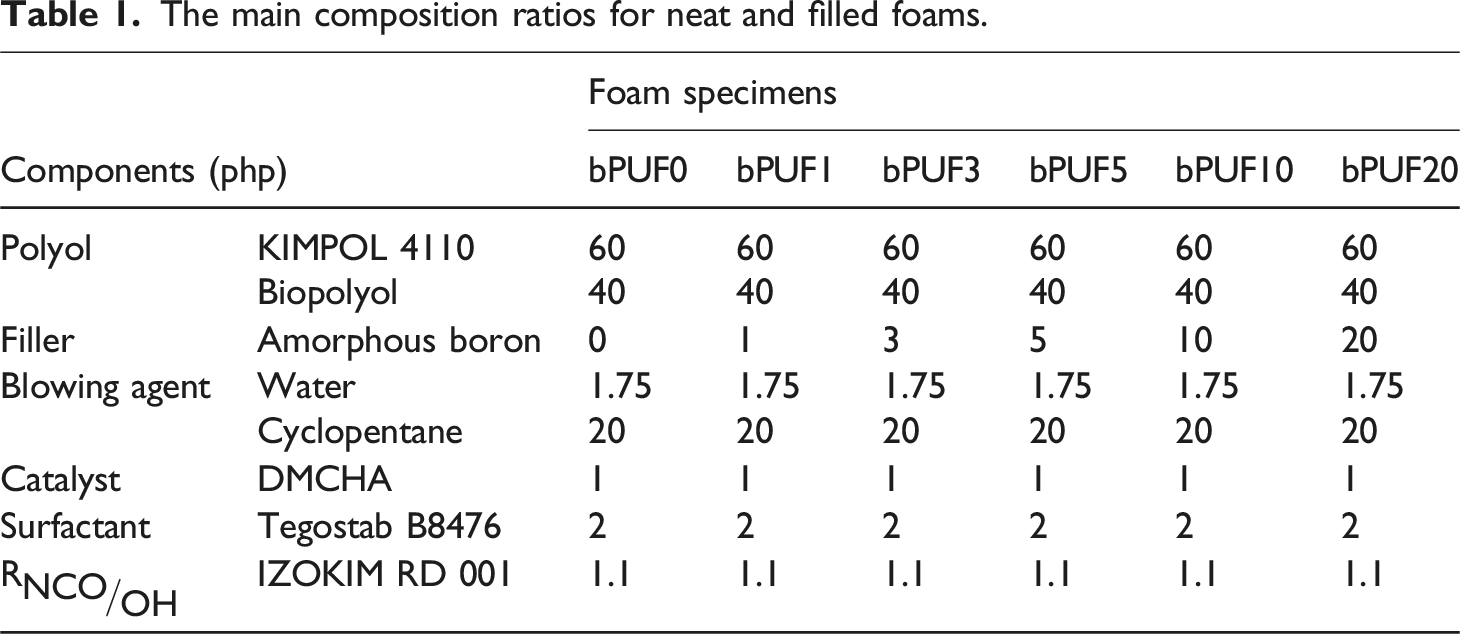
The main composition ratios for neat and filled foams.
Radiation shielding measurement methods
The radiation shielding properties of bPUF0 and boron-filled bPUF composites were studied by taking consideration of the various critical parameters like Linear attenuation coefficient (LAC), Mass attenuation coefficients (MAC), half-value layer (HVL), tenth-value layer (TVL), mean free path (MFP), effective atomic number (Z
eff
), electrical conductivity (C
eff
), alpha and proton stopping powers, and radiation protection efficiency (RPE). The assessment of X-ray shielding performance for the produced samples were performed by detailed examination of such parameters determined by both experimental and theoretical approaches. In order to determine LAC values in centimeters per unit length (cm−1), the Beer–Lambert law was utilized given as equation (1).
41

The intensity of the incoming photons and transmitted photons a donates as 
HVL can be defined as the thickness of a material required to reduce the intensity of a beam of radiation to half its original value, whereas MFP is a measure of the average distance a particle travels in a material before interacting with it via scattering, absorption, or another interaction. Thus, these critical parameters were also computed by using equation (3) and (4) given in the following.
44


TVL donates the thickness of a material required to reduce the intensity of a beam of radiation to one-tenth its original value, and calculated as following equation (5).
45

As well known, the Z
eff
parameter is directly corresponding to radiation physics and material science, and used to explain the overall atomic number of a compounds. In other words, It indicated the average atomic number that reflects the interaction of radiation with the material. Because of these reason, the procedures indicated in equation (5)
46
were applied to find Z
eff
, and a MATLAB script was also utilized for the calculations.
44

Experimental setup
The ratio of the intensity of the transmitted photons to the intensity of the incoming photons ( Simplified schema for the shielding measurement of the foam samples.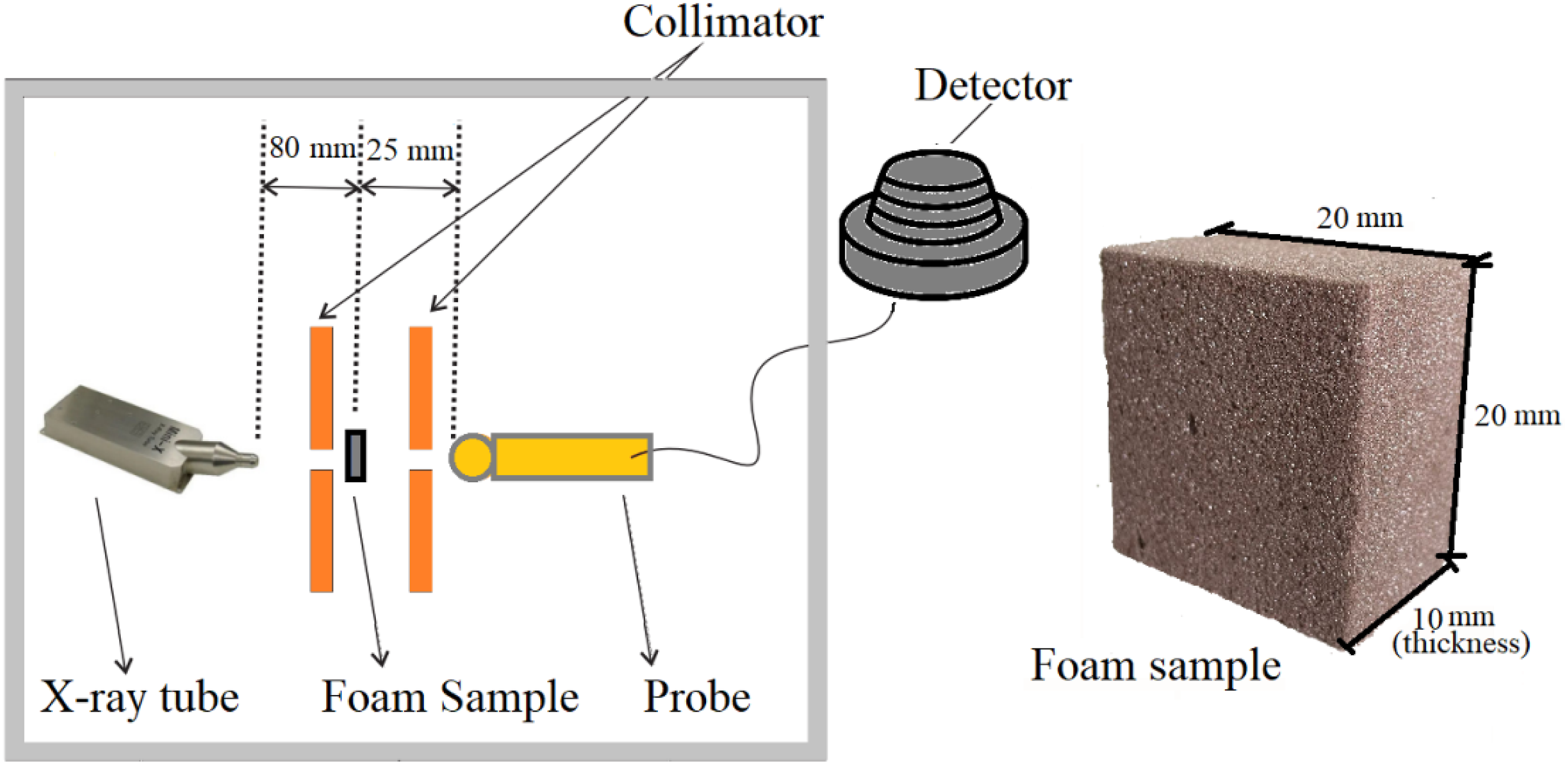
Results and discussion
LAC and MAC results for the foam samples
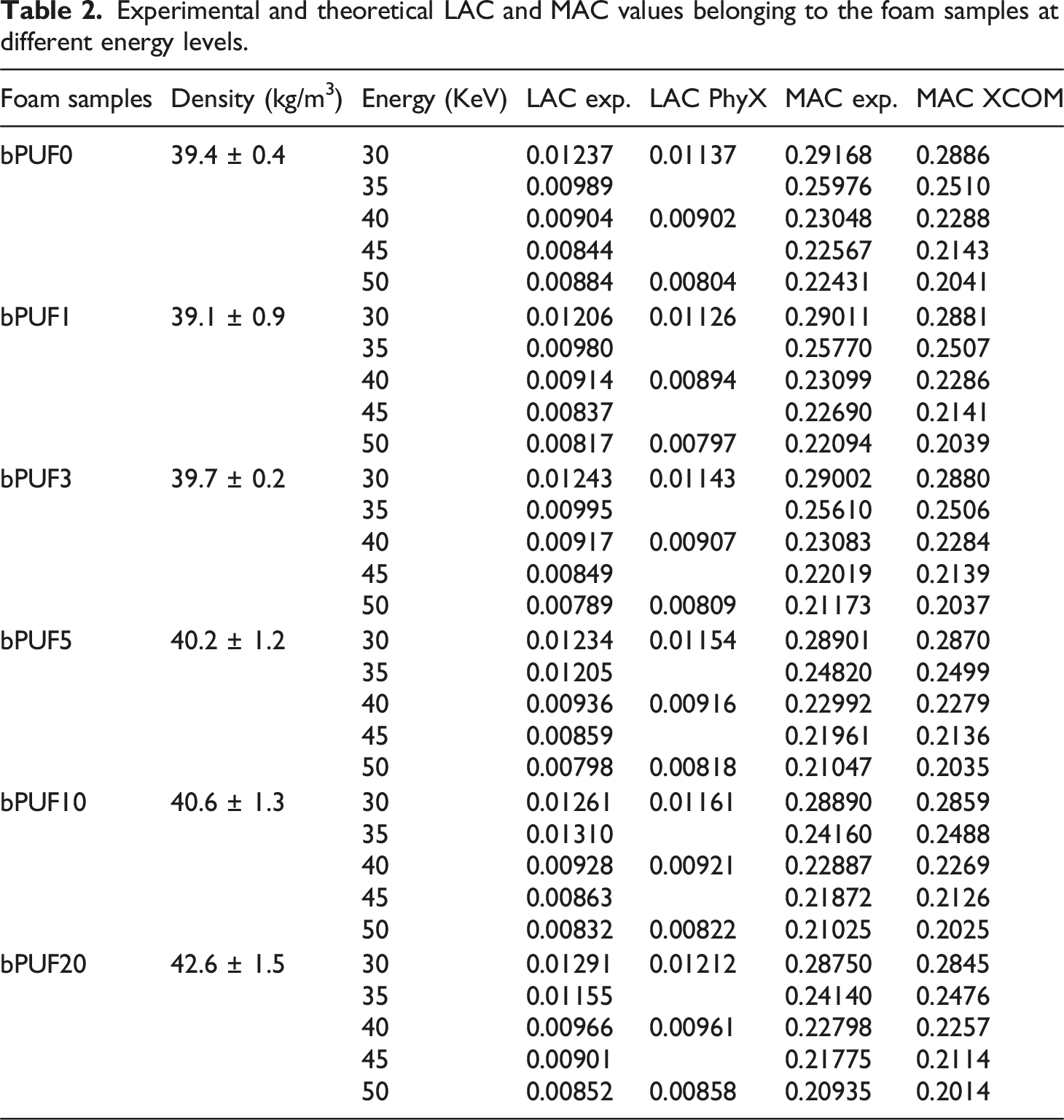
Experimental and theoretical LAC and MAC values belonging to the foam samples at different energy levels.
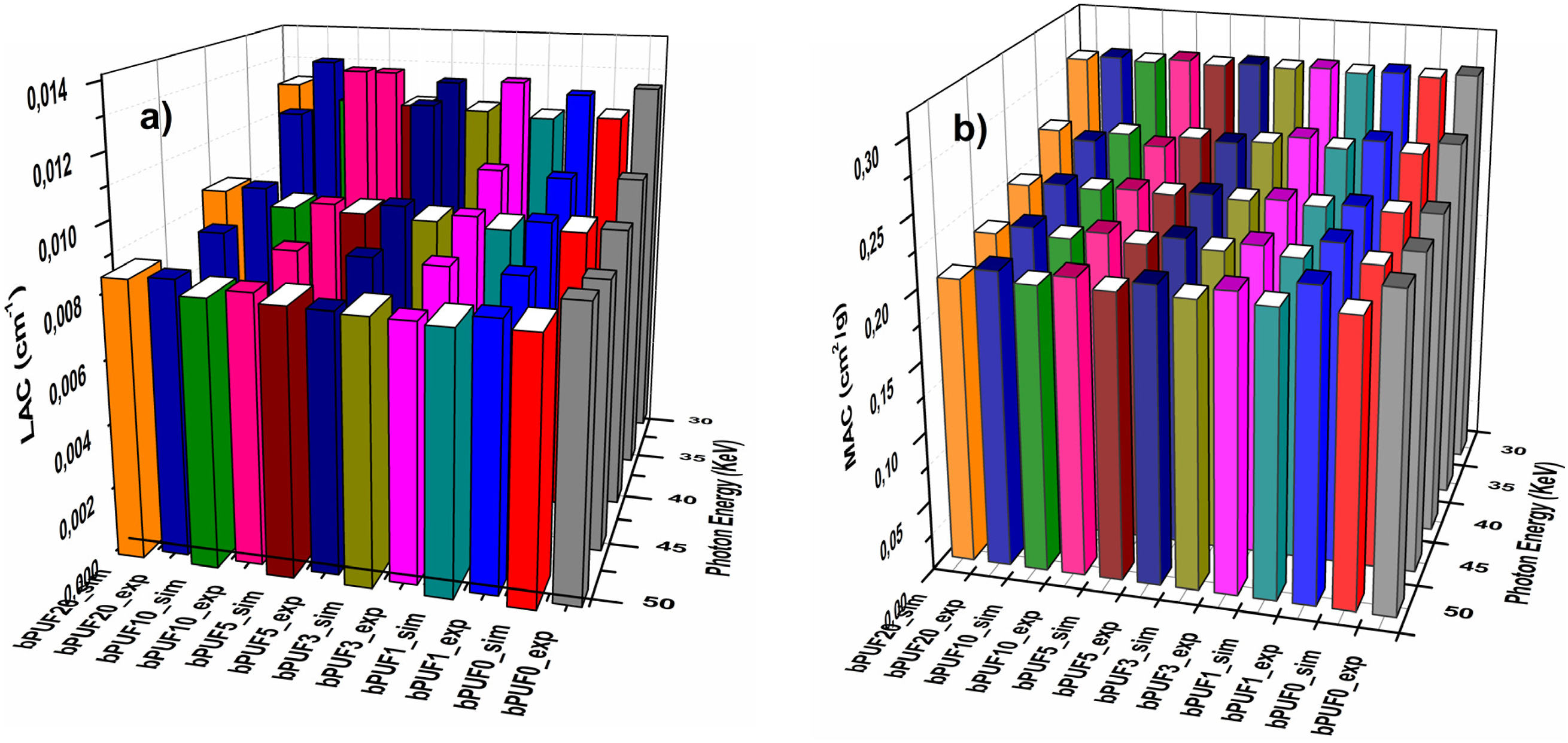
Change of experimental and computed LAC and MAC values with varying energy levels.
On the other hand, MAC values were also investigated for the foams. The obtained data at varying photon energies were presented in Table 2 and drawn in Figure 2. According to the results, a visible decreasing trend in MAC values was observed as the photon energy increases as found in LAC measurements. At a photon energy of 30 keV, the MAC values ranged from 0.2845 to 0.29168 cm2/g, while the MAC values varied from 0.2414 to 0.25976 cm2/g at 35 keV. This slight decrease attributed to the reduced interaction of photons with matter at higher energy. 52 At highest energy level, MAC reached the lowest values ranging between 0.2014 and 0.22431 cm2/g. This trend of decreasing MAC was consistent across the dataset with increasing energy. That is, as the photon energy rises, the probability of photoelectric absorption diminished, and Compton scattering became the more significant interaction process, resulting in lower MAC values. Moreover, MAC results showed that presence of boron particles in the RPUF matrices contribute slightly the composite’s attenuation ability.
A consistent trend of increasing LAC and MAC with escalating boron content was observed across all photon energies. Nonetheless, the rate of this increment was not uniform across different compositions or energy levels. For example, the increase in LAC between samples bPUF5 and bPUF10 at 35 keV was more pronounced compared to that between bPUF10 and bPUF20, indicating a possible saturation point or a non-linear interaction threshold beyond which the addition of further boron yields diminishing returns. This phenomenon may be attributed to the agglomeration of filler particles or a plateau in density advancement. Furthermore, unexpected peaks-such as the elevated RPE for bPUF10 underscored the need to consider not only the filler content but also the dispersion of fillers, percolation effects, and potential microstructural heterogeneities. To more accurately capture these nuances, derivative plots such as ΔLAC versus boron content might be utilized, unveiling inflection points and compositional thresholds where the shielding performance was most responsive to filler loading. Such analytical approaches could aid in determining optimal formulations, particularly in balancing the efficiency of material use with the desired functional performance.
Figure 3 illustrated detailed mass attenuation coefficients in a broad energy perspective obtained from NIST XCOM
43
database for bPUF10 data based on photon-matter interactions. The non-linear variation in attenuation parameters, particularly the observed enhancement at 35 keV for certain boron-filled samples, may be ascribed to photon-matter interaction mechanisms specific to certain energy levels. Boron, with a K-absorption edge at approximately 188 eV, did not manifest a direct absorption edge near the examined X-ray energies; nevertheless, its incorporation within a low-Z organic matrix may affect the composite’s overall photon interaction profile by means of augmented photoelectric absorption and scattering phenomena. At starting photon energies of this work (∼30–40 keV), where the photoelectric effect remained predominantly influential although it gradually diminishes as seen Figure 3, even minimal changes in atomic composition and electron density resulting from boron dispersion and the matrix microstructure could lead to localized enhancements in attenuation efficiency. However, the results obtained showed that the boron-filled bPUF composites showed shielding performance as good as some concrete and polymer composites, but significantly lower shielding performance than lead.8,53 Furthermore, synergistic interactions between boron and the carbon- and oxygen-rich polyurethane framework may contribute to increased photon capture or scattering cross-sections at these energy levels. Mass attenuation coefficients in 1 keV-100 GeV photon energy range obtained from NIST XCOM65 database for bPUF10 sample.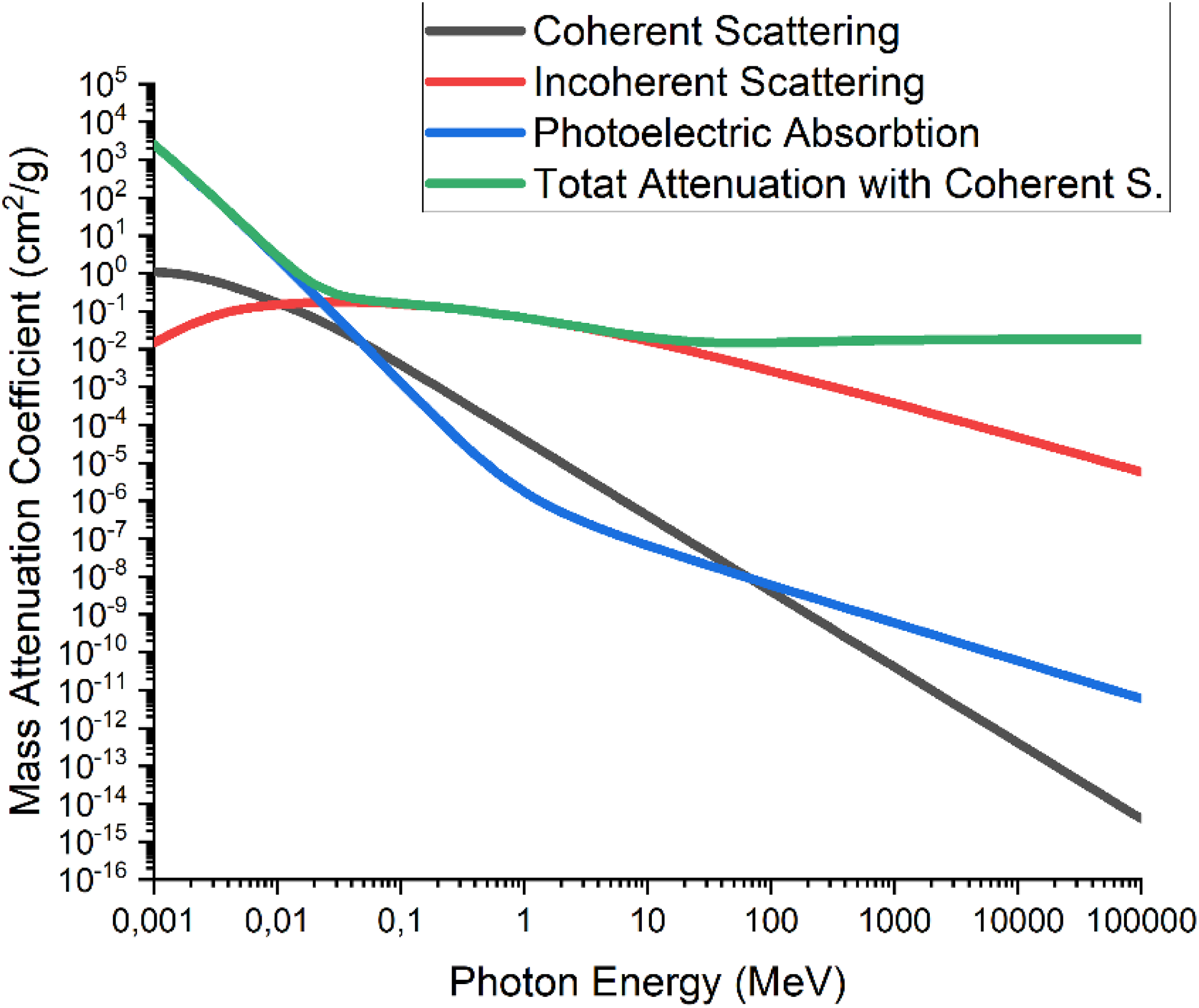
Half-value layer (HVL), tenth-value layer (TVL) and mean free path (MFP)Results
As well known, HVL and TLV are critical phenomenon in determining the penetration and attenuation characteristics of materials used to estimate radiation shielding performance. HVL refers to the thickness of a material required to halve the intensity of radiation at a given photon energy,
54
whereas TVL is expressed as the thickness of the material required to reduce the intensity of radiation to 10%.
55
Accordingly, the higher the HVL and TVL values of a material, the less radiation it absorbs and, both have inverse relationship with LAC.
56
The changes in HVL and TVL values with boron contents at energy levels ranging from 30 to 50 keV were shown in Figure 4. As for HVL, one could see from the figure that there existed a decreasing trend in radiation attenuation properties of the foam samples as a function of energy. That is, consistent increment in HVL was observed with increasing of photon energy, indicating lower radiation shielding property. As photon energy increased, the material required a thicker layer to reduce the intensity of the radiation by half. As previously indicated, this was primarily due to the decreased photoelectric absorption at higher energies and the increased contribution of Compton scattering in the foam matrices. Correspondingly, for the foam samples, HVL value was found to be roughly 55 cm at 30 keV, while it exceeded 80 mm at 50 keV, meaning that higher energy photons required significantly greater thickness for effective attenuation. In addition, the finding showed that the addition of boron into RPUF matrices caused a slightly gradual decline in the HVL value, as seen in Figure 4(a), it did not directly reduce the HVL significantly since boron has a limited ability to effectively absorb X-ray photons due to its low atomic number (Z = 5). However, indirectly, since boron addition increased the density of the foam composites, this may increase Compton scattering and cause more scattering of X-ray photons, which result in little augmentation in radiation shielding performance. Correspondingly, it was observed that this effect became more noticeable at high boron percents. Variation of (a) HVL and (b) TVL with boron percent at various energy level.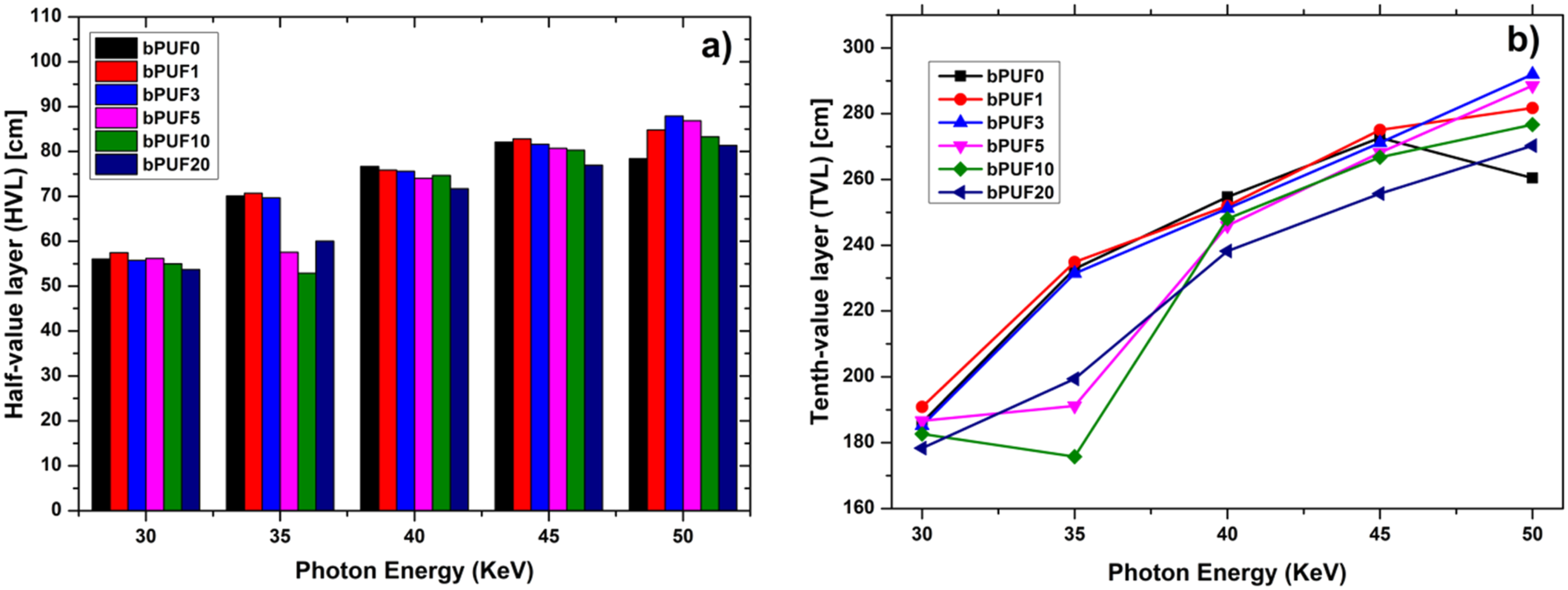
The computed TVL values were also drawn in Figure 4(b). As seen, the similar trend was recorded like HVL. The thickness required to reduce radiation intensity by 90% increased with increasing of the photon energy. In other words, higher radiation intensities or energies typically required increased shielding thickness for attenuation. The observed TVL values ranged between 178.33 cm and 190.85 cm at 30 keV photon energy, while these values peaked between 260.43 and 291.95 cm at 50 keV. The highest TVL value, 291.95 cm was recorded with the foam sample including 3% of boron. These results showed that boron addition up to 3% had no effect on the HVL value for all energy levels, but above 3%, the effect of boron incorporation on radiation shielding became substantially more dominant thanks to the density increment and well-distributed boron particles throughout the matrices. In fact, the apparent density value for the foam composites remained around 39 kg/m3 up to 3%. In accordance with that, higher boron inclusion into RPUF matrices gave rise to relatively lower TVL by behaving radiation shielding barriers in the matrix, resulting in little better radiation shielding ability. Correspondingly, at 50 keV energy level, TVL value reduced to 270.27 cm from 291.95 cm with a decrease of 7.4%.
MFP phenomenon refers to the average distance at which a photon travels throughout the material before a interaction occurs. Depending on that, large MFP value means that particles collide very few times within the material and can travel long distances, where small MFP indicates that particles interact frequently and are rapidly absorbed or scattered.
57
The variation in MFP with percentage of boron in the foam specimens at different photon energies was illustrated in Figure 5. The results illustrated that MFP values highly depended on physical and chemical characteristics of the produced foams. Namely, in all data sets, MFP values increased with the photon energy increment. This behavior suggested that the boron-incorporated foam samples were more effective to absorb the radiation via the interaction at low photon energy, vice versa at high energy levels, which means to interact less and pass through the foam samples more easily. Moreover, when considering at the same energy level, the obtained findings revealed that addition of boron particles into the matrices mainly brought about the consistent decrement in MFP parameter. This was presumably caused by (I) density increment and (II) the composition of the foam substance. In more details, boron inclusion led to existence of relatively more atoms within the foam matrices at constant volume by proving the structural integrity, which increases the probability of the particles interacting, thus MFP reduced since the radiation collided more frequently. Furthermore, boron addition means the presence of novel atoms with low Z value in the matrices. Thus, it seemed that this inclusion contributed slightly to total Z parameter of the foam sample that had a low-Z organic structure accompanied by naturally long MFP. The dependence of MFP on boron contents at various photon energy levels.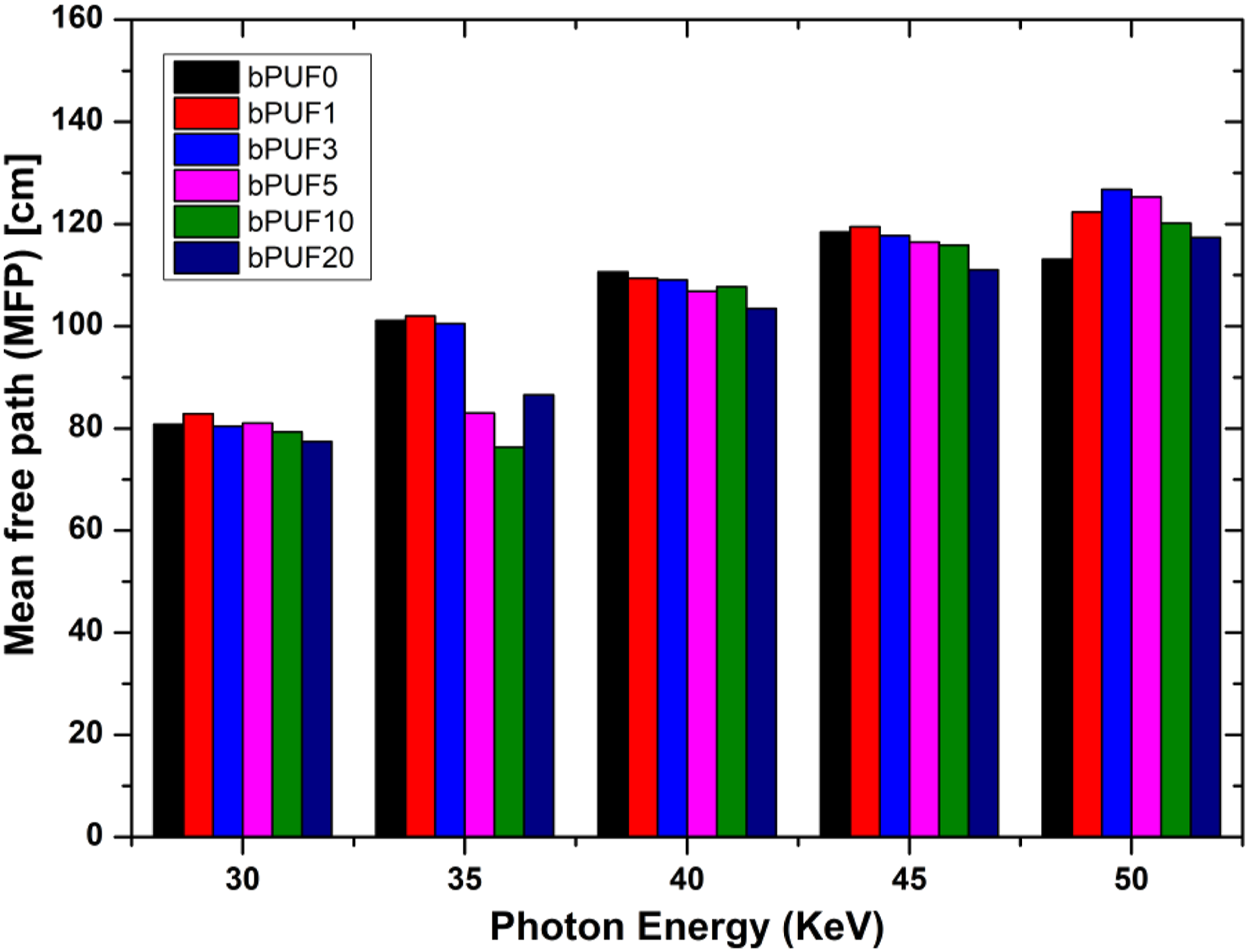
Fully simulated values for effective atomic number (Zeff)
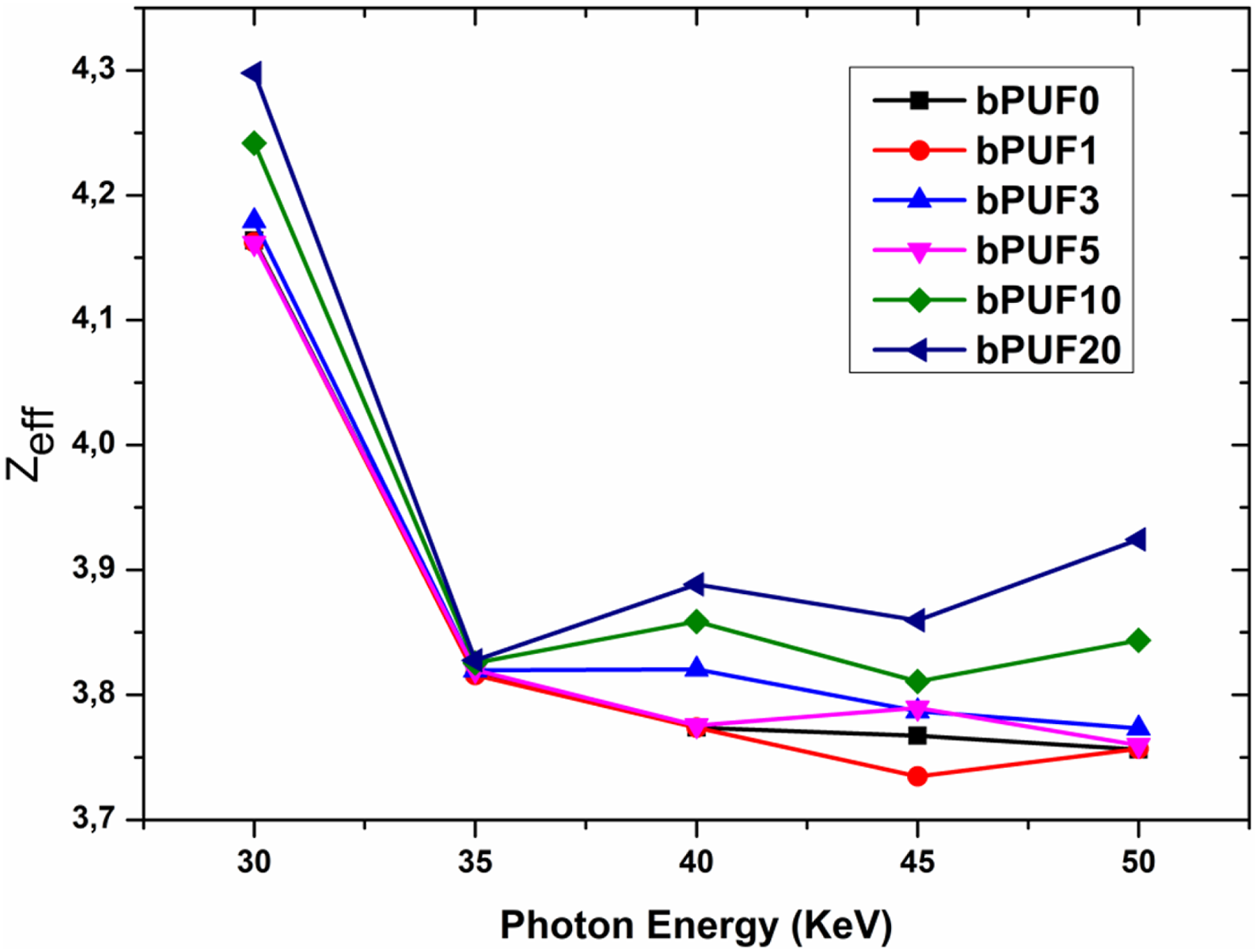
The Zeff values of all the foam samples were determined by using equation (6) in this current work since Zeff is a significant parameter indicating the measure of how the foam composites interacted with photons. The variation of Zeff depending on both percentage of boron filler and photon energy was represented in Figure 6. At first glance, one could see Zeff values were ranged between 3.73 and 4.29. Moreover, Zeff values showed a significant decrease up to 35 keV regardless of boron addition, and reached a value of about 3.82. However, at photon energies higher than 35 keV, a different behavior in the Zeff values were observed depending on the boron percentage as seen from the figure. Namely, the gradually increment in Zeff values were recorded as the boron content increased in the foam matrices after 35 keV when evaluating at the same photon energies. Accordingly, the minimum Zeff value was found to be 3.73 with the foam including 1% of amorphous boron, whereas the maxima was obtained as 3.92 with the foam containing 20% of boron. This results indicated that the photoelectric effect became more dominant when compared to Compton scattering and other probable interactions at all photon energy levels,
58
however, it was observed vice versa at high photon energies when the boron inclusion was reached above 10%. This was presumably attributed that the existence of boron in the foam matrices contribute the occurrence of photoelectric effect since amorphous boron had a slightly higher Zeff than polyurethane foam. In other words, homogenous distribution of boron filler throughout the foam matrices may bring about the better electron density distribution than in unfilled foam accompanied by increased photon interaction probability. This also enhanced the overall effective atomic number, thus provides better radiation attenuation. Furthermore, it must be stated here that these findings showed well correlation with LAC results. The dependence of Z
Electrical conductivity (Ceff) of the foam samples
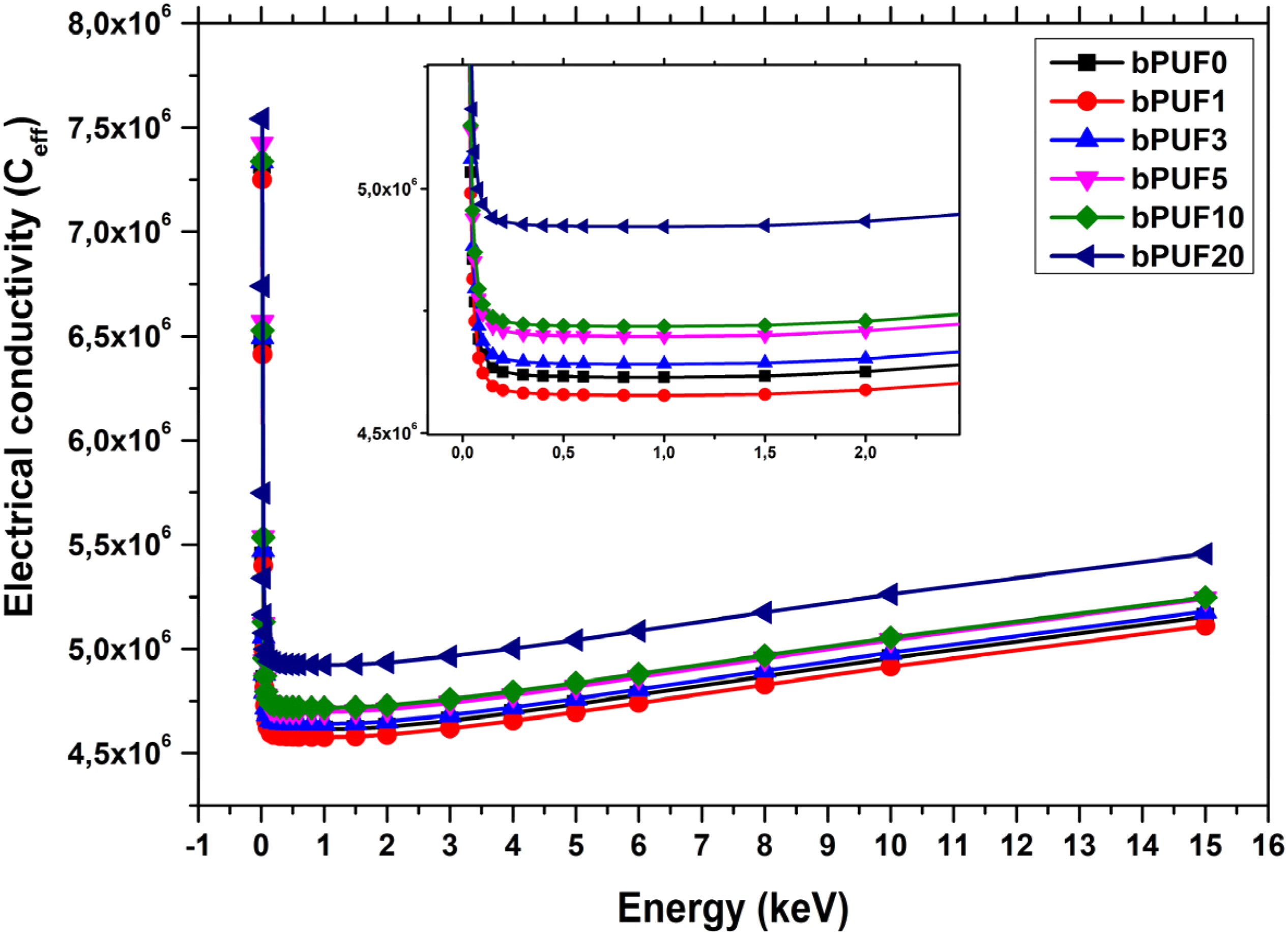
Ceff values were calculated to discuss the effectiveness of all the produced foams for using as X-ray shielding material. Figure 7 showed the Ceff date for the foam composites in relation to percentage of boron added. The results revealed that the addition of amorphous boron into bPUF samples influenced their Ceff. As observed from the figure, all the sample almost illustrated similar trend. Namely, a sharp decrease in the electrical conductivity was observed at low energy levels for all materials. The minimum value was obtained at 0.04 keV energy level for all the foam. However, as seen from the figure, these reductions were found to be relatively lower at the samples including higher amount of boron filler. Beyond this energy level, Ceff parameters tended to show consistent increment as the energy raised and this enhancement was more visible as the percentage of boron in the foam matrices augmented. This results undoubtedly related to change in nature of free electrons in the matrix, which affect the electron density.
59
In more details, as the energy level increased, the reason why Ceff value increased with boron content is that interaction mechanism of photon probably tended to both pair production and Compton scattering instead of photoelectric absorption.
59
In addition to that, as well known, rigid polyurethane foams are an electrical insulator with their substantial lower electrical conductivity, whereas amorphous boron is typically semiconducting in nature. Therefore, the presence of boron in bPUF matrices presumably indirectly assisted to improve conductivity by forming percolation networks since boron fillers possibly acted as a semiconductive bridge promoting hopping conduction. As a result of that, the relatively better network providing higher free electron density was formed in the matrices and thus higher Ceff value. The changes of C
Alpha and proton stopping powers and radiation protection efficiency (RPE)
In this part of the paper, the charged ions (alpha and proton) attenuation properties as well as RPE of the produced foam specimens were discussed in detail. Firstly, the stopping power of the polymeric material implies how efficiently the incoming energetic particles such as alpha or protons were slowed down or stopped. The stopping power data were computed using Bethe-Bloch equation with MATLAB script in 1-1000 MeV particle kinetic energy range.
60
Correspondingly, Figure 8(a) and (b) described the variation of alpha and proton stopping power depending on varying kinetic energy and they showed similar behaviors. The samples contained both air and fabricated foam samples with boron filler. The obtained data for the foams were verified with the computed data for air from NIST Astar.
61
Before serious discussion, it must be stated that the power to stop such charged particles were highly dependent on Coulomb interaction between nuclei of the materials and charged particles incoming.
62
These interactions gave rise to scattering of the electrons resulting in with (bremsstrahlung X-rays) or without energy losses (elastic collision).
50
According to the results in Figure 8(a), all the foam samples depicted better stopping power performance when compared to air, which is attributed to that bPUF samples possessed mostly porous structure due to their honeycomb cellular structure. Especially, as the kinetic energy level of the alpha particles increased, the stopping power of the foam samples declined as seen from Figure 8(a). Moreover, among the foam samples, the foam with 20% of amorphous boron depicted better performance for stopping the charged particles as seen from the figure. This was probably caused by that the added boron enhanced capacity of the foam to stop alpha since boron compounds was considerably effective filler for the neutron shielding.
63
That is, adding boron into foam matrices increased Zeff (as revealed previous section) and density of RPUF, which brings about typically increase in the stopping power, meaning such charged particles were stopped over shorter distances. Furthermore, the results depicted that this effect was more pronounced for low-energy particles as seen from the figure. In order to determine proton stopping power, the data was verified by using NIST Pstar with the findings calculated for copper.
64
As seen from Figure 8(b), copper illustrated considerably higher proton stopping power when compared to all the foams since copper had higher atomic number and density. Among foam samples, as observed, the foam with 20% of boron showed better proton stopping power like alpha. The stopping powers for (a) alpha particle and (b) protons for the foam samples.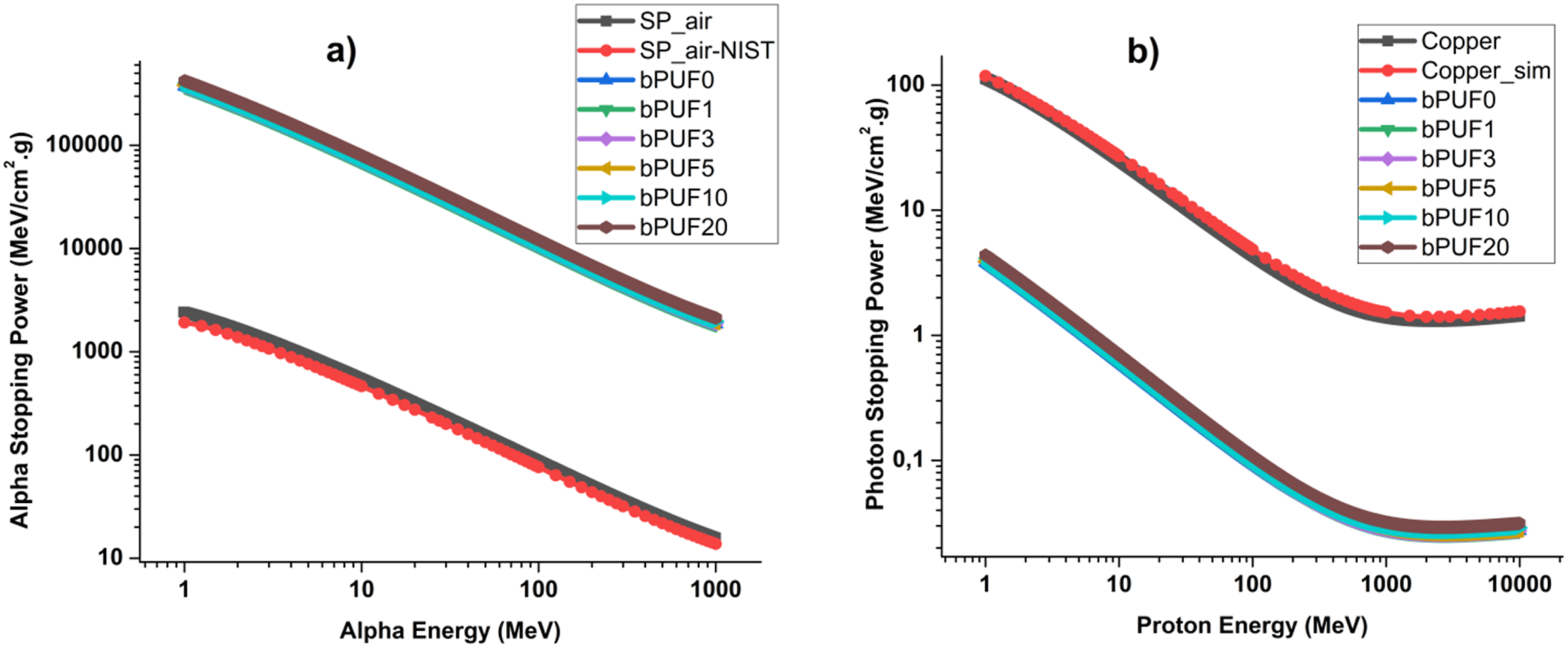
In addition to stopping power, one could see changes in RPE with energy levels in Figure 9. The results showed that RPE values for the foam samples were notably lower percentage (between 0.084 and 0.130%). However, the produced foam specimens demonstrated relatively better radiation blocking performance at low photon energy level, vice versa at high energy levels. In accordance with that, the maximum RPE values were obtained at 30 keV, the minima was found to be at 50 keV for the samples. On the other hand, the presence of the boron filler led to little RPE increment for the foam samples. These findings were also consistent with the LAC, MAC and Zeff values. Furthermore, the distinct increase in RPE (%) at 35 keV for sample bPUF10, depicted by the red line, indicated a notable interaction between the material’s composition at this sample and the incoming X-ray energy. It was possible that sample bPUF10 had an ideal concentration of amorphous boron particles which have a relatively high X-ray interaction cross-section around 35 keV. The mass attenuation coefficient for boron changes with energy, and at approximately 35 keV, an enhanced photoelectric absorption could occur, particularly if multiple low-Z elements were present, such as C, H, O from ESO, and boron. Radiation protection efficiency (RPE) of the foam samples at different energy levels.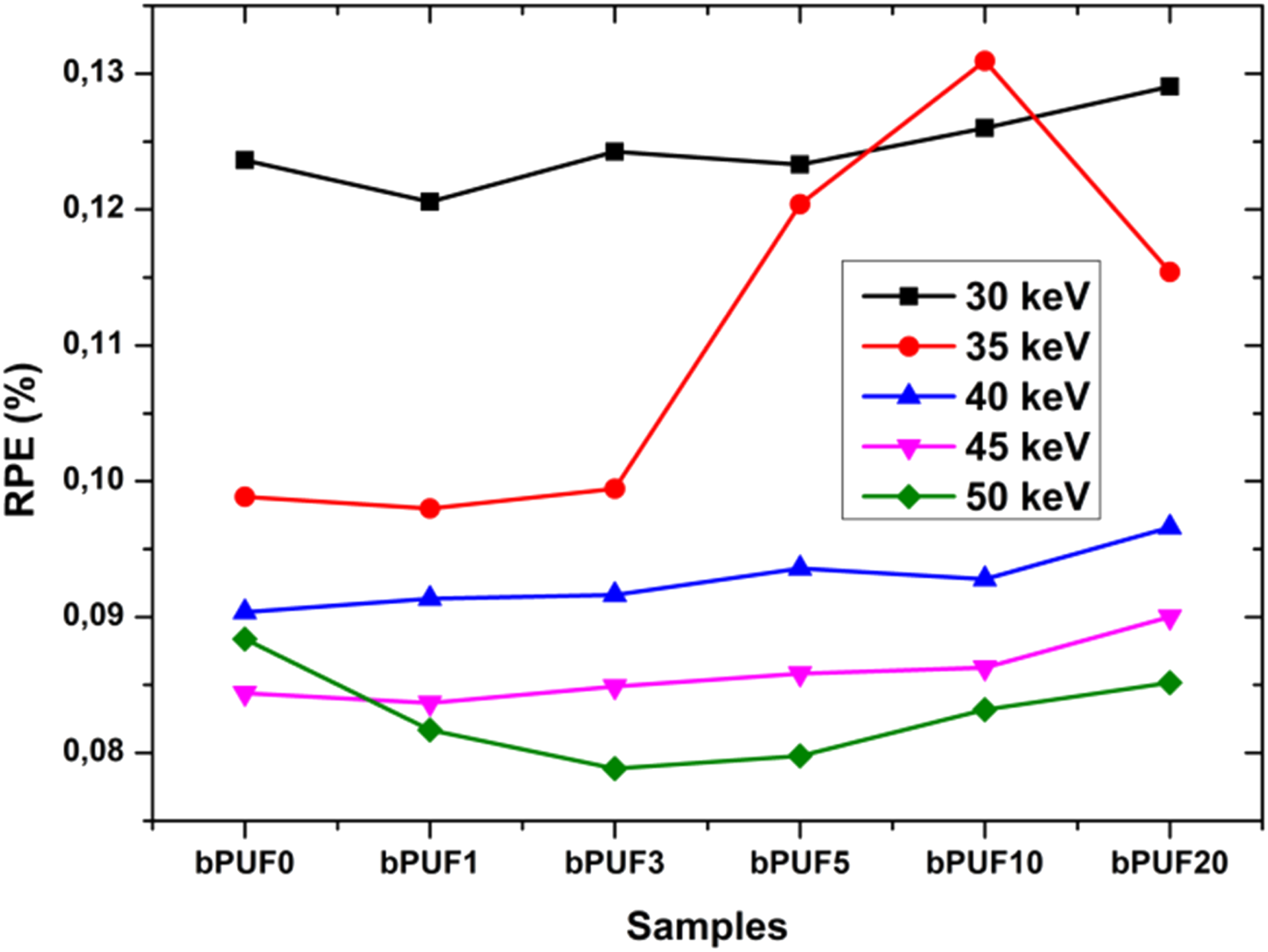
Conclusion
In this study, bio-based rigid polyurethane foams were successfully developed using soybean oil-derived biopolyol and reinforced with various contents of amorphous boron to assess their X-ray shielding capabilities. The detailed analysis encompassed experimental and theoretical evaluations of critical radiation attenuation parameters, including LAC, MAC, HVL, TVL, MFP, Zeff, Ceff, stopping power, and RPE. According to obtained results, it was concluded that both LAC and MAC values consistently decreased with increasing photon energy across all samples, indicating reduced attenuation due to the dominance of Compton scattering at higher energies. Boron-filled foams showed slightly improved LAC and MAC values compared to unfilled foams, particularly at lower energies (30–35 keV) and highest LAC and the lowest MFP and HVL were obtained at the foam with 20% boron content. Furthermore, the HVL, TVL, and MFP values increased with photon energy, affirming that higher energy X-rays required thicker materials for effective attenuation. Additionally, boron incorporation decreased these values slightly at each energy level, again linked to the increased density of the composites. Furthermore, the addition of amorphous boron into polyurethane foam significantly enhanced the Zeff, values, particularly at higher photon energies. Similarly, electrical conductivity (Ceff) was augmented with increasing boron percentage, potentially due to the formation of conductive pathways within the foam matrix. Stopping powers for alpha and proton particles were slightly improved in boron-rich foams, suggesting their utility not only for photon shielding but also for mitigating exposure to charged particles. Although the RPE values were relatively low overall, they were highest at lower energies and, improved with higher boron content, reinforcing the role of low-Z materials in attenuating low-energy radiation. All things, boron-filled bio-based RPUFs offered a promising approach for lightweight, sustainable, and moderately effective X-ray shielding applications. While the shielding effectiveness is not on par with heavy-metal-based materials, the environmental benefits, ease of shaping, and acceptable performance at low photon energies supported their integration into varying engineering materials to obtain sustainable radiation shielding compounds. Besides, owing to their lightweight structure, moderate shielding efficacy at lower photon energy levels, and partial integration of bio-based components, the boron-filled bPUF composites exhibited significant potential for use in scenarios where the priority lies in portability, ease of fabrication, and environmental safety, rather than in achieving maximum attenuation. Additionally, the foam-like morphology of these composites facilitated their customization and integration into irregular geometries, rendering them suitable for inclusion in modular or wearable shielding systems. Prospective advancements through the incorporation of hybrid filler systems or lamination techniques may further enhance their applicability in more stringent radiation environments.
Supplemental Material
Supplemental Material - Detailed evaluation of X-ray shielding performance of boron-filled bio-based rigid polyurethane foam composites: Experimental measurement and theoretical modeling
Supplemental Material for Detailed evaluation of X-ray shielding performance of boron-filled bio-based rigid polyurethane foam composites: Experimental measurement and theoretical modeling by Ugur Soykan, Yalcin Kalkan, Yelda Kandeger, Muhsin Ugur Dogan, Emre Akdogan in Journal of Cellular Plastics.
Footnotes
Acknowledgments
Eskisehir Technical University and thanks all for their valuable support for the experimental procedures and measurements. Moreover, the authors send their deepest gratitude to KİMPUR company for supplying of the polymeric MDI and commercial polyol.
Declaration of conflicting interests
The authors declared no potential conflicts of interest with respect to the research, authorship, and/or publication of this article.
Funding
The authors disclosed receipt of the following financial support for the research, authorship, and/or publication of this article: This work was financially funded by Bolu Abant Izzet Baysal University (BAP 2020.29.02.1474).

Supplemental Material
Supplemental material for this article is available online.
References
Supplementary Material
Please find the following supplemental material available below.
For Open Access articles published under a Creative Commons License, all supplemental material carries the same license as the article it is associated with.
For non-Open Access articles published, all supplemental material carries a non-exclusive license, and permission requests for re-use of supplemental material or any part of supplemental material shall be sent directly to the copyright owner as specified in the copyright notice associated with the article.
