







Abstract
Polyhedral oligomeric silsesquioxane (POSS)–siloxane-modified polyimide (PI) hybrid nanocomposites were prepared by the reaction of siloxane-modified polyamic acid (PAA) with octaaminophenylsilsesquioxane (OAPS). PAA was prepared by the reaction of 4,4-diaminodiphenylsulfone with pyromellitic dianhydride in N-methylpyrrolidone (NMP), followed by the reaction of PAA with bis(3-aminopropyl) polydimethylsiloxane to obtain siloxane-modified. The siloxane-modified PI was further blended with varying weight percentages of OAPS using NMP solution. The reactions occurred during the formation of hybrid nanocomposites were confirmed by Fourier transform infrared spectra. The siloxane-modified PI OAPS nanocomposites were characterized for their thermal properties using differential scanning calorimeter and by thermogravimetric analysis. Morphological studies of the nanocomposites indicate that the incorporation of siloxane moieties creates heterogeneous morphology. Data from thermal studies indicate that the incorporation of POSS appreciably enhanced the glass transition temperature, thermal stability, and char yield of hybrid nanocomposites compared to neat PI.
Keywords
Introduction
Hybrid nanocomposite materials have gained much importance due to their remarkable properties. Organic–inorganic nanocomposites possess the combined advantages of inorganic fillers and polymeric materials, and they exhibit the properties such as strength, stiffness, lightweight, and corrosion resistance, making them useful for different industrial and engineering applications. 1 – 6 Siloxane-based organic–inorganic hybrid nanocomposites can be defined as nanocomposites made of organic and inorganic components combined over-length scales from a few angstroms to few tens of nanometers and are of great concern because of their unique properties and numerous potential applications. 7 – 9
In recent years, polyhedral oligomeric silsesquioxane (POSS) hybrid polymers have emerged as unique materials for various applications. 10 – 18 Chemical modification of POSS molecules alters their interactions with a wide range of polymers. POSS has a nanometer-sized confined structure with a variety of organic functional groups. The inorganic component of the POSS molecule provides thermal and oxidative stability. POSS modifications of polymers have also been shown to improve processing characteristics and provide better service performance under adverse environmental conditions. Consequently, the development of hybrid nanocomposites with well-defined structures is one of the most efficient methods toward designing nanohybrid materials in combination with commodity and/or engineering polymers with improved performance for advanced applications. 19 – 30
PIs are a well-known class of polymers that have been used for number of high-performance applications owing to their excellent combined physico-chemical properties. The incorporation of silsesquioxanes into polyimides (PIs) has proven to be very effective in providing enhancements in thermal and mechanical properties to PIs. 31 – 37 Siloxane materials impart a number of useful properties such as low temperature, flexibility, high-thermal stability, hydrophobicity, oxidative resistance, bio-compatibility, high adhesiveness, low dielectric constants, significant gas permeability, and good film-forming ability. 38 – 44
In this study, an attempt has been made to introduce bis(3-amino propyl) polydimethylsiloxane (BAPPDMS) into PI as a nanocross-linker to obtain siloxane-modified PI–POSS hybrid nanocomposites to enhance thermal stability and char yield of PI required for high-performance application.
Experimental
Materials
Phenyltrichlorosilane, 5% Pd/C, BAPPDMS (Mn ∼2500) and 4,4-diaminodiphenylsulfone (DDS) were purchased from Aldrich, USA. Benzyl trimethyl ammonium hydroxide 40% in methanol solution, 98% formic acid, triethylamine, tetrahydrofuran (THF), N-methyl-2-pyrrolidinone (NMP), ethyl acetate and hexane were purchased from SD Fine Chemicals, India. NMP was purified by distillation under nitrogen atmosphere and dried over molecular sieves. THF was distilled under nitrogen atmosphere from Na/benzophenone prior to use. Triethylamine was distilled with KOH. Octaaminophenylsilsesquioxane (OAPS) was synthesized and characterized as per the reported procedure
45
–
47
(Scheme 1).
Synthesis of OAPS. Schematic representation for the formation of siloxane-modified PI–POSS nanocomposites.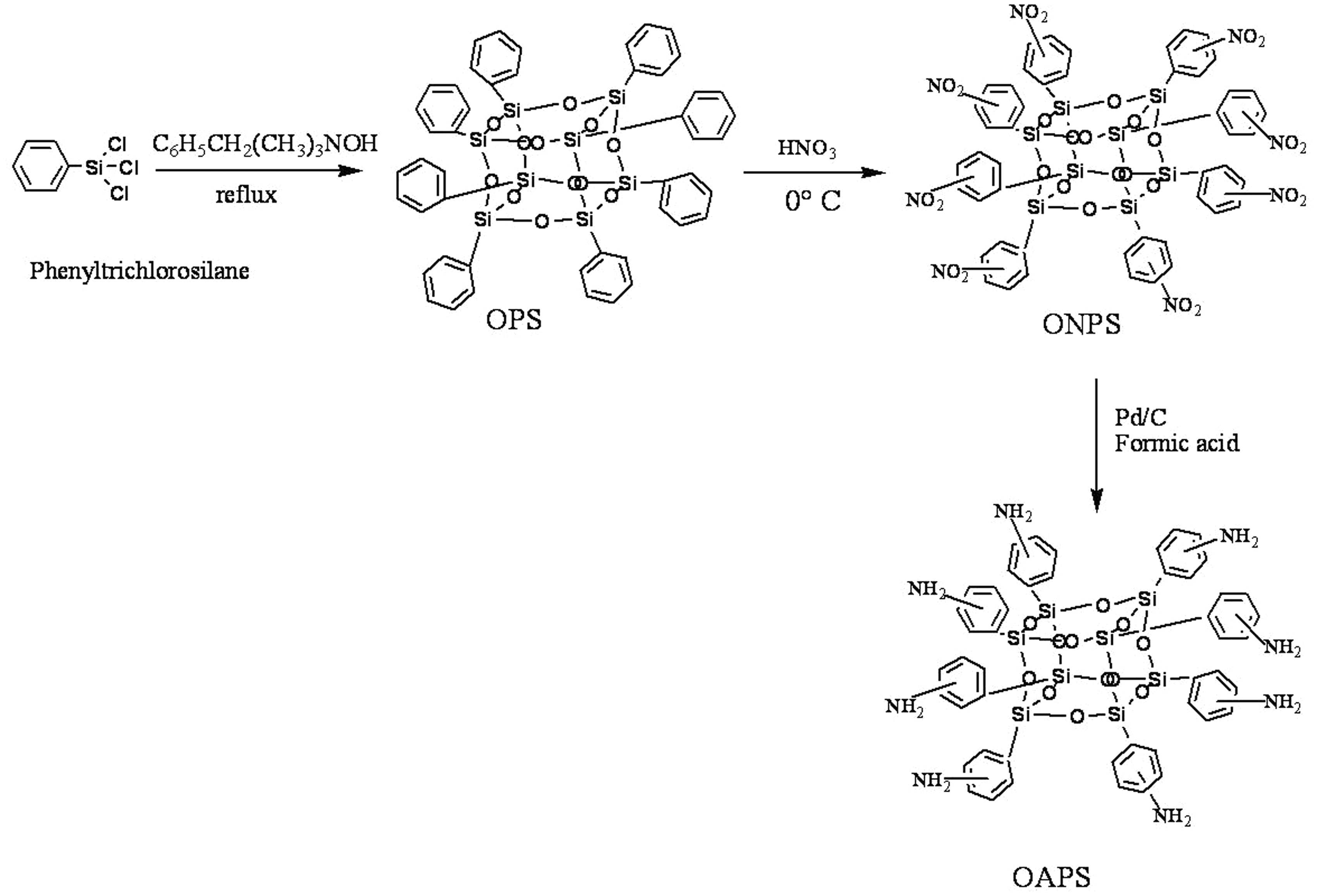
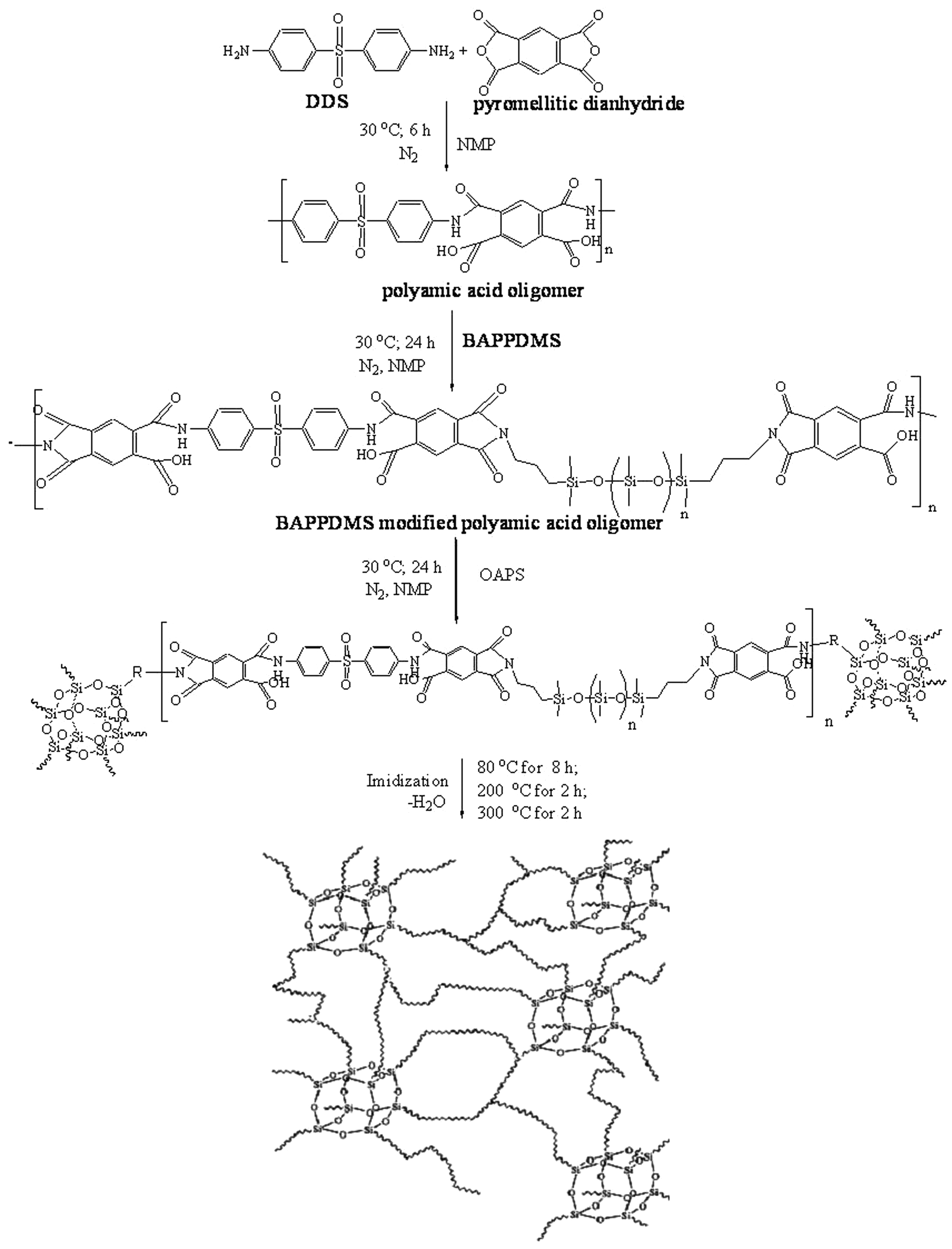
Preparation of nanocomposites
Neat PI was prepared via condensation of diamine with pyromellitic dianhydride using NMP as solvent. A known amount of diamine and pyromellitic dianhydride (diamine: pyromellitic dianhydride = 1:1 mol/mol) were dissolved separately in 25 mL of NMP. The two resulting solutions were mixed in a three-necked flask that has been purged with nitrogen to remove moisture. The mixture was stirred magnetically under nitrogen at 30°C for 6 h, to yield polyamic acid (PAA). PAA was then cast on a smooth glass substrate and thermally treated at 80°C for 8 h, 200°C for 2 h, and 300°C for 2 h. 47
BAPPDMS was added (1 molar ratio) to the viscous solution of PAA; the contents were again stirred magnetically for 24 h at room temperature under N2 atmosphere; and a viscous siloxane containing PAA was obtained via dehydration. 48 – 51 The viscous siloxane-modified PAA was cast on a smooth glass substrate and thermally treated as described above. For the synthesis of OAPS-reinforced siloxane-modified PI (Si-PI/OAPS) nanocomposites, OAPS/NMP (2.5 g in 2 mL) was added to the freshly prepared siloxane-modified PAA solution and magnetically stirred for 2 h under N2 at 30°C. After 2 h, the OAPS/siloxane–PAA solution was cast on a smooth glass substrate and thermally treated as described above.
The mole ratio of the terminal anhydride of siloxane–PAA solution to amino groups in OAPS is 1:1 (Scheme 2). The thin and dark brown-colored films formed were stripped from the glass substrates with the help of deionized water and dried at 100°C in a vacuum oven for 6 h.
Characterization
Fourier transform infrared (FT-IR) spectra were recorded on a Perkin Elmer 6× spectrometer. About 100 mg of optical-grade KBr was ground with sufficient quantity of the solid sample to make 1 wt% mixture for making KBr pellets. After the sample was loaded, a minimum of 16 scans were collected for each sample at a resolution of ±4 cm−1.
The calorimetric analysis was performed on a Netzsch DSC-200 differential scanning calorimeter. The instrument was calibrated with Indium supplied by Netzsch. Measurements were performed under a continuous flow of nitrogen (60 mL/min). All the samples (about 10 mg in weight) were heated from ambient to 400°C and the thermograms were recorded at a heating rate of 10°C/min. The glass transition temperature was taken as the midpoint of the capacity change. Thermogravimetric analysis (TGA) was performed on a Netzsch STA 409 thermogravimetric analyzer. The instrument was calibrated with calcium oxalate and aluminum supplied by Netzsch. The samples (about 50 mg) were heated from ambient to 900°C under a continuous flow of nitrogen (60 mL/min), at 10°C/min. The thermal degradation temperature was taken as the midpoint at which 10 wt% loss occurred.
X-ray diffraction (XRD) studies of the samples were carried out using a Rich Seifert-3000 X-ray diffractometer Cu Kα radiation with a copper target (λ = 1.54 Å) over 2θ range of 0–70° at a scanning rate of 0.04°/min. A JEOL JSM-6360 field emission scanning electron microscope (SEM) was used to record the SEM images, and the samples were prepared by coating gold on their surface for SEM measurements.
Results and discussion
Structure of siloxane-modified PI–POSS hybrid nanocomposites
Siloxane-modified PI–POSS hybrid nanocomposites (Scheme 2) were prepared by thermal imidization of PAA followed by the reaction of PAA with BAPPDMS. The product obtained during dehydration process was blended with OAPS in NMP solvent to get PI–POSS nanocomposites. Figure 1 shows the FT-IR spectra of various stages of the process.
FT-IR spectra of (a) neat PI, (b) siloxane-modified PI, (c) 1 wt%, (d) 3 wt%, (e) 5 wt%, and (f) 10 wt% OAPS–siloxane-modified PI.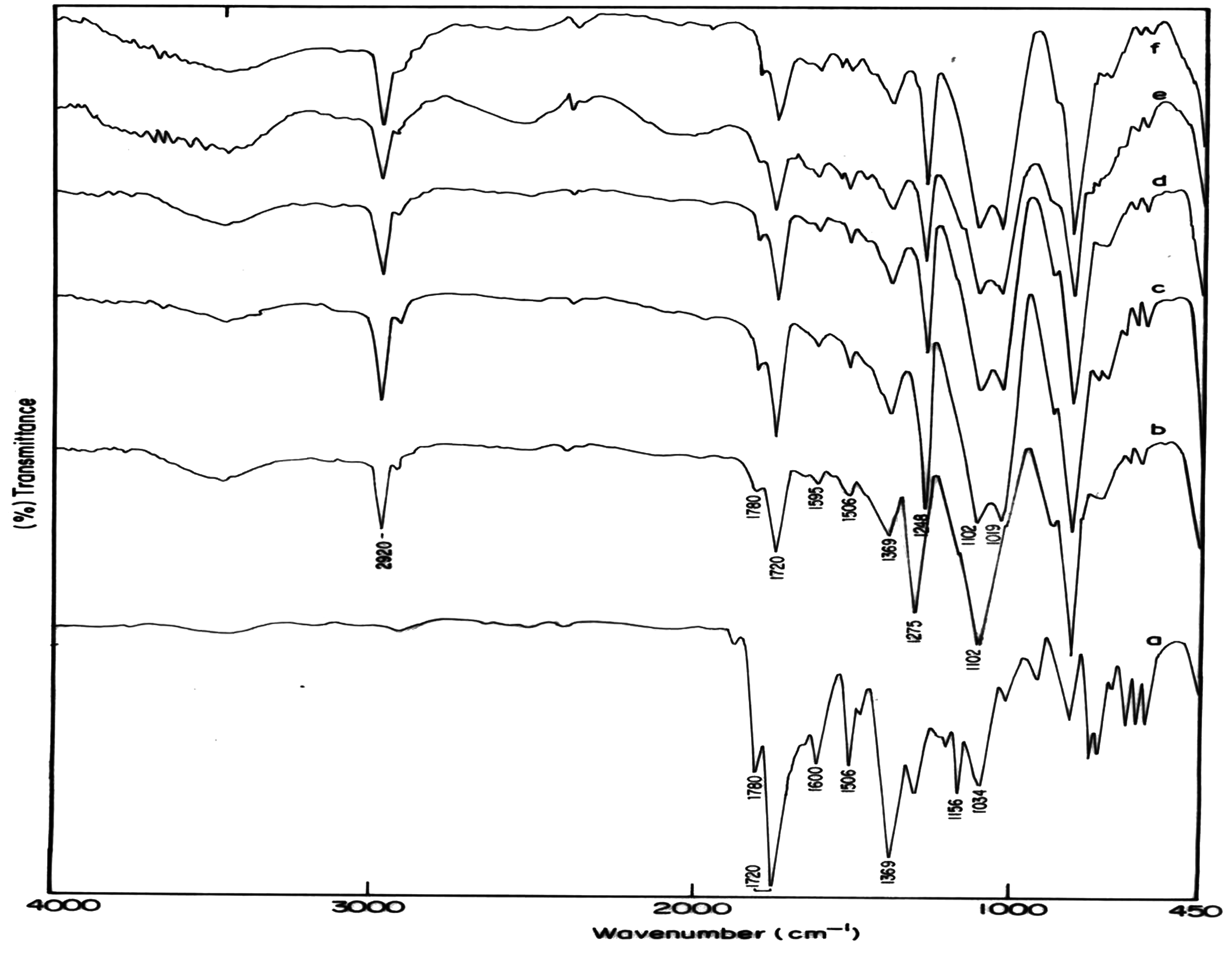
The FT-IR spectra of neat PI showed characteristic bands of amic acid groups in the region 3100–3550 cm−1 and that of carbonyl groups between 1500 and 1730 cm−1, respectively, which disappear and new bands appear corresponding to imide ring at 1780 cm−1 (asymmetric C=O in imide groups), 1720 cm−1 (symmetric C=O in imide groups) 1369 cm−1 (C–N in imide groups) and at 1034 and 800 cm−1 corresponding to imide ring deformations due to thermal imidization.52,53 The absorption spectrum of siloxane-modified PI, showed peaks at 1102 cm−1 corresponding to Si–O–Si network stretching vibration, 54 1275 cm−1 (Si–C) 2920 cm−1 (aliphatic C–H) and the disappearance of OH peak was also observed. Upon addition of OAPS to PAA–BAPPDMS, the amino group of OAPS reacts with the terminal anhydride group of PAA–BAPPDMS, and is confirmed by peaks appearing at 1248 cm−1 (Si–Ph), 1102 cm−1, and 1019 cm−1 corresponding to the Si–O–Si linkage network and cage structure stretching vibration, and disappearance of peak at 1550, 1660, and 3440 cm−1 (amide). 55 During the subsequent imidization process, the amide bonds are converted into imide groups resulting in the linkage of PAA–BAPPDMS and OAPS through phenyl and imide groups. The amine groups of OAPS may also react with the side carboxylic group of PAA–BAPPDMS to form amide bonds. However, the side carboxyl group being less reactive, the possibility of amide bond formation is low. 56
Differential scanning calorimetry
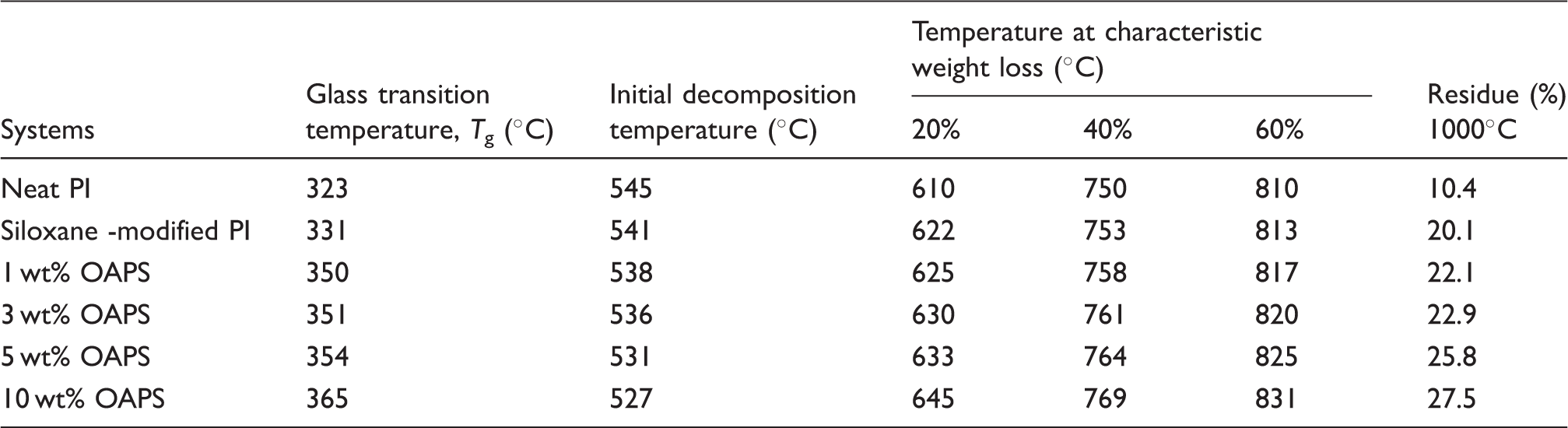
DSC and TGA data of POSS–siloxane-modified PI nanocomposites
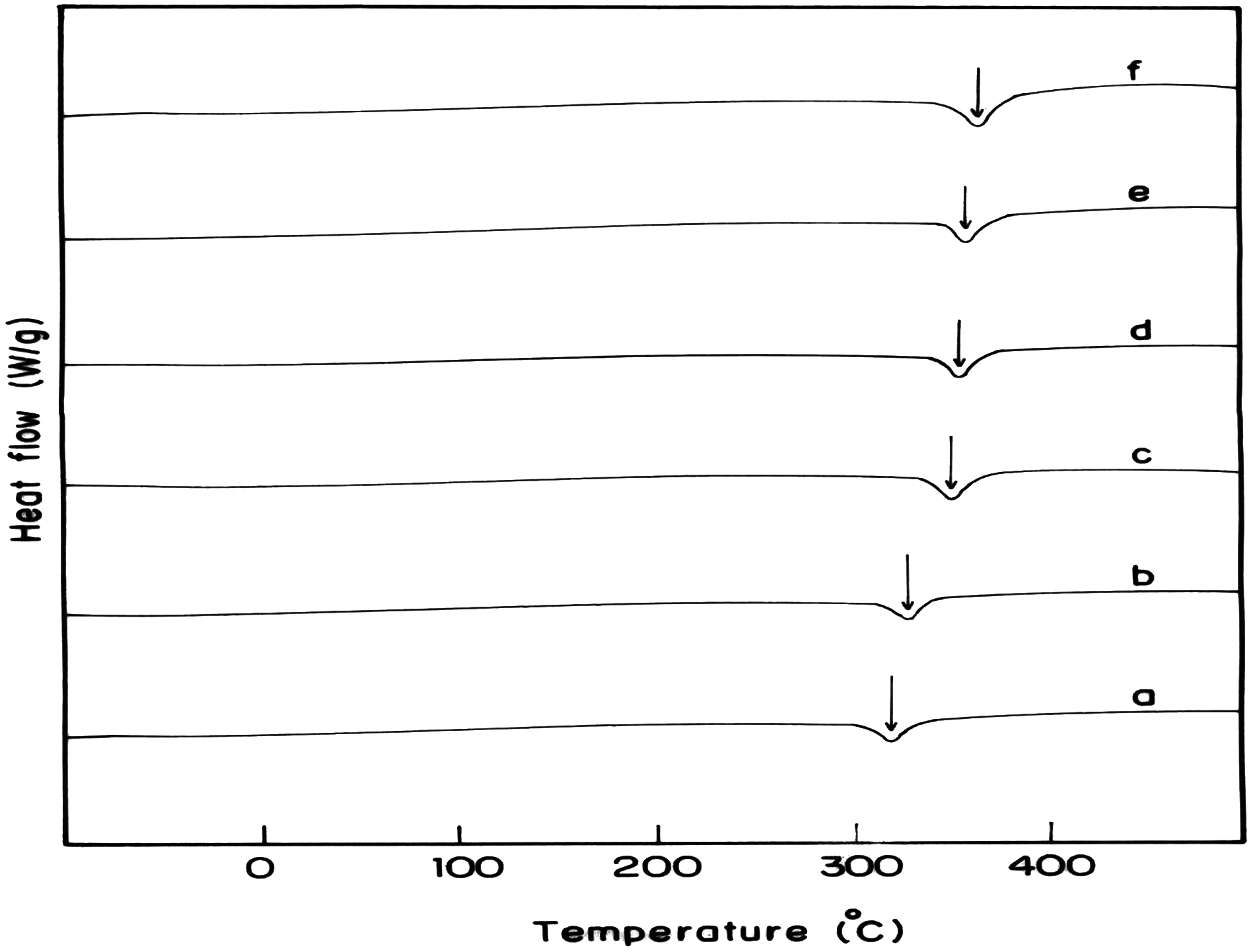
DSC thermograms of (a) neat PI, (b) siloxane-modified PI, (c) 1 wt%, (d) 3 wt% OAPS, (e) 5 wt%, and (f) 10 wt% OAPS–siloxane-modified PI.
Thermogravimetric analysis
TGA was carried out to evaluate the thermal stability of the POSS–siloxane-modified PI hybrid nanocomposites in the temperature range of 30–1000°C. The incorporation of OAPS into the siloxane-modified PI slightly improves the thermal stability in accordance with the increase in percentage concentration of OAPS. For example, the temperature required for 20% weight loss of neat PI and 10 wt% OAPS-incorporated siloxane-modified PI are 610°C and 645°C. From the thermogram shown in Figure 3, it is observed that with the incorporation of 1, 3, 5, and 10 wt% OAPS into the siloxane-modified PI, the residual percentage char yields are 22.1, 22.9, 25.8, and 27.5, respectively, at 1000°C. The initial degradation temperature (Table 1) for the POSS–siloxane-modified PI nanocomposite is lower than that of neat PI. The early decomposition of the PI–POSS nanocomposites arises from the low molecular weight of nanocomposites on increasing POSS concentration in these systems. The PI–POSS nanocomposites of low molecular weight by the unequal amount of diamine and dianhydride are added in these systems.
47
However, the temperature observed for 20%, 40%, and 60% weight loss of PI–POSS is higher than that of neat PI. This behavior may be explained due to the partial ionic nature and the high bond energy of Si–O–Si, which causes the delay in degradation. The degradation temperature of OAPS–siloxane-modified PI system increases with increasing concentration of OAPS. This is due to the formation of a network structure between the OAPS and siloxane-modified PI.
TGA curves of (a) neat PI, (b) siloxane-modified PI, (c) 1 wt%, (d) 3 wt%, (e) 5 wt%, and (f) 10 wt% OAPS–siloxane-modified PI.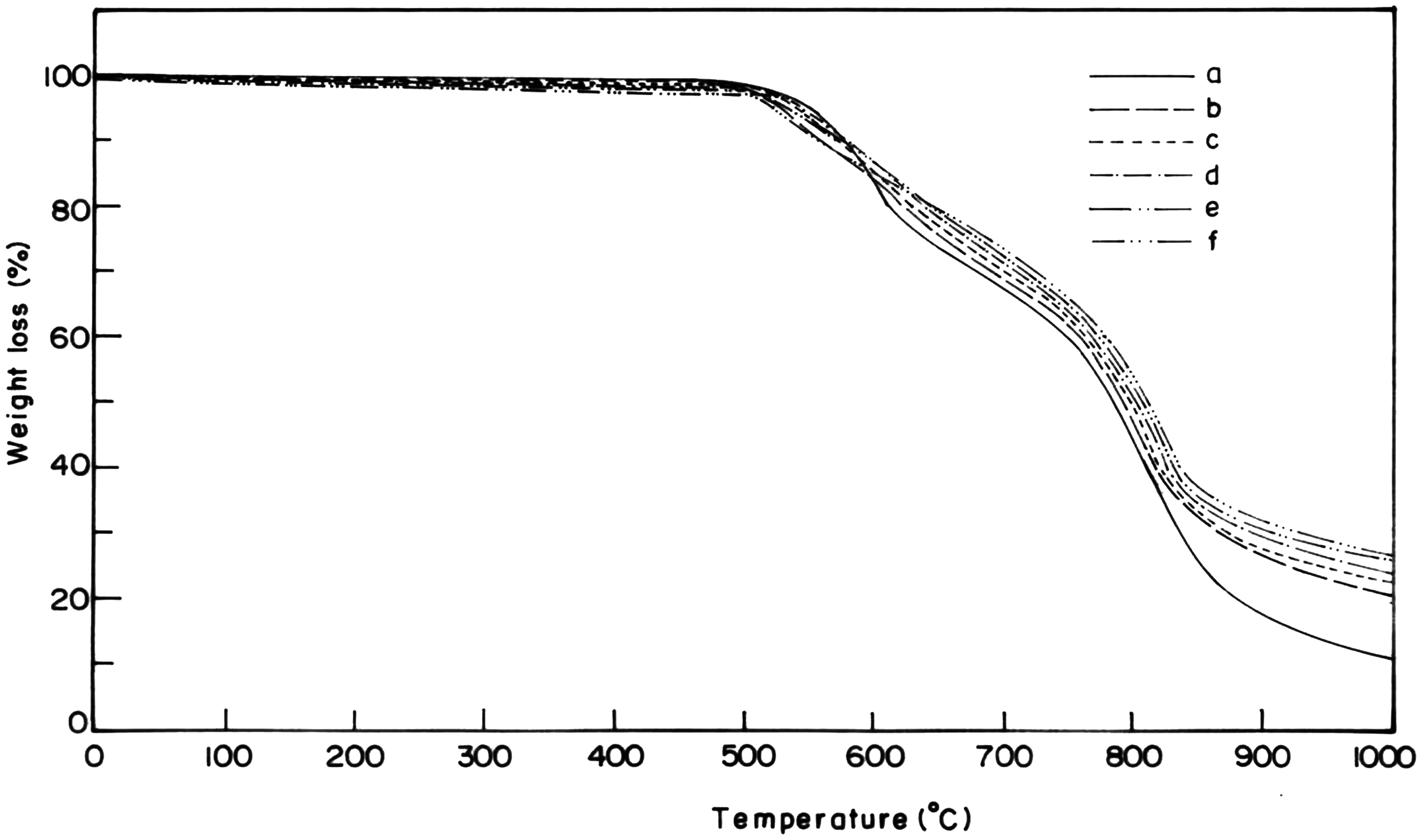
XRD analysis
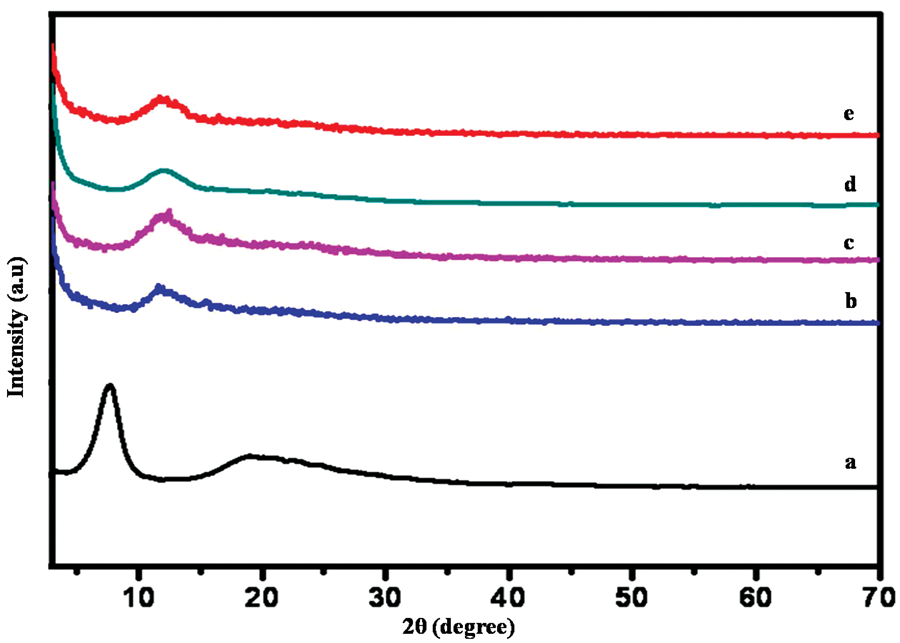
XRD measurements were made in order to evaluate the silicate layer in the OAPS–siloxane-modified PI hybrid nanocomposites. Bragg's law (nλ = 2d sin θ) was used to compute the crystallographic spacing. The XRD pattern of the OAPS–siloxane-modified PI composites suggests the formation of nanohybrids having a size of 2θ = 0–70°. The XRD profiles of neat OAPS and OAPS–siloxane-modified PI are given in Figures 4 and 5. Neat OAPS shows a distinct peak at 2θ = 7.8° corresponding to d-spacing of 1.13 nm which is identical to that reported in literature.
45
For the OAPS–siloxane-modified PI systems, with the incorporation of OAPS (1, 3, 5, and 10 wt%) into the siloxane-modified PI,peaks were observed in the range of 2θ = 12.06° corresponding to a d–spacing of 0.73 nm. This can be attributed to the hybrid formation in the presence of OAPS inorganic segments and implies the dispersion of OAPS into the siloxane-modified PIs.
55
XRD patterns of (low angle 0–15°) (a) OAPS, (b) 1 wt%, (c) 3 wt%, (d) 5 wt%, and (e) 10 wt% of OAPS–siloxane-modified PI. XRD patterns of (high angle 0–70°) (a) OAPS, (b) 1 wt%, (c) 3 wt%, (d) 5 wt%, and (e) 10 wt% of OAPS–siloxane-modified PI.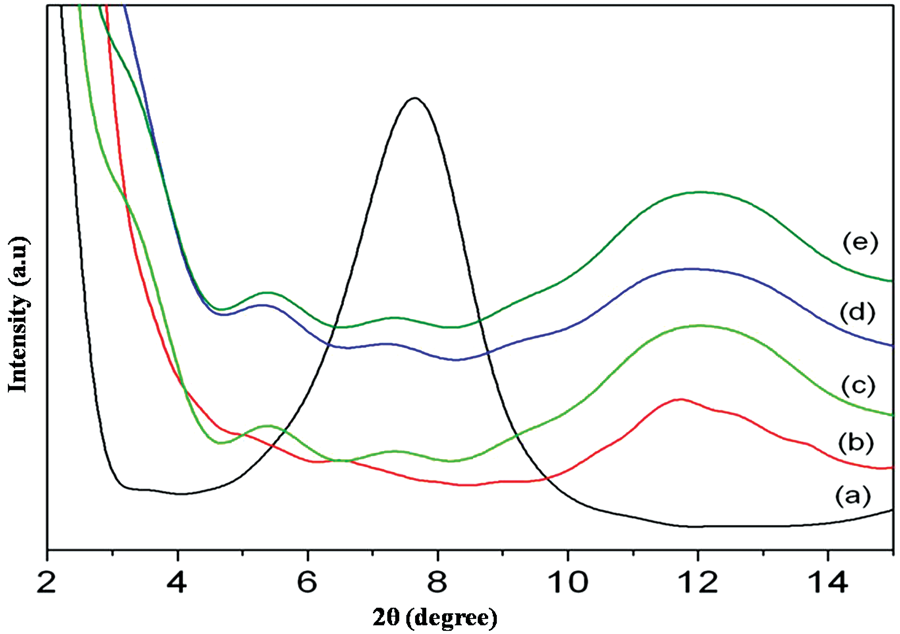
Scanning electron microscopy
The morphology of the POSS–siloxane-modified PI hybrid system was investigated by SEM. The SEM micrographs of neat PI, siloxane-modified PI, and POSS–siloxane-modified PI are given in Figure 6. The neat PI is homogenous without any phase separation (Figure 6(a)). Introduction of siloxane into neat PI induces heterogeneity and is evident from the SEM micrograph (Figure 6(b)), which may be due to the higher concentration of siloxane (BAPPDMS). With the introduction of OAPS into siloxane-modified PI, the system possesses a heterogeneous morphology Figure 6(c)–(f) due to the several possible reasons such as incomplete mixing and lack of processing torque in order to allow the POSS particle to be dispersed throughout the matrix. Also, the POSS particles are highly hydrophilic and tend to bind together to form a cluster of agglomeration in turn giving a heterogeneous morphology though hybrid nanocomposites having OAPS-incorporated siloxane-modified PI in a single chemical entity.
60
SEM micrograph of (a) neat PI, (b) siloxane-modified PI, (c) 1 wt%, (d) 3 wt%, (e) 5 wt%, and (f) 10 wt% OAPS–siloxane-modified PI.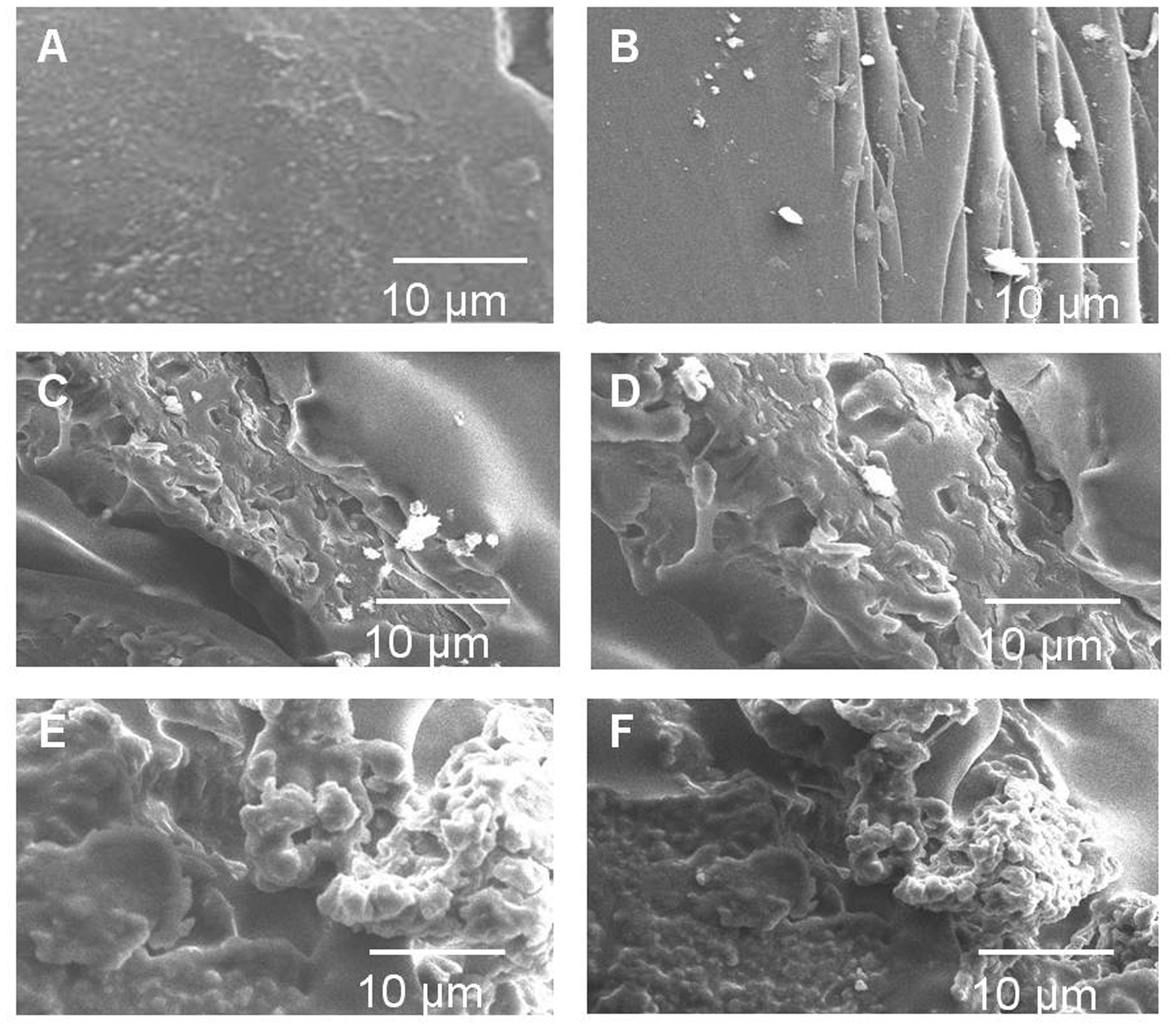
Conclusions
POSS-incorporated siloxane-modified PI hybrid nanocomposites were prepared from siloxane-modified PAA and OAPS. The formation of nanocomposite was confirmed by spectral analysis. The thermal properties of the POSS-based system have been compared with those of unmodified systems. The Tg values seem to increase due to the 3D nature of POSS, which restricts the mobility of the polymeric chain. Data obtained from TGA analysis indicate that the OAPS–siloxane-modified PI hybrid nanocomposites display more pronounced improvement in thermal stability and char yield than those of neat PIs. XRD profile indicates that the OAPS is dispersed at a nanoscale level into the siloxane-modified PI hybrid network. The hybrid nanocomposites having OAPS-incorporated siloxane-modified PI in a single chemical entity, however, with higher weight percentage of OAPS lead to form a cluster of agglomeration, which in turn results in a heterogeneous morphology.
Footnotes
Acknowledgements
The authors thank the University Grants Commission (UGC), Government of India, New Delhi-110 002, for financial support of this work. They also thank S. Devaraju, M.R. Vengeatesen, Dr C. Karikal Chozhan, Dr V. Selvaraj, DrK.Dinakaran, M. Mandhakini, and Ajith James Jose, Department of Chemical Engineering, Alagappa College of Technology, Anna University, Chennai-600 025 for their support.