






Abstract
Epoxy resin was filled with sawdust to optimize the flexural properties of the composite for structural applications. In order to reduce costs, it will be necessary to fill as much sawdust as possible subject to maintaining sufficient strength of the composites in civil and structural applications. This project varies the percentage by weight of the sawdust in the composites. The sawdust particles were sieved into three different sizes, which were <425 µm, 425–600 µm and 600–1180 µm, respectively. Palm oil was also added to the composites of epoxy resin and sawdust as a plasticizer to improve the flexibility of the composites. After casting the composites to the moulds, they were cured at ambient conditions for 24 h. They were then post-cured in a conventional oven or microwave irradiation and subjected to flexural tests. It was found that the best percentage of sawdust, with particle size of <425 µm, and of palm oil, by weight that can be added to epoxy resin to give an optimum flexural modulus and flexural strength, as well as cost was 15% and 5%, respectively. The contribution of the study was that if flexural modulus was the most important factor to be considered in the applications of the composites, sawdust is a suitable filler. However, if the most sought after properties were the flexural strength then sawdust is not a suitable filler.
Introduction
‘It has been established in recent years that polymer reinforced with a small percentages of strong fillers can significantly improve the mechanical and thermal properties.’ 1 This research project is to investigate the yield strength, tensile strength and Young’s modulus of epoxy composites reinforced with varying percentage by weight of sawdust, the filler, with a view to finding out the optimum percentage by weight of the sawdust that can be added to the composites. The sawdust particles were sieved into three different sizes, which were <425 µm, 425–600 µm and 600–1180 µm, respectively. The epoxy resin used in this study is Kinetix R246TX Thixotropic Laminating Resin, an opaque liquid, and the hardener used is kinetic H160 medium hardener which has a pot life of 120 min. Other hardeners like H126, H128, H161 and H162 can also be used. 2 The resin has been supplied by ATL Composites, Australia. The sawdust was first mixed with epoxy resin, after this, the hardener, kinetic H160 medium was added. The by weight ratio of resin to hardener used was 4:1. 2 The composite was then cast to moulds of tensile test pieces and left to cure under ambient conditions for 24 h. The tensile test specimens were taken out of the moulds and then post-cured in oven at 40°C for 16 h, and then at 50°C for 16 h and finally at 60°C for 8 h. This is to ensure the heat distortion temperature is above 63°C. To bring the ultimate heat distortion temperature to 68°C, another 15 h of post-curing will be required. 2 The specimens were then subjected to tensile tests.
Experimental
Materials
Strong characterized an epoxy resin by the presence of the three-membered ring epoxy group. 3 The groups are not typically part of the polymer repeating unit but are attached to the ends of a polymer. For cross-linking to occur, at least two epoxy groups must be on each polymer molecule. A molecule with two epoxy groups is defined as a diepoxy. The cross-linking of an epoxy resin is initiated by the opening of the epoxy ring by a reactive group on the end of another molecule. Molecules that have reactive groups and are used to cure epoxies are called hardeners. The reaction is started merely by mixing the epoxy with the hardener. 3 The hardener consists of polyamine monomers, known as diamine. Diamine is a compound with two amino groups. 4 There are two bonds which occur when the epoxy resin is initiated, one bond occurs with a carbon atom that was in the epoxy ring, this bond creates an hydroxide (OH) group which is important in some of the properties of the epoxy resin, such as bondability. The second bond is between the oxygen of the epoxy ring and the hydrogen that was on the amine. The bond between the amine and the carbon is the main component of cross-linking. The amine molecule usually has another amine group on the opposite end of the molecule that can react with a second epoxy molecule. The two epoxy molecules would therefore be joined together by the amine molecule.3,4 This is cross-linking.
Fillers play an important role in epoxy composites, it is important to understand how they interact in the composite and how the fillers affect the composites flexural and thermal properties.5 The effect on mechanical properties of adding reasonably low concentrations of fillers to the resin is generally not substantial, although some minor increases in stiffness or reduced strength and reduced elongation are common. Fillers are generally added to reduce the cost of the total material. In many cases, the changes in mechanical properties due to the addition of fillers do not have any impact on its applications. 4 – 6 The modulus of elasticity of plastics increases when fillers are used, however, tensile and impact properties are in most cases reduced. The loading of fillers in plastics is dependent on the amount, type, shape and the size of the filler particles.5, 7
The filler in the composite is sawdust. Sawdust is an inexpensive filler that reduces the overall cost of polymer composites. Although the sawdust results in loss of some properties, for example, ultimate strength, elongation and water absorption. However, this may be counteracted by a gain in other properties, for example, Young’s modulus, reduced weight and reduced wear. The main advantages of sawdust are low cost, low density and resistance to breakage during processing. 8 The main drawbacks of sawdust are its relatively low degradation temperature and hygroscopicity, which weakens its adhesion with the hydrophobic polymers. The polar nature of wood-based fillers adversely affects the dispersion of polar materials in a nonpolar matrix.8,9
The sawdust used in this study was pine waste from sawmills
It has a variety of practical uses, including fuel and manufacturing of the particle board. Until the advent of refrigeration, it was often used in icehouses to keep ice frozen during summer. In terms of hazards, it is flammable when in contact with fire. 10 The sawdust content in the resin was varied from 5 wt % to 15 wt %. Above this percentage, it became very difficult to mix. The sawdust was mixed with the resin after being dried in an oven. Kinetic H160 medium was the hardener used for curing. Before subjecting the samples for tensile tests, they were cured under ambient conditions for 24 h and then post-cured in an oven or in microwaves. The MTS 810 universal tensile testing machine was used for the testing.
The purpose of a plasticizer is to convert an otherwise hard and rigid plastic to a flexible or semi-flexible tough part. The incorporation of a plasticizer, which in most cases is a low viscous liquid, is easier to accomplish and much more flexible than formulating copolymers.4,11 When the plasticizer is added to the polymer structure, it does not dissolve in the plastic material, rather, the plasticizer will cause the polymer structure to swell. This swelling permits increased chain movement, especially locally, which makes the plastic material softer and more flexible. This greater chain movement means that the material changes from the hard and brittle state to the more flexible and soft state. This process is called plasticization.4,7,11
This increased flexibility reduces flexural properties and also lowers the glass transition temperature, Tg, of the plastic material; the greater flexibility also means that the plastic material becomes easier to process and usually melts at a lower temperature. The amount of plasticizer added to the plastic material determines the properties of the resin. If the plasticizer concentration is too low or is poorly distributed, the plastic material will not be flexible enough. If too much plasticizer is added, the plastic material will have general chain movement (as opposed to local chain movement) and the strength of the material will be compromised. 11 The plasticizer used in this study is palm oil. Palm oil is an edible plant oil derived from the pulp of the fruit of palm trees. Vegetable fats and oils are lipid materials extracted from plants and are composed of triglycerides. Vegetable oils such as palm oil present a likely candidate for conversion in polymeric materials because of their molecular structure.
Three-point bending test
The three-point bending flexural test provides values for the modulus of elasticity in bending, EB, flexural stress, σ f , flexural strain, ε f , and the flexural stress–strain response of the material. The main advantage of a three-point flexural test is the ease of the specimen preparation and testing. However, this method has also some disadvantages: the results of the testing method are sensitive to specimen and loading geometry and strain rate. 12
The standard used is ISO 14125:1998(E) because the results can then be compared with the work of others. 13 The centre uses a universal machine MTS Alliance RT/10 at 10 kN couple with the software TESTWORK 4. The dimensions of the specimens of resins were 250 mm × 10 mm × 4 mm and tested at a crosshead speed of 4 mm/min.
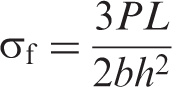
The equation used for calculating the flexural stress is
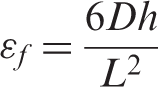
The equation used for calculating the flexural strain is
The equation used for calculating the Young’s modulus is

ε f : strain in the outer surface, %;
EB: modulus of elasticity in bending, MPa;
P: load at a given point on the load deflection curve, N;
L: support span, mm;
b: width of test beam, mm;
h: depth of test beam, mm;
D: maximum deflection of the centre of the beam, mm;
m: slope of the tangent to the initial straight line portion of the load deflection curve, N/mm.
The slope, modulus of elasticity, of a sample is illustrated in Figure 1.
Deflection curve for determining the modulus of elasticity of a sample.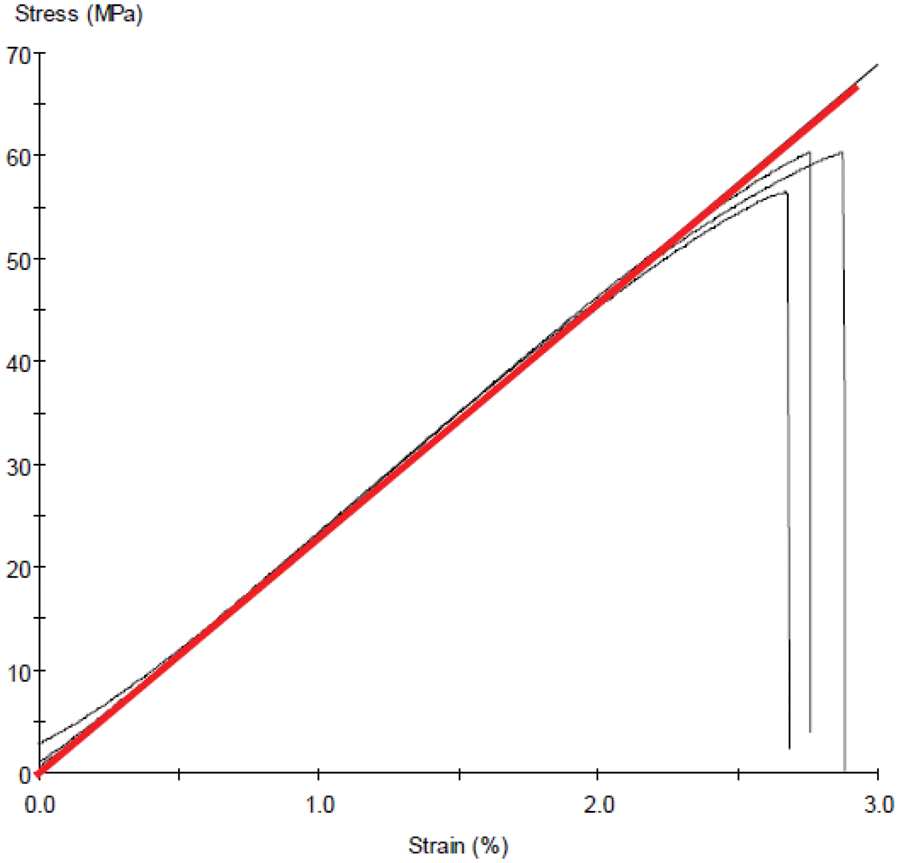
Dynamic mechanical analysis
There is a strong dependence on temperature and rate of deformation of the properties of polymers compared to those of other materials such as metals. This strong dependence of properties on temperature and on how fast the material is deformed (time scale) is a result of the viscoelastic nature of polymers. Viscoelasticity implies behaviour similar to both viscous liquids in which the rate of deformation is proportional to the applied force and to purely elastic solids in which the deformation is proportional to the applied force. 14
Dynamic mechanical analysis (DMA) test provides more information about a material than other. Dynamic tests over a wide range of frequency range are especially sensitive to the chemical and physical structure of plastics. DMA measures the response of a material to a sinusoidal or other periodic stress. Since the stress and strain are generally not in phase, two quantities can be determined: a modulus or a damping term. The outputs obtained from performing DMA are storage modulus and damping coefficient; a DMA result can be found in Figure 2. Tan δ is a damping term, a measure of the ratio of energy dissipated as heat to the maximum energy stored in the material during one cycle of oscillation. The peak of tan δ exhibits the Tg. Tan δ is indicated in Figure 2. Storage modulus (MPa) is the ratio of stress to strain under vibratory conditions.
15
The storage modulus is depicted in Figure 2. For any instant in temperature, the storage modulus is referred to as the modulus of elasticity.
Results from dynamic mechanical analysis (DMA) testing.
Composite preparation
Weight of materials required to make 1000 g of EP/sawdust (10%)

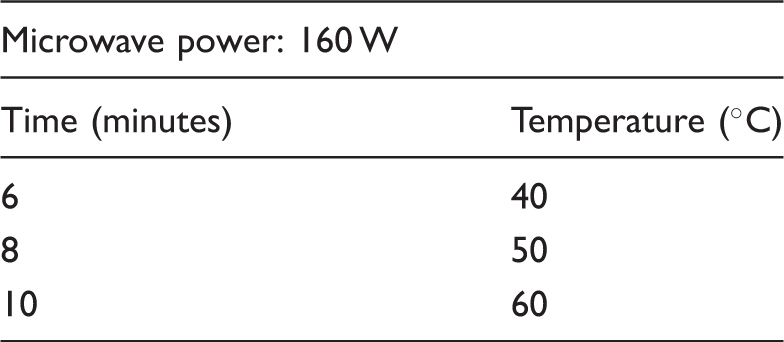
The mixture of sawdust, resin and hardener was blended with mechanical blender to ensure a more homogenous mixture. The uncured composite was then cast into the moulds and cured in ambient conditions. After initial 24-h curing, when the test pieces were removed from the mould, they were post-cured. This was achieved by curing the pieces in an oven or in microwaves. Oven temperatures and times were:
16 h at 40°C 16 h at 50°C 8 h at 60°C
The test pieces were then tensile-tested.
Times and temperatures for curing in microwaves
Results and discussion
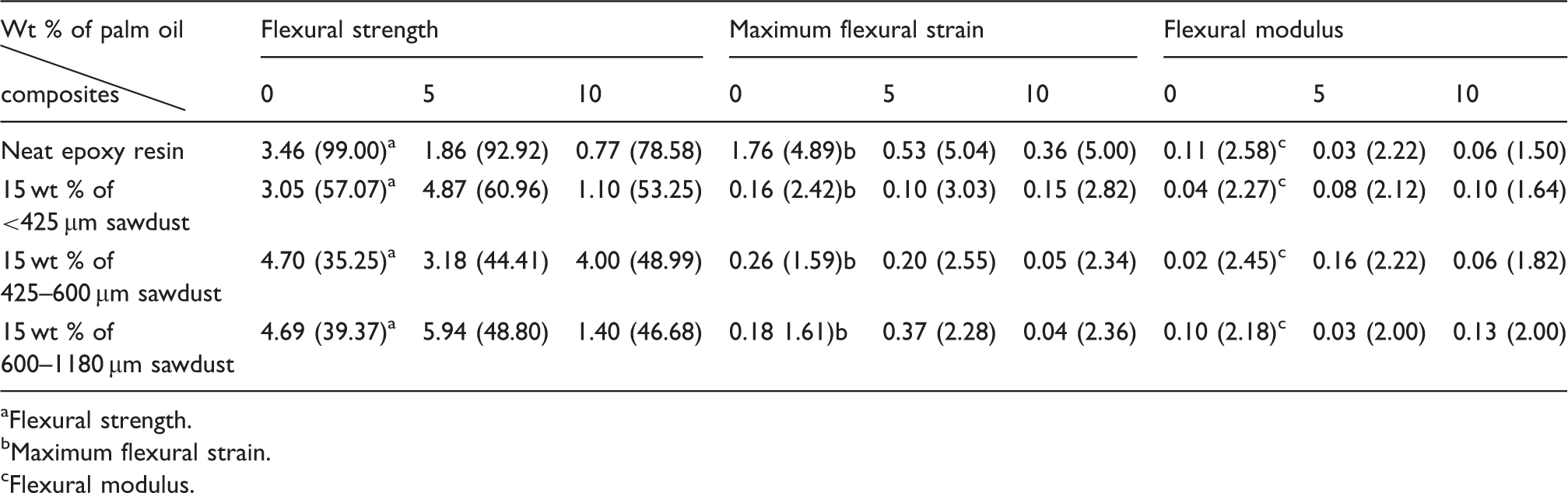
The flexural strengths of samples containing 15 wt % of sawdust with varying percentages of weight of palm oil post-cured in microwaves are shown in Figure 3. The neat epoxy samples exhibit the highest peak flexural strengths. The samples with <425 µm sawdust have higher peak flexural strengths than those of the 425–600 µm and 600–1180 µm sawdust. The samples with 425–600 µm sawdust have a marginally higher flexural strength than those with 600–1180 µm. It is fair to say that the flexural strengths decreased with increasing sizes of sawdust. Referring to Figure 3 and samples without palm oil, it can be found that the neat epoxy sample had a flexural strength of 99.00 MPa. The sample with <425 µm sawdust had a flexural strength of 57.07 MPa which was 42.4% lower than that of the neat epoxy sample. The sample with 425–600 µm sawdust had a flexural strength of 38.25 MPa, 49.2% lower than that of <425 µm sawdust sample. Finally, the sample with 600–1180 µm sawdust had a flexural strength of 39.27 MPa, 3% higher than that of 425–600 µm sawdust sample. The flexural strengths of samples with 5 wt % sawdust, 10 wt % sawdust and 20 wt % sawdust exhibited a similar pattern to those of 15 wt % sawdust.
Flexural strength of epoxy composites reinforced with 15 wt % of sawdust with varying wt % of palm oil.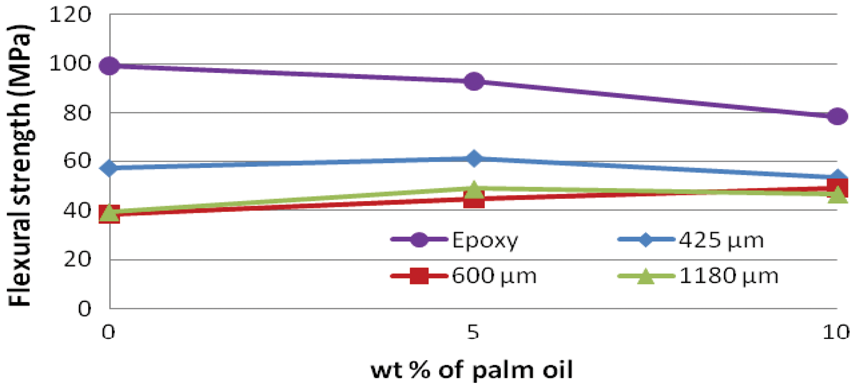
Mosiewicki et al. claimed that increasing the composite fibre weight fraction would increase the voids in the composites, which would affect the physical and mechanical properties of the composite. 16 Thus, the greater the amount and size of the sawdust in the samples, the larger would the voids in the composites and hence the lower the physical and mechanical properties of the composites. This was found to be correct in this study.
Gruenwald stated that smaller particle sizes are generally more beneficial in improving the mechanical properties of composites. The above results clearly exhibited this pattern; the specimens with smaller particle sizes had the highest peak flexural strengths, while specimens with the largest particle sizes had the lowest flexural strengths. 8
O’Donnell et al. discovered that natural fibres exhibited many advantageous properties; they were a low-density material yielding relatively lightweight composites with high specific properties. 17 In this study, the natural fibre was sawdust and by having 5 wt % of palm oil and sawdust, the flexural strength of the composite was lower than its neat resin counterpart.
Nakamura et al. also found that the flexural strengths of silica-filled epoxy composites decreased steadily with increasing filler particle size. The results were in-line with those of this study. 18
Standard deviations of flexural strengths and maximum flexural strain of varying wt % of palm oil and 15 wt % sawdust reinforced epoxy matrix post-cured in microwaves
Flexural strength.
Maximum flexural strain.
Flexural modulus.
When the composites were not filled with any palm oil, the amount of sawdust in the sample did not considerably affect the flexural strengths of the samples; the flexural strengths appeared to stay relatively stable with increasing amounts of sawdust. When the composites were filled with palm oil, the flexural strengths appeared to decrease marginally with increasing amounts of sawdust.
Figure 4 illustrates the flexural strength of different mica flakes-filled epoxy resin (Epikote 828) composites of Inubushi et al. The epoxy resins exhibited 30–40% reduction in flexural strength when a small fraction of mica was added. It can be found that the trend of the curves were very similar to that of this study.
19
However, the particle sizes had even less effect to the flexural strengths of the composites than those in this study because of different fillers used.
Flexural strength of different mica-filled epoxy composites.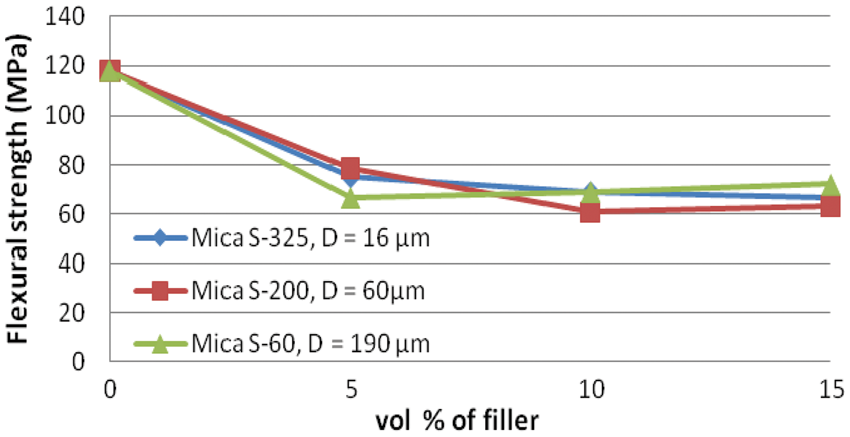
Marcovich et al. made composites from sawdust and polyester and found that ‘all the composites present a smaller flexural strength than that of the unloaded matrix. Flexural strength data for all samples are rather dispersed, and there is no significant difference between them. However, there is a slight increment with filler content for all the composites tested.’ 20 The neat resin was strongest and is similar to the case in this study. In this study, there was also no significance difference between the flexural data for all samples, but samples with smaller particle sizes had higher flexural strengths than their counterparts.
The maximum flexural strains of samples containing 5 wt % sawdust post-cured in microwaves are depicted in Figure 5. The flexural strains of samples with 5 wt % sawdust exhibited a similar pattern to those of 10 wt % sawdust, and the flexural strains of samples with 15 wt % sawdust showed a similar pattern to that of 20 wt % sawdust. From Figure 5, it can be found that the neat epoxy samples had the greatest maximum flexural strains. The maximum flexural strains decreased with increasing sizes of sawdust. From Figure 5, it can be observed that the maximum flexural strains of the <425 µm, 425–600 µm and 600–1180 µm samples were clearly distinguishable. By analysing the results of samples with 5 wt % sawdust, it can be found that the maximum flexural strain of the neat epoxy sample with 0 wt % palm oil started at 4.89 GPa, and decreased 50.51% to 2.42 GPa with <425 µm sawdust, further decreased 34.30% to 1.59 GPa with 425–600 µm sawdust, and finally increased 1.24% to 1.61 GPa with 1180 µm sawdust. Table 3 also shows the standard deviations of the maximum flexural strains of samples containing 5 wt % sawdust post-cured in microwaves. As only a few of the standard deviations were over 5% of the values of the maximum flexural strains, it can be argued that the results are accurate and reliable.
Maximum flexural strain of epoxy composites reinforced with 5 wt % sawdust with varying wt % of palm oil.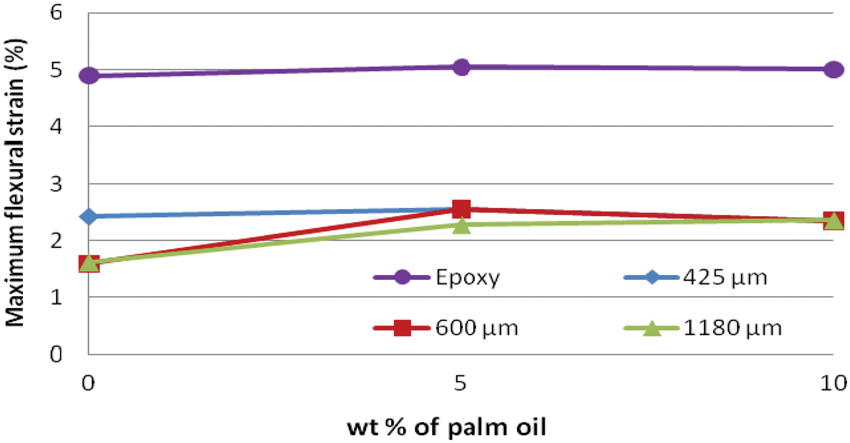
A project conducted by Ku et al. found that the only drawback for using finer particles as filler was their tendency to agglomerate. 21 Fine sawdust particles were difficult to disperse, and they agglomerated and behaved as large single particles. The research undertaken in this project confirmed the finding of the research undertaken by Ku et al., the <425 µm sawdust particles of samples with higher particulate ratio acted similar to that of the 425–600 µm and 600–1180 µm particles. Therefore, it can be argued that the <425 µm particles agglomerated and behaved as large single particles. This agglomeration of particles started to occur when the epoxy composites was reinforced with 15 wt % of sawdust. However, the effect of agglomeration in flexural strengths of samples with <425 µm sawdust particles occurred only at the 20 wt % filler. It can be argued that the effects of agglomeration in flexural strengths have occurred at 15 wt % of sawdust and that more effects occurred with increasing wt % of filler.
The amounts of palm oil in the samples affecting the maximum flexural strains of the samples are depicted in Figure 5. The maximum flexural strains in the samples with sawdust increased marginally with increasing amounts of palm oil; this was a clear example of the plasticizing affects of palm oil. When a plasticizer was added to an epoxy sample, the product was softened, which in turn increased in flexibility.
The flexural modulus of samples containing 20 wt % sawdust post-cured in microwaves is depicted in Figure 6. The flexural modulus of samples with 5 wt % of sawdust, 10 wt % of filler and 15 wt % of reinforcement exhibited a similar pattern to that of 20 wt % of sawdust. From Figure 6, it can be observed that all samples shared a similar flexural modulus. It can be argued that the size of the sawdust particles have minimal effects on the flexural modulus; the neat epoxy sample had a similar flexural modulus to that of other samples, so the size and wt % of sawdust had a minimal effect on the flexural modulus of the samples. The flexural modulus in the composites decreased linearly with increasing amounts of plasticizer. This is an example of the plasticizing affect of palm oil; the resistance of the sample to bend should decrease with increasing amounts of palm oil. The highest flexural modulus was found for neat epoxy resin sample with a flexural modulus of 2.58 GPa. The sample with the lowest flexural modulus was the one with a 1.50 GPa. Without palm oil, the plasticizer, the behaviour of the graphs would become opposite as found by Marcovich et al., Inubushi et al. and Mosiewicki et al.16,19,20
Flexural modulus of epoxy composites reinforced with 20 wt % of sawdust with varying wt % of palm oil.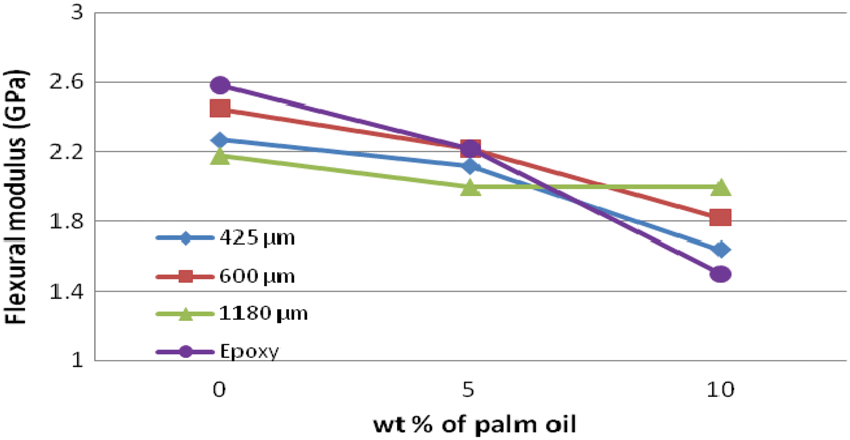
Average flexural strength, average maximum flexural strain and average flexural modulus of samples post-cured conventionally and in microwaves

Nightingale and Ray chose two epoxy systems and the selection was based on their dielectric loss factors. ‘System 1 contains resin and hardener with higher loss factor than system 2.’ The systems were cured by three methods: autoclave curing, autoclave plus microwave post-curing and microwave curing. They found that ‘autoclave cured composites had the best flexural properties followed by the microwave-cures samples. Composites that were partially autoclave cured and then post-cured in microwaves had the worst flexural properties.’ The mechanical properties of fully microwave-cured specimens were better than their rivals cured in autoclave and then post-cured in microwaves despite their larger void content. This implied that composites fully cured by microwaves would have comparable mechanical properties but shorter curing duration than their counterparts, if the specimens were cured under correct conditions. 23 In this study, time saving was achieved and it can be argued that by adopting correct curing conditions, composites with comparable mechanical properties can be acquired.
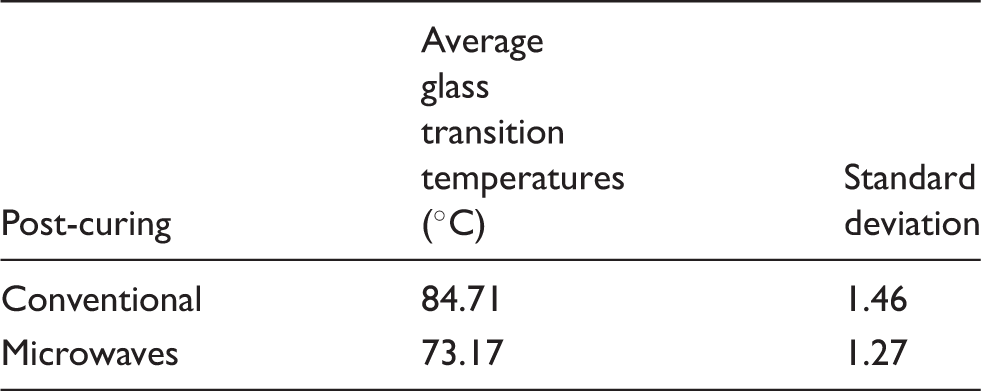
The average Tgs of the composites post-cured conventionally and in microwaves plasticized with varying wt % palm oil is illustrated in Figure 7. From the data collected from the DMA tests, it can be claimed that the amount and size of sawdust particles and palm oil did not affect the Tgs. The Tgs value should decrease with increasing amounts of palm oil; however, no significant change was recorded. This means that the strength of the epoxy cross-linking is not weakened with increasing amounts of palm oil. It can be observed that the Tgs of samples post-cured conventionally were higher than those post-cured in microwaves. The graph also illustrated no significant change in results with increasing amounts of palm oil. Table 5 shows the average Tgs of samples. The relevant standard deviation is also incorporated in the table to show the reliability of the results. Since the standard deviations of the various samples were low, confirming that the Tg of the samples did not vary when various amounts and sizes of sawdust particles and palm oil were added to them. It can be found from Table 5 that the Tg was on average 13.62% higher when post-cured thermally. This data once again showed the effect of cross-linking between conventional and microwave post-cured samples. By studying Tables 4 and 5, it can be observed that the conventionally post-cured samples had higher average glass transition temperature, and hence stiffer; this was reflected by the fact that they also had higher average flexural strengths and modulus. ‘However, the differences in Tg may not always relate to mechanical properties’ as pointed by Tanrattanakul and Jaroendee in their study with carbon fibre and polyimide composites in which the conventionally cured samples had lower Tg but higher flexural strengths than their microwave-cured counterparts. They added by saying that the interfacial adhesion between the matrix and fibre also played a vital role on the flexural properties.
22
Glass transition temperature of epoxy composites post-cured conventionally and in microwaves plasticized with varying wt % palm oil. Average glass transition temperature of plasticized epoxy resins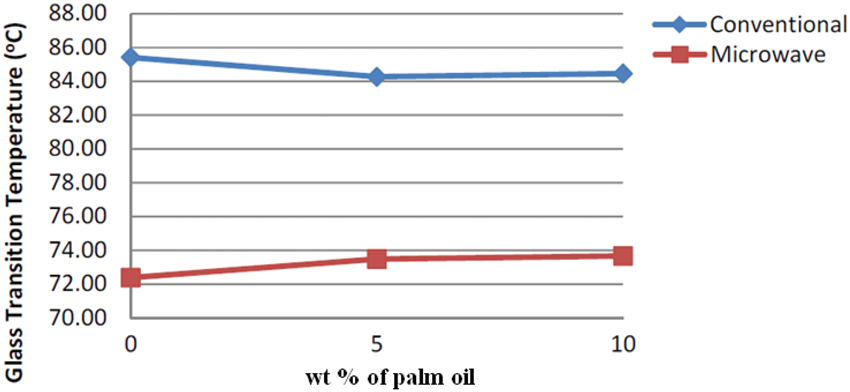
The microscopic analysis was performed on different samples to determine the reasons for porosity formation, as well as the amount and size of air bubbles formed. This key characteristic has a great impact on the flexural properties of the composites.
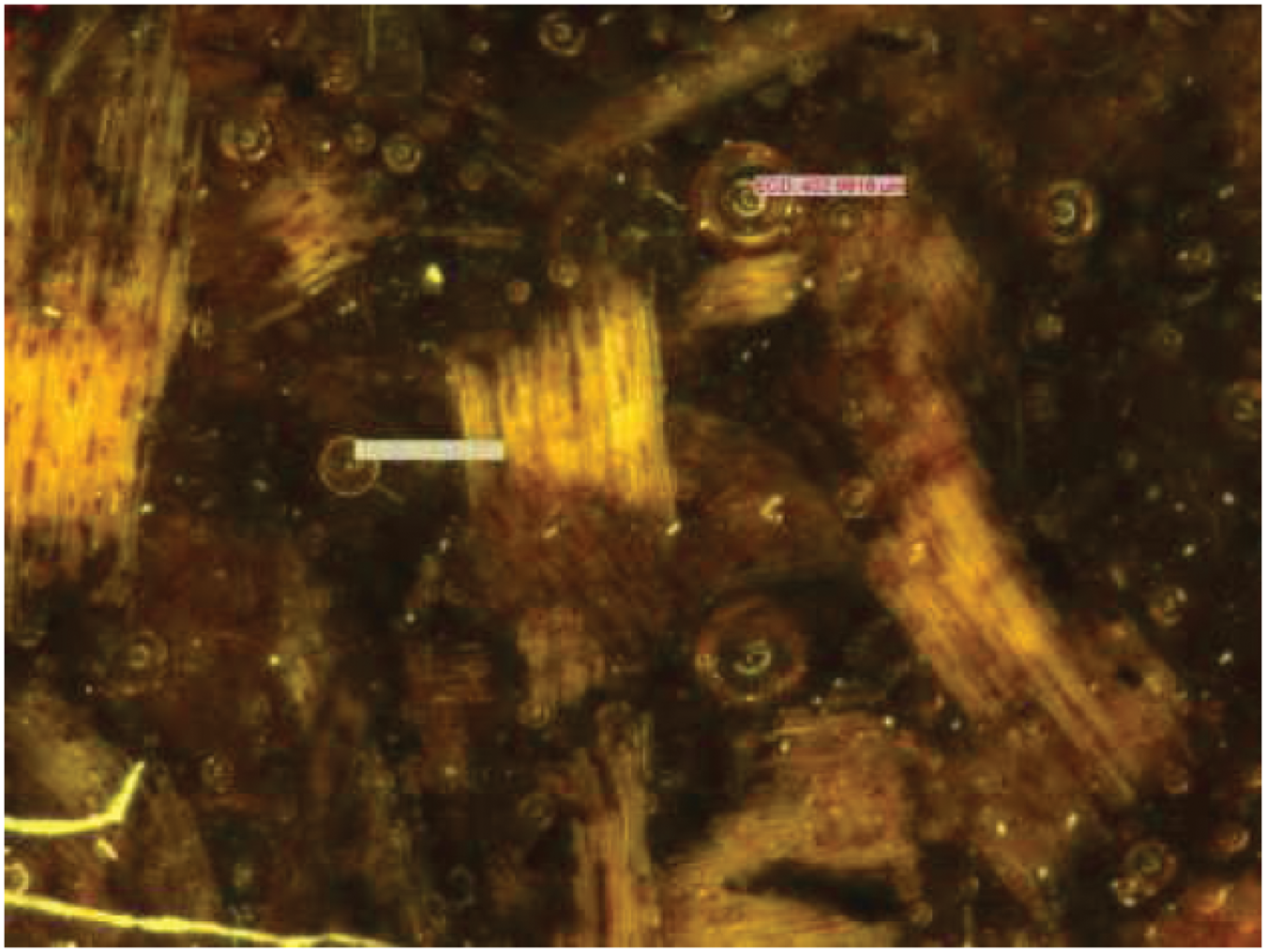
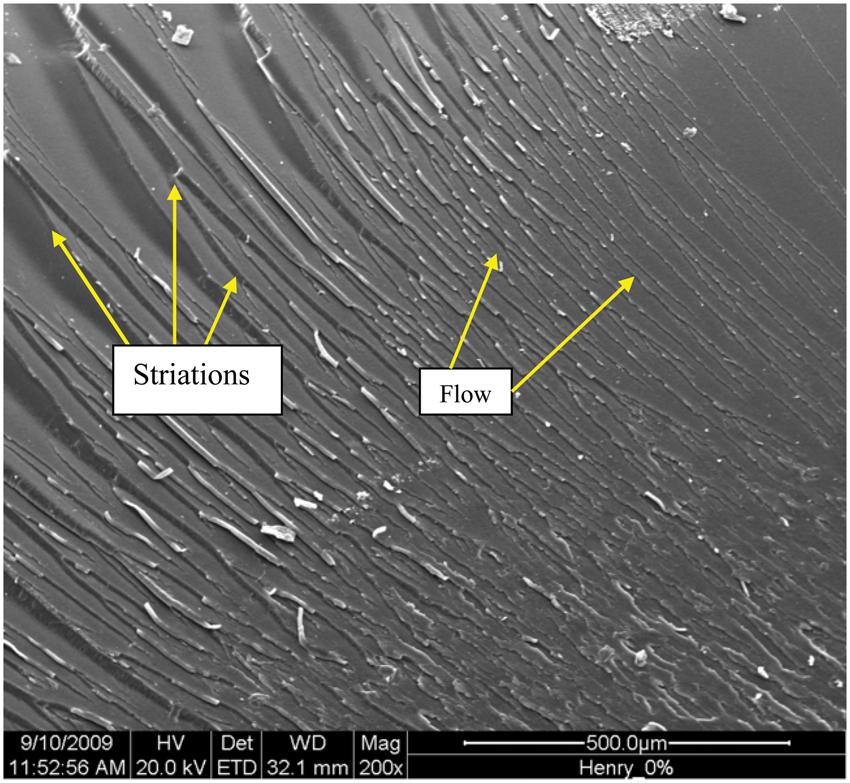
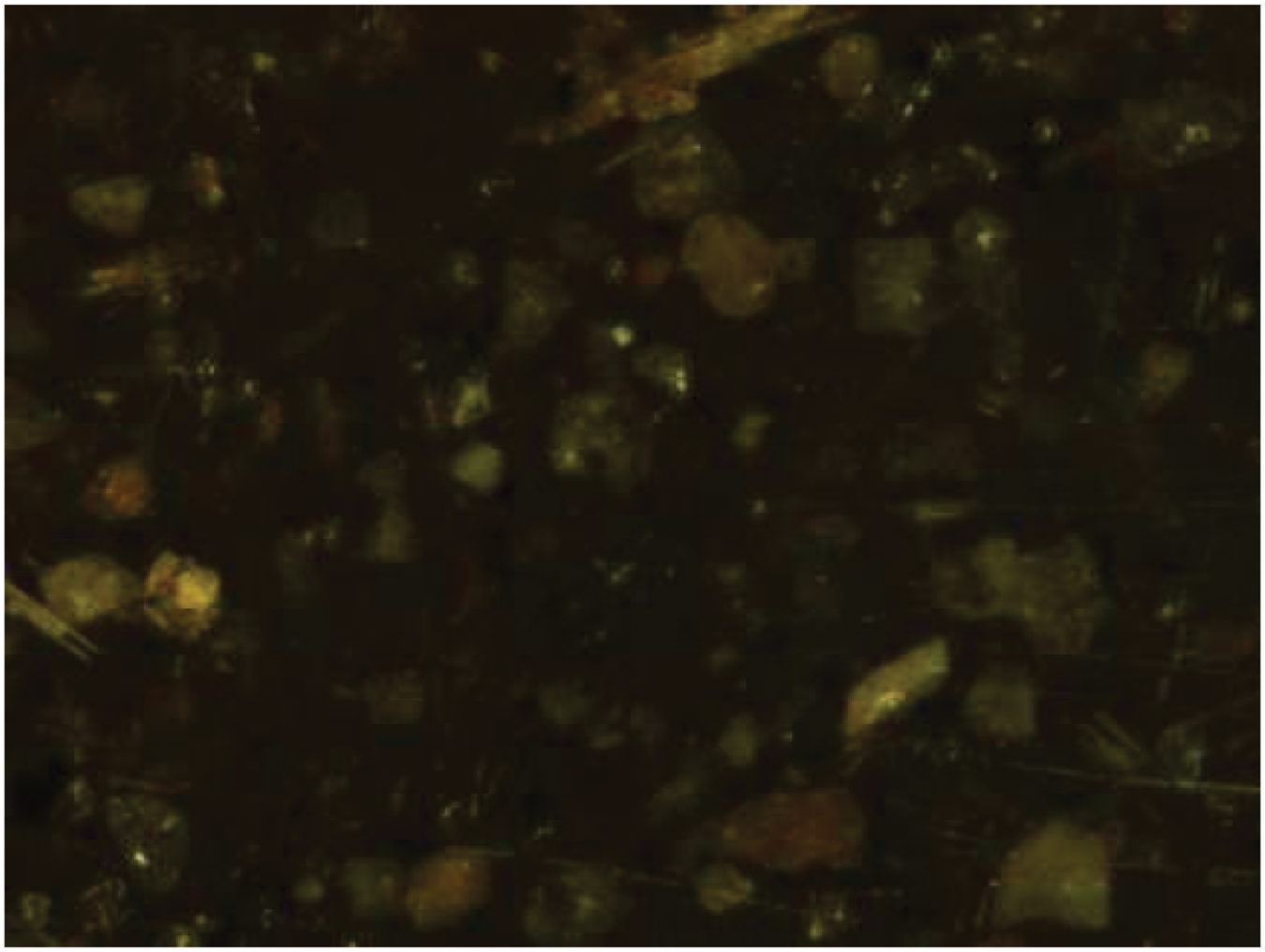
Figure 8 shows the scanning electron microscope image of neat epoxy resin post-cured for a total of 40 h at 40°C, 50°C and 60°C, respectively at a magnification of 200 times. Faint striations followed by a ‘turbulent flow’ can be found in the fractured surface of the neat resin. This shows that plastic deformation had taken place in the resin. Figure 9 shows a sample with <425 µm, 5 wt % of sawdust and 0 wt % of palm oil; the sample exhibited a minimal amount of air bubbles and also indicated dirt in the sample, which had darkened the sample. Figure 10 illustrates a sample with 425–600 µm, 20 wt % of sawdust and 0 wt % of palm oil; the sample exhibited a vast quantity of large air bubbles, the largest bubble found using the microscope had a circumference of 209 µm. Big holes were spotted and this explained why the flexural strength of neat epoxy resin was stronger than that of epoxy composite with 20 wt % of sawdust. The sample also exhibited a reduced contamination by dirt. Figure 11 shows a sample with 600–1180 µm, 20 wt % of sawdust and 0 wt % of palm oil; the sample exhibited a vast quantity of large air bubbles, the largest bubble found using the microscope had a circumference of 402 µm. This suggests that the size and quantity of air bubbles increased with the size of the sawdust; the larger the sawdust, the larger the air bubbles and the amount of air bubbles would be. It can be found from Figures 9–11 that there were no voids around the sawdust particles; it can be argued that the adhesion between sawdust and epoxy resin was very good.
Optical microscope image of a sample with 425–600 µm, 20 wt % of sawdust and 0 wt % of palm oil, ×60. Optical microscope image of a sample with 600–1180 µm, 20 wt % of sawdust and 0 wt % of palm oil, ×60. Scanning electron microscope (SEM) image of fractured neat epoxy resin, ×200. Optical microscope image of a sample with 425 µm, 5 wt % of sawdust and 0 wt % of palm oil, ×60.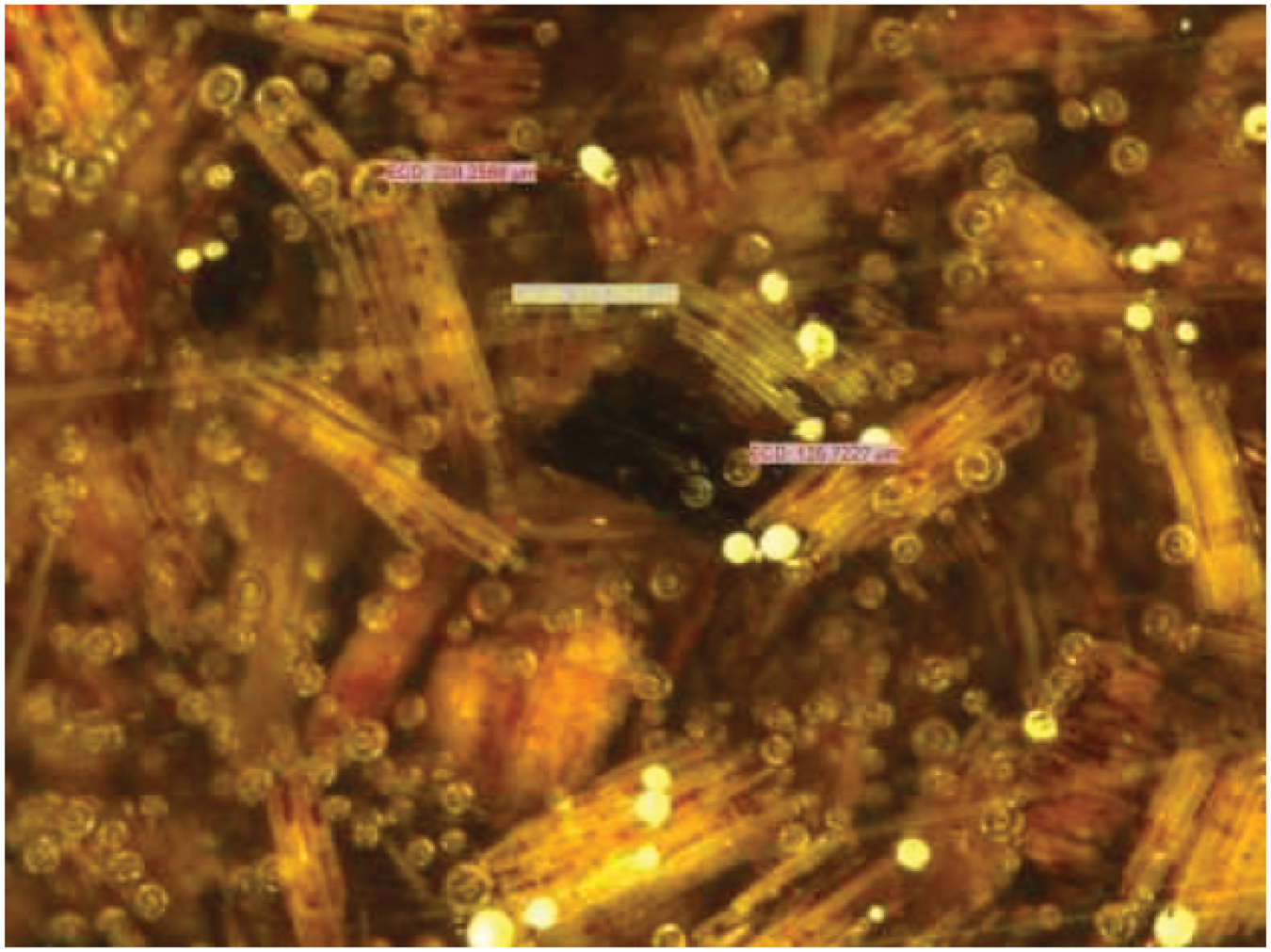
Conclusions
This study has evaluated the flexural strength, maximum flexural strain and flexural modulus of varying percentage by weight of sawdust, of different range of particle sizes and of varying percentage by weight of palm oil reinforced epoxy resin; in all cases, the fluidity of the slurry composite was high and could be cast into moulds. Some air bubbles were found due to imperfect manufacturing of the samples. The neat epoxy sample exhibited the highest flexural strength. The flexural strengths of samples post-cured in microwaves exhibited similar relationships to those post-cured conventionally. The flexural strengths:
Decreased with increasing size of sawdust; Decreased marginally with increasing amount of sawdust and Increased with 5 wt % of palm oil then decreased with 10 wt % of plasticizer.
When the composites were not reinforced with any palm oil, the amount of sawdust in the composites did not affect the flexural strengths of the sample considerably; the strengths stayed relatively stable with increasing amounts of sawdust. When the composites were plasticized with 5 wt % and 10 wt % of palm oil, the strengths decreased slightly with increasing amounts of sawdust. The strength of the neat epoxy samples decreased with increasing amounts of palm oil. The palm oil acted as a plasticizing agent and increased flexibility of the samples, which in turn reduced the flexural strengths. The strengths in the samples with sawdust increased marginally with 5 wt % palm oil and then decreased again with 10 wt % of plasticizer.
The flexural strains of samples post-cured in microwaves exhibited similar relationships to those post-cured conventionally. The neat epoxy sample exhibited the highest flexural strain. The flexural strains:
Decreased with increasing size of sawdust; Was not affected by amount of sawdust added and Increased with increasing amount of palm oil.
The flexural modulus of samples post-cured in microwaves exhibited similar relationships to those post-cured conventionally. The neat epoxy sample had a similar flexural modulus to other samples containing different weights and sizes of sawdust, thus, it can be argued that the size and weight of sawdust had minimal effect on the flexural modulus of the samples. The flexural modulus in the samples with sawdust decreased linearly with increasing amounts of palm oil. This is an example of the plasticizing affect of palm oil; the resistance of the sample to flexural bending decreased with increasing amounts of palm oil. The flexural modulus:
Decreased with increasing amount of palm oil and Was not greatly affected by the size and amount of sawdust.
It can also be argued that the interfacial adhesion between epoxy resin (matrix) and sawdust (reinforcement) would be improved by treating the sawdust, and the properties of the composites would then be improved. The trend of the results of this study was also supported by the results of other similar study using sawdust as filler.
Footnotes
Funding
This research received no specific grant from any funding agency in the public, commercial, or not-for-profit sectors.
Acknowledgement
The authors would like to thank the comments made by the four reviewers. Without them the quality of this paper would not have been improved.
Conflict of interest
None declared.