







Abstract
In this study, the notched strengths of woven hybrid composite laminates each with a center circular hole were investigated. The effective engineering moduli of the composite laminate were first predicted by the spring model method and the stiffness averaging method. Then, a finite element-based point stress criterion proposed previously by the authors was employed to predict the notched strengths of those woven hybrid composite laminates each with a center circular hole. It is shown that the predicted notched strengths by this approach agree well with the experimental results. It is also noted that the notched strength decreases with the radius of the center circular holes for both the drilling and water jet cases. However, the decreasing rate of the notched strength for water jet is obviously higher than those for drilling.
Introduction
Composite materials have been widely applied in many kinds of industries, such as sport, construction, transportation and aerospace etc., 1 because they are able to withstand the influence from acids, sodas and weather in addition to their high strength and light weight. However, in using structural composites, holes or cut-outs are often made to facilitate joining of structural parts or to provide access to the interior of the structure. These holes or cut-outs will produce stress concentrations, which can significantly reduce the strength and service life of the composite structures. Therefore, many fracture models have been established for predicting the notched strengths of composites.2-13
Among the fracture models, the stress fracture models have been found to be used widely because of simplicity. In 1974, Whitney and Nuismer (WN) 3 first proposed the point stress criterion (PSC) and average stress criterion (ASC) based on the normal stress distribution adjacent to the notch edge. These two parameter models were then modified into a three-parameter criterion by Pipes et al. 4 Besides, Tan 5 also extended the idea of the WN fracture model into the point strength model (PSM) and minimum strength model (MSM). To consider the effect of finite width, Tan 6 proposed finite width correction factors, and Gillespie and Carlsson 7 presented an approximate finite width stress distribution for orthotropic plates with circular holes.
Although the failure models mentioned above are mainly developed for composite laminates,2-22 they have also been applied to predict the notched strength of fabric composites.23-38 Traditionally, both PSC and ASC were only applied for predicting the notched strengths of composite plates each with a center hole because analytical solutions were required. In order to predict the notched strengths of composite plates each with notches located either at the edge or in the center of the plate, Tsai et al. 39 and Hwan et al. 40 have recently developed a finite element-based point stress criterion (FEBPSC), which can consistently predict the notched strength of composite plates without using analytical solutions.
Nowadays, woven hybrid composite laminates have been widely used in various industries because the woven fabric on their outer layer not only can improve their aesthetic appearance but also decrease the possibility of delamination during drilling. However, the notched strength of woven hybrid composite laminates each with a center hole has not been studied so far. In this paper, FEBPSC will be applied to investigate the problem. Moreover, the effect of machining method, such as drilling and water jet cutting, on the notched strengths and fracture mechanism of woven hybrid composite laminates each with a center hole will also be studied.
Theoretical aspects
In this study, despite many available methods for calculating engineering moduli, 41 the effective engineering moduli of the composite laminate are first predicted by the spring model method 42 and the stiffness averaging method. 43 The PSC is then used to find the characteristic length for each composite laminate with different size of hole by the finite element analysis. The characteristic length is then expressed as an empirical function of the hole size as well as the width of the composite laminate. The notched strengths of woven hybrid composite laminates are finally predicted based on the empirical function and the finite element analysis results incorporated with the principle of superposition in elasticity. Details in each step are described as follows.
Computation of equivalent elastic moduli of the woven hybrid composite laminates
The cross section of the woven hybrid composite laminates used in this study is shown in Figure 1. The stacking sequence is [w/ ± 45°/0°/ ± 45°/w] in which w stands for woven fabric layer. In the computation of the equivalent elastic moduli of the woven hybrid composite laminates, the equivalent elastic moduli of each woven fabric layer are first predicted by using spring model method.
42
Cross section of the woven hybrid composite laminates.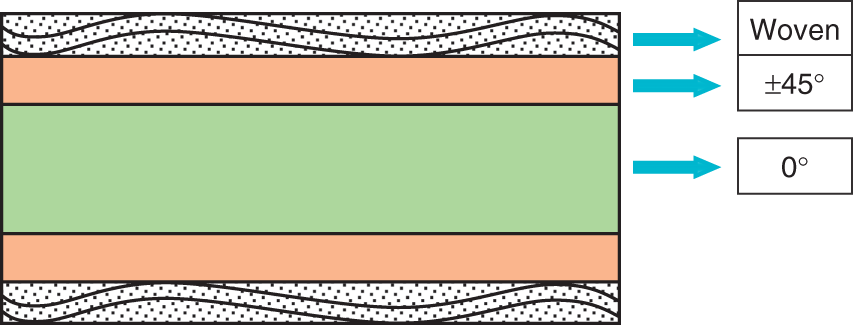
In the spring model method, 42 it is first hypothesized that solid element and spring element are used to simulate the matrix and the fiber tow, respectively, and the unit cell representing the composite material is selected. Next, the basic material properties of the matrix and the fiber are adjusted according to the mixture rule to develop a finite element model. Proper boundary conditions of six independent deformations are then assigned respectively to obtain the mean stresses and mean strains of the unit cell under various independent deformation conditions. Finally, using the generalized stress–strain relationship, an equivalent stiffness matrix or a compliance matrix of the unit cell is obtained. Various equivalent engineering constants are then acquired.
The equivalent elastic moduli of each unidirectional layer are then calculated by the rules of mixture. Finally, the overall equivalent elastic moduli of a woven hybrid composite laminate are evaluated by the stiffness averaging method, which is carried out by averaging the stiffness matrices of all layers with the weighting of their corresponding volume fraction.
Finite element based PSC
Among the two-stress criteria proposed by Whitney and Nuismer,
3
PSC has been used most often because of its simplicity. As shown in Figure 2, consider a laminate containing a center hole of radius R is subjected to a uniform stress A schematic illustration of Whitney-Nuismer point stress criterion.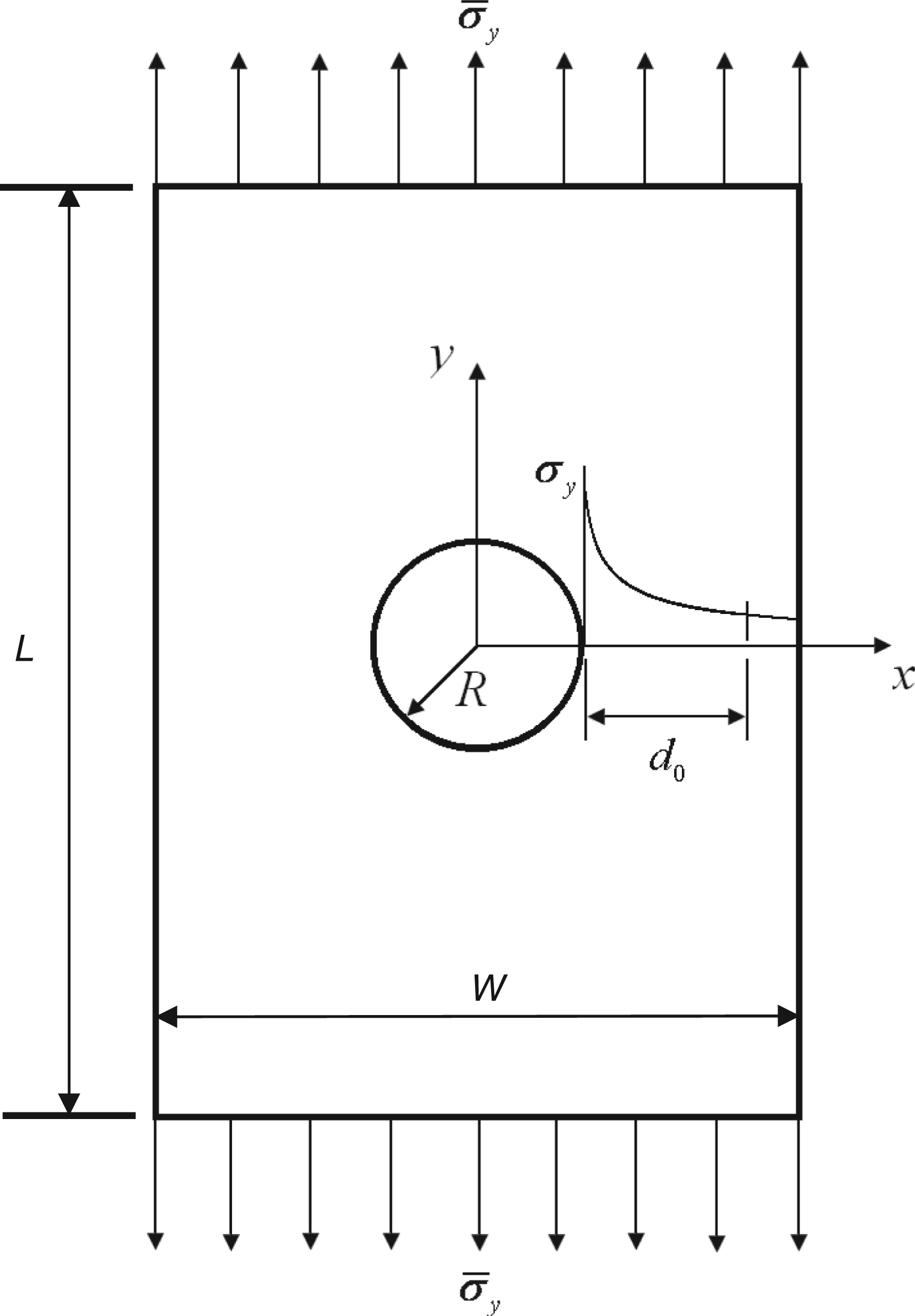

The dependence of characteristic length d0 on the specimen geometry has been proposed by Kim
29
as:
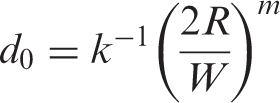
Traditionally, PSC was only applied for predicting the notched strengths of composite plates each with a center hole because analytical solutions were required. Recently, Tsai et al. 39 and Hwan et al. 40 have developed an FEBPSC for predicting the notched strength of composite plates each with notches located either at the edge or in the center of the plate.
In this paper, FEBPSC was employed for predicting the notched strength of woven hybrid composite laminates each with a center circular hole. In this approach, we first obtain the stress distribution of a woven hybrid composite laminate with a center circular hole by a finite element analysis, in which the experimental notched strength is applied as the loading at the boundary of the finite element model. We then apply the PSC to find the characteristic length for each plate with different size of hole by an interpolation of the finite element analysis results. Using Kim’s model, 29 the characteristic lengths of composite laminates are then expressed as an empirical function of hole size as well as width of the laminate. Finally, the characteristic lengths of composite laminates are predicted based on the empirical function, and the notched strengths of composite laminates are acquired by the predicted characteristic lengths and the finite element analysis results incorporated with the principle of superposition in elasticity.
Experiment
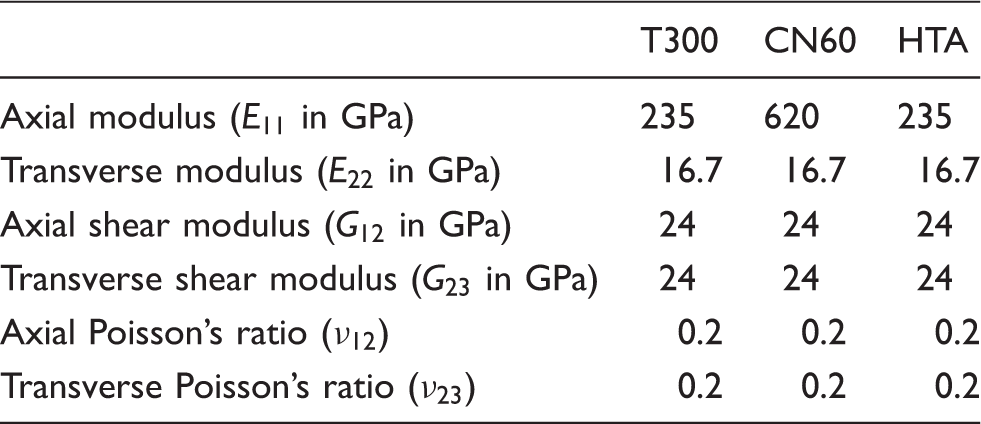
The elastic moduli of three fibers in the woven hybrid composite laminates.
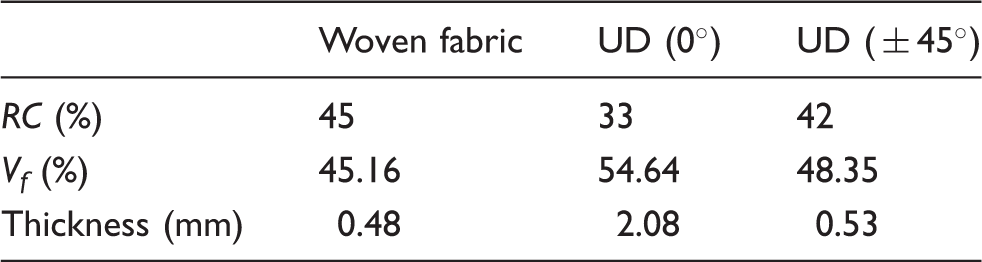
Resin content, fiber volume fraction and thickness of each layer.
Material properties of epoxy.

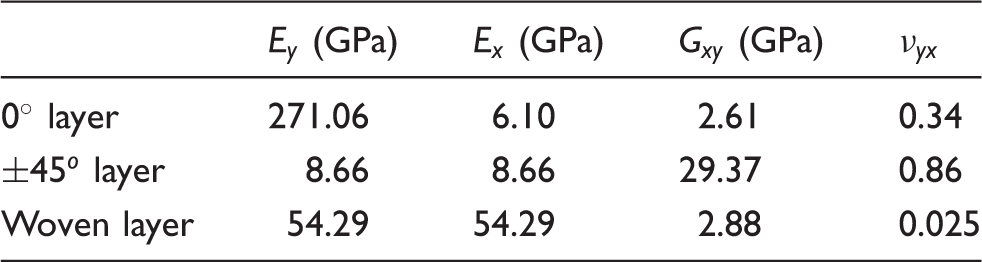
Predicted elastic moduli of woven layers and unidirectional layers.
Predicted elastic moduli of woven hybrid composite laminates.

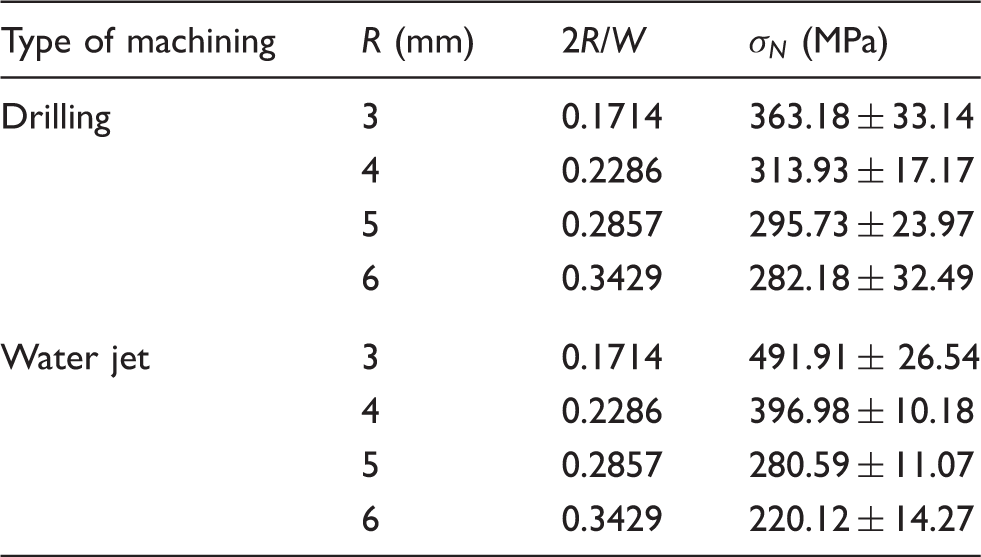
All specimens tailored from the laminates are 35-mm wide, 3-mm thick and 250-mm long with 160-mm gage length. A schematic diagram of the fabricated specimens is depicted in Figure 3. A circular hole with radius R is formed at the center of each specimen. In this study, specimens were cut with 3-, 4-, 5- and 6-mm radius circular holes by both drilling (spindle speed: 900 r/min) and water jet (water pressure: 310 MPa; abrasive mass flow rate: 6.45 kg/min). According to ASTM-D3039, all the tensile tests are conducted on the AG-100KNX machine using serrated wedge grips. The specimens are loaded in tension to failure at a crosshead speed of 2 Geometry and dimensions of specimens. Notched strengths of woven hybrid composite laminate specimens.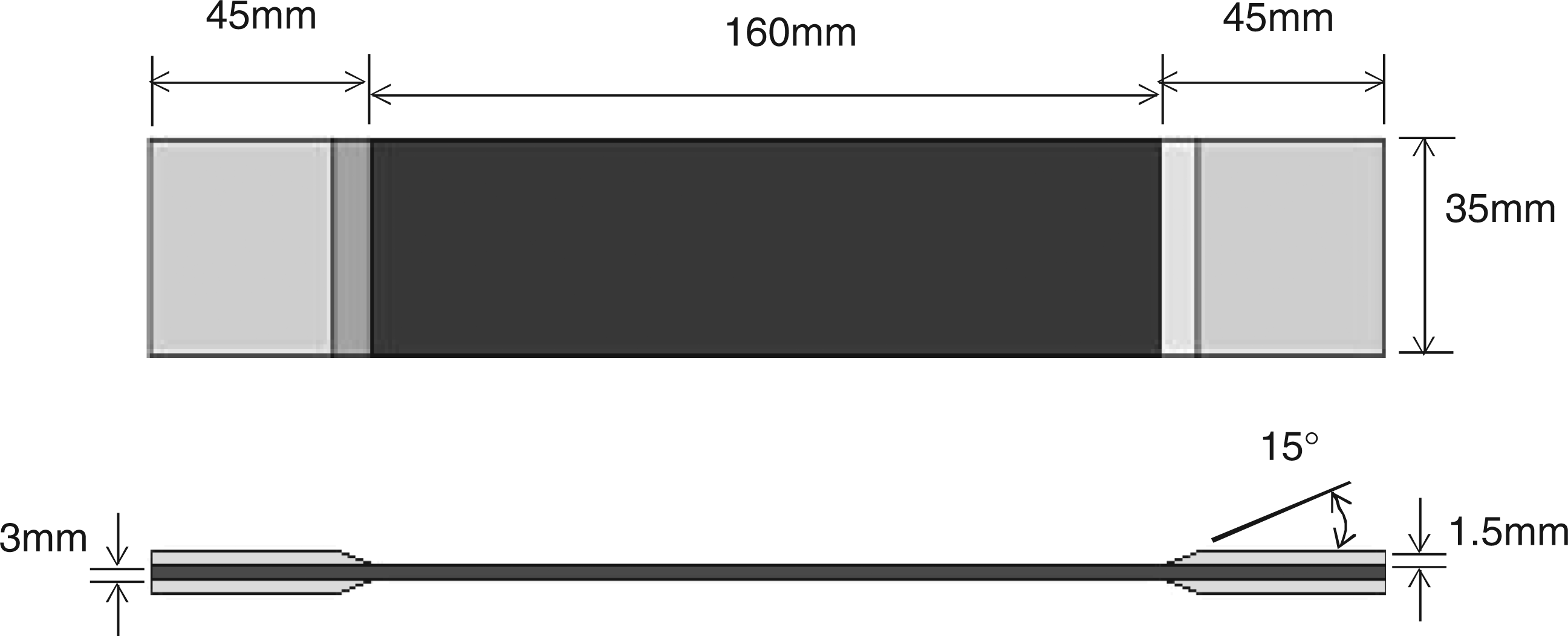
Results and discussions
Prediction of notched strength
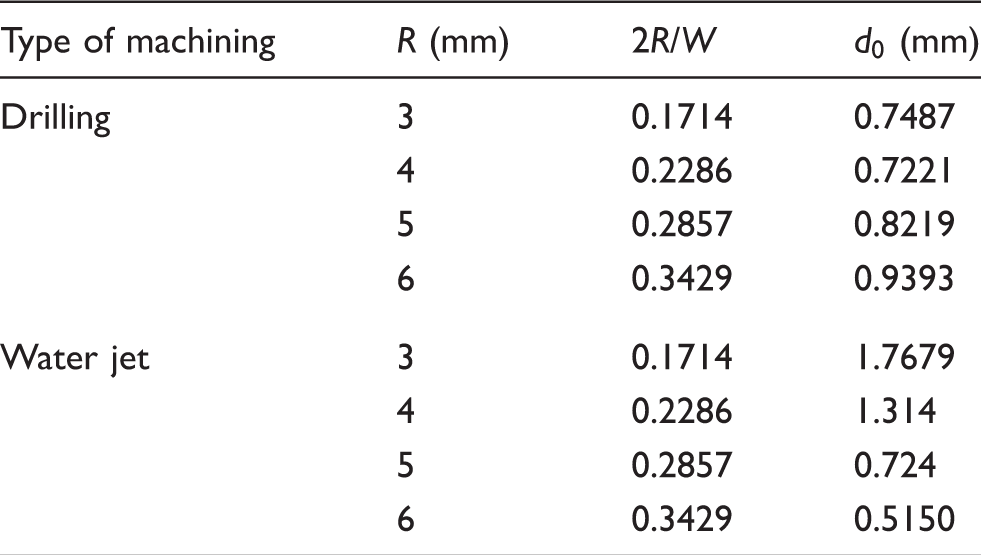
Characteristic lengths of woven hybrid composite laminate specimens.
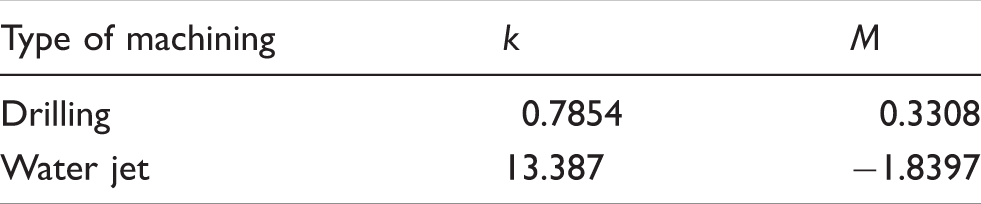
Values of k and m.
Prediction of notched strengths by FEBPSC.
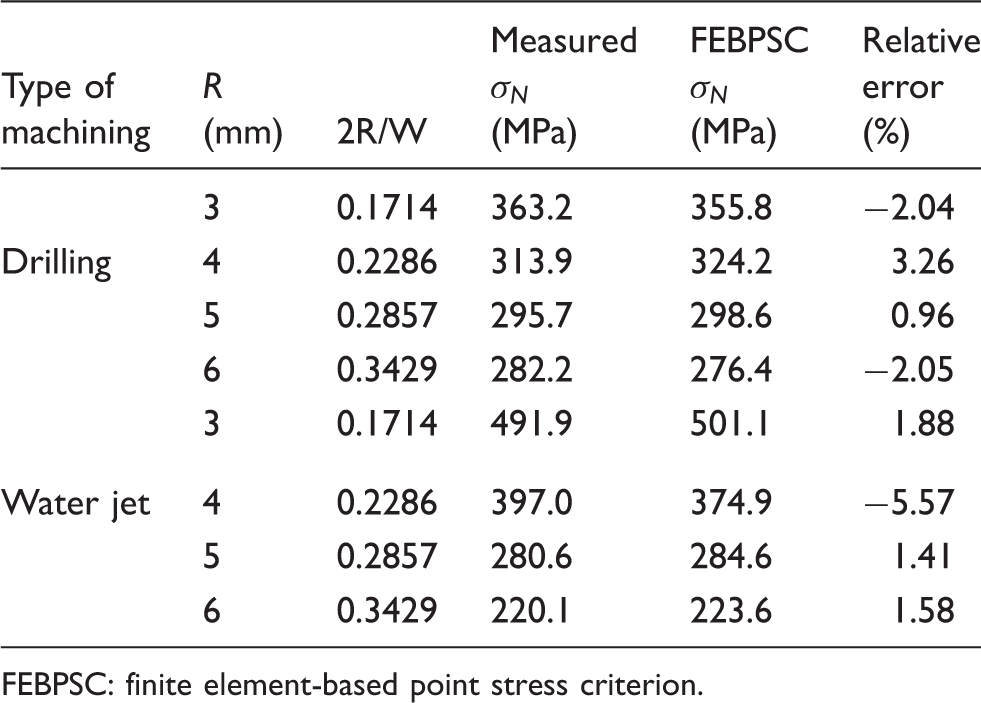
FEBPSC: finite element-based point stress criterion.
Further, in order to depict the trend of notched strength versus hole radius, the predicted values of notched strength are acquired by FEBPSC for various hole radii from 2 mm to 8 mm for those woven hybrid composite laminates and the results are shown as diagrams in Figure 4. It is obvious that the notched strength decreases with the radius of the center circular holes for both the drilling and water jet cases. However, the decreasing rate of the notched strength for water jet is obviously higher than those for drilling.
Diagram of notched strength versus hole radius for three composite plates.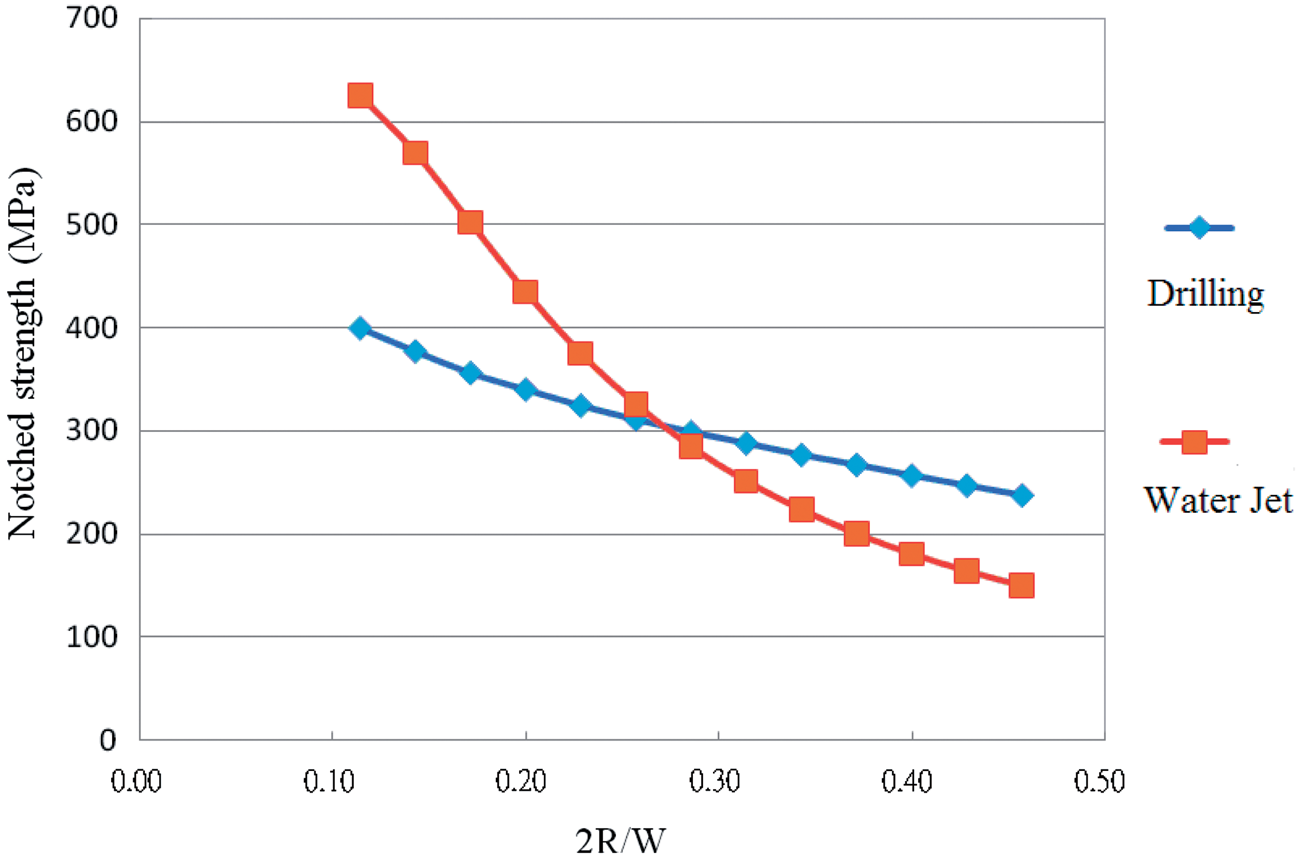
Fracture mechanism
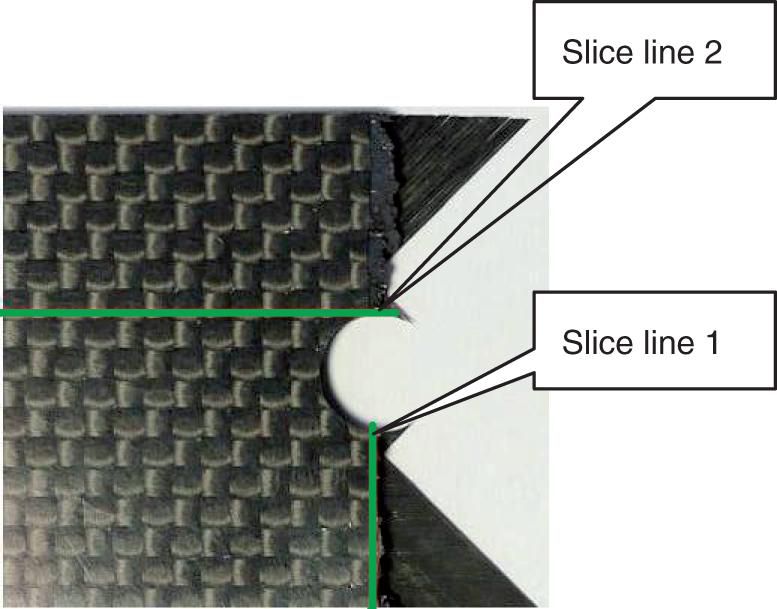
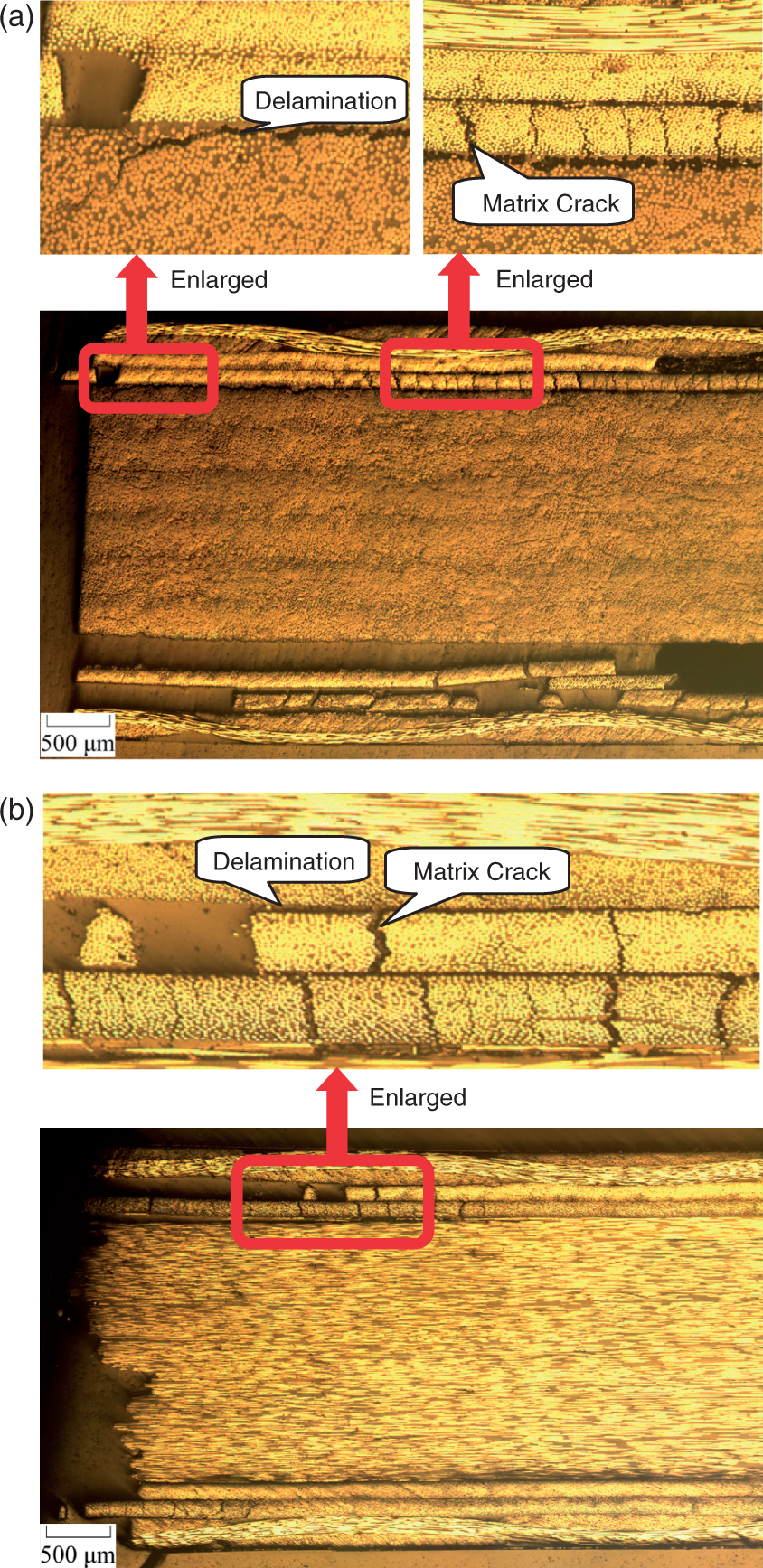
As shown in Figure 5, after the specimen is loaded and fractured, delamination between +45° and −45° layers was observed. In addition, fracture occurs in the lateral direction for the woven and 0° layers and along the fiber direction for the ±45° layers. To investigate the micro-damage of the notched specimen after the tensile test, one of the fractured specimens was sliced near the hole edge along two directions as shown in Figure 6 and then observed by a metalloscope. As shown in Figure 7, delamination occurs among all neighboring layers and matrix crack do exist clearly in the ±45° layers.
A fractured specimen after tensile loading. A schematic illustration of the slice lines on the fractured specimen. Micro-damage in a fractured specimen (a) along slice line 1 (b) along slice line 2.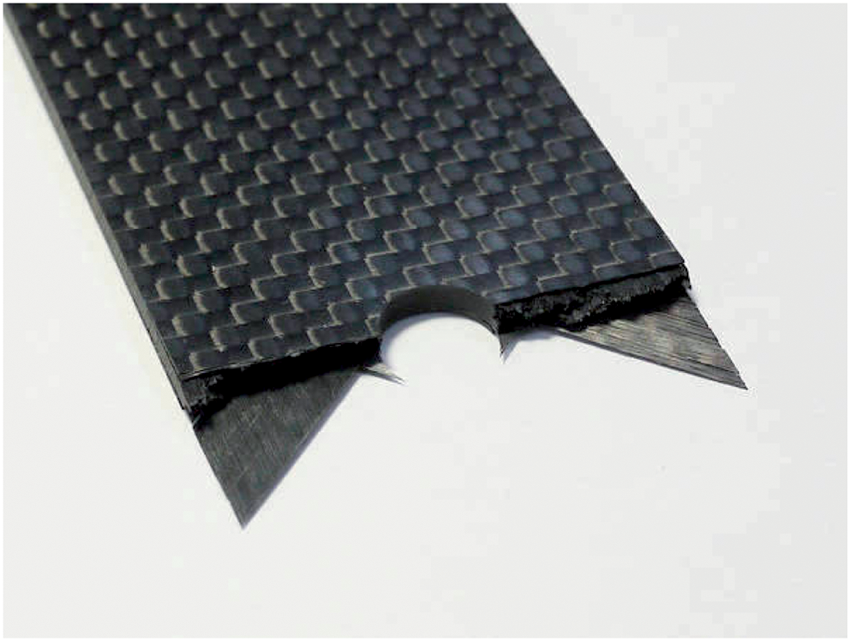
Conclusions
The notched strengths of those woven hybrid composite laminates each with a center circular hole are predicted by an FEBPSC. It is shown that the predicted notched strengths of woven hybrid composite laminates each with a center circular hole by this approach agree well with the experimental results. It is also noted that the notched strength decreases with the radius of the center circular holes for both the drilling and water jet cases. However, the decreasing rate of the notched strength for water jet is obviously higher than those for drilling.
Footnotes
Acknowledgements
This study was supported by the National Science Council of the Republic of China under the Contract NSC100-2622-E-035-010-CC3. The financial support is gratefully acknowledged.