






Abstract
Since flax is the most promising plant for the reinforcement of polymer-based composites in structural applications, we have chosen to investigate its hygrothermal characteristics which can be useful for the understanding of the behaviour of other plant fibres. The flax fibres were exposed to different hygrothermal conditions: in an oven at various controlled temperatures (–40 to 140℃) and measured relative humidity, in a climate chamber at 50% relative humidity for define temperatures between 25℃ and 85℃, or different determined aging conditions. The correlation of these hygrothermal conditions to the evolution of the mechanical properties gives evidence of the prominent influence of water over temperature on the microstructural changes of flax fibres. The mechanical parameters drastically decrease in usually prescribed hygrothermal aging conditions for organic matrix composite materials, the strength being particularly sensitive to the presence of water. These evolutions were correlated to the fibre microstructure modifications induced by water absorption as revealed by electron microscopy analyses. These findings could be useful for understanding the behaviour of polymer matrix biocomposites in severe hygrothermal conditions.
Introduction
Plant fibres may provide solutions for tangible eco-composites with high mechanical properties, hence providing an operational response to the environmental efforts of industry. Among these fibres, flax possess very interesting properties: tensile strength between 400 and 2000 MPa, ultimate strain of 1.2–3% and Young’s modulus of 30–110 GPa,1–3 whereas the values for E-glass fibre are σ = 3400 MPa, ɛ = 4.8% and E = 73 GPa. 4 Moreover, flax fibres exhibit a lower density compared to glass fibre (1.4 and 2.54, respectively). Hence, comparing the specific stiffness E/ρ, flax performs better than glass fibre and, when looking for the specific bending stiffness E1/3/ρ, the value for flax approaches the one of carbon fibre. These points emphasize the potential of flax fibres to be used for structural parts.
But, owing to their natural character, plant fibres are very sensitive to temperature and humidity. Different studies have reported on the changes of the biochemical composition of flax fibres upon heating, hence the temperature range of degradation of the different components is now well documented.5–11 However, considering flax fibres as reinforcement of organic matrices, their mechanical properties/temperature relationship below their structural degradation temperature must be investigated. As an example, Stamboulis et al. 12 have studied the influence of relative humidity (RH) on the strength of flax fibres. This investigation revealed that the strength increases up to an RH of 66% RH. Above this RH value, the strength levels-off or falls, depending on the fibre variety. Stamboulis et al. 12 made the hypothesis that water penetrates into the fibre and chemically links to cellulose; that involves a decrease of fibre stiffness. Thus, water acts as a plasticiser. Moreover, microfibrils network could be disorganized, which leads to the decrease of the mechanical properties. However, neither the degradation mechanisms of the fibres nor the long-term effects of humidity on their morphology and the evolution of the strength, Young’s modulus and ultimate strain have been yet investigated. These are important issues for the sustainability of polymer matrix composites reinforced with plant fibres, especially since the current bio-based matrices are sensitive to the presence of water.
In this paper, we investigate the influence of the temperature, the RH and the hygrothermal aging conditions on the morphology, the microstructure and the mechanical properties of flax fibres. It is shown that below 140℃ the influence of the temperature on the RH leads to microstructural modifications of the fibre. Therefore, our study reveals that the presence of water essentially acts on the structure of the amorphous phases, and thus on the mechanical properties. The resulting reductions of the mechanical properties are quantified and discussed.
Materials and methods
Flax fibres
Three varieties of flax fibres among the most cultivated and the best known in France were provided by the Institut Technique du Lin (France): Drakkar, Hermès and Marylin. These plants were harvested the same year (2008) under the same pedoclimatic conditions. After growing, stems were scutched but the fibres were not hackled in order to not damage them. Fibres about 15 to 30 mm long have been extracted from bundles and manually separated.
Single fibre tensile testing
Mechanical properties (strength, ultimate strain and Young’s modulus) of the fibres have been obtained from tensile tests with a gauge length of 10 mm, using a universal testing machine equipped with a 2 N capacity load cell. The tests were run at a crosshead displacement rate of 1 mm/min, as it was described in preceding papers.13,14 The mechanical tests were focused on fibres extracted from the middle of the stem, as it had been shown that their properties are higher than those of fibres extracted from the top or the bottom of the stem.13–15 Prior to the test, the diameter of the fibre was determined by the average of six measurements along the fibre using an optical microscope. Since it is neither possible to know the evolution of the fibre diameter during the test nor the proportion of the lumen inside the fibre tested, the stress was calculated from the applied load by neglecting the surface area of the lumen. Tensile load-loading point displacement curves of glass fibres were used to verify the compliance of the loading set. 16
At low load values, the quite linear trend is associated to the progressive loading of the loose fibre and the elastic deformation of the cell wall. The shift of the curve at around 0.5% deformation is ascribed to the progressive alignment of the microfibrils with the fibre axis and the viscoelastic deformation of the polymers around them.13–15 In the final deformation stage, the microfibrils are fully loaded as the microfibrils angle (MFA) is reduced. The slope of the loading curve in this domain is used for the evaluation of the Young’s modulus.1,15
During the manufacturing process of composite materials, the fibres can be exposed to high temperatures. Besides, these composite materials may be used in various temperature ranges. Therefore, the influence of the temperature and the RH on the mechanical properties of flax fibres has been investigated by implementing tensile tests in different conditions. First series of tests were achieved in an oven (standard oven from SFL, England) fitted to the testing machine at temperatures between –40/+140℃, but the RH (room RH ranged between 60 and 63%) was just recording. The second series of mechanical tests were implemented in a climate chamber (Weiss, WK11 180 type) fitted to the testing machine, which allows for RH control in the range 20%–90% RH but restricts the maximum testing temperature to + 90℃ for assessing humidity regulation.
At least 80 fibres were tested for each chosen temperature/humidity condition. Prior to tensile test, the fibres were kept in these chosen temperature/ humidity conditions for 4 h in order to make sure hygrothermal equilibrium is reached.
Hygrothermal aging conditions
Accelerated aging of the flax fibres has been conducted in order to check the influence of storage conditions on the mechanical properties. Three environmental configurations have been investigated: (1) continuous exposure of the fibres at 70℃/85% RH in the climate chamber, which corresponds to usual aging conditions in wet environment applied to organic matrix composites; (2) fibres were subjected to total immersion in distilled water at a temperature of +70℃ for different durations, in accordance with standards used for the evaluation of fibre-reinforced composites in aeronautic applications; (3) total immersion in distilled water at a temperature of 20℃ for different durations, in order to study the influence of the temperature by comparison with (2) and corresponding to the case where a part is dropped in the water at room temperature. The aging times were 1, 2 and 4 days; 1, 2 and 4 weeks; 1 and 2 months. The materials characteristics have been determined by tensile tests directly after drying for 1 h at +25℃. At least 80 fibres of each variety were tested for each aging condition.
Thermogravimetric analysis
The thermal degradation of the flax fibres was investigated by thermogravimetric analysis (TGA; Netzsch LFA 457 type) at a heating rate of 10℃/min under air purge gas. The mass variation was recorded over a temperature range 25/800℃, i.e. until complete degradation of the fibre.
Damage characterisation
Fibre damage mechanisms during the hygrothermal aging were investigated using a Zeiss SUPRATM 55 scanning electron microscope (SEM).
Results and discussion
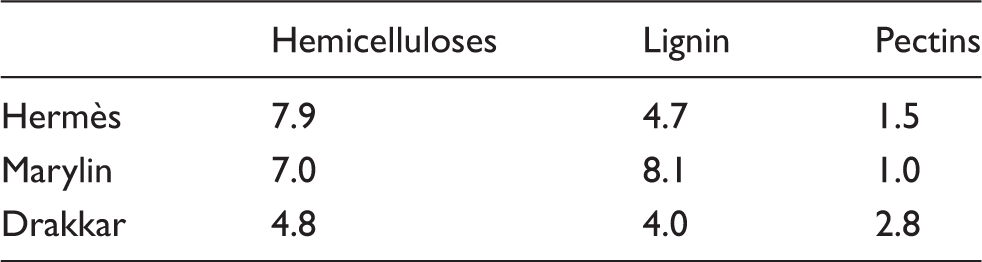
As it was reported in a previous study, 17 the different varieties of flax fibres do not exhibit large differences in their mechanical behaviour. However, Marylin variety shows slightly higher mechanical properties (tensile strength and Young’s modulus) than Hermès or Drakkar varieties. These good properties correlate with a higher amount of cellulosic polymers. 17
Influence of the temperature on the mechanical behaviour
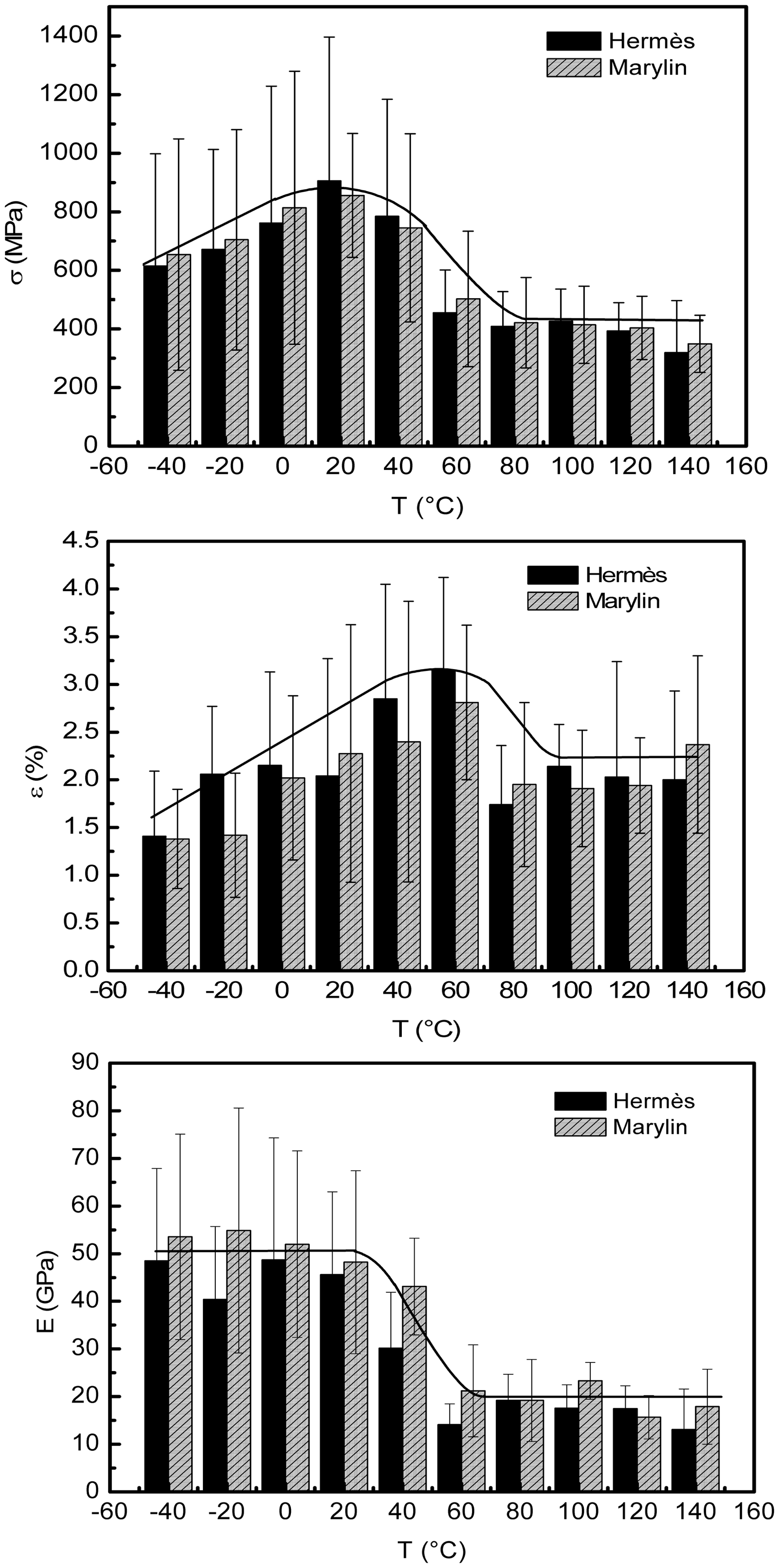
The stress–strain curves obtained for the fibres of all the studied varieties show a brittle behaviour whatever the testing temperature between –40℃ and 140℃. The influence of the temperature on the strength, the ultimate strain and the Young’s modulus of the flax fibres is presented in Figure 1. From the lowest testing temperatures the strength rises toward a value of around 800 MPa at 20℃ and then it decreases and levels off at 400 MPa beyond 60℃; the transition occurs between 20℃ and 60℃. The same trend is noted for the ultimate strain, the transition occurring between 60℃ and 100℃. The evolution of the Young’s modulus shows two distinct plateau values: E ∼50 GPa for temperature up to 20℃ and E ∼27 GPa for temperature above 60℃; the transition occurs between 20℃ and 60℃. At the lowest temperatures, freezing of the water in the fibres and the subsequent reduction of its plasticizing effect could account for the low values of the strength and ultimate strain as reported by Stamboulis et al.
12
The reported reduction of the mechanical properties above 60℃ is much more relevant to the influence of the water in the fibre than to the temperature effect. Indeed, the evolution of the mass loss with temperature in Figure 2 does not reveal any destruction of the essential components of the fibre in the temperature range investigated in this study, if we assumed that there is no cellulose depolymerisation to a mixture of oligomers and levoglucosan.7–11 It could be suggested that the stiffening of the amorphous phases due to the release of water prevents the disorientation of the microfibrils: a pronounced embrittlement is noted as the testing temperature is increased.
Evolution of the mechanical properties with the temperature. Thermogravimetric analysis of three flax varieties under air gas purge. Comparison with TGA under inert atmosphere (helium).
18
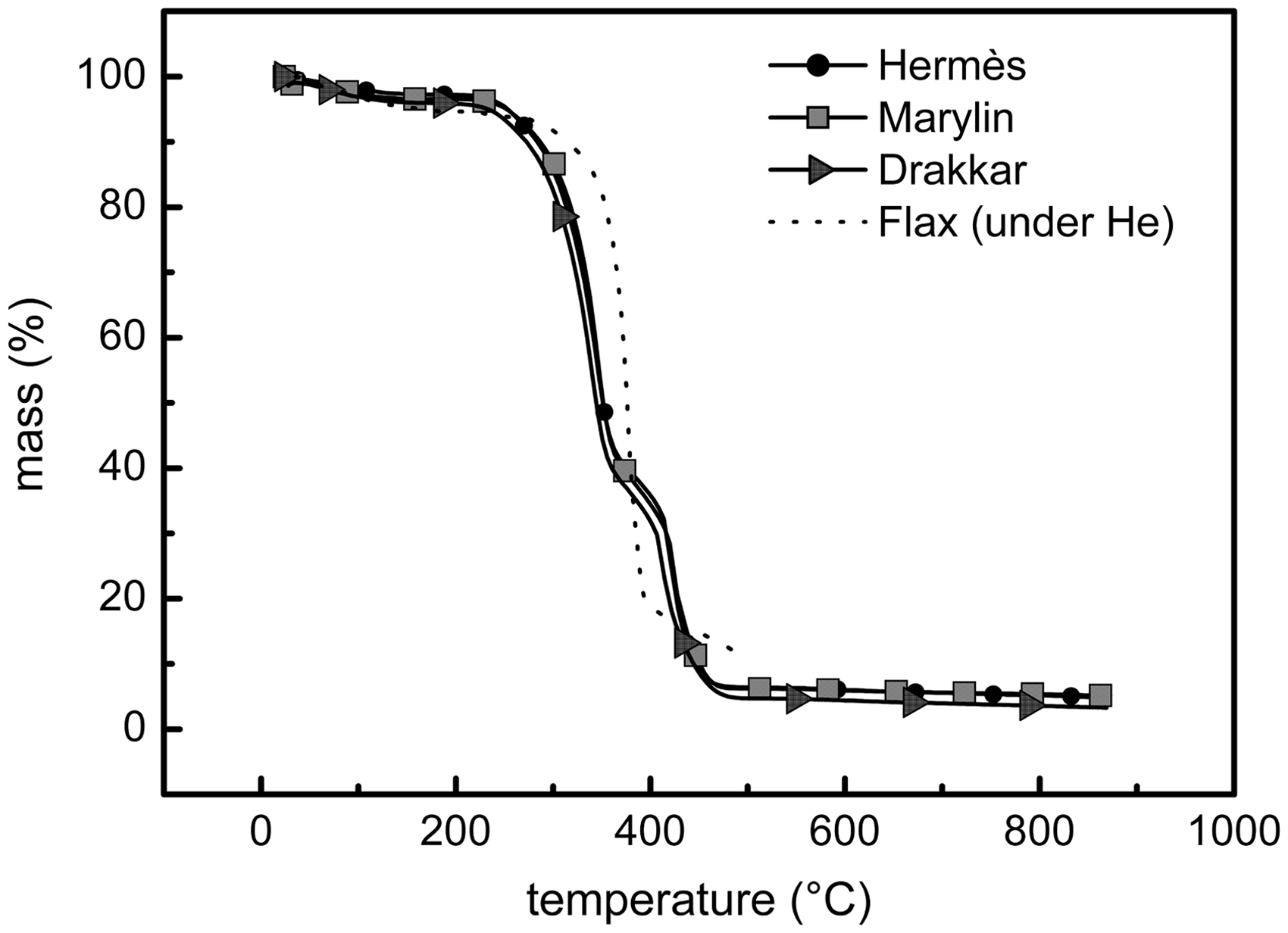
The TGA implemented under air for the three varieties of flax fibre (Figure 2) show the same thermal behaviour. First, the mass loss of about 2.5–5.5% corresponds to the release of the adsorbed water and the volatile components. Then, the degradation of the amorphous components of the fibre by decomposition and pyrolytic oxidation occurs: hemicelluloses are degraded between 250 and 320℃, cellulose between 360 and 400℃ and lignin between 400 and 470℃.8,9,11 Under inert atmosphere (namely helium), the degradation temperature is about 50℃ higher than it is under air (300℃ instead of 250℃). It should be pointed out that the Tg of lignin is between 80 and 100℃ 10 while the Tg of the hemicelluloses and pectins are estimated in a broader range (60℃ to 138℃ 7 and –25℃ to 20℃,5,6 respectively) depending on their chemical compositions. To a large extent, the cellulose is crystalline, its Tg is high compared to those of the other components of the fibre and therefore we consider that the physical properties of the cellulose are stable in the temperature range investigated herein. Thus, the degradation of mechanical properties, more pronounced from 60℃, would be rather imputed to the non-cellulosic polymers of the fibre.
Moreover, the vanishing of the inflection point around 400℃ when the analyses are performed under helium could suggest that the degradation of cellulose may occur by two distinct paths. This point was previously discussed by Budrugeac et al. 19
Destaing et al. 20 conducted tensile tests at room temperature on flax fibres that were previously heated up at different temperatures for 5 and 30 min. For temperatures lower than 160℃, there was no degradation of the mechanical properties. Comparison of these observations with the results reported above suggests that the fibres recover their initial properties when they are brought back to room temperature. That points out the reversibility of water absorption by these fibres.
The previous results were obtained by performing tensile tests in an oven without control of humidity. In these conditions, the increase of the temperature was accompanied by a decrease of the humidity in the oven, and thus the effects previously discussed might be due to the opposite evolutions of the temperature and the humidity. In order to separate the effects of temperature and humidity, tests have been carried out on fibres (Hermès variety) in a climatic chamber allowing to work under humidity controlled conditions. The temperature range investigated has thus been reduced to ensure the regulation of the RH. The results of these tests are displayed in Figure 3.
Mechanical properties of flax fibres of the Hermès variety as a function of the temperature for 50% relative humidity (RH).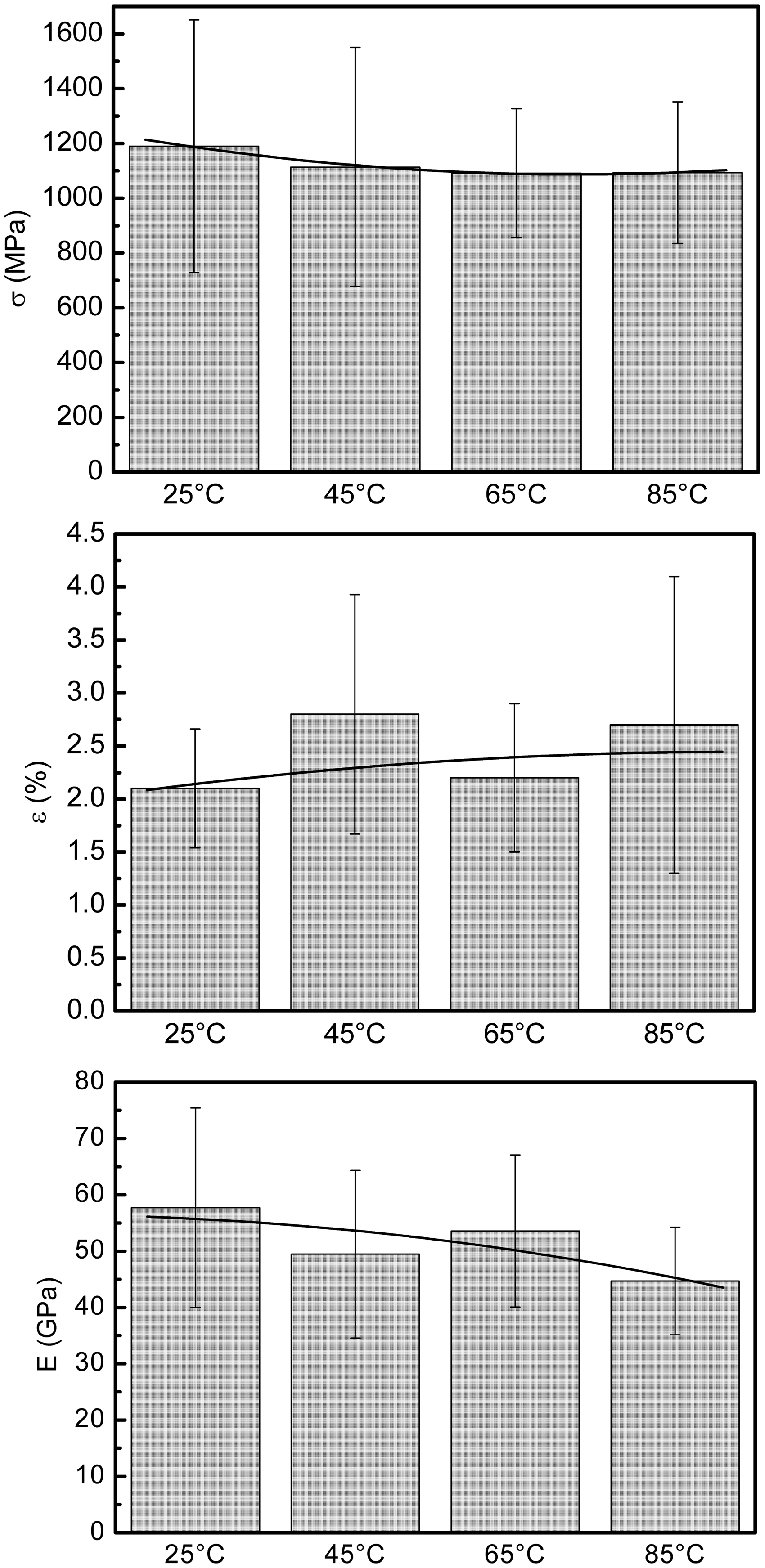
The obtained results are similar to those for tests performed in the oven. The strength and Young’s modulus decrease when the testing temperature is increased. However, this decrease is less important than when testing in the oven. By controlling the RH in the chamber, we might have reduced the amount of water released by the fibres. These results confirm that water release significantly contributes to damage the fibres 21 and therefore to reduce their mechanical properties.
Influence of the humidity on the mechanical behaviour
Tensile tests were performed at 25℃ in a climatic chamber, for different values of the RH, with the aim to quantify the effect of the humidity on the mechanical properties. A total of 80 fibres of 3 flax varieties were tested for each value of RH.
Figure 4 shows that the tensile strength peaks at about 900 MPa for an RH of 68% while the ultimate strain continuously increases and the Young’s modulus levels off when humidity is raised. These trends demonstrate the plasticizing effect of water within the fibre.
22
Furthermore, it could be noticed that the tensile strength decreases beyond 68% RH. For high RH, water may seep into the fibre and disorganize the microfibrils network, and thus the maximum stress that the fibre could withstand is reduced.
12
Effect of the relative humidity on the mechanical properties at 25℃.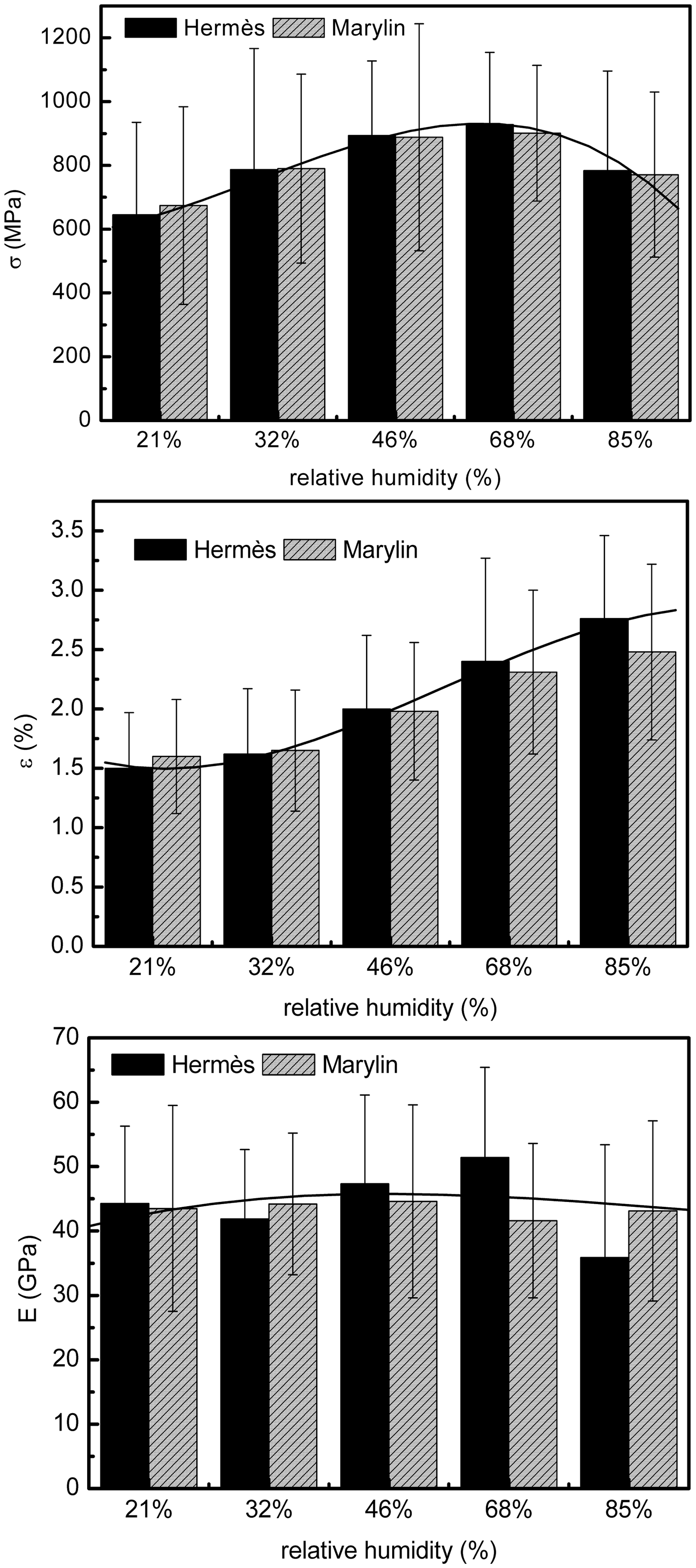
Influence of the hygrothermal aging on the mechanical behaviour
Figure 5 presents the evolution of the mechanical parameters of fibres of the Hermès variety as a function of the aging conditions and tests duration. For the sake of clarity, results for the Marylin and Drakkar varieties are not shown herein since they present the same trends. The results show that the hygrothermal aging results in a pronounced reduction of the strength, the ultimate strain and the Young’s modulus after 2 months aging time. For all the varieties investigated, the strength decreases by more than 60% while the ultimate strain and Young’s modulus decrease by 26% and 55%, respectively. A first noticeable feature is the influence of the water content in the fibre on the reduction of the tensile strength: the fibres under a RH of 85% experience a lower strength reduction than those immersed in water. The other remarkable feature is the major influence of the humidity on the strength reduction compared to the temperature. A low RH leads to few damages to the fibre. However, it is surprising that the increase of the diffusion coefficient with the temperature does not involve more damage and thus lower mechanical properties. Moreover, these results confirm that fibres exposed at 70℃ (85% or 100% RH) recover their initial mechanical properties when tested afterwards at room temperature. However, as explained by Stamboulis et al.,
12
a high moisture content causes the absorption of large quantities of water by the fibre and thus the destruction of the microfibrils network, resulting in the decrease of the mechanical properties.
Evolution of the mechanical properties of fibres of the Hermès variety over the time as a function of the temperature and humidity.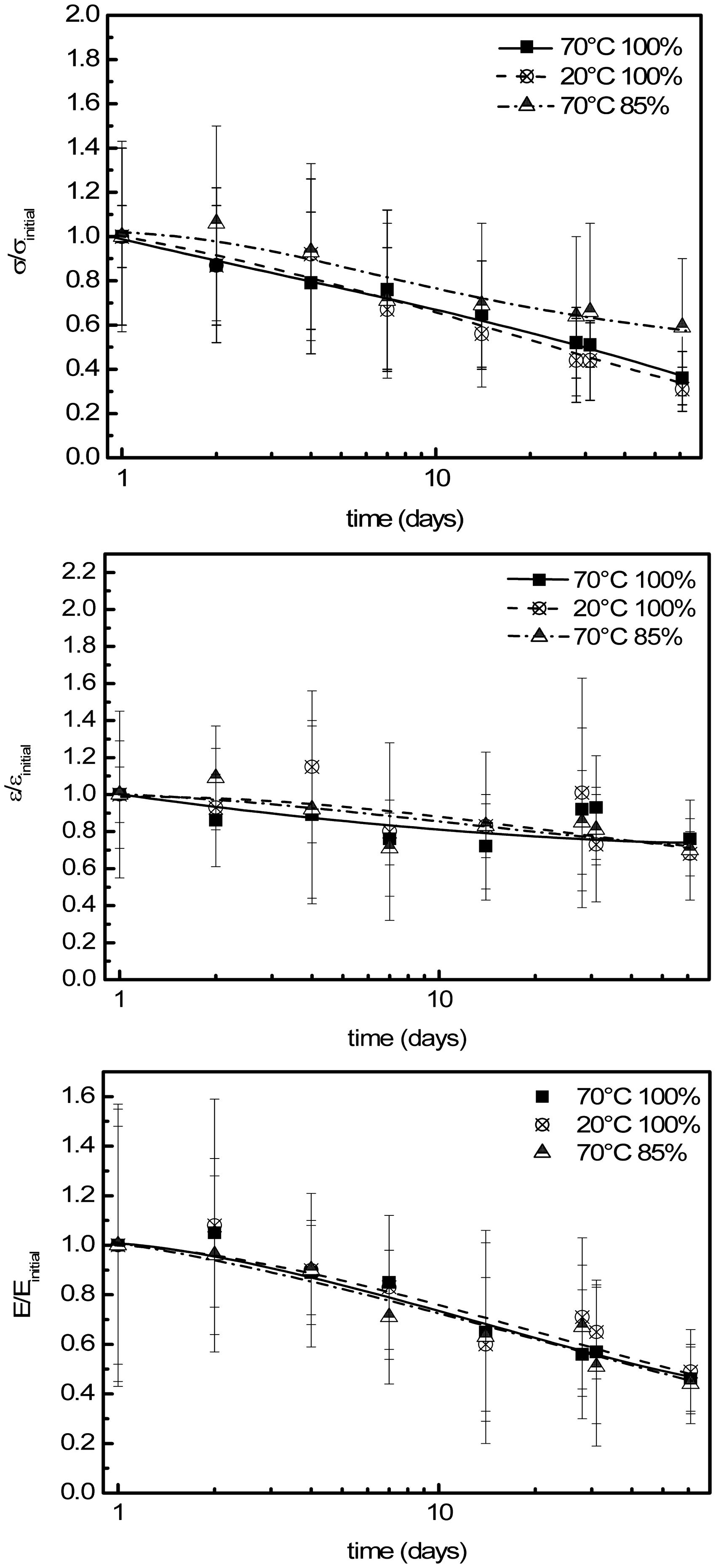
SEM observations were conducted to analyze the surface morphology of the fibres after the hygrothermal aging (Figure 6). After 1 day of exposure, water may seep into the fibre through localized defects onto its surface and progress by capillary action into the lumen or between the two cell walls. Since no reduction of the mechanical properties is associated to that aging duration (Figure 5), a possible degradation is assumed to be limited to the primary cell wall. After 7 days of exposure, blisters appear onto the surface of the fibres due to the action of the osmotic pressure exerted on the primary cell wall (Figure 6(c)). After 4 weeks of hygrothermal aging, bursting of adjacent blisters may lead to the cracking of the primary cell wall, which releases the pressure onto the primary cell wall.
Scanning electron microscope (SEM) micrographs of the surface of a fibre of the Hermès variety after aging at 20℃ and 100% of relative humidity (a) 1 day (b), 1 week and (c) 4 weeks.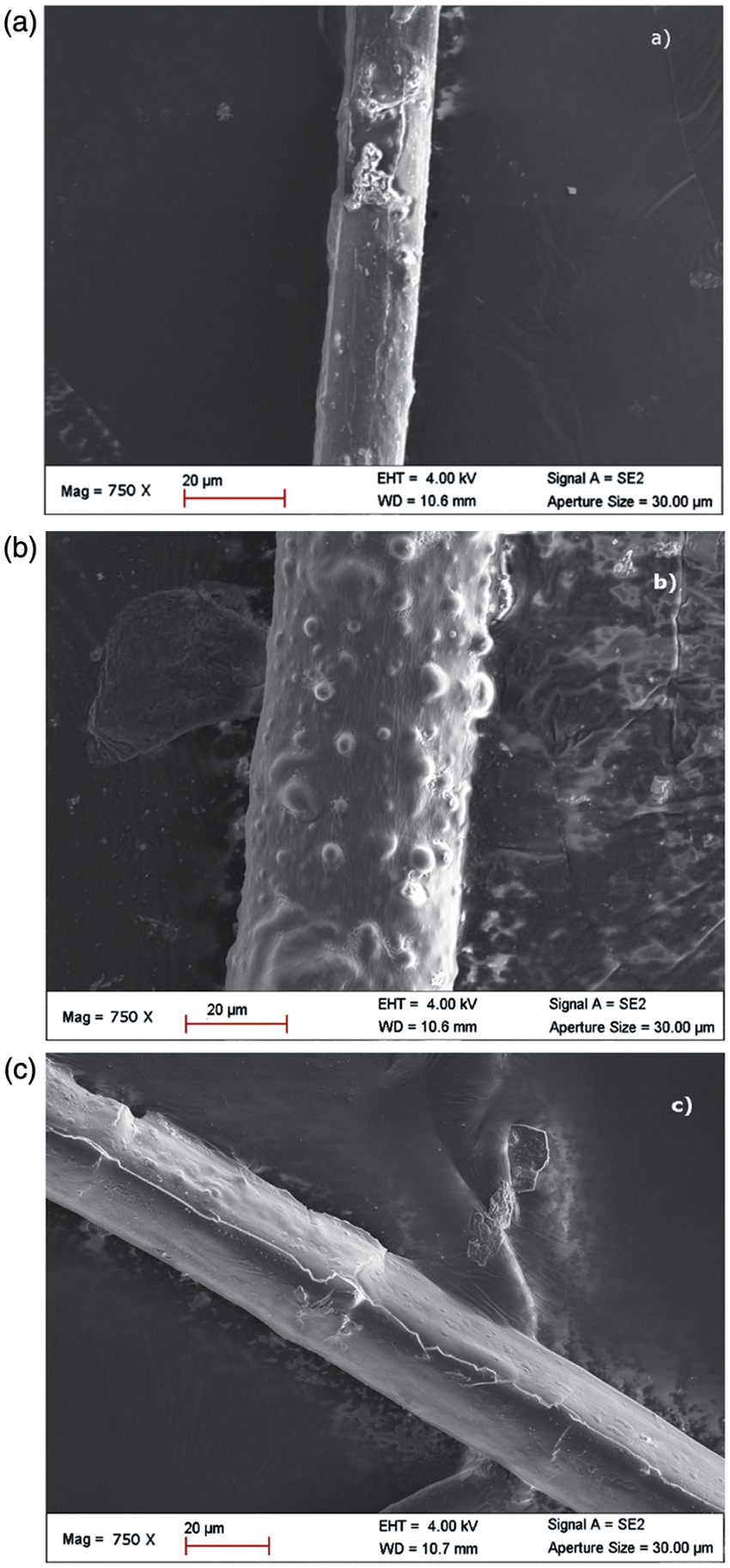
The comparison of TGA runs for Hermès fibres before and after different immersion periods (Figure 7) shows that this short time of immersion in water does not lead to significant changes in their thermal behaviour. That suggests water probably only induces physical modifications like the disorganization of the microfibrils, as proposed by Stamboulis et al.
12
TGA showed a mass loss of about 2% for the fibres that were not immersed. After immersion for 1 day, the mass loss is about 5% at 100℃ and this amount is not modified when the period of immersion is increased, which means that the fibre is already saturated with water after 1 day of immersion (Figure 8(b)).
Thermogravimetric analysis on fibres of the Hermès variety for 1, 2 and 4 days immersion in water. (a) Evolution of water uptake by flax fibres as a function of immersion time in water; (b) Mass loss of flax fibres as a function of drying time at indoor conditions after immersion in water for 6 h; (c) Arrhenius plot of the diffusion coefficients of the three flax fibre varieties.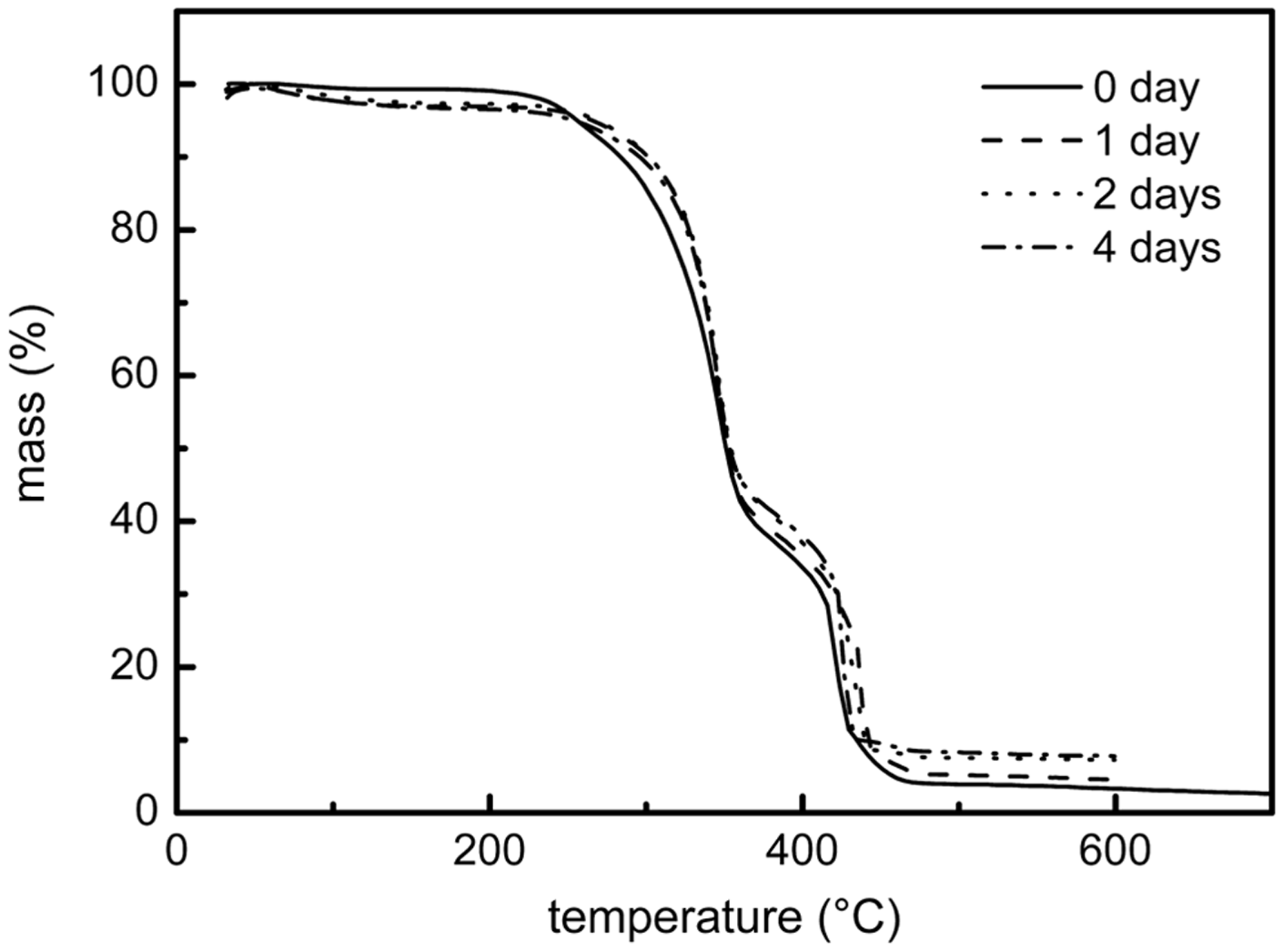
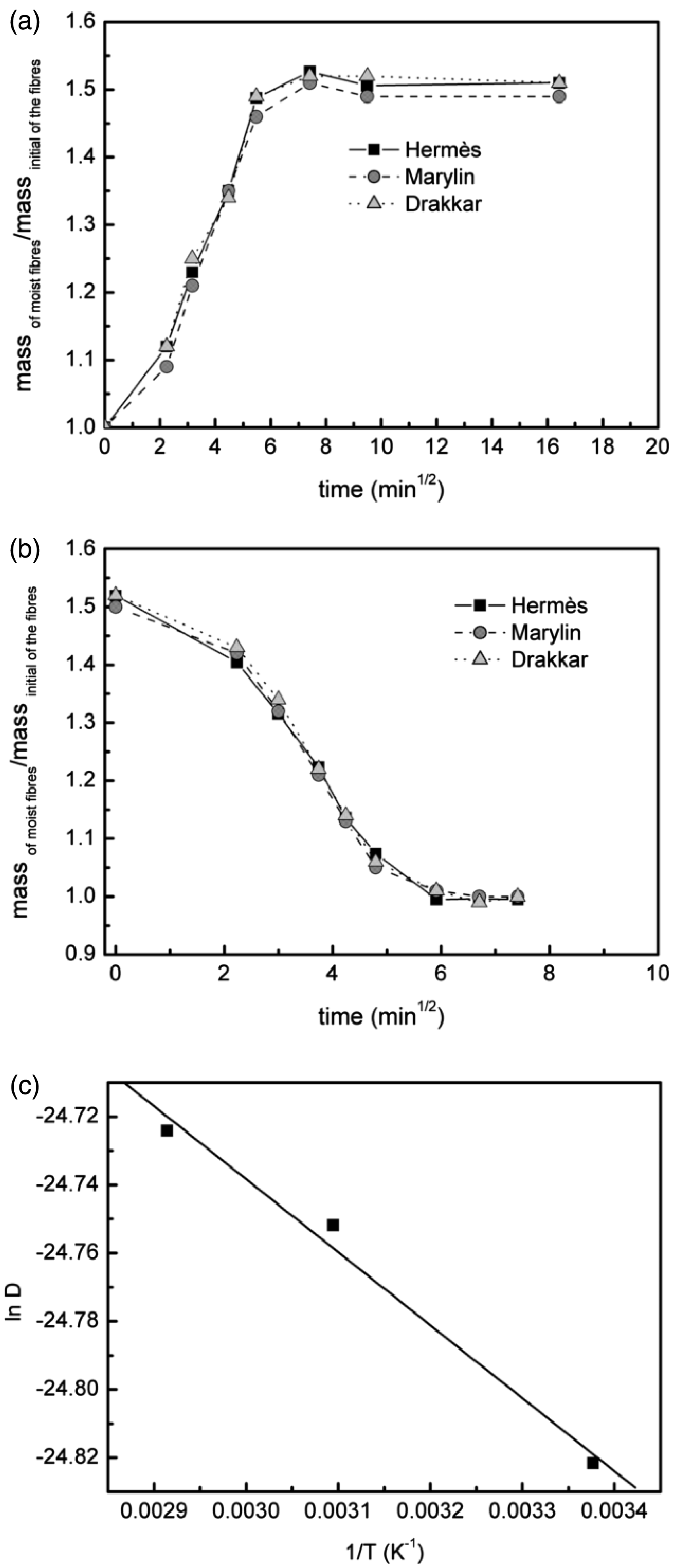
In order to estimate the time duration for single flax fibre saturation with water, fibres of the three varieties (Hermès, Marylin and Drakkar) were dived in water and weighed after different time intervals at 23℃ (Figure 8(a)). After 50 min a saturation level is reached which corresponds to a relative mass increase of 50%. These results confirm that the lower values of mechanical properties obtained during the hygrothermal aging are only the result of the degradation of the outer cell walls of the fibre. The water content does not seem to affect the mechanical properties.
The 3% mass loss of water at 100℃ instead of the 50% expected (Figure 7) are due to the fact that single flax fibre dries quickly at ambient air. Indeed, another measure showed that after 35 min the fibre has lost a great amount of the absorbed water (Figure 8(b)). Moreover, it is almost the time necessary to launch a TGA (because the mass must be stable to start the analysis). So, it would be possible that we measure only the mass of structural water and not the mass of absorbed water.
The determination of the evolution of the mass of the fibres as a function of the immersion duration in water was used to evaluate the water absorption. Fick's law is a simple model that permits to describe the water absorption in a solid. The basic hypothesis of this law is a proportional relationship between the flow of water entering in the solid (
Fick's second law (equation (2)), involving time, takes into account the conservation of the mass and considers that the water penetrates without interaction with the components of the matter.
The solution of the Fick's second equation (equation (3)) for short times permits to describe the linear part of the absorption curve represented as a function of the time square root.
M t is the mass of the absorbed water at time t, M s is the mass of water at saturation, D is the diffusion coefficient and d is the diameter of the fibre (its length is considered infinitely large compared to its diameter).
Water diffusion coefficient of three varieties of flax fibre.

Biochemical composition determined by the Van Soest method.
Since the water absorption involves the mobility of molecules, it is thermally activated. Thus, the diffusion coefficient follows an exponential Arrhenius-type relation (equation (4)) with the temperature, in the case of Fickian diffusion:
24
Diffusion coefficient of the Hermès variety flax fibre as a function of temperature.

This study focuses on flax fibre which is seen as the plant fibre possessing the highest specific mechanical performances, but other candidate fibres can be used for structural composites (kenaf, sisal, jute, hemp…). The degradation mechanisms identified herein are a priori the same, but their impact on the mechanical properties will be different depending on the biocomposition, microfibrils angle and diameter of the considered fibre.
Conclusions
The influence of hygrothermal conditions on flax fibres was investigated in terms of the microstructure changes and the evolution of mechanical properties. The main points are
For tensile tests in an oven (uncontrolled humidity) the evolution of the stress–strain curves with the testing temperature is ascribed to the mobility of water within the fibre. This results in two plateau values of the Young’s modulus: E = 50 GPa for temperature between –40℃ and 20℃, E = 27 GPa in the range 40℃–140℃. The embrittlement observed above 60℃ was explained by the impossibility for the fibres to align with the loading axis subsequently to the reduction of ductility of the amorphous phase due to water release. Tests conducted under constant humidity reveal that the Young’s modulus weakly decrease when the temperature is increased. This highlights the major influence of the water release upon temperature on the degradation of the fibres. Mechanical properties increase with the RH until this last reaches 68%. For RH above 68%, water can seep into the fibre and disorganize the microfibrils network, which leads to a decrease of the fibre strength. Regardless of the humidity to which the fibres are exposed at 70℃, they recover their initial mechanical properties when tested at room temperature. This shows the reversibility of water absorption. However, absorption of high amount of water during hygrothermal aging leads to the degradation of the fibres (formation of blisters and cracking of the primary cell wall) and to the disorganization of the microfibrils network. This results in a drastic decrease of the mechanical properties.
Footnotes
Funding
This research received no specific grant from any funding agency in the public, commercial, or not-for-profit sectors.
Conflict of interest
None declared.
Acknowledgement
The authors would like to thank CNRS and Région Basse-Normandie for their financial support.