







Abstract
New polyethylene matrix and alumina whiskers composites have been designed in order to combine the processability of common thermoplastics with improved physical properties. This work analyzes the influence of the composite formulation on the morphological, rheological and thermal properties of the new materials. Concerning rheological properties, a significant increase in viscosity and storage modulus is observed for high alumina whiskers content. Furthermore, the whiskers were functionalized with silane coupling agent in order to improve compatibility with the matrix. Two surface treatments were used for comparison purposes, and Fourier transform infrared spectroscopy was applied for evaluating the chemical changes on the surface of whiskers. Pre-treatment with the silane coupling agent brought about beneficial changes in morphology and rheology, related with improved dispersion of whiskers and increased filler–matrix interface. Finally, the inclusion of only 5 wt.% filler, functionalized with 100 wt.% silane, increased the thermal stability of matrix around 37%.
Introduction
The design of new composite materials combining the mechanical properties of metals with weight reduction, relatively easy processing and versatility of polymers is a constant concern in industrial sectors requiring high degree of innovation, as the aviation industry, aerospace, automotive, etc. Although these materials have been studied for several decades, an exponential development of new polymer–matrix composites has taken place in recent years owing to the commercialization of an increasing variety of fillers with different sizes and geometries (clays, carbon nanotubes, fibers, whiskers, etc.).1–7
Alumina whiskers, synthesized and patented by NEOKER, are monocrystalline short fibers of α-Al2O3 of high purity, crystalline perfection and high specific surface, being the latter an important property for their inclusion in composite materials. 8
Even though, in the literature, there are several examples of polymer composites with alumina particles, it is interesting to assess the properties of composites designed with alumina whiskers. The reason is that the filler geometry can greatly influence the material morphology and consequently, the macroscopic properties of the final composite.9–12
Key features for obtaining enhanced properties are a strong interfacial adhesion between filler particles and the polymer matrix and a good dispersion of the filler.5,12,13 A simple approach to modify the surface of inorganic particulates is using a silane coupling agent. A chemical reaction between the hydroxyl groups of the filler and the alcoxy groups of the silane is expected to occur, creating a silane-funcionalized surface.5,9,14 Besides, the silane reactive organofunctional group can also react with the organic polymer improving the compatibility with matrix. In this way, silanes act as molecular bridges between organic polymers and inorganic whiskers and further avoid particle agglomeration. 15 From another point of view, filler inclusion in a plastic matrix together with the addition of coupling agents cause changes in its processability and in the flow properties of the polymer molecules.16–20
So far, these new alumina whiskers have not been tested as reinforcement in a commodity thermoplastic, being this proposal one of the original features of the current work. Hence, the aim of this work was the study of changes in physical properties and morphology produced into polyethylene (high-density polyethylene, HDPE) matrix reinforced with new alumina whiskers. In addition to as-received alumina whiskers, pre-processed alumina whiskers were used in the preparation of composite specimens. For comparison, two pre-processing techniques have been applied which included heating and functionalization of the particles with (vinyltrimethoxysilane) silane coupling agent. Fourier transform infrared (FTIR) spectroscopy was used to investigate chemical changes on the surface of alumina whiskers. The rheological behavior, morphology and thermal properties are discussed as a function of filler content and pre-treatment method.
Experimental
Materials
The α-alumina (α-Al2O3, corumdum) whiskers were supplied and produced by NEOKER S. L (Santiago, Spain). These whiskers underwent a cleaning process with HF, HNO3 and HCl after their fabrication.
8
They are monocrystalline short fibers of α-Al2O3 of high purity (>99.7%), crystalline perfection and an aspect ratio greater than 103. The length distribution of the whiskers was performed: around 44% have a length less than 20 µm, 26% between 20 and 40 µm, 16% between 40 and 60 µm and the remaining 14% between 80 and 120 µm. Their tensile strength is greater than 6 GPa and their melting point is 2050℃. The whiskers have hexagonal section and basal hexagonal pyramid (see Figure 1(a)).
(a) SEM (×8000) micrograph of an alumina whisker. (b) Chemical structure of vinyltrimethoxysilane.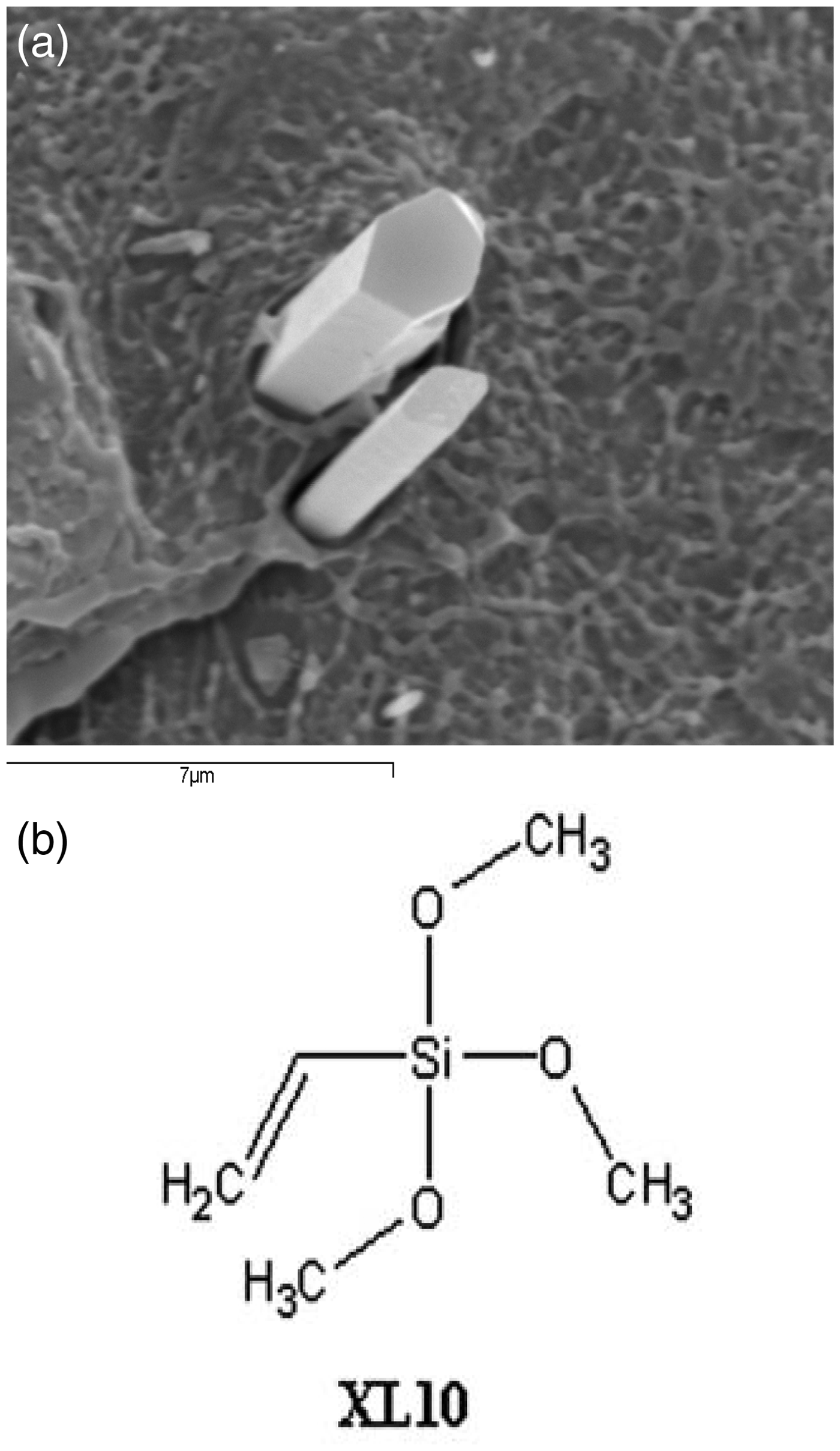
HDPE provided by REPSOL YPF (Madrid, Spain), with a melt flow index (MFI) of 0.20 g/10 min (190℃, 2.16 kg) and a density of 0.950 g/cm3, was used as matrix.
Vinyltrimethoxysilane coupling agent (XL10) supplied by Waker Chemie A. G. (Munich, Germany) was employed to introduce reactive functional groups on Al2O3 whiskers surface, prior to preparation of composites. The chemical structure of this silane is displayed in Figure 1(b).
Methanol and acetic acid glacial (HPLC-gradient grade) were supplied by Merck (Darmastadt, Germany) and Panreac Quimica (Barcelona, Spain), respectively.
Water was purified using a Milli-Q Ultrapure water purification system from Millipore (Bedford, MA, USA).
Sample preparation
Surface treatment of whiskers
Before surface treatment, the whiskers were dried in an oven at 110℃ under vacuum for 24 h, in order to get rid of physically adsorbed and weakly chemically adsorbed species. Then, the following pre-processing techniques have been applied for the functionalization of alumina whiskers with (vinyltrimethoxysilane) silane coupling agent.
The first method involves hydrolysis of silane in aqueous solutions at low concentrations (0.5 or 1 wt.% regarding whisker weight), at room temperature for 2 h under mechanical mixing. Afterwards, whiskers were blended with these aqueous solutions. In the presence of water, the alkoxy groups of organosilanes hydrolyze to yield silanol groups, which react with the hydroxyl groups of whisker by a condensation reaction. Finally, the blends were dried for 24 h at 80℃.
The second method, which is based on the work of Rong et al.9,14 consists in alumina whisker treatment with 100 wt.% coupling agent with respect to filler weight. Ten grams of whiskers and 10 g XL10 in 150 mL of methanol were refluxed at the boiling temperature of the solution for over 6 h under stirring. Then, the whiskers were separated from the solvent, washed and dried in vacuum (80℃, 24 h).
Preparation of composites
Formulations of HDPE composites.
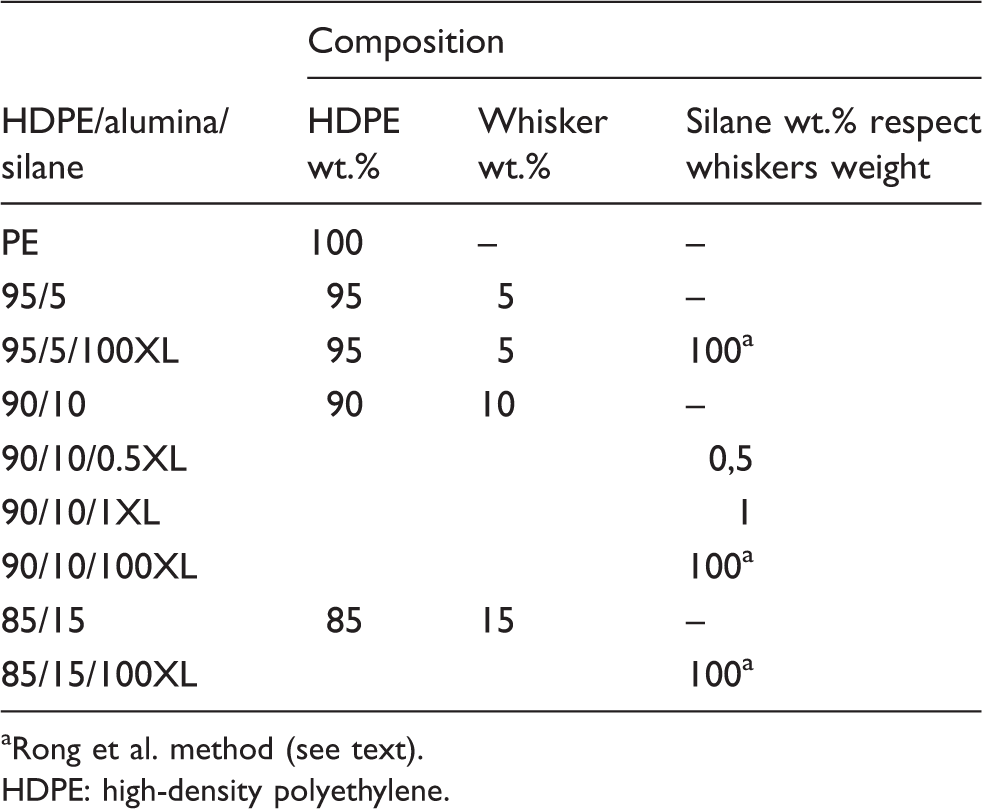
Rong et al. method (see text).
HDPE: high-density polyethylene.
For rheology measurements, the samples were shaped into discs by compression molding at 160℃ applying a pressure of 200 bars for 3 min.
Characterization techniques
FTIR spectroscopy
In order to understand how functionalization with XL10 silane coupling agent changes the surface properties of α-Al2O3whiskers, infrared spectroscopy was performed. The FTIR analyses were carried out using a Bruker OPUS/IR PS 15 in the spectral range of 4000–400 cm−1. The spectra were the results of 64 coadded interferograms at a spectral resolution of 4 cm−1. The samples were prepared in the form of KBr pellets. For all samples, the filler/KBr weight ratio was fixed at 2%.
Rheological measurements
Viscoelastic characterization was performed using a controlled strain rheometer (ARES, TA Instruments) with parallel-plate geometry (25 mm diameter, 1 mm gap) at 160℃. The complex viscosity (η*), storage modulus (G′) and loss modulus (G″) were measured as a function of frequency (ω). The rheological tests were performed in the linear viscoelastic region (LVE). This LVE region was determined by a strain sweep before testing the viscoelasticity of the composites under a frequency test. The frequency sweep measurements were set up in the frequency range 1 × 10⁻¹ to 1 × 10² rad/s.
Stress relaxation experiments were performed at 160℃ using parallel-plate geometry (25 mm diameter with 1 mm gap) under a large shear strain of 200%.
Scanning electron microscopy
To study the morphology of the composites, specimens were broken under cryogenic conditions and then examined using a JEOL JSM-6400 scanning electron microscope (SEM) at an accelerating voltage of 20 kV. The samples were sputter-coated with a thin gold film before observation.
Thermal properties
Differential scanning calorimetry (DSC) analysis was also performed using a DSC-7 (Perkin–Elmer Cetus Instruments, Norwalk, CT) under dry nitrogen atmosphere, at a temperature range of 25–180℃. First, samples were heated and kept at 180℃ for 1 min to erase the influence of any previous thermal histories. Then, they were cooled at a rate of 10℃/min to room temperature and subsequently heated from 30 to 180℃ at a heating rate of 10℃/min. The crystallization temperature (Tc) and the enthalpy of crystallization (ΔHc) per gram of polyethylene were calculated from the cooling scans. The melting temperature (Tm) and the heat of melting (ΔHm) per gram of polyethylene were measured in the last scan. The crystallinity degree (α) was calculated based on the relationship α = (ΔH m /ΔH0) × 100, assuming ΔH0 = 293 J/g for 100% crystalline HDPE. 21
The thermal stability of the composites was obtained from thermal degradation tests performed using a TGA-7 thermo balance (Perkin–Elmer). Dynamic experiments were conducted under Argon atmosphere. The samples were tested from 50℃ to 650℃ at heating rate of 10℃/min. The degradation temperature (Tdeg) was calculated as the onset in the weight loss versus temperature curve.
Results and discussion
FTIR characterization of the modified alumina whiskers
The FTIR spectrum of as-received Al2O3 whiskers (Figure 2(a)) show a broad band at around 3450 cm−1 corresponding to OH groups stretching vibration (combination of OH groups on the surface of Al2O3whiskers and OH groups from absorbed water molecules), whereas the band at 1635 cm−1 (Figure 2(b)) is assigned to the deformation vibration of absorbed H2O molecules. The band around 1166 cm−1 lies in the region of the bands attributed to the stretching vibration of the Al–O–Al bond (Figure 2(b)).
22
Comparison of FTIR spectra of as-received Al2O3 whiskers (solid), XL10 silane coupling agent (dash) and XL10 100% functionalized Al2O3whiskers (dash–dot): (a) in the νOH spectral region and (b) in the spectral region between 1700 and 1000 cm−1.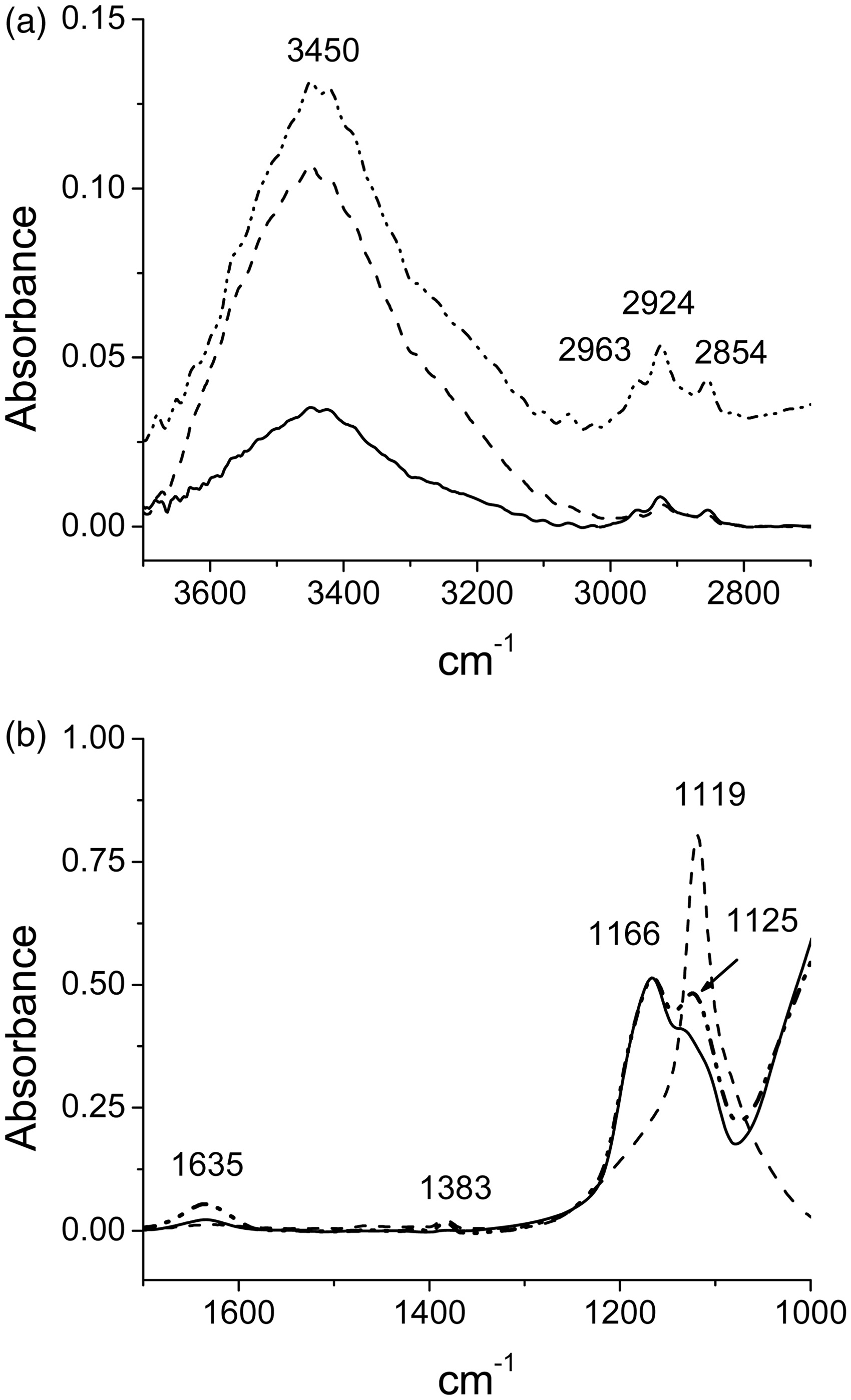
The FTIR spectrum of XL10 silane in KBr (Figure 2(a) to (b)) reveals that methoxy groups have been partially hydrolyzed leading to partial condensation of resulting silanols, owing to the hygroscopicity of KBr. The bands at 2924 and 2854 cm−1, corresponding to asymmetrical and symmetrical stretching frequencies of the CH3, CH2 and CH groups of the alkoxysilane alkyl chain, are scarcely detected, whereas the water bands at 3450 and 1635 cm−1 are clearly observed (in this case, the band at 3450 cm−1 is a combination of the stretching of Si–OH groups and OH groups from absorbed water molecules). Instead of the doublet at 1190 and 1076 cm−1 for the Si–O–C stretching vibrations (attenuated total reflectance, ATR, spectrum of pure non hydrolyzed XL10, not shown), a broad band is observed at 1119 cm−1. The latter has been allotted to the combination of asymmetrical stretching frequency of Si–O in Si–O–C, Si–O–H and Si–O–Si bonds. The stretching vibrations of the vinyl group Si–CH = CH2 at 1599 cm−1 cannot be detected due to the presence of the water band at 1635 cm−1 but a band at 1383 cm−1, assigned to the = CH2 in plane deformation, is perceived. 23
Compared with the untreated version, the infrared spectrum of the modified alumina with 100 wt.% XL10 coupling agent exhibits higher absorptions at 2963, 2924 and 2854 cm−1 (Figure 2(a)) plus a band at 1383 cm−1 (Figure 2(b)) proving the presence of CH or CH2 groups on Al2O3 whiskers. In addition, when the spectra of untreated and treated Al2O3 whiskers are normalized to the 1166 cm−1 band, an increase in the absorption at 1125 cm−1 is detected (Figure 2(b)). This band may correspond to the combination of Si–O in Si–OH, Si–O–Si and Si–O–Al bonds. The formation of Si–O–Al bonds would result in a change in the bond length of Si–O and would thus increase the stretching frequency of the Si–O bond 24 from 1119 to 1125 cm−1. By contrast, the only difference observed in the spectrum of alumina whiskers treated with 1 wt.% XL10 silane is an increase in absorption at 2963, 2924 and 2854 cm−1, confirming the presence of carbon moieties on the surface of inorganic alumina; yet, no evidence of formation of new –Si–O–Al– bonds at 1125 cm−1 can be concluded or discarded. Finally, no spectral modifications have been detected on the surface of alumina whiskers treated with 0.5 wt.% XL10 coupling agent.
Rheological and morphological results
Effect of alumina amount
Effects of alumina whiskers addition in viscosity (η*), storage (G′) and loss moduli (G″) as a function of frequency are shown in Figure 3(a) for composites without silane treatment.
(a) Dynamic moduli and dynamic viscosity vs. frequency of HDPE composites. Loss modulus G″ (open symbols), storage modulus G′ (closed symbols) and complex viscosity (symbols with continuous lines). (b) Corresponding stress relaxation spectra.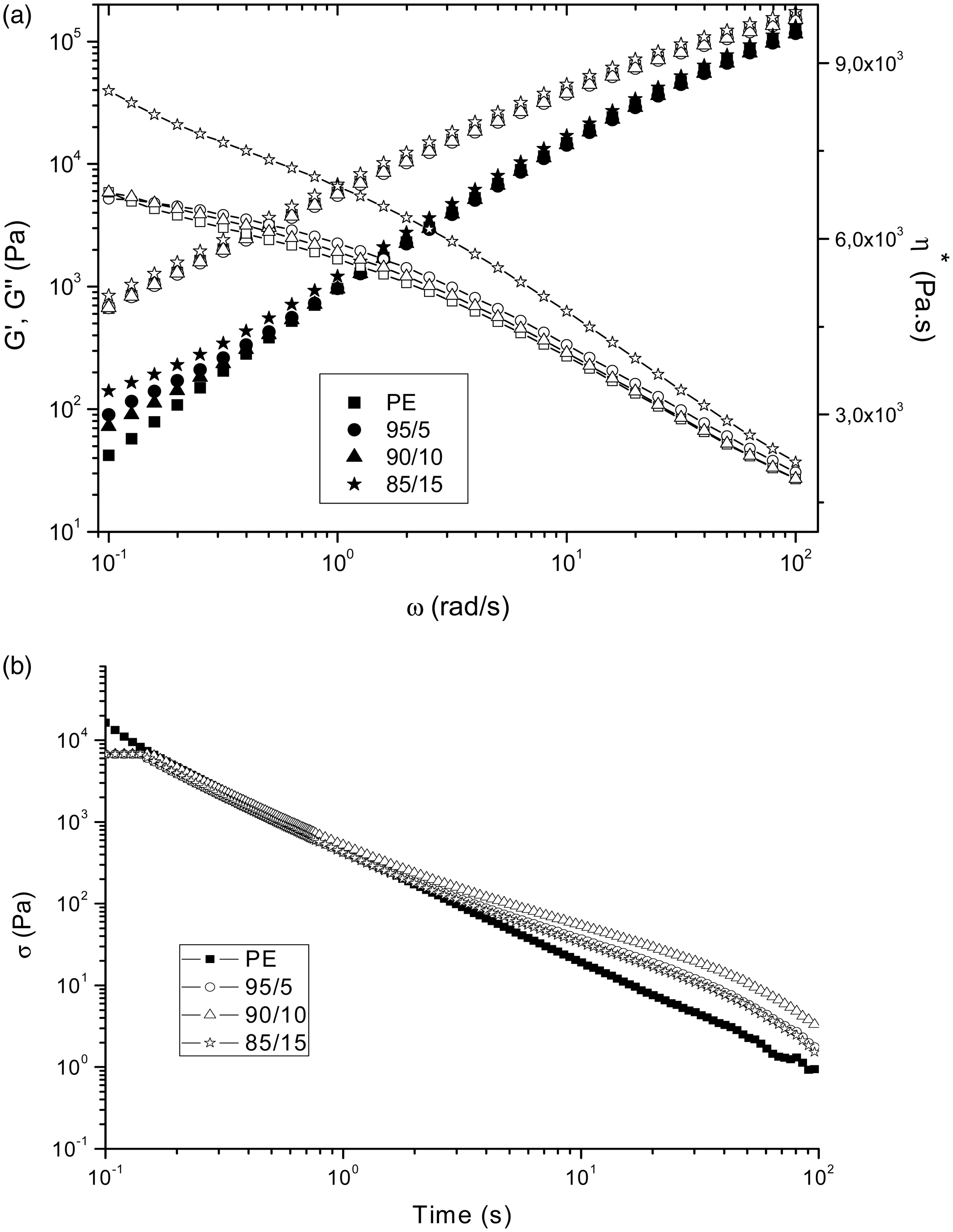
Alumina whiskers increase viscosity values in composites with respect to pure polyethylene, due to the disruption caused in the polymer flow by the whiskers, thus making their processing more difficult. Nonetheless, this rise is small in composites with low alumina contents.
All the samples show shear-thinning behavior as previously observed in other filled systems.3,25–28 This result is related to the viscoelastic behavior of the matrix and the degree of polymer–filler interaction. On the one hand, at high frequencies the polymer chains do not have enough time to recover the filler particles original distribution. Another reason is related to mechanical contacts amongst alumina whiskers. Alumina whiskers can form agglomerates, which remain together due to adhesive forces and this can promote the aforementioned shear-thinning behavior. The probability of direct interaction between whiskers increases as the alumina concentration increases. Consequently, the shear-thinning behavior is more evident for composites with 15 wt.% of alumina whiskers.
A similar behavior is observed for G′ and G″ (Figure 3(a)). The raise is more evident in the case of G′ (storage modulus), showing that the elastic part is more affected than the viscous part, which is attributable to an increase in stiffness due to the presence of rigid particles. The modulus increase can be attributed to the filler particles agglomeration in the matrix as has been already reported for other filled polymeric melts and it is evident for the composite with 15 wt.% filler.2,29,30 In the measured frequency range, both raw HDPE and composites have viscoelastic fluid behavior (G″ > G′).
Stress relaxation experiments under large strain (200%) were also performed to investigate the effect of alumina whiskers addition on the matrix relaxation kinetics in the nonlinear viscoelastic regime. From the stress relaxation spectra (Figure 3(b)), we can observe that composites relaxation curves have similar shapes to that of original HDPE. Nonetheless, composites show slower terminal relaxations due to noncompatibilization. Based on these experiments, polymer relaxation in composites is considerably retarded by alumina whiskers, which may be ascribed to the formation and strengthening of the filler–filler network, although there is no rigorous correlation with the filler amount.
Figure 4(a) to (c) shows the SEM micrographs of cryofractured surfaces of composites with different concentrations of alumina whiskers. Micrographs show a biphasic structure where alumina whiskers are dispersed in the polymer matrix. A poor adhesion between alumina whiskers and the polymer matrix is noted. There are no particles remaining on the fractured surface, which proves that the filler particles underwent debonding upon fracture. As the alumina whiskers content increase in the composite formulation, the filler particles form aggregates and composites show filler-rich domains while other domains are matrix-rich. In Figure 4(d), corresponding to the composite with 15 wt.% alumina, the effect of alumina whiskers agglomeration is clearly observed. This behavior has been related with the enhancement in moduli and viscosity observed for composites with the highest amount of filler, according to the rheological results previously discussed.
SEM micrographs (×1300) of HDPE composites: (a) 95/5; (b) 90/10; (c) 85/15 and (d) SEM micrographs (×2300) of 85/15 HDPE composite.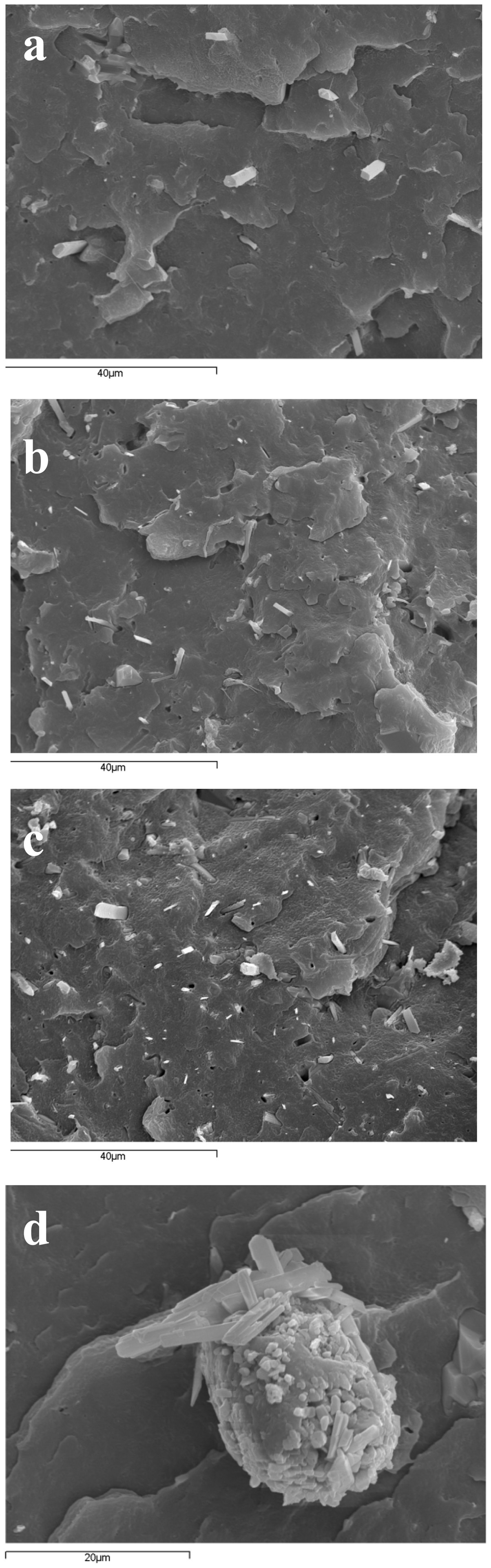
Effect of silane treatment
Figure 5(a) compares the storage modulus versus frequency in the LVE for 90/10 composites: non-treated and silane treated with 0.5, 1 wt.% and 100 wt.% XL10. The addition of low amounts of silane causes a light increase in G′ at low frequencies. This fact has been ascribed to the strengthening of the polymer-filler interface promoted by the particles surface modification. A three-dimensional network structure might have been formed in the material thus restricting the flow of HDPE molecules. Silane also works as a protective layer that prevents filler particles agglomeration.30,31 The best results have been obtained using 1 wt.% silane indicating that it is necessary to add at least this proportion of coupling agent to obtain filler–matrix interaction. Unexpectedly, no changes are observed for 100 wt.% XL10 treated composites compared with untreated 90/10 composite.
(a) Effect of silane treatment on the storage modulus for 90/10 composites. (b) Dynamic viscosity vs. frequency of HDPE composites, untreated and treated. (c) Loss modulus G″ (open symbols) and storage modulus G′ (closed symbols) for composites with 100 wt% silane.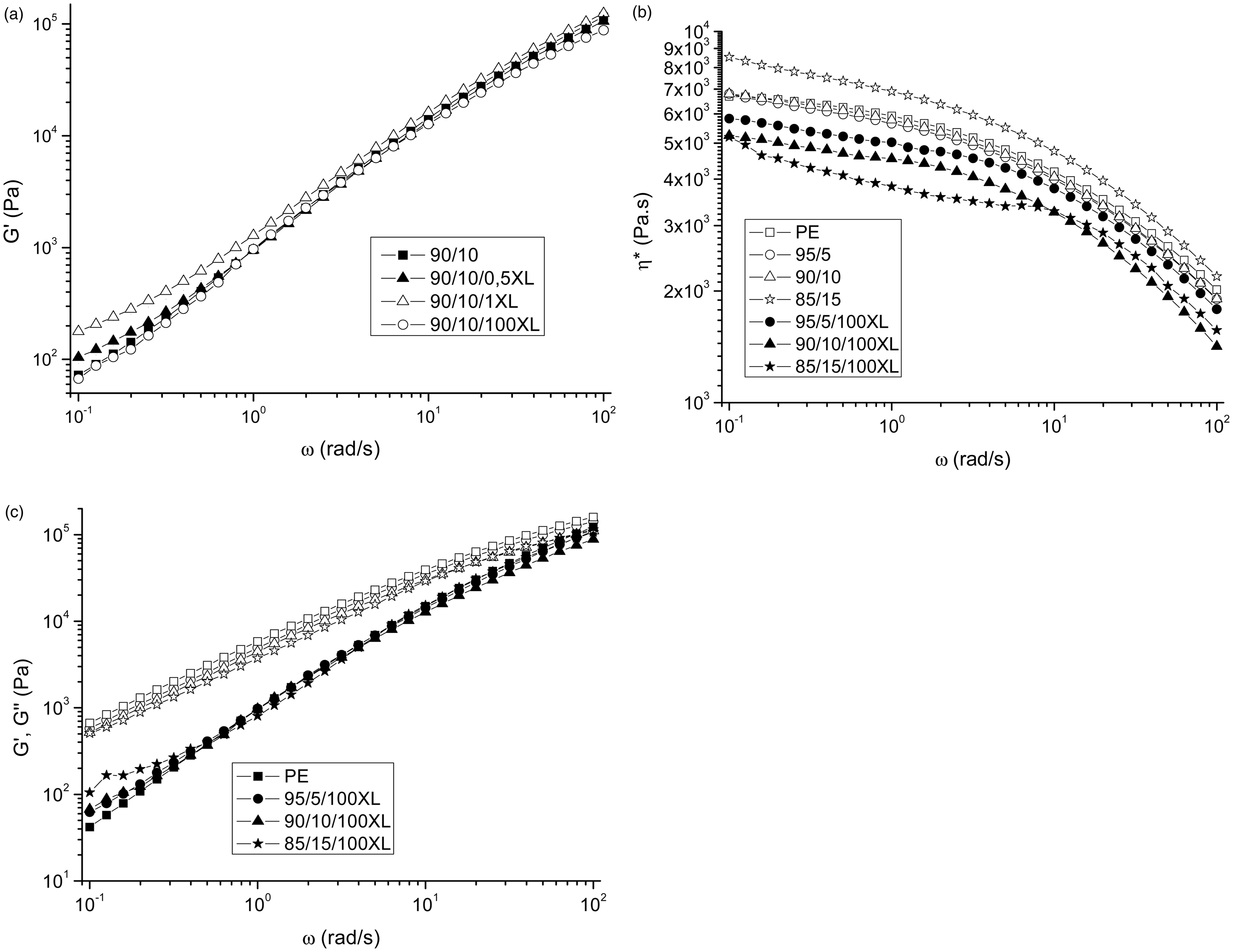
Dynamic viscosity versus frequency are displayed in Figure 5(b) for HDPE and composites with different filler concentrations, untreated and functionalized with 100 wt.% XL10. Viscosity values of compatibilized composites, which are smaller than those of HDPE, further decrease upon increasing the whisker fraction. The opposite trend is observed for untreated samples.
G′ values of treated samples increase with filler addition, indicating higher rigidity due to the presence of rigid whiskers (Figure 5(c)). Moreover, a diminution in G″ is observed with the addition of whiskers functionalized with 100 wt.% XL10. This effect is also observed in viscosity (Figure 5(b)), confirming that the coupling agent acts as a lubricant. G′ is greater than G″ in the whole frequency range as correspond to a solid-like behavior.
Figure 6 compares SEM micrographs of composites without coupling agent (Figure 6(a)) with composites treated with XL10 silane (micrographs Figure 6(b) to (c)). The former shows a lack of adhesion between the HDPE and alumina, whereas after the addition of XL10 silane the filler particles appear firmly bonded to the matrix, indicating an increase in interfacial adhesion and surface uniformity, in spite of some voids still appear in the fracture surfaces. The amount of 1 wt.% XL10 seems the most adequate proportion, owing to the great enhancement in storage modulus found for this concentration. Moreover, an amount of 0.5 wt.% was enough to improve only sample morphology.
SEM micrographs (×1500) of (a) 90/10, (b) 90/10/0.5XL and (c) 90/10/1XL.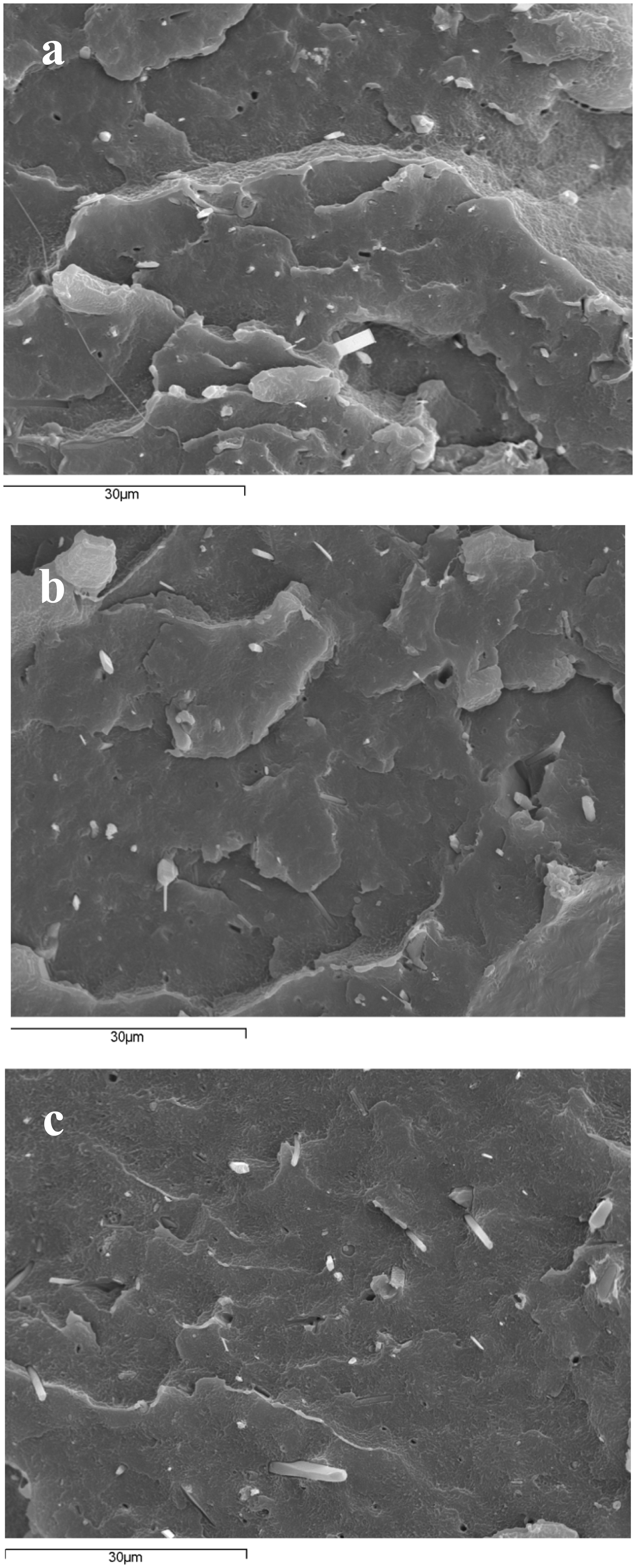
Regarding micrographs of composites with whiskers functionalized with 100 wt.% XL10 (Figure 7), no differences with previous images without coupling agent (Figure 4) are observed with amounts of 5 and 10 wt.% whiskers. On the other hand, the composites with 15 wt.% alumina show a more uniform surface and an improved dispersion of the particles compared with composite without compatibilizer (Figure 4(c)).
SEM micrographs (×1300) of (a) 95/5/100XL, (b) 90/10/100XL and (c) 85/15/100XL.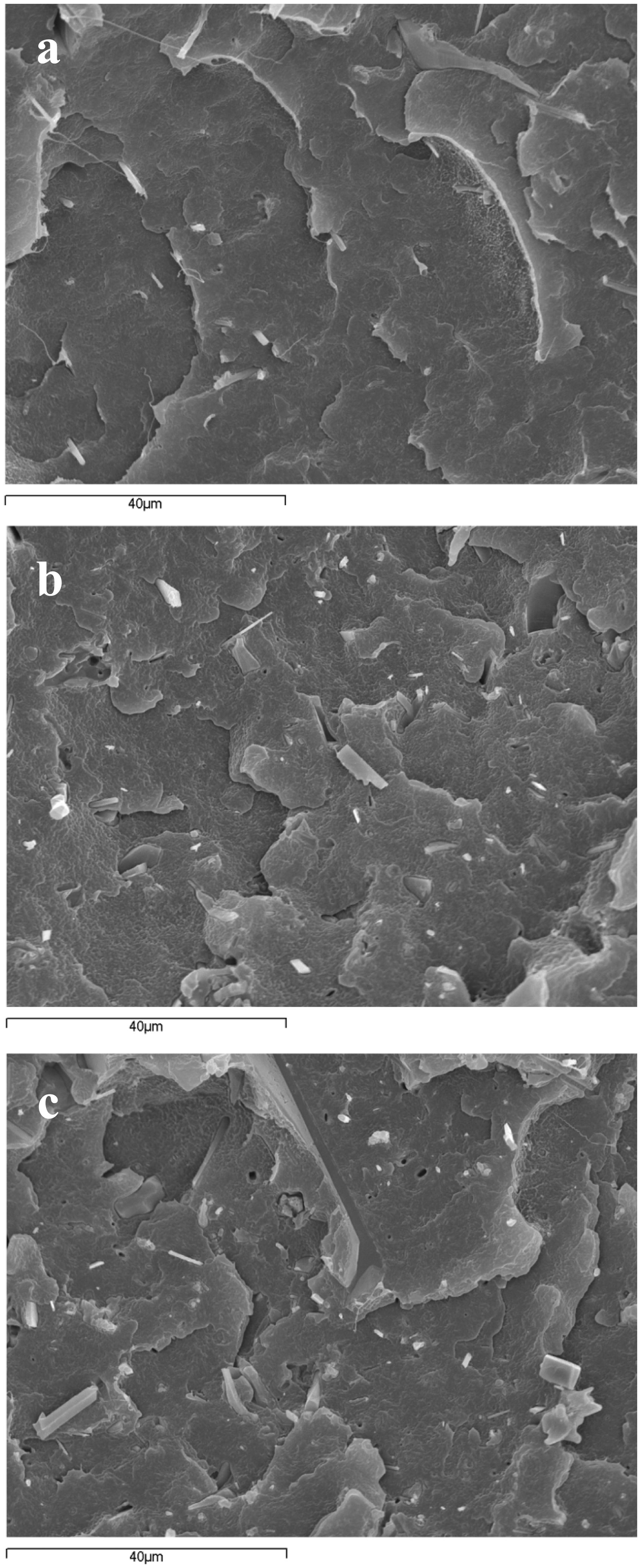
Thermal properties
Thermal data for HDPE and composites.
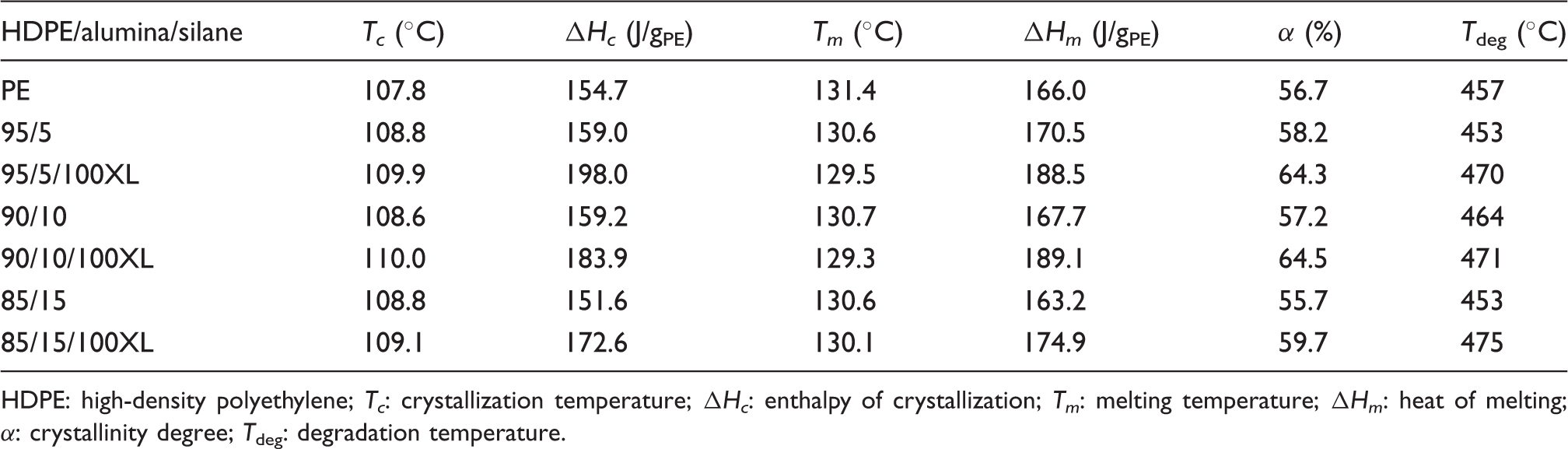
HDPE: high-density polyethylene; Tc: crystallization temperature; ΔHc: enthalpy of crystallization; Tm: melting temperature; ΔHm: heat of melting; α: crystallinity degree; Tdeg: degradation temperature.
The shape of the crystallization and melting DSC curves of all samples are similar to neat HDPE, regardless the amount of whiskers. During the melting scans, the HDPE and polyethylene composites show a single peak indicating the presence of only one type of crystallites with similar thermal stability.
Effect of alumina amount
In comparison with HDPE thermograms, only small changes are observed during the crystallization and the melting process of composite formulated with untreated alumina whiskers.
Whiskers do not produce a clear nucleating effect, because the changes measured in Tc are within the data uncertainty and concentration independent. Thus, the lack of adhesion between the components does not seem to alter the HDPE-chain mobility. In connection with the melting scans, although the melting temperature and crystallinity degree of polyethylene increase for 95/5 and 90/10 composites, lower values are obtained for the sample with 15 wt.% whiskers with respect to pure HDPE. Similar behavior is observed in the cooling scans. The biphasic morphology of this composite, with whisker agglomerations and lack of adhesion with polyethylene, can explain these data.
Regarding the thermal stability, Tdeg increases slightly, for the 90/10 composite. This random behavior is maybe related with the heterogeneous dispersion of the whiskers in the matrix.
Effect of silane treatment
Concerning composites formulated with silane-functionalized alumina, the crystallization peak of HDPE is shifted to higher temperatures compared to neat HDPE and composites without pre-treatment. This result suggests that silane-functionalized whiskers act as nucleating agents, which is in agreement with other authors who reported the influence of the filler on the nucleation of crystallites of polyolefines. 32
During the heating scan, the melting temperature slightly decreased or remained similar to neat polyethylene and composites without silane, despite the higher crystallinity degree.
However, there is not a proportional increase in the nucleation effect and subsequent crystallization degree as function of the whisker amount, as might have been expected. A possible explanation is the existence of different competing effects. On the one hand, the silane treatment prevents or minimizes the agglomeration effect of filler and, consequently, there are more active surfaces to work as nucleation sites. On the other hand, the silane reduces the viscosity of composites, which reduces their nucleation rate. 33 Both effects rise upon increasing the amount of whiskers and can counteract.
With regard to thermal stability of polyethylene, the whiskers treated with 100 wt.% XL10 silane rise its degradation temperature in relation to pure HDPE and composites without silane pretreatment. Nonetheless, the thermal stability enhancement is not proportional to the whiskers amount, e.g. with 5 wt.% whiskers it increases about 37% whereas with 15 wt.%, around 39%.
Conclusions
In the present investigation, new composites of HDPE using increasing amounts of alumina whiskers and two pre-processing techniques with included functionalization with a silane coupling agent have been prepared, and their rheological, morphological and thermal properties discussed. The main conclusions are summarized as follows:
First, the IR spectra prove the existence of Si–O in Si–OH, Si–O–Si and Si–O–Al bonds in alumina whiskers treated with XL10 silane, following the Rong method. By contrast, smaller or inexistent differences are observed in the spectra of alumina whiskers treated with 0, 5 or 1 wt.% XL10 silane.
Regarding the rheological properties, both the composites and raw polyethylene exhibit typical shear-thinning behavior. A clear increase in viscosity and storage modulus is observed for 15 wt.% of alumina whiskers. Besides, the data obtained from stress relaxation experiments show longer relaxation times for the composites in comparison with raw polyethylene. This rheological behavior is ascribed to the formation of filler–filler networks. The results are in agreement with SEM micrographs which show a lack of adhesion between filler and polymer and whiskers agglomeration.
The pre-treatment with 0.5 and 1 wt.% XL10 silane increases the storage modulus of the composites. This result has been attributed to the greater interaction between HDPE and alumina whiskers and to better dispersion of the filler within the polyethylene matrix which is in accordance with morphological observations.
Concerning 100 wt.% XL10 treatment, despite the fact that SEM micrographs and FTIR spectra show a good interaction between whiskers and polymer, no effect in storage modulus is observed. Furthermore, these composites show a lower viscosity and G″ than neat polyethylene due to a lubricant effect.
With respect to thermal properties, a significant enhancement in thermal degradation is only observed for composites functionalized with 100 wt.%, being the effect independent of the filler amount.
In short, if thermal stability is not an issue, the best balance between rheological properties and price is obtained for composites treated with 1 wt.% silane aqueous solutions. Otherwise, for high temperature applications, a cost effective alternative would be the inclusion of 5% alumina whiskers treated with 100 wt.% silane.
Footnotes
Conflict of interest
None declared.
Funding
The authors acknowledge the financial support to Xunta de Galicia Government-FEDER under 09TMT012CT and Program of Consolidation and Structuring Competitive Research Units (CN2011/008).