







Abstract
This paper is concerned with the characteristics of the temperature-dependent tensile strength along the longitudinal direction of the unidirectional carbon fiber-reinforced plastic. The temperature-dependent tensile strength of the unidirectional carbon fiber-reinforced plastic was evaluated using resin-impregnated carbon fiber strand (carbon fiber-reinforced plastic strand) specimens with highly reliable co-cured tabs developed by the authors. The tensile strength of carbon fiber-reinforced plastic strand was measured at three constant temperatures below the glass transition temperature of the matrix resin for 50 specimens at each temperature. The results showed that the tensile strength of the unidirectional carbon fiber-reinforced plastic has a Weibull distribution at each temperature. The shape parameter of the tensile strength does not change with the temperatures and the scale parameter decreases clearly with increasing temperature. The degradation rate of the tensile strength of the unidirectional carbon fiber-reinforced plastic by the temperature raise against that of the viscoelastic modulus of the matrix resin agrees well with the predicted results based on the Rosen’s strength analysis.
Keywords
Introduction
Carbon fiber-reinforced plastic (CFRP) has been used for the primary structures of airplanes, ships, automobiles, and others, in which the high reliability should be kept during the long-term operation. Therefore, it is strongly expected that the accelerated testing methodology for the long-term life prediction of CFRP structures exposed under the actual environmental of temperature, water, and others will be established.
The mechanical behavior of the matrix resin of CFRP exhibits time and temperature dependence, called viscoelastic behavior, not only above the glass transition temperature, Tg, but also below Tg. Thus, it can be presumed that the mechanical behavior of CFRP significantly depends on time and temperature.1–6
The tensile strength along the longitudinal direction of the unidirectional CFRP is one of the most important data for the reliable design of CFRP structures. The tensile test method generally assesses a rectangular specimen for comprehension of the longitudinal tensile strength of the unidirectional CFRP. However, the test method for the static tensile strength at the room temperature is not so perfectly established, and the test method for the static tensile strengths at elevated temperatures and for the creep and fatigue tensile strengths have not been established yet. The authors developed the test method for the creep and fatigue strengths as well as the static strength at elevated temperatures for the resin-impregnated CFRP strand combined with T300-3 k and an epoxy resin,7–9 and recently the authors have developed the test method for the CFRP strand of T800-1200 and an epoxy resin with highly reliable co-cured tabs. 10
This paper is concerned with the characteristics of the temperature-dependent tensile strength along the longitudinal direction of the unidirectional CFRP. The temperature-dependent tensile strength of the unidirectional CFRP was evaluated using resin-impregnated carbon fiber strand (CFRP strand) specimens with highly reliable co-cured tabs developed by the authors. The tensile strengths of the CFRP strand were measured at three constant temperatures between the room temperature and the Tg of the matrix resin for 50 specimens at each temperature. The temperature-dependent tensile strength of the CFRP strand measured was discussed statistically and viscoelastically based on the Rosen’s strength analysis. 11 The characteristics of the time-dependent tensile strength along the longitudinal direction of the unidirectional CFRP will be discussed in the next paper.
Temperature dependence of tensile strength of CFRP strand
Experimental procedures
The CFRP strand which consists of high strength type carbon fiber T800-12000 (Toray Industries Inc.) and a general purpose epoxy resin jER828 (Mitsubishi Chemical Corp.) was molded using filament winding method developed by the authors.
10
The composition of epoxy resin and the cure condition of the CFRP strand are shown in Table 1. The diameter and the length of CFRP strands are approximately 1 mm and 310 mm, respectively. The end tabs were co-cured to the CFRP strand as shown in Figure 1. The Tg of the epoxy resin is approximately 160℃. The fiber volume fraction of CFRP strand is approximately 50%. The mechanical property of the epoxy resin in short term (e.g. 1 min) shows glassy behavior at 25℃, slightly viscoelastic behavior at 120℃, and typically viscoelastic behavior at 150℃.
Configuration of CFRP strand specimen with co-cured tabs. Carbon fiber strand and resin system.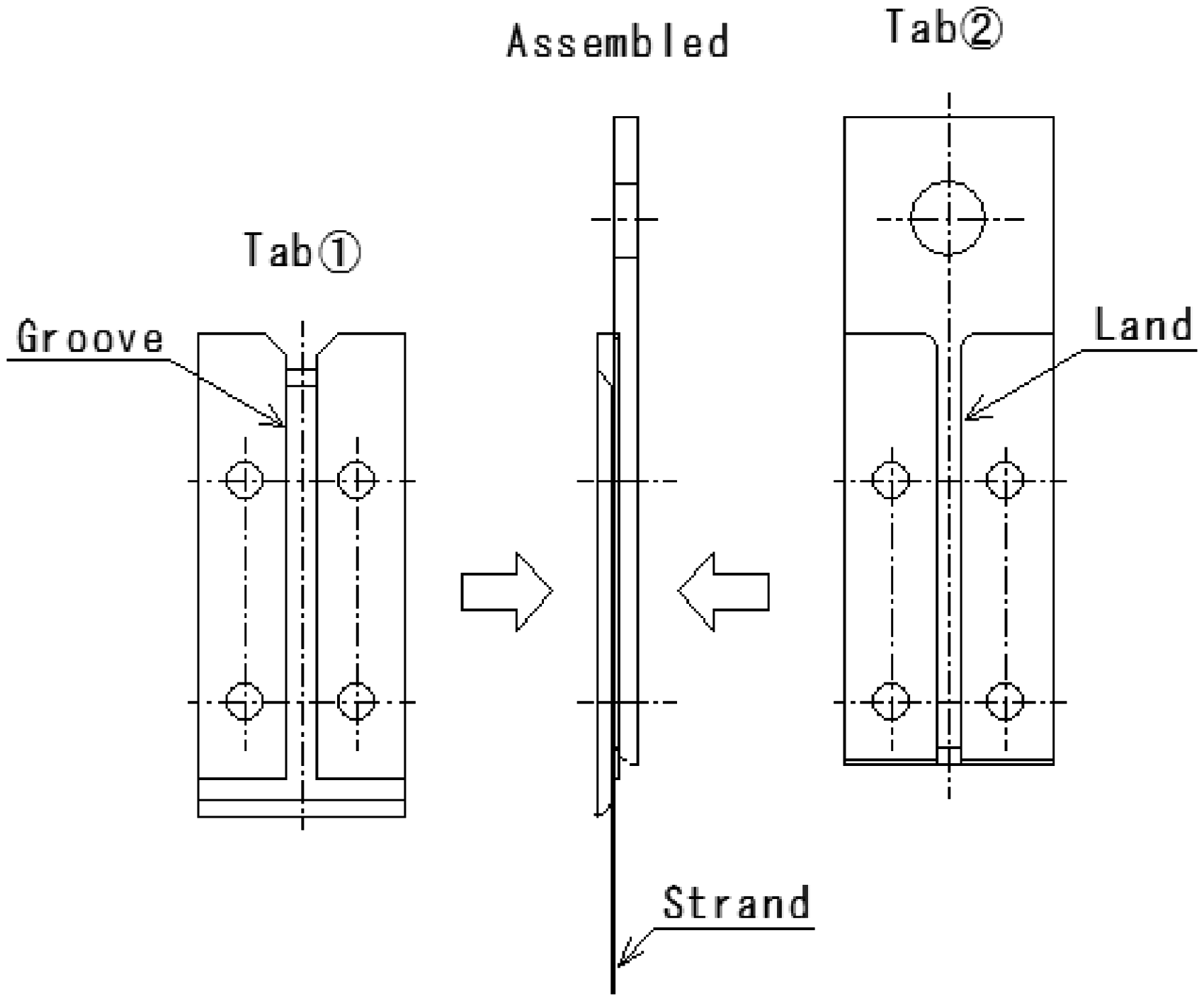

The tensile tests for CFRP strand were conducted at three levels of temperature, 25℃, 120℃, and 150℃ by using the specially designed universal testing machine shown in Figure 2. The cross-head speed was 2 mm/min.
Universal tensile testing machine for CFRP strand specimen.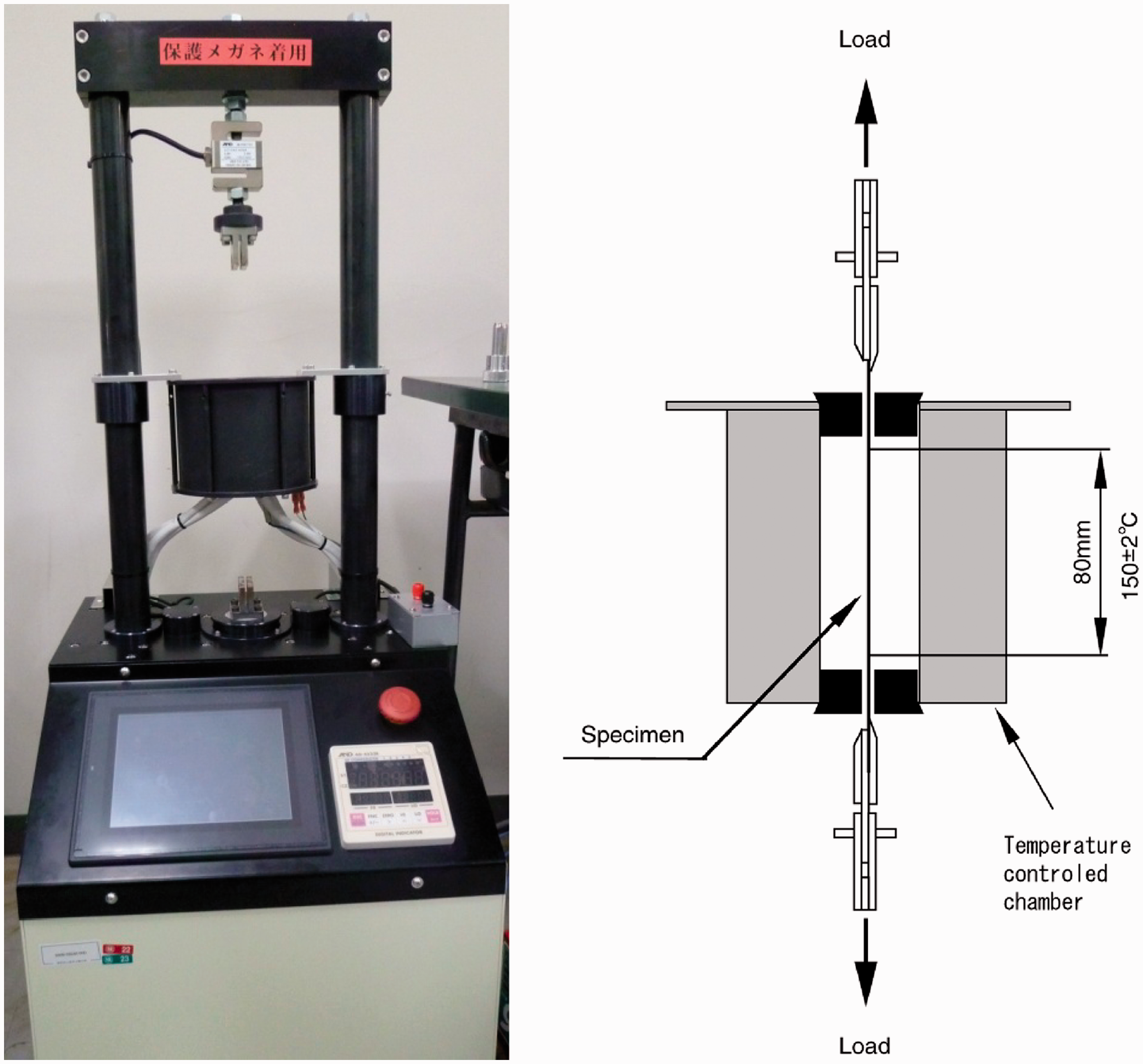
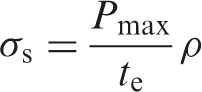
The tensile strength of the CFRP strand σs is defined by
Test results
The Weibull distributions of the tensile strengths of the CFRP strand at three temperatures are shown in Figure 3, where αs is the shape parameter and βs is the scale parameter. While the scale parameter decreases according to the increase in temperature, the shape parameter keeps the same level.
Weibull distributions of the tensile strength of CFRP strand at three temperatures.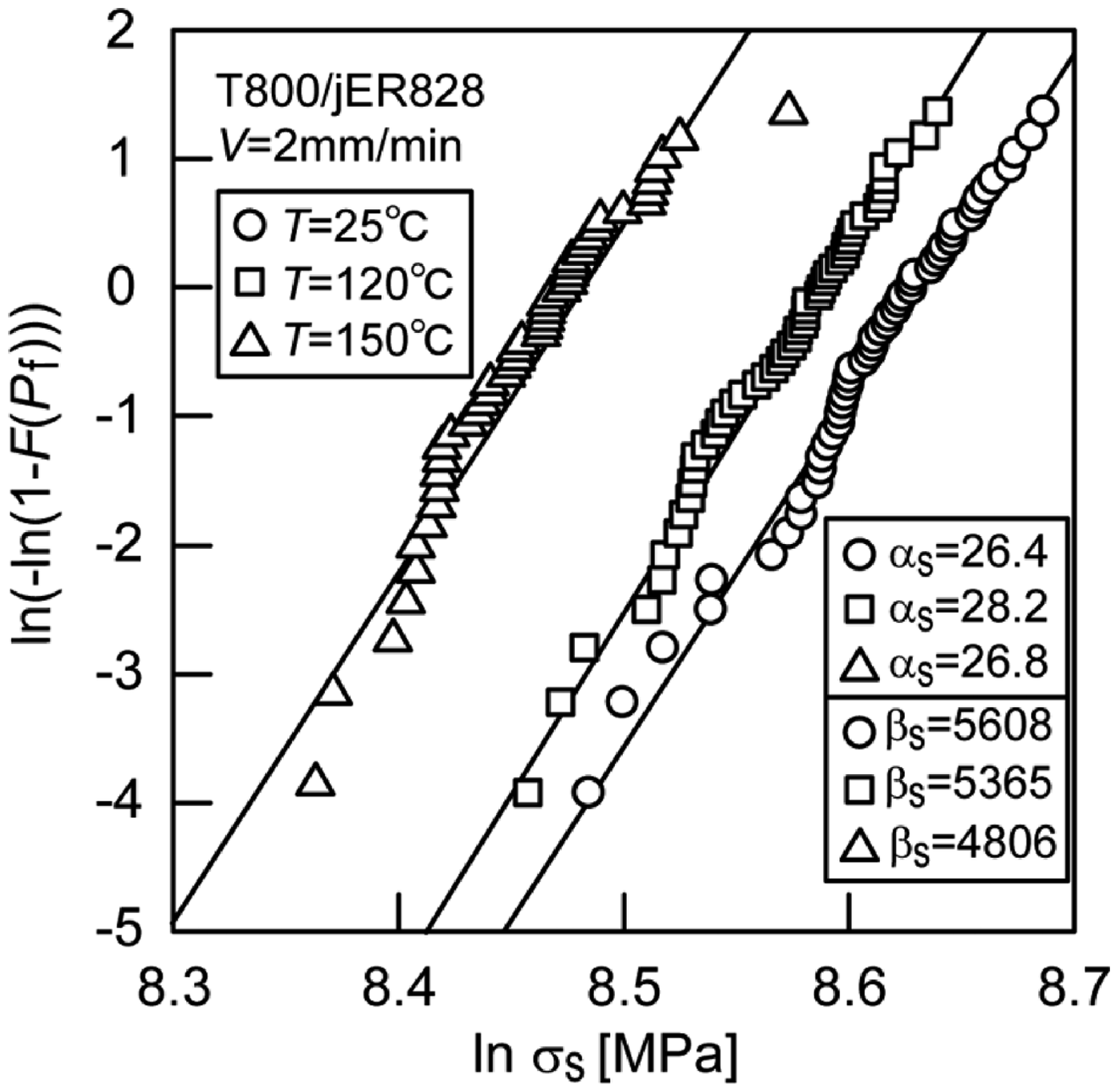
Prediction of tensile strength of CFRP strand
Nakada et al.
9
proposed a prediction scheme of the tensile strength for the unidirectional CFRP which is an extension of Rosen’s analysis
11
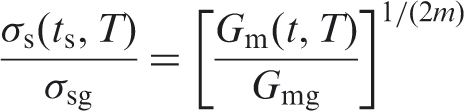
for the tensile failure of unidirectional fibrous composites with an elastic matrix to the CFRP with a viscoelastic matrix by making two modifications. First, we replaced the ineffective length with the recovery length over which the interfacial shear stress is uniform. Second, we substituted the value of the shear relaxation modulus of polymer matrix at the time of failure for the elastic shear modulus in Rosen’s formula after the first modification. Finally, we defined the dimensionless tensile strength for the unidirectional CFRP to be the ratio of σs of ts, and T, the strength at the failure time ts under a temperature T, to its glassy value σsg and found its expression:
Dynamic viscoelastic test
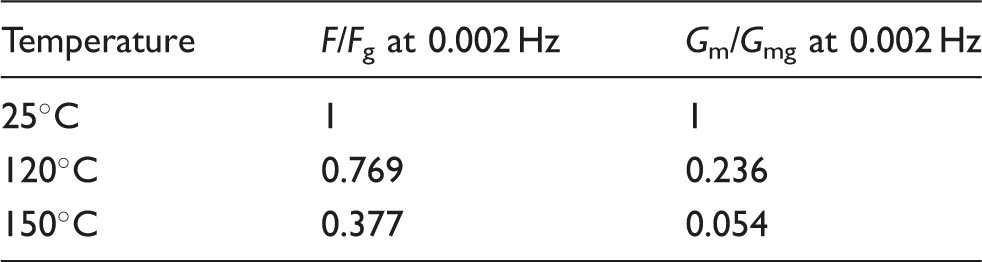
To evaluate Gm(t,T)/Gmg in the CFRP strand, the dynamic viscoelastic tests for the CFRP strand were conducted at a frequency of 0.002 Hz under three levels of temperature, 25℃, 120℃, and 150℃ by the double cantilever beam tests.
9
A schematic diagram of the dynamic test setup is shown in Figure 4. The testing frequency of 0.002 Hz is determined by calculating the loading time from zero to maximum strain in dynamic viscoelastic test equivalent to the failure time in the tensile test of the CFRP strand with 2 mm/min.
Schematic diagram of the dynamic test setup.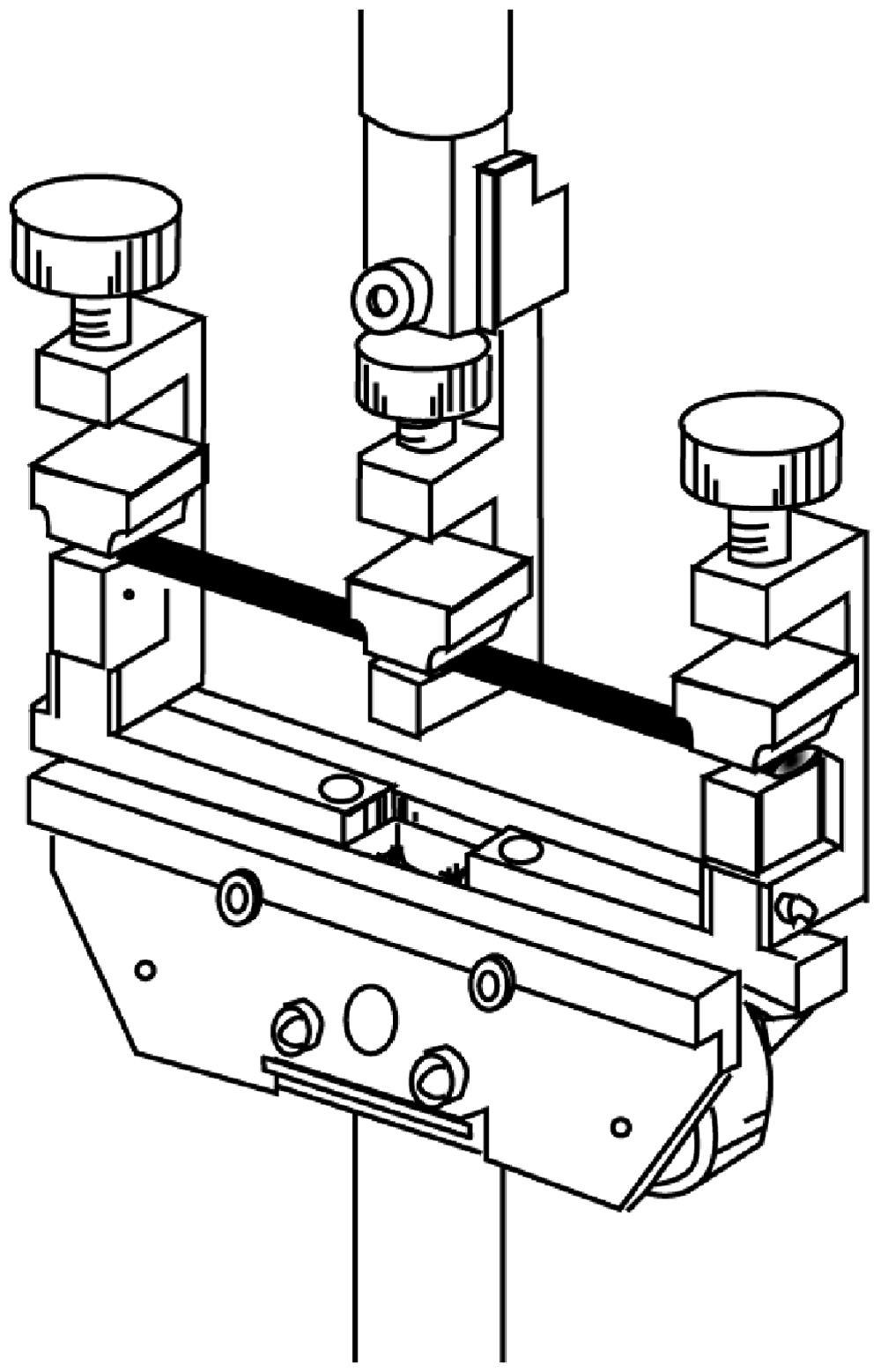
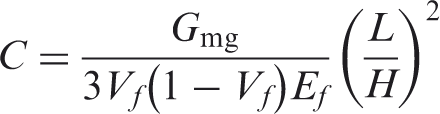
Gm(t,T) /Gmg of the matrix resin in the CFRP strand is calculated from the dimensionless apparent tensile relaxation modulus of the CFRP strand F(t,T) normalized by its glassy value Fg
9

Ratio of shear modulus of matrix resin in CFRP strand.
Tensile test of carbon fiber mono filament
Tensile tests of the carbon fiber T800 mono filament for several lengths of filament were conducted at the room temperature to determine the Weibull shape parameter for tensile strengths of the carbon fiber T800 mono filament. The tensile test speed was 1 mm/min. The Weibull distributions of tensile strengths of the carbon fiber T800 mono filament are shown in Figure 5. While the scale parameter decreases according to the length of the mono filament, the shape parameter keeps the same level. The shape parameter is approximately 8. This phenomenon can be explained by the single chain link model analysis.
Weibull distributions of tensile strength of T800 mono filament.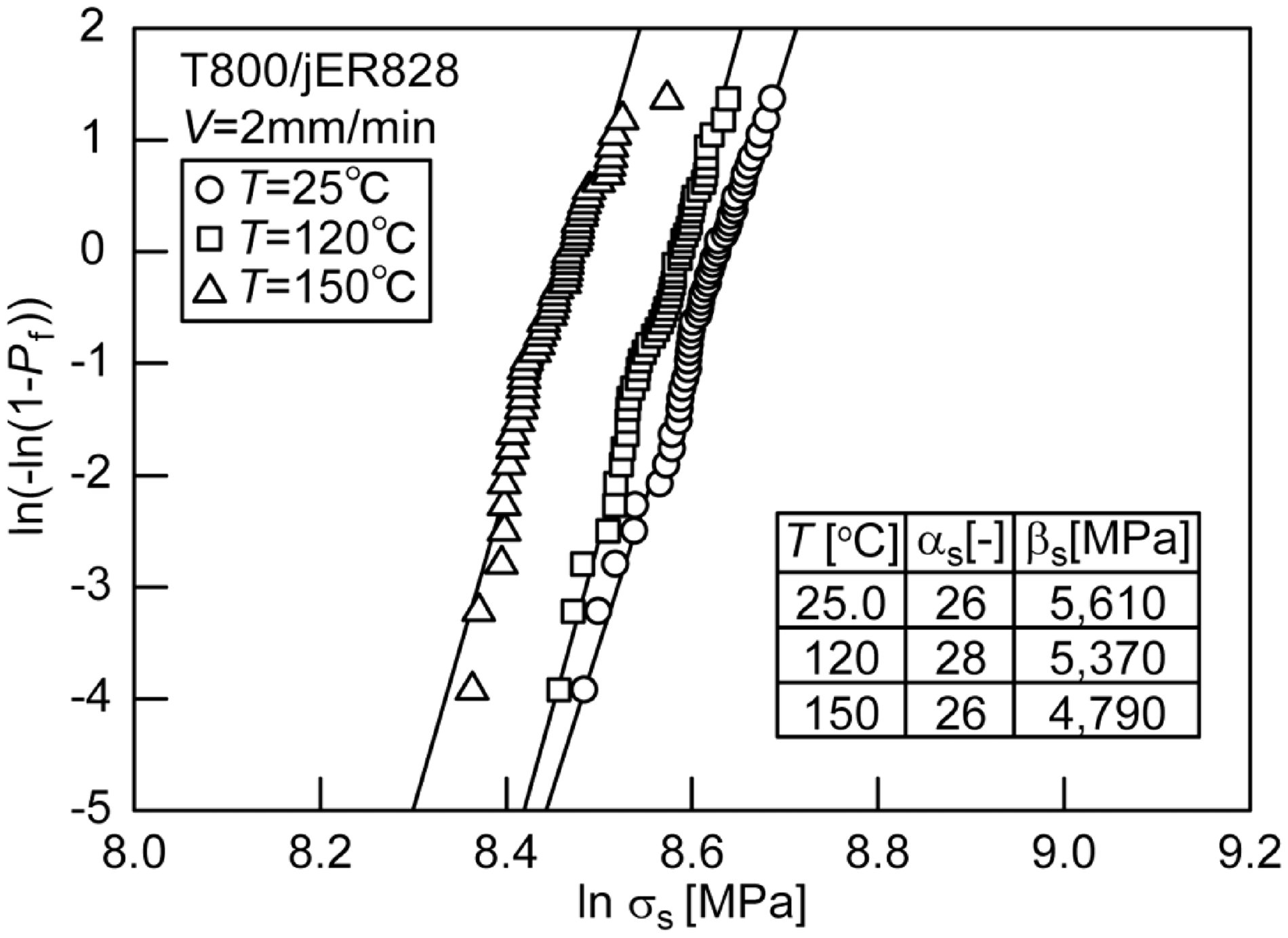
Prediction of tensile strength for CFRP strand
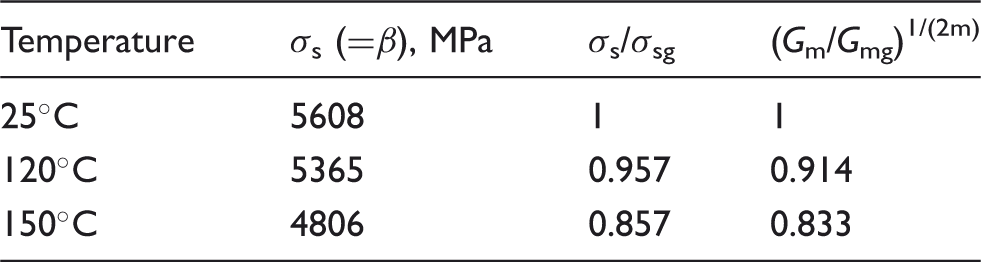
The dimensionless tensile strengths of the CFRP strand σs/σsg under the temperature, 25℃, 120℃, and 150℃ were calculated by equation (3) using Gm/Gmg of the matrix resin in the CFRP strand in Table 2 and m = 8. The glassy values are used the values at 25℃ and 1 min. The calculated results are shown in Table 3 and the relationship between σs/σsg and Gm/Gmg is shown in Figure 6. From these results, the calculated σs/σsg agrees well with experimental ones. Concretely, the inclination of the linear approximation for the experimental results shown in Figure 6 is 0.0609 while the calculated inclination value 1/(2 m) using the Weibull shape parameter for the strengths of the T800 mono filament is 0.0625. Both values agree well with each other.
Tensile strength of CFRP strand versus shear modulus of matrix resin. Tensile test results of CFRP strand compared with predicted results (m = 8).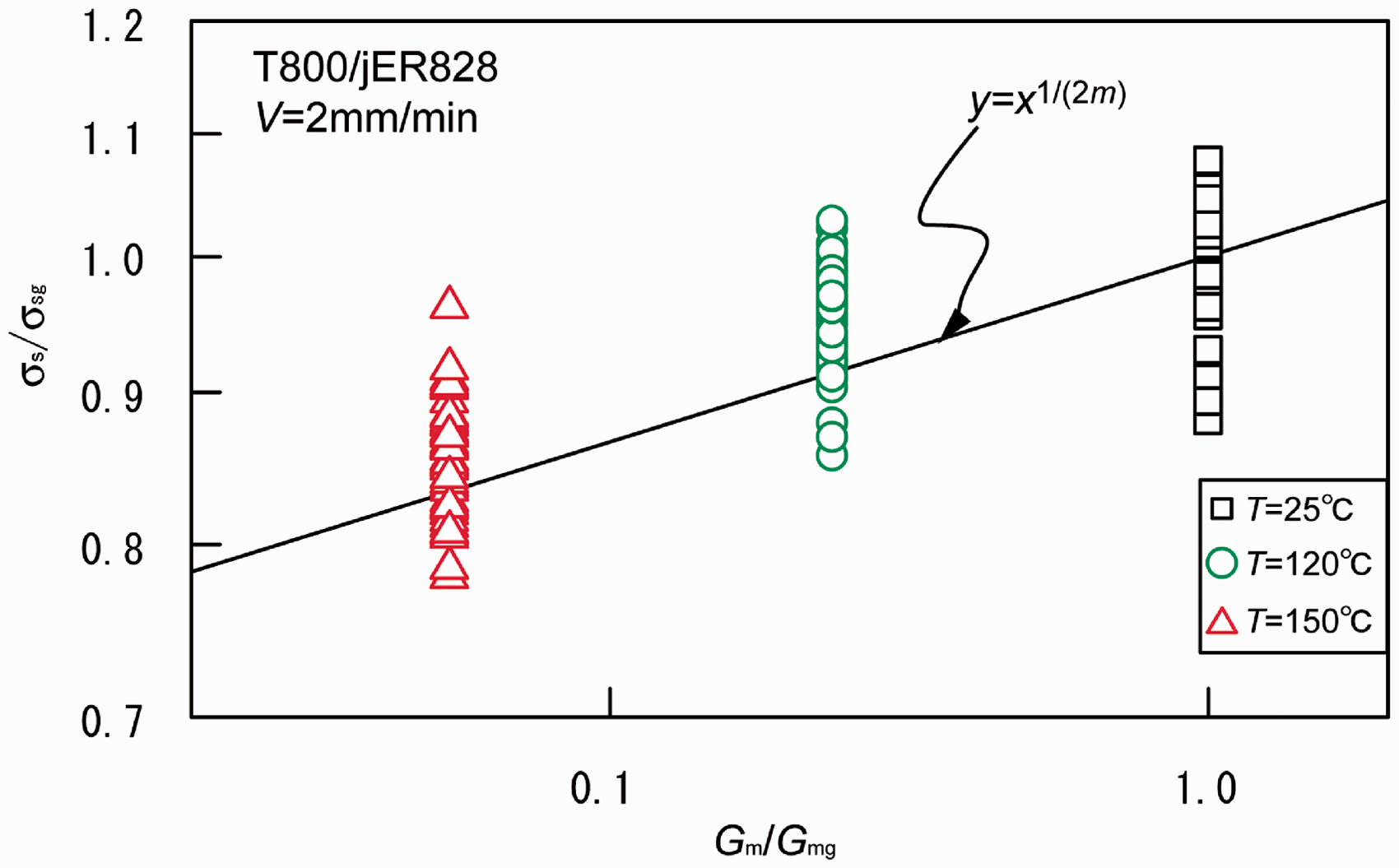
Conclusions
The temperature-dependent longitudinal tensile strength in the unidirectional CFRP was evaluated using the resin-impregnated carbon fiber strand (CFRP strand) specimen with highly reliable co-cured tabs developed by the authors. The tensile strength of the CFRP strand was measured at three constant temperatures below the Tg of the matrix resin for 50 specimens at each temperature. The results show that the tensile strengths of the CFRP strand have the Weibull distribution at each temperature. The shape parameter of the tensile strengths does not change with the temperature and the scale parameter decreases clearly with increasing the temperature. The degradation rate of the tensile strength of the CFRP strand by the temperature against that of the viscoelastic modulus of the matrix resin agrees well with the predicted results based on the Rosen’s strength analysis.
Footnotes
Funding
This research received no specific grant from any funding agency in the public, commercial, or not-for-profit sectors.
Conflict of interest
None declared.