






Abstract
This study investigates the effects of chitosan particles (CTS) on the curing behavior, thermal and thermomechanical properties of polybenzoxazine matrix. The morphological, thermomechanical, and thermal properties of the blends are analyzed using scanning electron microscopy (SEM), dynamic scanning calorimetry (DSC), dynamical mechanical analyzer (DMA), and thermogravimetric analysis (TGA). The results show that the −NH2 groups on the chitosan can act as an active crosslinking position and hydrogen bonding. The SEM micrographs reveal good compatibility between the blend components. Furthermore, the values of glass transition temperatures, char yields, and storage moduli of the cured blends are found to be increased with the increase of CTS contents to reach 191℃, 34%, 4.3 GPa, respectively, at 10% of CTS content.
Keywords
Introduction
Polymer blends reinforced with natural fillers have become an attractive research field in the recent few years. The use of biopolymers as fillers was partly favorable because of their renewable, sustainable and biodegradable properties, as well as their diversity, simplicity, and their low cost. Blends with such fillers are often used to improve the mechanical and physical properties of the polymer matrices, such as hydrophobicity, toughness, melt temperature, and glass transition temperature. 1
Polybenzoxazines, as a class of thermosetting phenolic resins formed by the cationic ring-opening of the corresponding benzoxazine monomers without any added initiator, are considered as promising alternatives to traditional phenolic resins. During their polymerization, no by-products could be released. They possessed very attractive properties such as high thermal stability, high char yields, high glass transition temperature (Tg), near-zero volumetric change upon curing, good mechanical and dielectric properties, low water absorption, good optical properties, and low flammability.2–9 It is well recognized that all these striking properties could be attributed to the consequence of molecular packing affected by intermolecular and intramolecular hydrogen bonding. 10 These unique characteristics promoted the polybenzoxazines over epoxies and traditional phenolic resins in electronics, aerospace, and other industries. Despite the fact of these intriguing properties, there are some drawbacks associated with these resins, for instance, their lower crosslink densities, brittleness, and higher curing temperatures. 11
Recently, considerable attempts have been made to prepare and investigate polybenzoxazines blends aiming to improve their brittleness and enhance both the mechanical and thermal properties of polybenzoxazines, without sacrificing their inherent properties.12,13 As an extensive researches have been made on the bisphenol A-aniline based benzoxazine precursor (BA-a), it was considered as a reference polymer for the benzoxazine resins. Furthermore, various synthetic polymers had been alloyed with typical polybenzoxazine thermoset including epoxy resins, polyurethane, polyimide, polyester, and dianhydride.14–21 However, the researches on polybenzoxazine blends with natural polymers are still limited comparing to those of synthetic–synthetic polymer blends. Recently, a new study about the curing behavior of cardanol based-benzoxazine was conducted by Bimlesh et al. 22 Other reports about using some green resources in the preparation of some new kind of benzoxazine resin and their biocomposite are also published in the last two years.23–25 In addition, novel wood-substituted composites from highly filled polybenzoxazine-phenolic novolac alloys were developed with an improved thermal and mechanical properties. 26 In addition, Rimdusit et al. studied the performances of highly wood flour-filled polybenzoxazine composite and reported that the high compatibility between the wood flour and the polybenzoxazine matrix improves both the glass transition temperature and char yield of the pristine resin. 27 Furthermore, the double effect of chitin biopolymer and CaCO3 of the crab shell particle-reinforced polybenzoxazine matrix was developed in our previous study with much improved thermal and thermo-mechanical properties. 28 In the same context, polybenzoxazine resin was modified using cellulosic and sisal fibers and improved properties were reported.29,30
Chitosan biopolymer, 2-amino-2-deoxy-D-glucopyranose, is mainly prepared from chitin by deacetylation reaction, which is the main product that is extracted from the exoskeleton of crustacean shells, such as crab, shrimp and crawfish, insect cuticles, and fungal cell walls. 31 Chitosan polysaccharides consist of two reactive functional groups amine (−NH2) and hydroxyl (−OH) which contribute to its tremendous functionality including antimicrobial activity. 32 Some advantageous characteristics of chitosan are their reactive functionality, environmental friendliness, low preparation cost, availability, and low toxicity, and therefore, it is used in various domains such as food packaging industry, wastewater treatment, separation membrane, and drug delivery system.33–36 However, some inconvenient properties such as the poor solubility of this natural polycationic polymer in organic solvent, and its inferior thermo-mechanical properties limited its application in some domains. Blending of chitosan with both synthetic and green polymers had been extensively studied to overcome their drawbacks. For instance, it was blended with epoxy, polyaniline, poly(ethylene glycol) (PEG), poly(ethylene oxide), Nylon 11, and polycaprolactone.37–42 All these blends and others had afforded a great improvement in various properties. Recently, Amri et al. have studied the effect of binary (lignin and acrylic acid) modifying agents on the properties of chitosan filled polypropylene composites. 43
In this work, we have studied the effect of chitosan particles (CTS) on the curing behavior, thermomechanical and thermal properties of polybenzoxazine resin. To achieve this purpose, novel series of P(BA-a)/CTS blends were prepared by casting method in dichloromethane followed by curing the samples at 180℃ for different durations. The morphology and curing behavior of these mixtures were investigated and the thermal and mechanical properties of their cured blends were evaluated in terms of CTS content.
Experimental
Materials
Typical bisphenol A-aniline-based benzoxazine monomer (BA-a) was prepared in good yield and with high purity according to the literature. 44 Bisphenol A, aniline, and paraformaldehyde were purchased from Shanghai Jingchun Reagent Co., Ltd (China) and used as received. Chitosan biopolymer particles obtained from Fluka (MW = 22742 and degree of deacetylation of 0. 95) were used after drying in air circulating oven for 6 h at 80℃. All the used solvents were utilized without any further purification.
Preparation of polybenzoxazine/chitosan blends
About 2 g of BA-a benzoxazine monomer was dissolved in 25 ml of dichloromethane (DCM). Depending on the desired fraction of chitosan in the final mixture, an appropriate amount of chitosan was added in portion wise under strong mechanical stirring. The mixture was kept under stirring for 6 h at 25℃ to ensure better distribution homogeneity of CTS in the benzoxazine thermoset. Finally, the resulting samples solutions were casted into a stainless steel mold, dried at 50℃ overnight, and then stocked in desiccators before curing.
First of all, the obtained mixtures were degassed under vacuum oven at 120℃ for 6 hours to remove any residual solvent and embedded gases. Then, the specimens were polymerized without adding any initiator or extra catalyst via an isothermal curing at 180℃ for 5 h under hydraulic pressure in the air-circulating oven. The resulted blends had a thickness of 2 mm. It is relevant to mention that the abbreviation P(BA-a)/CTSxx will be used for cured blends, where xx is the mass fraction of chitosan added to the polybenzoxazine, which ranges between 2 and 10%.
Characterization techniques
Fourier transform infrared (FTIR) spectra were recorded on a Perkin Elmer Spectrum 100 spectrometer, which was equipped with a deuterated triglycine sulfate (DTGS) detector and KBr optics. Transmission spectra were obtained in the range of 4000–400 cm−1 with a resolution of 4 cm−1 after averaging two scans by casting a thin film on a KBr plate for monomers and cured samples.
The surface morphology of cured polybenzoxazine/CTS blends were investigated via a scanning electron microscope (JOEL, model JSM-5800LV) at 15 kV with gold coating on the samples. The cross-sectional fracture surfaces of the DMA samples were obtained by cooling in liquid nitrogen followed by breaking.
DSC measurements were evaluated on a TA Q200 differential scanning calorimeter under a constant flow of a nitrogen atmosphere of 50 mL/min. The instrument was calibrated with a high-purity indium standard, and α-Al2O3 was used as a reference material. A sample of about 4.5 mg was weighed into a hermetic aluminum sample pan at 25℃, which was then sealed and tested immediately. The dynamic scanning experiments ranged from 40 to 350℃ with a heating rate of 20℃/min. Thermogravimetric analysis (TGA) was performed on TA Instruments Q50 with a heating rate of 20℃/min from 40 to 800℃ under a nitrogen atmosphere at a flow rate of 50 mL/min. The dynamic mechanical thermal properties of the casted blends were carried out with a TA Q800 dynamic mechanical analyzer. The rectangular samples (20 mm × 5 mm × 2 mm) were previously polished before being loaded in single cantilever mode at a temperature ramp of 3℃/min in the range of 30–250℃ using a frequency of 1 Hz under air atmosphere.
Results and discussion
FTIR Spectra of polybenzoxazine/chitosan mixtures
FTIR spectra of BA-a monomer and CTS biopolymer and their resulting BA-a/CTS blends are depicted in Figure 1. The curves clearly showed the existence of the all well-known characteristic peaks of benzoxazine structure for BA-a monomer, for example, the peak at 943 cm−1 is attributed to the characteristic mode of benzene with an attached oxazine ring. The bands at 1229 and 1075 cm−1 are due to the asymmetric and symmetric stretching of C−O−C, respectively. The CH2 wagging and asymmetric stretching modes of C−N−C can be found at 1323 and 1158 cm−1, respectively. Likewise, the band at 1496 cm−1 is assigned to the trisubstituted benzene ring. The absorptions of methyl and methylene groups occur at 2968, 2931, 2895, and 2868 cm−1, respectively.
45
On the other hand, the FTIR spectrum of chitosan represented in Figure 1 revealed the major absorption bands corresponding to CTS biopolymer groups, which could be assigned as follows: 3429 and 3376 cm−1 (O−H and N−H stretching vibrations), 2920 and 2873 cm−1 (C−H stretching vibration), 1597 cm−1 (N−H bending vibration of NH2 group), 1161 cm−1 (primary alcoholic group of native chitosan at the C-6 position), and 1076 cm−1 (C−O skeletal vibration).
46
Since the grade of chitosan used in the present study was 95% deacetylated, an amide bond peak appeared in the spectra and the C = O stretch of amide bond was observed at 1648 cm−1.47,48
FTIR spectra of BA-a benzoxazine monomer, CTS, and their uncured blends.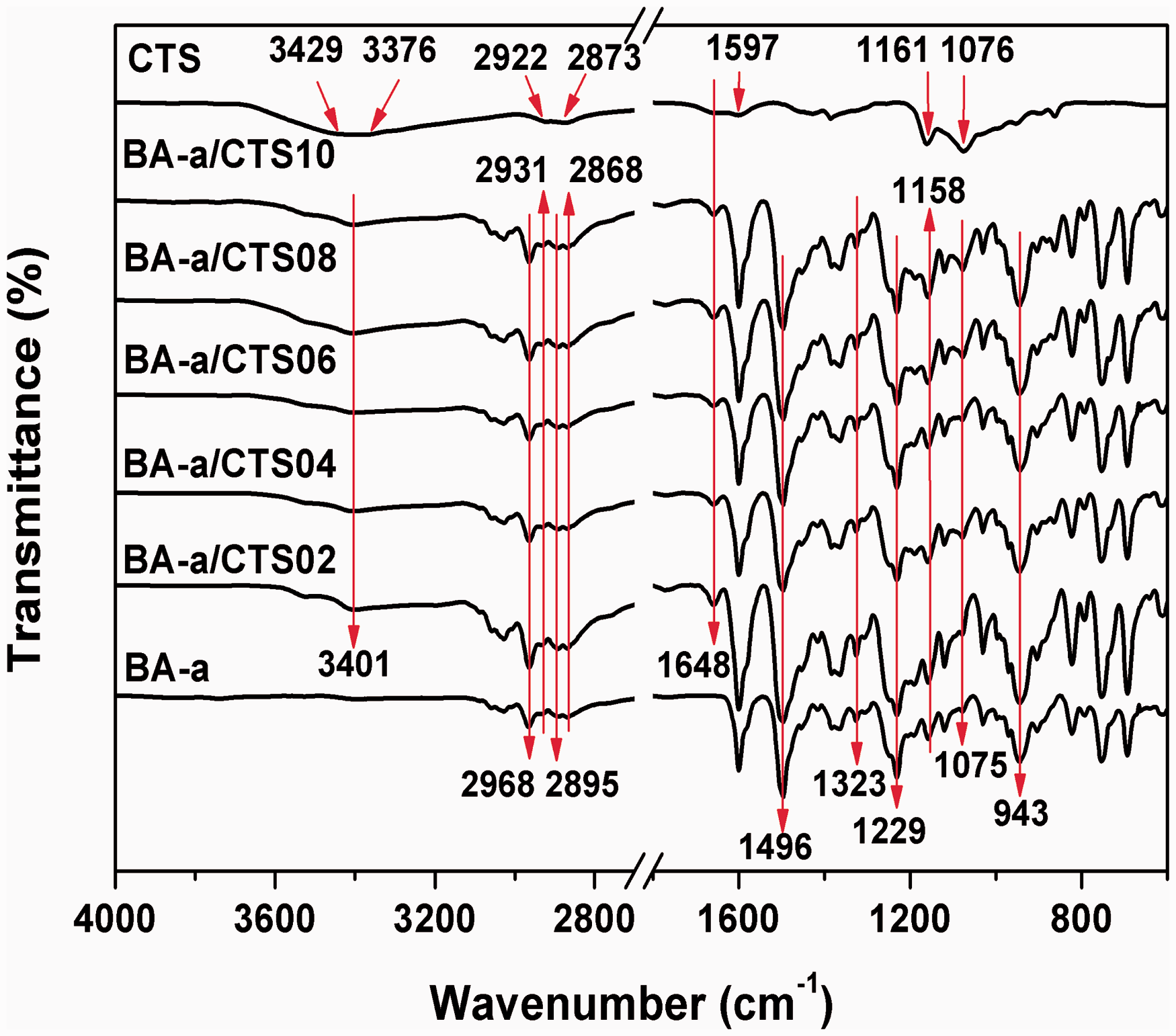
For BA-a/CTS blends, the characteristic bands of benzoxazine monomer structure remain noticeable in their FTIR spectra because BA-a monomer still represents the major component in these blends (>90%). The broad bands at 3401 cm−1 are assigned to the overlapped O−H and N−H stretching vibrations. In this case, this series of blends would present a great advantage later, for further investigation of their polymerization by FTIR and DSC techniques.
Curing behavior of benzoxazine/chitosan blends
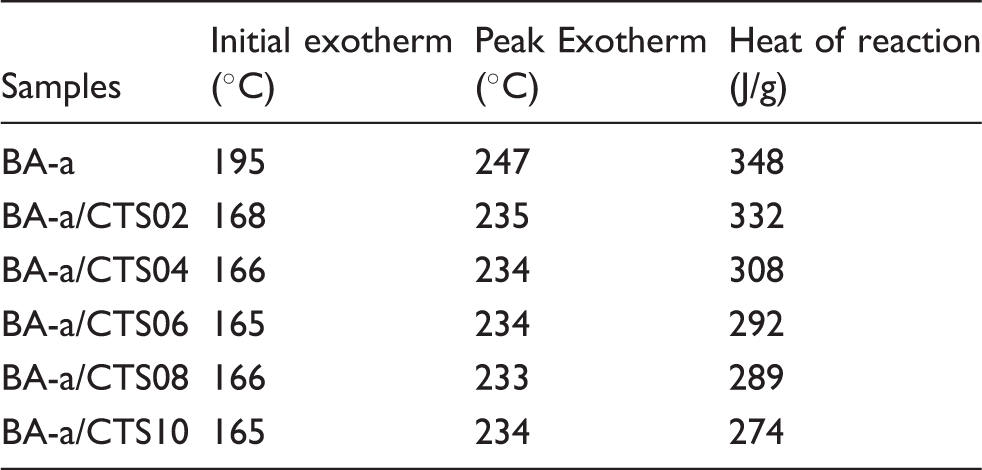
The curing behavior of BA-a/CTS blends with different weight ratios of CTS was investigated by DSC and FTIR techniques. The DSC curves of the prepared series of BA-a/CTS blends are shown in Figure 2 and the calorimetric data are collected in Table 1. From Figure 2 and Table 1, all the onset temperatures as well as their exothermic peak temperatures of the BA-a/CTS blends were decreased from 195℃ and 247℃ to 165–168℃ and 233–235℃, respectively, compared to the pristine benzoxazine monomer. This reduction in the values of curing temperatures for these blends could be justified by the catalytic effect of reactive amino groups on chitosan modifier, which may initiate the ring-opening process of oxazine rings.
49
The DSC curves of the BA-a/CTS blends at a heating rate of 20℃/min under nitrogen. The DSC parameters of BA-a/CTS at different CTS content.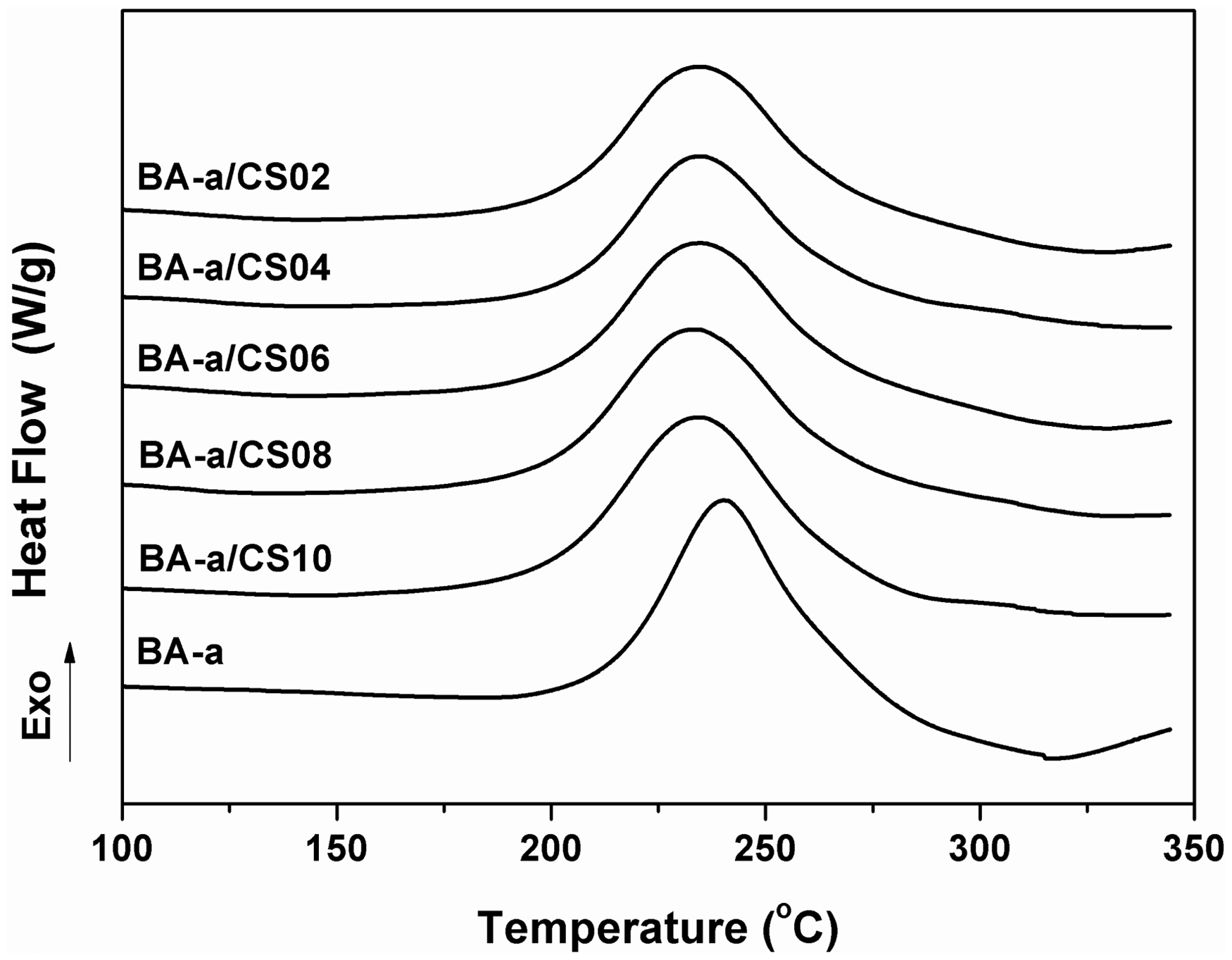
The polymerization behavior of BA-a/CTS04 as an example for this series of blends in different curing time at 180℃ was studied by FTIR and DSC techniques. The FTIR spectra of BA-a/CTS04 after each cure cycle were pictured in Figure 3. We can see that the intensity of the characteristic absorption bands which confirm the benzoxazine structure including the prominent absorption at 949 cm−1 due to the out-of-plane bending vibration of benzene ring, 1496 cm−1 due to the trisubstituted benzene ring, 1323 cm−1 due to the CH2 wagging, 1229 and 1075 cm−1 due to the asymmetric and symmetric stretching of C−O−C, and 1158 cm−1 due to the asymmetric stretching of C−N−C, gradually disappeared with the increasing curing time. Whereas new absorption bands appeared such as at 1487 cm−1 due to the tetrasubstituted benzene ring, which suggests the formation of polybenzoxazine network.
50
In addition, a new distinguishable small absorption band appeared at 1262 cm−1, which could be associated to the C−N stretching caused by the chemical interaction between amino groups of CTS and iminium intermediates of benzoxazine. Thus, the cross-linked network structure is likely formed via electrophilic substitution. These results are in agreement with those found by Alhwaige et al.
49
Another broad band at 3439 cm−1 should be attributed to the formation of hydrogen bonding in the bulk mixture which could be generated from the CTS and/or the polybenzoxazine matrix.
50
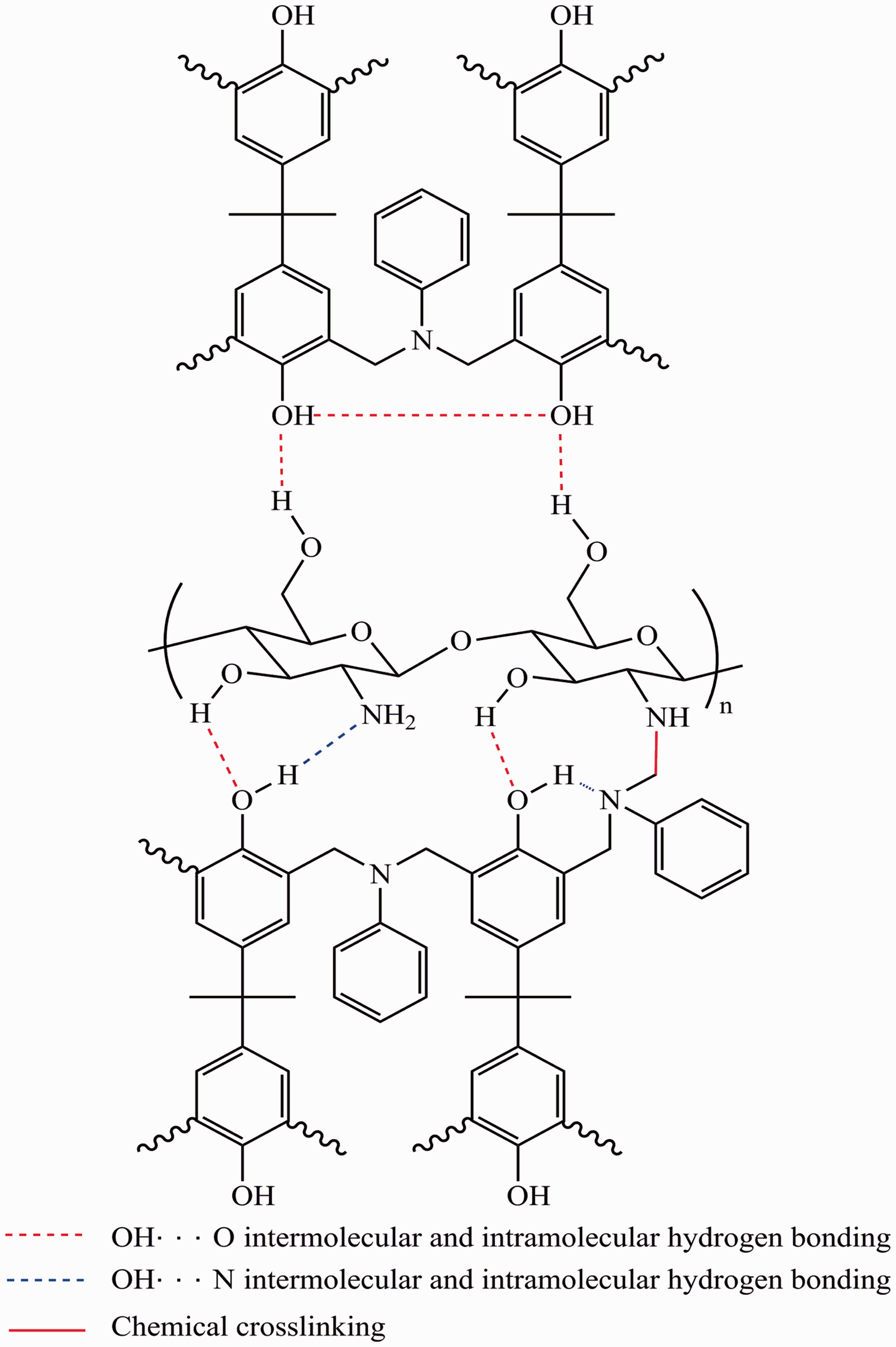
The ability to construct crosslinking structure and hydrogen bonding is a very important issue because the chemical crosslinking and inter-associated hydrogen bonds between the components in the blend can promote their compatibility and have a significant effect on the thermal and thermomechanical properties of the final blends.
51
The network structure of the cured PBA-a/CTS blends is proposed in Figure 4.
FTIR spectra of BA-a/CTS04 sample after curing at 180℃ at different durations. Proposed network structure of the cured BA-a/CTS blends.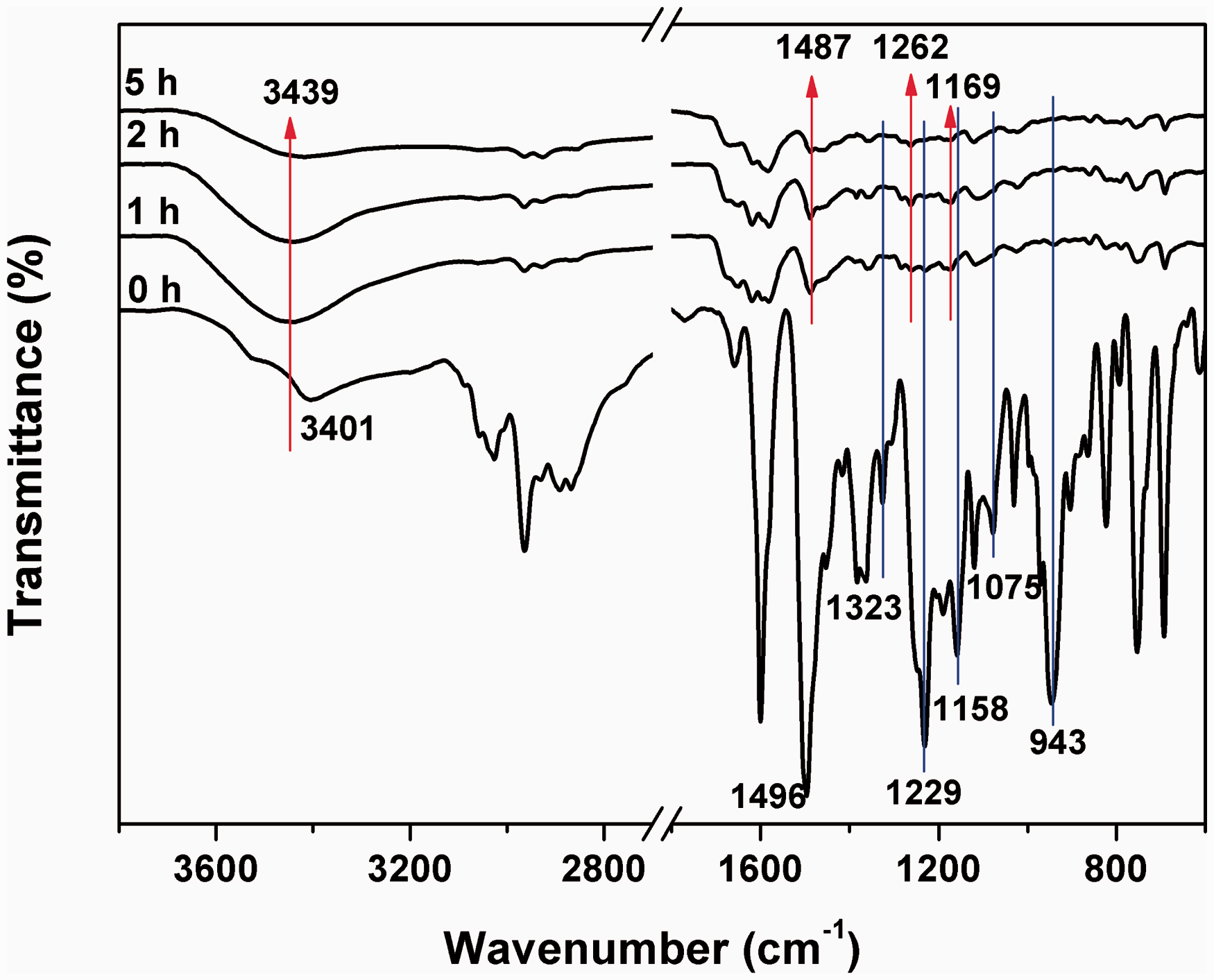
Thermal polymerization of BA-a/CTS04 blend as an example was also studied by DSC after each thermal curing time at 180℃. Figure 5 shows the DSC thermograms of the casted sample after an isothermal curing at different time cycles as follow: 0 h, 1 h, 2 h, 4 h, and 5 h, respectively. The results indicate that the exothermic peaks due to the ring opening polymerization process of benzoxazine blend gradually decrease with the increasing curing time. In the first heat treatment stage at 180℃ for 1 h, the maximum of the exothermic peak reached a higher value at 243℃. The heat of polymerization (ΔH) decreases gradually from 116 to 21.1 J/g with the increase of curing time from 1 h to 4 h at 180℃ while there is no exothermic peak observed by the end of the last cure stage. In this stage, the step change of the thermogram corresponded to the glass transition temperature (Tg) of 179℃. Finally, both the FTIR and DSC characterization methods have confirmed the completion of the ring opening polymerization of BA-a/CS04 blend sample.
DSC curves of BA-a/CTS04 after curing at 180℃ after each time curing stage.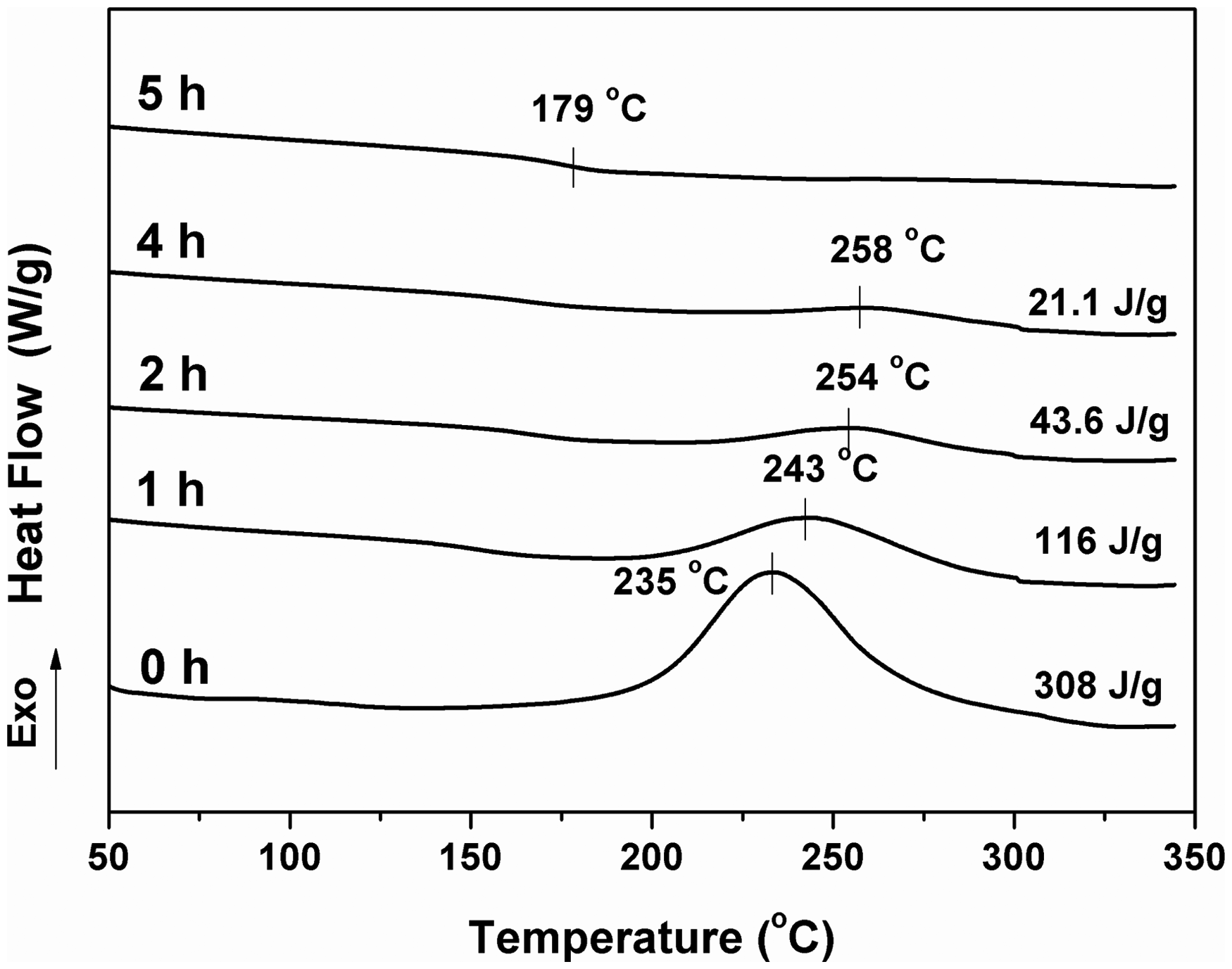
DSC thermograms depicted in Figure 6 showed the effect of chitosan dosage on the Tg of polybenzoxazine in these blends The Tg value of the pristine P(BA-a) was measured to be 161℃. The Tg values of all blends were significantly higher than that of neat P(BA-a), ranging from 176 to 188℃ as maximum CTS content in the blend with 10% filling ratio. As a common state, when benzoxazines were polymerized in the presence of molecules that construct chemical crosslinking and hydrogen bonding, the Tg exhibited by their cured polybenzoxazines was higher than in the case of their absence.
52
In this case, these improvements in the Tg values of blends could be mainly ascribed to the compactness of the network formed in these blends. Also, only one distinguishable Tg was observed in all these systems, which suggests the existence of good miscibility between the two constituents of these blends.
DSC thermograms of the cured polybenzoxazine/chitosan blends.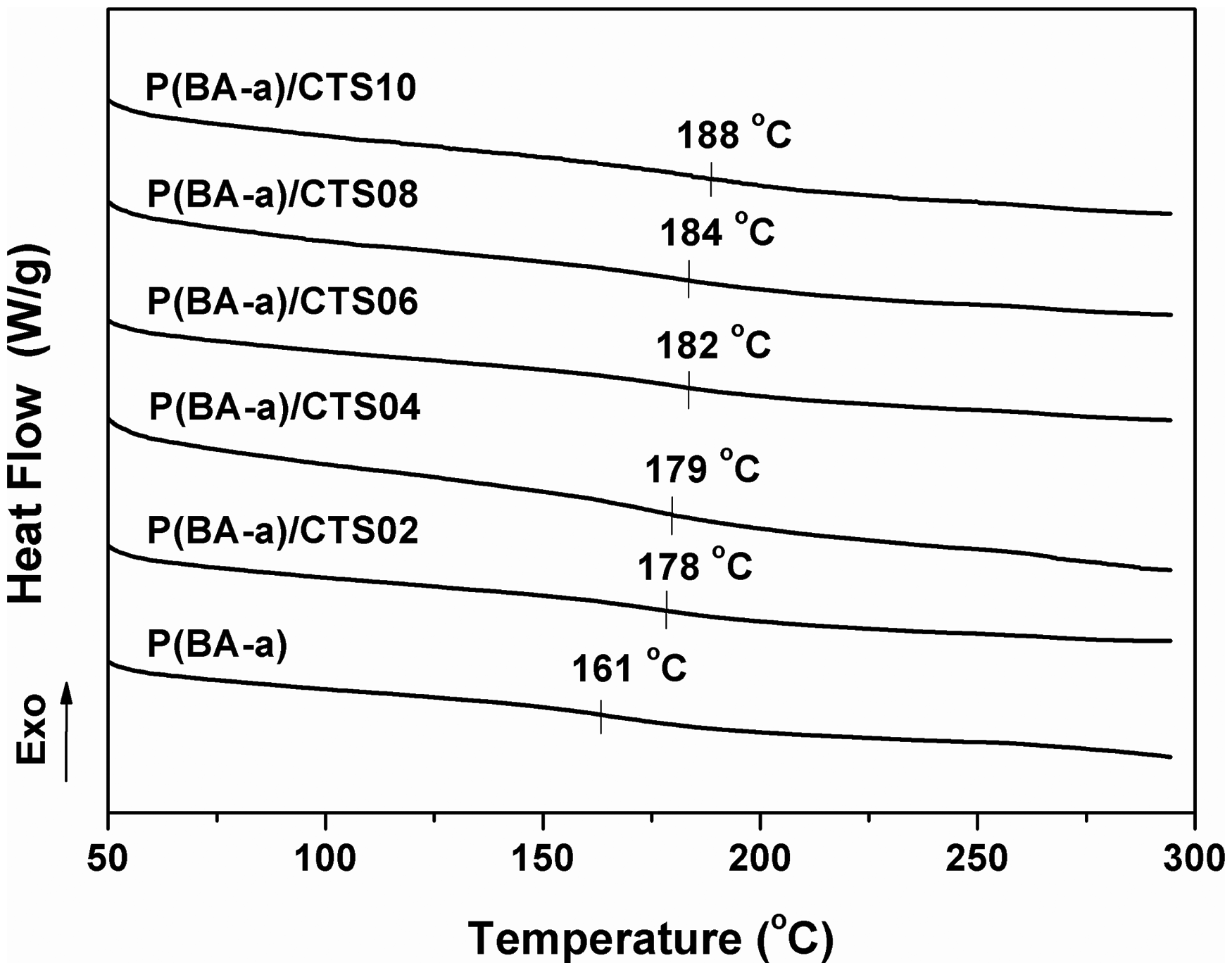
Morphology
The morphology of cross-sectional fracture surface of the neat P(BA-a) as well as P(BA-a)/CTS blends specimens were recorded by scanning electron microscopy (SEM) and the micrographs are depicted in Figure 7. This study was achieved in order to provide some details about the dispersion of CTS into the polybenzoxazine resin and also to investigate their compatibility with this matrix. The image depicted in Figure 7(a) showed that the fracture morphology surface of the neat polybenzoxazine resin revealed a homogeneous and featureless phase relating to its smooth and glassy microstructure. This imprint supports the brittleness nature and the inferior impact strength of the pure polybenzoxazine resin. The P(BA-a)/CTS blends in Figure 7(b) and (c) showed great homogeneity and the CTS particles were observed to be well dispersed throughout the polybenzoxazine polymer, down to 6% of CTS, although some domains are not well-defined. The result directly suggests the presence of phase continuity while the small domains indicate the good compatibility between the two constituents. Furthermore, there is a remarkable increase of the plastic deformation lines in the blends morphologies, which is related to the enhancement of polybenzoxazine stiffness by the introduction of chitosan biopolymer. These results can be effectively compared with other previous studies on polybenzoxazine alloys morphologies.
53
Actually, this morphological result can be attributed to the compatibility between the CTS biopolymer fillers and polybenzoxazine thermoset and also to the specific intermolecular hydrogen bonding between the blend components.
17
On the other hand, the blend samples with a CTS ratio up to 6% were slightly severed from a microscopic phase separation shown in Figure 7(d) to (f). This small alteration was clearly seen at the maximum CTS content (10%), which is essentially attributed to the negative effect of CTS agglomeration into polybenzoxazine matrix via some chemical crosslinking and local intermolecular hydrogen bonding due to the high affinity of CTS to each other.
SEM micrographs of the DMA cross-sectional morphology of blend specimens: (a) neat P(BA-a); (b) P(BA-a)/CTS02; (c) P(BA-a)/CTS0; (d) P(BA-a)/CTS06; (e) P(BA-a)/CTS08; and (f) P(BA-a)/CTS010.
Thermomechanical properties
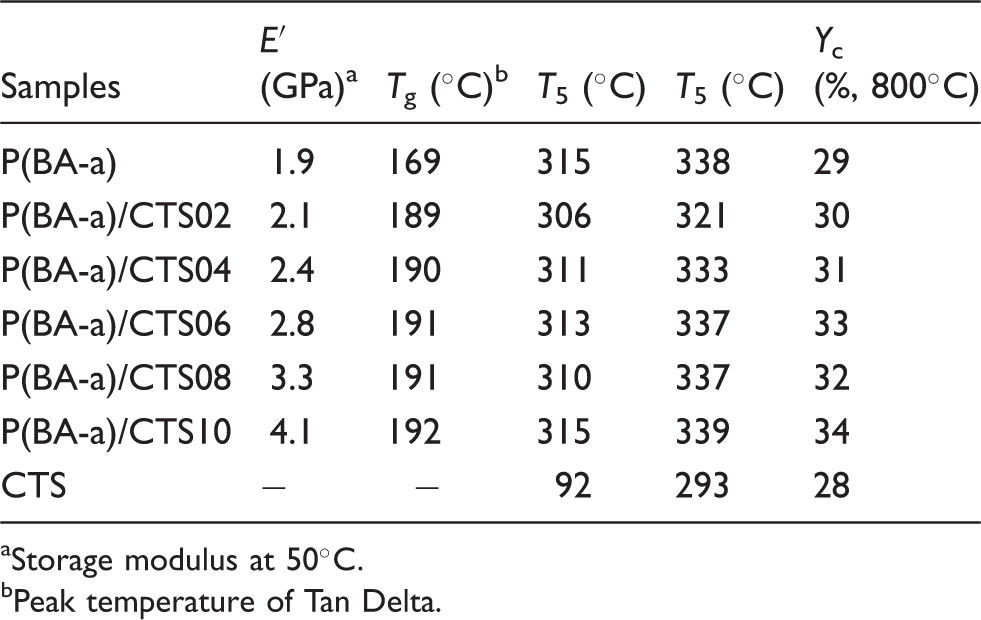
The thermomechanical properties of the cured blends samples at various CTS contents were measured by DMA. The dynamic thermomechanical properties of P(BA-a)/CTS blends with different CTS content are shown in Figure 8, and summarized in Table 2 Temperature dependence curves of storage modulus (a) and tan delta (b) for P(BA-a)/CTS blends. Thermal and thermomechanical properties of the cured P(BA-a)/CTS blends. Storage modulus at 50℃. Peak temperature of Tan Delta.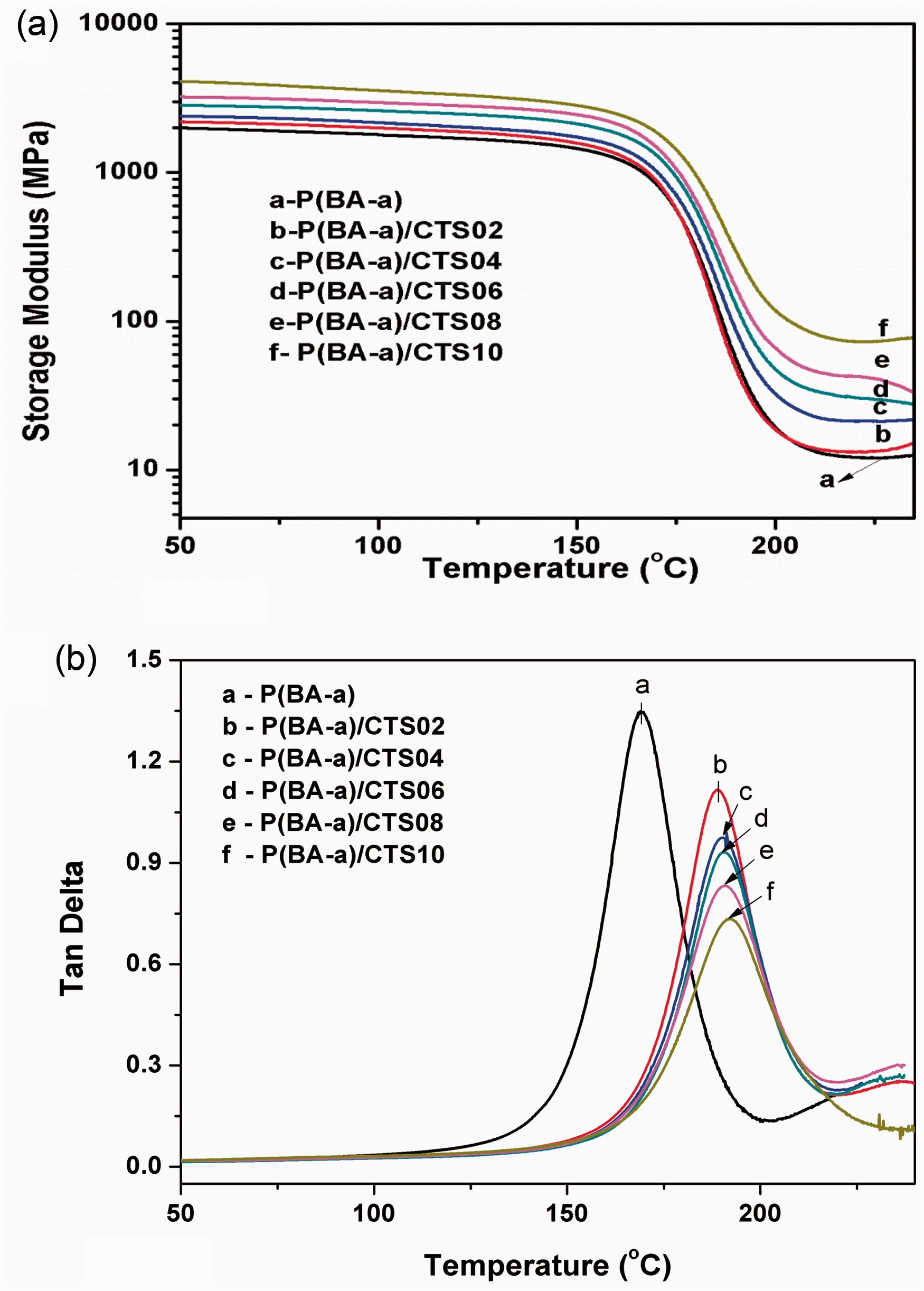
The network of these blends can be calculated from a value of the equilibrium storage shear modulus using the equation (1),
55
which is derived from the statistical theory of rubber elasticity by Nielsen and presented as follows

The values of the cross-linking densities for the prepared blends at different CTS content are collected in Table 2. As expected, the calculated cross-linking density of the P(BA-a) from the equation (1) reaches 3596 mol/cm3 and this value was gradually increased as the CTS content in the blend raised reaching its maximum value of 6430 mol/cm3 at 10% of CTS. This result justified the enhancement of the storage modulus and Tg values of the blends upon the addition of CTS particles.
Figure 8(b) presents the temperature dependency of the tan δ for both the pure P(BA-a) and their blends at different CTS content. First, a slight peak broadening for the tan δ of the tested samples curves upon increasing the CTS filling amounts could be easily observed. It may be reasonable to assume that there is a small or even no existence of interfacial region between the blends’ constituents. Likewise, the tan δ peak edges for all the P(BA-a)/CTS blends significantly decreased upon increasing the CTS content; this phenomena may be related to the phase structure and density of the hydrogen bond network. 56 Furthermore, the Tg values determined from the temperature corresponding to the maximum of tan δ in the α-transition remained unchangeable around 191℃, even if the CTS content augmented.
Thermal stability
The TGA thermograms of the P(BA-a), chitosan, and their cured blends at different CTS content are shown in Figure 9. We can easily deduce that the incorporation of CTS into the polybenzoxazine resin slightly affects its thermal stability. The thermal properties of the cured blends are summarized in Table 2. As shown in Table 2, both the initial thermal decomposition temperatures at 5% and 10% weight loss (T5, T10) have been decreased with the addition of chitosan fibers mainly due to their lower thermal stability. In addition, Figure 9 and Table 2 also revealed another attractive property related to the char yield of the tested blends, which exhibited a synergistic behavior. All the char yields of the blends were relatively higher than those of both neat P(BA-a) and CTS particles. The highest char value at 800℃ is about 34% and was obtained at 10% of the CTS fraction, while the value for both components the unfilled P(BA-a) and CTS did not exceed the values of 29% and 28%, respectively. This is partly due to the higher crosslinking density as revealed from Table 2 and also to the tighter packing because of the physical and chemical intramolecular hydrogen bonding interaction between the –OH groups of the polybenzoxazine and CTS bio-polymer in the blends.
TGA thermograms of P(BA-a)/CTS blends under nitrogen.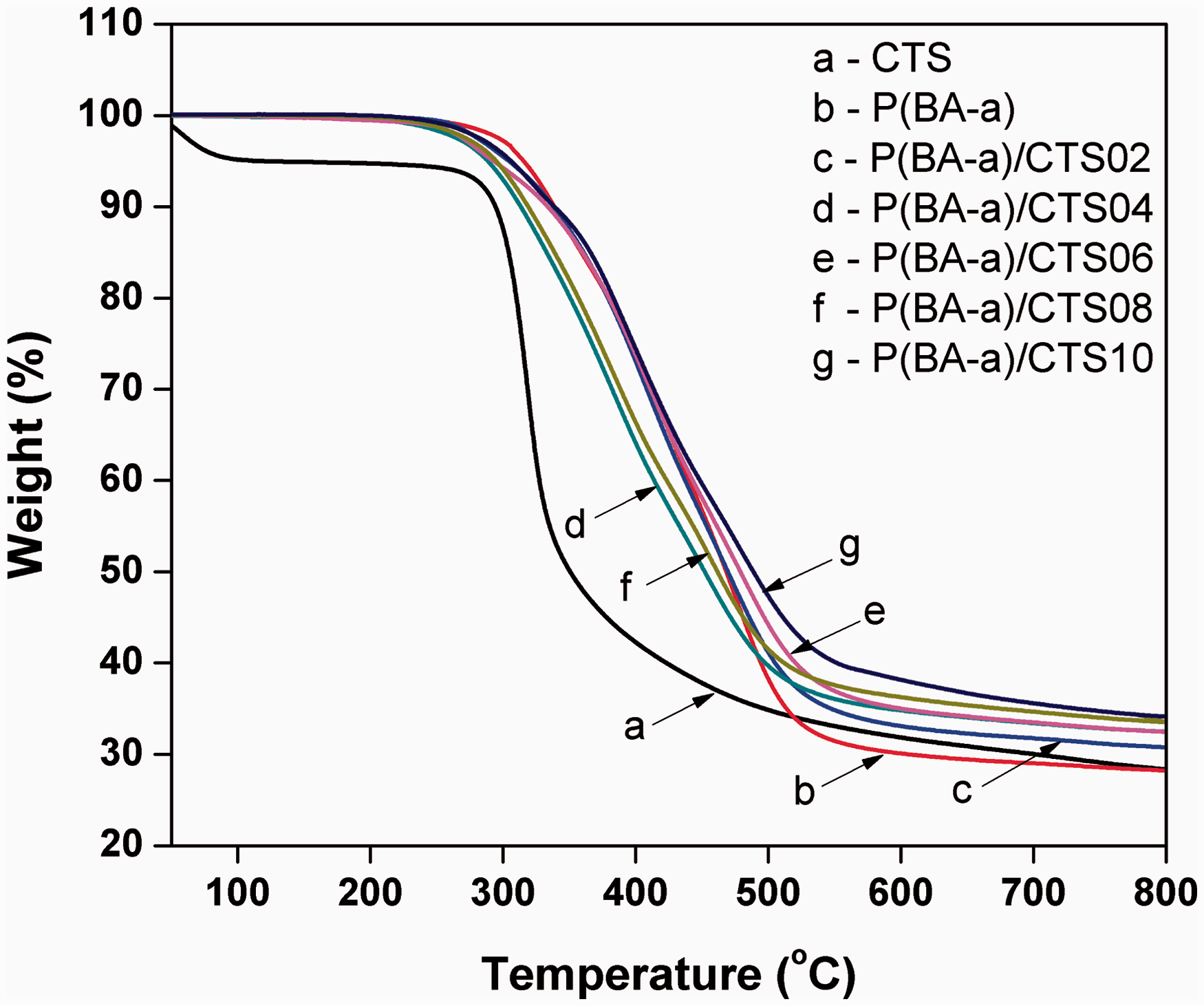
Conclusions
A novel series of blends based on typical benzoxazine monomers (BA-a) filled with CTS at different molecular ratios were successfully elaborated by solvent casting method in dichloromethane. The curing temperature of BA-a monomer in the presence of CTS macromolecule was significantly lowered due to the catalytic effect of –NH2 and –OH groups on chitosan. The DMA test for these blends revealed only one remarkable Tg, which gradually increased with increasing the amounts of CTS particles in the polybenzoxazine matrix. SEM micrographs demonstrated that the brittleness of the polybenzoxazine matrix greatly improved due to the good compatibility of the blend. In addition, the storage modulus and Tg values of the cured samples have been remarkably enhanced due to the enhancement of crosslinking density between polybenzoxazine and chitosan, and the formation of strong hydrogen bonding between the free –OH groups of polybenzoxazine thermoset and the reactive groups of CTS. Furthermore, the thermal stabilities of these blends including their char yields and their first decomposition temperatures were slightly affected in the presence of CTS fillers.
Footnotes
Conflict of interest
None declared.
Funding
This work has been funded by the financial supports from National Natural Science Foundation of China (Project no.50973022), Specialized Research Fund for the Doctoral Program of Higher Education (Project no. 20122304110019), and Fundamental Research Funds for the Central Universities (Project nos.HEUCFT1009 and 201310006).