







Abstract
In this research, the effects of electron beam on the mechanical and thermal properties of epoxy resin/clay/TiO2 nanocomposite were studied. The epoxy/clay/TiO2 nanocomposite was prepared by dispersing clay and TiO2 nanoparticles in epoxy matrix. The dispersion of the clay/TiO2 in the epoxy matrix was characterized by X-ray diffraction and transmission electron microscopy analyses. The obtained results confirm the structure of exfoliate and intercalate in the prepared samples. Mechanical properties and thermal stability of nanocomposites were studied by tensile test and simultaneous thermo-gravimetric–differential thermal analysis. In order to study electron beam irradiation effects, nanocomposites were exposed to electron beam irradiation in 100, 500, and 1000 kGy doses. The results show that mechanical characteristics and thermal stability of epoxy resin/clay/TiO2 decreased with irradiation.
Introduction
Thermoset polymers find an increasing use in a wide range of engineering applications because of their easy processing, good affinity to heterogeneous materials, considerable solvent, creep resistance, and higher operating temperature. There are much less commercial interests in thermoset nanocomposites compared to thermoplastics. This neglect may not continue much longer since thermoset nanocomposites demonstrate distinct improvement in properties over conventional thermoset composites.1–4 Several factors such as different affinity between the inorganic components (clay surface and TiO2) and organic components (epoxy resin and curing agent), curing conditions (cross-linking rate, cross-linking agent concentration, cross-linking temperature, and the ratio between polymer matrix and cross-linking agent), charge density of layered silicate, cationic exchange capacity of the clay and TiO2 should be considered when investigating thermoset polymer-based nanocomposites.5–8 This study used experiments to compare the property changes of samples after accelerated aging by electron beam irradiation (EBI) with non-irradiated samples.9,10 The electron beams from electron accelerators have two main effects on the polymers: the formation of free radicals, whose further evolution can cause chain scission, chain branching, and/or cross-linking. 9 Irradiation is a useful method to improve mechanical, thermal, and water absorption properties of polymer matrix.9–13 In previous researches, the effect of irradiation doses on properties of polymer matrix such as polypropylene, 9 ethylene propylene diene monomer, 10 epoxy, 11 high-density polyethylene, 12 and ethylene–vinyl acetate 13 was investigated, but the effect of ionizing radiation on epoxy/clay/TiO2 nanocomposites (ECTNs) was not investigated. Therefore, it is worthwhile to investigate EBI ECTNs. The EBIs from electron accelerators have two main effects on the thermal stability of nanocomposites: the formation of free radicals, whose further evolution can cause chain scission, chain branching, and/or cross-linking. The first effect occurred due to high-energy ionizing radiation and the type of broken bonds may be polymer–polymer and/or polymer–nanoparticles. The aim of this study is to prepare ECTNs and to investigate the effect of EBI mechanical and thermal properties. For this, clay/TiO2 nanoparticles with 1, 3, and 5 wt% were blended in epoxy resin by a high shear mixer and ultrasonication. Then, mixtures were cured and subjected to EBI in 100, 500, and 1000 kGy doses. Finally, the mechanical and thermal properties of specimens before and after irradiation were measured and compared.
Experimental
Material
The epoxy matrix was prepared by dispersing montmorillonite clay (closite 30B) and TiO2 nanoparticles. In this study, we used diglycidyl ether bis phenol-A ML-504 (specific gravity = 1100 kg/m3) with viscosity 850 cps at 25℃; and the epoxy resin and the curing agent of HA-41 (viscosity (at 25℃) 1200–1400 cps, specific gravity = 1190 kg/m3), anhydride commercial hardener, both obtained from Nanoshop Engineering Material Co.; the ratio of epoxy to hardener was 100/90 (manufactured by Mokarrar Engineering Material Co., Iran). Titanium oxide (AEROXIDE® TiO2 P25) nanoparticles with an average diameter of 25 nm and a specific surface area of 50 ± 15 m2/g were used as nanofiller for preparing the nanocomposites. The organo-montmorillonite (Southern Clay Products, Inc.) prepared from pure Na+-montmorillonite was modified with dimethyl, dihydrogenated allow and quaternary ammonium (2M2HT), approximately CEC ≈ 125 meq/100 g clay.
Fabrication and irradiation
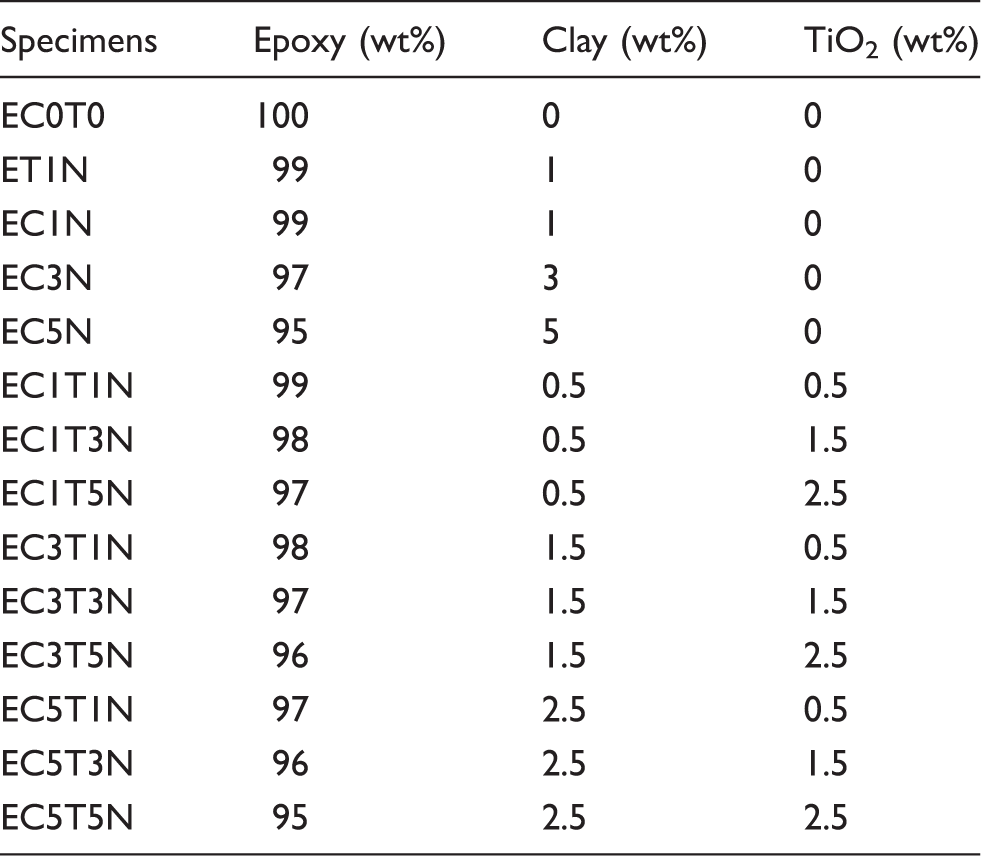
In this experiment, the ECTN was prepared with 1, 3, and 5% nanoparticles, as seen in Table1. In the first step, nanoparticles were dried at 60℃ for 10 h in oven. Then, nanoparticles were mixed into epoxy matrix by a mechanical mixer in 2000 r/min for 2 h and followed by ultrasonication (sonicator 3000 (Model S3000-010), Voltage 110 V, 50/60 Hz, power 550 W, frequency 20 kHz are used) for 30 min, to improve dispersion of nanoparticles in the epoxy matrix.14,15 Then, hardener was added to the epoxy/Clay/TiO2 by 2000 r/min mechanical mixer for 30 min. They were inserted into a vacuum to remove any bubbles. A vacuum oven was used to remove any bubbles. Finally, the mixture was injected into sheet and dumbbell-type silicon molds (ASTM D638m). Curing process consists of two steps: first 4 h at 80℃ and the second 12 h at 120℃.16,17 The manufactured specimens were subjected to EBI using Rhodotron-type electron accelerator machine TT200 model and by passing 10 MeV electron beam with a maximum of 8 mA beam current at room temperature in the air. A set of test specimens has received the following integrated doses: 100, 500, and 1000 kGy. This process is shown schematically in Figure 1.
Fabrication steps of ECTN. Composition of epoxy clay/TiO2 nanocomposites (ECTN).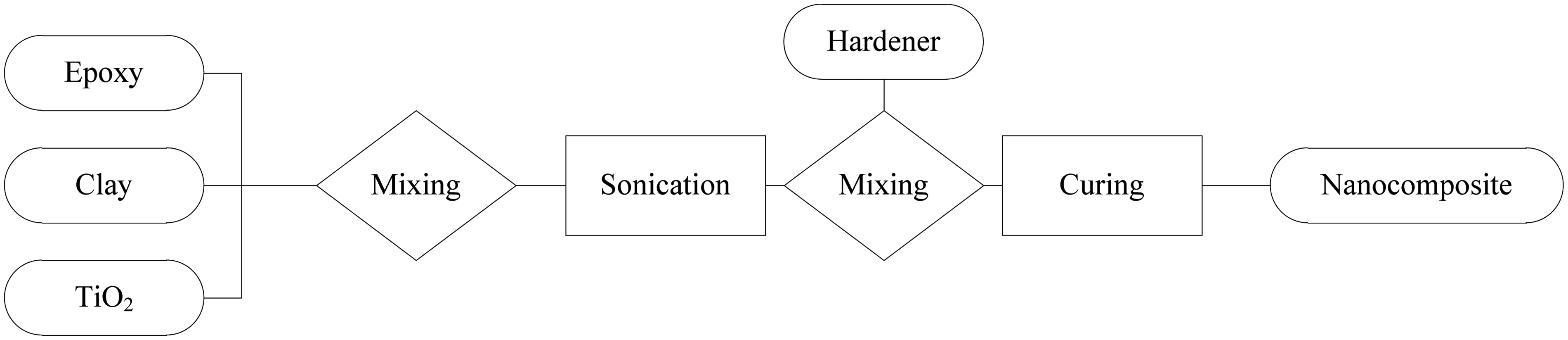
Electron beam irradiation
EBI was performed at 25℃ using industrial equipment (Harbin Guang Irradiation New Technology Company) with 3.6 kGy h−1 dose rate at room temperature in the air. Set of test specimens has received the following irradiate doses: 100, 500, and 1000 kGy.
Morphology
Generally, the structure of nanocomposites was studied using X-ray diffraction (XRD) analysis and transmission electron microscopy (TEM) observations. The inter-layer distance and diffraction pattern of nanocomposites that were produced by dispersing clay in epoxy were measured with an XRD experiment appraised at room temperature by a Philips X’Pert X-ray diffractometer (40 kV, 40 mA) with Cu (k ¼ 0.154 nm). TEM represents a powerful tool for the characterization of nanocomposites (the internal structure and spatial distribution spacing between nanoparticle platelets). For this study, the PHILIPS TEM (Model CM120) operating at an acceleration voltage of 120 kV was used. The ultrathin TEM samples with a thickness of 60 nm were cut using a microtome at room temperature.
Physical properties
Thermo-gravimetric analysis (TGA) was performed on a Thermo-gravimetric analyzer (TA instrument, model DTG-50) under 30–35 ml/min argon flow. Powdered samples were heated from 25 to 700℃ at 10℃/min, scanning rate accordance with ISO 527-1 and ASTM D3895-95, to obtain the TG and DTG curves. The tensile strengths of the samples were measured at room temperature using tensile tester (Iran, Model STM50) accordance ASTM D638m.
Results and discussion
Morphology
The XRD patterns of clay, EC1N, EC3N, and EC5N were shown in Figure 2(a) and EC1T1N, EC3T3N, and EC5T5N in Figure 2(b). The interlayer distance of clay was 1.64 Å (2θ = 5.6). As can be seen in Figure 2(a), by reducing the amount of clay, the diffraction peaks move to the lower angles and the inter-layer distance increase further than that of pure clay. Because of complete exfoliation of silicate layers in EC1N, there is no prominent peak in the diffractograms of this specimen observed, and silicate layers have been dispersed in the polymeric matrix separately.
XRD patterns clay and epoxy clay/TiO2 nanocomposites (ECTNs).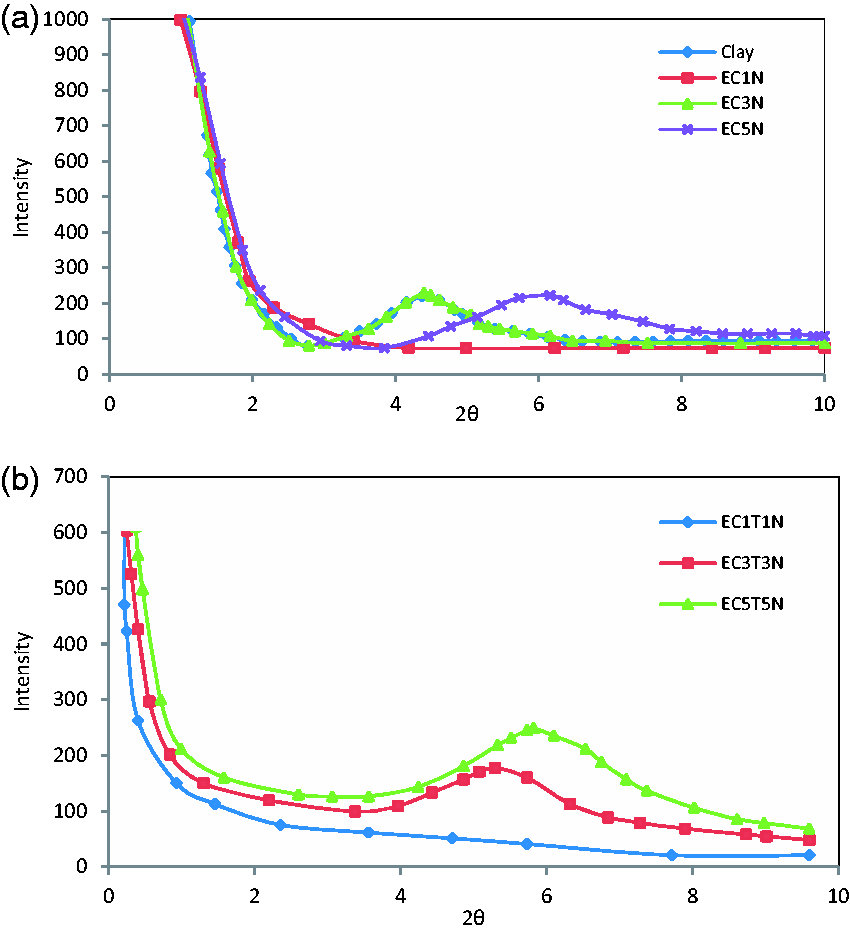
XRD patterns epoxy clay nanocomposites (ECN) and epoxy clay/TiO2 nanocomposites (ECTN).
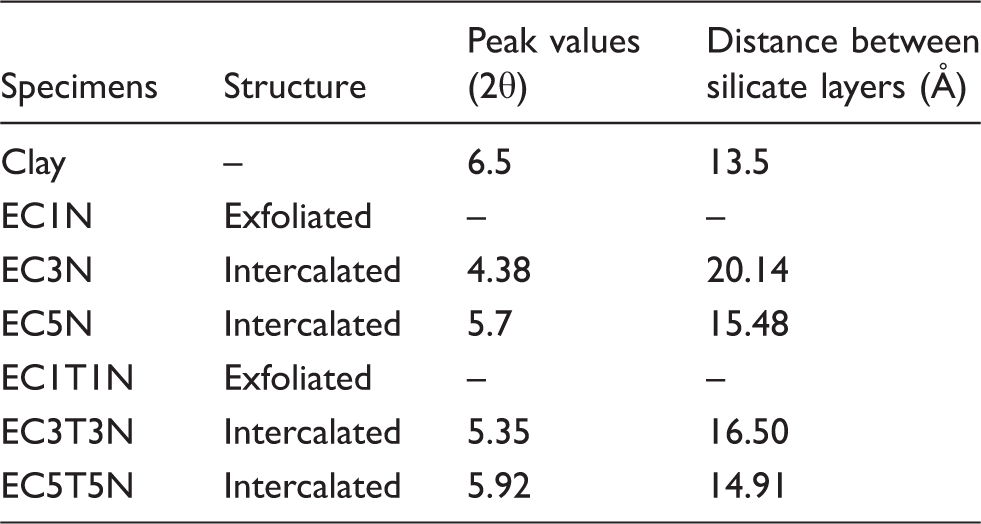
Figure 3 reveals the dispersion of clay, TiO2, and a mixture of these within the epoxy matrix, which was studied by TEM. Figure 3(a) and (b), respectively, belongs to ET1N and EC1N. Figure 3(a) indicates that the clay layers are dispersed in the matrix and complete exfoliation is achieved for this nanocomposite. In Figure 3(b), dispersion of TiO2 nanoparticles is individual and no agglomeration is evidently observed in matrix. As seen in Figure 3(c), a TiO2 nanoparticle is located near a lump of clay. Therefore, it can be assumed that the TiO2 nanoparticles prevent entering of polymer chains into silicate layers. This result confirms the XRD results as well.
TEM photographs of (a) EC1N, (b) ET1N and (c) EC1T1N.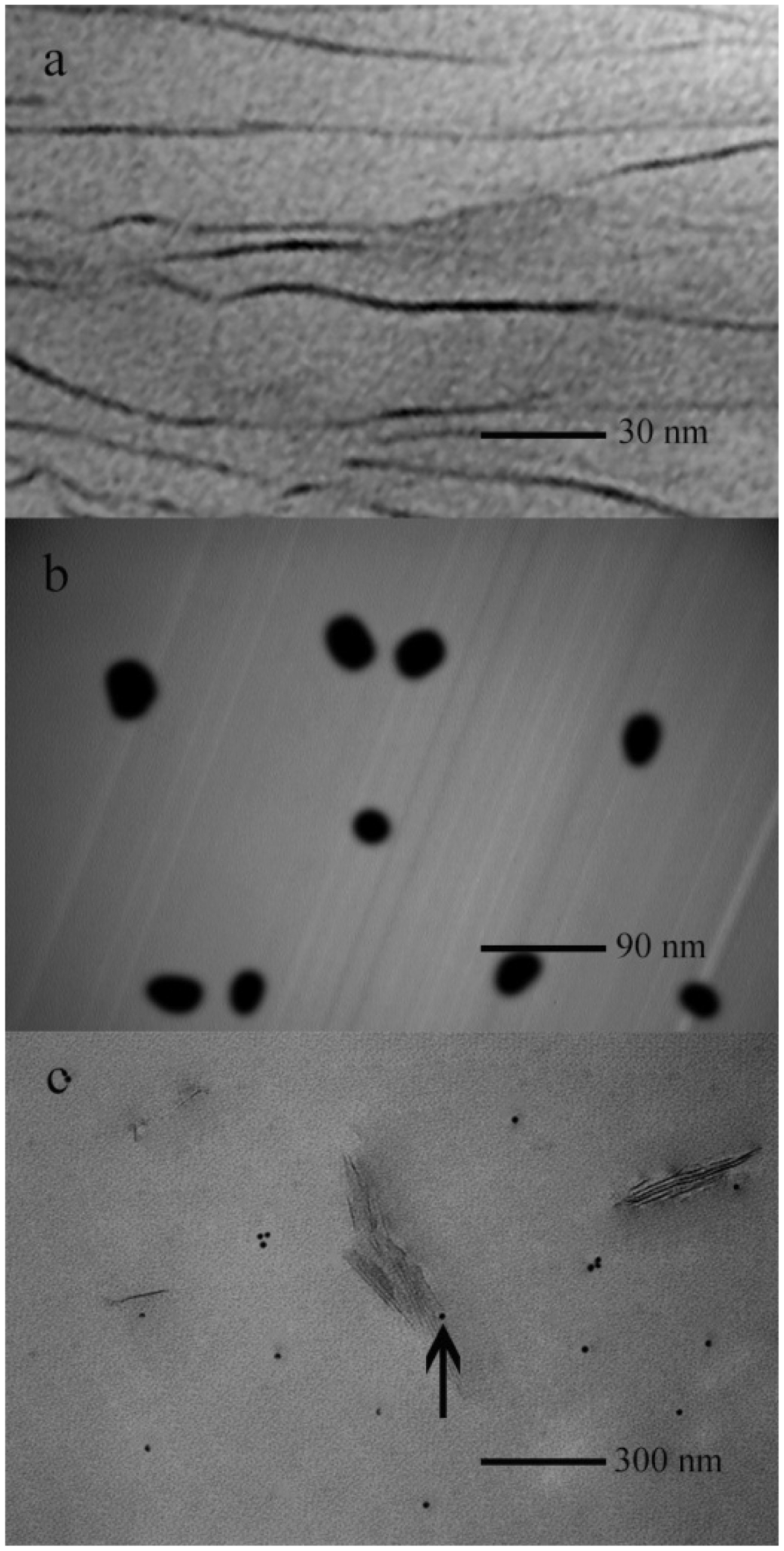
Mechanical properties
In this research, the tensile strength and tensile modulus for mechanical properties analysis of ECTN have been investigated and gathered in Table 3. The stress–strain curve of specimens in Figure 4 indicates that the addition of the clay and TiO2 into the matrix has improved the tensile modulus, but a satisfied enhancement in tensile strength was not observed. But in specimen with equal clay and TiO2 content (EC1T1N), the tensile strength improved with increasing amount of TiO2 nanoparticles. Table 3 shows that in specimen containing 1, 3, and 5 wt% clay, by increasing amounts of TiO2 nanoparticle, the tensile modulus rapidly improved. It is due to an interaction of polymer chains with Ammonium Alkyl ions in modified clay and TiO2.
20
Stress–strain curve of epoxy clay/TiO2 nanocomposites. Mechanical properties of epoxy clay/TiO2 nanocomposites (ECTN).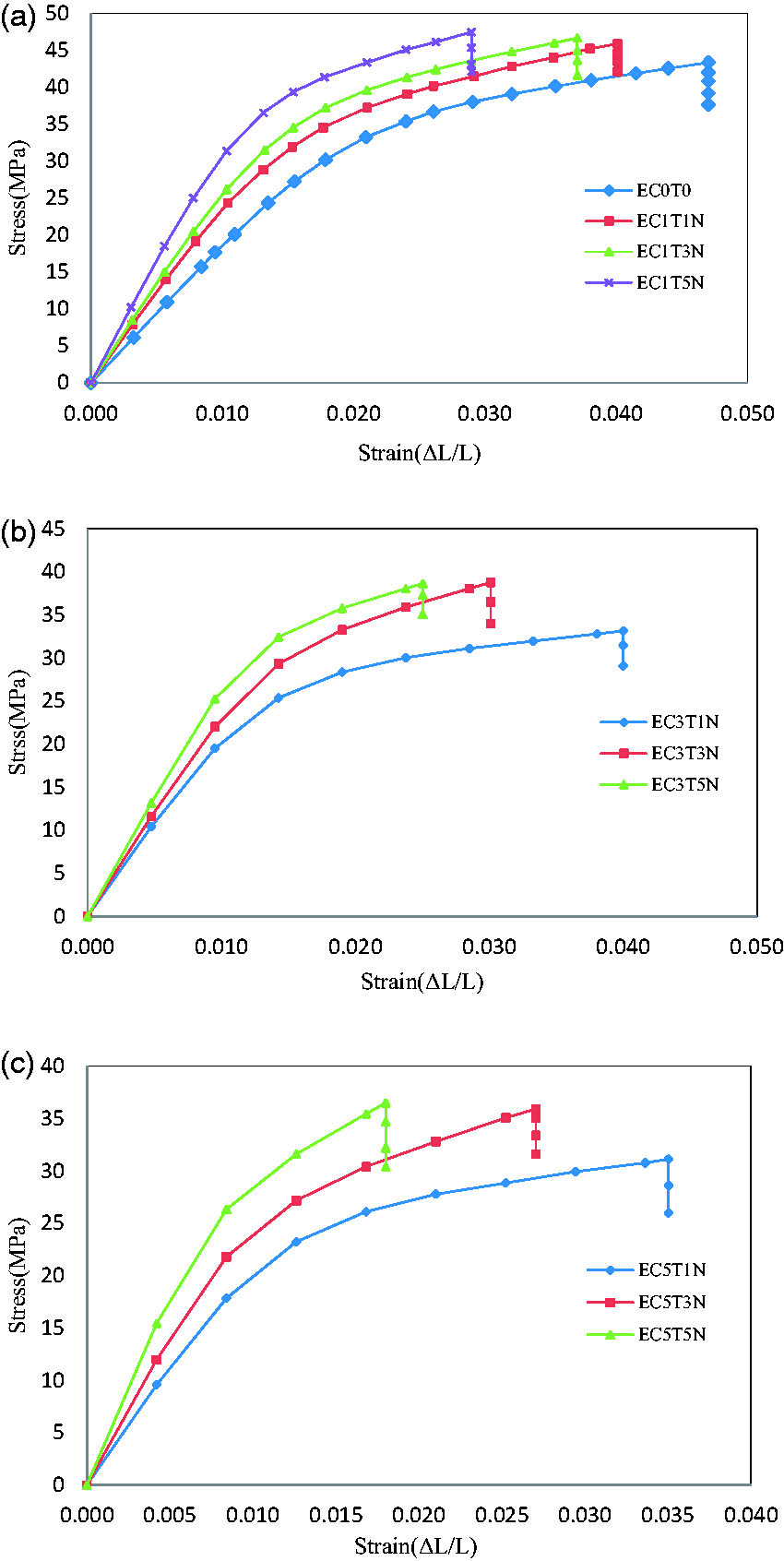
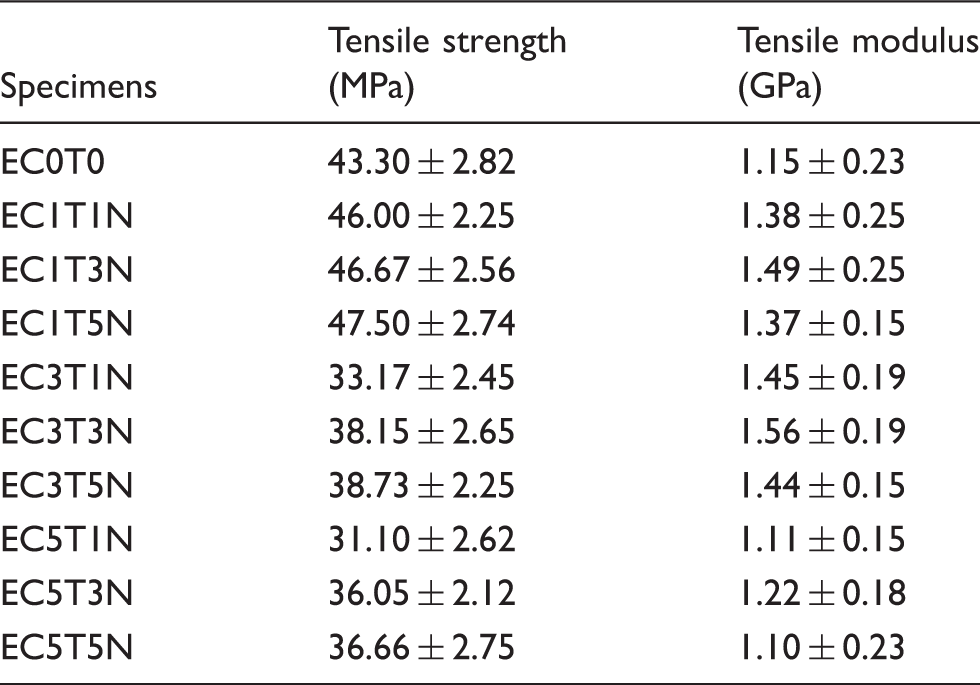
As can be seen in Table 3, with increasing clay/TiO2 content in matrix of nanocomposite, the tensile strength decreased to lower quantities clearly because of the accumulation of nanoparticles in the polymer matrix.
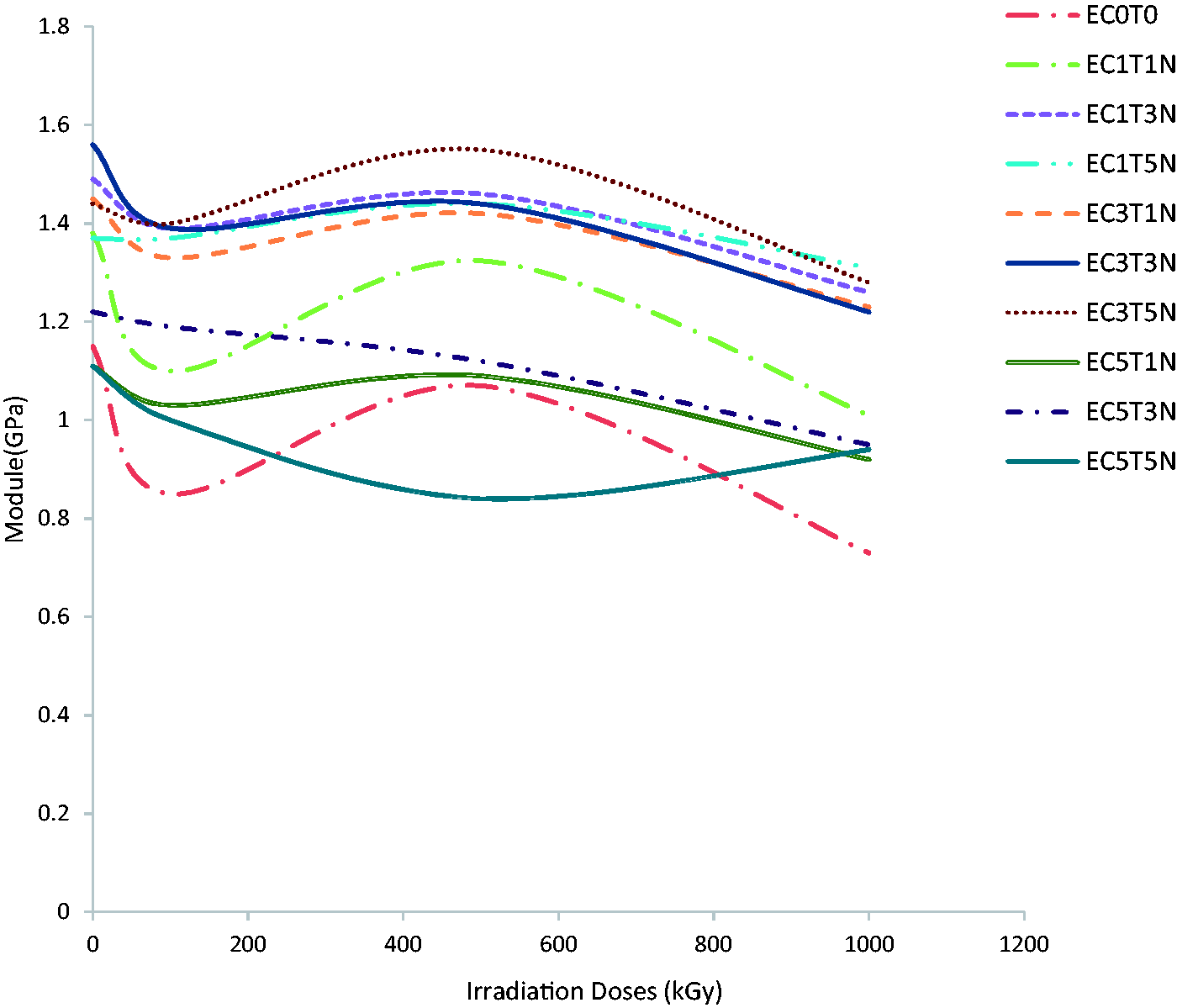
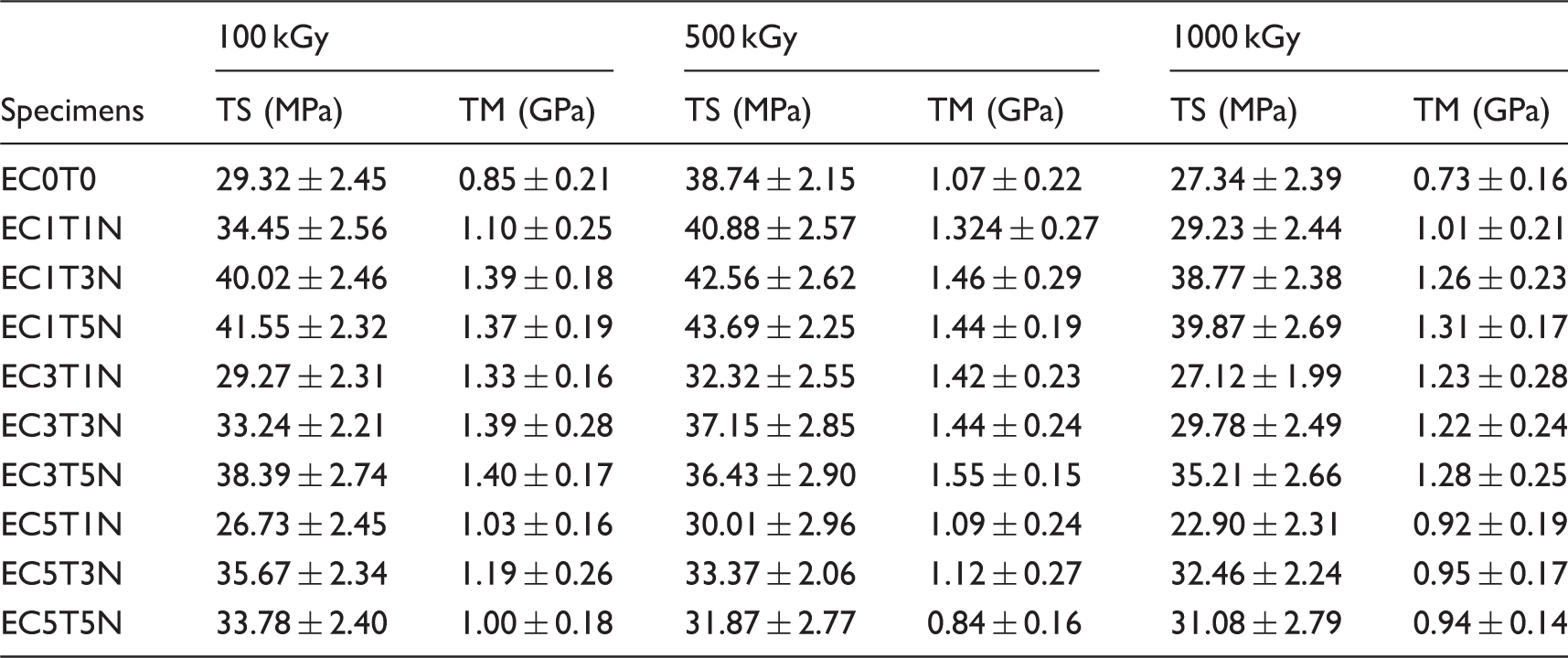
Table 4 shows the tensile strength and tensile modulus of ECTNs after exposure to EBI. At 100 kGy, the tensile strength and tensile modulus of all specimens decreased. As can be seen in Figures 5 and 6, the tensile strength and tensile modulus values for EC0T0, EC1T1N, EC1T3N, EC1T5N, EC3T1N, and EC3T3N of the ECTNs at 500 kGy are better than other specimens in different amounts of irradiation. At 500 kGy, ionizing radiation provided enough energy to cross-linking process and improved mechanical properties of the nanocomposites in comparison with 100 kGy. The maximum amount of destruction occurred in 1000 kGy. In this dose of irradiation, the tensile strength and tensile modulus value decreased clearly to lower quantities due to the degradation of polymer chains. As known, irradiation of samples can lead to polymerization of excess monomers composites or degradation of polymer chain, which depends on the amount of irradiation doses that expose to samples. These are two competing processes that always challenge for the mechanical properties of these composites.
Tensile strength of ECTN in different irradiation doses. Tensile modulus of ECTNs in different irradiation doses. Tensile strength (TS) and tensile modulus (TM) of ECTN after exposure to electron beam irradiation (EBI).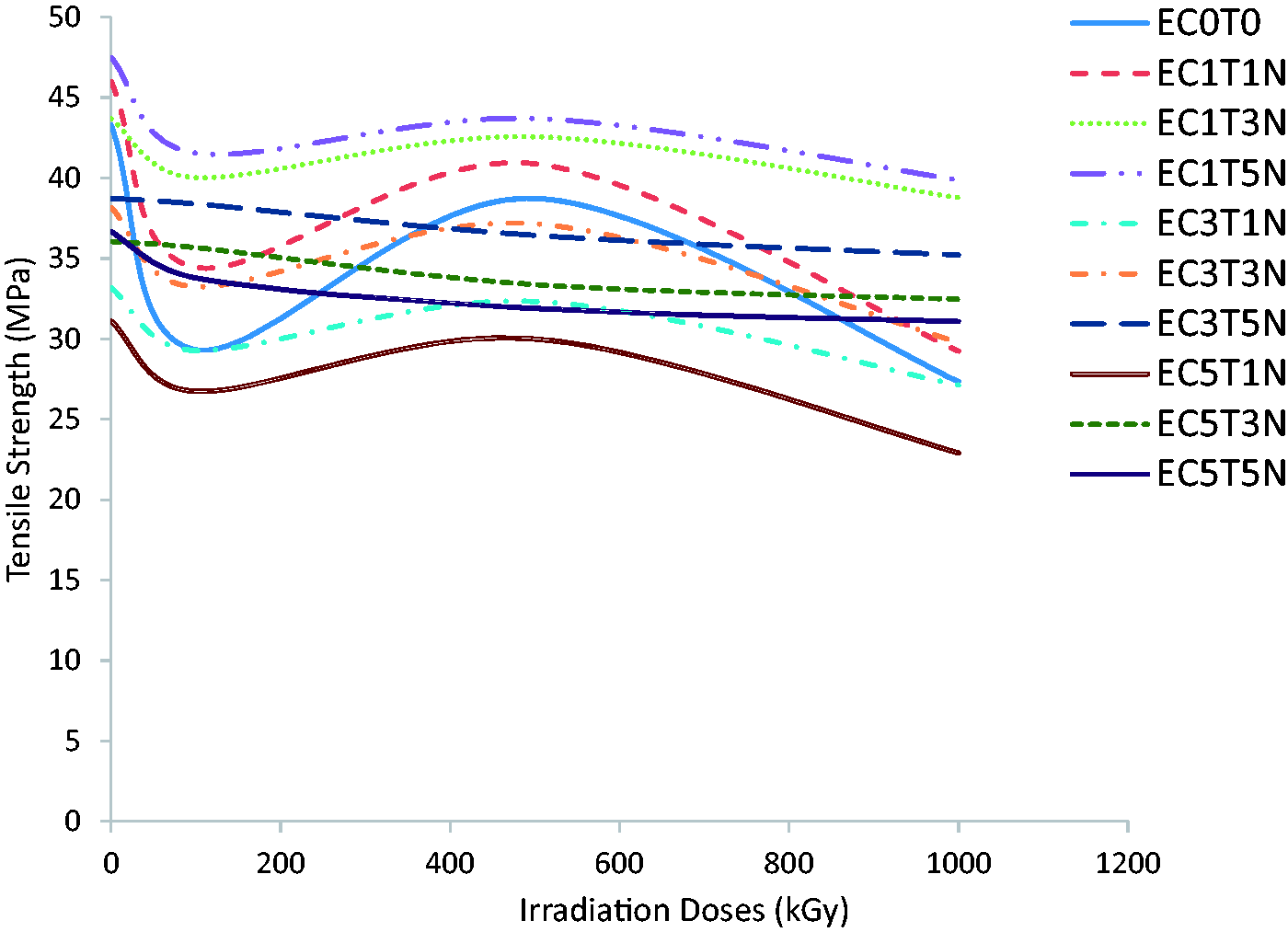
Thermal stability
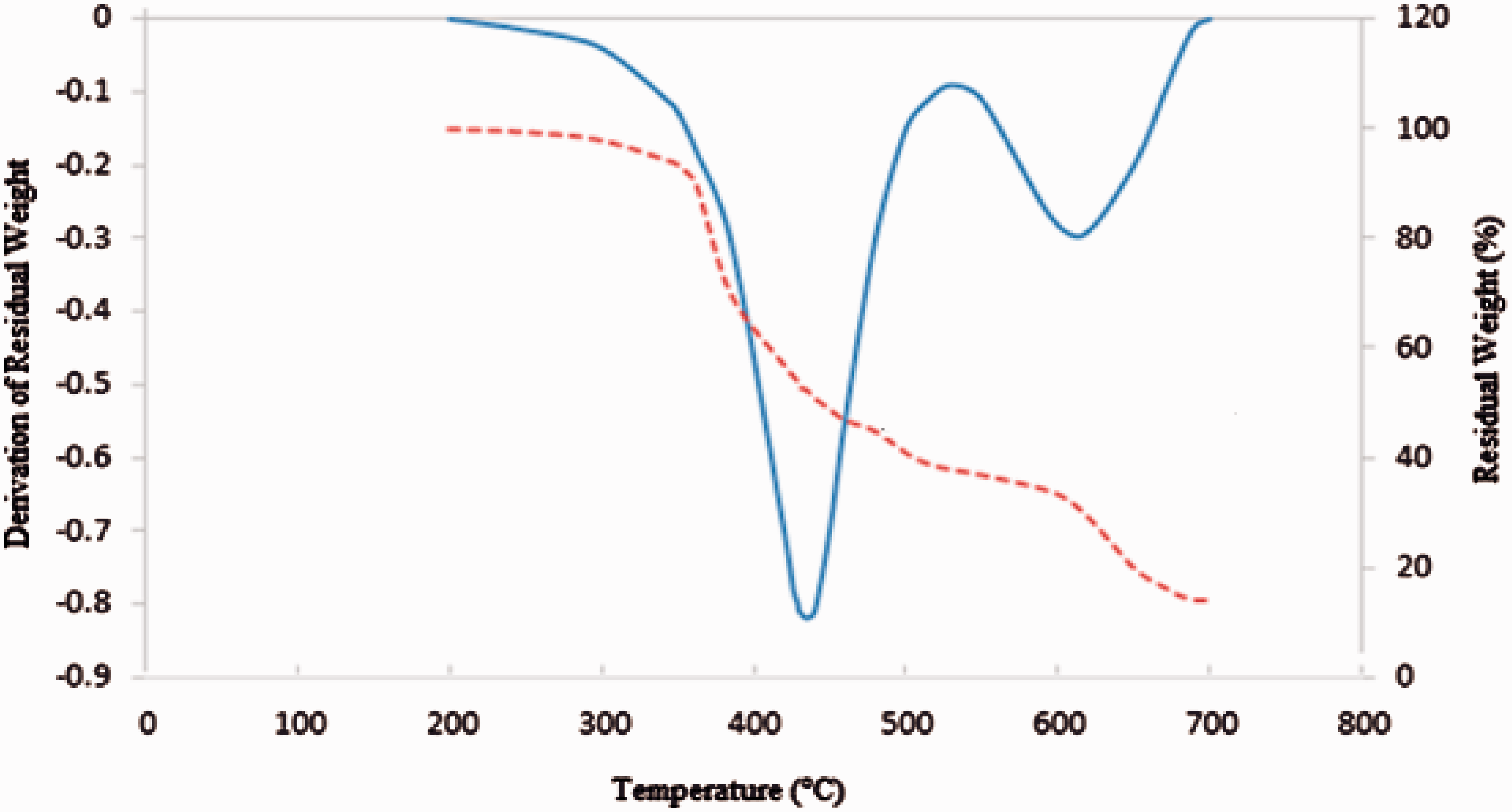
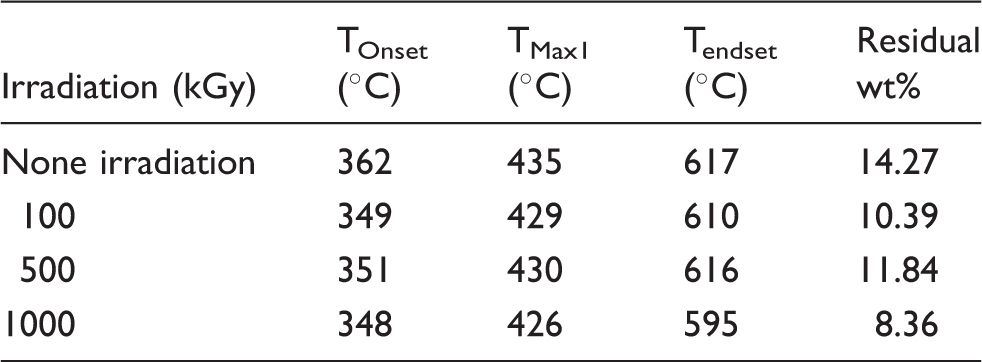
The results of simultaneous thermo-gravimetric–differential thermal analysis for EC1T5N before and after EBI are shown in Figures 7 and 8. The results showed that exposure to irradiation has negative effects in thermal stability of ECTN which could lead to polymer chain break and decrease in the molecular mass of ECTN. As can be seen in Table 5, the thermal stability of the EC1T5N at 100 kGy reduced, at 500 kGy slightly increased, and then decreased at 1000 kGy. Due to this trend, it can be said at all irradiation doses, the degradation process has overcome the cross-linking. Accordingly, it can be said that the degradation process, because of Hofmann elimination reaction, started at 100 kGy and caused cuts in polymer–nanoparticle bonds. In this dose, enough energy to overcome the cross-linking on degradation is not provided by EBI. At 500 kGy, ionizing radiation has provided enough energy to cross-linking process and improved the thermal stability of the nanocomposites in comparison with 100 kGy. The results indicate that at higher doses, due to high irradiation energy level, the matrix of nanocomposites has been destroyed, and the degradation process has overcome the cross-linking.
Thermo-gravimetric analyses (TGA) curve of EC1T5N before and after exposure to electron beam irradiation (EBI). Simultaneous thermo gravimetric–differential thermal analysis (TGA–DTG) curve of EC1T5N before exposure to EBI. Thermal stability parameters of EC1T5N before and after exposure to EBI as determined from thermo-gravimetric analyses (TGA).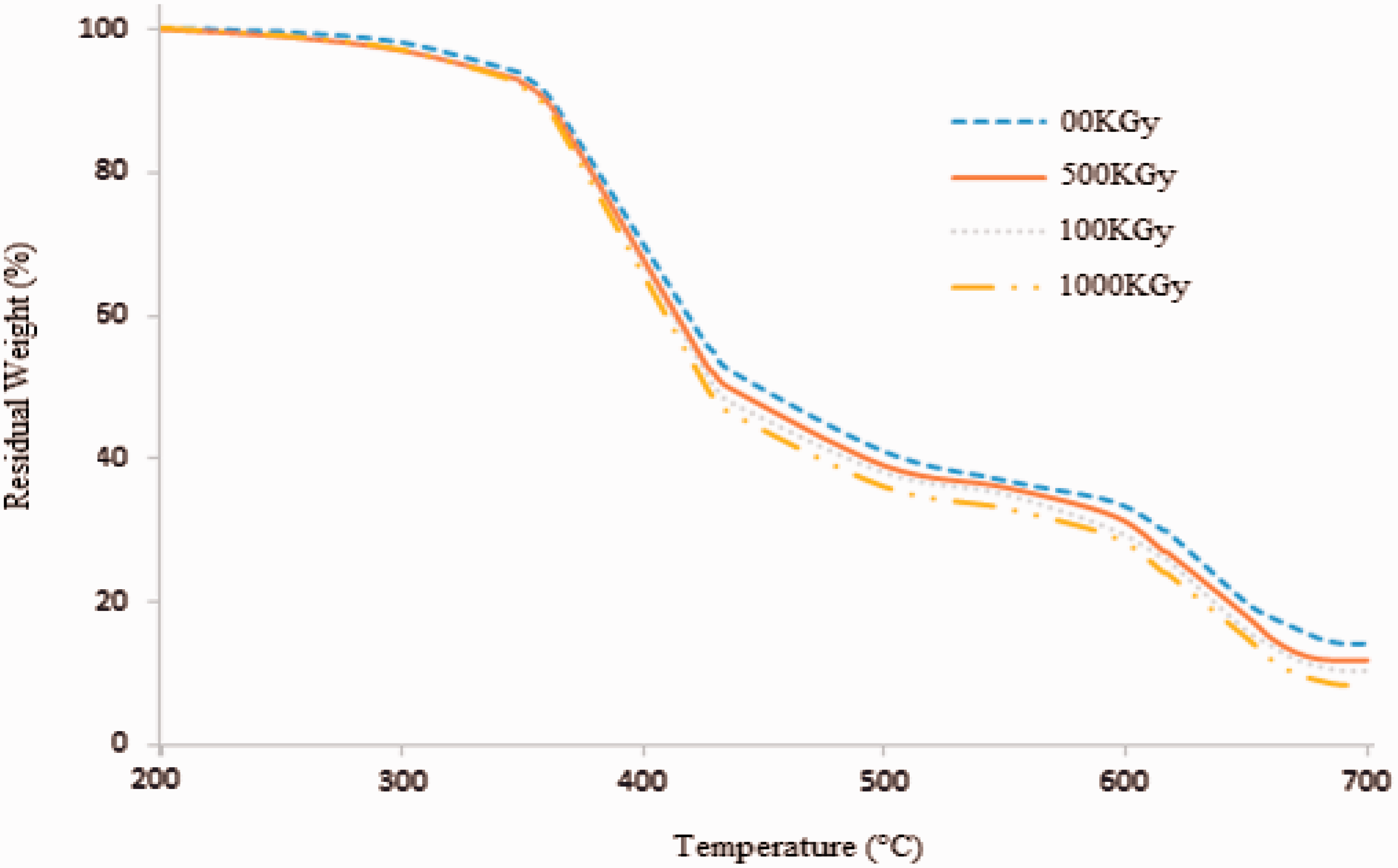
Conclusions
In this study, ECTNs were prepared and the effects of two different types of nanoparticles on mechanical were characterized. Then, nanocomposites were exposed to 100, 500, and 1000 kGy EBI and the effects of EBI on mechanical thermal properties of them were investigated. The following conclusions may be drawn based on the results obtained in this investigation.
The XRD patterns showed that in specimens containing 1% clay, the exfoliation has occurred and TEM indicated that TiO2 and clay particles have been uniformly distributed in the epoxy matrix. The results of mechanical tests showed that the EC1T5N has highest tensile strength. At 100 kGy, the tensile strength and tensile modulus of ECTNs decreased. At 500 kGy, the tensile strength and tensile modulus of EC0T0, EC1T1N, EC1T3N, EC1T5N, EC3T1N, and EC3T3N were better than other specimens and in comparison with 100 kGy were slightly improved. Finally, at 1000 kGy, the tensile strength and tensile modulus value decreases clearly to lower quantities. The results of thermal stability showed that the exposed to irradiation has negative effects on ECTN which could lead to polymer chain break and decrease of molecular mass of ECTN.
Footnotes
Funding
This research received no specific grant from any funding agency in the public, commercial, or not-for-profit sectors.
Conflict of interest
None declared.