







Abstract
The main purpose of this work consists of the mechanical characterization of a copolymer polypropylene (PP) filled with natural Alfa fibres. The elaboration of the PP-based composite reinforced with these natural fibres is explained. The mechanical behaviour of these composite blends has been analysed. Contrary to classical studies of the mechanical characterization of these kinds of materials which focus only on monotonic tensile tests, cyclic loading/unloading tests and loading/unloading tests interrupted by relaxation steps have been investigated. These tests enable us to compare the mechanical response of the virgin PP and the PP filled with Alfa fibres (Alfa/PP). Reinforcement by these natural fibres shows an impact in the improvement of the mechanical properties of this composite. All these experimental results constitute a data base used to identify the material parameters of a phenomenological constitutive hyperelasto-visco-hysteresis model. These tests also provide indications about the hyperelastic, viscous and hysteretic stress contributions of the hyperelasto-visco-hysteresis model with these materials during cyclic loading.
Keywords
Introduction
Composite materials are increasingly used in daily life due to their low production cost, light weight and efficient performance. Among these materials are the thermoplastics reinforced with natural fibres such as bamboo, jute, kenaf, flax, sisal, hemp, Alfa, etc. Their use has gained significant interest during the last decade because of their biodegradability. These natural fibres offer a number of advantages over other conventional fibres in the form of: abundancy, renewability and relatively low cost. These benefits present an opportunity to make an envorinmentally friendly material with excellent mechanical properties.1,2
Nevertheless, the manufacture of these materials is difficult due to poor compatibility between the hydrophobic polymer matrix and the hydrophilic cellulose fibres. This poor compatibility affects the mechanical properties that strongly depend on the interfacial adhesion between components. Therefore, a number of studies in the modification of the fibre’s surface properties were introduced to improve their adhesion with a different polymer matrix. 3 Some of these treatments have a physical nature, and some of them are of a chemical nature. These days, more and more natural fibre resources for products are being studied for polymer reinforcement, and the number of the studies and researches that have been published during the last decade reflects the growing importance of these new biocomposites.3–7 Since the use of these materials is growing, studying their mechanical properties and behaviour becomes necessary to ensure that their characteristics will be reliable and predictable.
The aim of the present paper is to study the mechanical behaviour during cyclic tests of a thermoplastic reinforced with chemically treated natural fibres extracted from the Alfa plant. Alfa fibres are available in large quantities in North Africa. They have good mechanical properties compared to other natural fibres, 8 and they are mostly used to produce paper. Paiva et al. 9 have studied the tensile properties of a single filament of Alfa fibre, resulting in values of approximately 20 GPa and 250 MPa for tensile modulus and yield strength, respectively. Arrakhiz et al. 10 have investigated the effect of chemical modification (alkali treatment, etherification treatment and esterification treatment) on the Alfa fibre’s surface and its impact on mechanical and thermal properties of composites. However, they only analysed the Young’s modulus and tensile strength. To improve the mechanical knowledge of this kind polymer reinforcement, it is important to analyse their mechanical responses during more complicated tests, such as loading–unloading cyclic tests.
In this study, to characterize the mechanical performance of a polypropylene (PP) filled with Alfa fibres, a commercial grade of copolymer PP named PPC7712 is used as a matrix. In our previous works, this material was studied in static tensile tests, 11 dynamic tensile tests 12 and under multi-axial loading conditions. 13
Monotonic tensile tests, cyclic loading/unloading tests and loading/unloading tests interrupted by relaxation steps (multi-step relaxation test) were carried out to investigate the mechanical behaviour of the Alfa/PP composite. The first objective of these tests is to have a full characterization of the stress–strain responses of the PP and Alfa/PP during the uniaxial tensile cyclic tests. Thus, the second objective of this study is to analyse the mechanical impact of the reinforcement with these natural fibres on these complicated cyclic tests.
Finally, an original phenomenological model called hyperelasto-visco-hysteretic (HVH) was used to simulate the mechanical behaviour of these materials during these tests. This model, written in three-dimensional (3D) and implemented in an in-house code HEREZH++, 14 is based on the superimposition of three stress components which correspond to linear viscoelastic, hyperelastic and pure hysteresis behaviour. In contrast to previous studies based on the same model,11,15 a new identification method of material parameters is performed in this paper. This method, presented in Laurent et al., 16 but with a fluoro-elastomer, is based only on a cyclic tension test interrupted by relaxation steps (multi-step relaxation test). It does not require an optimization procedure by a least-square method to minimize the experimental data and prediction of the test. The main advantage of this identification method is that, using only this multi-step relaxation test, hyperelasticity, hysteresis and viscosity contributions of the HVH model are discriminated, which results in the substantially easy and simple identification process of the material parameters. To verify the suitability of the material parameters obtained, experimental tests that were not used for the identification are simulated. A good performance of the proposed model is shown by a comparative analysis between the predictive solution and experimental data.
Materials and processing of composites
Relevant physical characteristics of the PPC7712 copolymer at 20℃. 11
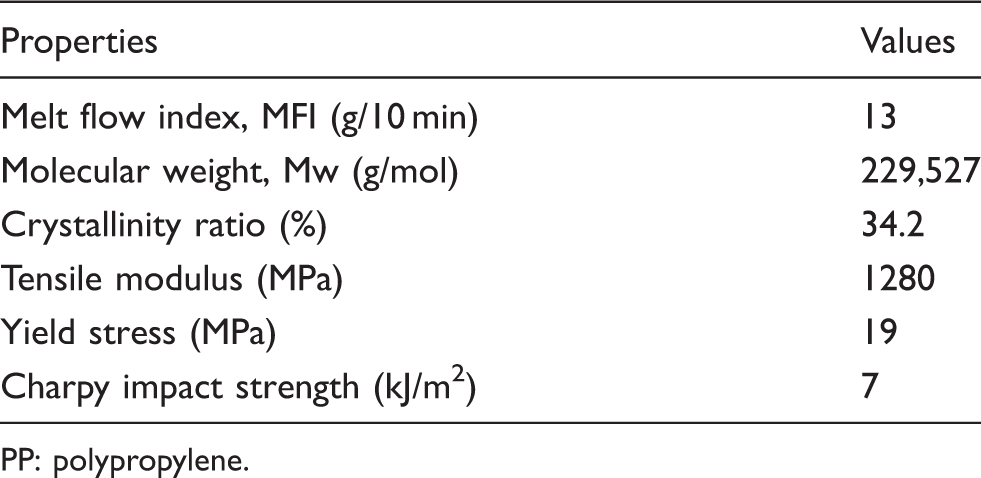
PP: polypropylene.
Chemical treatment of the Alfa fibres
To improve compatibility with a hydrophobic polymer and eliminate the majority of its non-cellulosic components, 19 Alfa fibres were chemically treated according to the standard procedure proposed in Arrakhiz et al. 10 and Le Troedec et al.20,21 To separate the fibres and clean their surfaces, whole fibres were first immerged in salted water with a salt (NaCl) concentration of 35 g/l at 60℃ for a duration of 24 h. The fibres were then placed in an aqueous sodium hydroxide (NaOH) solution with a concentration of 1.6 mol/l (corresponding to 64 g/l) for a duration of 48 h for each 35 g of fibres, with the objective of eliminating the lignin and pectin elements covering the fibre’s surface. Subsequently, to neutralize the NaOH solution, they were placed in an acetic acid solution (100 ml for each 35 g of fibres).
Finally, the Alfa fibres were washed with distilled water to remove any excess of NaOH to obtain a final pH = 7. Each step of this procedure was followed by a drying period in an oven at 60℃ for a duration of 24 h.
Alfa fibres characterization
The tensile strength and Young’s modulus of treated Alfa fibres were determined according to the ASTM D3379-75 standard test method for high-modulus single-filament materials. Elementary fibres were separated from their fibre bundles by hand and then mounted on 2-mm thick cardboard mounting cards with 10-mm holes punched into them such that the punched hole diameters determined the fibre gauge length. Fibres were positioned to bridge the hole and were secured in place with glue. This method follows the procedure proposed by the example in Beckermann and Pickering.
22
Mounted fibres were inspected under an Olympus BX60F5 metallurgical microscope to ensure that only a single fibre was present on each card and to determinate the average diameter of the fibre. Thirty fibre samples were analysed. For each fibre, three points were measured: two at the extremities of the fibre and one point on the middle of fibre. The average diameter of the fibres was equal to 185±39 μm. The cross-section area was also measured for the 30 fibres. The distribution of this experimental value is given in Figure 1. The average cross-section area is of 28110 μm2 (green line in Figure 1).
Distribution of the cross-section area as function as the fibre number (in green the average value).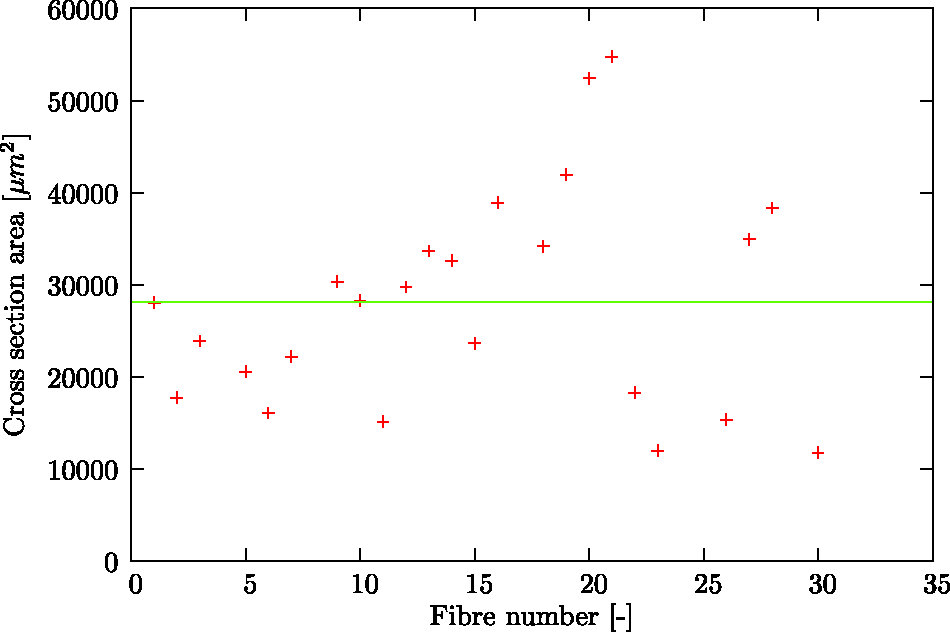
The mounted single fibre was placed in the grips of an MTS tensile testing machine, and the supporting sides of the mounting cards were carefully cut using a hot-wire cutter. Tensile tests were performed until failure at a rate of 5 mm/min using a load cell of 50 N at room temperature (20℃). With the average cross-section area previously given, an average Young’s modulus of 3.84±1.3 GPa, a stress and a strain at break of 173.4±5 MPa and 5±0.5%, respectively, were found.
Elaboration of the composite material
Composites reinforced with Alfa fibres were prepared by compounding neat PP. The fibre percentage in the matrix was fixed at 15 wt.%. The PP and the Alfa fibres were mechanically mixed in, using a single screw extruder at temperature of 190℃. After cooling at room temperature, the strands from the extruder were pelletized. Then, using these mixed pellets, tensile specimens were moulded using a Battenfeld HM 80 injection-moulding machine. The geometric properties of the tensile specimen follow the ISO 3167 norm.
Determination of the diameter and length of fibres after extrusion and after injection
To find out the influence of the extrusion and injection processes on the dimensions of the fibres, a microscopic analysis of the Alfa/PP composites after these two steps of elaboration has been performed. Film samples were prepared using a hydraulic press under a pressure of 3 bars for a duration of 2 min at a temperature of 190℃, from (i) the pellets obtained after extrusion and (ii) a portion of a tensile specimen after injection. From these film samples, 250 measurements of diameter and length of fibres were recorded. The dimensions (diameter and length) of the Alfa fibre were reduced after each process. Initially, the raw fibres have an average diameter of 185 μm which decreases from 70.8 μm after extrusion to 40 μm after injection step. The raw fibres have an initial length between 1 and 2 mm which decreases from 444.1 μm after extrusion to 273 μm after injection step.
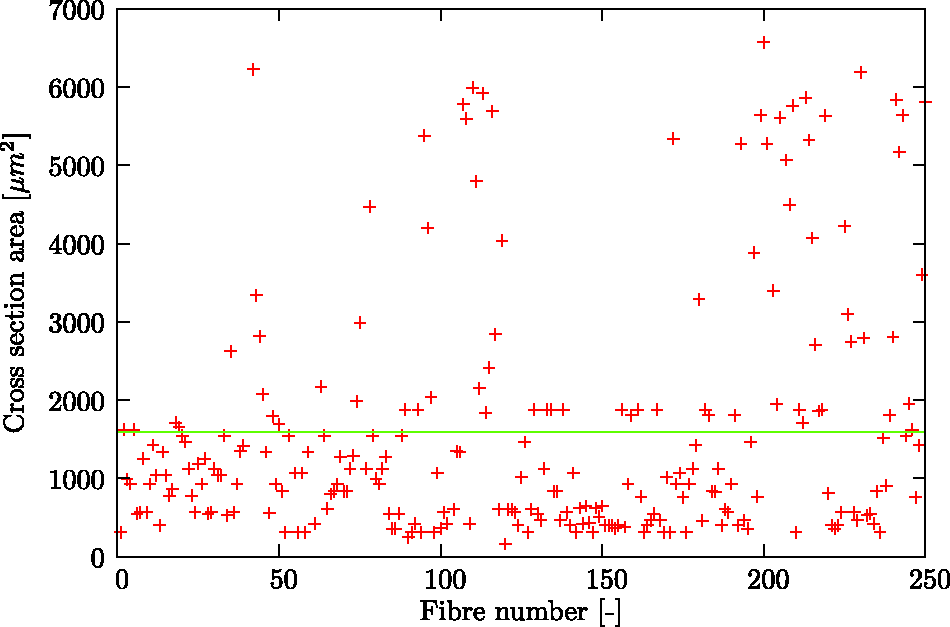
The cross-section area after extrusion and injection steps was measured. The distribution of the experimental results is given, respectively, in Figures 2 and 3, showing a relatively large dispersion of the cross-section area. The average cross-section area after extrusion step is of 4820 μm2 and after injection step is of 1593 μm2.
Distribution of the cross-section area as function as the fibre number after extrusion step (in green the average value). Distribution of the cross-section area as function as the fibre number after injection step (in green the average value).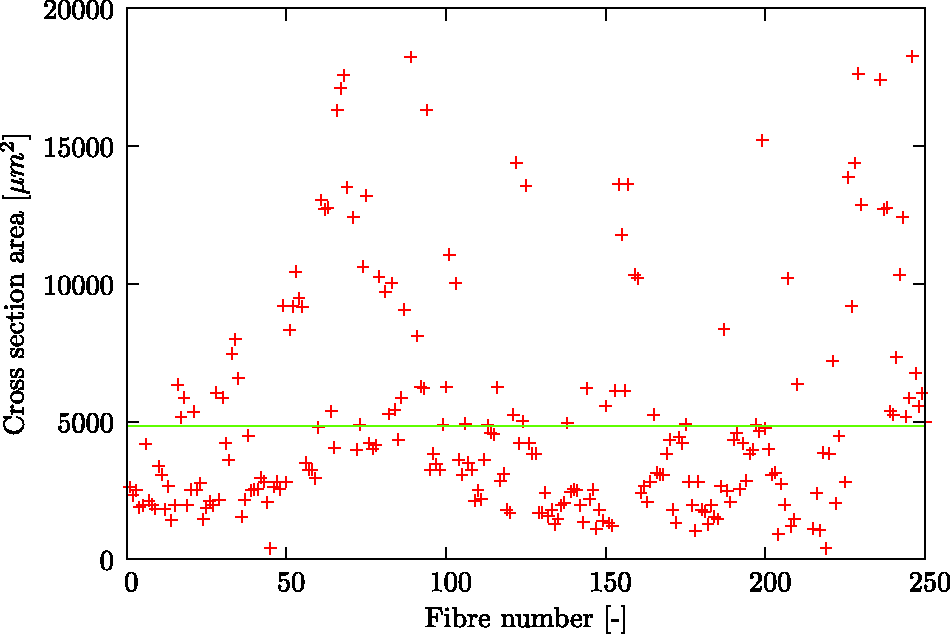
Mechanical characterization
To compare the mechanical behaviour of the virgin PP and Alfa/PP composite, several tests were performed under tension: monotonic tensile tests, cyclic loading/unloading tensile tests and loading/unloading tensile tests interrupted by relaxation phases (multi-step relaxation tests). The first aim of these tests is to better understand the macroscopic mechanical behaviour of these composites during the cyclic test which is rarely analysed. The second objective is to have a maximum amount of data to compare the simulation results using the HVH model with these experimental tests.
Tensile tests were carried out using the universal testing machine Instron 5560, equipped with a standard load cell of 10 kN and an extensometer with an initial gauge length of
In this paper, when not stated otherwise, all the experimental curves presented were based on the Cauchy stress and Almansi strain. Assuming that the transformation is isovolume, the Cauchy stress is given by:
Monotonic tensile tests
The first experiment performed was the standard monotonic tensile test with a constant strain rate Comparison of PP and Alfa/PP material responses in the monotonic tensile test.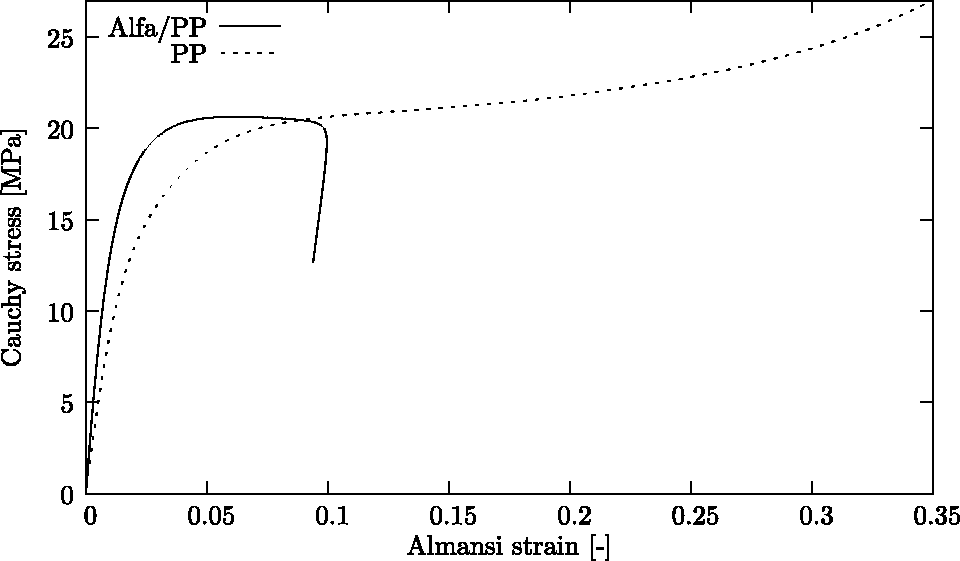
A specimen surface of the Alfa/PP was observed by scanning electron microscopy after the break at the end of a tensile test (see Figure 5). The fibre surface was damaged after the break. This result shows a relatively poor adhesion between the polymer matrix and the fibres at this strain level. This adhesion can be improved with a stronger chemical treatment, but it will be in contradiction with the environmental point of view whose the aim is to achieve interesting composite characteristics with low-treated fibres. To compare experimentally and numerically the two materials in the same conditions, the maximum strain imposed in the following tests will be restricted to 0.05.
Scanning electron microscopic analysis on a specimen surface after the break of a tensile test.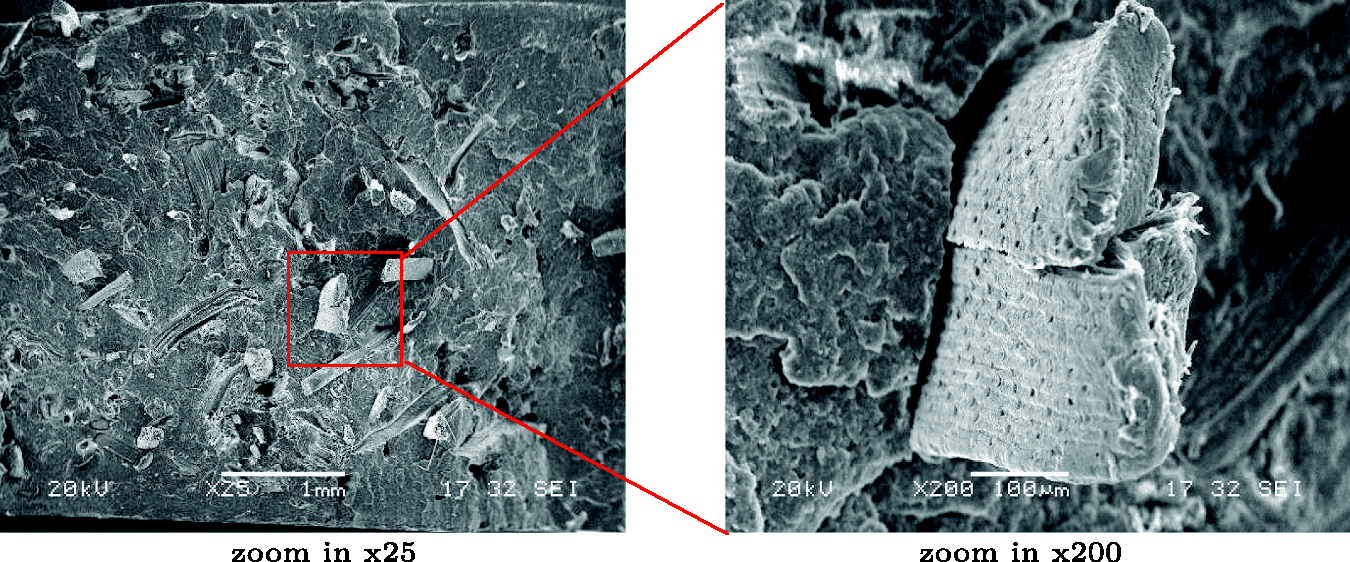
Loading–unloading tests with 50 cycles
To study the mechanical behaviour of the two materials under cyclic deformation loads, a further tension test was performed with cyclic loads. During cyclic test presented in Figure 6, the specimen was stretched up to the maximum engineering strain of 4.6% and then unloaded down to zero stress. To clearly compare the mechanical behaviour of PP and Alfa/PP, only the first, the 10th and the last cycle are shown in Figure 6.
Comparison of PP and Alfa/PP material responses in the loading/unloading test with 50 cycles (only the first, the 10th and the last cycle are presented).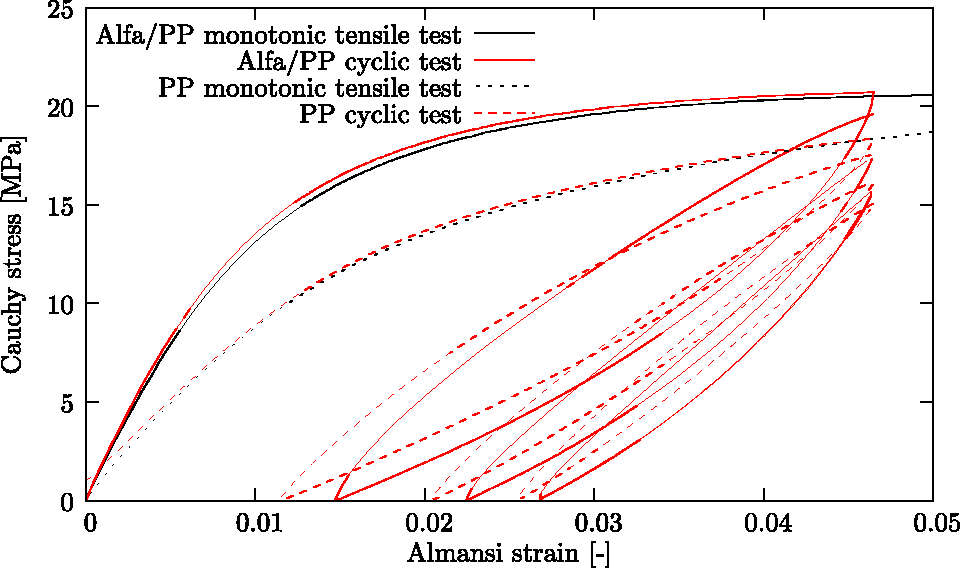
With the two materials, the responses obtained during loading and unloading are strongly non-linear. The remanent strain increases after each cycle. The maximum stress also decreases at the end of each cycle for a given strain level. The area of the hysteresis loop is reduced after each cycle and is almost similar between the two materials.
Multi-step relaxation tests
During a loading–unloading test, the test was interrupted at prescribed levels of axial strain Comparison of PP and Alfa/PP material responses in the multi-step relaxation test: (a) stress–strain response and (b) stress–time response.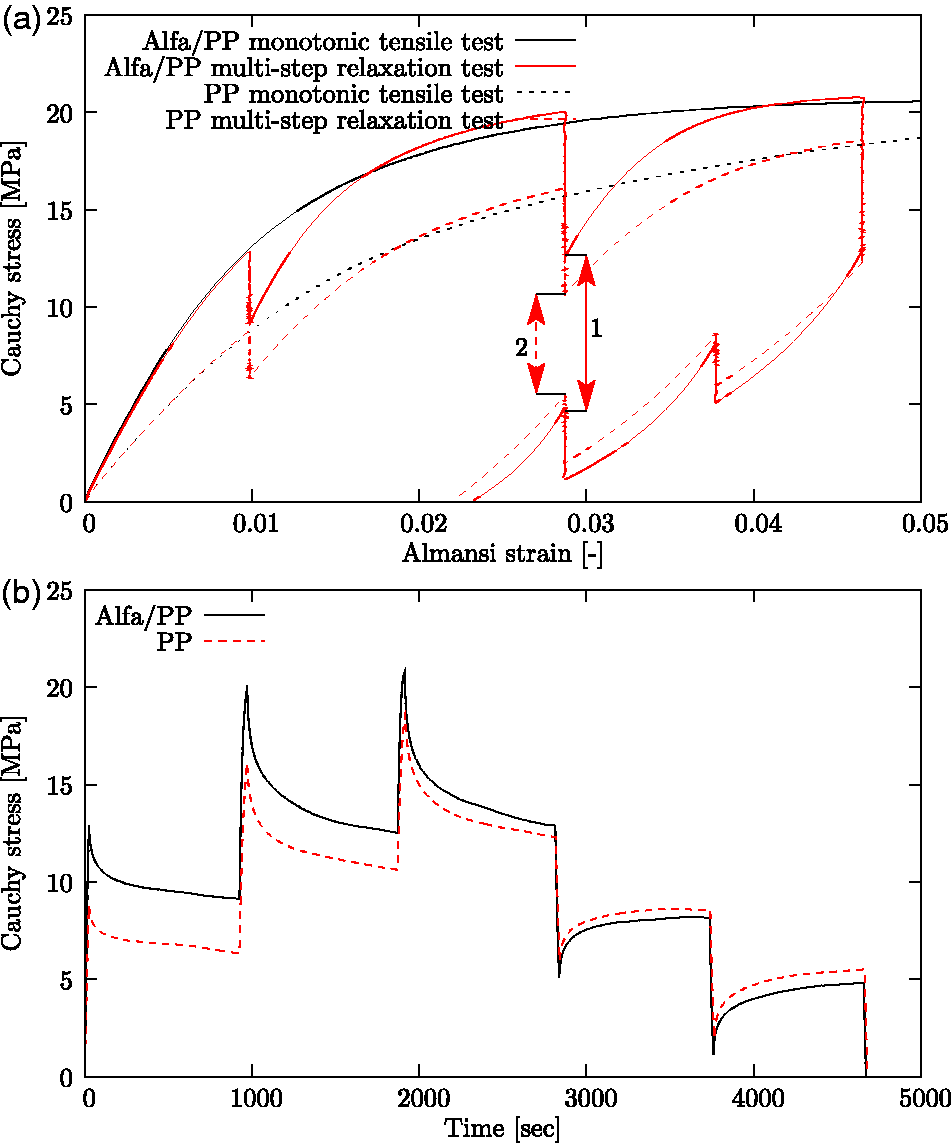
During this holding time, the load evolution was stored. The loading phase was interrupted by three relaxation phases at strain levels of
The results show that the stress decreases during the holding time in the loading path, while an increase is observed during the holding time in the unloading path. Note that, during the holding time, the stress evolves towards a stabilized value which gives the relaxed response. This kind of test constitutes an attractive way of identifying the material parameters corresponding to the three stress components included in the HVH model (see Section ‘Identification of the material parameters’). The amplitude of the relaxation phase at a given strain level
Hyperelasto-visco-hysteresis behaviour model
The macroscopic behaviour of solid materials is most often the result of simultaneous actions, at the relevant scales of reversible physical phenomena and irreversible physical phenomena. To describe the macroscopic properties of the global behaviour related to these physical phenomena, an assumption has been adopted which states that the internal stress power system results from the decomposition of this power in several contributions in stress. Each of these contributions is related to a particular physical phenomenon. From the results of the previous tests, the mechanical response of the two materials studied exhibits three classical main phenomena, namely a reversible elastic phase which occurs at the onset of the loading (hyperelastic response), a strain rate-dependent phase which can be described in terms of the viscosity and an irreversible plastic phase (hysteresis response) which occurs during the loading–unloading cycles.
If the processes of hysteresis, reversibility and viscosity are simultaneous, it is assumed that the stress power or the rate of internal mechanical work 
where
The strain rate 
This basic assumption gives our macroscopic approach a strong relationship with the physical processes involved. However, it leads to a conceptual break from constitutive and thermodynamic views compared to the classical elasto-plasticity approach, which advocates the decomposition of the total strain
The fundamental assumption (equation (2)) which involves three basic contributions
The non-linear behaviour of the polymer requires the establishment of finite deformation formalism for writing and implementing the constitutive laws. To implement the HVH model in a numerical schema, a 3D finite deformation framework has been developed in a finite element software, called HEREZH++. 14 An Eulerian formulation, the Cauchy stress tensor, the Almansi strain tensor and the Jaumann time derivative of the stress are chosen for this purpose.
For further details about the HVH model, see Zrida et al.11,12
Identification of the material parameters
In a previous study, 11 the identification method of the material parameters of the HVH model was performed using a numerical procedure by inverse analysis through an experimental database consisting of tensile tests, relaxation tests and cyclic loading–unloading tests. This complicated method using all experimental tests simultaneously leads unfortunately to several possible sets of material parameters and cannot really differentiate between the different stress contributions of the HVH model. Finally, this method is difficult to use for industrial purposes.
In this paper, a new identification method of material parameters is proposed. It is easier to use and only requires the multi-step relaxation tests, presented in Figures 7 and 8. This identification method, proposed in Laurent et al.
16
but with a rubber material, is direct and does not require the use of software by inverse analysis. It is performed in two steps. The first identifies the hyperelastic and hysteretic contributions, considering only the end of the relaxation periods corresponding to the equilibrium hysteretic state (as described by Lion
28
), that is independent of the strain rate (cf blue points in Figure 8). In the second step, the viscous parameters are determined from one relaxation phase of the multi-step tests. Analytical identification is then used to obtain the characteristic times of the three Maxwell elements.
Example of estimated viscous 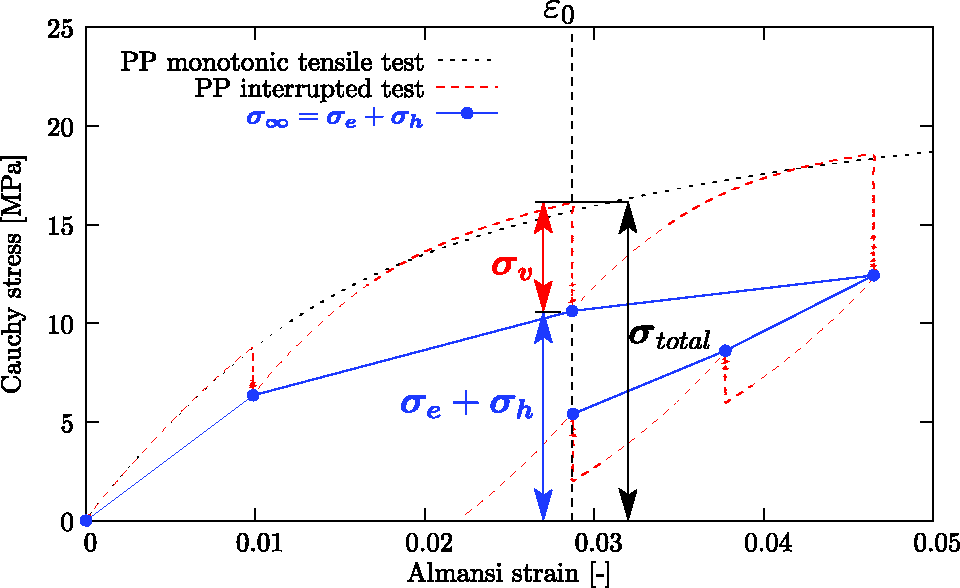
Hyperelastic and hysteretic contributions
The viscous stress
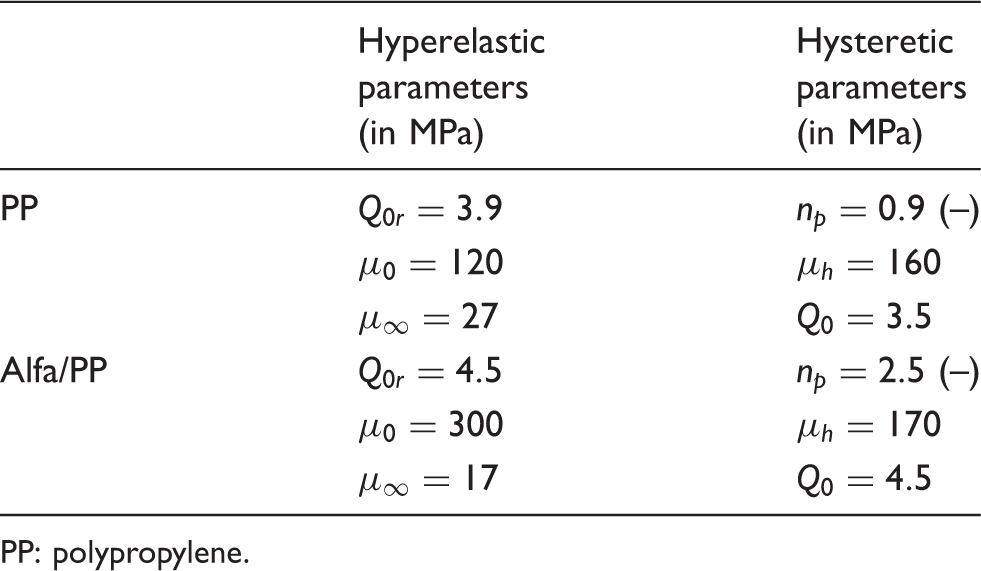
Hyperelastic and hysteresis parameters identified in the case of PP and Alfa/PP.
PP: polypropylene.
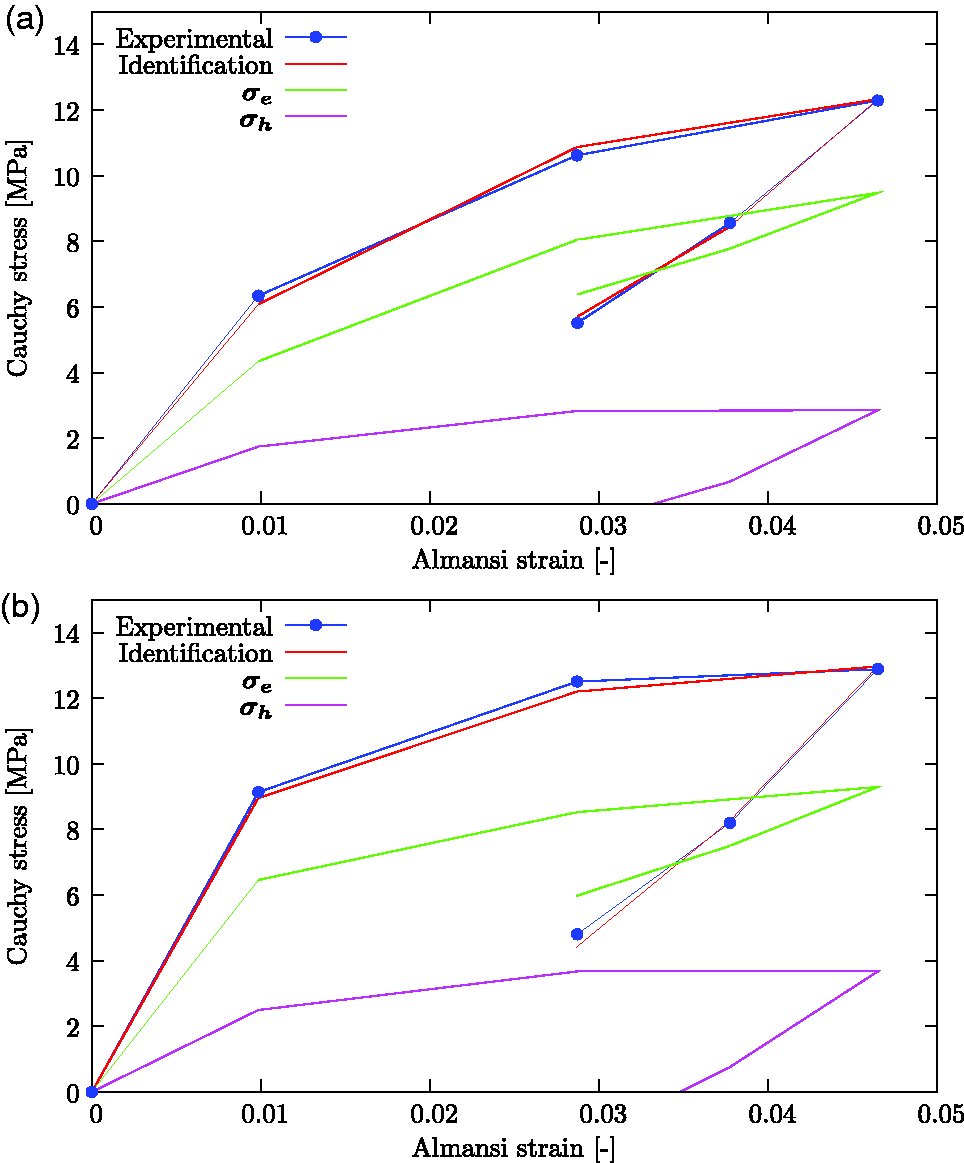
Identification of the hyperelastic and hysteresis contributions from the end points of relaxation phases in the case of: (a) PP and (b) Alfa/PP.
Viscous contribution
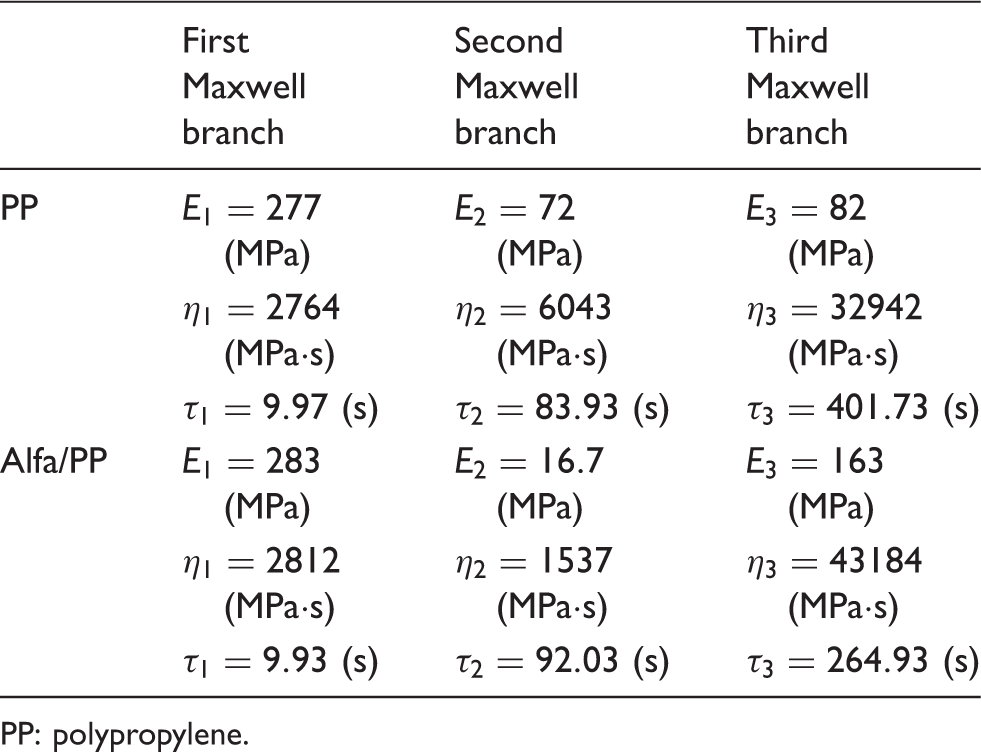
Viscous parameters of the three Maxwell elements are analytically calculated from the second relaxation phase for a strain level of 2.8% (Figure 8). First, the characteristic times of each branch τi are determined graphically on the experimental relaxation stress–strain curve by removing the loading phase (Figure 10). Each time ti of the i basic Maxwell elements is taken so that it verifies the relation Identification of the slope of the three Maxwell elements and final identification of the viscous contribution during the relaxation phase in the case of: (a) PP and (b) Alfa/PP.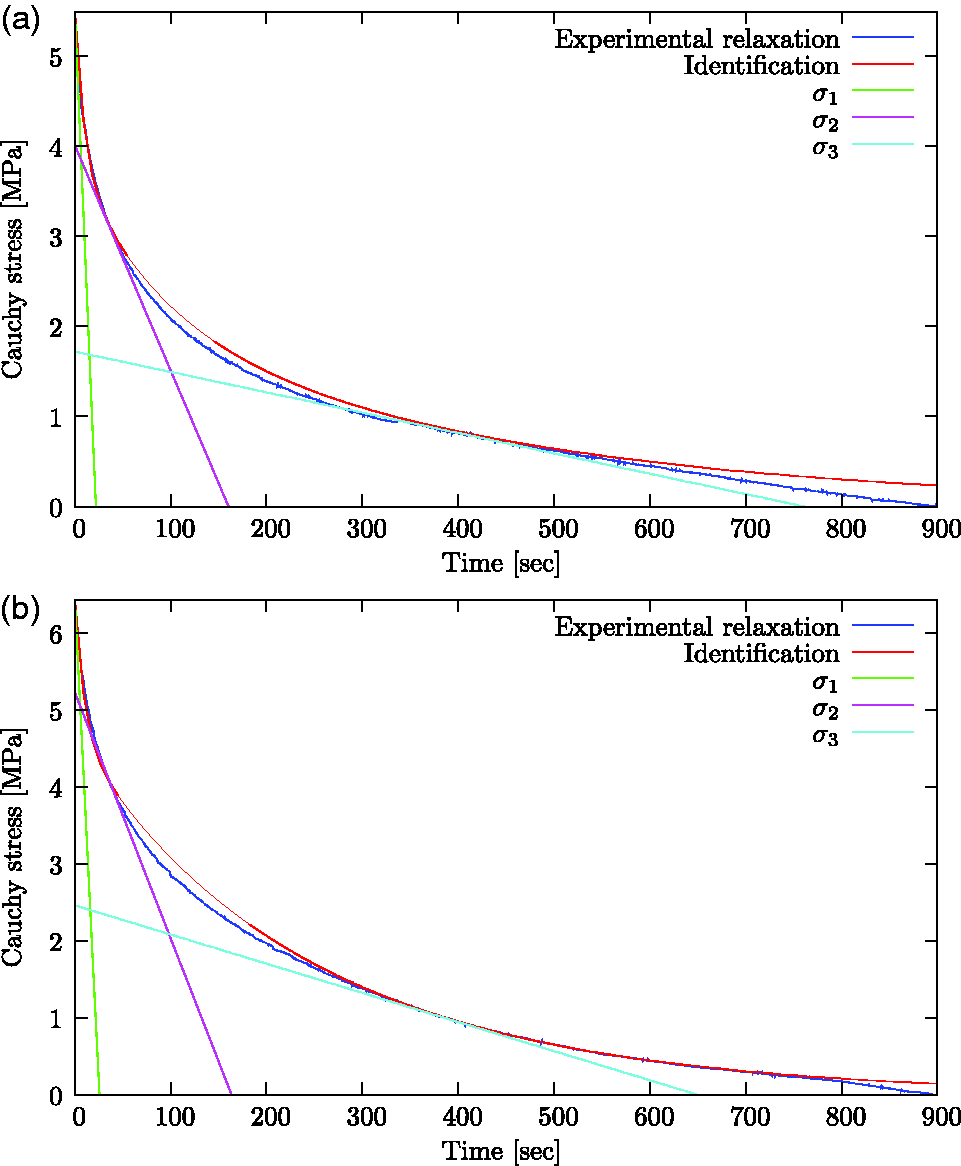
The viscous contribution is the sum of the three Maxwell elements

Knowing that each Maxwell element satisfies:
The stiffness Ei and the viscosity ηi of each Maxwell element are then obtained from the following equation

Viscous parameters of three Maxwell branches obtained in the case of PP and Alfa/PP (
PP: polypropylene.
Simulations using the HVH model
Using the hyperelastic and hysteretic parameters of Table 2 and the viscous parameters of Table 3, comparisons between experimental and model predictions for the tension tests interrupted by relaxation steps are presented in Figures 11 and 12 in the case of PP and Alfa/PP, respectively.
Comparison between experimental and identification in the loading/unloading test interrupted by relaxation steps in the case of the PP: (a) stress–strain response and (b) stress–time response. Comparison between experimental and identification in the loading/unloading test interrupted by relaxation steps in the case of the Alfa/PP: (a) stress–strain response and (b) stress–time response.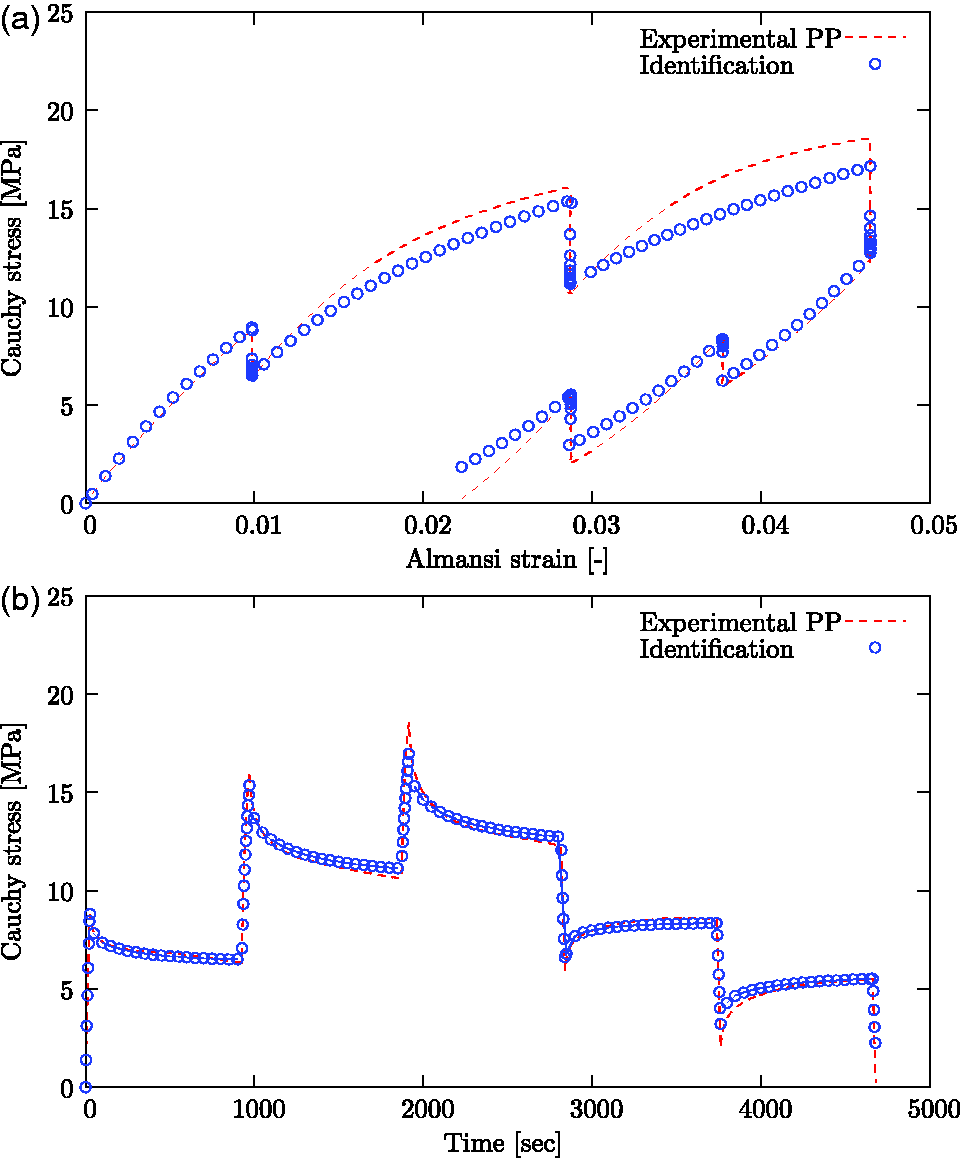
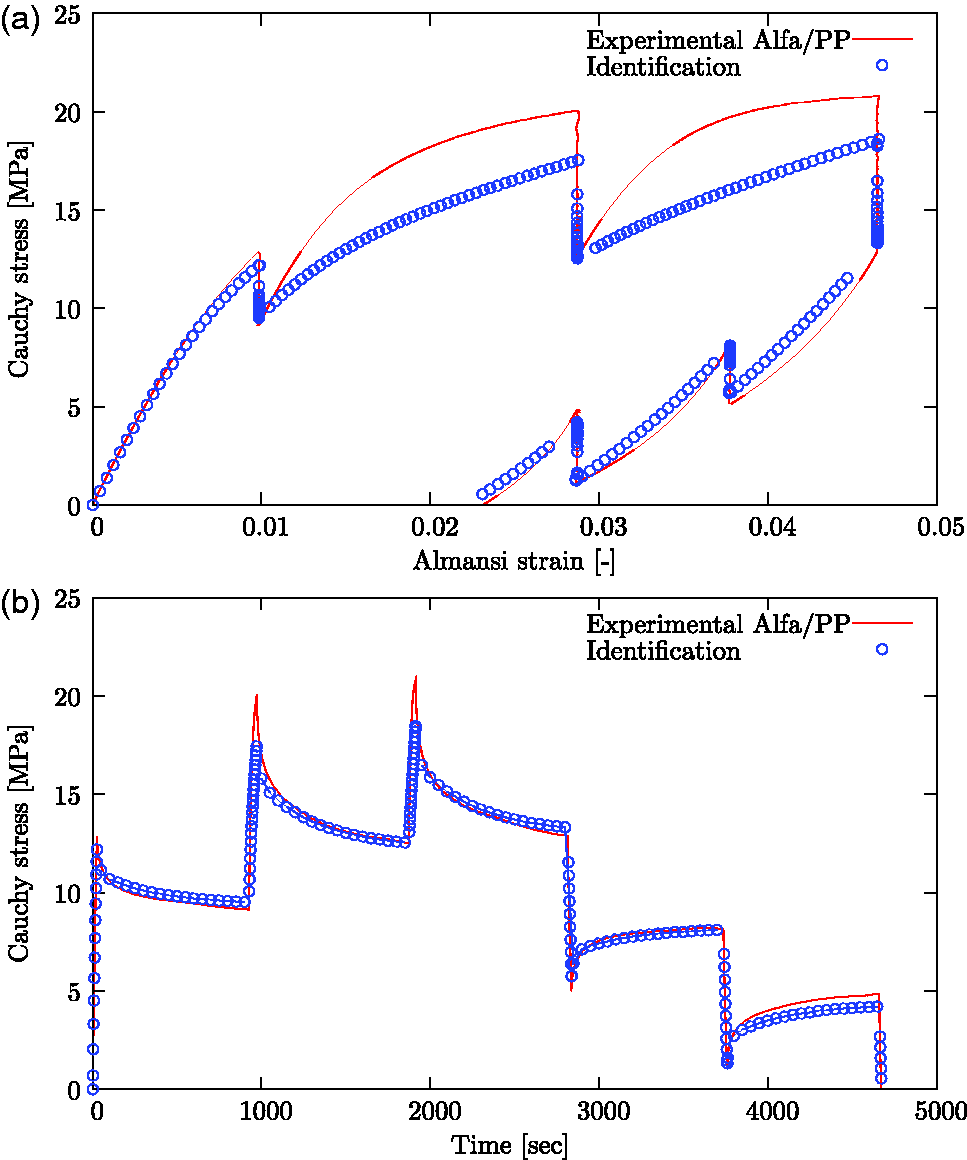
The results of the identification correlated well with the experimental data. A good correlation can be observed during the relaxation steps during the loading and unloading phases. However, especially in the case of the Alfa/PP, after the first loading and relaxation phase, a discrepancy is observed between the experimental and numerical results during the two loading steps. This is probably due to the fact that the viscosity in this material is strongly non-linear, whereas in the HVH model, the viscous contribution, using a generalized Maxwell’s model, is not dependent on the level of strain or stress.
To verify the pertinence of the HVH model under various loading conditions, based on the parameters herein identified in the case of the PP and Alfa/PP materials, simulations of experimental tests previously presented in Section ‘Mechanical characterization’ are performed. The numerical simulations of the complex loading test are carried out in the HEREZH++ software. Experimental boundary conditions are reproduced in a single hexahedral element by imposing experimental loading.
First, the numerical results of the monotonous tensile tests are compared with experimental data in Figure 13. In these figures, the effect of the hyperelastic, viscous and hysteresis contributions are presented. The hysteresis contribution is low, whereas the hyperelastic and viscous contributions are the highest. This monotonous tensile test shows that the effect of the viscous part is non-negligible in this kind of test. The discrepancy with the experimental results at the end of the loading is due to the limitations of the linear viscoelastic contribution with Maxwell branches used in the HVH model.
Numerical simulation of the monotonous tensile test in the case of: (a) PP and (b) Alfa/PP. Influence of the hyperelastic stress contribution 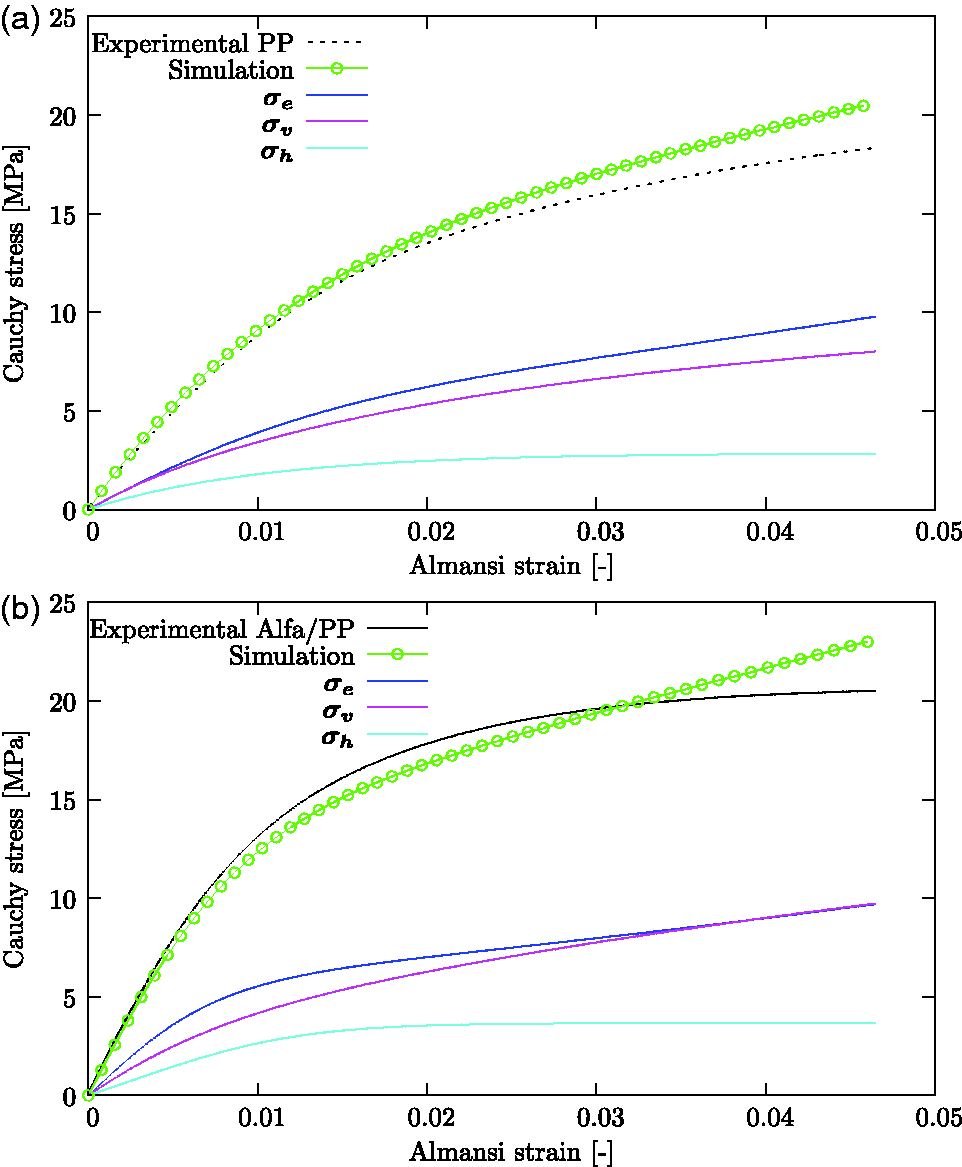
The loading/unloading test with 50 cycles is also numerically simulated. Comparisons with experiments are shown in Figure 14. Good agreement was found to exist between the experimental and numerical data obtained in these cyclic tests. In the case of the Alfa/PP, some significant differences were observed during the loading steps, as already observed in the monotonous tensile test; however, the hysteresis loops are relatively well described for all tests with the two materials.
Numerical simulation of the loading/unloading test with 50 cycles in the case of: (a) PP and (b) Alfa/PP.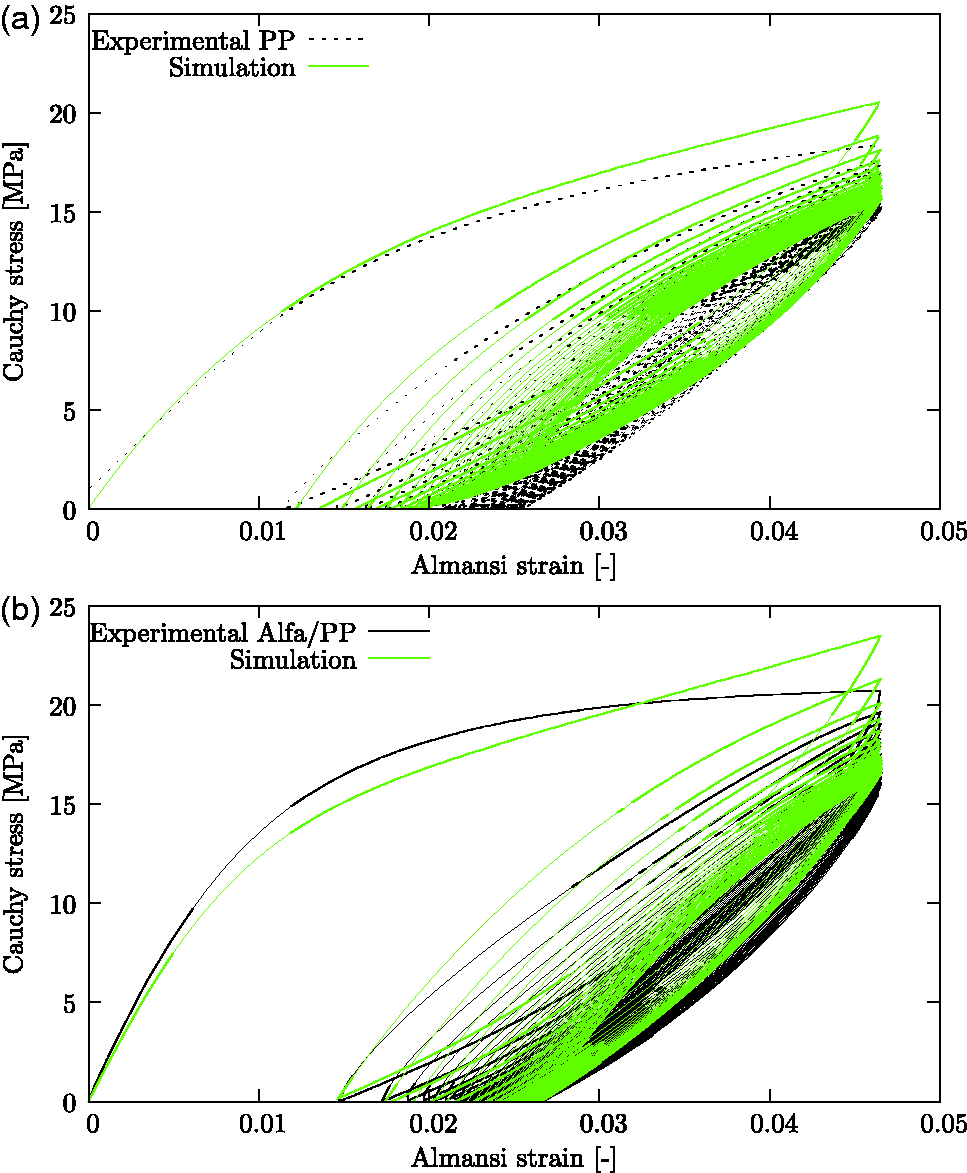
The identification method developed here has shown its efficiency to be able to simulate the mechanical behaviour in simple and cyclic tensile tests. This method is simple and rapid in comparison with the previous used in Zrida et al. 11 However, it appears that an improvement of the viscosity contribution in the HVH model is necessary to enhance the results obtained.
Conclusion
In this paper, a semi-crystalline polymer (PP) reinforced with natural Alfa fibres was studied. The elaboration and the treatment to improve the adhesion of fibres/matrix in the Alfa/PP blend were presented. Several mechanical tests for different loading targets (monotonic tensile tests, cyclic tensile tests and multi-step relaxations tests) were carried out. The experimental results showed a good adhesion between the polymer matrix and the Alfa fibres and a strong influence of the presence of fibres on the mechanical behaviour of PP. These tests were subsequently used as an experimental database to identify the material parameters of a HVH model. A new identification method, rapid and simple, already used for the simulation of the elastomers behaviour, has shown its efficiency in simulating the mechanical responses of the PP and Alfa/PP during all the experimental cyclic tests. Some limitations in the viscous part with a generalized Maxwell’s model were observed during the loading phases. The improvement of the viscous part of the HVH model seems important due to the fact that the viscosity of polymer material is strongly non-linear as a function of the strain or stress level.
Footnotes
Declaration of Conflicting Interests
The author(s) declared no potential conflicts of interest with respect to the research, authorship, and/or publication of this article.
Funding
The author(s) received no financial support for the research, authorship, and/or publication of this article.