







Abstract
In this paper, a simple four-variable first-order shear deformation theory is further applied to solve the bending and free vibration problems of antisymmetrically laminated functionally graded carbon nanotube (FG-CNT)-reinforced composite plates. The adopted four-variable theory contains only four unknowns in its displacement field which is less than the Reddy’s first-order theory. The equations of motion are derived from the Hamilton’s principle with the help of specific boundary conditions. Laminated FG-CNT-reinforced plates with different distribution types of carbon nanotube through the thickness are considered. The material properties of individual layer are estimated by using the extended rule of mixture. Analytical solutions of various simply supported antisymmetric cross-ply and angle-ply laminates are given for case study. The effects of carbon nanotube volume fraction, length to width ratio and thickness to width ratio on the non-dimensional fundamental frequency and the central deflection are investigated for antisymmetrically laminated FG-CNT-reinforced plates.
Introduction
Carbon nanotubes (CNTs) have received considerable attention in engineering fields owing to their outstanding mechanical, electrical and thermal properties, especially for the elastic moduli which are as high as 1 TPa for the shear modulus and 5 TPa for the Young’s modulus. Thus, the CNTs are nowadays considered as one of the most promising reinforcements for composite materials and have great potential in replacing traditional reinforcement materials for engineering applications. Thus, this topic has inspired great interest for researchers and numerous research works have been fulfilled related to the CNT-reinforced composite structures since last decades.
The static and dynamic characteristics of CNT-reinforced composite have been studied analytically, numerically and experimentally since the recent decades. There are a lot of literature works that introduce the current research state of CNT-reinforced composites with uniformly distributed or functionally distributed carbon nanotube (FG-CNT) alignment through the thickness. The modeling of FG-CNT has many similarities with conventional functionally graded plates and shells1,2 for which the theories have been well established. Since the FG-CNT plates are reinforced by the CNT, the effective material properties of the CNT-reinforced nanocomposites are conventionally estimated by a micromechanics model, the Eshelby–Mori–Tanaka approach or the extended rule of mixture,3,4 considering the small-scale effect of CNTs on the overall material properties. Aragh et al. 5 studied the vibrational behavior of continuously graded CNT-reinforced cylindrical panels based on the Eshelby–Mori–Tanaka approach to estimate the effective constitutive law of the elastic isotropic medium with oriented, straight CNTs. Wattanasakulpong and Ungbhakorn 6 provided the analytical solutions for bending, buckling and vibration responses of CNT-reinforced composite beams resting on the Pasternak elastic foundation using different shear deformation theories. Zhang et al. 7 carried out the analysis of flexural strength of FG-CNT-reinforced cylindrical panels based on the first-order shear deformation shell theory considering four types of CNT distributions and conducted detail parametric studies to reveal the effects of volume fraction of CNTs, edge to radius ratio and thickness on the flexural strength and free vibration responses of cylindrical panels. Zhu et al. 8 studied the static bending and free vibration analyses of CNT-reinforced composite plates by using the finite element approach based on the first-order shear deformation plate theory. The size-dependent vibration behavior of FG-CNT-reinforced polymer microcantilevers by introducing a material length scale parameter was studied by Rokni et al. 9 In their work, the fundamental frequency was improved by the proposed optimum CNT dispersion pattern rather than the commonly used uniform CNT distribution pattern in their work. Mehrabadi and Aragh 10 analyzed the stress of functionally graded open cylindrical shell reinforced by agglomerated CNTs subjected to mechanical loads. They discretized the governing equations by the two-dimensional differential quadrature method in the thickness and longitudinal directions and the trigonometric functions in tangential direction. The thermoelastic analysis of FG-CNT-reinforced composite plate was studied by Alibeigloo and Liew 11 using the Fourier series expansion along the in-plane directions and the state space technique across the thickness direction for the analytical solution. The buckling and postbuckling problems of FG-CNT-reinforced composite plates and shells have also been studied well. Lei et al. 12 presented the buckling results of functionally graded CNT-reinforced composite plates using the element-free kp-Ritz method under various in-plane mechanical loads. The postbuckling problem of CNT-reinforced functionally graded plates with edges elastically restrained against translation and rotation under axial compression was studied by Zhang et al. 13 Yas and Samadi 14 also studied the buckling problem of Timoshenko beams based on elastic foundation that is reinforced by single-walled CNTs and investigated the parameter effect on the buckling characteristics of the beam.
The free vibration and non-linear vibration of FG-CNT reinforced composites have also been comprehensively studied. For the free vibration, Yas et al. 15 investigated the three-dimensional free vibration problems of FG-CNT-reinforced cylindrical panels. Zhang et al. 16 investigated the free vibration problems of FG-CNT-reinforced triangular plates using the FSDT and element-free IMLS-Ritz method. Malekzadeh and Zarei 17 investigated the free vibration of quadrilateral laminated plates with CNT-reinforced composite layers. The Rayleigh–Ritz method 18 was also adopted to analyze the free vibration of rectangular nanoplates. All these works well revealed the important effect of parameters, such as volume fraction of CNT, CNT distribution type, aspect ratio, thickness to width ratio and boundary condition on the natural frequencies. There is also a large quantity of works regarding the non-linear analysis of FG-CNT-reinforced composites. He et al. 19 conducted a comprehensive study on large amplitude free and forced vibration responses of CNT/fibers/polymer laminated multiscale composite beams, where the governing equations were derived by the Euler-Bernoulli beam theory and Von Kármán geometric nonlinearity. Rafiee et al. 20 investigated the large amplitude free vibration of FG-CNT-reinforced composite beams with piezoelectric layers subjected to temperature and electrical loadings based on Euler-Bernoulli beam theory. They 21 also investigated the non-linear dynamic stability of piezoelectric FG-CNT-reinforced composite plates with initial geometric imperfection under thermal and electrical loadings, where the geometric imperfect shape can be of arbitrary types which take the form of the products of trigonometric functions and hyperbolic functions in the in-plane plane. Ke et al. 22 also studied the non-linear free vibration of FG-CNT-reinforced composite beams, but with a Ritz method they used to derive the governing eigenvalue equations which were further solved by an iterative approach. Shen and Xiang 3 conducted the non-linear analysis of CNT-reinforced composite beams resting on elastic foundations in thermal environments, including large amplitude vibration, non-linear bending and thermal postbuckling of nanocomposite beams. They 4 also investigated the non-linear vibration of CNT-reinforced composite cylindrical shells in thermal environments. They studied two types of CNT distributions, uniformly distributed and functionally distributed cases. The equations of motion were obtained based on a higher order shear deformation theory and solved by a two-step perturbation technique. They 23 later extended their approach to the non-linear vibration of FG-CNT-reinforced composite cylindrical panels resting on elastic foundations in thermal environments. Guo and Zhang 24 investigated the non-linear vibrations of CNT-reinforced composite plates based on Reddy’s third-order shear deformation theory, and the governing equations were also solved by the perturbation method.
Recent researches found that laminated structures of beams, plates and shells present higher mechanical performance than single layer structures. The merits of laminated structures have also inspired the researchers to study the laminated FG-CNT-reinforced composite which are capable of sustaining mechanical loads from various directions due to different CNT orientations. However, these works have not been comprehensively introduced until now, only a few studies have been introduced. Lei et al. 25 studied the free vibration problems of laminated FG-CNT-reinforced rectangular plates, but only for the symmetric laminations. They later 26 investigated the bending problem of laminated CNT-reinforced functionally graded plates using the element-free kp-Ritz method based on the first-order shear deformation theory. These works are limited to the symmetrically laminated FG-CNT-reinforced composites. Until now, the static and dynamic characteristics of antisymmetrically laminated CNT-reinforced composites have not been comprehensively studied yet. However, the antisymmetrically laminated structures also have significant applications for engineering structures. Thus, in this work, we investigate the bending and free vibration problems of antisymmetrically laminated FG-CNT-reinforced composite plates by using a simple four-variable theory. The effective properties are also estimated by the extended rule of mixture. The Navier solutions are given for the simply supported boundary conditions. Four types of CNT distributions, various volume fractions of CNTs, thickness to width ratios, length to width ratios and laminations are examined to investigate their effects on the static bending and free vibration responses.
Theoretical formulations
Laminated FG-CNT-reinforced plate
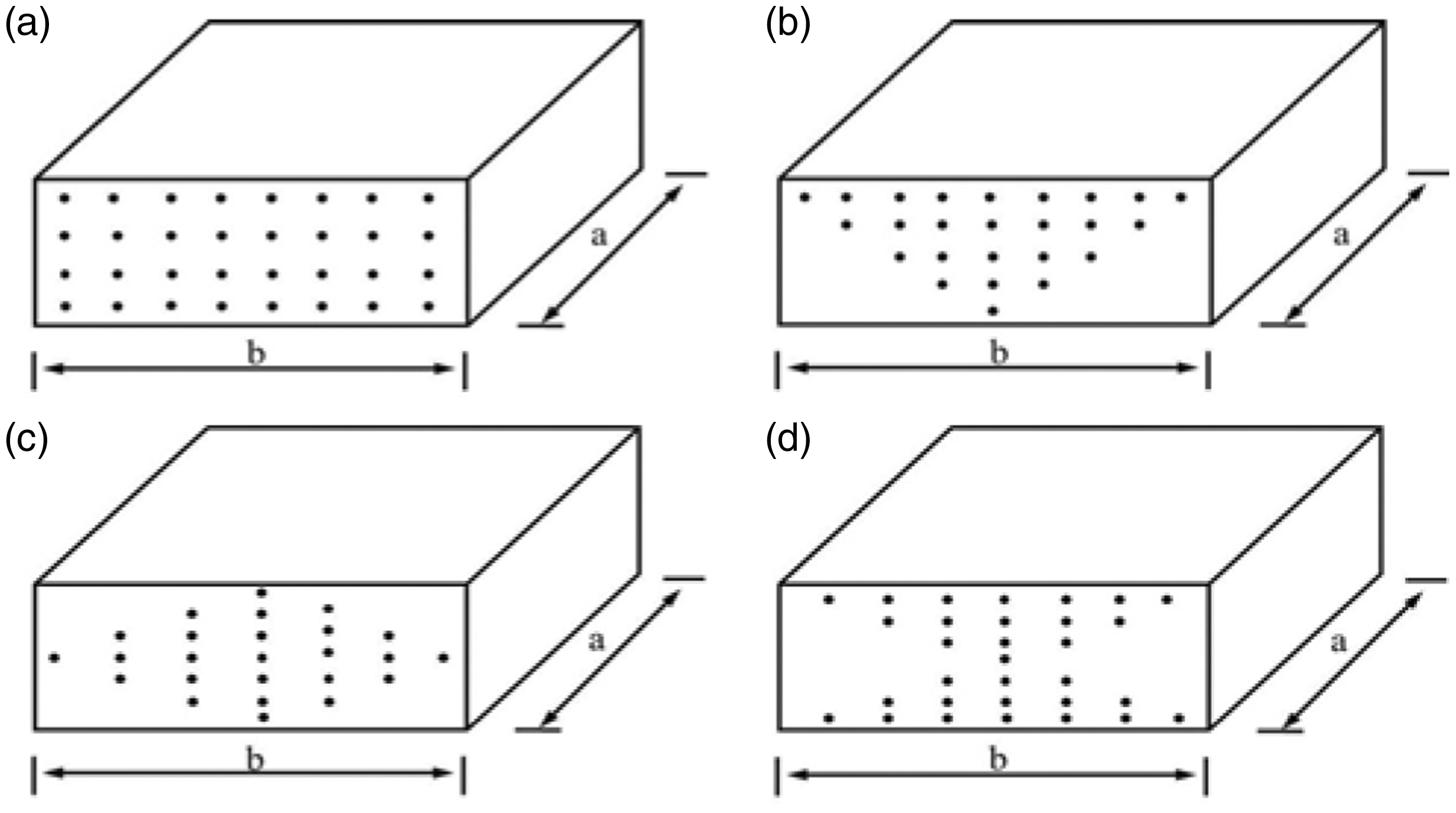
Consider a perfectly bonded rectangular CNT-reinforced composite laminate with layer thickness t and N layers which is shown in Figure 1, the length, width and total thickness are denoted by a, b and h, respectively. The coordinate system is shown in the figure as well. Four types of CNT distribution through the layer thickness are shown in Figure 2 that are conventional used and given by other existed works,26–28 where UD represents the uniform distribution of CNT through the thickness of the matrix and FG-V, FG-O and FG-X denote the functionally graded distributions of CNT through the thickness. Therefore, according to their distributions, the CNT volume fraction Coordinate system and geometry of a laminated CNT-reinforced plate. Four types of CNT distributions through the thickness: (a) UD; (b) FG-V; (c) FG-O; (d) FG-X.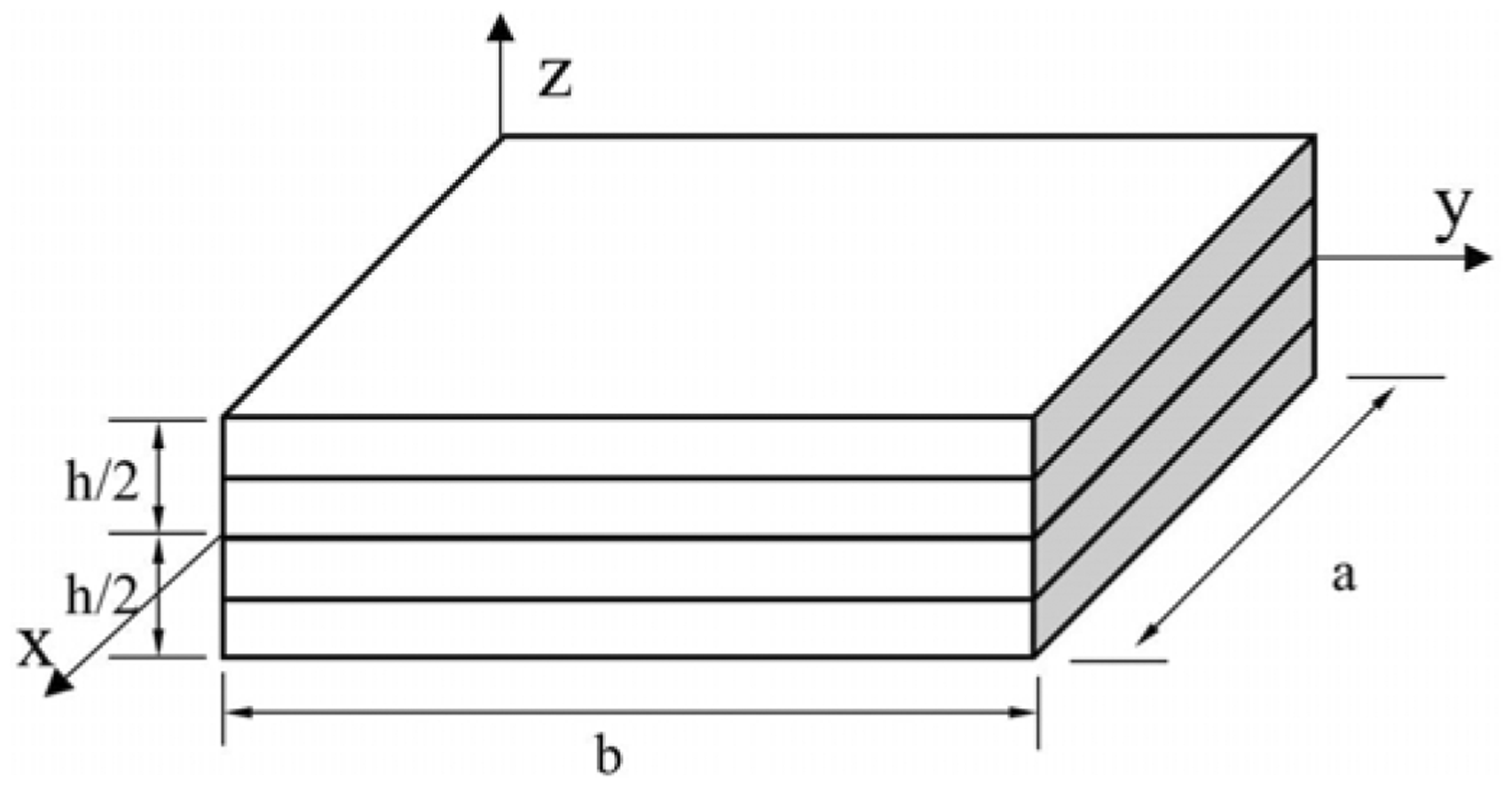





The effective material properties of FG-CNT-reinforced materials can be simply expressed by the extended rule of mixture as follows.



For the Poisson’s ratio,



Kinematics
The displacement field of the first-order shear deformation theory
29
is given by the following equations which have five structural unknowns



The adopted first order shear deformation theory given in the literature30–33 can be expressed by dividing the transverse displacement w into the bending and shear parts (i.e.

Thus, the displacements of the adopted first-order shear deformation theory can be given by the following equations which contain only four structural unknowns (u, v, wb, ws)



Then, the non-zero strain components can be calculated by the following equations based on the small deformation theory





Constitutive equations
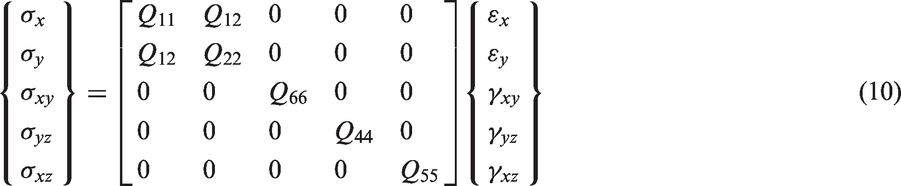
For a rectangular plate, the linear constitutive relation for an individual layer can be expressed by the following form


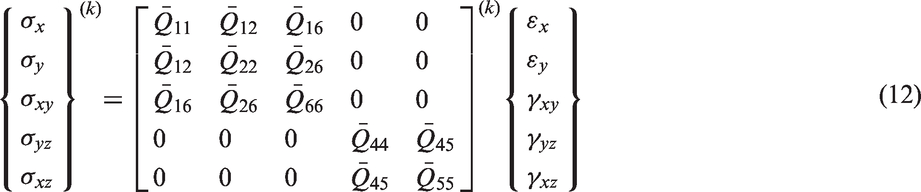
Since the laminate consists of several individual layers with different material orientations with respect to the laminate coordinates, the general form of the constitutive relation has to be transformed into the laminate coordinate through the coordinate transformation and can be further expressed by the following equation for the kth layer.









Equations of motion
The equations of motion are derived by applying the Hamilton’s principle, which can be stated by the following form

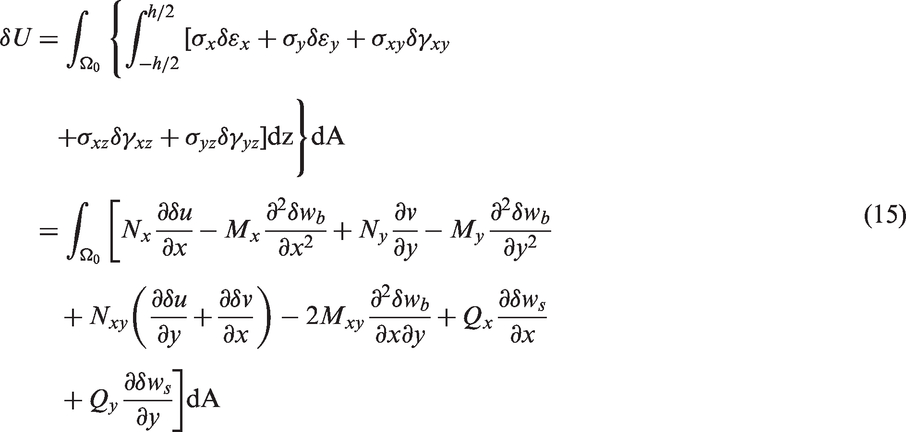



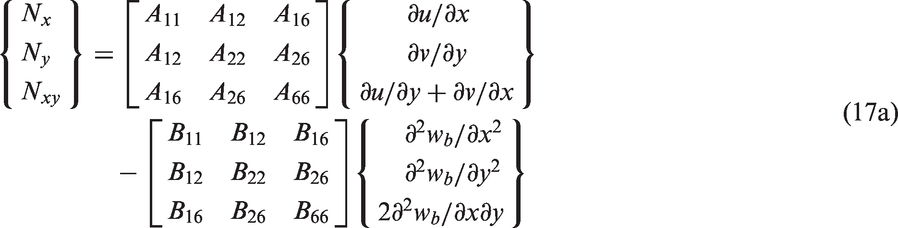
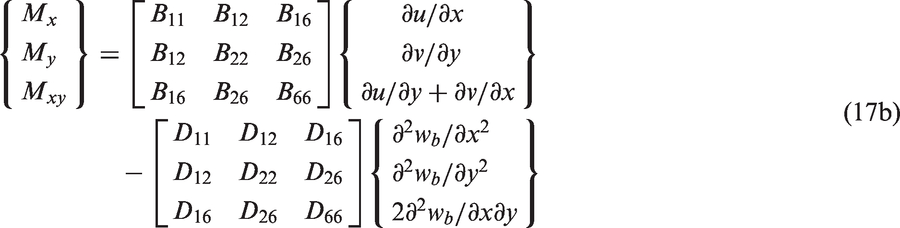
Substituting the strains, equation (9), and the constitutive equation, equation (12) into equation (16), the stress resultants can be defined in terms of displacements



The shear correction factor κ is taken to be the following form
34
for the functionally graded materials

Consider a plate composed of N orthotropic layers, the stiffness coefficients can be further defined by


The variation of work done by the external transverse load q can be expressed by

The variation of kinetic energy can be written as
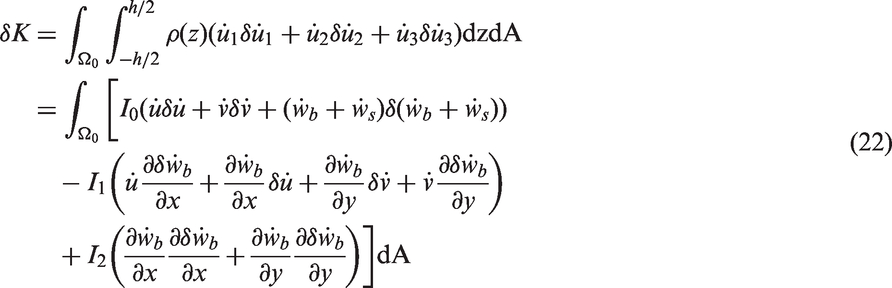

By substituting equation (15), equation (21) and equation (22) into equation (14), integration by parts, the following equations of motion can be obtained




The boundary conditions can be written in the explicit form as:
Clamped edge
Simply supported edge (cross-ply laminate)
Simply supported edge (angle-ply laminate)
Free edge








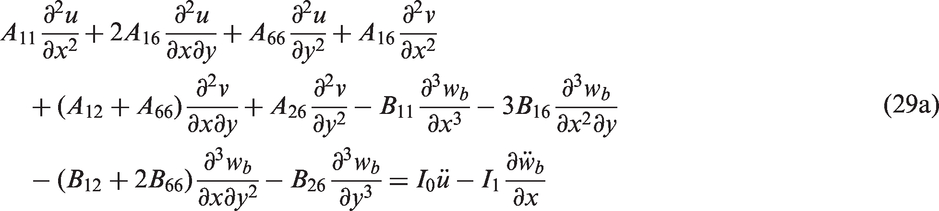
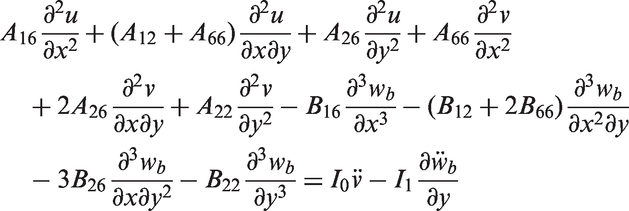
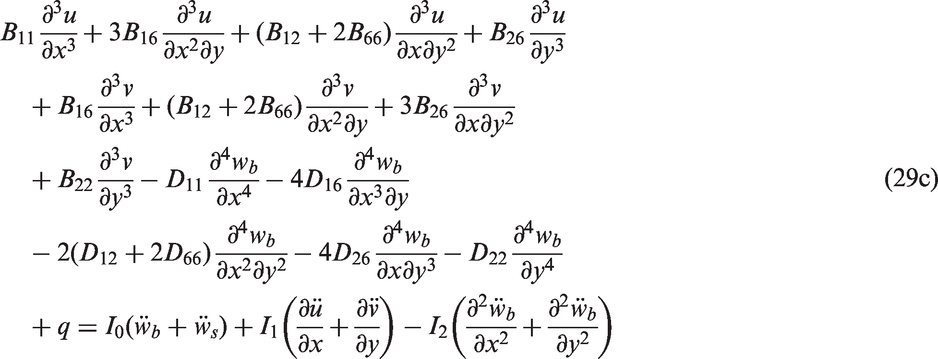
By using the stress resultants from equation (17), the equations of motion can be expressed in terms of the displacement unknowns

Analytical solutions for antisymmetric laminates
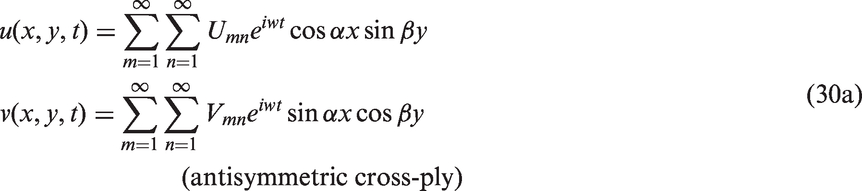
The antisymmetrically layered FG-CNT laminates are investigated in this work. Consider a simply supported rectangular laminate, the Navier solutions are given by the following equations for cross-ply and angle-ply laminates, respectively.
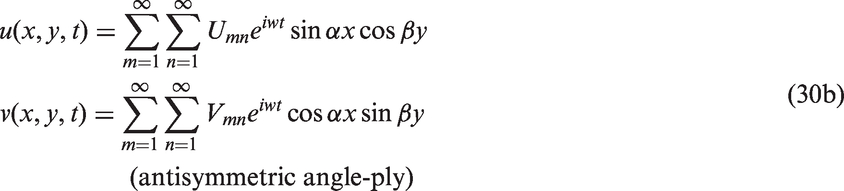


The coefficients Qmn can be calculated for the uniform load and sinusoidal load as

It should be noted that the Navier solutions for simply supported boundary condition exist only when the laminate stacking sequences are that


Therefore, substituting equation (30) and equation (31) into the equations of motion, equation (29), the analytical solutions can be obtained from the following equation






Numerical results
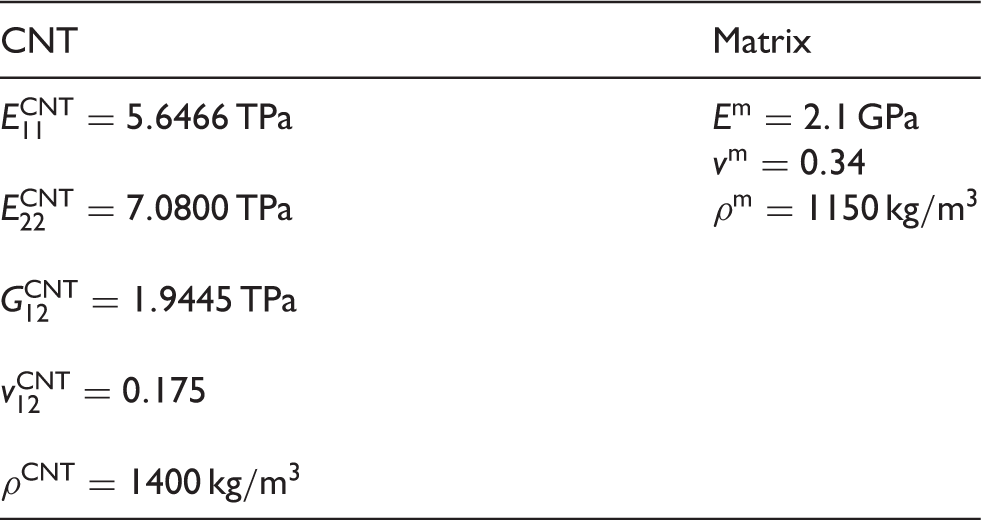
Material properties of CNT and matrix materials.
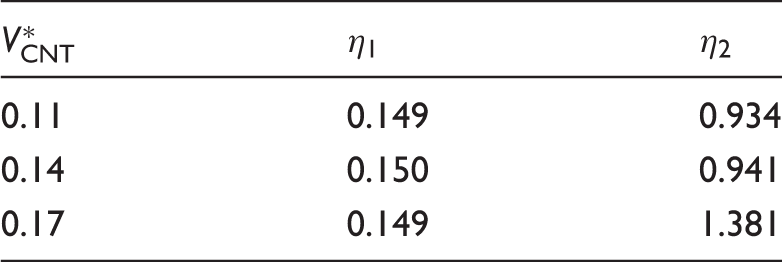
CNT efficiency parameters with respect to different volume fractions.
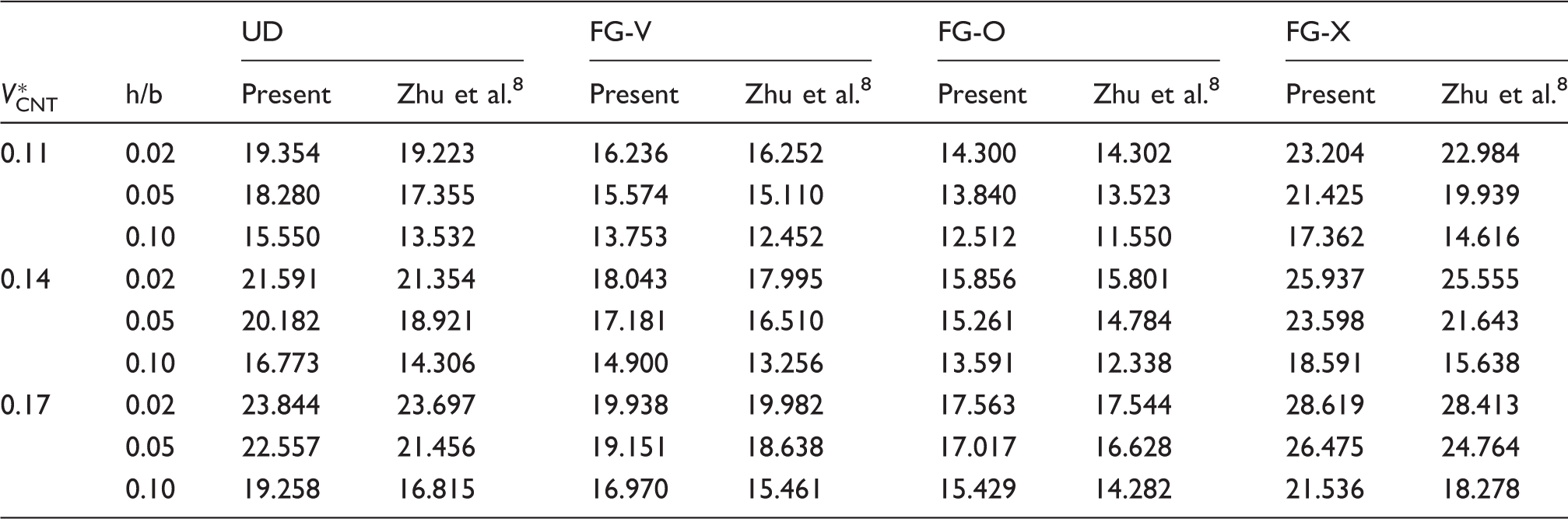
Non-dimensional fundamental natural frequency
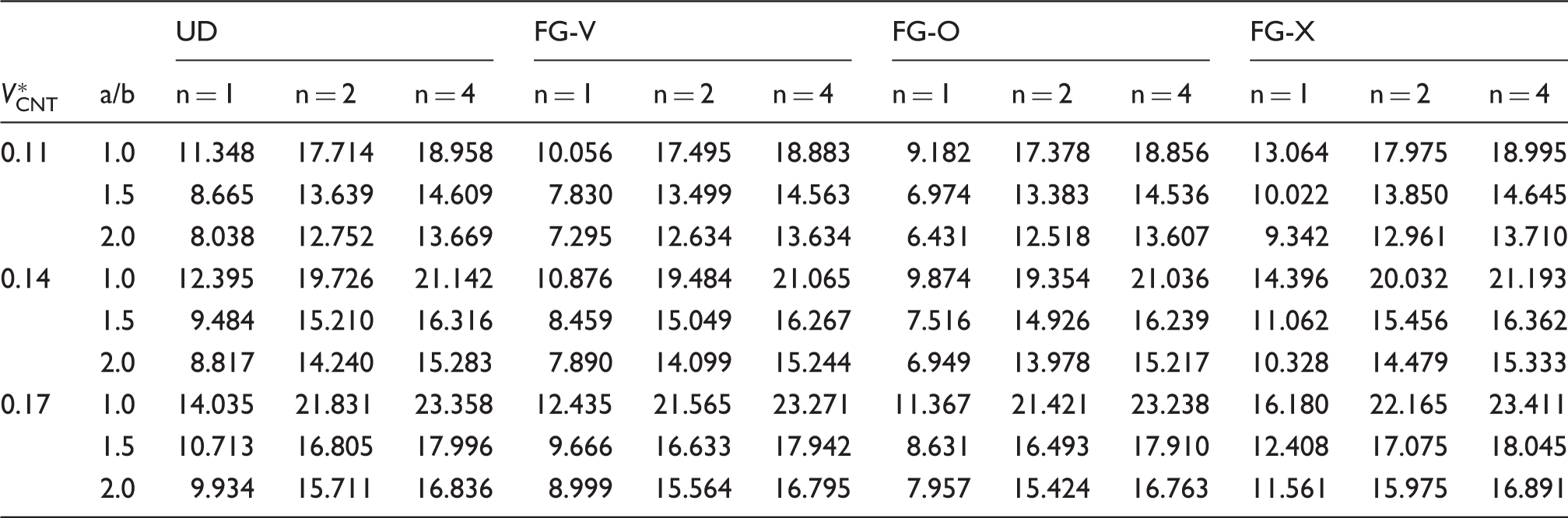
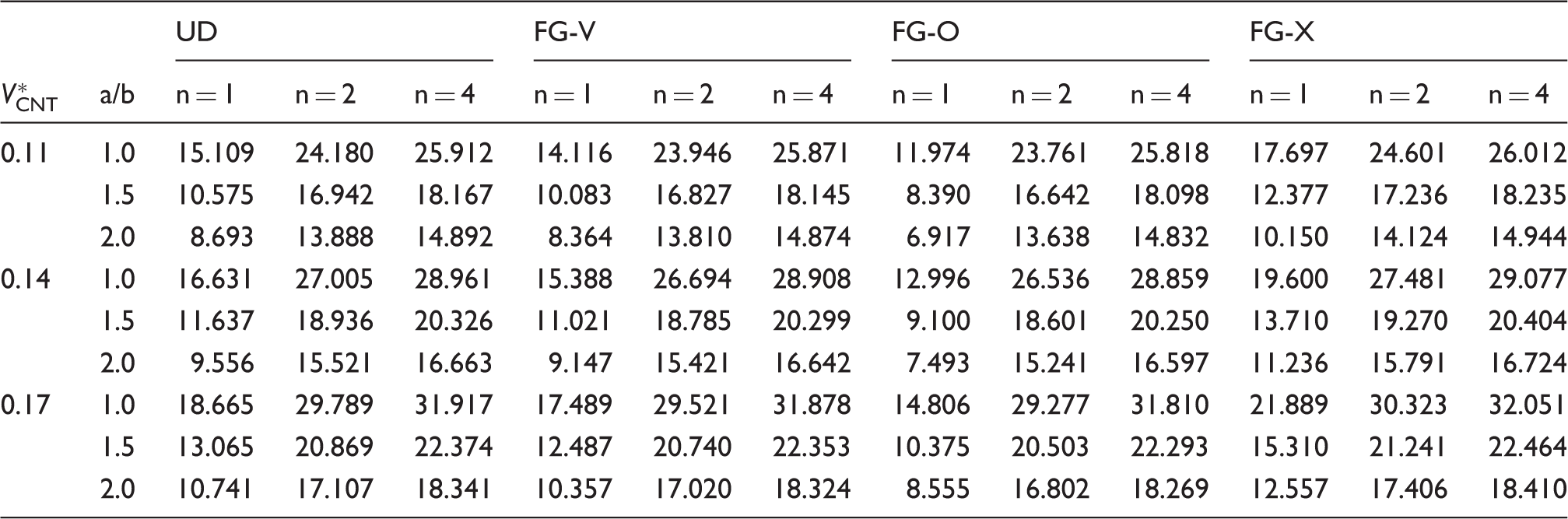
Effects of length to width ratio and CNT volume fraction on the non-dimensional fundamental frequency
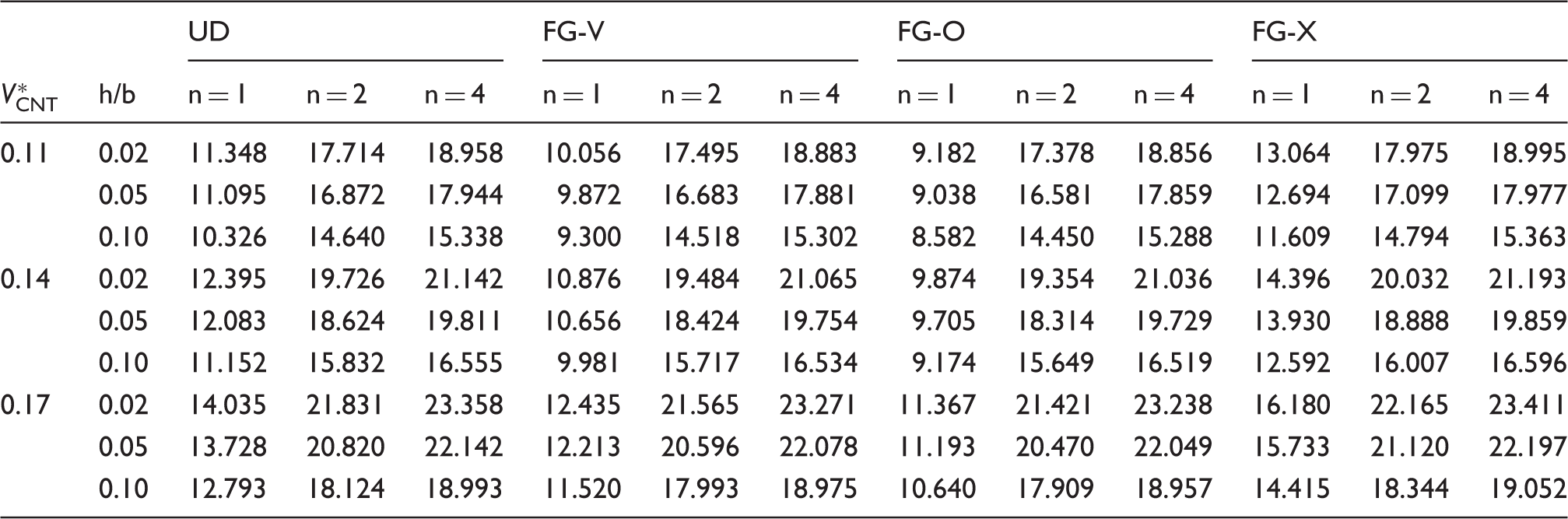
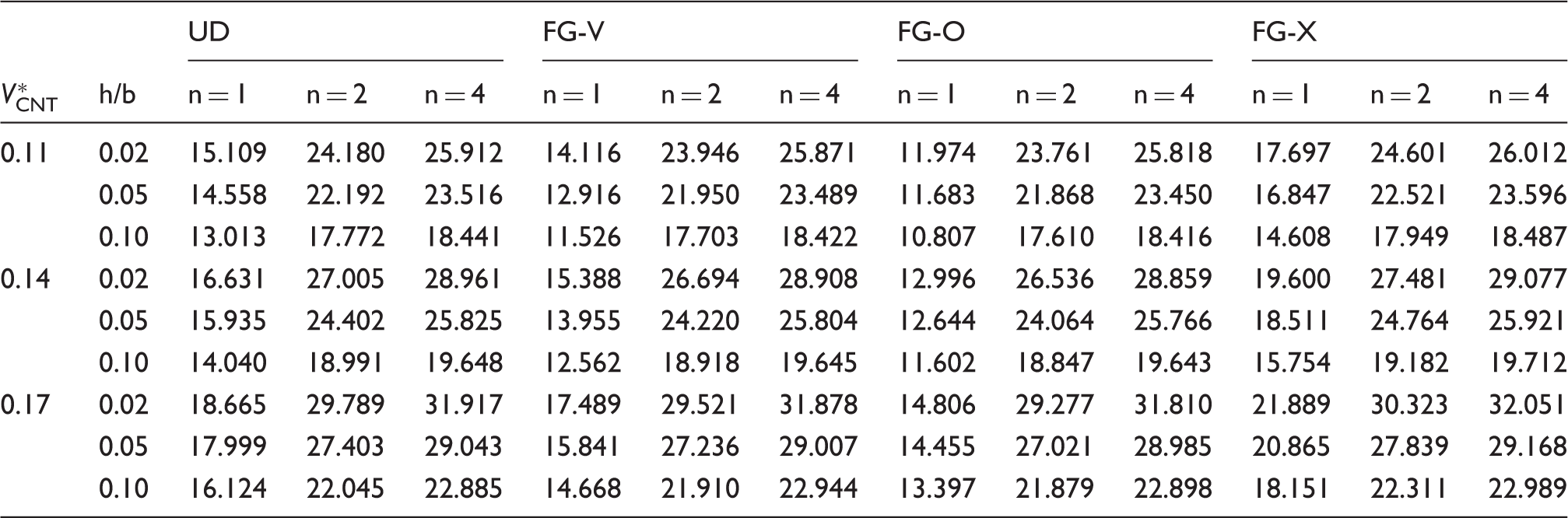
Effects of thickness to width ratio and CNT volume fraction on the non-dimensional fundamental frequency
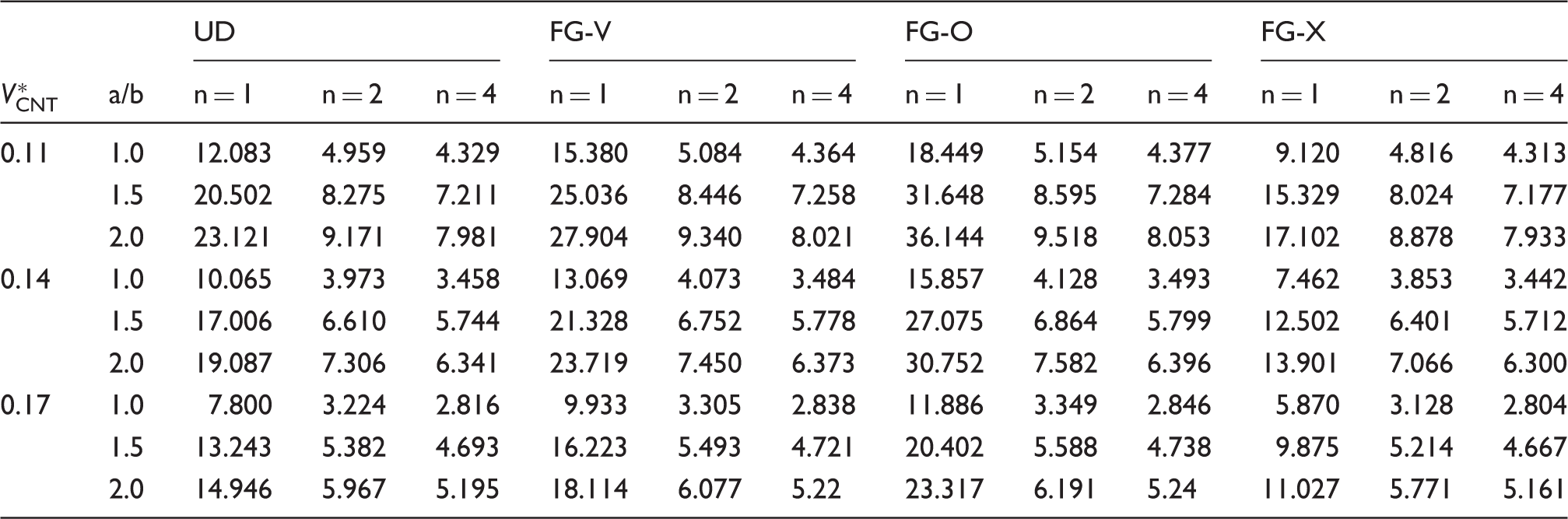
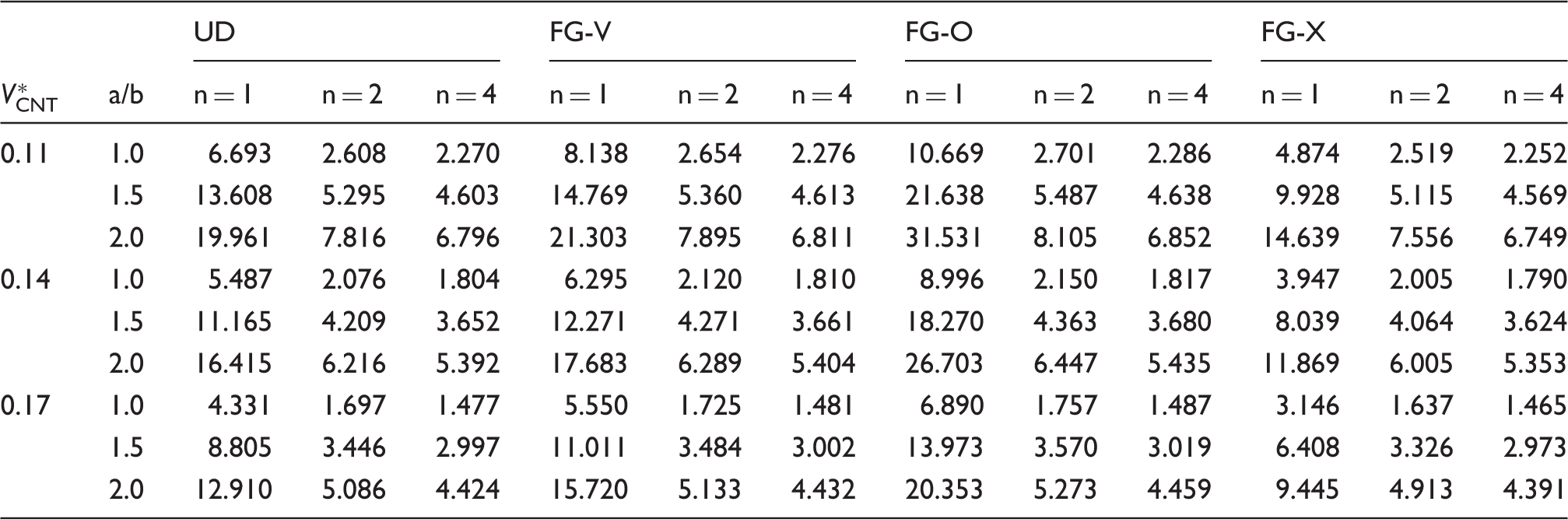
Effects of length to width ratio and CNT volume fraction on non-dimensional central deflection
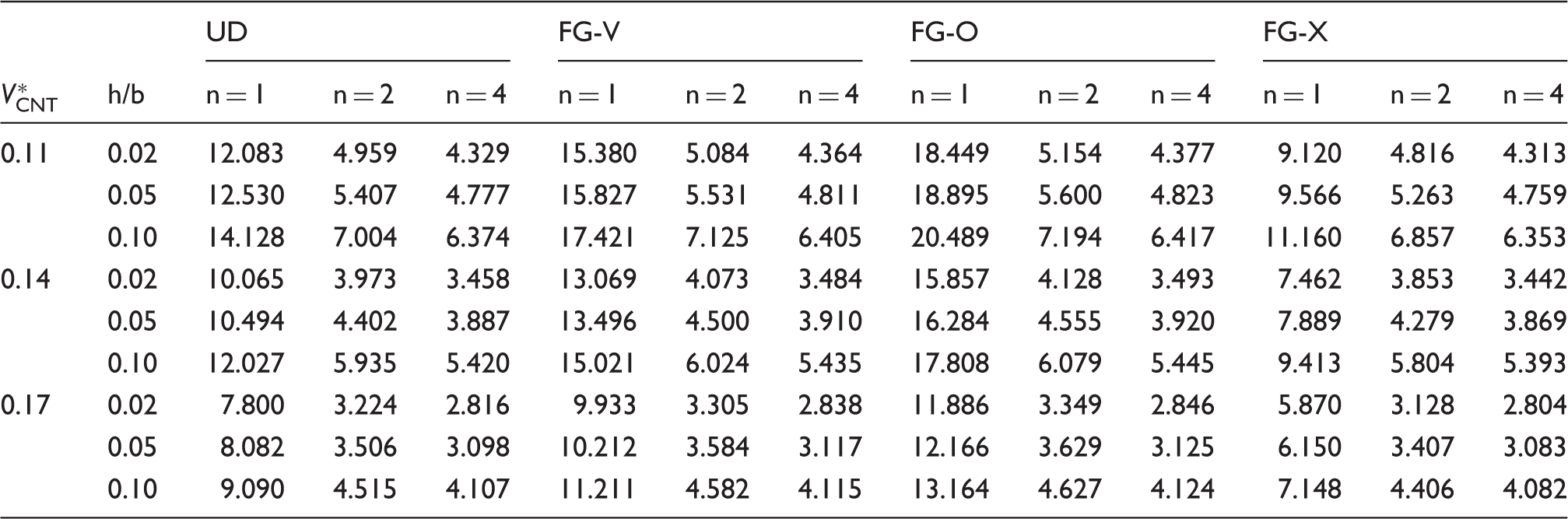
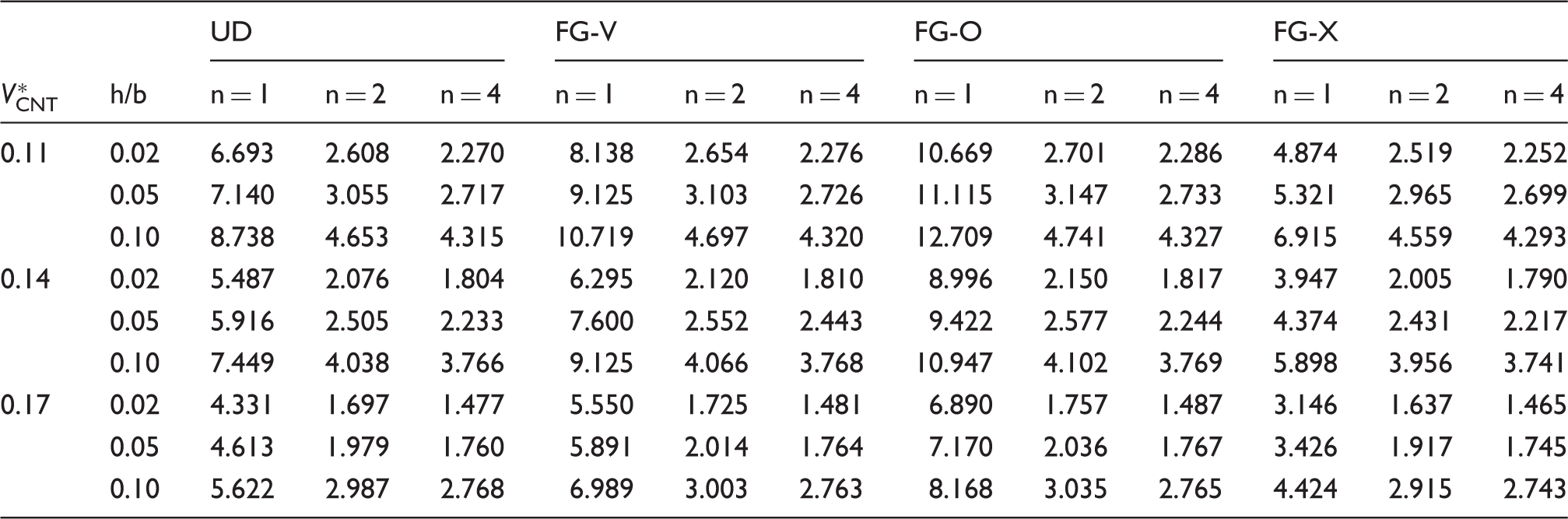
Effects of thickness to width ratio and CNT volume fraction on non-dimensional central deflection
Effects of length to width ratio and CNT volume fraction on the non-dimensional fundamental frequency
Effects of thickness to width ratio and CNT volume fraction on the non-dimensional fundamental frequency
Effects of length to width ratio and CNT volume fraction on non-dimensional central deflection
Effects of thickness to width ratio and CNT volume fraction on non-dimensional central deflection
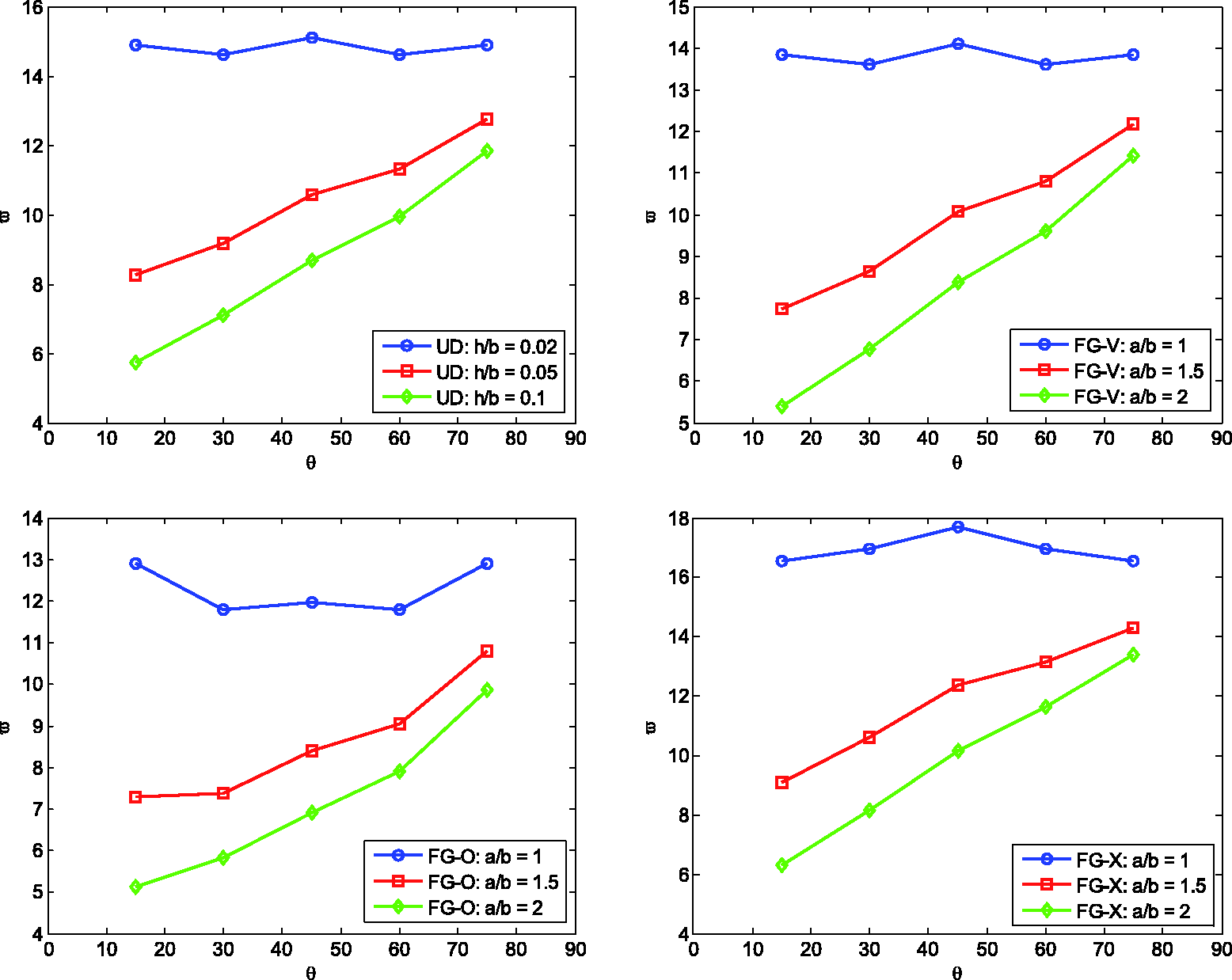
Figures 3 and 4 depict the fundamental non-dimensional frequencies of angle-ply (θ/-θ) laminate to investigate the effect of angle θ on the fundamental frequencies. The volume fraction is selected as Variation of the fundamental frequency Variation of the fundamental frequency 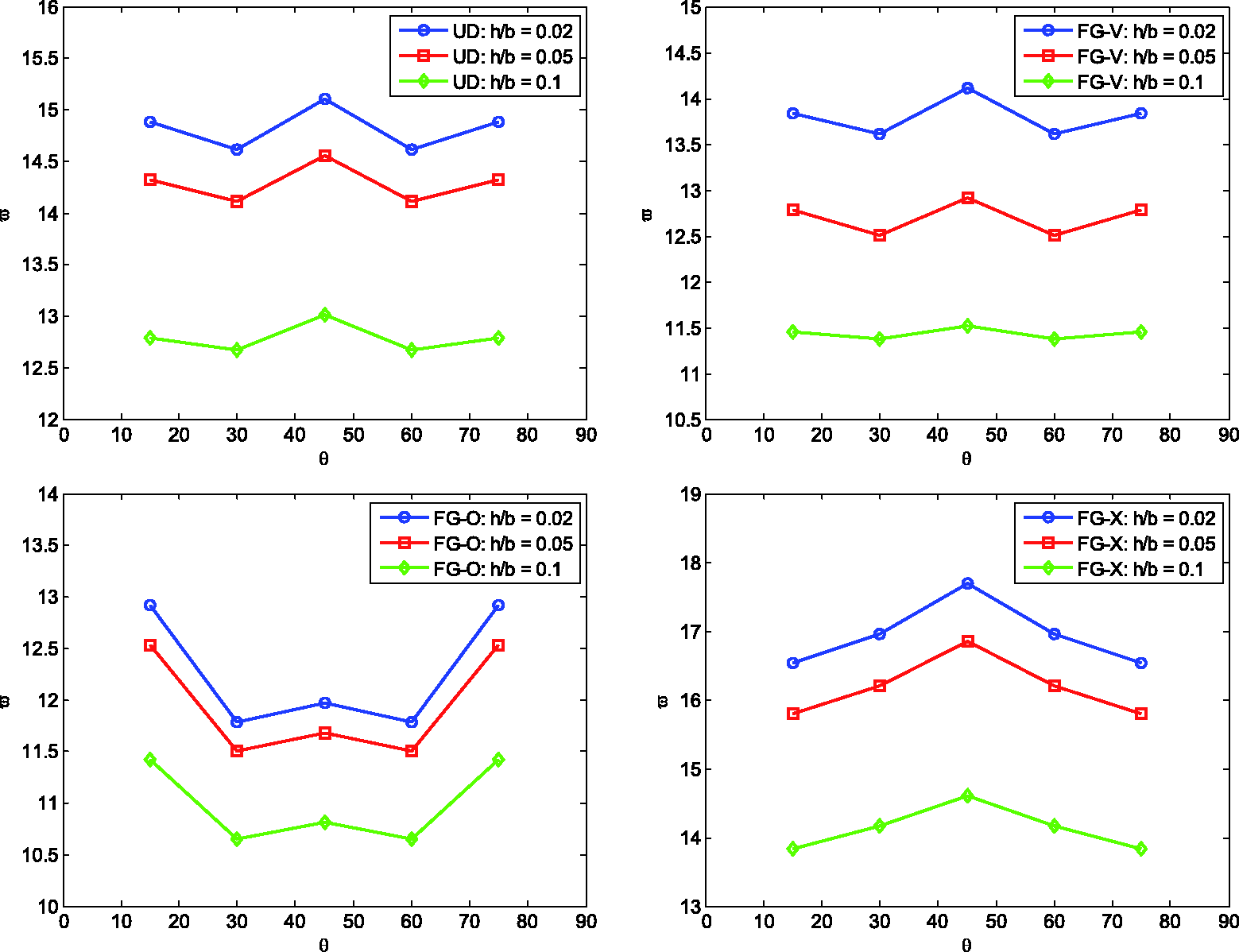
Conclusions
In this paper, the bending and free vibration problems of antisymmetrically laminated FG-CNT-reinforced composite plates are investigated by using the four-variable first-order shear deformation theory. The antisymmetrically laminated FG-CNT-reinforced composite plates are assumed to be perfectly bonded and the CNTs are assumed to be uniformly distributed or functionally distributed through the thickness. The effective properties are estimated by the extended rule of mixture with different CNT efficiency parameters counting for the size-dependent effect. The effects of CNT volume fractions, CNT distribution types, length to width ratio, thickness to width ratio and numbers of layers on both non-dimensional fundamental frequencies and deflections of simply supported antisymmetrically laminated plates are studied in detail. The solutions showed that these parameters have significant influence on the static and dynamic characteristics of antisymmetric FG-CNT-reinforced composite plates.
Footnotes
Declaration of Conflicting Interests
The author(s) declared no potential conflicts of interest with respect to the research, authorship, and/or publication of this article.
Funding
The author(s) disclosed receipt of the following financial support for the research, authorship, and/or publication of this article: This work was supported by the National Natural Science Foundation of China (nos. 11272161, 11372145 and 11372146), the State Key Laboratory of Mechanics and Control of Mechanical Structures (Nanjing University of Aeronautics and astronautics) (Grant no. MCMS-0516Y01), Ningbo Natural Science Foundation (Grant no. 2016A610056), Zhejiang Provincial Top Key Discipline of Mechanics Open Foundation (Grant no. xklx1601), the research fund from Ningbo University (Grant no. XYL16008) and the K. C. Wong Magna Fund through Ningbo University.