






Abstract
This article describes the development of fire resistant composite materials based on phenolic resin and carbon fibers. Two types of composites were developed, with neat phenolic resin and with phenolic resin/modified bentonite. Composite materials were processed from prepregs by compression molding and were characterized by density, fiber content, cone calorimeter test, scanning electron microscope, and mechanical properties before and after the exposure to fire. In both cases, high fiber content materials were developed, about 75% by volume. The addition of clay improved some fire properties such as the peak of the heat release rate and the residual mass of the burned samples. Also, the bentonite-modified composite required higher time to develop the maximum of the heat release rate in the material; therefore, the addition of modified nanoclays improved the fire properties of the developed composites. Regarding to mechanical behavior the modified composites presented low modulus and flexural stiffness than the unmodified materials, and presented a higher decreased in the properties after fire, which could be related with the different fiber content in both composites.
Introduction
After more than 100 years of their introduction, phenolic resins still have high commercial and industrial interest. Nowadays, they are used in a wide range of applications, including construction and high-technology aerospace industry, in most cases reinforced with continuous fibers. 1 Phenolic resins (in particular the resol type) are obtained when the reaction between phenol and formaldehyde is carried out in basic conditions and with formaldehyde excess. 2 This family of thermosetting resins is known for their excellent dimensional stability with a constant use temperature range of 180–200℃ and good chemical and moisture resistance combined with very high heat resistance. In addition, what is determinant in the selection of phenolic resins as matrix resins in fiber-reinforced composites are their unique fire, smoke, and toxicity properties. 3 Their aromatic structure favors the conversion of the phenolic matrix into amorphous carbon, providing high flame resistance with longer ignition times, lower heat release rates (HRRs), and less smoke production, resulting in a much better behavior than epoxy, vinyl ester, and polyester resins under fire conditions. 4
When combined with carbon fibers, phenolic resins can be used for structural applications, such as aircraft parts, marine/offshore structures, or thermal protection systems in rocket engines. This kind of fibers has been widely used as reinforcement in composites for fire resistance due to their low density, high dimensional stability, and excellent mechanical properties, together with their non-flammability. 5 Rayon-based carbon fibers are preferred instead of PAN-based fibers due to their lower conductivity and better interfacial adhesion with the matrix. 6 Also, it has been reported that the structure of the carbon yarn influences the fire properties of carbon/phenolic composites and that this is related to the difference in the thermal conductivity of the spun or filament yarn. 7 Carbon fibers also been used in applications for improving the fire resistance of epoxy-based composites. 8
What is determinant in the fire and ablative behavior of carbon/phenolic composites is the stability and integrity of the carbonaceous residue that is formed during the combustion process. This char acts as an isolating barrier that protects the bulk of the material, reducing the global burning rate. 9 Functional micro-sized fillers have been extensively used to reinforce the char layer, also absorbing part of the incident heat by endothermic processes like phase transitions or decompositions. Glass microspheres, quartz, aluminum oxide, or zinc borate particles are some examples of inorganic fillers that are commonly used. 10 However, using micron-sized fillers has two main drawbacks: the non-continuous powder distribution in the matrix and the need to use high particle loading for the formation of a uniform char. 11 This leads to composites with non-uniform burning rate at the surface, which in turn leads to a reduction in the integrity of the material exposed to flame. In more severe applications where ablative phenomena arise (like in rocket nozzle protection systems), this problem becomes critical as the protective layer can be easily removed by combustion products if it loses mechanical integrity. 12 In order to avoid dispersion problems and reduce the amount of fillers needed to improve thermal resistance of composite materials, different nano-reinforcements have been used. It is known that controlling additives at the nano-scale allows maximizing the property enhancement that they provide. 13 Carbon nanotubes (CNTs) and nanoclays are the most promising fillers added to improve the mechanical and thermal properties in high-performance composites. Tate et al. 14 used multiwalled carbon nanotubes (MWCNTs) with carbon/phenolic composites to improve ablation resistance. By means of oxyacetylene torch tests, these authors showed that 2% of MWCNTs produces a slight reduction in mass loss, recession in length, and in situ temperatures. Wang et al. 15 also added CNTs to phenolic resins and measured thermal degradation by thermogravimetric analysis, mechanical properties, and thermal resistance. They found a significant reduction in the ablation rate with lower filler concentrations (up to 0.3%). Bahramian et al. 16 reduced the thermal diffusivity of phenolic/asbestos composites in about 50% (calculated during the oxyacetylene torch test) when adding 6% of nanoclays. For non-aerospace applications (such as marine off-shore structures and protection of oil refinery plants), nanoclays are an excellent option for increasing the thermal resistance of the composites, due to their high abundance and low cost. For these applications, ablative properties are not relevant, but understanding the fire resistance properties becomes very important.
In this work, cone calorimetry was used to characterize the effect of nanoclay (ammonium-modified bentonite) incorporation to phenolic/carbon composites, in the HRR, total heat released (THR), time to ignition (TTI), smoke emission, and average CO and CO2 evolved during the test. The analysis was made using prepregs as the start point for comparison (prepregs with the same fiber content, with and without nanoclays), in order to also account for the effects in the processing conditions, which can modify the final properties of the composites. If a new fire resistance material is developed, it is important to know how the manufacture and application of prepregs are affected by the presence of nanoclays. In a previous work, 17 we addressed the effect of nanoclays on the manufacture of prepregs and their main properties (tack degree, stiffness, stability during storage). In this work, we analyzed the fire properties, including post-fire mechanical properties, of consolidated composites.
Experimental
Materials
Prepregs and composites properties.

PC: phenolic/carbon; PBC: phenolic/bentonite/carbon.
Bentonite was kindly supplied by Minarmco S.A. (Argentina). Carbon fiber fabric (Toray T700SC-12000), supplied by Yixing Huaheng High Performance Fiber Textile CO (China), was used as reinforcement.
Composite processing
To avoid the advance of the phenolic resin curing reaction during storage, the prepregs were kept at −18℃ until the composite processing. It has been demonstrated that the curing reaction of these resins does not proceed at such a low temperature. 21 Composite materials were obtained by compression molding of prepregs in a heated press. For that, laminates were cut in 10 cm × 12 cm rectangles, then the plies were placed and stacked into a steel mold with release agent, which was added to facilitate the demolding step, and finally the mold was closed and carried to the press. To ensure the final thickness of the plates, 4-mm steel spacers were used between the mold base and the lid. Twenty-four sheets were stacked in the same direction to obtain 4-mm-thick materials. The thermal curing cycle was 15 min at 45℃, 1 h at 60℃, 4 h at 80℃, 1 h at 110℃, 1 h at 150℃, and 2 h at 190℃, with a heating rate of 1℃/min between the different temperatures. To achieve the correct compaction of the prepregs, 12 bar of pressure was applied throughout the cycle. Two types of materials were processed: phenolic resin-carbon fiber (PC) and bentonite-modified phenolic resin-carbon fiber (PBC).
Composite characterization
Density
Measurements were carried out by picnometry using the Archimedes principle at 20℃, using water as test liquid.
Reinforcement content
The fiber content of the composites was measured by the digestion technique, according to ASTM D3171 standard, procedure b. The fiber content was calculated by using equation (1).

Fire resistance
The composite materials were tested in a Fire Testing Technology cone calorimeter with ConeCalc software. The HRR, THR, TTI, time of the HRR peak (pHRR), total smoke release (TSR), and smoke production rate (SPR) were obtained according to ISO 5660 standard. The samples were tested in horizontal configuration for 600 s. The radiant heat flux was 50 kW/m2 (large scale fire); the specimen had an exposed surface area of 0.008854 m2 (100 mm × 100 mm); the thickness of the specimen was 4 mm approximately; all test were performed three times to check repeatability.
Post-burning examination
After the cone calorimeter test, the composites were examined by scanning electronic microscope (SEM) in a JEOL JSM-6460LV microscope. The samples were first coated with a layer of gold (300 Å).
Three-point bending test
The mechanical properties of the composites (before and after exposure to fire) were measured by the three-point bending test; tests were performed in a universal testing machine Instron 3369 with a 30 kN load cell, according to the ASTM D790 standard. At least five specimens of each type of composite material were tested and the average modulus and strength were calculated.
Results and discussion
The two types of processed composite materials based on phenolic resin-carbon fiber (PC) and bentonite-modified phenolic resin-carbon fiber (PBC), were manufactured from prepregs and characterized. The physical properties of both composites are summarized in Table 1. Starting from prepregs with similar fiber content (around 45%), the final fiber content in both composites was high, but different for the modified (73%) and unmodified (82%) phenolic-based materials. This difference of almost 10% in the final fiber content is a consequence of the higher viscosity of the modified phenolic resin, which reduces the resin extraction during the processing. During the compaction of the prepregs, the final volume fraction depends on the compressibility of the fabric and the ease of flow of the excess of resin. When the resin is loaded with nanoparticles, compressibility remains constant, but the viscosity increases and the flow rate for a certain applied pressure decreases. Also, filtering of the particles by the fabric could decrease preform porosity and therefore its permeability, increasing the resistance to flow. 22 The processing conditions are then influenced by the presence of nanoclays in the prepregs, affecting the properties of the final composites. The difference in the fiber content was taken into account in the comparative analysis of the properties measured in this work.
Cone calorimeter results for the composites and the reference material. 20

Typical HRR curves obtained for PC and PBC are shown in Figure 1. Initially, there is an induction period where no heat is released because the material temperature is below the ignition temperature of the polymeric matrix. Then, there is a rapid increase in the HRR due to the ignition of flammable volatiles that suddenly release heat and, while the material surface is burning, the HRR increases until a peak is reached (pHRR). Next, the HRR decreases progressively with time due to the growth of a char layer on the surface, which slows the decomposition rate in the underlying material.
HRR evolution as a function of time for the composites studied.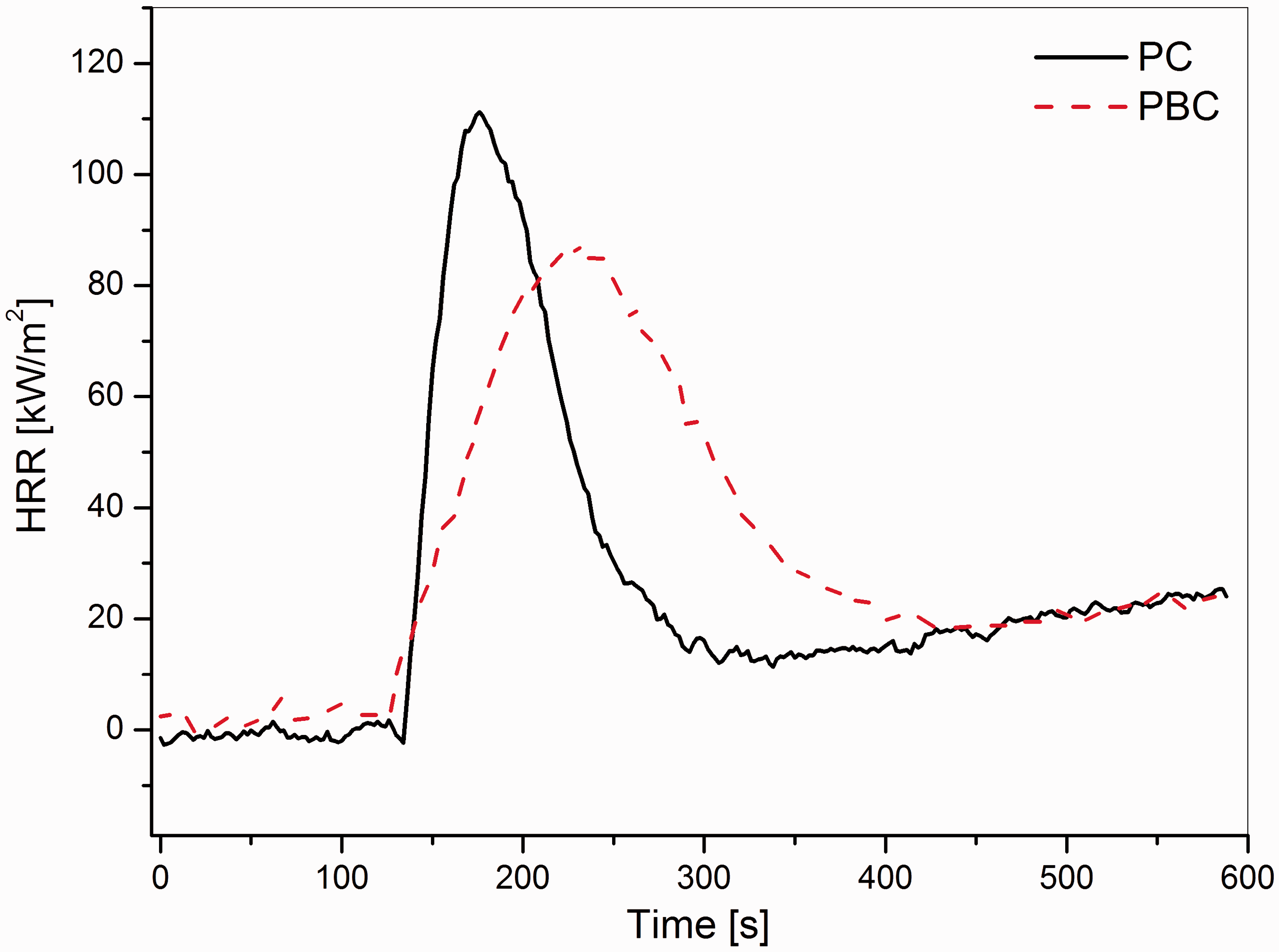
A single peak was observed in the HRR curve of both materials, which was lower in PBC than in PC and occurred at longer times for PBC. These results should indicate the better performance of the PBC composite because higher values of the pHRR are an indication of worse fire hazardous material. It can be seen that there was no appreciable difference between the TTI of the two phenolic composites. However, they had longer TTI than the epoxy-carbon composite used as reference (Figure 2).
8
Figure 2 also shows that the addition of bentonite increased the flame duration but that THR remained almost constant (Table 2). The comparative performance of this material is even better if we consider the larger amount of resin content (fire load) in the composite (27 against 18%). The formation of a physical barrier seems to be the main fire retardant mechanism of nanoparticles in polymer nanocomposites, which reduces the PHRR without varying the THR, thus prolonging the flaming times without decreasing the amount of combustible material.
24
The incorporation of a relatively low quantity of (organomodified) nanoclay in the polymer matrix creates a protective layer during combustion.25,26 Therefore, accumulation of the clay on the surface of the material acts as a protective barrier that limits heat transfer into the material, volatilization of combustible degradation products and diffusion of oxygen into the material. In the research carried out by Koo et al.,27–29 the flammability properties of phenolic resin/carbon fiber composites with nanoclays were compared with those of the standard MX-4926. It was found that the addition of 5 wt.% of modified nanoclay increased the TTI, reduced the pHRR and the HRR. Finding that the addition of clay, as in the present work, has a substantial improvement in the composites behavior against fire.
Characteristics times for the composites studied and a reference.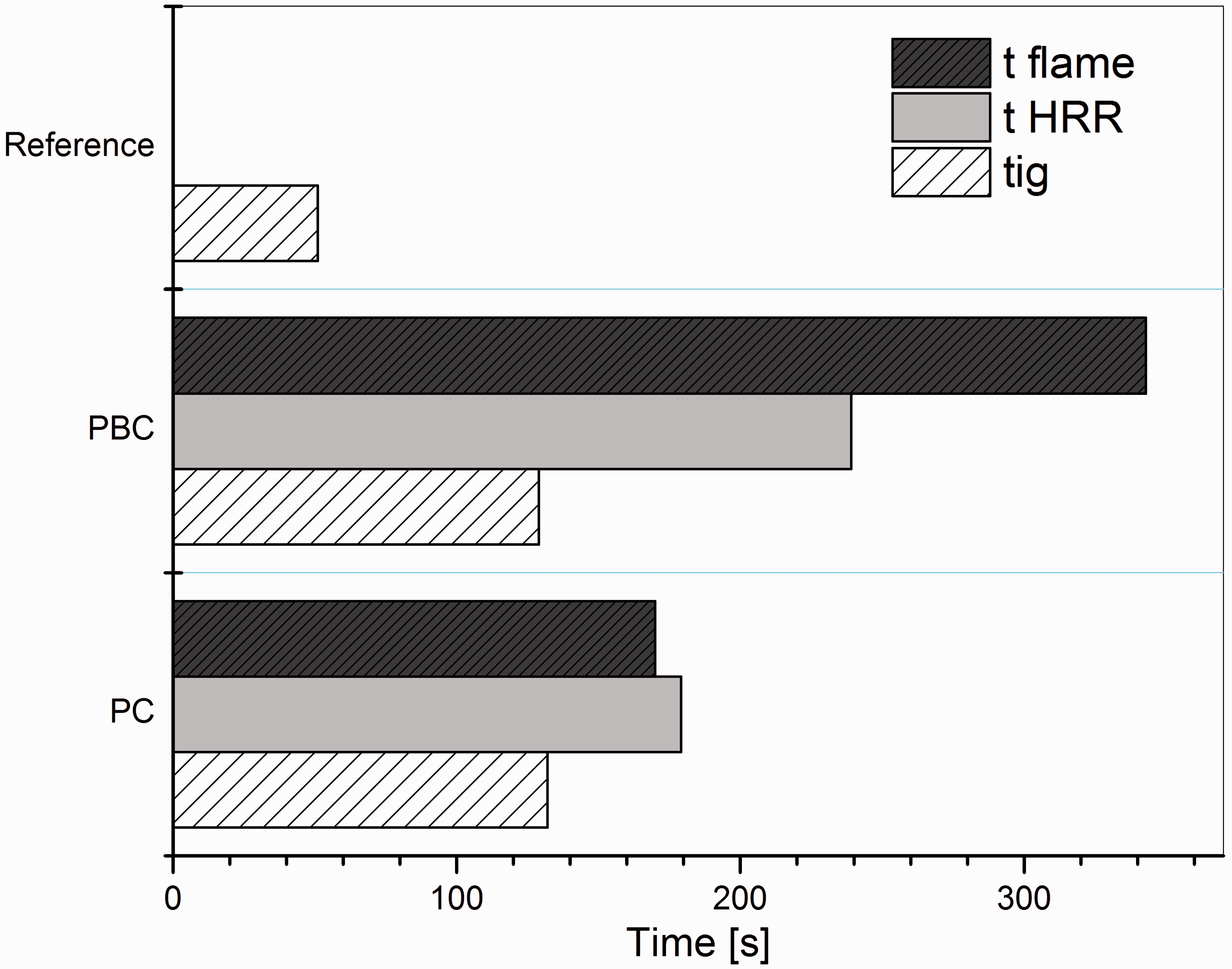
Moreover, both the pHRR and THR observed during the combustion for the phenolic composites were considerably lower than those observed for the epoxy-carbon composite used as reference (Table 2).
Another important parameter is the residual mass of the composites after fire exposure. In general, higher residual mass is an indication of better mechanical integrity of the burned materials. Both composites showed residual mass higher than 80%. When considering the fiber content (82% for PC and 73% for PBC), the amount of residual mass corresponding to the matrix was higher in PBC. It is believed that the clay promotes the formation of a char that insulates the material, preventing the total burning of the composite. During combustion, heat transfer promotes thermal decomposition of the organo-modifier and the creation of strongly protonic catalytic sites onto the clay surface, which can catalyze the formation of a stable char residue.
30
Figure 3 shows the SEM images of the burnt samples, after the cone calorimeter test PC showed clean fibers with no trace of resin, whereas PBC showed remains of char, indicating the stabilization of the insulating layer by the nanoclay particles in the matrix and a better resistance against fire.
SEM images of the post burning materials: (a) PC and (b) PBC.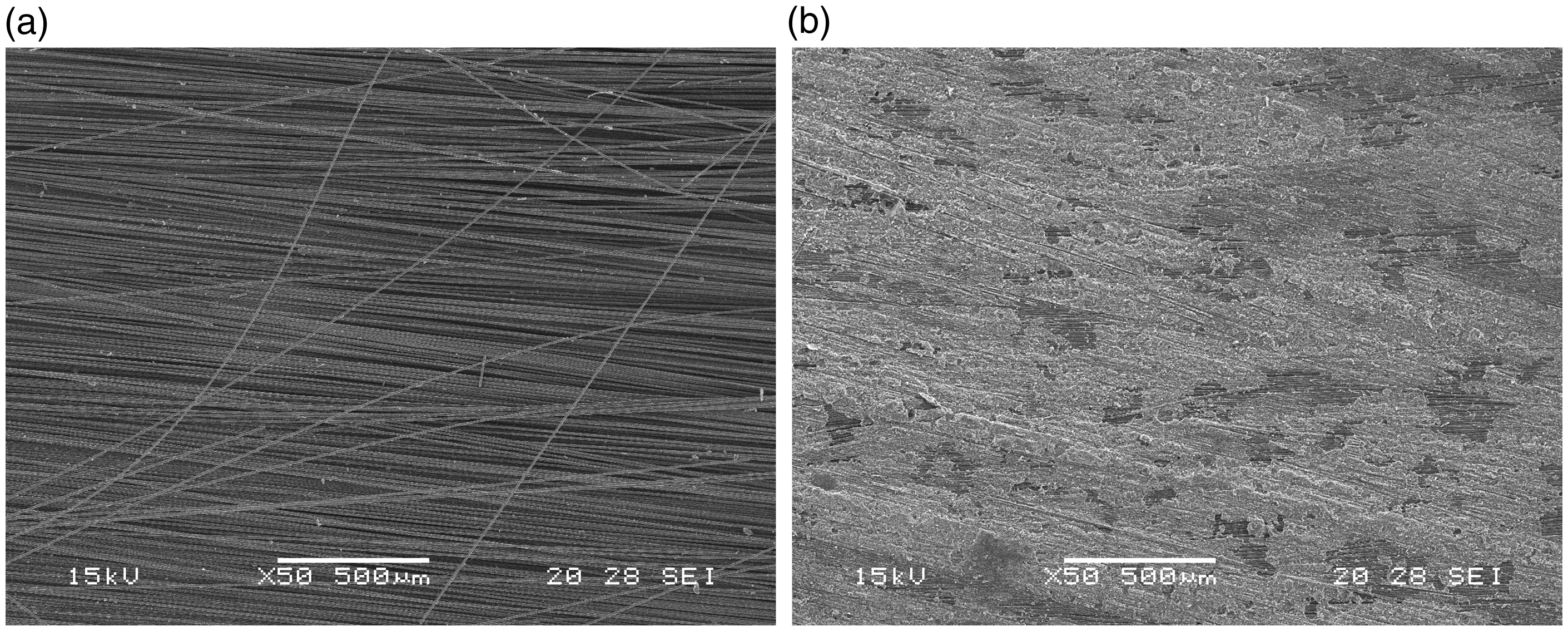
In order to avoid considering absolute values of cone calorimeter data, different parameters that take into account the overall fire performance of a material and the evolution of the data with time are usually used. One of these parameters is the Fire Performance Index (FPI), defined as the TTI/PHRR ratio, which is commonly used to evaluate the fire risk, because it balances ignition and fire growth. As FPI increases, the time for the fire to become uncontrollable increases as well, giving more time to escape. The Maximum Average Heat Rate Emission (MAHRE) is the maximum of the Average Heat Rate Emission, which is defined as the cumulative heat release (THR) from t = 0 to time t, divided by time t. It is useful to rank materials according to their capacity to support flame spread to other objects. Additionally, Fire Growth Rate (FIGRA) represents the rate of fire growth for a material once exposed to heat, and is determined by dividing the PHRR by the time to PHRR. Higher FIGRA values suggest faster flame spread. 31 The values of these parameters are reported in Table 2 for both composites studied. We found that the addition of bentonite to the phenolic matrix led to a superior fire performance of modified composites as compared with unmodified ones: FPI increased, FIGRA was clearly reduced and MAHRE was almost constant.
The fire hazard, which is related to the smoke and CO evolution, is another important parameter that was evaluated from the cone calorimeter results. This behavior is especially important if the material is chosen for interior applications or mass transportation where the rapid escape could be hindered by the loss of visibility due to a high smoke release. The SPR of the composites is shown in Figure 4. It can be observed that this parameter follows a tendency similar to that of the HRR, except in the peak height, which is higher for PBC. PBC showed also a higher total smoke released than PC (Table 2). However, the average CO and CO2 production was reduced by 30% and 24%, respectively, with the addition of bentonite to the phenolic matrix (Table 2). It must be taken into account that the combustion gas produced in the cone calorimeter includes soot, oxygen, CO, and CO2. Prior to reaching the gas analyzers (CO, CO2, and O2), the gas sampled is first passed through two filters to remove particles, then through a cold trap and a drying agent to remove possible water. So, the TSR parameter takes into account not only the gas production but also the soot emission. In this case, the CO and CO2 emission is lower for the nanocomposite case being the soot concentration higher, that it is explained by the formation of higher carbonaceous residues induced by nanoclays. Therefore, carbon that remains in the form of soot does not contribute to the generation of CO, CO2 gases. PBC shows a less toxic smoke (lower CO, CO2) than PC but darker (higher soot). Additionally, in this work, it must be considered that PBC also contain the bentonite modified with the ammonium salt, which contributes to the total smoke too.
Smoke production rate for the composites.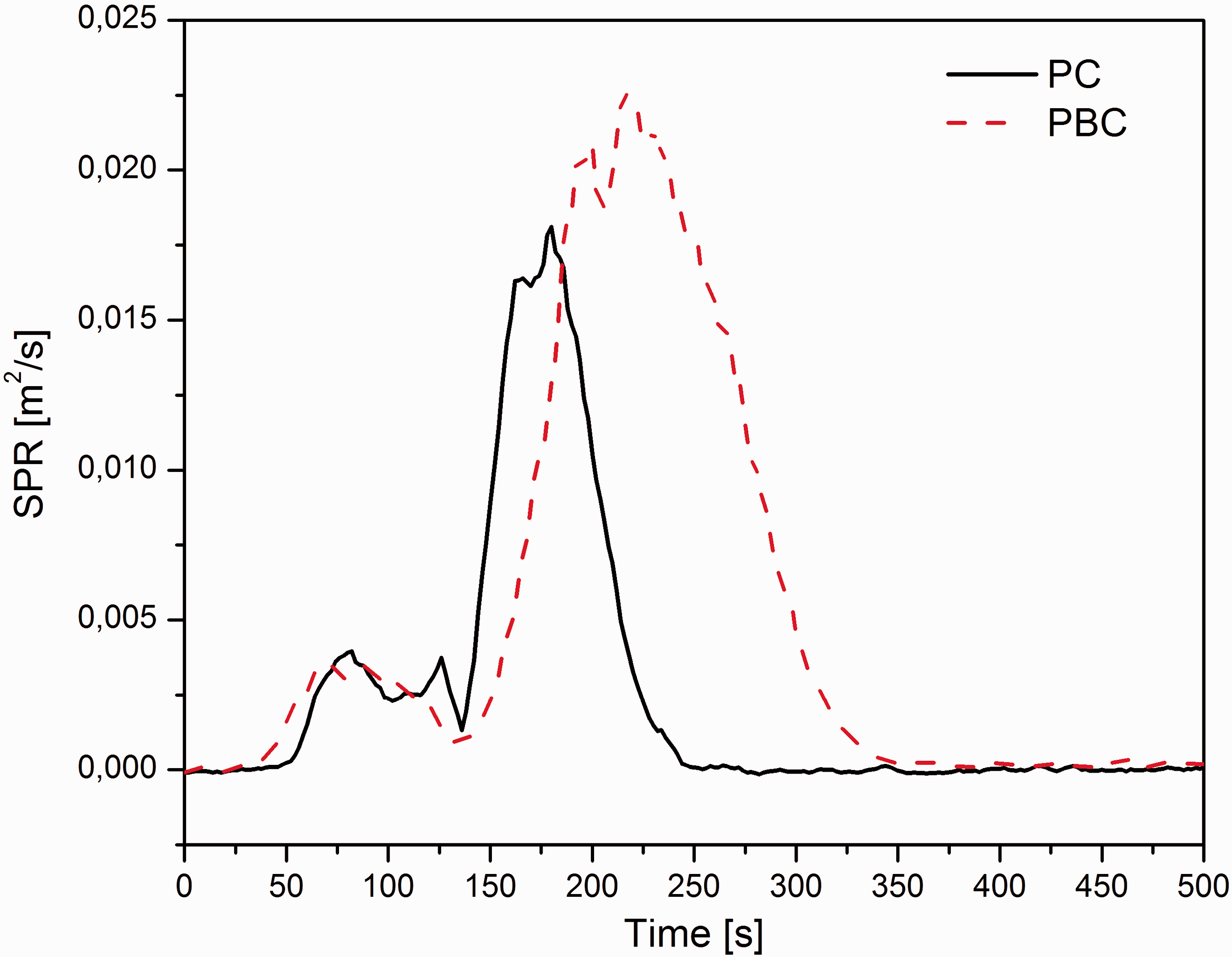
We also studied the mechanical response of the composites after fire during the design stage of the materials. Figure 5 shows the stress versus strain curves for both materials before and after the cone calorimeter test, i.e. the exposure to the flame. In the case of post-burning specimens, they were placed with the heat-damaged surface upwards, and thus were subjected to a compression stress in the damage zone and to a tensile stress in the other. To calculate the post-fire flexural modulus, the dimensions were measured in the damaged specimens, taking care to prevent loss of material. Before the cone test, the unmodified composites had higher modulus and flexural strength (Table 3). Since the mechanical strength is principally given by the carbon reinforcement, this can be due to the higher fiber content achieved during the manufacturing process. After fire exposure, the materials had poor integrity and there was a difference between the center of the plates, which had almost nothing of resin, and the edges. Because of that, the test results presented high standard deviation. During the exposure to fire, the modified composites lost almost all the resistance (94% decrease in the flexural modulus and 96% decrease in the flexural strength), while the unmodified composite had 75% decrease in the flexural modulus and 94% decrease in the flexural strength, which are average loss values of the mechanical properties of composites after fire.32,33 Katsoulis et al.
34
suggests that the mechanism through which the mechanical properties are decreased involves micro-cracking, interplay delamination, resin decomposition, and fiber-matrix debonding, which in this work occurred to a greater extent in the modified composites. Also, as carbon fibers are the most thermal resistance component in the composites, samples with higher fiber content will retain a higher proportion of less-damaged material. Therefore, unmodified phenolic composites are expected to have a higher mechanical properties retenion after fire, while bentonite phenolic composite will have more open space with degraded char among fibers, reducing the integrity of the samples.
Stress vs. strain curved obtained in the three-point bending test of the composites: (a) before fire and (b) after fire exposure. Three-point bending test results.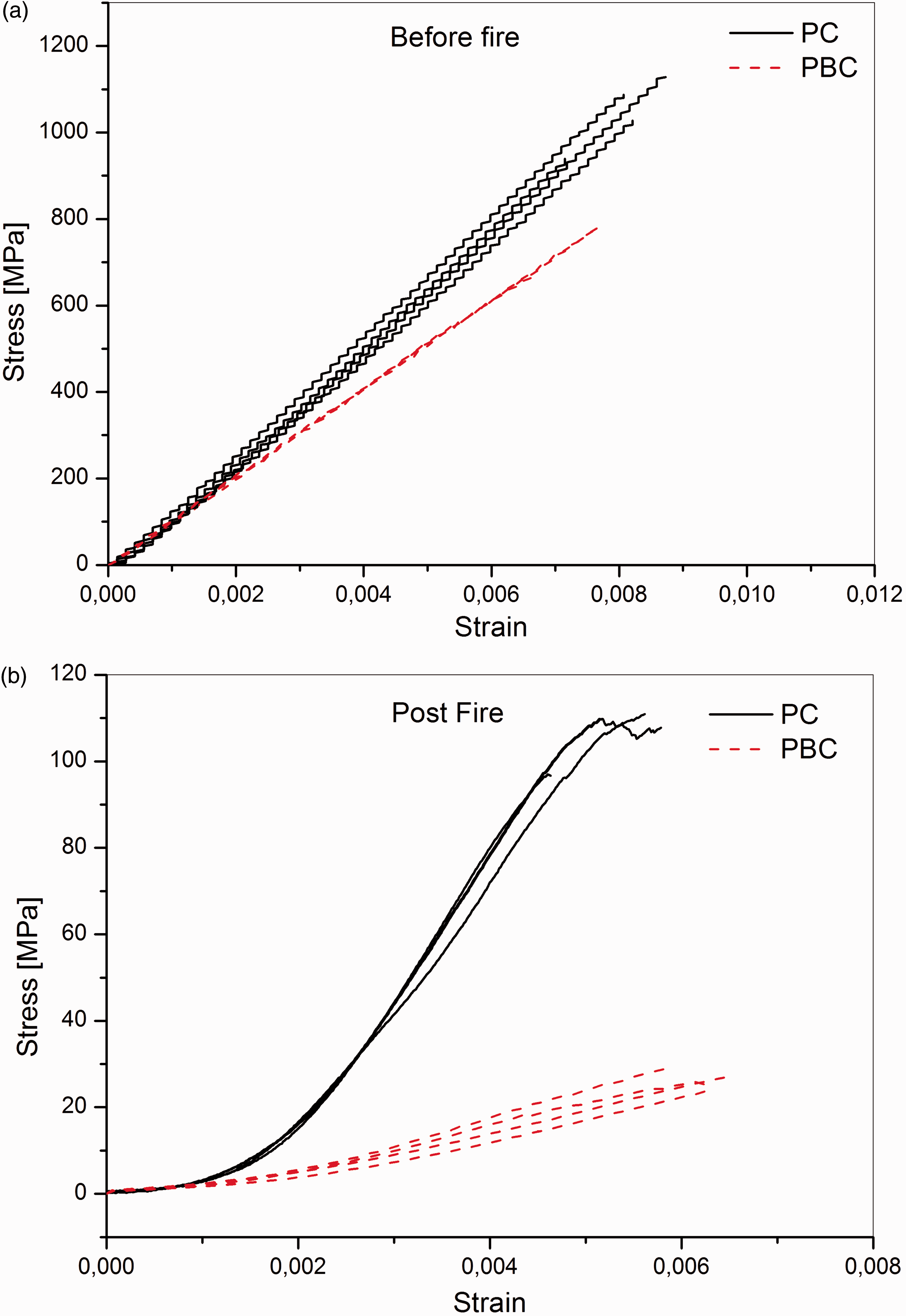

Conclusion
High fiber content composite materials based on phenolic resin, nanoclay, and carbon fibers were able to be successfully processed by compression molding. Starting form previously obtained prepregs with the same fiber content (50% vol), the final fiber content in both composites differed nearly 10%, which is an indication that the compaction process is affected by the presence of nanoclays. Basically, the initial viscosity of the modified resin is higher than the pristine one, reducing the flow rate through the fibers during the compaction in a press or an autoclave. Consequently, changes have to be made in the resin formulation (i.e. initial viscosity) if the same fiber content in the composites is desired.
Regarding their fire properties, the parameters that take into account the overall fire performance of the materials (such as FPI, FIGRA, and MAHRE) showed that the addition of nanoclays improves the composites response. This behavior was related to the stabilization of the insulation layer by the nanoclay particles in the matrix, promoting numerous flame retardant mechanisms. Moreover, the fire hazard comprising the average CO and CO2 production was significantly reduced with the clay addition to the polymeric matrix. Both composites did not have positive results on the retention of flexural properties after exposure to fire, although these loss values fall within the average of other reported compounds. Differences in the mechanical results between the composites studied were mainly attributed to their different fiber content.
Footnotes
Declaration of Conflicting Interests
The author(s) declared no potential conflicts of interest with respect to the research, authorship, and/or publication of this article.
Funding
The author(s) disclosed receipt of the following financial support for the research, authorship, and/or publication of this article: The authors would like to thank the National Council of Scientific and Technical Research (CONICET) and The National Agency of Scientific and Technological Promotion (ANPCyT), PICT2013 2455.