







Abstract
The microelectromechanical systems invade gradually the market with applications in many sectors of activity. Developing these micro-systems allows deploying wireless sensor networks that are useful to collect, process and transmit information from their environments without human intervention. In order to keep these micro-devices energetically autonomous without using batteries because they have a limited lifespan, an energy harvesting from ambient vibrations using electrostrictive polymers can be used. These polymers present best features against inorganic materials, as flexibility and low cost. The aims of this paper are manifold. First of all, we made elaboration of the polyurethane/lead zirconate titanate films of 100 µm thickness using a lead zirconate titanate–volume fraction of
Keywords
Introduction
Currently, the development of wireless sensor networks is quite slow because of their limited power sources (e.g. piles or batteries). Batteries have truly a limited lifetime, a high manufacturing cost and a polluting effect on the environment.1,2 For these reasons, the ambient energy harvesting is an alternative technology to avoid the use of batteries since it is durable, free and considered to be environmentally friendly. Additionally, this new technology makes the wireless sensor nodes independent in terms of energy. Several ambient energies sources were considered such as solar, mechanical and thermal energies.3,4 This work is focused on ambient mechanical energy as most applications of wireless sensor networks concern environments (e.g. industry and transport sectors) where the vibration energy is available.5,6
One of the advantages of the energy harvesters rest on the capacity of certain active materials as the piezoelectric ceramics or the electroactive polymers (EAPs), for converting the mechanical energy to the electrical one.7–16
Piezoelectric ceramic, as lead zirconate titanate (PZT), were used for a long time for mechanical-to-electrical energy harvesting due to their high piezoelectric coefficients.17–20 However, those piezoelectric ceramics present high rigidity and limited mechanical strain as well as delicate manufacturing process for complex shapes, making them unsuitable in many applications where large mechanical strain and low frequency are required (e.g. Human Motion Energy Harvesting Technologies). In fact, these materials gradually lose their stiffness and piezoelectricity at high strain levels due to mechanical depoling that could affect the electric output of the energy harvesters after a short time.21–23
Because of their advantages (high flexibility, compatibility with any desired shape…) EAPs are considered new emerging materials for energy-harvesting technology. 24 A new type of EAPs known as electrostrictive polymers has shown considerable promise for a wide field of applications, like actuation25–31 and mechanical energy harvesting.32–41 Recent research showed that the polyurethane (PU), which is an electrostrictive polymer, was capable of generating strains above 10% under a moderate electric field (20 [V/µm]), this leading them to be considered potential actuators.33,42 Besides, these materials are lightweight, flexible, can be easily molded into any desired shape and are inexpensive, as well, the mechanical energy density is comparable to those of piezoelectric single crystals.43,44 Less known is that these materials also can be used for mechanical-to-electrical energy harvesting. Unfortunately, the electrostrictive polymers, in particular the PU, have many drawbacks, as low electromechanical conversion, and they need a bias electric field.
To increase the electromechanical activity of the PU, the PZT ceramic powder was added to the polymer matrix, this mixture type can be approximated like intermediate material situated between piezoelectric ceramics and electrostrictive polymers, taking into consideration the advantages of both types of materials. 43 Therefore, the composite PU/PZT is a class of materials that have appropriate mechanical and piezoelectric properties. In effect, it combines the flexibility and mechanical tolerance (low Young's modulus) of the PU with the high dielectric and piezoelectric properties of the PZT, leading it to be considered a potential actuator and a powerful energy harvester. Effectively, few research that studied the PU/PZT composites have been reported in the literature.45,46 In these studies, the PU/PZT composites were used as sensors to detect acoustic emission (AE) or pyroelectric sensors, but their applications were rarely destined to the mechanical energy harvesting.43,47
On the other hand, there are two methods to harvest mechanical energy by electrostrictive polymers. The first method consists of making energetic cycle, it is proposed by Ren et al. 48 The second method consist of applying a static electric field to perform in the pseudo-piezoelectric mode.49,50 Nevertheless, the drawback of using the electrostrictive polymers for mechanical energy harvesting is the necessity of a bias voltage in both methods mentioned above.
The main concern of the presented paper consists on using the PU/PZT composites for the vibration energy harvesting. Really, the PU-50 vol% PZT films of 100 (µm) thickness were elaborated using a PZT-volume fraction of
Principle of working
Generally, electrostriction is defined as a quadratic coupling between the strain and the electric field. By assuming a linear relationship between the polarization and the electric field, where the strain A schematic representation of the experimental setup used for characterizing the composite PU-50 vol% PZT.
51
PU: polyurethane; PZT: lead zirconate titanate.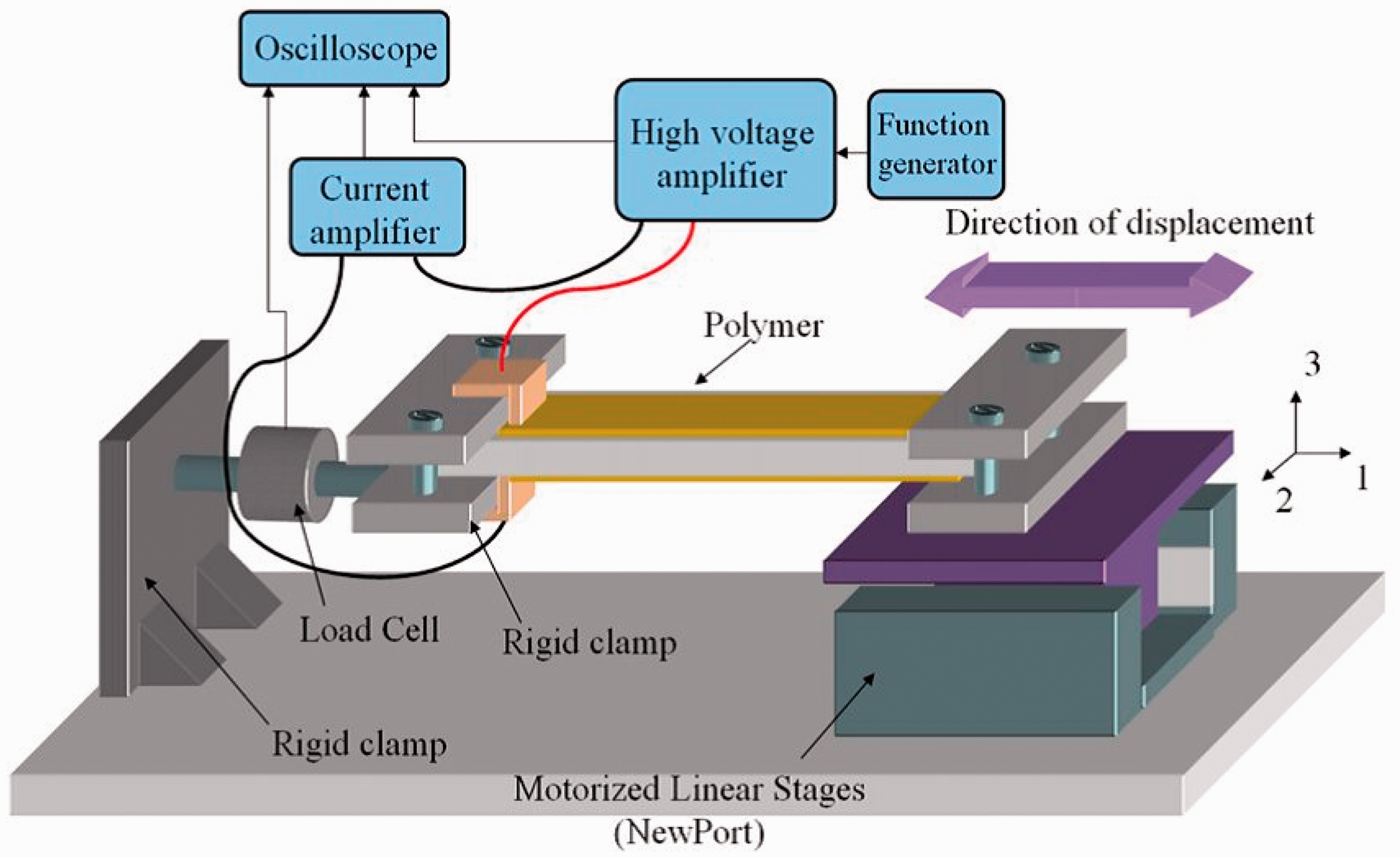


Experimental procedure
Two types of commercially available materials were used in this work for synthesizing PU-50 vol% PZT composites: commercial PZT powder was supplied from Saint-Gobain Quartz Company, and PU was supplied by Lubrizol Company. The PU/PZT composites with 50 vol% PZT and the films thickness around 100 (µm) were elaborated. At first step, the PU pellets were dissolved in tetrahydrofuran (THF) under magnetic stirring at a room temperature. After that, the PZT powder, with grains ranging in diameter from 1 to 10 (µm), was added to the solution under magnetic stirring and then an ultrasonic agitation in order to disperse the PZT powder in the PU matrix. The composite films were made by tape casting process on glass, and were dried at room temperature for 12 h. Subsequently, the gold electrodes were deposited onto both sides of the films using cathodic sputtering apparatus (Cressington 208HR) for later measurements. The thickness of the gold layer is about 20 (nm), which has been measured using the MTM-20 high-resolution thickness controller which is available with the sputter coater 208HR. Afterwards, the composites were immersed in hot silicon oil at 80℃ and were subjected in the same time to a bias electric field of 10 (MV/m) for 20 min for the polarization process. Finally, the permittivity measurements were carried out using HP 4284A LCR meter (Agilent Technologies, Santa Clara, California, United States).
In the second part of this experimental work, energy-harvesting tests were carried out. Figure 1 provides a schematic representation of the setup (used by Belhora et al.49,51) to perform the energy-harvesting tests through the PU-50 vol% PZT composites. The composite film was mounted in a sample holder composed of two parts: one fixed and the second that can be moved freely in the first direction with the help of an XM550 Ironless linear motor (Newport Cop., Irvine, CA) that is controlled using a function generator connected to the controller. Consequently, the film is driven with a given strain profile and assumed to be strained along the first direction. Depending on the equipment, the tensile solicitation mode was used and the monitoring was done by fixing the applied strain and measuring the harvested current. In our case, the harmonic strain was chosen for ease of implementation:
Results and discussion
SEM analysis
The SEM (HITACHI S3000-N) was used to explore the dispersion of the PZT grains inside the PU matrix. The micrograph taken by the SEM of the PU-50 vol% PZT composite is shown in Figure 2. It is obvious that the PZT grains disperse homogeneously in the PU matrix and no large agglomerations of PZT grains were shown. In fact, the ultrasonic agitation and the rapid transfer of the solution containing PU and PZT at the doctor blade machine helped to obtain this good distribution of the PZT grains inside the PU matrix. In addition, the homogeneous distribution of PZT grains in PU matrix could influence the piezoelectric and electromechanical properties of the PU-50 vol% PZT composite.
SEM micrograph of the PU-50 vol% PZT composite. SEM: Scanning electron microscope; PU: polyurethane; PZT: lead zirconate titanate.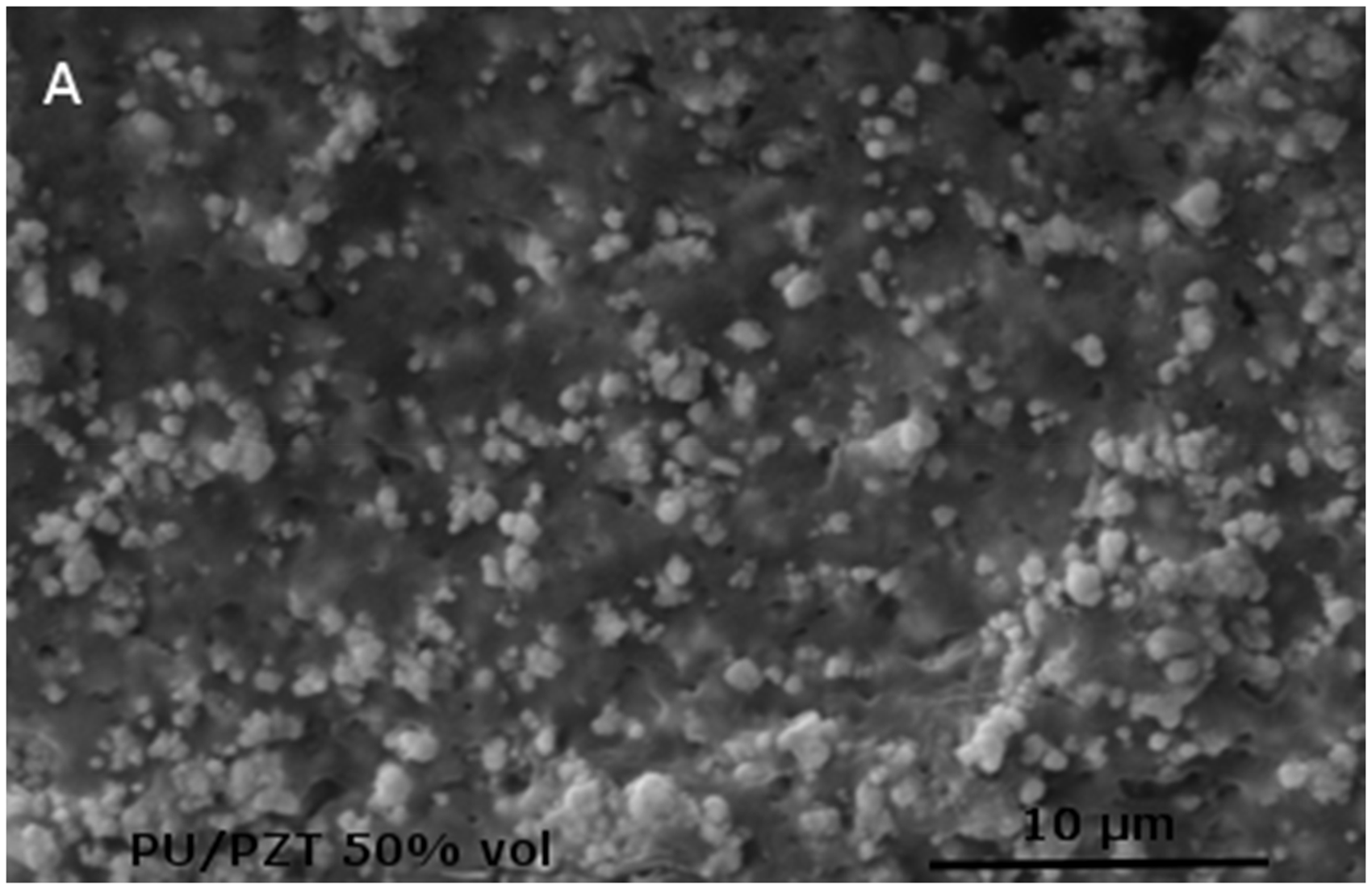
Effect of PZT ceramic powder on the dielectric behavior
The PU/PZT composite is a mix between the thermoplastic elastomer PU and the ferroelectric PZT. Besides the PZTs have very high relative permittivity of the order of
Figure 3 depicts the frequency dependence of the relative permittivity of the PU-50 vol% PZT composite before and after its polarization. Before poling of material, the relative permittivity increases from The relative permittivity of the PU-50 vol% PZT composite in function of the frequency before and after the polarization process. PU: polyurethane; PZT: lead zirconate titanate.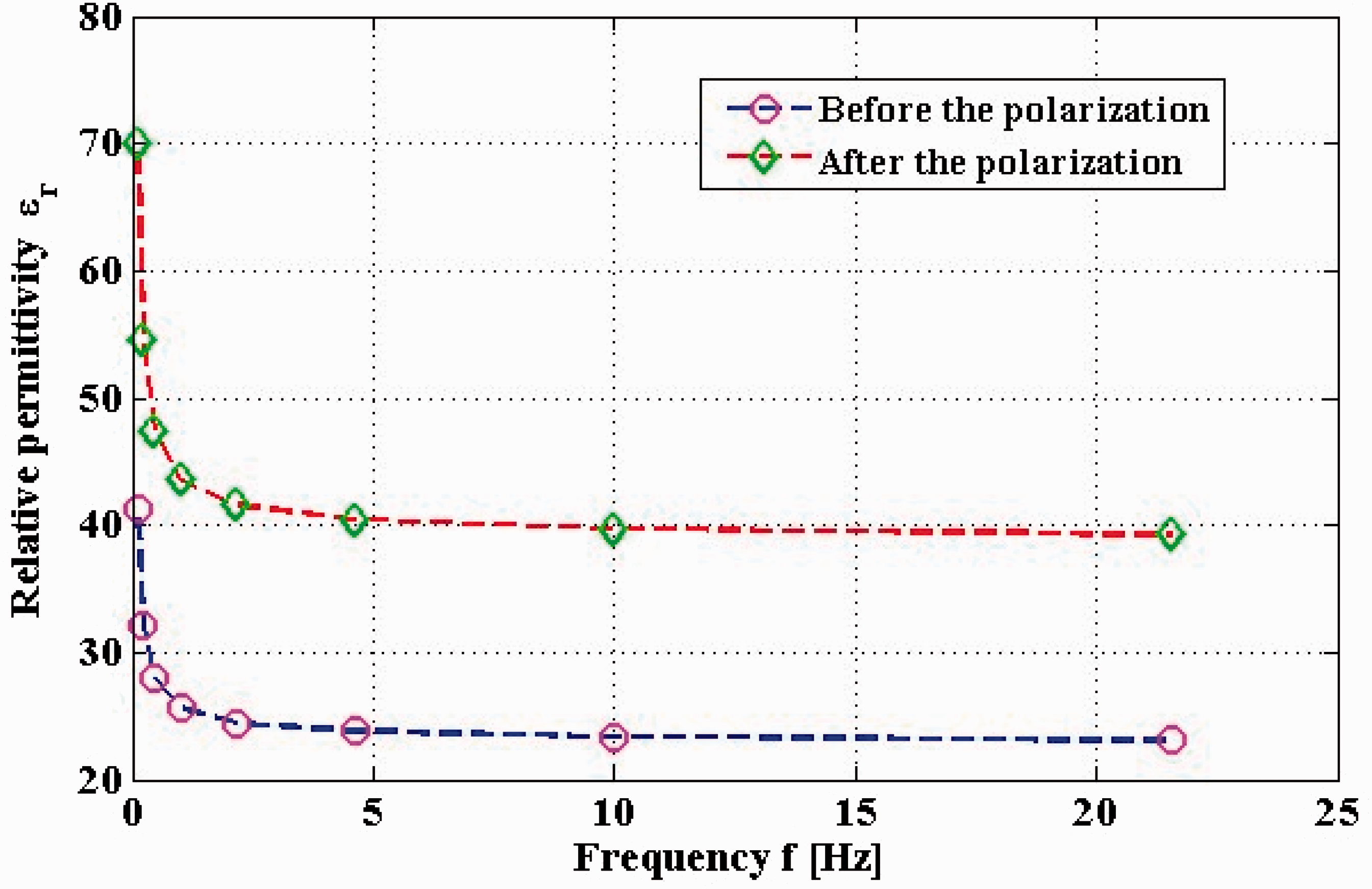
Indeed, as for the PU phase, no hysteresis loop can be obtained under a low electric field. As consequently, a zero remanent polarization as well as low relative permittivity were existed in PU. 43 As regards the ceramic phase, it is formed of grains dispersed in the PU matrix. For energetical reasons, each grain is divided into domains in which the electric dipoles are oriented in the same direction. Two adjacent domains have different polarization directions defined by the crystalline symmetry and are separated by a boundary called wall of domain. The elementary electric dipoles of different domains are randomly oriented after sintering of the grain, and therefore it has a low macroscopic electric dipole moment. To provide the grain with a significant remanent electric dipole moment, it must orient the elementary dipole moments of the domains in a given direction. It must therefore submit the grains to an intense electric field (in our case E = 10 (MV/m)) that aligns preferentially in its direction the elementary electric dipoles of domains. The domain walls will then move, some domains will increase in volume and others disappear while increasing the electric field.
Hence, the phenomena: the reorientation of domain in grains, while the polarization process, and the interfacial polarization are responsible of the increase in relative permittivity of the composite.
Short-circuit current
Figure 4 illustrates the short-circuit current The short-circuit current harvested by the PU-50 vol% PZT unpolarized composite. PU: polyurethane; PZT: lead zirconate titanate.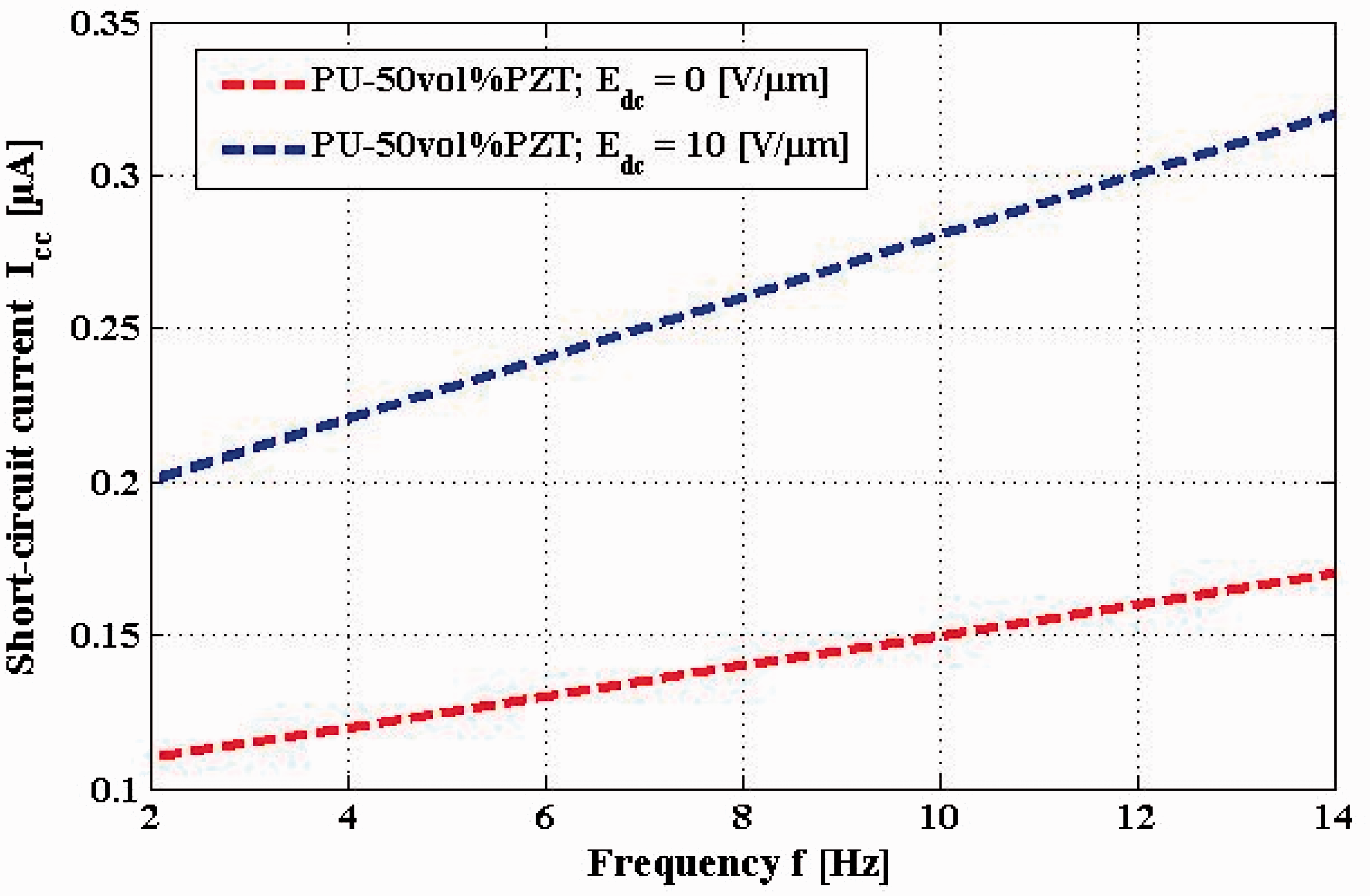

Power density harvested by the PU-50 vol% PZT composite
Figure 5 exhibits the power density, according to the resistance, harvested by the PU-50 vol% PZT unpolarized composite. Indeed, this material sustains to a sinusoidal strain with amplitude of The power density in function of the resistance, harvested by the PU-50 vol% PZT unpolarized composite without the static electric field (Edc = 0 [V/µm]). PU: polyurethane; PZT: lead zirconate titanate.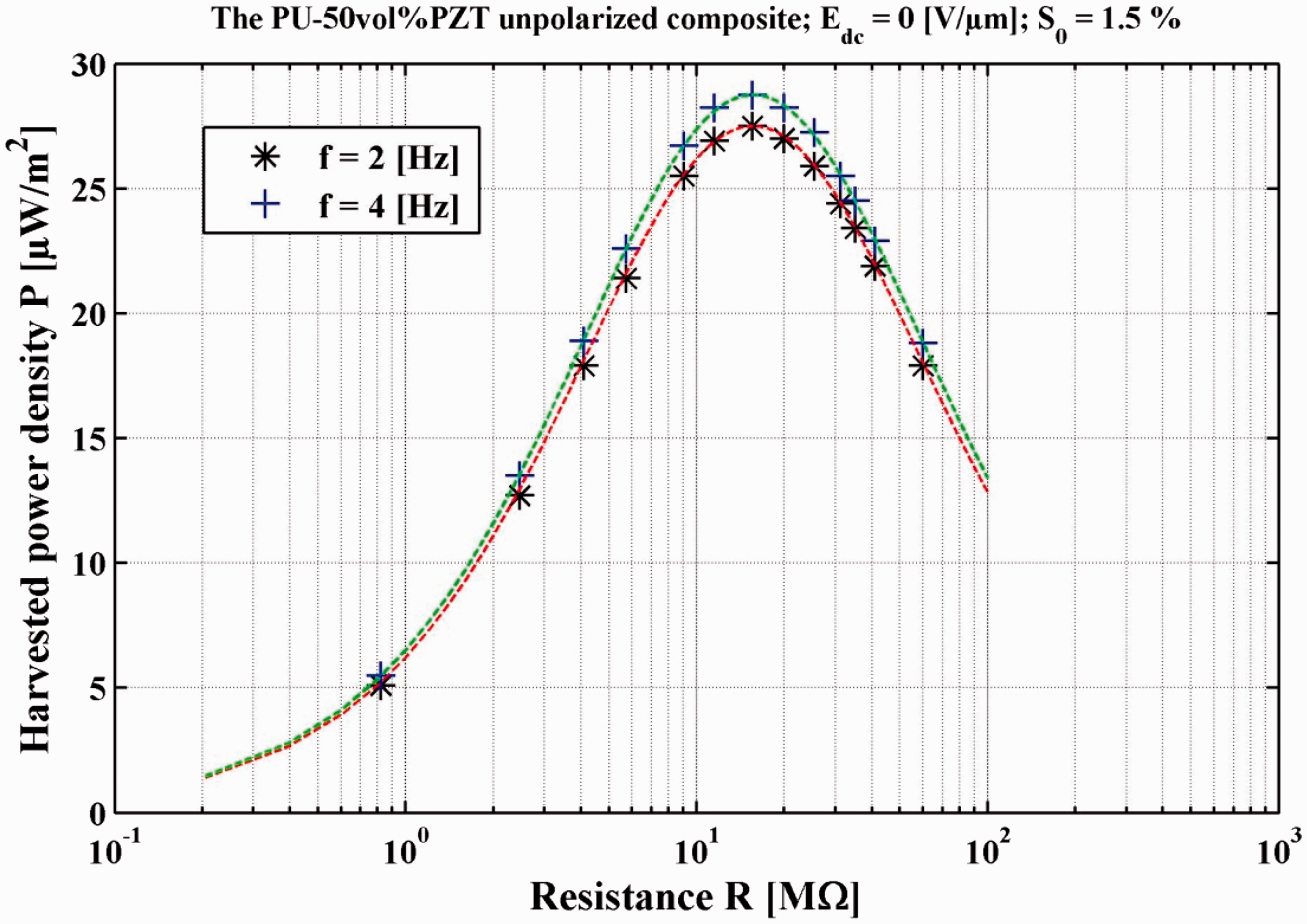
Here, a bias electric field will be applied to the PU-50 vol% PZT unpolarized composite in order to activate the electrostrictive phase associated to the PU matrix. Figure 6 displays the effect of the direct electric field (Edc = 10 [V/µm]) on the power density converted by the unpolarized composite sustained to the same mechanic conditions. Effectively, the power densities were enhanced by an average gain of The power density according to the resistance harvested by the PU-50 vol% PZT unpolarized composite in the case of a static electric field with amplitude of Edc = 10 (V/µm). PU: polyurethane; PZT: lead zirconate titanate.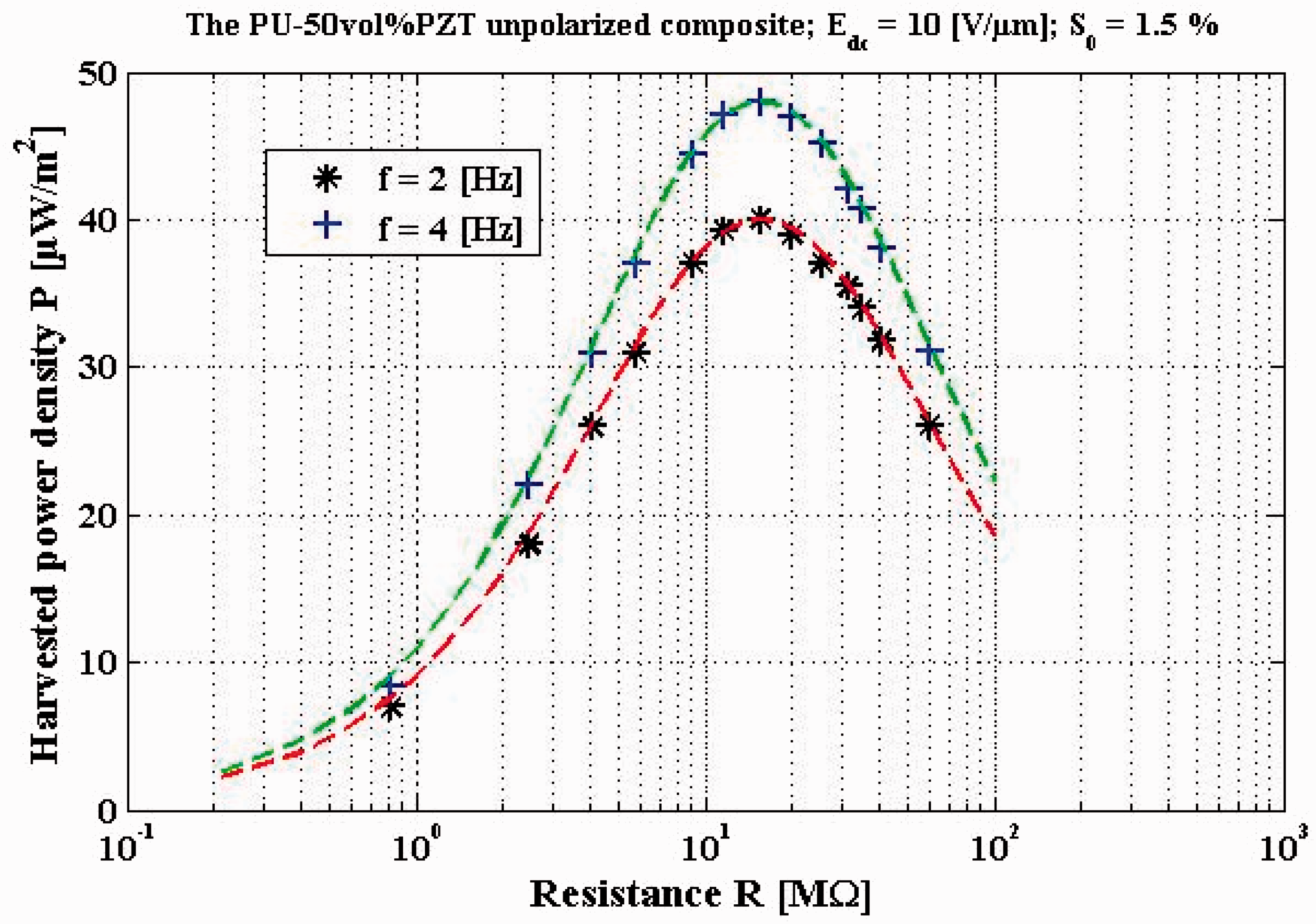
Thereafter, we will expose the results obtained by the PU-50 vol% PZT polarized composite. For that reason, the same measurements have been done in order to observe the effects of polarization process and direct electric field on the electromechanical answer of the composite. Figure 7 presents the variation of power density versus the resistance, transformed by the PU-50 vol% PZT polarized composite, in case of no direct electric field being applied. Just after the polarization of the composite, better power densities than those obtained using the PU-50 vol% PZT unpolarized composite were obtained in the same electrical and mechanical conditions (see Figure 5). In truth, the contribution of polarization process improves the power densities by an average gain of 4. In the same way, the maximum power density corresponds to an optimal resistance of 15.6 (MΩ), and increases when the frequency increases from 2 (Hz) to 4 (Hz).
The power density in function of the resistance harvested by the polarized composite without the static electric field (Edc = 0 [V/µm]).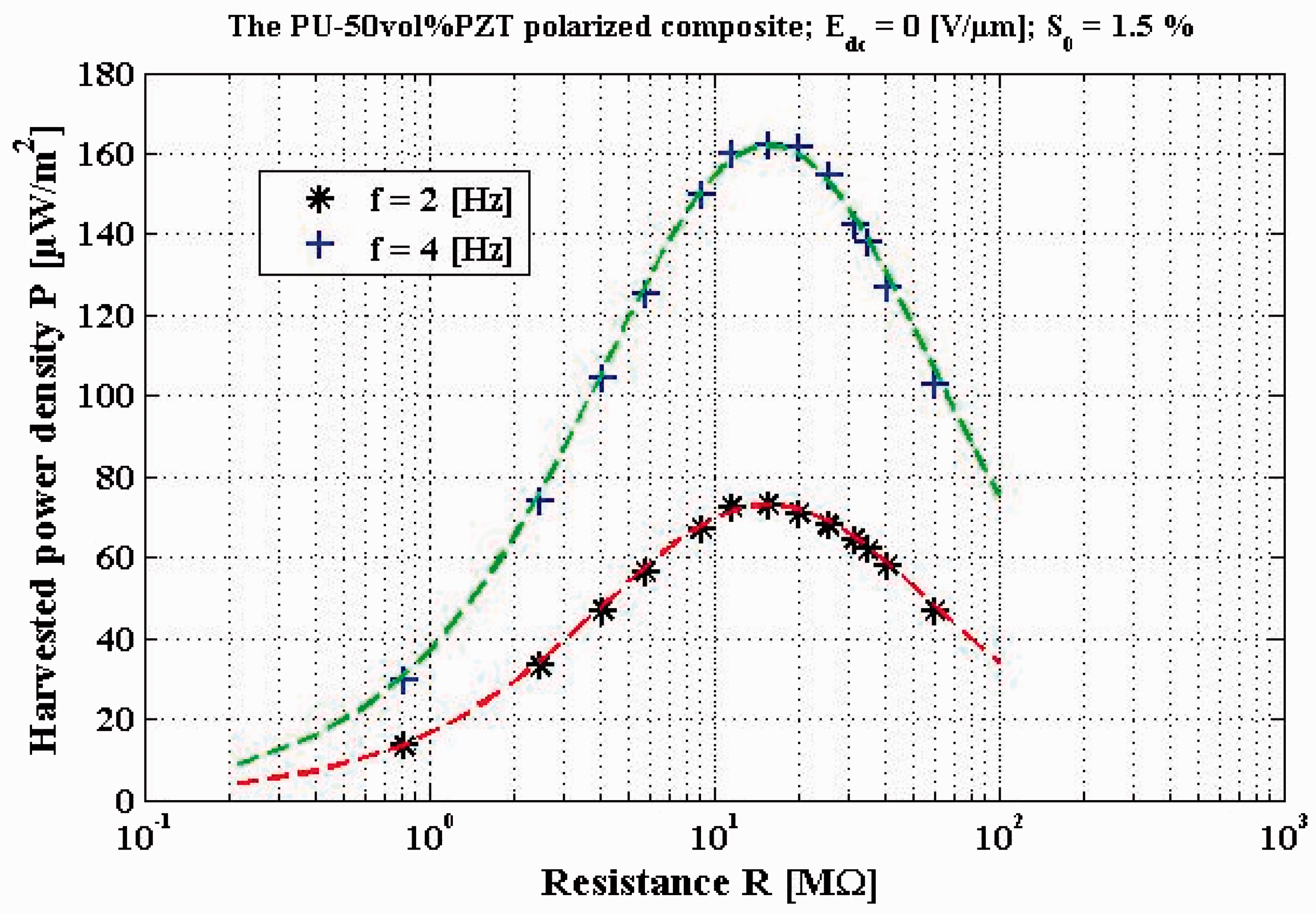
Figure 8 shows the effects of both polarization process and direct electric field (Edc = 10 [V/µm]) on the power density harvested by the polarized composite. These results seem more important than the previous ones. In this case, the contribution of the polarization process raises the power densities by an average gain of four times. Otherwise, the maximum power density corresponds to an optimal resistance of 15.6 (MΩ), and increases when the frequency increases from 2 (Hz) to 4 (Hz).
The power density in function of the resistance harvested by the PU-50 vol% PZT polarized composite in the case of a static electric field with amplitude of Edc = 10 (V/µm). PU: polyurethane; PZT: lead zirconate titanate.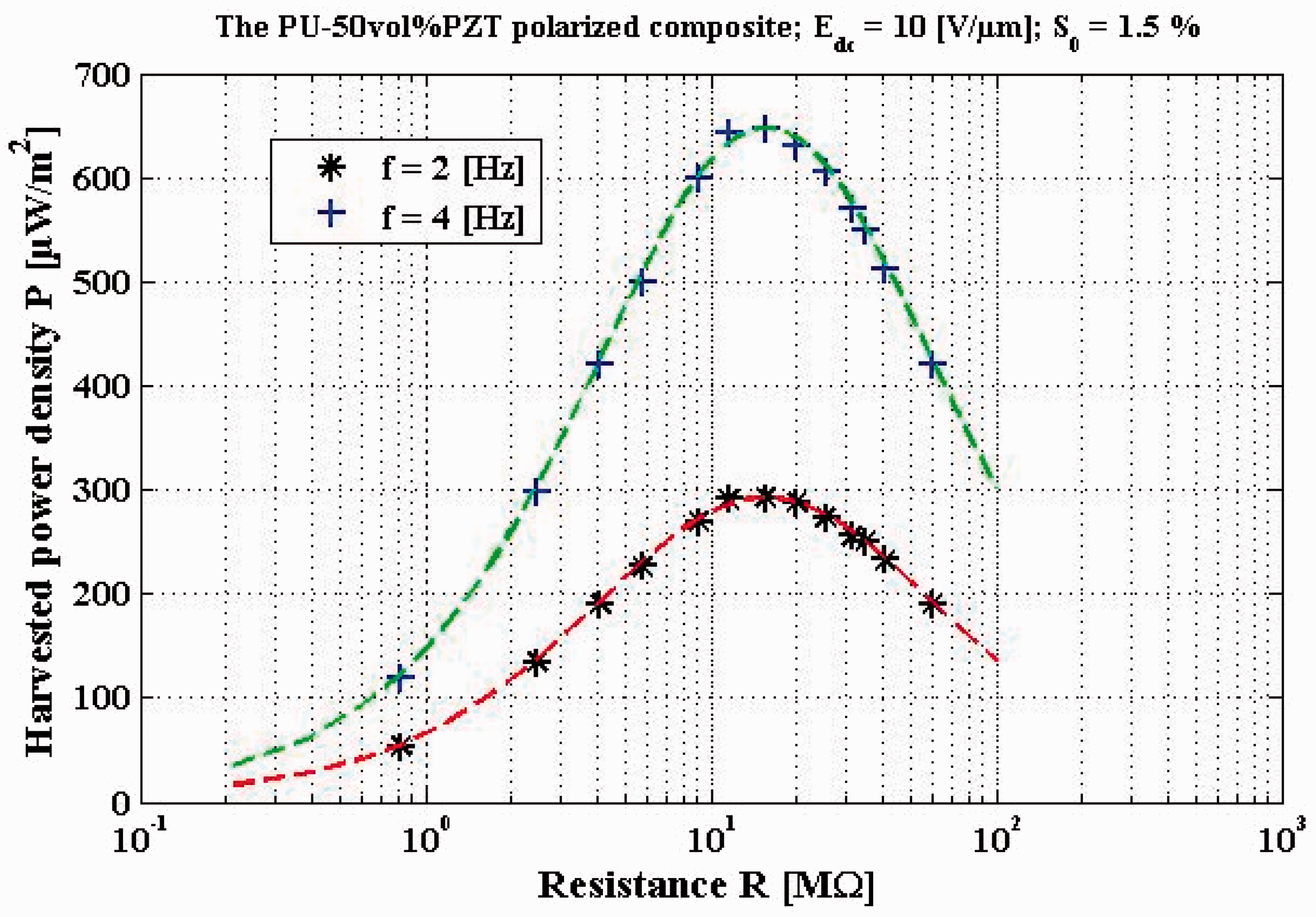
Figure 9 shows the power contribution of both electrostrictive effect and piezoelectric effect in the power density harvested by the PU-50 vol% PZT polarized composite. It is notable that the electrostrictive phase contributes by Contributions of both electrostrictive and piezoelectric materials in power harvested by the PU-50 vol% PZT polarized composite subjected to the strain with an amplitude of 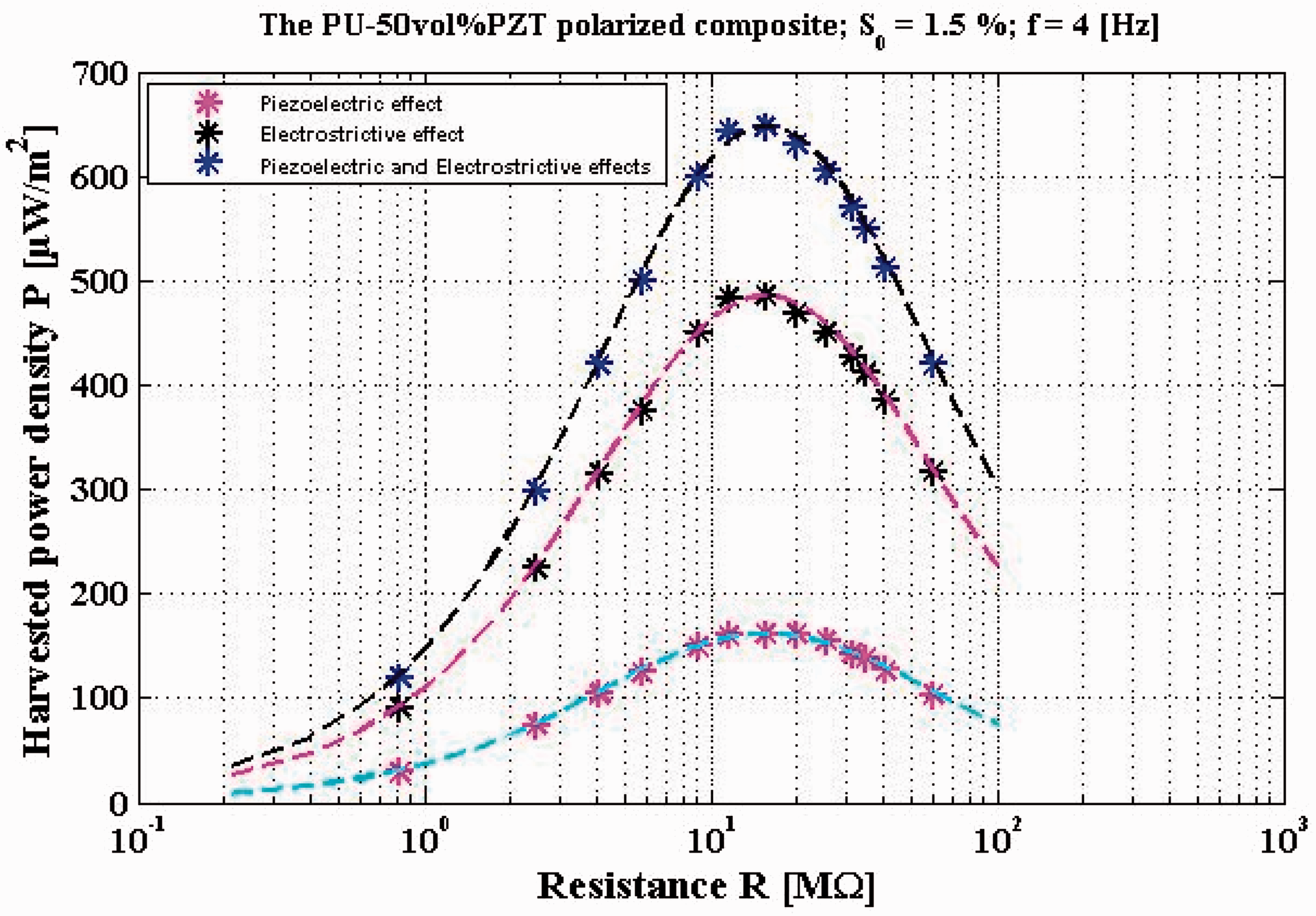
A comparison between different systems
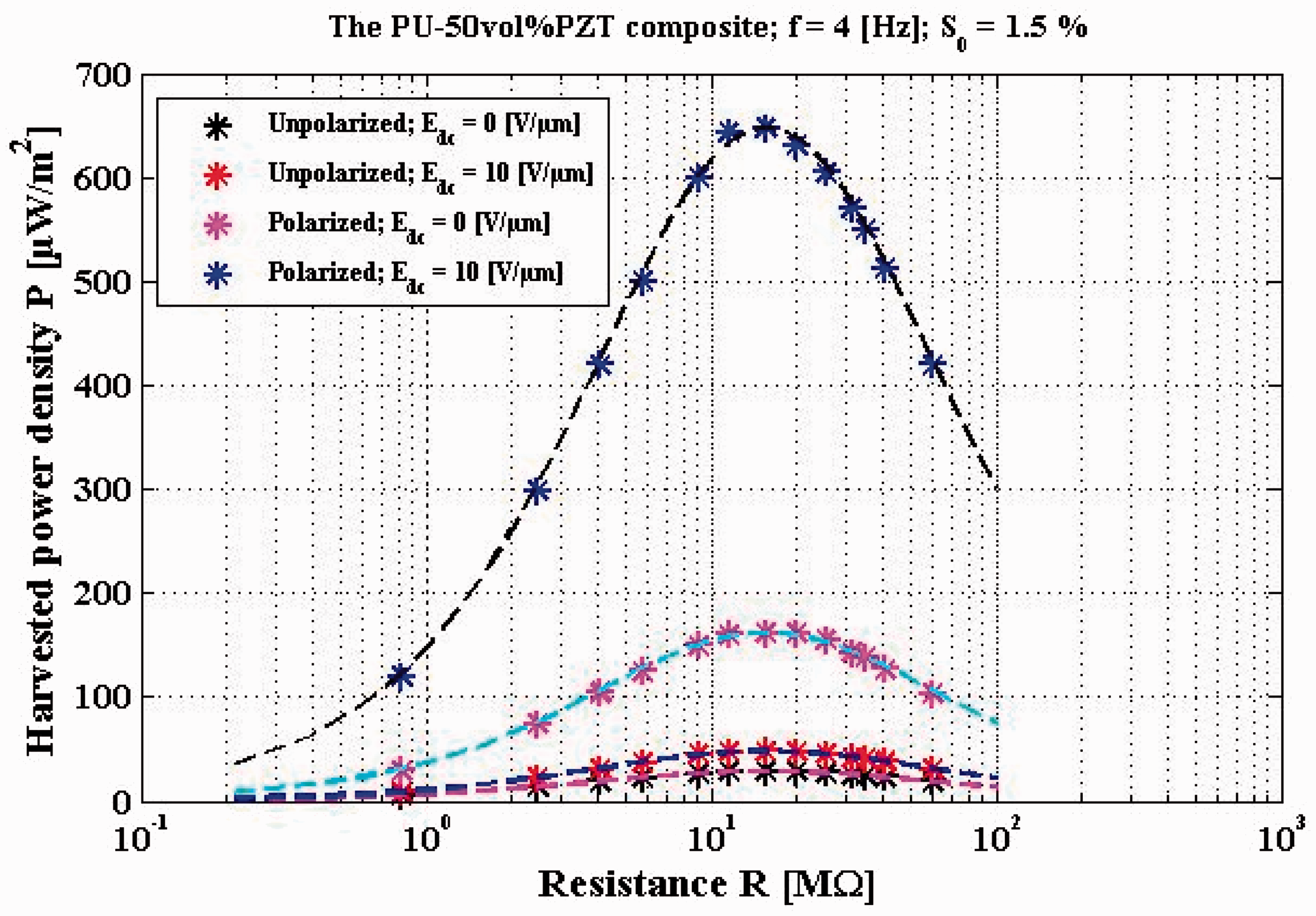
The evaluation of the electromechanical answer of our composites showed that the power density harvested by the polarized composite is better than that harvested by the unpolarized composite. Accordingly, it is necessary to consider the polarized composites for energy-harvesting techniques. In this section, we will compare the different systems based on the PU-50 vol% PZT composite. All these systems are subjected to the same strain with amplitude of The comparison between the power densities harvested by the PU-50 vol% PZT composite for f = 2 (Hz). PU: polyurethane; PZT: lead zirconate titanate. The comparison between the power densities harvested by the PU-50 vol% PZT composite for f = 4 (Hz). PU: polyurethane; PZT: lead zirconate titanate.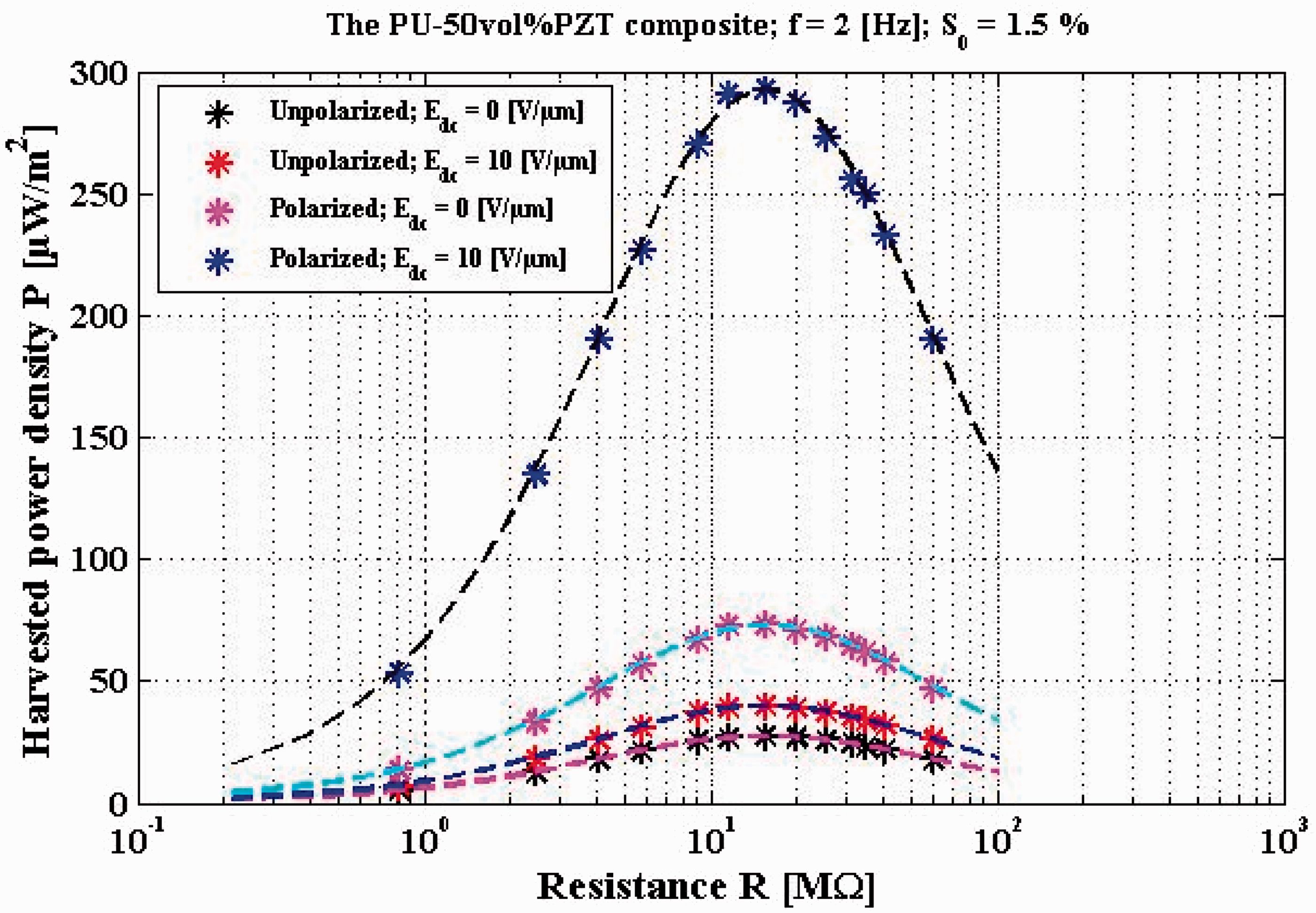
The maximum power densities harvested across the electrical resistance considered optimal (R = 15.6 ([MΩ]).
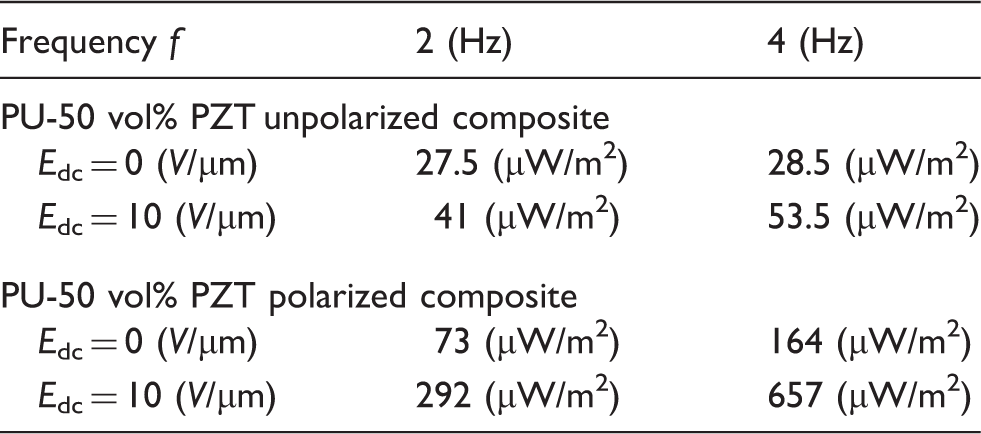
PU: polyurethane; PZT: lead zirconate titanate.
Conclusion
In this work, the PZT-volume fraction of
Future work will concentrate on the modeling of the vibration energy harvesting using the PU-50 vol% PZT composites. Improving performance of these composites could be done by the development of new architectures and the use of the synchronized switch harvesting on inductor (SSHI) technique to increase the effectiveness of the harvesting process. 54
Footnotes
Declaration of Conflicting Interests
The author(s) declared no potential conflicts of interest with respect to the research, authorship, and/or publication of this article.
Funding
The author(s) received no financial support for the research, authorship, and/or publication of this article.