







Abstract
Glass fiber-reinforced polymer pultruded profiles have great potential in the construction industry, presenting certain advantages when compared with traditional materials, including the potentially improved durability under fluctuating levels of environmental factors. The paper presents analysis of glass fiber-reinforced polymer composite, acquired from cable-stayed Fiberline Bridge exploited for 20 years in the fjord area of Kolding, Denmark. Fragment of composite material used for Fourier transform infrared spectroscopy, thermogravimetric analysis, differential scanning calorimetry, and dynamic mechanical analysis tests was therefore subjected to natural aging as a result of temperature amplitudes, permanent solar radiation as well as aggressive impact of sea salt contained in the moisture in the air around the coastal area. Complex comparative analysis presented in this paper, and based on Fourier transform infrared, thermogravimetric analysis, differential scanning calorimetry, and dynamic mechanical analysis tests, pertained to both unspool composite glass fiber-reinforced polymer material (composite 1) and the one after 20 years of natural aging (composite 2). Dynamic mechanical analysis was allowed to detect thermal effects based on the changes in the modulus or damping behavior. The differential scanning calorimetry experiments were performed on the glass fiber-reinforced polymer material in order to determine the mass variation and the energy changes suffered by the materials, as a function of temperature and time.
Keywords
Introduction
Advanced composites made of fibers embedded in a polymeric resin, also known as fiber-reinforced polymer (FRP) materials, have received considerable attention as a strong candidate to replace deteriorating concrete and steel structures. These composites, commonly used for civil engineering applications, are reinforced with an inexpensive fiberglass. The advantages of FRP composites have been widely recognized and include their low weight, ease of installation (reducing traffic delay), resistance to both environmental and chemical attacks, and resistance to fatigue loads. In the past, a number of studies have been conducted on the effects of the durability of FRP composites.
The temperature-dependent thermo-physical and mechanical properties of a pultruded E-glass fiber-reinforced polyester (GFRP) composite are investigated by Bai et al. Fitting of theoretical models of the material properties to results of thermogravimetric analysis (TGA), differential scanning calorimetry (DSC), hot disk, and dynamic mechanical analysis (DMA) experiments demonstrated good agreements. The constants for an Arrhenius representation of the decomposition mass-loss were determined using multi-curves methods. The effective specific heat capacity for the virgin material was found to increase during the decomposition process. 1
The impact of freeze–thaw cycles on GFRP composites was investigated by Karbhari and Pope 2 and GangaRao et al. 3 They found that such exposure can negatively change the thermo-mechanical response of the resin. Another study, conducted by Verghese et al., 4 found that degradation is primarily associated with the micro-cracking that occurs when the volume of absorbed water changes. Jamond et al. 5 and Malvar et al. 6 investigated several commercial composites under environmental exposure. They found that seawater immersion and salt-fog exposure caused the greatest degradation in mechanical properties. Lopez-Anido et al. 7 investigated the performance of the adhesive bonds of the FRP composite under freeze–thaw cycles. They noted that the bond was reduced significantly and the failure mode was changed.
Aging during normal service conditions: this is the most difficult case to treat because of the very low rate of the degradation processes in real life. In order to establish aging model and to predict lifetime in real usage conditions, one needs to rely on accelerated aging test. A compromise between being a representative of the reality and the duration of the test is carefully addressed when using accelerated aging test. Aging of the polymeric material under normal service conditions is a difficult case to treat. Most of the studies are based on accelerated aging test and required extrapolation to normal service conditions. Many factors, such as temperature, irradiation, moisture, chemicals, and presence of an active physical stress, can significantly affect the durability of the polymeric material.8,9 Increased temperature also causes considerable reductions in the shear modulus of GFRP composite, following a variation trend that is in general agreement with the corresponding DMA results, namely of the storage modulus. 10
Parallel identification of glass FRP bridge deck panel by differential thermal analysis, spectroscopy analysis, scanning and optical microscope monitoring, DMA and DSC analysis, tensile and flexural tests were presented in Zhu’s and Lopez’s work. Differential thermal analysis was carried out for estimation of the physical and chemical transformation of glass fiber. 11
During Sun’s, Vassilopoulos’s, and Keller’s investigation, a finite volume model for GFRP was developed in order to simulate the thermal environment inside the DMA chamber and validate the measured thermal lags. A numerical procedure was adopted to calculate the influence of the thermal gradient along the length of the specimen on the E-modulus–temperature curve. It was found that when the thermal lag effects are excluded, the E-modulus of a specimen decreases with increasing heating rates. 12
It is significant for designers to consider not only the short-term characteristics but also the long-term properties of composite materials that are commonly used in bridge applications. In study created by Haohui Xin et al., flexural tests were performed on composite specimens that were exposed to both fresh water and artificial seawater environments at 40℃, 60℃, and 80℃ temperatures. The long-term hygrothermal aging effects on flexural properties of PFRP laminates, including temperature variation during exposure, were predicted using both Phillips equation and Arrhenius relationship. 13 Results obtained for shear strength of GFRP are also in line with previous data reported in the literature. Degradation of shear strength across glass transition is much steeper than that exhibited by tensile strength. At 250℃, the GFRP material retained only about 10% of its ambient temperature shear strength, based on Correia’s et al. investigation. 14
The first all-composite footbridge in Europe was built in 1992 in Aberfeldy, Scotland, and was a cable stayed bridge using the Maunsell system. The term ‘all-composite’ applied to this bridge is literally true, since all components (pylons, cables, beams, bridge deck, railing) are made of FRPs. Apart from the cables (Parafil ropes) all components were produced by pultrusion. Most of the connections were erected using adhesive bonding. Only for the connection cables—transverse beams were mechanical fasteners used. In contrast to the Aberfeldy Bridge, the footbridge in Kolding, Denmark was erected exclusively using mechanical fasteners. Again all components, beside the cables, were produced by pultrusion, using Fiberline system. 15
The reported and modeling work conducted for thermophysical and thermomechanical properties of GFRP bridge composite structure elements manufactured by pultrusion is still limited in literature. The combination, linkage of scientific, modern methods of investigations is suitable and necessary for assessment of the GFRP durability.16,17
Consequently, in order to have high confidence that composite material systems, utilized as either structural component parts or for the strengthening of structures, will last the remaining life of the structure, the degradation mechanisms due to exposure to the natural environment must be known.
Experimental program
The paper presents analysis of GFRP composite, acquired from cable-stayed Fiberline Bridge exploited for 20 years in the fjord area of Kolding, Denmark. Fragment of composite material used for Fourier transform infrared (FT-IR), TGA, DSC, and DMA tests was therefore subjected to natural aging as a result of temperature amplitudes, permanent solar radiation as well as aggressive impact of sea salt contained in the moisture in the air around coastal area. Complex comparative analyses presented in this paper, and based on FT-IR, TGA, DSC, and DMA tests, pertained to both unspool, virgin composite GFRP material (composite 1) and the one after 20 years of natural aging (composite 2).
The cable-stayed Fiberline Bridge, located in Kolding city in Denmark, was constructed in 1997 using 12 different pultruded profiles all made of GFRP material. The footbridge is crossing an overhead main railway line near a salt water fjord. In spite of these disadvantageous conditions, the expected life time of the structure is minimum 100 years. The general view of the footbridge and its longitudinal section with the most important dimensions are shown in Figure 1.
Fiberline bridge in Kolding: (a) longitudinal section and (b) general view.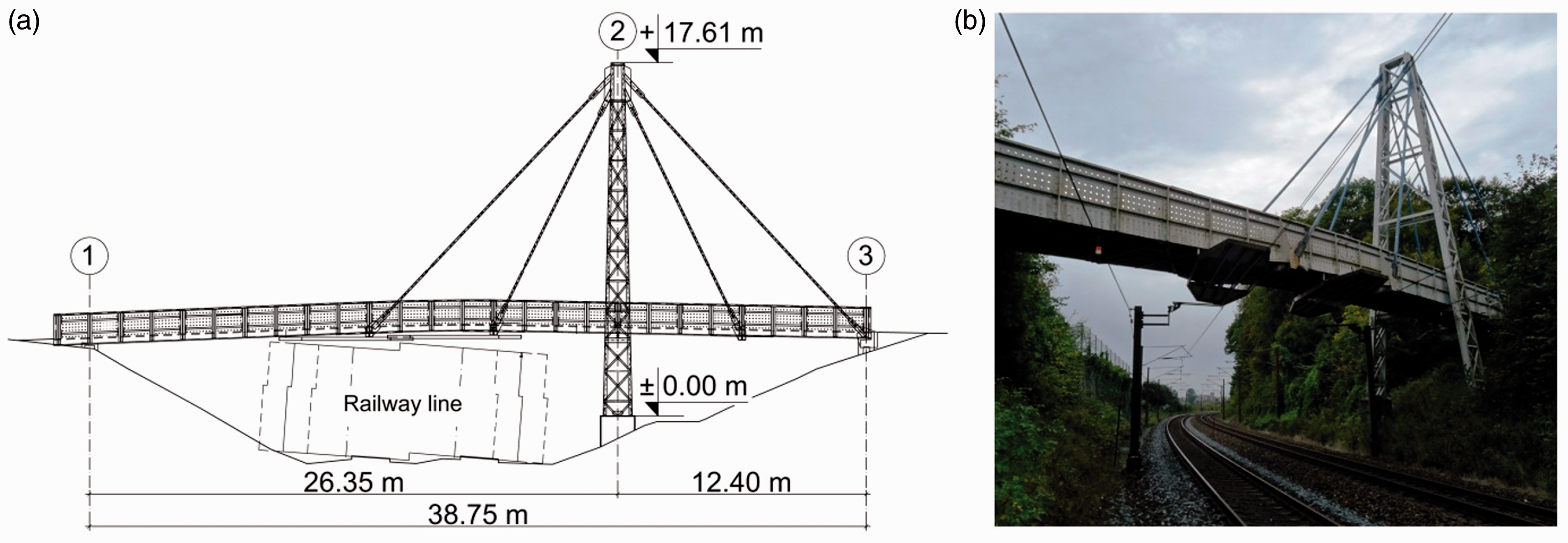
The 40.3 m long and 3.21 m width footbridge comprises two continuous spans with lengths of 27.9 and 12.4 m, supported by a single A-shaped 18.5 m tall pylon. Four pairs of cables with a square cross-section and a length of about 17.8, 17.6, 13.6, and 13.4 m are secured to the top of the pylon. The structural system of the deck comprises two I-shaped pultruded profiles with a height of 1.4 m used as main girders. Total weight of the bridge is just 12 tones. The additional information about the footbridge is given in the Fiberline Composites website.
Specimens cut from commercial GFRP pultruded profiles, currently being used for infrastructure applications, were submitted to mainly four different exposure environments, in many researchers’ investigations2–9 for example: (1) immersion in water at 20℃, (2) condensation of water at 60℃, (3) artificial accelerated weathering in a QUV equipment, and (4) artificial accelerated weathering in a Xenon-arc equipment. After submitting the material to those aggressive environments, the behavior was analyzed, the tensile and flexural behaviors were studied, the chromatic and gloss variations were measured and the chemical changes were investigated by means of IR spectroscopy, in previous literature.
This paper has presented the results of experimental research on the physical, chemical, mechanical, and aesthetical changes suffered by GFRP pultruded profiles following accelerated exposure to moisture, thermal effects and ultraviolet (UV) radiation from natural, real environment, during twenty years of exploitation. The main focus of the presented research was to demonstrate technical state of GFRP composite material as an integral part of a footbridge structure.
The particularly directions of research methodology and tests have created standard for estimation aging composite material, after two decades of real life exploitation. Aforementioned analyses were necessary to examine the durability description of the composite elements.
Measurements
IR spectroscopy
FT-IR spectra were recorded on a Nicolet iS10 (Thermo Scientific) FT spectrophotometer equipped with a diamond ATR unit. In all cases 16 scans at a resolution of 4 cm−1 were collected, to record the spectra in a range of 4000–650 cm−1.
TGA
TGA was performed using a Mettler Toledo TGA/DSC1 analyzer. The TG experiments have been carried out in the oxygen in the range of 25 to 1000℃ with a heating rate of 20 K/min. The sample mass ca. 4 mg, gas flow 50 mL min−1 and 150 µL open alumina pan, were employed.
DSC
Thermal properties of the samples were studied using a Mettler Toledo DSC822e differential scanning calorimeter. The measurements were performed at the heating rate of 10 K/min, under nitrogen atmosphere at a flow rate of 60 mL/min. Samples of about 20 mg were placed in 40 µL hermetically sealed aluminum crucibles with a pin.
DMA
DMA of both composites was carried out on a Mettler Toledo DMA/SDTA861e apparatus. An oscillatory dual cantilever bending deformation with displacement amplitude of 10 µm, force amplitude of 2 N at a constant frequency of 5 Hz and at heating the rate of 2 K/min (the temperature range was from −10 to +200℃) or at isothermal conditions (−30, −5, 50℃) were applied. The values of storage modulus (E’), loss modulus (E″) and loss factor (tan δ = E″/E′) were recorded as functions of temperature or time. Rectangular beams measuring approximately 90 × 10 × 3.5 mm were cut from both composites and were inserted into clamps for sample fixation. These materials were composed of alternating layers of unidirectional E-glass fiber rovings and strand mats embedded in polymer resin matrix.
Structural analysis of composites (IR)
IR spectroscopy involves the interaction of IR radiation with matter. It covers a range of techniques, mostly based on absorption spectroscopy. As with all spectroscopic techniques, it can be used to identify and study chemicals. For a given sample which may be solid, liquid, or gaseous, the method or technique of IR spectroscopy uses an instrument called an IR spectrometer (or spectrophotometer) to produce an IR spectrum. A basic IR spectrum is essentially a graph of IR light absorbance (or transmittance) on the vertical axis vs. frequency or wavelength on the horizontal axis. Typical units of frequency used in IR spectra are reciprocal centimeters. Fourier spectroscopy in IR is useful for identification of a type of matrix used to connect conglomerate of fibers on structure elements.
Figure 2 shows the FT-IR spectra of both composites. The characteristic bands in the range of 2800–3000 cm−1 are related to stretching vibration of CH3, CH2 or CH, which are usually present in every polymer matrix. The presence of unsaturated hydrocarbons and aromatic structures is confirmed by the bands at 3026, 1600, 1452, 740, and 697 cm−1, which are due to vibration of =CH and C = C. The bands at 1730 cm−1 and at 1234 cm−1 are characteristic for C = O and C–O–C stretching, respectively. The presence of all those bands may indicate that the polymer matrix is composed of polyester resins.
Fourier transform infrared spectra of the composites.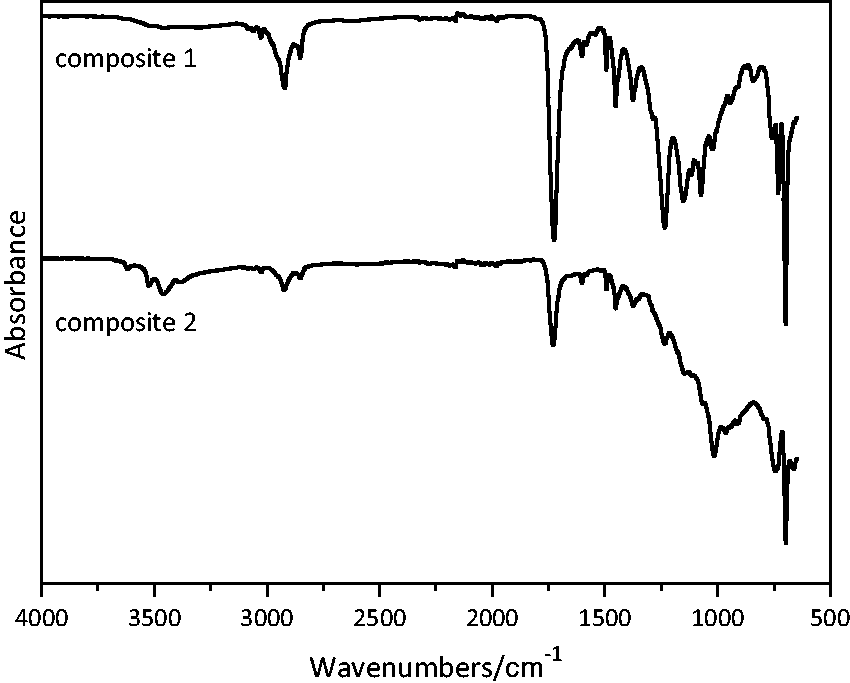
The matrix of glass fibers is a mixed consistency of epoxy resin with amine bisphenol A and epoxy polyester aliphatic by isophthalic polyester. The fiber fractions are approximately 50% per volume or 70% per weight. The matrix is a protecting cover for fiber and it is responsible for load propagation.
All of the studied resins have ester bonds that are the weakest links in the polymer, prone to hydrolytic degradation. A possible degradation mechanism of the matrix is the hydrolysis of these linkages. During the hydrolysis reaction, the –OH induces ester linkage attack, and the resin chain breaks. Consequently, the structure of the resin is disrupted, and the material properties change. Eventually, if the resin degrades, it will not be able to transfer stresses to the glass fibers or protect the glass fibers against alkaline attack. Changes in the amount of hydroxyl groups present in the composite material provide insight into the hydrolysis reaction. The obtained spectra revealed changes in some of the absorption bands during aging, namely lowering in absorption intensity of carbonyl peak (1730 cm−1) for the sample from the bridge (composite 2), which may result from slight leaching of low molecular weight carboxylic constituents soluble in water. Moreover, the presence of the absorption bands in the range of 3400–3600 cm−1, which are due to vibrations in –OH group, as well as lowering of the intensity of C–O–C bands (1223 cm−1), may indicate the hydrolysis of ester linkages. However, one should remember, that the differences in both spectra may result not only form the hydrolysis but also from the various compositions of the samples.
TGA
TGA is a method of thermal analysis in which changes in a sample mass are measured as a function of increasing temperature (at a constant heating rate), or as a function of time (at constant temperature). TG can provide information e.g. about thermal stability of the material, number of decomposition stages or amount of inorganic fillers in a composite.
Thermogravimetric (TG) and differential thermogravimetric (DTG) curves recorded at a heating rate of 20 K/min in the oxygen are presented in Figure 3, while Table 1 provides interpretation of both profiles.
Thermogravimetric (a) and differential thermogravimetric (b) curves of the composites recorded at 20 K/min in oxygen. Interpretation of thermogravimetric and differential thermogravimetric curves recorded at 20℃ min−1 in oxygen.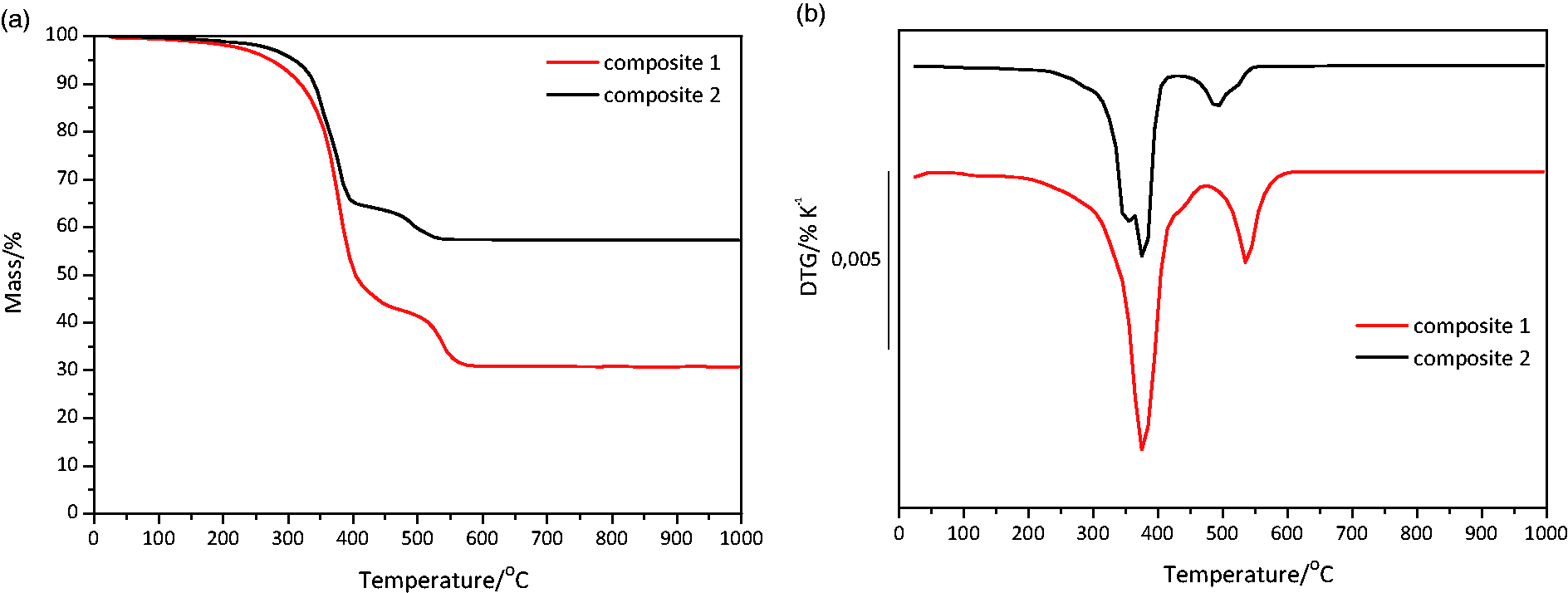

The composite 2 decomposes in the three main stages in the temperature range of 150–560℃ (Figure 3). At the beginning of the degradation in the temperature range of 150–430℃ a split peak is observed, which may indicate a complex mechanism of decomposition. The first step occurs at the temperature of the maximum rate of mass loss of Tmax1 = 351℃, while the second one at Tmax2 = 381℃. The mass losses at the first and second step amount to 18.5 and 17.3, respectively. The third step (Tmax3 = 493℃) occurs in the range of 430–560℃ and may be related to the scission of condensed thermal stable aromatic structures, which could be formed after the first stage of degradation. The composite 1 reveals different thermal degradation behavior. This sample decomposes in the two main stages at the wider temperature range of 150–650℃. The temperature of the maximum rate of mass loss for both steps is shifted toward larger values. Additionally, both samples reveal different values of the temperature of 5% mass loss T5%, which is the highest for composite 2. This may indicate, that both composites are created of various polymer matrix. The amount of solid residue after thermal oxidation at 1000℃ for both composites, which is related to inorganic filler, is larger for composite 2.
DSC
In the DSC, the heat flow to and from a sample and a reference material (usually empty crucible) is measured as a function of temperature as the sample is heated, cooled or held at a constant temperature. The measurement signal is the energy absorbed. The main result obtained in the DSC measurements are the heat flow changes as a function of temperature. Particularly, DSC is used to obtain information on the thermal behavior and characteristics of polymeric composite materials such as glass-transition temperature, melting point, curing process, crystallinity, thermal stability, and relaxation. 17
In the study, specimens of about 20 mg were cut to from reference GFRP (composite 1) and from the composite after 20 years of natural aging (composite 2) and were placed in the hermetically sealed aluminum crucibles with a pin. Samples were heated, during two cycles, from −40 to 250℃ at a rate of 10 K/min. The top temperature was chosen because, as it was determined by TGA analysis (cf. Figure 3), both composites were stable up to this temperature. In the DSC analysis no phase transition was recorded (Figure 4(a) and (b)). The DSC curves from the first and second runs were approximately the same, without exothermic effect, thus no post-curing reaction was observed. It should be noted that the addition of filler in both composites can influence thermal properties of samples and can mask possible phase transitions, especially the glass transition temperature.
Differential scanning calorimetry thermograms of composite 1 (a) and composite 2 (b) recorded at heating rate 20 K/min in nitrogen.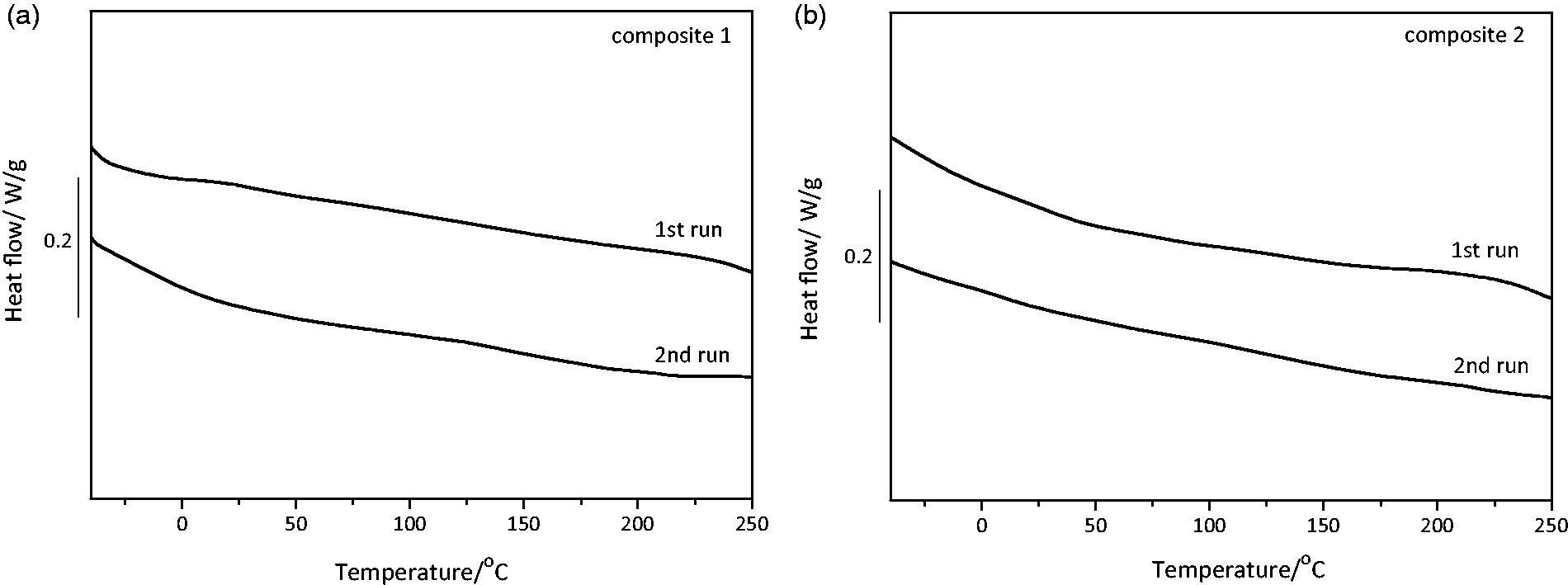
DMA
DMA is most useful for studying the viscoelastic behavior of polymers and composites. In the DMA experiments, specimens are subjected to a sinusoidal mechanical oscillation at a fixed frequency and, while temperature increases at a constant rate, the amplitudes of the load and deformation cycles and the phase angles between these cycles are measured. DMA provides quantitative determination of the mechanical properties of a sample under an oscillating load and as a function of temperature, time and frequency. These experiments were performed in the GFRP pultruded material in order to determine the glass transition temperature (Tg), which marks the transition from a glassy state to a rubbery solid state, and is associated with a considerable reduction of the mechanical properties, namely the stiffness and strength. The glass transition temperature, an important physical property of the matrix, is not only an indicator of the thermal stability of the material, but is also an important indicator of the structure of the polymer and its mechanical properties. For example, as a result of breakage of the Van der Waals bond between the polymer chains, moisture in the matrix reduces Tg of the resin through plastification. The swelling stresses associated with moisture uptake or the presence of alkalis can cause permanent damage in the resin such as matrix cracking, hydrolysis, and fiber-matrix debonding. 17
The results from DMA, showing the changes in storage modulus E′ and tan δ as functions of a temperature are presented in Figure 5. The thermograms are similar—during the heating of the samples from −40 to 200℃ the transition from glassy to rubber (elastic) state was observed, with regard to the drop in the storage modulus curves (the storage modulus considerable decreased with increasing temperature) (Figure 5(a)). Additionally, the sample from the bridge (composite 2) had a higher resistance to deformation in the glassy state than the composite 1 from the reference GFRP, leading to the higher modulus in this state. On the other hand, the modulus of composite 2 in the rubber region was slightly smaller than in case of composite 1. The glass transition temperature of both samples was established as the maximum of tan δ peaks (Figure 5(b)). The Tg value of composite 2 was 138.5℃ and was lower than that of composite 1 (147℃).
Dynamic mechanical analysis thermograms of composite 1 and 2; storage modulus (a) and loss factor tan δ (b) as function of temperature.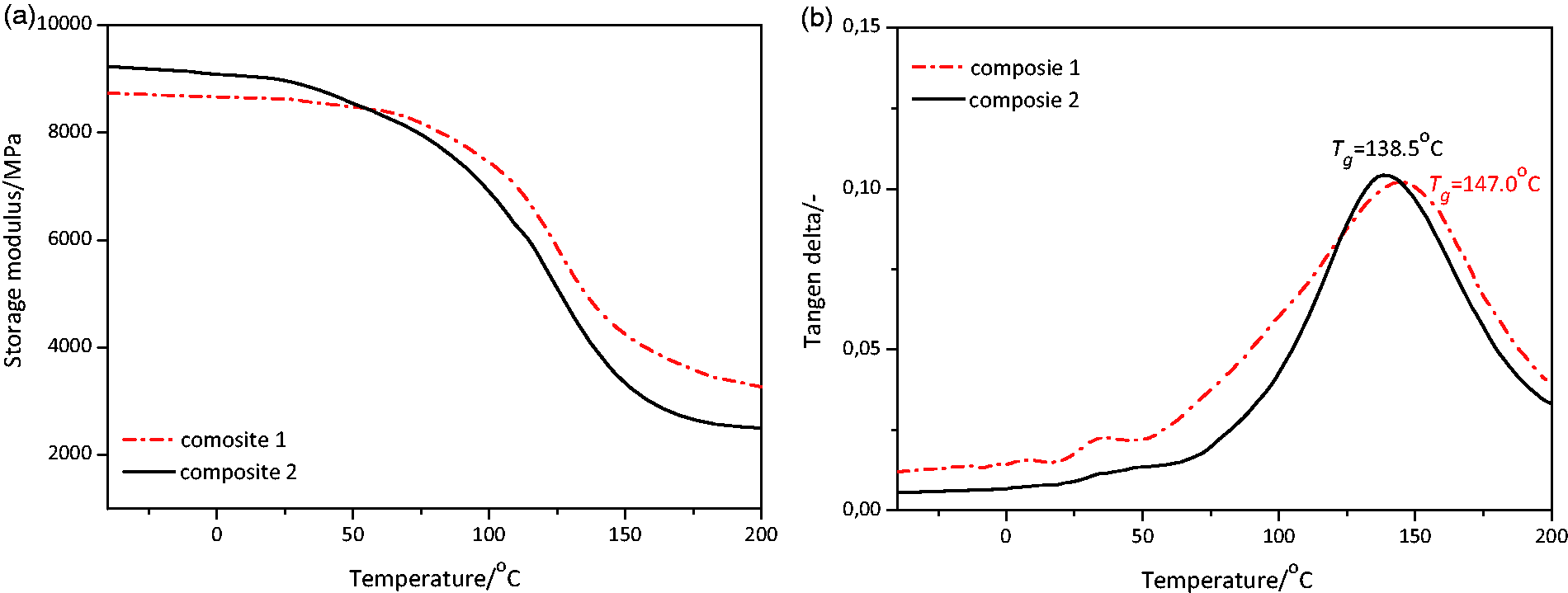
The thermomechanical properties of beams cut from both composites were also investigated in the DMA under isothermal conditions, i.e. the samples were deformed at the selected temperatures (at −30, −5, and 50℃) for one hour. The changes of the storage modulus as function of time are shown in Figure 6. As expected, the values of the storage modulus at a constant temperature were practically the same at the time of the measurement, but increased with the lowering of a temperature as shown in the Figure 6. In addition, for the sample from the bridge the modulus at the same temperature was slightly higher than the one for the reference sample.
Time dependence of storage modulus of composite 1 (a) and composite 2 (b).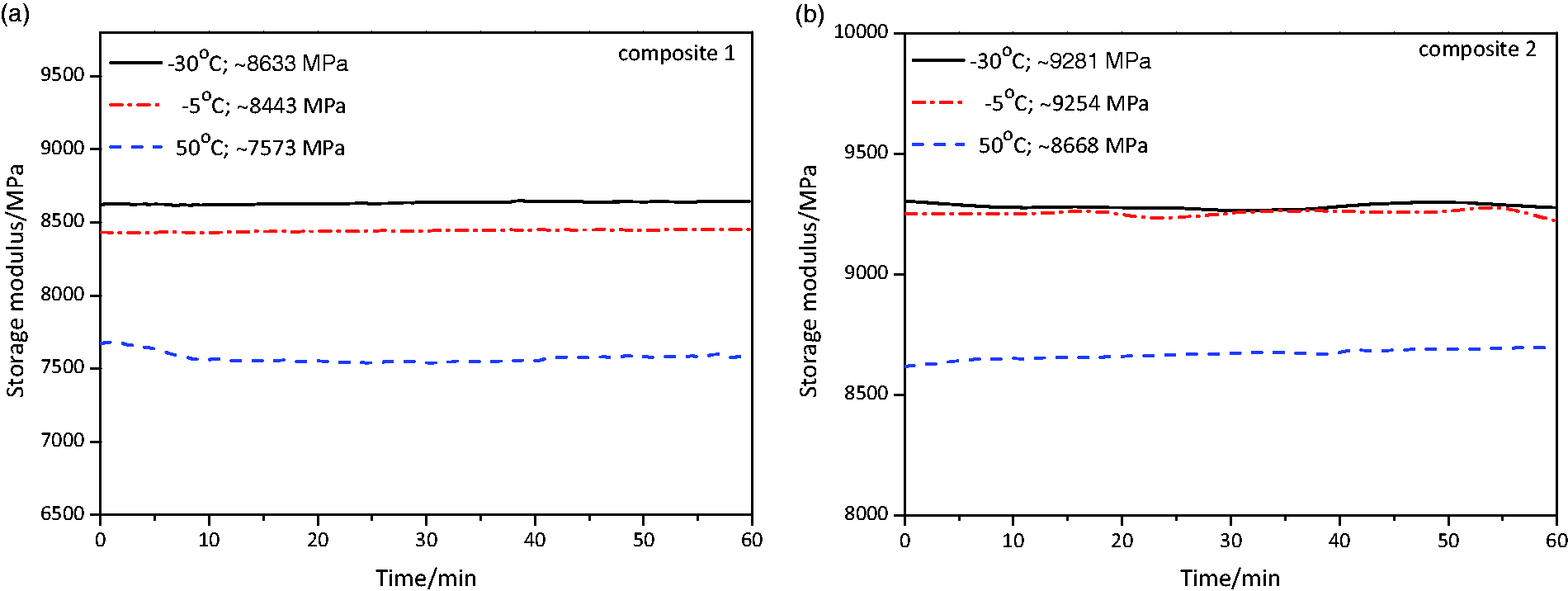
The DMA has shown that both composites have similar thermomechanical properties which may suggest that they were obtained from the same or similar polymer matrix. In addition, the DMA tests confirmed excellent stability of composite 2, which was in use for more than 20 years.
Conclusions
For the further understanding and application of pultruded GFRP composites under elevated temperatures, a series of experiments were conducted to investigate the temperature-dependent thermo-physical and mechanical properties, including the mass-loss, specific heat capacity, thermal conductivity, and storage and loss modulus. Generally, the arrival of new materials in the field of civil construction such as FRP composites indicates the need for carrying out various estimation tests. It is valuable and important to observe, create monitoring for aging composite, especially after decades of exploitation in real environmental conditions (Figures 7 and 8). The aim of this work was to experimentally investigate the effect of natural degradation of GFRP composite bridge element.
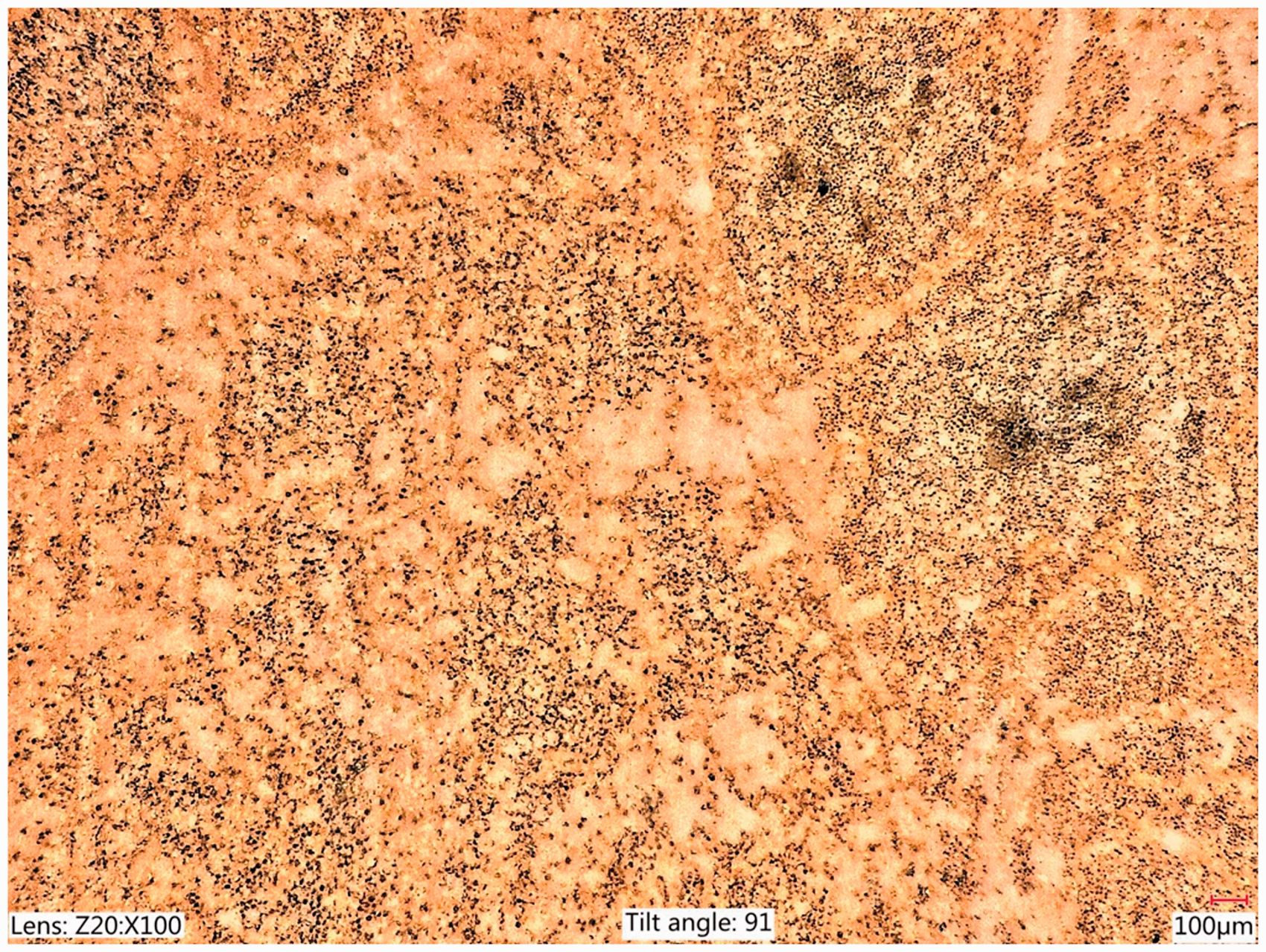
The outside surface of composite element from natural environmental state. Cross section of aging glass fiber-reinforced polymer composite.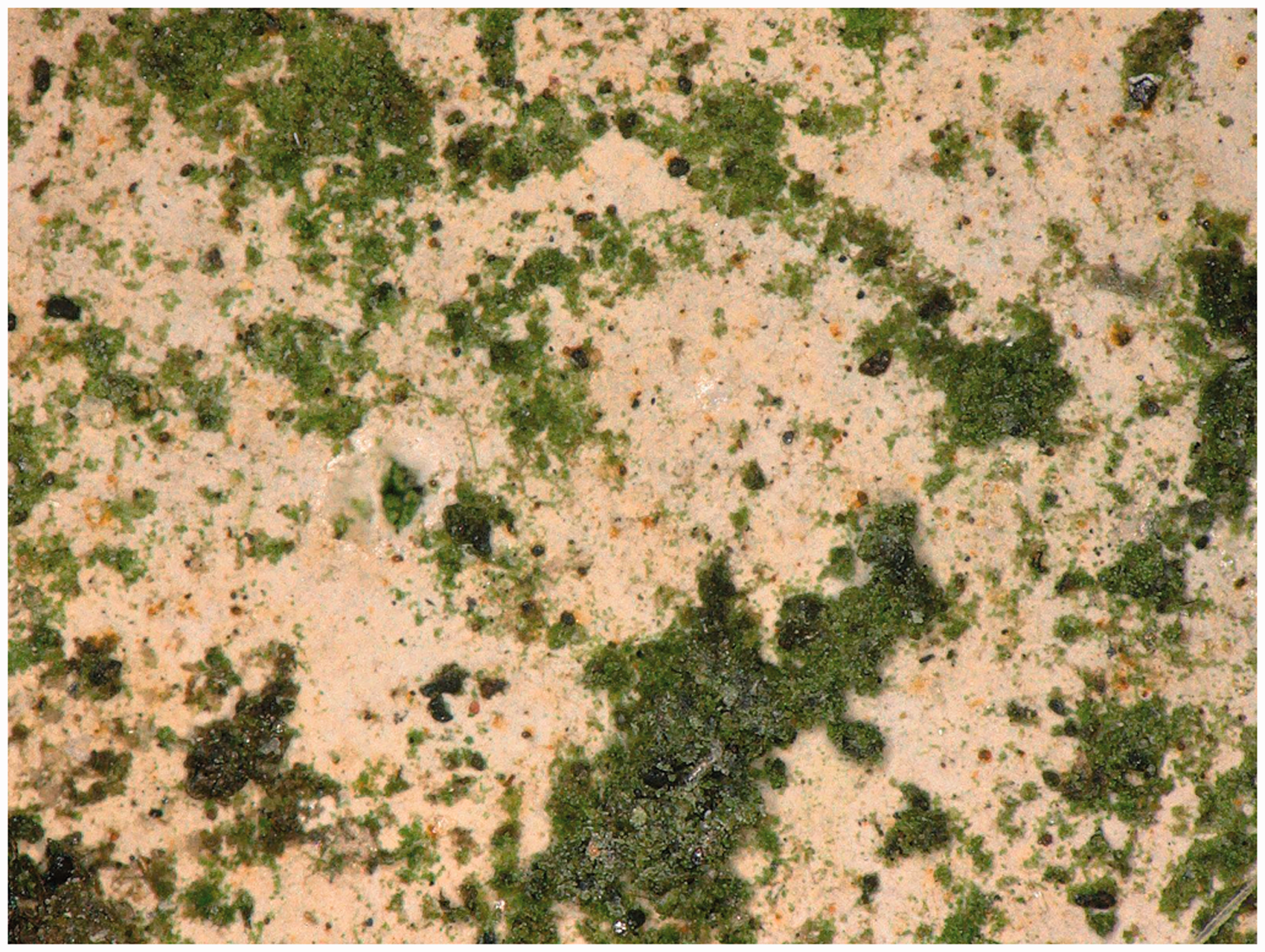
The outside surface of GFRP composite element taken from the natural environment was porous under the microscope and unregularly covered with moss (Figure 7).
The needful thermophysical and thermomechanical tests were conducted for GFRP composite, utilized in bridge structures implementation. The results of material analysis were used to estimate new, virgin material and aging material based on DSC, DMA, TGA, IR spectroscopy.
DSC curves were without exothermic effect, thus no post-curing reaction was observed. It should be noted that the addition of filler in both composites can influence thermal properties of samples and can mask possible phase transitions, especially the glass transition temperature. The mass of the composite material is stable before Td. When the early decomposition is approaching (at 250, 0℃), the mass starts to decrease rapidly. The change of specific heat capacity of the composite material is not very significant when the temperature is below Td. However, the measured value rapidly increases during the decomposition process because additional heat is required for this endothermic chemical reaction. For decomposed material, thermal conductivity was seen to increase with temperature. The storage modulus of the composite GFRP material decreased, with loss modulus increased, with increasing temperature. The change of the DSC curve of GFRP bridge material is very small when temperature is increased up to 250℃, since it mainly consists of glass fibers.
DMA has shown that both composites have similar thermomechanical properties which may suggest that they were obtained from the same or similar polymer matrix. In addition, DMA tests confirmed excellent stability of composite 2, which was in use during 20 years.
The glass transition temperature of both composite was established as the maximum of tan δ peaks. The Tg value of aging composite 2 was 138.5℃ and was lower than that of virgin composite 1 (147℃).
As expected, the values of the storage modulus at constant temperature were practically the same at the time of measurement, but increased with lowering of temperature, for both tested composites. In addition, for the sample from the bridge, the modulus at the same temperature was slightly higher than that for the reference sample. For example at −5℃ the value of storage modulus is 8443 MPa for the virgin composite 1 and 9254 MPa for the aging composite 2 and at +25℃, storage modulus for the first GFRP virgin fragment is 8636 MPa and 8981 MPA for the second, old one.
The comprehensive research indicated very good technical state of composite material used for all-composite GFRP Kolding Footbridge. The discourse about the results was based on a proper research methodology utile for this kind of investigation and monitoring of existing nonconventional bridge structures, without traditional materials.
Footnotes
Declaration of Conflicting Interests
The author(s) declared no potential conflicts of interest with respect to the research, authorship, and/or publication of this article.
Funding
The author(s) received no financial support for the research, authorship, and/or publication of this article.