







Abstract
The effect of variable fiber placement angle on the supersonic linear flutter of rectangular composite panels containing square delamination zone is investigated using an enhanced spline version of finite strip method (FSM). The location dependent stiffness characteristics and mass matrices due to variable fiber orientation angles within every ply are extracted. The structural formulation is based on the higher-order shear deformation theory while the first-order piston theory is utilized to predict the loading effects of the supersonic airflow. Laminated composite material with varying fiber orientation angles along the axial direction is considered. The effect of aerodynamic damping is overlooked. The flutter coalescence of vibration modes is then traced using a standard eigenvalue procedure. Some representative results are provided to show the accuracy and capability of the developed formulation. The effects of material layup as well as geometry on the flutter behavior of laminated panels are then studied and the variation of critical aerodynamic pressure considering different delamination size, delamination depth, and boundary conditions are examined.
Keywords
Introduction
Aeronautical and marine structures are engineering fields where the thin-walled structures are major structural elements, especially wherever the stiffness to weight ratio is a main affording issue. The stiffness to weight efficiency and in demand stiffening are among main benefits of utilizing composite reinforced laminated materials. The common composite designs consider constant physical lamina properties throughout entire geometry by the usage of either prepreg or woven reinforcements. But, a ply with variable mechanical properties could be achieved by changing the fiber placement characteristics for example by on demand change in the orientation angle with respect to the locality. The ply advantages variable directional stiffness properties throughout its geometry as a result of changing the fiber orientation angle and the structure is called as a variable stiffness composite laminate (VSCL).
A widespread defect in laminated structures is debonding of the layers called delamination. Any delamination within the structure causes total strength reduction and activates low energy local instability and failure modes. So the estimation and calculation of the stiffness reduction effects of delamination on the structure’s behavior is of high importance engineering and design issues. During sizing in the design procedure of thin-walled structures under static and dynamic excitations, the stability is a critical design criterion. Flutter is a high importance prevalent instability phenomenon in fluid-structural interactions. Panel flutter is the self-excited oscillation of the external skin on an aerial as well as marine vehicle when exposed to air or water flow over its surface and there is a critical pressure above which the panel motion becomes unstable and its motion grows uncontrollably. This type of aeroelastic instability has received much attention in the past decades. The phenomenon is studied for two- and three-dimensional panels made of conventional isotropic as well as composite materials.
Earlier reported studies on curvilinear fiber VSCL structures could be traced back to the work by Hyer and Lee 1 on flat plates. Shiau 2 studied the effect of delamination on the flutter boundary of two-dimensional laminated plates based on linear-plate theory and quasi-steady aerodynamic theory. The effects of delamination position, size, and thickness on the flutter boundary were studied. The results reveal that the presence of a delamination decreases the flutter boundary of the plate while for certain geometries the flutter boundaries were raised due to the flutter coalescence modes of the plate altered. Kouchakzadeh et al. 3 examined the nonlinear aeroelasticity of general laminated composite plates in supersonic air flow using the classical plate theory along with the von-Karman nonlinear strains in structural modeling and linear piston theory for aerodynamic modeling. The coupled equations of motion were derived by use of Hamilton’s principle with Galerkin’s method to reduce to a system of nonlinear ordinary differential equations in time domain. Results show that the fiber orientation has significant effect on dynamic behavior of the plate and the asymmetric properties, changes the behavior of the limit cycle oscillation. Kuo 4 investigated the effect of variable stiffness via variable fiber spacing on the supersonic flutter of rectangular composite plates using the finite element method (FEM) and quasi-steady aerodynamic theory. Numerical results showed that the sequence of the natural mode may be altered and the two natural frequencies may be close to each other due to the fiber distribution may change the distributed stiffness and mass of the plate. Therefore, it may change the flutter coalescent modes. It was observed that the flutter boundary may be increased or decreased due to variable fiber spacing. Akhavan and Ribeiro 5 studied the free vibration of VSCL plates made from curvilinear fibers based on a third-order shear deformation theory. Yazdi 6 studied the instability of delaminated cross-ply thin cylindrical panels subjected to supersonic axial airflow. A through the width delamination along the entire length of the panel was considered. The Love’s shell theory and Von-Karman-Donnell type of kinematic relations along with first-order potential theory have been employed to extract the governing equations. The effects of some parameters including length to radius ratio, delamination position, size, and thickness on the critical values were discussed. The results indicated that the presence of delamination reduces the flutter critical boundaries. Kuo and his coworkers 7 investigated the flutter behavior of simply supported rectangular isotropic, cross-ply, and angle-ply plates with through the width delamination using the finite strip method (FSM). The effects of delamination length, delamination location, panel aspect ratio, and fiber orientation on the flutter of the plate were studied. The results showed that the stiffness and flutter boundary of the delaminated plate decrease with the increase of delamination length in general. However, the coalescence pair changes when the delamination is centered in a specific region. The flutter boundary of the delaminated plate may be higher than the one of the plate without delamination. Ribeiro et al. 8 reported a review on investigations on the mechanical behavior of VSCL panels. Their review was motivated the buckling, failure, and vibrations in laminates reinforced by curvilinear fibers with some other issues were also addressed. Kuo 9 presented the aerothermoelastic analysis of angle-ply laminates with variable fiber spacing based on the Von Karman large deflection assumptions and quasi-steady supersonic aerodynamic theory. The effects of fiber distribution and temperature gradient on the thermal postbuckling, vibration, and flutter behaviors of angle-ply laminates subjected to aerodynamic force and thermal stress were studied using FEM. The results revealed that fiber redistribution can efficiently increase flutter boundary. The author of this manuscript in his earlier works,10–13 developed semi-analytical as well as spline finite strip formulations and investigated the dynamic instability problem of flat and curved shell panels with and without internal cutout, delamination, and longitudinal stiffeners under uniform in-plane loadings.
In the present study laminated composite plate containing square delamination region is considered and its linear critical flutter behavior under supersonic airflow is extracted. A moderately thick flat panel laminated from curvilinear fiber reinforced plies is assumed. The linear piston theory is utilized in order to simulate the loading effects of the supersonic airflow on the panel. The structural theory is based on the third-order shear deformation plate theory of Reddy’s type. The problem is formulated using an enhanced B-spline version of FSM through an energy approach. The effects of fiber alignment and delamination region on the flutter behavior of laminated flat panels subjected to aerodynamic force are discussed. The panel flutter behavior of delaminated VSCL panels received very limited attention before.
Theoretical development
A general flat variable stiffness laminated panel with a square delamination region is considered. The delamination may be generally of either through-the-width or embedded type, with single or multiple occurrence in thickness direction. There are not any limitations laid on the delamination position and geometry. The panel laminates are reinforced using equally spaced curvilinear fibers where the fiber orientations changes linearly in the axial longitude. The geometry is divided into number of longitudinally adjacent finite strips. Figure 1 shows the sample geometry of total width b, length L, and total thickness t besides a typical numerical mesh. The strips are of length L and width bs. A typical embedded single delamination region is also indicated in the figure.
Typical panel containing single embedded delamination with the finite strip mesh (left, right), the typical finite strip (middle).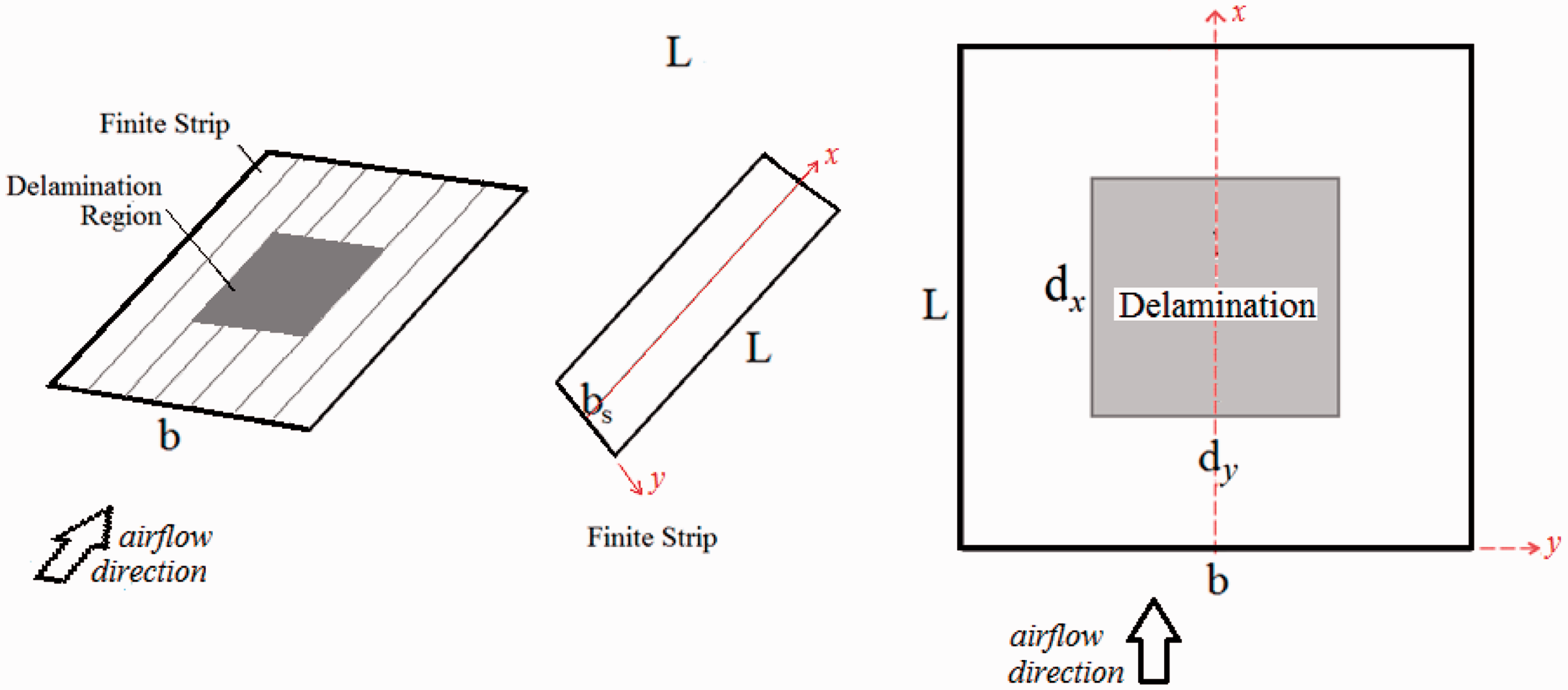
The displacement field inside the strip is approximated based on a Reddy-type third-order shear deformation theory which assures zero shear stresses at both top and bottom surfaces of the shell and is expressed as
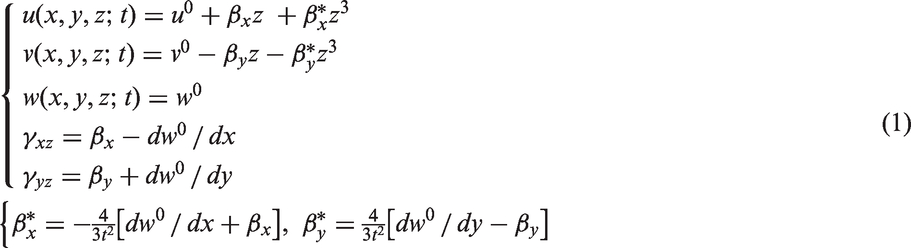
In the context of B-spline FSM, the mid-surface displacement field is approximated using series of multiplication sets of independent functions in longitudinal and directional directions. Series of B3-splines functions are utilized in longitudinal direction while the in-plane linear Lagrangian functions in conjunction with out of plane third-order Hermitian ones in the transverse direction. 13 Any type of boundary constraints (e.g. free, simply supported, clamped) may be implemented according to the approximation displacement functions chosen.
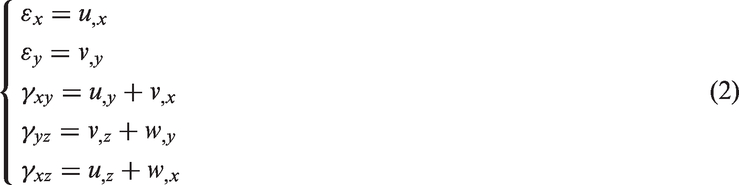
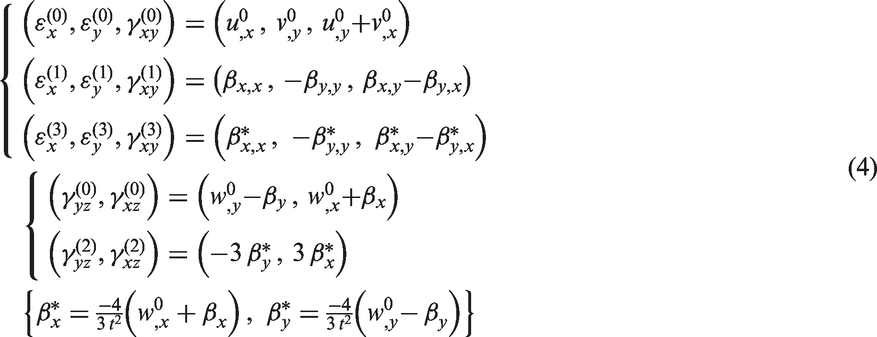
The linear strains on the flat geometry may be expressed as
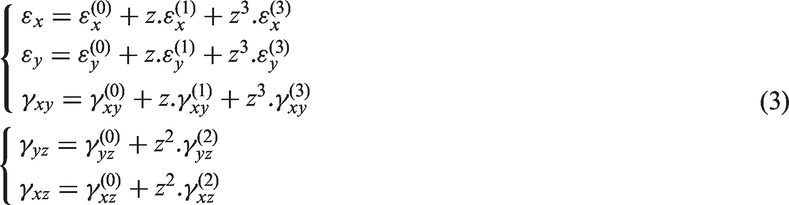
The solution of the stability problem is sought through the application of the principle of virtual work. The total energy of a strip may be defined as summation of kinetic (T), geometrical pre-stress strain energy (Ug), and elastic strain (Ue) energy components

The energy terms could be expressed as
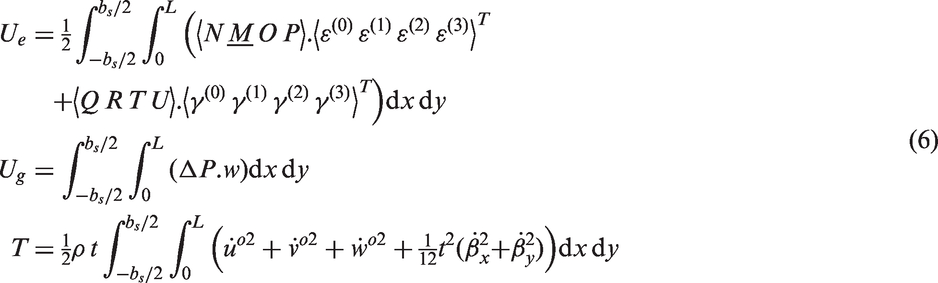
Where the unchanged material mass density is denoted as ρ, the differentiation with respect to time is specifies with upper dot and a matrix transpose operator is shown as superscript
T
. In case of high supersonic Mach numbers axial airflow (M > 1.6), the aerodynamic pressure loading is assumed to follow the quasi-steady supersonic aerodynamic theory. According to the linear piston theory the airflow induced pressure difference acting on the panel could be expressed and approximated as
4

With λ designates the flow dynamic pressure properties.
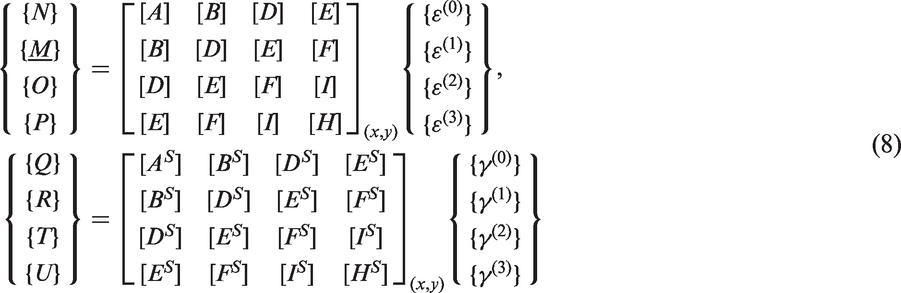
The force resultants (N,
After substituting of the strain and force resultants and loading scheme in energy integral equations (6), integrating the energy terms throughout the strip area, minimizing the energy equilibrium equation (5), factorizing with respect to the degrees of freedom vector, and some further handling including assembling the strip equations and implementing of the necessary boundary conditions, the governing equation of the dynamic instability of the VSCL panel will be obtained and simplified as


Equation (9) may be operated as a quadratic eigenvalue problem. Because the aerodynamic damping is usually small in magnitude, it will be beneficial to ignore aerodynamic damping energy with regard to the other energy terms and analyzing the behavior in the frequency domain. As a result, the undamped linearized eigenvalue governing equation may be obtained as

Equation (11) is solved for eigenvalues for a given value of λ by using the QR method. The vibration frequencies, ω, will approach each other as the flow dynamic pressure coefficient, λ, increases from zero. The value of λ at which the first mode coalescence occurs,
Effects of existence of delamination defect in the geometry and its contribution to the governing equations may be implemented by using proper techniques. The modeling of the delamination is through using multiple numerical models of the same geometry across the thickness with different specifications. In the delamination region, the plate is considered to be a set of two adjacent thinner surfaces. To model the effects of a single delamination defect, the main idea is to use twin strip layers in the panel thickness. This means that the whole plate is composed of two similar layers of strip meshes with distinct layups. In the delamination region, layers are separate and have no connections (note that the probable contact between two adjacent layers is ignored at present formulation). Out of delamination zone, all of degrees of freedom of the two layers are rigidly linked and connected to each other. The corresponding strips in upper and lower layers have the same geometrical and numerical characteristics but are different in layup. According to Figure 2(a), the strip knots of the same planar positions are merged together on the boundary and out of the delamination area. To fulfill the true bending properties of every layer in a strip with respect to the plate mid-surface, every layer layup is considered similar to the whole plate layup with the redundant layers’ material changed to a null, stiff-less and weight-less one (see Figure 2(a)). These considerations also guarantee the physical conditions at the edges of the delamination zone.
(a) Delamination modeling approach overview; (b) curvilinear fiber placement.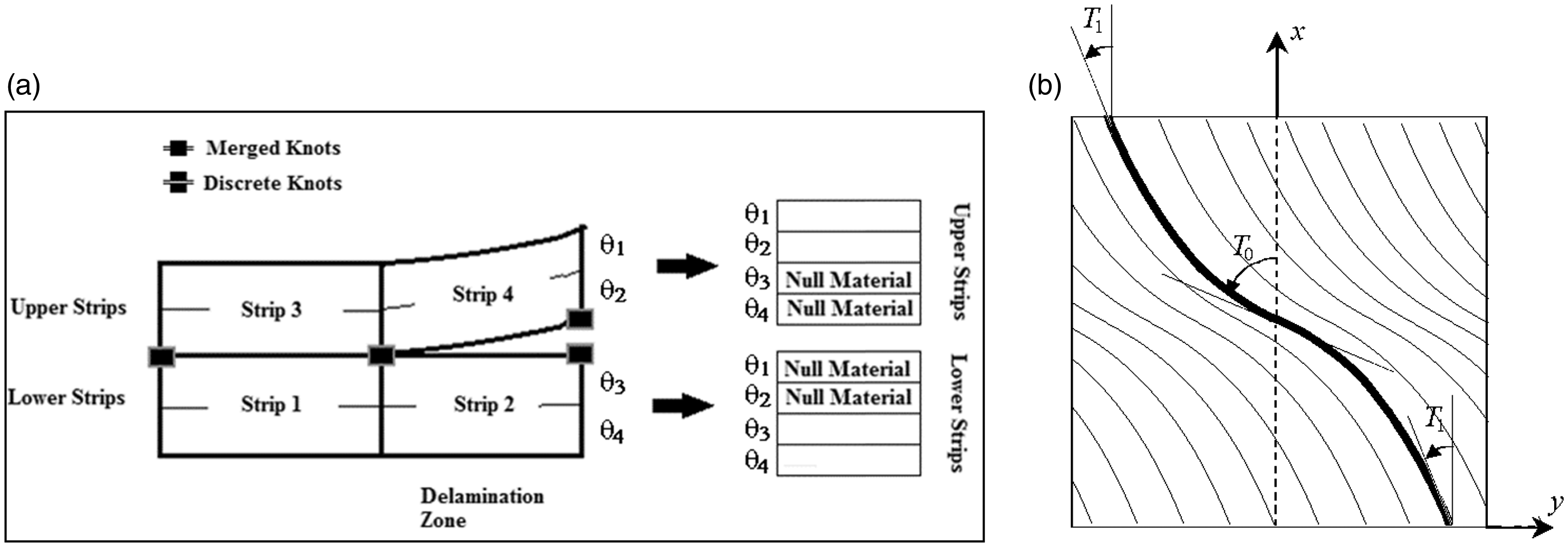
In the curvilinear fiber assumptions, the linearly changing fiber angle in the axial direction of the strip geometry is assumed. The changing fiber angle is denoted by a two-angle set <T0, T1> where the former one and the latter are the fiber angle at the plate middle section and plate ends, respectively.
13
Figure 2(b) depicts the pattern of changing fiber orientation in longitudinal direction. The fiber angle at every arbitrary point in the geometry surface could then be expressed by linear equation

Results and discussion
Critical aerodynamic pressure and flutter frequency of isotropic square plate (L = 1, L/t = 100, v = 0.3)
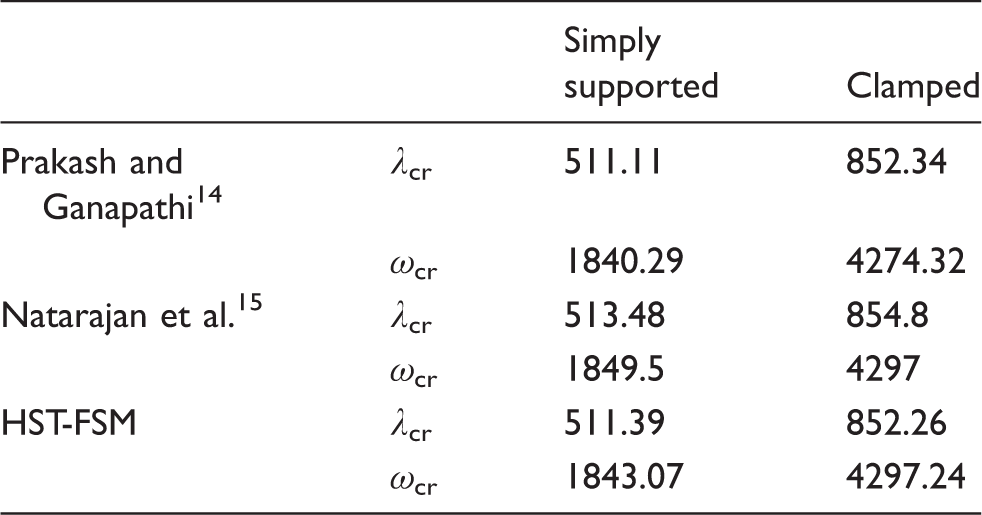
FSM: finite strip method; HST: higher-order shear deformation theory.
A square symmetric angle-ply constant stiffness unidirectional laminate under longitudinal airflow is considered and the critical aerodynamic pressure parameter is extracted using the developed finite strip. The critical aerodynamic pressure for different layup angles are extracted and depicted in Figure 3. The present results are in good agreement with those presented in Sawyer.
16
Critical aerodynamic pressure parameter for SSSS symmetric angle-ply laminate.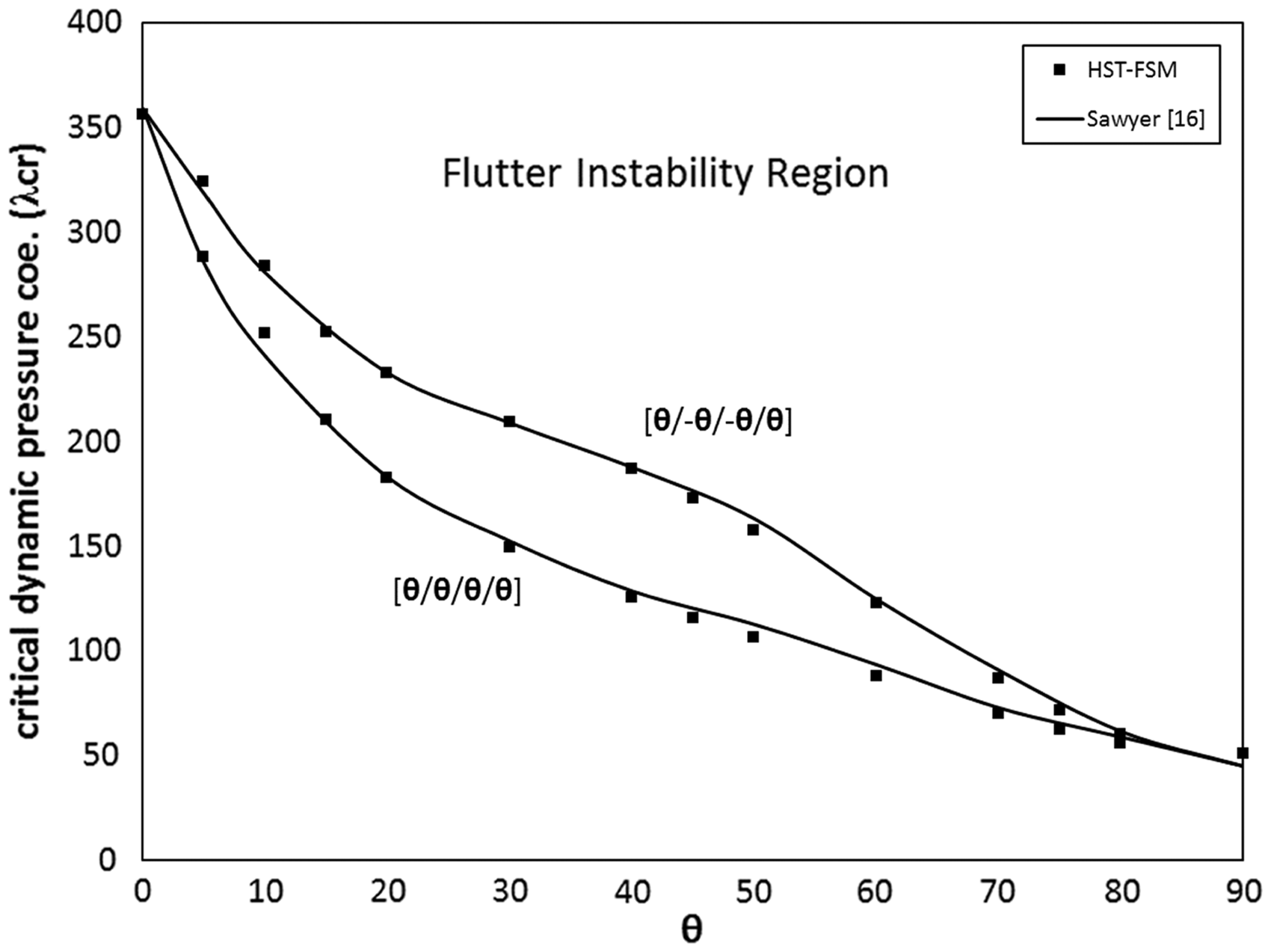
Natural frequencies (Hz) for simply supported thin square three-ply VSCL (L/t = 100).
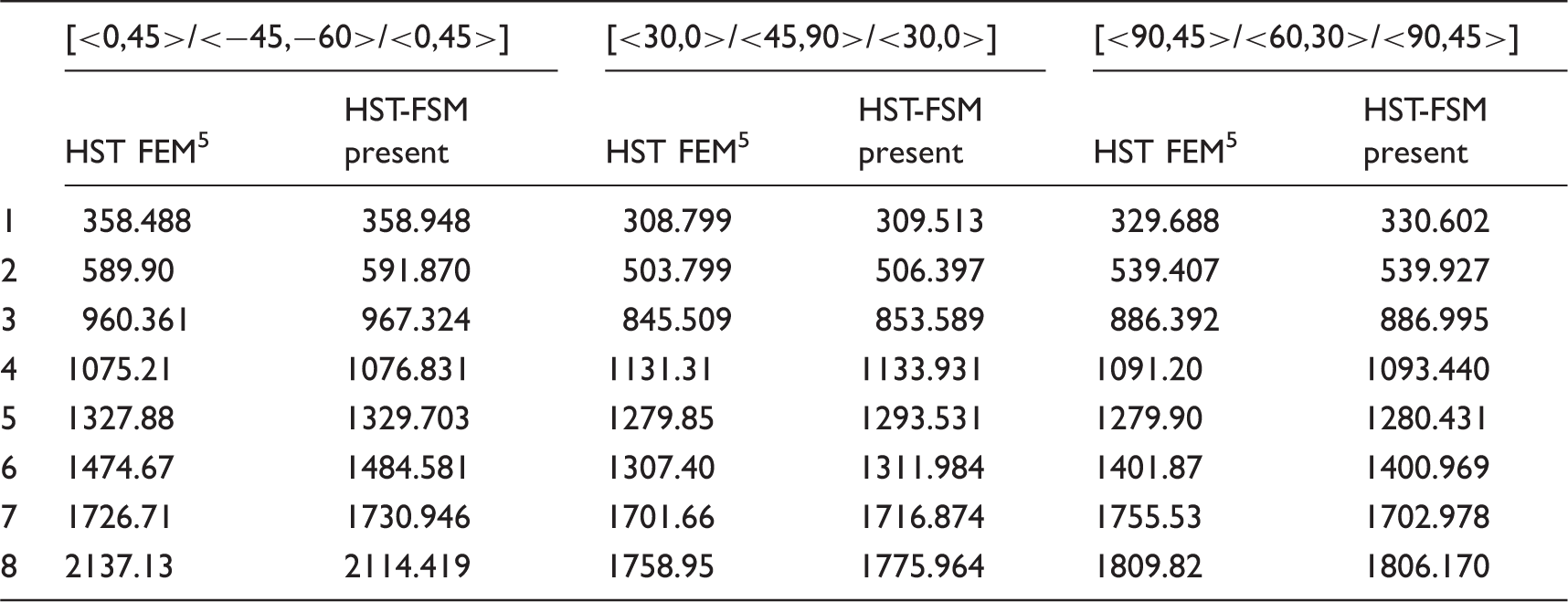
FEM: finite element method; VSCL: variable stiffness composite laminate; HST: higher-order shear deformation theory; FSM: finite strip method.
Natural frequencies (Hz) for simply supported square three-ply VSCL (L/t = 10).
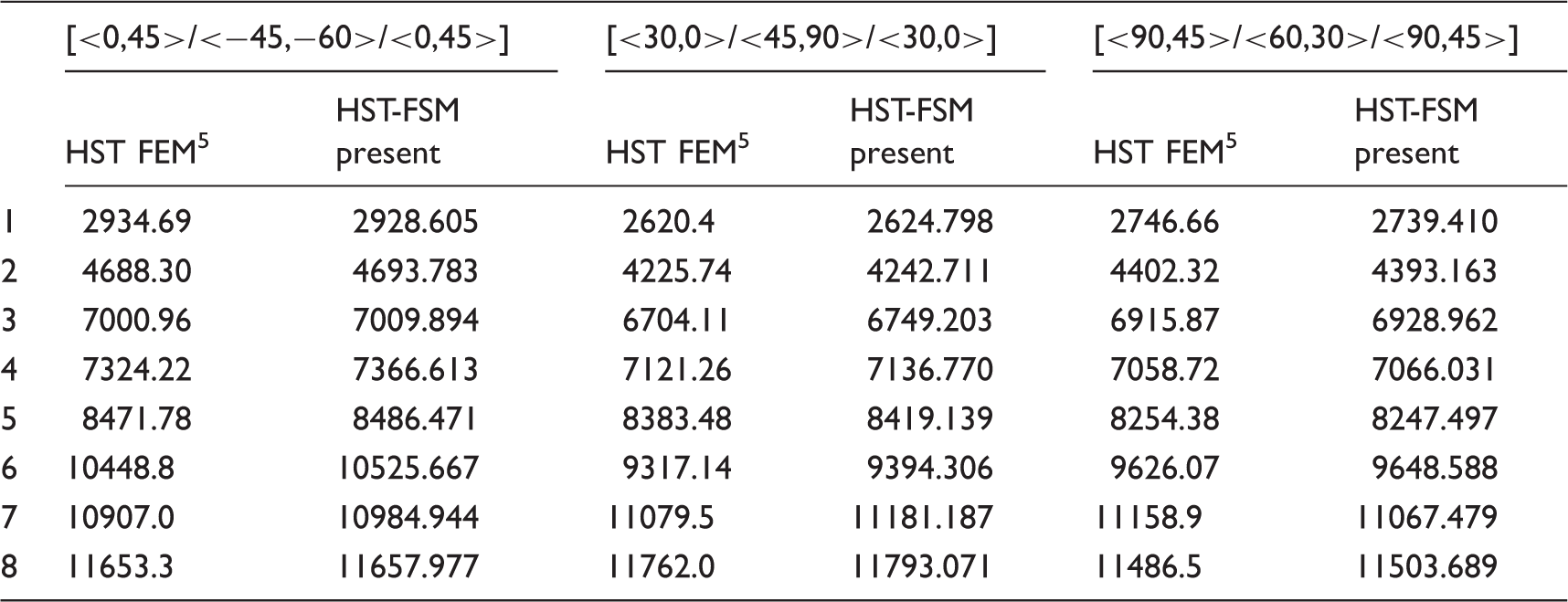
FEM: finite element method; VSCL: variable stiffness composite laminate; HST: higher-order shear deformation theory; FSM: finite strip method.
Natural frequencies (Hz) for fully clamped rectangular eight-layer VSCL (T0 variates).
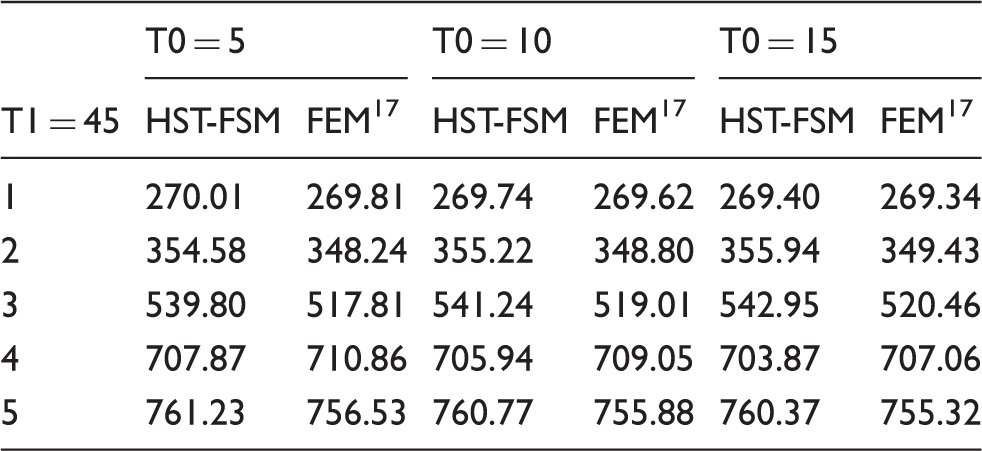
FEM: finite element method; VSCL: variable stiffness composite laminate; HST: higher-order shear deformation theory; FSM: finite strip method.
Natural frequencies (Hz) for fully clamped rectangular eight-layer VSCL (T1 variates).

FEM: finite element method; VSCL: variable stiffness composite laminate; HST: higher-order shear deformation theory; FSM: finite strip method.
The quality of higher-order shear deformation (HST) FSM results over delaminated VSCL flat panels are also examined in a former publication by the author. 13
In the remainder of the manuscript, if not denoted, the material properties and geometry specifications are assumed as follows

Delamination size effects
The Square four layer VSCL plate of two symmetric and anti-symmetric layups [<−60,−45>/<60,45>]S and [<60,45>/<−60,−45>]A with an embedded central square delamination area in the middle thickness is considered. The geometrical properties are the same as in equation (13). Plate is under fully simply supported boundary conditions facing airflow in its longitudinal direction. No in-plane movements are permitted at plate edges. The effect of size of the square delaminated regions is studied. Models of four different delamination sizes including edge ratios d/L of 0, 0.2, 0.4, and 0.6 are taken into account. Figure 4 represents the results of the critical aerodynamic pressure coefficient which shows the flutter boundary reduction with wider delamination zones. A delamination of size ratio 0.6 can drop the flutter instability of the panel by 65%. The graph also shows that an asymmetric layup is more stiff design with respect to the symmetric one while the reductions due to the delamination occurrence is similar.
Critical aerodynamic pressure parameter for SSSS variable stiffness composite laminate with different delamination sizes.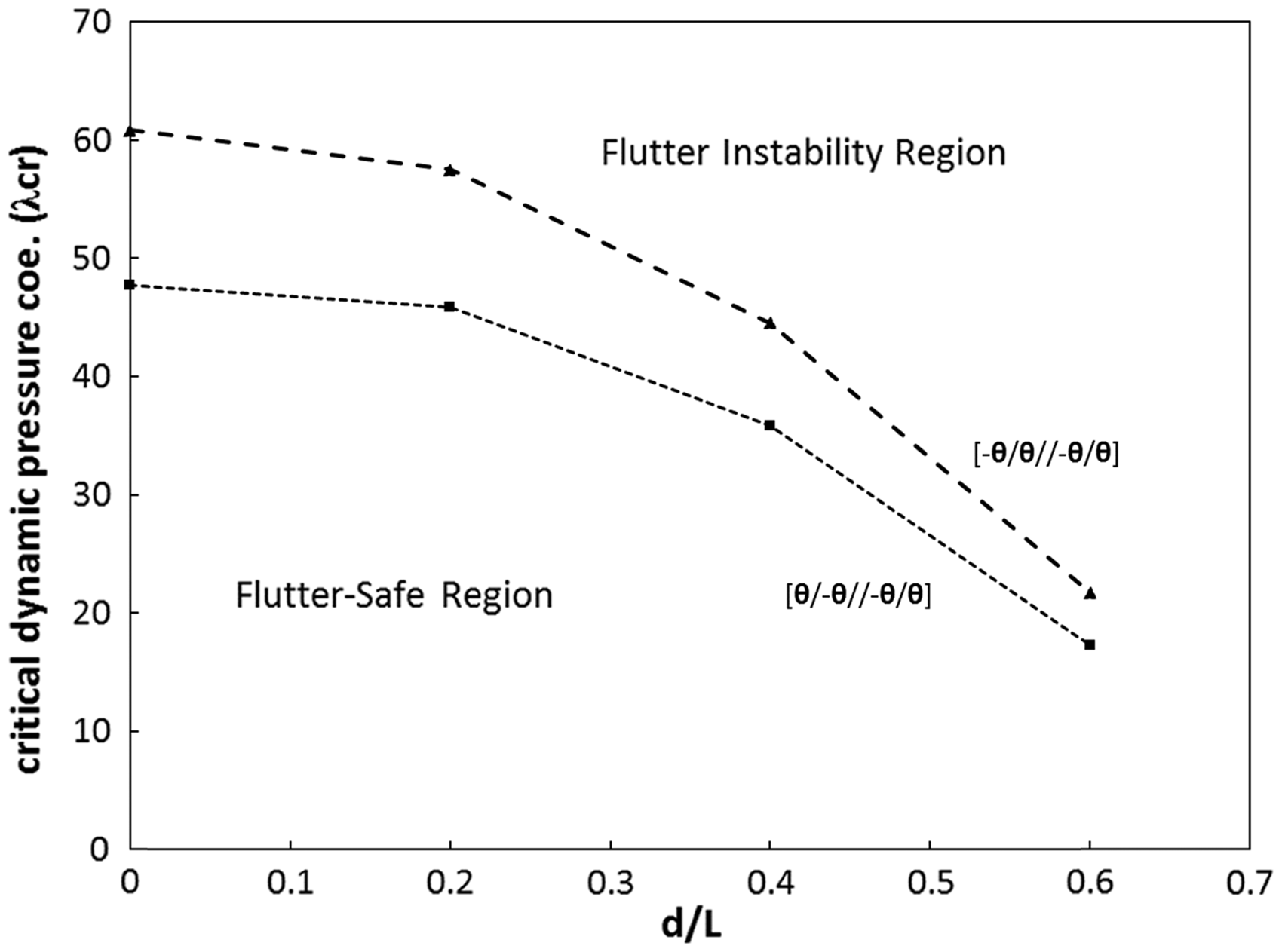
Delamination depth effects
A squared simply supported delaminated panel with symmetric and anti-symmetric eight-layer VSCL layups of [<−60,−45>/<60,45>/<−60,−45>/<60,45>]S and [<−60,−45>/<60,45>/<−60,−45>/<60,45>]A is considered and its flutter strength in the presence of a central rectangular delamination (dx/L = 0.4, dy/L = 0.3) in different thickness positions are examined. The delamination positions between layers 1 and 2 (P3), 2 and 3 (P2), 3 and 4 (P1), and 4 and 5 (P0; mid-thickness) are studied.
The changes in the critical flutter flow dynamic pressure versus position of the rectangular delamination along the laminate thickness is depicted in Figure 5. The results for both symmetric and anti-symmetric layups are included. It shows that the flutter resistance of the delaminated panel grows up while the delamination position closes to the panel surface. Also it is noticeable that the anti-symmetric layup provides a more reliable design through its higher critical flutter velocity. Figure 6 compares the first eight vibrational modes of the panel with mid-thickness delamination (case P0) for symmetric and anti-symmetric layups. The figure implies both higher flutter dynamic pressure and frequency in case of anti-symmetric laminate especially in the lower modes of vibration.
Critical aerodynamic pressure for symmetric and anti-symmetric variable stiffness composite laminate plate with central rectangular delamination (%12 area) of changing through the thickness position. Aerodynamic pressure vs. natural frequencies for symmetric and anti-symmetric variable stiffness composite laminate plate with mid-thickness central rectangular delamination (P0).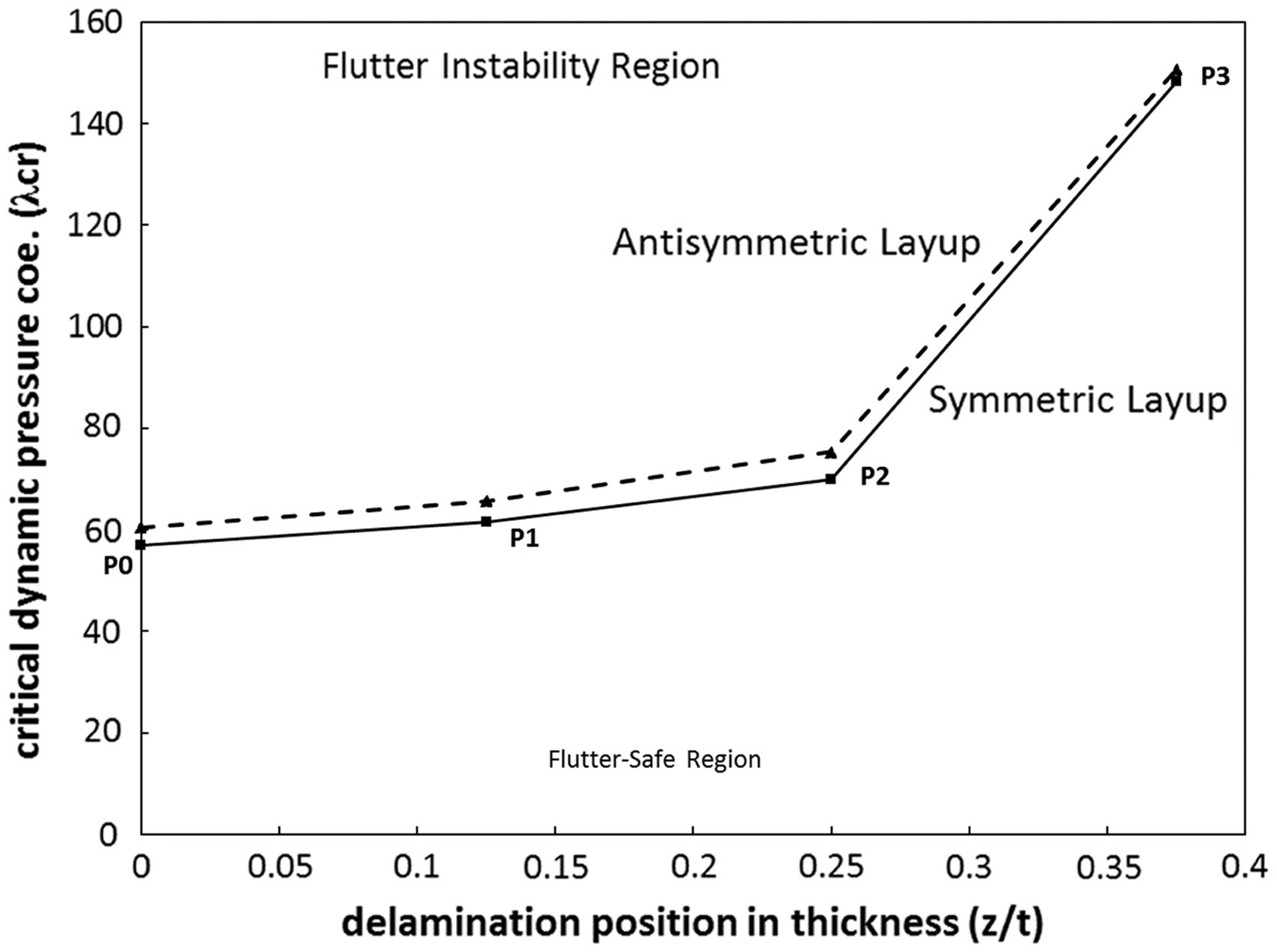
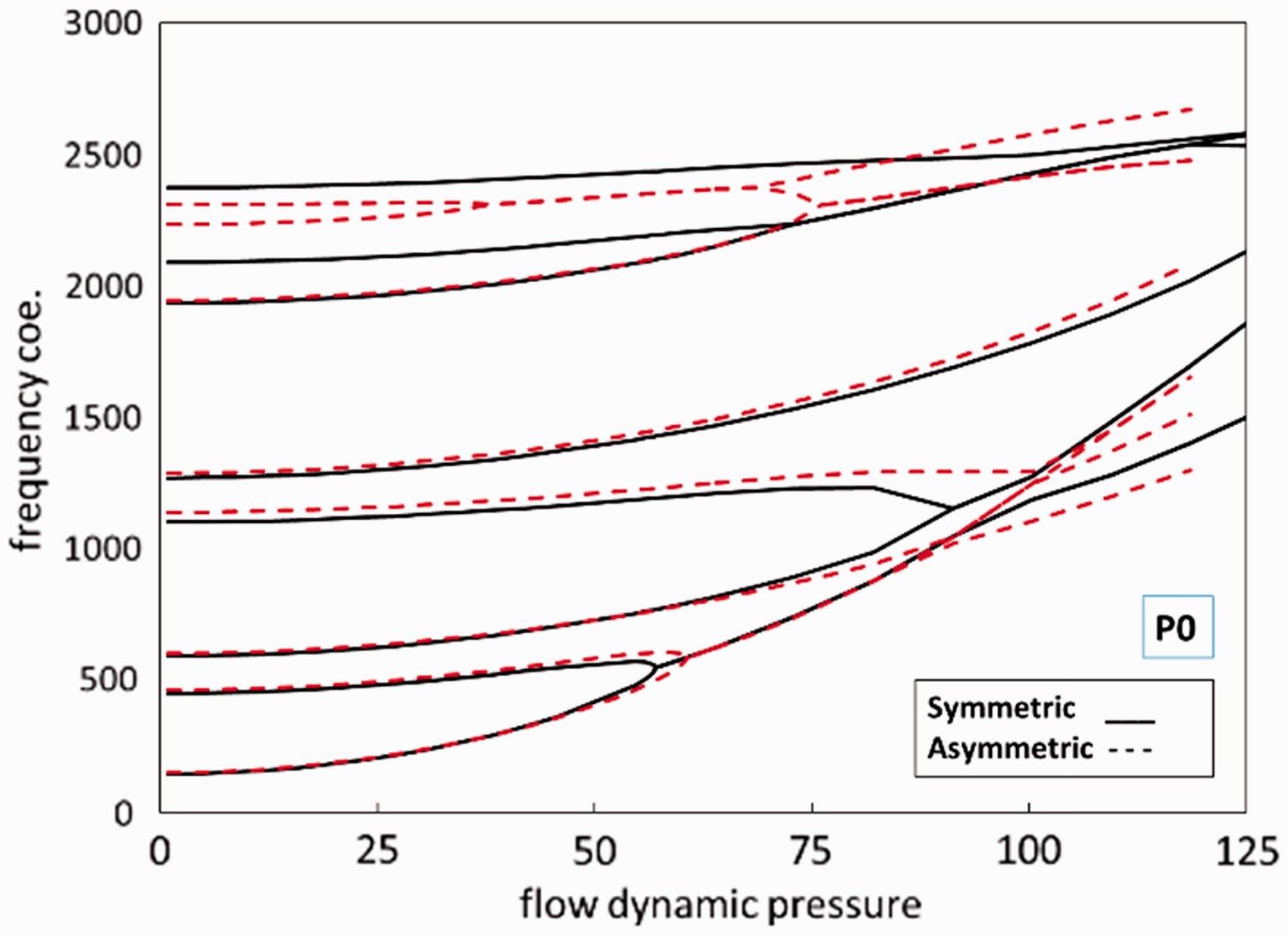
Figure 7 shows the map of change of dynamic pressure parameter vs. panel natural frequencies while the delamination position shifts from the mid-thickness (P0) to surface adjacent position (P3). While the delamination travels towards the panel surface, the local modes boost and as a result, the mode coalescence events especially in higher modes proliferate. It is also notable that magnitude of the modes natural frequencies is getting closer to each other as the delamination thickness position rises. In case of P3 model, the higher modes are very close to each other and numerous coalescences in higher modes occur before the main flutter event (coalescence of modes I and II) appears (Figure 7).
Aerodynamic pressure vs. natural frequencies for symmetric variable stiffness composite laminate plate with delamination position changes.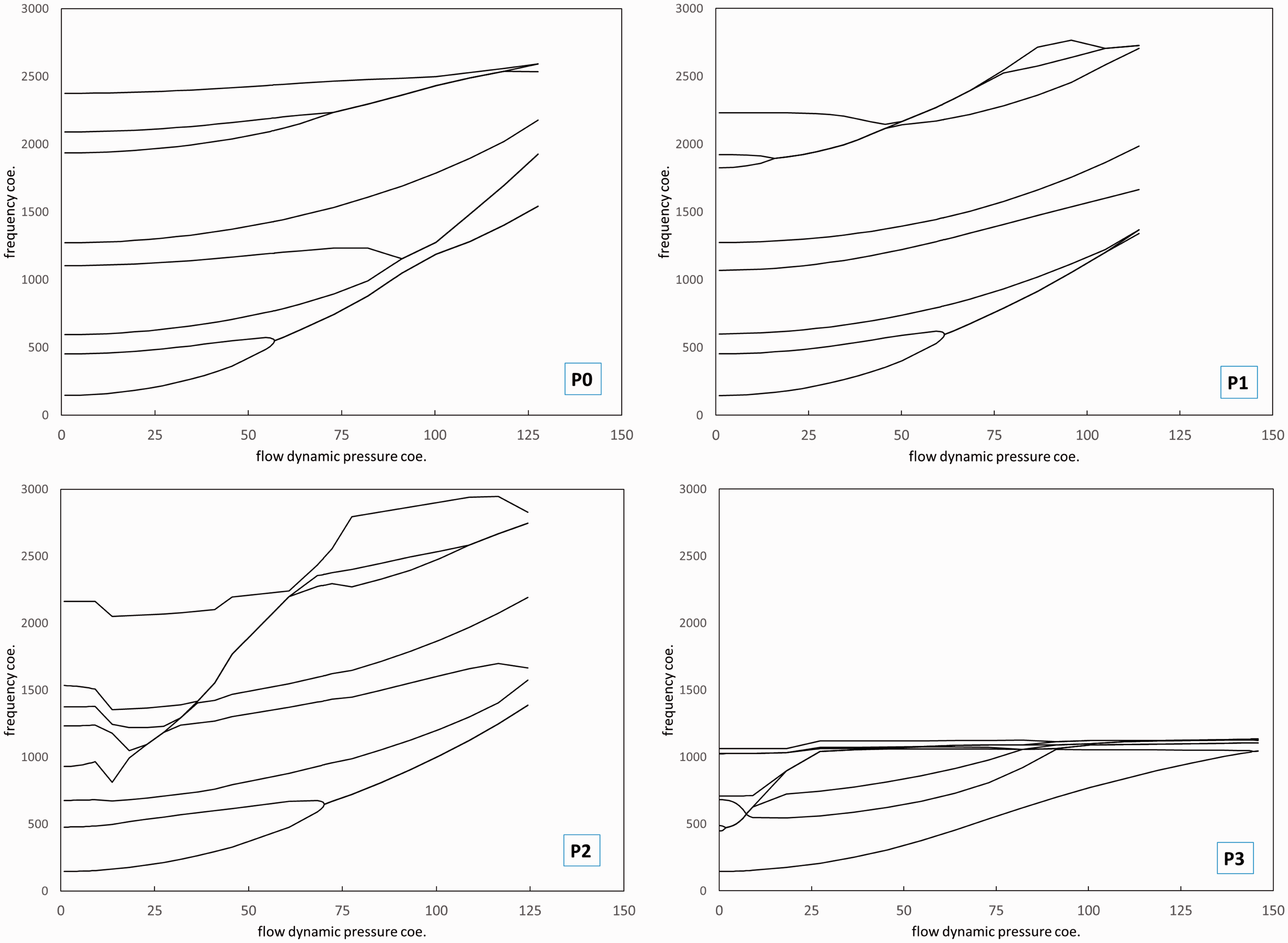
Layup effects
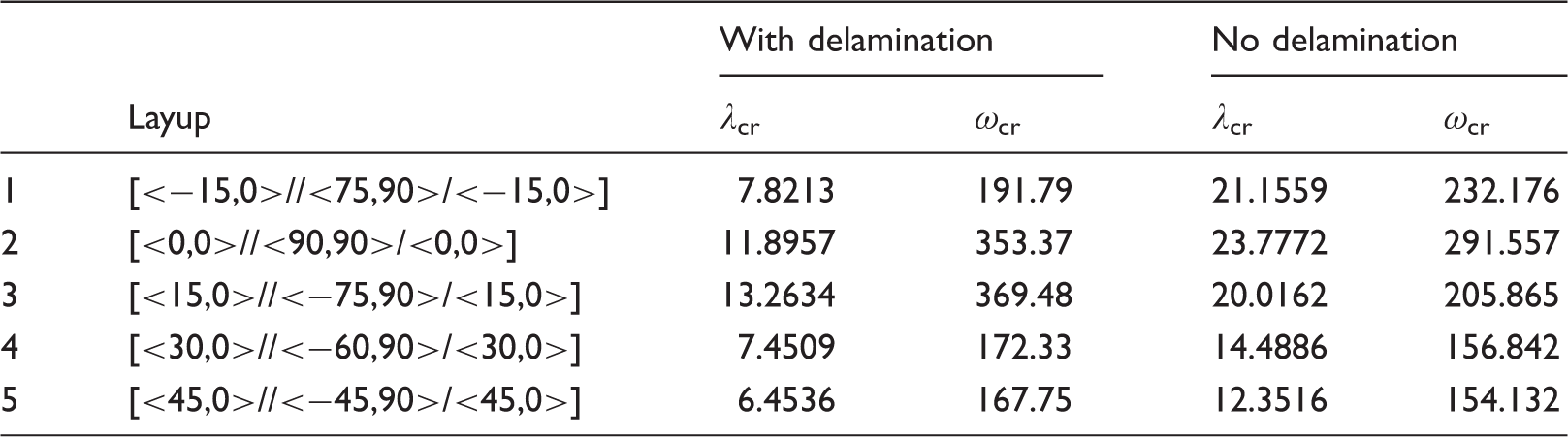
Critical flutter of clamped square three-ply variable stiffness composite laminate with variable mid-length fiber angles, T0 (L/t = 26.7).
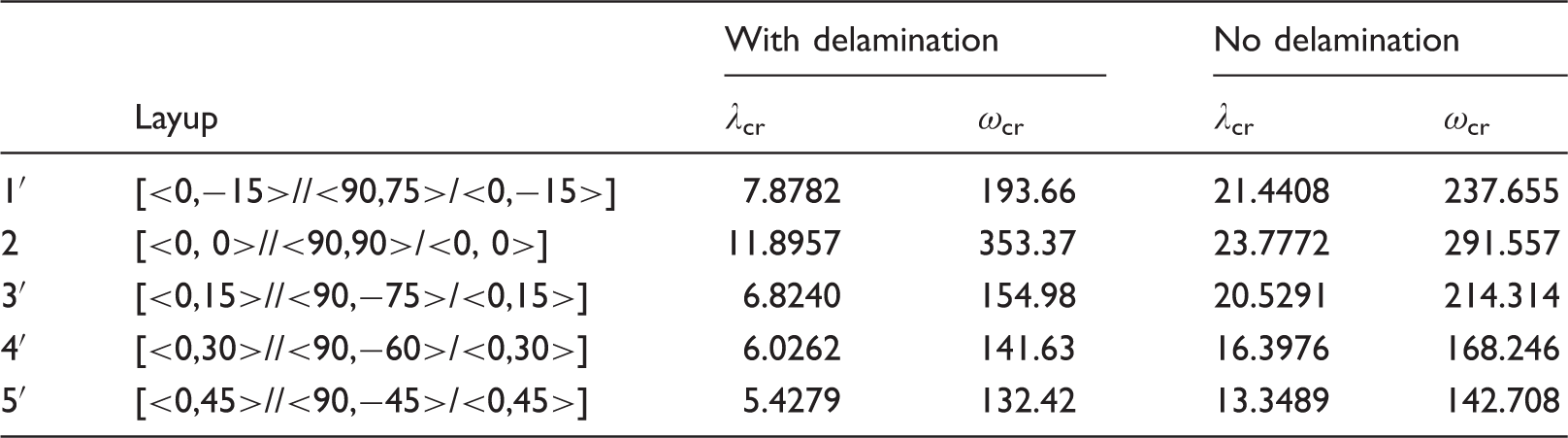
Critical flutter of clamped square three-ply variable stiffness composite laminate with variable end fiber angles, T1 (L/t = 26.7).
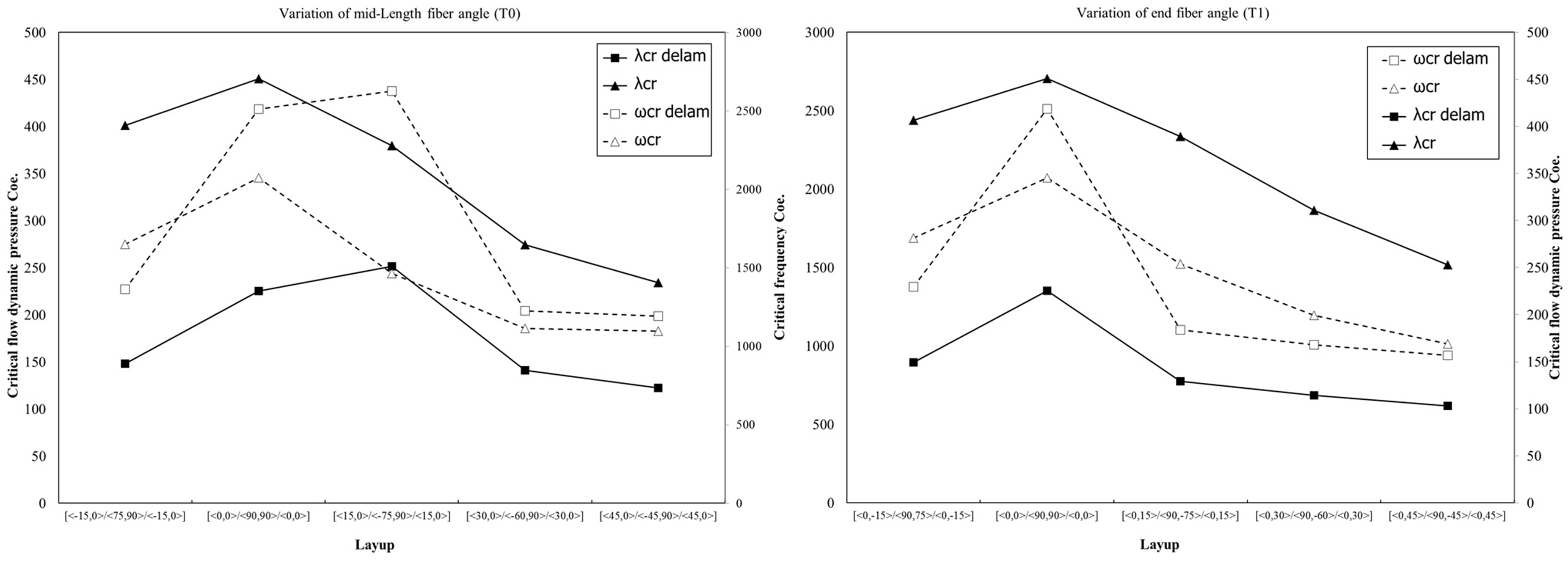
Critical flutter of clamped square three-ply variable stiffness composite laminate (left) with variable mid-length fiber angles, T0 and (right) with variable end fiber angles, T1.
According to the calculations in case of perfect models, the layup variant 2 shows the best flutter design while either mid-length angle or end angles changes. In case of delaminated panel, the highest flutter strength obtained in layup variant 3. Altogether, it seems that the mid-length angle has slightly more effective on the flutter behavior of the model under study. The most sensitivity to the delamination is observed in case of variant 3’ while the variant 3 shows minimum reduction. An overall comparison between all variants are presented in Figure 9 where indicates that the highest flutter frequencies occur in delaminated models while perfect models show highest critical dynamic pressures. The effect of delamination on the flutter strength is generally not positive.
Aerodynamic pressure vs. natural frequencies for symmetric variable stiffness composite laminate plate with fiber orientation variation.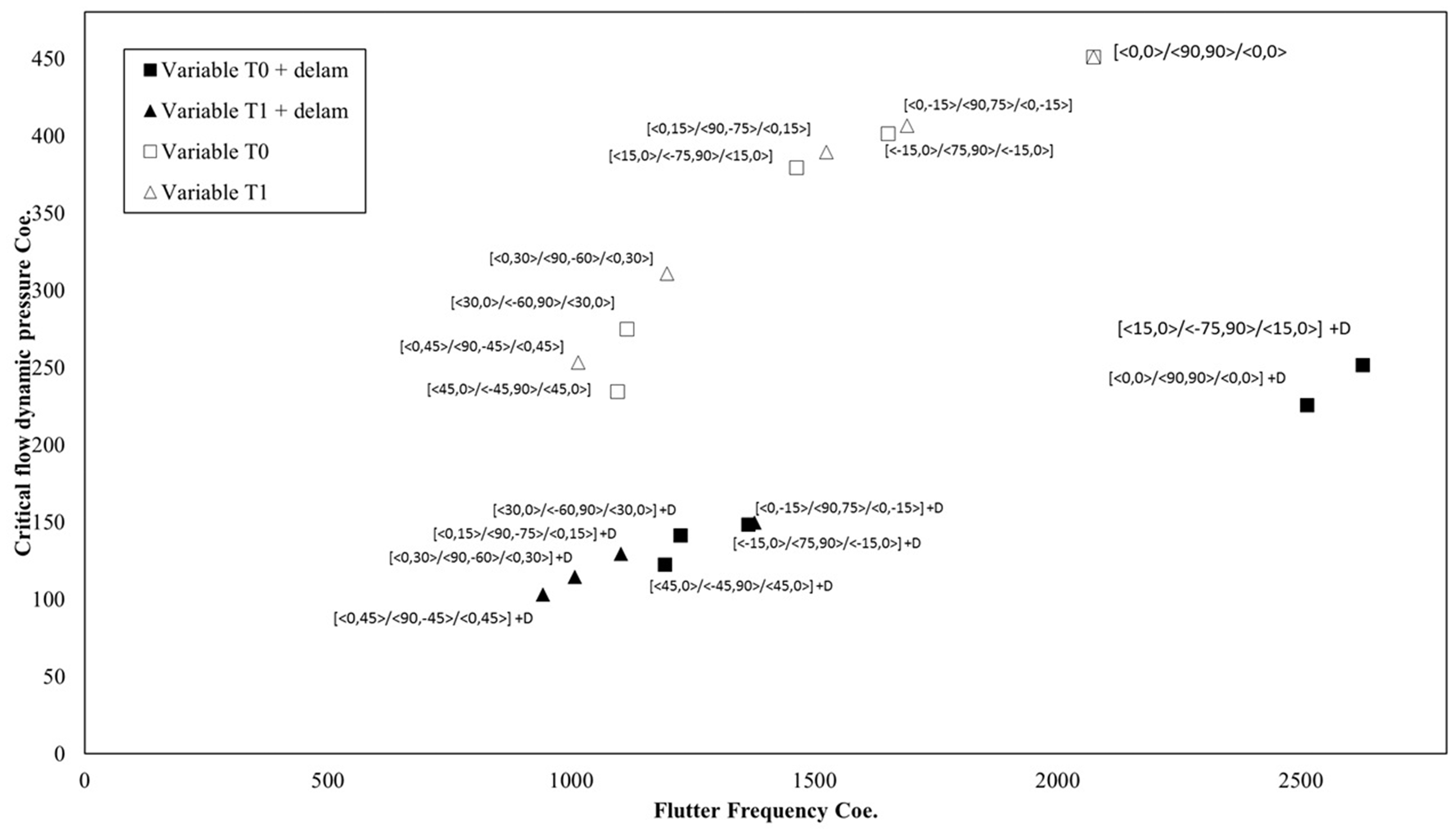
Effects of end constraints
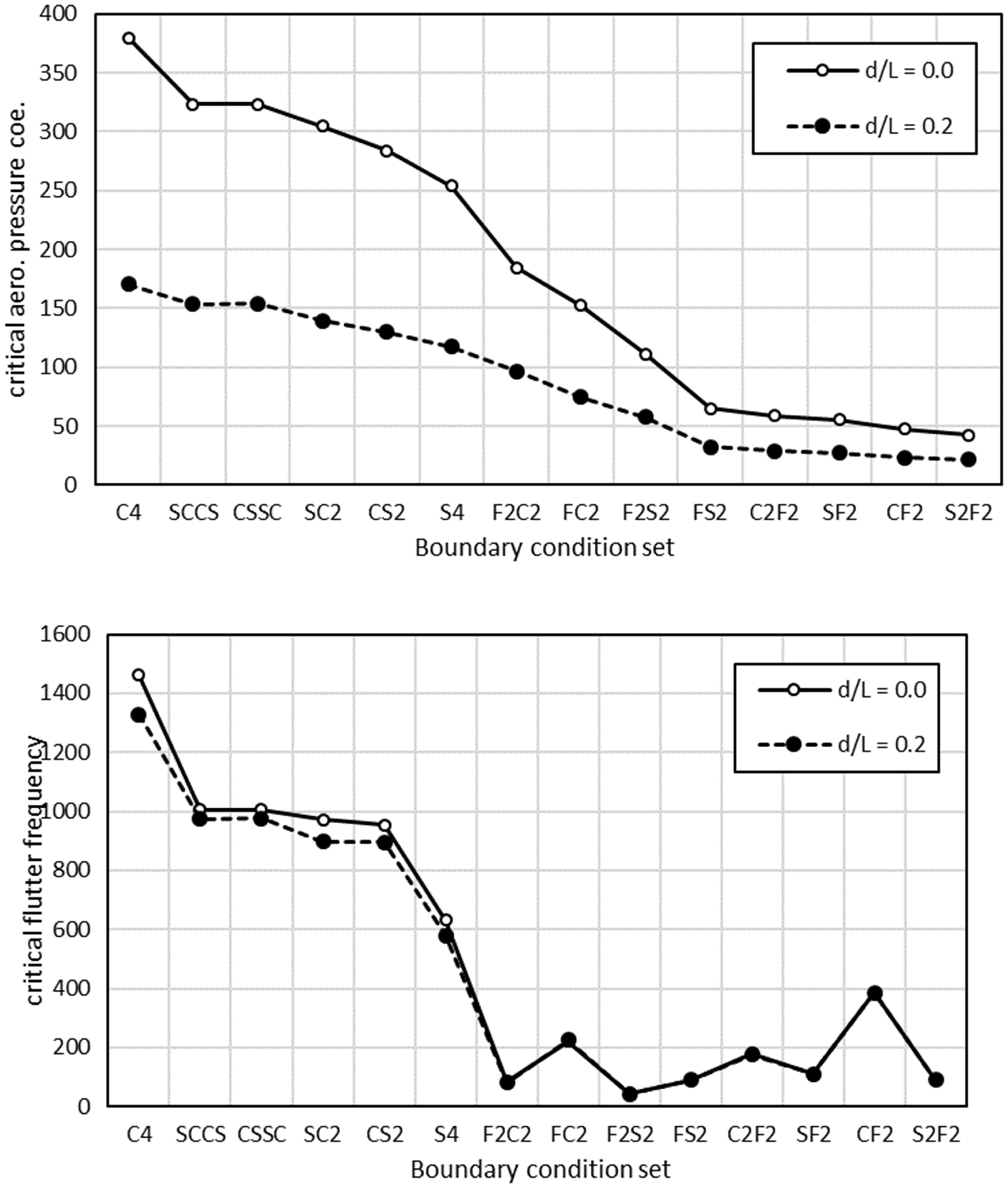
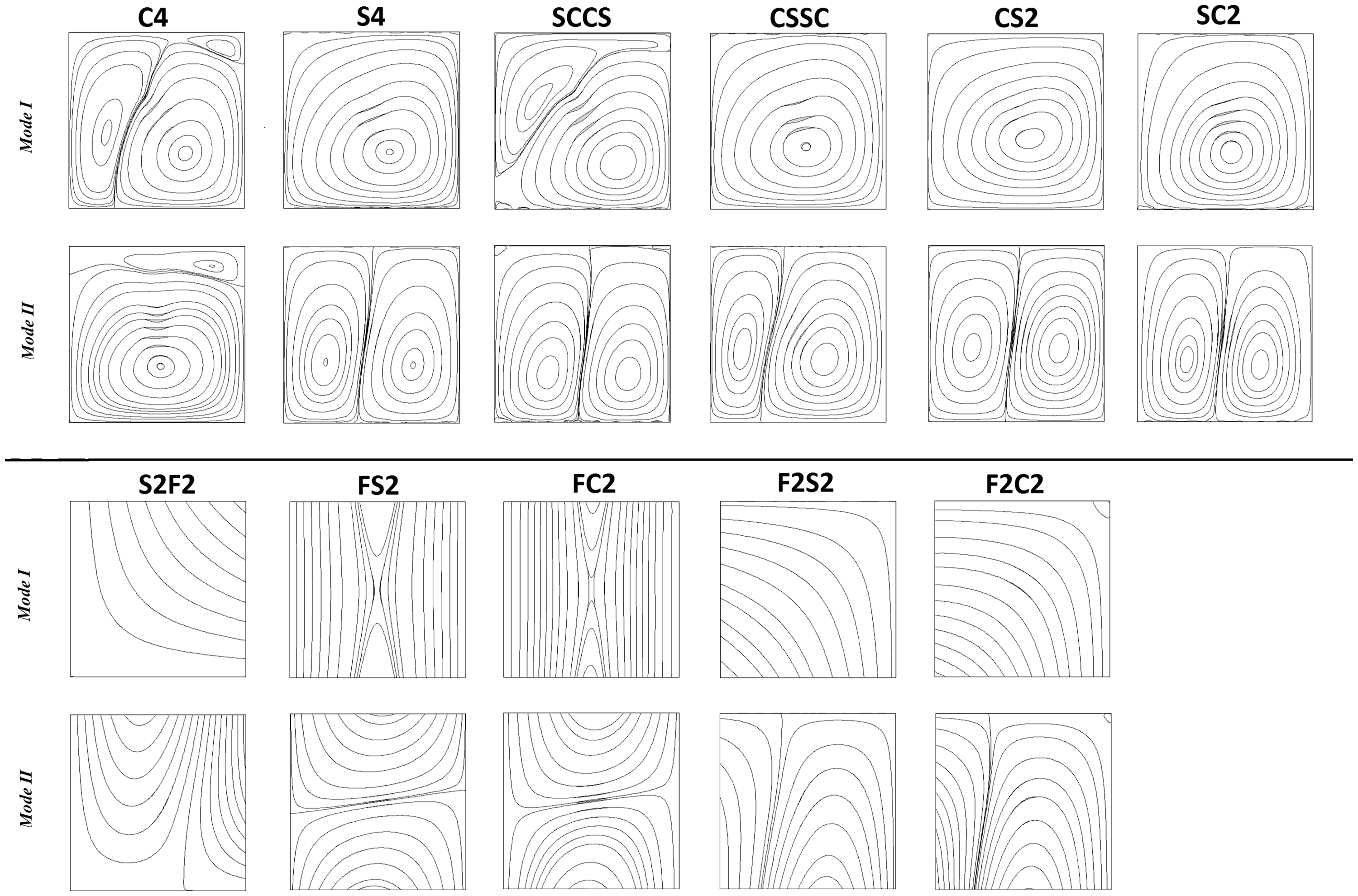
The best flutter resistance layup design of the previous study of [<15,0>//<−75,90>/<15,0>] is considered and the effects of change of boundary conditions on the flutter stability boundary is investigated. A number of 14 boundary sets according to Figure 10 are taken with and without a single central square delamination of edge ratio (d/L) of 0.2. Diagrams of Figure 11 shows the results for the critical aerodynamic pressure coefficient (λcr) and the corresponding flutter frequency coefficient (ωcr) of the panel under different boundary conditions. The results are arranged from high to low base on the flutter pressure coefficients when no delamination exists. It shows that the panels with free edges are more critical from the flutter stability point of view. Also, the corresponding flutter frequencies of free side models are meaningfully in a lower order. Results indicate that the side boundaries (along the flow direction) are slightly more effective on the flutter strength. The occurrence of central delamination leads to flutter pressure coefficient weakening of more than 50%. The flutter frequencies are slightly lower than the perfect model. But it could be remarked that the instability frequencies in case of models with free edge conditions are approximately the same. This means that the delamination local modes are almost inactive in these cases. In both geometries, the boundary set C4 provides the highest flutter stability while the sets S2F2 and CF2 show the most critical setups with the lowest flutter speed. The first two natural mode shapes of the panel under different edge constraints are sketched in Figure 12 where the opening in the delamination region is also apparent.
3-Layer-delaminated variable stiffness composite laminate plate under different boundary condition sets. Critical flutter properties of the three-layer delaminated variable stiffness composite laminate plate under different boundary conditions. The first two vibration mode shapes of the delaminated square variable stiffness composite laminate panel with boundary condition sets.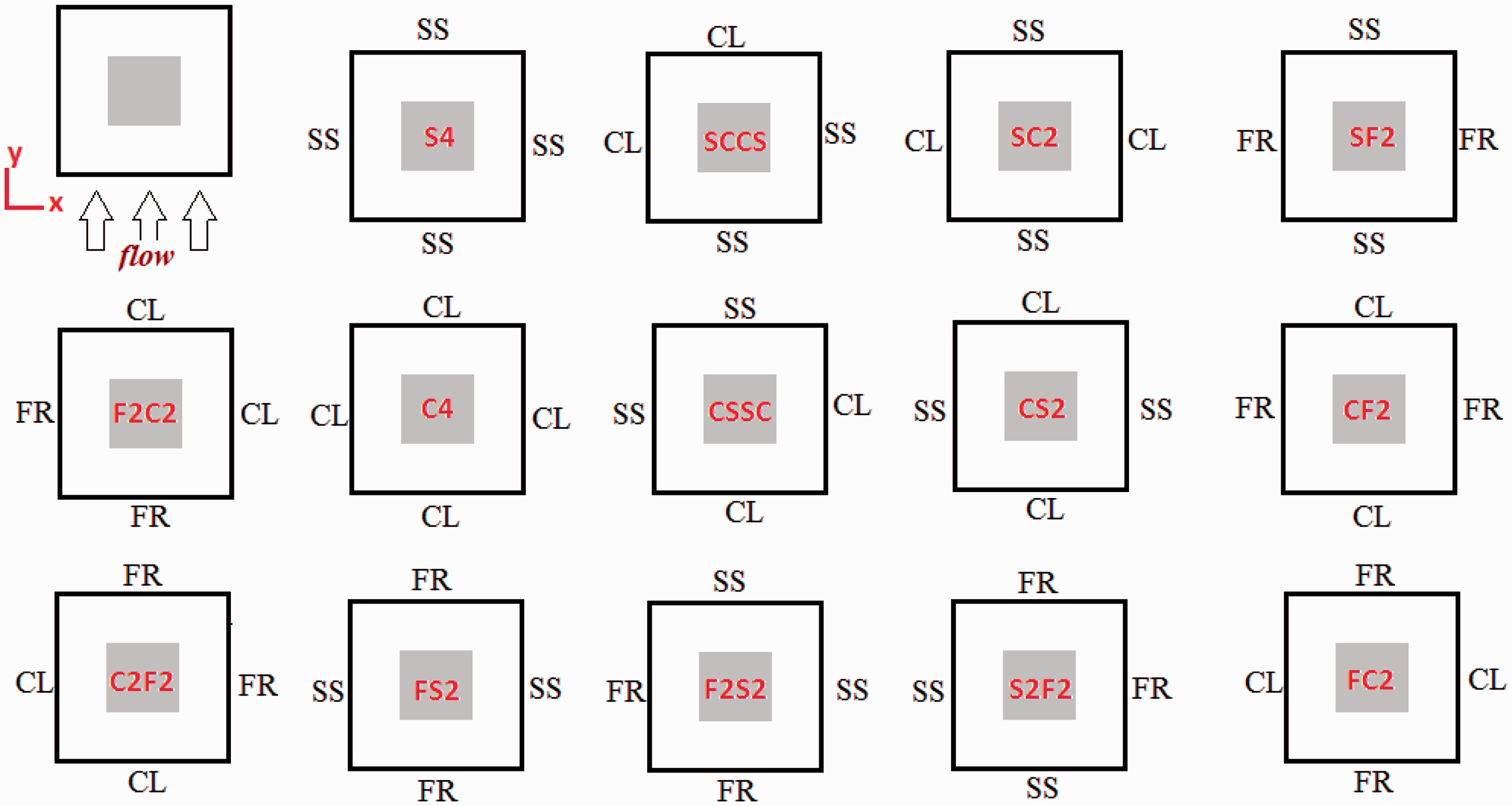
Conclusion
An enhanced B-spline version of FSM is developed to analyze the linear flutter of VSCL plates containing delaminations. The structural model based on HST of plates is utilized in conjunction with a first-order piston theory of aerodynamic. The location dependent stiffness characteristics and mass matrices due to variable fiber orientation angle within every variable stiffness ply are extracted. The effect of aerodynamic damping and contact phenomenon are overlooked. The flutter coalescence of vibration modes is then traced using a standard eigenvalue procedure. Representative results are provided and the accuracy of the developed formulation is proved. The effects of material layup, boundary constraints, and geometry defects on the flutter specifications of panels are then studied. The results indicate that the flutter boundary reduces for wider delamination zones and the anti-symmetric layup provides a more reliable design from higher critical flutter velocity point of view. It is also found that the flutter resistance of the delaminated panel is higher for the case of delaminations closer to the panel surface. Furthermore, for larger delamination regions, the magnitude of the natural frequencies is getting closer to each other. The highest flutter frequencies occur in delaminated models while perfect models meet highest critical dynamic pressures. The clamped panel presented the highest flutter stability while the boundary sets S2F2 and CF2 have the lowest flutter speed.
Footnotes
Declaration of Conflicting Interests
The author(s) declared no potential conflicts of interest with respect to the research, authorship, and/or publication of this article.
Funding
The author(s) received no financial support for the research, authorship, and/or publication of this article.