






Abstract
This paper describes the possibility of the use of paper twines as core reinforcement in thermoset pultruded sandwich composites. Paper twines and glass fiber rovings were co-impregnated with polyester resin and co-pultruded to form sandwich rods. Pultruded sandwich rods were up to 26% lighter with regard to typical monolithic glass fiber reinforced polyester rods. The specific flexural strength and Young's modulus of the sandwich rods were up to 25% higher than those of monolithic glass fiber/polyester commercial rods. Thanks to its light weight and its availability as a continuous twine, paper twines may be used with great flexibility in pultrusion of sandwich structures. This may lead to up to 20–30% weight reduction and cost saving without losing flexural performance.
Introduction
Pultrusion is a continuous process invented to manufacture straight composite profiles with constant cross-section.1–4 The process consists of continuously pulling a stock of reinforcement fiber rovings through a pre-formulated resin bath, then through the guiding plates, and finally through a heated mold die, corresponding to the desired constant cross-section, in order to cure the resin and form the articles into their final constant profiles. Typical reinforcement rovings that are commercially pultruded include glass fiber and carbon fiber.
As per the report “Growth Opportunities in the Pultrusion Market 2016–2021: Global Market Outlook”, the pultrusion market is projected to reach approximately two billion dollars in 2021. 5 Currently, in most applications, composite pultruded parts are more expensive, up to 50% higher, than competing extruded metals and plastics.
Inspired by the growing interest in biocomposites, many researchers have investigated the opportunity of pultruding natural fiber twines either alone6–15 or in a hybrid conjunction with industrial fiber rovings.16–18 For example, Van de Velde and Kiekens 13 manufactured and compared the performance of round flax/polypropylene (PP) profiles, made from commingled flax/maleic anhydride modified PP yarns, to the performance of square profiles made from glass/PP rovings. These pultruded profiles had measured densities of 0.80 g/cm3 and 1.48 g/cm3, respectively. Specific flexural and tensile strengths of flax/PP profile were, respectively, around 44% and 48% less than those of the glass/PP profiles. However, specific flexural and tensile modulus of flax/PP profiles were, respectively, only around 8% and 16% less than those of the glass/PP profiles. Based on these results, the authors stated that the optimization of the input flax/PP yarn and the pultrusion process would reduce the internal porosity of the pultruded profiles and hence increase their mechanical performance.
In another paper, Nguyen-Chang et al. 14 examined the thermoplastic pultrusion processability of discontinuous flax fiber pre-converted into commingled spun yarns of PP and flax fibers. They showed that it is possible to produce pultruded profiles with good shape and surface by using a sufficient number of compact bundles of commingled yarns as raw material.
Exploring natural kenaf fiber yarn alone with polyester thermoset resin in the pultrusion process, Akil et al. 15 measured densities of pultruded profiles with fiber volume loading ranging from 50% to 75% and compared them with the theoretical densities. It was shown that the void contents of the pultruded rods correlate with their flexural strengths. 15 For example, the highest flexural strength (250 MPa) was obtained on the rods having the lowest void contents (0.74%), and the lowest flexural strength (162–165 MPa) was obtained on the rods having the highest void contents (1.32–1.56%).
In another study, Hazizan et al. 18 investigated the flexural behavior of pultruded hybrid – natural fibers, i.e. jute and kenaf, and glass fiber – reinforced polyester composites. Hybrid, not sandwich, pultruded laminates were manufactured and tested. Laminates composed of 45 wt% of jute and 25 wt% of glass fiber had an average flexural strength of 350 MPa and flexural modulus of 25 GPa.
Twisted cellulosic paper twines have been used as handles for paper bags, as twines for gift wrapping, and as strings to produce repulpable paper straps for wrapping pulp bales. More recently, Chtourou et al. 19 successfully adapted the pultrusion process to manufacture repulpable paper straps using either commercial northern bleached softwood kraft (NBSK) paper twines or non-twisted NBSK paper strings and a water-soluble binder, i.e. polyvinyl alcohol. Bulk densities of many commercial repulpable NBSK paper twine straps are in the range of 0.6 to 0.8 g/cm3. This density range is relatively low compared with 2.56 g/cm3 for E-glass fibers.
The availability of the paper twines in continuous form makes them suitable for the pultrusion process to be commingled and used with the conventional engineered fiber reinforcements such as glass fiber rovings. More preferably, sandwich structures need to be considered in order to enhance the specific flexural properties. Thus, as illustrated in Figure 1(a), paper twines may be guided to form the centered core in any pultruded sandwich profiles. While impregnated paper twines are guided toward the centered section for continuous core formation, the reinforcement fiber rovings are guided to form the outer composite sandwich skin,
20
as illustrated in Figure 1(b).
(a) Perspective view of the reinforcement fiber rovings (—) and the paper twines (- - -) as being pulled through the resin bath and the sandwich preform plates before the pultrusion die. (b) Cross-sectional view of the typical pultruded sandwich profiles having continuous paper twine/cured resin pultruded core.
The objective of this paper is to describe a novel method of pultruding sandwich structures where paper twines and glass fiber rovings are co-impregnated with a polyester resin before entering the pultrusion die. Paper twines are properly guided to form an in situ continuous core while being co-pultruded with glass fiber rovings. The mentioned in situ continuous core is evenly surrounded by the structural glass fiber/polyester composite skin.
Materials and methods
Preliminary proof of concept
As illustrated in Figure 2, a unidirectional elongated paper strap laminate was built using a plurality of commercial NBSK paper twine-based straps, kindly supplied by Oval International. These straps were bonded using an epoxy resin (8% by weight) and the laminate was slightly compressed while curing at 85℃.
20
The molded strap laminate, intended to be used as a core material, was around 10 mm thick and had a bulk density of about 0.75 g/cm3. The paper strap-based laminate was then bonded with an epoxy resin to two pre-pultruded composite skins (Figure 3(a)) made from glass fiber and polyester resin, as shown in Figure 3(b).
Perspective view of a unidirectional elongated laminate made from NBSK paper twine straps bonded with epoxy resin. Longitudinal face view of epoxy-bonded glass fiber/polyester pultruded skins (a) and sandwich panel (b).

Pultrusion materials and procedures
Pultrusion trials were conducted using a pilot pultrusion machine located at the Centre de développement des composites du Québec (CDCQ) at Saint-Jérôme College. Owens Corning's Advantex® glass fiber 399 single-end roving for pultrusion, grade E-CR 8858 tex, was used in this study for the control and the sandwich rod production. As illustrated in Figure 4, glass fiber rovings and twisted NBSK paper twines were simultaneously pultruded to produce the sandwich rods. Figure 5 shows the glass fiber rovings and the twisted paper twines going through the guiding plates and the resin impregnation bath.
Glass fiber rovings (a) and twisted NBSK paper twines (b) for pultrusion trial. Pilot pultrusion resin bath showing guiding plates for glass fiber rovings and paper twines.

In the first trial, thin NBSK paper twines were used with a bulk diameter of 1.2 mm, a linear weight of 0.76 g/m, and a moisture content of 3.2% at ambient conditions of 23–25℃ and 30–35% RH, and a tensile breaking load of 16 lbs after conditioning for 48 h at 23℃ and 50% relative humidity. In the second trial, commercial jute natural fiber twines with a bulk diameter of approximately 2 mm and a linear weight of 2.5 g/m (2500 tex) were used. An unsaturated ortho-polyester resin (CCP 040-0877 now available from Polynt Composites as STYPOL 040-0894) was simultaneously used to impregnate the glass fiber rovings and the core twines. The number of glass fiber rovings and the number of twines were calculated to produce a sandwich structure with a centered twine core diameter of about 10 mm and a mean outer skin thickness of about 3 mm.
In the subsequent trials, two thicker NBSK paper twine grades were used. The first grade, supplied by Xin Yi Printing Co., Ltd (Guangzhou, China), had a linear weight of 2.36 g/m and a moisture content of 3.2% at ambient conditions (23–25℃ and 30–35% RH). Tested in tensile after a 48-h conditioning at 23℃ and 50% RH, this first paper twine broke at a mean load of 56 lbs. The second grade was supplied by American Twisting Company (MI, USA). Its linear weight was 2.22 g/m and its moisture content was also 3.2% at ambient conditions (23–25℃ and 30–35% RH). Tested in tensile after similar typical conditioning, the second paper twine broke at a mean load of 30 lbs.
For successful production of sandwich rods, a forming guide system composed of plastic machined plates (Figure 5) was used to ensure external guiding for the glass fiber rovings and central guiding for the core twines as illustrated in Figure 6. To ensure more accurate positioning of the core with respect to the surrounding skin, a centering device as illustrated in Figure 7 was placed upstream of the pultrusion die.
Forming guide view showing external impregnated glass fiber rovings and interior impregnated paper twines. Core centering device fixed to the entrance of the pultrusion die.

As illustrated in Figure 8, a pultrusion die having a length of 90 cm and a diameter of 16.4 mm was used. The pultrusion conditions were similar to those typically used for reference rods made of glass fiber rovings and polyester resin. The pultrusion speed was set at 30 cm/min and the three-zone curing temperatures inside the pultrusion die were set at 118℃ in the first zone, 146℃ in the middle zone, and 129℃ in the last zone.
Comparative relative flexural stiffness of sandwich panels with respect to their respective stiffness of bonded skins.
Characterization of the pultruded rods
Resin contents of the control rods, as well as of the sandwich rod skins, were determined as per ASTM D3171-15 standard using procedure G. This procedure consists of removing the resin by ignition in a furnace. Glass fiber is essentially unaffected by the ignition, and thus its weight content is determined with respect to the specimen oven-dried weight. Resin content is then calculated by weight difference.
Rod densities were measured using a digital densimeter and hexadecane fluid in accordance to ASTM D792-13. Each rod specimen, almost 30 mm long, was first weighed to the nearest 0.0001 g.
Flexural testing was conducted at a span of 520 mm (∼32 times rod diameter) as per ASTM D790-15 standard, procedure A, type 1. For a circular cross-section, the ultimate flexural strength (σ
f
), the ultimate flexural strain (ɛ
f
), and the elastic modulus (E
f
) are calculated as per the following formulas
F: ultimate breaking load (N) L: support span (mm) R: radius of the tested rod (mm) D: depth or diameter of the tested rod (mm) Δ: maximum deflection of the center of the rod (mm)

Results and discussion
Preliminary proof of concept
Flexural properties of commercial pultruded glass fiber/polyester laminate (single) and epoxy-bonded laminate.

Sandwich panel specimen (Figure 3(b)) tested in two three-point mid-span loading configurations.

Calculated flexural stiffness (D) of the commercial pultruded glass fiber/polyester structures; single skin, epoxy-bonded two skins (Figure 3(a)), and the sandwich panel (Figure 3(b)).
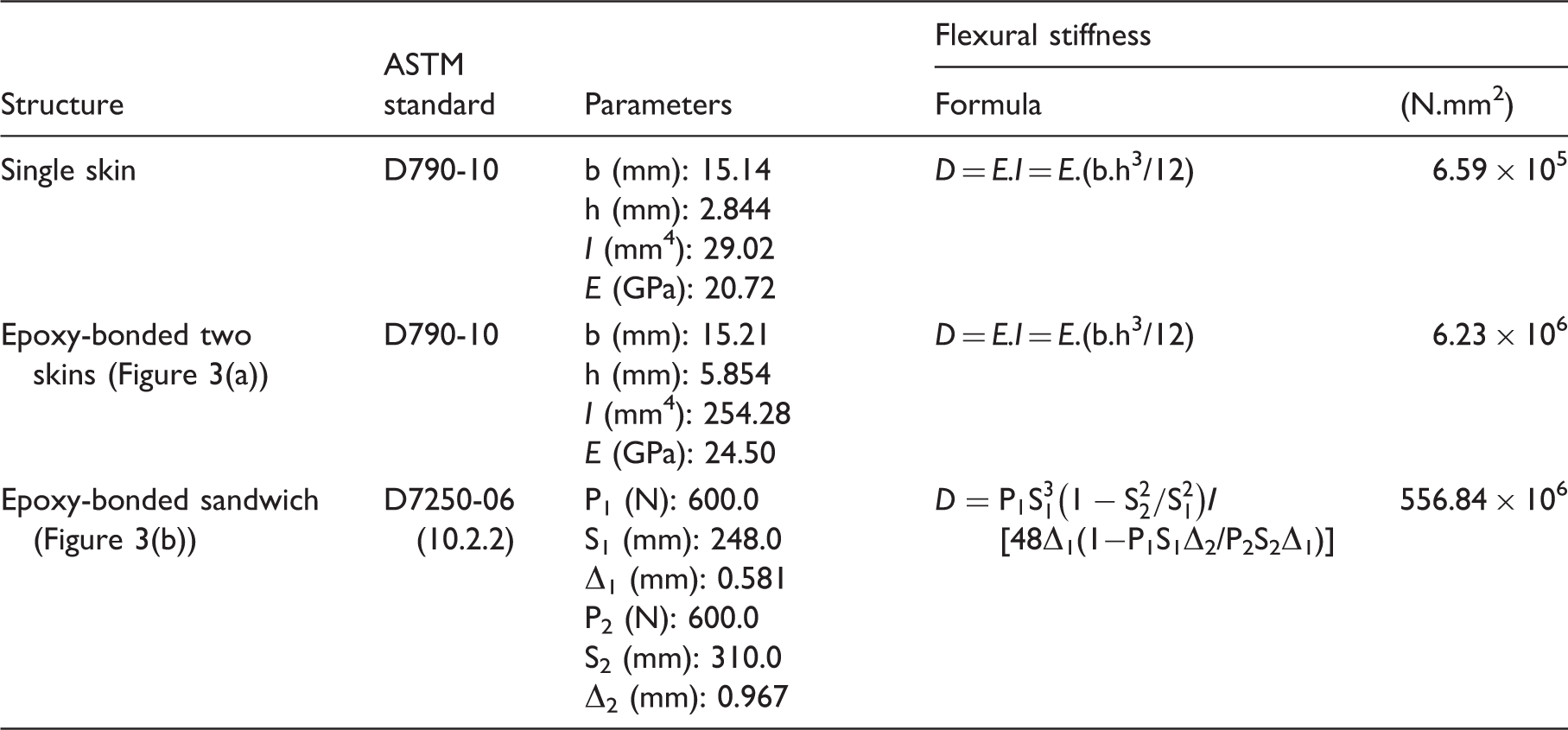
As per Table 3 results, flexural stiffness of the epoxy-bonded sandwich was 111 times higher than that of the epoxy-bonded two skins. Figure 8 shows a comparison of the relative stiffness of sandwich panels with respect to the stiffness of their respective bonded skins, as a function of the core to skin thickness ratio. Figure 8 compares the relative stiffness of the two sandwich panels. The first sandwich core was made from NBSK paper twine-based straps, as described in Figure 2, whereas the second one was made from an aluminum honeycomb. 21 As illustrated in Figure 8, at a given core/skin thickness ratio, the elongated unidirectional core prepared from NBSK paper strap (Figure 2) had greater impact on the stiffness of its composite sandwich panel (Figure 3(b)) than that a honeycomb core typically used in composite sandwich panel constructions. 21 At a similar core to skin thickness ratio of 3.3, the elongated unidirectional core prepared from NBSK paper strap enhanced the stiffness of its two bonded skins by up to 89 times. For an aluminum honeycomb core, an increase of up to 14 times was obtained with respect to its two bonded skins. 21 Clearly, the NBSK paper strap-based core outperformed the honeycomb when a high increase in flexural stiffness is desired. It should be noted that this comparison is based only on the core to skin thickness ratios and does not take into consideration their respective core densities.
Pilot pultrusion of sandwich rods
Core formation using 1.2 mm paper twines
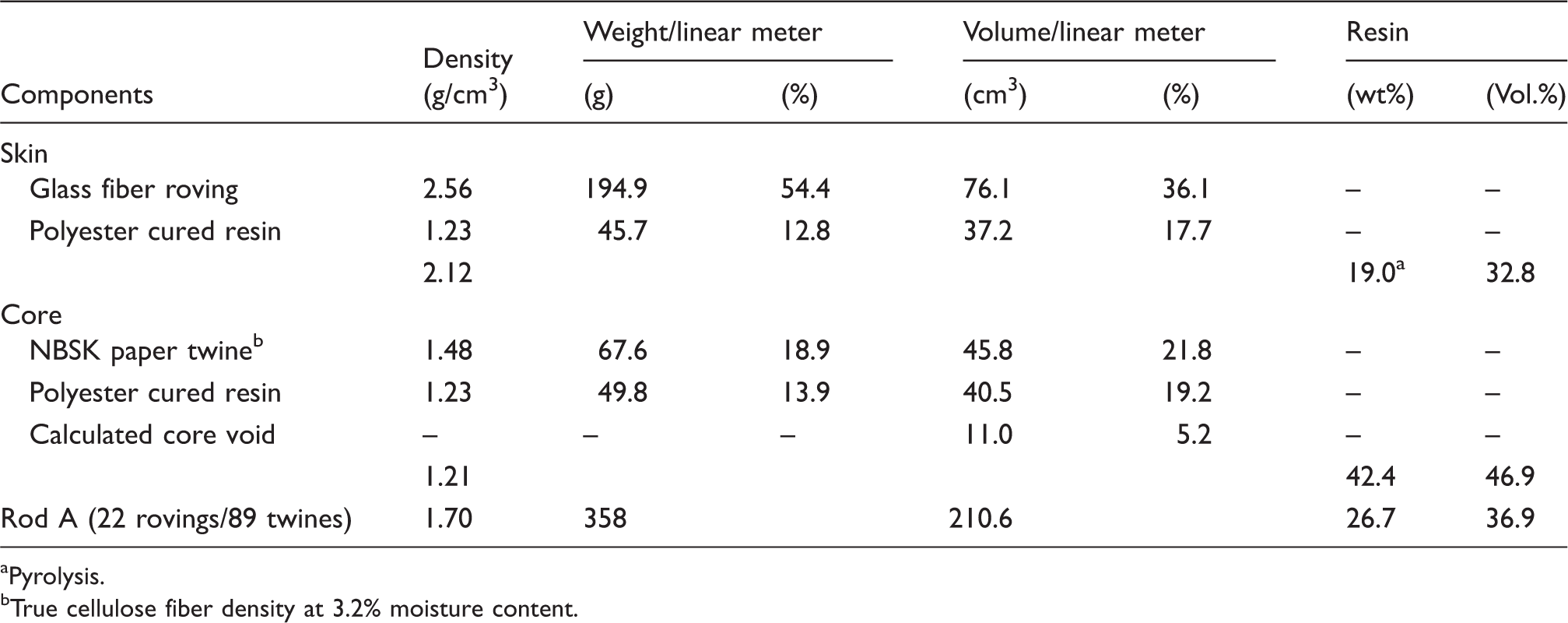
In the first trial, 89 NBSK paper twines of mean diameter of 1.2 mm were used to make the interior round core structure having 10 mm in diameter. The surrounding sandwich rod composite skin of about 3 mm thick was formed using 22 glass fiber rovings. A round die of 16.4 mm in diameter was used.
Although there is some residual moisture in the paper twines (∼3.2 wt%) under ambient temperature and humidity, no further drying was carried out before the pultrusion trial. Similarly, the glass fiber rovings were used as stored at normal ambient conditions. Figure 9 shows the cross-sectional and surface views of the sandwich rod.
Cross-sectional (a) and surface (b) views of the pultruded sandwich rod made from paper twines/polyester (core) and glass fiber rovings/polyester (skin).
Paper twine/glass fiber roving sandwich rod composition, density, resin weight and volume fractions, and calculated core void fraction.
Pyrolysis.
True cellulose fiber density at 3.2% moisture content.
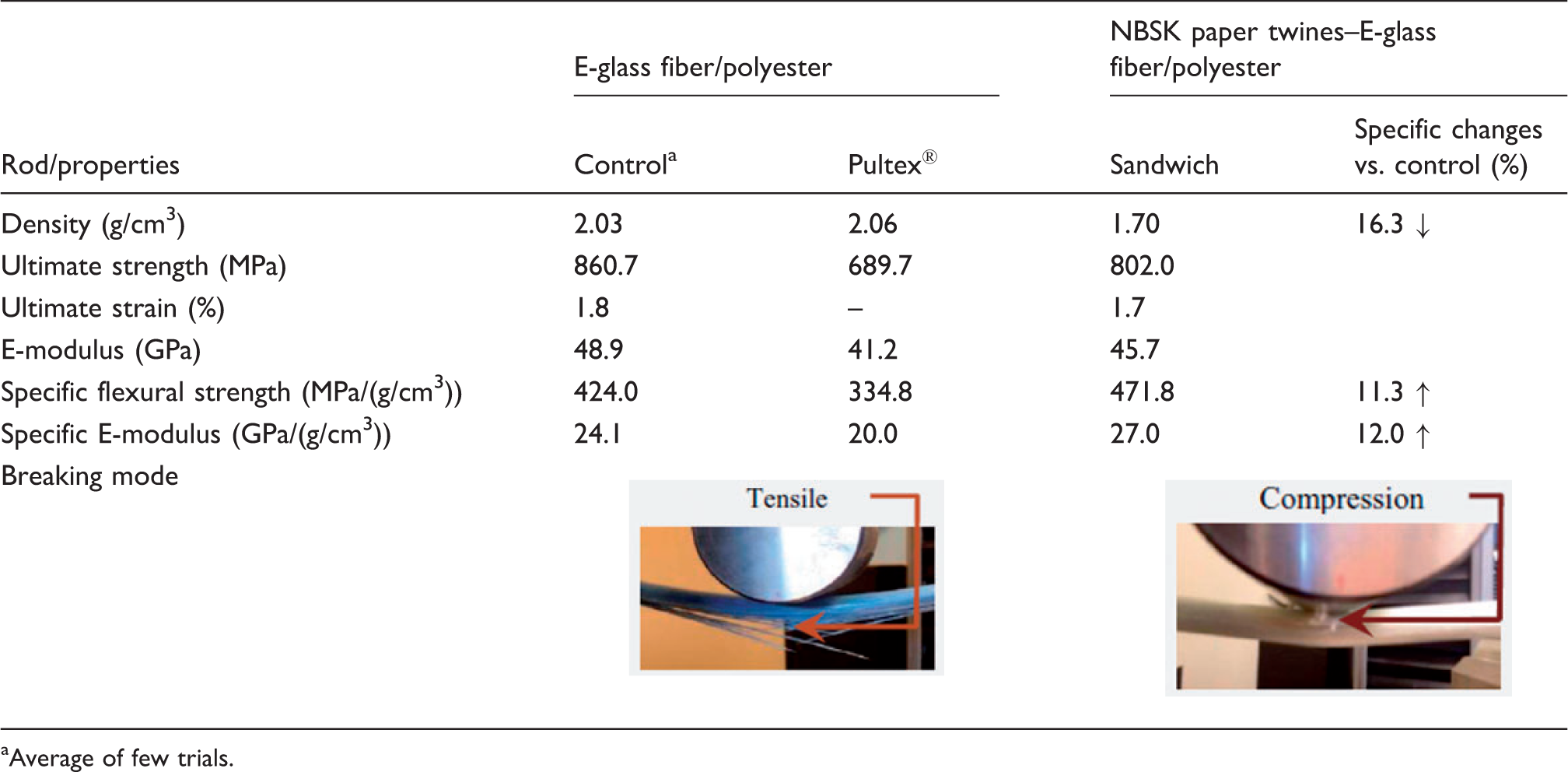
Density and flexural properties of the pultruded sandwich rod in comparison with the reference and the commercial rods made from E-glass fiber and polyester.
Average of few trials.
As indicated in Table 4, the calculated void volume fraction within the sandwich rod was 5.2%. As this void is located mostly in the core, its volume fraction within the core is then 11.3%. From Table 5 results, the flexural properties of the pultruded sandwich rod may reach those of the reference rod, and be even higher when specific flexural properties are considered, as far as the paper twine-based in situ formed core has a void volume fraction equal to or below 11%.
In reference to non-sandwich pultruded kenaf fiber yarn/polyester resin rod, 15 flexural strength was found to be highly sensitive to the void content within the pultruded rod. An increase of the void content from 0.74% to 1.32–1.56% was responsible for a decrease of up to 35% in flexural strength. 15 These results from non-sandwich pultruded kenaf fiber yarn/polyester resin rods 15 are not in contrast with this study results from sandwich pultruded rods. Cores for sandwich construction are usually lighter with extensive void volume fractions than the outer void free structural skins. The results of this first trial are interesting as they open new applications for cellulosic paper twines. Novel sandwich profiles may be considered in pultrusion where the central core is continuously formed in situ through the pultrusion die. Surrounded by glass fiber roving/polyester skin, a paper twine/polyester core having a void fraction of 11% seems not to be detrimental to the flexural properties.
Core formation using jute fiber twines
In the second pilot pultrusion trial, 30 jute fiber twines having a mean diameter of 2 mm and a mean breaking load of 70 lbs, each were used without pre-drying to produce sandwich rods as illustrated in Figure 10.
Cross-sectional view of the pultruded sandwich rod made from jute fiber twine/polyester (core) and glass fiber rovings/polyester (skin).
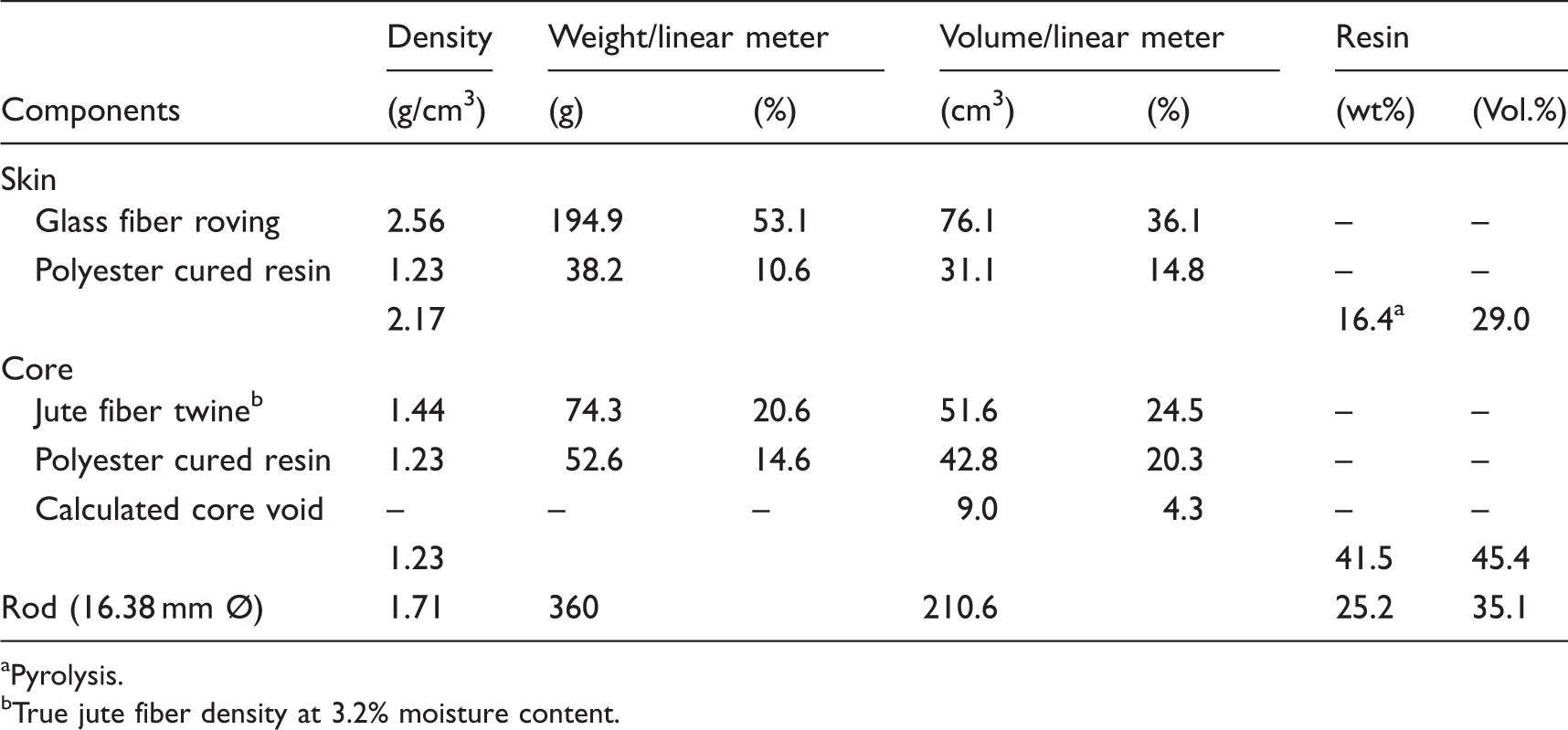
Jute fiber twine/glass fiber roving sandwich rod composition, density, resin weight and volume fractions, and calculated core void fraction.
Pyrolysis.
True jute fiber density at 3.2% moisture content.
Tested at a span of 32 X rod diameter, the flexural ultimate strength (σ
f
) and elastic modulus (E
f
) of the sandwich rod detailed in Table 6 were 687 MPa and 47 GPa, respectively. The ultimate strain (ɛ
f
) was 1.5%. As illustrated in Figure 11, despite the difference in terms of the cumulative twine breaking loads (both in green colored bars), the ultimate flexural strength of the sandwich rod having its core made of 89 polyester impregnated 1.2 mm paper twines was about 17% higher than that of the sandwich rod having its core made of 30 polyester impregnated 2 mm jute fiber twines (both in black bars).
Ultimate flexural strength of the sandwich rods with cores based on the twisted paper and the jute fiber twines.
As calculated in Tables 5 and 6, both cores have almost the same density of 1.21–1.23 g/cm3. Despite the slightly lower core void volume fraction of the jute fiber-based sandwich rod compared to the paper twine-based sandwich rod (4.3% vs. 5.2%), the ultimate flexural strength of the jute fiber-based sandwich rod was 14% lower. This may be due to the shortage in resin content in the rod skin (16.4 wt% vs. 19 wt%) compared to the 1.2 mm paper twine-based sandwich rod. As proper saturation of the fiber by the resin is critical to ensure optimal stress transfers between the reinforcing fibers, resin shortage in the surrounding glass fiber/polyester composite skin may cause premature failure in compression when the sandwich rod is stressed to the ultimate flexural strength. This difference in terms of glass fiber resin saturation may explain the lower ultimate flexural strength measured on the sandwich rod with jute fiber twine-based core.
Core formation using 2 mm paper twines
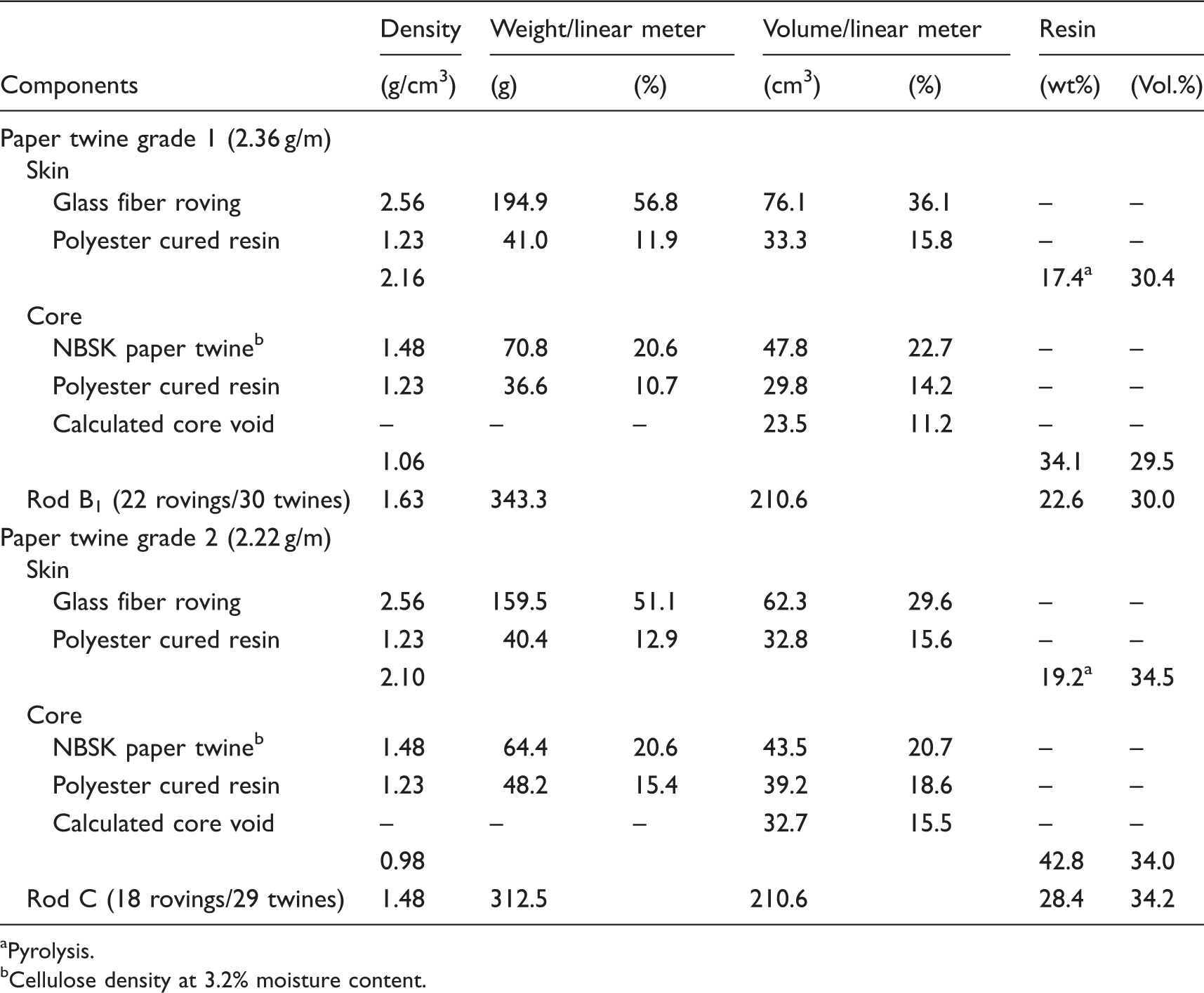
Compositions, density, resin fractions, and calculated core void fractions of paper twine/glass fiber roving sandwich rods.
Pyrolysis.
Cellulose density at 3.2% moisture content.
Table 7 indicates the measured density of two sandwich rods having their core based on two different grades of 2 mm paper twines as well as the calculated densities of their respective cores and their outer glass fiber-based skins. Furthermore, Table 7 shows the calculated void volume (cm3/linear meter) in the core section of each sandwich rod.
As indicated in Tables 4 and 7, respectively, rod A and B1 skins have the same glass fiber roving linear weight (194.9 g/linear meter). However, the resin content within rods A and B1 skins were different. Resin content was higher in rod A (19 wt%) than in rod B1 (17.4 wt%). As shown in Table 8, this resulted in a lower ultimate flexural strength (479 MPa) compared to rod A (802 MPa). This premature failure was likely due to the resin shortage at the skin level of rod B1 and/or at its skin/core interface. As a result, an undesirable delamination at the interface between two adjacent glass fiber rovings is shown in Figure 12.
Glass fiber roving delamination at the top compressed skin of the sandwich rod B1 tested by a four-point flexure device (span of 21:1). Characteristics and three-point bending properties of sandwich rods in comparison with typical commercial rods. Note: Diameter of supporting pins = 100 mm, diameter of loading pin = 50 mm, span of 32:1. Grade 1. Grade 2. Pyrolysis. Calculated.
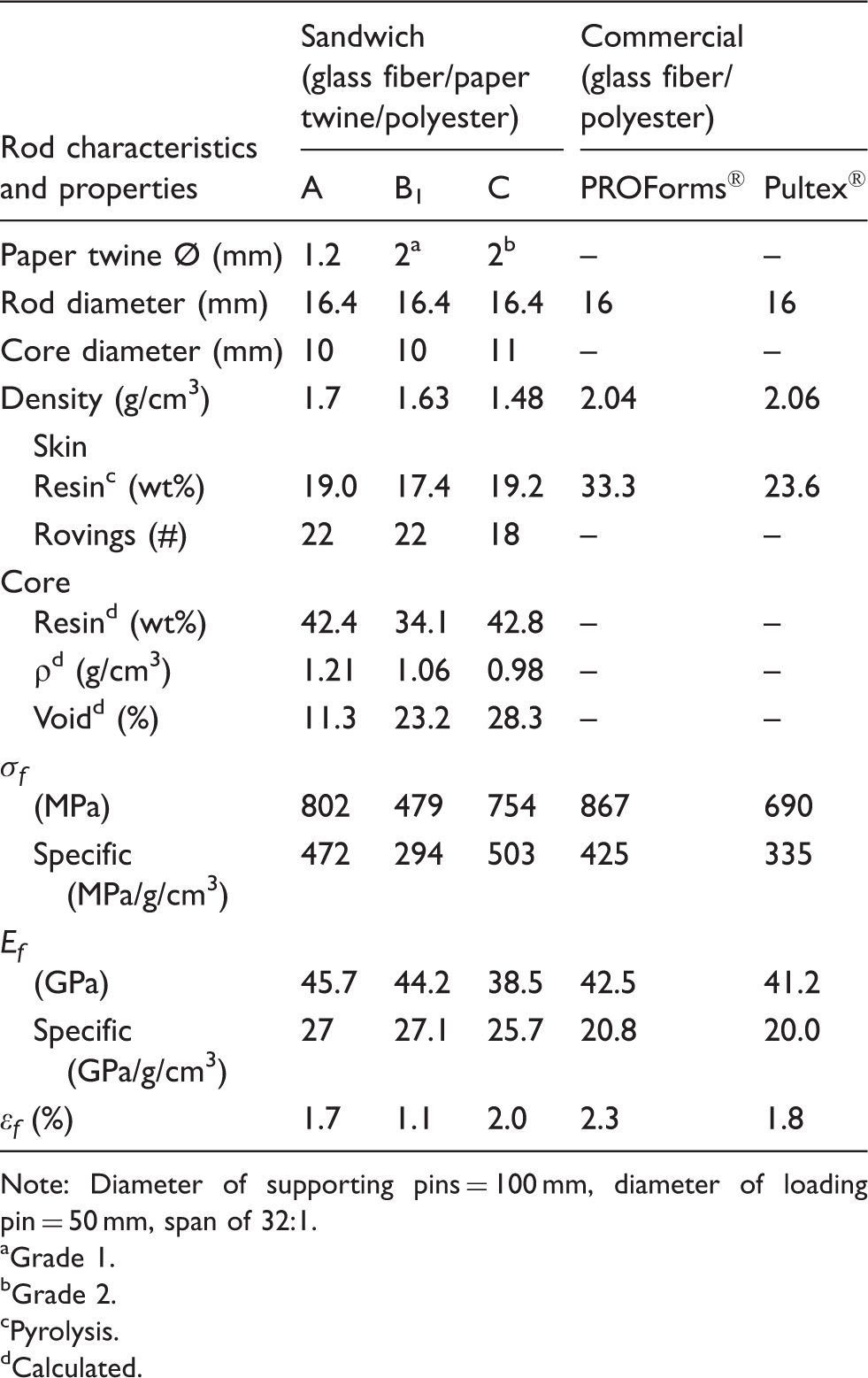
As reported in Table 8, using typical non-grooved testing pins, ultimate flexural strength of rod C was significantly higher than that of rod B1 despite the reduction of the glass fiber rovings from 22 to 18 for the sandwich rod skin formation. This higher ultimate flexural strength was also achieved despite the increase in the void content in the core section of rod C (28.3%) vs. rod B1 (23.2%). This higher void content in the core section of rod C resulted in the reduction of its core density (0.98 g/cm3 vs. 1.06 g/cm3 for rod B1). In another important aspect, resin content in the core of rod C was significantly higher (42.8 wt%) than that in the core of rod B1 (34.1 wt%), as indicated in Table 7. This higher paper twine resin saturation seems quite important too, as it is expected to ensure higher compression and shear properties of the paper twine-based core as well as a higher shear strength at the core/skin interface.
It was mentioned earlier that a low resin content in the skin of any composite sandwich structure may induce premature delamination at the glass fiber rovings near the top loading pin (as illustrated in Figure 12) where the top skin is highly compressed in an only single contact point. To minimize this effect on the ultimate flexural strength of the sandwich rods, a new set of grooved pins was prepared as shown in Figure 13.
Three-point flexural testing device with grooved pins.
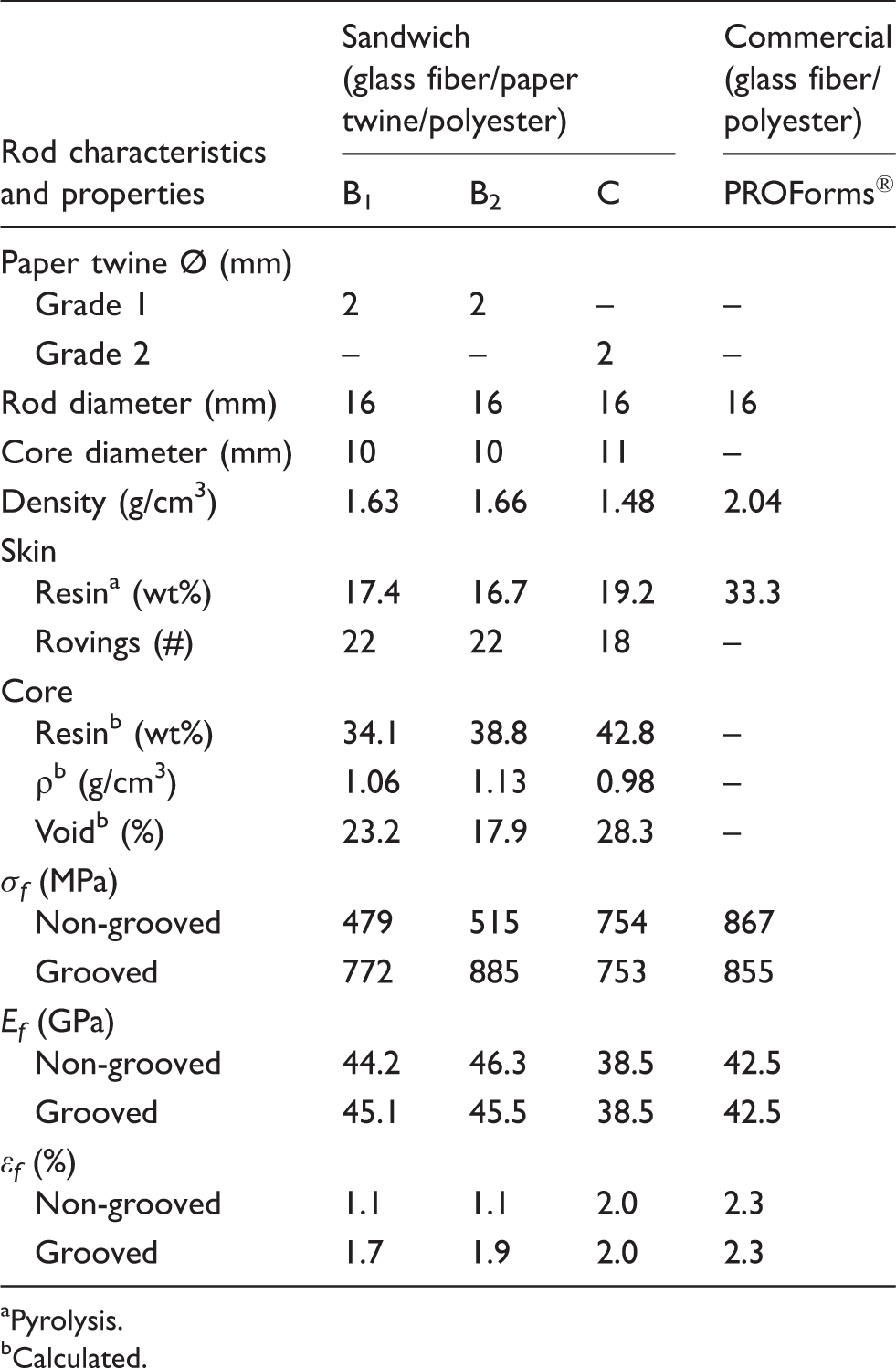
Characteristics and three-point bending properties of sandwich and typical commercial rods using non-grooved and grooved pins (span 32:1).
Pyrolysis.
Calculated.
Contrary to rod B1, the non-grooved and grooved flexural testing devices provided the same flexural properties in the case of the sandwich rod C, having its skin resin content at 19.2% and its core resin content of 42.8% by weight as well as in the case of the typical commercial rod which had a resin content of 33.3% by weight. To find out if the skin resin content or the core resin content is more critical for the sandwich rod as produced in this study, we can compare rod C and the sandwich rod having its core based on pultruded natural jute fiber ropes (Table 6). This later sandwich rod has its skin resin volume content at 29% and its core resin volume content at 41.4%, whereas rod C has its respective resin volume contents at 34.5% and 39.1%. Although the natural jute fiber rope-based core has 2.3% higher gross resin content by volume, it broke at an ultimate flexural strength of 687 MPa and an ultimate strain of 1.5% when tested with the non-grooved three-point flexural device (span 32:1). This reduced the ultimate strength and strain performance of the sandwich rod having its core based on the natural jute fiber ropes, with respect to rod C, is most probably due to its lower skin resin content (29 vol.% vs. 34.5 vol.%). A skin resin volume content of 29% seems to be lower than the critical skin resin content required to prevent a premature flexural ultimate strength failure. This critical skin resin content, which seems in the range of 33–35% by volume (19–19.5% by weight), is more specific to the pultruded rounded sandwich profiles (similar to the actual rods) if tested using a non-grooved flexural device. In other pultruded profiles, like those with flat surfaces, lower skin resin content in the range of 16–19 wt% should not be critical for the flexural ultimate strength and strain of those profiles when tested with typical non-grooved device. As expected, Table 9 shows that the flexural modulus remains independent of the flexural testing device (non-grooved vs. grooved pins), either below or above the critical resin content at the skin of the sandwich rods.
Although the paper twine grades used in rods B and C have the same bulk diameter of 2 mm, the first grade was twisted in a unique way involving three layers of thin paper strip, whereas the second grade was twisted in a simple manner using a single layer of thicker paper strip. This difference in twisting “pattern” was probably responsible for the good resin penetration in paper twine grade 2, used in rod C, compared to paper twine grade 1, used in rods B1 and B2.
It is also possible that typical wet strength additives, commonly used in paper industry, were integrated in the base paper used to produce the paper twine grade 1. This was confirmed after a repulpability test conducted in a British disintegrator (FPI internal method: water at 35℃ for 50,000 revolutions at 3000 r/min). This test showed that paper twine grade 1 was not repulpable contrary to paper twine grade 2. These wet strength additives in the base paper of paper twine grade 1 may delay their wetting with the polyester resin during their impregnation in the resin bath.
In terms of resin weight content within their respective paper twine-based cores, rods A and C have quite similar results of 42.4% and 42.8%, respectively (Table 8). Having also same resin content within their sandwich skins of 19.0% and 19.2%, respectively (Table 8), rods A and C when tested with the non-grooved device had the highest specific ultimate flexural strengths of 472 and 503 MPa per g/cm3, respectively (Table 8). Despite the reduction of the number of glass fiber rovings forming the skins of rods A and C, from 22 to 18, respectively (a reduction of 18.2%), specific flexural modulus of rod C was only 4.8% lower than that of rod A (Table 8).
When tested with the grooved pins (Figure 13), the ultimate specific flexural strength of rod C remained quite the same with regard to that obtained when tested with the non-grooved pins (509 MPa per g/cm3). On the other hand, also when tested with the grooved pins, rod B2 has the highest specific ultimate flexural strength of 533 MPa per g/cm3 (corresponding to 885 MPa divided by 1.66 g/cm3) and rod B1 has the lowest specific ultimate flexural strength of 473 MPa per g/cm3. As shown in Table 9, this B2 rod has a calculated core void content of 17.9%, whereas B1 has a calculated core void content of 23.2%. In terms of resin weight content within their respective paper twine-based cores, rod B2 had 38.8% whereas rod B1 had 34.1%. This 4.7 wt% gross difference in paper twine core wetting seems to ensure higher core compressive and shear properties. Therefore, it may explain the highest specific ultimate flexural strength of rod B2 with regard to rod B1 as both tested with the grooved pins.
Furthermore, despite the fact that paper twine grade 2 was 35% weaker than paper twine grade 1 with respect to their specific breaking loads, actual specific ultimate flexural strength results of the pultruded sandwich rods (rod C vs. rod B2) reveal that the proper wetting of the paper twines is more critical than their specific strength. The 4 wt% gross difference in paper twine core wetting (rod C vs. rod B2) seems to be crucial to enhance the compressive and shear core properties of the rod C vs. rod B2. Therefore, it may explain the high specific ultimate flexural strength of rod C despite its highest core void content (28.3%), its lowest core density (0.98 g/cm3), and its less glass fiber rovings within its outer composite skin.
Figure 14 shows the flexural strength–strain curves of rod C as tested with the grooved pins and Table 10 gives detailed results. As stated in ASTM D790-15, when the specimen deflects more than 10% of the support spun, the ultimate flexural strength may be reasonably corrected with the following equation
Three-point flexural strength–strain curves of rod C with grooved pins. Three-point bending results of five specimens from the sandwich rod C using grooved pins (span 32:1).

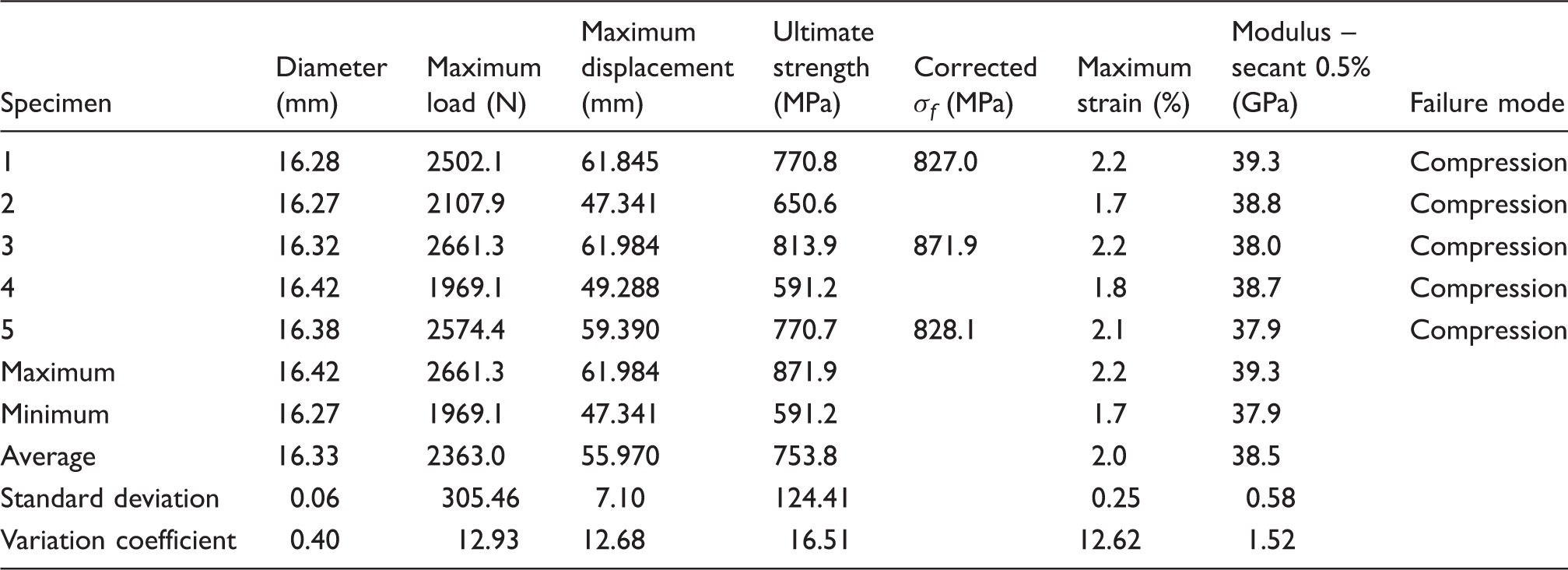
With respect to failure modes, a tensile breaking mode in the outer surface is typically obtained when a pultruded rod is tested in flexion till its ultimate strength. In this study, where the sandwich rods were all tested at a span of 32:1, none of them has failed in tensile mode at its outer skin level. Indeed, all the ultimate flexural strengths reported in Tables 5, 8, and 9 were recorded when the sandwich rods failed in compressive mode at their top skin surfaces. As discussed, the cohesion between the glass fiber rovings was remarkably improved when the skin resin content increased from 16–17% to 19–20%. This increase in the resin content at the outer sandwich skin resulted in no difference between the non-grooved and the grooved flexural testing device with regard to the ultimate flexural strength and strain. A further higher resin content, for example in the range of 23–25% by weight, at the outer skin of the sandwich rod will definitely improve further the cohesion between the glass fiber rovings as well as the adhesive strength at the glass fiber skin and the paper twine core-based interface. Therefore, this may lead to a typical tensile failure mode in the outer skin surface when such sandwich rod is tested in flexion.
Potential cost savings
The actual market price of E-glass fiber rovings ranges from 2200 to 2700 US$/tonne. Considering a fiber density of 2560 kg/m3, the actual volume base market price of same E-glass fiber would range from 5632 to 6912 US$/m3.
From various Asian online suppliers, the ex-works price of the 2 mm one strip NBSK paper twines ranges presently between 2600 and 3000 US$/tonne. Considering the cellulose density of 1500 kg/m3, the volume base ex-work price of the same paper twine would range from 3900 to 4500 US$/m3.
As per the conducted pilot pultrusion trials, the glass fiber used in the sandwich rods is about 40% less on a volume base. This 40% reduction on a volume base in the glass fiber was substituted by about 10% less paper twine on a volume base. As per above assessment of E-glass and paper twine prices, significant raw materials cost saving may be foreseen. Furthermore, as additional cost saving, pilot trials have demonstrated an overall resin reduction of about 15% by weight in the sandwich paper twine-based sandwich rods with respect to the monolithic rod.
Summary and conclusions
Unlike conventional lightweight core materials, such as honeycomb, balsa, and synthetic foam panels, and taking into consideration the different complex profiles being produced by the pultrusion process, paper twines and similar lightweight continuous yarns might become interesting geometrically versatile materials for the pultrusion process. Such novel materials can be continuously directed and centered between conventional reinforcement rovings using proper guiding plates while being co-pultruded to produce continuous sandwich composite structures.
A continuous core formation using a multiplicity of paper twines, or the like, jointly bonded while being co-pulled with the reinforcing fiber rovings into the pultrusion heated die may offer higher specific flexural properties with respect to non-sandwiched structures.
Paper twines with a bulk diameter of 2 mm may be properly co-impregnated with the glass fiber rovings in a polyester resin bath and suitably used, like those having a bulk diameter of 1.2 mm, to form various continuous pultruded sandwich structures.
The two 2-mm paper twine grades were quite suitable for the continuous in situ pultruded core formation and may deliver sandwich rods, having a core to skin ratio in the range of 3.3 to 6 (for example in a 16-mm diameter rod to 10 mm/3 mm and 12mm/2 mm) with outstanding flexural properties. The second grade seems more suitable for faster twine impregnation which may result in higher compressive strength and higher shear properties of the in situ pultruded core.
To deliver same flexural ultimate strength with a grooved and non-grooved testing device, resin content at the outer skin of the sandwich rod was found very crucial and has to be not less than 19 wt%. The core density needs to be balanced with the proper resin and void contents to ensure the optimal core compressive and shear strength properties. These in situ formed properties are very important parameters to maximize the specific ultimate flexural strength of any pultruded sandwich structures.
Footnotes
Acknowledgements
The authors would like to thank Eng. Marie-Claude Bélanger and her team at Centre de développement des composites du Québec (CDCQ) of College Saint-Jérôme for their enthusiasm and professional work all along this collaborative project as well as Eng. Germain Bélanger (Consultant) for his valuable assistance and advice.
Declaration of Conflicting Interests
The author(s) declared no potential conflicts of interest with respect to the research, authorship, and/or publication of this article.
Funding
The author(s) disclosed receipt of the following financial support for the research, authorship, and/or publication of this article: This project was financially supported by the Transformation Technology from Natural Resources Canada and by the Natural Sciences and Engineering Research Council of Canada – Applied Research and Development program.