






Abstract
A novel eco-friendly composite material made of polyurethane derived from castor oil reinforced with long cotton fibers was developed. A set of comparative analyses comprising static and dynamic tests was established using specimens made of castor oil-based polyurethane reinforced by glass fibers, and epoxy reinforced by glass and cotton fibers. The manufacturing method and estimation of fiber volume fraction of the specimens were described in detail. Tensile and flexural tests were performed to evaluate the mechanical performance of the novel laminate. Fractographic post-mortem examinations assessed the quality of the fiber–matrix interaction and allowed direct observation of the failure modes. Surface treatment of natural fibers appears necessary to improve the adhesion of the natural fibers to the matrix. Dynamic responses are discussed, considering natural frequencies and modal damping coefficients. In this context, the potentialities and the limitations of using the novel eco-friendly composite material as structural parts are discussed.
Keywords
Introduction
The use of raw materials from renewable resources, such as vegetable oils and fibers, for manufacturing eco-friendly composites has increased at a tremendous rate due to ecological requirements. 1 In recent years, the imposition of laws to require the use of renewable materials has forced industries to adapt their designs, replacing the use of synthetic fibers by natural fibers. 2 Since 2006, the European Union has imposed by law that around 80% of a vehicle must be made of recyclable or reused materials. In Japan, including components that can be incinerated, the established percentage is 88%. Automotive companies such as Mercedes-Benz have already manufactured vehicle components made of natural fiber-reinforced materials. The fibers used to obtain door lining, back lining and floor panels were flax, sisal, cotton and hemp. Other companies such as DaimlerChrysler, BMW and General Motors have also obtained fiber-reinforced components. 3 The main goal is to reduce the environmental footprint left by petroleum-based resins and inorganic engineered fibers.4–10
Polyurethanes (PUs) are the class family of elastomers with attractive mechanical properties for structural design. These synthetic materials consist of repeated blocks of hard and soft segments. The arrangement of these segments provides unique properties and a wide range of applications for polyurethanes. 11 Among all vegetable oils, castor oil is the most famous source of ricinoleic acid with three functional hydroxyl groups, which can be directly used in PU synthesis as the soft segment or chain extender without any further modification to functionalize it. 12 Castor oil hydroxyl functionality, making it suitable to produce polyurethane elastomers, is an interpenetrating polymer network from castor oil-based polyurethane and polyurethane foam. 13 In fact, there is a clear trend to increase the percentage of “green”-based raw materials in the formulations of polymers, fibers, and composites for high added value applications as shown by the literature.14–21 Sathishkumar et al. 22 have presented the tensile and flexural properties of snake grass natural fiber-reinforced isophthalic polyester composites, showing several advantages over synthetic fibers. Golbabaie 23 pointed out that the intrinsic features of the natural fibers are of low cost, high strength, low density, reasonable flexibility in the processing, corrosion resistance, improved resistance to high-temperature creep, biodegradable and are based on renewable resources.
Regarding castor oil-based polyurethane (PU), Sakamoto et al. 24 prepared composites made of lead zirconate titanate (PZT), ceramic powder and castor oil-based polyurethane (PU) in the film shape. Those composites were used as sensors to detect acoustic emission (AE). Chen et al.25–29 manufactured a series of graft interpenetrating polymer networks (IPNs) from 25 epoxy (EP) and castor oil-based polyurethane (PU). The dynamic mechanical properties, as well as the tensile and impact strength of the IPNs, were studied systematically. Castor oil-based polyurethane (PU) and epoxy resin (EP) filled with potassium titanate whiskers (PTW) were evaluated in terms of composition in Chen et al. 26 The addition of PTW improved significantly the damping properties and the thermal decomposition temperature. Castor oil-based polyurethane (PU)/epoxy resin (EP) graft interpenetrating polymer network (IPN) composites were modified by hydroxy-terminated liquid nitrile rubber (HTLN). 27 The effects of HTLN content on the phase structure as well as the damping properties of the HTLN-modified composites were studied by the scanning electron microscopy (SEM) and dynamic mechanical analysis (DMA). In addition, the effects of multi-walled carbon nanotubes (CNTs) added to HTPDMS-toughened castor oil-based PU/EP-graft IPN composites were evaluated.28,29 Then, the results showed that the addition of CNTs can improve significantly the damping capacity. Simendic et al. 30 reported the fabrication of eco-friendly polyurethane materials using either 2, 4-toluene diisocyanate or isophorone diisocyanate (IPDI), castor oil as a polyol component, and TiO2 nanoparticles. The authors investigated the dynamic viscoelastic properties of the composite materials. Ganji et al. 31 studied the polyethylene glycol (PEG), castor oil and 1, 6 -hexamethylene diisocyanate (HDI) used for the synthesis of different kinds of vegetable oil-based polyurethanes. Ju et al. 32 presented a new kind of polyurethane material and used as the matrix of magnetorheological elastomers (MRE). An improvement was observed in the damping property of those MREs.
Considering vegetal fibers, the use of these types of materials in polymer composites has attracted attention due to the increasingly stringent government regulations and growing environmental awareness.33,34 In the aeronautical and automotive industry, vegetal fibers have received special attention,2–4,35 because they are derived from natural resources. Thus, they are plentiful and present low specific weight, which is essential in this kind of structure. Therefore, knowing the mechanical behavior of aeronautical structures made from those materials is strategic regarding the feasibility in designing “green-structures.” In fact, developing new eco-friendly composite materials is strategic for the aeronautical and automotive industry, mainly investigations about its static and dynamic behavior.
Among vegetal fibers which are used as reinforcement in composites, cotton fibers have received special attention due to their good mechanical features. Cotton is a material capable of absorbing water and its toughness is higher when the fibers absorb water. 35 Considering chemical properties, cotton fibers are resistant to an alkaline solution, but they degrade in the presence of acid solutions. 35 Kim et al. 33 showed an investigation of mechanical properties of polypropylene/natural fiber composites, making a comparison between wood and cotton fiber. In fact, there are few studies about cotton fiber composites as reported by other researchers.36–38 And, this is one aspect for motivation to investigate the composite materials reinforced by cotton fibers in the present work.
Another motivation for developing eco-friendly composites comes from the automotive industry because it is possible to have lightweight structures with good mechanical properties. 39 The application of natural fibers represents a potential in a reduction of vehicle weight up to 40% when compared to the synthetic ones. 40 In the USA, automotive companies have embraced natural materials whereabout vehicles have vegetable fibers such as jute, hemp, and kenaf as a reinforcement of thermoplastic and thermosetting polymers. 41 In Europe, E-Class vehicles developed by Mercedes-Benz showed that many parts are made from natural fibers as reinforcements composites such as door panels made from the epoxy matrix and jute fibers. 42 Akampumuza et al. 43 provided an overview of eco-friendly composite applications in the automotive industry via their historical documentation. More examples can be found for applications such as parts made from vegetal fibers as flax, hemp, sisal, wool and others. 44 For example, the door trim panels of the Audi A2, which was made from polyurethane was reinforced with mixed flax/sisal fibers. 45 The spare tire cover of the Toyota RAUM-2013 was made of PLA matrix from sugar cane and sweet potato and reinforced with kenaf fibers. 46 Another example of application is the Mercedes-Benz S-Class vehicle, which had 42.7 kg of natural fiber components. 44 Other various automotive components such as sunroof sliders (up to 0.4 kg), seatbacks (1.6–2.0 kg) and headliners (average 2.5 kg) were made from vegetal fibers reinforced composites. 47 More recently, authors48–51 have highlighted the recent trends and development in the field of polyurethane cotton fibers.
Although there are relevant scientific contributions on composites made of castor oil-based polyurethane (PU) or reinforced with vegetal fibers, no publications reporting castor oil-based polyurethane (PU) reinforced with long cotton fibers have been found. The present work aims to fill that gap, reporting static and dynamic responses of a novel eco-friendly composite material, made of a PU resin (derived from castor oil) reinforced with long cotton fibers. In addition, coupons made of PU reinforced with glass fibers and epoxy reinforced by cotton and glass fibers were manufactured and tested to compare its mechanical performance to the eco-friendly composite material. All specimens were manufactured by vacuum infusion process, comprising three different stacking sequences: [0 °]5, [90 °]5 and [+45 °/−45 °/+45 °/−45 °/+45 °]T. Experimental tensile and flexural tests were performed to evaluate the mechanical behavior, applying the DIC (digital image correlation) to measure the strain and displacement fields. Mass and volume ratios of manufactured composites were estimated using the thermogravimetric (TGA) tests for composites reinforced by cotton fibers, and matrix burn-off for composites reinforced by glass fibers. Fractography via SEM (scanning electron microscopy) was performed, after static tests, to assess the quality of fiber–matrix interaction and to observe the failure mode in composite specimens. Surface treatment of natural fibers appears necessary to improve the adhesion of those fibers to the PU matrix. Also, dynamic tests were performed in order to evaluate the modal characteristics. Thus, composite specimens were clamped under the base excitation boundary condition during dynamic testing. Chirp excitation method by using a shaker exciter for input signal and vibrometer laser to measure the output signal were employed. Dynamic responses are discussed, considering natural frequencies and modal damping coefficients. Finally, the potentialities and the limitations of using the novel eco-friendly composite material in structural parts are highlighted.
Composite specimens
Manufacturing of specimens for static and dynamic testing
Polyurethane used in this work is in a bicomponent form, resulting from the reaction between the diphenylmethane diisocyanate and the polyol, which is derived from the castor oil. The polyurethane was composed of a prepolymer [329 L (60%m/m)] and a polyol [471 40%m/m)] supplied by the Poliquil®. The ratio used of the components is 30% prepolymer and 70% polyol. Another polymeric matrix used in this work was an epoxy resin, which is composed of resin [1564 BR (85%m/m)] and hardener [REN HY 150 BR (15%m/m)], supplied by the Araldite®. Cotton fiber reinforcements were supplied by the Toalhas São Carlos® as unidirectional textile (UD), which did not receive any surface treatment. Glass fibers were supplied by the Texiglass® as unidirectional textile (UD) [WRU-140] of 140 g/m2.
The vacuum infusion process was used to manufacture the investigated composites. First, the reinforcements are laid dry into the mold, after that the vacuum bag is closed, and the vacuum is applied to infuse the resin. Since PU resin derived from castor oil shows very short pot life, a rapid mixture is necessary for the resin with the hardener to avoid that resin is cured before wetting of all the reinforcements (Figure 1). It is important to highlight that this problem is not so critical for the epoxy resin.
Specimens preparation: (a) cut the reinforcements layup, (b) preparation of the vacuum bag, (c) vacuum bag and resin infusion, (d) composite plates (PU reinforced with glass fibers).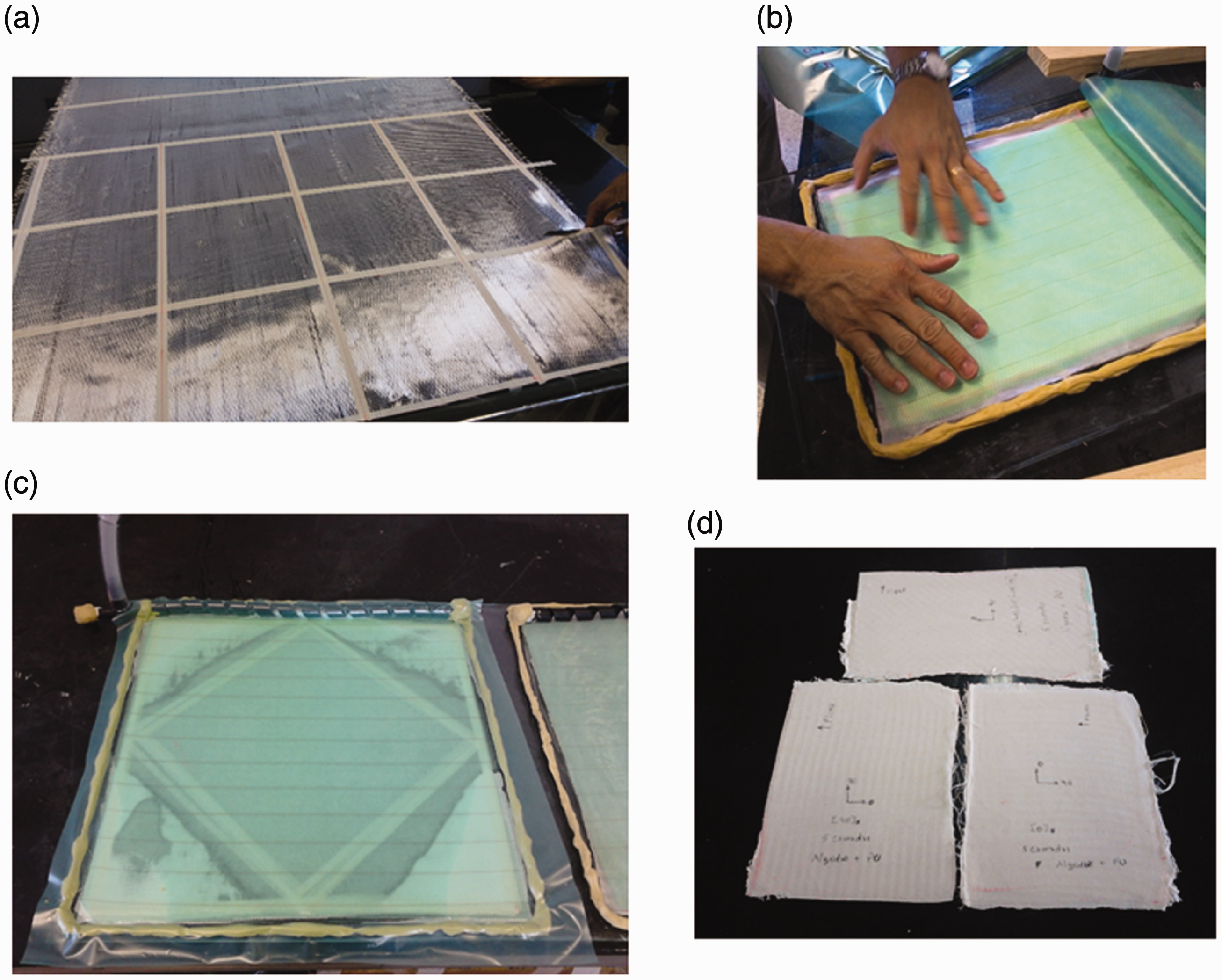
Specimens' data for tensile testing.
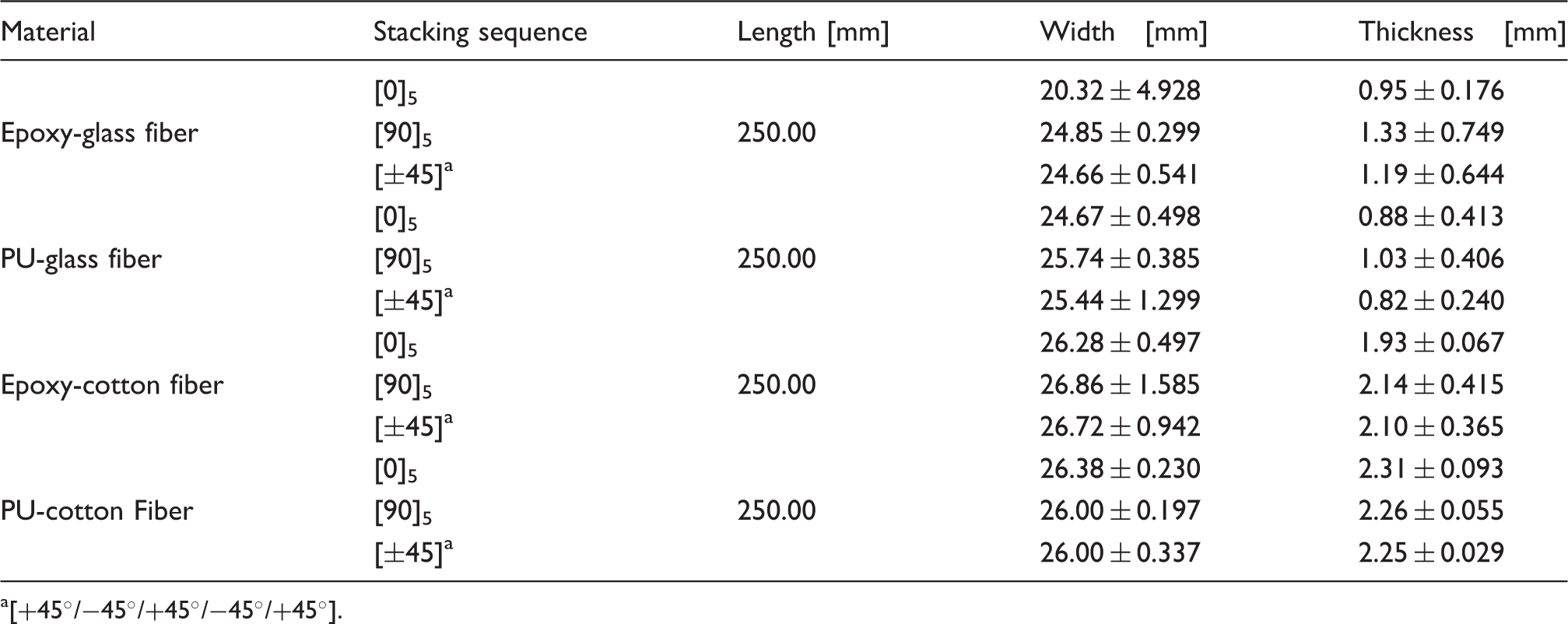
[+45°/−45°/+45°/−45°/+45°].
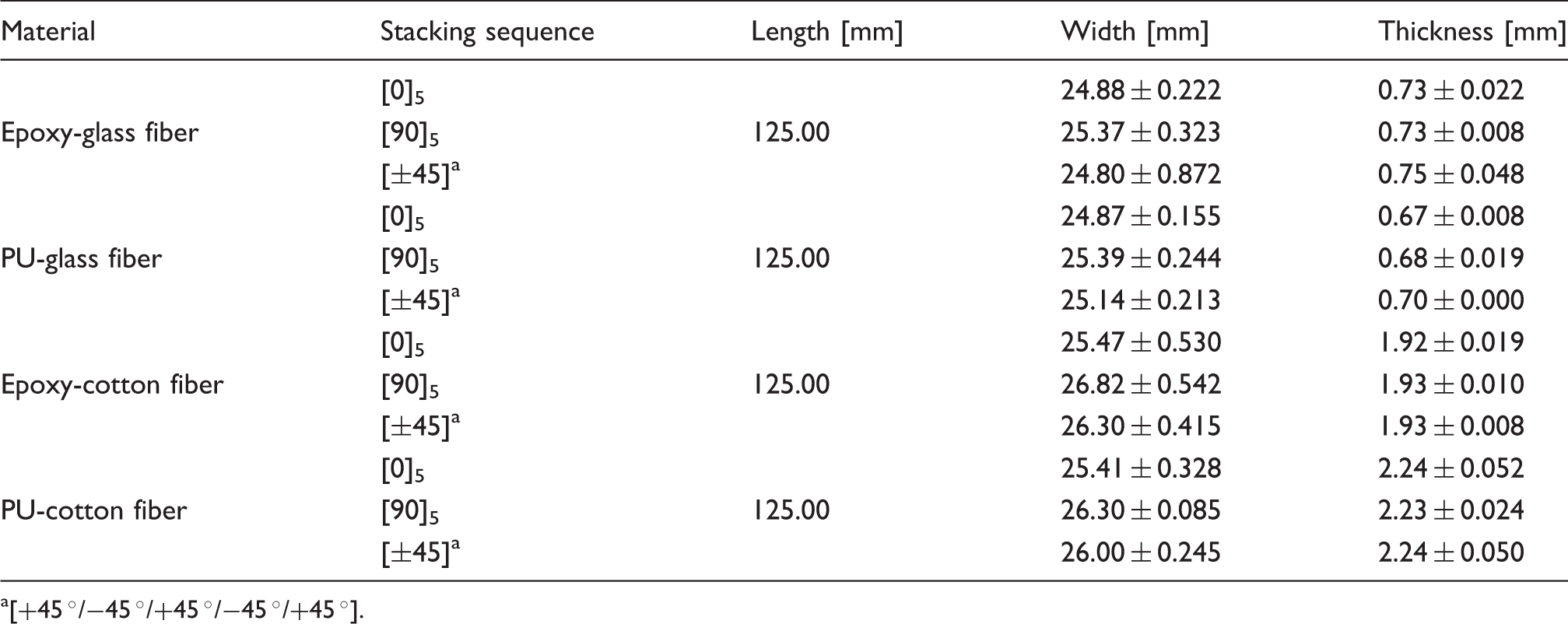
Specimens' data for flexural testing.

[+45 °/−45 °/+45 °/−45 °/+45 °].
Specimens' data for dynamic testing.
[+45 °/−45 °/+45 °/−45 °/+45 °].
Estimation of fiber volume fractions
For the glass fiber-reinforced specimens, the resin burn-off method was adopted using the ASTM-D2584. 52 Thus, first, specimens of 10 mm vs. 10 mm were weighed. After that, the specimens were put in an oven, and heated at room temperature up to a maximum value of 600 ℃ with a rate of 10 ℃/min. After reaching the maximum temperature, the samples were maintained on that temperature for 5 h. Then, the oven was switched off and waited until the oven reaches the room temperature. Considering that the polymer matrix was burned, the remaining fibers were weighed. Hence, based on the fiber and the specimens mass, which were previously weighted, as well as in the density values, it was possible to calculate the fiber volume fractions.
For the cotton fiber-reinforced test specimens, the burn-off is not feasible since the fibers degrade simultaneously with the matrix. Thus, the thermogravimetry test was carried out to estimate the mass fraction of the composites reinforced with cotton fibers. Specimens were analyzed in a Perkin Elmer equipment at a rate of 10 ℃/min under synthetic air, from room temperature to the temperature of 700 ℃. To obtain a representative volume, taking into account the dimensions required by the equipment, the specimens were put in liquid nitrogen, and after that they were fractured in small pieces to be tested. Figure 2 depicts the thermogravimetry results. Initially, the test was carried out for only cotton fibers (Figure 2(a)) to identify the peak of temperature which was reached by this reinforcement until the beginning of its degradation. Figure 2(b) and (c) shows the results for the composites of epoxy and PU resin reinforced with cotton fibers.
Thermogravimetry results: (a) only cotton fibers, (b) epoxy resin reinforced with cotton fibers and (c) PU resin reinforced with cotton fibers.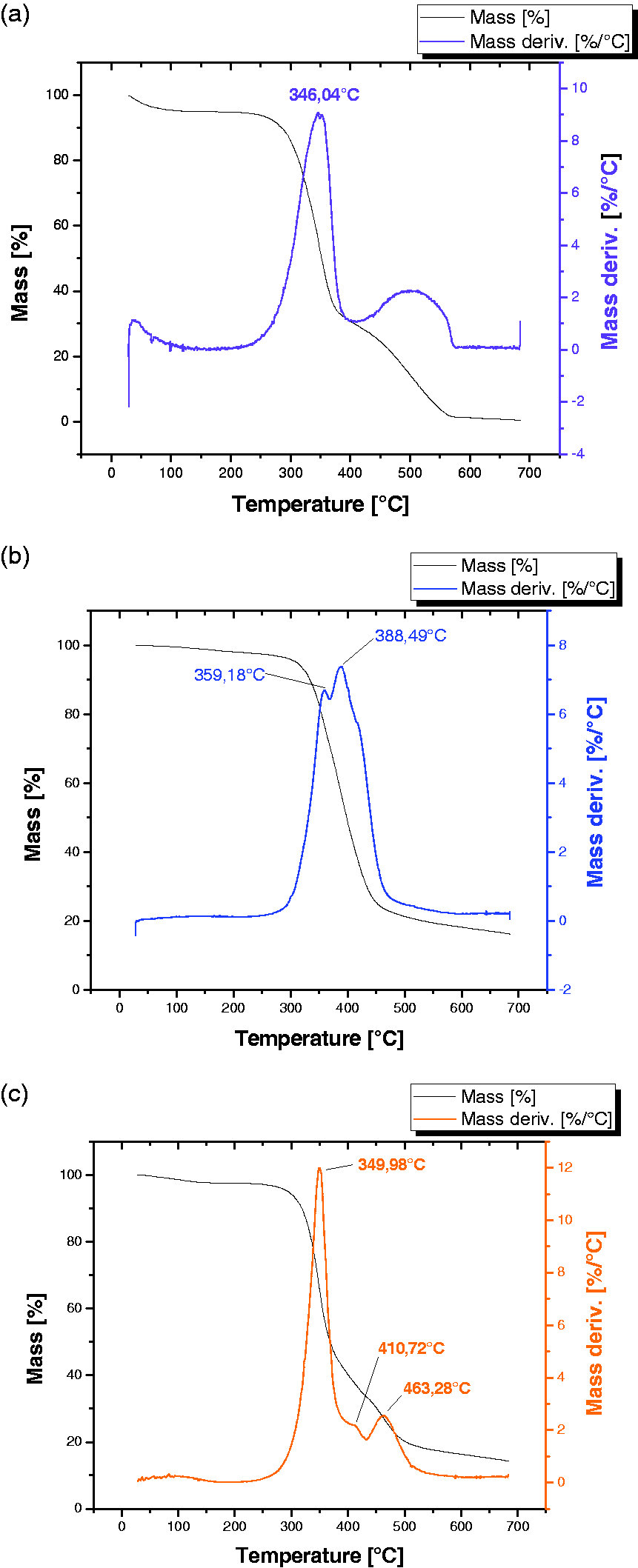
Figure 2(a) shows that the first stage is in the range from the beginning to 100 ℃, with a mass loss of approximately 5%, referring to the presence of water. The second stage is accompanied by a change, where the peak is at 346.04 ℃ and represents the temperature for the maximum variation in the process. After the initial water loss, the cotton fibers' degradation occurred in a stage for the temperature range from 218.70 ℃ to 405.75 ℃, with a loss of 64.50% in terms of mass. A third stage is observed between 372.32 ℃ and 580.77 ℃ with a loss of 28.75% by mass and finally a residue of 1.37%.
As shown in Figure 2(b), in the tests for epoxy resin reinforced with cotton fibers, the loss of 57% of the mass was verified, when this one reached 388.49 ℃. Initially, after the first phase of water loss of the material, the presence of two more evident peaks (359.18 ℃ and 388.49 ℃) has been observed in the mass derivative curve. These, in turn, represent the presence of two different types of materials. Considering the temperatures present in the curve, it is observed that the first peak approaches the temperature presented by the cotton fibers. In addition, the maximum degradation temperature of the epoxy resin approximates the second peak obtained in the TGA assay. A deconvolution procedure was used in order to estimate the mass fractions (fiber and polymer matrix) for the composites reinforced with cotton fibers.
Fiber volume fraction values of the specimens.
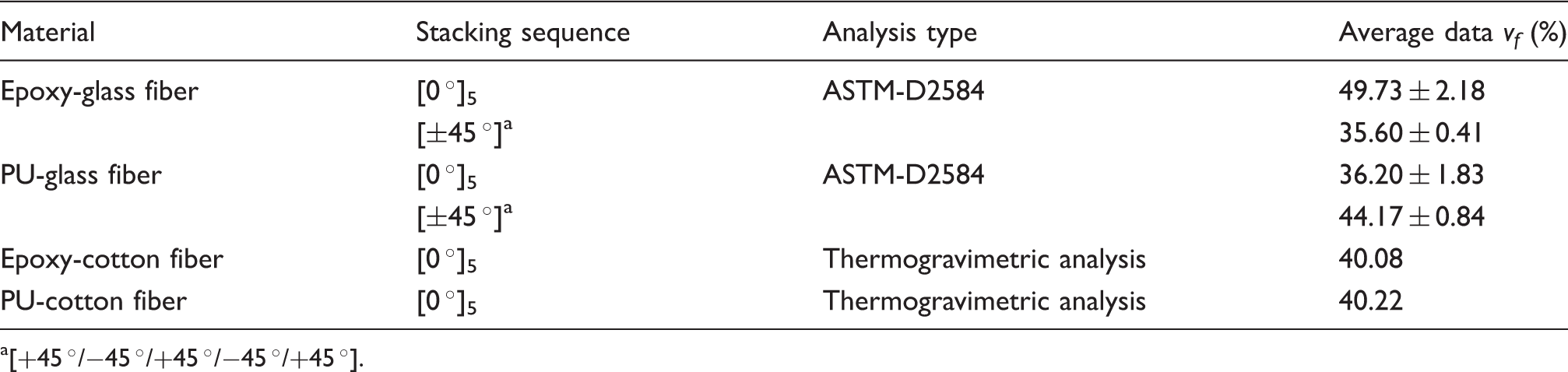
[+45 °/−45 °/+45 °/−45 °/+45 °].
Static testing and fractography analysis
The tensile tests were based on the ASTM D3039 54 and D3518 55 standards to obtain stiffness, tensile ultimate strength and limit strain at rupture. All experiments were carried out by using a universal testing machine under displacement-controlled loading conditions. Thus, the crosshead velocity of the testing machine was equal to 2 mm/min. The velocity was selected according to the ASTM D3039 and D3518 standards, as well. DIC system was used to obtain the displacement and strain results with more accuracy. In addition, three-point bending tests were performed, following the ASTM-D790 standard. 56 Maximum tensile strength, maximum strain, and flexural modulus were obtained from the flexural tests. It is important to notice that for some specific cases, maximum strain does not correspond to the rupture of the specimen, because it reached the limit for measurements of strain imposed by ASTM for flexural tests.
Small fragments of the test samples, after static tests, were used in the microstructural analysis. Scanning electron microscope (SEM) analysis was performed, after preparing adequately all samples, their surfaces were evaluated by using FE-SEM (JEOL JSM 6701 model), and operated at 15 kV and 100 μA current, as well as EDS Thermo-Scientific mod. Thus, it was possible to verify the quality of fiber–matrix interaction and failure modes presented by the evaluated composites.
Dynamic testing
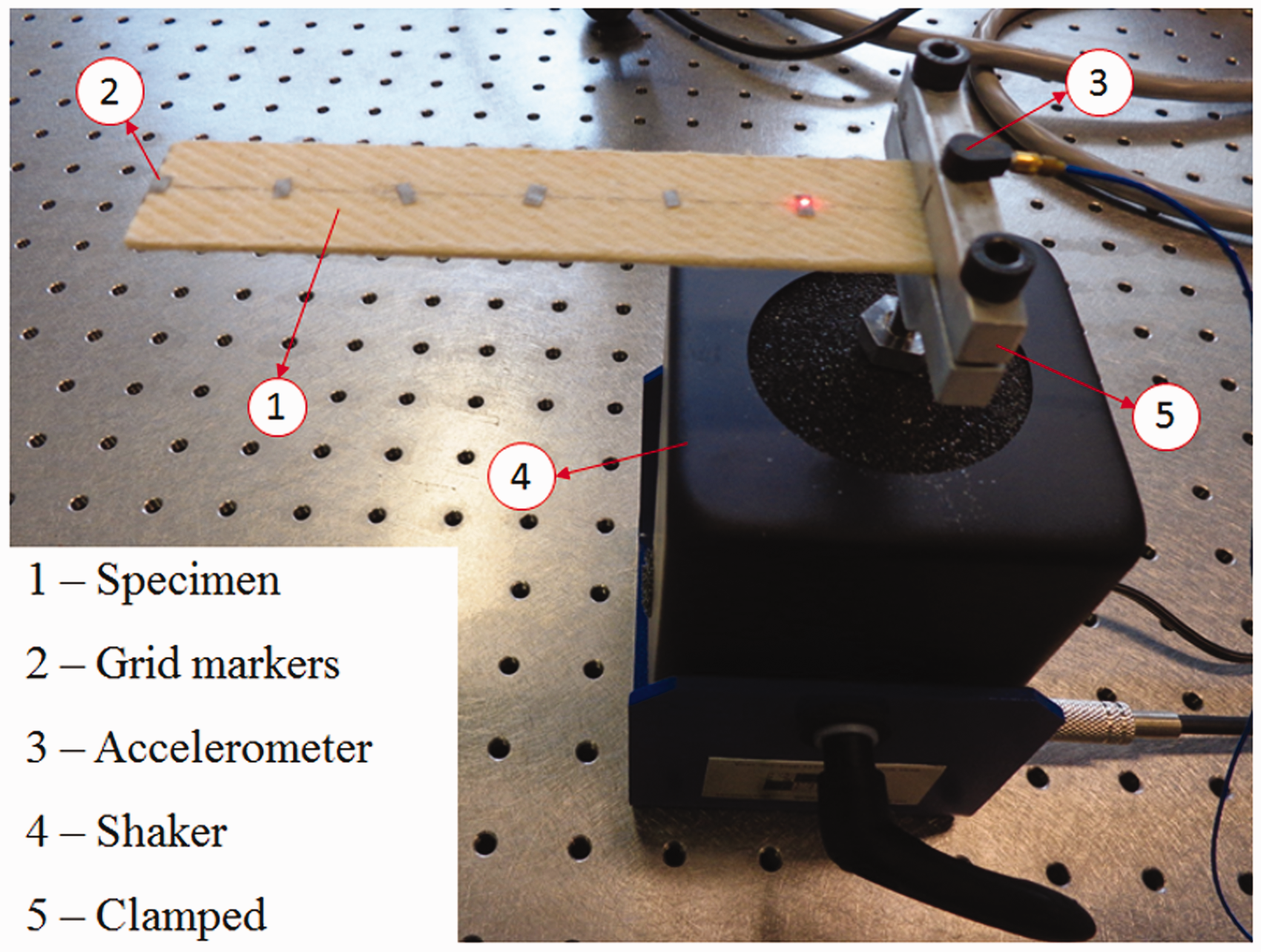
The dynamic experimental testing consisted of verifying the vibration response of specimens, which were tested like beams (Figure 3), with cantilever boundary conditions under base excitation. The data acquisition set-up used in the dynamic testing was controlled by the LMS Test.Lab software, which is a plug and play, multifunction analog, digital and timing I/O board for USB bus computers. The input signals were generated by using a shaker, which was supplied by the TMS-The Modal Shop, Inc. The output was measured by using the laser vibrometer, Politec PDV100, in the grid markers and an accelerometer, PCB Piezotronix (Figure 4). Each time the signal gathered consisted of 8192 points and was sampled until 4096 Hz. Frequency response functions (FRFs) were calculated from the measured response signals, i.e. from shaker and laser vibrometer (or accelerometer). The number of averaging individual time records was selected to be eight in order to reduce the random fluctuation in the estimation of the FRFs.
Composite specimens for dynamic testing. Details of the experimental setup: Clamped under base excitation boundary condition. 1. Specimen. 2. Grid makers. 3. Accelerometer. 4. Shaker. 5. Clamped.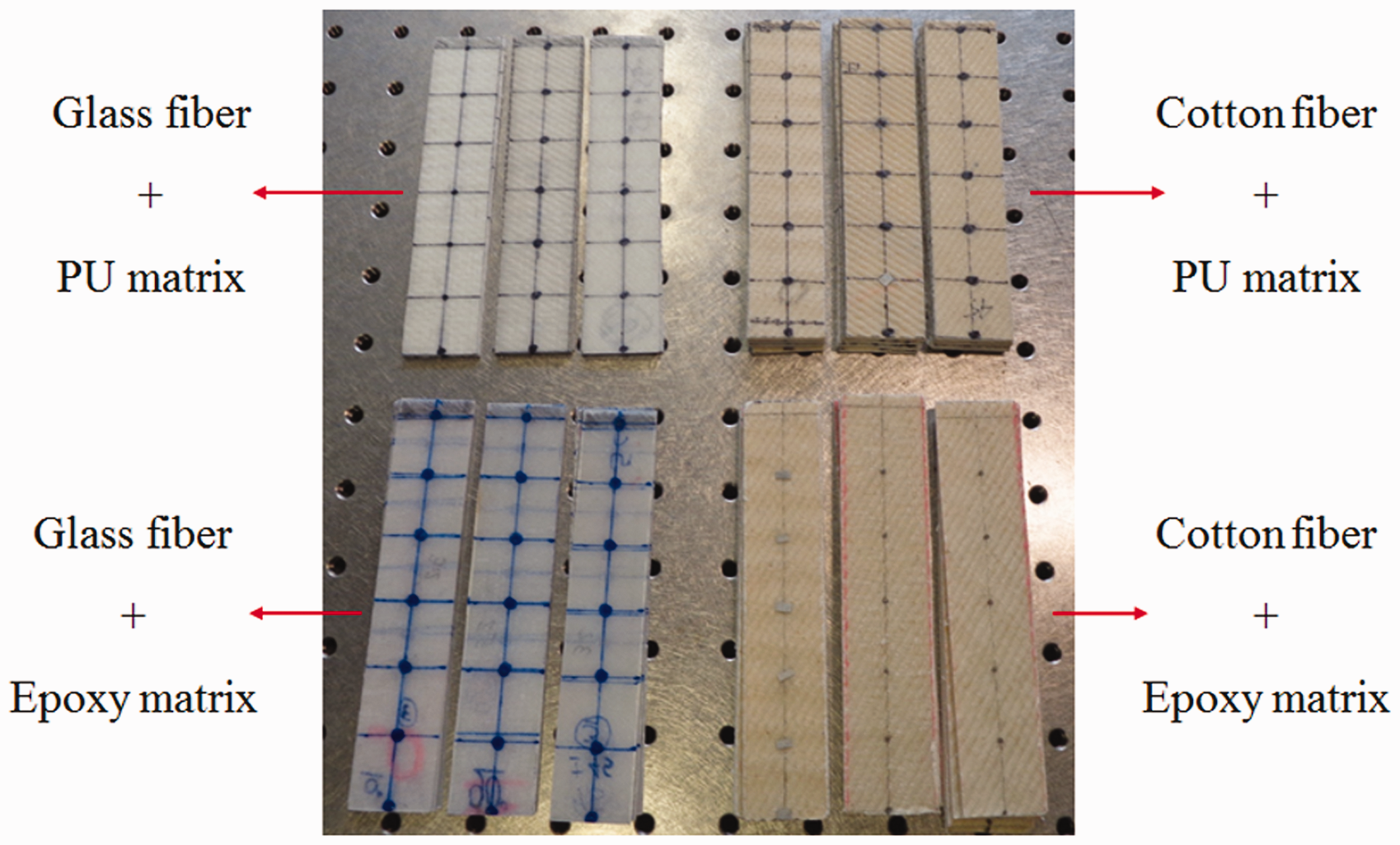
When all measurements through the grid markers were obtained and stored, FRFs were calculated, where the resonant frequencies could be identified by using the signal processing Test.Lab software with PolyMAX non-iterative frequency domain parameter estimation method. 57 It is based on a (weighted) least-squares approach and uses a multiple-input/multiple-output frequency response functions as primary data. The PolyMAX or poly reference least-squares complex frequency-domain method can be implemented in a very similar way as the industry-standard polyreference (time-domain) least-squares complex exponential method. Thus, in the first step, a stabilization diagram was constructed containing frequency, damping and participation information. Next, the mode shapes were found in a second least-squares step based on the user selection of stable poles. One of the specific advantages of the technique lies in the very stable identification of the system poles and participation factors as a function of the specified system order, leading to easy-to-interpret stabilization diagrams. The modal coefficients were computed, and the mode shapes were obtained. 58
Results and discussion
Results for static testing
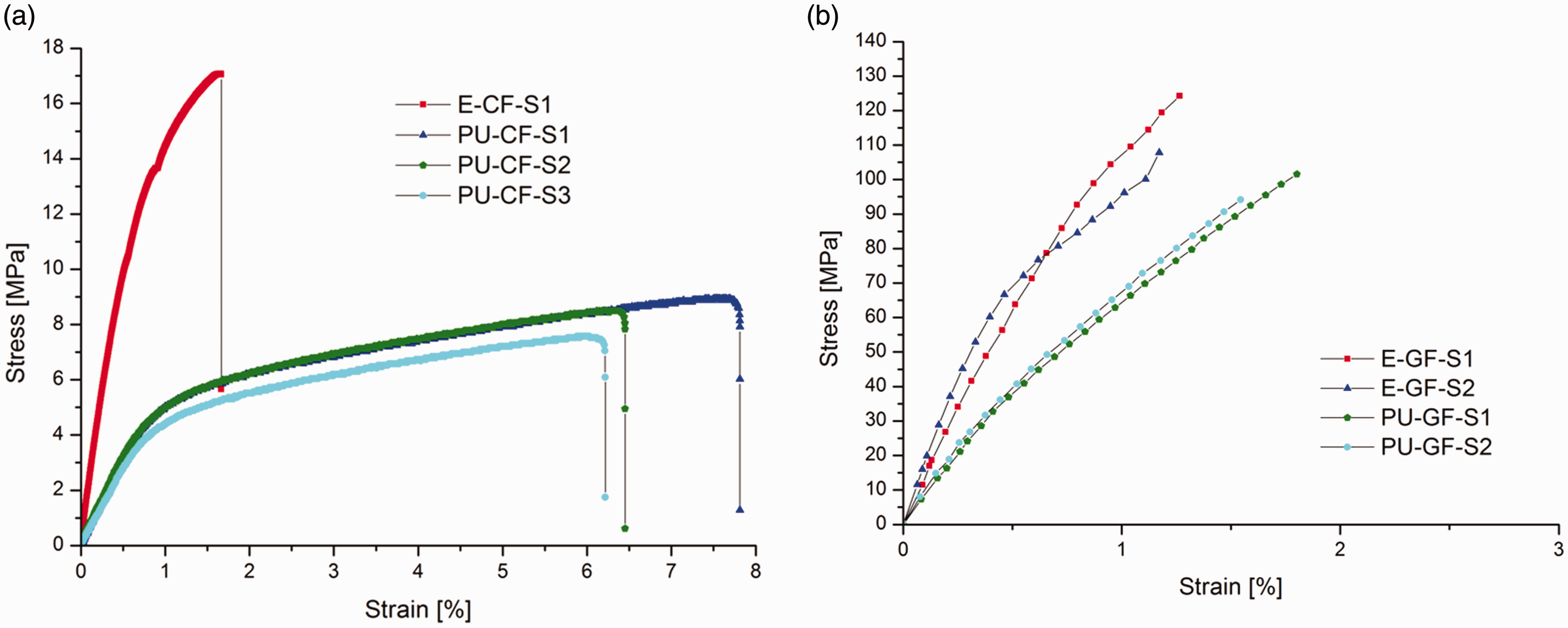
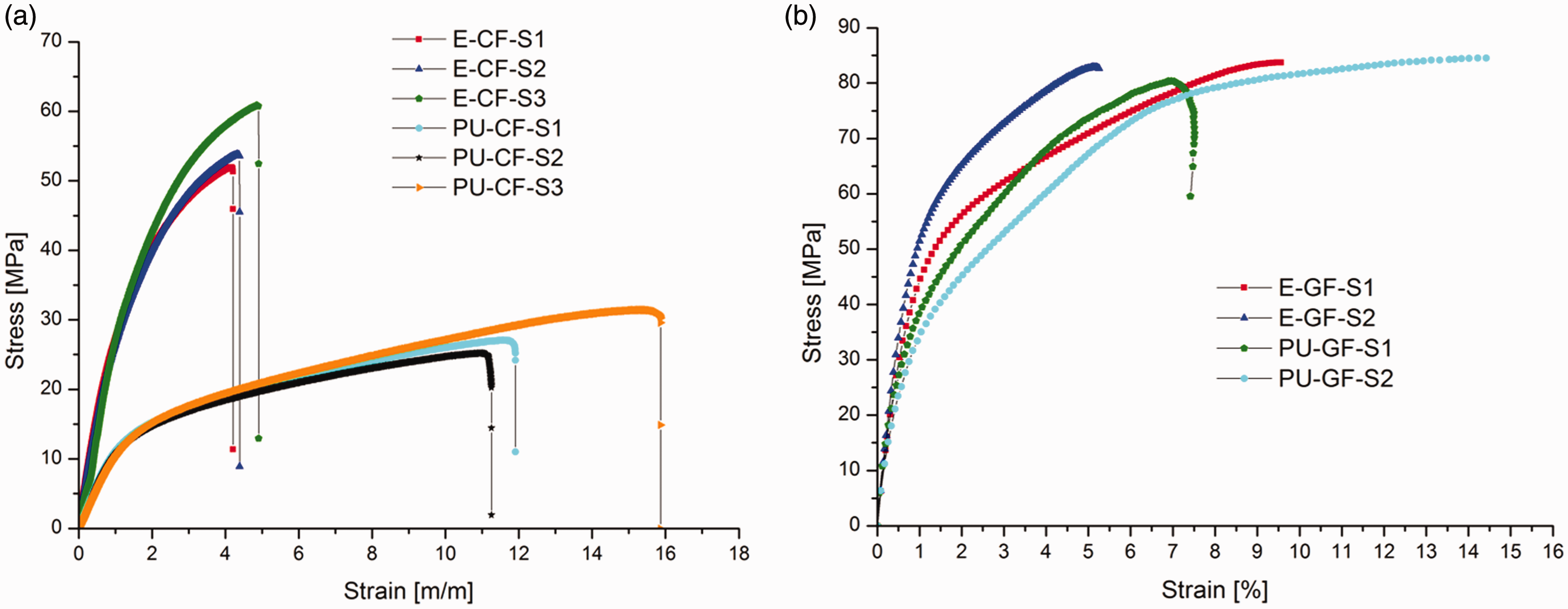
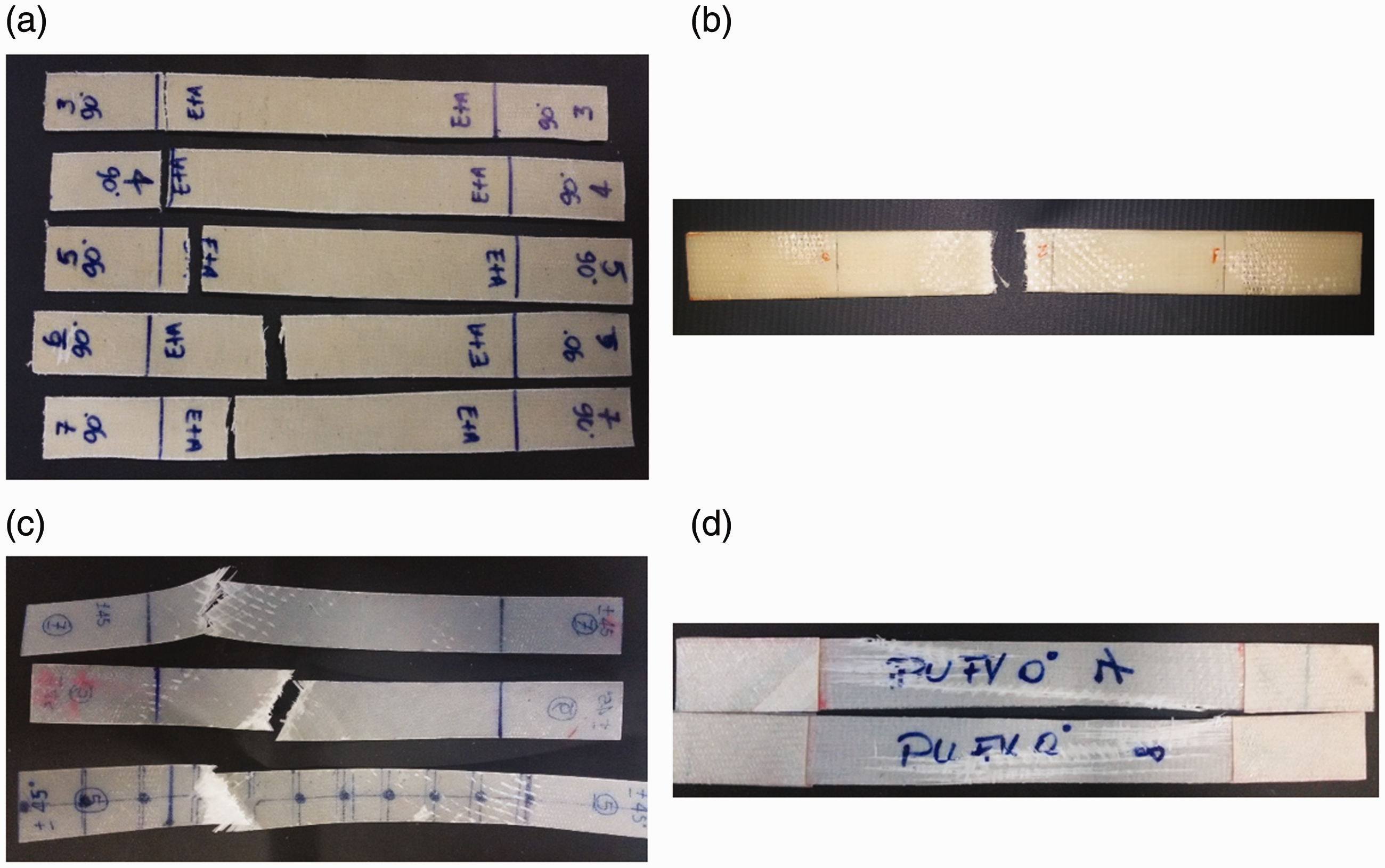
Regarding tensile testings, the stress–strain curves, for epoxy (E) and polyurethane (PU) resin reinforced with cotton (CF) and glass (GF) fibers specimens (S), are plotted in Figures 5 to 7, where the specimens are represented by X-Y-Sz (X = E or PU; Y = CF or GF and z = number of the sample). Figure 8 shows some tensile test failure modes. It is possible to observe the typical failures modes, which are shown by the ASTM 3039
54
and ASTM 3518,
54
such as LAT (lateral at grip/tab top), LGM (lateral gage middle) and SGM (long splitting gage middle). Also, it is verified that the surface treatment used in synthetic composite improves the adhesion between the fiber/matrix interface. Thus, surface finishes create an interphase, which can have significantly different properties than the matrix and the goal to transfer stresses between fiber and matrix. According to Drzal,
59
the mechanical properties of the interphase matrix provide an intrinsic limit on the maximum degree of adhesion attainable for a given fiber–matrix combination and, in general, this dependency is a function of the shear modulus of the matrix.
Stress–strain curves, considering [0 °]5 stacking sequence, for epoxy and PU reinforced with (a) cotton fibers and (b) glass fibers. Stress–strain curves, considering [90°]5 stacking sequence, for epoxy and PU reinforced with (a) cotton fibers and (b) glass fibers. Stress–strain curves, considering [+45°/−45°/+45°/−45°/+45°]T stacking sequence, for epoxy and PU reinforced with (a) cotton fibers and (b) glass fibers. Tensile test failure specimens (a) Epoxy reinforced with coton fiber [90°], (b) epoxy reinforced with glass fiber [90°], (c) epoxy and glass fiber [±45°] and (d) PU reinforced with glass fiber [0°].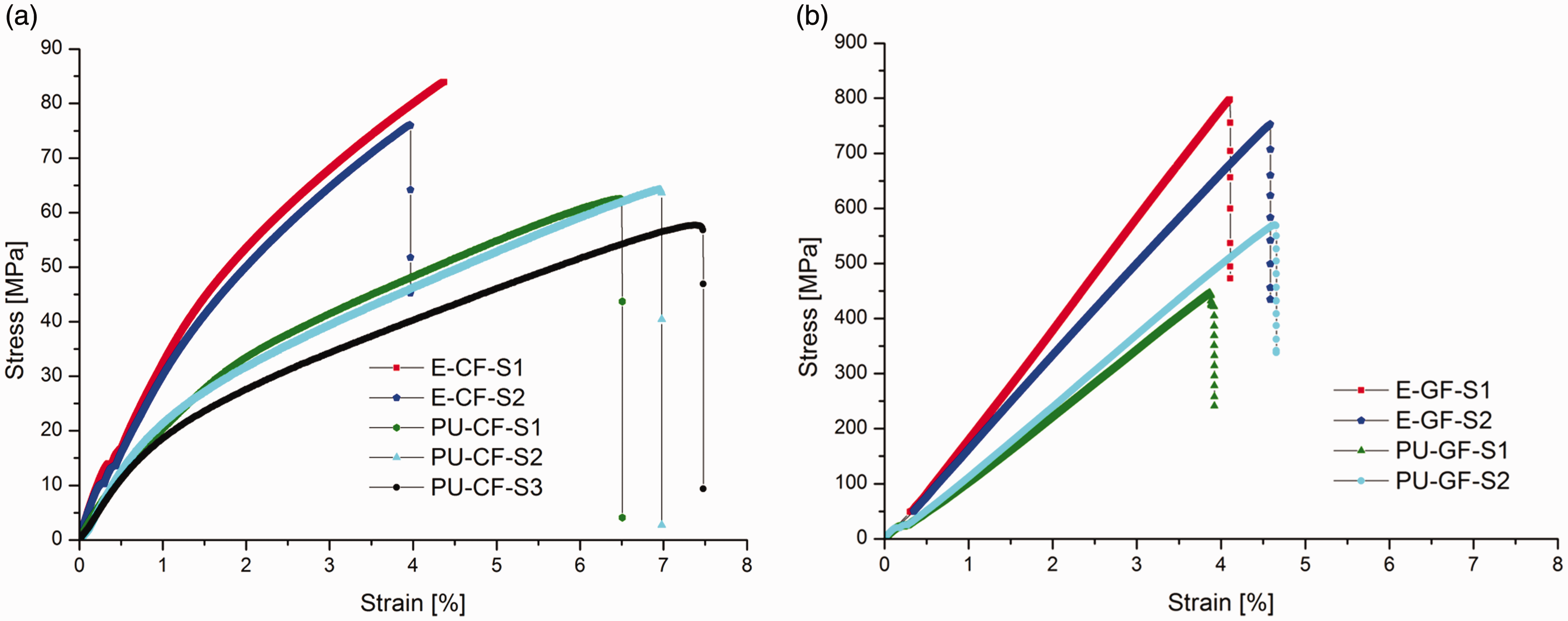
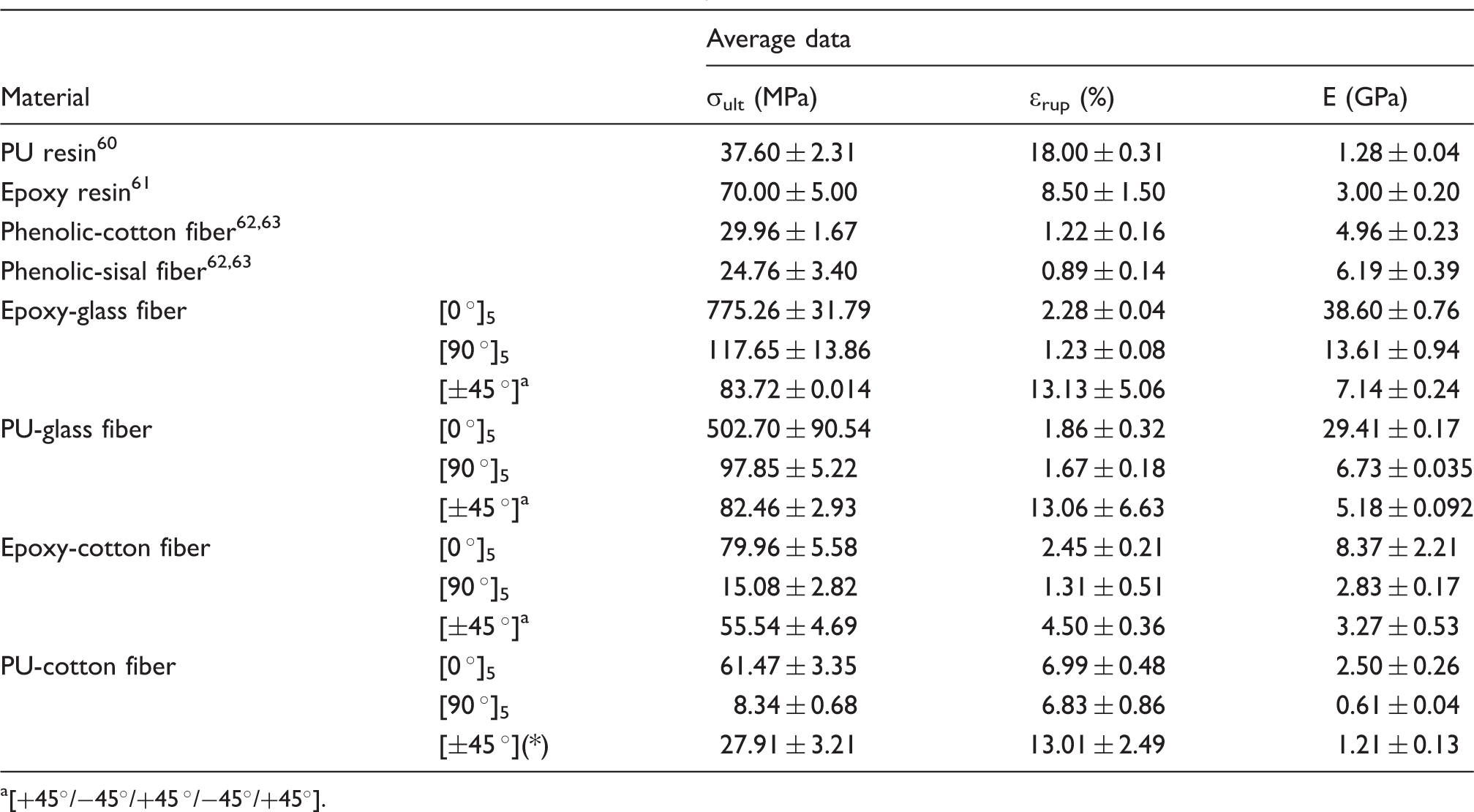
Ultimate tensile strength (σult), maximum strain (ɛrup) and Young's modulus (E).
[+45°/−45°/+45 °/−45°/+45°].
Beyond Young's modulus (E), Table 5 shows the ultimate tensile strength (σult) and strain limit at rupture (ɛrup). Observing the modulus of elasticity of the manufactured composites laminates and results of the literature, it can be verified that the epoxy composites always have values higher than the PU ones. For epoxy reinforced with cotton fibers, the highest value was 8.37 GPa for the stacking sequence of [0°]5, while for PU reinforced with cotton fibers display a value of 2.50 GPa. Thus, these results are also coherent to the fiber volume fractions shown by Table 4, where epoxy reinforced with cotton fibers has similar fiber volume fraction compared to PU reinforced with cotton fibers (around 40%). However, epoxy resin has Young's modulus higher than PU resin (as shown by Table 5). It is also verified that both types of reinforcements (glass and cotton fibers) provide to the specimens made from PU has higher values for the modulus of elasticity when compared to the specimens made from only PU resin (except for cotton fibers oriented at 90° and +/−45°). And, the lowest values were observed for the [90°] laminates, because for this fiber orientation, the response is strongly matrix-dominated. In addition, it was found that glass fibers composites show higher values of maximum tensile stress compared to cotton fibers ones. Besides, it is verified that the glass fibers reinforced PU composites are promising as it provides results not so far from those obtained for glass fibers reinforced epoxy.
Not surprisingly, composites reinforced with cotton fibers exhibit much lower mechanical performance than composites reinforced with glass fibers. However, in Table 5, it is possible to observe that cotton-reinforced PU composites with fibers oriented at 0° have higher ultimate tensile strength (σult) than specimens made from only PU resin. On the other hand, cotton reinforced epoxy and PU composites with fibers oriented at 90° and +/−45° present lower values than specimens made from only epoxy and PU resin, respectively. This can be explained due to the cotton fibers in those orientations act as defects instead to be reinforcements.
In Figure 9, it is shown that three-point flexural testing results for epoxy and PU resin reinforced with cotton fibers oriented at 0°. A good concordance among the flexural curves for the same material was also observed. This can be confirmed by Table 6, where the mean value of flexural modulus (Ef) was 5.38 GPa for the specimens of PU matrix, and 34.38 GPa for the specimens of epoxy matrix, with low standard deviation of 0.18 GPa and 1.14 GPa, respectively. In addition, the curves show that the investigated composite materials exhibit ductile and non-linear response even for [0°]5 stacking sequence. This can be explained due to the mechanical behavior of cotton fibers, which drives the response of the composite materials for this orientation.
Stress–strain flexural curves for [0 °]5 stacking sequence: (a) epoxy and (b) PU reinforced with cotton fibers. Maximum flexural strength ( [+45°/−45°/+45°/−45°/+45°].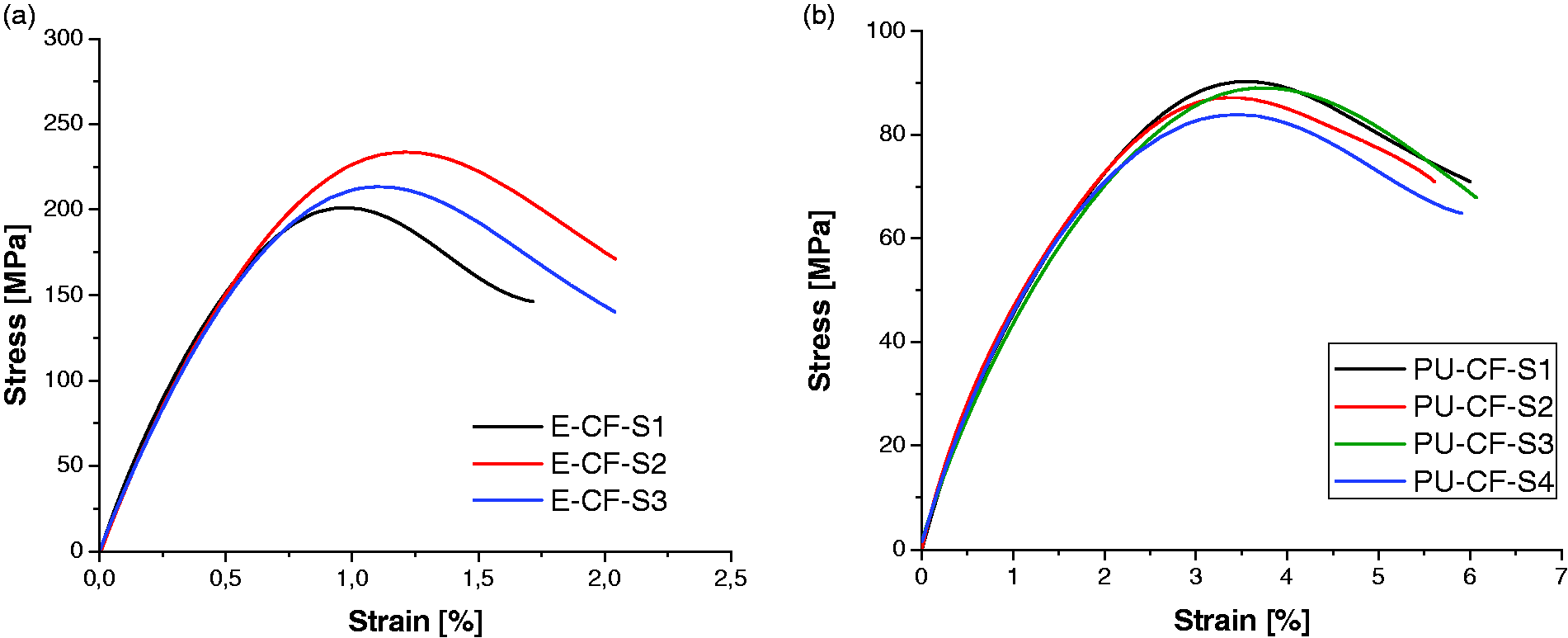
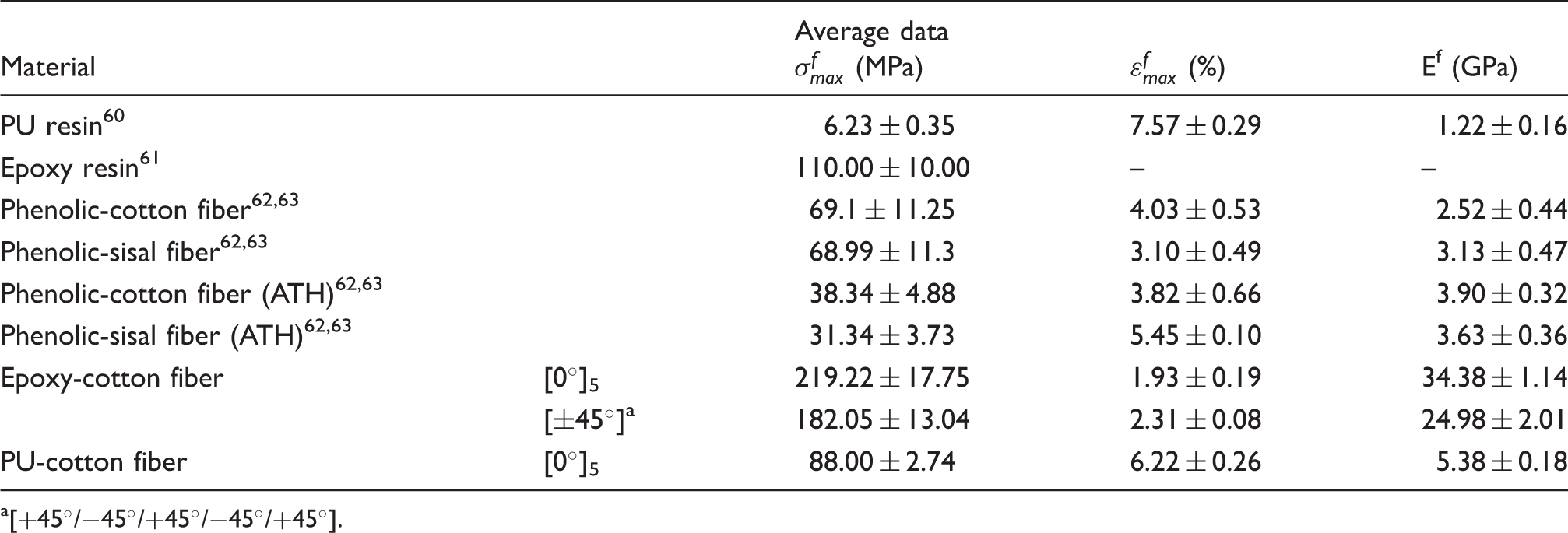
In Table 6, a comparison was shown between the investigated composites, epoxy and PU resin reinforced with long cotton fibers, and data published by the literature60–63 in terms of maximum flexural strength (
Results for fractography analysis
Micrographs with a magnification up to 1200× were obtained for the epoxy reinforced with glass fibers as shown in Figure 10. As observed, there was good fiber–matrix adhesion, since it is possible to observe matrix resin adhered on the glass fibers. This is due to the fact that the fibers used in the manufacture of the composites are treated with silane. This type of treatment induces chemical reactions between fiber and polymer matrix, which provides better adhesion, improving the values of tensile and flexural strength.
Epoxy laminates reinforced with glass fibers oriented at 0°, 90° and ± 45° (from left to right).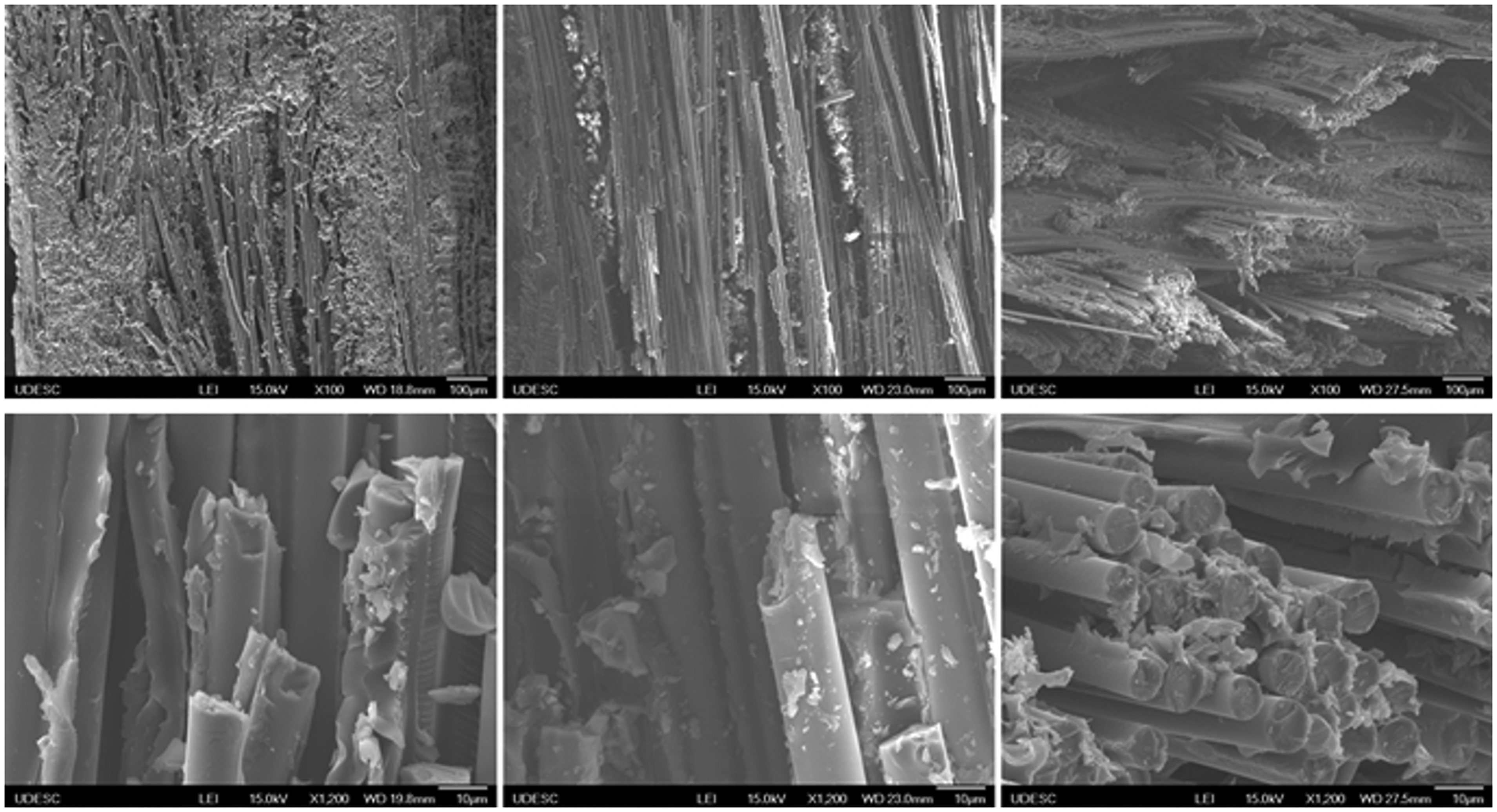
In Figure 11, it is observed that the SEM images obtained from epoxy laminates reinforced with cotton fibers at 0°, 90°, and +/−45°, which were enlarged up to 1200×. First, it is verified that the cotton fibers are not neatly oriented. Unlike glass fiber-reinforced composites, the composites reinforced with cotton fibers were not subjected to any surface treatment process. Therefore, almost no fiber–matrix interaction could be inferred, since there is no visible presence of matrix resin adhered on the fibers. Additionally, it is possible to notice voids, which denote the pull-out effect of the fibers, showing the absence of fiber–matrix adhesion.
Epoxy laminates reinforced with cotton fibers oriented at 0°, 90° and ± 45° (from left to right).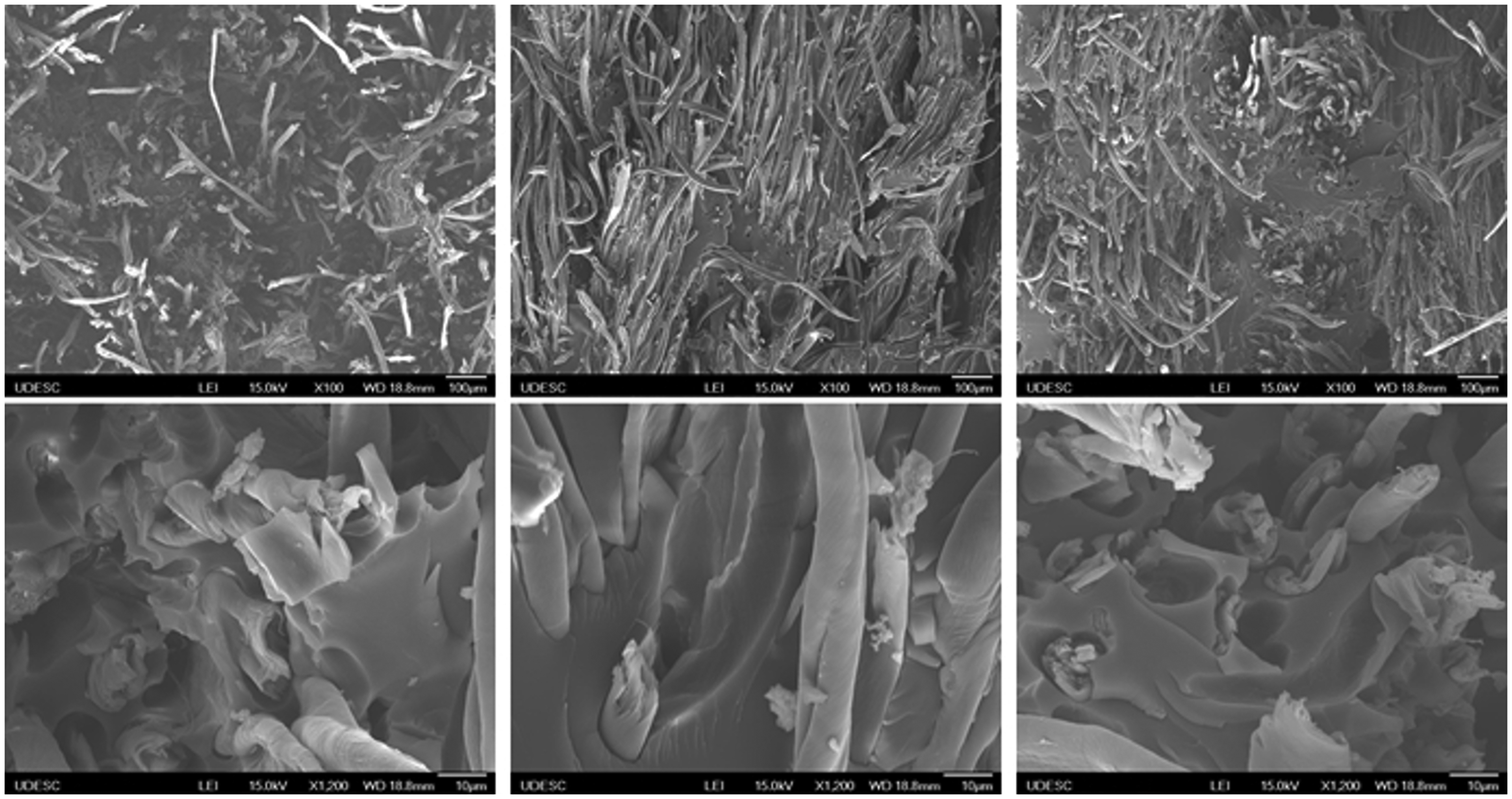
From the SEM images performed on PU laminates reinforced with glass fibers at 0°, 90° and +/−45° (Figure 12), similar behavior was shown by the laminates manufactured from epoxy resin, i.e. the effect of surface treatment of the fibers that allows a large quantity of matrix resin around the fibers, demonstrating a good interaction between fiber and matrix.
PU laminates reinforced with glass fibers oriented at 0°, 90° and ± 45° (from left to right).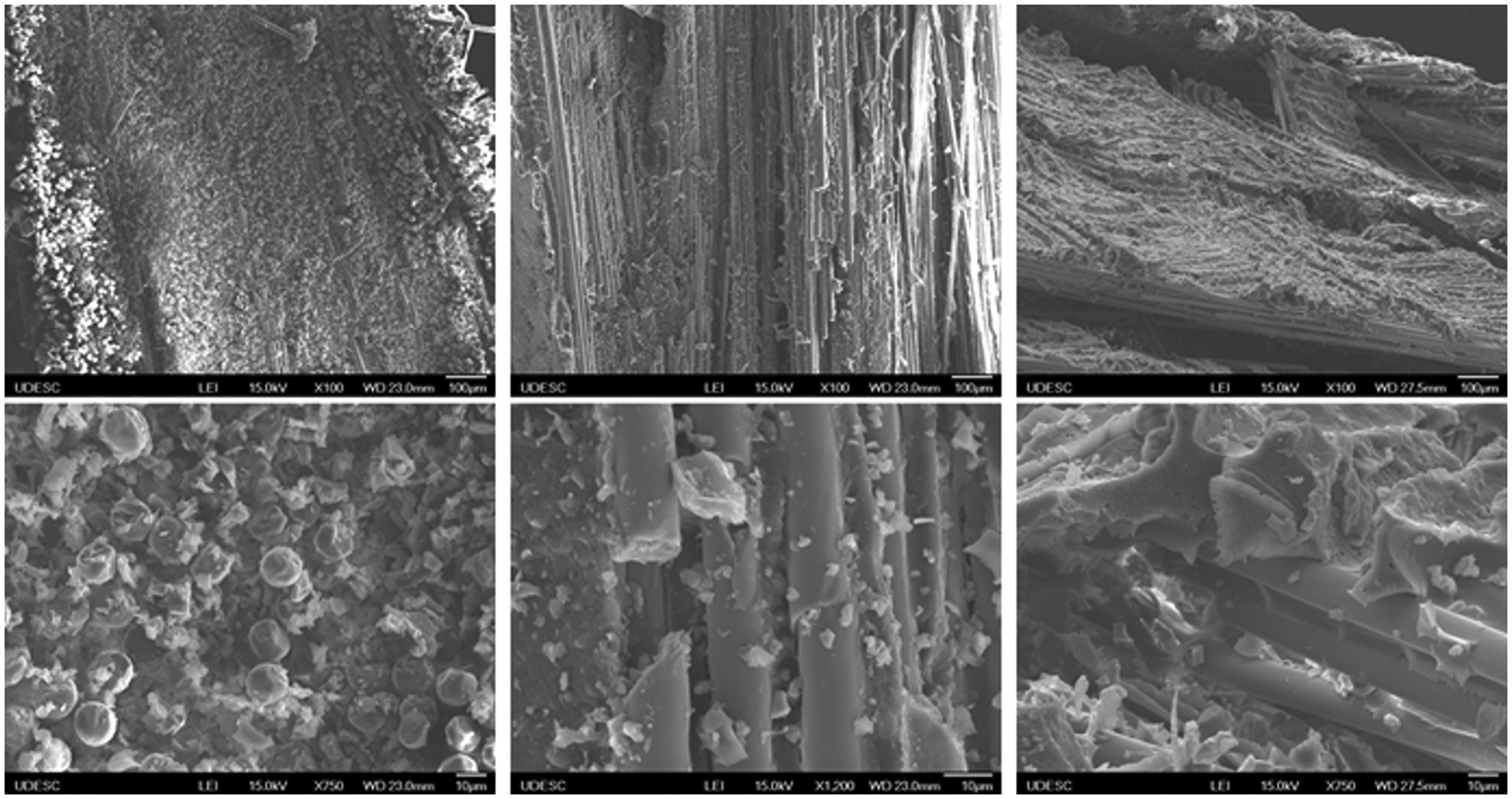
Figure 13 shows the SEM images obtained from the PU composites reinforced with cotton fibers. Again, for cotton fibers, it is verified that few resin remnants on the reinforcements, emphasizing the need for a superficial treatment for them. In addition, in the images increased by 350×, it was shown that the fibers were easily pulled out from the matrix, demonstrating a weak fiber–matrix interaction.
PU laminates reinforced with cotton fibers oriented at 0°.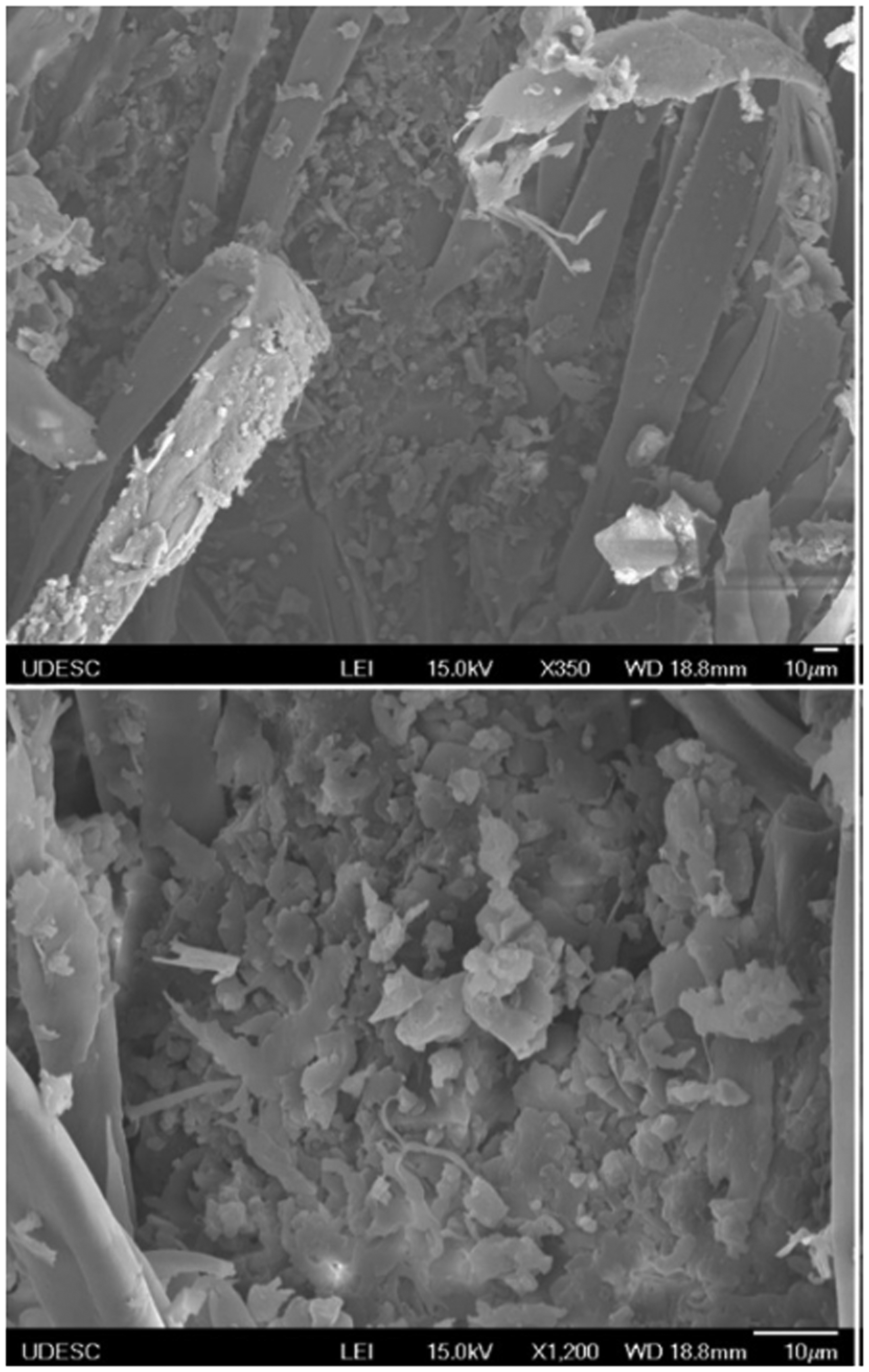
Results for dynamic testing
Modal analysis based on experimental data and the Polymax method was performed to obtain the natural frequencies, damping factors, and the respective mode shapes of the specimens. In the present work, the first six natural frequencies were obtained until 4096 Hz, and the respective mode shapes are shown by Figure 14.
First six flexural mode shapes: (a) 1st; (b) 2nd; (c) 3rd; (d) 4th; (e) 5th and (f) 6th flexural mode shape.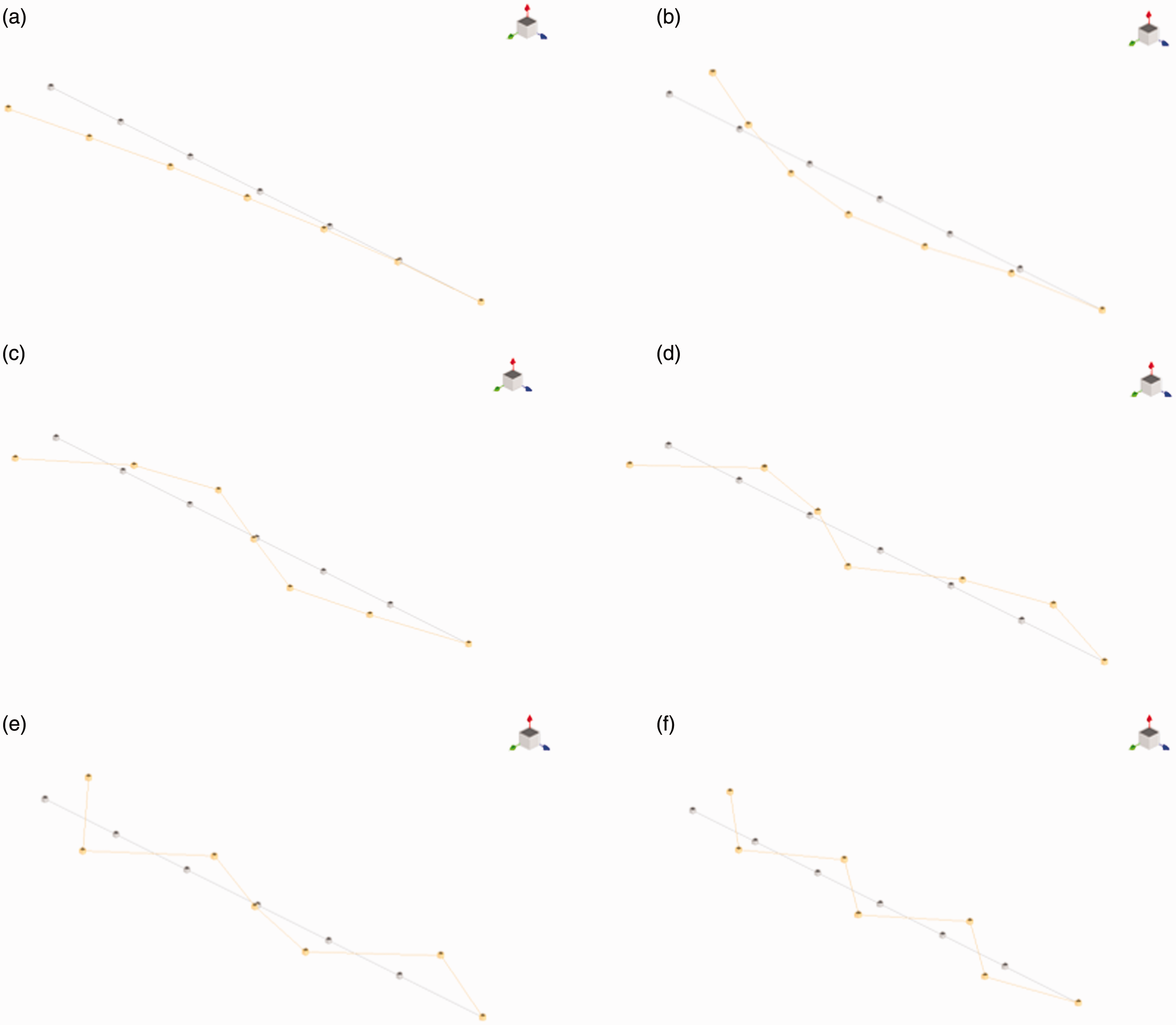
Natural frequencies obtained from dynamic testing.
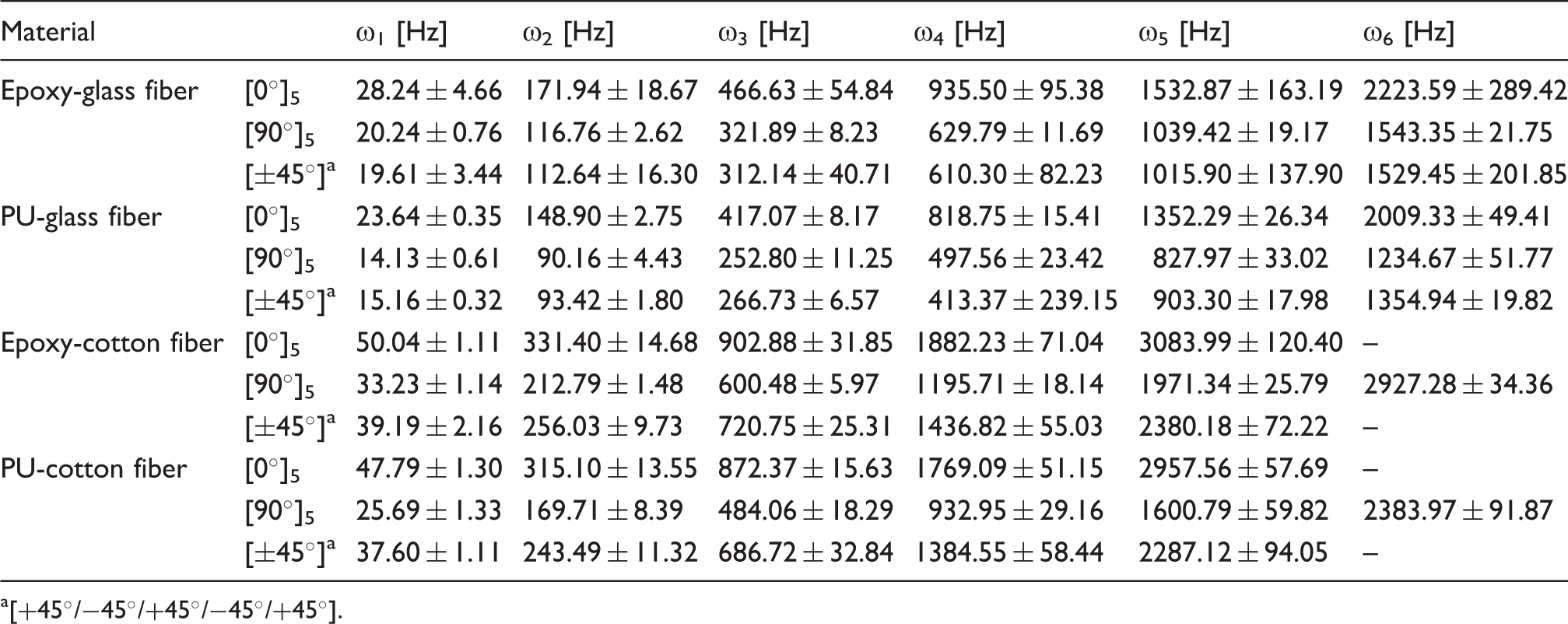
[+45°/−45°/+45°/−45°/+45°].
Damping factors obtained from dynamic testing.
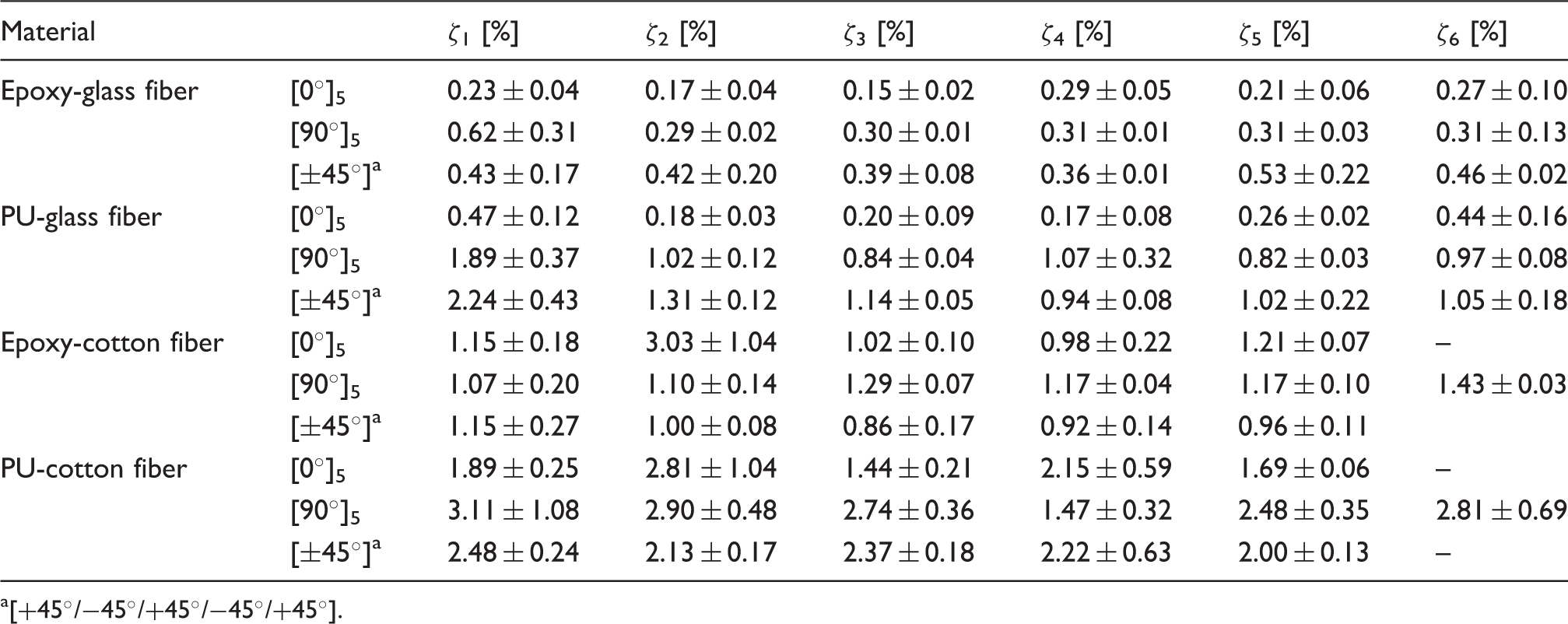
[+45°/−45°/+45°/−45°/+45°].
Based on dynamic experimental results presented by Table 8, the damping factors for composites made from PU resin reinforced with glass fibers are approximately 45.45% for [0°]5, 211.19% for [90°]5, and 200.22% for [+45°/−45°/+45°/−45°/+45°] higher than composites made from epoxy resin reinforced with glass fibers. In addition, PU composites are approximately 152.29% more damped (in average) than the epoxy ones. Regarding composite materials made from PU and epoxy resin reinforced with cotton fibers, the results show that the damping factors for the PU composites increased approximately 54.29% for [0°]5, 116.90% for [90°]5, and 130.24% for [+45°/−45°/+45°/−45°/+45°] when compared to the epoxy ones. In addition, the PU composites are approximately 101.50% more damped (in average) than the epoxy ones. This is very attractive for non-structural automotive and aeronautical applications in order to reduce noise and vibrations.
Conclusions
Static and dynamic testings of a novel eco-friendly composite, with three different stacking sequences ([0°]5, [90°]5 and [+45°/−45°/+45°/−45°/+45°]T), which is made of castor oil-base polyurethane reinforced with long cotton fibers, were performed and compared to other composite materials, such as PU reinforced with glass fibers, and epoxy reinforced by cotton and glass fibers.
Based on tensile results, PU resin tends to produce composites more ductile than the epoxy resin, mainly for reinforcing with cotton fibers. However, when reinforced with glass fibers at 0° and 90°, PU composites presented fragile behavior. As shown by Figures 5 and 6, the composites made with PU exhibit more ductile behavior than the epoxy resin composites for all the investigated stacks, except in the 0° oriented fibers reinforced laminate as shown by Figures 5(b) and 6(b), where the glass fibers drive the response. In Figure 5(b), the maximum strain values for PU composites are equal to or lower than epoxy composites. In other words, only when the glass fibers are 0° oriented, the PU composites change the behavior and present the lower values of maximum strain compared to epoxy composites. On the other hand, composites reinforced with cotton fibers exhibit much lower mechanical performance than the composites reinforced with glass fibers. Thus, the novel eco-friendly composite, PU reinforced with long cotton fibers, can be used in applications dominated by tensile loadings that require high deformation combined with low stiffness and strength.
Considering the three-point flexural results, PU resin reinforced with long cotton fibers exhibits the highest strain value again. In addition, it is observed that specimens of the novel eco-friendly composite have higher values of flexural modulus than phenolic resin reinforced with short cotton or sisal fibers, even for the specimens with alumina trihydrate (ATH). Considering the stiffness, strength and maximum strain values presented by the novel eco-friendly composite, it is possible to add ATH in this material, obtaining values of properties better than resin reinforced with short cotton or sisal fibers with ATH. In fact, this is very strategic for application on aeronautical structure, because it is possible to add ATH in the resin in order to have a material to overcome the requirements of flammability and, at the same time, improving their properties.
Regarding the fractography analysis, it was verified that there was no good fiber–matrix interaction in the composites reinforced with cotton fibers, since the specimens were not treated, facilitating the occurrence of pull-out. However, composites reinforced with glass fibers presented good fiber–matrix adhesion, since it is possible to observe matrix resin adhered on the reinforcements. On one hand, it is concluded that if the cotton fibers receive treatment, then this induces chemical reactions between fiber and polymer matrix, which provides better adhesion, improving the strength values of the composite materials. On the other hand, the usage of cotton fiber without treatment stimulates the application of raw materials, which is more adequate for eco-friendly purposes. Hence, considering the application, before using the cotton fiber composites, it is necessary to verify whether it required surface treatment or not on the reinforcements.
Based on the dynamic results, it is verified that the PU matrix specimens, mainly PU reinforced with long cotton fibers, are “more flexible” than the epoxy matrix specimens. And, analogous data are obtained for damping ratios. This shows that the novel eco-friendly composite has a high potential to be applied as secondary structures with non-structrual function in automotive and aeronautical applications for vibration reduction.
Finally, it is possible to conclude that this work presented a preliminary investigation of the feasibility of using cotton fibers to produce composite materials. Although there are some concerns regarding its lower mechanical performance than glass fiber composites, this natural reinforcement offers high potential to be applied in different areas, such as automotive and aeronautical applications. In fact, mainly for aeronautical applications, it is necessary to overcome the requirements for certification related to flammability and smoke. Therefore, the inclusion of retardant flame in the eco-friendly composite material needs to be more investigated in future works.
Footnotes
Acknowledgements
The authors are thankful to Poliquil® for kindly providing the castor oil to produce the PU resin.
Declaration of Conflicting Interests
The author(s) declared no potential conflicts of interest with respect to the research, authorship, and/or publication of this article.
Funding
The author(s) disclosed receipt of the following financial support for the research, authorship, and/or publication of this article: The authors acknowledge the financial support of the Sao Paulo State Research Foundation (FAPESP Grant: 2012/01047-8 and 2015/13844-8), Santa Catarina State Research and Innovation Foundation (FAPESC Grant: 2017TR1747). Coordination for the Improvement of the Higher Level Personnel (CAPES Grant: 011214/2013-09) and National Council for Scientific and Technological Development (CNPq Grant: 141441/2014-3, 428591/2016-7 and 310656/2018-4).
