






Abstract
Fibrous textiles are subjected to dry through-thickness compaction during most of the composites manufacturing processes. Usual tow models implemented in textile numerical simulations do not reproduce the tow widening occurring during the compaction. Nonetheless, this widening (that can reach 10%) would influence the internal microstructure of the considered fabric and its mechanical behavior. This paper proposes a simple mechanical approach to reproduce the width and thickness evolutions experimentally measured during through-thickness compaction of E-glass and carbon tows. Once the material parameters identified on laterally free tows, the tow cross-section model is employed to study the influence of the tow lateral confinement on the transverse mechanical behavior of its corresponding quasi-unidirectional fabric. It is observed that the lateral confinement depends on the quasi-unidirectional stitch tension. This confinement induces a densification of the tows leading to a stiffening of the quasi-unidirectional transverse behavior. This stiffening is well predicted by the proposed modeling approach.
Introduction and previous work
During dry composite manufacturing processes (RTM, C-RTM, infusion), the fibrous material is impregnated by a liquid resin after being compacted during mold closing or vacuum setting. This through-thickness compaction of dry fabrics has been extensively studied over the last decades at macroscopic scale: experimental characterizations have been conducted on woven fabrics,1–4 quasi unidirectional non-crimp fabrics (NCF; quasi-UD NCF)5,6 or mats 7 and models have been developed to predict the fiber volume fraction V f and the stack thickness evolutions with the applied pressure.8–11 When quasi-UD or woven fabrics are considered for structural applications, the microstructure i.e. tows size and spatial distribution within the fabric, is of primary interest as it impacts the pore size and tortuosity and thus the overall in-plane and out-of-plane fabric permeabilities,12–15 as well as the mechanical properties of the final composite part (failure initiation 16 and crack propagation).
It fueled the interest in predicting the textile mechanical behavior during compaction from the initial textile architecture and the tow mechanical behavior. The textile architecture is numerically generated either from a software (TexGen17,18), a 3D image19,20 or from geometrical considerations. 11 Constitutive tows can be either viewed as a continuum material or as a collection of fibers. For a continuum formulation, classical solid mechanics can be applied and most models are derived in the framework of hypoelasticity 17 and hyperelasticity, 21 or empirically fitted, for example with power law functions. 22 If tows are described as a collection of fibers, most models are based on fiber distances 23 or fiber-fiber friction. 24
To the author's knowledge, the multi-chain digital element model (based on fiber-fiber friction) proposed by Zhou et al. 24 is the only one that predicts the tows widening occurring during through-thickness compaction. 25 However, this tow widening can experimentally reach 10%23,26 and has been observed during both single tow compaction18,23,26 and plain woven fabric compaction. 25 It is therefore of interest to provide a simple mechanical model that predicts both the width and thickness change experienced by tows during through-thickness compaction.
Additionally, the internal microstructure and transverse mechanical behavior of fabrics are affected by tow widening, as highlighted by Vallons et al. 6 who studied the influence of the stitching pattern on the microstructure and the transverse mechanical behavior of E-glass NCFs. The quasi-UD stitch pattern seems to modify locally the lateral confinement of its constitutive tows and thus the overall fabric transverse mechanical behavior. Therefore, it is of great interest to propose a first investigation of the constitutive tow lateral confinement influence on the mechanical response of quasi-UDs subjected to through-thickness compaction.
Objectives and content of the study
The main objectives of the study are threefold:
quantify the width and thickness evolutions of dry single tows and quasi-UDs during through-thickness compaction, propose a 2D continuum mechanical model that reproduces both the lateral and the transverse behaviors of E-glass and carbon tows, predict a transverse mechanical behavior range for quasi-UDs based on the transverse behavior of their respective tows and their lateral confinement.
Experiments are conducted to monitor both the width and the thickness evolutions of E-glass and carbon tows and their corresponding quasi-UDs when subjected to through-thickness compaction. The designed setup and developed post-processing methods are first pointed out and experimental results are discussed. Then, a simple continuum mechanical approach is proposed to reproduce the lateral and transverse evolutions of tows. Two lateral boundary conditions (free edge condition that allows tow widening and confined edge condition that prevents tows from widening) are considered and expressed analytically. The material parameters of the obtained 2D constitutive model are selected to best fit the experimental behavior of laterally free carbon and E-glass tows. Finally, a novel comparison is proposed between the predicted behavior of laterally confined carbon and E-glass tows on one side and the experimental behavior of carbon and E-glass quasi-UDs on the other side.
Materials of the study
Fabrics
One carbon quasi-unidirectional woven fabric and two E-glass quasi-UD NCF have been selected for the study. The highly unbalanced carbon quasi-UD (named UD-C) provided by Chomarat has a total areal weight of 687
Tows
Specifications of the studied fibrous materials (fabrics and tows).
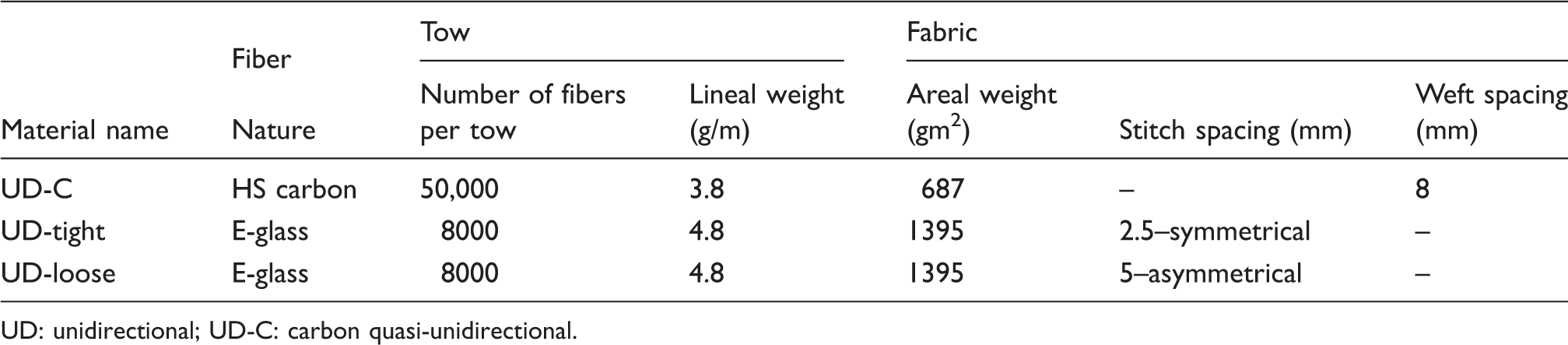
UD: unidirectional; UD-C: carbon quasi-unidirectional.
Experimental setup and methods
The specific setup and experimental protocol developed to quantify the width and thickness evolutions of fibrous samples during compaction are presented hereafter. Mechanical variables (extensions and stress) are also defined to compare the results obtained on carbon and E-glass tows and quasi-UDs.
Setup
A compression device has been specially designed to apply uniaxial transverse compression (z-direction) on tows or fabrics under a chromatic confocal scanner (CCS), which measures the width and thickness of the fibrous sample (Figure 1). It is composed of a micrometric compact lab jack through which vertical displacements (z-direction) are applied, a 2 kN cell force, a bottom mobile steel platen, and a top PMMA plate, bonded to a steel frame. Calibration of this setup and more details are presented by Dharmalingam et al.
26
Measurement principle with the CCS and typical data obtained (yz profiles, thickness h and width w) with tows at a given x-position and force level.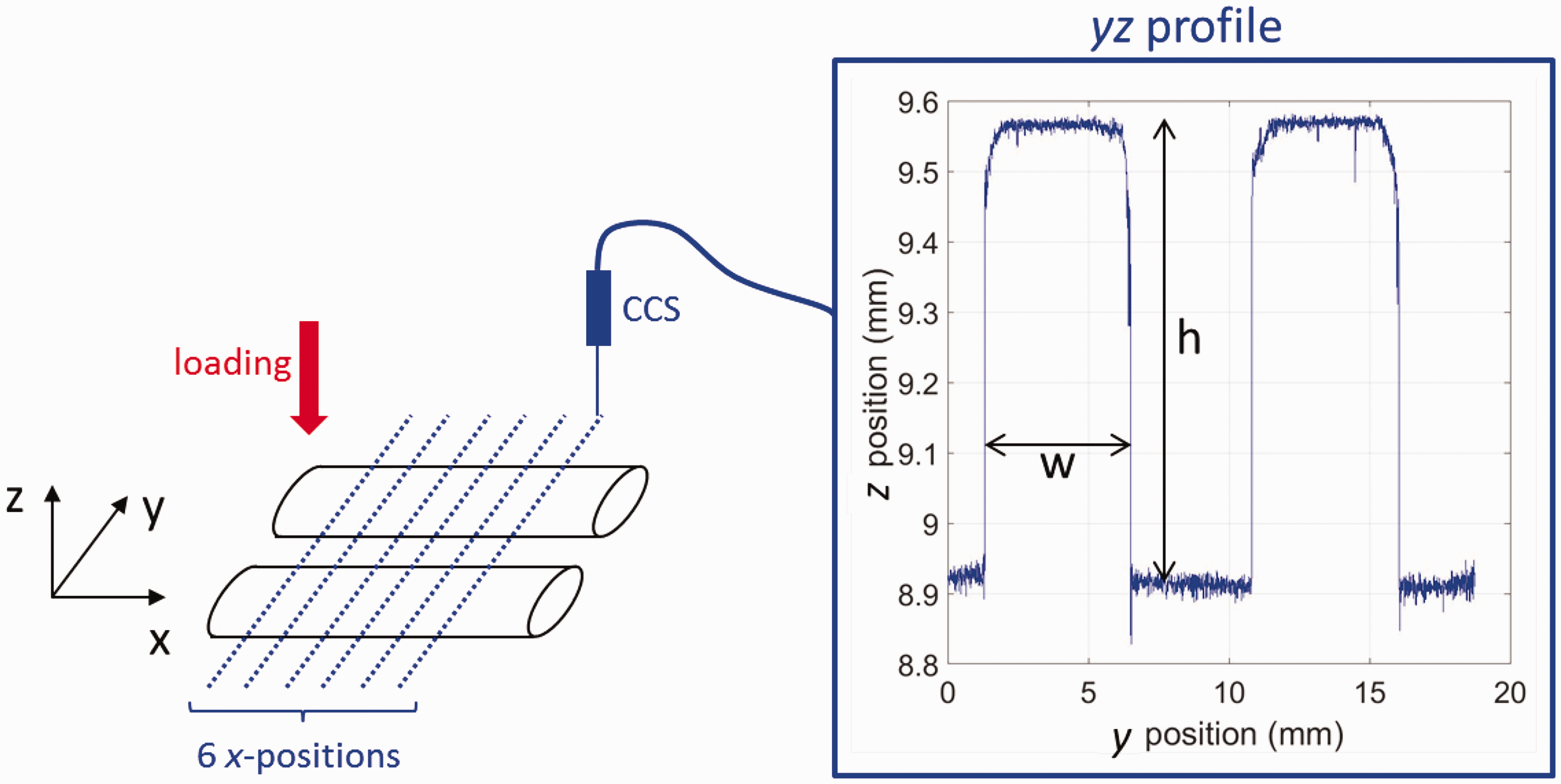
Experimental protocol
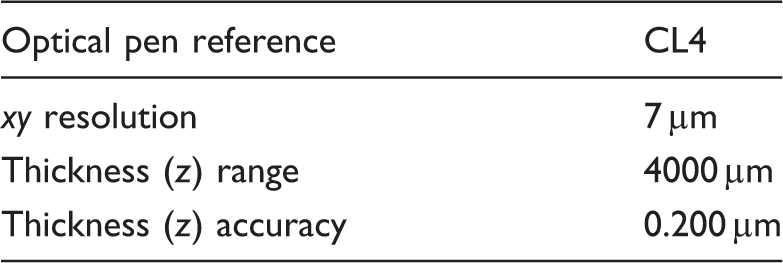
Specifications of the optical pen used to acquire yz profiles of tows and quasi-UDs.
Tests have been carried out on tows and fabrics according to this experimental protocol. No additional tensile force along the x-axis has been added to the ends of the considered fibrous sample. For tow tests, 2 tows of 70 mm length are laid down on the cavity. For fabric tests, a sample composed of 3 tows of 46.5 mm length is placed on the platen and tape is added at the lateral edges (x-direction, as highlighted in Figure 2) to maintain the tension in the stitch (UD-tight and UD-loose) or in the weft E-glass tows (UD-C). The sample length for fabric has been reduced to avoid the bench to bend and keep an equivalent surface of contact between the top PMMA plate and the sample (around two times 70 × 3.5 mm2 for a tow test and around three times 46.5 × 3.5 mm2 for a fabric test). Each test is repeated twice.
Boundary conditions applied for fabric tests: free ends and tape to maintain the stitch or weft tow tension.
Definition of the mechanical variables
Throughout the rest of this study, the fibrous sample cross-sections are considered rectangular and a uniform stress state is assumed along the thickness of the sample (z-direction).
The 6 yz profiles recorded at each force level F allow the determination of the averaged thickness h and width w of the scanned sample. Large strain extensions are defined


The Cauchy stress component in the transverse direction σ
z
is defined as
Typical stress-extension response during dry compaction: (a) evolution of the sample thickness extension (λ
z
), (b) evolution of the sample width extension (λ
y
), and (c) visualization of the corresponding sample cross-section.

Experimental results and analysis
With the mechanical variables defined in the previous section, the experimental data obtained are first analyzed for carbon and E-glass tows and then for carbon and E-glass quasi-UDs. Although the experimental data were recorded over 6 x-positions, the presence of stitch (UD-tight and UD-loose) or weft E-glass tows (UD-C) can lead to inaccurate width detection at 1 or 2 x-positions. Therefore, in the following, it is indicated that the width and thickness evolutions are averaged over at least 4 x-positions.
Carbon and E-glass tows: repeatability
Three carbon tows have been subjected to transverse compaction with the developed setup and the width and thickness evolutions have been averaged over at least 4 x-positions along the tows. The resulting transverse (Figure 4(a)) and lateral (Figure 4(b)) behaviors are repeatable and consistent: for a given transverse stress σ
z
of 0.1 MPa, the carbon tow thickness reduces by 37 ± 3% whereas width increases by 8.5 ± 1%. Additionally, four E-glass tows extracted from UD-loose have been subjected to transverse compaction. Again, the resulting transverse (Figure 5(a)) and lateral (Figure 5(b)) behaviors are consistent: E-glass tows widen when subjected to transverse compaction (for σ
z
, the thickness reduces by 40 ± 5% whereas width increases by 9 ± 3%). E-glass results are less repeatable than the carbon ones: it could be explained by the fact that an E-glass tow results from the assembly of two sub-tows whereas a carbon tow is made from a single tow. The constitutive element (i.e. tow) of carbon quasi-UD proves to be therefore more mechanically stable than the constitutive element of E-glass quasi-UD NCFs.
Compaction of carbon tow (extracted from UD-C): stress versus transverse (a) and lateral (b) strain extensions. Red points represent the raw data recorded along the longitudinal x-axis of the tow. Compaction of E-glass tow (extracted from UD-loose): stress versus transverse (a) and lateral (b) strain extensions. Red points represent the raw data recorded along the longitudinal x-axis of the tow.

The behaviors of both the carbon and E-glass constitutive tows are averaged from now on in the following sections for clarity.
Carbon quasi-UD: stiffening of the transverse behavior
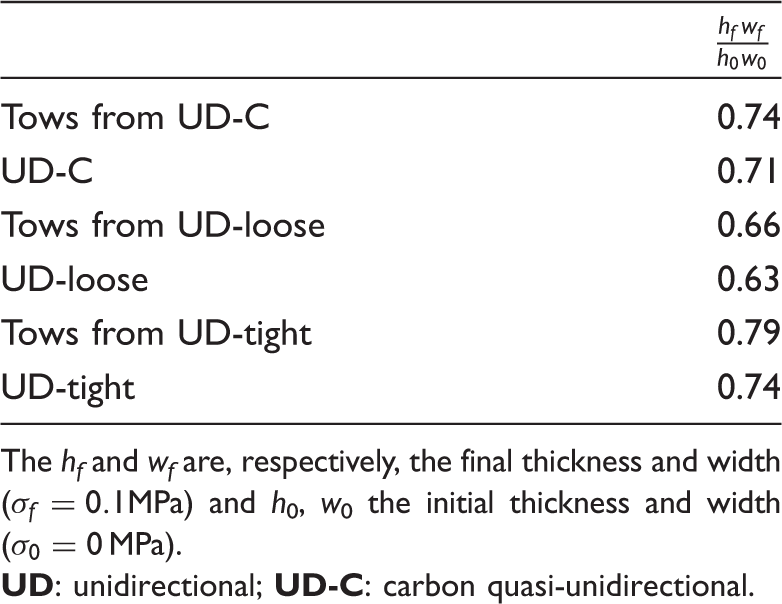
Two samples of carbon quasi-UD have been subjected to compaction and both the transverse and the lateral evolutions (averaged over at least 4 x-positions) are repeatable (Figure 6). The transverse behavior of the quasi-UDs is significantly stiffer than the one of the constitutive carbon tows (Figure 6(a)). Indeed, single tows, that are laterally free, significantly widen during compaction (8.5 ± 1% at 0.1 MPa) whereas tows inside the quasi-UDs, that are partially laterally confined, (the width of the quasi-UD increase only by 2 ± 0.8% at 0.1 MPa, Figure 6(b)) densify. This densification of the quasi-UD, mainly due to the presence of the weft E-glass tows that confine laterally the carbon constitutive tows, induces a stiffening of the transverse behavior. Table 3 highlights sample cross-sections evolution while subjected to transverse compaction. It confirms that the fabric UD-C densify more than its respective carbon tow. The reader should refer to Dharmalingam et al.
26
for details concerning densification (compressibility) and flattening (incompressibility).
Compaction of UD-C (in green) and its corresponding constitutive tows (in black): stress versus transverse (a) and lateral (b) strain extensions. (For interpretation of the references to color in this figure legend, the reader is referred to the web version of this article.) Evolution of the tow and fabric cross-sections while subjected to transverse compaction. The h
f
and w
f
are, respectively, the final thickness and width (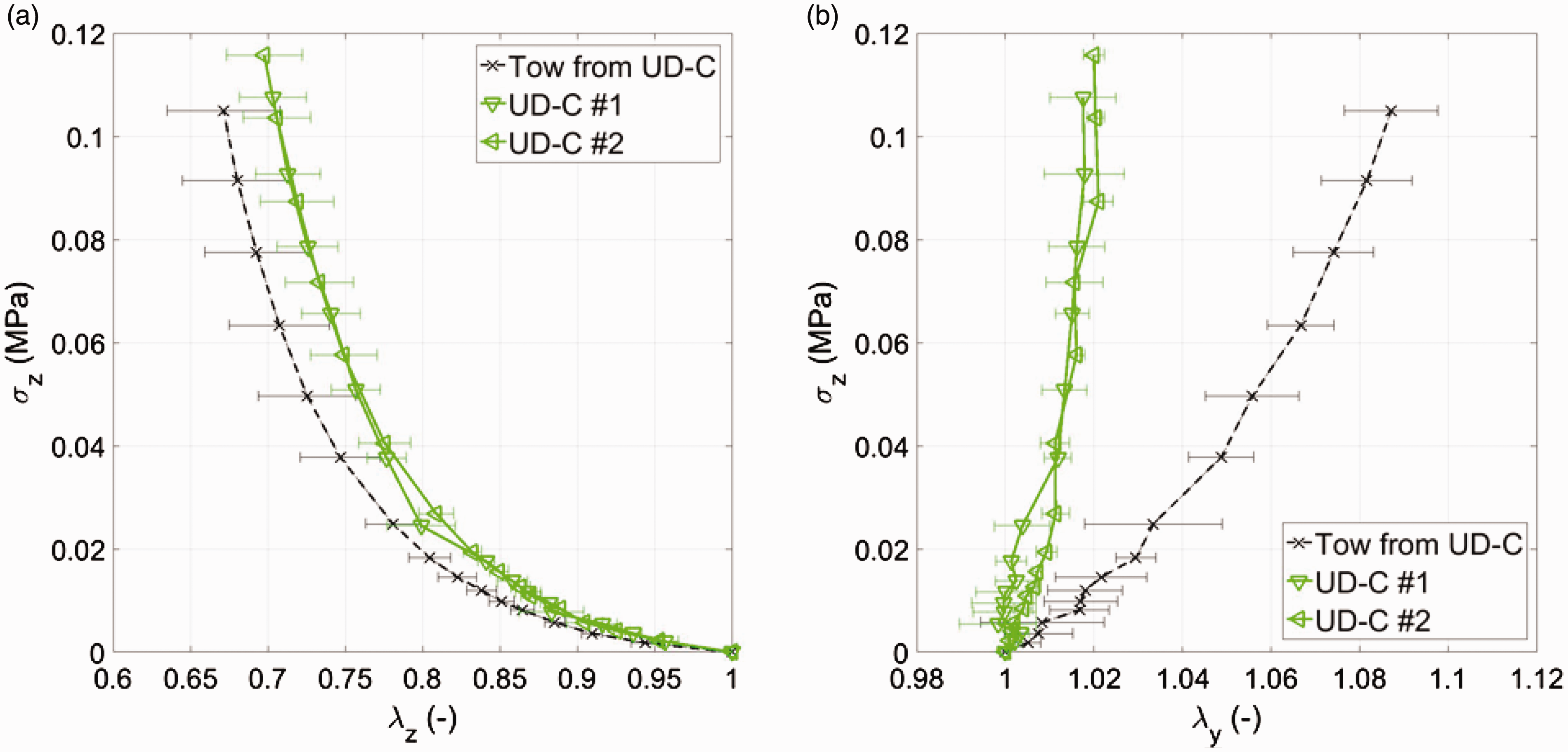
E-glass quasi-UDs: influence of the stitch
The UD-loose transverse behavior (Figure 7(a)) is similar to the transverse behavior of its constitutive E-glass tows whereas the UD-loose lateral extension remains lower than the lateral extension of its constitutive E-glass tows (Figure 7(b)). The UD-loose lateral evolution, difficult to capture due to the weft backing E-glass layer oriented at ± 80°, might be lower than the single tow lateral evolution due to side effects. Actually, no transverse stiffening of the UD-loose (compared to tows extracted from UD-loose) is recorded during the compaction: therefore, the E-glass tows inside the UD-loose are expected to widen. Indeed, the loose stitch allows tows widening within the inter-tow channels during the compaction, as highlighted in Figure 8(a) where inter-tows channels are hard to distinguish.
Compaction of UD-loose (in green) and UD-tight (in red) and their corresponding constitutive tows (in black): stress versus transverse (a) and lateral (b) strain extensions. (For interpretation of the references to color in this figure legend, the reader is referred to the web version of this article.) Microstructure recorded with X-ray Computed Tomography scan under vacuum (0.094 MPa, see Hemmer et al.
28
for more details): (a) UD-loose with small inter-tow channels (highlighted in green) and (b) UD-tight with large inter-tow channels (highlighted in red). (For interpretation of the references to color in this figure legend, the reader is referred to the web version of this article.)
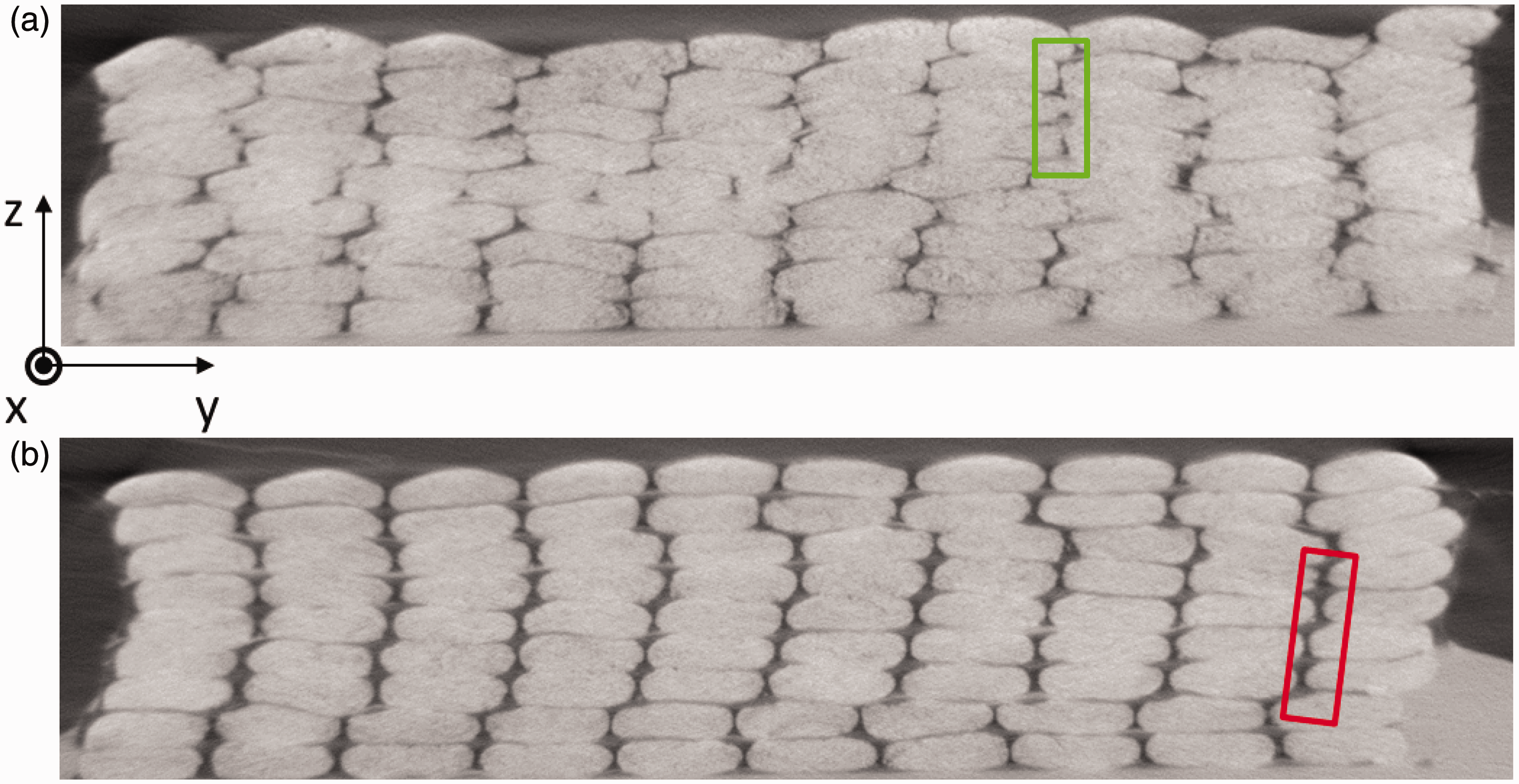
The transverse behavior of the UD-tight (Figure 7(a)) is significantly stiffer compared to the transverse behavior of the UD-loose whereas the total lateral extension of the UD-tight is slightly lower than the lateral extension of the UD-loose. A transverse stiffening (compared to the constitutive tows UD-loose) is recorded during the compaction: therefore the E-glass tows inside the UD-tight densify rather than widen, as highlighted in Figure 8(b) where the inter-tows channels remain large. The stitch seems tight enough to partially confine laterally the tows inside the UD-tight. Moreover, the densification difference between tows extracted from UD-tight and UD-tight is larger than the one between tows extracted from UD-loose and UD-loose (Table 3).
Initial thickness (h0) and width (w0) of E-glass tows extracted from UD-tight and UD-loose.
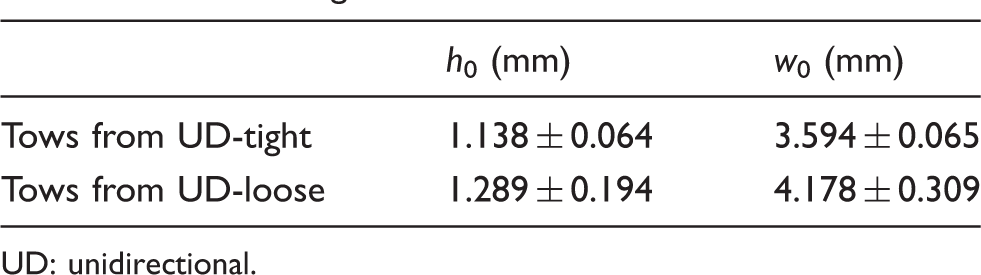
UD: unidirectional.
Experimental conclusions
The transverse and lateral mechanical behaviors of tows and quasi-UDs have been investigated. The studied carbon and E-glass tows exhibit a significant widening under transverse compaction when extracted from their corresponding quasi-UDs. These experimental results are in good agreement with the one obtained on single tows. 26 Nonetheless, the stitching process seems to modify intrinsically the E-glass tows and thus their corresponding transverse behavior.
Finally, the lateral confinement of tows that are inside a quasi-UD seems to depend on the stitch or the weft tow tension. This confinement induces a densification of the tows, leading thus to a stiffening of the corresponding quasi-UD transverse behavior.
A simple 2D constitutive equation for tow cross-section
Accounting for the previous experimental results, the response of single tows during transverse compaction is revealed non-linear and highly compressible. Moreover, the influence of the lateral confinement on the transverse behavior has also been highlighted. In order to reproduce this response of the tow cross-section, a simple continuum mechanical approach is proposed in the present section. In the following, the material is considered homogeneous and transversally isotropic with respect to the fiber direction.
Isotropic large strain compressible elasticity
Recently, some authors propose to consider large strain hyperelastic models as the basis for the development of constitutive equations for tows during compaction. 29 Such models, initially developed for elastomers that are considered incompressible, 30 have been extended in various manner to consider the compressible response of elastomers in specific conditions, of foam rubbers, or of biological tissues.20,31
Here, a one-term Ogden-Hill constitutive equation is considered and defined by the following strain energy density, defined per unit of undeformed volume
μ is the shear modulus, α induces the non-linear response as proposed by Seth,
32
and β drives the compressible response.
The first term in the right-hand side of equation (4) was proposed by Ogden, 33 and the second one by Hill 34 inspired by the proposal of Blatz and Ko for foam rubbers. 35 For a more general formulation of the Ogden-Hill approach, the reader can refer to the work of Jemiolo and Turteltaub. 36 Finally, it is to be noted that the material parameter μ is defined differently than in the above-mentioned papers: it corresponds to the definition of the “Hyperfoam” model implemented in the commercial software Abaqus and considered for example by Berezvai and Kossa. 37
Once the strain energy density function defined in terms of the principal stretch ratios, the principal true (Cauchy) stresses 
After basic algebraic manipulations, these principal stress reduces to

Inextensibility of fibers
The first method to consider the high stiffness in the fibers direction would consist in adopting a transversely isotropic hyperelastic constitutive equation. 39
The aim of the present derivation is to propose a simple model to reproduce the response of the tow cross-section. Thus, it is possible to derive the corresponding 2D constitutive equation in a simpler manner. x is the fiber direction as depicted in Figure 9(a).
Representation of the 3D (a) and resulting 2D (b) mechanical problem.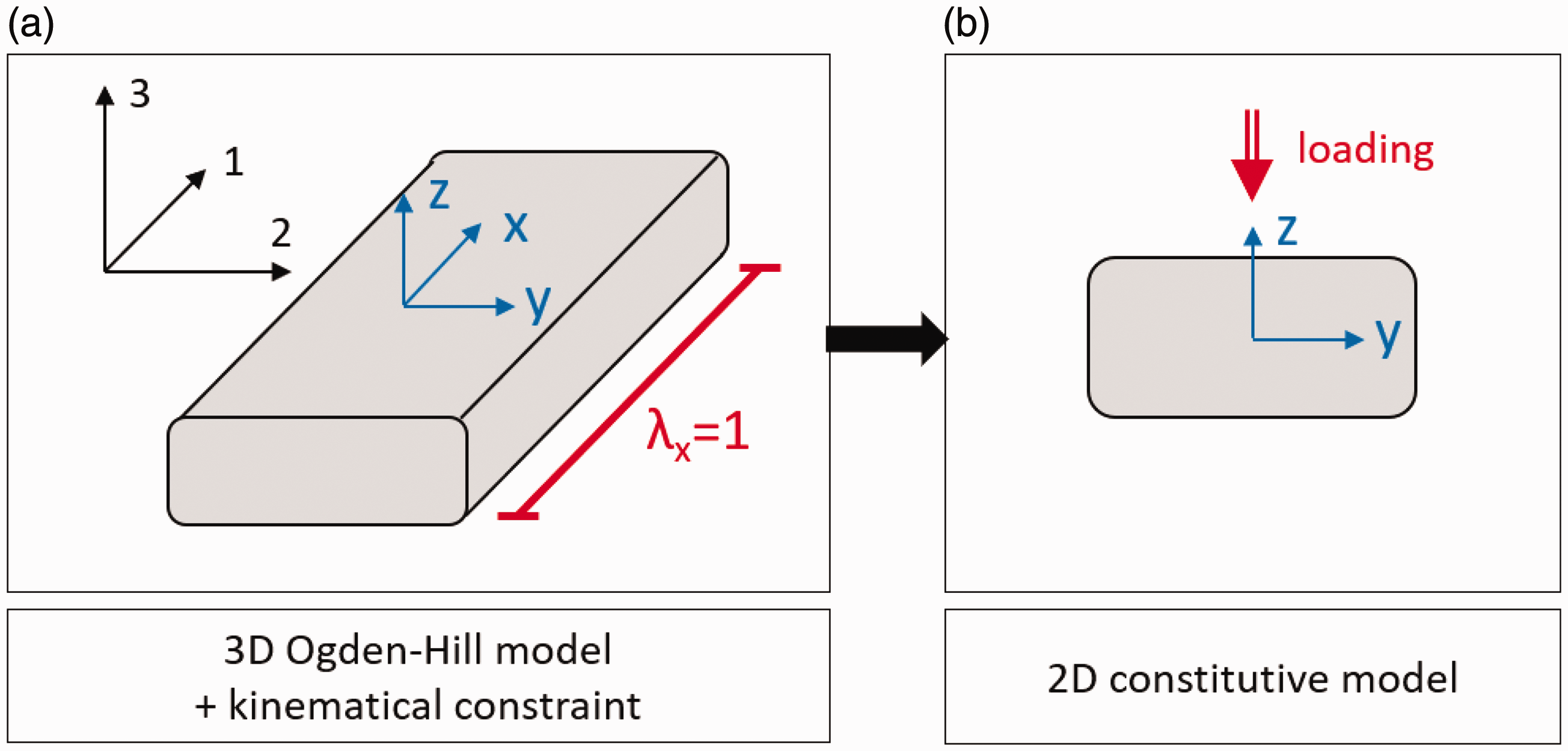
First, only deformation processes that maintain this direction unchanged are considered: x is a principal direction of the deformation and the corresponding stretch ratio is denoted λ
x
. Second, the fibers are considered inextensible. These two assumptions summarizes in the following internal constraint

Nevertheless, such a constraint impacts the derivation of the stresses. Indeed, it exist an additional stress γ in the x-direction such that equation (5) becomes

This additional stress does not depend on the material but on the given mechanical problem. From a theoretical point of view, it plays the same role as the hydrostatic pressure for incompressible materials; for more details, the interested reader can refer to the work of Truesdell and Noll 40 (p. 69).
Finally, denoting λ
y
and λ
z
the principal stretch ratios in the tow cross-section, and considering equations (6) to (8), the principal true stresses are



In the following, the experimental data recorded on tows will be used to determine the model parameters. Therefore, it will be assumed that the mechanical response of the tow is homogeneous along the fibers (x-direction). Moreover, as shown in Figure 9(b), the experimental loading directions always correspond to the principal directions of deformation and the friction is assumed negligible between the fibrous sample and the experimental device (no shear). Indeed, only the set of equations (10) and (11) will be considered and referred to as the “2D constitutive model” for sake of simplicity.
Two special cases: laterally free and confined boundary conditions
Two set of boundary conditions are now examined: laterally free and confined tow. They are depicted in Figure 10(a) and (b), respectively, where tow cross-sections are still assumed rectangular.
Cross-section of a single tow subjected to transverse compaction: (a) laterally free boundary condition and (b) laterally confined boundary condition. In the former case, the tow is free to expand in the y-direction such that 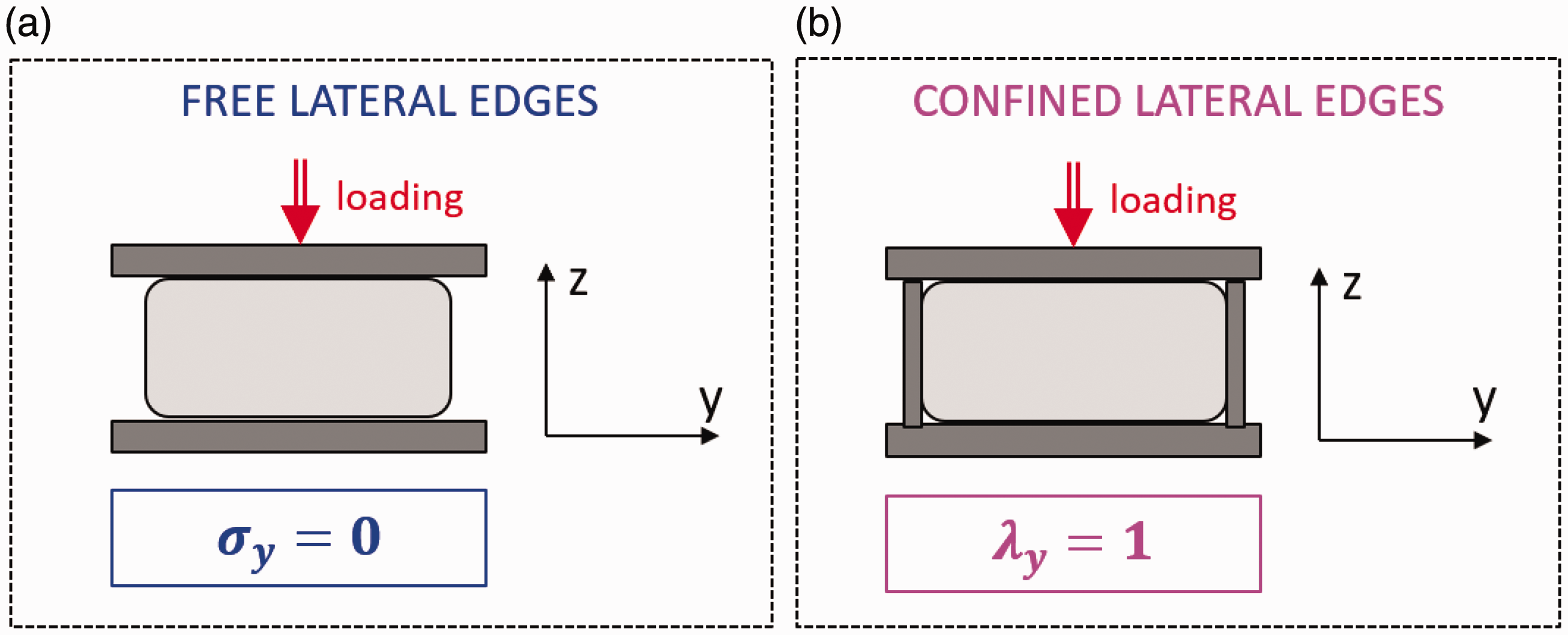
Note that the corresponding lateral stretch ratio is


Modeling results and analysis
The 2D constitutive model is used here to propose a novel investigation of the lateral confinement influence on the transverse mechanical behavior of tows subjected to compaction. First, the material parameters are identified by fitting the laterally free analytical solution (equation (12)) with the experimental data recorded on tows. Then, the influence of the boundary conditions on the transverse mechanical behavior is investigated by keeping the same material parameters. Finally, still keeping the same material parameters, the laterally confined analytical predicted solution (equation (14)) is compared to the experimental data recorded on quasi-UDs, where tows are partially laterally confined.
Identification: material parameters and sensitivity
The material parameters μ, α, β have been obtained with the following fitting procedure:
(a) β is computed using equation (13). As its value varies during the transverse compaction experiments, its maximal value has been selected to best fit the large lateral deformations undergone by tows. (b) Once β selected, a constrained non-linear fit is carried out using equation (12), where
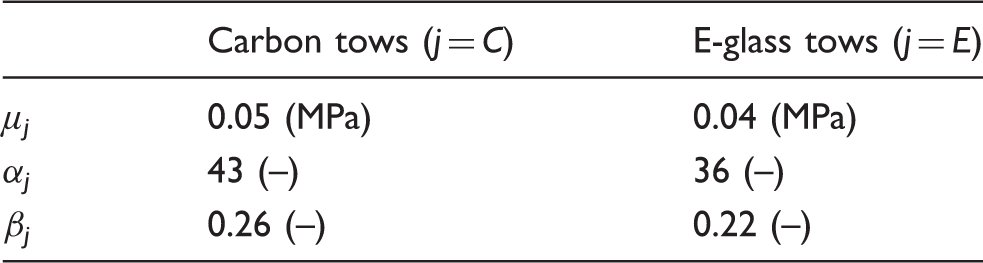
The values obtained for carbon and E-glass tows are reported in Table 5. The model curve obtained with the carbon material parameters fits well with the experimental transverse behavior (Figure 11(a)) whereas the lateral behavior fitting appears improvable (Figure 11(b)). The influence of the selected value of β is thus investigated and confirms that the highest value of β ensures a better fit with the large lateral deformations (Figure 11(b)). The obtained material parameters (Table 5) remain unchanged for the rest of the study.
Comparison between the experimental and the modeled carbon (laterally free) tow behavior and visualization of β selection impact: stress versus transverse (a) and lateral (b) strain extensions. Materials parameters of the constitutive model for carbon and E-glass tows.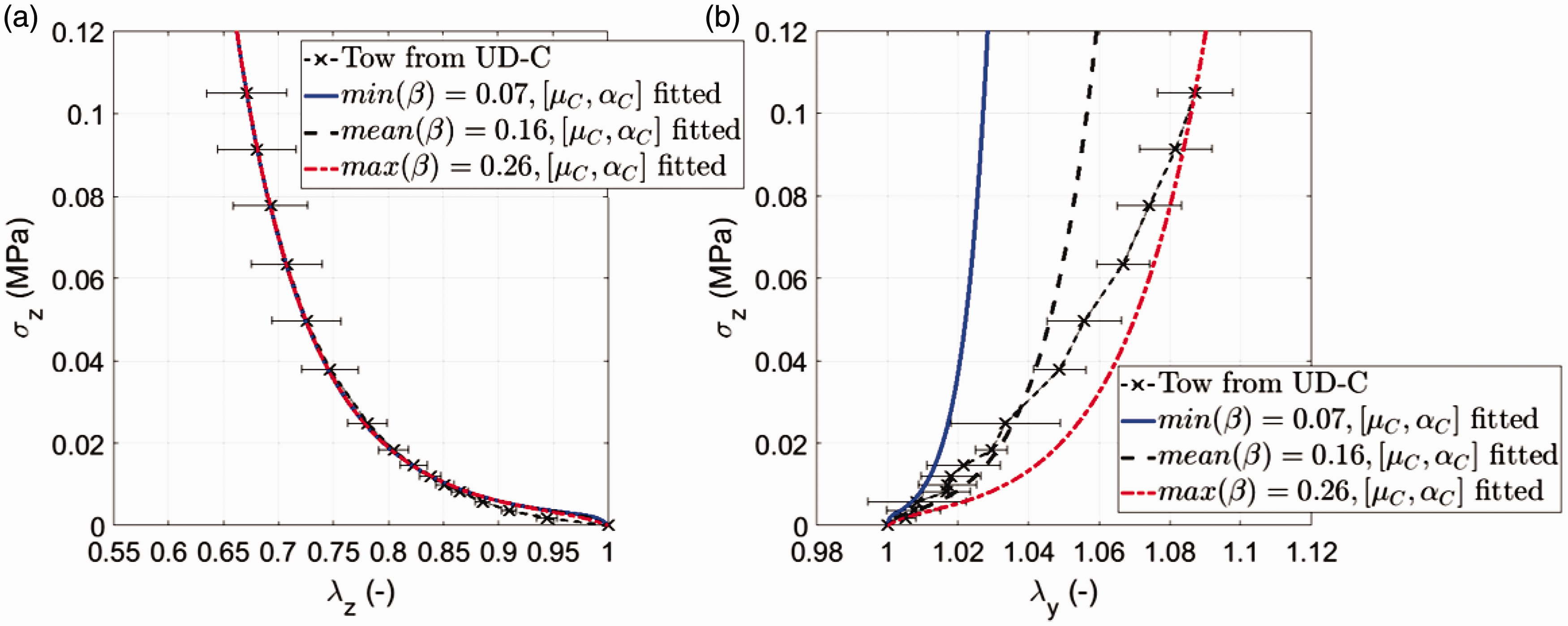
Prediction: boundary conditions influence
Figure 12 presents the experimental results obtained during the compaction of carbon tows, the fitted laterally free constitutive model (equation (12)) and the predicted laterally confined constitutive model (obtained with equation (14) and the carbon material parameters in Table 5). As expected, the confined tow width remains constant during the compaction (λ
y
= 1 in Figure 12(b)). This lateral confinement induces a stiffening of the transverse behavior (Figure 12(a)) the modeled confined tow cannot widen during the compaction and thus densifies. This densification has been previously observed in the experimental behavior of quasi-UDs. A comparison between the predicted confined tow and the experimental quasi-UDs mechanical behaviors is thus proposed in the following section.
Experimental data recorded on carbon tows (in black) and the corresponding laterally free (in blue) and laterally confined (in pink) modeled behaviors: stress versus transverse (a) and lateral (b) strain extensions. (For interpretation of the references to color in this figure legend, the reader is referred to the web version of this article.)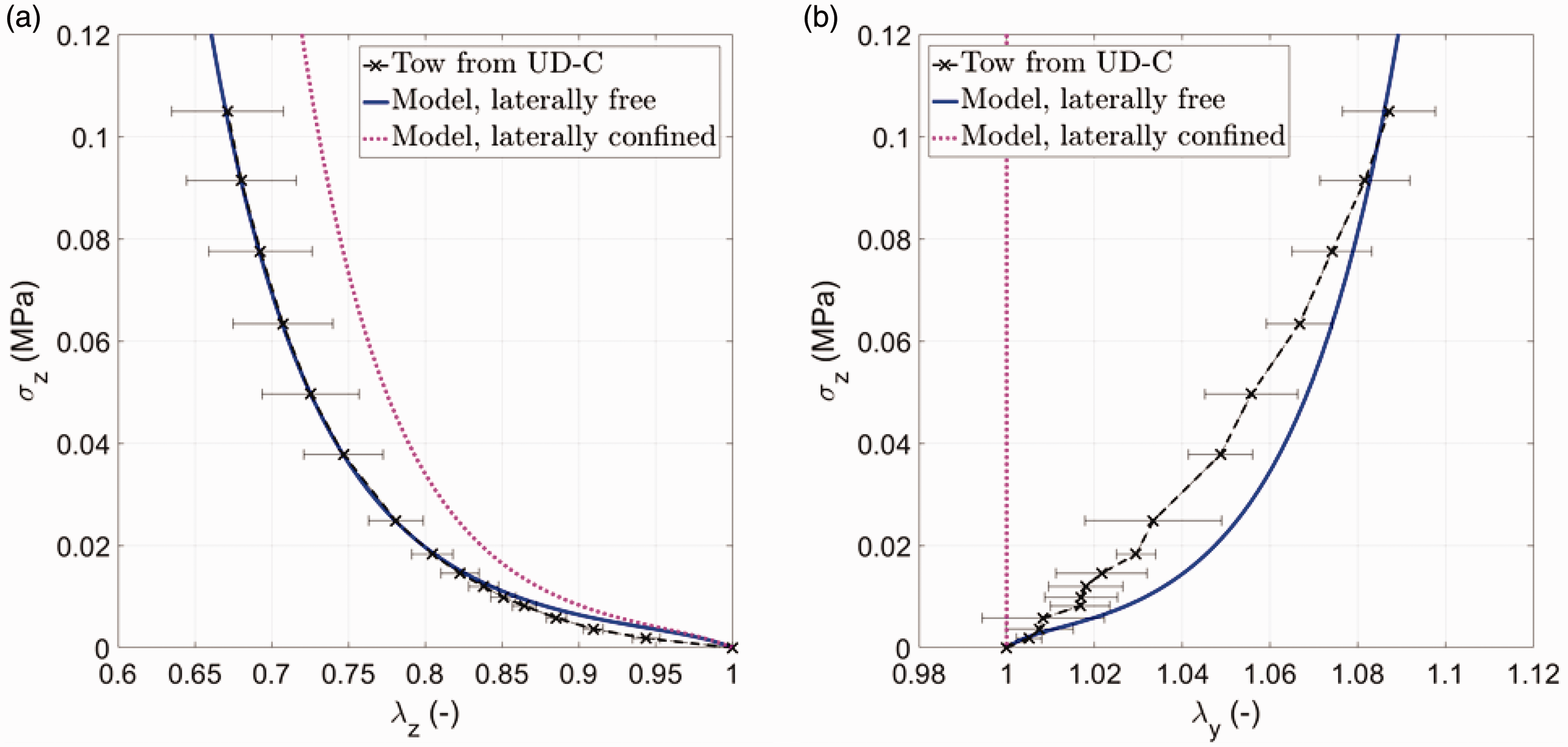
Comparison: laterally confined modeled tows behavior and experimental quasi-UDs behavior
Regarding the carbon material behavior during compaction (Figure 13(a)), the UD-C transverse evolution is stiffer than the one of laterally free carbon tows (experimental) while remaining less stiff than the transverse behavior of a fully confined carbon tow (predicted with the constitutive model). Moreover, the fabric width extension remains lower than the one of laterally free tows (Figure 13(b)). These results are in good agreement with the proposed experimental conclusions: the carbon tows located inside the UD-C are partially laterally confined, leading thus to a slight transverse stiffening compared to a laterally free tow. This stiffening remains lower than the one of a fully confined tow (modeled).
Comparison between carbon quasi-UD experimental behavior (in green) and predicted confined tow behavior (in pink): stress versus transverse (a) and lateral (b) strain extensions. (For interpretation of the references to color in this figure legend, the reader is referred to the web version of this article.)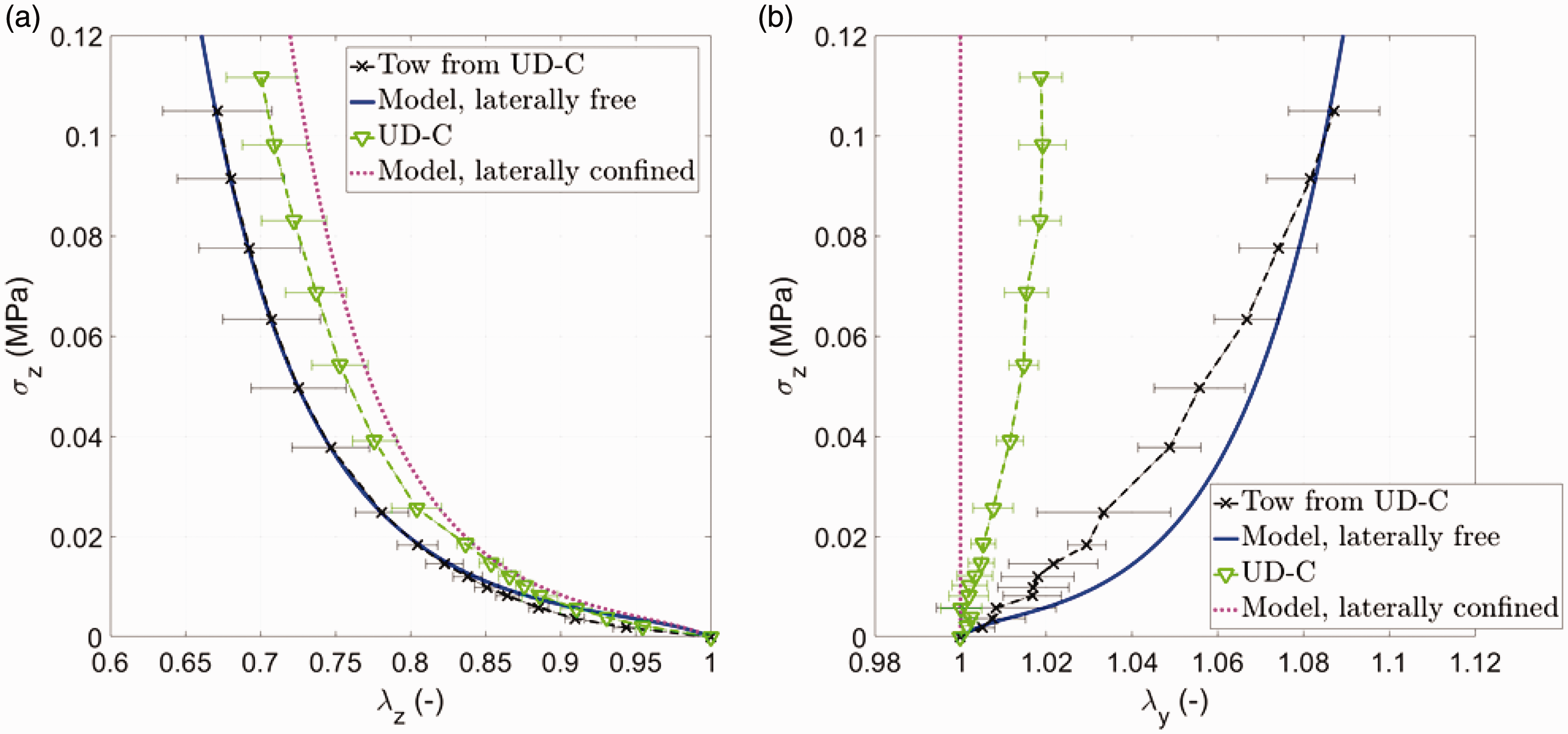
Regarding the E-glass material (Figure 14), UD-tight transverse behavior is stiffer than the one predicted for a laterally confined tow. This result might be interpreted as follows. The tows extracted from UD-tight are themselves stiffer than tows extracted from UD-loose because they have been intrinsically modified by the stitching process. The comparison proposed here between UD-loose and UD-tight is actually the comparison of two different constitutive materials. Therefore, the methodology, which consists of keeping material parameters to compare laterally free tows and quasi-UDs is not applicable for the studied E-glass material. Additionally, it should be noticed that assuming a rectangular cross-section as well as a uniform stress state along the z-direction might explain to some extent the difference between the experimental and modeled mechanical behaviors.
Comparison between E-glass quasi-UDs (UD-loose in green and UD-tight in red) experimental behaviors and predicted confined tow behavior (in pink): stress versus transverse (a) and lateral (b) strain extensions. (For interpretation of the references to color in this figure legend, the reader is referred to the web version of this article.)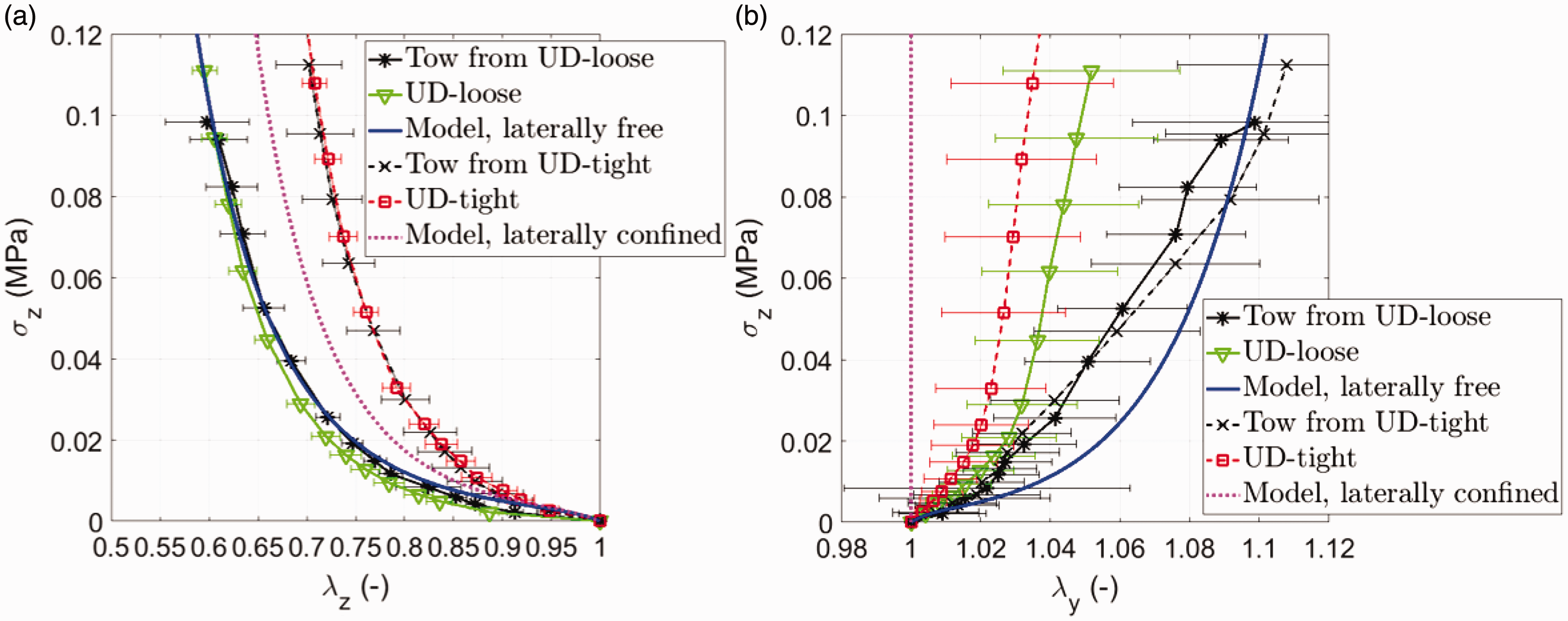
Conclusion
Novel experiments have been conducted to quantify the width and thickness evolutions experienced by quasi-UDs and their constitutive tows during through-thickness compaction. The studied carbon and E-glass tows exhibit a significant widening when laterally free i.e. when extracted from their corresponding quasi-UDs. However, the lateral confinement of tows that remain inside their corresponding quasi-UD depends on the stitch or weft tow tension. This partial confinement induces a densification of the tows leading to a stiffening of the corresponding quasi-UD transverse behavior.
A 2D constitutive model has been built from the hyperelastic Ogden-Hill 3D model and found to be appropriate to reproduce the lateral and transverse non linear elastic behaviors of tows during compaction. A novel boundary condition has been proposed in this work to predict the mechanical behavior of a given tow that is fully confined in width direction during compaction. This predicted confined behavior has been compared to the experimental behavior of quasi-UDs, where a lateral tow confinement is expected due to the stitch or the weft tow tension. When the constitutive tows are not intrinsically modified by the stitching or the sewing process, the corresponding quasi-UD mechanical behavior fits well between the one of laterally free tows (measured) and of fully laterally confined tows (predicted).
The presented approach consists of characterizing finely the lateral and transverse behaviors of constitutive tows and uses the proposed constitutive model to predict a possible range for quasi-UDs transverse mechanical behavior. This methodology might help textile designers in adjusting their process parameters as, for instance, the stitch tension. Additionally, knowing the constitutive tow behavior and the quasi-UD transverse behavior could lead to a novel indicator of the porous mesostructural organization (inter-tow channels size) whose knowledge is essential for permeability and filling time estimations.13,15 Finally, an isotropic transverse strain energy, weighted with a large stiffness parameter in the fiber direction (as done for biological soft tissues 41 ), can be added to the 3D Ogden-Hill model to account for fiber quasi-inextensibility. The obtained 3D model could be integrated in a computational framework as done to account for the tows widening occurring during longitudinal compaction. 20
Future work will focus on releasing the assumption of a rectangular cross-section, as a non-uniform stress state inside the tow might influence the overall fabric compaction behavior. 42 Once done, it would allow to investigate the influence of the tow twist (that induces rounder cross-sections) on the compaction behavior.
Footnotes
Declaration of Conflicting Interests
The author(s) declared no potential conflicts of interest with respect to the research, authorship, and/or publication of this article.
Funding
The author(s) received no financial support for the research, authorship, and/or publication of this article.
