






Abstract
In this study, a sheet of random rice straw fiber was developed. These rice straw sheets were used to reinforce polyester matrix. Synthesis of rice straw sheets and glass fibers as synthetic fibers-reinforced polyester composites were investigated. Several new stacking sequences were fabricated with random glass fiber mats with different areal densities (225 g/m2, 300 g/m2, and 450 g/m2) and rice straw sheets. The specific mechanical properties of these natural/synthetic fiber composites were investigated. Scanning electron microscopy was used to study the morphology of the fracture surfaces of the fabricated hybrid composites. Experimental results showed that specific tensile and flexural stiffness of rice straw fiber composite is better those obtained with glass fiber composites. The hybrid natural/synthesis composites with alternating glass fiber mat with areal densities 300 g/m2, and rice straw shows higher specific tensile strength than rice straw and other hybrid composites. Hybrid composites with high areal density on the outer surfaces yield a significant increase in flexural-specific strength and hardness as compared to other fabricated composites.
Keywords
Introduction
In recent times, the utilization of composites consists of natural fibers and polymer is considered as one of the most commonly investigated research topics. 1 More regenerated resources are needed to substitute for the design and development of further new products. Consequently, using synthetic and natural fibers to develop advanced products is needed. However, ecofriendly behavior of raw natural fibers makes them preferable. 2 At the present time, natural fibers as bagasse, jute, flax, bamboo, rice straw (RS), etc. may be utilized as an alternative to synthetic fibers.3,4 Using natural fibers as fillers or reinforcements in a polymer is to reduce cost, improve mechanical properties, and increase the productivity of product. Comparing natural fibers with synthetic fibers, natural straw fibers have some advantages of large quantity, annual renewability, abundant and wide distribution, low density, low cost, competitive specific mechanical properties, sustainability, reduced energy consumption, and recyclability.5–8 The adequate mechanical properties of natural fiber composites increase its demand for automobile components. 8 However, natural fiber composites are not widely used in many applications due to its high porous nature, high moisture content, the difficulty of extracting continuous and fine fiber, and thermal degradation. 9 These disadvantages result in reducing the strength of the produced composites.
The main issue affects the positive properties of the addition of natural fibers into polymeric matrices is the incompatibility between hydrophilic natural fibers and hydrophobic polymer matrices. This causes bad interfacial adhesion between polymeric matrix and natural fiber reinforcement. 10 Alkali treatment enhances fiber/matrix adhesion due to getting rid of impurities.11,12 Many researchers used chemical modifications to decrease the polarity of fiber surface to increase its compatibility with polymer surface. 10
Synthetic fiber-reinforced composites have higher mechanical properties (modulus and strength) and good moisture resistance compared to natural fiber composites. Glass fibers (GFs) are used for many advantages besides the low cost. GFs are most widely used fibers in the industry to reinforce polymers compared to carbon and aramid. GFs are available, lightweight, strong, durable fibers, fire resistant, have high tensile strength, high chemical resistance, high dimensional stability, and excellent insulating properties. GFs mat could be easily molded into any shape. 13 Laminated GF-reinforced composite materials are used in marine industry and piping industries.
Hybridization of natural fiber with strong and corrosion resistant synthetic fiber can improve the stiffness and strength, as well as moisture resistant behavior of the composite. 14 Using a hybrid composite containing two or more types of different fibers acquires the advantages of one type of fiber and can complement what is lacking in the other fiber. These composites are used in aerospace industry (tails, wings, propellers), boat hulls, bicycle frames, fishing rods, pipes, baseball bats, ice skating boards, door panels, storage tanks, automobile industry, construction material for buildings, marine application, and sporting goods industry. 13
The influence of hybridization of RS with GF-reinforced epoxy was studied. 15 Tension, compression, and bending tests were performed, and the results showed that hybrid composites had an intermediate behavior between GF composites and RS composite. The effect of hybrid kenaf/GF mat-reinforced unsaturated polyester composites on mechanical and water absorption properties was studied. 4 The results showed that hybrid composites with kenaf mat at the inner layers and GF mat at the outer layers possesses the highest flexural strength and modulus. However, hybrid composites with GF mat at the inner layers with kenaf mat at the outer layers results in more water absorption and thickness swelling. The effect of reinforcing GF with sisal-reinforced polypropylene (PP) composites was studied. 16 Enhancement in tensile and flexural properties was attained. No effect on the tensile and flexural modulus was obtained. Adding sisal fiber with GF improved thermal properties and water resistance of the hybrid composites. Moreover, the tensile properties of flax/GF-reinforced hybrid composites were improved with the increasing of GF content. 17 The stacking sequence has a clear influence on the tensile strength and tensile failure strain but not tensile modulus. Gupta et al. 18 studied the effect of adding rice husk and banana chopped fillers with 5%, 10%, and 15% on the mechanical behavior of GF/polyester composites. The results showed that hybrid composite had far better properties than single glass-fiber-reinforced composite under impact and flexural loads. Rout and Satapathy 19 studied the effect of adding particulate rice husk with 0 wt%, 5 wt%, 10 wt%, and 15 wt% to GF/epoxy composites. The results showed that tensile modulus, impact energy, and erosion resistance of these new class hybrid composites improved with filler addition; however, a steady decline in tensile and flexural properties was observed.
Yearly, RS is produced by 750 million tons. Rice residuals are mainly rice husk and RS. In Egypt, after harvest season, RS is burnt causing emission of toxic fumes. Black clouds stay for two to three months in the air causing health problems and heart disease. These black clouds could also cause autoimmune and allergies diseases. Utilization of RS can contribute to the recycling of agricultural wastes, thus resolving a serious problem of environmental pollution caused by these agricultural wastes reducing harmful effect on humans. RSs which are agricultural lignocellulosic fibers can be easily formed to make mash. RS fibers have attractive properties that make it to be used in many applications. 20
High cost of polymers and reinforced fibers was a limiting factor in using for commercial applications. Consequently, cheap polyester, glass, and RS fibers were used in this study to fabricate economic composite laminates. Other factor is also considered in choosing these materials are their availability. This enhanced the continuous seeking for new composite materials with good characteristics which can be available with proper price. Recent studies have used RS in the form of short fiber or particulate.8,15,21–26
The aim of this study is to form RS in a sheet in which the RS was bonded with each other uniformly. These sheets of RS fibers help to fabricate RS/polyester composites with any complex geometry. These sheets are characterized with its lightweight. This lightweight of RS enhances the specific mechanical properties. RS fibers are considered as weak fibers, so in this study, different stacking sequences of RS sheets with other mats of GF were investigated. Three different areal densities of GF mats were used (225 g/m2, 300 g/m2, and 450 g/m2). These sheets of RS and GF were impregnated with polyester resin. Based on the literature, no research has studied the influence of stacking RS with high and low areal densities. Specific mechanical properties of these natural/synthetic fiber composites were investigated, and then compared to pure polyester, RS/polyester composites, and GF/polyester composites. The morphology of fractured surface of fabricated specimens was examined with scanning electron microscope (SEM).
Experimental work
Materials
Mechanical and physical properties of polyester given by the supplier.

Density and mechanical properties of glass fiber and rice straw fiber.

Making sheets from RS fibers
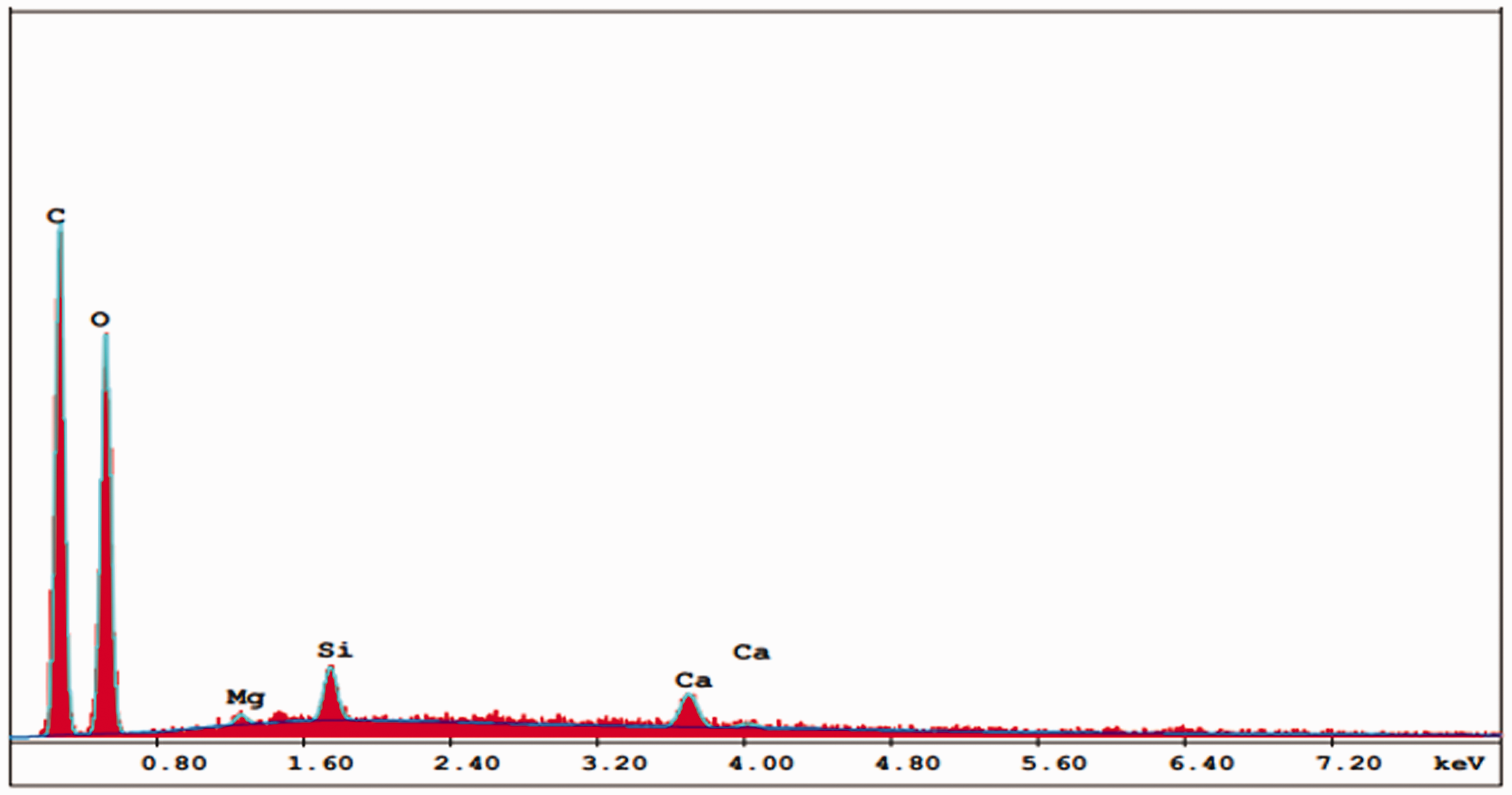
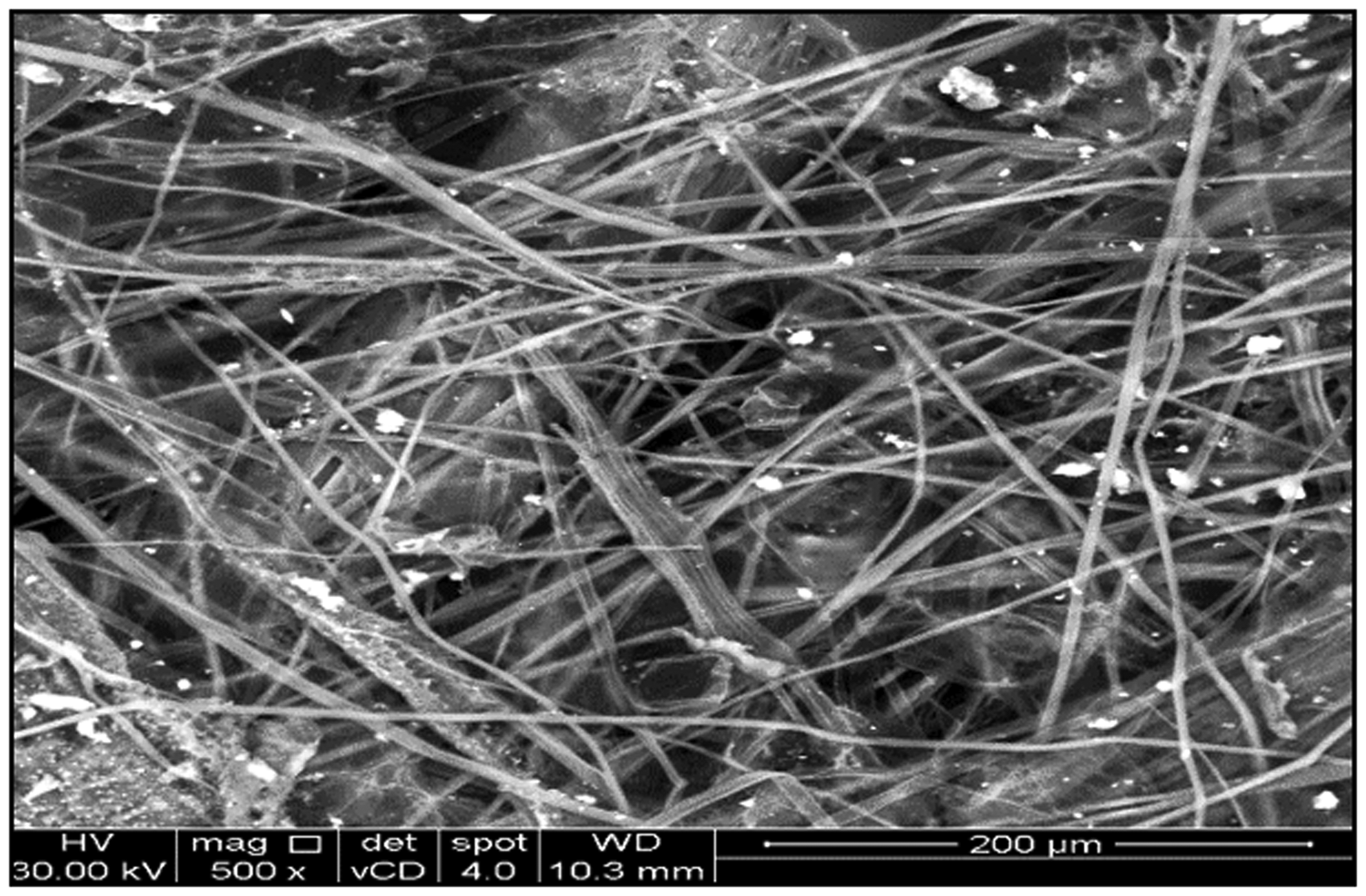
Impurities were removed, and RS fibers were cut into 5 cm length as shown in Figure 1(a). RS fibers were washed with running water. RSs are soaked in 2.0 wt% sodium hydroxide for 48 h. Treating RS fiber with sodium hydroxide led to breakdown of bundles of RS fibers into smaller fibers. So, this developed a rough surface topography that results in better fiber–matrix interface adhesion and an increase in mechanical properties. Moreover, this treatment allowed better fiber wetting. This mixture was boiled for 2 h until the RS fibers became soft. The boiled RS fibers were washed thoroughly with running water forming balls. The balled RSs were crushed with a pestle as shown in Figure 1(b). Subsequently, the RS fibers were screened on 50 mesh screen which was placed on top of a 100 mesh screen under high water pressure as shown in Figure 1(c). By shaking the mould to get rid of the water, water came out throughout the screen. The mesh was then pressed with a wooden roller to remove the excess water and to distribute the RS uniformly as indicated in Figure 1(d). The RS fiber sheet was dried by hanging under the sunray. Figure 1(e) and (f) shows the RS sheet after drying in the mould and the final form of the developed RS sheets, respectively. Figure 2 shows Energy-dispersive X-ray spectroscopy (EDX) of the developed RS fiber sheet. However, Figure 3 shows SEM for the developed RS fiber sheet. The figure reveals nearly uniform distribution of RS fiber in the sheet.
Development of sheets from rice straw fiber. EDX for the developed rice straw fiber sheet. SEM for the developed rice straw fiber sheet.
Hybrid natural/synthetic composite fabrication
Abbreviations of natural hybrid composites and their stacking order.

G225, G300 and G450 are glass fiber with areal densities of 225, 300 and 450 g/m2.
Characterization
Tensile test
Tensile tests of fabricated natural composites were performed using five samples for each type. The tensile tests were carried out with Jinan Test Machine of model WDW 100 kN universal testing machine according to ASTM D3039 at standard constant crosshead speed of 2 mm/min and an ambient temperature of 23℃. The dimensions of test specimens were 250 mm length and 25 mm width.
Three-point flexural test
The flexural strength was investigated using three-point flexural test and was carried out by the same universal testing machine according to ASTM standard D-790. The flexural test was performed at 23 ± 1℃ and 50 ± 5% relative humidity with a crosshead speed of 1 mm/min. Flexural strength of the fabricated composites was calculated as follows


The flexural strain was investigated from the following equation

Hardness
Hardness was measured by PCE-1000N Hardness Tester instrument. Hardness was measured randomly at eight different random points for each composite sample, and the mean value of hardness was calculated using the average of eight values.
Impact test
The impact strength was measured by the Izod test according to ASTM 256. Impact tests were performed on impact machine type AVERY Denison. The pendulum has a falling velocity of 3.8 m/s and impact energy of 5 J. The impact strength was calculated by dividing the obtained absorbed energy by the cross sectional area of the specimen.27,28
Shear test
The in-plane shear strength (IPSS) of the hybrid natural/synthetic composites was carried out according to ASTM D3846. The applied compressive load increases until the specimen is broken, and hence the corresponding load is indicated. The IPSS is given by the following equation

Microstructure examination
SEM was performed to observe the morphology of the fracture surfaces of the fabricated composites using FEI Quanta 250 FEG instrument. Fracture surfaces of the natural composites were sputter coated with gold before each analysis to improve resolution.
Density and void content of the fabricated composites
The void content of the fabricated natural composites was calculated according to ASTM D2734-94 as follows



Results and discussions
Tensile results
The tensile properties depend on the stress transfer in polymeric composites and the interfacial bonding between the reinforcement and polymeric matrix.
29
Figure 4 shows the specific tensile strength of natural composites. GF/polyester composites exhibit the highest specific tensile strength. The specific tensile strength of RS composites is higher than pure polyester but lower than RS/GF hybrid composites. This indicates that reinforcing polyester with RS mat enhances the specific tensile strength of polyester resin. Moreover, G300R hybrid composites show higher specific tensile strength than RS and other hybrid composites. The specific tensile properties of all hybrid natural/synthetic fiber composites are higher than pure polyester and RS composites. This can be related to the higher tensile strength and strain at break of GF as compared to RS fiber as shown in Table 2. This reveals to the significant effect of hybridization on the specific tensile strength. A similar observation was attained by in reference.
28
Figure 5 shows the specific tensile strain of natural composites. It has been identified that laminate G450R/RG225 shows higher specific strain to failure compared to GF/polyester, pure polyester, and other hybrid natural/synthetic fiber composites. Also, G300R shows higher specific strain to failure as compared to other specimens. The lightweight of RS increases the specific tensile properties.
Specific tensile strength of the fabricated specimen. Specific tensile strain of the fabricated specimen.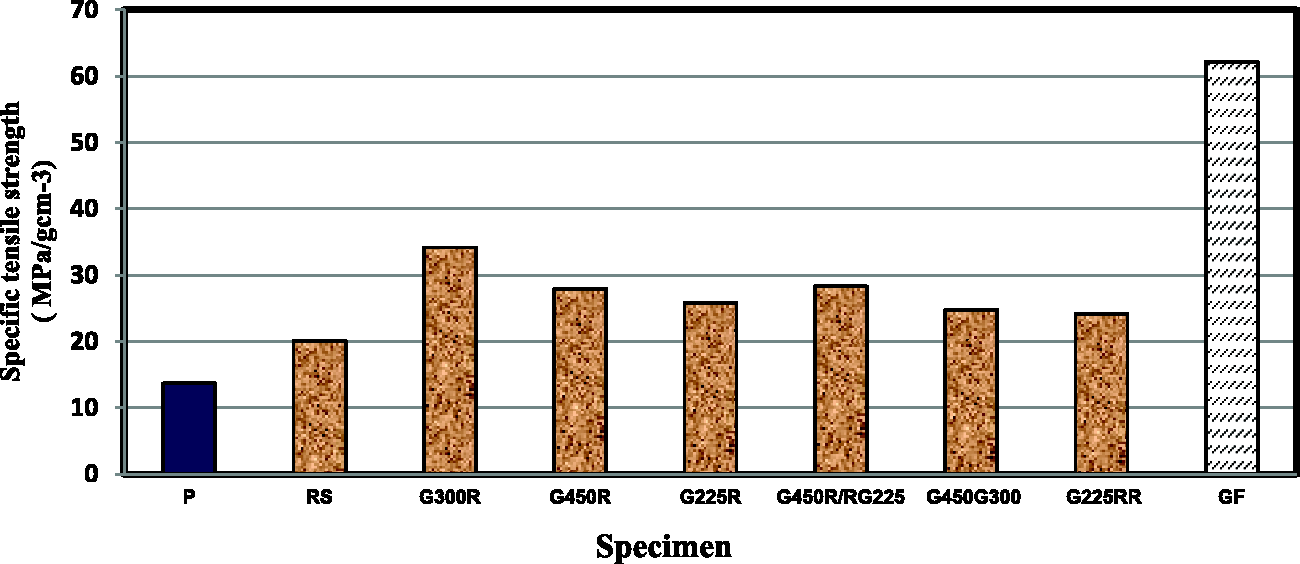
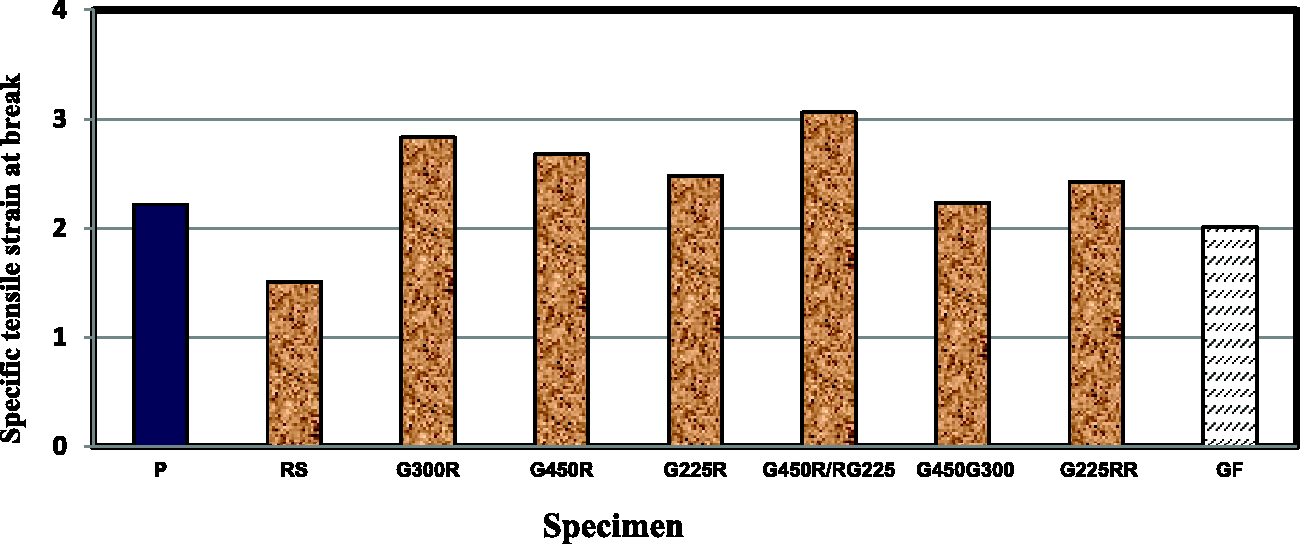
Figure 6 shows the specific tensile modulus of the fabricated laminates. RS composite exhibits higher specific tensile modulus compared to pure polyester and hybrid RS/GF/polyester laminate. This can be attributed to the advantage of lightweight of RS reinforcement. Similar results were obtained with reference.
30
The specific tensile properties of Alfa plant/polyester are close to those obtained with GF/polyester. Natural fibers have low mechanical properties, but they have desired as specific ones, especially with the specific modulus of elasticity. This desired property achieves increasing value if it is considered regarding the cost.
31
Variation of specific tensile modulus is attained with different hybrid composites. The variation of tensile modulus for various laminate layering pattern was observed by some research.31–33 The tensile properties were not greatly influenced by the stacking sequences.
34
Moreover, Zhang et al.
17
found that the tensile modulus for all hybrid composites was almost the same.
Specific tensile modulus of the fabricated specimen.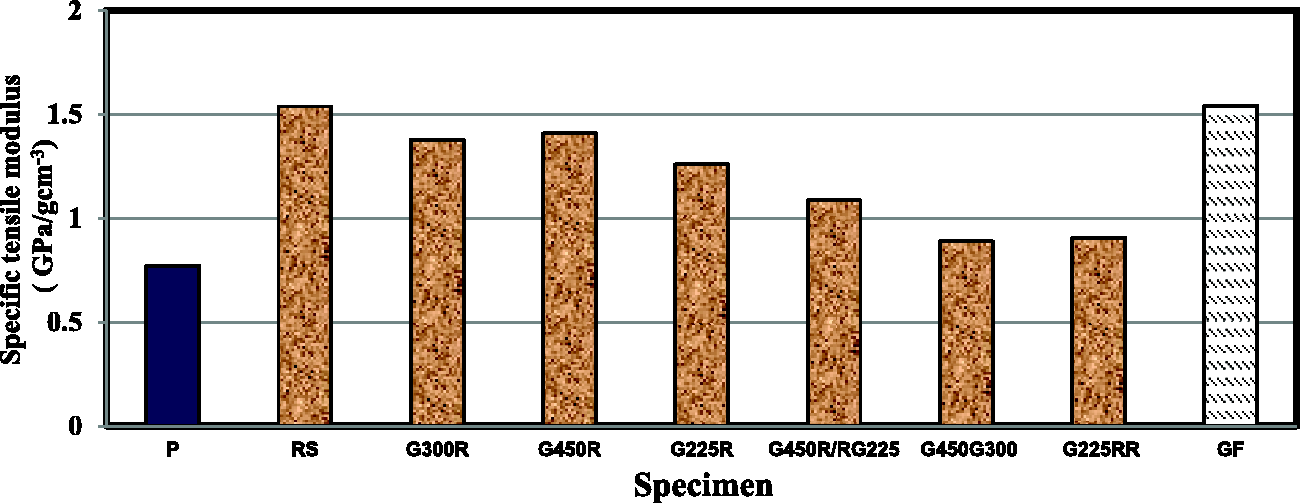
The tensile failure starts with matrix cracking. However, the composite can still withstand further load even if the matrix initiates to crack, because the fibers are still unbroken. When the interface between matrix and fiber reaches a critical value, the interfacial debonding will attain. 35 The three primary modes of failure observed in the fracture are fiber breakage, fiber pullout, and ply delamination. Total failure of a laminate can occur by any combination of these three modes. The brittle nature of polymer composites denotes that failure will always initiate from a location of a stress raiser. Defects associated with the fibers and matrix constituents and then the fibre/matrix interface. In brittle composites, the residual stresses can lead to development of layer cracks that may later act as initiation sites for fibre fracture and delamination. The different failure characteristics depend on the bonding between layers in the laminate.
SEM images were taken to detect the internal cracks, interfacial properties, and the internal structure of the fractured surfaces of the fabricated composite materials. Interfacial bonding between fiber and matrix is considered a vital role in determining the mechanical properties of composites. As the stress is transferred between matrix and fibers across their interface, good interfacial bonding is essential to achieve optimum reinforcement. However, for plant-based fiber composites, there is generally limited interaction between hydrophilic fibers and matrices. These matrices are commonly hydrophobic producing poor interfacial bonding limiting mechanical performance besides low-moisture resistance affecting long-term properties. Wettability can be regarded as the main precursor to bonding. Insufficient fiber wetting results in interfacial defects which can act as stress concentrators. 29
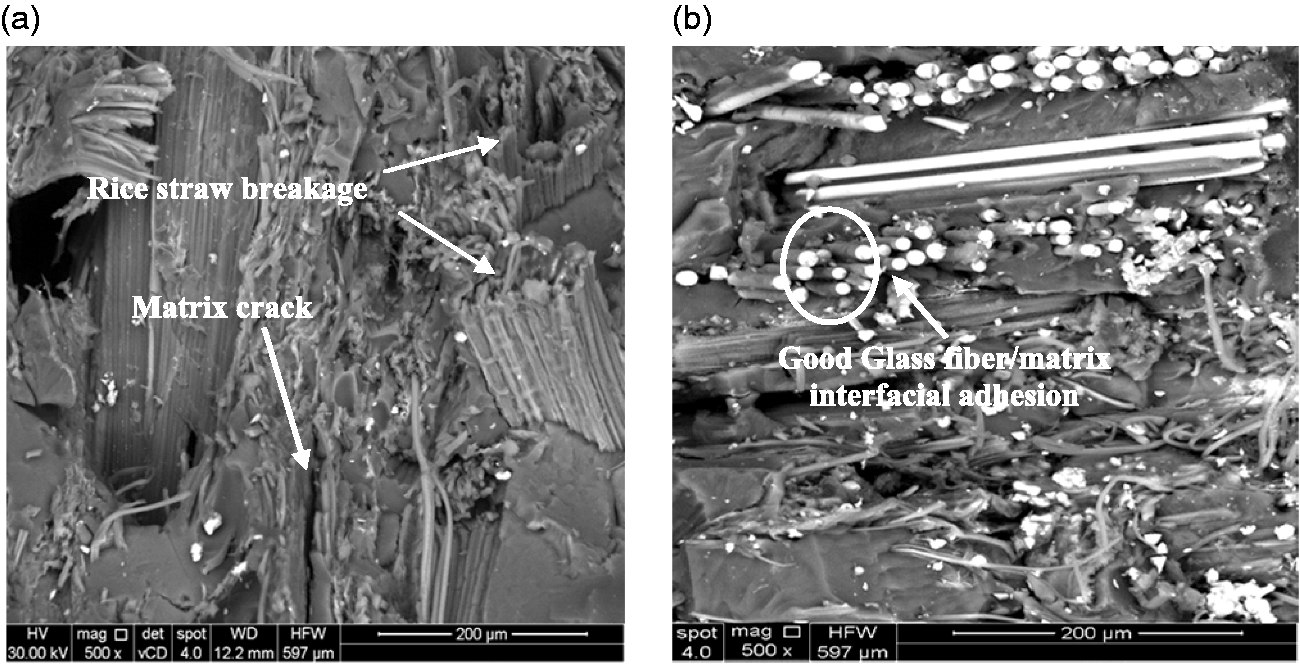
Figure 7(a) and (b) shows the SEM of the tensile fracture surfaces of RS composite and G300R hybrid specimen. Figure 7(a) indicates that the void occurs due to the poor interfacial adhesion between polyester and RS. Moreover, matrix cracking accompanied with fiber/matrix interfacial debonding are indicated from the fracture surfaces of RS composites. Also, it is observed that matrix cracking and interfacial debonding are in close relation. Interfacial debonding generates matrix cracking, and matrix cracking caused interfacial debonding. Nevertheless, Figure 7(b) indicates good fiber/matrix interfacial debonding is observed. Figure 7(b) depicts that addition of the GF clearly improves the interfacial adhesion strength. These observations imply the improved interfacial adhesion strength, which is evidence of the positive hybridization effect.
SEM of tensile fractured surface of (a) rice straw composites and (b) G300R hybrid composites.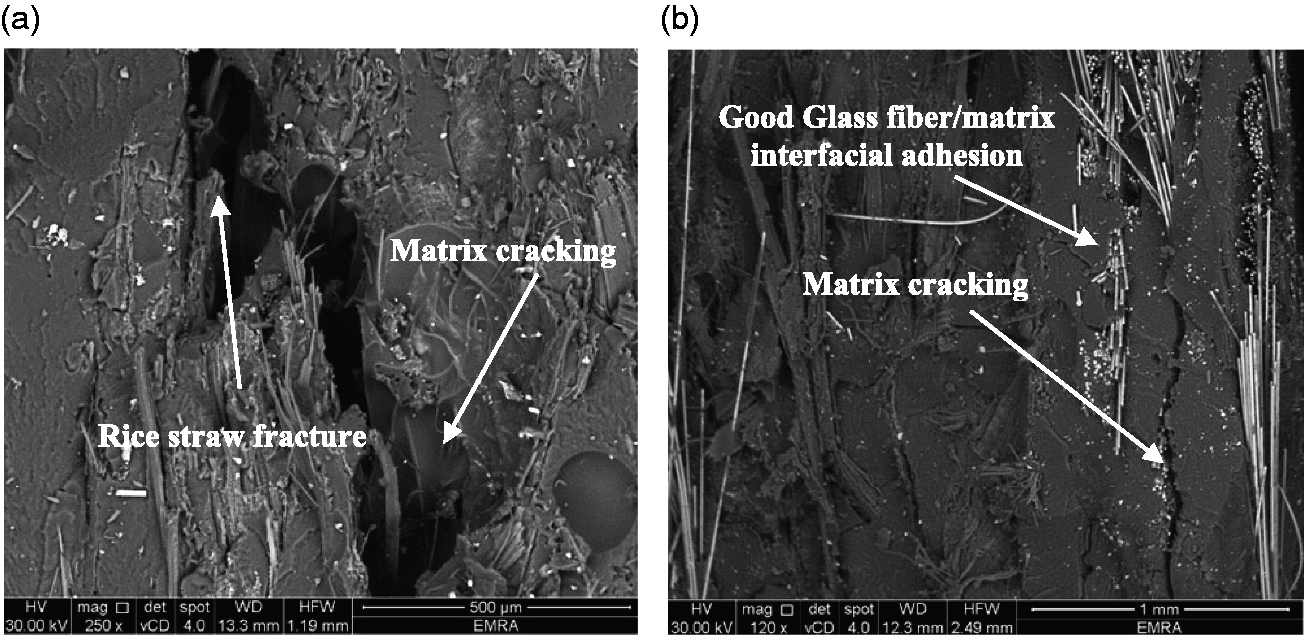
Flexural properties
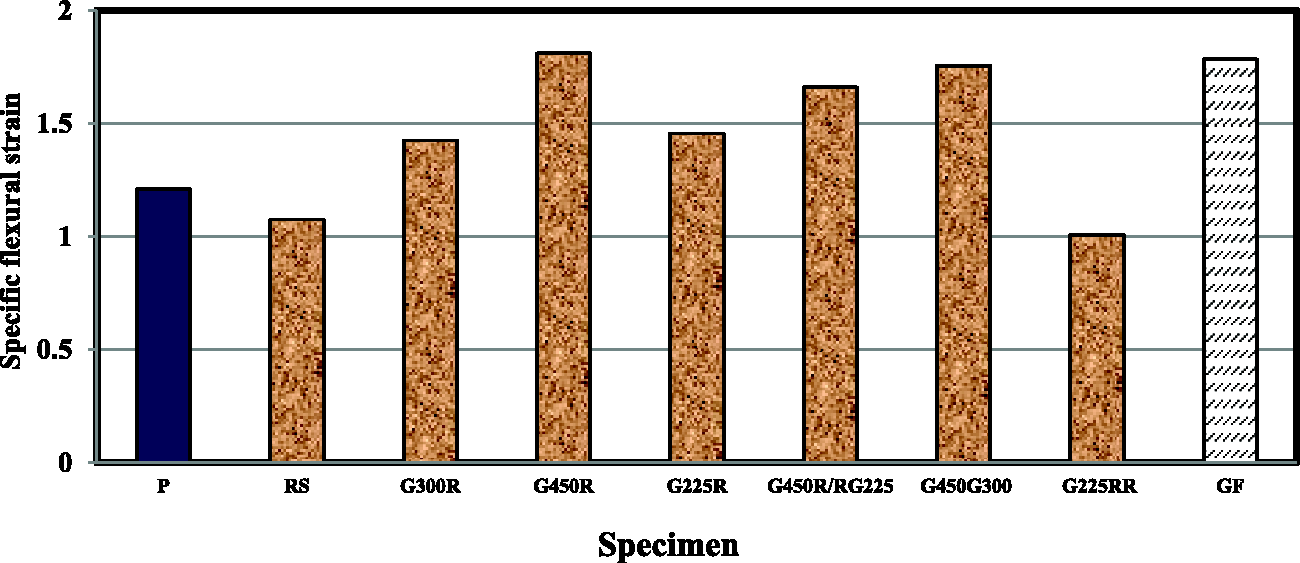
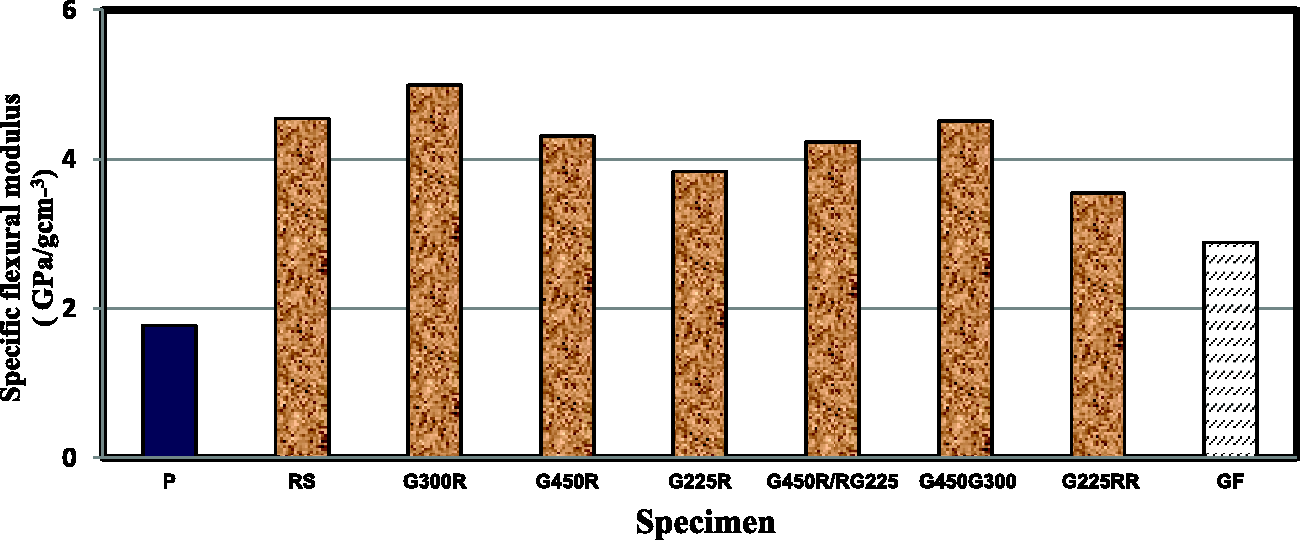
Figure 8 shows the specific flexural strength of the fabricated specimen. By altering the sequence of arrangement, specific flexural strength is differentiated. Hybrid G450R and G450G300 composites yield a significant increase in flexural-specific strength for GF with high areal density on the outer surfaces. These hybrid composites have specific flexural strength higher than GF/polyester composites. Figure 9 shows the specific flexural strain of the fabricated specimen. Hybrid G450R and G450G300 composites yield a significant enhancement in flexural-specific strain as compared to other fabricated composites. The specific flexural strain of the fabricated specimen of GF/polyester is close to hybrid G450R and G450G300 composites. However, RS and G300R composites exhibit higher specific flexural modulus than pure polyester and other hybrid composites as indicated in Figure 10. This can be attributed to the low density of RS composites. In the flexural test, the interfacial adhesion strength between RS and GF in hybrid composites increases the bending strength characteristics. This results from the enhanced ability to transfer load between the matrix and short fibers. The positive hybrid effect then occurred.
29
The flexural strength and modulus are controlled by the flexural strength of the outer layers of the fibers and are not much affected by stacking sequence. The flexural strength was found to be high for samples with GF layers at the outer layers and jute layers laminated at the core.
34
Specific flexural strength of the fabricated composite specimens. Specific flexural strain of the fabricated specimens. Specific flexural modulus of the fabricated specimens.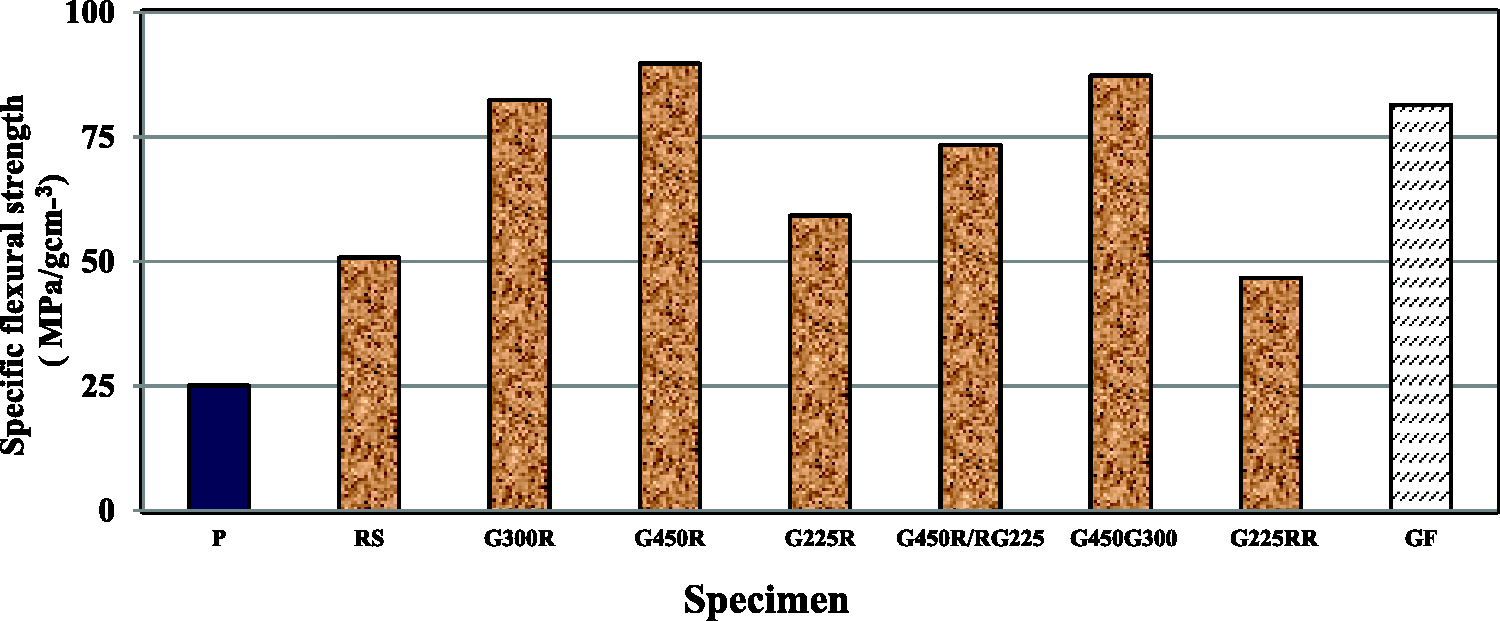
This was attributed to the stiffness of the extreme plies which mainly controlled the flexural strength. Good improvement in properties is obtained with hybrid composites with GFs as extreme plies on both sides. Otherwise, flexural strength and interlaminar shear strength were found to be significantly influenced by the layering pattern than tensile properties. Amico et al. 36 found that the influence of stacking sequence on tensile strength was not clearly noticed. The impact strength of the hybrid composite with adjacent glass layers showed higher values. The specimens with sisal at core and glass at extreme portions showed poor flexural strength when compared to the specimens with the glass reinforcement at the middle and sisal at the extreme portions. However, Gujjala et al. 37 found that flexural strength had higher value with specimens having one outer surface of GF and the other extreme surface of jute than for specimens with GF as extreme plies. Arbelaiz et al. 38 found that the specific properties of flax fiber bundle/PP composites exhibited similar or even superior mechanical properties compared to GF/PP.
During bending, the greatest tensile stress performed only in a thin extreme surface layer, which is in a small volume when compared to the total specimen volume as in tension test.39,40 Consequently, the chances of producing a critical defect in flexural test are lower than in tensile test, so the flexural strength is higher than tensile strength. 40 In natural fiber-reinforced composites, the incorporation of a rigid phase, as cellulose fibers increase the stiffness of polymer matrix. Flexural modulus is sensitive to matrix/fiber interfacial adhesion, and the interface is a critical factor in transferring the stress from the matrix to the fibrous phase. In fact, polymeric composites whose outer surfaces are smoother and more homogeneous demonstrate the greatest flexural modulus. Flexural strength and modulus are controlled by the strength of the extreme outer layers of reinforcement. 41
Figure 11(a) and (b) shows the SEM of the flexural fracture surfaces of RS and G450R hybrid composites. Figure 11(a) shows the bending of RS fiber composites and the poor fiber/matrix interface presented. In addition, polymeric matrix cracking and RS breakage are attained. This failure modes leads to reducing the specific flexural strength of RS composites. Nevertheless, good adhesion between GF and polyester matrix in G450R hybrid composites is indicated from Figure 11(b). Moreover, the good bonding between GF and RS causes high specific flexural strength. A crack is formed in RS layer.
SEM of flexural fractured surface: (a) rice straw composites and (b) G450R hybrid composites.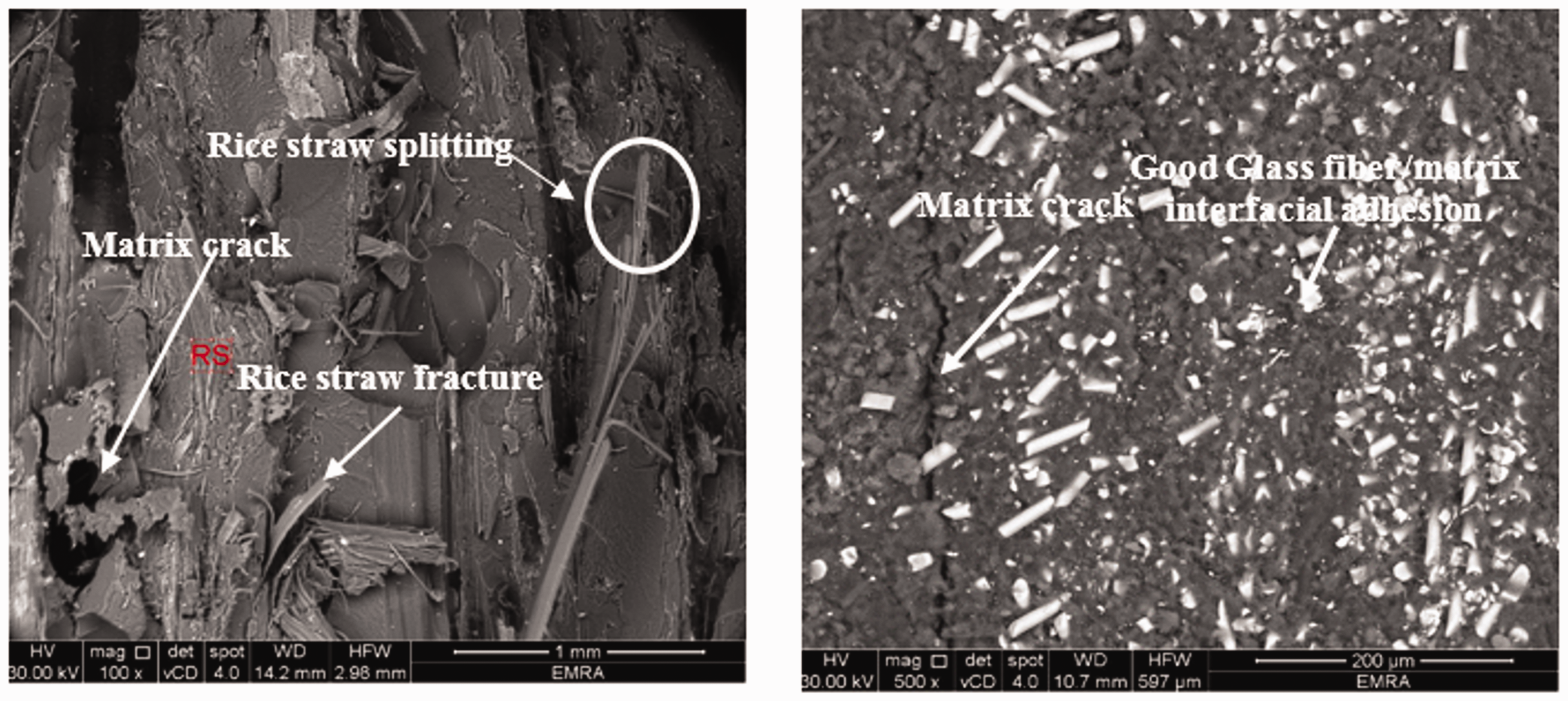
Hardness
Figure 12 shows the hardness of fabricated specimens. The hybrid G450G300 specimen exhibits the highest hardness among the other specimens. Both sides of the G450G300 have high hardness. This is attributed to the high areal density (450 g/cm
3
) of the GF presented on the extreme layers. Layers of lower areal density (300 g/cm
3
) follow these extreme layers. These two layers of GF in both sides lead to increasing in hardness value. Moreover, the upper side of G450R/RG225 has high hardness value. This may be attributed to the high areal density (450 g/cm
3
) presented on one side; however, on the other side, low areal density (225 g/cm
3
) of GF layers are presented. Alternate different areal densities were performed to get benefit from the high areal density in one side that gives high hardness and high bending values. However, the other side with low areal density may have better bonding with RS other than the high areal density GF layers.
The hardness of the fabricated specimens.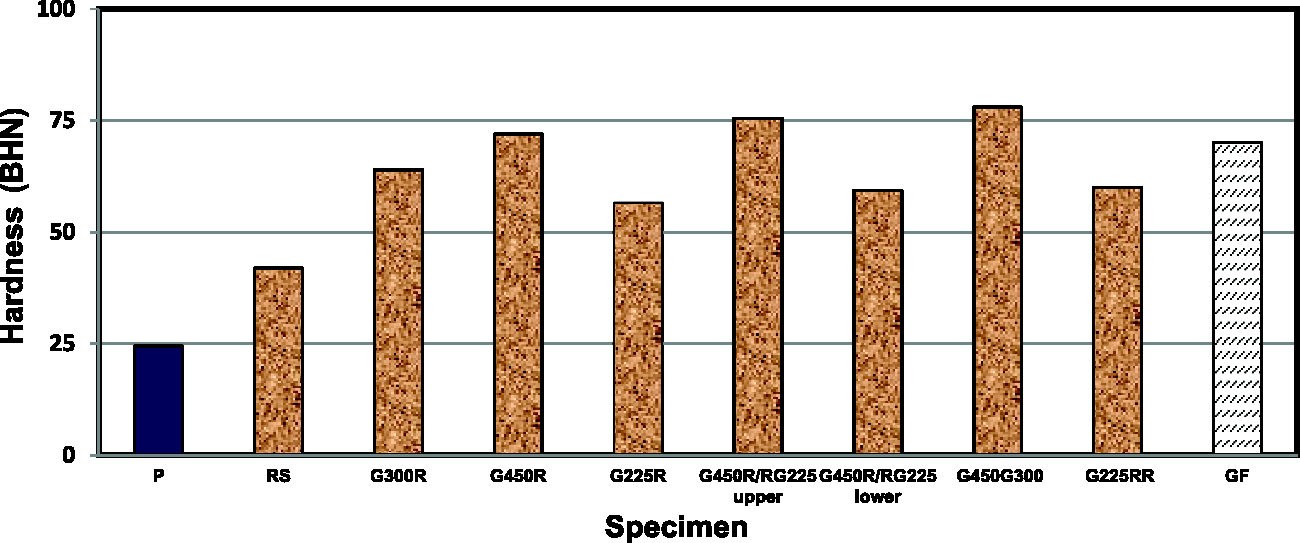
Impact behavior
The polyester matrix shows a sharp decrease in the impact strength as a result for the formation of microcracks, which facilitates the crack propagation. It is clear from Figure 13 that specific impact strength of RS/polyester composites is higher than pure polyester thus reinforcing polyester with RS mat improves the specific impact strength of polyester resin. GF/polyester and all natural/synthetic fiber composite laminates exhibit better specific impact strength than pure polyester and RS composites. The laminates G450G300R and G450R/RG225 exhibit higher specific impact strength as compared to other hybrid composites and close to GF/polyester. It may be observed that interfacial adhesion between fabrics and matrix also controls the specific impact strength. The impact strength of composites depends on the interlaminar and interfacial adhesion between fiber and polymeric matrix.42–44 Figure 14(a) and (b) shows the fracture surface of RS and G300R specimen after the impact test. In RS composites, fiber breakage and fiber pull out occur as shown in Figure 14(a). However, Figure 14(b) shows a good interface between GF and polyester.
Specific impact strength of the fabricated specimens. SEM of fractured surface after impact test (a) rice straw composites and (b) G300R hybrid composites.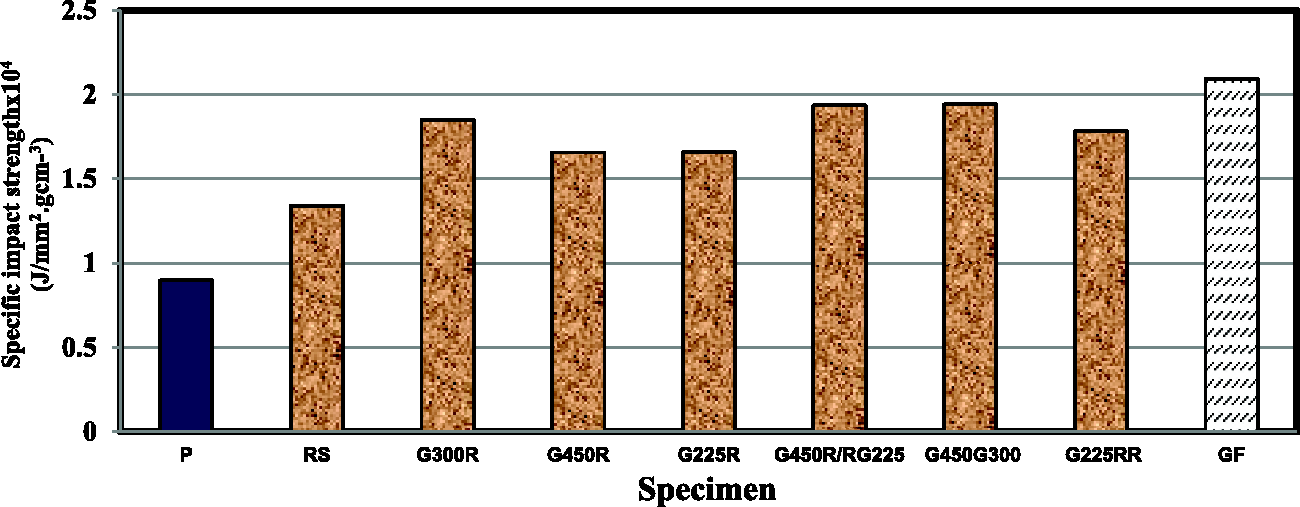
Shear behavior
Figure 15 shows the specific shear strength for various laminate stacking sequences. It is obvious that specific shear strength of RS/polyester composites is higher than pure polyester. This indicates that reinforcing polyester with RS mat enhances the specific shear strength of polyester resin. Furthermore, specific shear strength of GF/polyester and hybrid composites is higher than pure polyester and RS composites. Laminate G300R has the highest specific shear strength compared to other hybrid composites. Specific shear strength of other RS/GF/polyester composites is close to each other.
Specific shear strength of the fabricated specimens.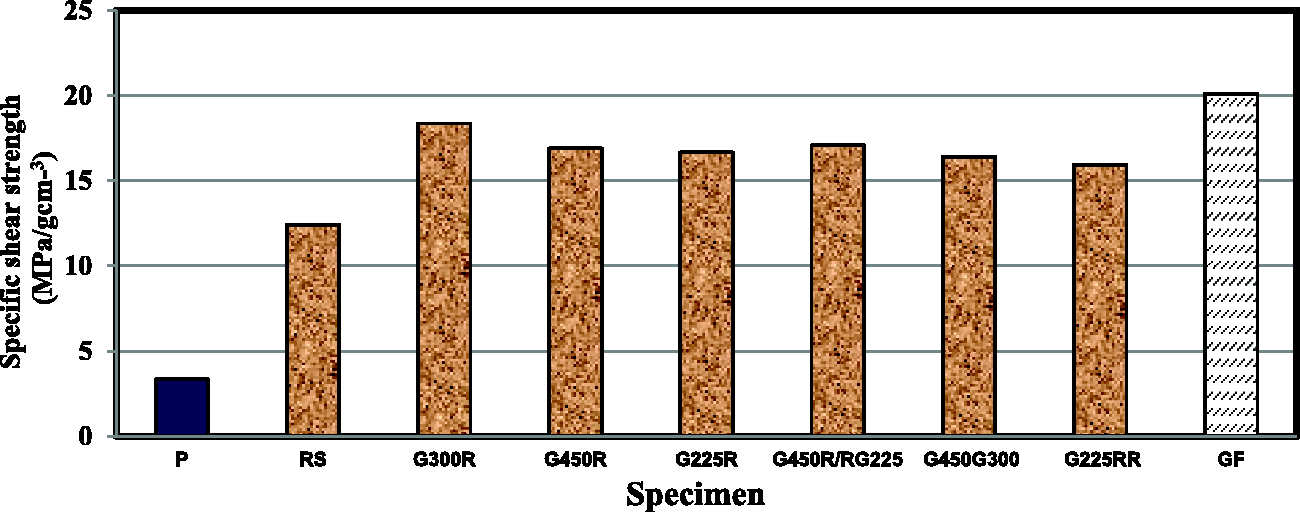
Figure 16(a) and (b) shows the fracture surface of RS and G450R specimen after the shear test. This figure shows clear delaminations between RS layers results from the maximum shear strength. The failure of specimens occurs due to bending and breaking of fibers. Small cracks formed at the GF layer in G450R laminate which has the greater areal density of 450 g/cm
2
. Good bonding between GF and polyester is clearly shown. However, the layer of RS composite is weak and obvious cracking occurs.
SEM of fractured surface after shear test: (a) rice straw composites and (b) C hybrid composites.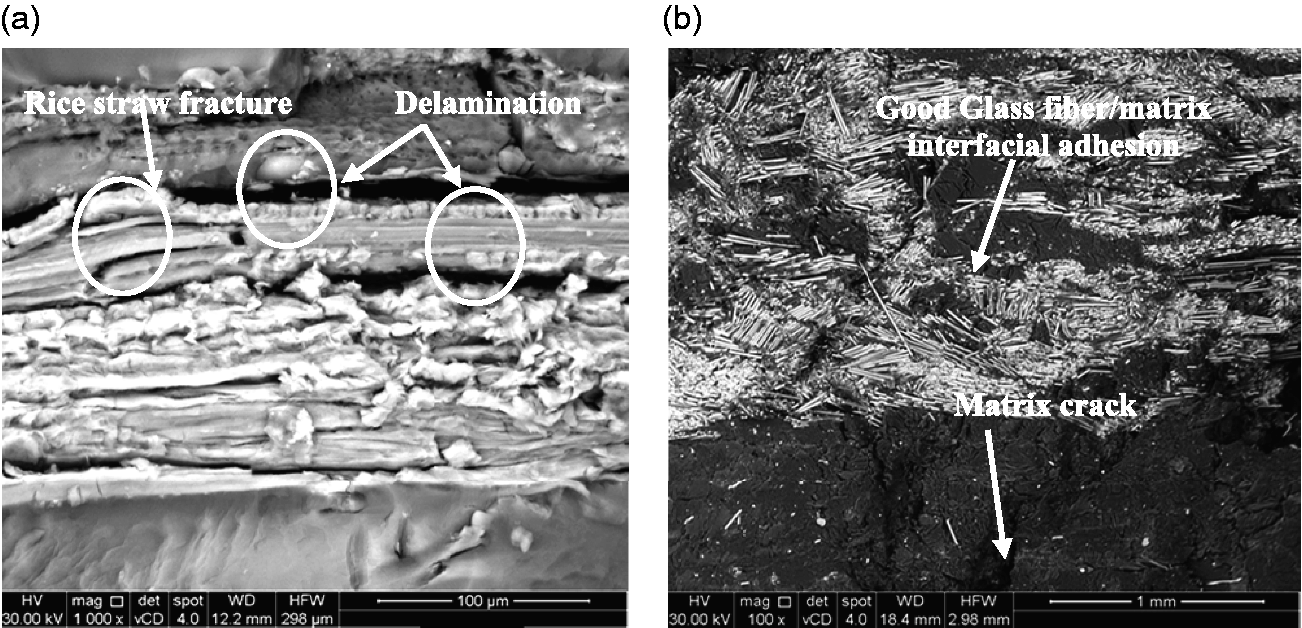
Density and void content
The presence of void content in composites significantly reduces the physical and mechanical properties of the composites. Trapped air or other volatiles may present in composites during manufacturing of fiber-reinforced composites.
45
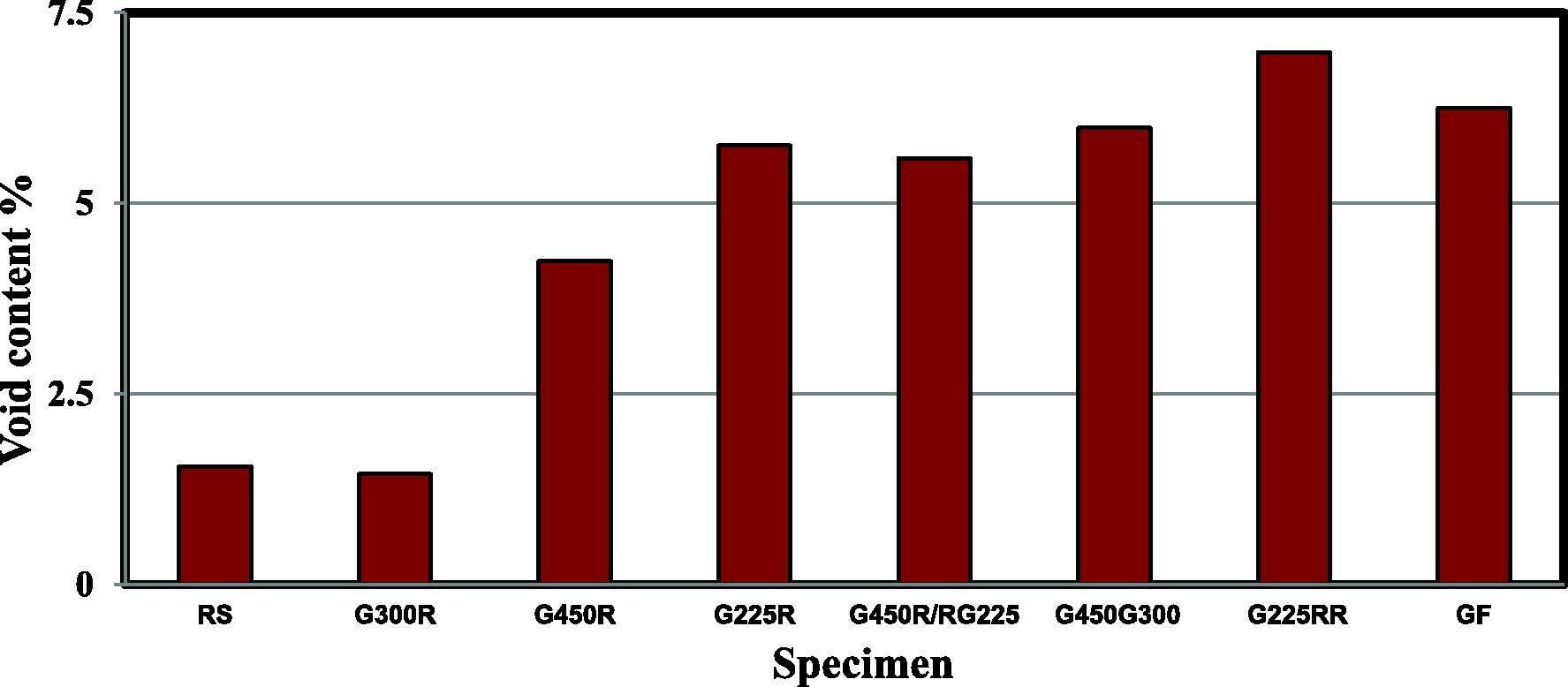
Figure 17 shows the theoretical density and experimental density of RS composites and hybrid composites with different stacking sequences specimens. However, Figure 18 shows the void content percentages, GF/polyester composites, and RS composites and natural/synthetic composites. The G300R hybrid composites show the least void content percentage. This revealed that a better adhesion is achieved between RS and GF with areal density of 300 g/m2. Also, the void content of RS/polyester composites is low. This demonstrated that wetting is obtained with polyester matrix and RS fiber. A treatment for RS was made with 2 wt% sodium hydroxide to remove the unwanted soluble cellulose, hemi cellulose, pectin, lignin from the fiber. The chemical modification is attempted to improve natural fiber hydrophobic nature, interfacial bonding between fiber and matrix, surface roughness, and wettability leading to the improving of mechanical properties of the natural fiber-reinforced composites. This treatment improves the wettability between RS and polyester.
46
So, the void is reduced due to good bonding obtained by similar layers. Incomplete wetting out of the fibers by the matrix leads to the formation of voids. Other hybrid laminates are close to each other.
Theoretical and experimental density of the fabricated specimens. Void content of the fabricated specimens.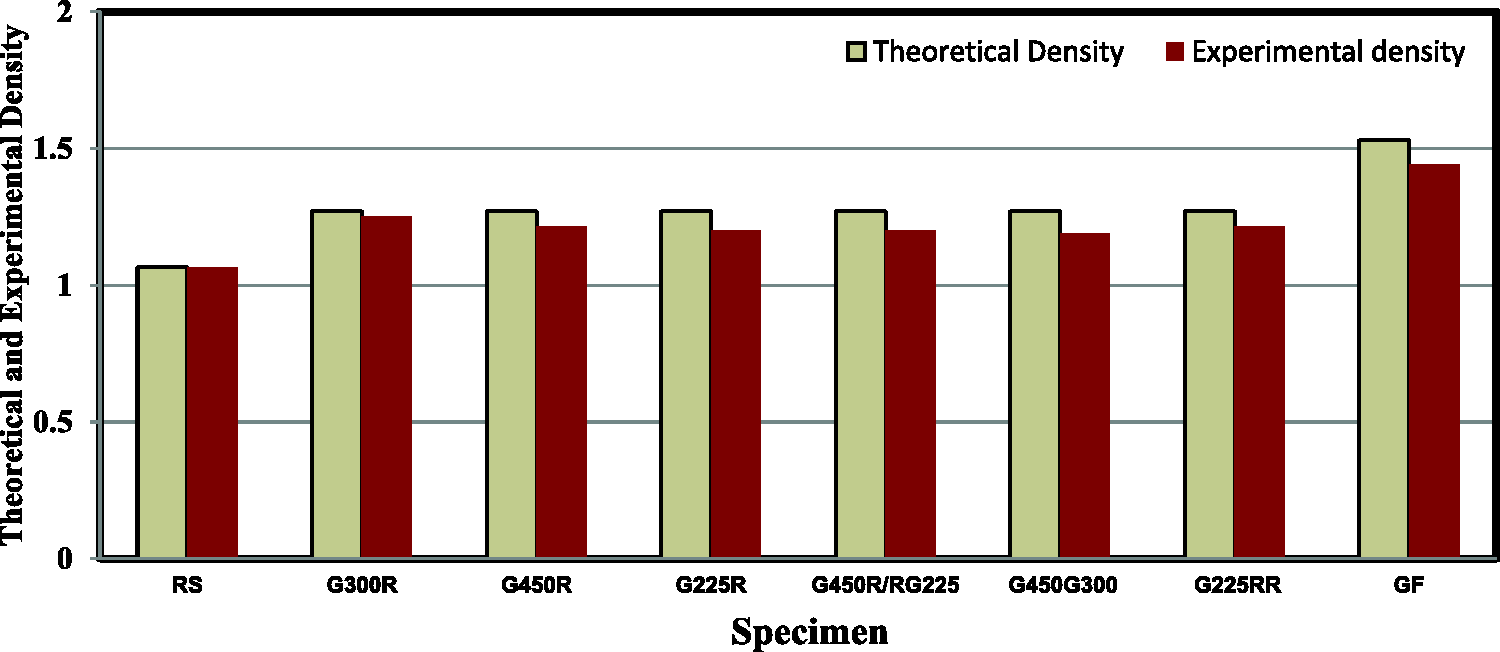
Recently, the use of natural fibers is remarkable as the field of application is improved day by day particularly in automotive industries. Lightweight natural fiber composites improve fuel efficiency in auto applications. Combination of natural fibers with GFs in a polymeric matrix can improve the properties and can be used as an alternate material for GF-reinforced polymer composites. So, hybridization is essential for helping the designers to understand and choose the suitable material for the required design.
Density is one of the most desired property of natural fibers, because it makes natural fibers competitive with synthetic ones. The low density of natural fiber increases the specific mechanical properties so using in automotive industry is required. Al-Oqla and Sapuan 31 found that date palm fiber is very competitive to coir, hemp, and sisal due to its lowest weight in composites making it very suitable to automotive industry.
Conclusions
In this study, tensile, flexural, impact, water absorption, and shear properties of RS fiber mat/GF/polyester hybrid composites were investigated. Random RS fibers were altered to a mat form with good distribution to enhance the mechanical properties of polyester. Alternating random GF layers having different areal densities with four layers of RS fiber mats was attained. These hybrid composites are formed with six different stacking sequences.
Based on the experimental results, the following conclusions can be highlighted:
G300R hybrid composites show higher specific tensile strength than RS and other hybrid composites. The specific tensile properties of all hybrid natural/synthetic fiber composites are higher than pure polyester and RS composites. Hybrid G450R and G450G300 composites yield a significant increase in flexural-specific strength for GF with high areal density on the outer surfaces. The hybrid G450G300 specimen exhibits the highest hardness among the other specimens. Both sides of the G450G300 have high hardness. The least void content percentage is obtained with G300R hybrid composites. This demonstrated that a better adhesion is achieved between RS and GF with areal density of 300 g/m2.
Generally, the comparison between the properties of the fabricated laminates revealed that the hybrid laminates G300R and G450R are the optimum combinations. These hybrid RS fiber mat/GF-reinforced polyester laminates has a good balance between the properties and the cost. Consequently, G300R and G450R hybrid composites can be used in automotive industries, pipes, bicycle frames, low cost housing, civil structures, and boat hulls. The lightweight of RS fibers combining with GF improves fuel efficiency and reduce emissions in automotive industries.
Footnotes
Declaration of Conflicting Interests
The author(s) declared no potential conflicts of interest with respect to the research, authorship, and/or publication of this article.
Funding
The author(s) received no financial support for the research, authorship, and/or publication of this article.
