






Abstract
The objective of this study is to analyze the impact behavior on the basis of energy approach of weft knitted structures, namely a jersey composite and an auxetic composite using high performance yarns. Weft knitted fabrics were produced with the same structural and machine parameters, using 100% para-aramid and hybrid (47% para-aramid and 53% polyamide) structure. Composite fabrication was achieved through hand lay-up using epoxy resin. Negative Poisson ratio of the reinforcing auxetic fabric was transferred from the fabric to the composite developed. Results obtained by drop weight dart impact test show that the impact experiment with different impact loads confirmed the auxetic composites, regardless de material composition, have an increase in the total energy absorption compared to jersey reinforced composite, approximately 2.5 and 4 times more for para-aramid and hybrid composite, respectively. Auxetic composites developed within this work present great potential for applications in different areas, mainly where energy absorption is a key factor to be considered, such as in protection, sports among others.
Introduction
Auxetic materials have a negative Poisson’s ratio (NPR). When stretched in a direction, they become thicker in the direction perpendicular to the applied force.1–4 Due to their unusual behavior, auxetic materials have great potential in engineering applications, such as architecture, civil engineering, sporting goods and clothing, protection against explosives, insulation, filters, medicine, among others. 1 , 3 ,5–13 The same definition can be applied to textiles materials, such as, braiding, woven, knitted fabrics and nonwoven, which permit to create complex and specific structural geometries with NPR. 10 , 12 , 14 , 15
On the other hand, fibers reinforced composites are used in several fields, ranging from construction and infrastructure, land transportation, biotechnology, marine environments, among others. 16 Furthermore, composites reinforced with textile structures can be used in several structural applications, presenting lower production cost 17 and may offer ability for near-net-shape manufacturing. 18 The properties of the textile reinforcement can also be designed by selecting from a wide range of possibilities including long or short fibers, yarns, filaments, randomly arranged or not; and different technologies, such as woven, non-woven, knitted or braided fabrics. The choice depends on raw material and production costs, desired properties, production process and final application. 19 In this context, braiding and knitting technologies are gaining more importance in the production of composite reinforcements. 20
Besides, the study of impact response of composites reinforced with textiles has become an important area of materials’ development. Several approaches have been taken to improve the impact resistance of composite materials. These include the textile structure reinforcement, the resin applied, the materials’ composition (utilization of high-performance fibers) and hybrid materials.21–25
A hybrid textile refers to fabric that has more than one type of structural fiber in its manufacture. The structure of hybrid fabrics has direct influence on the properties of the composite made from them. The use of different textile filaments has a particular importance in the context of improving certain properties of composites, like mechanical and chemical resistance, inter-laminar shear and damage tolerance in addition to reducing the cost of manufacturing. Using hybrid fabric in textiles enhances its performance in high end applications.
The behavior of composite materials under impact loading is complex and is generally not well understood. This is further complicated by the structure of the reinforcing knitted fabric, which is more complex compared to the normal woven fabric reinforcements. 26 This degree of difficulty can be further amplified when analyzing composites reinforcements with auxetic textile structures, since they are very complex by itself and the literature is poor containing only few works reported.
Very recently, a proliferation of articles on auxetic textile structures under low velocity impact has been observed. Warp knitted spacer fabrics with NPR under impact were studied. 27 Zhou et al. developed a three-dimensional auxetic textile composite and compared with a non-auxetic textile composite. The results showed that the three-dimensional auxetic composite has better impact performance than the non-auxetic one. 28 In another study, an auxetic laminated composite reinforced by auxetic warp knitted fabric was compared to specimens of composites using woven Kevlar® (with and without polyurethane). Auxetic composites presented more fracture toughness than conventional composites. 29 Despite the scientific works mentioned above, according to the authors’ knowledge, energy absorption from composite materials reinforced with weft auxetic knitted fabrics using high performance fibers and hybrid materials has not been studied. This is very interesting, because the weft knitting technology has a greater possibility of developing new products, mainly for technical application. Specifically, the flat knitting technology provides a wide range of products by using different materials and creating new functions. The combination of the flexibility of the flat knitting machine, the use of high performance fibers and the possibility of developing auxetic structures used for composite materials in the impact area has great potential to encourage the development of new products, with better performance than conventional ones. Therefore, the purpose of the present investigation is the study of the energy absorption of the composites reinforced with auxetic weft knitted fabric structures comparing with conventional knitted structure.
Materials and methods
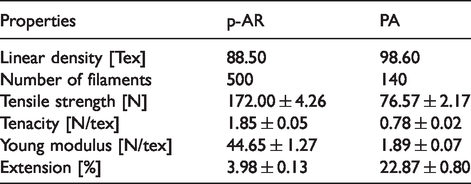
Para-aramide (p-AR) fiber yarn Standard TWARON® 2000 (88.5 Tex, 500 monofilaments) and high tenacity polyamide (PA) fiber yarn (98.6 Tex, 140 monofilaments), were used to produce weft knitted fabrics with and without auxetic behavior. The yarns were supplied by TEIJIN Company (Arnhem, the Netherland) and RHODIA Company (Lisboa, Portugal), respectively. Mechanical and physical properties of the p-AR and PA fibers used in this study are presented in Table 1. 19
Physical and mechanical properties of p-AR and PA yarns.
Specimen preparation
Knitted fabrics
In this study, a V-bed knitting machine, 10-gauge Stoll model CMS TC (Stoll GmbH & Co., Reutlingen, Germany), was used to manufacture auxetic knitted fabrics structure from p-AR and PA fibers yarns. 100% p-AR and hybrid (47% p-AR and 53% PA) fabrics were produced. The hybrid fabrics were produced combining p-AR and PA yarns during the manufacture. The architecture of the samples was jersey and an auxetic pattern based on a purl structure through a zigzag organization, like parallelograms, on the face and back loops. The structure tends to form a three-dimensional geometry after the knitting process. 14 , 30 All weft-knitted fabrics were produced using the same machine parameters, such as take-down load and structural parameters, such as loop length and yarn density.
Composites
The epoxy based on Biresin® CR83 resin and catalyst Biresin CH83-2 were used to manufacture the composites. Epoxy resin has been selected in this study due to its excellent combination of properties such as exceptional toughness, adhesion, thermal and chemical resistance. Besides, this type of thermoset polymer finds application in several fields, especially when it comes to technical textiles. 31
Before impregnation, samples were conditioned for thirty days at 20 ± 1°C and 65% humidity. This extended relaxation time ensured that the three-dimensional effect of the auxetic fabrics was achieved.
The composites were produced using the hand lay-up technique. After the manually impregnation by pouring the epoxy resin on top of each fabric face, the knitted fabrics were placed on a planar grid, to remove the excess of resin. In this way the geometry of auxetic knitted fabric was preserved. Knitted fabrics impregnated with epoxy resin were cured at room temperature for seven days.
Figure 1 illustrates the composites obtained. On the left side are the composites produced from p-AR and on the right from hybrid fabrics (47% p-AR and 53% PA).
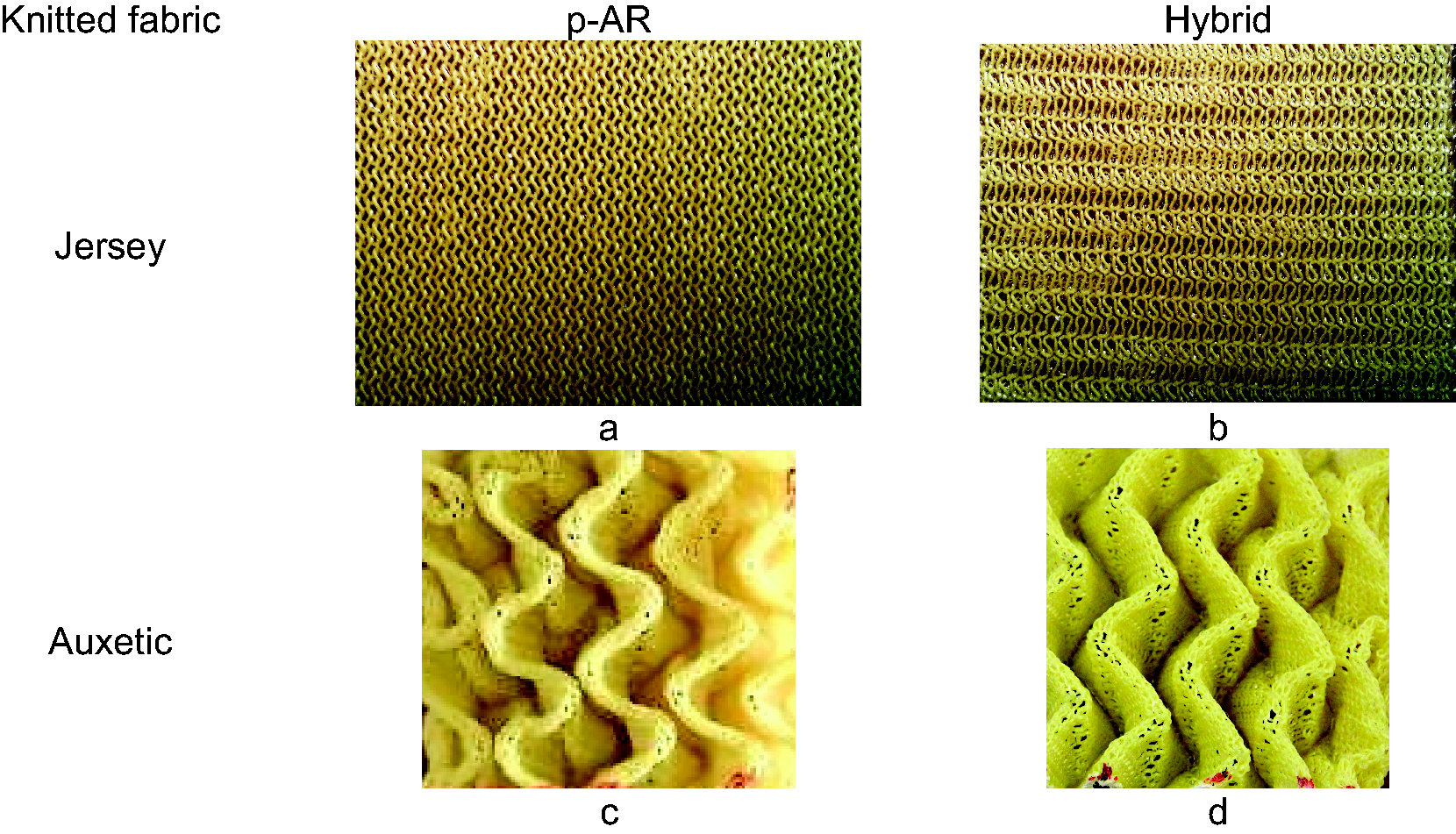
Composites produced with epoxy resin: jersey (a and b); auxetic pattern (c and d).
At the end of the preparation process, the thickness of each composite was measured. It is important to mention that the thickness of the auxetic knitted fabric was measured considering only the fabric and not in its tridimensional state. The fiber weight fraction of the composites reinforced with knitted fabrics is obtained by the difference between the weight of the composite after (post cure) and before resin application. The thickness and fiber weight fraction of the composites are presented in Table 2. Despite p-AR yarn has a lower count number than PA yarn, for the same structure the thickness presented in Table 2 is slightly greater for composites reinforced with p-AR knitted fabrics. However, it is important to note that the stiffness of p-AR yarns are greater than PA and can influence this characteristic.
Properties of the composites developed.

Evaluation of the Poisson’s ratio in the knitted fabrics and composites
In the literature, it is possible to find distinct methods to evaluate the deformation of auxetic materials produced from knitted fabrics.
32
,
33
For the evaluation of the Poisson’s ratio in knitted fabrics is necessary to mark reference points along the coursewise and walewise direction, either in knitted fabrics or developed composites. Calculations of the axial strains in the coursewise (Ɛy) and walewise (Ɛx) directions were performed using equations (1) and (2), respectively.
30


Where 
The maximum NPR obtained during the whole deformation cycle was considered and the average of the values obtained for three samples of each group was calculated. 19
Drop weight dart impact tests
For the impact tests, an instrumented drop-weight impact testing machine was used (Fractovis Plus Impact, Pianezza, Italy). The impact test of this machine is suitable for a wide variety of applications requiring low to high impact energies. The total mass of the impactor was 10.044 kg (including impactor and crosshead mass). The hemispherical impactor nose of 20 mm in diameter was dropped. The drop height of 500 mm was investigated to describe the impact behavior under stress rate. All drop weight impact tests were performed at 3.13 m/s velocity. Square specimens of side length of 60 mm were cut from the composites laminate. The specimens were clamped horizontally on an annular support. All tests were performed according to Standard ISO 6603. 34 All samples were analyzed in triplicate. The load was obtained as a function of the impact time, as well as the energy curve absorbed by each group of samples.
The scheme of a drop weight impact tests is presented in Figure 2.
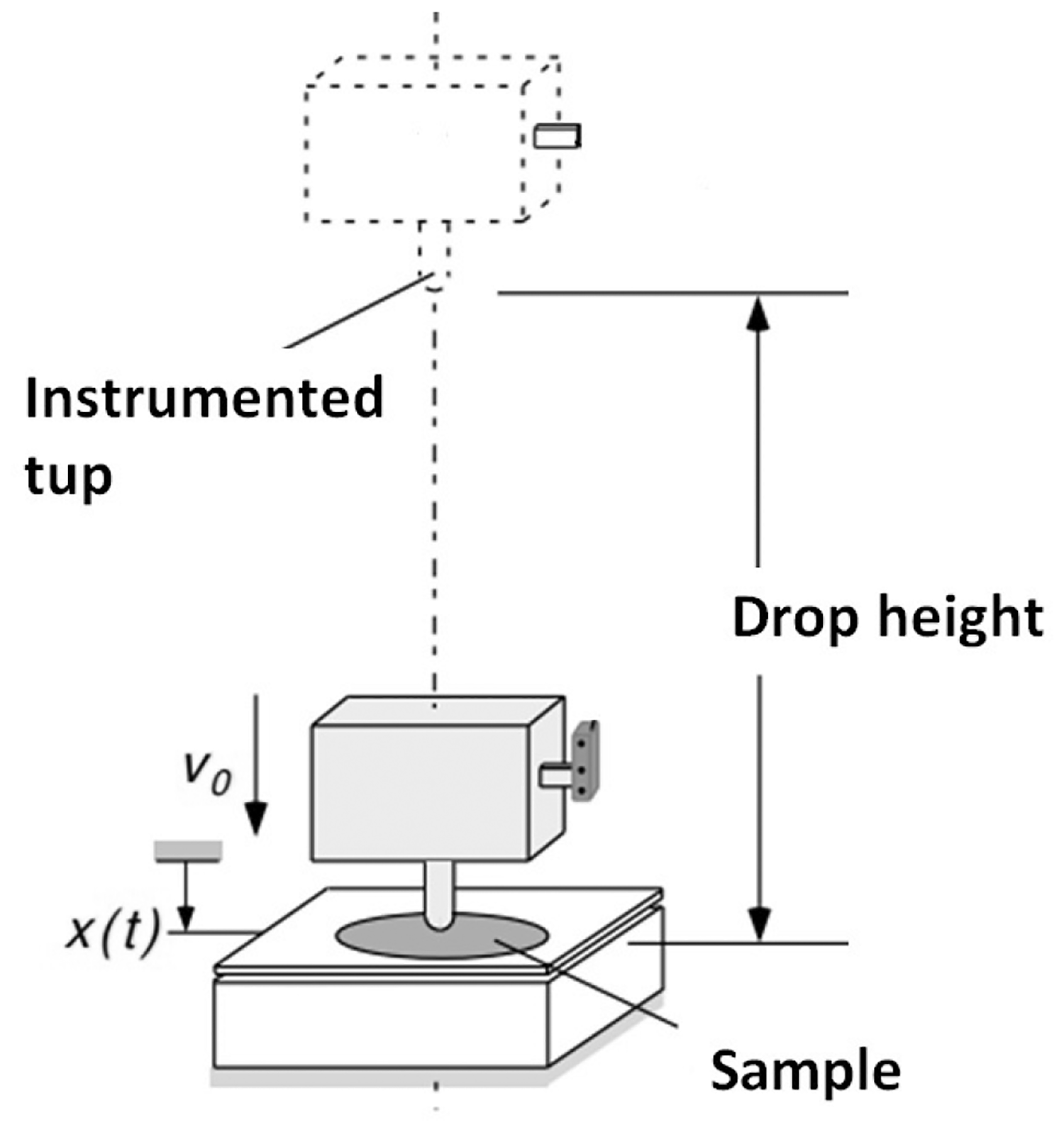
Scheme of a drop weight impact test machine, adapted from Duell. 35
Damage evaluation
Visual inspection of the samples, as well as careful study of the videos obtained during the test was carried out to qualitatively assess the extent and shape of impact damage. Besides, the morphological analysis of the composites was examined using an ultrahigh resolution field emission gun scanning electron microscopy, NOVA 1 and 200 micro SEM (FEI, Eindhoven, the Netherlands). Samples were covered with a film of Au–Pd (80– 20 wt%) in a high-resolution sputter coater, 208HR Cressington Company, coupled to a MTM-20 Cressington High Resolution Thickness Controller (Cressington Company, Watford, United Kingdom).
Results and discussions
The NPR values obtained during the whole deformation cycle of the auxetic knitted fabric produced using p-AR and hybrid yarns were considered before and after the resin impregnation as can be seen in our previous work. 19 From the highest values obtained, the average and standard deviation were calculated (Table 3). According to literature is possible to find some scientific works that developed composites with NPR.27–29 Although not used in this work, it is important to relate that finite element models for auxetics composites reinforced with the following structures: warp knitted spacer, 3D woven fabric and a tubular braided, were successfully built up and validated by experiments.36–38
Comparison between the NPR for the auxetic fabrics and composites reinforced with p-AR.

The results obtained show that, although the auxetic behavior decreases, it is maintained in the produced composites (from -0.713 in the fabric to -0.354 in the composite). In addition, the use of high stiffness filaments, such as p-AR, in the production of the auxetic weft knitted fabric, resulted in a strong improvement of the NPR in the composite when compared to hybrid materials.
Energy absorption
Three specimens were checked in the impact test machine in each group. The load and energy as a function of time were plotted for samples of jersey and auxetic knitted fabrics with different materials composition using epoxy resin. The representative curves of the composites are shown in Figures 3 and 4. The average values of the impact test results for jersey and auxetic knitted fabrics reinforced specimens are summarized in Table 4.
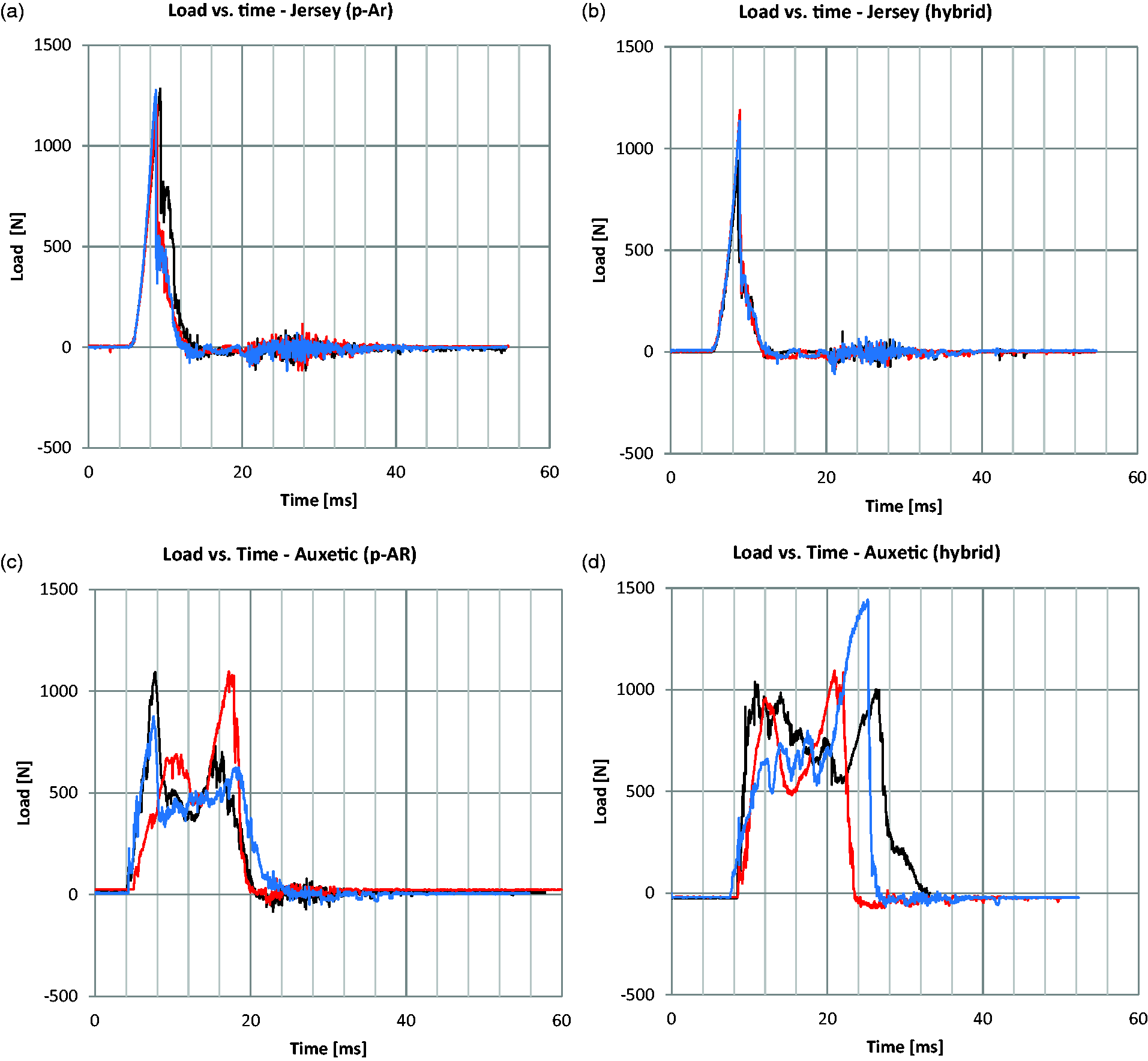
Load vs. time curve obtained for the jersey (a and b) and auxetic (c and d) types of composites tested using different materials composition.
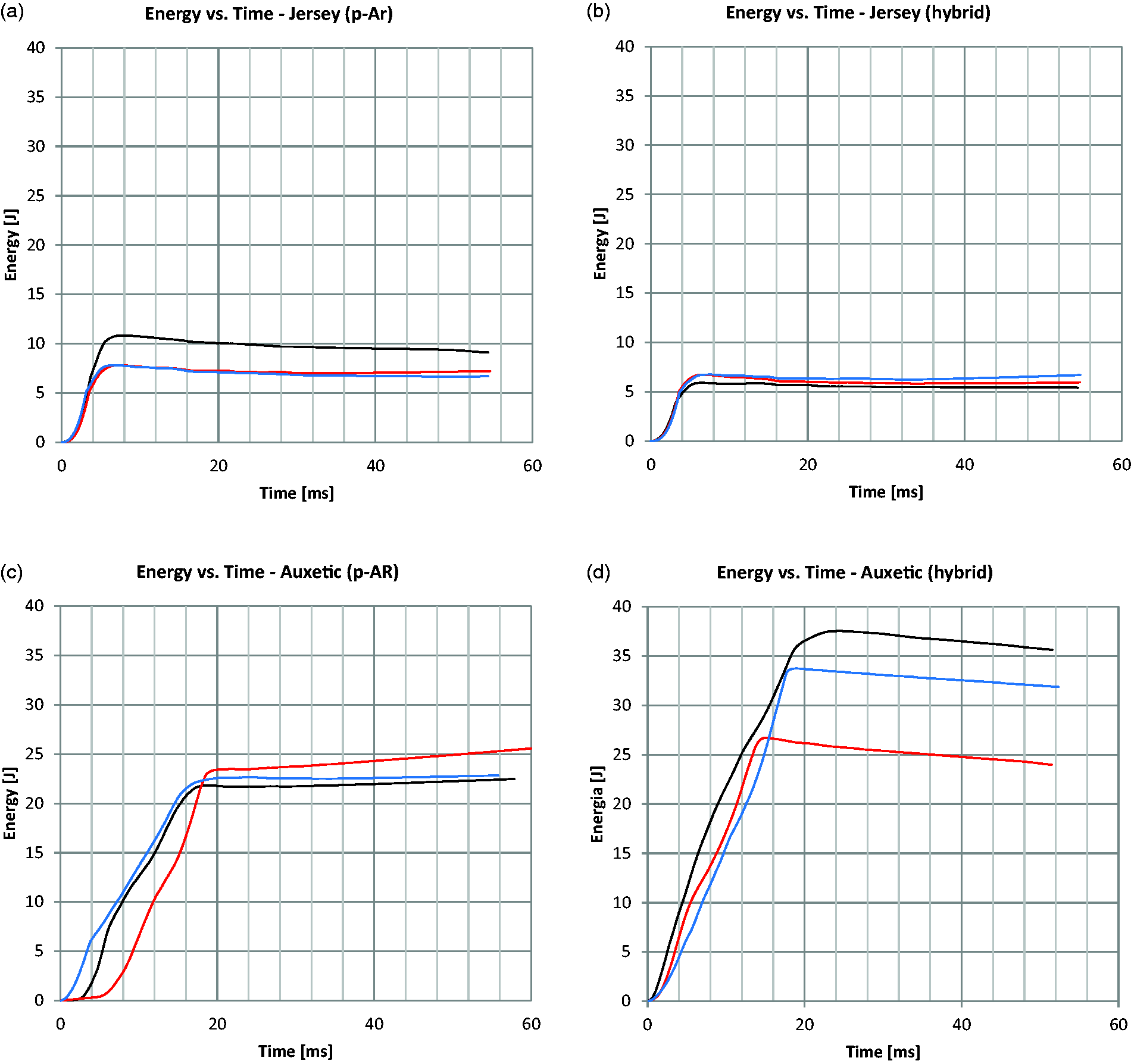
Curves of the energy vs. time during impact tests obtained from the jersey (a and b) and auxetic (c and d) types of composites tested using different material composition.
Energy absorption from samples with epoxy resin.

As can be seen, single jersey reinforced composites show a brittle behavior (Figure 3(a) and (b)) while the auxetic composites show a complex behavior with some ductility (Figure 3(c) and (d)). The impact behavior shows two different peaks in consequence of the tridimensional (3 D) geometry of the composite obtained. This behavior indicates a larger ability to absorb energy during impact. It can be also observed in the graphics in Figure 3(a) and (b) that the contact force increases until the penetration occurs and then decreases until the perforation happens.
The average peak load of the auxetic textile composite is lower than the jersey composite (Table 4). Moreover, for the same impact energy, the contact time increases from jersey to auxetic knitted fabrics, regardless of the materials’ composition.
The time required for the onset of damage and propagation through the composite until its perforation is approximately 6-8ms for jersey composites, while, for the auxetic composites it is approximately 18-24ms. Therefore, for the same impact energy, the contact time clearly depends on the knitted pattern, as can be observed in Figure 4.
Furthermore, Figure 4 shows the variations in the energy absorbed by the composites. As expected, for all the auxetic fabric reinforced specimens, the total absorbed energy increases compared to jersey reinforced specimens. According to, 28 longer contact time can help reduce more force and absorb more energy. Between the two types of structures used in this study, auxetic textile composite could help to store the impact energy and then release it for a longer time, resulting in a reduction in the contact force (peak load) (Figure 4). Therefore, the auxetic textile composite has better impact performance than the jersey textile composite. This result is in line with the literature, which states that one of the most important properties of the auxetic materials is its ability to absorb energy during impact. 39 , 40 This occurs because when an auxetic material is submitted to an impact load in one direction, it also contracts laterally, creating a denser area in the material, which is more resistant to indentation. 39 , 41
Table 4 summarizes the average values (energy absorption) obtained in samples with epoxy resin. The auxetic p-AR and hybrid knitted reinforced samples absorb total energies of 22.58 J and 25.49 J, respectively, which is much higher than the values obtained from the jersey knitted fabric of 8.55 J and 6.29 J. For p-AR composition, this growth from 8,55 to 22,58 represents an increase of approximately 2,5 times. For the hybrid knitted fabrics this growth from 6,20 to 25,49 represents an increase of 4,1 times.
The use of PA yarn in the composition of the hybrid knitted fabrics did not influence significantly the results of energy absorption when compared to specimens produced with p-AR in both types of patterns, considering the mean values and standard deviation obtained. This fact may be important for the use of the hybrid fabric developed as reinforcement in composite materials, with low weight along with a lower cost.
Impact damage
Figure 5 shows the appearance of the damaged surface of the composites after impact using the nose of the hemispherical impactor. The results showed that the maximum impact energy in all tests was high enough to produce total penetration by the impactor in all specimens.
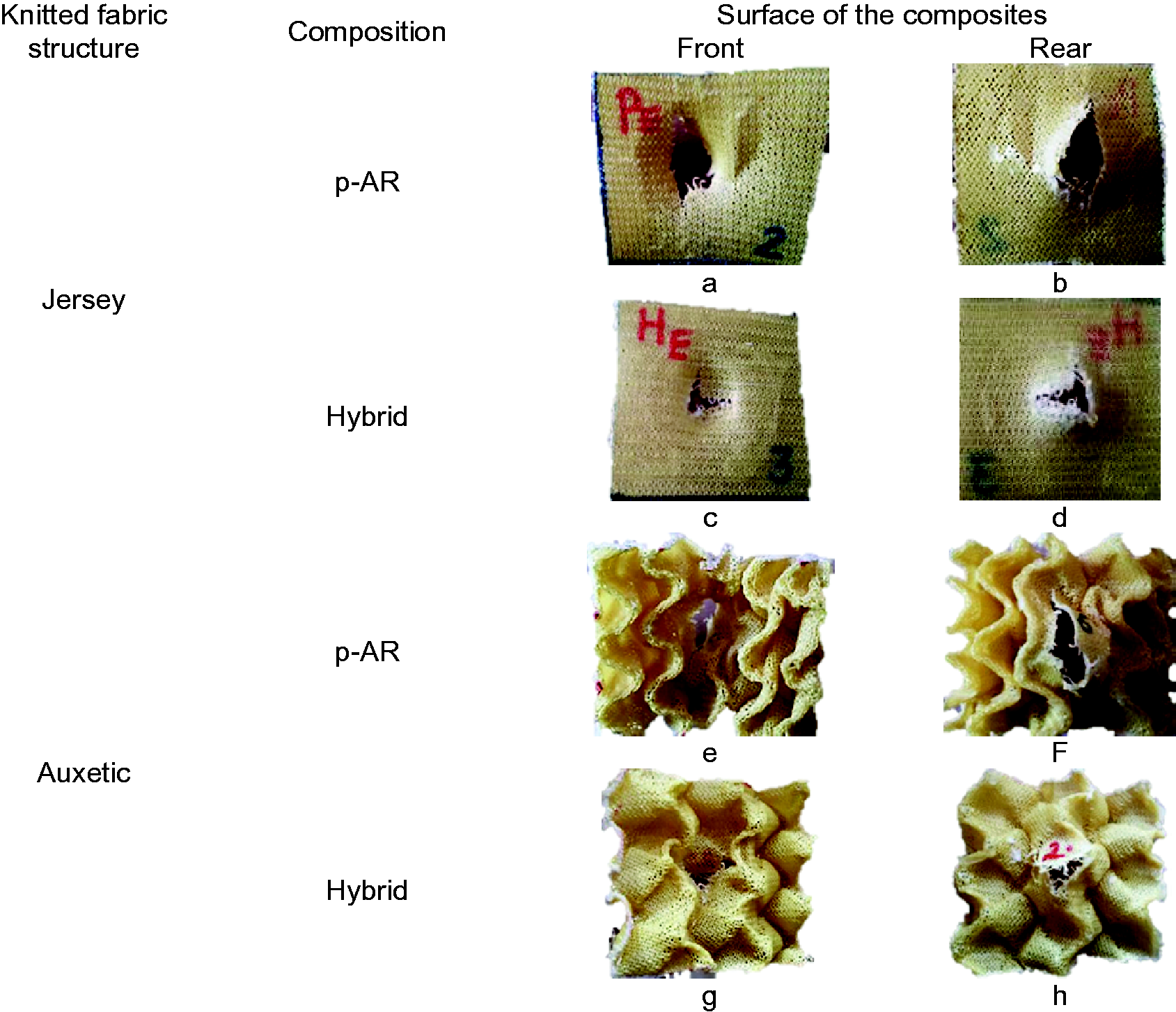
Comparison between the damaged surface of the composites: jersey (a–d); auxetic (e–g) using different material compositions.
It is interesting to note that for the jersey reinforced composite (Figure 5(a) to (d)), the samples were almost non-deformed due to their stiffness, but they were tearing during the impact test. For the auxetic composites (Figure 5(e) to (h)), as expected, specimens were more deformed than the jersey composites. This can be justified due to the 3 D configuration of the sample that allows a larger structural deformation of the composite.
For the p-AR composites, regardless of the weft knitted structure, the tear dimension was greater than in the hybrid composites. The images show a preferred direction of failure, indicating an elongation, in the front and rear side (Figure 5(a), (b), (e), and (f)). According to the literature, 42 elongated failures, flowing in the fibers' directions are associated with the fiber-matrix interface rupture and subsequent delamination. In this study doesn’t occurs delamination. But probably the use of the p-AR yarn increases the influence of the rupture of the fiber-matrix. This morphological characteristic agrees that the influence of the rupture of the interface to the failure of a composite under impact arises from the middle surface to the tension side of the composite, i.e., to the rear surface. For the hybrid composites, the front and rear side have a rounded domed aspect, indicating a more homogeneous deformation (Figure 5(c), (d), (g), and (h)). This failure type is an indicative of matrix crushing.
According to the literature 43 impact damage in fiber reinforced composites involves four main failure modes: namely matrix cracking; delamination; fiber breakage; and penetration of the impacted surface. The main step in studying the impact behavior of composite materials is to characterize the type and extent of the damage induced in the impacted specimens. Several failure mechanisms can appear in the composite materials. SEM photographs of all the impacted specimens are shown in Figures 6 and 7.
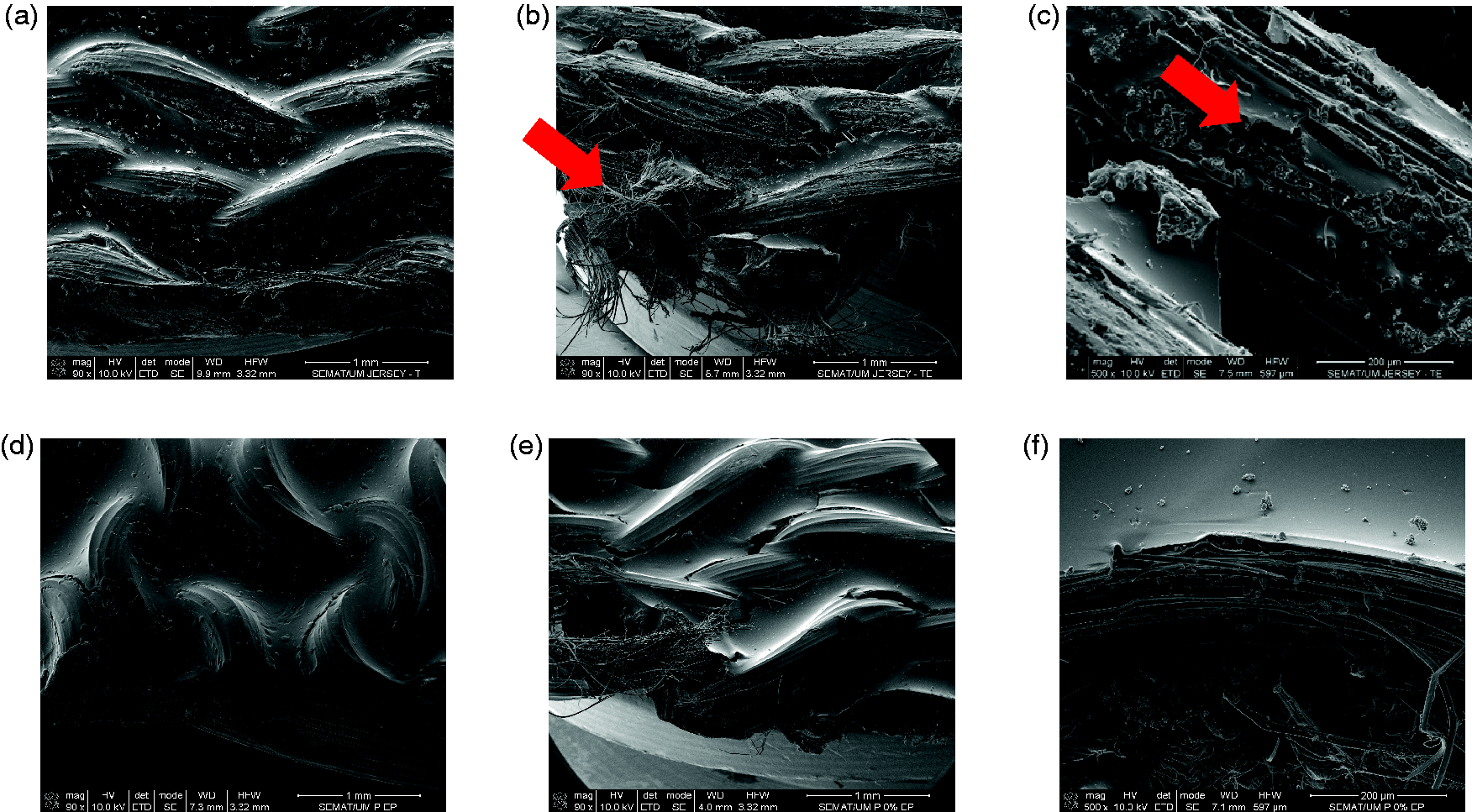
SEM image of the jersey (a–c) and auxetic (d–f) p-AR composite surface before and after impact test, respectively.
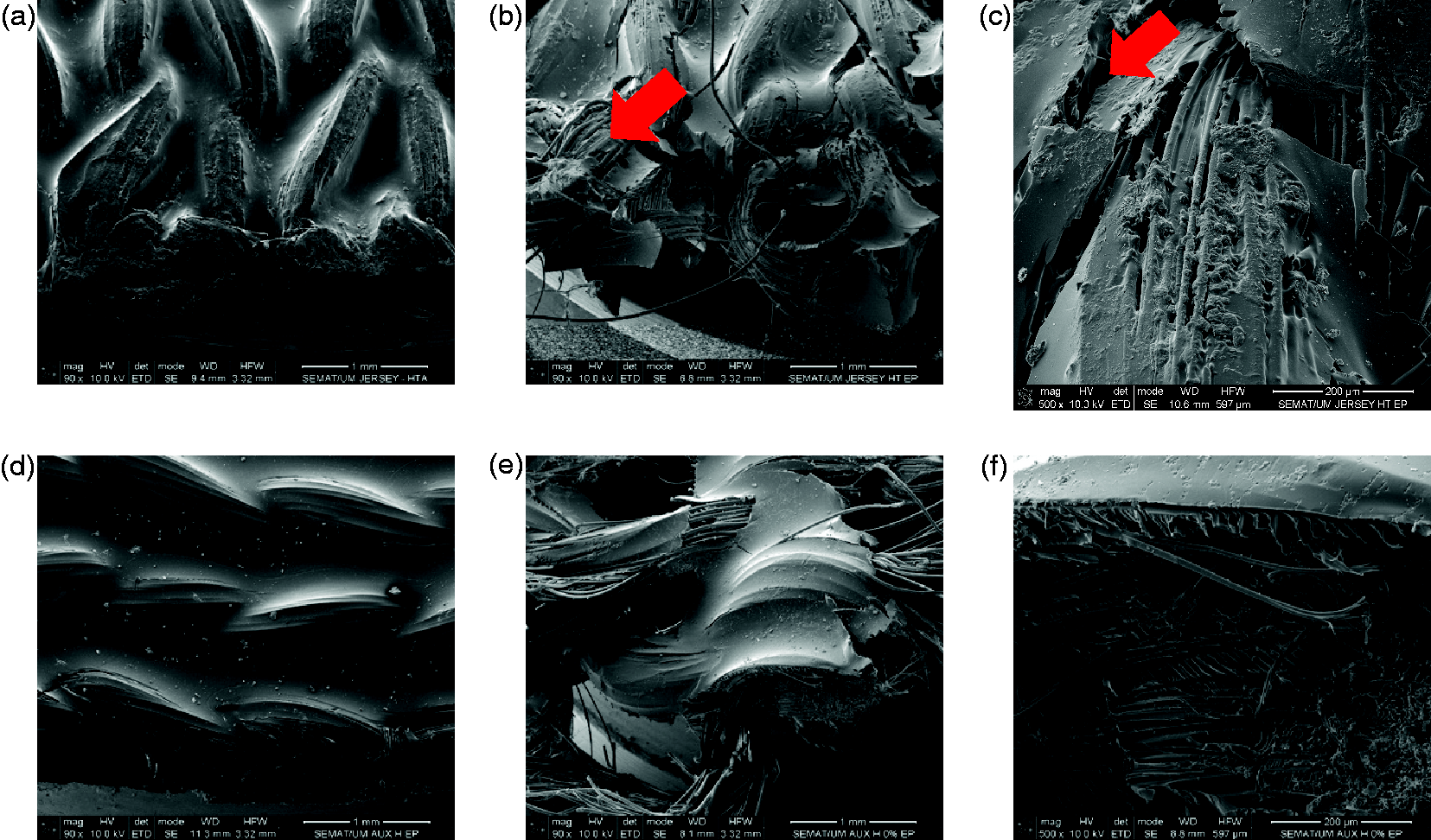
SEM image of the jersey (a–c) and auxetic (d–f) hybrid composite surface before and after impact test, respectively.
It is evident for these specimens that a combination of matrix cracking and fiber breakage is the predominant failure modes. In both figures, (a) and (d) represent the composites before the impact test. For the jersey composites, after the impact test, with a 90× magnification (Figures 6(b) and 7(b)) indicate fiber breakage (red arrows). With a 500× magnification (Figures 6(c) and 7(c)), it can be seen that there are vacant spaces (as shown in the image). These areas can indicate matrix debonding at the filament level and can lead to localized strain. However, with the same magnification, for the auxetic composites, it is not possible to observe these spaces mentioned before (Figures 6(f) and 7(f)). In auxetic composites it is also possible to observe the crack in the matrix (Figures 6(e) and Figure 7(e)).
However, with a 500× magnification, for the auxetic composites, it is not possible to observe these vacant spaces mentioned before (Figures 6(f) and Figure 7(f)). This situation corroborates with the graphs presented in Figure 3, which show that composites reinforced by auxetic knitted fabrics present a ductility behavior during the impact test. Unlike what occurs with composites reinforced by jersey knitted fabric, which present a more fragile behavior, justifying the matrix debonding, as shown in the SEM photographs. Therefore, images of auxetic composites (p-AR and hybrid), not show matrix debonding. In this way, the composite reinforced by the auxetic structure also provided a better structural integrity of the composite after impact.
Conclusions
In this study, composite fabrications with jersey and auxetic weft knitted fabrics using p-AR and PA yarns have been developed through hand lay-up using epoxy resin. The auxetic behavior was successfully transferred from the fabric to the composite developed (from -0.713 to -0,354 in p-AR composite). Impact test confirmed that the auxetic composites, regardless the material composition, due to the lower peak load, have an increase in the total energy absorption by auxetic textile structure compared to jersey reinforced specimens. The use of hybrid materials (p-AR/PA) can be an interesting alternative due the possibility to manufacture composites with the same characteristics, low weight along with a lower cost.
The sample structure developed with auxetic behavior has a great influence on energy absorption. The results indicate that the auxetic composites can improve considerably the energy absorption, representing an increase of approximately 2,5 and 4,0 times for p-AR and hybrid composites respectively, when compared with composites reinforced with jersey structure.
This confirms that the auxetic materials have a great potential to be applied in different areas, from medicine (stents and bandages) to materials where energy absorption is a key factor to be considered (military, personal protection, aerospace, among others).
These results indicate that the composites with auxetic behavior can provide the development of materials with innovative properties and better performance, mainly where energy absorption is a key factor to be considered.
Footnotes
Acknowledgements
We gratefully acknowledge the financial support from CAPES Foundation, Ministry of Education of Brazil, Caixa Postal 250, Brasília – DF 70040-020, Brazil, for the doctoral grant BEX 0978/12-4 and the Teijin Company for the TWARON® yarn.
Declaration of Conflicting Interests
The author(s) declared no potential conflicts of interest with respect to the research, authorship, and/or publication of this article.
Funding
The author(s) received no financial support for the research, authorship, and/or publication of this article.
