







Abstract
A multi-step homogenization approach is presented to predict the off-axis creep response of hybrid polymer matrix composites (HPMCs) reinforced with unidirectional carbon fibers and silica nanoparticles. The first step deals with evaluating the viscoelastic properties of silica nanoparticle-polymer nanocomposite using the Mori-Tanaka micromechanical model. Two essential features affecting the behavior, including silica nanoparticle agglomeration and interphase region generated due to the interaction between the nanoparticle and polymer are taken into account. In the second step, the off-axis viscoelastic behavior of HPMCs is extracted from the homogenized nanocomposite and carbon fiber properties using a unit cell-based micromechanical model. Some comparative studies between the predictions and available experiment are directed to verify the homogenization process. All the model predictions are in good agreement with the experimental data. The results indicate that with increasing the fiber off-axis angle from 0° to 90°, the presence of silica nanoparticles leads to a reduction in the HPMC creep compliance. Also, the proposed multi-step homogenization approach is applied to investigate the effects of volume fraction, size and agglomeration degree of silica nanoparticles; thickness and material properties of the interphase region; and off-axis angle and volume fraction of the carbon fiber on the HPMC creep response.
Keywords
Introduction
Fiber-reinforced polymer matrix composites (FRPMCs) are widely used in many engineering fields such as aerospace, automotive, wind energy, and sporting goods industries due to their good mechanical properties such as high specific strength and modulus, low density, high corrosion resistance and low manufacturing costs.1–4 FRPMCs show superior axial performance with relatively poor transverse mechanical response.5–8 This issue is a main limitation of these advanced materials in engineering applications.
Mixture of two or more types of reinforcements in common matrices to produce hybrid polymer composite systems may generate materials which have the combined properties of individual composites. So, to resolve the problem of above limitation involved in FRPMCs, several kinds of nano-sized reinforcements have been used into them.9–12 In this frame, the substantial attention is being paid to the performance of fiber-reinforced hybrid polymer matrix composites (HPMCs) containing silica nanoparticles at various in-service conditions. The advantage of using the nano-sized silica fillers with low concentration into the polymer-based composites is that the particles do not rise the viscosity of the resin considerably, and do not display thixotropic properties. 13
Kinloch et al. 14 have shown that mode I fracture energy of hybrid glass fiber-reinforced composite containing 10 wt.% silica nanoparticles is 1015 J/m2. Naito 15 evaluated the tensile properties and fracture behavior of hybrid carbon fiber-reinforced polyimide composites containing silica nanoparticles. Experimental outcomes revealed that the axial tensile modulus of hybrid carbon fiber-polyimide composites were slightly improved by adding the ceramic nanoparticles. 15 Moreover, in another experimental research, improvement in energy absorption and interfacial shear strength of hybrid glass fiber-epoxy composite specimens due to the presence of silica nanoparticles was reported by Gao et al. 16 Furthermore, Landowski et al. 17 tested the low velocity impact behavior of silica nanoparticle enriched-epoxy matrix composites reinforced by carbon fiber for naval applications. Uddin and Sun 18 revealed that 15 wt% silica nanoparticles improved the longitudinal compressive strength of hybrid E-glass fiber-reinforced composites by 30-40%. Tang et al. 19 also measured the tensile strength and elastic modulus in the transverse direction as well as mode I and mode II interlaminar fracture toughness of hybrid carbon fiber-reinforced epoxy systems containing 10 wt% and 20 wt% nanoscale silica particles. Sprenger 20 has performed a comprehensive review in the case of mechanical properties of silica nanoparticle/fiber-reinforced HPMCs. There is not any study available for predicting the general off-axis creep response of HPMCs reinforced by unidirectional fibers and nanoscale particles.
Because of the inherent viscoelastic behavior of polymers, for polymer-based composite materials, creep is a very important phenomenon, which specifies the durability of the material even at a static loading condition.21,22 It is mainly associated with the movement of the polymeric chains like slippage and reorientation. So, evaluation of viscoelastic behavior is an important part of the long-term mechanical properties of polymer-based heterogeneous materials.23–25 A major challenge in the field of hybrid composite systems has been recognized to be formation of agglomeration of silica nanoparticles which deteriorates the mechanical performance.17,20,26 Also, the mechanical response of HPMCs may be affected by the interfacial interaction between the nanoparticles and surrounding polymer matrix.27–30 Homogenization techniques in both microscale31–34 and nanoscale35–38 sound promising. Overall, micromechanical models can predict the effective viscoelastic properties of heterogeneous materials based on the constituents’ material properties, volume fraction, and interactions between the phases. For example, Li et al. 39 estimated the linearly viscoelastic properties of carbon nanotube (CNT)-reinforced polyimide nanocomposites using Mori-Tanaka micromechanics model. Li and Zhang 40 developed a semi-analytical model using the generalized method of cell (GMC) to predict the relaxation properties of polymer composites consisting of viscoelastic matrices and transversely isotropic elastic graphite fibers. Based on the Halpin-Tsai and Nielsen micromechanical models, Shokrieh and Esmkhani 41 predicted the fatigue life of hybrid glass fiber-reinforced epoxy composites as well.
The main aim of this research is predicting the creep response of unidirectional carbon fiber/silica nanoparticle-reinforced HPMCs under off-axis loading condition by a new multi-step homogenization approach. The paper is organized as follows. The linear viscoelastic theory employed to describe the polymer matrix behavior is introduced in the next section. Also, in the Multi-step homogenization approach section, the details of the multi-step homogenization approach are stated. Several cases of parametric analyses for the HPMCs are presented in the Results and discussion section. The results of the proposed multi-step homogenization approach are validated using experimental data available in the literature. Finally, the conclusions of this research are summarized in the last section.
Linear viscoelastic theory for polymer matrix
Before explaining the homogenization framework, it is key to recognize the constitutive laws of the constituent’s material of hybrid composite system. In the present work, at low stress levels the polymer matrix usually possesses linear viscoelastic behavior, while the nanoparticles and the carbon fibers behave almost elastically. The viscoelastic materials demonstrate time-dependent behavior, so their elastic response depends on the rate of the applied load.36,39,40 Moreover, these materials can show creep in response to the fixed stress, and time-dependent stress relaxation subjected to the fixed strain. The constitutive equation for the linear viscoelastic polymer materials can be expressed in the time domain as follows36,39






For an isotropic polymer material which shows linear viscoelastic behavior, the creep function is given as22,36,39


Thus, the elastic modulus can be expressed in the transformed domain as

Multi-step homogenization approach
The first step in the homogenization analysis of HPMC is to predict the viscoelastic properties of silica nanoparticle-reinforced polymer nanocomposite. In this step, in order to obtain the effective viscoelastic properties of polymer nanocomposite precisely, the homogenization analysis needs to involve two important microstructural features, including the nanoparticle agglomeration and the interfacial zone between the nanoparticles and surrounding polymer. The Mori-Tanaka micromechanical model is used to obtain the nanocomposite viscoelastic properties in the first step. The second step of the homogenization process would provide the effective viscoelastic properties of carbon fiber-reinforced HPMC considering polymer nanocomposite as the matrix phase and unidirectional carbon fiber as the reinforcement. In this step, a unit cell-based micromechanical model will be developed to extract the creep response of HPMC subjected to off-axis loading. The idealized microstructure of HPMC is schematically shown in Figure 1.
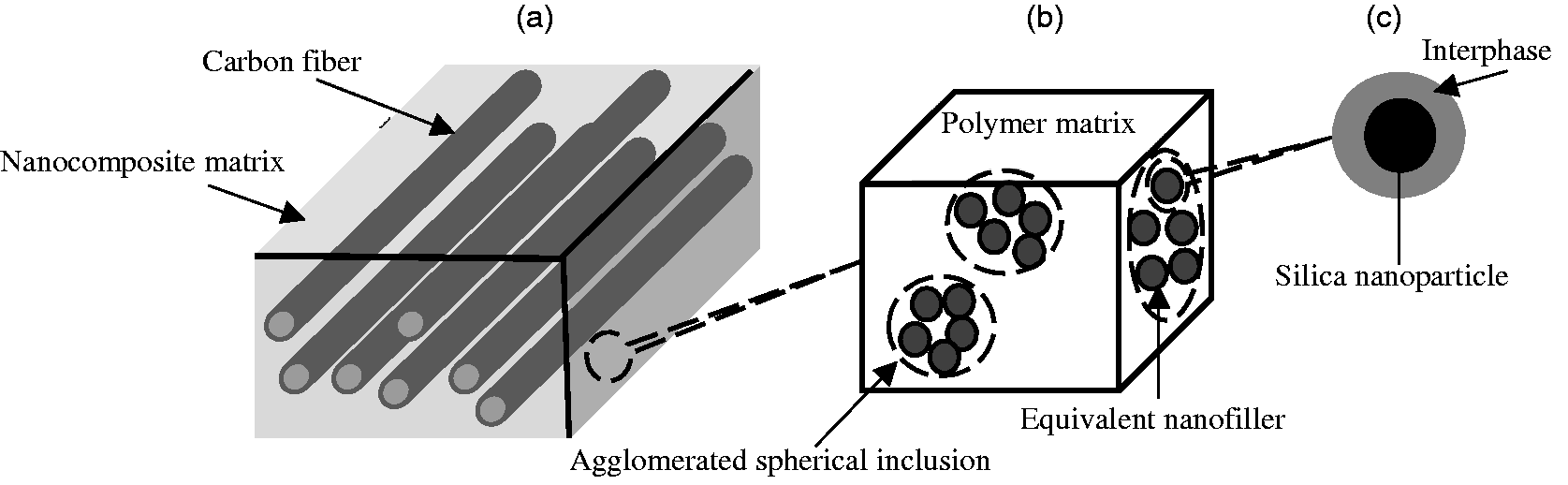
A schematic sketch of microstructure of HPMCs under consideration.
Silica nanoparticle-polymer nanocomposites
This section presents the Mori-Tanaka analytical micromechanics model to estimate the effective viscoelastic properties of silica nanoparticle-reinforced polymer composites which are required as inputs for the HPMC analysis. As mentioned earlier, the silica nanoparticles tend to agglomerate.17,20,26,27 Consequently, consideration of the nanoparticle agglomeration into the micromechanical simulation is extremely needed. For this purpose, a two-scale micromechanical modeling is suggested to evaluate the viscoelastic behavior of polymer nanocomposites containing nanoscale silica particles. The small-scale consists of the agglomerated nanoparticle-polymer matrix which in turn serves as spherical inclusion into the pure polymer matrix to make the final polymer nanocomposite at the large scale as shown in Figure 1(b). So, the entire polymer nanocomposite is divided into two domains, i.e. the nanoparticle-free polymer matrix denoted as phase

Phase

In addition, it is assumed that

In the larger-scale problem of silica nanoparticle-reinforced nanocomposite simulation, the stress-strain relation in the transformed domain for polymer matrix containing spherical inclusions is given by



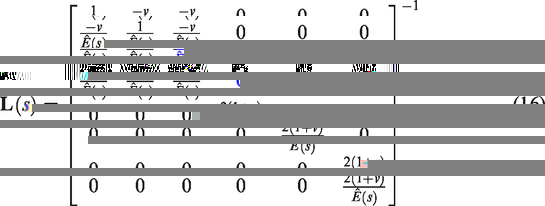
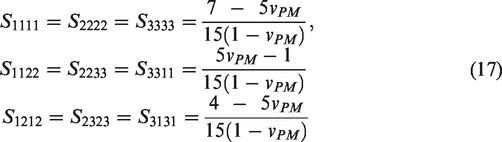

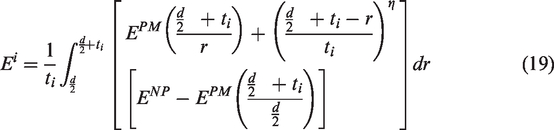
Now, the viscoelastic properties of spherical inclusion that consists of the rest of polymer matrix and the nano-sized silica particles shown in Figure 1(b) must be determined. It has been mentioned that the interphase region formed due to the interaction of nanoparticle and polymer matrix atoms at the nano scale during manufacture of the composite can significantly affect the mechanical properties.27–30,35 In this regards, proper modeling of the interphase which has properties between those of the polymeric matrix and those of the nanoparticles is important. The interphase Young’s modulus
Carbon fiber-reinforced HPMCs
This section presents the simplified unit cell (SUC) micromechanics method to predict the effective viscoelastic response of carbon fiber-reinforced HPMCs under off-axis loading. The SUC model is an analytical micromechanical method to predict the bulk properties of heterogeneous materials.45–47
As mentioned in the previous section, the HPMC system can be viewed as a composite material in which the carbon fibers are embedded in the silica nanoparticle-polymer nanocomposite matrix. Figure 2(a) illustrates a typical off-axis coupon of HPMC under consideration. The carbon fibers are placed at an angle
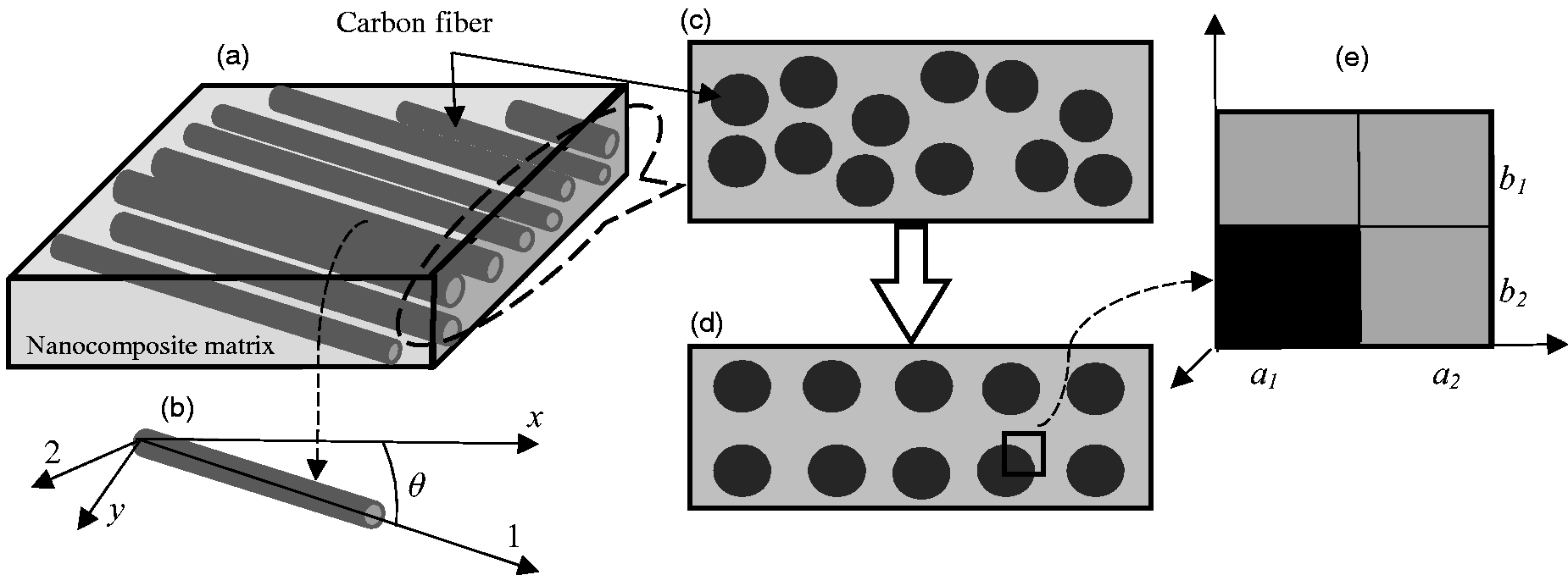
(a) A typical off-axis coupon of HPMC, (b) a carbon fiber oriented at angle θ (c) a schematic diagram of a real HPMC cross-section, (d) a schematic diagram of an idealized cross-section of HPMC with square array packing, and (e) the RVE of the SUC model.
Now, the micromechanical formulations of the SUC model are described in the transformed domain for the RVE presented in Figure 2(e). Besides the perfect bonding condition, another assumption in the SUC model is that the displacement components are linear. Also, the applied normal stress on the RVE does not lead to any shear stress inside the RVE sub-cells and vice versa.35,36,45–48 The stress components in the principal material coordinate are expressed from the applied stress



Based on the compatibility of the local strains

Imposition of the compatibility of the displacements inside the RVE which is resulted from the perfect bonding conditions between the subcells leads to

where

where

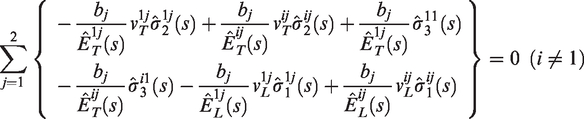
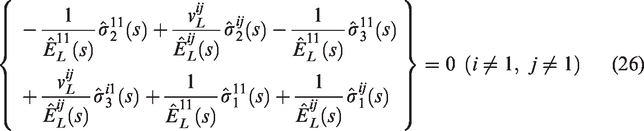
Note that index L and T denote the axial and transverse directions, respectively. Combination of equation (26) with equations (21) and (22) leads to a system of ten linear equations with the same number of unknowns in the transformed domain as follows


Results and discussion
Some comparative examinations with experimental measurements existing in the open literature are performed. As a first endeavor to validate the developed homogenization approach, the predictions of the creep compliance for silica nanoparticle-polyimide nanocomposites are compared with experimental data.
50
Wang and Zhao
50
synthesized some specimens of silica polyimide nanocomposites by an improved sol-gel technique and evaluated their creep behavior. The experimental data for creep strain of polyimide nanocomposites was informed for three different weight fractions of nano-sized silica particle, including 1, 3 and 8%.
50
Based on the microstructural investigation performed on the nanocomposite specimens, at the low level of nanoparticle content, i.e. 3 wt%, there was no evidence of any the nanoparticle agglomeration within the polyimide nanocomposites. However, it was observed that at the high level of silica nanoparticle weight fraction, i.e. 8 wt%, local agglomeration of the nano-sized nanoparticles exists.
51
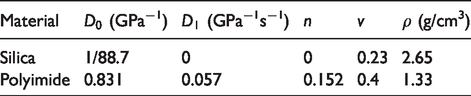
The material properties of the polyimide matrix as a viscoelastic material and the silica nanoparticle are given in Table 1.27,50,51 Average of the silica nanoparticle diameter is equal to 50 nm.
51
Comparison between the model predictions and the experiment
50
for the creep compliance of polyimide nanocomposites reinforced with 1.53 vol% and 4.182 vol% is shown in Figure 3(a) and (b), respectively. The nanoparticle weight fraction
50
is converted into volume fraction by a nanoparticle density of 2.65 g/cm3, and polyimide of 1.33 g/cm3. The results of the proposed homogenization approach are given for two different types of the interphase conditions, including elastic interphase and viscoelastic interphase as well as without interphase. The thickness and material parameters of the interphase region are considered to be
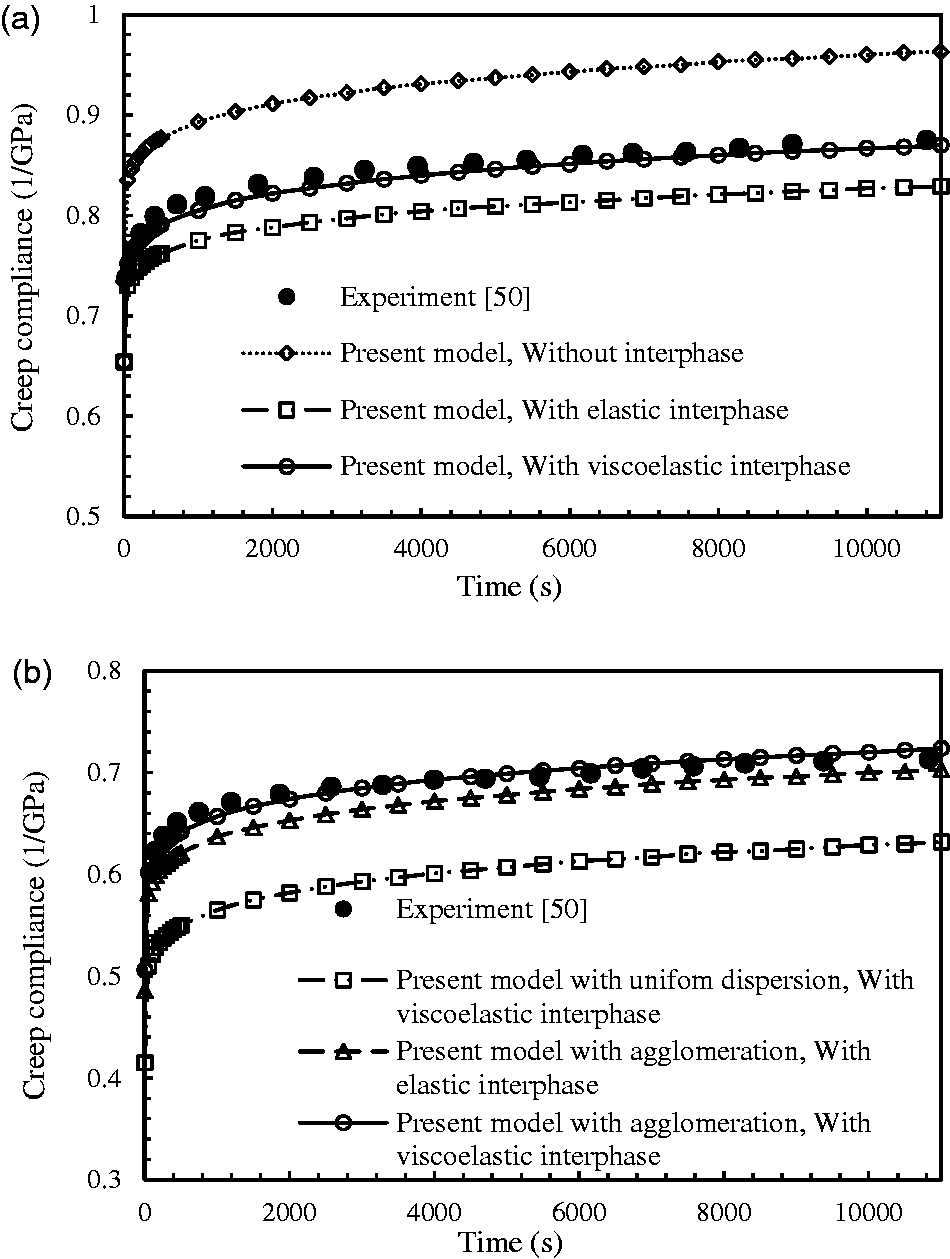
Comparison between the model predictions and experiment 50 for the creep compliance of silica nanoparticle-polyimide nanocomposites. The silica nanoparticle volume fractions are equal to (a) 1.53% and (b) 4.182%.
Second verification is related to a comparison between the model predictions and experimental measurements of the creep response of T300/934 graphite/epoxy composites under off-axis loading. Yancey and Pindera
52
experimentally evaluated the creep compliance of unidirectional graphite fiber-reinforced epoxy composites for two different off-axis angles, including
Material properties of 934 epoxy. 52

The material properties of T300 graphite fiber. 52

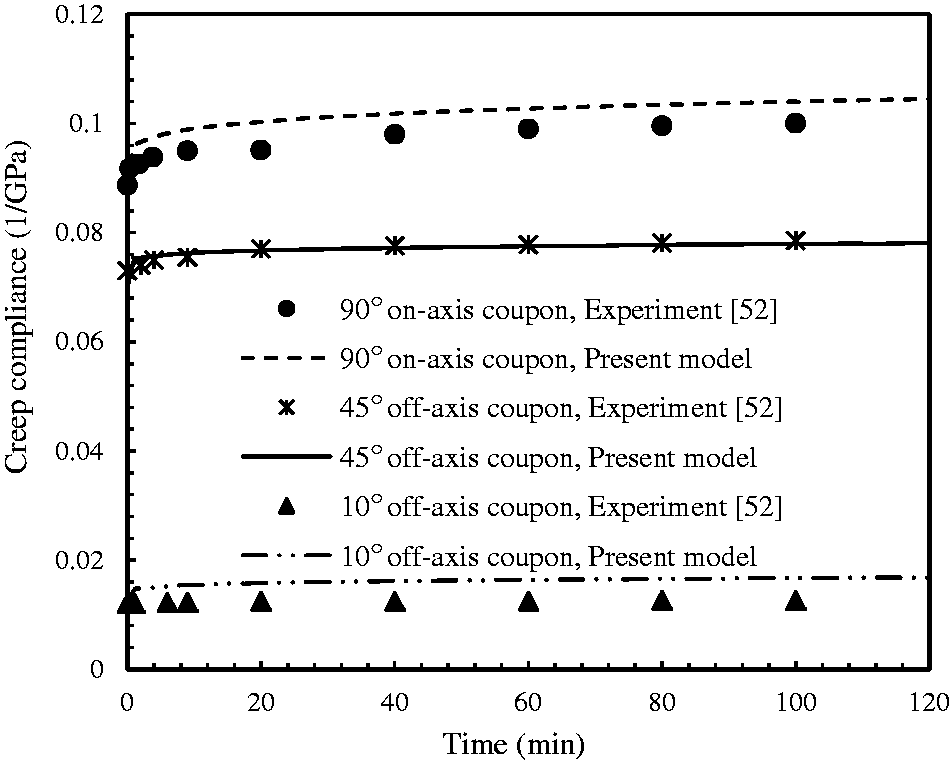
Comparison between the model predictions and experiment 52 for the creep compliance of T300/934 graphite/epoxy composites.
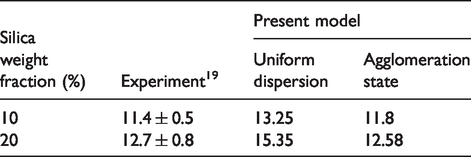
The last comparison has been performed between the predictions of the micromechanical modeling approach and experimental data
19
in case of the transverse elastic modulus of diglycidyl ether of bisphenol A (DGEBA) epoxy composites reinforced by unidirectional carbon fibers and nanoscale silica particles. The volume fraction of carbon fiber is 65%, and the experimental data was informed for two silica nanoparticle weight fractions, including 10% and 20%.
19
The mechanical properties of carbon fiber are given in Table 4,
54
while the material properties of silica nanoparticle are taken from Table 1. The silica nanoparticles have an average particle size of about 20 nm.
19
Also, the elastic modulus, Poisson’s ratio and density of epoxy resin are 3.6 GPa, 0.35 and 1.17 g/cm3.
19
The values of
The material properties of carbon fiber. 54

Comparison between the model predictions and experiment 19 for the transverse elastic modulus (GPa) of the hybrid DGEBA epoxy composites.
After verifying the validity of the developed homogenization approach, several parametric studies are conducted to examine the role of critical microstructural features in the creep performance of HPMCs made of epoxy resin, unidirectional carbon fibers and nanoscale silica particles. The material properties of silica, 934 epoxy and carbon fiber are taken from Table 1,
27
Table 2
52
and Table 4,
54
respectively. The average diameter of silica nanoparticles is chosen to be 20 nm. Also, the thickness and material parameters of the viscoelastic interphase region are considered to be
First, the predicted creep response of the HPMCs for 0° and 90°on-axis coupons as well as two off-axis coupons with off-axis angle equal to
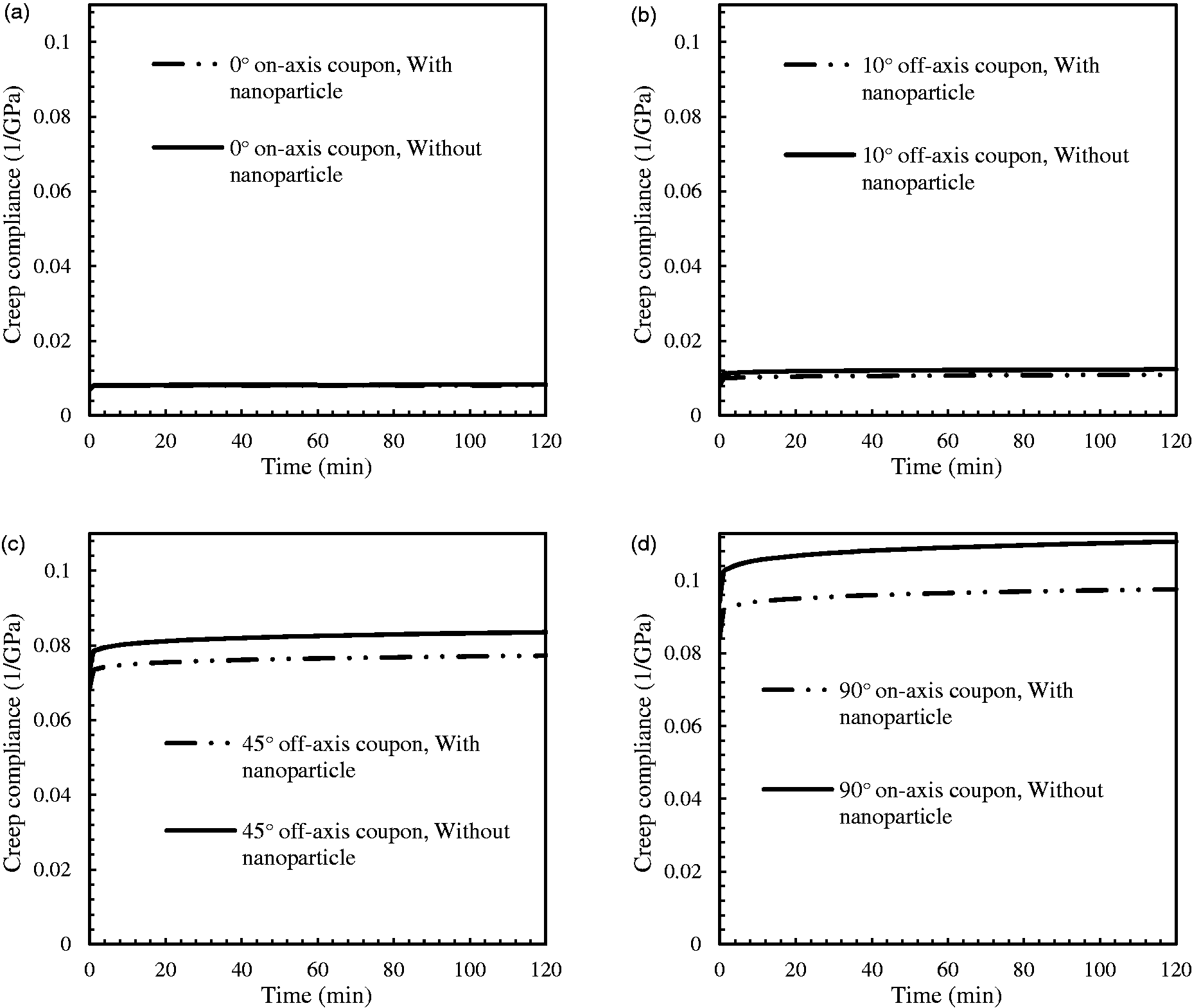
The creep compliance of hybrid 934 epoxy composites under various carbon fiber orientations, including (a) 0°, (b) 10°, (c) 45° and (d) 90°.
The effect of silica nanoparticle volume fraction on the overall creep performance of the 45°off-axis HPMC and 90°on-axis HPMC is demonstrated in Figure 6(a) and (b), respectively. For this micromechanical analysis, three different volume fractions of silica nanoparticle, including 1%, 3% and 5% are selected. It is found that the nanoparticle concentration can have a significant effect on the HPMC creep properties. With the increase of nanoparticle volume fraction, a decreasing trend appears in the creep compliance of hybrid carbon fiber-reinforced 934 epoxy composites.
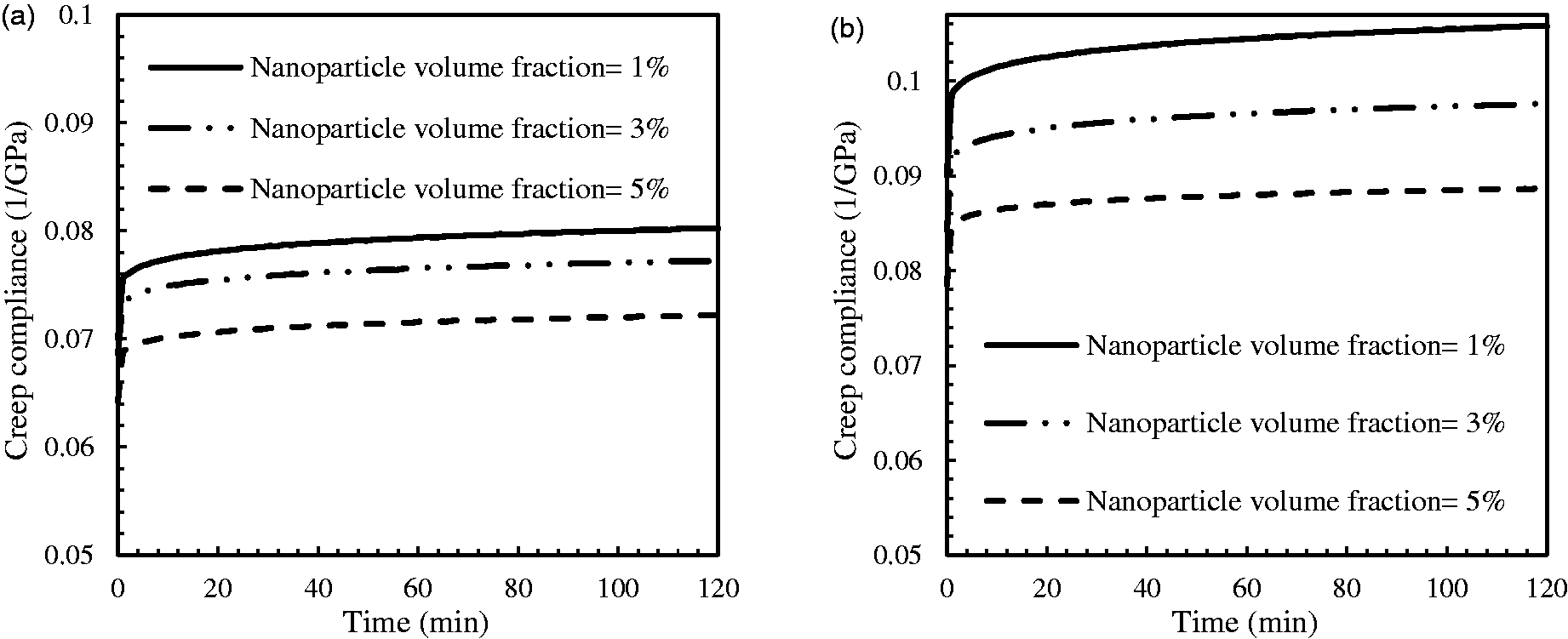
Effect of the silica nanoparticle volume fraction on the creep compliance of hybrid 934 epoxy composites under the carbon fiber orientations, i.e. (a) 45˚ and (b) 90˚.
The effect of the variation of silica nanoparticle diameter on the effective creep response of HPMCs is explored. The variation of the diameter is taken in the range of 10 nm to 200 nm. The results of the present homogenization approach for the 45°off-axis HPMC and 90°on-axis HPMC are depicted in Figure 7(a) and (b), respectively. It is observed that the size of silica nanoparticles becomes an important controller mechanism for the time-dependent mechanical properties of hybrid unidirectional composites containing nanoscale particles. Generally, the effective creep compliance of HPMCs decreases with the reduction in nanoparticle diameter. It may be attributed to the increased effect of the interphase region which becomes larger as the nanoparticle size decreases. It is worth mentioning that the creep compliance of the interphase region is lower than that of the polymer matrix. However, the influence of variation in the nanoparticle size can be neglected after
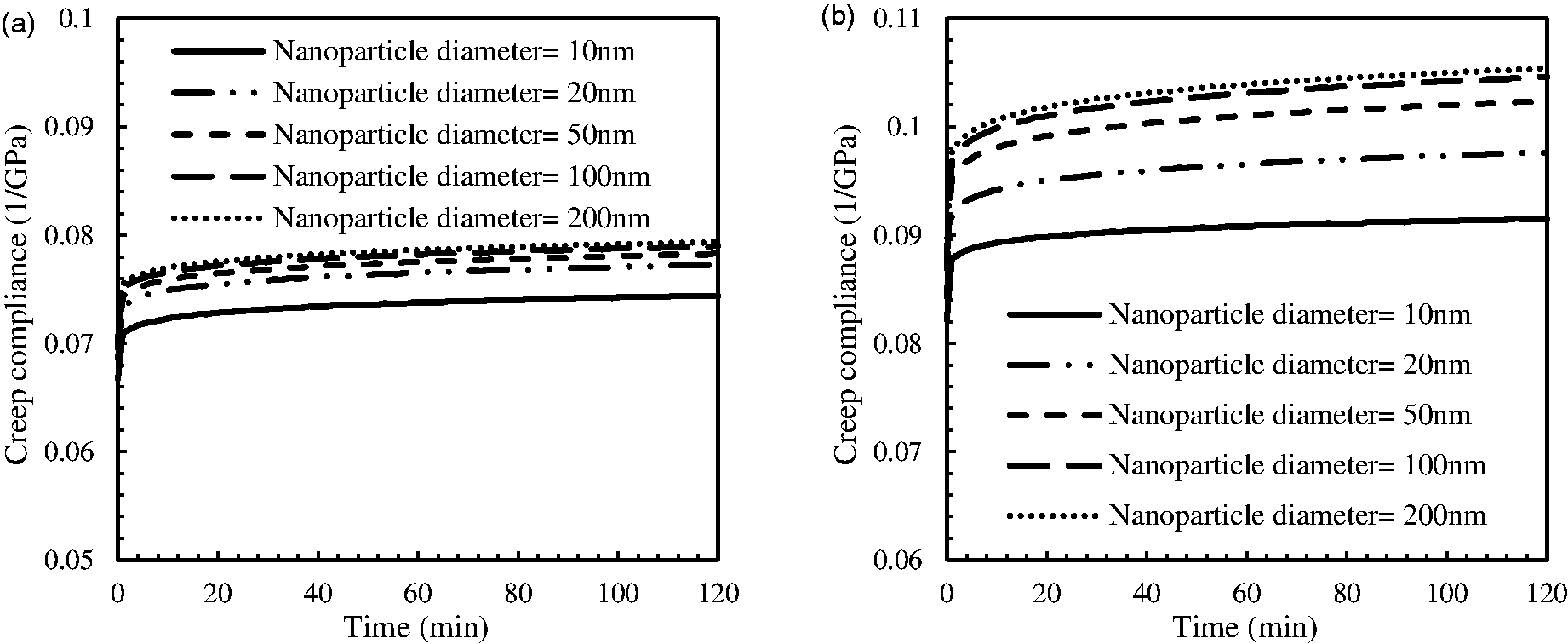
Effect of the silica nanoparticle diameter on the creep compliance of hybrid 934 epoxy composites under the carbon fiber orientations, i.e. (a) 45˚ and (b) 90˚.
Silica nanoparticles may be agglomerated within the polymer matrix.17,20,26,27 Therefore, a parametric study in the case of the effect of silica nanoparticle agglomeration on the creep performance of HPMCs needs to be performed. Figure 8(a) and (b) show the effect of the degree of silica nanoparticle agglomeration by selecting
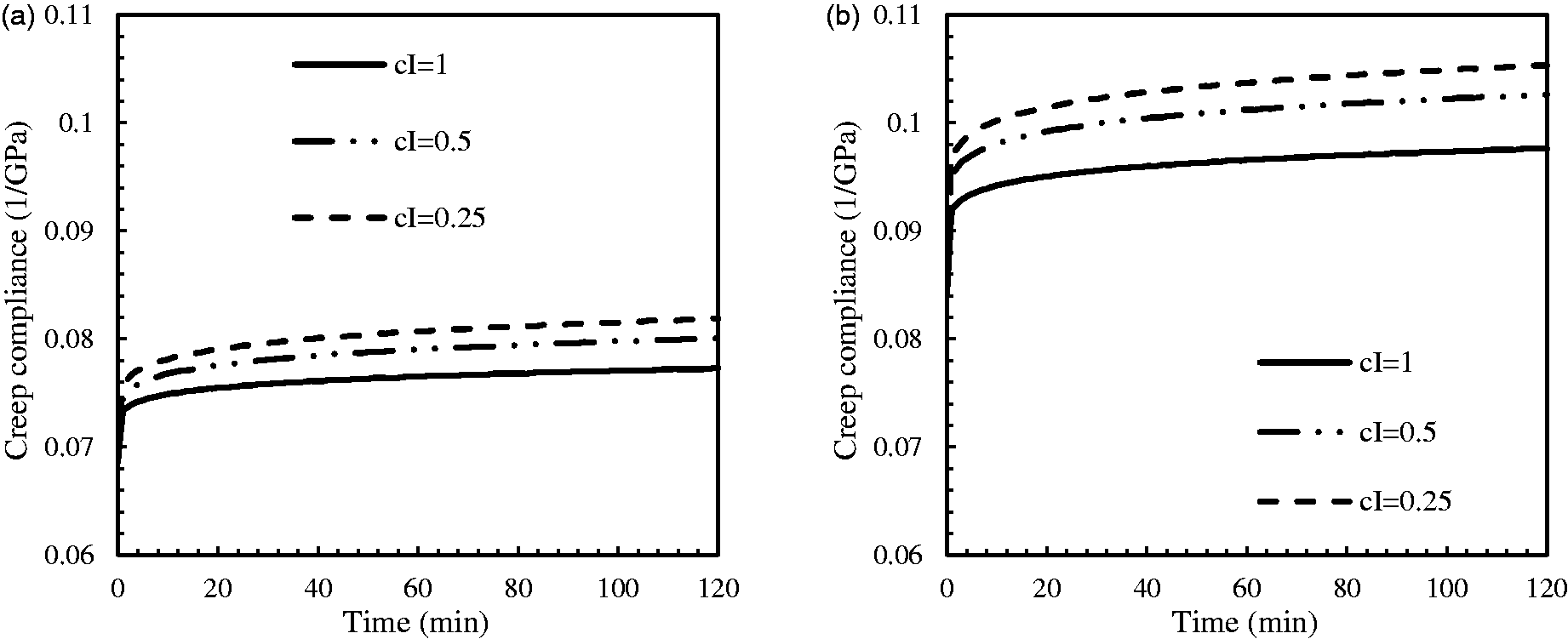
Effect of the silica nanoparticle agglomeration degree on the creep compliance of hybrid 934 epoxy composites under the carbon fiber orientations, i.e. (a) 45˚ and (b) 90˚.
The effect of the change of silica nanoparticle/epoxy interphase material behavior, including viscoelastic and elastic behaviors is considered, and the HPMC creep compliance is obtained using the present homogenization approach. The results for the 45° off-axis HPMC and 90° on-axis HPMC are given in Figure 9(a) and (b), respectively. Figure 9 also shows the model predictions in the absence of the interphase region. Without considering the interphase in the micromechanics model, the predictions of the HPMC creep compliance are higher than those of the HPMC with the interphase. This outcome suggests that the formation of the interphase region can improve the HPMC time-dependent mechanical properties. Moreover, when
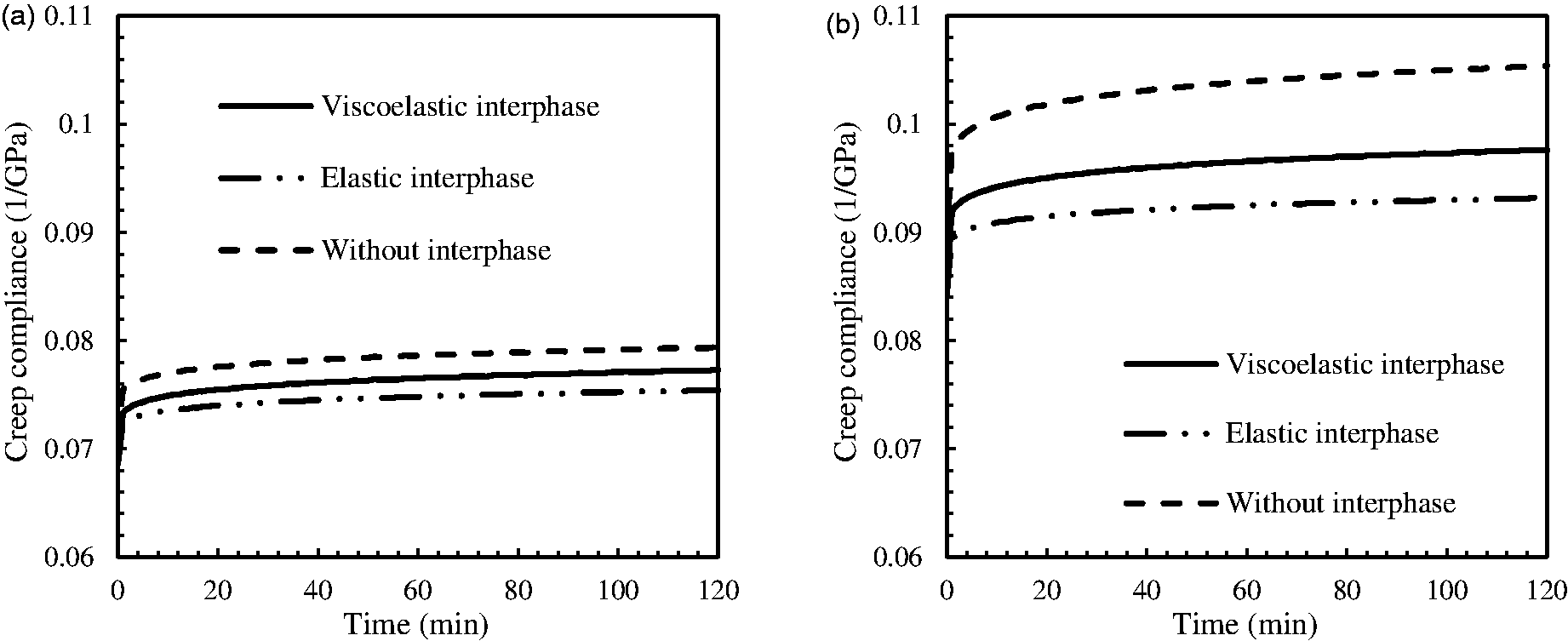
Effect of the interphase material properties on the creep compliance of hybrid 934 epoxy composites under various the carbon fiber orientations, i.e. (a) 45˚ and (b) 90˚.
The thickness of nanoparticle/polymer interphase may be dependent on some factors such as the energy of interaction between the matrix and nanoparticles, and intermolecular interaction in the polymer matrix.27,55 The variation of the interphase thickness is incorporated to analyze the HPMC creep performance. According to the literature,27,28 the values of the interphase thickness are chosen to be
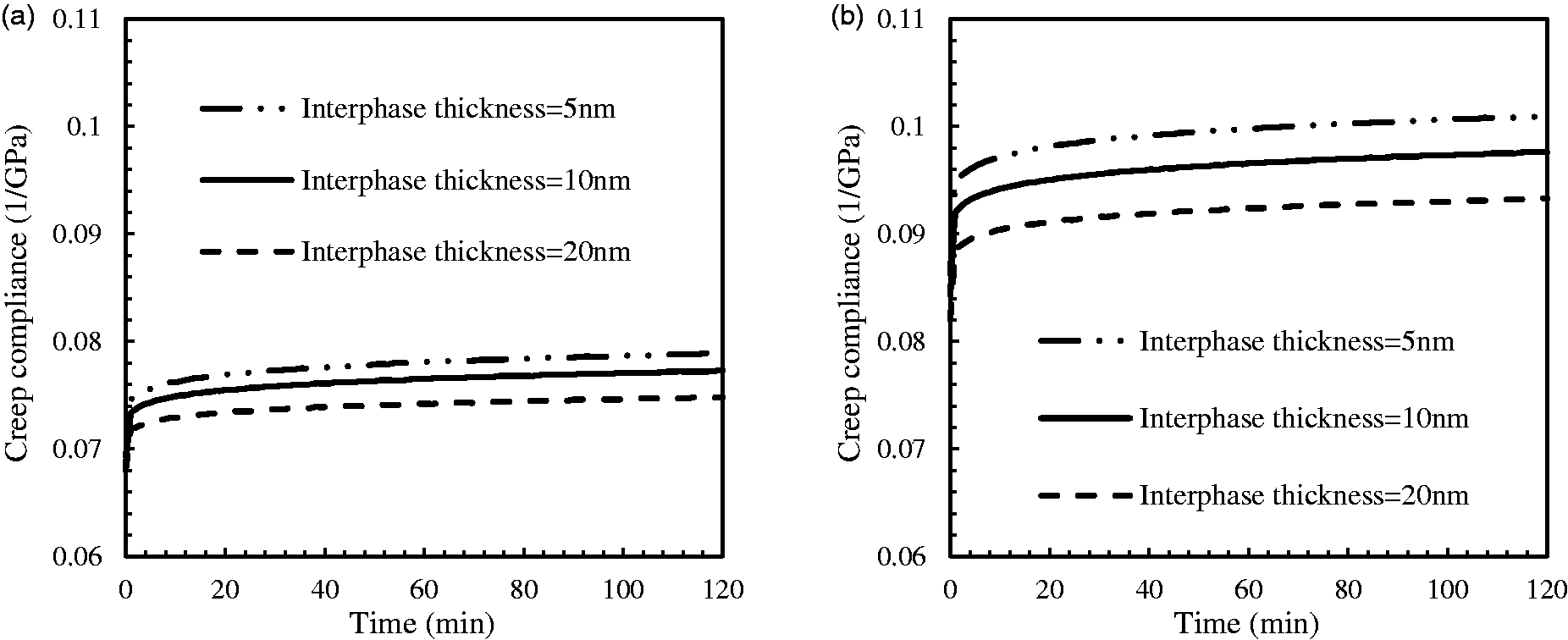
Effect of the interphase thickness on the creep compliance of hybrid 934 epoxy composites under the carbon fiber orientations, i.e. (a) 45˚ and (b) 90˚.
Finally, the effect of the carbon fiber volume fraction on the creep performance of 45° off-axis HPMC and 90° on-axis HPMC is investigated, and the results are illustrated in Figure 11. For this analysis, three different volume fractions of the carbon fiber, including 62%, 52% and 42% are selected. As expected, the overall creep compliance of the HPMCs decreases with the increase of the carbon fiber volume fraction.
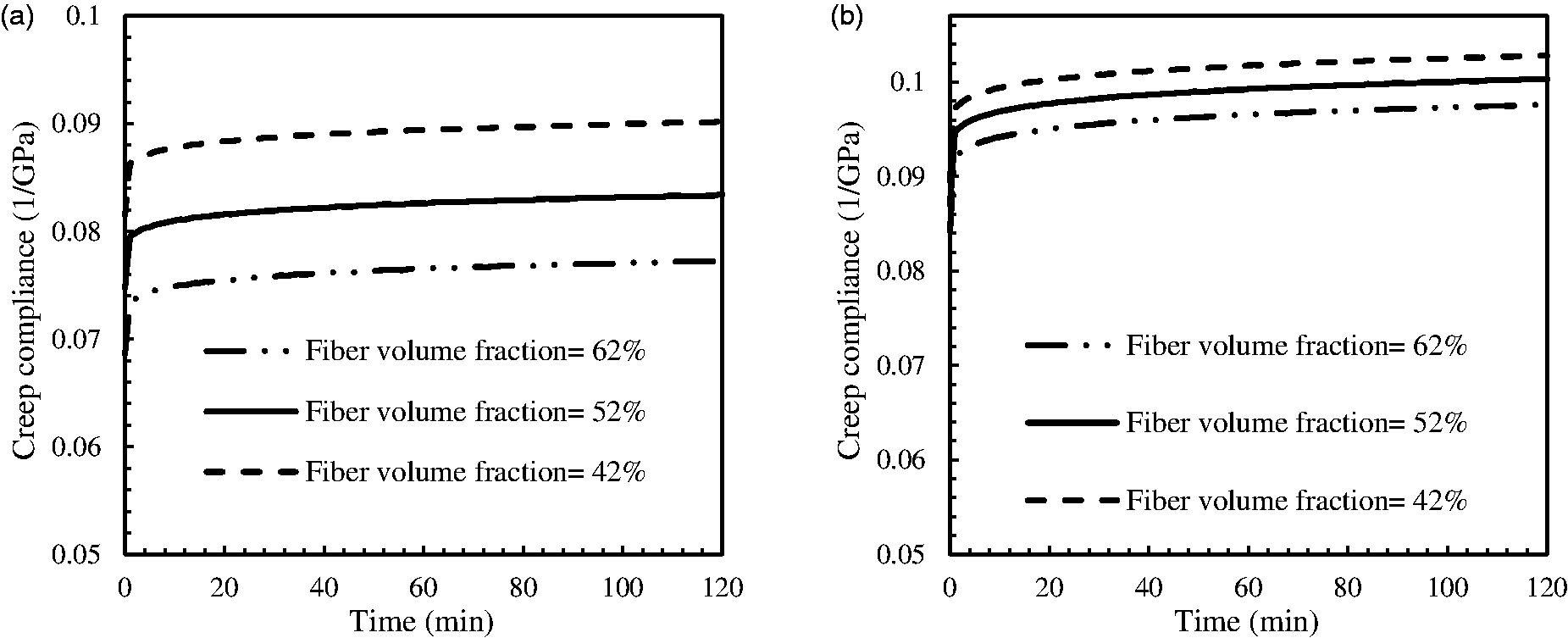
Effect of the carbon fiber volume fraction on the creep compliance of hybrid 934 epoxy composites under the carbon fiber orientations, i.e. (a) 45˚ and (b) 90˚.
Conclusions
In this work, two analytical micromechanics models were speculated to develop a new multi-step homogenization approach to predict the overall creep response of hybrid fiber-reinforced polymer composites containing nano-sized particles subjected to off-axis loading. In the first step, the Mori-Tanaka model was used to estimate the viscoelastic properties of polymer matrix enriched by silica nanoparticles. In this stage, the nanoparticle agglomeration and the interphase surrounding the nanoparticles were introduced to conduct a more realistic micromechanics method. In the second step, the SUC micromechanical model was employed to extract the off-axis creep compliance of hybrid carbon fiber-reinforced epoxy composites containing silica nanoparticles. By comparison with experimental measurements, the homogenization approach was validated to provide accurate quantitative predictions on the overall creep properties of HPMC systems. The results revealed that adding silica nanoparticles causes a decrease in the HPMC creep compliance and the maximum reduction was found to be for the 90° on-axis coupon. Also, with increasing the fiber off-axis angle from 0° to 90°, the HPMC creep compliance significantly increases. It was found that increasing the concentration and decreasing the size of silica nanoparticles can contribute to improvement of the HPMC creep properties, while the nanoparticle agglomeration becomes a dominant factor in degradation of the creep behavior. A homogenous dispersion of silica nanoparticle in the whole HPMC leads to minimum level of creep compliance. The results indicated that with an increase in the thickness of silica nanoparticle/polymer interphase region, the creep properties of HPMCs is improved. The present homogenization approach with quantitative predictions on the general off-axis creep performance of hybrid fiber/nanoparticle-reinforced polymer composites is expected to be helpful for the design and optimization of HPMCs with desirable time-dependent mechanical properties.
Footnotes
Declaration of Conflicting Interests
The author(s) declared no potential conflicts of interest with respect to the research, authorship, and/or publication of this article.
Funding
The author(s) received no financial support for the research, authorship, and/or publication of this article.
