






Abstract
Nanocrystalline cellulose (NCC) is usually obtained by the acid hydrolysis of microcrystalline cellulose for its use as polymer reinforcement. An ecological alternative to this process, avoiding the use of acids, is a mechanical method. High intensity ultrasonication (HIU) in optimal conditions (time, wave amplitude, volume ratio fiber/solution, cellulose extraction source) can be applied to prepare nanofibrillated cellulose (NFC). In this work, the HIU method was used to mechanically prepare NFC. Ultrasonication time (t) and wave amplitude (A) were optimized seeking for NFC with high crystallinity, strong thermal stability, large aspect ratio (length to diameter) and large surface to volume ratio with diameter in nanometer scale. The morphology and the physical/chemical properties of the NFC prepared at optimal HIU conditions were compared with those of NCC prepared from the same cellulose source at optimal acid hydrolysis (AH) conditions. Similar purity, lower crystallinity, improved thermal stability and larger aspect ratio with diameter in nanoscale were obtained for NFC prepared by HIU. These results can be used as an initial screening for the selection of the optimal process for NCC manufacture focusing on their use as polymer reinforcement.
Introduction
Natural fibers and several agricultural residues are mainly composed by cellulose, hemicellulose and lignin. Some examples are sisal, cotton, and flax fibers, corn stover and rice husk within others.1–3 The content and physicochemical characteristics of cellulose, hemicellulose and lignin such as fibril length, fibril width, microfiber angle, lumen diameter, cell wall thickness and crystallinity, are dependent on the source.4–6 Cellulose microfibers (CMF) can be isolated by controlled chemical processes.7–9 CMF have been studied for several applications in reinforced polymers, 1 cement industry, 10 sensing, 11 tissue engineering 12 and optics, 13 within others. CMF structure consists on nanocrystalline and amorphous domains. 14 Nanocellulose fibers are less than 100 nm in diameter and lengths in the microscale with an elastic modulus of 150 GPa, which is higher than that of the S-glass (85 GPa) and Aramid fibers (65 GPa).15–19 Several processes have been used to extract highly purified nanocellulose fibers from cellulosic materials. These methods include mechanical treatments, e.g., cryocrushing, 20 grinding 21 and high-pressure homogenizing; 22 chemical treatments, e.g., acid hydrolysis; 7 biological treatments, e.g., enzyme-assisted hydrolysis; 23 TEMPO-mediated oxidation on the surface of microfibrils; 24 synthetic and electrospinning methods; 25 as well as a combination of two or several of the aforementioned methods. All these methods lead to different types of nanocellulose, depending on the cellulose raw material and its pretreatment, and more importantly, depending on the disintegration process itself. Nanocellulose prepared from lignocellulosic biomass can be classified into two main types; nanocrystalline cellulose (NCC) and nanofibrillated cellulose (NFC). These nanocellulose types have similar chemical composition but may differ in their morphology, geometry, crystalline structure and thermal properties. 26 Nanocrystalline cellulose, also known in the literature as cellulose nanowhiskers, nanocrystal of cellulose or cellulose nanocrystals, is prepared by acid hydrolysis removing the amorphous regions of CMF. 27 Nanofibrillated cellulose is also known in the literature as cellulose nanofiber, cellulose nanofibril, or nanofibrillar cellulose. It is often prepared from CMF by mechanical methods. The main difference with nanocrystalline cellulose is that it contains crystalline and amorphous regions making it long, flexible and entangled with higher aspect ratio, higher surface area and easier to be chemically modified. 28 In the last years these fibers attracted much attention due to environmental concerns especially as the reinforcement of bio-degradable polymers to produce fully bio-degradable nano-composites with enhanced mechanical properties.15,29–34 In a previous work we studied the effect of acid hydrolysis conditions (time and temperature of reaction and acid solution concentration) on the preparation of NCC obtained from commercial CMF. 35 Optimal acid hydrolysis conditions were selected looking for the NCC with the highest cellulose purity, crystallinity and thermal stability; largest aspect ratio and smallest diameter in the nanoscale. These target properties were designed focusing on polymer reinforcement as the potential application. Optimal acid hydrolysis conditions were those performed with an acid concentration of 60w/v% and temperature of 45 °C for 25 min. Stronger acid hydrolysis conditions performed by increasing reaction time, temperature and acid concentration conducted to fibers with larger diameter and smaller aspect ratio, which was attributed to partial re/agglomeration of the fibers. In some cases, the reaction conditions were not strong enough for the optimal removal of amorphous regions also leading to fiber with larger diameter, smaller aspect ratio and lower crystallinity. 35
High Intensity Ultrasonication (HIU) is an emerging method to prepare NFC which has been described by several authors.36–41 NFC is obtained by a cavitation process which involves the transference of ultrasound energy (∼10–100 kJ/mol, which is within the hydrogen bond energy scale) to cellulose chains by the formation, growth, and violent collapse of cavities in water. 41 During this process micron-sized cellulose fibers are gradually disintegrated by the ultrasonic impact until reaching the nanoscale. 39 Wang et al. 39 studied the effect of six parameters of the HIU method for the preparation of nanofibrillated cellulose from pure CMF: i) power (P); ii) time (t); iii) temperature (T); iv) fiber concentration in distilled water solution (C); v) fiber size (FS); and vi) distance from the tip of the HIU probe to the bottom of the beaker (d). They found optimal process conditions for a power of 1200 W, time >30 min, water solution without cooling, low fiber concentrations (<2w/w%), raw CMF fibers with shorter length (∼50 µm) for a diameter ∼20 µm and distance from the tip of the HIU probe to the bottom of the beaker <10 mm. The optimal conditions were dependent of the cellulose source.
In this work the mechanical treatment by ultrasonication will be optimized modifying the power and time of ultrasonication for the preparation of NFC from commercial CMF. The optimal conditions will be selected as to obtain NFC with high cellulose purity, crystallinity, thermal stability, large aspect ratio and small diameter in the nanoscale. The aim of this work is to compare the properties of NFC and NCC prepared from the same cellulose source at optimal conditions by HIU and acid–hydrolysis, 35 respectively, focusing on polymer reinforcement as potential application.
Experimental
Materials
Commercial cellulose microfibers from Sigma Aldrich USA (CMF-SA) were used as received. The complete characterization of CMF-SA was performed in previous works.12,35 The main characteristics of CMF-SA were incorporated in Tables and Figures along this work. Distilled water was used to prepare the suspensions. All reagents used were analytical grade.
Equipment
Ultrasonic Processor: Sonics model Vibra-cell VCX750; power 750 W; frequency 20 kHz. Probe: Standard for VCX750; tip model 219-B(630-0219); tip diameter 13 mm.
Preparation of nanofibrillated cellulose (NFC)
The cellulose sources used in the study of Wang et al. 39 for the preparation of NFC by HIU were different than that selected in this work but we assume that some parameters can be used as a guide for any cellulose source. For example, they found that the ultrasonic power increases the temperature of the solution which helps the nano-fibrillation process. So, they concluded that the use of water/ice bath for cooling the suspension is not needed. Respect to the fiber concentration in the suspension, they found that increasing this parameter in the range from 1 to 4w/w%, reduces the nano-fibrillation efficiency because the aquatic force generated by the microbubbles could not agitate and stir the cellulose fiber in the suspensions substantially, so that the fibers have a lower probability of passing the probe tip. They also suggest to use a distance from the tip of the HIU probe to the bottom of the beaker <10 mm because the fibers have a higher probability of passing the probe tip. We consider that these 3 factors are more related to the physics of the process itself than the cellulose source, so we decided to follow these recommendations and to optimize only the amplitude (which is related with power) and time of the HIU process. To our knowledge the optimization of the HIU process to prepare NFC from CMF-SA was not previously reported in the literature.
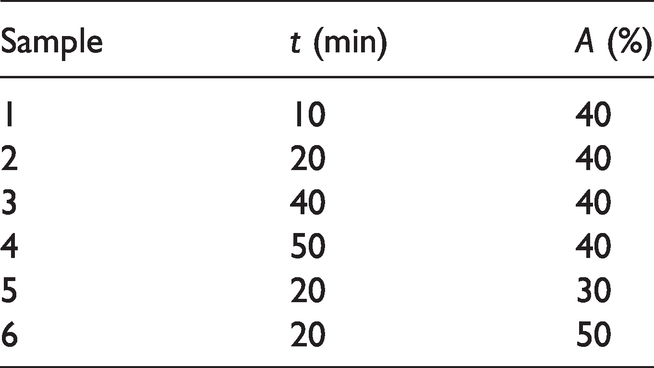
For the preparation of NFC by high intensity ultrasonication, 0.4 g of as received CMF-SA were immersed in 200 ml of distilled water (0.2w/v%) in a glass beaker 70 mm in diameter and 250 ml in volume at a temperature (T) of 25 °C for 5 min prior to being subjected to the ultrasonic treatment. Then, the HIU probe was immersed into the solution symmetrically aligned inside the beaker (without cooling bath) at a distance from the tip of the HIU probe to the bottom of the beaker of 7 mm. The effect of HIU amplitude (A) and time (t) on the CMF-SA nano-fibrillation was studied. Table 1 resumes the process parameters.
Combination of parameters for HIU optimization.
All the NFC dispersions were subjected to a final lyophilization in order to obtain a NFC powder. The optimization of the process was performed focusing in the final application of NFC as reinforcement of thermoplastic polymer matrices. So that, NFC with higher cellulose purity, crystallinity, thermal stability, larger aspect ratio and smaller diameter in the nanoscale were selected as the optimal properties.
Another sample called NCC-AH will be reported in this work. This sample makes reference to the NCC obtained from the same cellulose source of this work (CMF-SA) but optimizing the acid hydrolysis (AH) conditions. 35 The procedures, equipment and parameters used for the characterization of NCC-AH were the same as those used in this work.
Characterization Methods
Fourier transformed infrared spectroscopy (FTIR)
Diffuse reflectance method (DRIFT) was followed in order to obtain FTIR spectra. 64 scans were carried out on wavenumber from 4000 to 600 cm−1. The equipment used was a FTIR Genesis II. All specimens were preconditioned at 65%RH (relative humidity) and 20 °C for 24 h.
X-Ray diffraction (XRD)
A PW1710 Diffractometer equipped with an X-ray generator (λ = 0.154 nm) was used. Powder X-Ray diffractometry was carried out. Samples were scanned in 2θ ranges varying from 5 to 40° (1°/min). From the XRD pattern, it is possible to estimate the crystallinity index of CMF-SA as follows:
Thermogravimetric analysis (TGA)
Dynamic thermogravimetric measurements were performed by using a Shimadzu TGA-DTG 50 instrument. Derivative TGA (DTGA) was performed to calculate the temperatures for the maximum thermal degradation rates of the main components in NFC. Temperature programs for dynamic tests were run from 25 to 1000 °C at a heating rate of 10 °C/min under air atmosphere (20 ml/min). All specimens were preconditioned at 65%RH and 20 °C for 24 h.
Field emission scanning electron microscopy (FESEM)
The morphology of the NFC was analyzed by FESEM micrographs with a field emission scanning electron microscope Carl Zeiss NTS SUPRA 40. Prior to the observation, the surfaces were sputter-coated with a gold layer of about 100 Å to avoid charging under the electron beam. From these images the diameter (d) and length (l) of the fibers were measured. A minimum of 100 fibers for each sample were measured with ImagePro-Plus software for the statistical analysis. Arithmetic mean (m) and standard deviation (sd) for l and d were calculated and denoted as lm, dm, lsd and dsd. Aspect ratio (AR) of the fibres was calculated by the following equation:
Results and discussion
Effect of HIU time
Figure 1(a) and (b) shows the FTIR and XRD spectra of the NFC samples obtained by the processes 1, 2, 3 and 4.
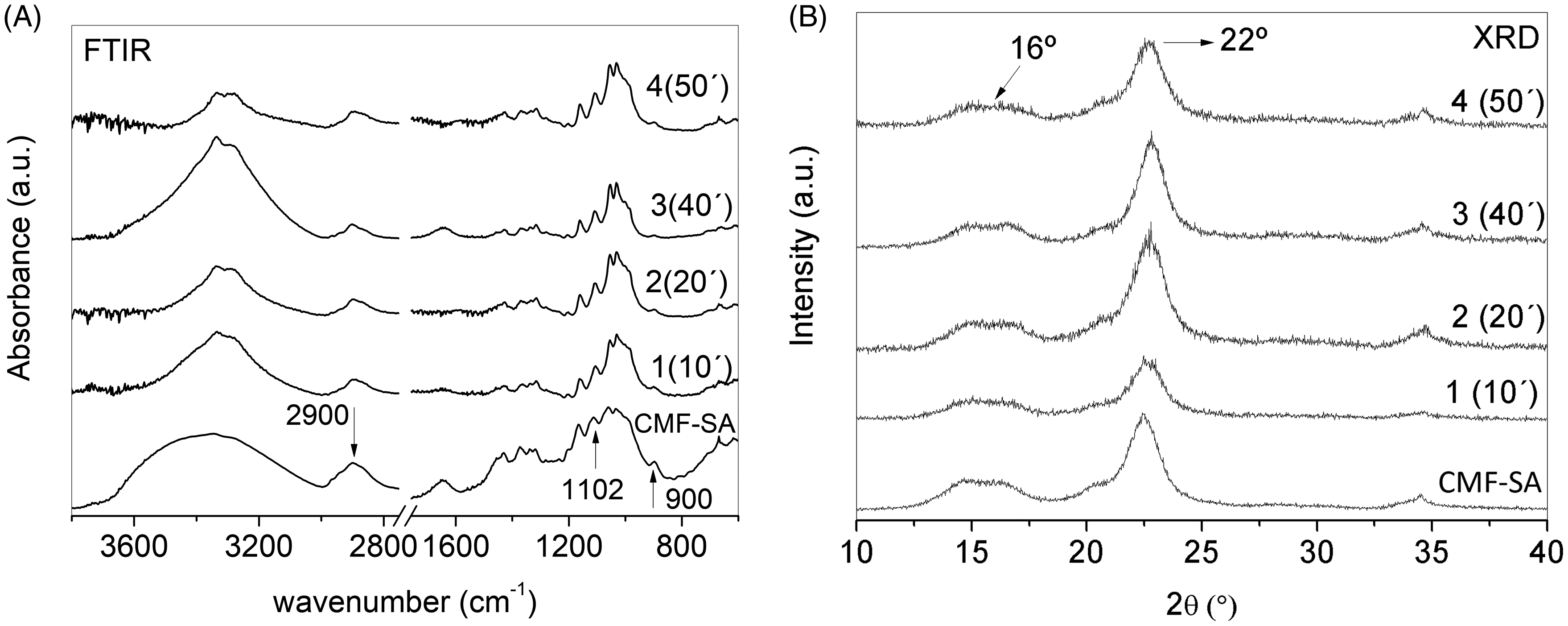
FTIR (a) and XRD (b) spectra of CMF-SA and NFC as a function of HIU time (A = 40%).
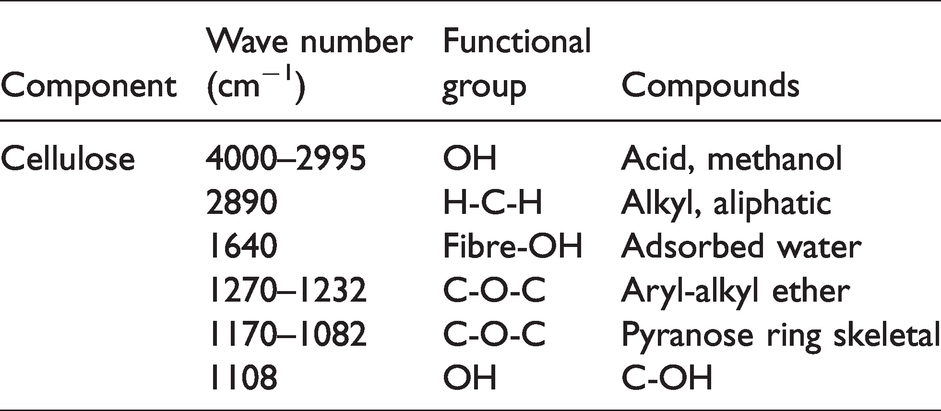
The FTIR spectra of CMF-SA and NFC were normalized at the peak of CH2 (2900 cm−1). The characteristic peaks corresponding to the vibration of the functional groups of the cellulose were shown in a previous work. 35 Table 2 resumes the main absorption bands for functional groups of cellulose.
Absorption bands for functional groups of cellulose.
All characteristic peaks of CMF-SA are still present in the NFC spectra (Figure 1(a)). This result suggests that the cellulose components were not degraded or removed with HIU processes. The FTIR of NFC spectra as a function of HIU time showed significant intensity variations in the peak at 1640 cm−1 which was attributed to differences in adsorbed water by OH-groups on the surface of cellulose fibres. Comparing with the CMF-SA spectra, the peak at 1102 cm−1 was not significantly changed for NFC, suggesting that cellulose I polymorph is present in both CMF-SA and NFC. 43 Kavkler et al. 43 have shown that thinner bands at 900 cm−1 reflect the removal of amorphous cellulose and that higher intensity at the same position suggest that the crystalline structure changes from cellulose I to cellulose II polymorph. On the other hand, Oh et al. 44 have shown that the band at 2900 cm−1 is sensitive to changes in the amorphous regions. Figure 1(a) shows that neither intensity nor width of the bands at 900 cm−1 and 2900 cm−1 showed significant changes after the HIU process for any time studied. This result suggests that cellulose I polymorph is present in both CMF-SA and NFC and that amorphous cellulose regions were not strongly affected by the HIU process. Previous works have shown that the removal of amorphous cellulose is not the main mechanism for nanofibrillation by mechanical methods. 28
Figure 1(b) shows the XRD spectra of the CMF-SA and the obtained NFC at different HIU times. The most important peaks are observed at 2θ = 22° and 16° representing the crystalline and amorphous parts respectively. The crystalline structure was not changed neither after the HIU process nor as a function of HIU time. The crystallinity index of these materials calculated by equation (1) is summarized in Table 3.
Parameters obtained from XRD, DTGA and FESEM characterization as a function of HIU time (A = 40%).

The Ic slightly increased between 3 to 7% after the HIU process. The crystallinity calculated by XRD increased 4% from 10 to 20 min of HIU time and then remained almost constant. Similar results were obtained by Cheng et al. 36 and are attributed to the subsequent removal of amorphous regions as a function of HIU time obtaining the maximum crystallinity after 20 min.
The thermal stability of the samples was studied by thermogravimetric analysis (TGA). The position of the peaks of each thermal degradation event in the DTGA analysis corresponds to the temperature for maximum weight loss rate. 45 Thermal stability beyond 300 °C for NFC is needed for its final application as polymer reinforcement considering that extrusion is the processing technique widely used in the polymer industry for the preparation of polymer composites. Most polymer commodities and biopolymers processed by extrusion are submitted to shear forces and temperatures in the range of 100 °C to 250 °C. 46 Figure 2 shows the TGA and DTGA curves of CMF-SA and NFC as a function on HIU time.
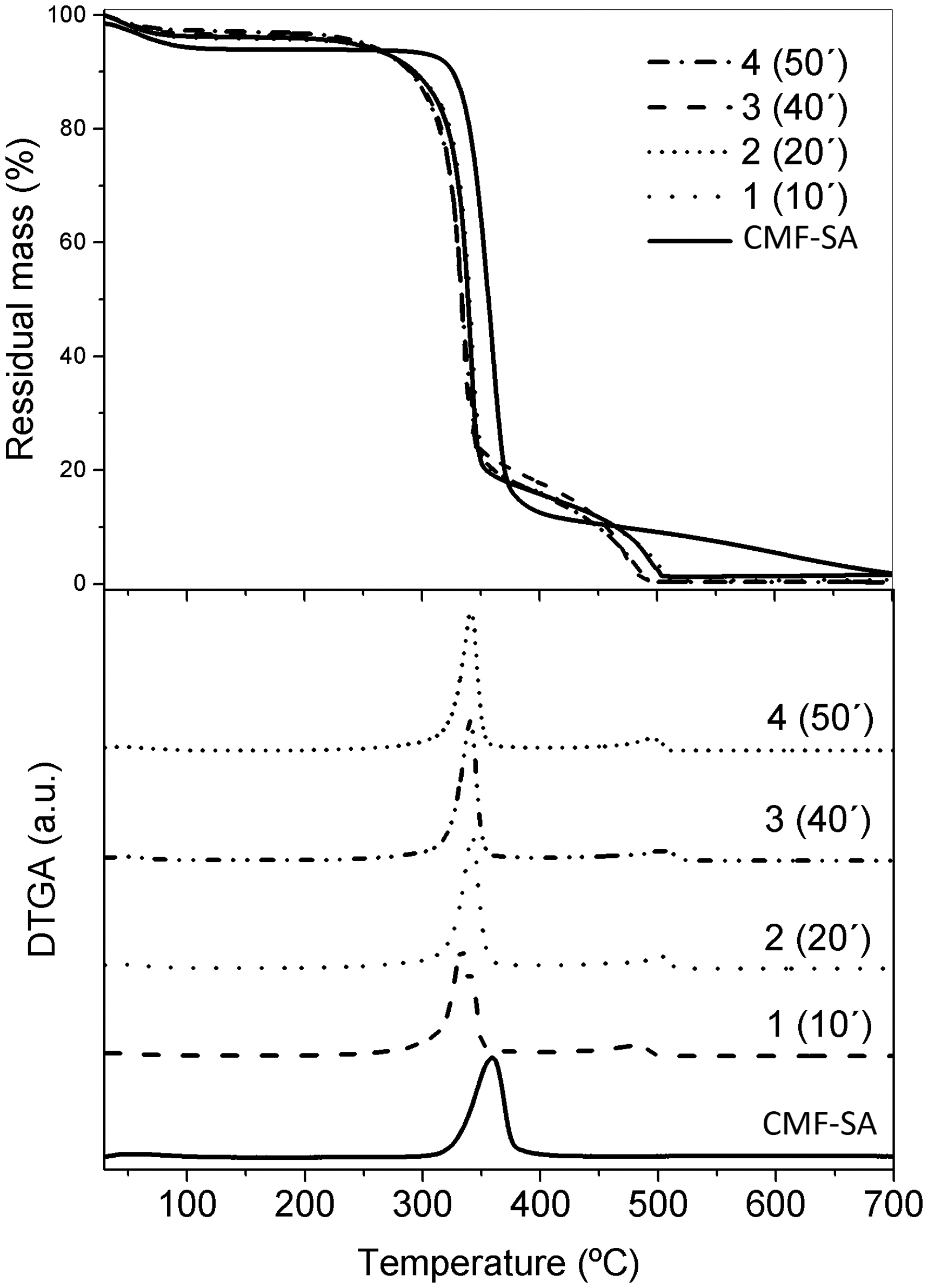
TGA and DTGA curves of CMF-SA and NFC as a function of HIU time (A = 40%).
Decomposition of CMF-SA showed 2 stages. The first one corresponds to evaporation of water (small weight loss in the range 25–150 °C). It is well known that CMF-SA is hydrophilic in nature. The moisture content (M) of CMF-SA was calculated by the mass loss at 150 °C from the TGA curves resulting in 5.8%. The values are in accordance with those reported in the literature. 47 The second decomposition step corresponds to the pyrolysis process of cellulose. The temperature for the maximum weight loss rate of this event was calculated by DTGA and named Tp1. Tp1 was 358 °C for CMF-SA. NFC samples showed a thermal degradation event with temperature for maximum weight loss rate around Tp1 and another one in the range of 450–550°C which was called Tp2. The values are shown in Table 3. These two thermal degradation events were also observed by several authors characterizing NFC by TGA in air atmosphere.35,41,48 The DTGA peak in the range of 450–550°C denoted by Tp2 was not observed in the thermograms of nanocellulose studied by TGA in inert atmosphere such as nitrogen.49–56 The peak at Tp1 corresponds to the pyrolysis process of cellulose, as was also shown in the CMF-SA sample. The peak corresponding to Tp2 is absent when TGA is performed under nitrogen atmosphere because it is associated to the oxidation and breakdown of the charred residue to lower molecular weight gaseous products, which only takes place in the presence of oxygen (air atmosphere). 57 These explanations are also supported by our previous work and the work by Ghanadpour et al. whom studied the thermal stability of nanocelluloses by TGA in both air and nitrogen atmospheres.9,58 Comparing Tp1 values, a slight decrease in the thermal stability of NFC in comparison with CMF-SA was observed. It can be attributed to a decrease in the degree of polymerization as a consequence of the HIU process. 36 Increasing the HIU time from 10 min to 20 min increased Tp1 and Tp2 about 10 °C and 20 °C, respectively. Many authors have reported that cellulosic materials with a high degree of crystallinity possessed higher thermal stability.59–61 The little increased crystallinity shown from 10 min to 20 min (lower than 4%) cannot account for the observed variations in the thermal stability. Increasing HIU time beyond 20 min did not modified the thermal stability of NFC. These results can be the consequence of a balance between several factors influencing the thermal stability of NFC such as crystallinity,59–61 weakened/strengthened crystal regions, 62 moisture content 63 and degree of polymerization. 36
Figure 3 shows the FESEM micrographs for CMF-SA and NFC as a function of HIU time. The results of the statistical analysis of diameter and length of the fibers are shown in Table 3.
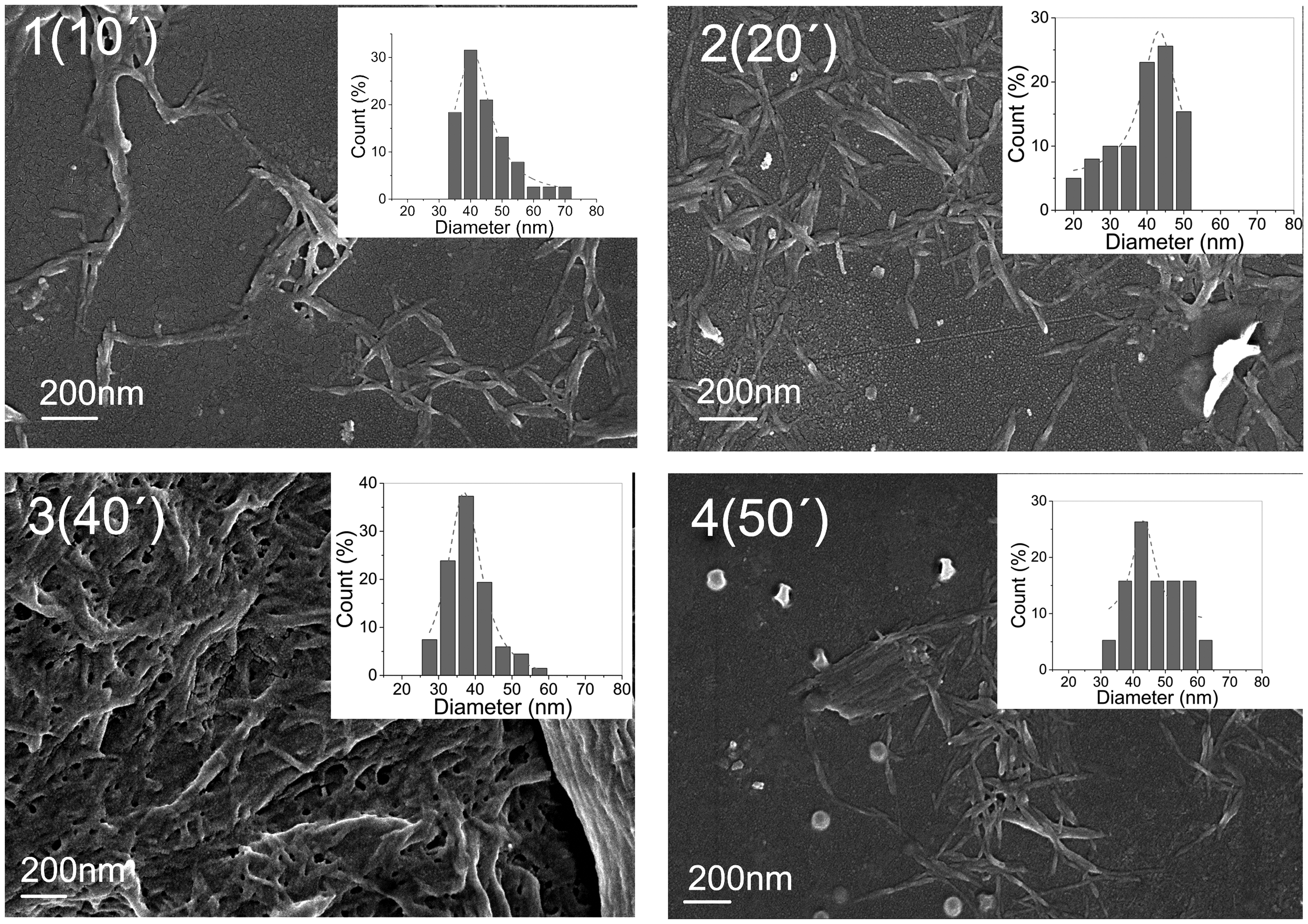
FESEM micrographs of CMF-SA and NFC as a function of HIU time (A = 40%).
Length and diameter of CMF-SA were reduced after the HIU process. Depending on the HIU time, length reduction was in the range of 99.1% to 99.5% while diameter was reduced from 3400% to 6000%. The efficiency of NFC as polymer reinforcement is improved as the fiber reaches the nanoscale keeping its length as long as possible. So, small diameter and large aspect ratio were the morphological parameters used to optimize the HIU process, which was achieved after 20 min of HIU time.
Several properties of NFC which are critical for its performance as polymer reinforcement were analyzed. High thermal stability, high crystallinity, small diameter and large aspect ratio were objectives for the optimization of the HIU time. A HIU time of 20 min at an amplitude of 40% were considered as the optimal HIU conditions balancing the previous target properties. In the next section the effect of HIU amplitude at 20 min of treatment will be analyzed.
Effect of HIU amplitude
Figure 4(a) and (b) shows the FTIR and XRD spectra of the NFC samples prepared by the processes 2, 5 and 6.
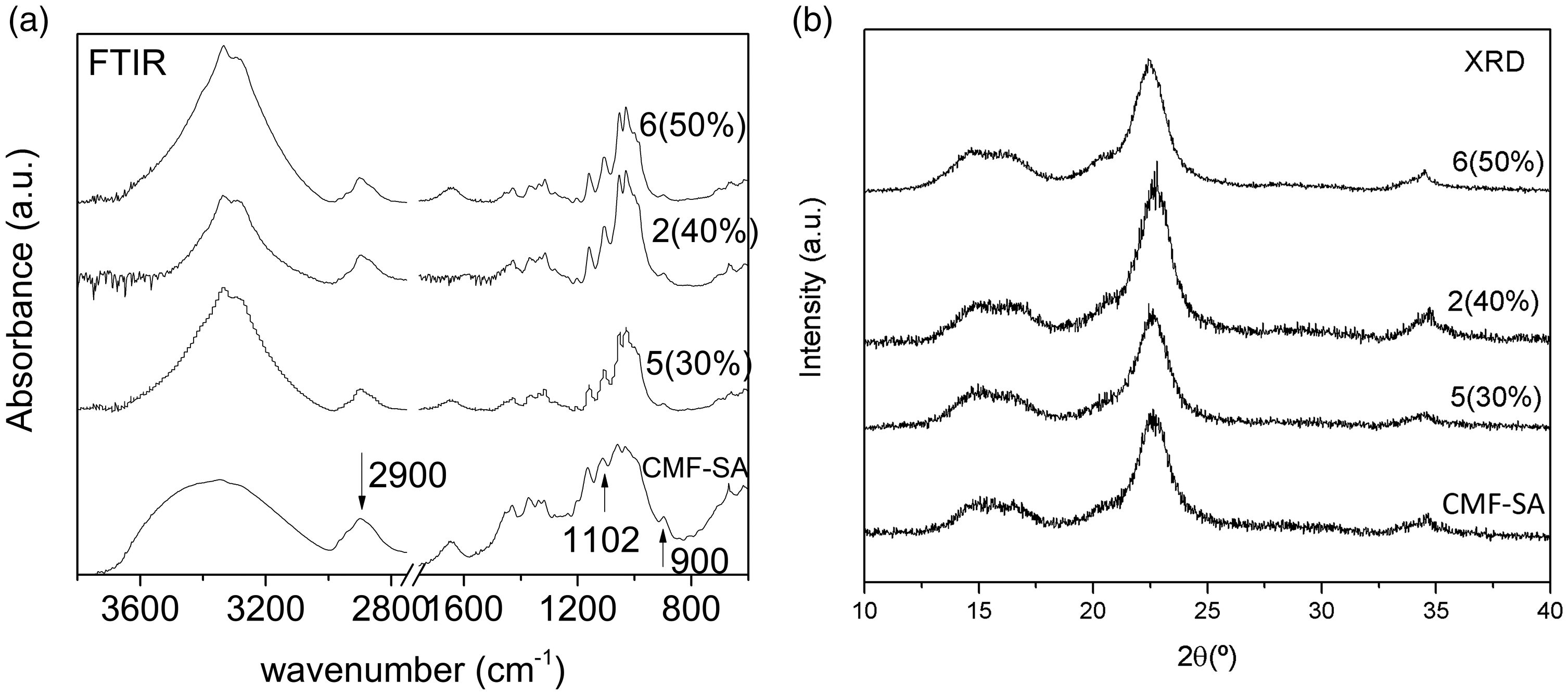
FTIR (a) and XRD (b) spectra of CMF-SA and NFC as a function of HIU amplitude (t = 20min).
FTIR curves in Figure 4(a) show that all characteristic peaks of CMF-SA are still present in all NFC spectra. The intensity and width of the bands at 1102 cm−1, 900 cm−1 and 2900 cm−1 were not significantly modified for any NFC sample in comparison with those for CMF-SA. These results suggest that the cellulose components were not degraded or removed by the HIU process, that cellulose I polymorph is present in both CMF-SA and NFC samples and that amorphous regions of CMF-SA were not significantly affected by the HIU process.43,44
Figure 4(b) shows the XRD spectra of the CMF-SA and the obtained NFC at different HIU amplitudes. The crystalline structure was not changed neither after the HIU process nor as a function of HIU amplitude. The crystallinity index of these materials calculated by equation 1 is summarized in Table 4.
Parameters obtained from XRD, DTGA and FESEM characterization as a function of HIU amplitude (t = 20min).

The Ic slightly increased after the HIU process and did not change as a function of HIU amplitude.
Figure 5 shows the TGA and DTGA curves of CMF-SA and NFC as a function on HIU amplitude.
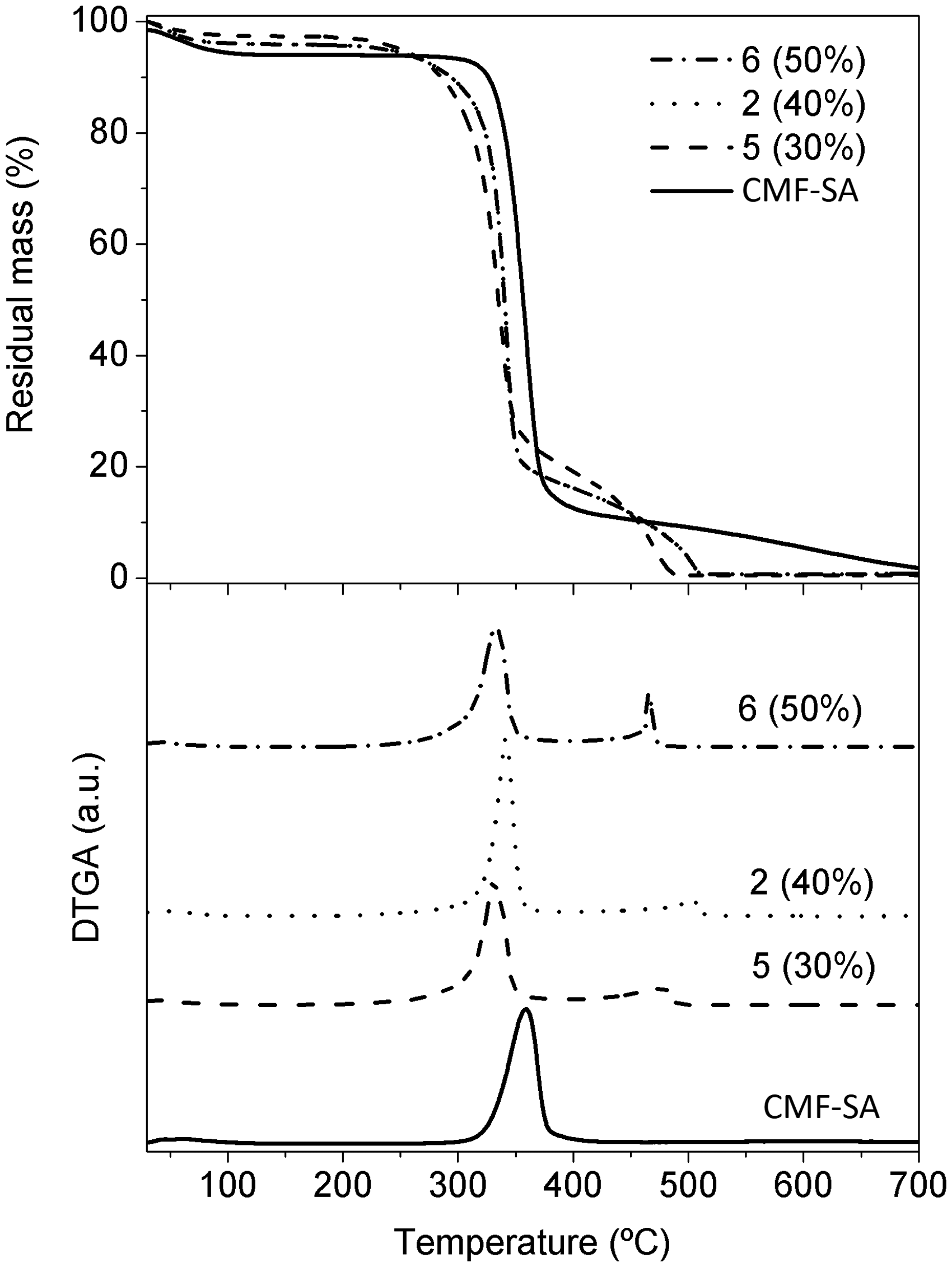
TGA and DTGA curves of CMF-SA and NFC as a function of HIU amplitude (t = 20min).
The shape of the curves was similar than those shown in Figure 2. A slightly higher thermal stability was observed for a HIU amplitude of 40%. As was explained for the effect of HIU time, a balance between several factors acting simultaneously such as crystallinity,59–61 weakened/strengthened crystal regions, 62 moisture content 63 and degree of polymerization 36 can be responsible of the tendencies observed for the thermal stability.
Figure 6 shows the FESEM micrographs for CMF-SA and NFC as a function of HIU amplitude. The results of the statistical analysis of diameter and length of the fibers are shown in Table 4.
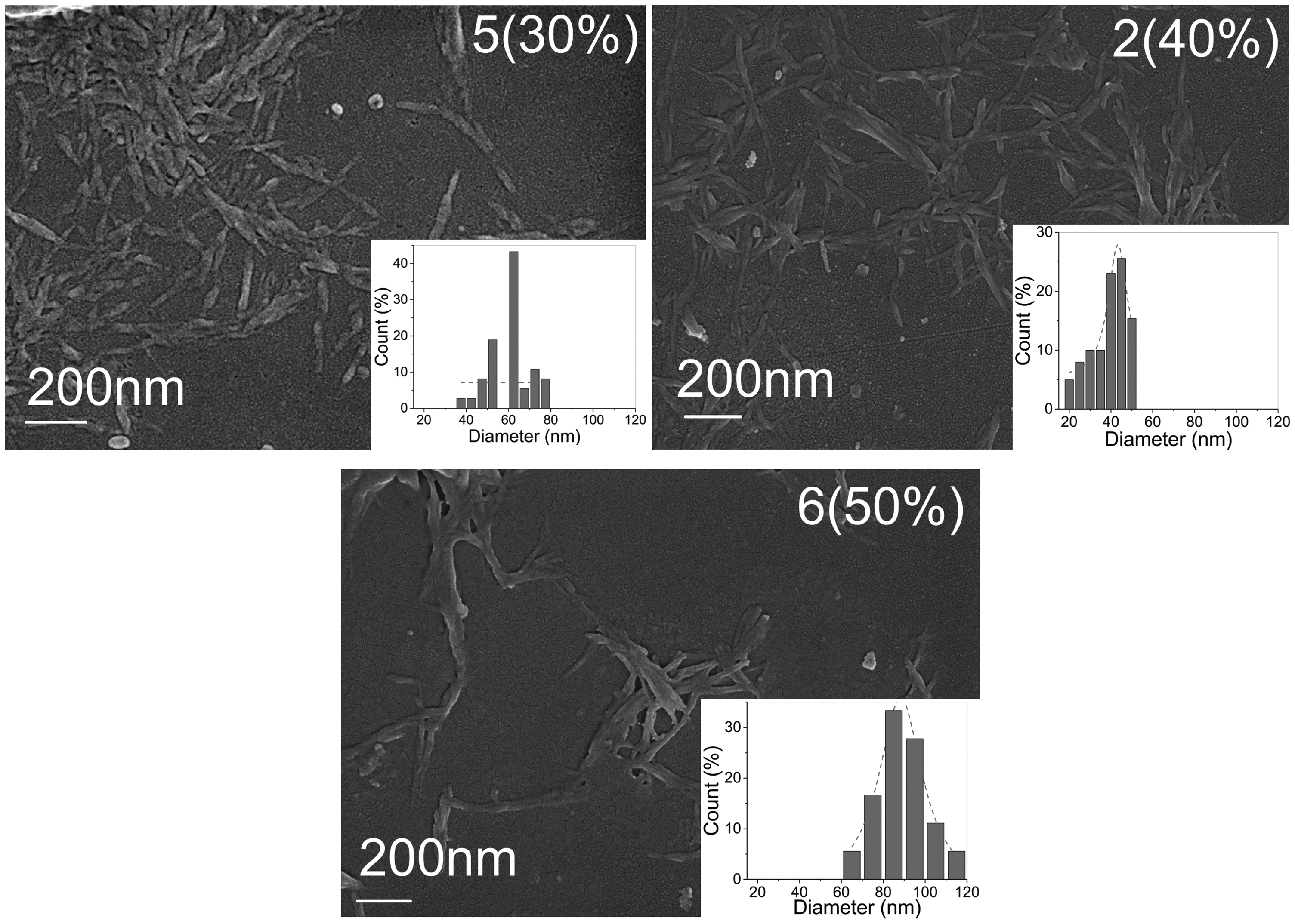
FESEM micrographs of CMF-SA and NFC as a function of HIU amplitude (t = 20 min).
Smallest diameter and largest aspect ratio were obtained for NFC prepared at 40% of amplitude. Increasing the amplitude did not modify the diameter but decreased the length probably because the stronger HIU conditions.
Based on the final application of NFC as polymer reinforcement, the optimal balance between high crystallinity, strong thermal stability, small diameter and large aspect ratio was achieved with the NFC prepared by HIU at 40% of amplitude for 20 min.
Comparison of NFC prepared by HIU with NCC obtained by acid hydrolysis
This section aims to compare the properties of NFC prepared in this work by HIU at optimized conditions (NFC-HIU) with those of NCC prepared in our previous work from the same cellulose source but optimizing the acid hydrolysis parameters (NCC-AH). 35 Figure 7(a) and (b) shows the FESEM micrographs of the samples and Table 5 shows the results of the characterization techniques.
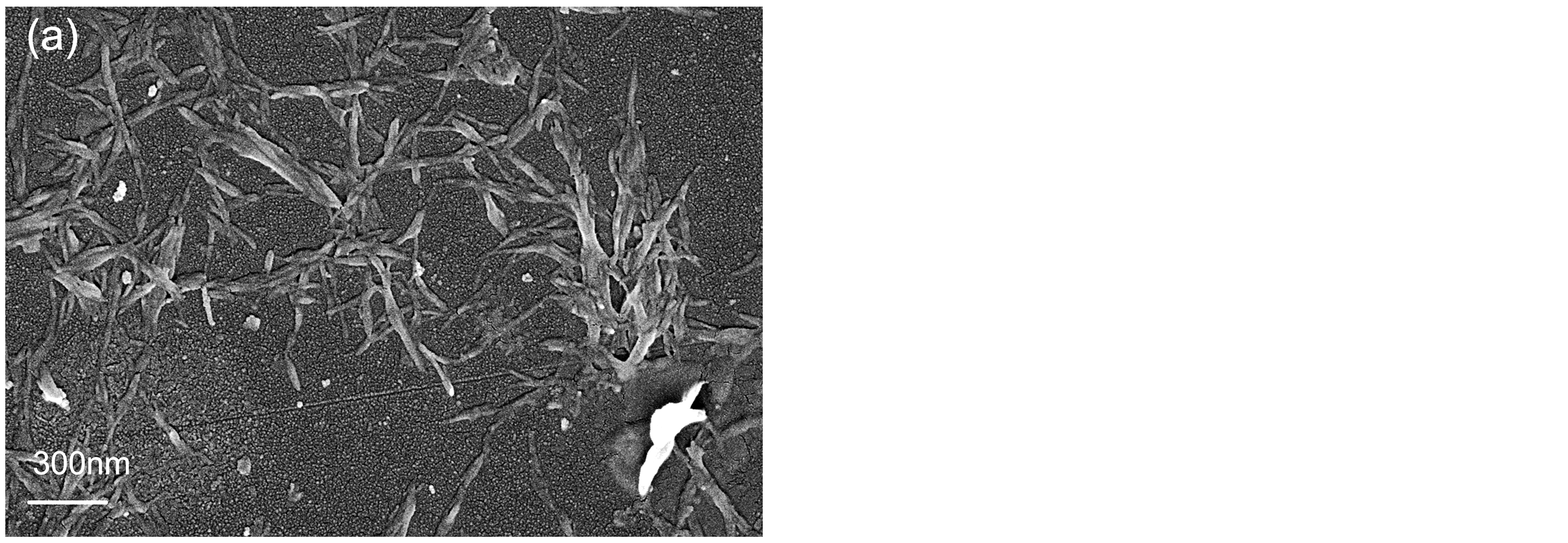
FESEM micrographs of optimized nanocrystalline celluloses: (a) NFC-HIU; (b) NCC-AH.
Crystallinity, thermal stability and morphology of nanocellulose prepared by optimized HIU (NFC-HIU) and acid hydrolysis (NCC-AH) conditions.

The crystallinity calculated by XRD was higher for NCC-AH as a consequence of the stronger removal of amorphous regions. In contrast with the HIU method, the removal of amorphous regions from CMF by the acid hydrolysis is the main mechanism to obtain fibers with diameter in nanoscale. 27 Thermal stability of NCC-AH was slightly weaker which can be attributed to the presence of sulfate groups. 57 Both NFC-HIU and NCC-AH fibers have diameter in the nanoscale. The diameter of the NCC-AH fibers was smaller but their length shorter than NFC-HIU ones. This result led to a larger aspect ratio for NFC-HIU, which is desired for polymer reinforcement as the potential application for these nanocelluloses.
In future works nanocomposites based on thermoplastic starch, optimized in a previous work, 64 reinforced with different contents of both NFC-HIU and NCC-AH will be prepared by twin screw extrusion and characterized to compare their performance as polymer reinforcement.
Conclusions
In this work the high intensity ultrasonication time and amplitude were optimized for the preparation of nanofibrillated cellulose. Polymer reinforcement was the application proposed for the synthesized fibers. The optimal parameters of the HIU method were those conducting to the optimal balance between high cellulose purity and crystallinity, strong thermal stability, small diameter and large aspect ratio. These properties were compared with those of NCC from the same cellulose source but prepared by optimal acid hydrolysis conditions in a previous work. 35 NFC-HIU and NCC-AH fibers had similar purity but NFC-HIU had lower crystallinity, improved thermal stability and larger aspect ratio with diameter in nanoscale. These are promising characteristics for the application of NFC-HIU as polymer reinforcement using melt blending as processing technique. In a future work, thermoplastic starch (TPS), optimized in a previous work, 64 will be synthesized by twin screw extrusion and reinforced with different contents of both NFC-HIU and NCC-AH in order to compare their performance as polymer reinforcement. In addition life cycle, technical and economic analysis for the manufacture of TPS nanocomposites reinforced with NFC-HIU and NCC-AH will be performed following the integrated analytic hierarchy process developed by The et al.. 65
Footnotes
Data availability
All data generated or analyzed during this study are included in this published article. Any additional information is available from the corresponding author on reasonable request.
Author contributions
All authors contributed to the study conception and design. Material preparation, data collection and analysis were performed by Techn. Melina E. Bracone and Dr. Leandro N. Ludueña. Dr. Leandro N. Ludueña wrote the first draft of the manuscript and all authors commented on previous versions of the manuscript. All authors read and approved the final manuscript.
Declaration of Conflicting Interests
The author(s) declared no potential conflicts of interest with respect to the research, authorship, and/or publication of this article.
Funding
The author(s) disclosed receipt of the following financial support for the research, authorship, and/or publication of this article: This study was funded by “Agencia Nacional de Promoción Científica y Tecnológica (ANPCyT)” (PICT-2014-0603) and “Universidad Nacional de Mar del Plata (UNMdP)” (ING482/17 - ING560/19).
