






Abstract
Natural fiber–reinforced polymer composites offer many advantages over conventional composite materials, such as availability, low cost, inexpensive, lightweight, and high specific mechanical properties. However, the applications of these materials are still limited due to the challenges in achieving a good interface between the fibers and matrix. This is highly influenced by the fiber surface characteristics and the polymer matrix properties. Therefore, in this study, the surface characteristics of ramie fibers were modified using low-pressure plasma treatment in order to improve their interface to the phenolic resin. Furthermore, the effects of using two different curing cycles (acid cure and thermal cure) on the properties of short ramie fiber-phenolic composites were also investigated. A new method for making mats of random short ramie fibers was developed and used for the fabrication of composites containing plasma-treated fibers. The flexural properties of all composites were tested and the obtained fracture surfaces were investigated using LV-SEM. The results indicate that both plasma treatment and cure cycle conditions influence the fiber–matrix interface and consequently the flexural properties of the composites.
Keywords
Introduction
The use of natural plant fibers such as ramie, flax, jute, hemp, kenaf, and sisal as reinforcements in the polymer composites has recently received great attention in various engineering applications. This is due to their excellent mechanical characteristics such as flexibility, high toughness, high specific modulus, and specific strength as well as their low cost, low density, recyclability, and renewability.1–8 Such properties make plant fiber composites one of the high-performance group of materials with both economic and environmental benefits. 9 However, the properties and performance of these materials are highly influenced by the properties of the individual components (fibers and matrix) and their surface adhesion properties as well as the method of composite fabrication.7,10–12
Among natural plant fibers, ramie fibers are widely used as a reinforcement in polymer composites due to their favorable properties such as high crystallinity, commercial availability,13–15 and being one of the stronger natural textile fibers.16,17 Nonetheless, ramie fibers present some disadvantages such as poor wettability, incompatibility with some types of polymer matrices, and low-moisture resistance. 9 However, it is possible to overcome some of these challenges via surface modification making fibers more compatible with some polymer matrices.9,10 In a previous study, it was found that the 2 min of low-pressure plasma treatment of ramie fibers resulted in a nanoscale surface roughness without affecting or changing the fiber bulk properties. 18 Such results are expected to increase the fiber surface area and hence improve the fiber–matrix interface. Therefore, here we investigate the effects of plasma treatment on the fiber–matrix interface in a random short ramie fiber-phenolic resin composite system, before and after plasma treatment.
In this system, some degree of interaction is expected to exist between the hydrophilic ramie fibers and polar hydroxyl groups present in the structure of phenolic resins.19,20 This can be considered as an advantage that phenolic resins possess when compared to thermoplastic matrices which are generally hydrophobic. 21 Moreover, composites based on phenolic resins as a matrix tend to yield low levels of combustion products and smoke under both smoldering and flaming fire conditions and are superior in terms of other flammability properties to epoxy, polyester, and vinyl ester-based composites.22,23 However, the curing process of phenolic resin is complex and usually involves several types of reactions. One of the main issues is the generation of water and formaldehyde as by-products of the cross-linking reaction of the phenolic resin with the consequent formation of voids.11,24–27 The curing conditions (cure cycle) are very important in controlling the void content, size, and distribution in the final cured resin. In an earlier study, the authors found that the use of a short cure cycle (3–4 h) with the addition of a fast action acid catalyst (Phencat 10), a homogenous void size, and distribution can be achieved in the final cured resin. On the other hand, a microvoid free phenolic resin was achieved with the use of a long cure cycle (4 days) without the addition of a curing agent. 28 Thus, in this work, the authors investigated the effects of the above two cure cycles on the microstructural and mechanical properties of random short ramie fiber–reinforced phenolic resin composites.
Finally, the process of mixing short fibers into thermosetting resins has generally been based on mechanical stirring or blending, a process which has a tendency to cause fiber damage and fiber agglomeration, as well as the likelihood of forming air bubbles. 29 To overcome this problem, the authors reported a method in which the effect of plasma treatment can also be utilized to hold the short ramie fibers together as a mat after compacting them.
Therefore, in this study, the untreated and plasma-treated random short ramie fiber mat–reinforced phenolic thermoset matrix composites were fabricated. The effects of the plasma treatment on the interface between fibers and matrix were investigated. The structural and mechanical properties of the prepared composites were optimized via the use of two different curing cycles. Low Voltage Scanning Electron Microscopy (LV-SEM) was used to observe the interface morphology of the prepared composites. Flexural tests were also performed for all prepared composites, in order to find a composite fabrication procedure that leads to optimization of the mechanical properties.
Experimental Methods
Materials
Ramie fibers (Boehmeria nivea) were supplied by Wild Fibres, UK, and used as received for the experiments. The polymer matrix was a commercial resole phenolic resin (Cellobond J2027X) which was kindly supplied by Caleb Technical Products Ltd, UK. The curing agent used was Phencat 10 (fast action acid catalyst) which was also supplied by Caleb Technical Products Ltd, UK.
Low-pressure plasma surface treatment
Low-pressure plasma surface treatment was performed using a Diener Electronic Zepto plasma surface cleaner with 40 kHz power supply frequency and chamber size of 2.6 L (borosilicate glass cylindrical chamber). The fibers were first cut and prepared into a length of about 8–10 mm. The fibers were then placed inside the plasma chamber and the chamber was evacuated to 0.1 mbar. The ambient air was used as a process gas. Plasma was generated at power of 100 W and a chamber pressure of 0.3 mbar. Ramie fibers were treated for 2 min in two different steps (see the section Fabrication of Composites).
Fabrication of composites
Generally, short fiber–polymer composites are fabricated using techniques such as hand layup, injection molding, and press-molding using a sheet molding compound.
30
The untreated short ramie fibers were laid down in a PTFE mold (with dimensions of 12.7 mm wide × 56 mm long × 1.6 mm thick) and then a load (5 kg) was placed on it for 5 min, which reduced any significant movement of the fibers. Whereas, when using plasma-treated fibers, the mats were prepared as follows. Fibers which had been plasma treated for 1 min were placed in the PTFE mold and then a load (5 kg) was placed on it for 5 min to provide compaction. After that, the plasma-treated mats (Figure 1) were treated for a second minute and then returned to the PTFE mold. Mats of plasma-treated random short ramie fibers.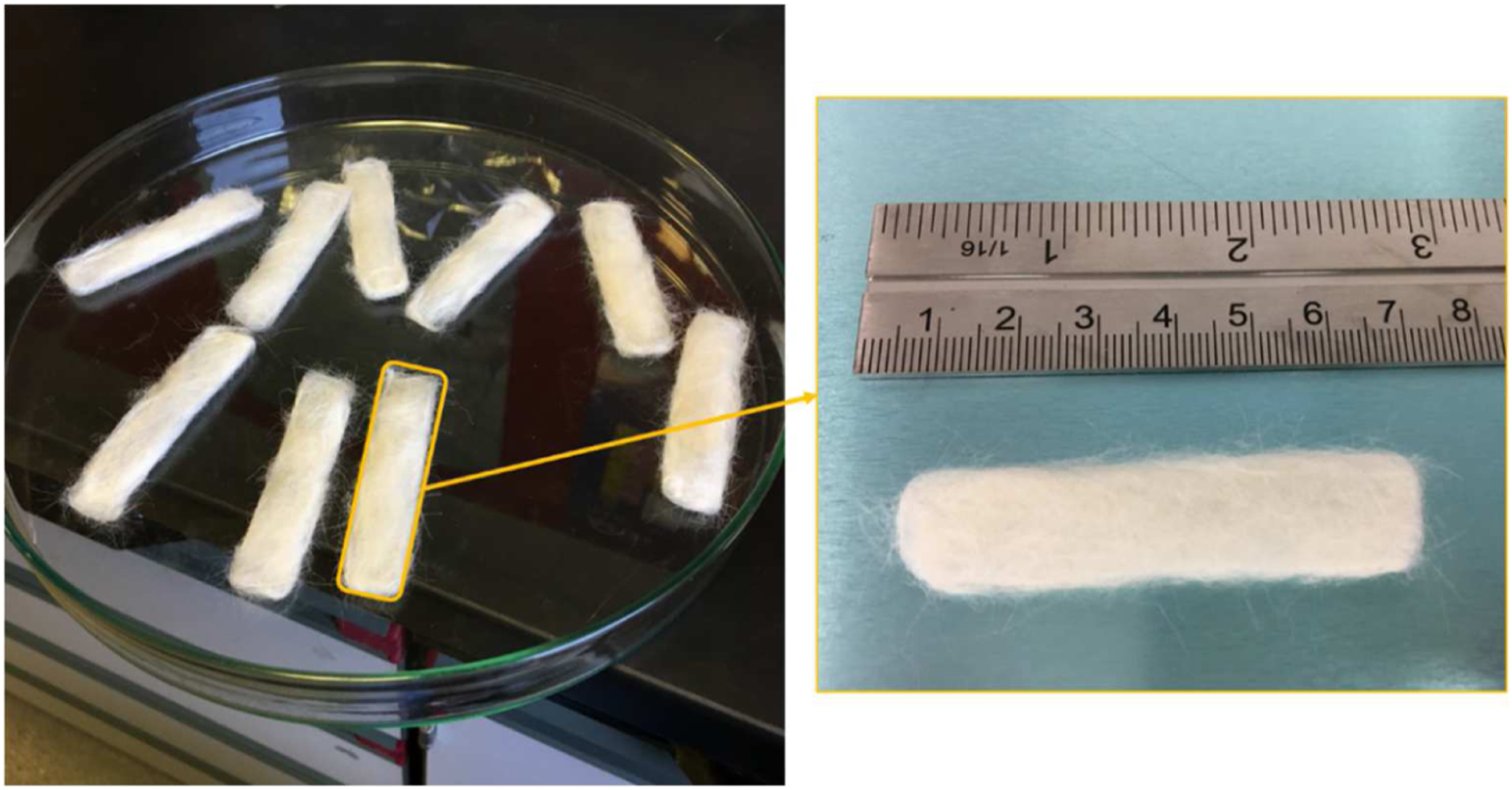
Thereafter, two types of phenolic resins were used to make the composites, being cured either using the curing agent (short cure cycle (4 h)) or with the application of heat only, using a long cure cycle (4 days). 28 In the case of using curing agent, fast action acid catalyst was used with a mixing ratio of 5 wt% of the resin. The prepared resins were then poured on to the fiber mats where they were observed to wet and infiltrate all the free space. The composites were placed in the autoclave to be cured using the two different curing cycles depending on the resin type. The employed curing cycles were reported elsewhere. 28 The materials will be referred to as ‘composite acid cured’ and ‘composite thermal cured’. The content of ramie fibers for the composites as mixed, prior to cure, were 10%, 15%, and 20% by weight. The fiber volume fraction was not measured after cure due to the difficulty in using burn off or acid digestion methods in natural fiber composites. For more details about the fabrication process of the composites, see the supplemental information.
Flexural properties
The flexural properties of the composites were determined using a Lloyd TA500 tensometer. The test was conducted according to the ASTM D790 at a crosshead speed of 2.0 mm/min. The tests were performed at room temperature (22 ± 3°C). The bending results (strength and modulus) for each composite were calculated using an average of seven specimens per test condition.
Scanning electron microscopy
Fracture surface morphology of the composites after flexural testing was examined using low voltage Scanning Electron Microscopy (FEI Nova Nano SEM 450). Low accelerating voltage (1 kV) was used to avoid sample surface charging and damage with typical vacuum pressure of 10−5 mbar, and a working distance of approximately 4 mm. Secondary electron images were collected using two detectors: Everhart-Thornley Detector (ETD) for low magnification images and Through Lens Detector (TLD) to obtain high magnification images.
Results and discussion
Flexural properties
The flexural properties (modulus and strength) of the pure phenolic and its composites (short ramie fibers-phenolic resin composites) produced using short cure cycle (acid cured) and long cure cycle (thermal cured) are presented in Figure 2. The average flexural modulus of the pure phenolic resin (acid cured) was 2.3 GPa. With the use of plasma-treated ramie fibers, the average flexural modulus of the composite was linearly increased with increasing fiber content (Figure 2(a)). This is because ramie fibers are relatively stiff (Young’s modulus of 31 GPa)
18
compared to phenolic resin (flexural modulus of 2.3 GPa). However, the composite based on 15 wt% untreated fibers shows a reduction in the average flexural modulus of approximately 12%, compared to the plasma-treated composite. This indicates better incorporation of the plasma-treated ramie fibers into phenolic resin than the untreated fibers. The flexural properties of the untreated and plasma-treated short ramie fibers-phenolic composites as a function of fiber content: (a) flexural modulus and (b) flexural strengthof acid-cured composites; (c) flexural modulus and (d) flexural strength of thermal-cured composites.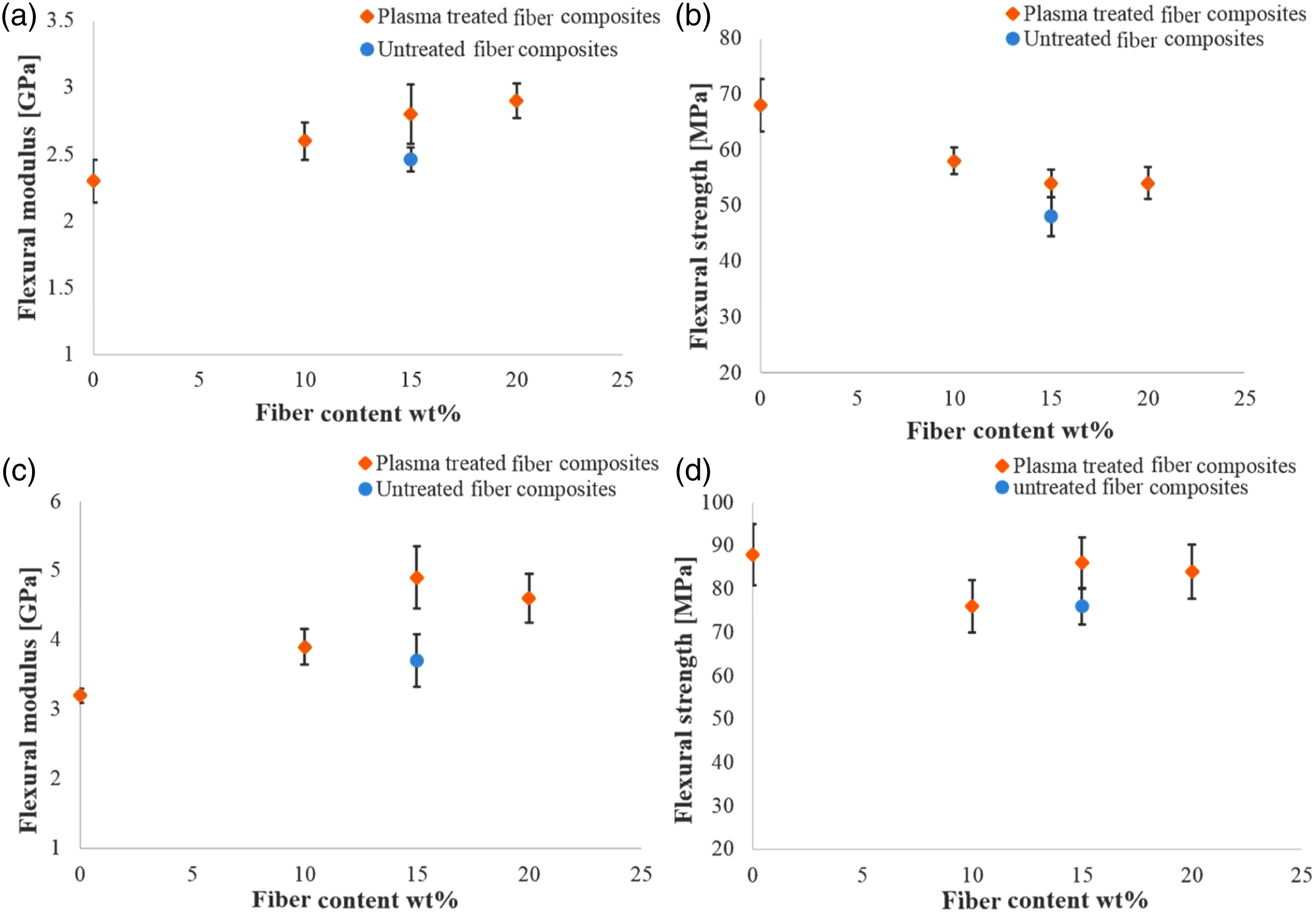
In terms of the flexural strength of the acid-cured composites (Figure 2(b)), the plasma-treated fiber composite showed higher flexural strength than that of the untreated fiber composite. This could be due to the continuous void-free zone around the plasma-treated fibers, as observed by the LV-SEM in Figure 3e. Thus, the stress concentration points around the plasma-treated fibers were less than in the case of the untreated fibers. However, both materials (untreated and plasma-treated fiber composites with 15 wt% fiber content) show clear decreasing strength compared to that of pure phenolic resin. This is consistent with other work on natural fiber-phenolic composites.
31
It is well known that the fiber–matrix interface plays an important role in determining the final mechanical properties of the composites, as transferring the stress between the fiber and matrix occurs through the interface region. The properties mainly depend on the degree of interfacial adhesion between fibers and matrix. The maximum stress level can be maintained across the interface without disruption if a high interfacial strength is achieved.
32
However, the LV-SEM micrographs in Figure 3 showed that the interfacial bonding between the fibers and matrix was very poor, as well as revealing the presence of microvoids along the interface for both materials (untreated and plasma-treated fiber composites). Furthermore, unfilled lumen was clearly observed in some samples, resulting in more defects in the final composite structure. The presence of these defects in the composite could act as a stress concentration point in the polymer matrix, and consequently being sites of crack initiation and fiber–matrix debonding before final composite failure.
33
All of this could explain the reason why the acid-cured composites showed lower flexural strength than the pure phenolic resin. LV-SEM micrographs of the fiber–matrix interface of (a–c) untreated ramie fiber-phenolic resin composites and (d–f) 2 min plasma-treated ramie fibers-phenolic resin composites at different magnifications. The composites were cured using short cure cycle (acid cured).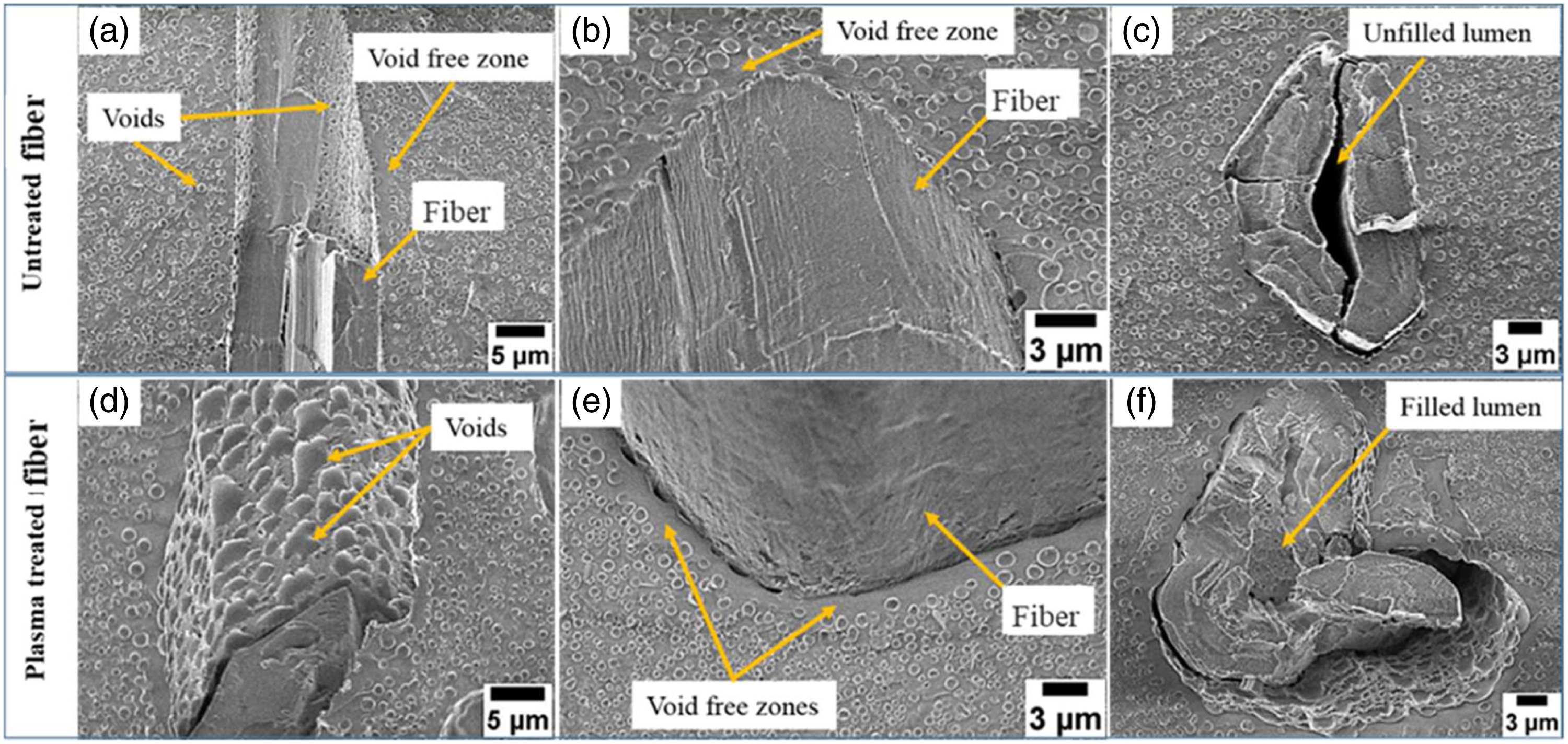
In contrast, the flexural properties (modulus and strength) of the thermal-cured composites (Figures 2(c) and (d)) showed higher values compared to those of the acid-cured composites. For instance, the average flexural modulus of the pure phenolic resin (thermal cured) was 3.2 GPa (Figure 2(c)) compared to 2.3 GPa for the acid-cured system. This was increased to 4.9 GPa, when 15 wt% of plasma-treated fibers was added to phenolic resin which is an improvement of approximately 34% over the pure phenolic resin (thermal cured). This is in contrast to the composite produced using the short cure cycle (acid cured) with 15 wt% fiber, where the improvement in the modulus was only 17% over the pure phenolic. More importantly, unlike when using the short cure cycle, the flexural strength of the composite produced using the long cure cycle was maintained in the same range as that of the pure phenolic resin (thermal cured) as shown in Figure 2(d).
All the above can be attributed to the resin characteristics. As observed and discussed in the section Fiber–Matrix Interface Morphology: Acid-Cured Composites, the formation of microvoids in the cured resin when using the short cure cycle was predominantly along the fiber–matrix interface, resulting in a relatively poor interfacial bond. In addition, when using plasma-treated fibers, a non-homogenous distribution of the microvoids was observed around the fibers. It has been shown in a previous study that the non-homogenous distribution of the microvoids in the cured resin resulted in a reduction in the mechanical properties compared to those with a homogenous microvoids distribution. 28 This is in contrast to the composites produced using the long cure cycle, which showed void free structure suggesting a better interfacial bond between the fiber and matrix. Thus, the flexural properties of the thermal-cured phenolic composites were higher than those of the acid-cured phenolic composites.
However, it is also important to point out that when using the long cure cycle, the flexural modulus and flexural strength of the plasma-treated fiber composites were higher than those of the untreated fiber composites (Figures 2(c) and (d)). As mentioned above, the mechanical properties of the final composites are highly influenced by the nature of the interfacial bond between the fiber and matrix. In general, the interfacial bond between natural fibers and polymer matrices is influenced by mechanical interlocking, chemical bonding and physical interactions between the two components.
32
The presence of the non-cellulosic compounds (e.g. waxes and pectins) on the surface of untreated ramie fibers could act as a barrier for the mechanical/chemical interlocking between the ramie fibers and phenolic resin. This is corroborated by a less than ideal coverage of the fibers by the resin, as indicated by the LV-SEM observations in Figure 4(a)–(c). Thus, the stress transfer between the fibers and matrix was inefficient when using untreated ramie fibers, and consequently led to the early failure of the composites. This is in contrast to the interfacial bonding between ramie fibers and the phenolic resin which had higher coverage when using plasma-treated fibers than when using untreated fibers (as indicated by the LV-SEM micrographs in Figure 4(d)–(f)). Thus, the stress was likely to be more efficiently transferred between the fibers and matrix through the plasma-treated interface, resulting in higher flexural properties. Therefore, the differences in the flexural properties between the two composites (untreated and plasma-treated fibers) can be attributed to the effects of the plasma treatment on the surface morphology/chemistry of ramie fibers, indicating an improved fiber–matrix interface. LV-SEM micrographs of the fiber–matrix interface of (a–c) untreated ramie fiber-phenolic resin composites and (d–f) 2 min plasma-treated ramie fibers-phenolic resin composites at different magnifications. The composites were cured using long cure cycle (thermal cured).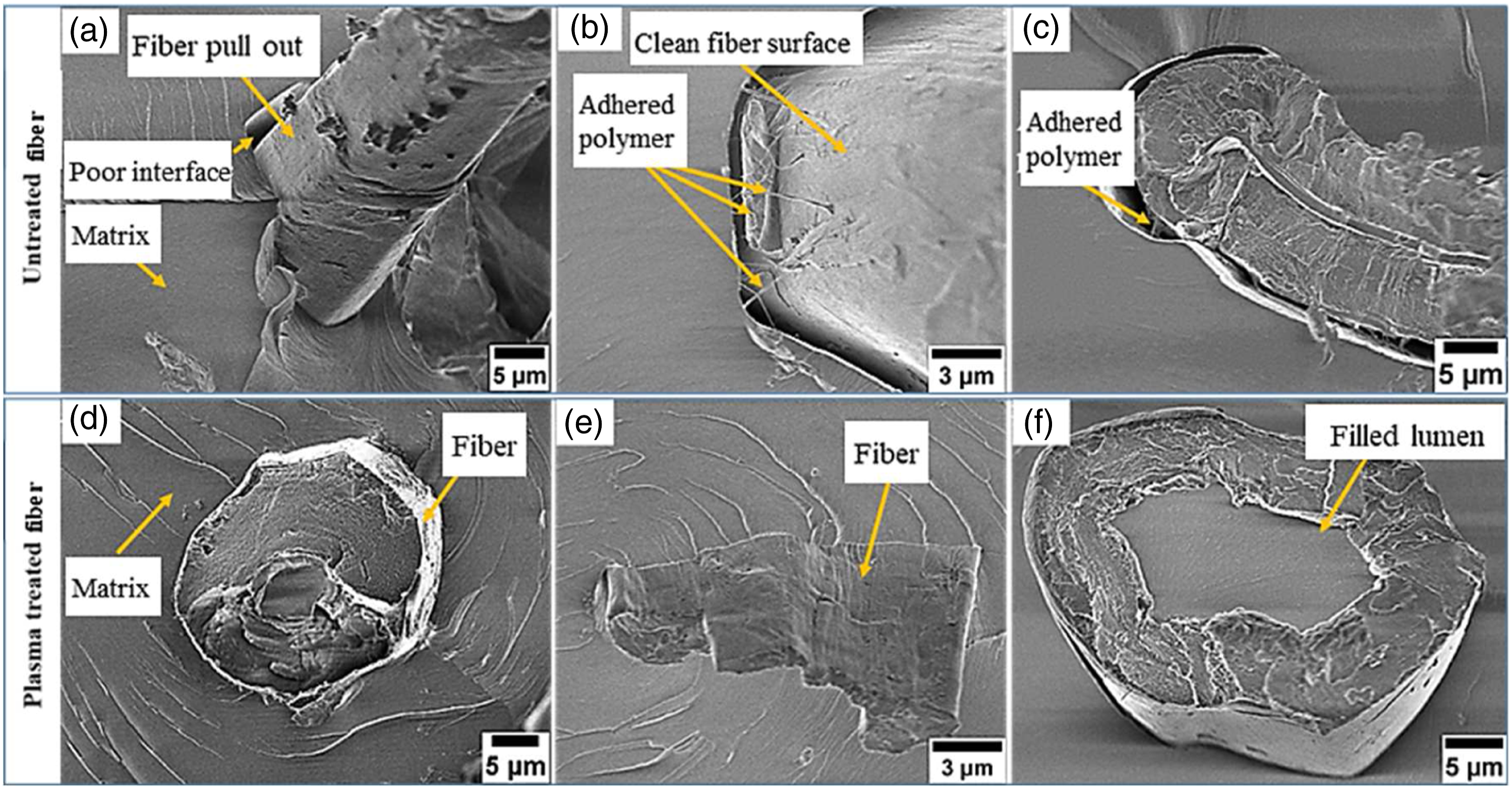
Composite fiber distribution
An overview of LV-SEM micrographs obtained from fractured surfaces of untreated and plasma-treated short ramie fiber–reinforced phenolic composites are shown in Figure 5. These micrographs reveal the ramie fiber distribution in the phenolic resin. In both untreated (Figure 5a) and plasma-treated (Figure 5b) systems, the ramie fibers are well dispersed in the resin and there are no signs of fiber agglomerations. This indicates that the method of composite fabrication, based on short fiber mats, was successful. Overview LV-SEM micrographs of the flexural fractured surfaces of (a) untreated short ramie fibers-phenolic resin composite and (b) plasma-treated short ramie fibers-phenolic resin composite.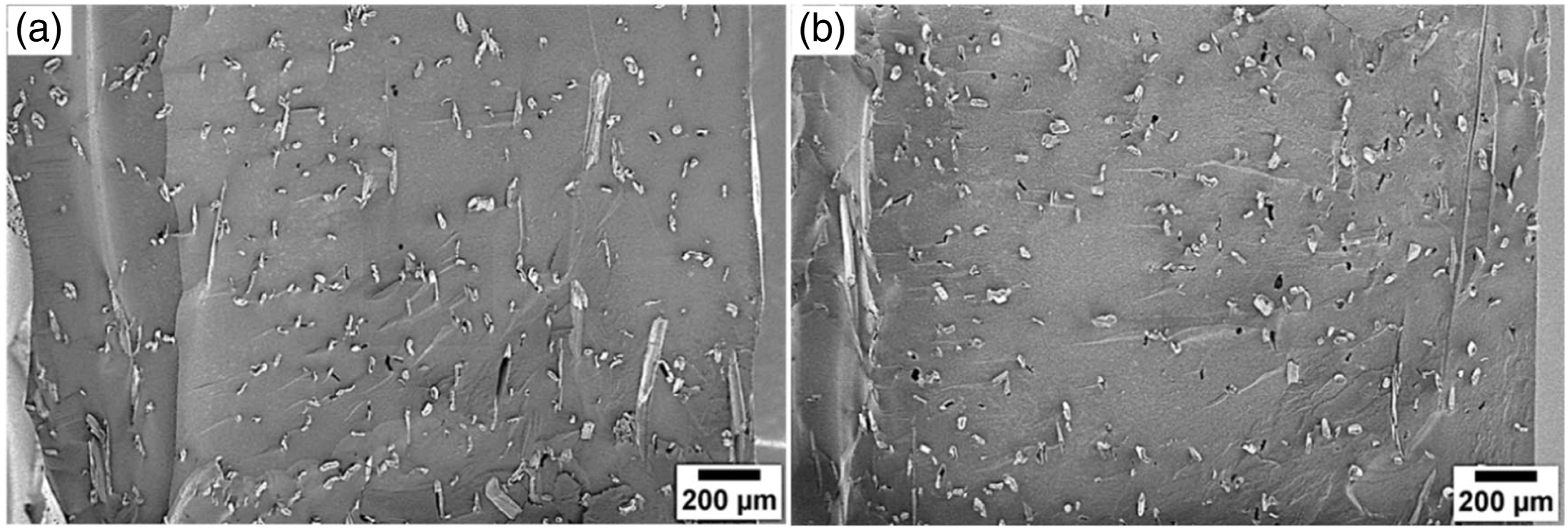
Fiber–matrix interface morphology: Acid-cured composites
The fiber–matrix interfacial bonding is of great importance in short fiber composites. This is partly due to the length of short fibers being of the same order of magnitude as the critical fiber length for efficient stress transfer between fiber and matrix. Consequently, small changes in the interfacial bonding between fibers and matrix affect the reinforcement efficiency quite dramatically. 34
Therefore, a detailed view of the fiber–matrix interface morphology of the untreated and plasma-treated fiber composites, cured using short cure cycle are investigated and presented in Figure 3. In Figure 3a (untreated fiber), dense and homogenous coverage of the phenolic fracture surface with spherical features with an average diameter of 0.52±0.15 μm were observed. These features can be attributed to the trapped water present as result of the condensation reactions which release formaldehyde and water as by-products. With the use of the acid catalyst, the cross-linking rate of the phenol and formaldehyde is relatively fast; therefore, the by-products generated will be less capable of diffusing into the surrounding matrix, resulting in a homogenous distribution of voids in the final cured resin. 28 A higher magnification LV-SEM image of the fiber–matrix interface (Figure 3b) also reveals microvoids along the fiber–matrix interface. Furthermore, these microvoids were locally varied around the fiber, leading to localized void-free zones as shown in Figure 3(a) and (b). As discussed previously, this may be due to the inhomogeneous coverage of the fibers by waxes and pectins. In addition, Figure 3e shows a fiber lumen, which is an inherent feature of natural fibers. This particular lumen is unfilled and therefore is a void within the composite system which occupies volume but will support no load. The unfilled lumen could be due to the poor interaction between the fibers and matrix or due to a high viscosity resin. The viscosity of the resin is visibly increased after the addition of fast action acid catalyst and thus the filling of untreated fiber lumens with this phenolic resin may be limited.
However, when using plasma-treated fibers, the microvoids along the fiber–matrix interface are larger compared to those of the untreated fibers, as shown in Figure 3d. Moreover, plasma-treated fibers tend to be surrounded by a void-free zone, followed by a ring of larger voids and then a zone with a homogenous void size distribution (Figure 3e). To further confirm this, a histogram of the void diameter distribution around the untreated and plasma-treated fibers are shown in Figures 6(c) and (f) for the micrographs shown in Figures 6(a) and 6(d). When using untreated fibers, the average void diameter is 0.64 ± 0.2 μm with a relatively narrow distribution of void diameters. Conversely, when using plasma-treated fibers, the average void diameter is higher at 1.13 ± 0.3 μm, with a relatively broad distribution of void diameters. It seems likely that the differences in void size and distribution are a direct consequence of the altered fiber surface chemistry after plasma treatment. For instance, the FTIR analysis in a previous study showed that the absorbed water in the crystalline cellulose of ramie fibers was decreased gradually with plasma treatment.
18
This was attributed to the temperature effect of the plasma during the treatment and also to bond cleavage forming free radicals.35,36 This would lead to fibers with a lower moisture content and more functional groups on the fiber surface capable of hydrogen bonding, resulting in more interaction with the water in the resin. The water generated during the polymerization reaction can exist as bounded water (hydrogen bonded to the polymer network), or discrete pockets of free water (leading to voids).
37
Either of these types of water can interact with the fibers, though this will be more likely to occur with the free water. LV-SEM micrographs of the fiber–matrix interface of (a) untreated ramie fiber-phenolic resin composites and (d) 2 min plasma-treated ramie fibers-phenolic resin composites. (b, e) Binary images showing the voids distribution around the fibers in (a) and (d), respectively. (c, f) Histogram of voids diameter distribution derived from the binary images in (b) and (e), respectively. The composites were cured using short cure cycle.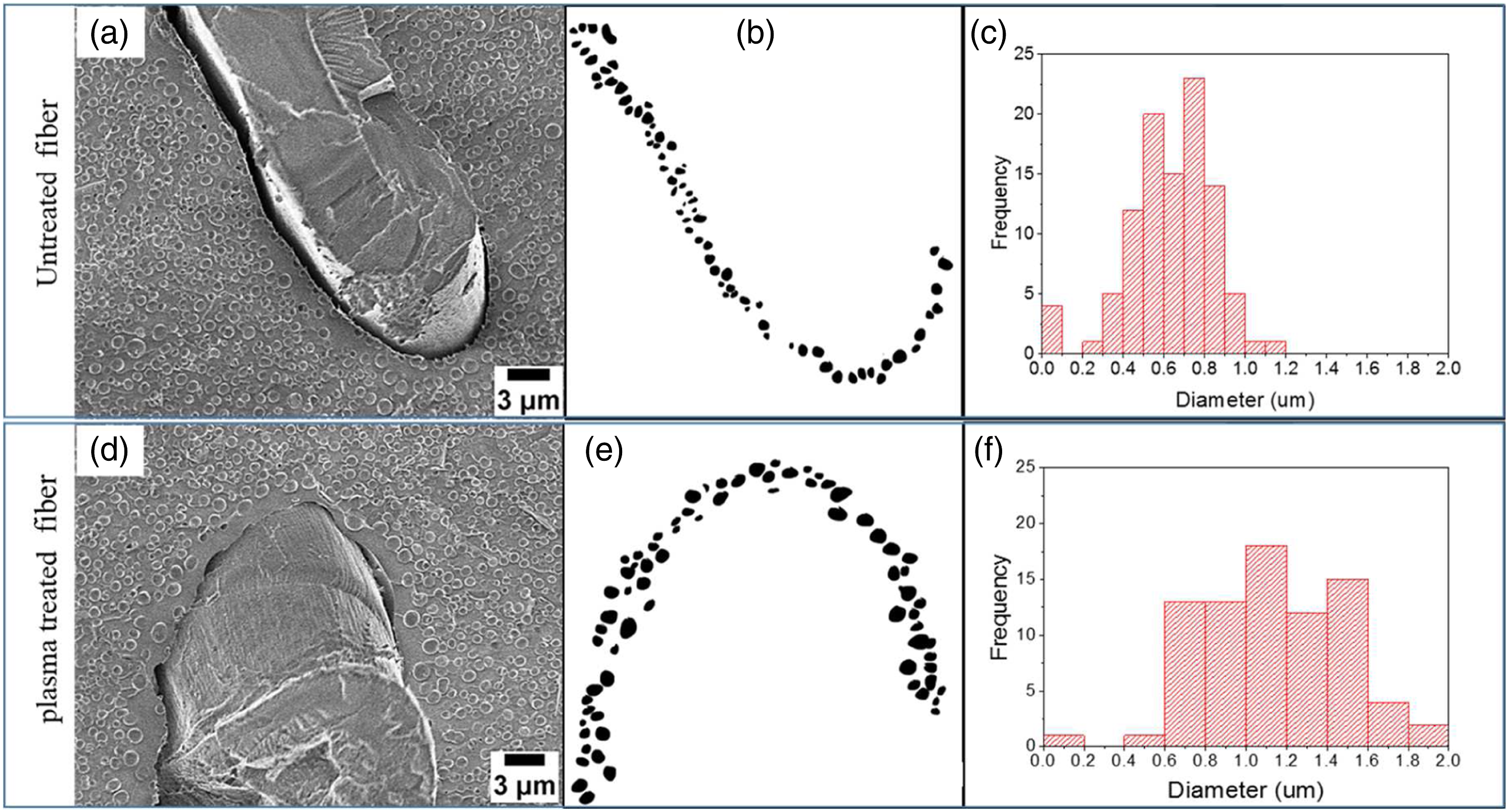
The observations in Figure 3 can be explained by considering the water generated as by-products in the phenolic resin during cure and how this interact with plasma-treated fibers. Some of this water will be absorbed by the fibers and some will coalesce to form voids at the fiber–matrix interface. When using plasma-treated fibers, the water at the fiber–matrix interface can more readily absorb. This scenario is also consistent with the presence of a distinct void-free zone around the fiber. Beyond the void-free zone, the generated water coalesces, but as a result of the fast cross-linking rate, it is unable to diffuse before the gel point is reached, leading to a larger average void size in this area. Furthermore, the void-free zones might also prevent the diffusion of the voids into the fibers because of the high density of this area. In contrast, when using untreated fibers, the average void size is smaller and no distinct continuous void-free zone around the fiber is observed. This could be attributed to the higher level of water in the untreated fibers that could only attract and interact with the water close by and also due to the inhomogeneous coverage of ramie fiber by waxes and pectins.
Fiber–matrix interface morphology: Thermal-cured composites
The LV-SEM micrographs of the untreated and plasma-treated fiber composites made using the long cure cycle (thermal cured) are shown in Figure 4. During flexural testing, the composite will be loaded in tension and compression with the neutral line running between the two. When the sample is subjected to a flexural load from above it will bend, resulting in compressive stresses on top of the sample and tensile stresses on the bottom. The neutral line is the transition between the compressive and tensile zones.38,39 For a reliable comparison of the interfacial bonding between the untreated and plasma-treated fiber composites, all the LV-SEM micrographs in this study were collected from the tensile side of the neutral line. In contrast to the phenolic resin cured using the short cure cycle (Figure 3(a)), a homogenous fracture surface which was free of microvoids was observed for the phenolic resin cured using the long cure cycle. This was attributed to the time available for the water to diffuse away from the polymer network before the gel point of the resin is reached. 28 If this is long enough, as when using the long cure cycle (4 days), the formation of microvoids in the cured resin can be minimized.
In terms of the fiber–matrix interface, the LV-SEM micrographs of the untreated fiber composites show relatively low fiber coverage, suggesting relatively poor interfacial adhesion (Figures 4(a)–(c)). The fibers are clearly debonded and pulled out from the resin (Figures 4(a)–4(c)) with a noticeable gap between the fiber and matrix. In addition, the fiber surface shows relatively few signs of adhering polymer as shown in Figure 4(b) (indicated by arrows).
However, in the case of using plasma-treated fibers (Figures 4(d)–4(f)), the fibers are broken off near the matrix surface with a relatively short fiber pull out. Moreover, it can be seen in Figures 4(d) and 4(e) that the fiber–matrix interface is almost continuous and the fiber surface appears to have a relatively high level of resin coverage. This is likely to play an important role with regard to the mechanical properties of the composite (see the section Flexural Properties) as the degree of adhesion between the fibers and matrix governs load transfer. Another difference between the untreated and plasma-treated fibers is that the fiber lumen shown in Figure 4(f) is clearly filled with resin. Whilst not shown in Figure 4, the majority of the visible fiber lumens were also filled with resin, though it is not possible to assess how deep the lumens are filled.
All the above can be attributed to changes in the surface morphology and surface chemistry of the fibers before and after plasma treatment. In terms of the fiber surface morphology, it has been observed that the surface of the untreated ramie fiber was smooth and almost homogenous on the nanoscale. 18 This was attributed to the primary amorphous layer of ramie fibers that consists of waxes, pectin, and proteinaceous materials. 40 This is in contrast to the plasma-treated fibers, where 2 min of low-pressure plasma treatment produced ramie fibers with a rougher surface and a greater exposure of crystalline cellulose microfibrils in comparison to the untreated fibers. 18 Such changes are expected to increase the fiber surface interfacial area and also improve the mechanical interlocking between the fibers and matrix. In terms of the chemical changes, it has been proven that the low-pressure plasma treatment was effective in removing the non-cellulosic compounds such as amorphous hemicellulose and waxes from the surface of ramie fibers after 2 min of treatment. 18 This could increase the surface reactivity of the fibers and consequently improve the chemical bonding between the fibers and matrix.
Conclusions
Mats of random short ramie fibers were successfully fabricated utilizing the effects of plasma treatment to improve the compatibility between the fibers themselves. Furthermore, when using plasma-treated fibers as the reinforcement in phenolic resin composites, the Young’s modulus was clearly improved in both composites (acid cured and thermal cured). However, this is not the case in terms of the flexural strength for both composites. It has been shown that the flexural strength was gradually decreased for the plasma-treated fiber composites (acid cured) whereas in the case of the thermal-cured composites, the flexural strength was maintained in the range of the pure phenolic resin. This was attributed to the formation of voids along the fiber–matrix interface in the case of acid-cured composites. Therefore, it can be concluded that plasma treatment of ramie fibers is more effective when used in combination with a longer cure cycle (thermal cure) which results in fewer voids.
Supplemental Material
sj-pdf-1-jcm-10.1177_00219983211065549 – Supplemental Material for Interfacial Morphology between Ramie Fibers and Phenolic Resins: Effects of Plasma Treatment and Cure Cycle
Supplemental Material, sj-pdf-1-jcm-10.1177_00219983211065549 for Interfacial Morphology between Ramie Fibers and Phenolic Resins: Effects of Plasma Treatment and Cure Cycle by Sameer F Hamad, Teng Fei, Simon A Hayes, Joel P Foreman and Cornelia Rodenburg in Journal of Composite Materials
Footnotes
Acknowledgments
Sameer F. Hamad gratefully acknowledges the Iraqi Ministry of Higher Education and Scientific Research and its representative in the UK, the Iraqi Cultural Attaché for the financial support. C. Rodenburg thanks the Engineering and Physical Sciences Research Council (EPSRC) for funding under EP/N008065/1. Joel P. Foreman thanks Peter Willson at Caleb Technical Products for providing the resin.
Declaration of conflicting interests
The author(s) declared no potential conflicts of interest with respect to the research, authorship, and/or publication of this article.
Funding
The author(s) received no financial support for the research, authorship, and/or publication of this article.

Supplemental Material
Supplemental material for this article is available online.
References
Supplementary Material
Please find the following supplemental material available below.
For Open Access articles published under a Creative Commons License, all supplemental material carries the same license as the article it is associated with.
For non-Open Access articles published, all supplemental material carries a non-exclusive license, and permission requests for re-use of supplemental material or any part of supplemental material shall be sent directly to the copyright owner as specified in the copyright notice associated with the article.
