






Abstract
This study aimed at investigating the effects of hemp fiber particles with an approximate size of 500 μm added at three various weight ratios including 1wt%, 5wt%, and 10wt%, on the tensile behavior of Acrylonitrile-Butadiene-Styrene (ABS) at low strain rates varying from 1 × 10⁻⁴ to 6.25 ×10⁻² s−1. Regardless of a strain rate, tensile test results revealed that increasing particle content leads to a significant improvement in the tensile modulus of neat ABS but a decrease in its post-yield strength. Additionally, it was found that the ductility of neat ABS decreases with both increasing particle content and strain rate. The results also showed that ABS experiences a less intrinsic yield drop after post-yield as both particle content and strain rate enhance. Additionally, it was concluded that increasing the weight ratio of particles in ABS leads to higher resistance to plastic localized deformation. Moreover, it was found that an improvement in the weight ratio of particles makes the post-yield strength of ABS more susceptible to strain rate but leads its tensile modulus to be less sensitive to strain rate. The tensile test results were found to be consistent with both X-ray diffraction (XRD) and Fourier Transform Infrared (FT-IR) Spectroscopy results.
Keywords
Introduction
Acrylonitrile-Butadiene-Styrene (ABS), regarded as one of the most important members of the amorphous polymers family, has been extensively utilized as load-carrying components in a wide variety of industrial applications ranging from automotive to electronics due to its tailored mechanical properties including high toughness, high impact resistance, good chemical resistance, and high ductility.1–4 Especially, ABS is known for its outstanding mechanical performance against impact events, even at low temperatures.5,6 Nevertheless, ABS is manufactured from non-biodegradable petroleum-based products which cause potential hazardous waste, if not recycled. The decomposition of ABS in the environment can take up to 500 years or even more. 7 From the standpoint of steeply growing environmental awareness for nearly two decades, reducing the mass of ABS used in the industrial applications is of great importance. In order to reduce the undesired environmental effects of ABS without compromising the strength requirements, the incorporation of particles and fillers extracted from bio-degradable, renewable, sustainable, and eco-friendly natural plants to the structure of ABS has been receiving a great deal of attention.8–12
To date, additives extracted from different natural plants including acrylic, para rubber tree, bamboo, pineapple leaf, kenaf, palm, and, oil palm empty fruit bunch have been mixed with ABS in filler and particle forms with different weight ratios, and their effects on the tensile behavior of ABS have been deeply investigated.13–21 The literature has clearly put forth that the tensile properties of ABS such as elastic modulus and yield strength are pronouncedly influenced by additives type, size, form, and weight ratios.13–21 For instance, the experimental study revealed that the addition of wood sawdust with a size of 100–300 μm improves the tensile elastic modulus of ABS but results in a decrease in its tensile strength. 13 The effects of the weight ratio of wood sawdust on the tensile properties of ABS were also studied and reported that increasing the weight ratio of wood sawdust from 9.1 wt% to 33.3 wt% leads to an improvement in the elastic modulus, but a deterioration in the tensile yield strength. 13 Furthermore, experimental studies were shown that the additions of both bamboo fibers with 30wt% and pineapple leaf fibers with 10wt% positively influence the elastic modulus of ABS.20,22 On the other side of the coin, the tensile yield strength is adversely affected by both additives. Similar effects on the tensile properties of ABS were also reported for the addition of palm fibers. 23 The influence of additive size was also studied by mixing ABS with oil palm empty fruit bunch fibers in two various forms such as long fibers (20–25 mm) and nano-powders (75–300 nm). 24 This notable study found out that nano-powders affect the tensile elastic modulus of ABS more favorably than long fibers. 24 The tensile behavior of ABS with added kenaf fibers in a filler form was also explored and pointed out that both the tensile elastic modulus and the yield strength of ABS are decreased by the addition of kenaf fibers. 25
Different from the aforementioned natural plant additives, hemp fiber coming into prominence due to its outstanding mechanical properties including high durability, high resistance to rot, and high specific strength with high cellulose content, was incorporated into ABS in particle form with an approximate size of 500 μm at three different weight ratios ranging from 1 wt% to 10 wt%. Thus, their effects on the tensile properties of ABS were explored by conducting tensile tests at four low strain rates varying from 1 × 10⁻⁴ s−1 to 6.25 × 10⁻² s−1.
Materials and methods
Materials
Raw industrial hemp fibers have been sourced from the Turkish Ministry of Agriculture of Forestry of Samsun province of Turkey in dried and crushed form. The density of hemp fibers was reported to be 760 kg/m3. ABS granules which are the HI121H coded product of LG Chem company have been attained from the local supplier. It was informed that the relative density of ABS granules is 1.04 (ASTM D792) and the melt flow rate is 23 g/10 min under 10 kg load at 220°C (ASTM D1238). In order to strengthen the bond of hemp fiber particles to ABS, SEBS-g-MA (Styrene-Ethylene/Butylene-Styrene-maleic anhydride-graft) was used. SEBS-g-MA has been obtained from the Kraton company, and its exact technical name has been given as KRATONTM FG1901 G which is a clear, linear triblock copolymer based on styrene and ethylene/butylene with a polystyrene content of 30%.
Manufacturing process
Prior to attaining particles from hemp fibers, the hemp fiber straws obtained in crushed form were first decomposed from their woody parts. Afterwards, the hemp fibers were reduced to pieces with an average length of 10 cm in order to facilitate particle extraction from the hemp fibers. Then, pre-washing was carried out on the decomposed hemp fibers in distilled water for 24 h at room temperature for the purpose of partially eliminating undesirable substances inherent in hemp fibers including pectin and lignin. After the pre-washing process, the hemp fibers were dried at room temperature for 72 h. Later, an alkaline treatment was conducted on the hemp fibers in order to remove unwanted substances such as pectin and lignin. It was reported by many researchers that alkaline treatments strengthen the bond between natural fibers and synthetic materials. Although many different alkaline treatment processes were addressed in the literature,22,26–29 the alkaline treatment in this study was implemented by following more or less one of them.
29
Note that investigating the different alkaline treatments on the mechanical properties of natural fiber added-polymers is a different subject of study. Herein, the alkaline treatment was carried out on the hemp fibers using a 10wt% sodium hydroxide (NaOH) solution. In other words, the hemp fibers were immersed in the 10wt% NaOH for 24 h at room temperature. After the alkaline treatment, the hemp fibers were first washed with distilled water for 24 h and, then left to dry for 4 days at room temperature. In addition, an oven drying process was performed at 100°C for 1 h in order to completely dry the hemp fibers. The aim of the oven drying was to make sure that the hemp fibers are completely dry, and to make the particle extraction easier during shredding process. Particle extraction from the oven-dried hemp fibers was achieved by using a high speed blender with a capacity of 35,000 r/min. After shredding the hemp fiber in the high-speed mixer for 15 min, the hemp fiber powders with a size of less than 500 μm were acquired by mechanically sifting them in sieves with three different pore diameters ranging from 67 μm to 500 μm. Particle extraction from crushed hemp fiber straws is schematically illustrated in Figure 1. Manufacturing process from crushed hemp fiber straws to hemp fiber particles.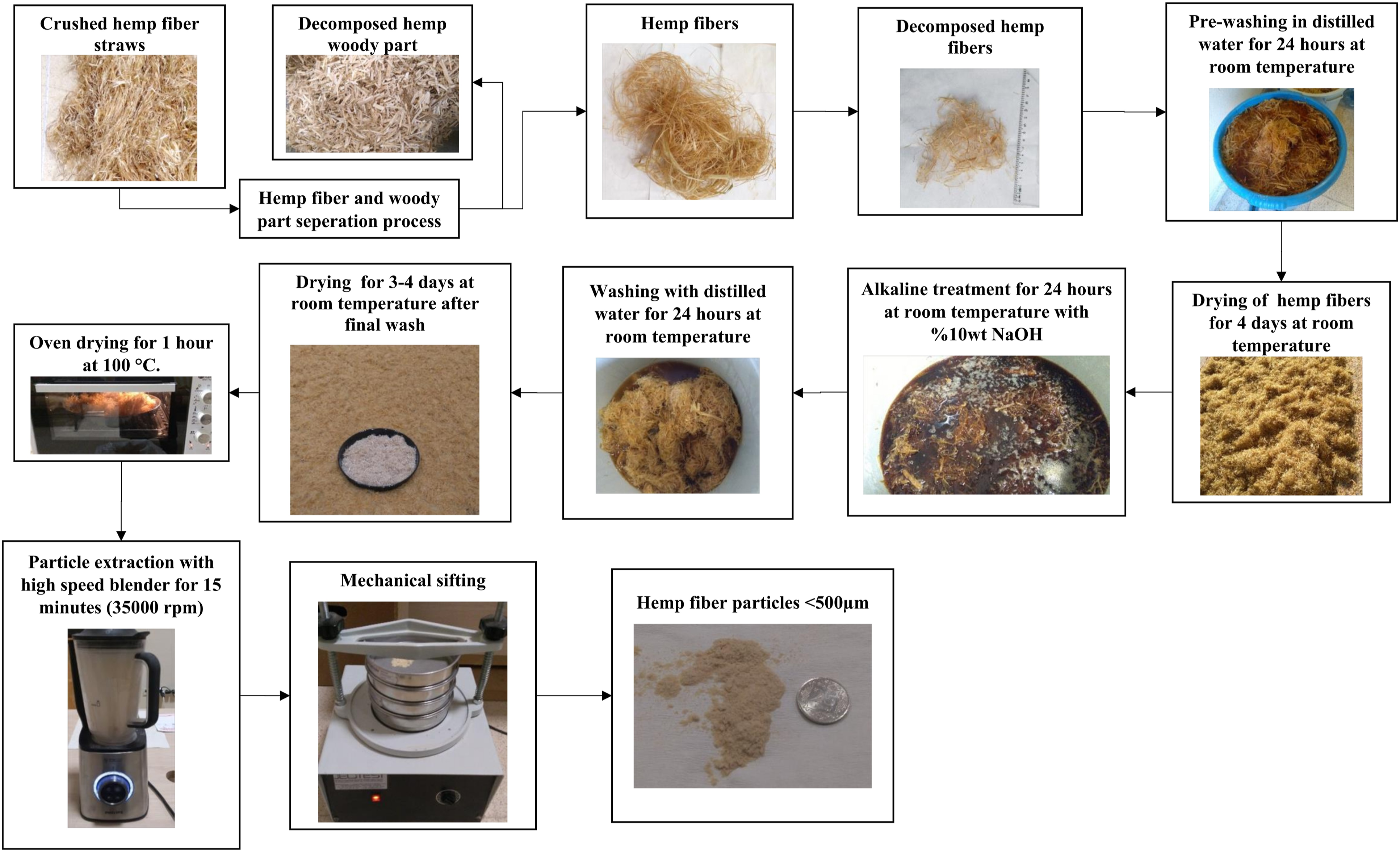
Composition of the prepared materials.

To measure the tensile properties of ABS/Hemp-Particle biocomposites, test specimens were produced by injection molding according to the ASTM D638 standard. Tensile test specimens fabricated through injection molding are shown in Figure 2. Additionally, injection molding parameters of ABS/Hemp-Particle biocomposites are reported in Table 2. Set of injection-molded tensile test specimens for different weight ratios. Injection molding parameters of ABS/Hemp-Particle biocomposites.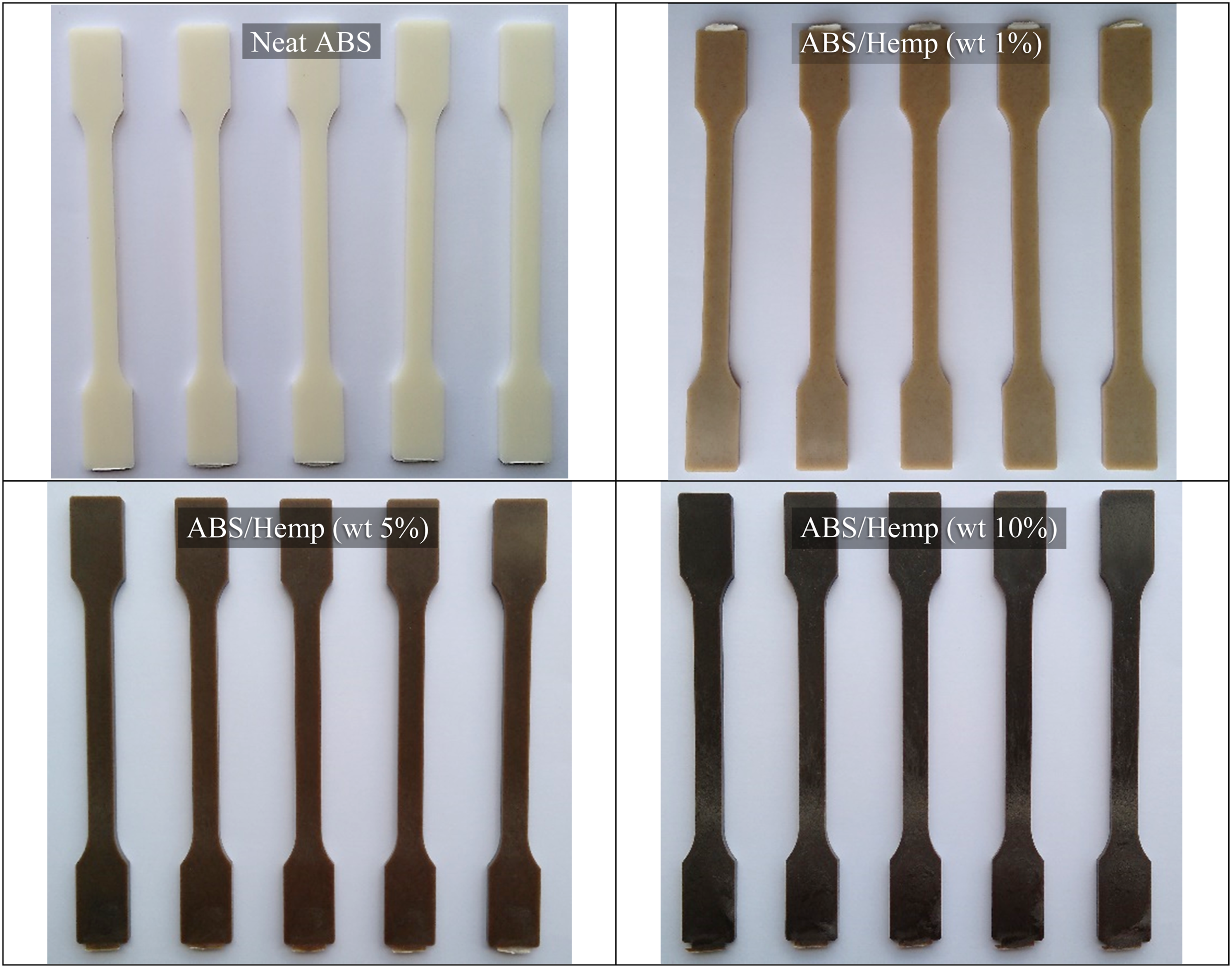

The temperature used during injection molding was selected purposely since it prevents the visco-elastic material properties of hemp fibers from rapid degradation.30,31
Characterizations
Surface morphologies of both treated and untreated hemp fibers were evaluated by conducting scanning electron microscopy analysis (SEM) in order to reveal the effectiveness of the alkaline treatment carried out in this study. By conducting X-ray diffraction (XRD) analysis, the crystallinity of ABS/Hemp-Particle biocomposites was also explored. Additionally, Fourier Transform Infrared (FT-IR) Spectroscopy analyses were performed to identify the functional groups and the chemical components of the ABS/Hemp-Particle biocomposites. Tensile tests were carried out on neat ABS and ABS/Hemp-Particle biocomposites at five various elongation speeds varying from 0.008 (mm/s) to 5 (mm/s) in order to find out the effects of added particles on strain rate dependent tensile modulus and yield strength. Moreover, the fractured surfaces of specimens were examined by means of SEM analysis after the tensile tests.
SEM and XRD Analysis
The surface morphologies of treated and untreated hemp fibers, as well as, the fractured surfaces of the specimens after tensile tests were examined using the FEI Quanta FEG 450 FESEM (Field Emission Scanning Electron Microscopy) device. In order to make the prepared samples more conductive, they were gold-plated and mounted to the device with carbon tape.
XRD analysis was carried out on the neat ABS and ABS/Hemp-Particle biocomposites using the PANalytical brand EMPYREAN model device with
FTIR Analysis
Fourier Transform Infrared (FT-IR) spectra of the neat ABS and ABS/Hemp-Particle biocomposites were inspected using the Thermo Scientific Nicolet iS50 spectrometer. This inspection was conducted considering wavenumbers from 400 to 4000 cm−1 at a resolution of 0.48 cm−1.
Tensile tests
Tensile tests were carried out at four various elongation speeds ranging from 0.008 (mm/s) to 5 (mm/s) using the SHIMADZU AGS-X universal testing machine. During the tensile tests, strain data was acquired by using the TRViewX advanced non-contact video extensometer. Two marker stickers were placed on the tensile test specimens, and engineering strains were measured via monitoring the movement of those two marker stickers by the non-contact video extensometer. For each elongation speed, five tests were implemented at room temperature. The experimental setup for the tensile tests is depicted in Figure 3. Experimental setup for tensile tests.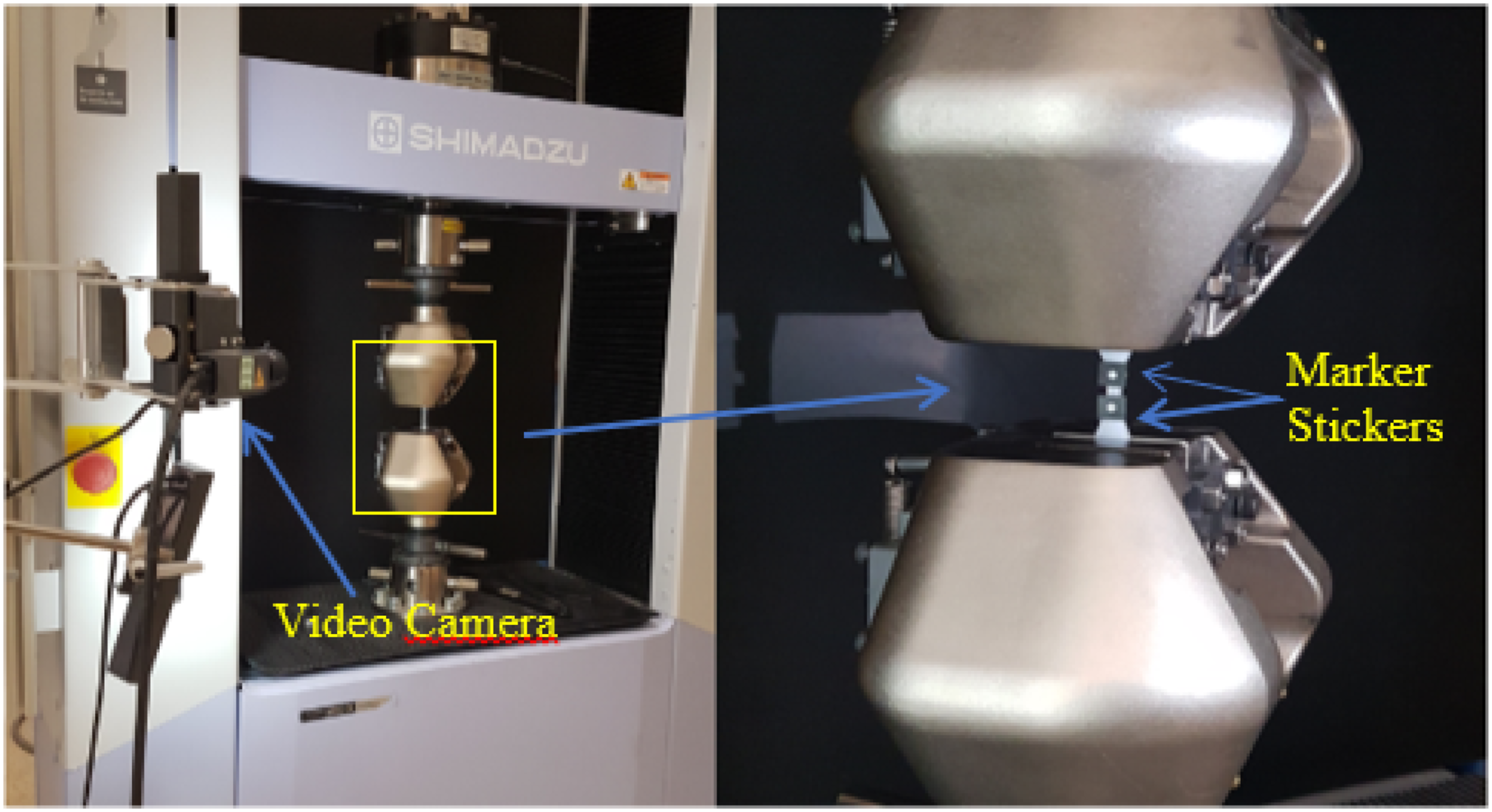
Based on the strain-time data recorded by the non-contact extensometer, the strain rate for each elongation speed was calculated using the following expression.
32

In polymers, engineering stress–strain data does not provide any reliable results in terms of elastic modulus and yield strength.3,5,32–34 Therefore, true stress–strain data was computed by taking into account the following formulae.

Identification of strain rate sensitivity parameters for post- yield strength and tensile modulus
It has been very well known for a long time that the elastic modulus and yield strength of amorphous polymers are considerably influenced by strain rate.5,34–38 Assuming an incompressible plastic flow as well as considering a thermo-mechanically activation process, the strain rate dependence of yield behavior of polymers has been defined previously with the following expression.
39

Equation (4) can be simply re-arranged to characterize the strain rate dependent yield behavior of polymers under uniaxial tension and compression, as given below.
38


Herein, 
As a result, the strain rate dependent yield strength of amorphous polymers can be computed using the given expression below.
The formula above can be applied to the problem of finding strain rate dependent yield strength of amorphous polymers under uniaxial tension since
In the same manner, the strain rate dependence of tensile modulus can also be determined using the expression given below.
35

The influences of hemp particle weight ratio and strain rate on the tensile elastic modulus and post-yield strength.

Results and discussion
Morphological results
SEM micrographs of the treated and untreated hemp fibers given in Figure 4 revealed that impurities on the surface of untreated fibers are successfully removed by the alkaline treatment; therefore, hemp fibers with cleaned and rough surfaces were attained as depicted in Figure 4. SEM micrographs of (a) treated and (b) untreated hemp fibers.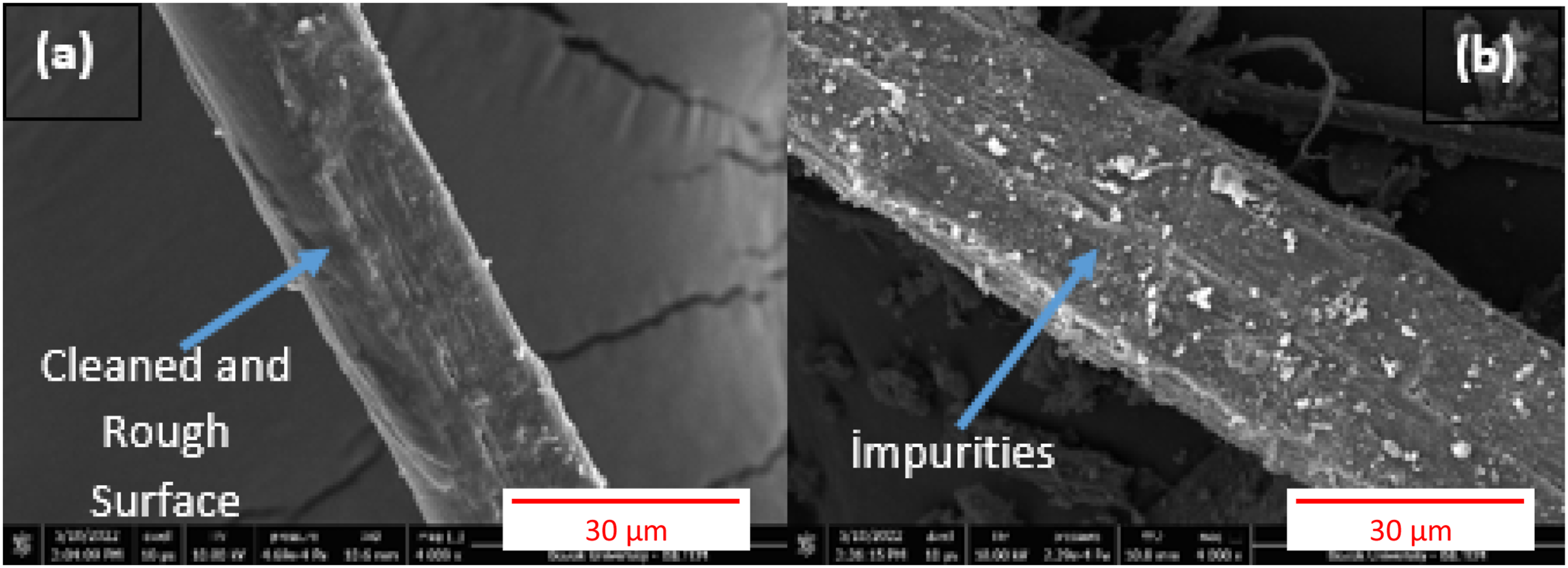
The spectrums of all samples subtracted from the XRD analysis are shown in Figure 5. Examining the XRD pattern of neat ABS, it was found that the recorded pattern is in a good agreement with the results reported by several studies before.42–44 As seen in Figure 5, the neat ABS exhibits two hump major peaks, appearing at approximately 2-theta = 11.5° and 2-theta = 19.5°, which are the characteristic of an amorphous structure.
44
Due to the random orientation of atoms in the structure of amorphous materials, a broad peak rather than a sharp peak is observed in their XRD patterns. In essence, the absence of a sharp peak in the XRD spectrum reveals the non-crystalline nature of neat ABS.27,45–48 XRD patterns of neat ABS and ABS/Hemp biocomposites.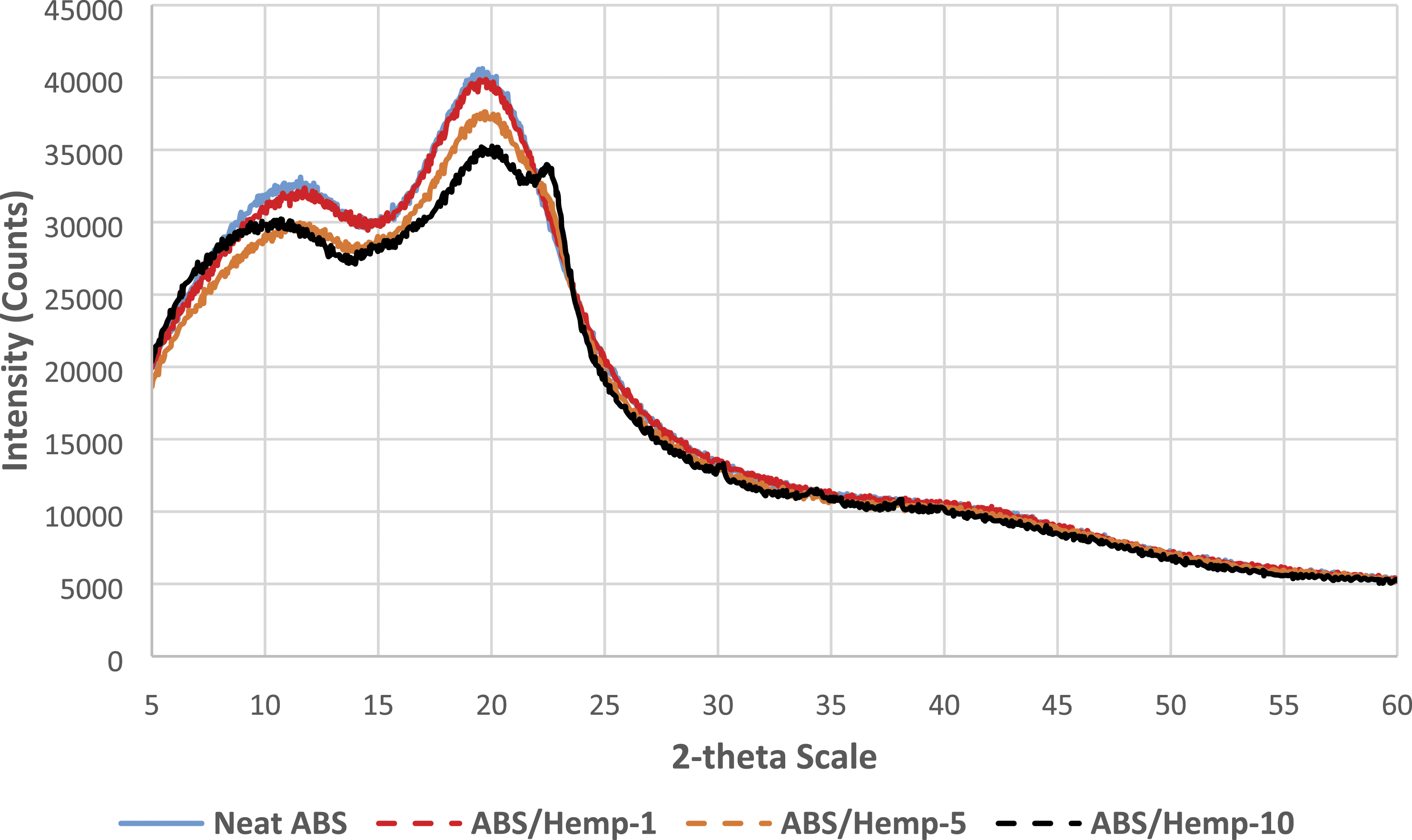
As shown in Figure 5, the XRD patterns of all biocomposites are more or less similar to the pattern of neat ABS with almost the same angles corresponding to the peak intensities, but with different magnitudes of diffraction peaks. In general, the peak intensities decrease with increasing weight ratio, implying that there is not only a composition change in ABS but also a possible decrease in its crystallinity.43,48 As reported, biocomposites with higher crystallinity show better mechanical performance. 49 As a matter of fact that the occurrence of diffraction peaks at almost the same angles indicates that hemp particles are homogenously mixed with ABS. 27 Nevertheless, an extra peak is observed in the pattern of ABS/Hemp-10. This finding can be attributed to less proper mixing of hemp particles in ABS.50,51
The FTIR spectra of neat ABS are compared to the FTIR spectra of ABS/Hemp biocomposites as shown in Figure 6. As seen in Figure 6, the recorded spectra of neat ABS are analogous to the spectrums of biocomposites, revealing that there is no new peak formation or peak shifting taking place in ABS/Hemp biocomposites. From this finding, it can be concluded that only physical interaction rather than a chemical interaction occurs within the biocomposites via a mechanical interlocking mechanism basically.52,53 In other word, the addition of hemp particles does not result in any molecular change in the virgin state ABS. FTIR spectra of neat ABS and ABS/Hemp biocomposites.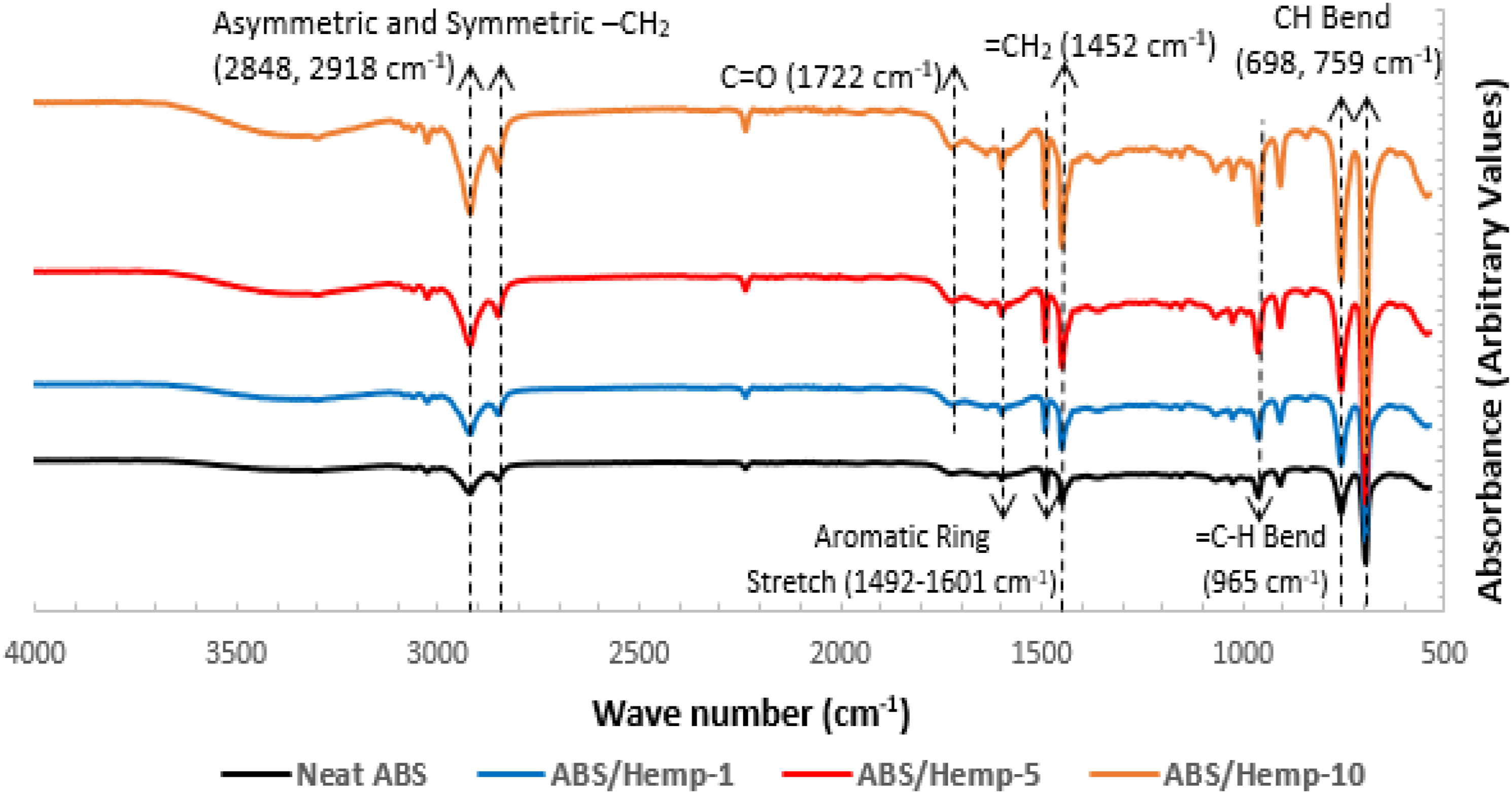
In consistency with the previously reported findings, the virgin ABS shows characteristic peaks in its FTIR spectra at about 698–759, 965, 1452, 1492-1601, 1722 and 2848-2918 cm−1 which are due to the presence of CH bend, = C-H bend, = CH2, aromatic ring stretch, C = O and asymmetric and symmetric –CH2, respectively.
Tensile test results
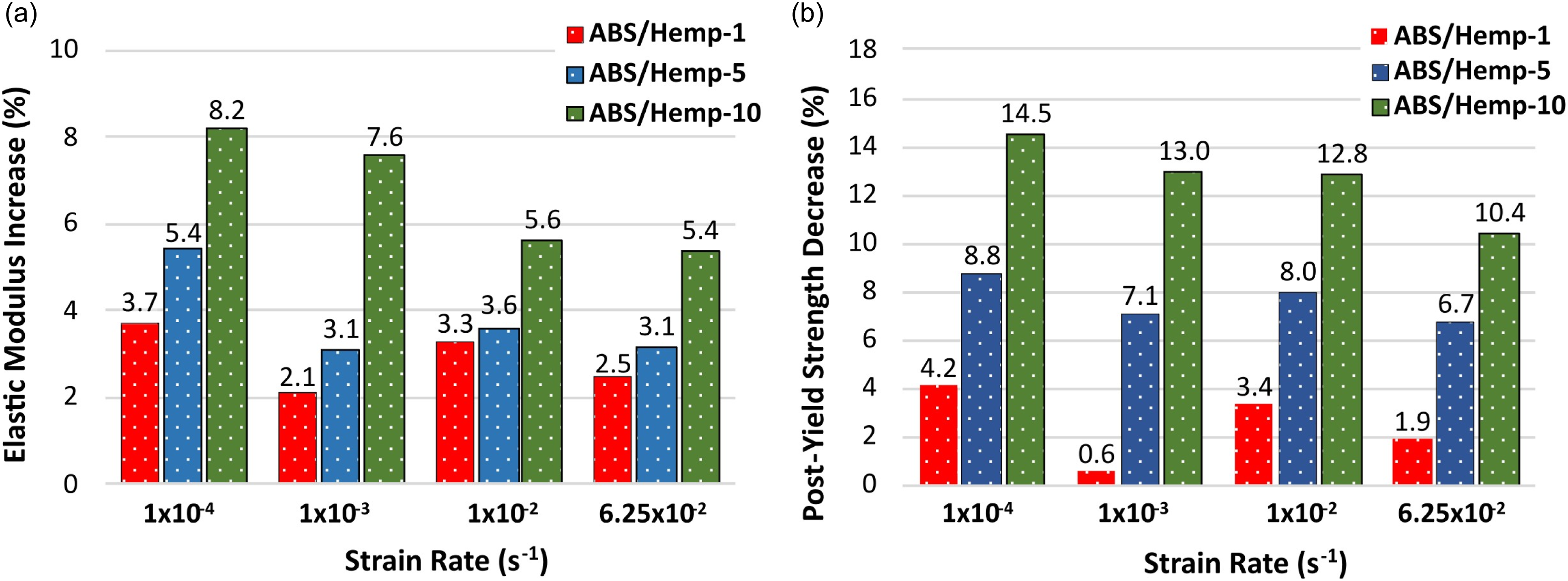
The true stress-true strain curves of all materials are documented for four different strain rates (1 × 10⁻⁴, 1 × 10−3,1 × 10−2 and 6.25 × 10⁻² s−1) in Figure 7. Additionally, relying on the results given in Figure 7, both tensile modulus and yield strength of materials are calculated and tabulated in Table 3. Furthermore, the tensile modulus and post-yield strength of neat ABS are compared to the tensile modulus and yield strength of ABS/Hemp particle biocomposites in Figure 8. The graphical representation of the changes in the tensile modulus and post-yield strength with respect to neat ABS is also presented in Figure 9. Comparisons of the true stress-true strain curves of materials for different strain rates, (a) 1 × 10⁻⁴ s−1, (b) 1 × 10⁻³ s−1, (c) 1 × 10⁻² s−1 and (d) 6.25 × 10⁻² s−1. Strain rate dependent tensile properties of all materials, (a) Elastic Modulus, (b) Post-Yield Strength. Tensile modulus and post-yield strength change percentages respect to neat ABS, (a) Elastic Modulus increase, (b) Post-Yield Strength decrease.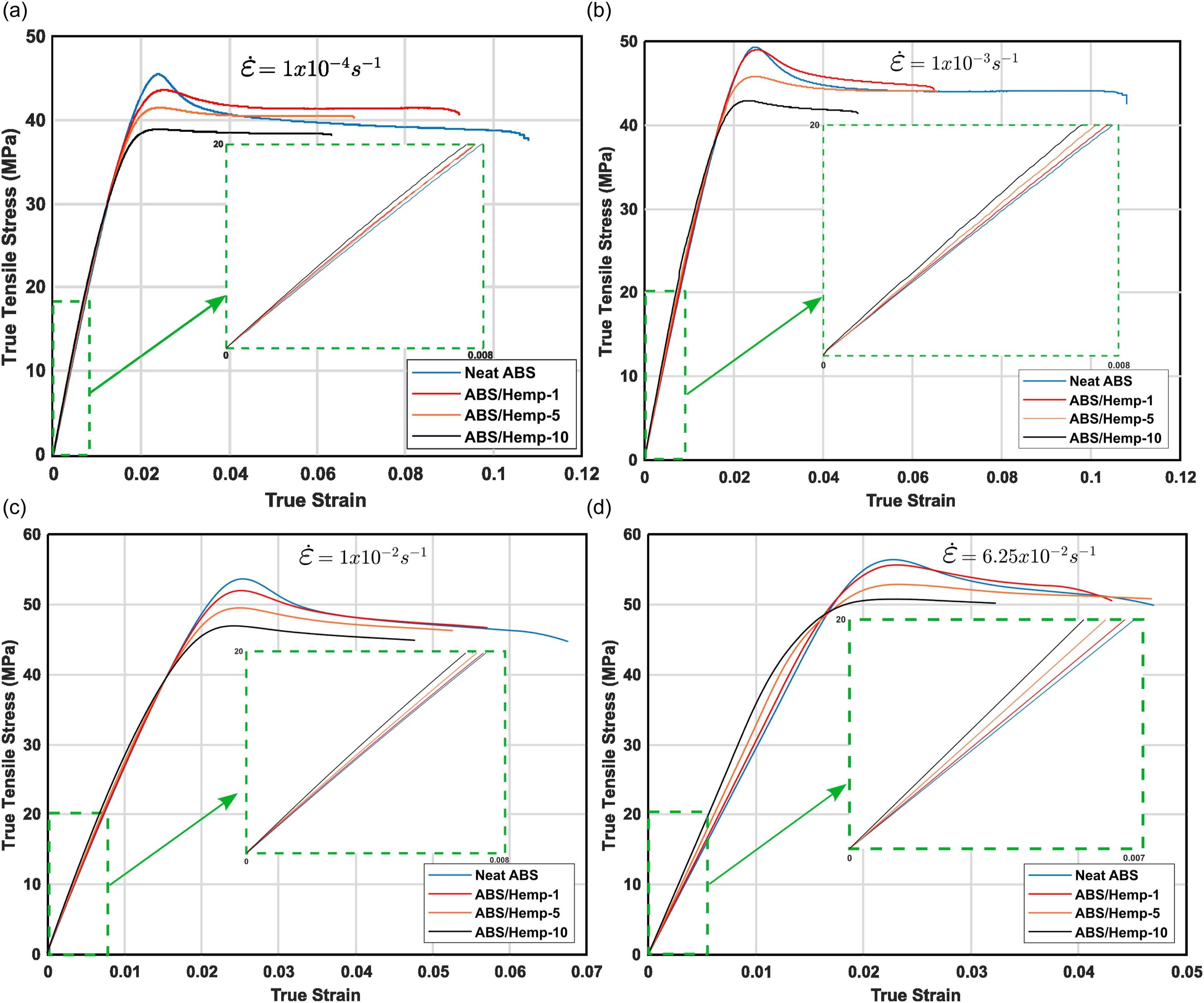
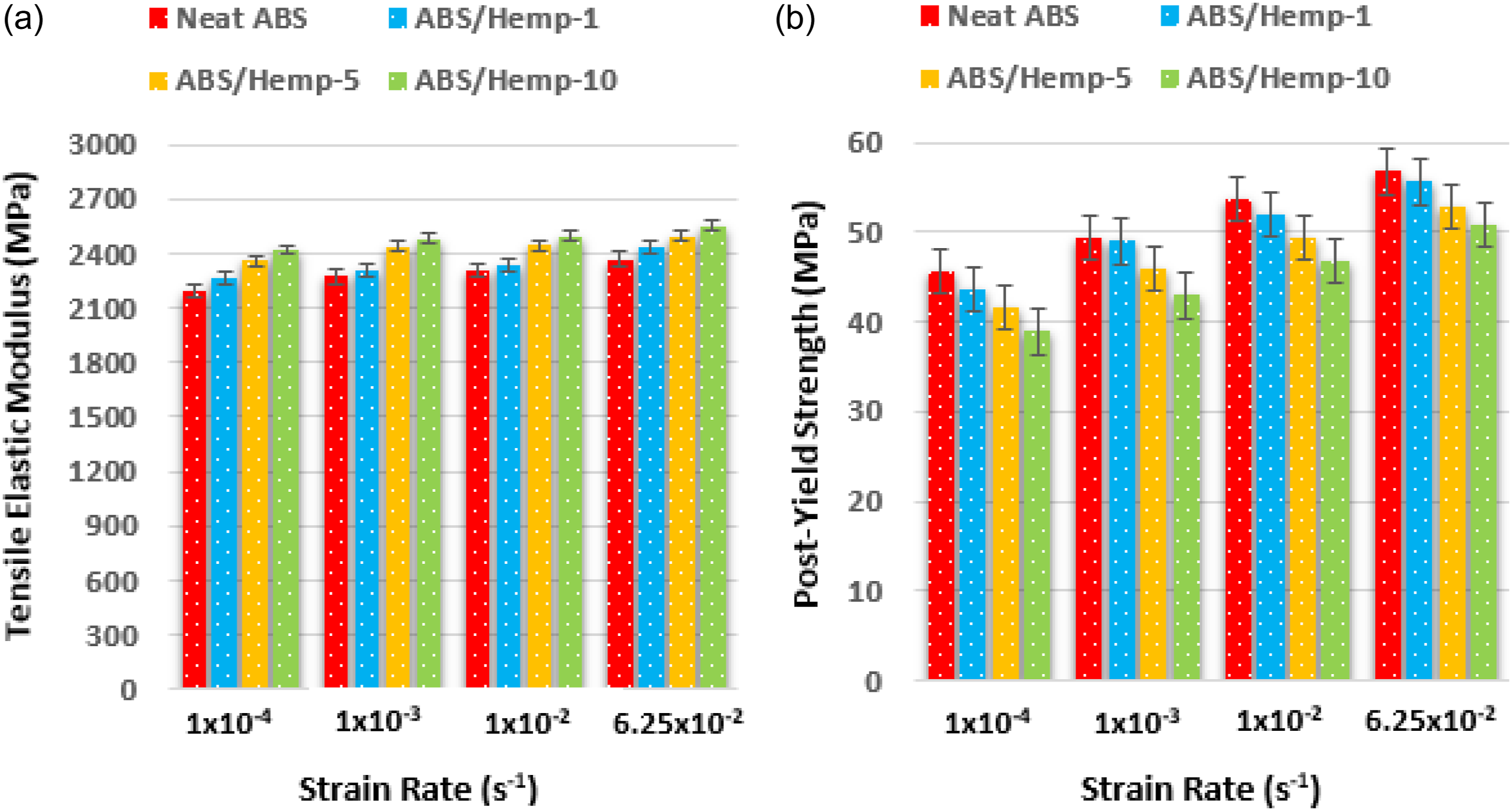
From the results reported in Table 3 and Figure 8(a), it can be easily deduced that the tensile modulus of neat ABS is enhanced by the addition of hemp particles, regardless of the strain rate. More importantly, it is found that the tensile modulus of neat ABS increases with an increasing weight ratio of the hemp particles. The reason for this increase observed in tensile modulus may be due to the presence of hemp particles that limit the chain mobility leading ABS to be stiffer and, therefore a higher elastic modulus.52,54 Another reason for this increase can be attributed to a change in the crystalline of ABS led by the addition of hemp particles which act as nucleating agents yielding a surface heterogeneous nucleation effect.53,55 Actually, this finding is found to be supported by the XRD results documented earlier.
As comprehended from the results in Table 3 and Figure 8(b), the post-yield strength of neat ABS, in contrast to the tensile modulus, is adversely influenced by the addition of hemp particles. Furthermore, the incorporation of the increasing amount of hemp particles results in a more significant reduction in the post-yield strength of neat ABS, as shown in Figure 8(b). This observed decrease can be mainly due to the poor bonding or adhesion between hemp particles and the ABS matrix, or can be explained by the fact that the hemp particles debonded from the ABS matrix during the tensile tests.
The effects of the addition of particles at different weight contents on the strain rate-dependent tensile modulus and post-yield strengths of ABS are quantitatively (%) presented in Figure 9(a) and Figure 9(b), respectively. The addition of particles possesses a positive impact on the tensile modulus of ABS at each strain rate but with a different level of significance, as shown in Figure 9(a). The most favorable effect of particle addition on the tensile modulus is found at the lowest strain rate of 1 × 10⁻⁴ s−1. At this lowest strain rate, increasing particle content from 1% to 10% leads to an increase in the tensile modulus by 3.7% and 8.2%, respectively. In particular, it has been found that the addition of 10% particles significantly increases the tensile modulus at each strain rate. This can be attributed to the higher elastic modulus of hemp particles compared to neat ABS and this material property becomes more pronounced with increasing particle weight fraction.4,56 In general, the tensile modulus of biocomposites becomes less sensitive to strain rate independent of the particle content while enhancing strain rate. This outcome actually supports the strain rate sensitivity findings reported in Figure 11(a). The visco-elastic material behavior of amorphous polymers like ABS is described by the polymer chain mobility on the atomic scale and the straightening of the cross-link entanglements of chains on the macroscopic scale.57,58 It is well acknowledged that macro-molecular chains possess more sufficient time to re-orientate themselves under tension while the strain rate decreases and this leads to less restriction in chain mobility. 57 This might be the reason for the found decrease in the elastic modulus increase of biocomposites with strain rate.
As shown in Figure 9(b), a decrease in the strain rate induces more significant reduction in the post-yield strengths of biocomposites in general, regardless of the particle content. Additionally, increasing particle content causes more pronounced decrease in the post-yield strengths at each strain rate. The maximum reduction takes place in the ABS/Hemp-10 at the lowest strain rate of 1 × 10⁻⁴s−1. This is primarily due to the fact that higher particle content signifies a larger number of void formations near particles and void coalescences which lead to more reduction in the post-yield strength. Additionally, the increased strain rate provides less sufficient time for voids to form near the particles, leading to a decrease in the number of voids formed, and thus resulting in less reduction in yield strength.
In spite of the all conclusions drawn above, it is worth underlying that the effect of poor interfacial adhesion between matrix and additives on the strain rate-dependent material properties is not well comprehended yet and is currently under intense examination.59,60
In order to ascertain whether debonding took place between hemp particles and ABS matrix during the tensile tests, the ruptured surfaces of tensile specimens were examined by conducting SEM analysis. The SEM micrographs of the ruptured surfaces of specimens shown in Figure 10 clearly reveal the satisfactory bonding achieved between particles and matrix. Nevertheless, voids nucleation near particles and particle pull out imperfections are observed in the SEM graphs of the ruptured surfaces of ABS/Hemp biocomposites. These detected imperfections possibly play a very influential role in reducing the stiffness of ABS and, therefore the post-yield strength. This observed decrease in the post-yield strength can be the indication of lack of strong adhesion between ABS and particles, which can be explained by the fact that high viscosity of ABS makes the wettability of natural particles difficult for achieving strong mechanical bonding.
61
In addition, the presence of particle fracture and pull outs indicates that these particles have exhibited a level of resistance during the propagation of stress within the matrix.
62
The SEM results presented in Figure 10 clearly revealed that there are some dispersed holes in ABS matrix caused by the extraction of hemp particles during deformation.
63
Additionally, the interface between ABS matrix and distributed hemp particles in all biocomposites is obviously visible, which is the indication of poor compatibility between matrix and particles. The extraction of hemp particles during deformation leads to a reduction in the stiffness of materials and therefore resulting in a decrease in the post-yield strengths of biocomposites. Furthermore, the hemp particles dispersed in ABS matrix act as stress concentration points causing a large number of crazes which adversely affects the ductility of ABS.
63
Increasing particle content signifies the larger number of crazes in the material leading to less ductility. In order to better achieve an effective stress transfer from ABS matrix to hemp particles, the elimination of micro-voids caused by the ejection of particles during deformation is indispensable, and this can be attained by strengthening the interfacial mechanical bonding physically and chemically.64–66 In essence, different damage modes including particles pulled out, particles fracture, matrix cracking, and interfacial debonding make a contribution to the rupture of tensile test specimens of biocomposites, regardless of a strain rate.
67
As a result of this, it can be concluded that the SEM findings are in a good agreement with the tensile test results. SEM micrographs of the ruptured surfaces of tensile specimens for different strain rates and particle contents.
As expected,4,5,34,36,40,68 the tensile modulus and post-yield strength of each material increase with increasing strain rate as proved by the results given in Table 3 and Figure 8(a) and Figure 8(b).
One important outcome deduced from Figure 7 is that an intrinsic yield drop known as the strain-softening decreases with increasing weight ratio of the hemp particles. In other words, ABS/Hemp biocomposites exhibit less unstable post-yield deformation behavior compared to the post-yield behavior of neat ABS. Although the origin of strain softening is not well-known yet,36,69 it has been claimed that damage-induced plastic localization or physical aging are the reasons for strain softening.34,69 Micro-shear band deformation, which eventually initiates a macroscopic plastic zone called necking, has also been implicated as the cause of strain softening.70–72 During the actual tension tests at all strain rates, necking was observed in ABS/Hemp-1 and ABS/Hemp-5, while almost not observed in ABS/Hemp-10.
As can be seen in Figure 7, ABS/Hemp-10 particularly tends to behave like an elastic-perfectly plastic material with showing a barely distinguishable strain softening regime. From knowing that strain softening plays a primary role in the initiation of strain localization, 73 it can be inferred that added hemp particles somehow reduce the severity of plastic localization of neat ABS under tension. Furthermore, it can be stated that shear band deformation in ABS/Hemp-10 is prevented by the added hemp particles, and thus necking is not formed.
Although the absence of strain softening is an indication of the uniform or homogeneous stress distribution, it will be very questionable to claim this for ABS/Hemp-10 since it does not exhibit sufficiently large strain hardening behavior, as seen in Figure 7. 69
In terms of ductility, the mechanical behavior of neat ABS is negatively influenced by the incorporation of hemp particles, as shown in Figure 7. In general, ductility of neat ABS decreases not only with increasing particle content but also with increasing strain rate. Perhaps, this is mainly due to the fact that molecular chains are not better coordinated and deformed in the loading direction as strain rate increases. 74 This also can be attributed to the faster voids nucleation near rubber particles in ABS at higher strain rates which causes a reduction in its ductility.
Offering better tensile modulus with an insignificant less post-yield strength compared to neat ABS shown in Table 3 can make ABS/Hemp-1 appealing for use in industrial applications. Nevertheless, these materials are generally subjected to multiaxial loadings in real-world applications, which dictate simultaneous tension, compression, and shear stress-states. In other words, relying on only tension test data is not sufficient to assess their actual material behaviors under multiaxial loads like bending and impact.2,3,6,34,68 Thus, there is a high need in testing these manufactured biocomposites under bending and impact loadings in order to ascertain their actual mechanical behaviors.
Based on the results tabulated in Table 3, strain rate sensitivity parameters calculated by using equation (9) and equation (8) for tensile modulus(S) and post-yield strength (C) are illustrated in Figure 11(a) and Figure 11(b), respectively. Strain rate sensitivity parameters of all materials calculated for, (a) Tensile Modulus, (b) Post-Yield Strength.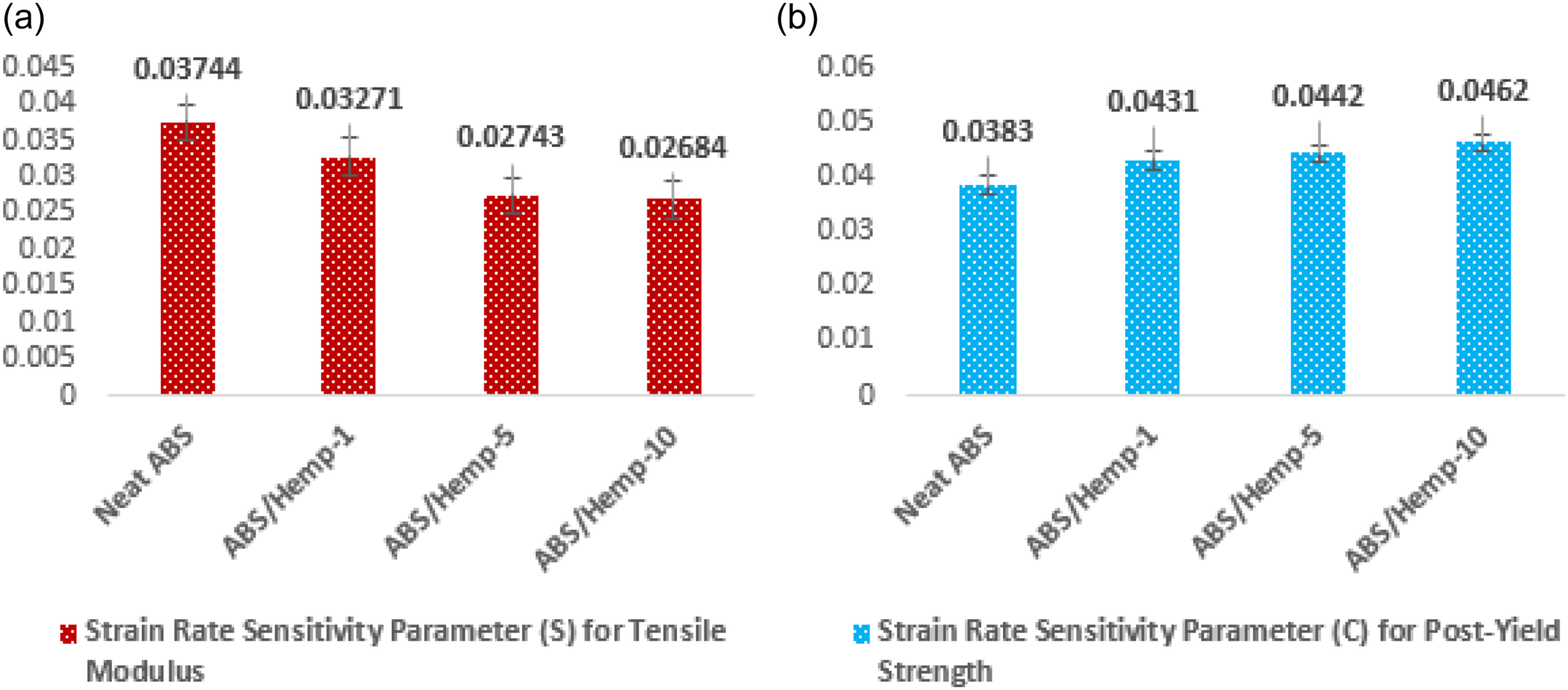
As well-known for a long time, both the elastic and plastic material qualities of polymers are highly dependent on strain rate.4,34,36,75 A significant number of rigorous studies has been devoted to understanding the strain rate effect on the material behavior of polymers.1,68,76 Those studies have revealed that increasing strain rate leads to an increase in modulus of elasticity and yield strength of polymers. The increase in both material properties with increasing strain rate is mainly due to the reduction of the molecular mobility of polymers induced by side-chain motions or ring flips, known as β-transitions, which makes the chains in polymers stiffer and resulting in an increase in both elastic modulus and yield strength.77,78
Besides the strain rate influence, the strain rate sensitivity reflecting a timescale required for the re-orientation of the chains of polymers is a significant material property that considerably affects the onset of localized deformation and damage.60,79 As shown in Figure 11(a), the strain rate sensitivity parameter of neat ABS calculated for tensile modulus decreases with increasing particle content. In other words, the incorporation of hemp particles makes the tensile modulus of ABS less susceptible to strain rate. Several important parameters such as interface properties between matrix and particles and viscous behavior of matrix might play an important role in the strain rate sensitivity of biocomposites. A higher strain rate sensitivity for tensile modulus offered by neat ABS indicates that the onset of localized plastic deformation or coalescence in neat ABS is postponed compared to biocomposites, as can be seen in Figure 7. 80
Conversely to the strain rate sensitivity of tensile modulus, an increased particle content in neat ABS results in an improvement in the strain rate sensitivity of post-yield strength, as shown in Figure 11(b). Higher particle content induces a larger number of voids in biocomposites resulting from the higher number of pulled out particles. The formations of these voids cause a significant reduction in the post-yield strengths of biocomposites. Nevertheless, the strain rate sensitivity of yield strength arises from the inertness of the defects pertaining to the micro-localization of the heterogeneous plastic flow near hemp particles. 81 As illustrated in Figure 11(b), the incorporation of hemp particles improves the post-yield strength strain rate sensitivity of ABS, in addition, the strain rate sensitivity is further found to enhance with increasing particle content. Compared to the neat ABS, the increasing strain rate sensitivity with particle content is mainly due to the restraint effect of the particles in biocomposites and this effect becomes more dominant while the particle content is improved.82,83
An increase with increasing particle content found in the strain rate sensitivity parameter for post-yield strength signifies a higher resistance to localized deformation exhibited by biocomposites compared to neat ABS. 84 As discussed earlier, the strain softening is an indicator of the resistance to local plastic deformation imparted by a material. As known, strain softening plays a primary role in the onset of strain localization. 73 From this, it can be concluded that the addition of hemp particles reduces the severity of strain localization by restricting the chain mobility and shear band deformation of neat ABS.70–72 This implies the greater resistance to plastic localized deformation. As a conclusion, the strain softening behaviors of biocomposites are consistent with the findings of strain rate sensitivity of post-yield strength.
Concluding remarks
The following conclusions have been drawn after examining the effects of added hemp particles with different weight ratios (1 wt%, 5 wt% and 10 wt%) on the tensile behavior of ABS at low strains.
The addition of hemp particles enhances the tensile modulus of neat ABS regardless of strain rate but decreases its post-yield strength. The tensile modulus of neat ABS increases considerably as the hemp particle content increases. On the contrary, the post-yield strength of neat ABS is adversely affected while the weight ratio increases. This observed reduction in the post-yield strength is attributed to the formation of micro voids as a result of the pull-out of particles from their initial positions during the tensile tests. This also can be caused by a poor bonding between particles and ABS matrix. SEM micrographs of the ruptured surfaces of tensile test specimens clearly reveal the micro voids formations.
An intrinsic yield drop, known as strain softening, decreases with increasing hemp particle content. While altering hemp particle content from 1 wt% to 10 wt%, neat ABS tends to behave like an elastic-perfectly viscoplastic material showing barely noticeable strain softening regions in their true stress-true strain curves. A less strain softening behavior slope implies greater resistance to plastic localized deformation, revealing that the addition of hemp particles makes neat ABS more resistive to a plastic localized deformation.
As the particle content increases, neat ABS becomes more brittle and its flexibility decreases. Additionally, the ductility of neat ABS decreases with increasing strain rate. This is primarily due to the fact that macro chains cannot coordinate and deform better in the loading direction during uniaxial tension tests while strain rate increases.
Added hemp particles make the post-yield strength of neat ABS more susceptible to strain rate, but decrease the strain rate dependence of its tensile modulus. Enhancing particle content in ABS leads its post-yield strength more sensitive to strain rate. Since a higher value of the strain rate sensitivity parameter indicates that there is a higher resistance to plastic localized deformation, this finding is found to be consistent with the strain softening deformation mechanism of ABS/Hemp biocomposites.
Footnotes
Declaration of conflicting interests
The author(s) declared no potential conflicts of interest with respect to the research, authorship, and/or publication of this article.
Funding
The author(s) received no financial support for the research, authorship, and/or publication of this article.
