







Abstract
Over the past few years, conductive hydrogels have received increasing attention for numerous electronic applications because of the concurrent provision of electrical conductivity, flexibility, and conformability. In the present study, a polyaniline-based conductive hydrogel was synthesized. Carbon nanotubes (CNTs) were associated with the hydrogel to impart higher electrical conductivity to the hydrogel, and ternary composites of polyacrylamide (PAM), polyaniline (PANI), and CNT were developed. To fulfill this, at first, CNT surface was decorated with carboxyl functionalities, and the carboxyl decorated CNT was included into the composition in two manners: firstly, CNTs were included during acrylamide polymerization, whereas in the second manner, CNTs were incorporated during aniline polymerization. The composite hydrogels' chemical, swelling, morphological, and electrical properties were evaluated. The experimental results corroborated that in the latter case, abundant intermolecular interactions were developed between the PANI chains and the CNT surface. Moreover, the swelling value was increased by 9% comapred to the former case. In the former case, a porous microstructure and in the latter case a fibrous microstructure was dominated. And more importantly, the electrical conductivity of the hydrogel in the latter case was 104 folds higher than that in the former case. The ternary composition prepared with the latter manner was employed for sensing the ammonia gas, and the analyses unveiled that the hydrogel represents an appropriate response in the range of 10.43%–16.87% to various concentrations of the target gas and has the potential to be a thriving chemiresistive gas sensor.
Introduction
Conductive hydrogels based on polyaniline are multi-aspect structures that combine the flexibility of the hydrogel and the electrical conductivity of the emeraldine salt polyaniline.1–3 They are very interesting alternatives to the metal and metal oxide conductors for the applications where both conductivity and flexibility are requisite.4–6 Moreover, the conductive hydrogels prevail over the solid conductors with respect to the adhesion to the underlying substrates and self-healing.
PANI can be associated with the hydrogel via different approaches. In the first approach, the intended hydrogel is formed and dehydrated, then the dried preformed hydrogel is submerged in aniline solution, the hydrogel swells and PANI macromolecules grow in hydrogel structure after including oxidant.7–9 In the second approach, the aniline and hydrogel precursor are mixed and polymerization and gelling proceed concurrently.10–12 And finally, in the third approach, the PANI particles are dispersed in a hydrogel precursor and the composite turns into a gel.13–15 A myriad of research works has integrated PANI with a hydrogel matrix via the aforesaid approaches.
In this regard, Suganya and Jaisankar 16 have synthesized a PANI-loaded conductive hydrogel via the first approach. To this end, carboxymethyl cellulose-co-polyacrylamide (CMC-co-PAM) hydrogel was synthesized, dehydrated, and powdered. Then, the hydrogel powder was immersed in aniline and dopant and subsequently in oxidant solution. The successful synthesis of PANI in hydrogel was corroborated with Fourier transform infrared, UV-visible, and energy-dispersive X-ray spectroscopies. The conductivity of the hydrogel measured by electrochemical impedance spectroscopy (EIS) was as high as 2.71×10⁻⁴ S/m and the hydrogel proved to be a proper material for supercapacitors.
In a work of Li et al., 17 a PANI-based hydrogel was prepared via the first approach with some modifications. In their work, CMC hydrogel was fabricated and submerged in aniline, and then in oxidant solution. The difference with the first approach was that the CMC was in swollen form and not in dried form. After removing from oxidant solution, the polymerization proceeded and PANI chains grew into CMC structure. The resulting hydrogels rendered a high value of electrical conductivity and the conductivity was substantially changed with CMC concentrations. The higher CMC concentration imparted higher conductivity to the hydrogel. Because increasing the polymer concentration raised the crosslinking degree of the hydrogel and provided more sites for PANI growing.
Zhao et al. 18 have developed a PANI-based hydrogel via the second approach. Glycyrrhizic acid was employed as the hydrogel precursor and turned into a gel via self-assembly. The glycyrrhizic acid powder was dispersed in aniline, then glycyrrhizic acid self-assembly and aniline polymerization were performed concurrently. The electrostatic interactions between carboxylate groups of glycyrrhizic acid and protonated amine groups of PANI caused more association of PANI chains with the hydrogel and escalated the electrical conductivity of the resulting hydrogel. Moreover, to fabricate a ternary hydrogel, poly(vinyl alcohol) (PVA) powder was dispersed in glycyrrhizic acid/PANI hydrogel precursor and the composite became gel via freeze-thawing cycles. The ternary hydrogel was employed as a strain sensor and revealed proper sensing performance for detecting human motions.
Shie et al. 19 have grown PANI macromolecules on ferric oxide (Fe3O4) nanoparticles and combined the resulting nanoparticles with a matrix hydrogel of PAM and chitosan. The PANI-decorated nanoparticles were mixed with the hydrogel precursor and the composite turned into a gel after crosslinker inclusion. The resulting hydrogel offered high electrical conductivity and the electrical conductivity was promoted with higher ratio of aniline to nanoparticle. The hydrogel was proved to be a proper strain sensor for detecting human joint motions. The conductivity of the hydrogel was decreased upon the strain applied. The higher the strain, the lower the conductivity. The synthesized hydrogel also represented high adhesion to different substrates including glass, metal, polymer, and human skin.
In a recent work, Li et al., 20 have synthesized a multi-component conductive hydrogel composed of CMC, PANI, polyethyleneimine (PEI), and PAM. To fulfill this, firstly, aniline was dispersed in CMC solution and PANI chains were developed in the CMC structure after including initiator and dopant. The CMC was complexed with PANI to improve PANI dispersion in the hydrogel matrix. Then, the aqueous form of the complex was mixed with PEI and PAM precursors and turned into a gel via incubation at high temperature. The resulting hydrogel possessed high electrical conductivity and the conductivity was raised in proportion to the PANI content. The conductive hydrogel was able to operate not only as a strain sensor with high sensitivity but also as a supercapacitor with high specific capacitance.
The first approach is more prevalent and straightforward for synthesis of PANI loaded hydrogels. However, there are still some difficulties with this approach. The PANI chains can be released from the hydrogel during washing, purification, and functioning. The release of PANI chains substantially depletes the electrical conductivity and deteriorates the function of the hydrogel.
In the present research, we have assumed that the presence of multi-walled carbon nanotubes (MWCNTs) can better preserve the PANI macromolecules within the hydrogel and reduce their leakage into the surrounding milieu. The π-π interactions between CNT and PANI are responsible for better conservation and longer maintenance of PANI chains in the hydrogel. Besides, CNT can augment the electrical conductivity of the resulting composite. The charge carriers of CNT are associated with those of PANI and develop a connective path for charge transfer.
With this in mind, firstly polyacrylamide was selected as the underlying substrate due to easy synthesis and adjustable properties, and then the hydrogel containing CNT and PANI was synthesized. CNT was modified to be decorated with carboxylic acid functionalities. The modified CNT was included into the composition in two manners: in the first manner, CNT was introduced during acrylamide polymerization, and in the second manner it was brought into the composition during aniline polymerization. The successful synthesis of hydrogel and composites was corroborated with FTIR. The swelling behavior, conductivity, and morphology of the samples were evaluated by water swelling measurement, four-point probe conductivity measurement, and scanning electron microscopy, respectively. And finally, the function of the ternary composite of PAM, PANI, and CNT as a gas sensor was investigated. A chemiresistive sensor was developed based on PAM/PANI/MWCNT composite and the gas-sensing properties of the sensor were evaluated by monitoring the resistance changes with gas flow over time. To the best of our knowledge, it is the first report on a ternary composite of PAM, PANI, and CNT.
Materials and methods
Materials
Acrylamide, N, N′-methylene bisacrylamide (MBAA), ammonium persulfate (APS), and aniline were purchased from Merck (Germany). Multi-walled carbon nanotubes (MWCNTs, purity of 98%, diameter of 10–20, and length of 30 μm) were obtained from Neutrino (Iran). Hydrochloric acid (HCl, 37% w/w), sulfuric acid (H2SO4, 97% w/w), and nitric acid (HNO3, 63% w/w) were acquired from Dr. Mojallali Industrial Chemical Complex Co (Iran).
Methods
Synthesis of polyacrylamide hydrogel
PAM hydrogel was synthesized as follows: firstly, 3 g monomer, i.e. acrylamide, and 15 mg initiator, i.e. APS, were dissolved in 5 mL double distilled water. Meanwhile, 2.5 mg crosslinker, i.e. MBAA, was dissolved in 3 mL double distilled water. The resulting solutions were mixed and degassed under nitrogen purging for 10 min at room temperature. Later, the solution was stirred at 70°C. After about 1 hour, the solution turned into a completely stiff and transparent hydrogel. The resultant hydrogel was repetitively rinsed with double distilled water to be free from the unreacted monomers and crosslinker. Then, the hydrogel was cut into smaller pieces and the pieces were stored in an oven for 24 h to be completely dried. Finally, the dried hydrogels became powdered via mechanical milling.
Synthesis of polyaniline
PANI was synthesized as follows: firstly, HCl solution was diluted with double distilled water to obtain a 9% w/w solution. Then, 33.2 mL of the resulting solution was gradually added to 5 mL aniline. Meanwhile, 2.5 g APS was dissolved in 12.5 mL double distilled water and then mixed with 4.1 mL of 37% HCl solution. The resulting aniline and APS solutions were mixed and additional water was added to reach a total volume to 100 mL. The solution was placed in an ice bath and degassed under nitrogen purging for 5 min. Thereafter, the solution was stirred for 1 hour and stored in a refrigerator for 10 h to complete the doping process. The solution was transferred into a 250 mL baker and the total volume reach to 200 mL with double distilled water. The solution was filtered and the solid product was repetitively washed with water to increase the pH to 6. Finally, the solid product was stored in an oven for 24 h to be completely dried.
Surface modification of MWCNTs
The surface of MWCNTs was decorated with carboxylic groups. To fulfill this, 0.1 g MWCNTs were dispersed in a mixture of sulfuric acid and nitric acid solutions with a volume ratio of 3:1. Then, the dispersion was refluxed for 6 h at 60°C. After 6 h reaction, the reflux setup was dismantled and the dispersion was cooled to room temperature. Then, additional water was added to dispersion to reach the total volume to 50 mL. Later, the dispersion was centrifuged for 15 min at 4500 rpm. Soon, the supernatant was discarded and the precipitate was dispersed in distilled water. Centrifuging and washing were carried out several times until the pH of the supernatant reach 6. Finally, the precipitate was stored in an oven for 72 h to be completely dried.
Synthesis of polyacrylamide/MWCNT composite
PAM/CNT composite was synthesized as follows: 3 g acrylamide and 10 mg carboxyl functionalized MWCNTs were dispersed in 5 mL double distilled water and treated with a probe sonicator for 30 min. Later, 15 mg initiator, i.e. APS, and 2.5 mg crosslinker, i.e. MBAA, was dissolved in 3 mL double distilled water. The resulting solution was added to the dispersion and was degassed under nitrogen purging for 10 min at room temperature. Later, the dispersion was stirred at 70°C. After about 1 hour, the dispersion turned into a hydrogel. The washing and drying steps were similar to those performed for the pristine PAM hydrogel.
Synthesis of polyaniline/MWCNT composite
PANI/CNT composite was synthesized as follows: at first, 50 mg carboxyl functionalized MWCNTs were dispersed in 5 mL aniline and sonicated for 45 min. Then, the dispersion was mixed with 33.2 mL HCl solution (9%). Other steps of synthesis including aniline polymerization, PANI doping, collecting, washing, and drying were similar to those carried out for the pristine PANI.
Synthesis of polyacrylamide/polyaniline composite
PAM/PANI was synthesized as follows: PAM hydrogel was synthesized in accordance with the protocol mentioned in section “Synthesis of polyacrylamide hydrogel”. Then, 1 mL aniline and 5 mL distilled water were gently poured over the composite powder and allowed to completely wet the powder for 24 h. Later on, 6.64 mL HCl solution (9%) and 3.32 mL APS solution (15%) were added to the reaction content. Additional water was added to reach the volume to 50 mL. The content was placed in an ice bath and degassed under nitrogen purging. The next steps of synthesis were similar to those conducted for the pristine PANI.
Synthesis of ternary composites
Two kinds of ternary composites were synthesized, i.e., PAM/CNT-PANI and PAM-PANI/CNT. In the former, MWCNTs were employed during the acrylamide polymerization, whereas in the latter MWCNTs were included during the aniline polymerization.
The ternary composites of PAM/CNT-PANI was synthesized as follows: PAM/CNT composite was synthesized in accordance with the protocol mentioned in section “Synthesis of polyacrylamide/MWCNT composite”. Then, 1 mL aniline and 5 mL distilled water were gently poured over the composite powder and allowed to completely wet the powder for 24 h. Later on, 6.64 mL HCl solution (9%) and 3.32 mL APS solution (15%) were added to the reaction content. Additional water was added to reach the volume to 50 mL. The content was placed in an ice bath and degassed under nitrogen purging. The following steps were similar to those conducted for the pristine PANI (Figure 1(a)). Synthesis process of ternary hydrogel: PAM/CNT-PANI (a) and PAM-PANI/CNT (b).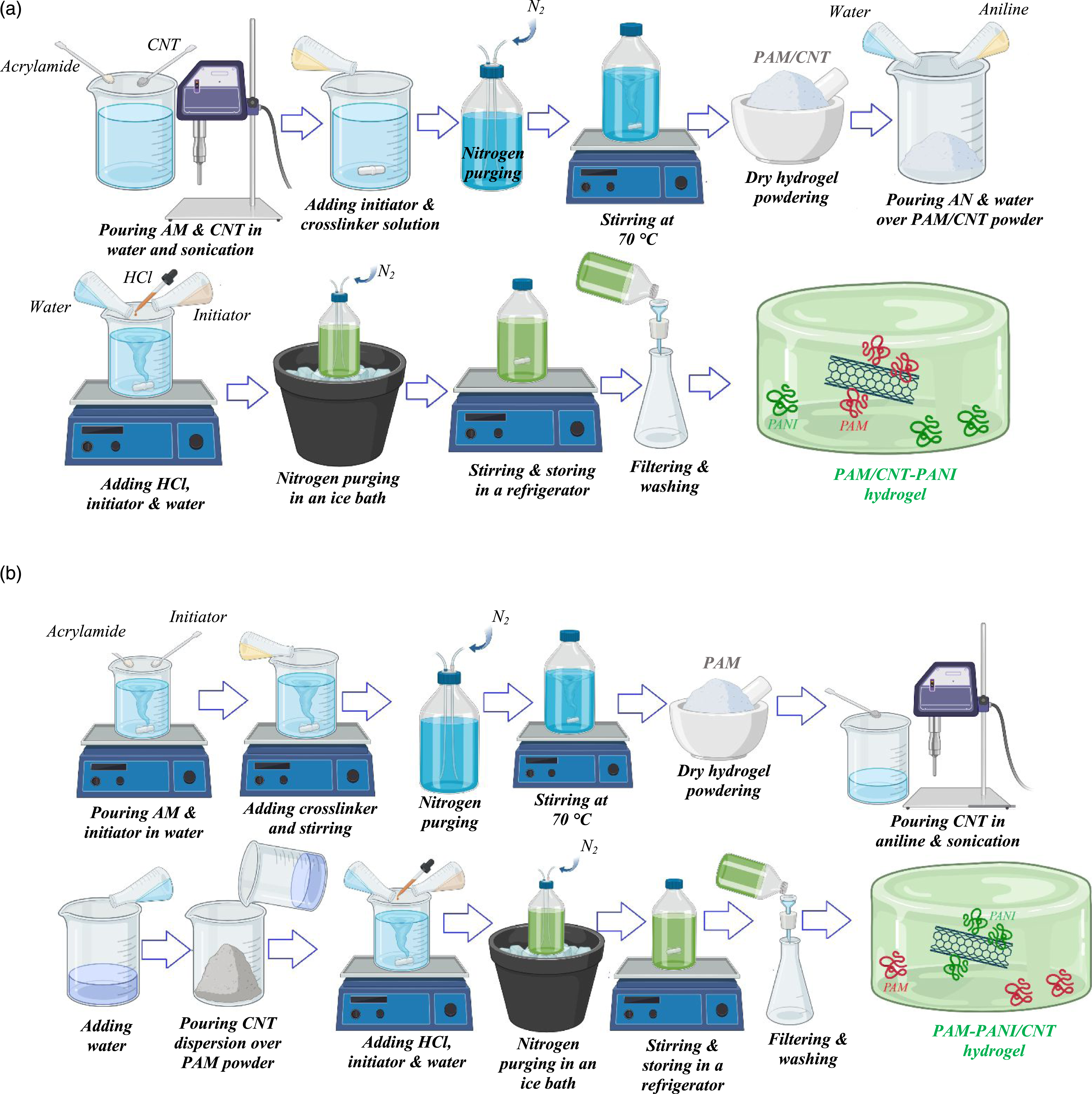
The ternary composites of PAM-PANI/CNT was synthesized as follows: firstly, PAM hydrogel was synthesized in accordance with the protocol mentioned in section “Synthesis of polyacrylamide hydrogel”. Thereafter, 10 mg carboxyl functionalized CNTs were dispersed in 1 mL aniline and was sonicated for 45 min. Then, 5 mL of distilled water was added to the dispersion. Then, the dispersion was gently poured over the PAM hydrogel powder and allowed to completely wet the powder for 24 h. Later, 6.64 mL HCl solution (9%) and 3.32 mL APS solution (15%) were added to the reaction content. Additional water was added to reach the volume to ml. The content was placed in an ice bath and degassed under nitrogen purging. The next steps were similar to those carried out for the pristine PANI (Figure 1(b)).
Characterization
Fourier transform infrared spectroscopy
The success of polymerization and the molecular structure of the synthesized polymers and composites were verified with Fourier transform infrared spectroscopy (FTIR, MB-100, Bomem, Canada). The spectroscopy was performed in the range of 4000 to 400 cm−1 with a resolution of 1 cm−1. Prior to testing, the dried samples were mixed with KBr powder and pressed into the disk forms.
Swelling measurement
The water swelling of the synthesized hydrogels was measured using a so-called teabag method. To fulfill this, a pre-weighed amount of dried sample was put into a teabag and fully submerged in distilled water. After a while, the teabag was withdrawn from the water, and its excess water was removed. The teabag having the sample was then weighed and the swelling ratio was calculated using equation (1):

Scanning electron microscopy
The morphology of the synthesized polymers and composites was observed using field emission scanning electron microscopy (FESEM, Mira3, Teschan, Czech). The micrographs were taken at an accelerating voltage of 15 kV with different magnifications. SEM images were taken in powdered forms. Prior to testing, the dried samples were sputter-coated with gold particles to be electrically conductive.
X-ray diffraction analysis
The crystalline structure of the synthesized composites was evaluated using x-ray diffraction analysis (XRD; PW 1730, Philips, Netherlands). The XRD spectra were collected in 2θ range of 10° to 90° with CuKα radiation at 40 kV and 30 mA.
Conductivity measurement
The conductivity of the synthesized polymers and composites was evaluated using a four-point probe method. A DC power supply (IT6123, iTECH, India) and a benchtop multimeter (MS8050, Mastech Digital, USA) were employed for this assay. Probe diameter and probe-probe distance were 2.5 and 1-3 mm, respectively. The electrical conductivity was calculated using equation (2):

Gas sensing evaluation
A chemiresistive sensor is composed of transducing and sensing components. Herein, the transducer was an interdigitated electrode and was fabricated based on a physical vapor deposition (PVD) method from an aluminum precursor. The sensor was the ternary composite of PAM, PANI, and MWCNT. For fabricating the sensing component, a drop of water was applied on the interdigitated electrode surface and then composite powder was poured over it. The composite powder turned into a hydrogel in the presence of water. The electrode overlaid with the composite was placed in an oven for a while. Later, water drop and composite powder were again applied on the surface and the electrode overlaid with the composite was exposed to drying. The steps of water dropping, composite powder applying, and hydrogel drying were repeated multitude of times to accomplish a uniform composite coating.
The gas-sensing properties of the sensor were evaluated by monitoring the resistance changes with gas flow over time. The sensor was placed in a gas chamber connected to an electrochemical workstation. The metal wires of the workstation were fixed on the two ends of sensor via silver paste. A bias voltage was applied to the sensor and the output current was measured. In every cycle of the assay, firstly, air was introduced into the chamber. Then the target gas with a predefined concentration was injected into the chamber. And finally, the air was again flowed into the chamber to recover the changes.
The sensor response was defined as relative resistance change and calculated by equation (3):

Statistical analysis
Statistical study of the quantitative data was performed using one-way ANOVA and Tukey’s post hoc analysis with SPSS software. The significance levels were defined as * (p<.05), ** (p<.005), and *** (p<.0005).
Results and discussions
FTIR results
FTIR spectrum of the carboxyl functionalized CNTs is represented in Figure 2. In FTIR spectrum, the broad band in the range of 3560–3335 cm−1 was imputable to OH stretching of the decorated functional groups. The bands at 2919 and 1715 cm−1 were attributable to C-H stretching of the aromatic group and C=O stretching of the carboxyl group, respectively. The bands at 1633 and 1242 cm−1 were ascribable to C=C stretching of the aromatic group and C-O stretching of the C-O-C group, respectively. The concurrent presence of OH, C=O, and C-O stretching confirmed the prospering functionalization of carbon nanotubes.
21
FTIR spectrum of the carboxylic acid modified CNT.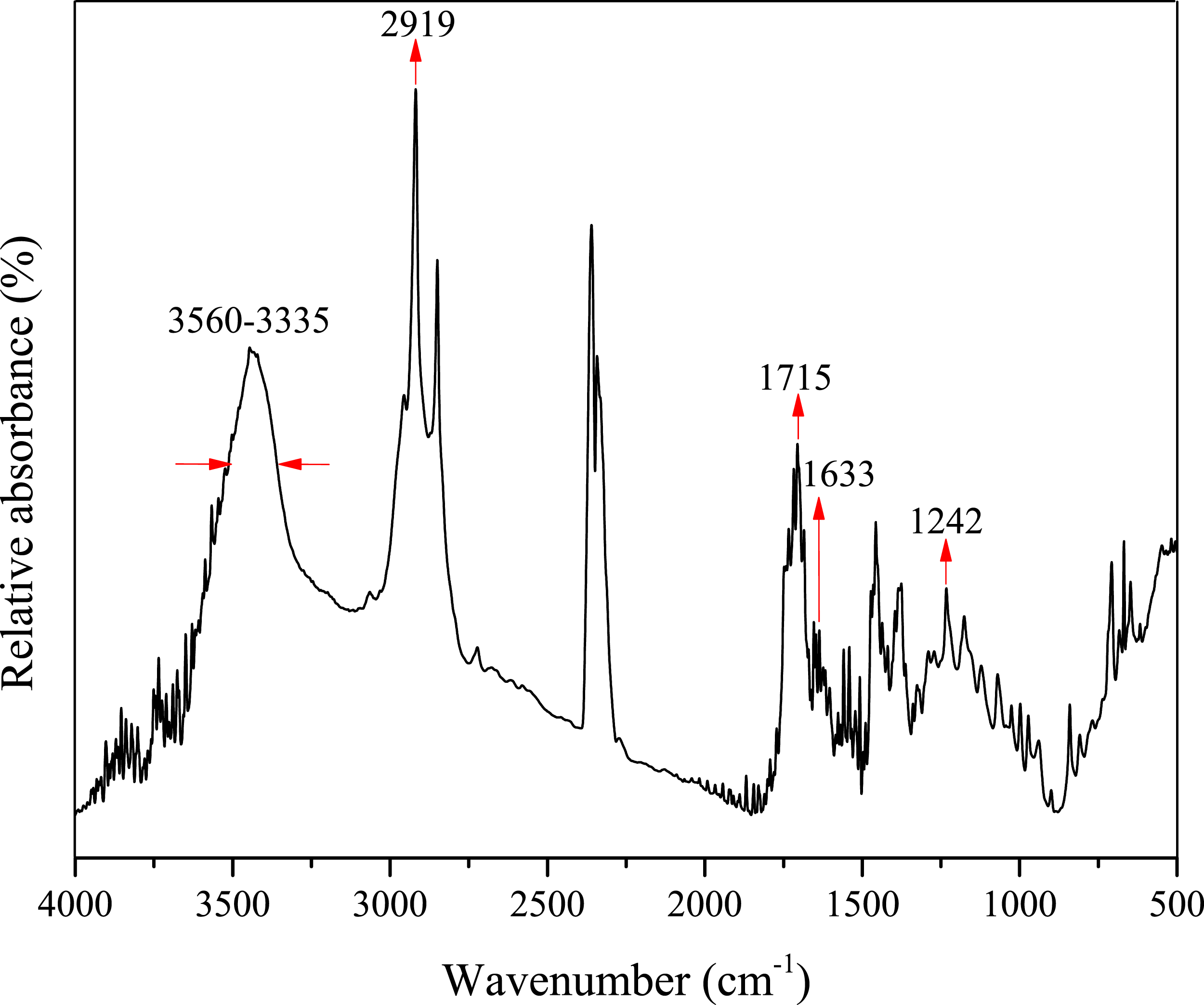
FTIR spectra of PAM, PANI, PAM/CNT-PANI, and PAM-PANI/CNT are illustrated in Figure 3. In FTIR spectrum of synthesized PAM, the bands in the ranges of 3586–3285 cm−1 and 3000–2823 cm−1 were corresponding to N-H and C-H stretching, respectively. The multiple bands in the range of 1725–1632 were pertaining to C=O starching and N-H bending. And the band at 1446 cm−1 was related to C-N stretching. The appearance of the aforesaid bands confirmed the prosperous polymerization of acrylamide.
22
FTIR spectra of PAM, PANI, PAM/CNT-PANI, and PAM-PANI/CNT.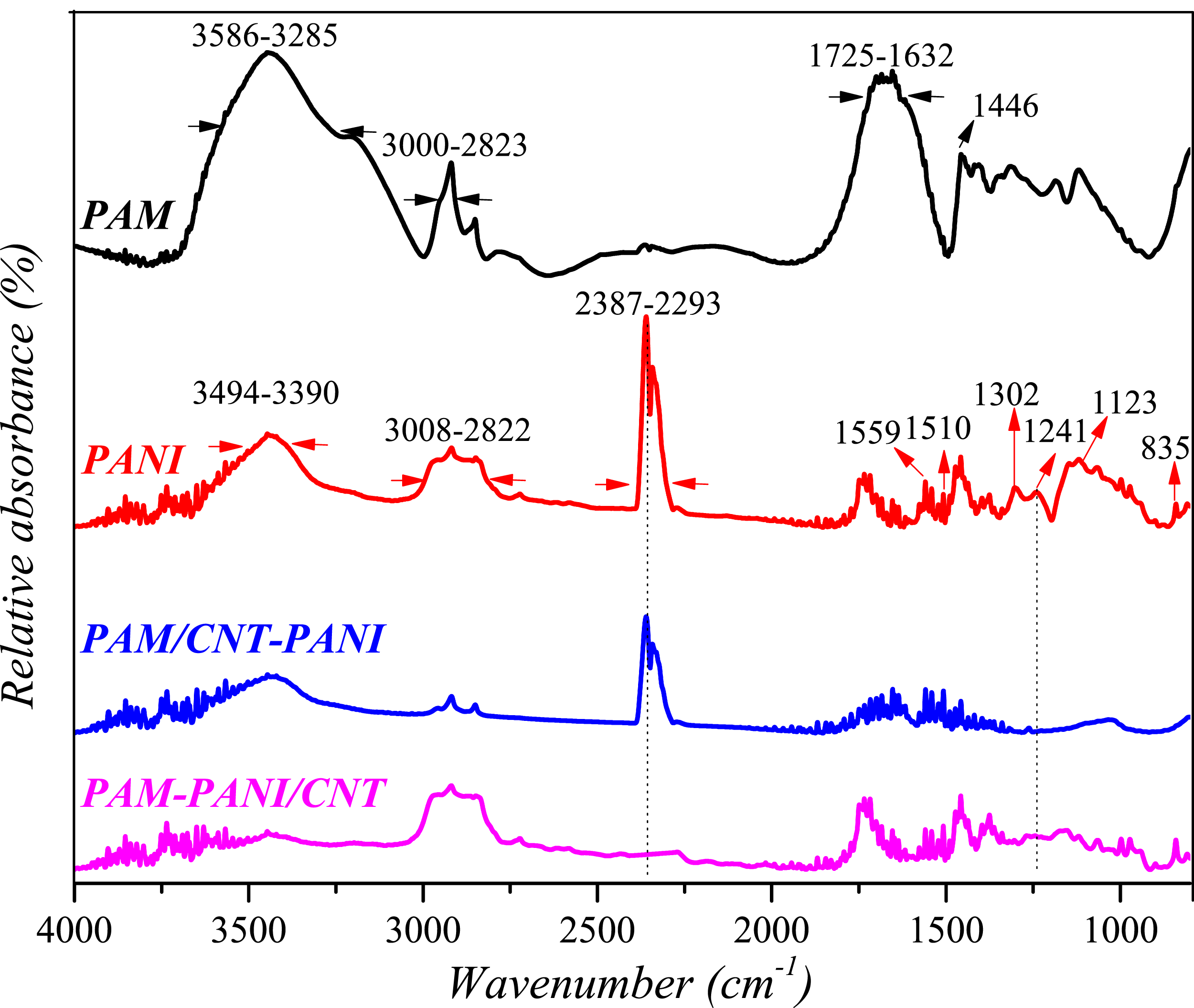
In FTIR spectrum of synthesized PANI, the broad bands in the ranges of 3494–3390 cm−1 and 3008–2822 cm−1 were attributable to N-H and C-H stretching, respectively. The band in the range of 2387–2293 cm−1 was referable to C=N+ stretching. The bands at 1559 and 1510 cm−1 were imputable to the C=C stretching of quinoid and benzenoid groups, respectively. The bands at 1302, 1241, and 1123 cm−1 were attributable to C-N, C-N+., and C=N, respectively. And the band at 835 cm−1 was ascribable to out-of-plane bending of 1-4 disubstituted benzene group. The emerged bands were in line with those reported for PANI in literature and corroborated the successful formation of polyaniline emeraldine salt.23,24
In ternary composites, when CNTs were used during the acrylamide polymerization, the FTIR spectrum was almost similar to pristine PANI. Because, during acrylamide polymerization, the carboxyl groups of CNT surface interacted with amine groups of PAM. Therefore, the CNT presence did not interfere with the molecular interactions of the forming PANI.
However, when MWCNTs were included during the aniline polymerization, the CNT carboxyl groups were free and affected the molecular interactions of the forming polymer. In this composite, the C-N+. and C=N+ bands almost disappeared due to hydrogen bonding between carboxyl groups of CNT and amine groups of PANI.
Swelling results
The swelling values of the PAM-based hydrogels and nanocomposites are represented in Figure 4. The pristine PANI and PANI/CNT nanocomposite were excluded from swelling measurement due to negligible water absorption. According to the Figure, the swelling was dropped when CNT was loaded into the PAM hydrogel (p<.0005). The swelling of PAM/CNT composite was 34% lower than that of pristine hydrogel. Because more functional groups of PAM chains became involved in interaction with CNTs and fewer groups remained available to the water molecules. Swelling values of PAM, PAM/CNT, PAM/PANI, PAM/CNT-PANI, and PAM-PANI/CNT. *** denotes p<.0005.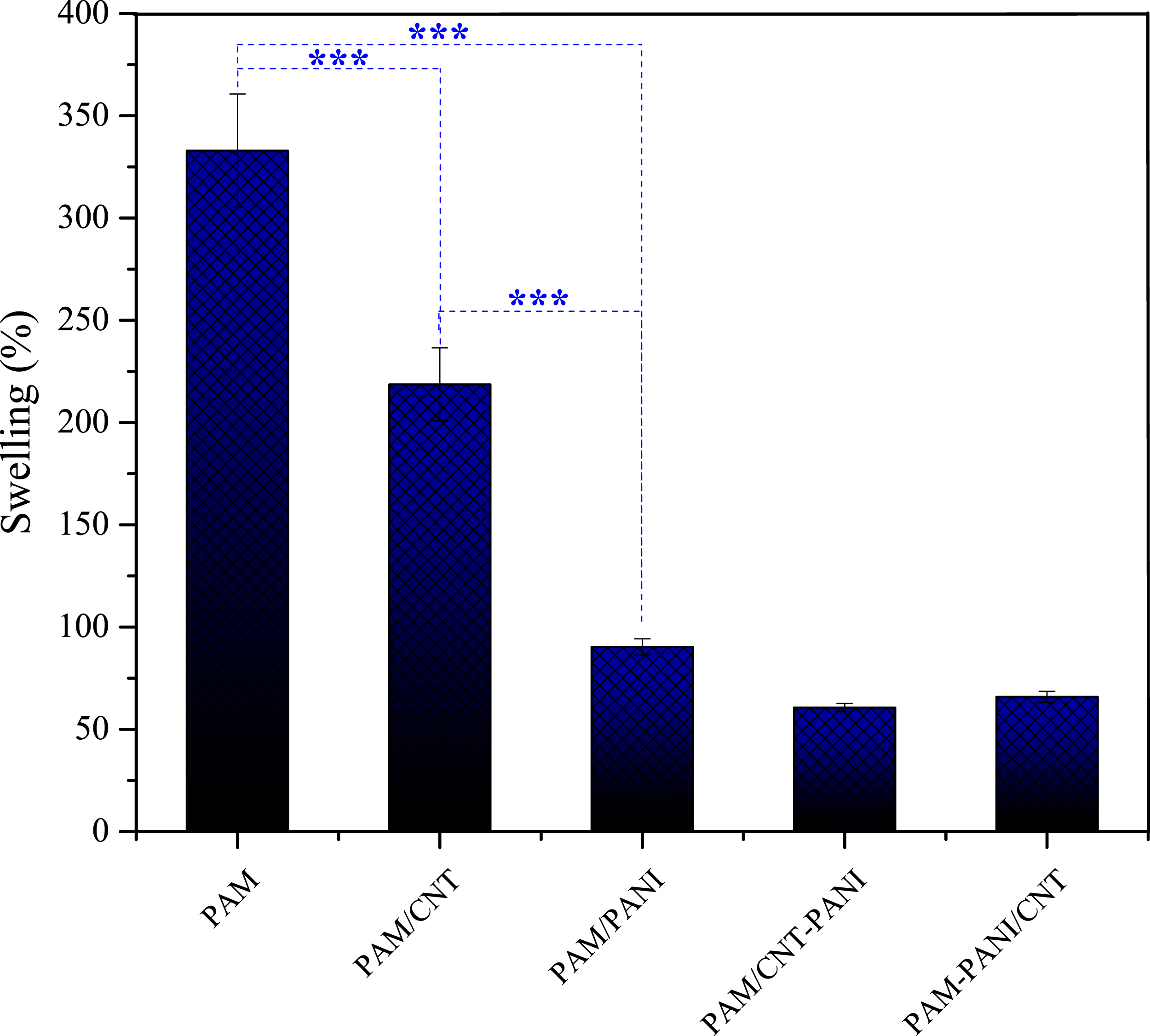
Moreover, the swelling value was decreased when PANI was incorporated into PAM. The swelling of PAM/PANI composite was 73% lower than that of pristine hydrogel (p<.0005). PAM and PANI formed a semi-interpenetrating network in which the intermolecular interactions between PAM and PANI chains preserved the network consistency. The hydrogen bonding between C=O and HN2 groups of PAM with NH groups of PANI maintained PANI chains within the network. The higher intermolecular interactions as well as the lower hydrophilicity of the PANI diminished the water swelling.
Once CNT was loaded into the semi-interpenetrating network, the swelling was slightly decreased (p>.05). The functional groups existing on the surface of the CNT interacted with those of PAM and diminished the possibility of interactions with water molecules. Besides, the π-π interactions between PANI and CNT further maintained the PANI macromeres in the network and suppressed the network tendency to the water molecules.
The swelling of the semi-interpenetrating hydrogel decreased by 32% and 27% when CNT was included during acrylamide and aniline polymerization, respectively. Indeed, the swelling of PAM-PANI/CNT was slightly higher than that of PAM/CNT-PANI (p>.05). The higher swelling of PAM-PANI/CNT can be elucidated by the role of intermolecular interactions. When CNT was introduced during aniline polymerization, more interactions were developed between CNT and forming PANI compared to the preformed PAM. Therefore, more functional groups of PAM were free to interact with the water molecules.
Swelling can affect the electrical conductivity of the hydrogels.25,26 The higher the swelling, the lower the electrical conductivity. Because, when the hydrogel swells more, the PANI chains become more far from each other and the conduction paths are more interrupted. Moreover, the higher swelling promotes the leak of PANI chains from the hydrogel network and deteriorates the electrical conductivity.
FESEM results
FESEM micrographs of the synthesized samples are illustrated in Figure 5. In PAM/CNT composite, a porous structure was formed and the CNTs were positioned inside the pores. Fine association between hydrogel and CNTs was evident most likely due to the interactions between CNT carboxyl and hydroxyl groups and PAM carbonyl and amine groups. SEM images of PAM/CNT (a), PANI/CNT (b), PAM/CNT-PANI (c), and PAM-PANI/CNT (d). Green, red, and blue circles signify CNT-hydrogel interactions, CNT, and PANI aggregate, respectively.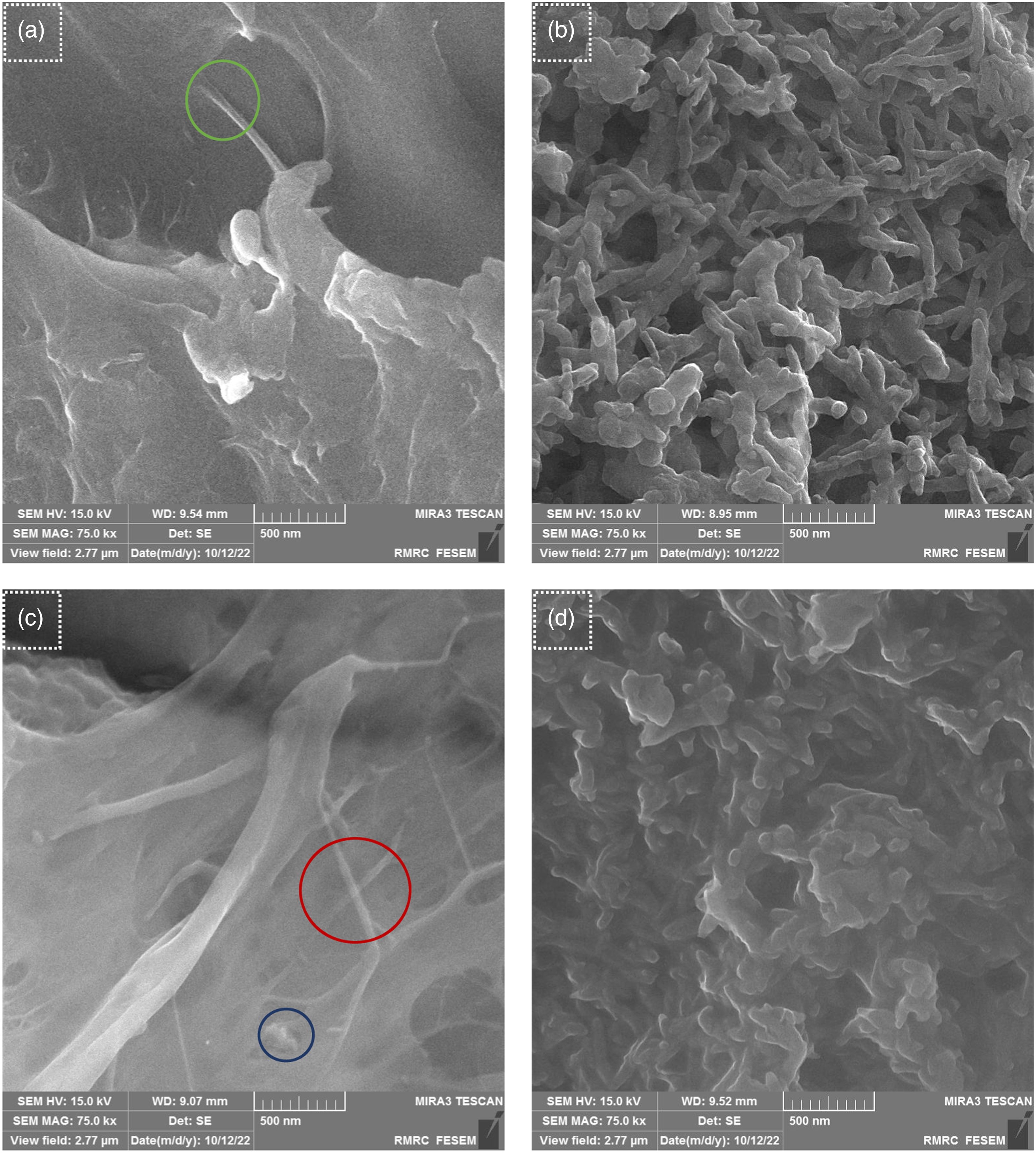
In PANI/CNT nanocomposite, a fibrous morphology was observed. Because PANI chains usually grow in a fiber form.27,28 The mean diameter of the PANI fibers was found to be 68.5 nm. The CNTs were not evident in the figure since the PANI chains grew on CNT surface and covered them. 29
In ternary hydrogel of PAM/CNT-PANI, the porous morphology was dominated. Whereas, in ternary hydrogel of PAM-PANI/CNT, the fibrous morphology was preponderated. However, PANI fibers were more aggregated in comparison with PANI/CNT composition.
PAM-PANI/CNT composite possessed the most organized and compacted porous structure. SEM images of this composite with different magnifications are represented in Figure 6. As can be perceived from the Figure, this composite developed a well-defined porous structure with a mean pore diameter of 175.4 nm. SEM images of PAM-PANI/CNT composite in different magnifications.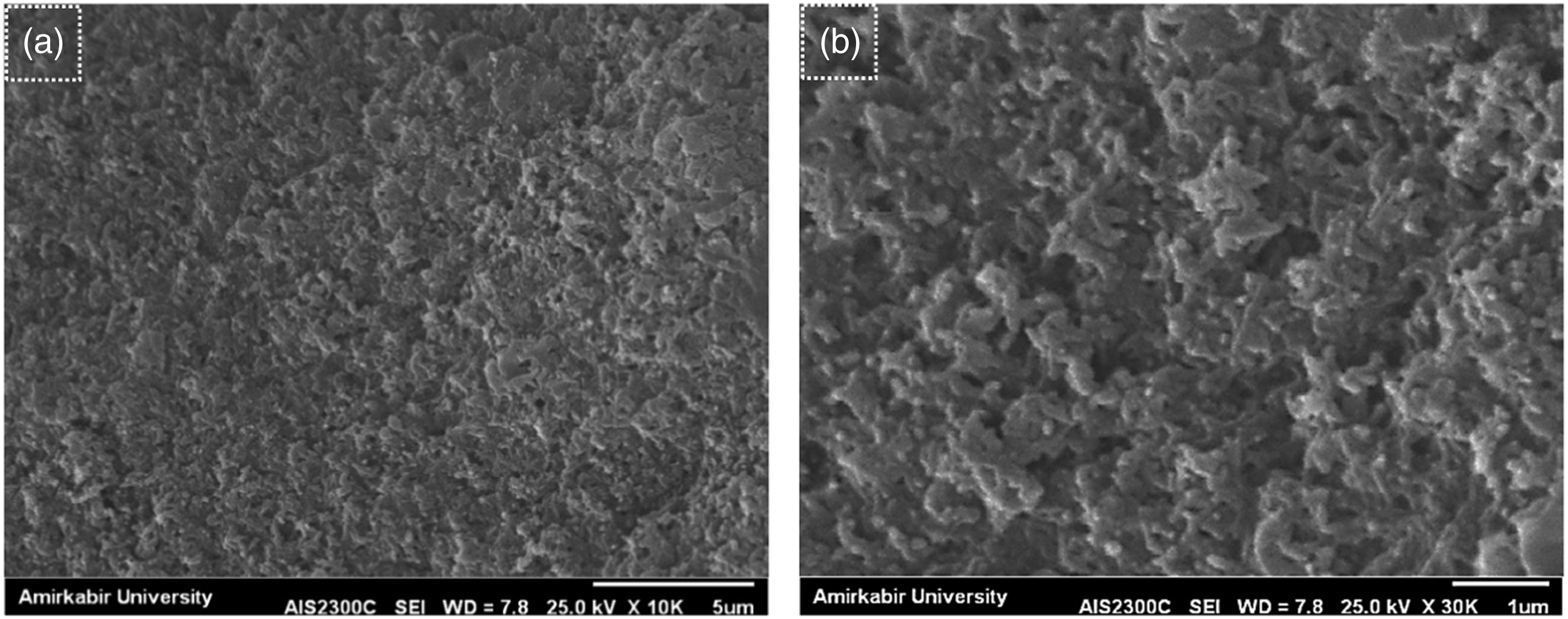
The prepared hydrogels were intended to be employed as a gas-sensing material. For gas sensing, the microstructure of the material is very influential. An interconnected porous microstructure is requisite to provide a path for flowing the gas molecules. Open pores facilitate the diffusion of gas molecules into the structure. However, very large pores can weaken the mechanical strength of the sensor. Therefore, for fulfilling an optimum gas flowing and mechanical strength, the sensor should have the mediocre pore sizes. 30 PAM-PANI/CNT composite rendered a well-organized porous structure with a mediocre pore diameter.
XRD results
The XRD patterns of PAM/CNT-PANI and PAM-PANI/CNT nanocomposites are illustrated in Figure 7. In XRD patterns, two broad peaks at about 25° and 42° are perceptible. The former can be ascribed to either (200) crystal plane of PANI23,31 or (002) crystal plane of CNT, and the latter can be assigned to (100) crystal plane of CNT.
32
In PAM-PANI/CNT nanocomposite, the peak at 25° was marginally shifted to higher degree, and its intensity was slightly increased compared to PAM/CNT-PANI most likely due to higher interaction between PANI and CNT. The higher interaction between PANI and CNT promoted the π conjugated system and according the charge transfer ability of the composite.
33
PANI contribution in each composite was calculated by XRD peak deconvolution. PANI contents in PAM/CNT-PANI and PAM-PANI/CNT nanocomposites were found to be 20 and 23%, respectively corroborating that more PANI chains were retained in composite when CNTs were included during aniline polymerization. XRD patterns of PAM/CNT-PANI and PAM-PANI/CNT.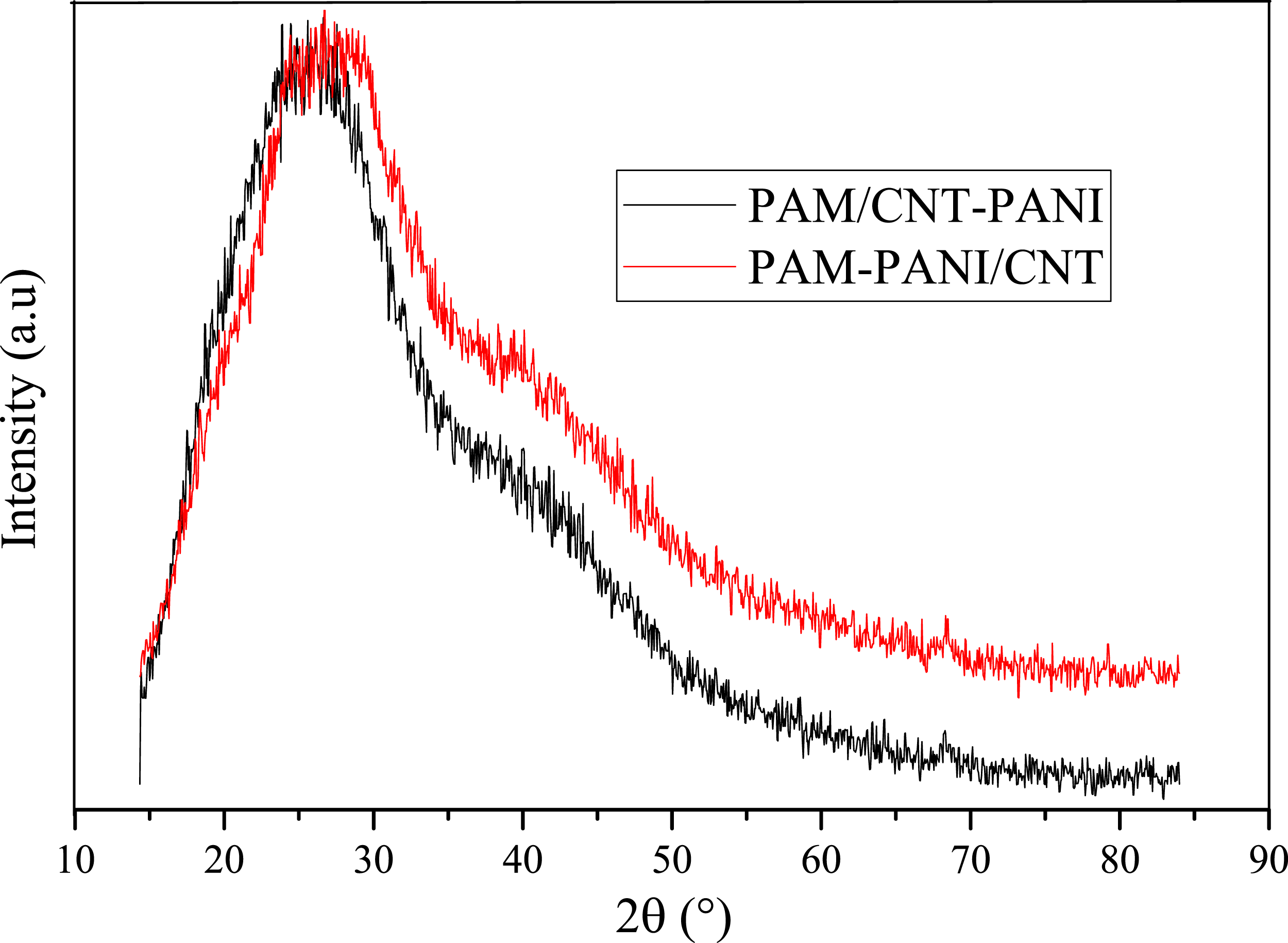
Conductivity results
The conductivity values of the synthesized hydrogels and nanocomposites are illustrated in Figure 8. As can be perceived from the Figure, the conductivity of PANI/CNT composite was by far higher than that of PAM/CNT (p<.005). Both PANI and CNT are electrically conductive, thus their combination facilitated the charge transfer throughout the composite. While, PAM is an insulating material and its combination with CNTs impeded the charge flow throughout the composite. Nevertheless, the lower conductivity of PAM/CNT compared to PAM/PANI can be elucidated by the percolation theory. Almost 0.3% CNT was loaded into the hydrogel, and this content may be below the percolation threshold. If higher content of CNT is loaded into the hydrogel and the content reaches the percolation threshold, the conductivity will raise more substantially. The conductivity of PANI/CNT composite was higher than that of PAM/CNT by 108 times. Conductivity values of PAM/CNT, PANI/CNT, PAM/PANI, PAM/CNT-PANI, and PAM-PANI/CNT. ** denotes p<.005.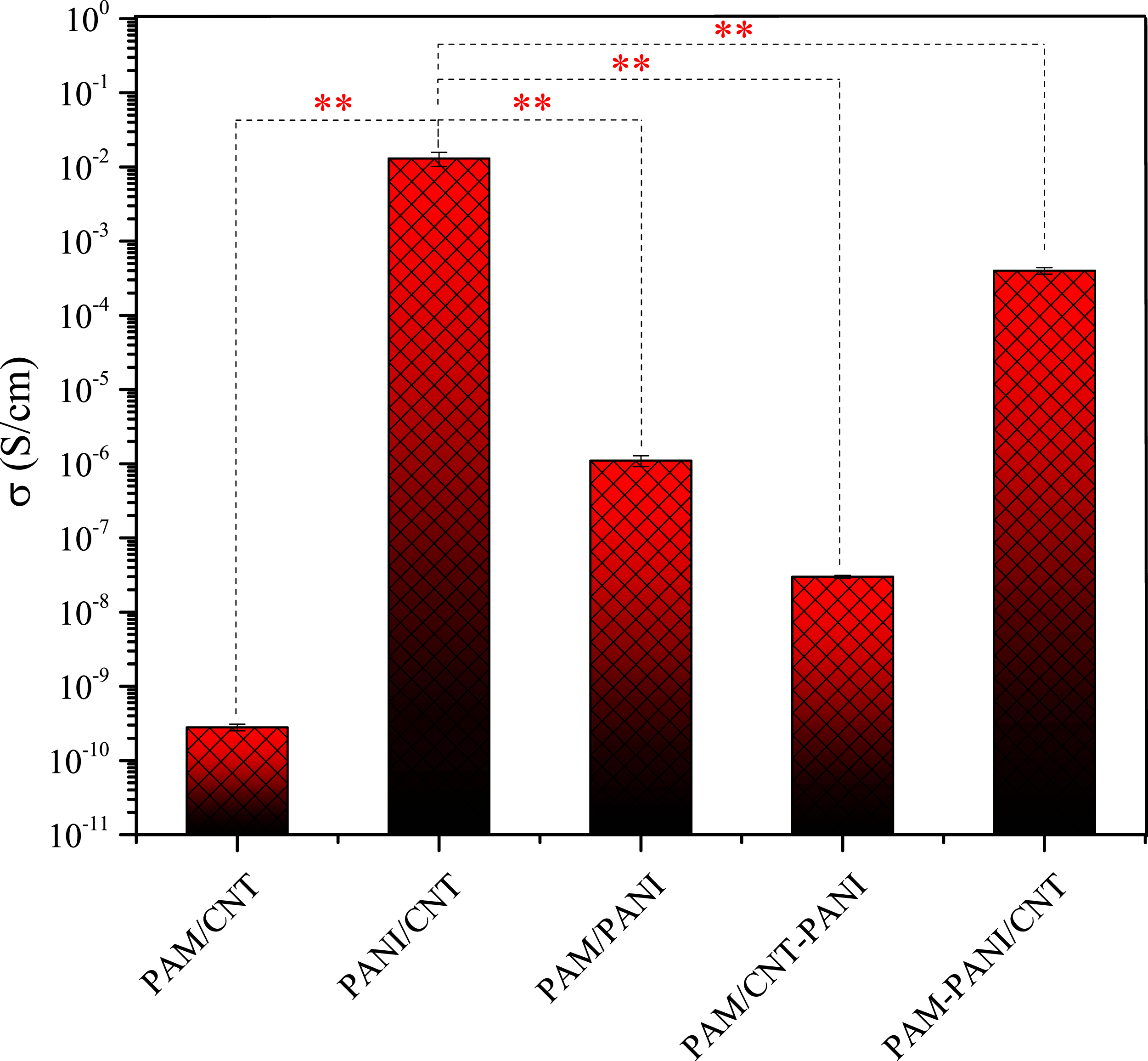
The conductivity of PAM/PANI composite was lower than that of PANI/CNT (p<.005) due to interrupting effect of PAM in charge transfer. However, the conductivity of PAM/PANI was higher than that of PAM/CNT. Because during the aniline polymerization, PANI uniformly grew in the PAM network and developed a connective path for charge transfer. While, in PAM/CNT composite, CNTs were dispersed in PAM network, and insulating polymer chains were laid between the conductive nanotubes. The conductivity of PAM/PANI composite was higher than that of PAM/CNT by 104 times. The obtained results match those reported by Yeen et al. 34 In their work, two conductive hydrogels based on PAM were synthesized: one was loaded with PANI and the other was impregnated with graphene nanosheets. The experimental analyses corroborated that the PAM/PANI was more conductive than PAM/graphene composition.
When CNT was included in the semi-interpenetrating network of PAM and PANI, the conductivity was either decreased or increased (p>.05). When CNT was introduced during the acrylamide polymerization, the conductivity was decreased. Whereas, when CNT was included during the aniline polymerization, the conductivity was increased. In the latter case, the π-π and hydrogen bonding interactions between CNT and PANI improved the continuity of the conductive network. As a result of these interactions, a long range π conjugation system was developed which facilitated a charge transfer throughout the composite. Moreover, these interactions impeded the PANI release from the composite. During purification and washing, the PANI chains diffused into the surrounding solution. The presence of CNT and the molecular interactions between CNT and forming PANI chains retained PANI chains within the hydrogel and prohibited their release. More PANI chains contributed to more charge transfer and higher electrical conductivity. The electrical conductivity of PAM-PANI/CNT was more than four orders of magnitude higher than that of PAM/CNT-PANI.
PAM-PANI/CNT composition due to having higher electrical conductivity compared to other hydrogels was selected for gas sensing analyses. For being a chemiresistive gas sensor, a minimum electrical conductivity of 10−5 S/cm is requisite which is well satisfied by PAM-PANI/CNT hydrogel.
Gas sensing properties
Conductive hydrogels based on PANI can be employed in many domains including but not limited to strain sensors, chemiresistive sensors, electromagnetic interference shields, drug delivery carriers, tissue regenerating constructs, and supercapacitors.35,36
To evaluate the functional performance of the PAM-PANI/CNT hydrogel, it was implemented as a chemiresistive material to detect NH3 gas. NH3 is a hazardous gas for both humans and animals. It exerts the toxic effect not only when it is pure but also when it is combined with the air pollutants. The toxic effects of NH3 are exacerbated when its concentration is raised. 37
In a chemiresistive sensor, a chemical reaction occurs between the active sites of the sensor and the gas molecules, and the electrical conductivity of the sensor is changed. The change in electrical conductivity of the sensor is proportional to the concentration of the gas molecules.38,39
For being a chemiresistive sensor, the composite should reveal a linear response to the applied voltage. To examine this, a voltage in the range of −20 to 20 V was employed and the current passing from the composite was measured. The current versus voltage changes are depicted in Figure 9. The result of the test verified a linear trend between voltage and current and corroborated the composite applicability as a chemiresistive sensor. Linear relation between current and voltage of the PAM-PANI/CNT hydrogel.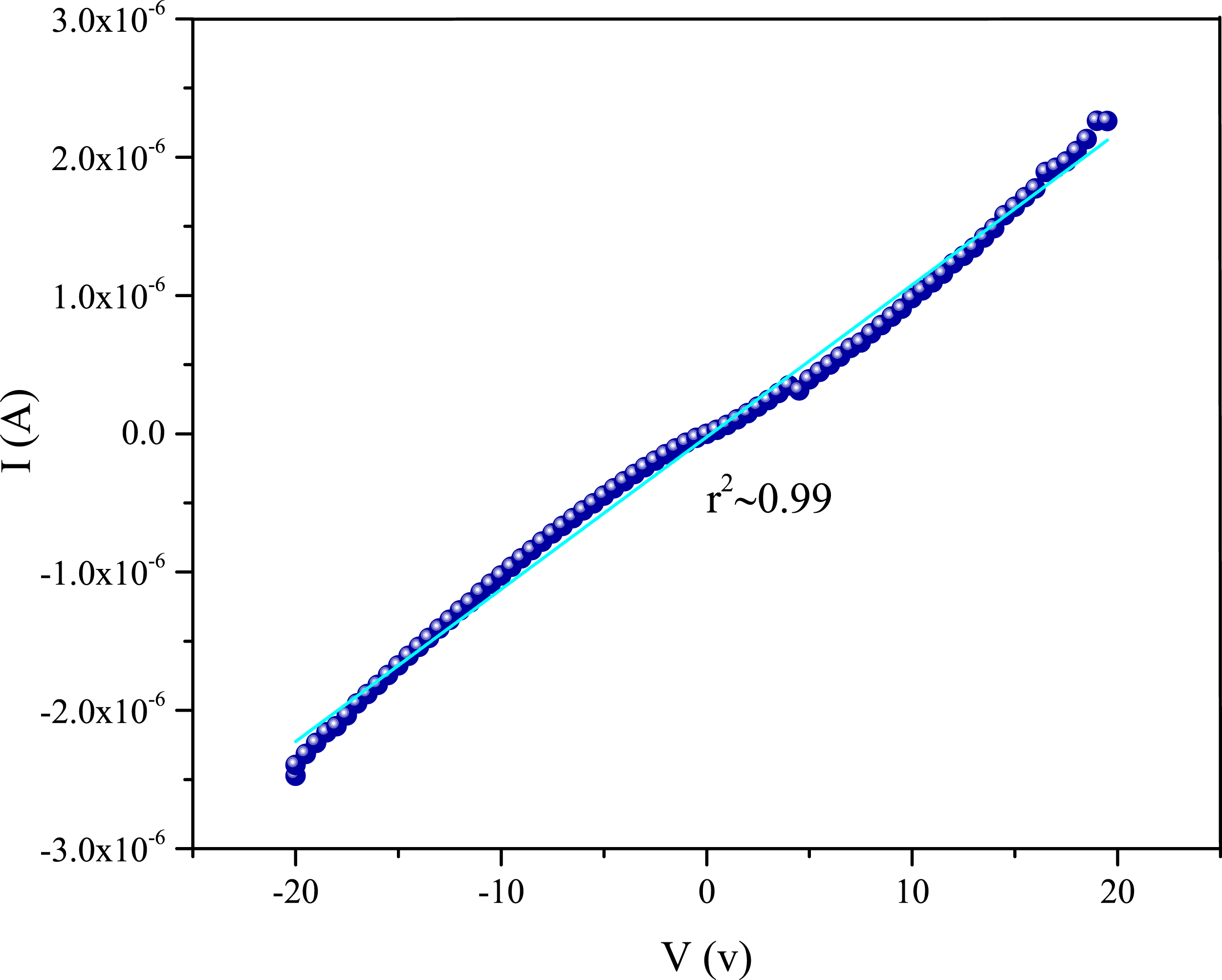
Afterward, the composite was placed in a gas chamber equipped with an electrochemical workstation. A constant voltage was applied to the electrode underlying the composite. In every sequence of measurement, firstly air, then NH3 gas, and again air was injected into the chamber, and the flowing current was measured. The sensor response was calculated by normalizing resistance change following NH3 injection to the initial resistance value.
The sensor response curve to 100 ppm NH3 is illustrated in Figure 10(a). As can be perceived from the Figure, the composite resistance was promptly changed upon exposure to NH3 which verified the composite sensitivity to the target gas. The electrical resistance was increased once NH3 was exposed to the composite, therefore it can be implied that NH3 exposure decreased the electrical conductivity of the sensing material. Sensor response curve to 100 ppm (a), 160 ppm (b), and 400 ppm (c) NH3 gas.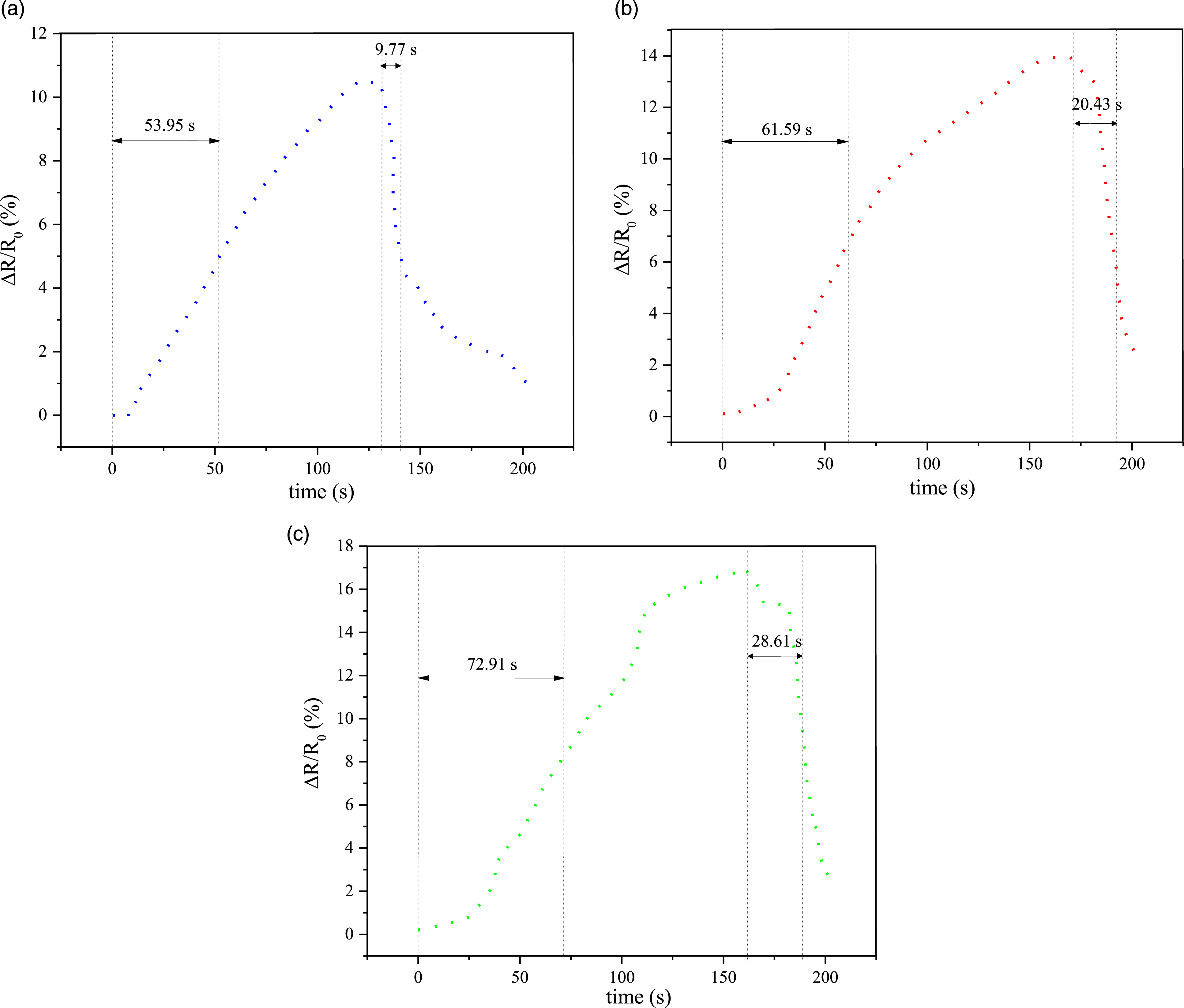
Ammonia is an electron-donating molecule and endows its electrons to PANI and CNT. The lone pairs of electrons of ammonia molecules are combined with the holes of PANI and CNT, thus depleting the electrical conductivity.
The maximum response of the composite to 100 ppm NH3 was 10.43%. The number and accessibility of the active sites are imperative parameters dictating the sensing properties of the gas sensors. The higher the number and accessibility of the active sites, the higher the sensitivity of gas sensing. Conductive hydrogels thanks to their high porosity and interconnected porous structure can optimize the gas sensing properties. The porous structure of the hydrogel synthesized here provides proper passages for gas molecules and accelerates the gas molecules’ accessibility to the active sites of PANI and carbon nanotubes.
Response time and recovery times were extracted from the response curve. Response time was defined as a time taken to fulfill 50% of total resistance change and recovery time was specified as a time taken to recover 50% of total resistance change after removing the target gas. The response and recovery times for NH3 concentration of 100 ppm were 53.95 and 9.77 s, respectively.
When the NH3 concentration was increased to 160 ppm, the composite response was augmented (Figure 10(b)). In gas sensors, the higher the target gas concentration, the higher the sensor response. Because, when a higher concentration of the gas molecules is exposed to the sensing material, more interactions are developed between the gas molecules and the charge carriers of the sensing material. In our case, more holes were combined with the electrons of the gas molecules, and higher conductivity depletion was resulted. However, the sensor response is improved at the cost of longer response and recovery times. The response and recovery times for NH3 concentration of 160 ppm were 61.59 and 20.43 s, respectively.
More increase of NH3 concentration to 400 ppm further improved the composite response and extended the response and recovery times (Figure 9(c)). When the gas concentration was increased from 100 to 160 ppm and from 160 to 400 ppm, the sensor response was raised by 33.6% and 20.0%, respectively. Lowering the response increment with higher gas concentration corroborated that sensor active sites were becoming saturated by the gas molecules. The response and recovery times for 400 ppm NH3 were 72.91 and 28.61 s, respectively. However, when the concentration of target gas was increased, the recovery of the sensor was more difficult. In the presence of 400 ppm of NH3, 3% of resistance change was not recovered. While in the presence of 100 and 160 ppm of NH3, the unrecovered resistance changes were 1.35 and 2.2%, respectively.
When compared with other works, the responses of the synthesized hydrogel were comparable to or higher than those of conductive hydrogels prepared by other research groups.40,41 However, the responses were lower than those of PANI-based non-gel gas sensors. For instance, Zhang et al. 42 have developed a composite of PANI and MWCNT and exposed it to various concentrations of ammonia gas. The response of composite to 50 ppm ammonia was as high as 270%. This high value of response can be elucidated by the high electrical conductivity of the synthesized nanocomposite. Because the composite was made from PANI and MWCNT, both of which are highly conductive. Whereas, in our composite, the conductive components were associated with the non-conductive hydrogel.
Conclusion
The polyaniline-based conductive hydrogels are taken into account as the practical materials for applications where both conductivity and flexibility are requisite. However, PANI macromolecules can be easily released from the hydrogel and radically deteriorate the electrical conductivity and the intended function of the material. To tackle this issue, in the present study, carbon nanotubes (CNTs) have been incorporated into the hydrogel and it was assumed that the molecular interactions between CNTs and PANI can prohibit the PANI release and augment the electrical conductivity of the resulting hydrogel. Ternary hydrogels of PAM, PANI, and CNTs were synthesized and CNT was associated with the hydrogel in two manners: firstly, it was included during the acrylamide polymerization (PAM/CNT-PANI) and in the second manner it was brought in during aniline polymerization (PAM-PANI/CNT). The chemical, morphological, swelling, and electrical properties of the hydrogels prepared in two manners were compared. The results of the experiments confirmed that in PAM/CNT-PANI hydrogel
Footnotes
Declaration of conflicting interests
The author(s) declared no potential conflicts of interest with respect to the research, authorship, and/or publication of this article.
Funding
The author(s) received no financial support for the research, authorship, and/or publication of this article.

Data availability statement
The data that support the findings of this study are available from the corresponding author, upon reasonable request.