







Abstract
Due to their high load-bearing capacity and excellent energy dissipation properties, metal honeycomb lightweight sandwich panels are commonly utilized as highly efficient weight-saving components in the automotive, aerospace, and military industries. Especially the auxetic honeycomb sandwich panels have higher yield strength, more robust shear modulus, fracture toughness, less fatigue expansion, and higher vibration and energy absorption. In this paper, the ballistic resistance and energy absorption mechanisms of a novel re-entrant auxetic honeycomb (RSH) sandwich panel are investigated. The ballistic limits and energy absorption of the re-entrant star-shaped honeycomb (RSH), star-shaped honeycomb (SSH), and re-entrant star-shaped honeycomb (RH) sandwich panels are compared and analyzed, as well as the deformation mechanism during projectile penetration. The results show that the RSH sandwich panel has the best in-plane ballistic performance among the three types of honeycomb sandwich panels. For the same relative density, the ballistic limit of the RSH sandwich panel is 17.4% and 7.1% higher than that of the SSH and RH sandwich panels respectively. In addition, the effects of different design parameters on the ballistic resistance of RSH sandwich panels are investigated by changing the panel thickness, the relative density of the core layer, the cell angle and the cell size. It can be concluded that increasing the thickness of the face sheet is more effective in improving the ballistic limit (perforation energy) of the RSH with a thinner core layer. However, increasing the relative density of the core layer is more effective in enhancing the ballistic limit (perforation energy) for thicker core layers. Cell size has a significant effect on the ballistic resistance of RSH sandwich panels compared to cell angle, especially at impact velocities close to the ballistic limit.
Introduction
Ballistic penetration poses a significant threat to military armor, particularly vehicles, aircraft, and naval vessels. Thick metal plates are commonly utilized in the 20th century to prevent ballistic penetration of military armor. However, excessive armor can significantly reduce its maneuverability and cargo capacity. To enhance the ballistic performance and mobility of military vehicles, it would be beneficial to investigate the application of novel and inventive lightweight structures and materials.
Due to their high load capacity and superior energy absorption properties, honeycomb sandwich panels are extensively used as effective weight-reduction parts in the airplane, automobile, and military industries. The bullet impact response of sandwich panels has been extensively studied through experimental,1–3 analytical,4–6 and numerical methods.7–9 Only the penetration resistance of conventional sandwich constructions has been researched in each of the mentioned studies. At present, the auxetic honeycomb cores have been extensively studied. Unique characteristics of the auxetic honeycomb enhance its physical properties and impact resistance. 10 The re-entrant honeycombs (RHs) with conventional hexagonal honeycombs were compared and discovered that RHs can absorb more energy for the same range of impact strains.11,12 It was widely acknowledged that there were two primary mechanisms for the negative Poisson’s ratio (NPR), namely re-entrant and rolling-up. 13 The star-shaped honeycombs (SSHs) have been investigated for the equivalent mechanical behavior.14,15 A novel re-entrant square honeycomb structure was conducted and the effect of geometrical characteristics on the in-plane dynamical crushed responses was further investigated. 16 The research above evaluated auxetic structures’ the in-plane impact response to low-velocity impacts, while bomb explosions typically destroy targets by both blast wave impact and high-velocity fragmentation. When considering protective structures, the explosion resistance of auxetic honeycomb sandwich structures10,17–19 and the low-velocity impact performance20–24 were thoroughly researched. Overall, the results indicated that honeycomb sandwich panels with auxetic honeycomb were more resistant to blasts and low-velocity impacts owing to a partly NPR deformation. Nevertheless, the defense mechanism of auxetic honeycomb may be changed by high-speed impacts, such as ballistic impacts. The honeycomb was just slightly distorted before the projectile sheared off and penetrated, which indicated that the NPR effect was not significant. Therefore, evaluating the penetrable properties of auxetic sandwich constructions was valuable.
Unlike explosion and low-velocity collision, the projectile penetrating behavior of auxetic sandwich structures had received little attention from researchers. Affected by NPR effect, auxetic honeycomb structures showed stronger ballistic resistance than hexagonal and aluminum foam sandwich panels.25,26 However, the ballistic characteristics of honeycomb structures of various diameters and geometries were evaluated. 27 The re-entrant structure provided the reverse cell wall with the poorest performance, according to the findings. Besides, the literature on materials with NPR was extensive. Star-shaped and re-entrant structures have outstanding NPR characteristics, and the combination of RH structures with other structures may result in the formation of novel structure. Hybrid design is a widely used approach for creating new honeycomb configurations. It involves combining existing cellular configurations to create new honeycomb structures that possess exceptional mechanical properties. 28
In summary, in this paper, a novel auxetic honeycomb structure (RSH) is proposed. The structure is created by combining star and reentrant permutations using a hybrid design. This study aimed to evaluate numerically the ballistic resistant performance of re-entrant star-shaped honeycomb (RSH) sandwich panels. In this research, a FE model was developed to examine the impact characteristics and make a comparison with the ballistic behavior of SSH and RH. The primary focus was on investigating the failure mode of honeycomb sandwich panels and analyzing the projectile velocity variations upon impact. The evaluation encompassed various ballistic performance indicators, such as residual velocity, ballistic limit, reach time, and energy absorption. Furthermore, a comprehensive investigation was conducted to analyze the impact of various factors, including impact speed, relative density, panel thicknesses, cell angle and cell size.
Computational models and validation
Geometric models
As depicted in Figure 1, sandwich panel comprised the honeycomb core ( The honeycomb sandwich panels under in-plane projectile impact.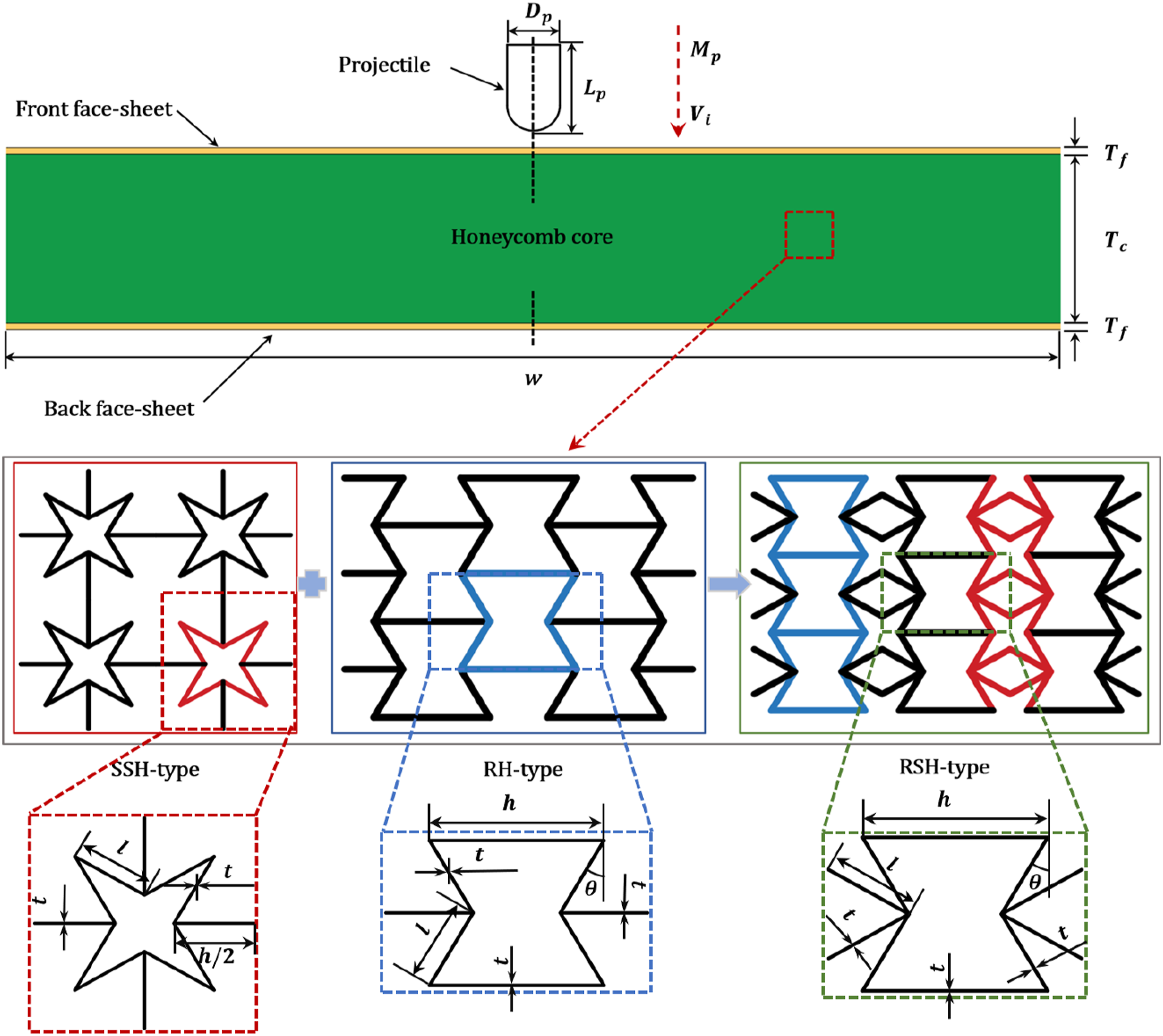
The prevalent honeycombs were produced through the expansion method using metallic foils that were uniformly adhered at regular intervals.
29
As a result, horizontal cell wall had twice the thickness (2𝑡) of inclined cell wall (𝑡) (Figure 2). Relative densities of RSH, RH and SSH can be calculated separately as The representative geometric model of the sandwich panels (part) under projectile impact.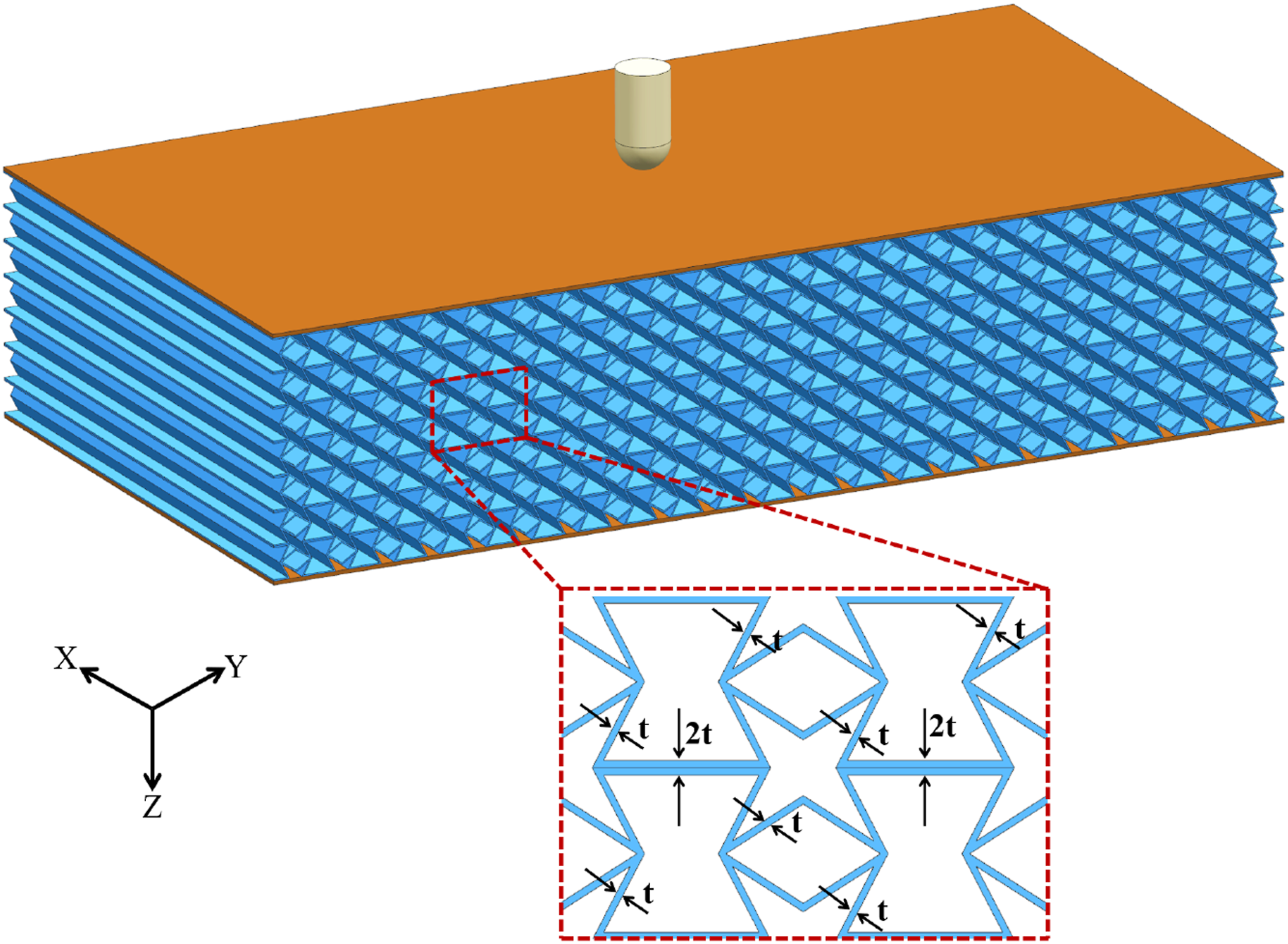



For comparison, h and 𝑙 were constant for each of the cytosolic configurations described in Figure 1. All three auxetic honeycomb densities, RH, SSH, and RSH, grew linearly or relatively linearly with increasing cell wall thickness but increased non-linearly with increasing angle θ. The RSH corresponded to the relative densities
Finite element models

Parameters of materials. 34

Considering reducing computational costs, quarter models were created for the sandwich panels and the shells. A mesh sensitivity analysis has demonstrated that an element size of 0.5 mm is enough for the damaged part closest to the path of the projectile, while an element size of 1.0 mm is enough for the other part. This makes sure that accurate results are produced. Offsets were established in order to prevent the initial penetration of the shell cells by creating a distance between the panel and the honeycomb core. Within the framework of the finite element model, certain cell walls were additionally taken into account as having double thicknesses as a result of the manufacturing procedure.
23
The utilization of contact modeling played a crucial role in the accurate prediction of the ballistic response exhibited by armored structures.
33
As a result of the significant contact between the honeycomb core and panel during bullet impact, this research established CONTACT_AUTOMATIC_SURFACE_TO_SURFACE. In addition, the contact algorithm COTACT_TIED_SURFACE_TO_SURFACE_OFFSET was chosen to simulate the gluing between honeycomb core and panel.
32
Both static and dynamic friction coefficient were 0.1. In high-speed impacts, the effect of boundary conditions was usually negligible.
33
Therefore, it was assumed that symmetrical boundary conditions were applied to the impacted edge, while remaining two boundaries were specified as fixed boundary conditions. A partially representative FE model of a sandwich panel impacted by a projectile was shown in Figure 3. The representative FE model of the sandwich panels (part) under projectile impact.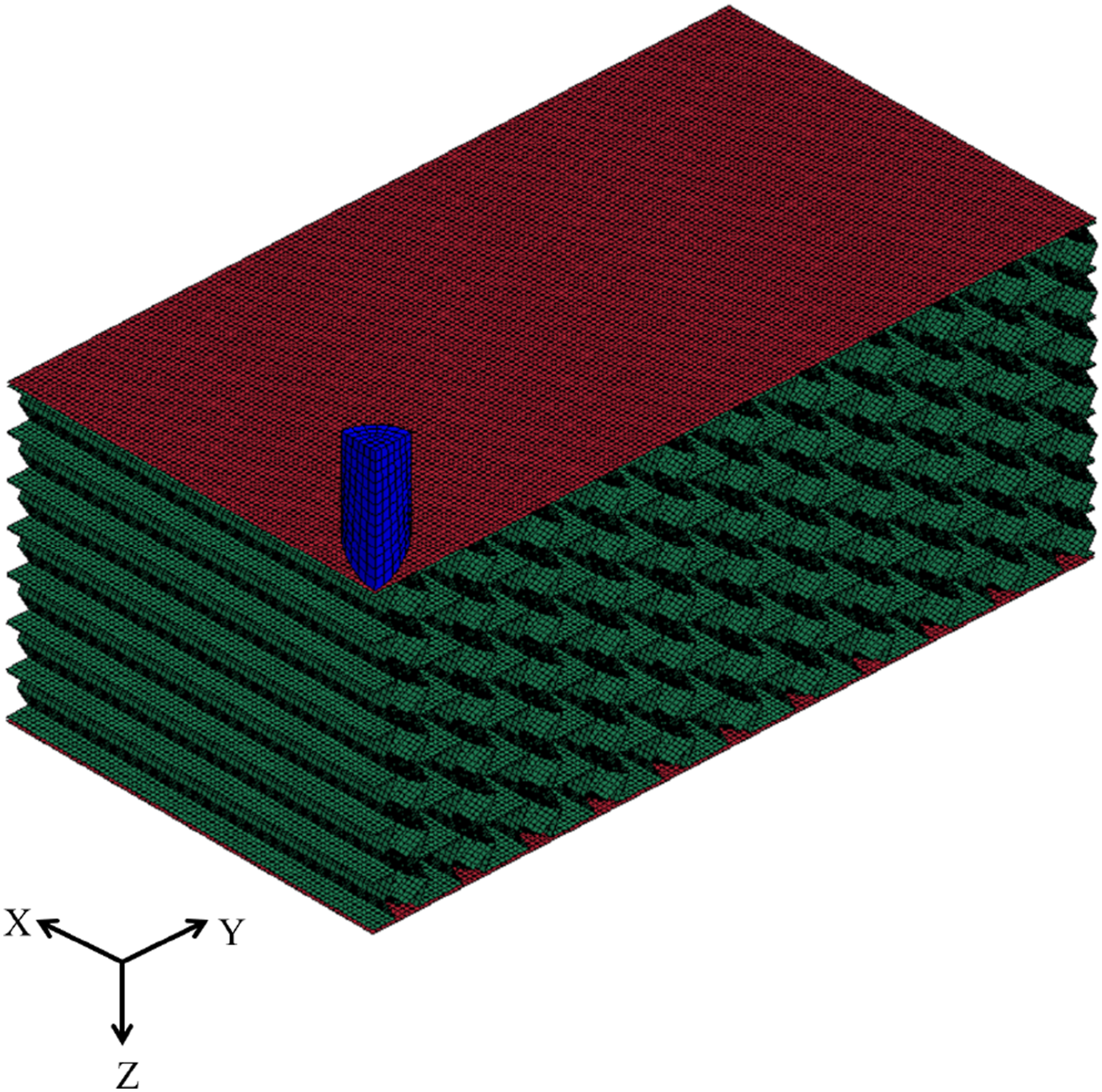
Validation of model
In reference 34, spherical breakers were subjected to out-of-plane high-velocity impacts on the RH sandwich panel. The same structural characteristics, material model, and experimental circumstances as described in reference were utilized to validate the model’s predictions. It can be found in Figure 4 that when the fragments break the aluminum honeycomb sandwich structure, the front panel was depressions, and the front and back panels are deformed in a “conical” direction towards the exit hole. Because of the honeycomb core, the stresses exert on the front and back plates are distinct. The panel is always supported by the honeycomb core’s upper portion, which fit securely when the panel is damaged. The honeycomb core layer dissipate energy through bending deformation and fracture mechanisms, which effectively mitigate the total deformation of the panel. The localized region of the backplane experiences an increase in strain and a decrease in penetration resistance, resulting in a weakened penetration resistance of the backplane. Additionally, a noticeable occurrence of “debonding and delamination” is observed between backplane and the core layer. The simulation results show good consistency with the experimental results. The numerical outcomes exhibit a slight reduction in comparison to the experimental findings. This discrepancy can potentially be attributed to the presence of a binding agent situated between the sandwich layer and the front and rear panels during the experimental procedure. The analysis of the above results show that the utilization of the FE model enables the simulation of the penetration and can offer accurate data on the mechanical properties of RSH. Deformation of the target plate after penetration and numerical result. (a) Deformation mode, (b) numerical result.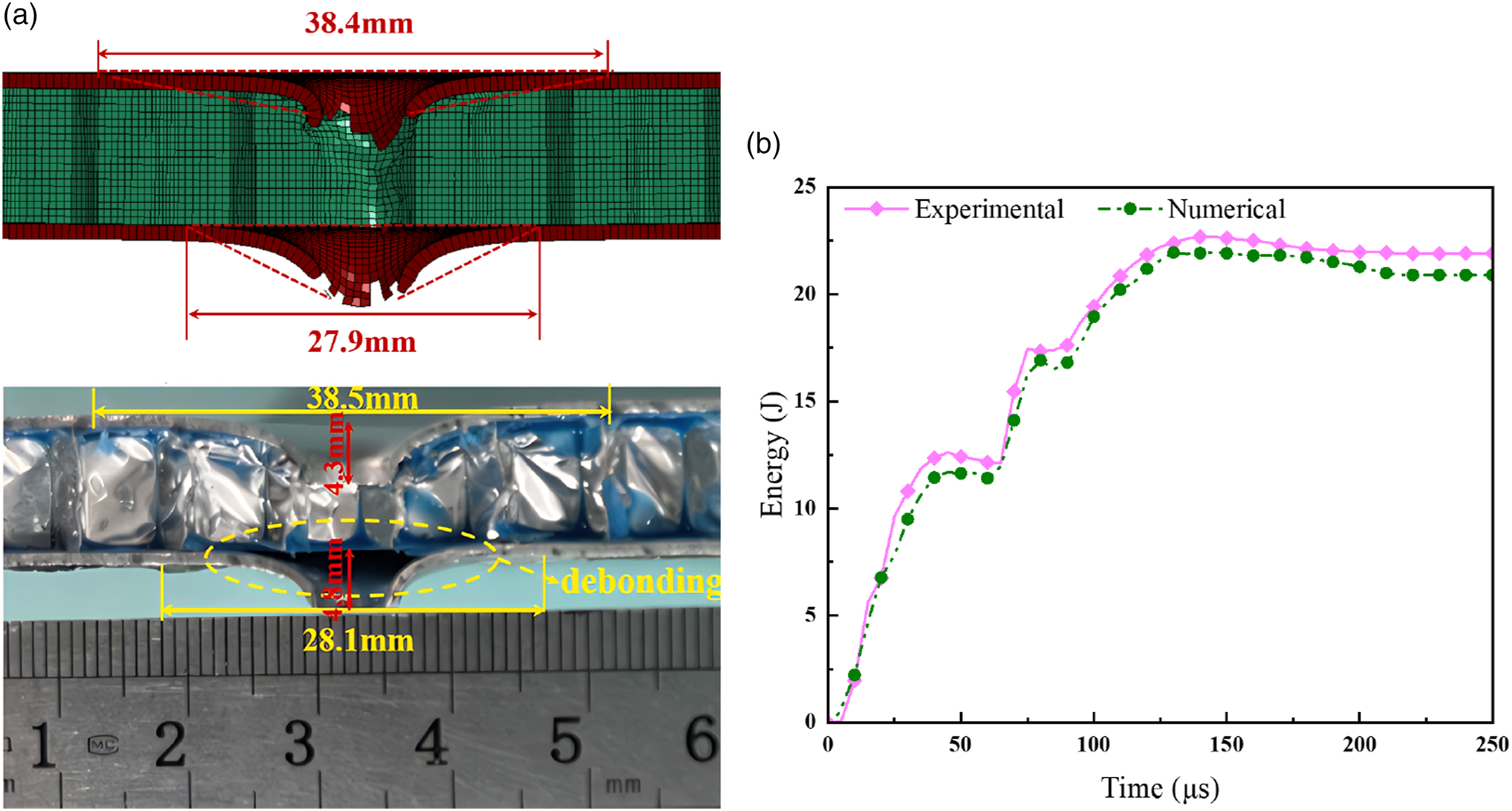
Based on the structural parameters and experimental conditions of the corrugated sandwich panel
35
and the 2024 aluminium plate
36
impact test, the relevant numerical models were constructed using the Johnson-Cook material model and simulated their ballistic penetration tests to validate the numerical model further. From Figure 5(a), it is evident that when the bullet is in contact with the sandwich panel, the cells and the upper panel under the impact region experience buckling and plastic deformation. As the projectile’s displacement increases, the cells in the impact area are fully crushed, causing the lower panel to transition from slight deformation to significant fracture, ultimately resulting in complete perforation by the bullet. From Figure 5(b), it is observed that the experimental results closely match the numerical results. The contact force initially reaches a peak as the displacement increases, then rapidly decreases before climbing to a second peak, and finally decreases to zero as the corrugated sandwich panel is fully penetrated. As shown in Figure 5(c), cracks emerge in the aluminum plate when the entry velocity of the hemispherical bullet is 64 m/s. As the speed increased, the aluminum sheet exhibits plate deformation, petalling and plugging phenomenon. A comparison of the ballistic limits of the simulation and the test is presented in Figure 5(d), and it is evident that the experimental and numerical results closely align with each other. Therefore, the numerical study on the penetration resistance of RSH sandwich panels using the finite element method is adequately accurate in this study. Comparison between experimental results and simulation results. (a) Deformation mode and (b) load–displacement curves of the curvilinear corrugated-core sandwich, (c) Deformation mode and (d) Ballistic limit of the 2024 aluminium plate.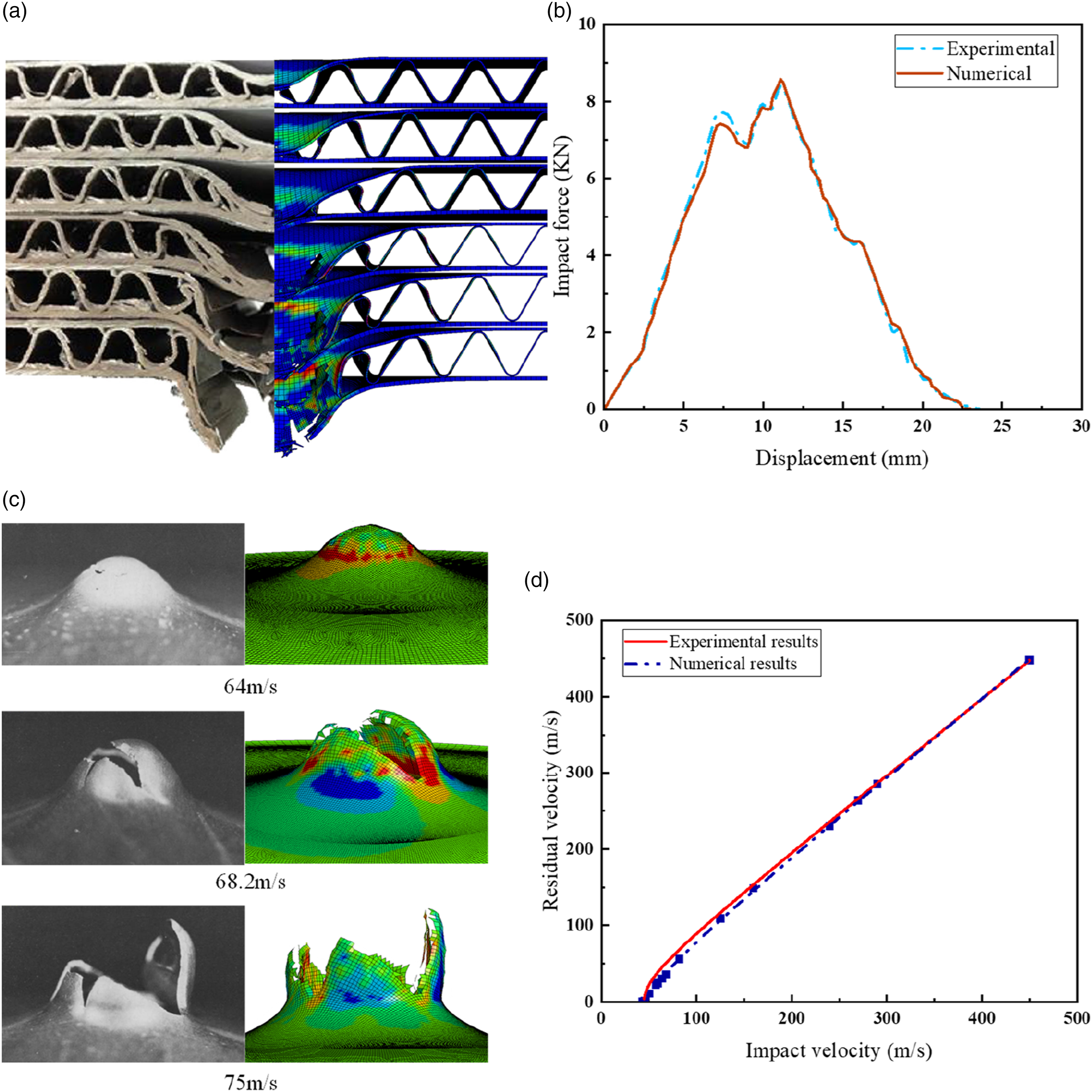
Ballistic resistance comparison
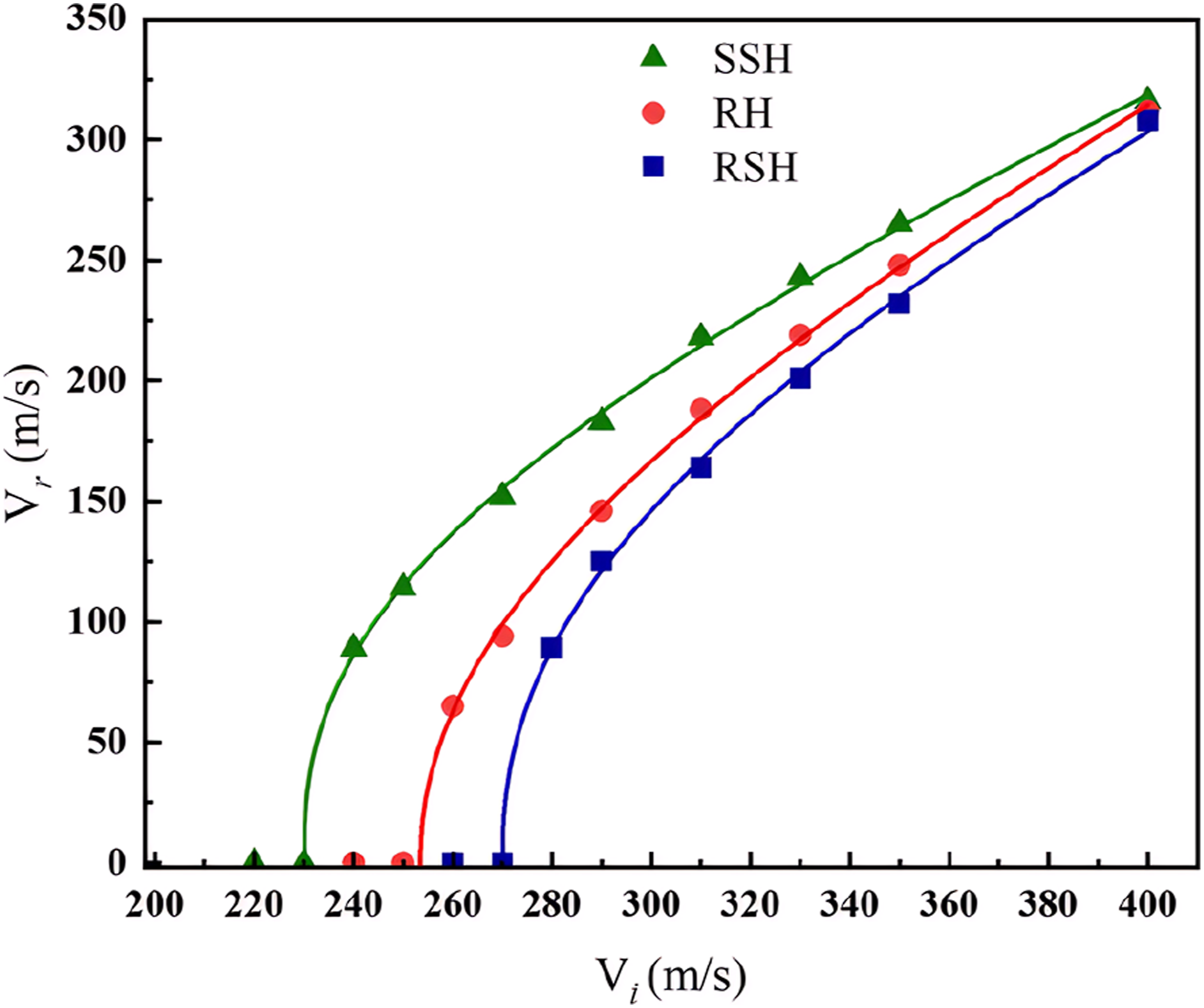
The simulations were performed to analyze the response of three distinct sandwich panel configurations under varying impact speeds of 220 m/s to 400 m/s. For each experiment, the residual velocity was recorded. This information was applied to assessing the ballistic resistance of various types of sandwich panels by calculating two critical quantitative indicators: ballistic limit
Armor penetration process analysis
The trajectory of the projectile’s velocity during armor penetration of the RSH semi-armor-piercing projectile at impact velocity The evolution of projectile velocity at 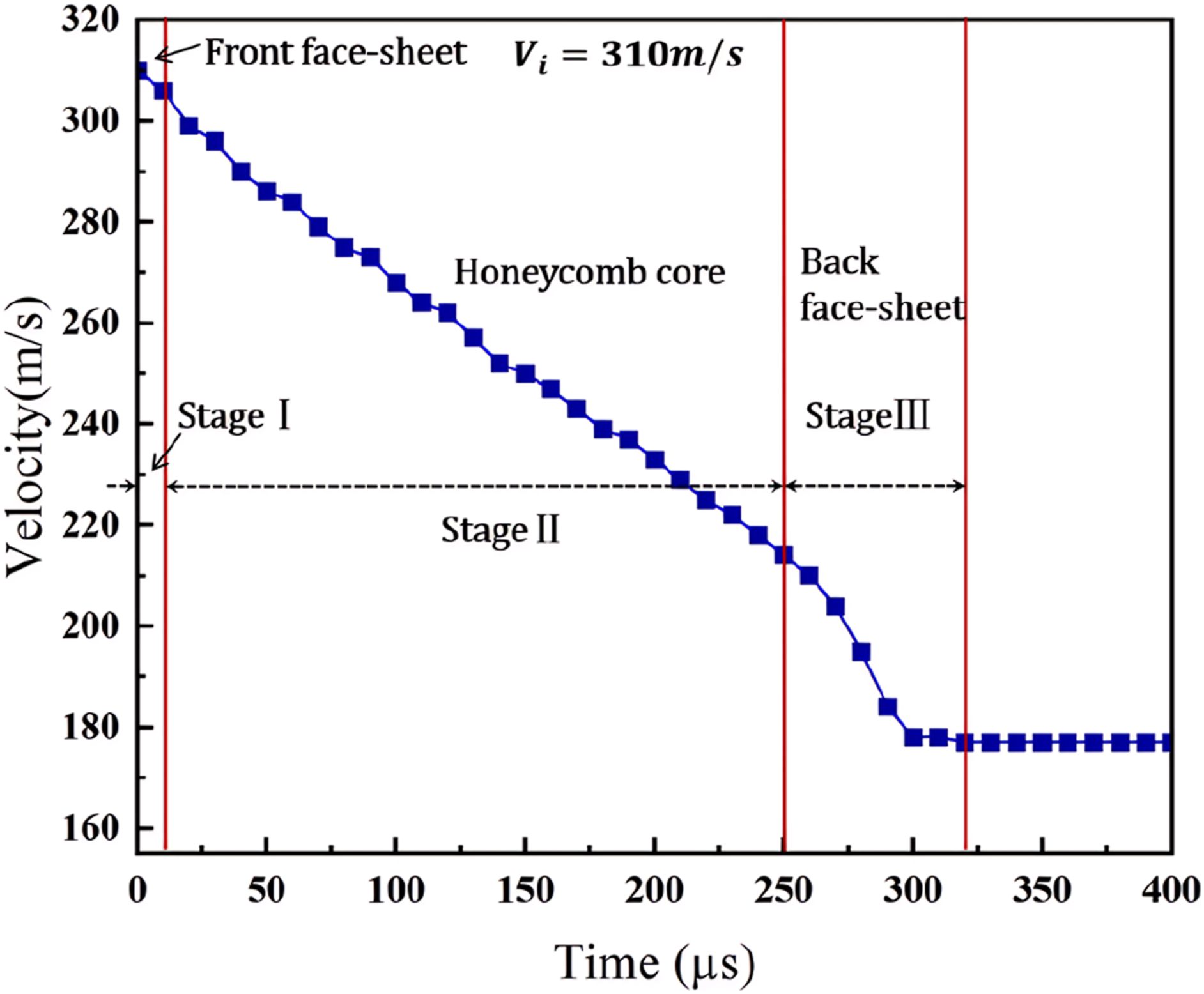
Comparison of ballistic limit and energy absorption
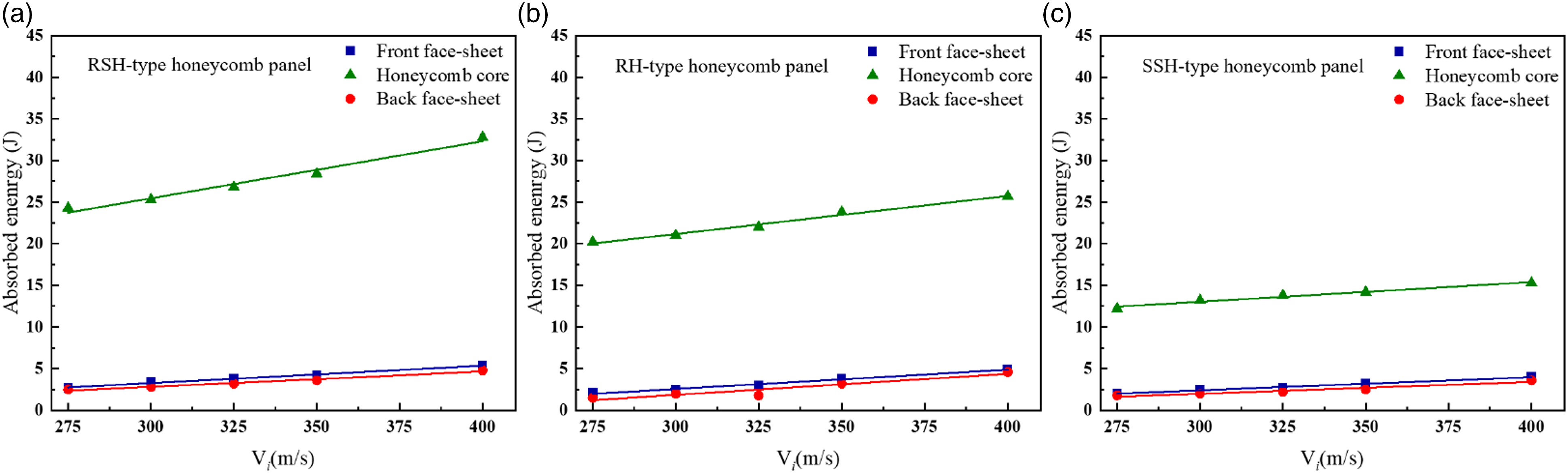
Numerical simulation cases for the three models were further analyzed. The correlation between the residual velocity and impact velocity for the three sandwich panels was given in Figure 8. The Lambert - Jonas model may be used to determine the relationship between residual velocity Residual velocity versus impact velocity for three types. Absorbed energy versus impact velocity for the three types.
Parameters in equation (5) and

In addition, for each variety of honeycomb sandwich panels, the honeycomb core absorbed more energy with increasing impact velocity than that of the panels. In most cases, the front panel absorbed more energy than the rear panel. The same situation has been found for honeycomb sandwich panels under out-of-plane ballistic impact.9,38 Significantly, it is worth noting that the RSH exhibited a greater energy absorption capability over the others across the range of impact velocities investigated. However, the energy-absorbed capacities of the panels remained nearly identical for all studied types.
Ballistic impact process analysis
This section undertook an analysis of the projectile impact processes of three representative auxetic honeycomb sandwich panels to determine the factors contributing to their ballistic properties. The impact velocities considered were 240 m/s, 270 m/s, and 350 m/s.
Relatively low-velocity mode
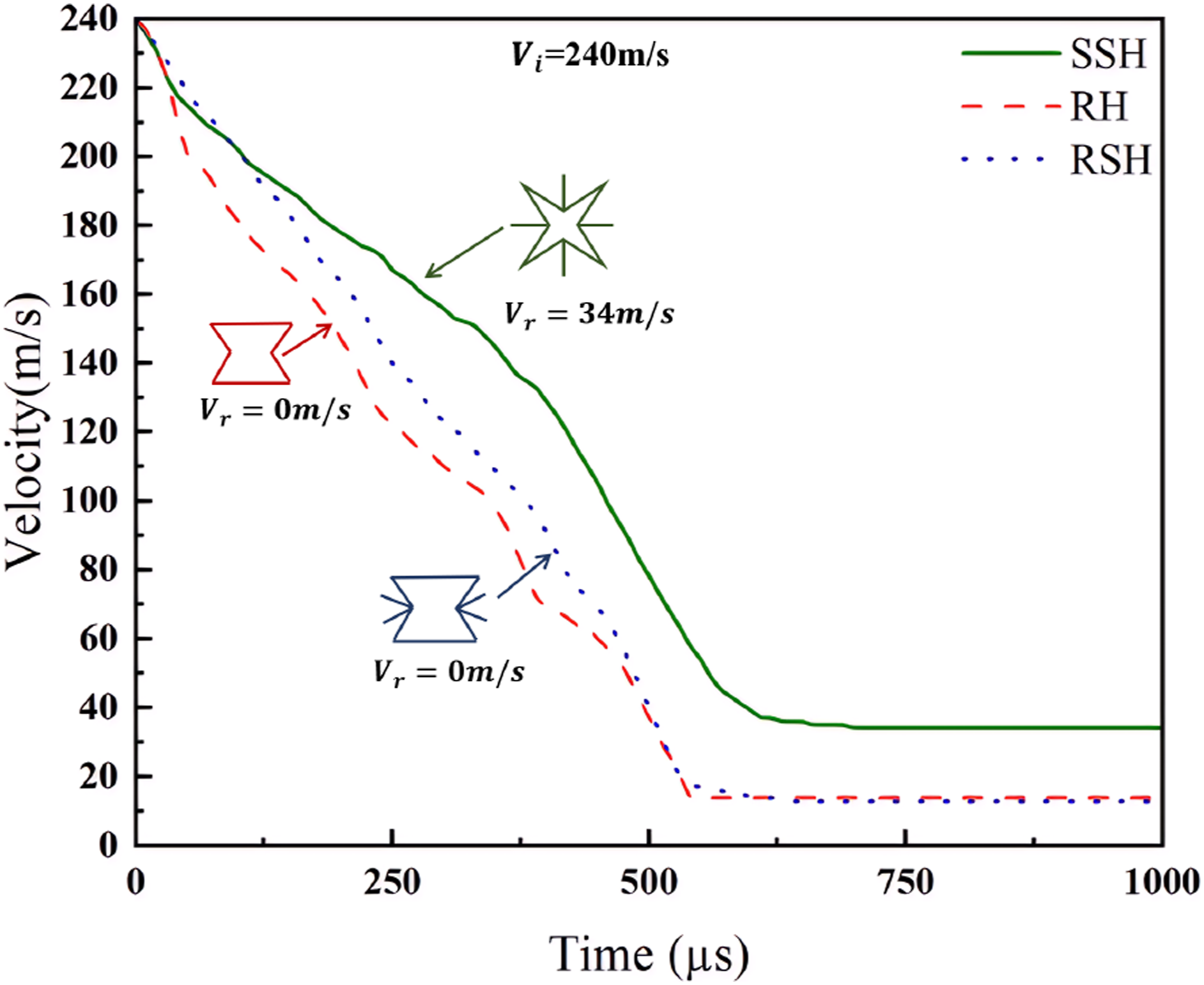
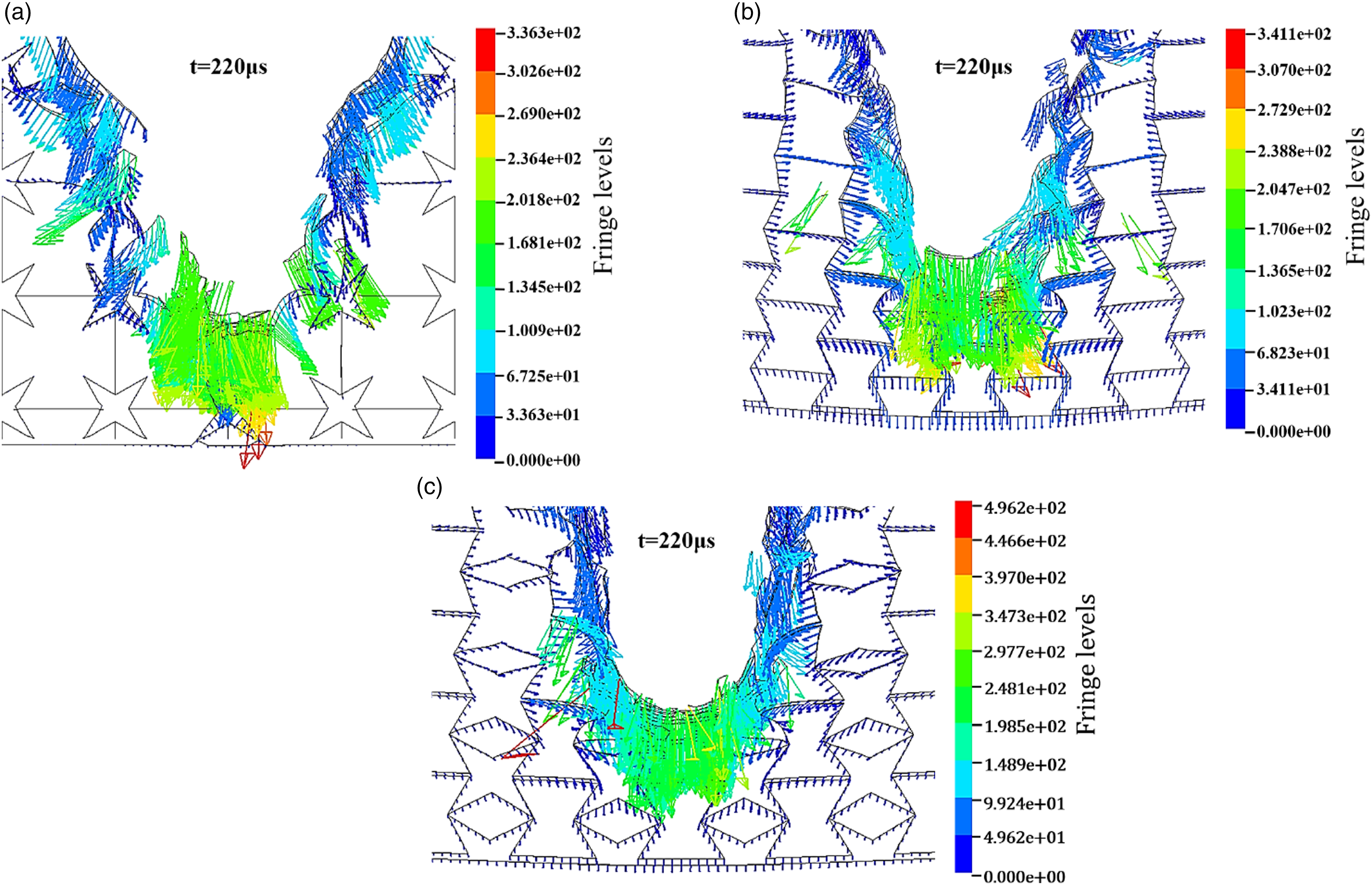
Figure 9 given a snapshot of the typical deformation phase under Impact processes of (a) SSH-type, (b)RH-type, and (c)RSH-type by the projectile at Time history of the transient velocity of the projectile with Local instant node velocity (amplitude and direction are represented by length and direction of the arrow, resp) distribution of (a) SSH type, (b) RH type, and (c) RSH type under the projectile impact at 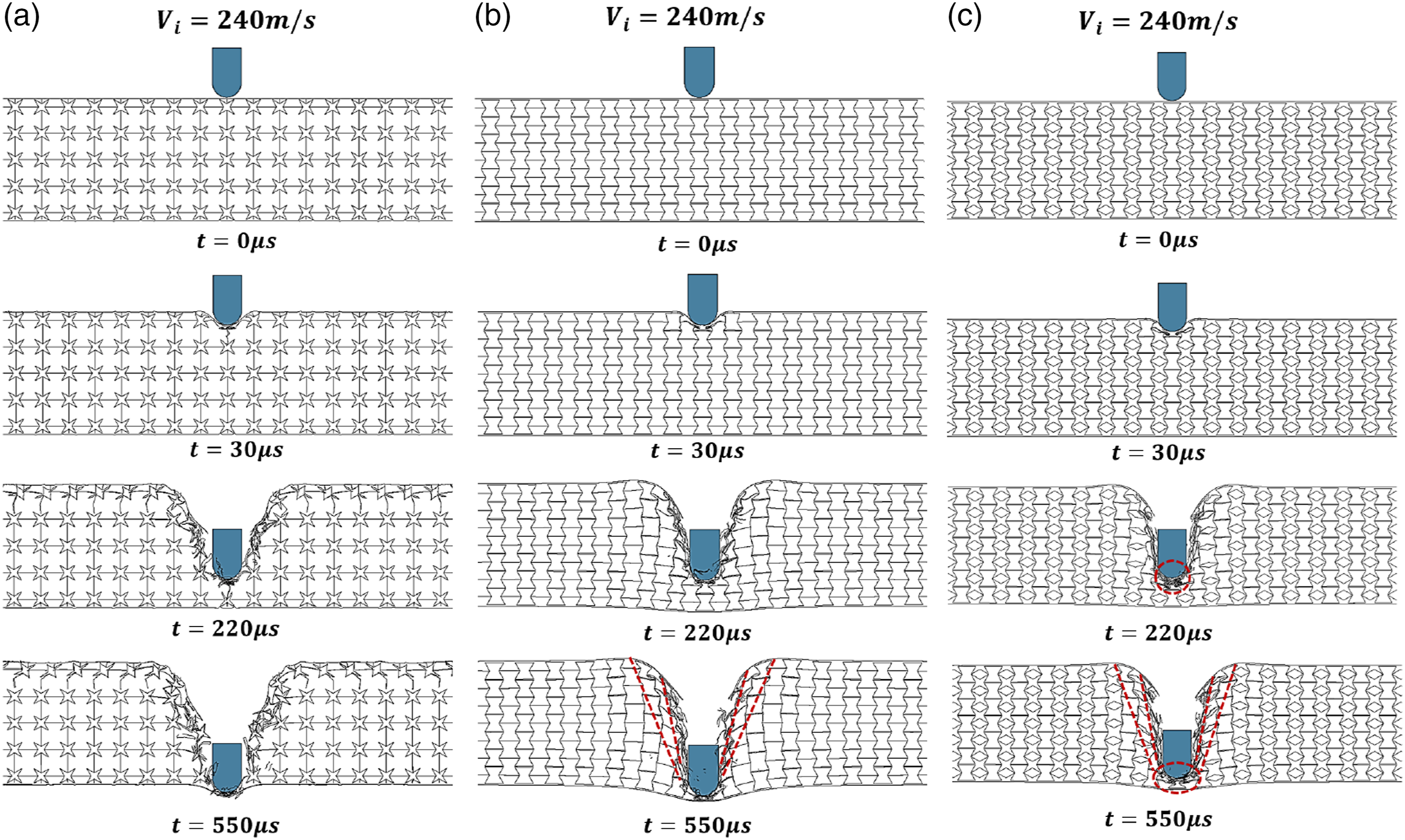
Relatively medium-velocity mode
While the initial velocity was raised to Impact processes of (a)SSH-type, (b)RH-type, and (c)RSH-type by the projectile at Time history of the transient velocity of the projectile with 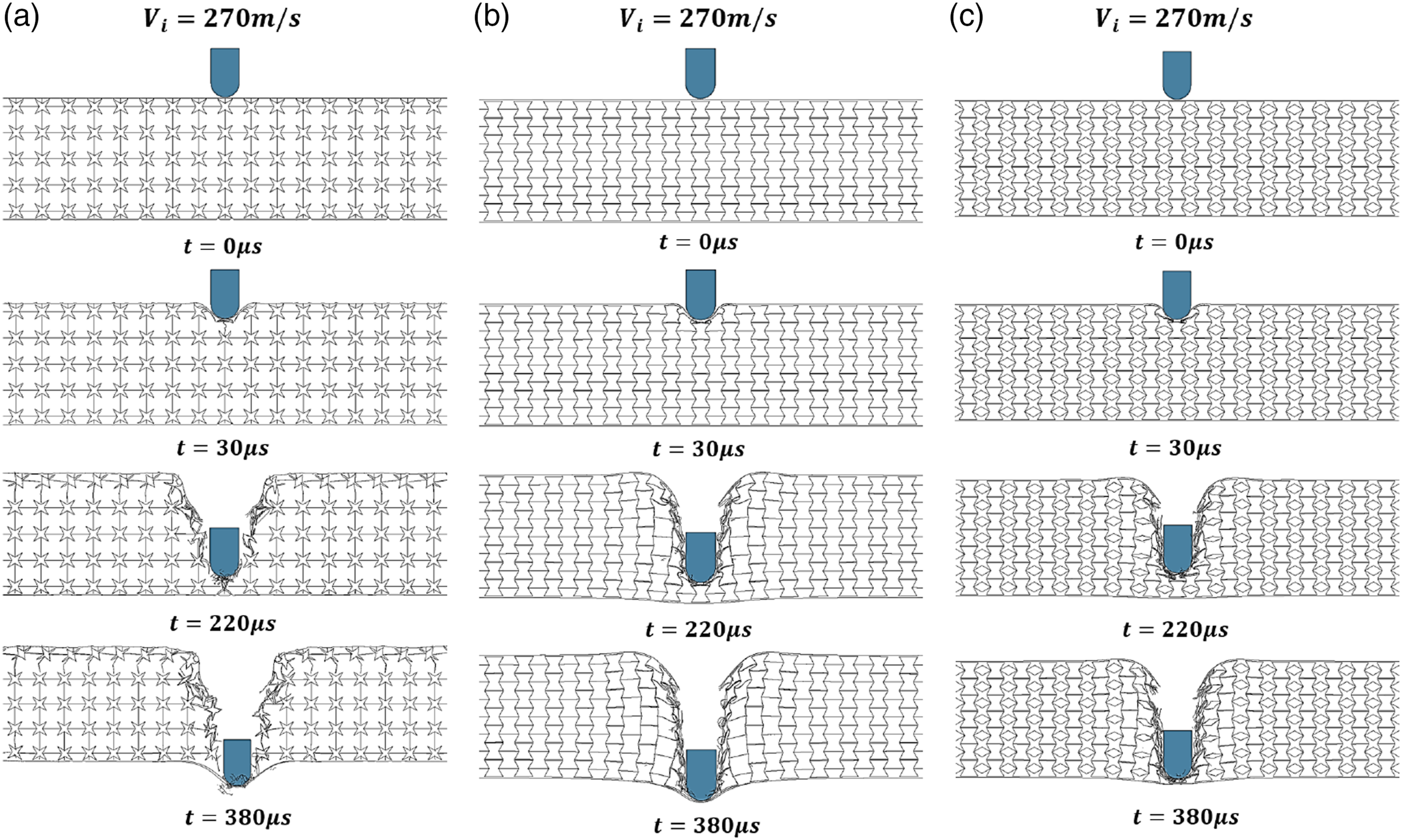
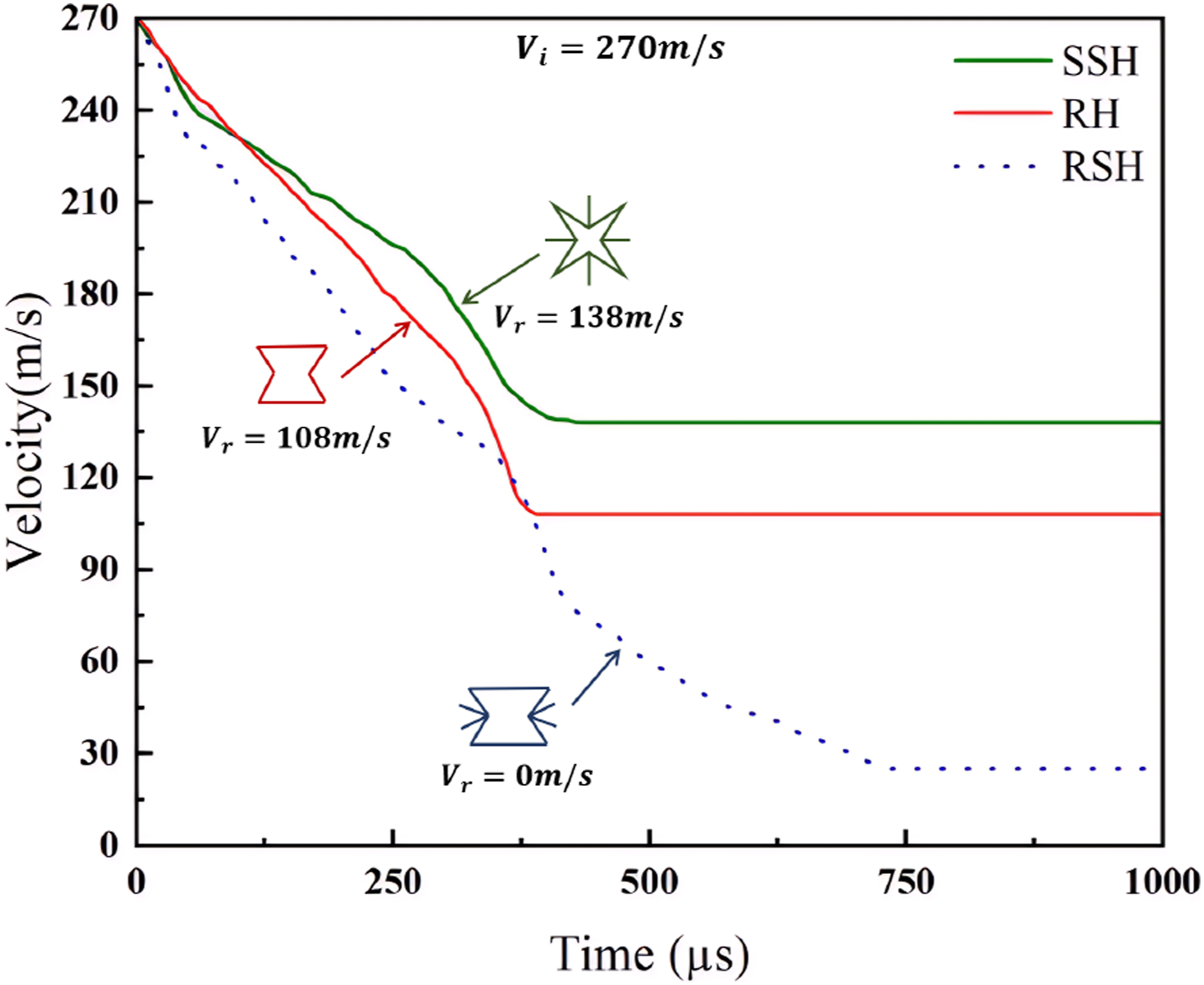
Relatively high-velocity mode
Lastly, if the impact velocity was augmented to a value of Perforation processes of (a) SSH-type, (b) RH-type, and (c) RSH-type by the projectile at Time history of the transient velocity of the projectile with 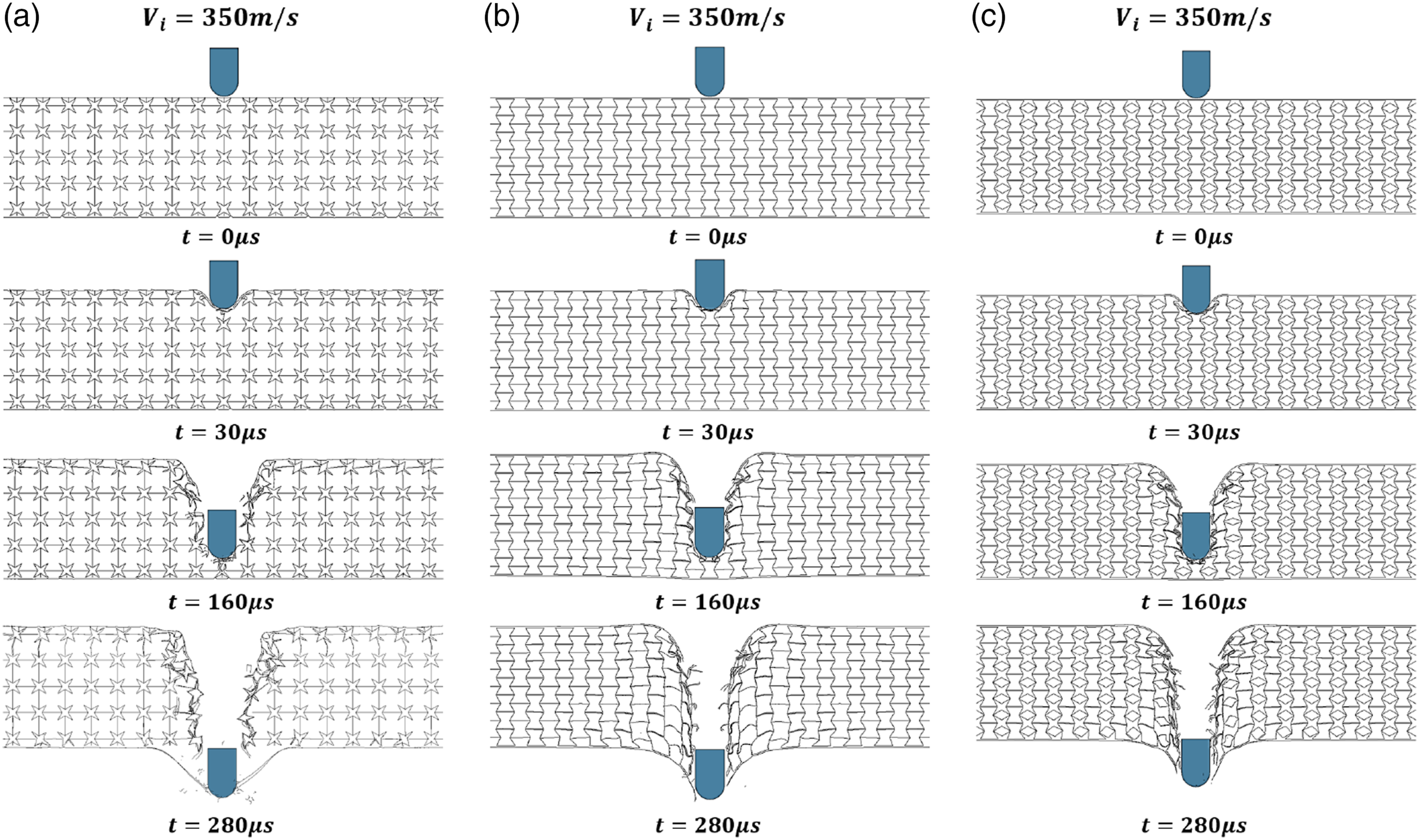
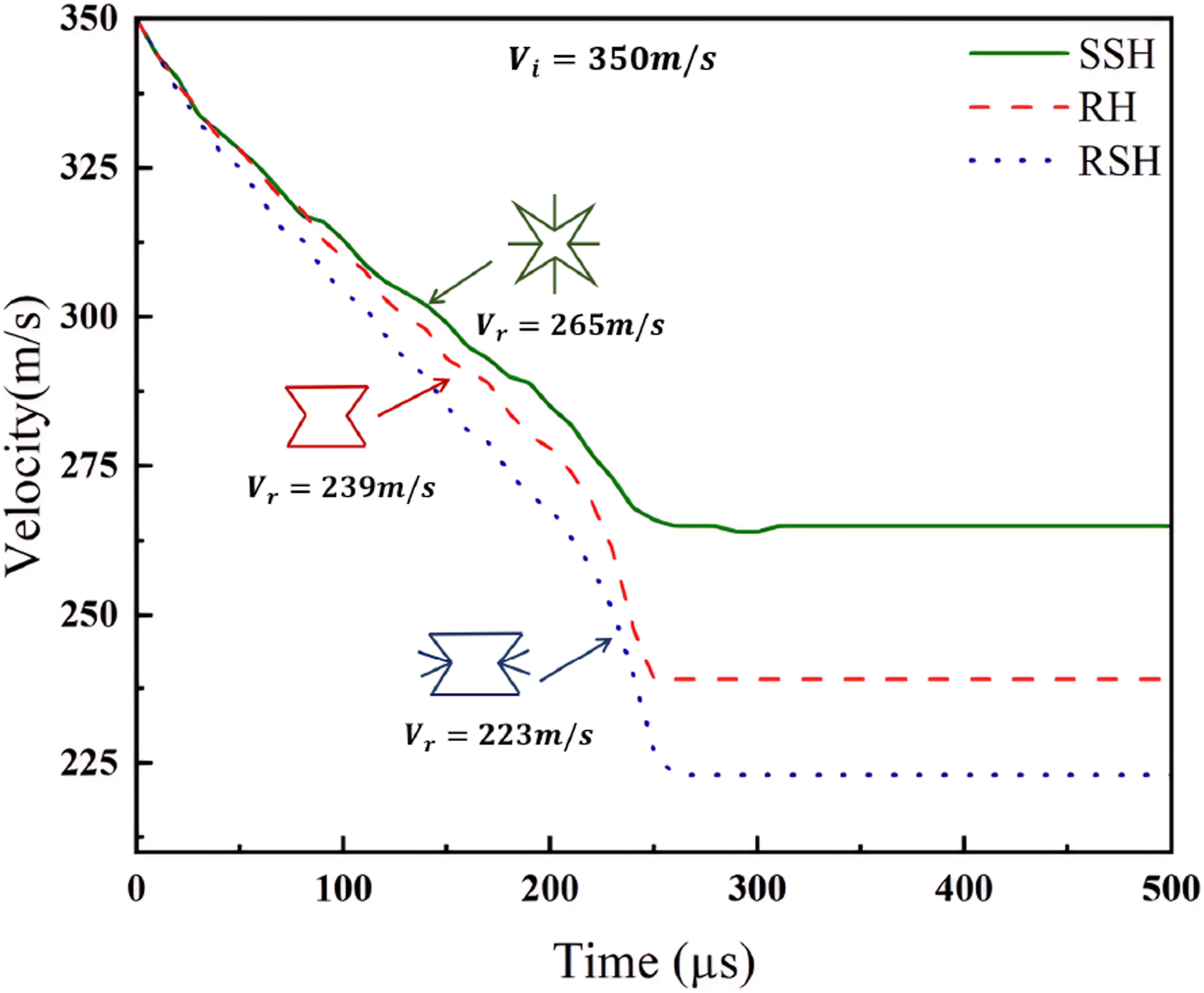
Parametric study of the RSH sandwich panels
Based on the simulation outcomes, the RSH sandwich panel exhibited the best ballistic resistance of the three types, particularly at comparatively low impact velocities. Consequently, a deeper examination was conducted with respect to its structural parameters, encompassing panel thickness, relative density, cell angle, and cell size. The objective was to offer further details about this novel ballistic design.
Effect of panel and core thickness
Three sets of simulations were conducted to evaluate the effect of panel and core thickness. In each group, auxetic honeycomb sandwich panels with the same core thickness ( Cubic polynomial approximations of the residual velocity of auxetic honeycomb sandwich panels with different face-sheet thicknesses.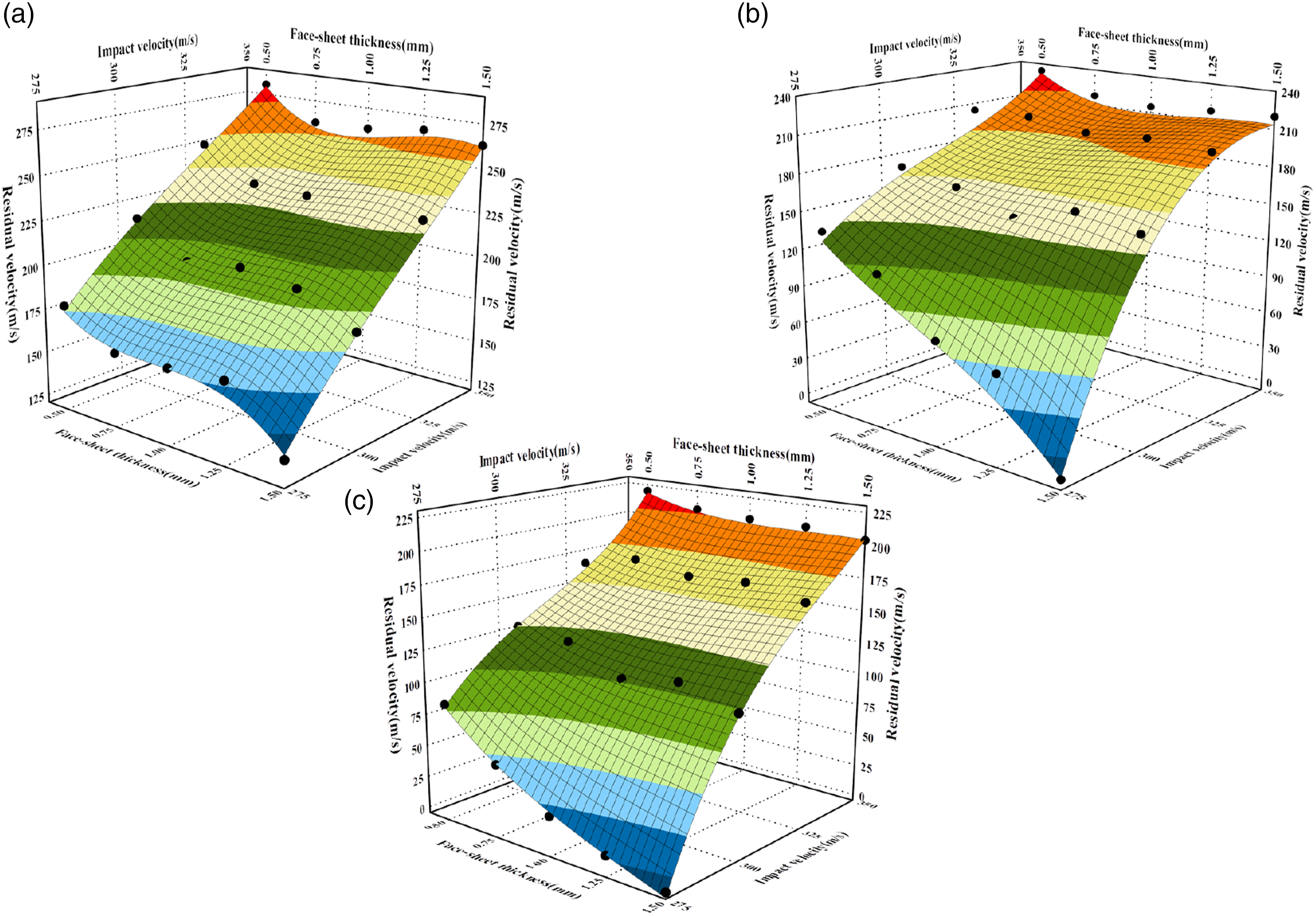
Details and simulation findings for three groups with different panel thicknesses.
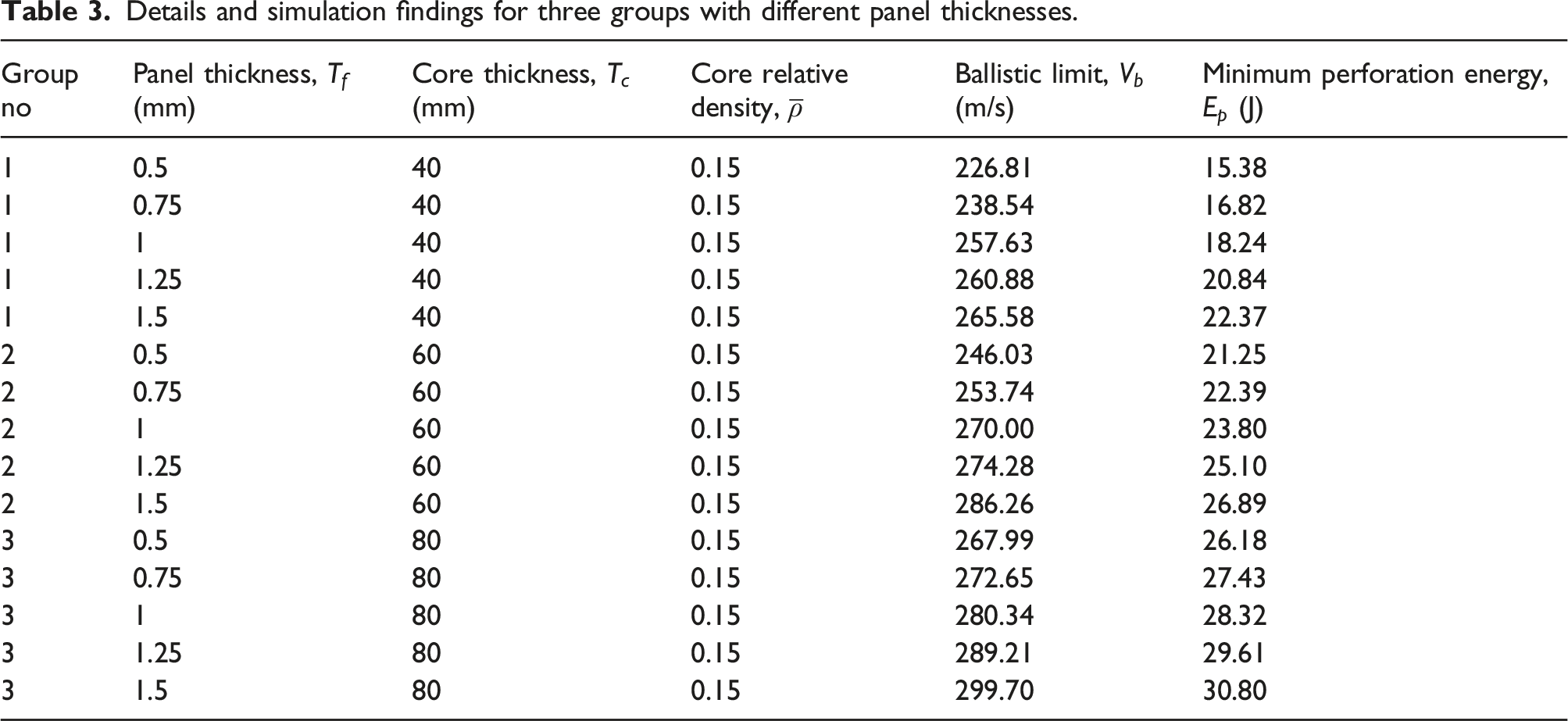
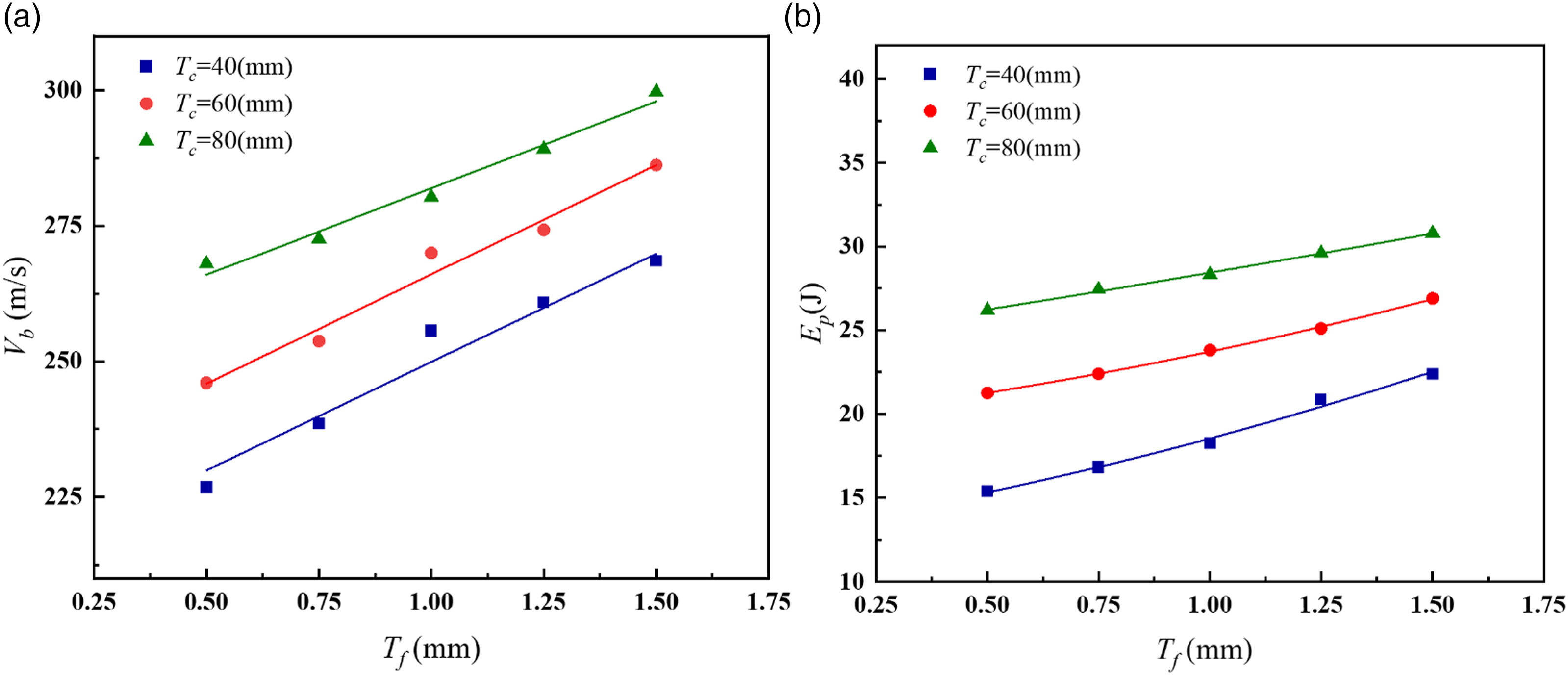
Effects of face-sheet thickness on (a) ballistic limit and (b) minimum perforation energy.
Effect of relative density and core thickness
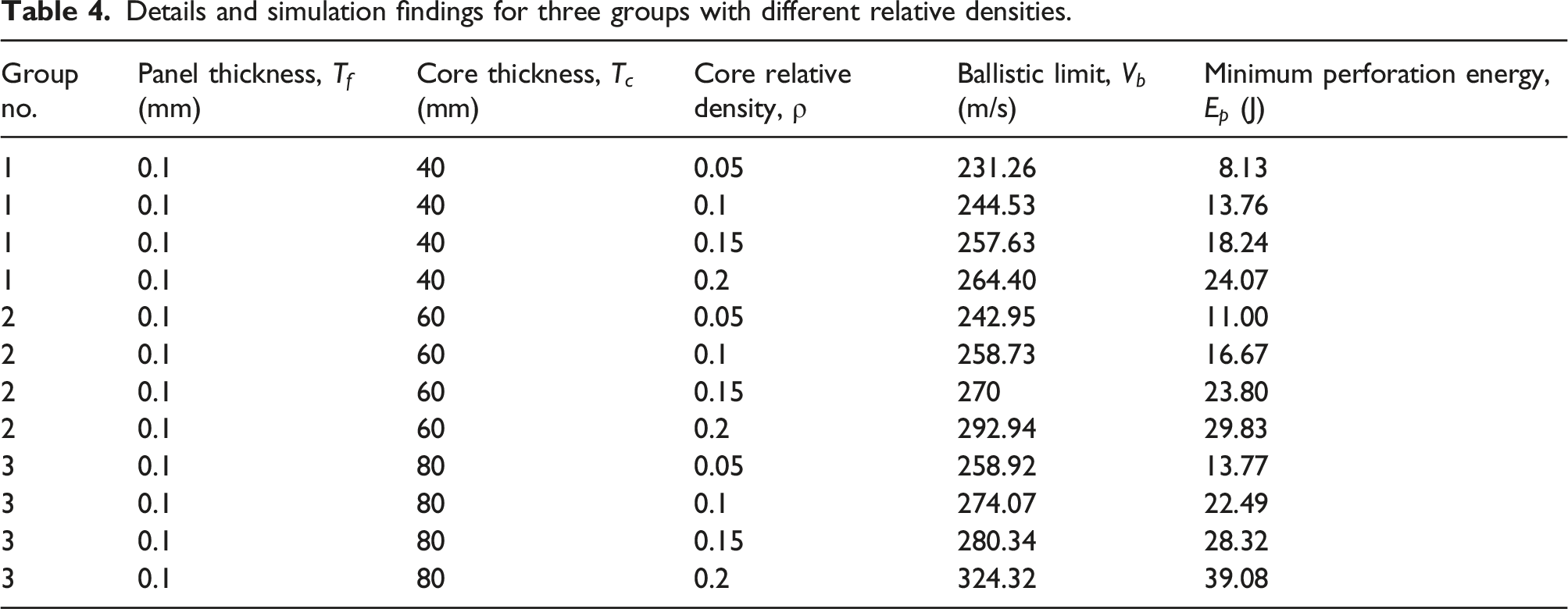
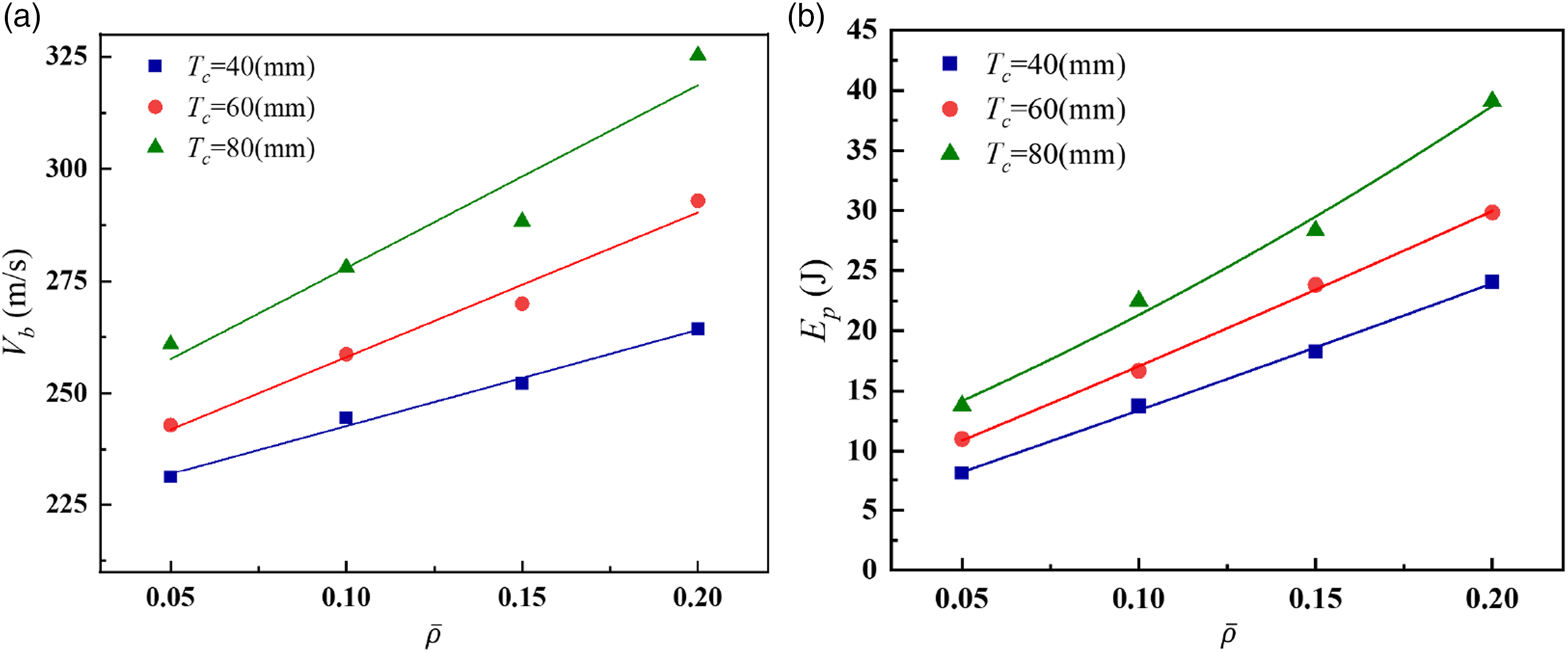
As a means to evaluate the influence of core thickness and relative density regarding ballistic performance, residual velocity was analyzed as a function of relative density ( Cubic polynomial approximations of the residual velocity of auxetic honeycomb sandwich panels with different core relative densities. Details and simulation findings for three groups with different relative densities. Effects of core relative density on (a)ballistic limit and (b)minimum perforation energy.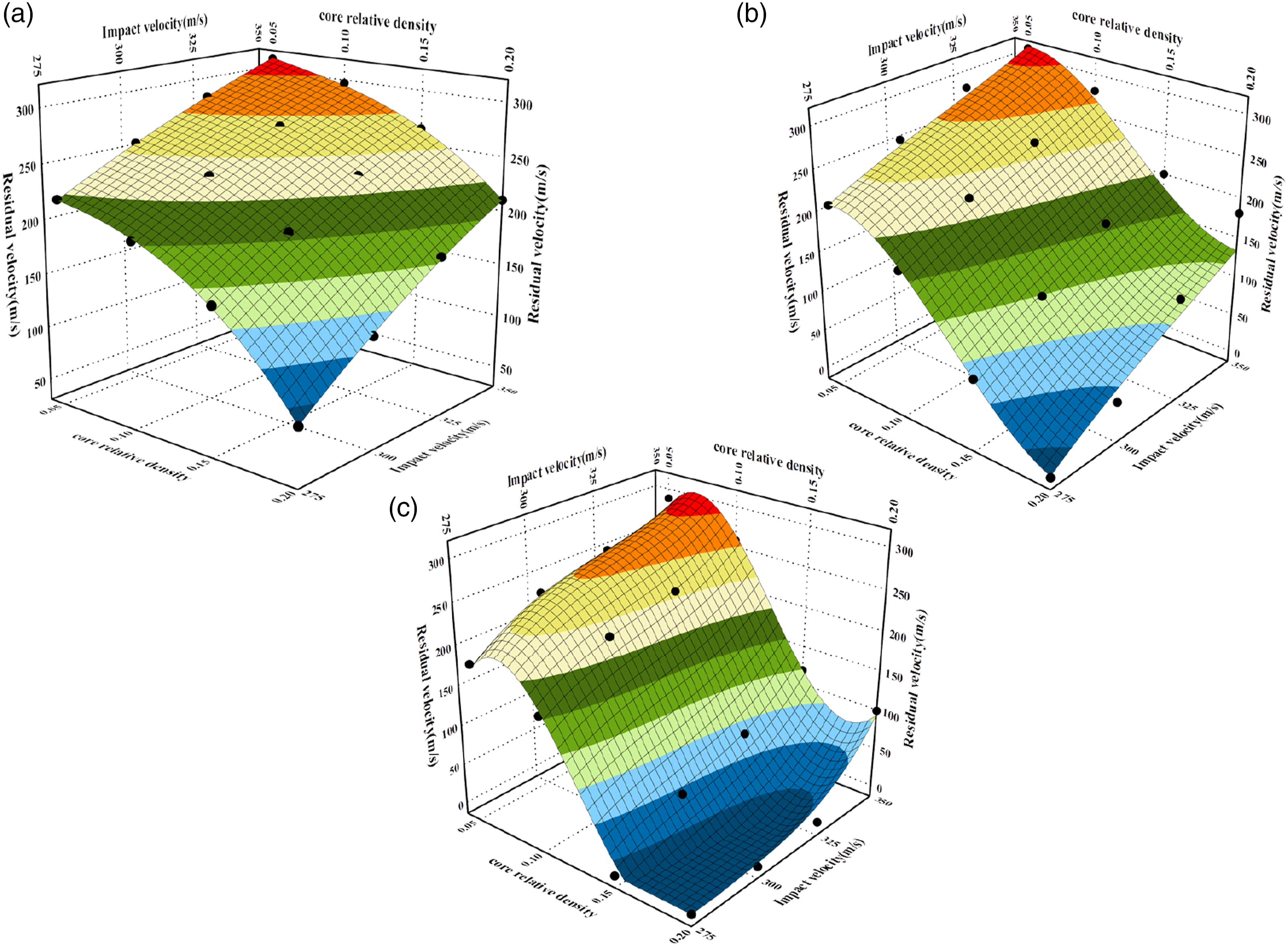
Effect of cell angle and wall thickness
To facilitate comparison, the RSH sandwich panel studied had the same mass ( Effects of unit cell angle and wall thickness on the ballistic responses: (a) residual velocity variations; (b) cubic polynomial approximation surface of residual velocity; (c) ballistic limit versus unit cell angle; (d) normalized minimum perforation energy versus unit cell angle. Details and simulation findings for a group with different cell angles.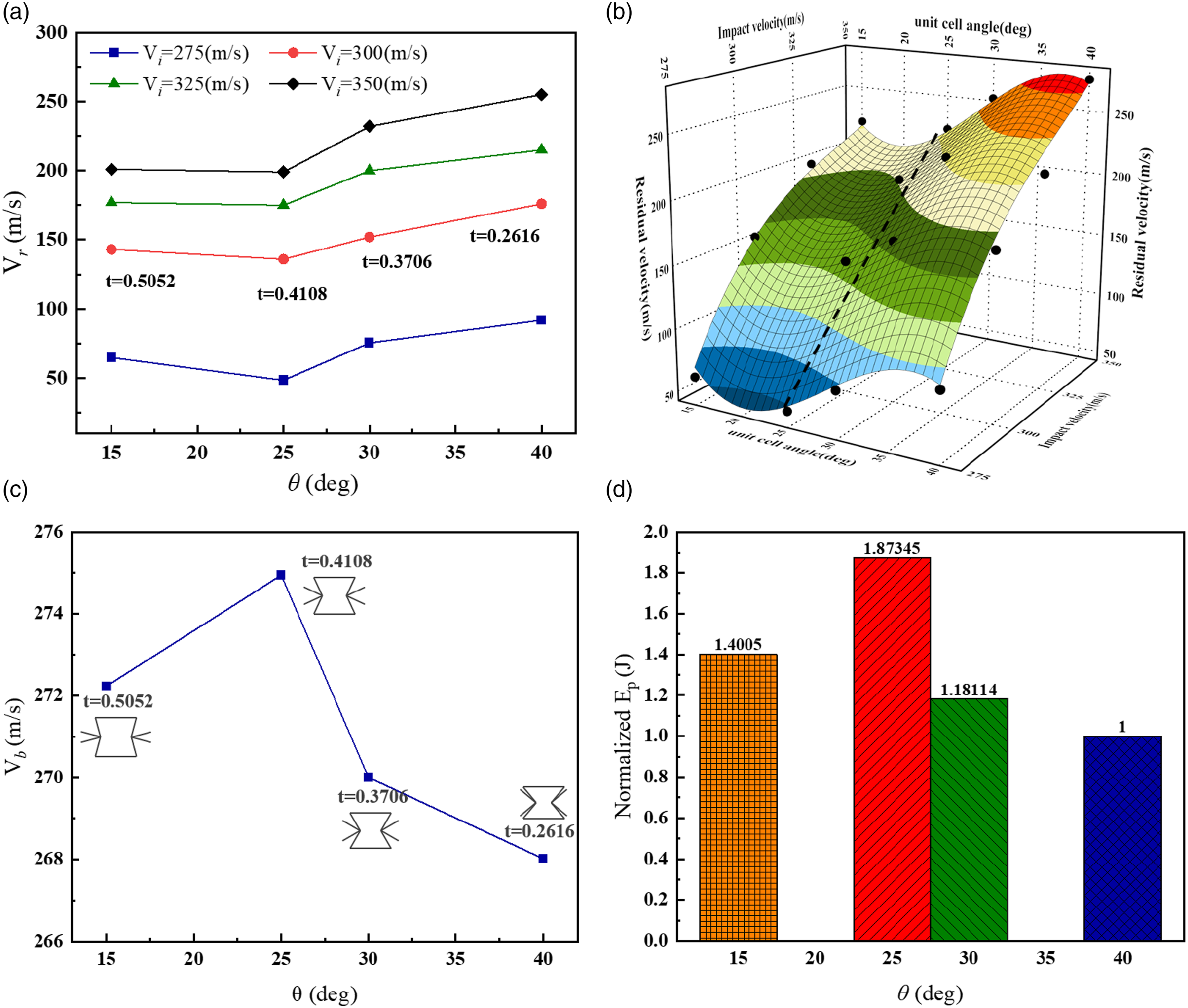

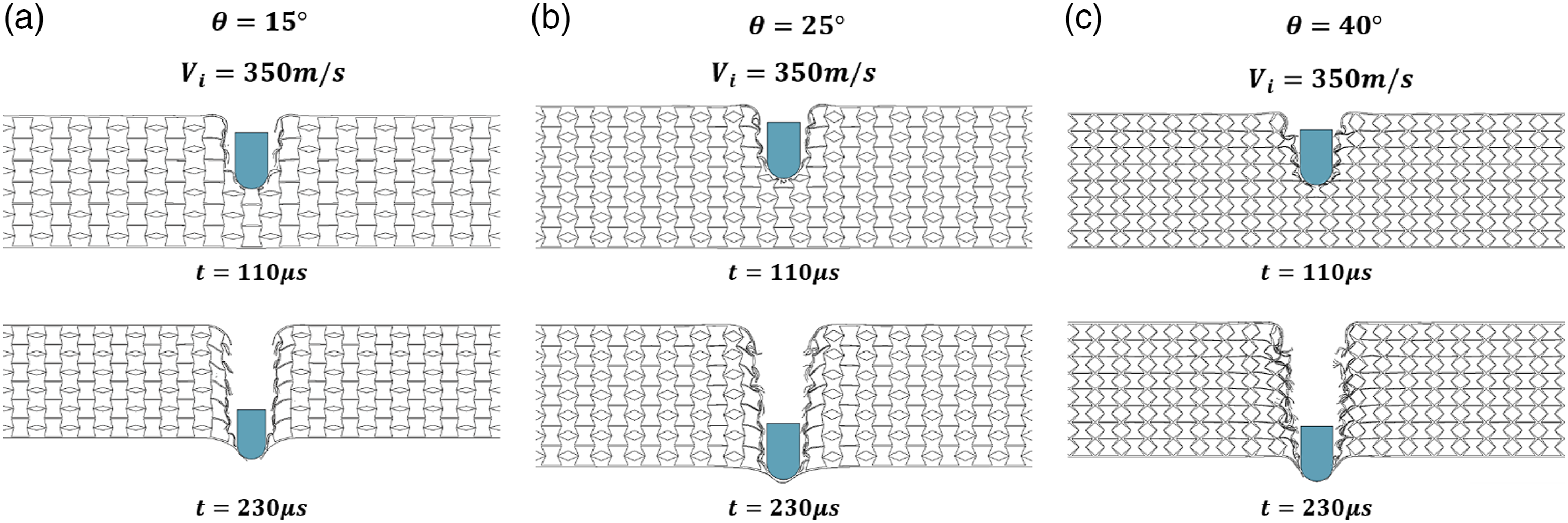
An introduction for the non-monotonic ballistic resistance of the RSHs based on single-cell shape changes is proposed. For example, when the cell angle was small (θ = 15°), the RSH sandwich panel was closer to the RH sandwich panel (Figure 21(a)), which was more prone to cell wall flexure and shear compared to RSH (Figure 9(a)and Figure 11(a)). The RH sandwich panel had the least ballistic resistance than the RSH sandwich panels. On the one hand, increasing the cell angle (absolute value) made the oblique wall of the cell more easily rotate around the joining margin of the cell wall, so that the NPR effect on the core can be fully exerted. The increase in cell angle also resulted in a decrease in the cell size while simultaneously increasing the number of cells in Z direction. The strong ballistic capacity of the RSH sandwich panel with a 25°cell angle was attributable to the findings of the investigations (Figure 21(b)). However, when the cell angle was too great, the cell walls were thinner and weaker, so they could be readily stretched beyond their breaking point (Figure 21(c)). Thus, the ballistic limit was less for a cell angle of θ = 40°than it was for θ = 15° (Figure 20(c)). With the impact velocity increased, the plastic collapse tended to localize (Figure 22), as the velocity was faster and stretching shear only occurs close to the projectile path, while the cell angle had less effect on its residual velocity variation (Figure 20(a)). Snapshots of impact processes of auxetic honeycomb sandwich panels with different reentrant unit cell angles by projectiles at t Snapshots of impact processes of auxetic honeycomb sandwich panels with different reentrant unit cell angles by projectiles at 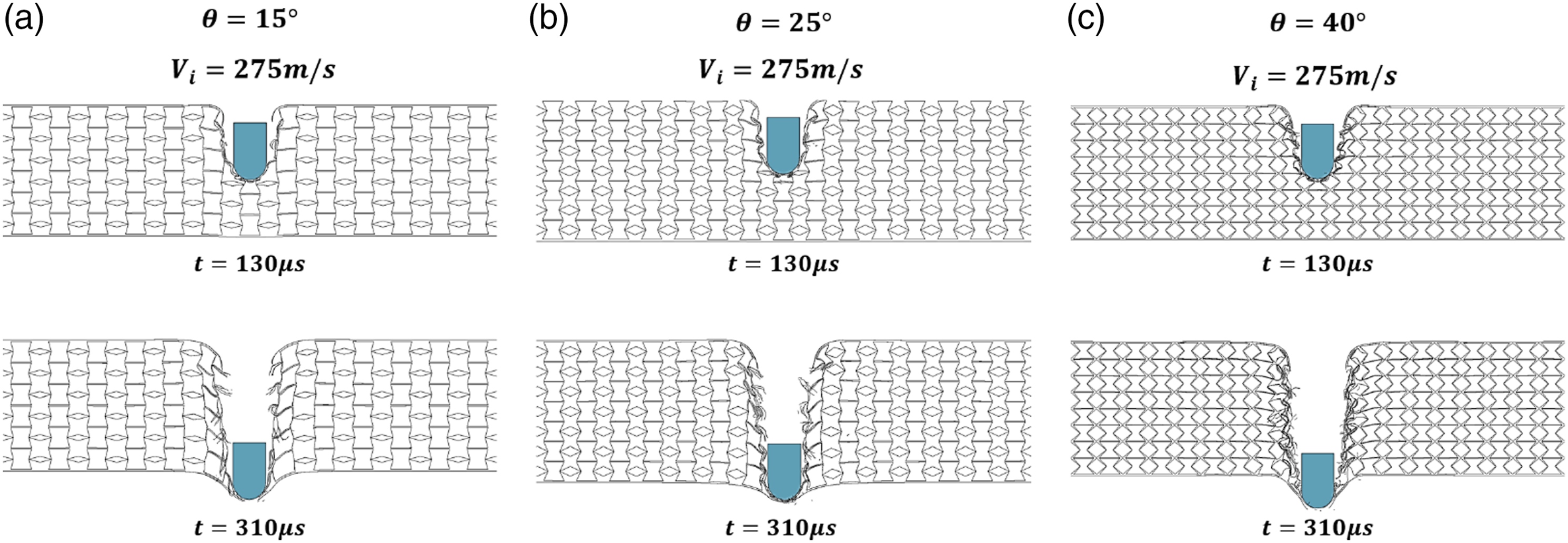
Effect of cell size and wall thickness
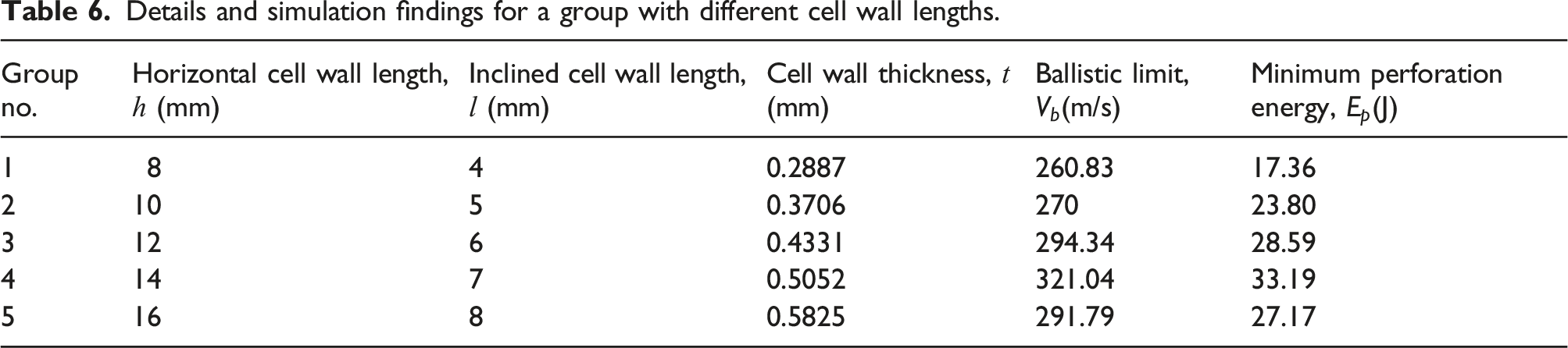
Details and simulation findings for a group with different cell wall lengths.
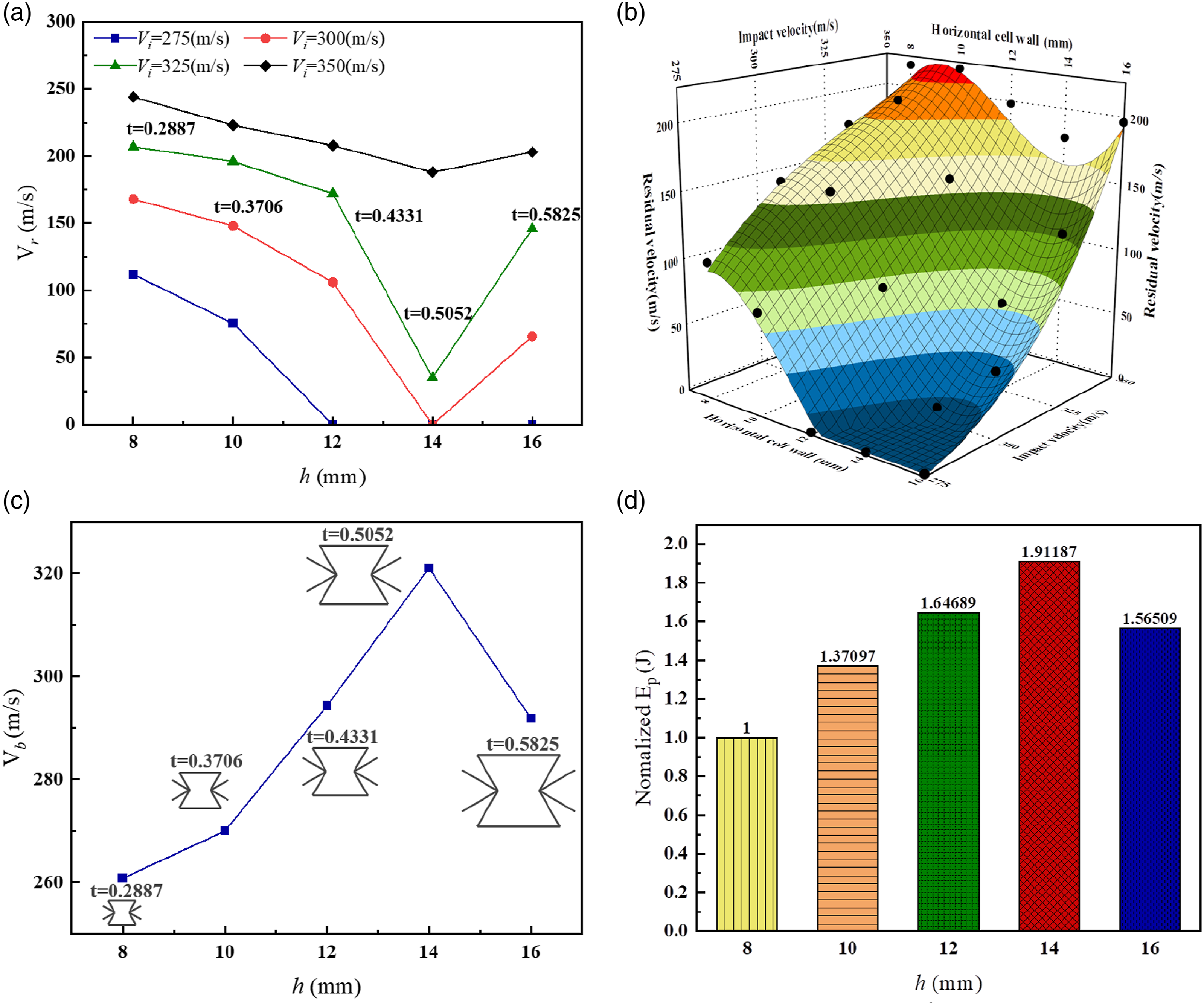
Effects of reentrant unit cell size and wall thickness on the ballistic responses: (a) residual velocity variations; (b) cubic polynomial approximation surface of residual velocity; (c) ballistic limit versus unit cell horizontal wall length; (d) normalized minimum perforation energy versus unit cell horizontal wall length.
Figure 24 gave a snapshot of the perforation process of the RSH sandwich panels for different cell sizes. For fixed relative density, a smaller single cell possessed a thinner wall. On one side, reducing the size of the single cell exposed more of the single cell to the projectile, thus reflecting the negative Poisson’s ratio properties to enhance its ballistic resistance (Figure 24(a)). However, as previously indicated, thinner cells were more susceptible to being strained to failure. Figure 24(b)) showed that for hemispherical head projectile with a diameter of Perforation processes of auxetic honeycomb sandwich panels with different reentrant unit cell sizes by projectiles at 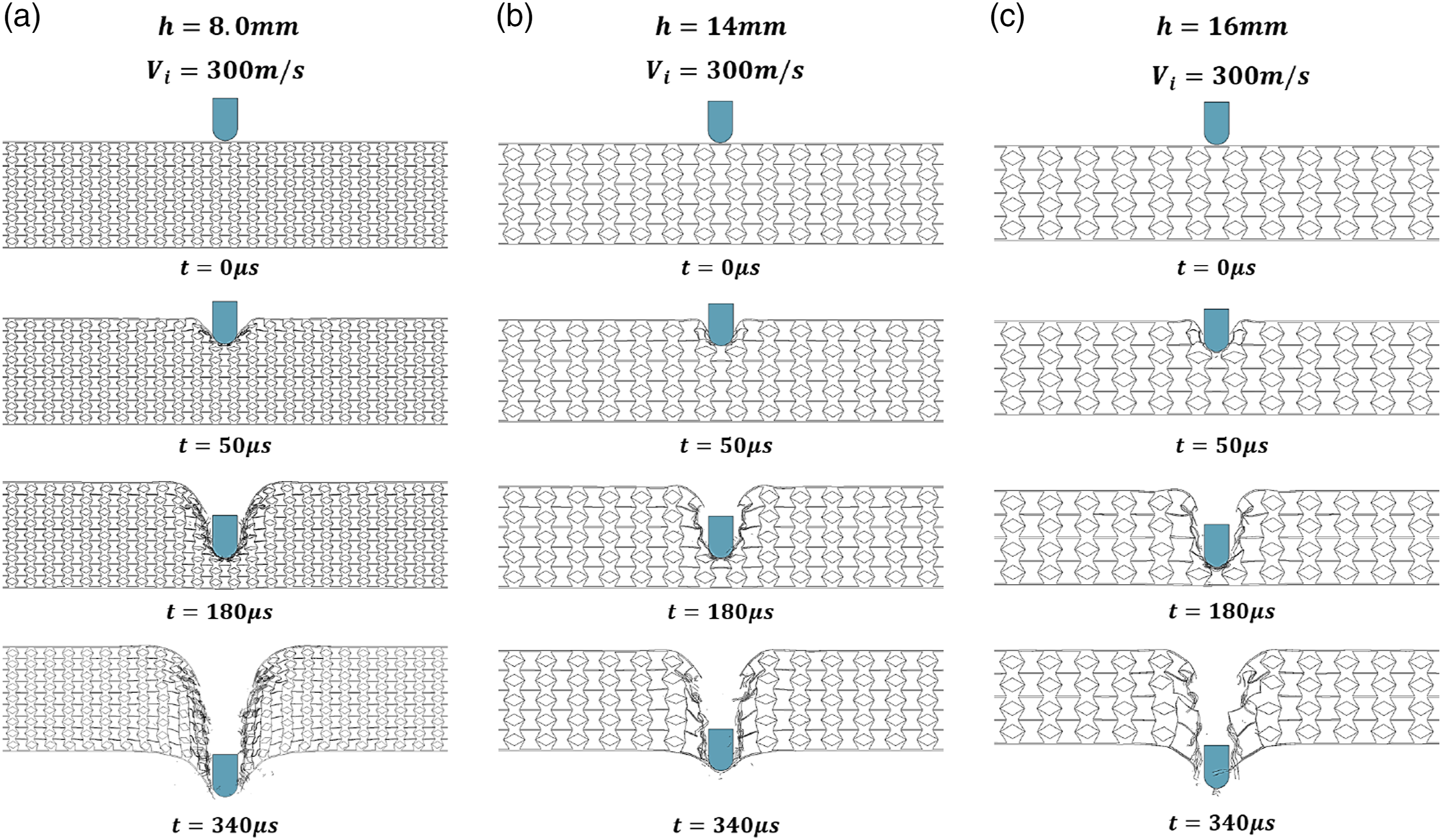
In summary, this can suggest an optimal design for re-entrant star-shaped single cells with θ = 25° and ℎ = 14 mm to maximize the ballistic limit of RSH for a given mass under a defined bullet impact. It was imperative to acknowledge that the concept of “optimal design” discussed here was subject to certain limitations, as it applies to a relatively narrow range. In contrast, the notion of “global” design optimization encompassed a broader design domain and considered the intricate interactions among various design parameters.
Conclusion
In this research, a novel auxetic honeycomb structure is presented, and the impact behavior of RSH sandwich panels had been evaluated by FE simulation. The analysis focused on examining the penetrating process and energy dissipation mechanism to of the novel auxetic honeycomb sandwich panels.
The study showed that the honeycomb core absorbed over 80% of kinetic energy under in-plane impact situations. The cell configuration had a significant influence on its anti-penetration ability. In the range of impact velocities studied (220–420 m/s), RSH exhibited greatest ballistic performance, although its advantage was more pronounced at lower levels of impact velocity compared to higher levels. In particular, the ballistic limit of the RSH was 17.4% and 7.1% higher than that of SSH and RH, respectively.
In addition, considering excellent armor penetration resistance of the RSH sandwich panels, the influences of panel thickness, relative density, cell angle, and cell size on the ballistic resistance of sandwich panels were investigated. For a given core layer thickness, the residual velocity of projectile decreased with increasing panel thickness and relative density. Relationship between ballistic limit and panel thickness as well as relative density exhibited a nearly linear proportionality. In contrast, the minimal perforation energy demonstrated an almost quadratic relationship with these two variables. The ballistic limit of the RSH can be improved by increasing the panel thickness, notably if the core layer is kept thin. However, at greater core layer thicknesses, the ballistic limit can be more effectively improved by raising the relative density of the core layer. Meanwhile, RSH sandwich panels exhibited a non-monotonic ballistic response to changes in cell angle and cell size. In this study, the highest ballistic limit and the lowest perforation energy were observed at θ = 25° and ℎ = 14 mm, respectively. However, cell size had a relatively significant effect on the anti-penetration ability of RSH compared to cell angle, notably at impact speeds approaching the ballistic limit.
Footnotes
Authors’ contributions
Conceptualization, Qiang He; resources, Jiamei Zhu; software, Junlan Guo; writing—original draft, Junlan Guo; writing—review and editing, Lizheng Li; methodology, Dejun Yan.
Declaration of conflicting interests
The author(s) declared no potential conflicts of interest with respect to the research, authorship, and/or publication of this article.
Funding
The author(s) disclosed receipt of the following financial support for the research, authorship, and/or publication of this article: This work was supported by The National Natural Science Foundation of China (51705215), The Chinese Postdoctoral Science Foundation (2022M712932) and the Postgraduate Research & Practice Innovation Program of Jiangsu Province (NO. KYCX23_3858). The authors would like to express their thanks.
Consent to participate
All authors have read and agreed to the published version of the manuscript.
Consent for publication
All authors have read and agreed to the published version of the manuscript.

Data Availability Statement
Data sharing not applicable to this article as no datasets were generated or analyzed during the current study.