







Abstract
This study examines the large amplitude free vibration behavior of symmetric and antisymmetric constant stiffness composite laminated (CSCL) and variable stiffness composite laminated (VSCL) elliptic plates, addressing a gap in nonlinear vibration research on elliptic composite structures. A curved rectangular
Keywords
Introduction
Laminated fiber-reinforced composite structures have revolutionized industries like aerospace, automotive, and naval engineering due to their exceptional combination of high stiffness, lightweight design, and superior resistance to fatigue and corrosion. Traditional constant stiffness composite laminates (CSCL) have seen extensive use, but the emergence of variable stiffness composite laminates (VSCL) with curvilinear fiber paths offers new possibilities for optimized structural performance. 1 Advanced manufacturing techniques, such as Automated Fiber Placement (AFP), enable precise control over fiber orientation in VSCLs, resulting in tailored mechanical properties, reduced material usage, and improved energy efficiency.
VSCL structures with curvilinear fibers are well-known for their advantages, and their mechanical behavior has been thoroughly investigated for various composite structures, including beams,2–7 plates,8–17 and shells.18–22 For a comprehensive review of the mechanical behavior and modeling of VSCL structures, readers may refer to Ribeiro’s review.
23
Generally, the findings indicate that curvilinear fiber paths outperform traditional straight fibers in terms of vibrational and buckling performances due to their tailored stiffness and improved load-bearing efficiency they offer. While the linear vibration behavior of VSCL laminates has been extensively studied, their nonlinear vibration characteristics remain less explored. Ribeiro and Akhavan
24
conducted the first study in this area, investigating the nonlinear forced vibrations of VSCL plates using a
Ganapathi et al.
33
examined the large amplitude free flexural vibrations of thick and thin symmetric and antisymmetric laminates with curvilinear fibers. Their methodology employed a higher-order theory incorporating geometric nonlinearity through Green’s strain vectors. The problem was solved using a direct iterative procedure. The results highlighted that VSCLs demonstrate a significantly higher degree of hardening behavior than CSCLs. Akhavan and Ribeiro
34
investigated the nonlinear flutter of VSCL rectangular plates in supersonic airflow using
Barathan et al. 40 studied the nonlinear free vibration behavior of VSCL beams, using a shear-flexible model that incorporates Poisson’s effect. The problem was formulated via FEM and solved iteratively through an eigenvalue approach. The results showed that increasing the fiber edge angle reduces the degree of hardening, while increasing the center angle enhances hardening characteristics. Anilkumar et al. 41 developed a semi-analytical model based on Von Kármán’s relations to explore the nonlinear dynamics of bi-stable, square cross-ply VSCL plates. Their findings demonstrated that curvilinear fibers significantly influence the nonlinear frequencies and mode shapes of these plates. Pagani et al. 42 developed a numerical approach using the two-dimensional Carrera Unified Formulation (CUF) and the layerwise method to study the nonlinear vibration and buckling behaviors of various VSCL plate and shell structures. Andérez González and Vescovini 43 presented a mixed formulation based on TSDT for analyzing the nonlinear vibrations of thick VSCL plates. They combined the Ritz, differential quadrature, and harmonic balance methods to solve this problem.
The mechanical behavior of composite structures represents a complex and evolving field, focused on understanding how these advanced materials respond to diverse loading conditions. Over the years, this area has attracted significant research interest, with various methodologies and theoretical frameworks developed to capture its complexities. For instance, Wang et al. 44 addressed the free vibration response of composite materials under complex damping by proposing an equivalent viscous damping approach, enabling stable and efficient time-domain computations. Wang et al. 45 investigated the hydrostatic buckling behavior and design optimization of composite cylindrical shells. Collectively, these works offer valuable insights into both the dynamic and stability performance of composite structures. Moreover, Cong et al. 46 extended the scope by considering the impact of multi-source uncertainties, thereby enhancing the reliability and safety of composite systems, especially in thermal environments.
Nonlinear vibration analysis is particularly essential for understanding the dynamic behavior of composite structures subjected to large deformations and high-frequency excitations. Unlike linear models, nonlinear approaches account for phenomena such as stiffness variation, geometric nonlinearity, and amplitude-dependent frequency shifts, which are crucial for capturing the complex response of advanced laminated composites. Among the computational techniques employed to address these challenges, the FEM remains the most widely adopted. Numerous studies, including those cited in Refs.24–34 and 37–40 have successfully applied FEM to analyze the nonlinear vibrational behavior of composite structures, accurately capturing localized effects and complex stress distributions. Chen et al. 47 investigated the nonlinear resonance behaviors of bi-directional functionally graded microbeams using FEM, accounting for material gradation, size effects, and geometric nonlinearity. Ramteke et al. 48 explores the nonlinear eigenfrequencies of doubly-curved functionally graded panels, incorporating multi-directional grading and large geometric deformations. All these studies highlight the robustness of the FEM in capturing the nonlinear dynamic responses of advanced composite structures.
As an alternative to FEM, meshless methods, employed in studies such as35,43 and,49–51 offer greater flexibility for modeling large deformations and complex boundary conditions without relying on a fixed mesh. These methods complement FEM by enhancing adaptability in simulating nonlinear dynamics of composite plates. Additionally, semi-analytical approaches36,41 combine the precision of analytical formulations with the computational efficiency of numerical techniques, offering a balanced framework for analyzing complex structural behaviors. These methods are particularly effective in capturing nonlinear dynamics while reducing computational costs compared to fully numerical approaches. Each of these computational strategies contributes distinct advantages, enabling researchers to address wide range of challenges and to further advance the understanding of composite material dynamics.
The
Elliptic plates are widely used in various engineering fields, such as aerospace and nuclear engineering, where their shape offers advantages such as improved aerodynamics and reduced stress concentrations. Understanding their vibrational behavior is crucial for improving the performance and reliability of engineered systems. Although numerous studies have investigated the nonlinear vibrations of isotropic52–58 and orthotropic59–61 elliptic plates, as well as the linear vibration of CSCL62–64 and VSCL circular and elliptic plates,10,65 however, solutions for geometrically nonlinear free vibrations of composite laminated elliptic structures remain unavailable in the literature. Building on prior studies, this work extends large amplitude nonlinear free vibration modeling to symmetric and antisymmetric CSCL and VSCL elliptic plates, incorporating complex stiffness distributions and geometric nonlinearities. A high-accuracy computational approach is introduced to analyze their nonlinear dynamic behavior under various design parameters. The analysis employs a curved hierarchical finite element based on FSDT and Von Kármán nonlinear equations. This approach ensures exponential convergence and an efficient representation of complex displacement fields with a single curved rectangular element, making it particularly suitable for vibration analysis. However, while the
Formulation
Curvilinear fiber
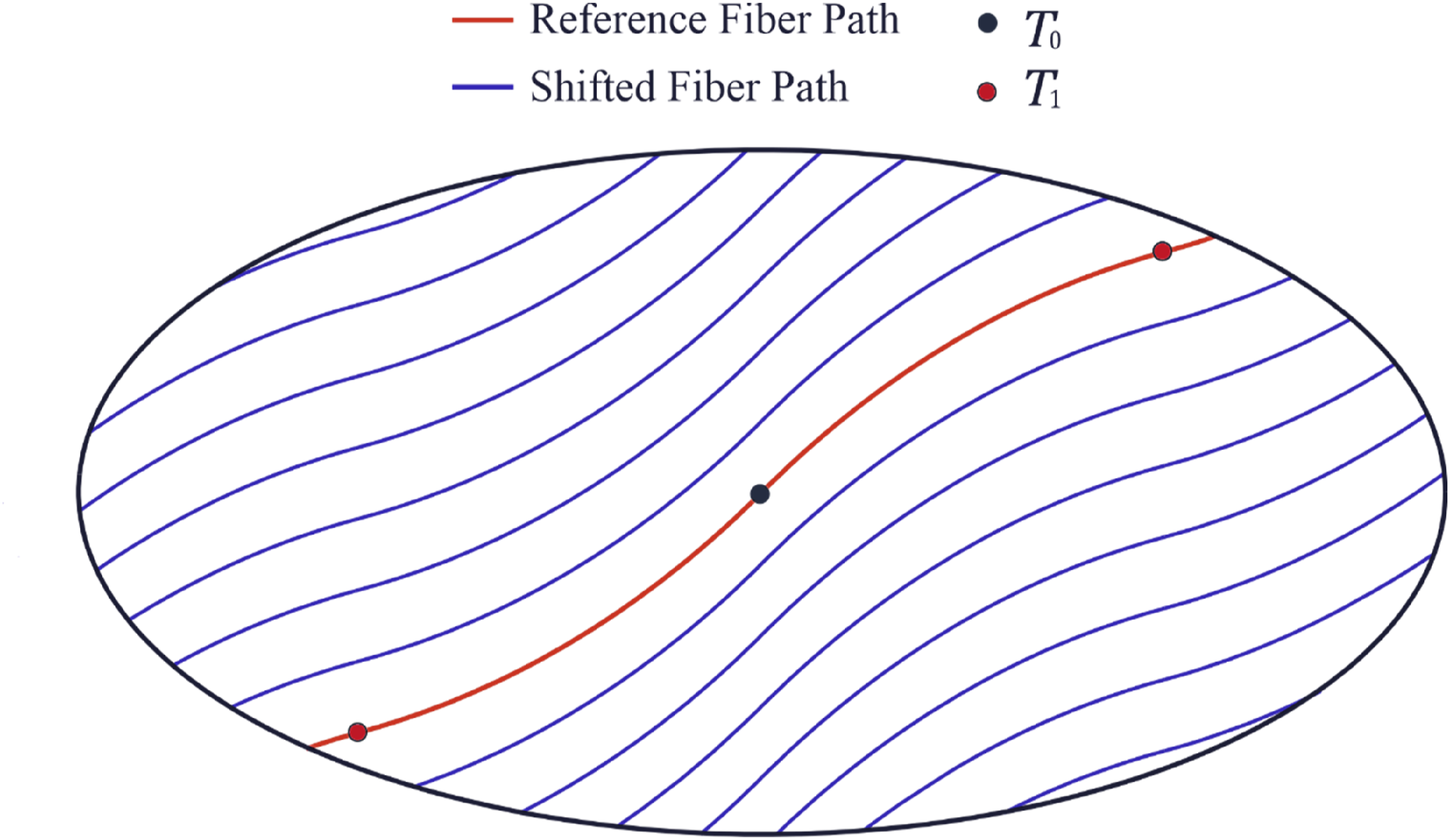
A variable stiffness laminated composite elliptic plate with dimensions Elliptic layer with curvilinear reference fiber path and orientation angles ( Shifted fiber paths of an elliptic layer 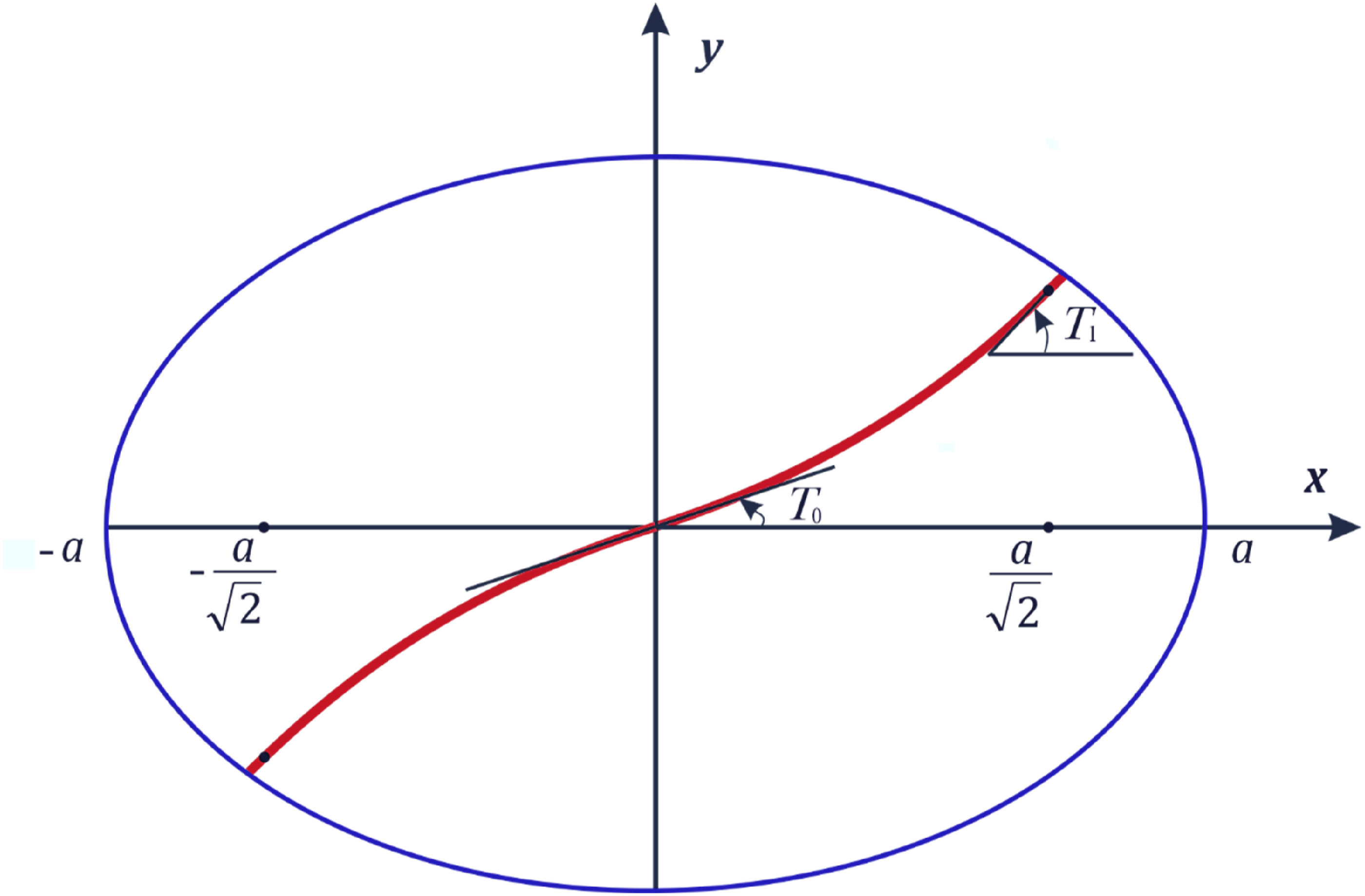
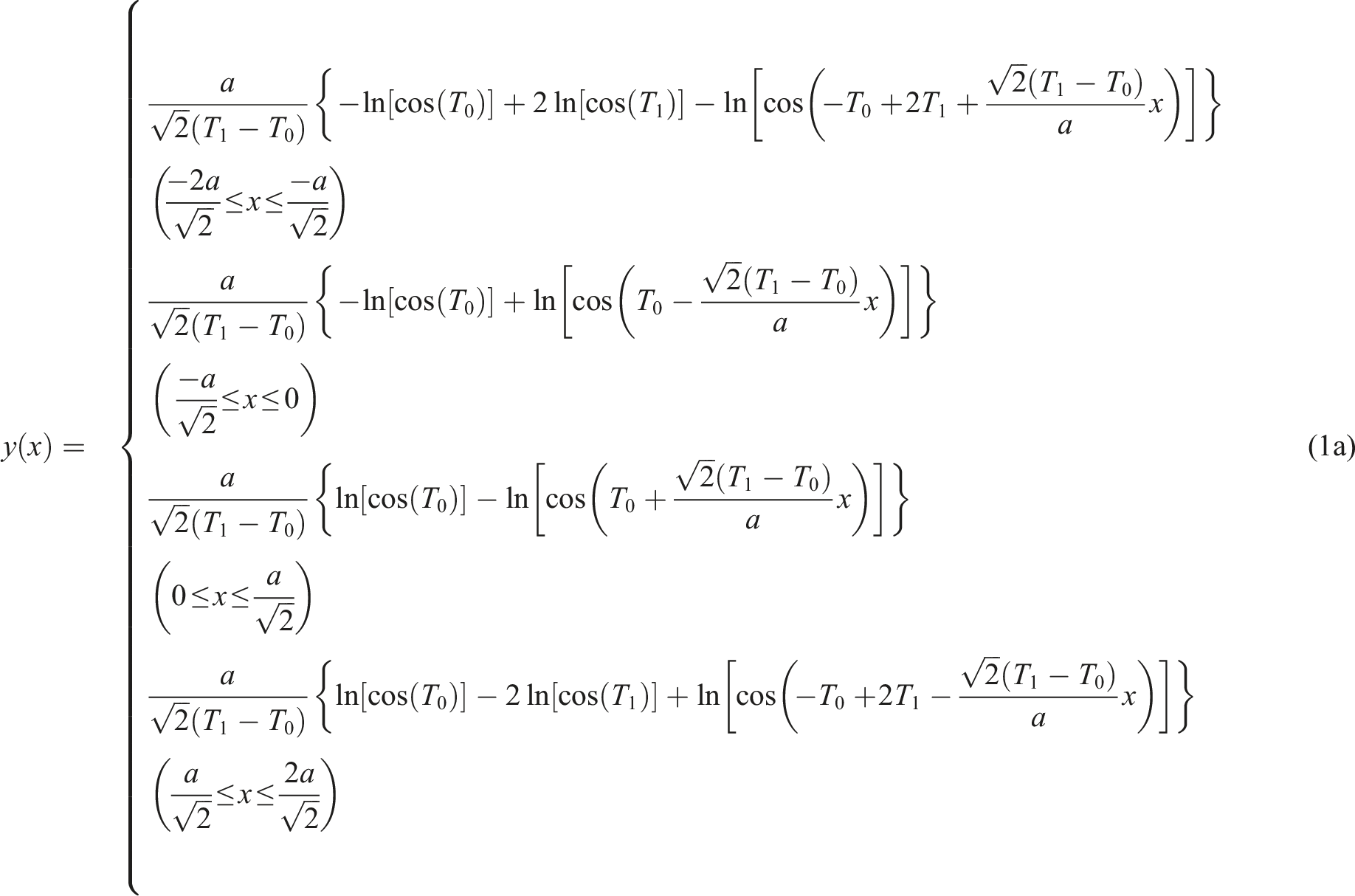
The reference fiber path equation
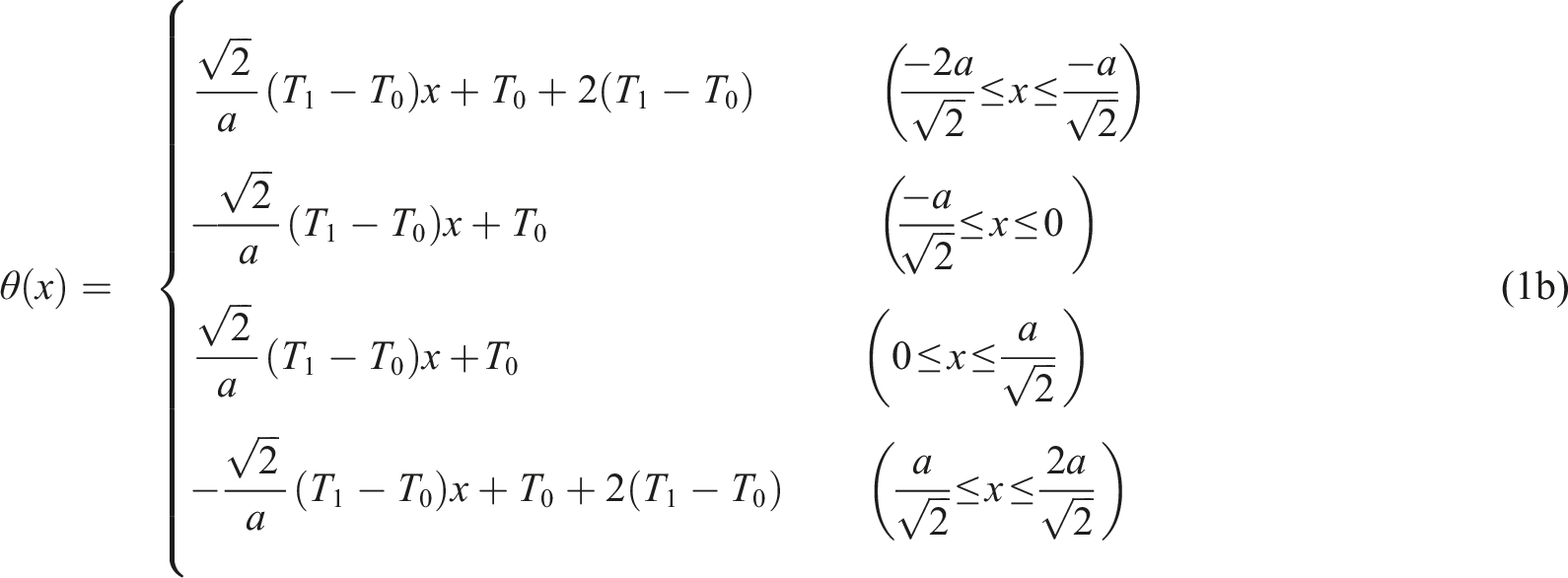
The fiber orientation angles

Figure 3 illustrates curvilinear fiber paths for four different cases ( Curvilinear fiber paths and maximum curvature locations in a VSCL elliptic layer with 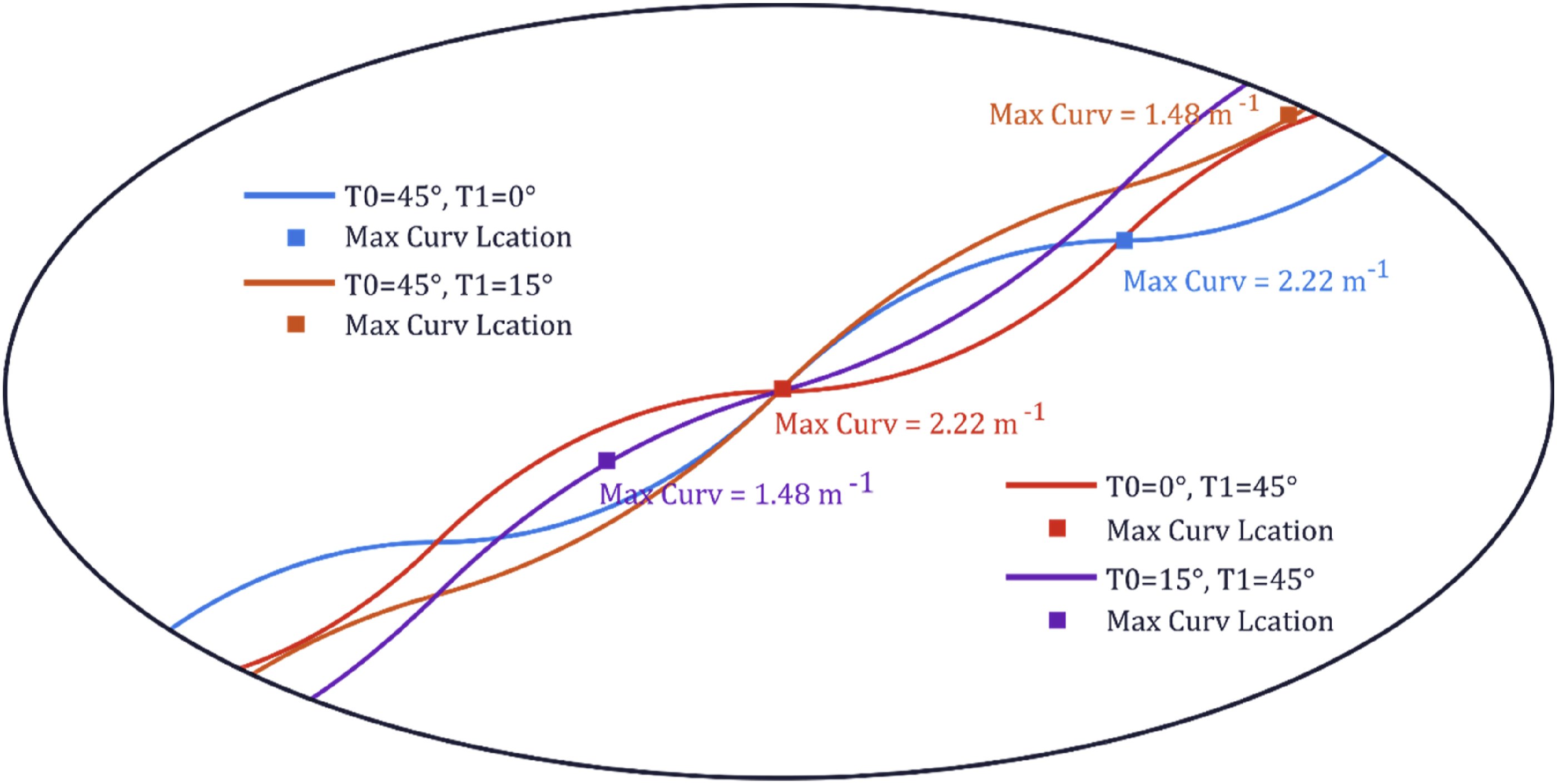
Curved hierarchical finite element model
The stress(
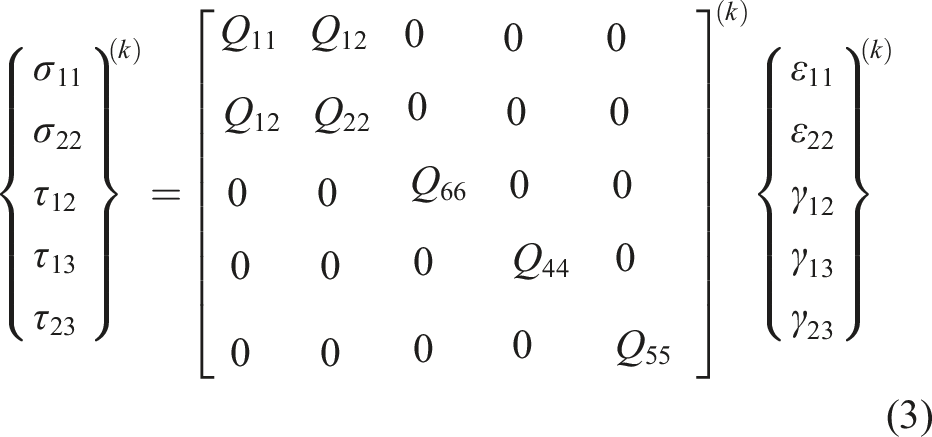







The stresses and strains in the global coordinates are related by:
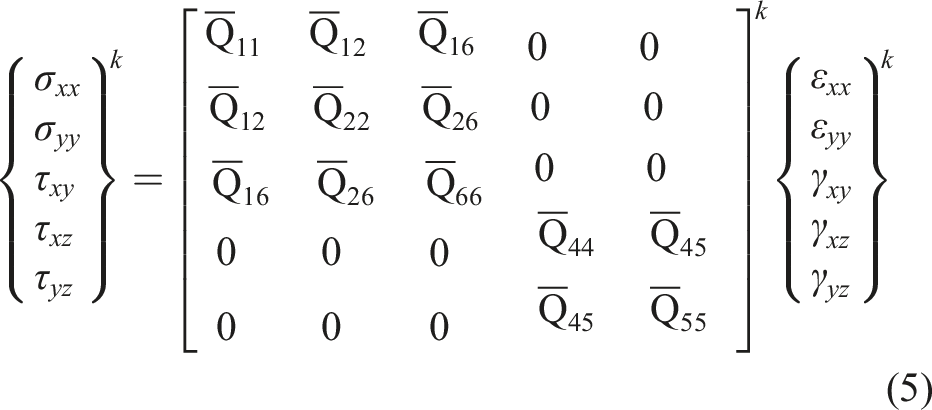
The stiffness coefficients









A curved rectangular p-element is used to discretize the laminated composite elliptic plate, as illustrated in Figure 4. This element is formulated based on FSDT and incorporates high-order polynomial shape functions to improve accuracy in capturing both linear and nonlinear free vibration characteristics of CSCL and VSCL elliptic plates. The coordinates of a vertex Curved rectangular 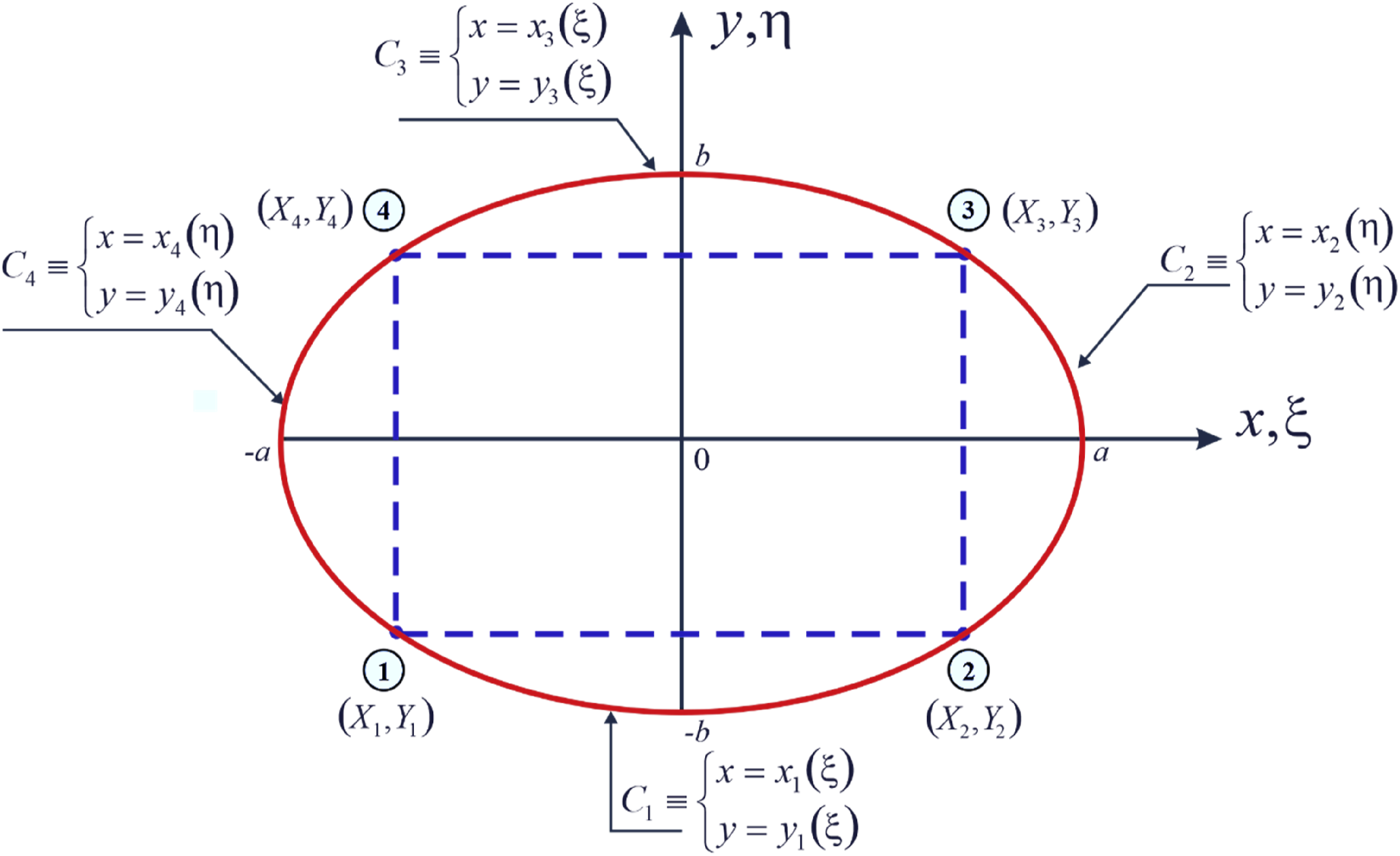
The local and global coordinates are related by:


Based on the FSDT, the displacement fields



According to Von Kármán’s assumptions, the strain-displacement relations are expressed as





Using the curved rectangular p-element, the transverse displacements and rotations of cross-sections about the





The shape functions





Using the blending function method, the curved sides of the hierarchical rectangular finite element will be expressed in the parametric forms:


The mapping functions for the elliptic shape are expressed as:
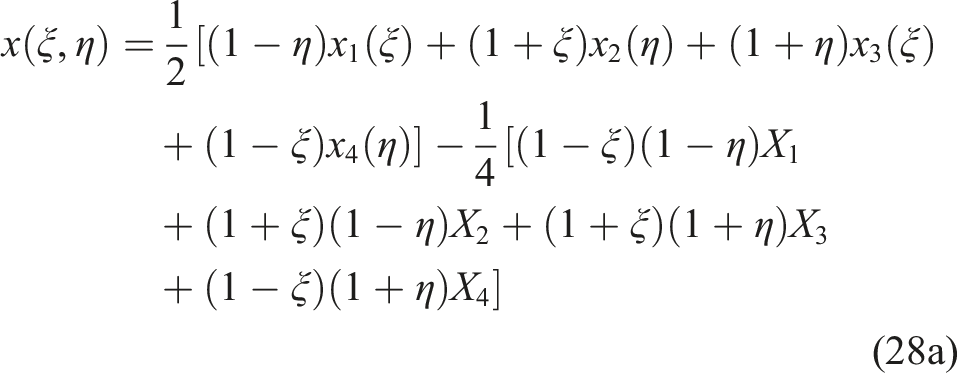
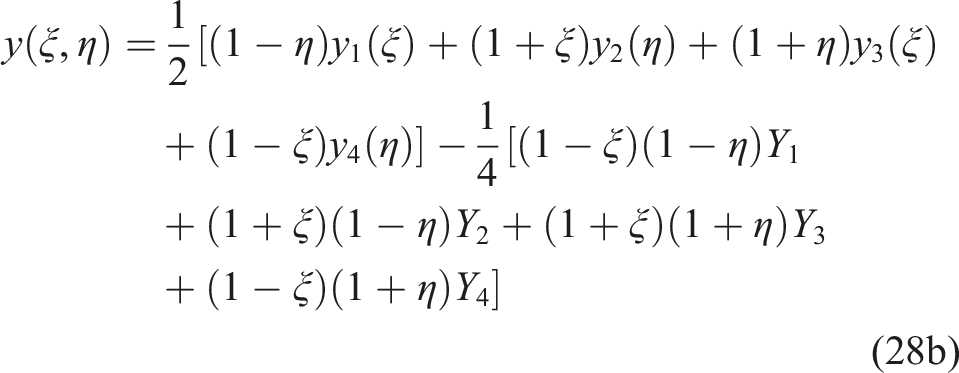
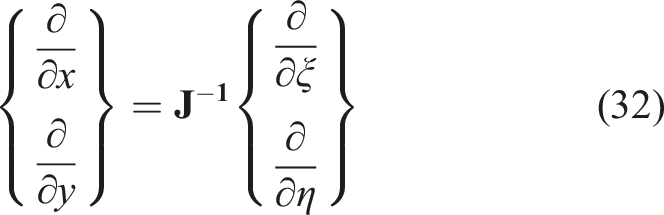
The derivatives with respect to local and global coordinates are related by
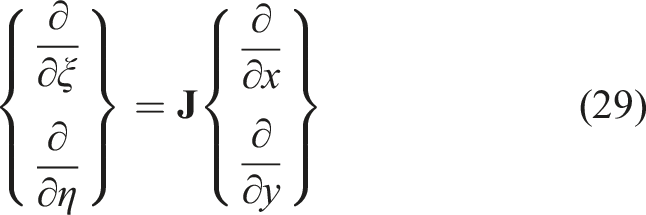
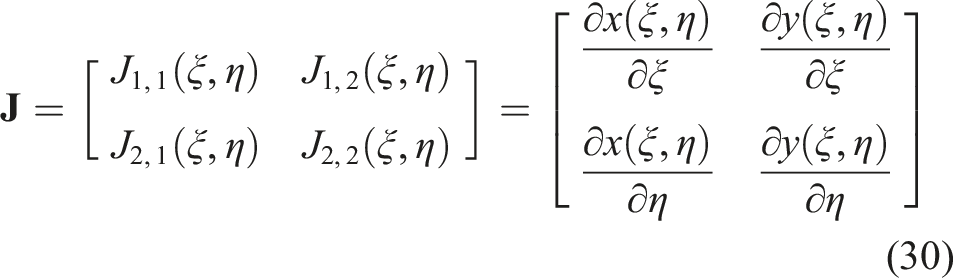
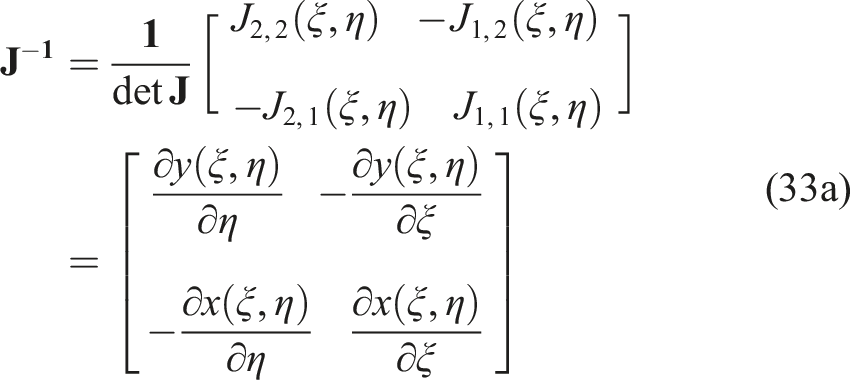
The Jacobian matrix
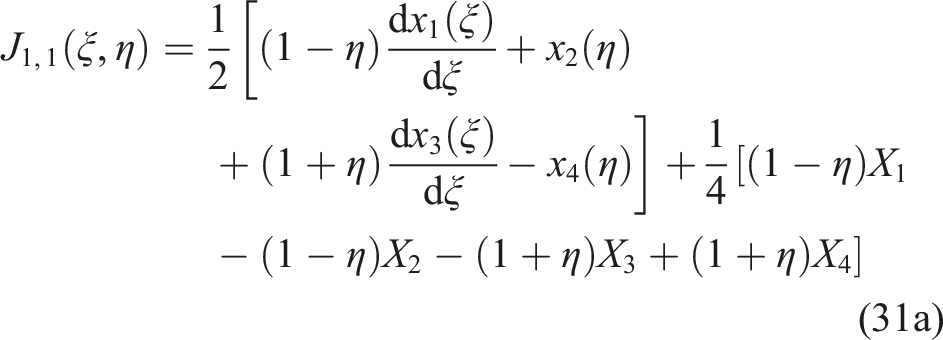
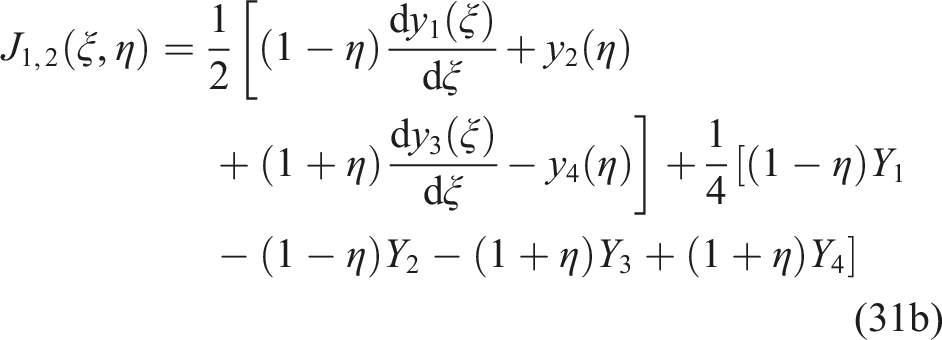
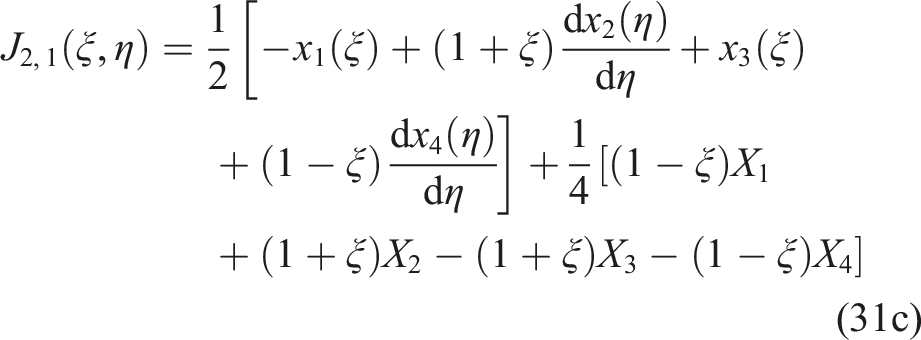
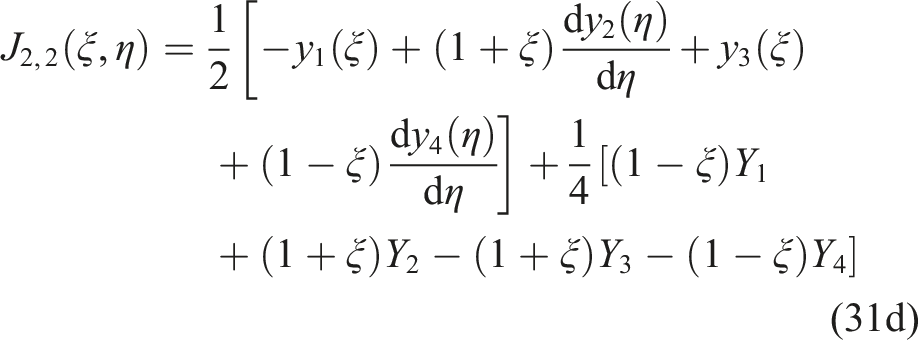

The strain energy
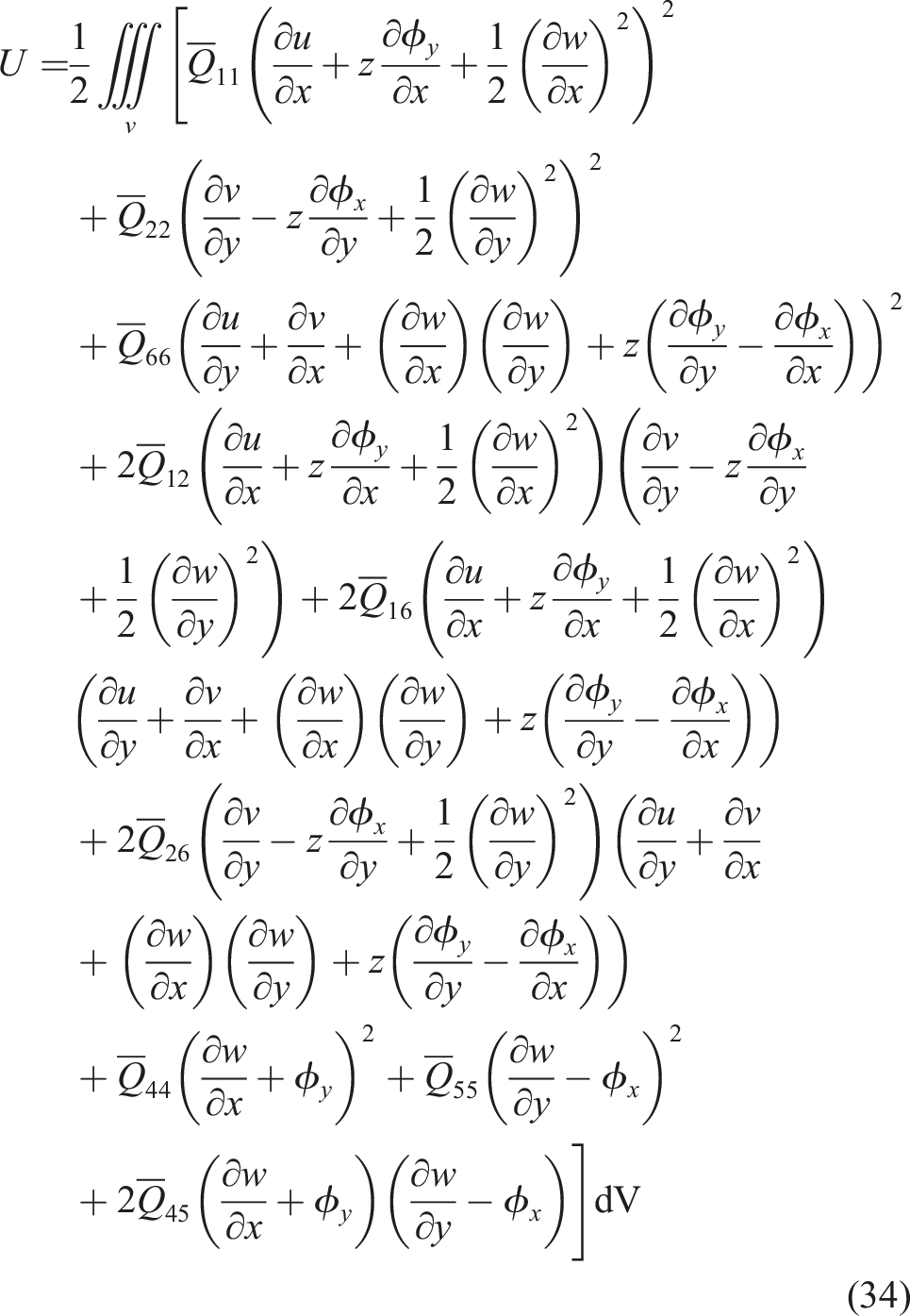
The strain energy
The kinetic energy
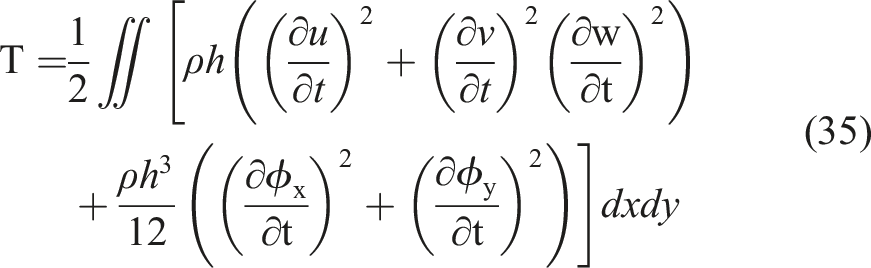
The Lagrange equations of free motion are given by: (35)
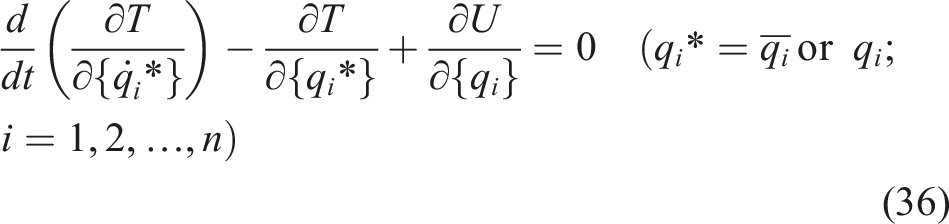
By substituting equations (17)–(21) into equations (34) and (35), and subsequently into equation (36), yields the following equations of free motion:


Here,

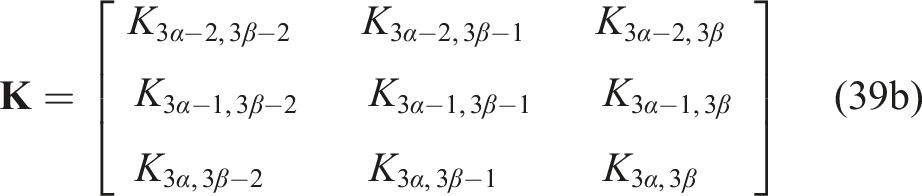

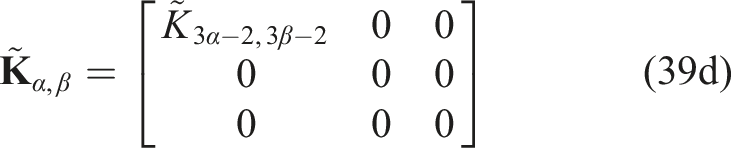

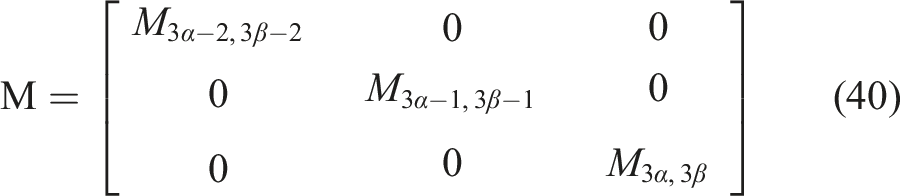

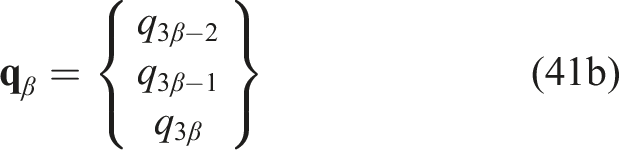

The non-zero coefficients of the matrices
Applying boundary conditions by ignoring the lines and columns associated with restrained degrees of freedom, the equations of free motion are formulated as follows:


Since the plate edges are fixed in the plane, the in-plane displacements are negligible compared to the out-of-plane displacement. Consequently, the in-plane inertia can be ignored, simplifying equation (43) to:

Inserting equations (45) into (44) yields:

The stiffness matrices
Periodic motion is assumed,

Inserting equations (47) into (45) yields an equation of the form:

By applying the harmonic balance method and integrating over the period, the following equation is obtained:
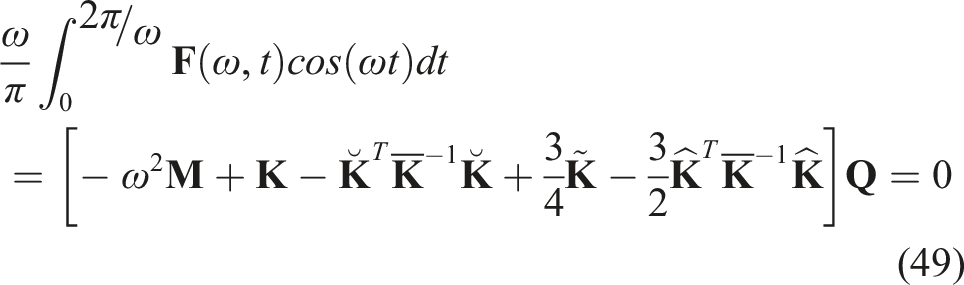
The stiffness matrix
The nonlinear solution procedure for the free vibration analysis of composite elliptic laminates is clearly illustrated in the flowchart (Figure 5). The nonlinear generalized eigenvalue problem is solved iteratively using the linearized updated mode method. In the first iteration, the displacement vector is initialized as Flowchart of the iterative solution procedure for geometrically nonlinear free vibration analysis of composite laminated elliptic plates.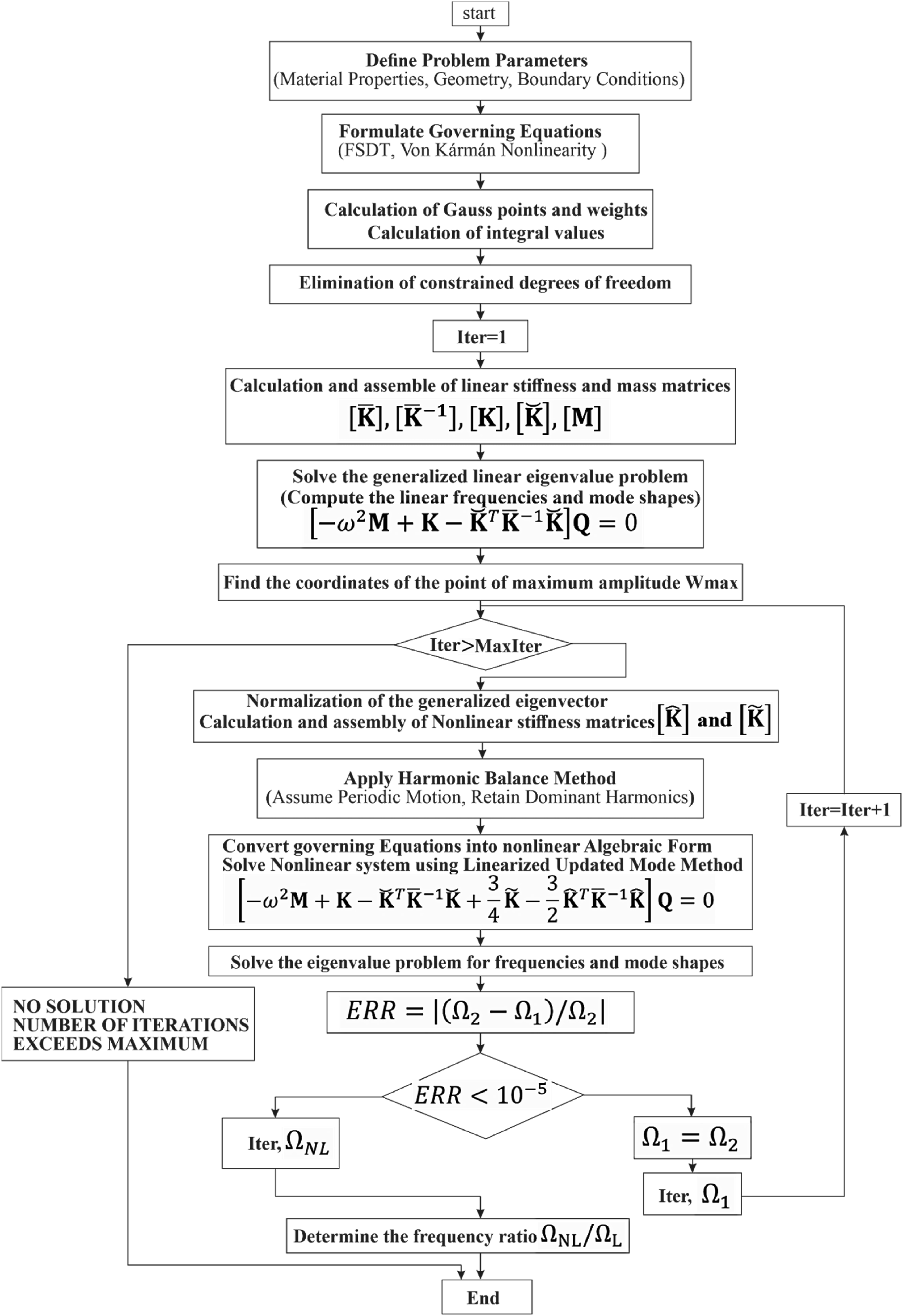
The maximum amplitude

Convergence is assessed based on a predefined error criterion (e.g.,
Results and discussions
Mechanical properties of composite materials.

Validation of the curved rectangular
-element for geometrically nonlinear vibration
To validate the accuracy and effectiveness of the current curved
The results obtained were compared with existing solutions for linear free vibration of symmetric and antisymmetric CSCL elliptic plates with clamped and simply supported boundary conditions. Additionally, comparisons were made with available solutions for the geometrically nonlinear free vibration of isotropic and orthotropic elliptic plates. Convergence tests were performed by incrementally increasing the degree
Tables 2 and 3 present the first five linear modes for simply supported symmetric and clamped antisymmetric 4-layer composite laminated elliptic plates with • For symmetric 4-layer CSCL laminates, denoted as • For symmetric 4-layer VSCL ( Convergence and comparison of the linear frequency parameter Convergence and comparison of the linear frequency parameter
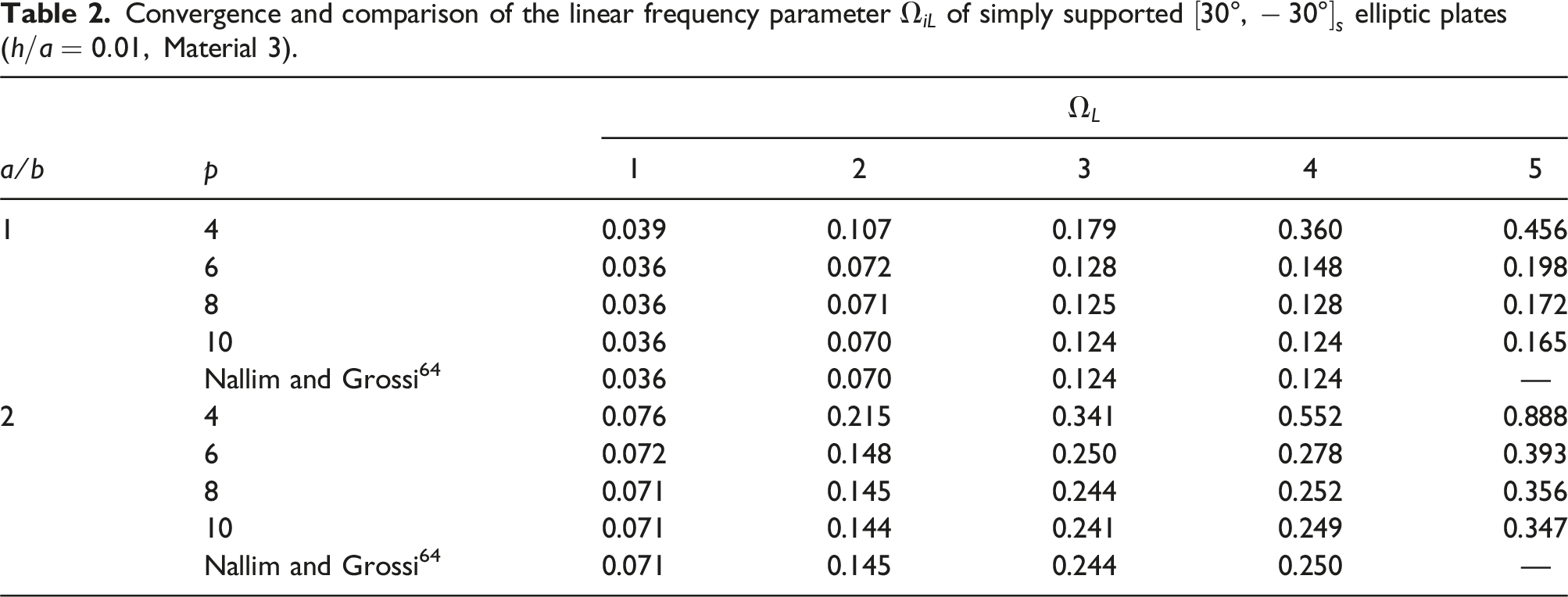
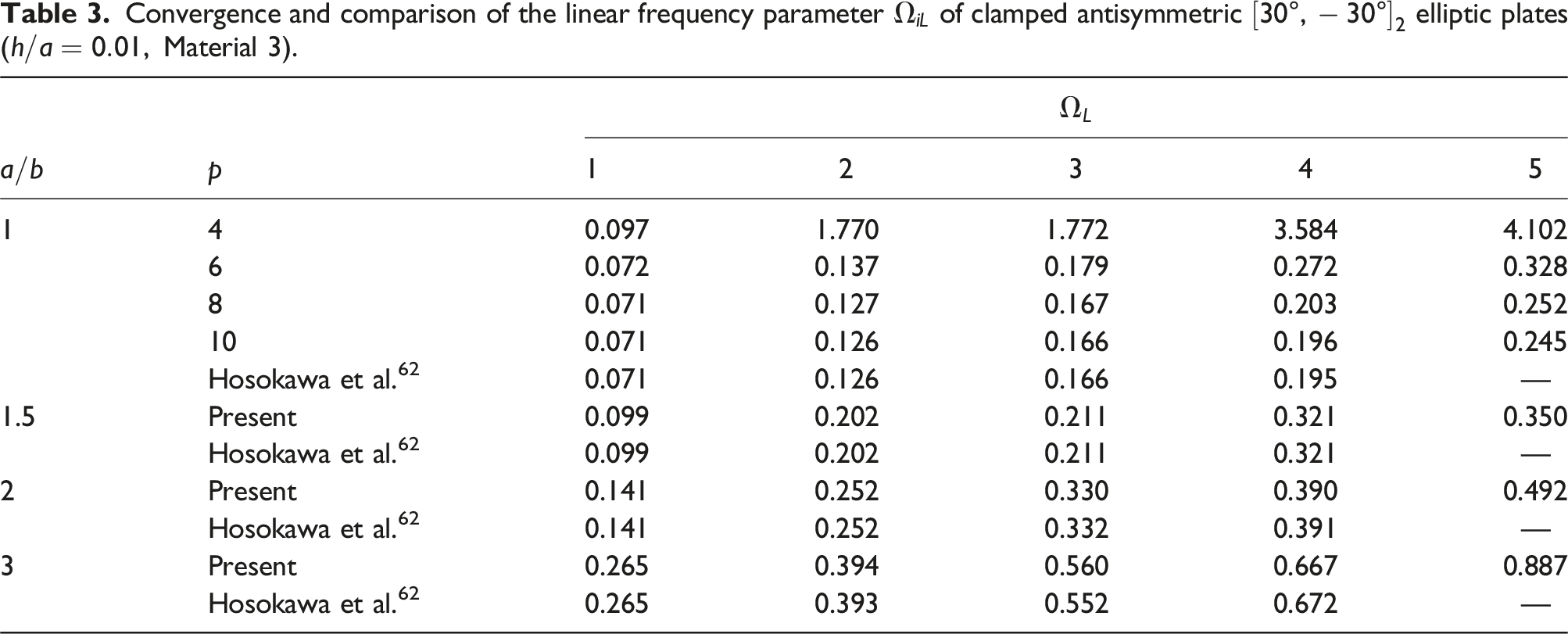
The results demonstrate a clear pattern of rapid downward convergence as the order of shape functions increases. Frequencies calculated with an order of
It’s worth mentioning that the literature lacks investigations on the nonlinear free vibration of CSCL elliptic plates. Therefore, comparisons in this study are primarily focused on the nonlinear free vibrations of isotropic and orthotropic circular and elliptic plates.
Convergence and comparison of the nonlinear-to-linear frequency ratio
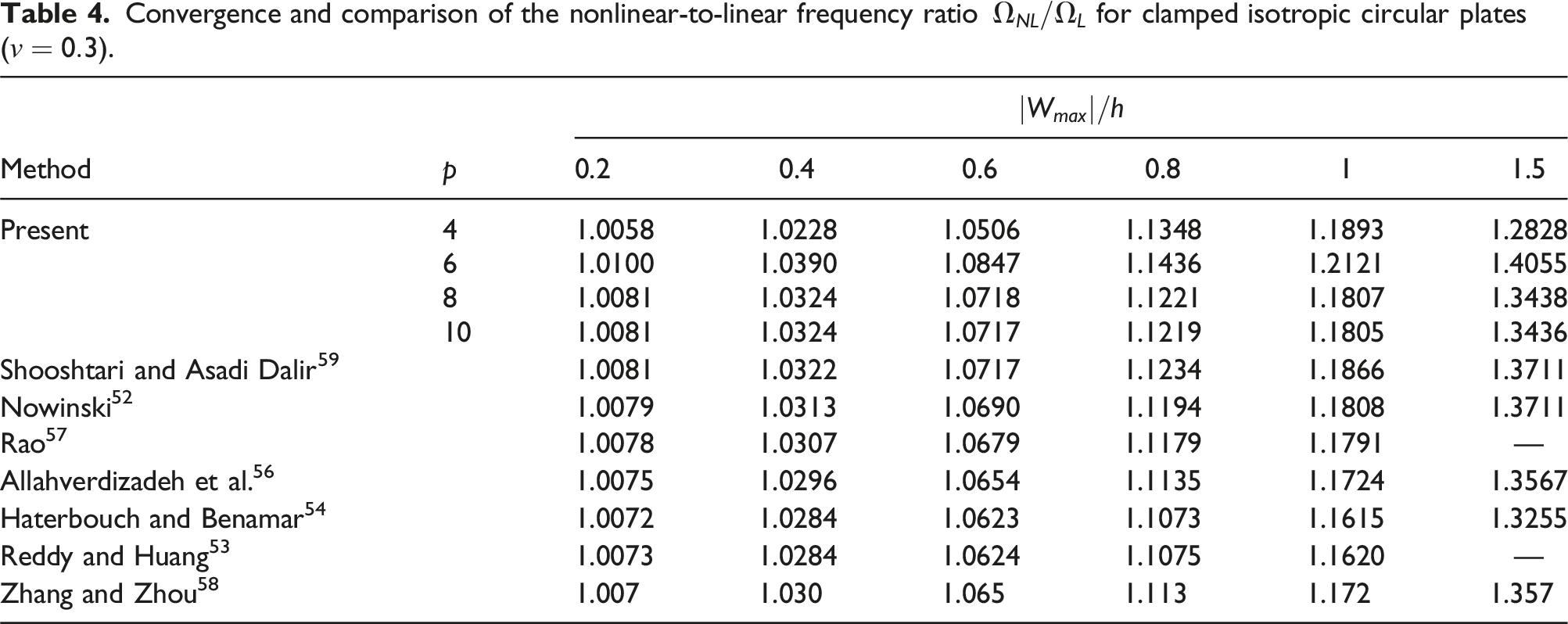
Convergence and comparison of the nonlinear-to-linear frequency ratio
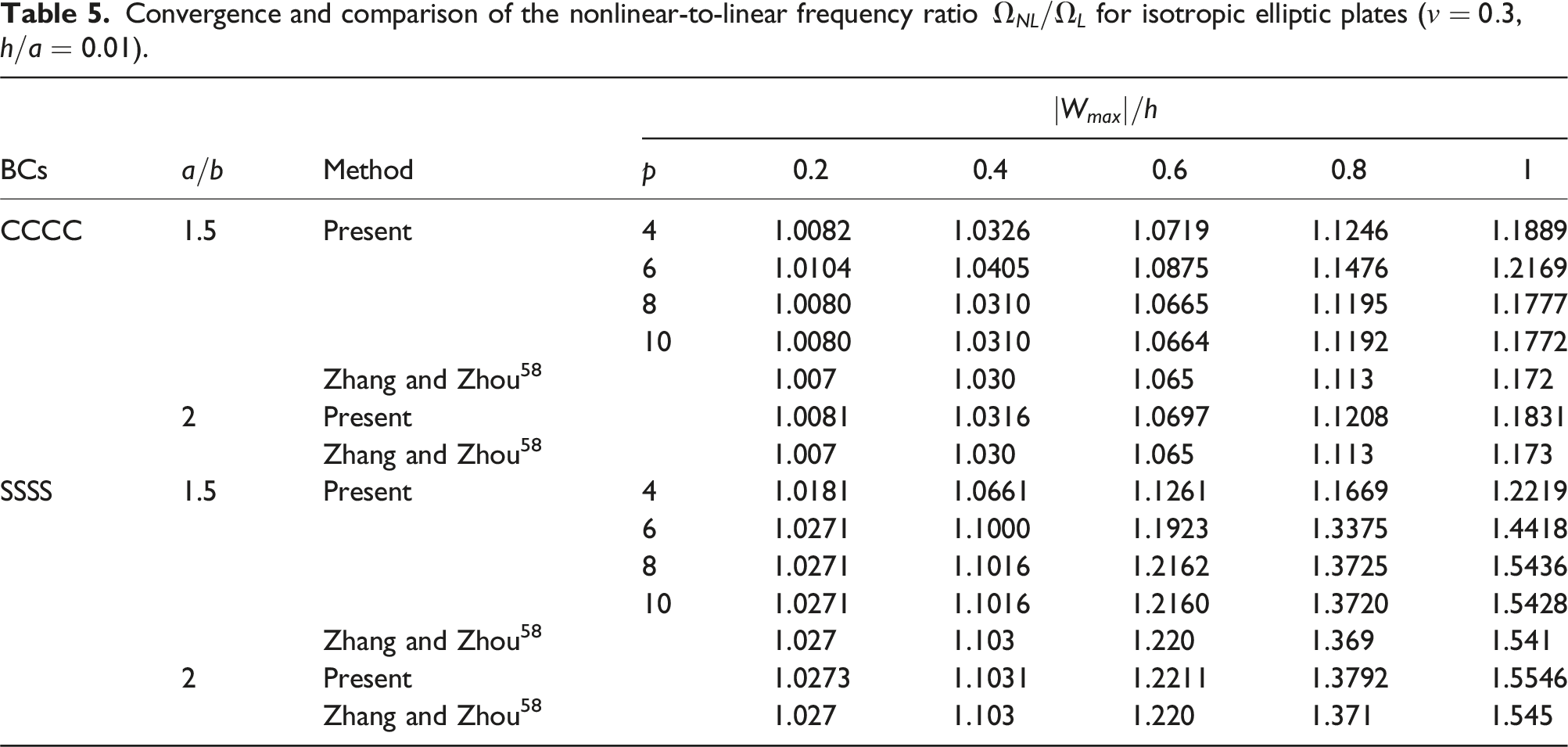
A rapid convergence is observed as
Figure 6 presents the nonlinear-to-linear frequency ratio Comparison of the nonlinear-to-linear frequency ratio for clamped orthotropic elliptic plates.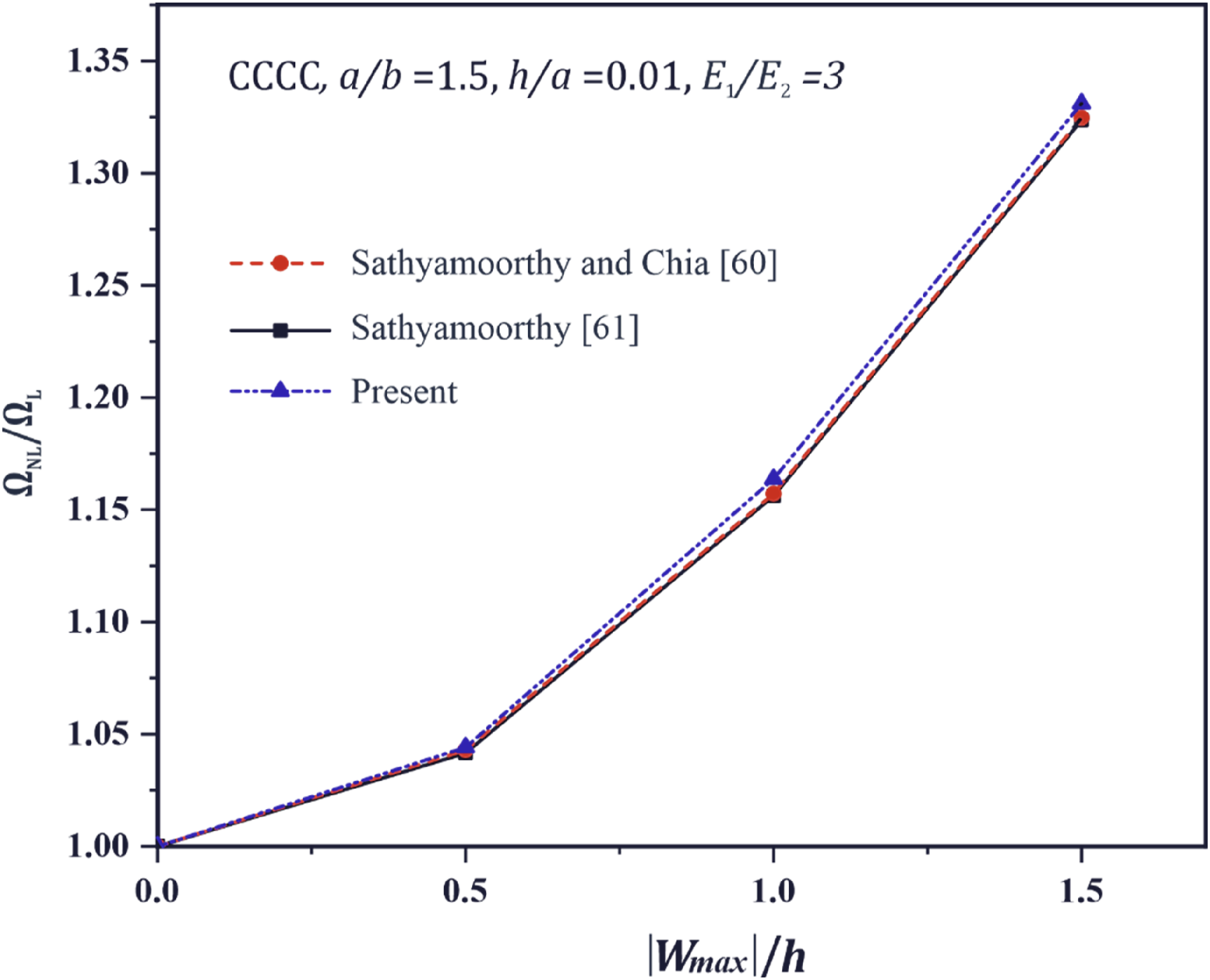
Parametric study
Following the validation of the curved rectangular
Nonlinear vibration behavior of CSCL elliptic plates
Nonlinear-to-linear frequency ratio
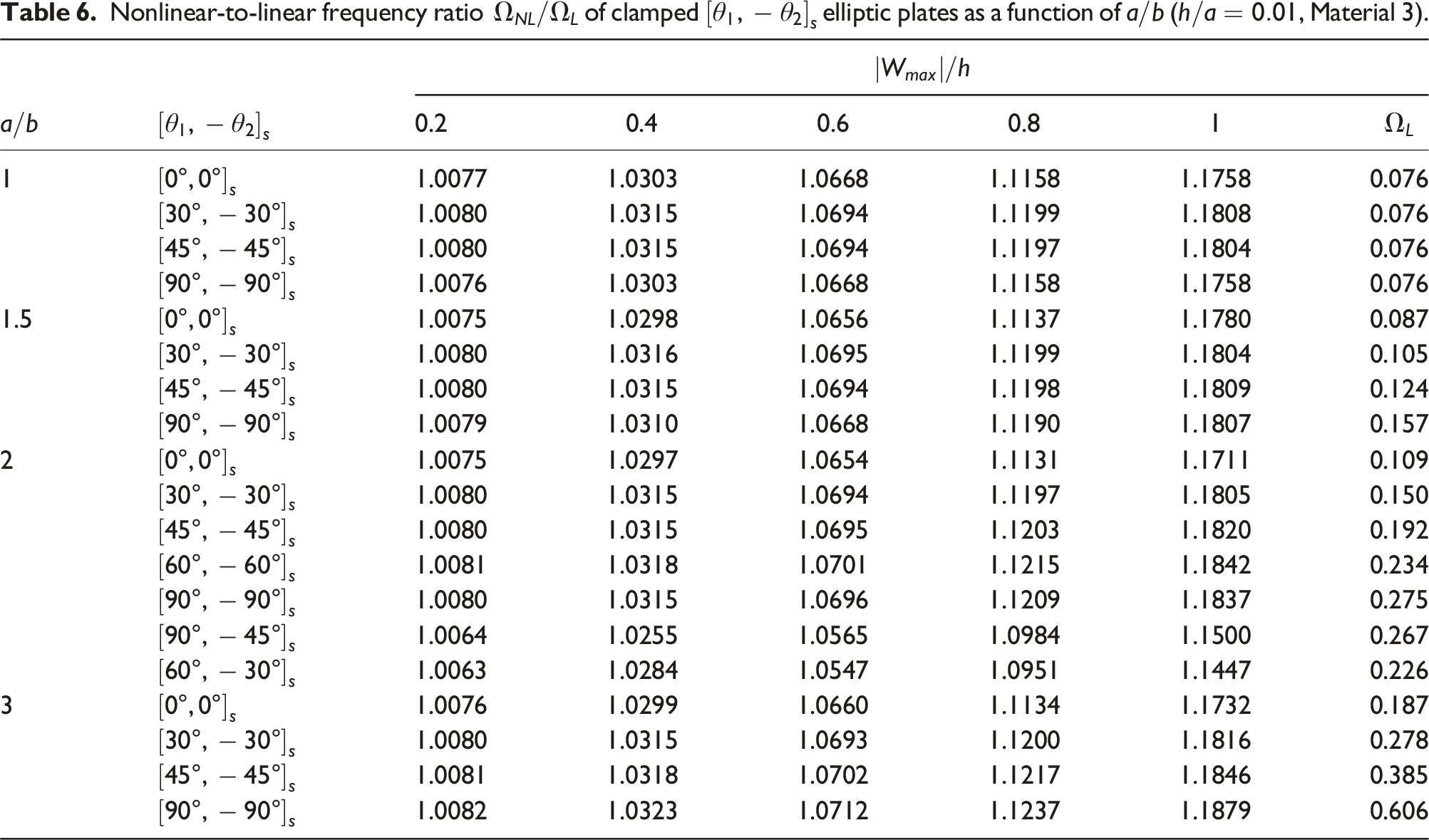
Nonlinear-to-linear frequency ratio
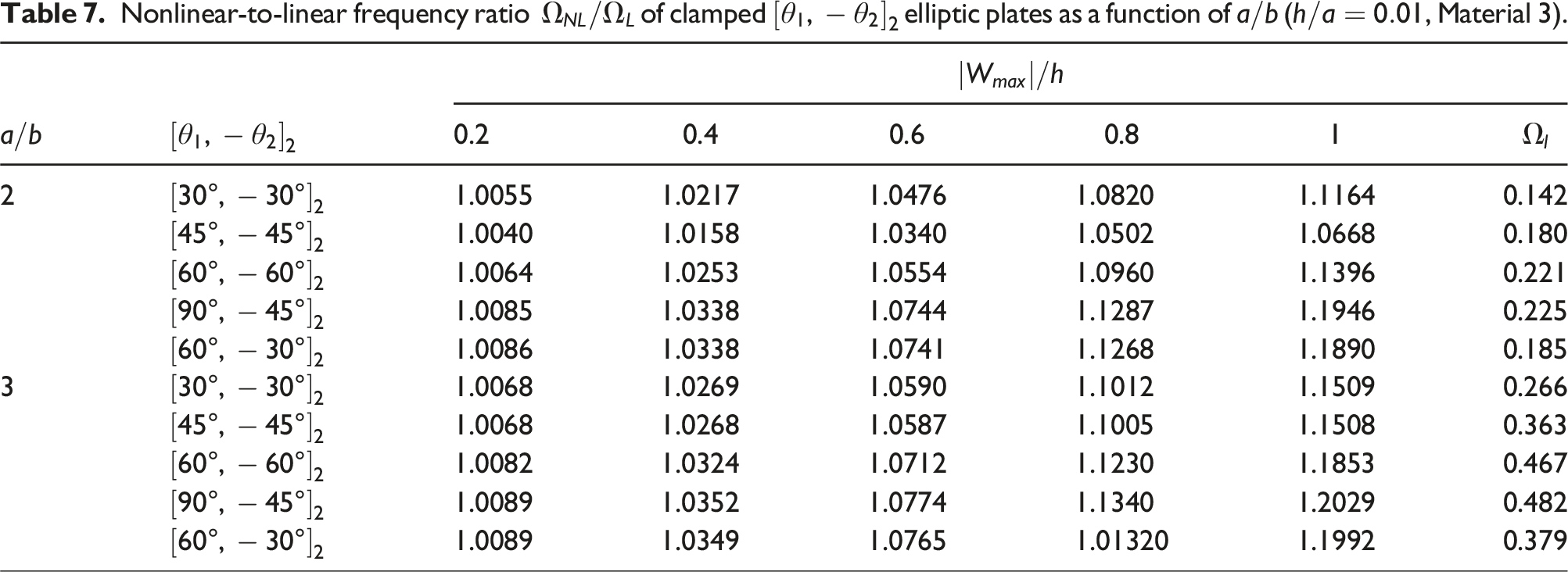
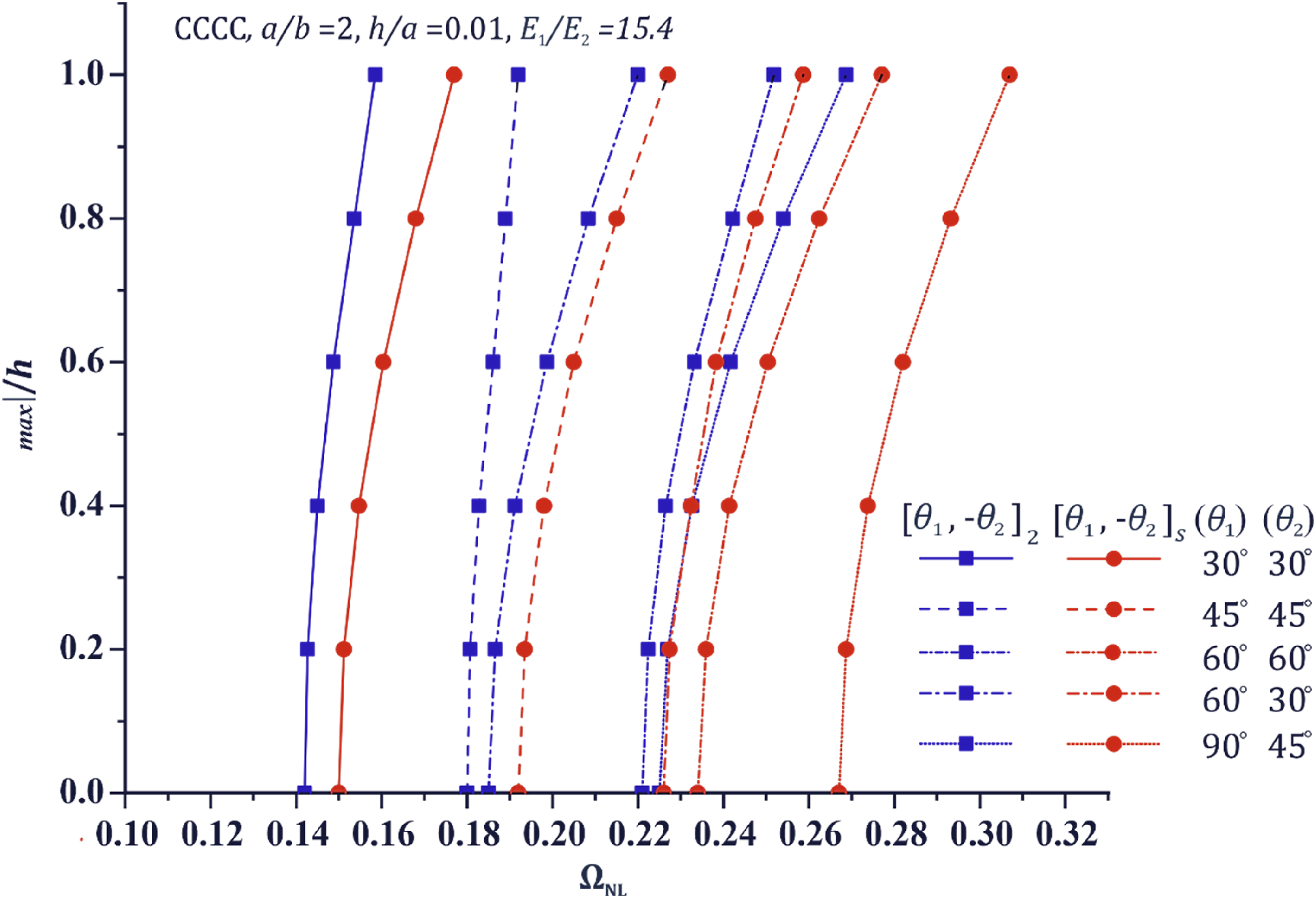
Fundamental backbone curves for clamped symmetric and antisymmetric elliptic laminates.
The results show that nonlinear frequency parameters increase with an increasing of the aspect ratio, which is attributed to the reduced cross-sectional area of the plate as the aspect ratio increases. The stacking sequences also have an impact on the nonlinear frequency, as illustrated in the tables. The comparison revealed that symmetric laminates exhibit a higher degree of hardening behavior than antisymmetric laminates that have the same orientation angle
Nonlinear-to-linear frequency ratio
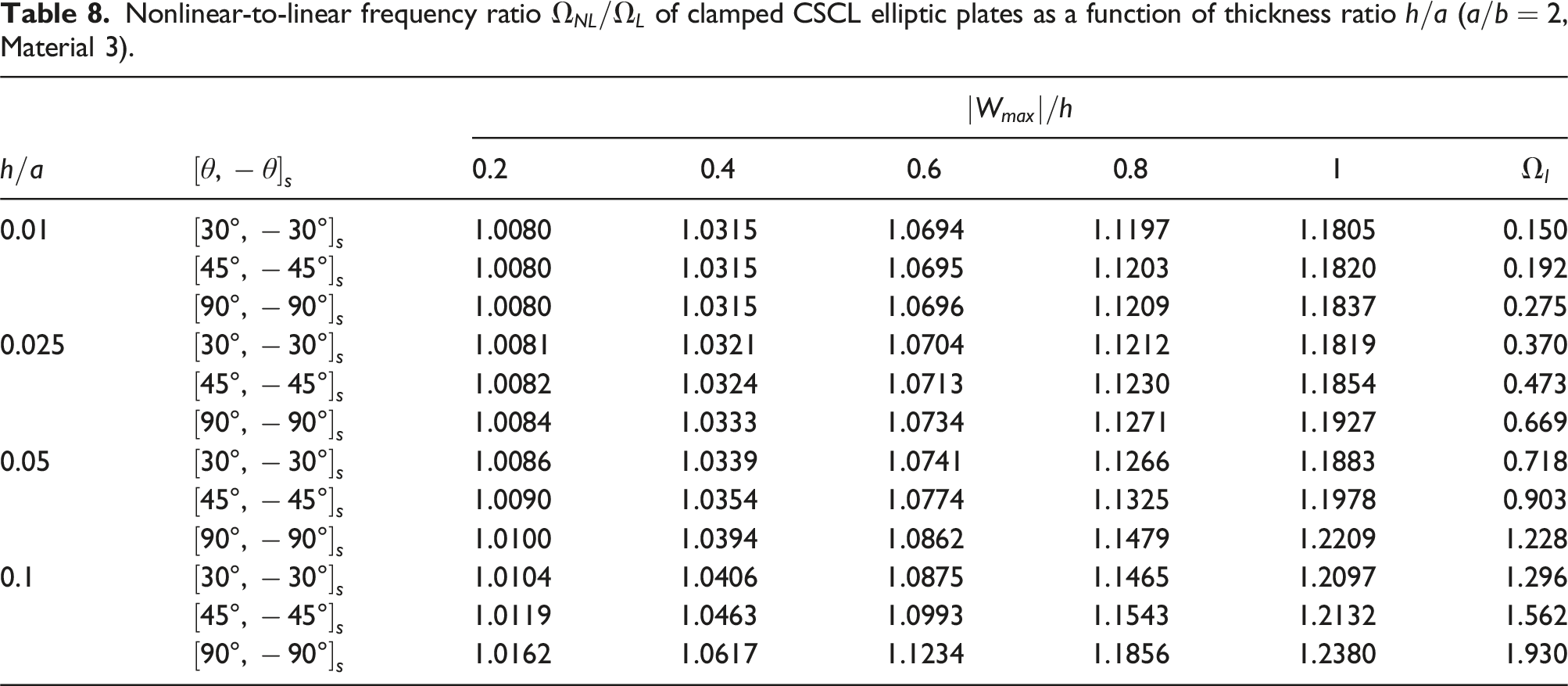
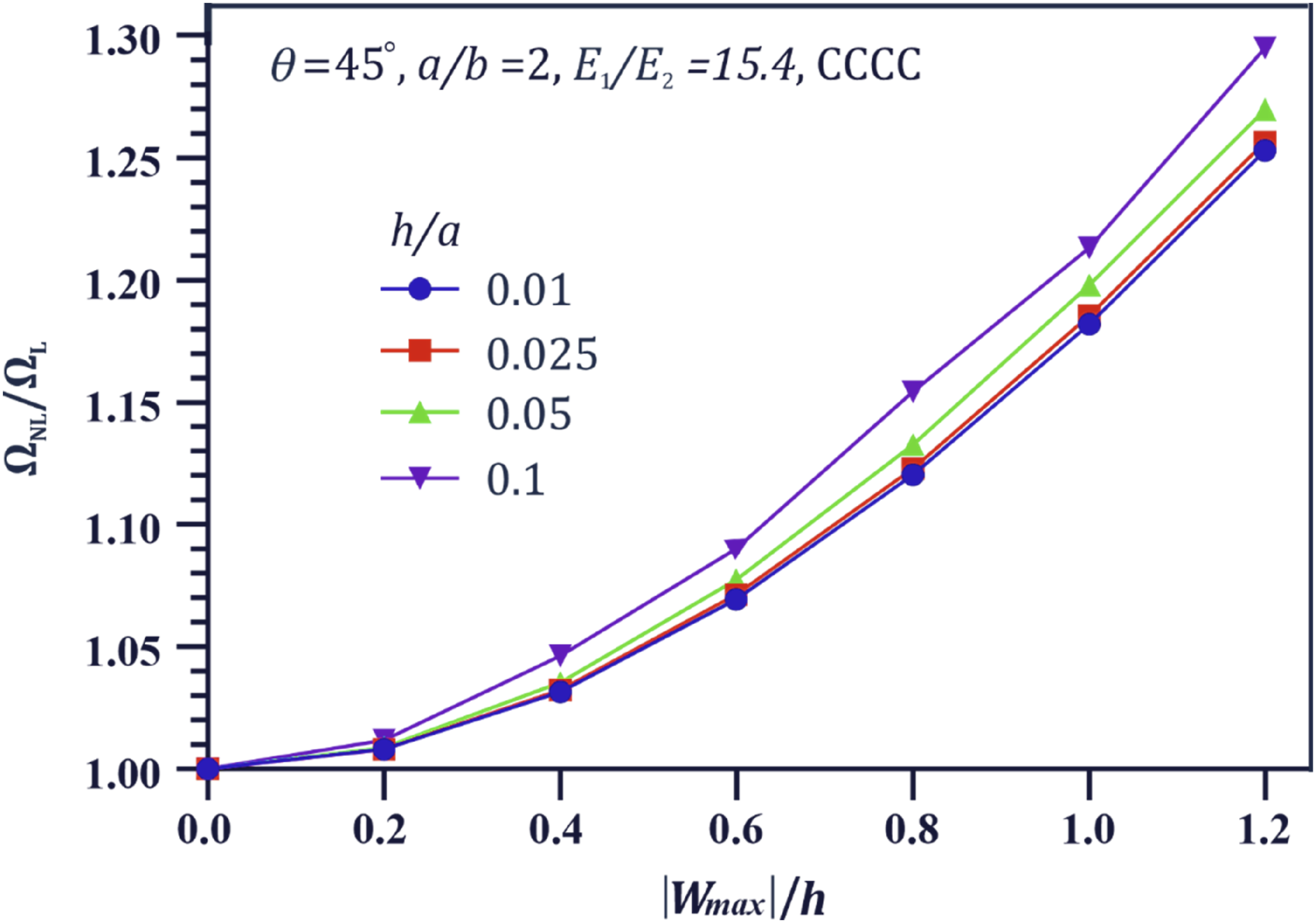
Effect of thickness ratio on the nonlinear-to-linear frequency parameter of clamped
Figure 9 shows the influence of the number of layers Effect of the number of layers on the nonlinear-to linear frequency parameter of clamped symmetric elliptic plate with 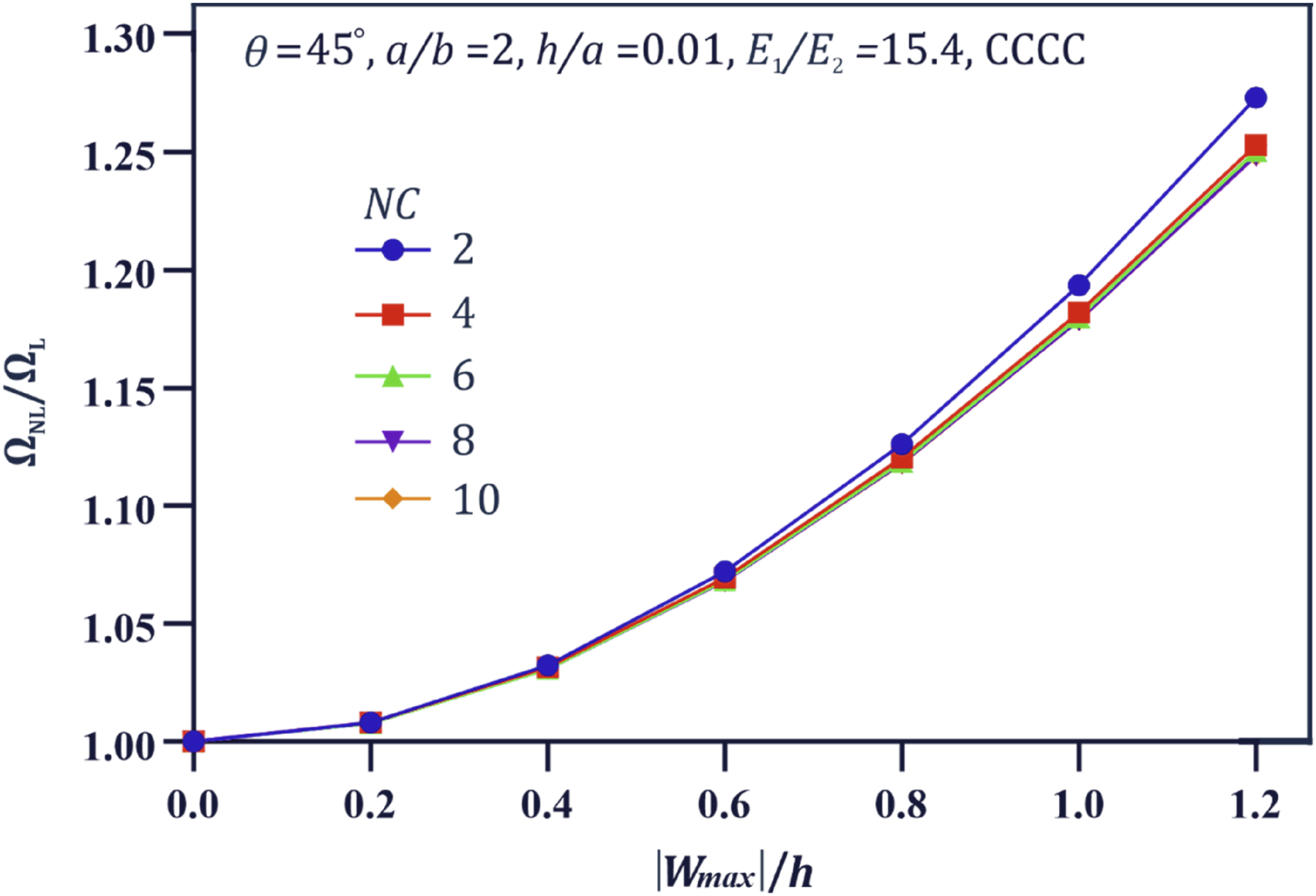
In this analysis, the number of layers is varied while maintaining a constant overall thickness. Since bending rigidity is directly proportional to the thickness of the laminate, increasing the thickness leads to higher natural frequencies. Therefore, changing the number of layers without changing the thickness has minimal impact on the natural frequencies. For this reason, the effect of the number of layers will not be considered in the analysis of VSCL elliptic plates.
Figure 10 shows the nonlinear-to-linear frequency ratios for symmetric 4-layer CSCL elliptic plates with clamped and simply supported boundary conditions. In this study, we focus on clamped and simply supported boundary conditions because they are among the most commonly used constraints in engineering applications, particularly in aerospace, automotive, and structural design. These boundary conditions represent two extreme cases: clamped conditions, which provide maximum constraint, and simply supported conditions, which allow free edge rotation, enabling a comprehensive analysis of the structural response. The mechanical parameters of Material 3 were applied. The thickness ratio and aspect ratio are taken as Effect of clamped and simply supported boundary conditions on the nonlinear-to linear frequency parameter of 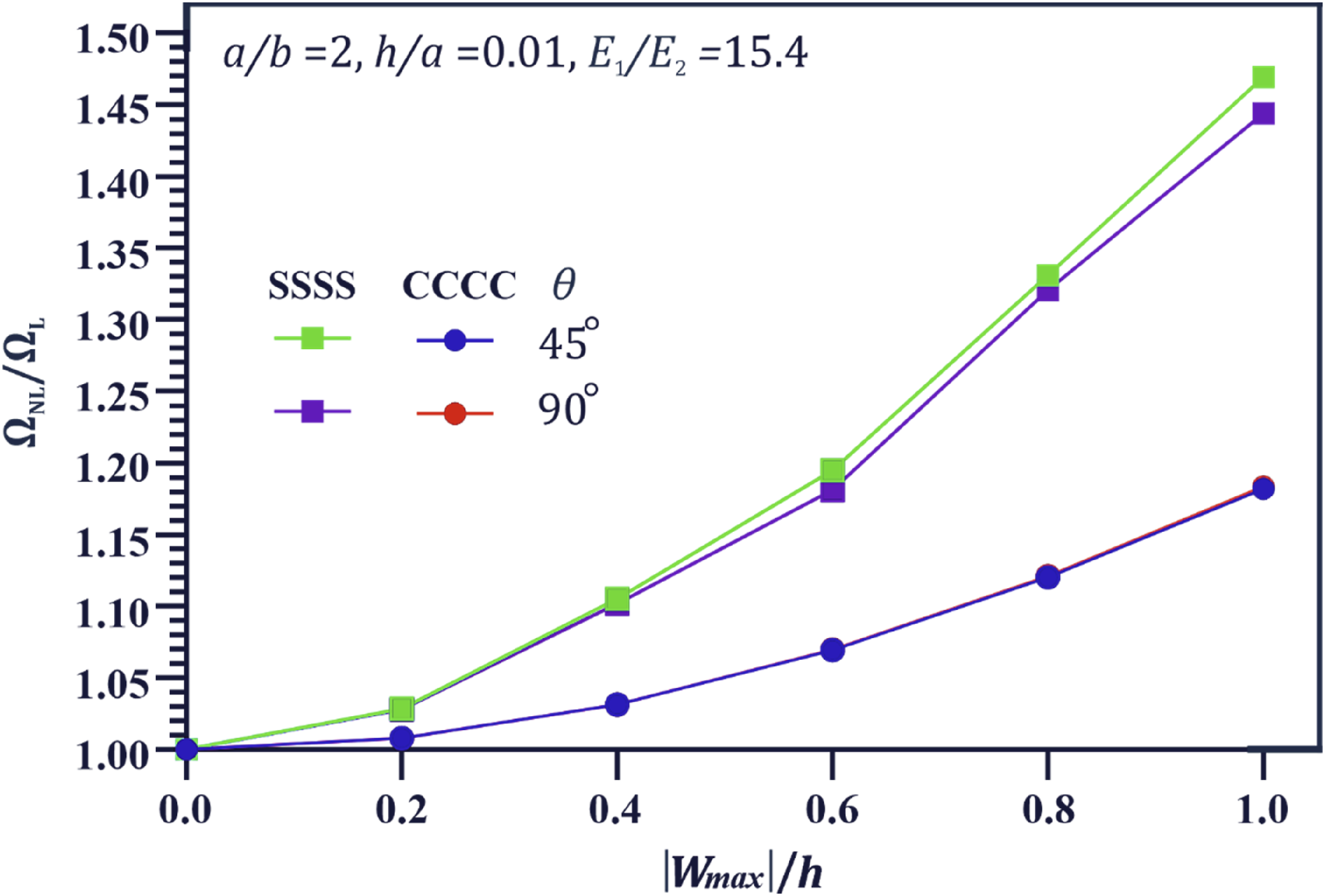
Figure 11 shows the effect of the modulus ratio Effect of the modulus ratio 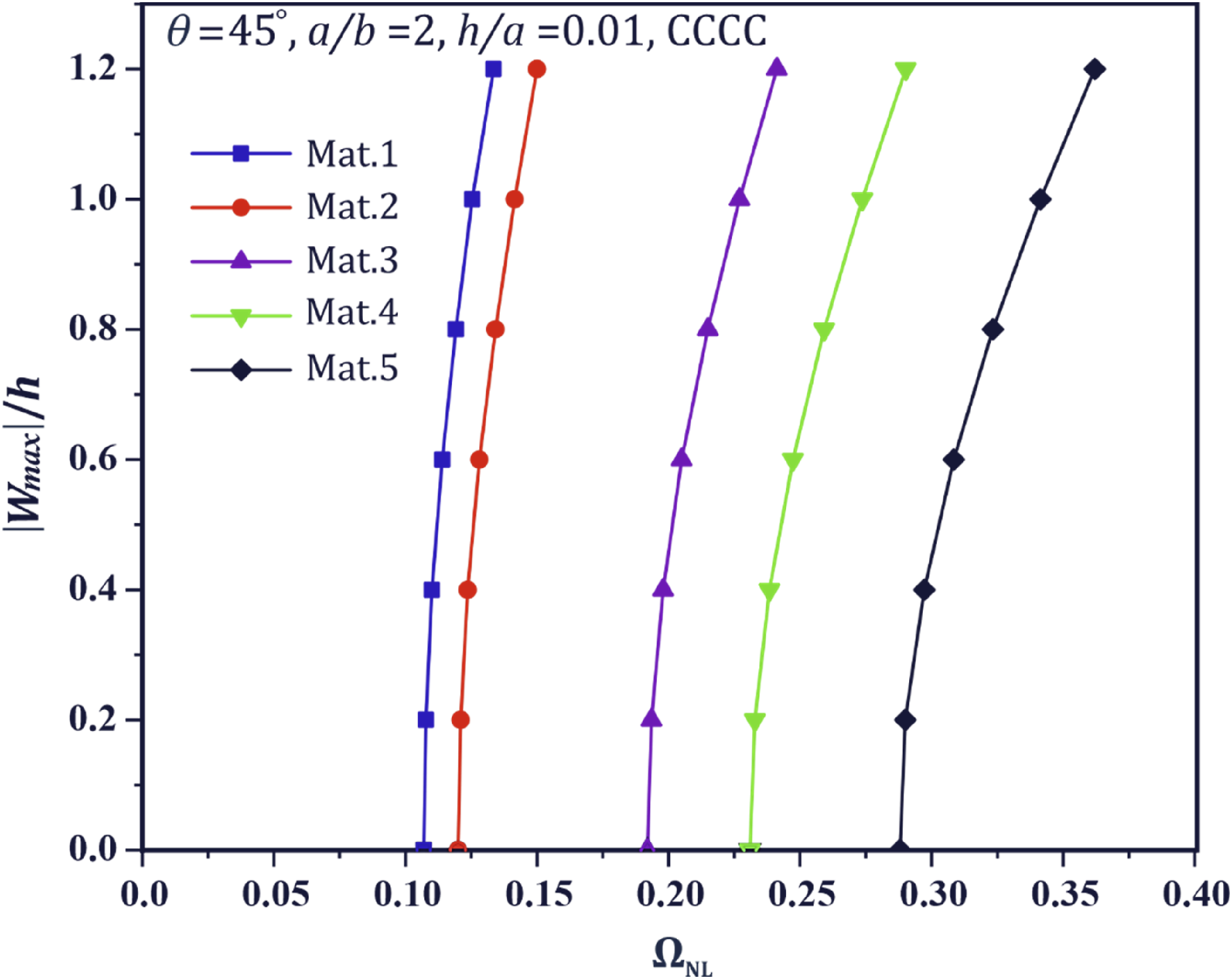
Nonlinear vibration behavior of VSCL elliptic plates
This section investigates the nonlinear vibrational behavior of VSCL elliptic plates under the influence of various parameters. Studying the nonlinear vibrational behavior of such structures provides important insights into their dynamic performance, demonstrating how factors such as aspect ratio, thickness ratio, fiber orientation angles, boundary conditions, and material properties affect their nonlinear dynamic response.
Figure 12(a) and (b) show the fundamental backbone curves of clamped Fundamental backbone curves showing the effect of fiber orientation angles (a) 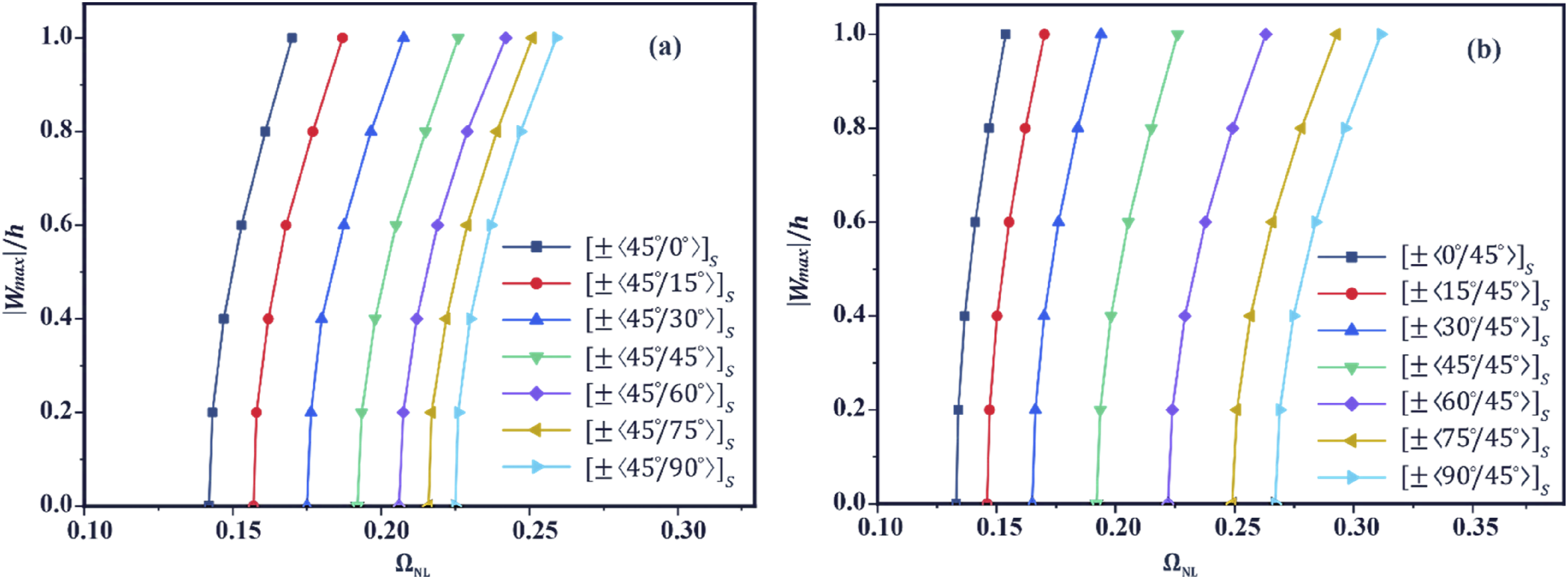
Nonlinear-to-linear frequency ratio
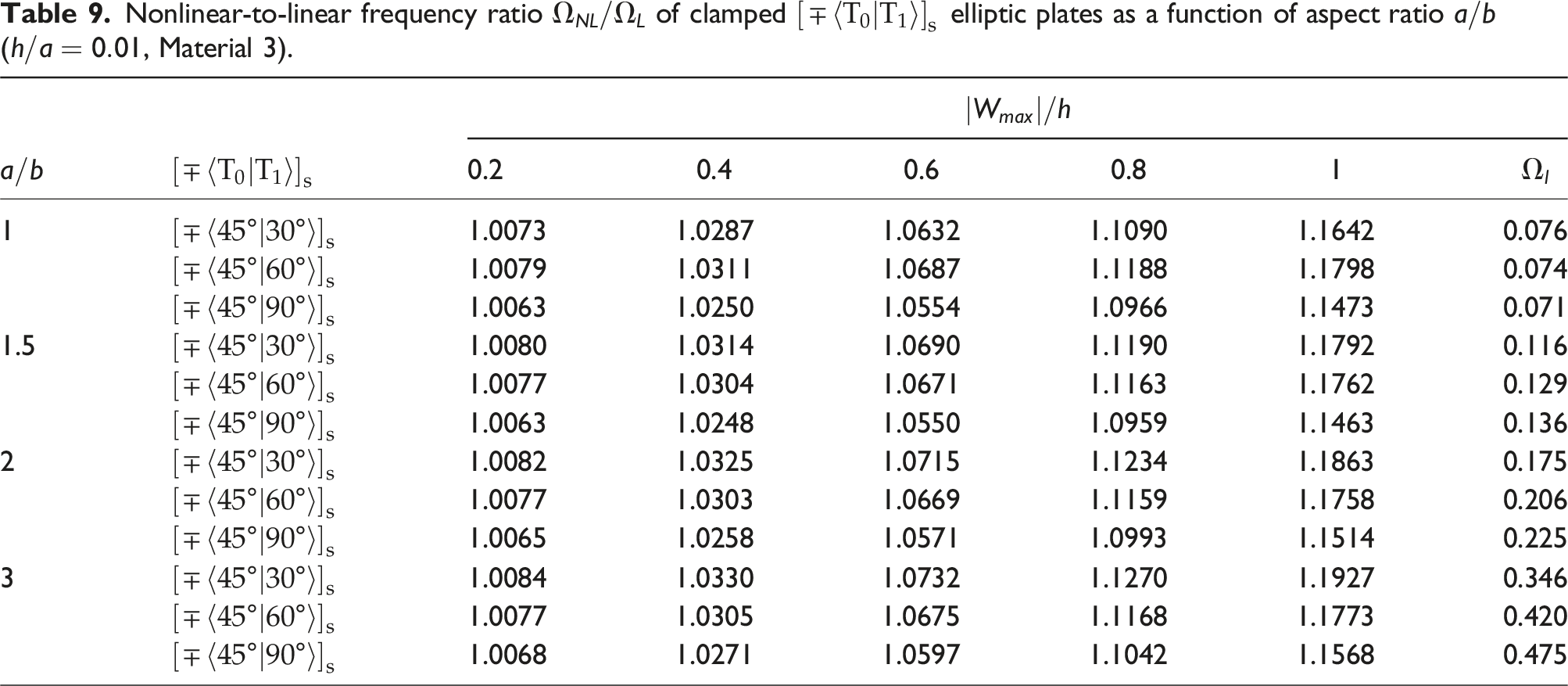
Nonlinear-to-linear frequency ratio of
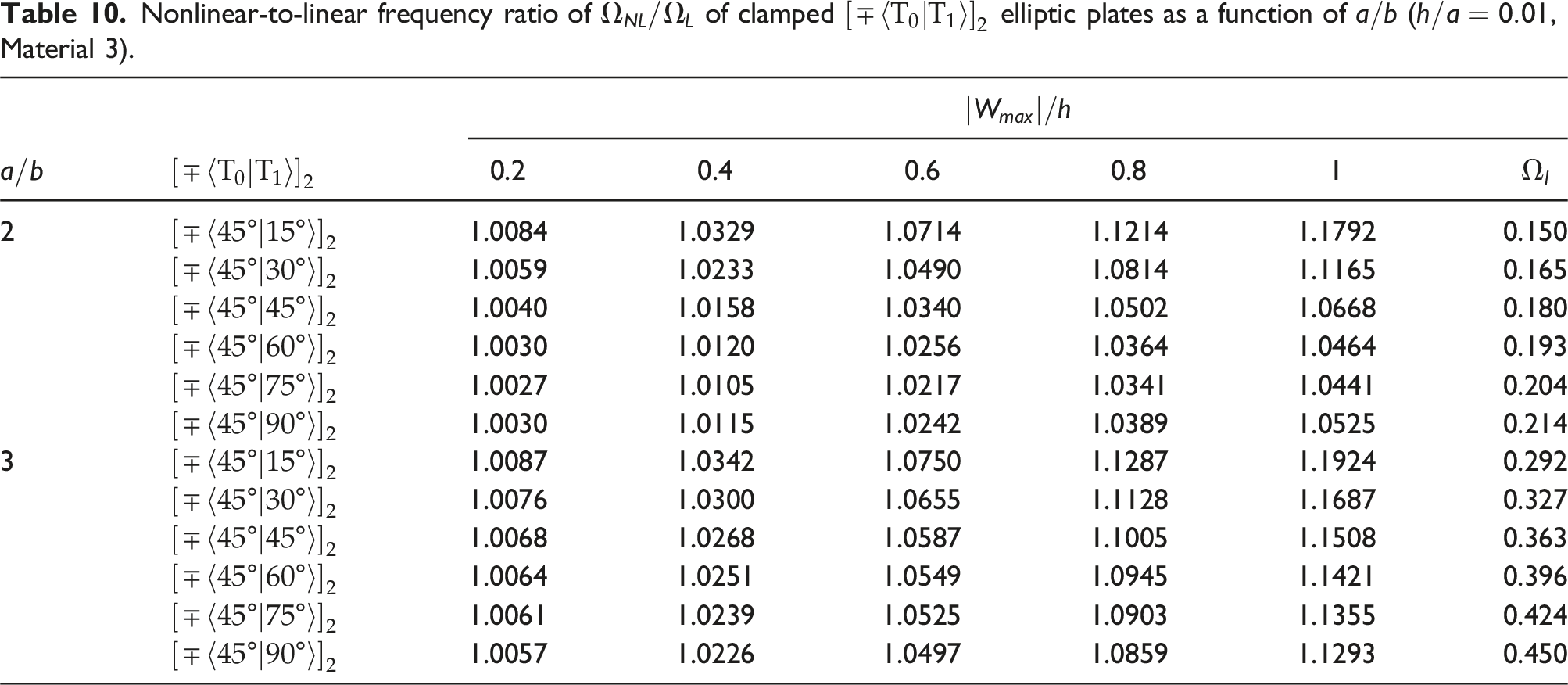
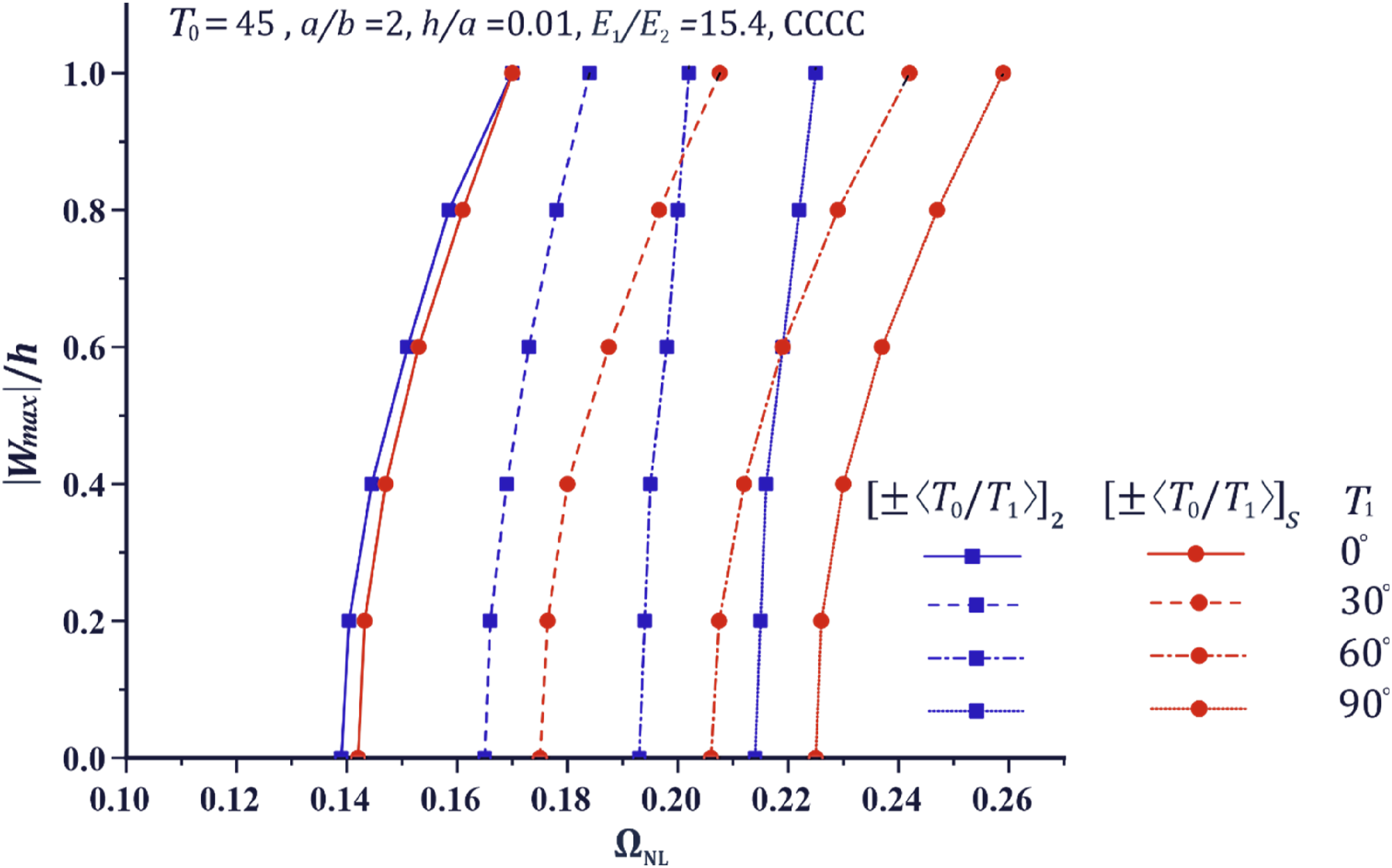
Fundamental backbone curves for clamped symmetric and antisymmetric VSCL elliptical laminates.
The aspect ratio of VSCL elliptic plates significantly influences their nonlinear vibrational behavior. As observed, the nonlinear frequency parameters increase with increasing aspect ratio, which can be attributed to the reduction in the plate’s cross-sectional area. Stacking sequences also affect the nonlinear frequency of VSCL elliptic plates. Comparison of their backbone curves reveals that symmetric laminates exhibit a higher degree of hardening than antisymmetric laminates, which show slightly lower fundamental nonlinear frequency parameters. This frequency reduction in antisymmetric laminates is attributed to a stiffness imbalance between layers, which reduces the resistance to deformation under vibrational loads. Consequently, this imbalance affects the dynamic behavior of the plates, resulting in a lower degree of hardening and slightly reduced nonlinear-to-linear frequency ratios. The antisymmetric configuration introduces more flexibility, diminishing stiffness and lowering the nonlinear frequency response compared to symmetric laminates.
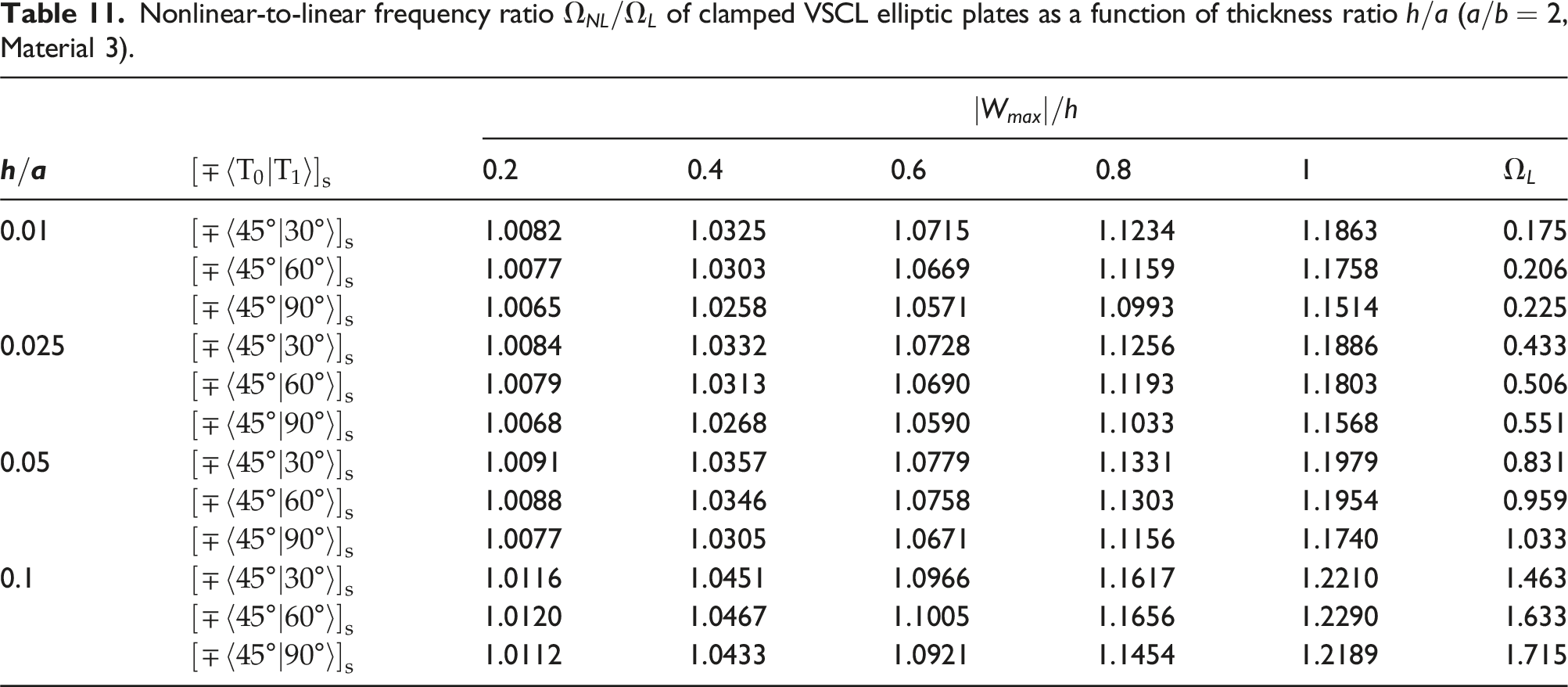
The highest and lowest fundamental nonlinear-to-linear frequency ratios
Nonlinear-to-linear frequency ratio
The boundary conditions play a crucial role in determining the nonlinear vibrational behavior of VSCL elliptic plates. Figure 14(a) and (b) present the fundamental backbone curves of clamped and simply supported Backbone curves of clamped and simply supported 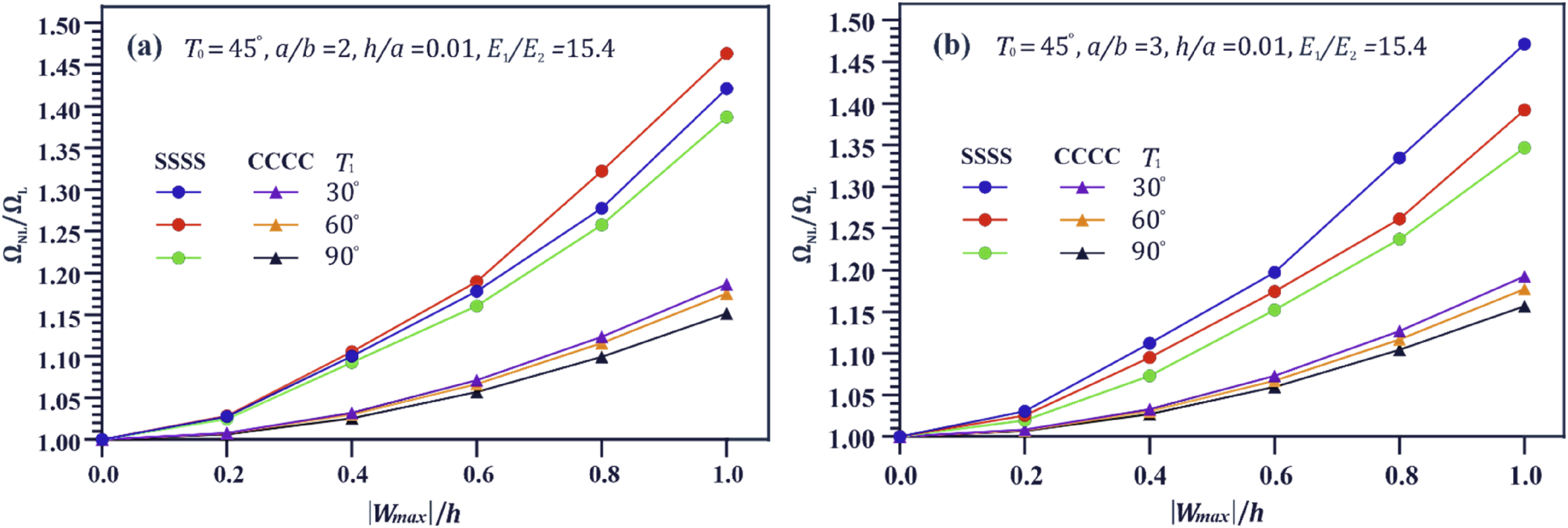
Nonlinear-to-linear frequency ratio
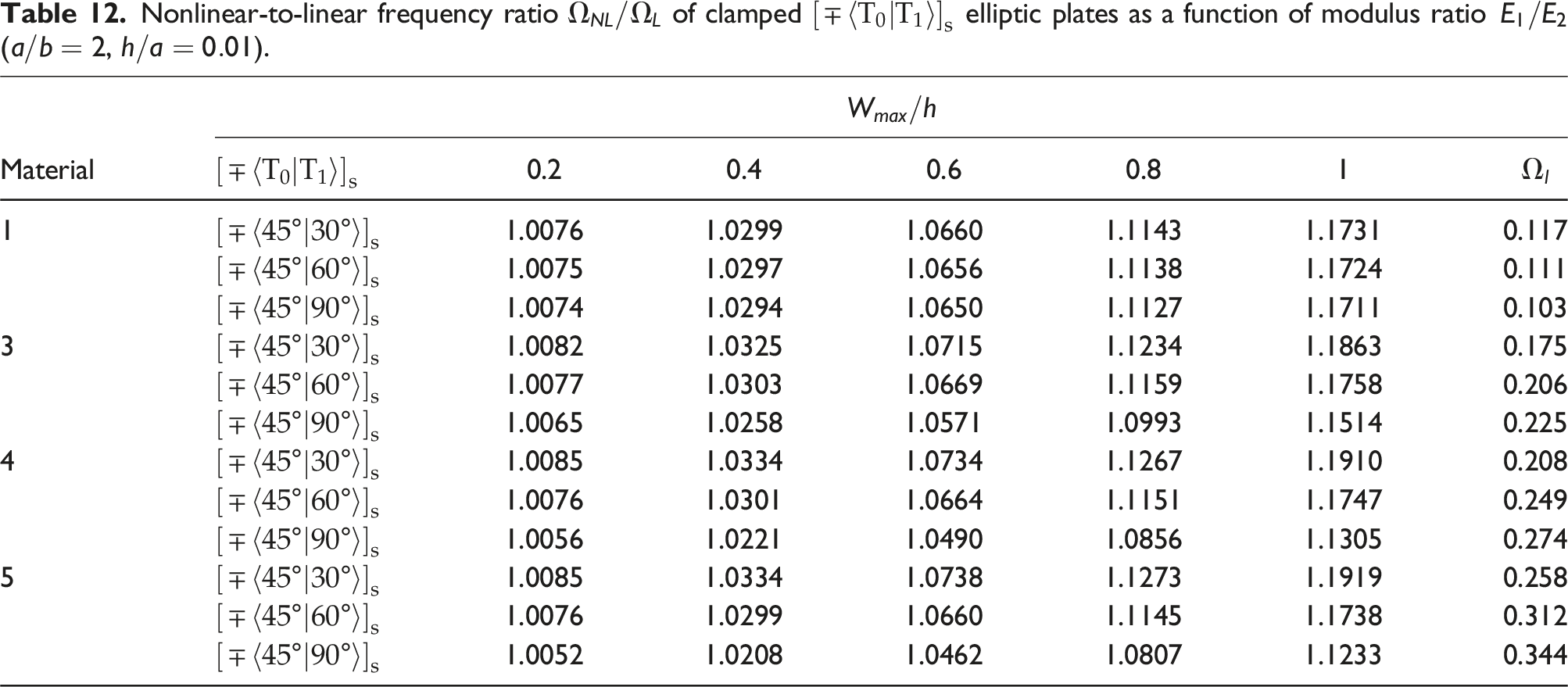
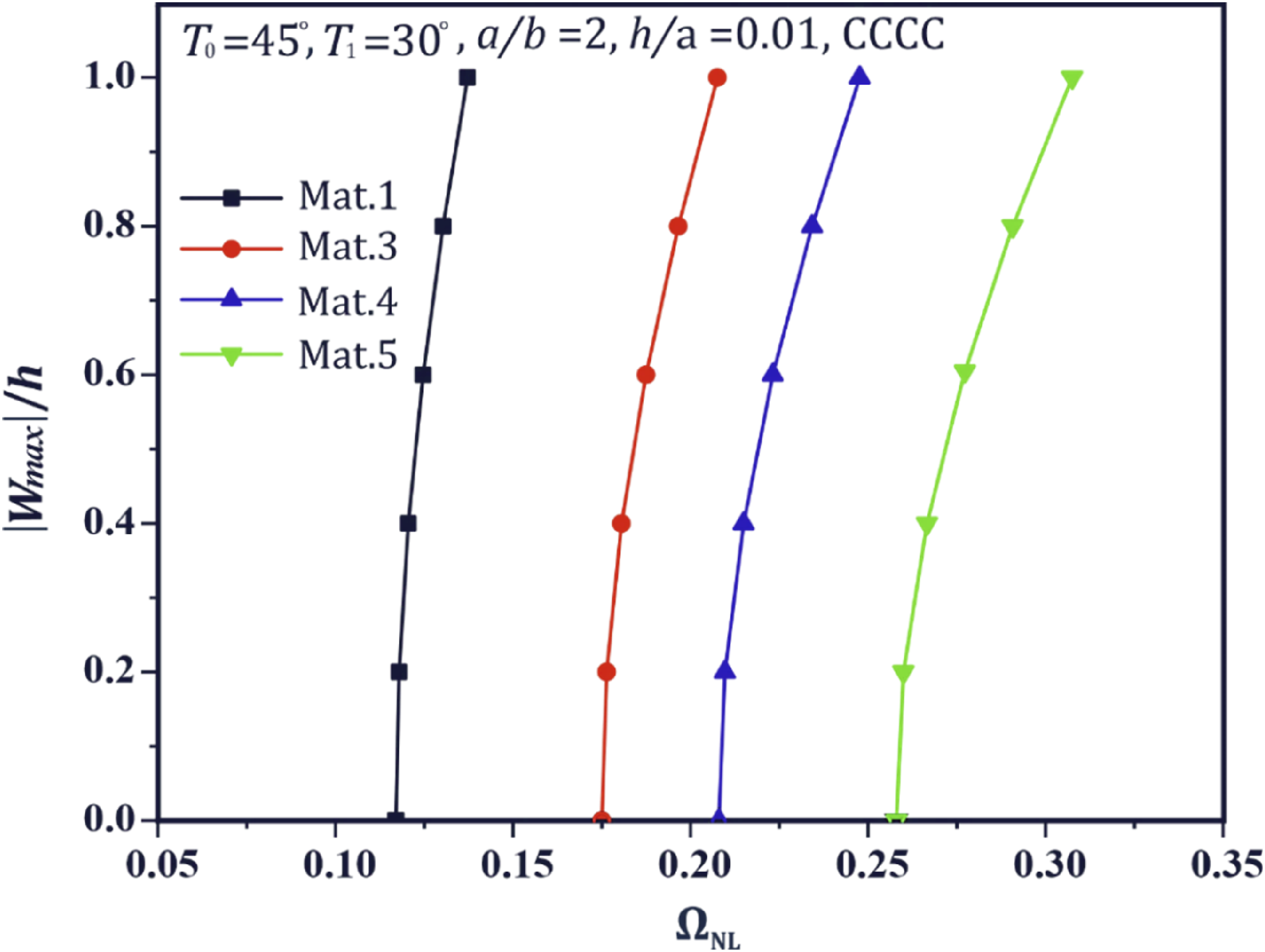
Fundamental backbone curves for clamped
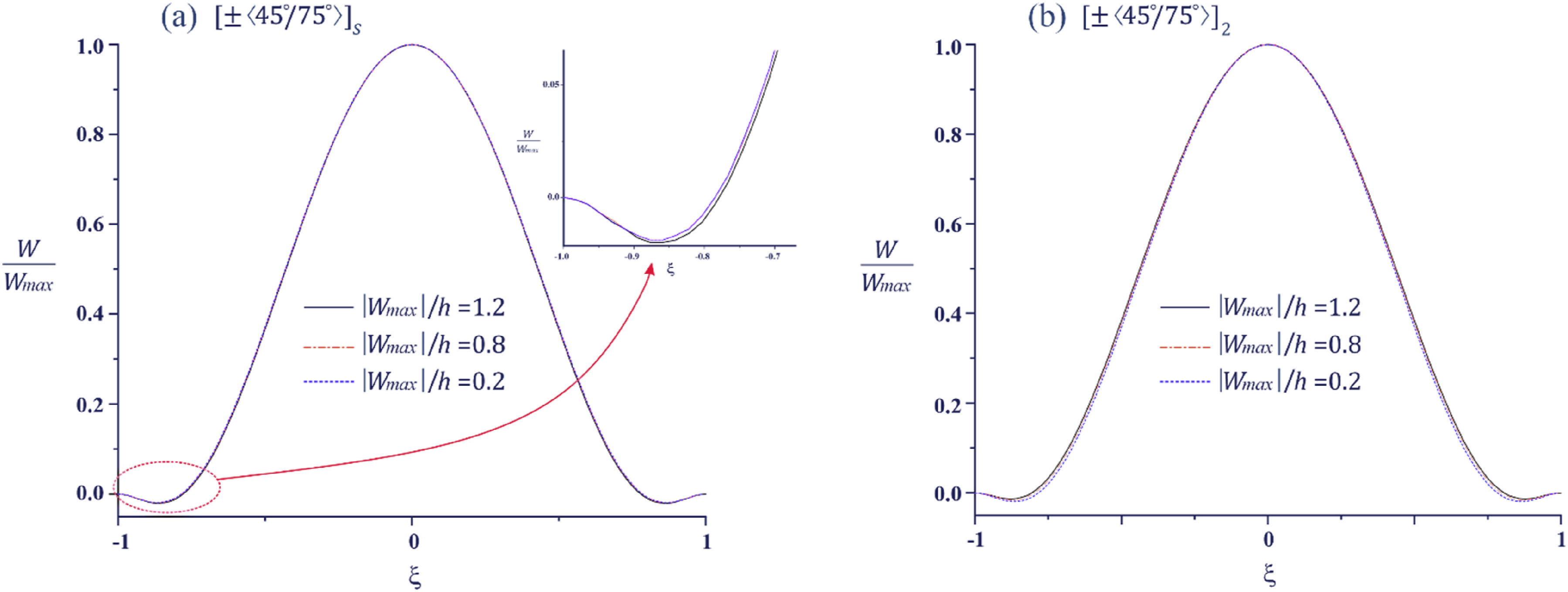
The normalized cross-section at Normalized cross-section at Normalized cross-section at 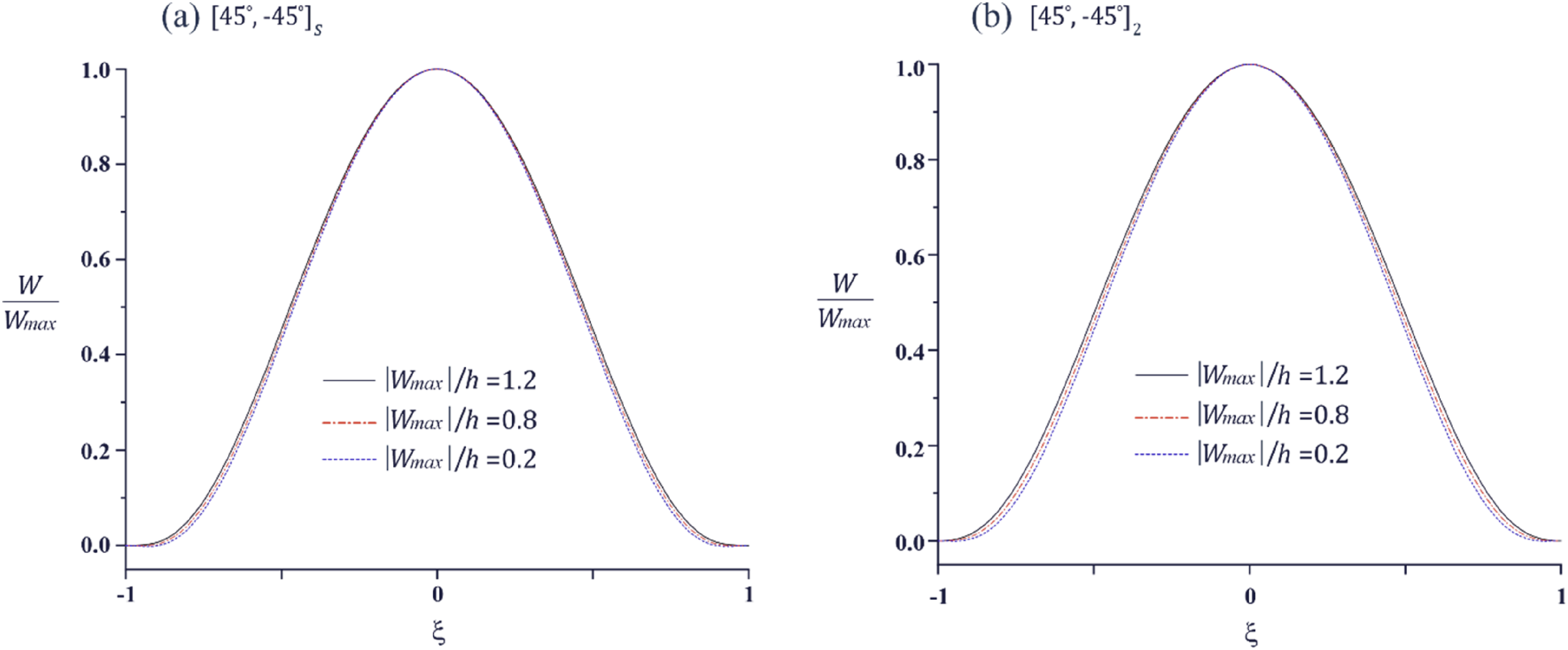
Conclusion
This study presents a novel investigation into the geometrically nonlinear vibrational behavior of CSCL and VSCL elliptic plates using the
These findings provide valuable insights for optimizing the design and performance of composite laminated elliptic plates subjected to large amplitude vibrations in aerospace, automotive, and civil engineering applications. Future researches will focus on optimizing nonlinear vibration predictions, extending this model to investigate the buckling and post-buckling behavior of composite laminated elliptic plates, and incorporating higher-order shear deformation theories to improve the predictive accuracy of nonlinear vibration analysis.
Footnotes
Declaration of conflicting interests
The author(s) declared no potential conflicts of interest with respect to the research, authorship, and/or publication of this article.
Funding
The author(s) received no financial support for the research, authorship, and/or publication of this article.

Data Availability Statement
Data sharing is not applicable to this article as no datasets were generated or analyzed during the current study.
Appendix A
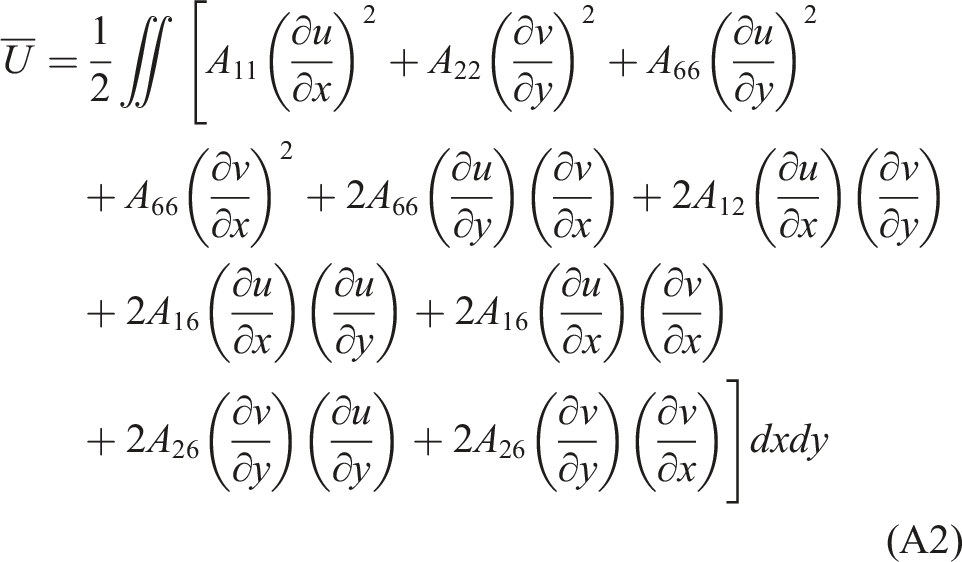
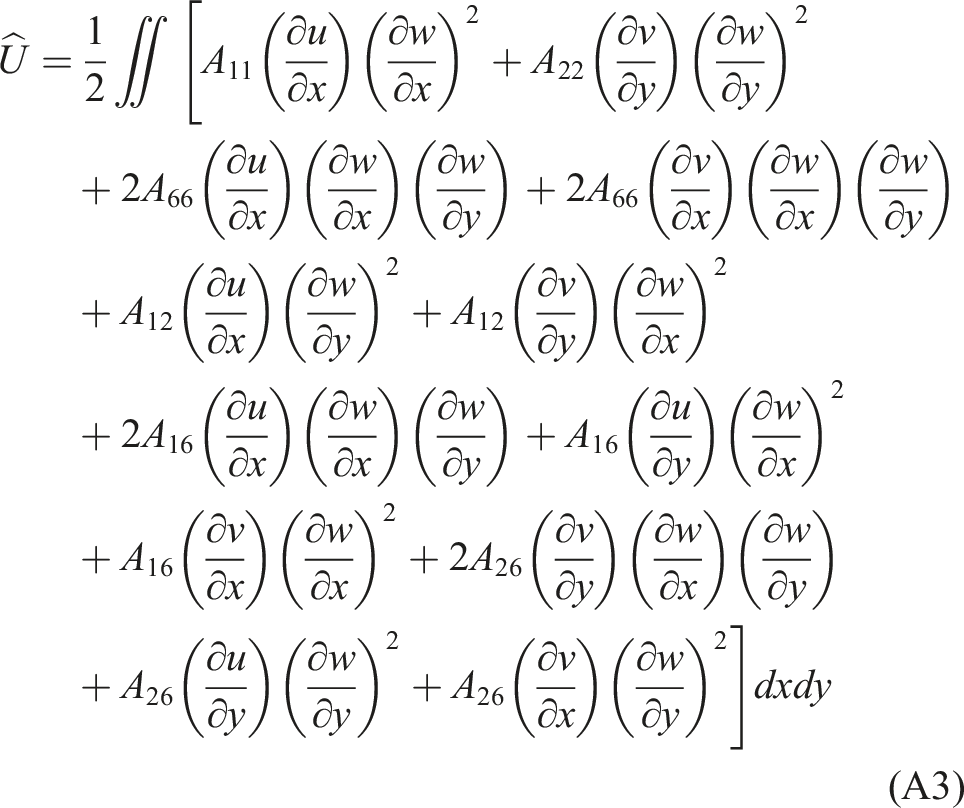
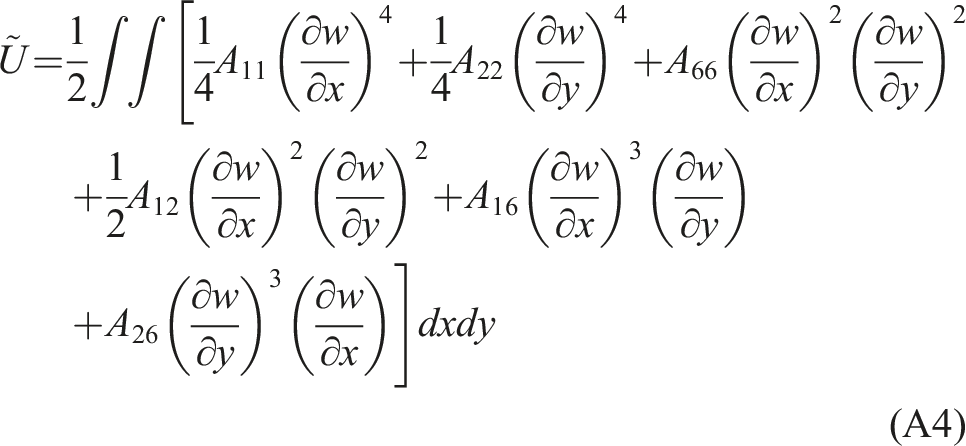
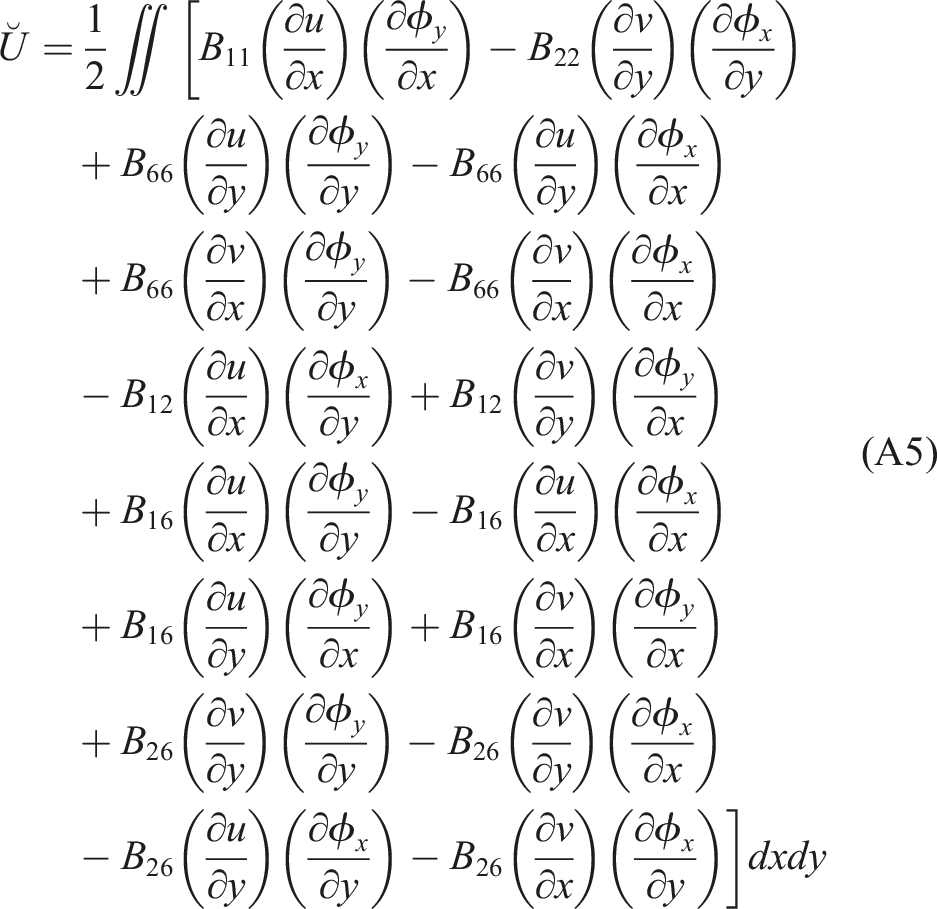
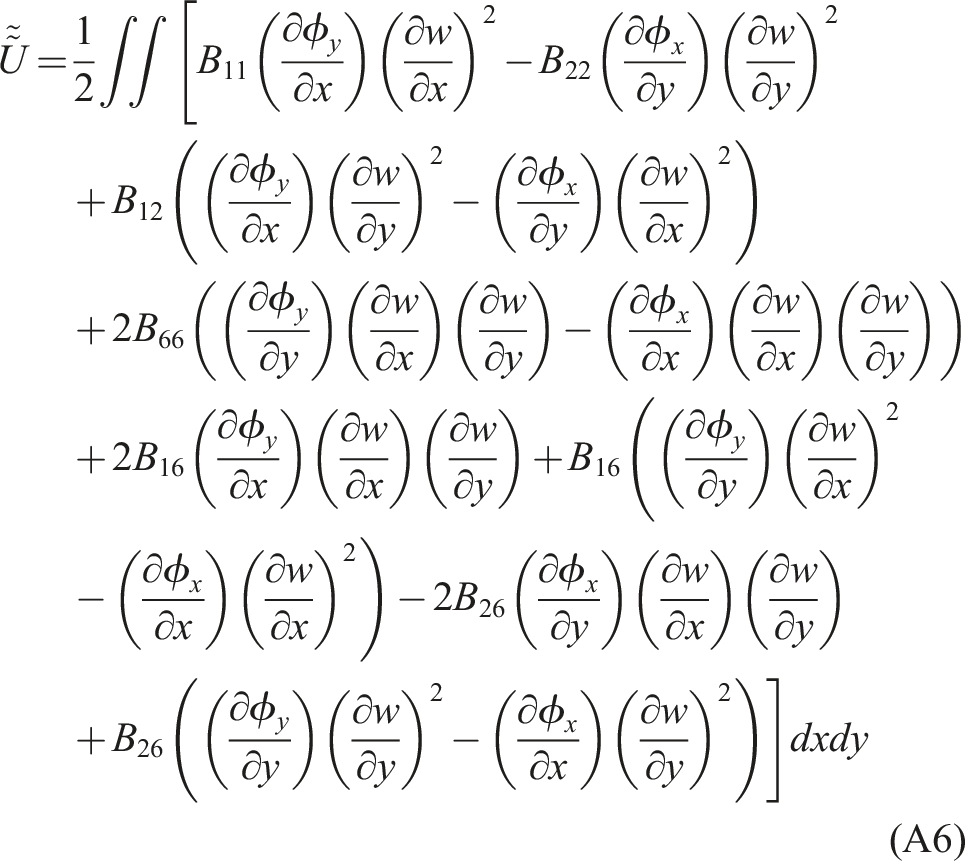
The strain energy • • • • • •
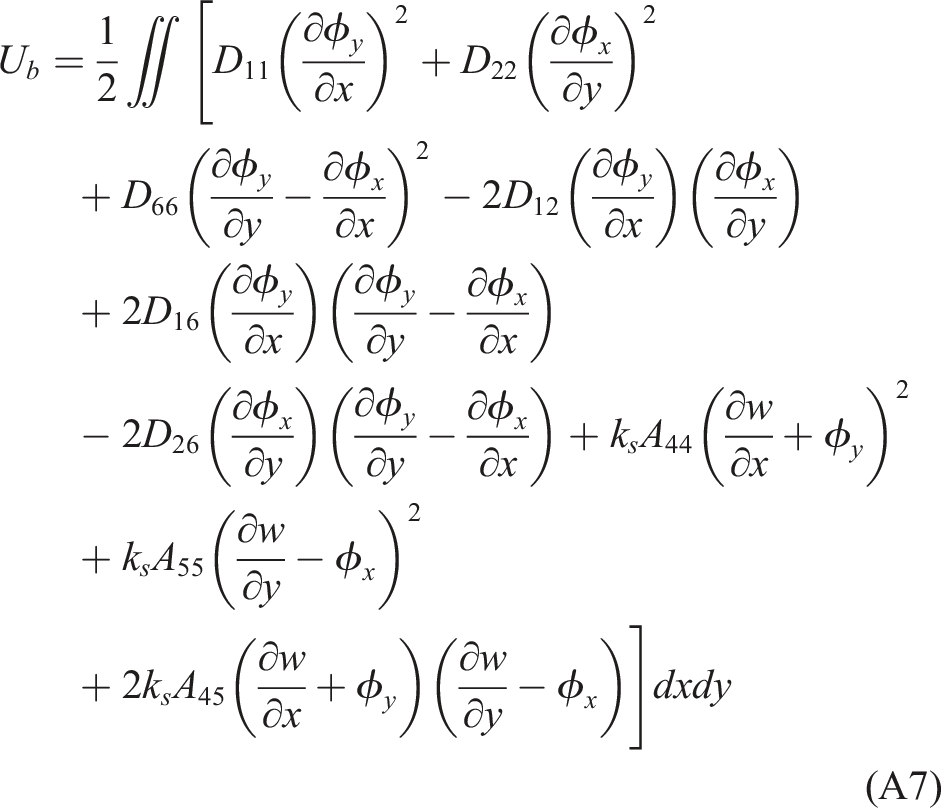




The shear correction factor
Appendix B
The entries of the linear and nonlinear stiffness and mass matrices