







Abstract
The push towards sustainable materials has increased interest in natural fiber composites, however, their mechanical limitations often restrict their use in structural applications. This study investigates hybridization as a strategy to overcome these limitations by analyzing the mechanical and thermomechanical behavior of composite laminates made from henequen fibers combined with glass and carbon fibers. The primary focus is on evaluating the energy absorption capacity of these hybrid configurations. The laminates were subjected to quasi-static flexural loading, Charpy impact tests, and low-velocity drop-weight impact tests. Furthermore, Dynamic Mechanical Analysis (DMA) was used to characterize the viscoelastic properties. The results demonstrate a significant synergistic effect of hybridization. Under quasi-static bending, hybrid composites with a single glass fiber layer exhibited superior strain energy storage compared to composites made of only henequen or glass fibers. Under low-velocity impact, the hybrids surpassed the all-glass-fiber laminates in both load-bearing capacity and absorbed energy. DMA revealed that hybridization substantially increases stiffness (storage modulus) but concurrently reduces damping capacity. Finally, Scanning Electron Microscopy (SEM) analysis confirmed excellent compatibility and adhesion between the natural and synthetic layers, with no significant interfacial delamination. These findings indicate that hybrid henequen-glass fiber composites are a promising, sustainable alternative for lightweight, structural energy-absorbing applications.
Keywords
Introduction
Recently, synthetic fiber reinforced polymers (FRPs) have been extensively utilized in defense, aerospace, and automotive industries because of their superior strength and reduced density. However, environmental concerns and global warming have redirected the focus towards integrating natural fibers into polymer composites as reinforcement instead of traditional synthetic fibers like glass and carbon.1–4 Natural fibers offer several benefits over synthetic ones, including being environmentally friendly, renewable, cost-effective, non-hazardous, non-abrasive, and readily available. Despite their benefits, natural fibers generally possess lower mechanical properties and are hydrophilic, leading to poor interaction at the fiber–matrix interface. 5 The use of biofibers will result in reduced emissions, less wear on processing equipment, an improved agricultural economy, and the creation of rural jobs. 6 It is claimed that they have fewer negative environmental effects due to their sustainability and ease of recycling. To assess the environmental impacts associated with any product, and to demonstrate this, some research has focused on life cycle assessments (LCAs) of biocomposites. 7 According to life cycle assessments, carbon fiber production has a very high embodied energy (≈330–500 MJ/kg) and high CO2 emissions, while glass fiber requires around 20–30 MJ/kg. In contrast, natural fibers such as flax or hemp require only 6.8–13.2 MJ/kg, so their incorporation into hybrid composites allows for a significant reduction in embodied energy and the overall carbon footprint. 8 Although these efforts are still not enough, since an increase of almost 900% in the water footprint can be seen, in total, these natural reinforcements cannot be considered entirely environmentally friendly. 9
The development of bio-composites, which join natural fibers with biodegradable matrices, addresses several challenges associated with artificial fibers, such as recycling problems and the generation of toxic byproducts. Bio-composites are not only non-toxic and non-abrasive but also exhibit performance characteristics on par with synthetic fiber composites, making them increasingly popular in automotive applications. 10 Despite this, the properties of these biomaterials vary considerably depending on the species, age, climate, and other factors of the plant source. Therefore, the reproducibility of their properties is lower than that of synthetic systems. Even so, more reproducible results can be achieved through classification and the application of appropriate treatments.6,11,12 As a result, these materials are suitable for applications such as automotive interior and exterior panels, building components, marine secondary structures, and load-bearing elements subjected to moderate mechanical demands, where sustainability and damage tolerance are critical design requirements.13,14 In this context, over the past decade, European automotive manufacturers have increasingly incorporated plant-based fiber composites into a wide range of interior components, including dashboards, seat backs, door panels, headliners, and cargo trays, demonstrating their technological maturity and industrial viability. 10
The automotive industry and researchers are increasingly considering natural fiber-reinforced composites for their lightweight, eco-friendly, and sustainable properties. 15 Various natural fibers such as sisal, bamboo, cotton, kenaf, jute, coir, industrial hemp, and banana have been studied extensively to understand their mechanical, thermal, and physical properties. Among them, kenaf fibers have shown exceptional mechanical properties, making them suitable for hybrid composites. 15
A study on manufacturing a vehicle bonnet using flax fiber-based bio-composites demonstrated that these fibers provide low weight and high compression properties, resulting in their being attractive for automotive applications. 16 The automotive industry faces stringent regulations on CO2 emission reductions, making lightweight materials crucial for compliance. 10 Natural fibers meet this need, serving as an environmentally friendly and cost-efficient substitute for synthetic fibers with advantages such as renewable sources, biodegradability, a good level of insulation, toughness, dissipation of vibrations, pliability, and high specific strength and elastic modulus.17–19 Despite these advantages, natural fibers have limitations like poor thermal stability, high water absorption, and weak fiber/matrix adhesion due to their strong polarity, which can be mitigated through hybridization techniques.20,21
Despite their promise, natural fiber composites exhibit limitations, such as lower strength, moisture absorption, and inconsistent properties when compared to their synthetic counterparts. Research focusing on using natural fibers as a new generation of structural materials has highlighted their mechanical performance.22–24 Studies comparing the impact behavior of composites made from commonly used natural fibers, particularly linen, hemp, bamboo, and jute, have found that linen-reinforced composites offer the best impact resistance among natural fiber-reinforced composites. 3 Although the structural properties of natural fibers fall short of artificial fibers, preventing their use in engineering applications, the production of Natural Fiber Reinforced Composites (NFRC) has acquired considerable attention within the research and development community due to the eco-friendly characteristics of natural fibers. 25
Hybrid fiber-reinforced composites, incorporating both natural and synthetic fibers, are gaining popularity in structural applications. These composites leverage the synergistic effects of the different fibers to achieve exceptional mechanical and physical properties, rendering them suitable for use in construction, automotive, and aerospace applications.26–29 Studies have shown that natural-glass FRP hybrid composites offer comparable or superior properties to glass mat thermoplastic composites, particularly in automotive applications like car bumpers. 30 This hybridization merges the desirable qualities of both natural and artificial fibers, resulting in improved mechanical properties in the manufactured composite.5,31,32 In another study, the mechanical properties of randomly oriented sisal fiber composites with thermoset and thermoplastic matrices were evaluated as a function of fiber length and load. It was found that the properties increased with fiber content, and the optimal fiber length depended on the matrix type. Sisal and LDPE composites showed superior reinforcement thanks to the ductility of the matrix. 33
Sisal fibers, with their high tensile strength and availability, are widely used in manufacturing NFRC materials. 24 Henequen fibers, often referred to as sisal, also offer significant mechanical advantages due to their high cellulose content.34–36 Generally, natural fiber reinforcements with higher cellulose content and a smaller microfibrillar angle (the angle between the fiber axis and cellulose microfibrils) exhibit excellent tensile strength. Sisal fibers, with a cellulose content ranging from 67% to 78%, surpass other natural fibers like jute, flax, and hemp in this regard. 35
Despite numerous studies on the mechanical behavior of composite materials reinforced with various natural fibers, there has been no investigation into the structural performance of hybrid composite materials made from henequen fibers and synthetic fibers. While composite materials with natural fibers are employed in common applications, including interior elements of various vehicles, there is no evidence of their use in primary structural applications. This research focuses on analyzing the mechanical and thermomechanical behavior of various configurations of henequen fiber hybrid composites coupled with synthetic fibers such as glass and carbon. The focus is on assessing their energy absorption capacity to evaluate their potential for designing energy-absorbing structural components, particularly in the automotive sector.
Experimental procedures and materials
Materials and fabrication of laminates
The natural fiber utilized in this study was henequen yarn fabric, sourced from Hecho en Yucatan, Yucatan, Mexico. This fabric was mechanically extracted and woven into a plain weave configuration. Two types of henequen fabrics with different densities were employed: fine mesh (FM) and coarse mesh (CM), with areal weights of 1048 g/m2 and 590 g/m2, respectively, as shown in Figure 1. In the preparation of hybrid specimens, three types of synthetic fiber fabrics were used: glass fiber fabric, carbon fiber fabric, and glass fiber veil. The bidirectional glass fiber fabric, with an areal weight of 850 g/m2, was obtained from Axon Technologies® (USA). The carbon fiber fabric, sourced from Quintum Mexico, was a 198 g/m2 2 × 2 twill 3k configuration. The glass fiber veil, also from Quintum Mexico, weighed 32 g/m2. The matrix for all hybrid laminates consisted of an epoxy resin (Epolam 5015) and an amine hardener (Epolam 5015), mixed in a weight ratio of 100:30, supplied by Axon Technologies® (USA). Henequen fiber fabric, (a) coarse mesh (CM), (b) fine mesh (FM).
The hybrid henequen fiber-reinforced composite laminates were fabricated by a vacuum-assisted resin infusion technique (VARI). The henequen fiber fabrics were washed with water and then dried at 60°C for 24 h before infusion. The resin and hardener were mixed and stirred at low speed. The mixture was subsequently placed into the vacuum bag mold by infusion, impregnating the henequen and synthetic fabric layers. Curing began at 60°C for 2 h on a hot plate and was completed at room temperature over the course of 24 h. The resin content for each laminate was calculated based on the total fiber mass and a predefined target fiber volume fraction, ensuring comparable impregnation conditions despite differences in fabric areal weight and fiber type.
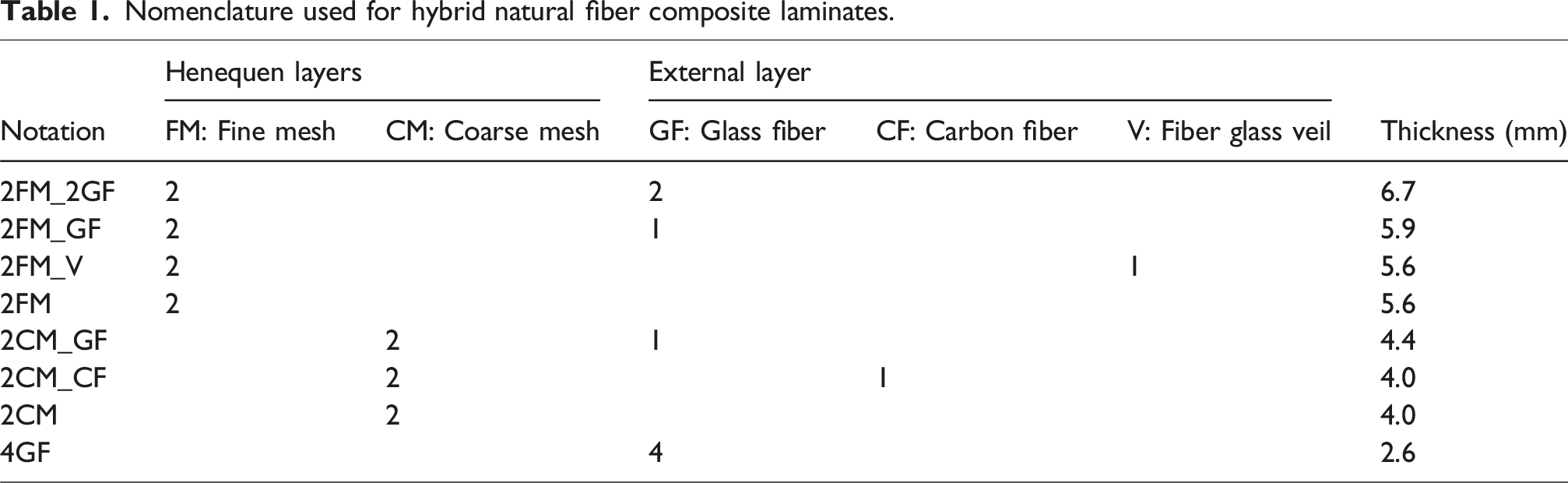
The vacuum bag was subsequently opened and the fully cured laminates were machined into samples for mechanical and thermomechanical testing utilizing a waterjet cutting method, following ASTM standard dimensions. Various laminate configurations were considered, as illustrated in Figure 2. Layers of henequen fabrics (fine or coarse meshes) were combined with different synthetic fiber fabrics (glass or carbon). At least three specimens were tested for each mechanical test performed. The nomenclature for the hybrid henequen fiber composite laminates used in this study is provided in Table 1. The selected hybrid configurations were not intended to be fully symmetric but were specifically designed to maximize flexural efficiency and functional hybridization while minimizing coupling effects under the investigated loading conditions. Schematic illustration of the stacking sequence for the hybrid natural fiber composite laminate 2FM_GF. Nomenclature used for hybrid natural fiber composite laminates.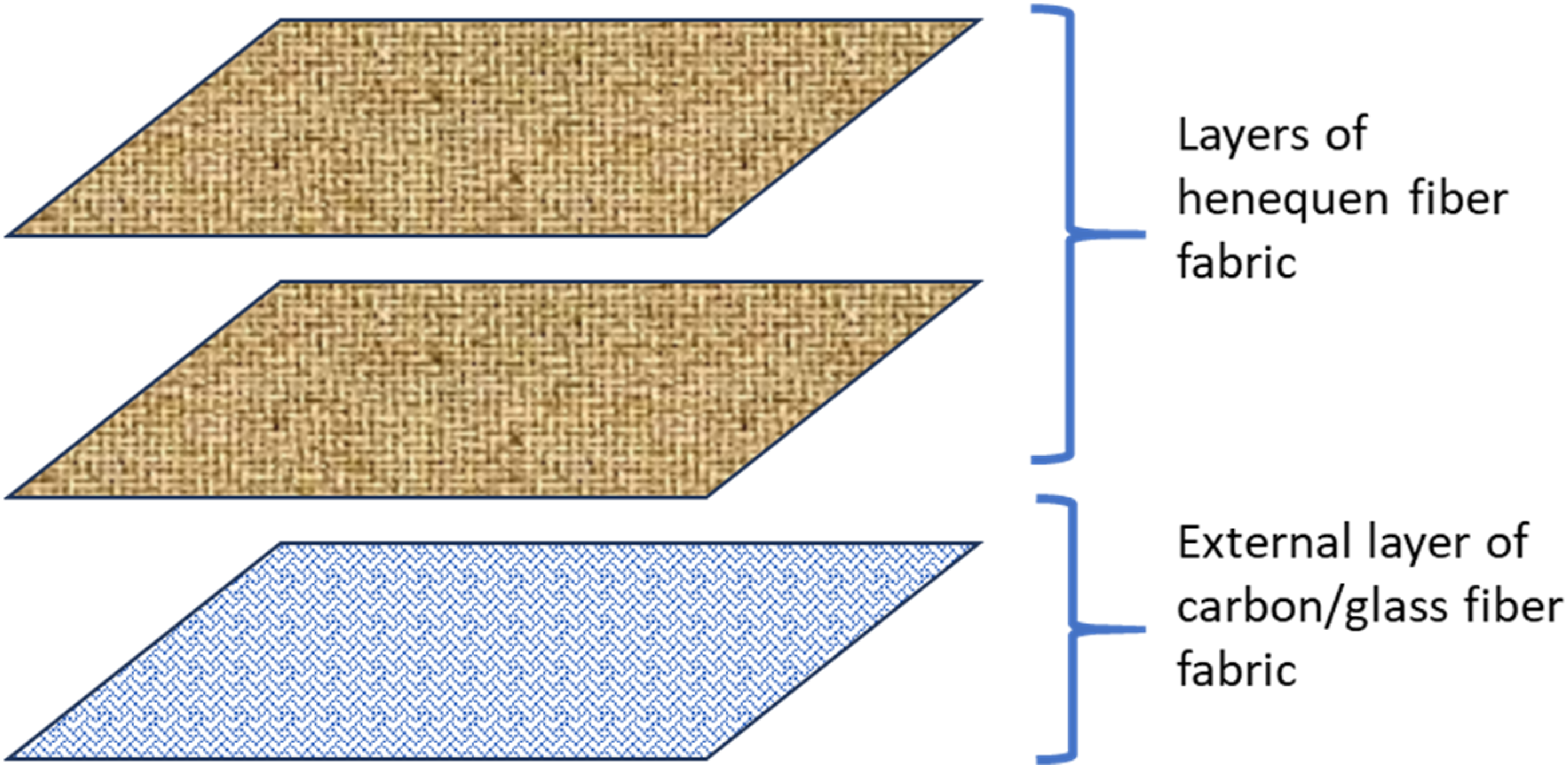
Three-point bending tests
Beam-shaped specimens, 150 mm long and 20 mm wide, were subjected to three-point bending. The thickness of the specimens varied according to the number and type of layers of the hybrid assembly of natural and synthetic fibers. The synthetic fiber layer was placed on the tensile side of the beam. The flexural tests followed the ASTM D7264 standard
37
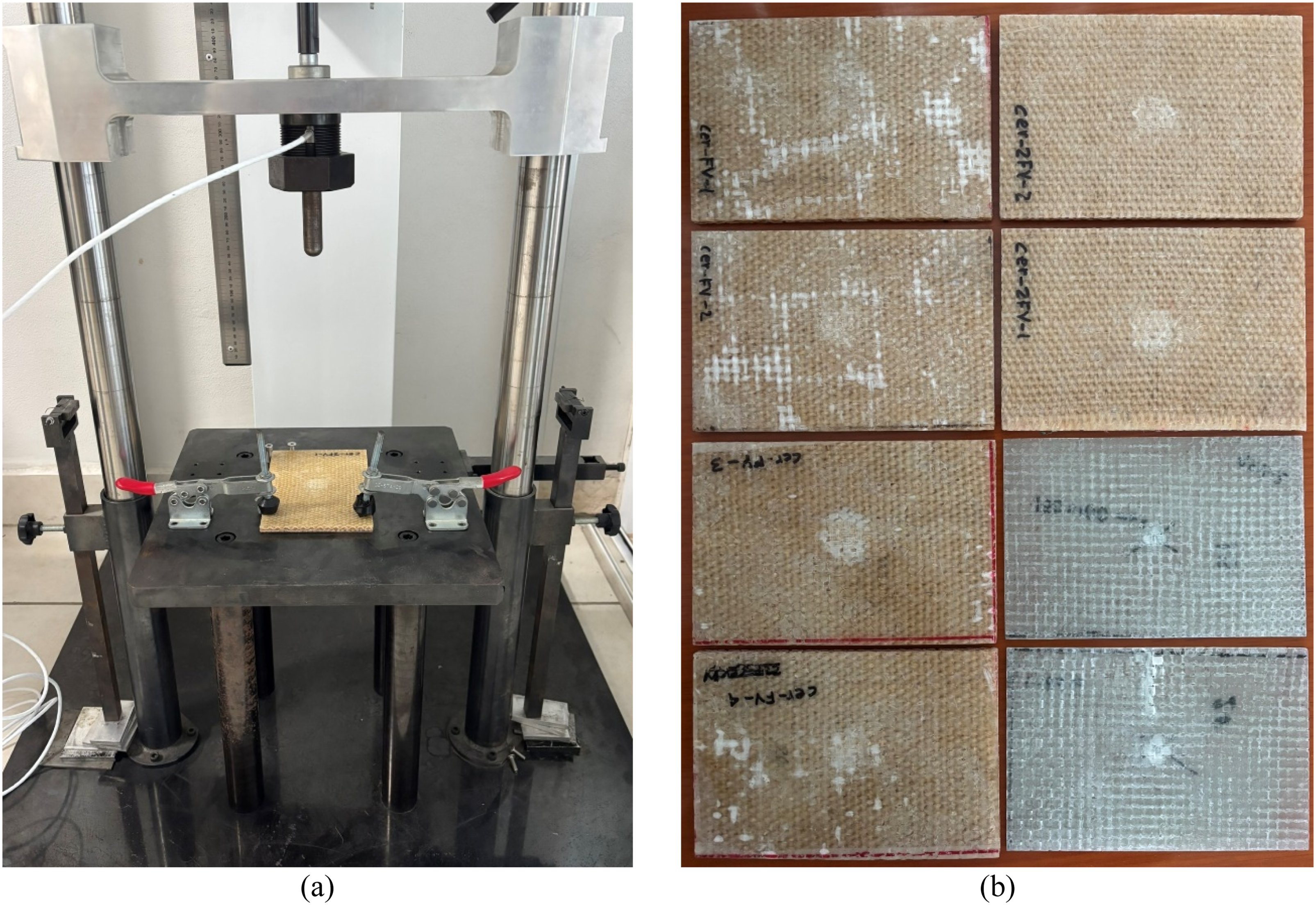
and were performed employing a Shimadzu AGX-V universal testing system equipped with a 10 kN load cell operated under displacement control. The apparatus for the three-point bending tests is shown in Figure 3(a). (a) Experimental setup for 3-point bending tests, (b) tested samples under flexural loading.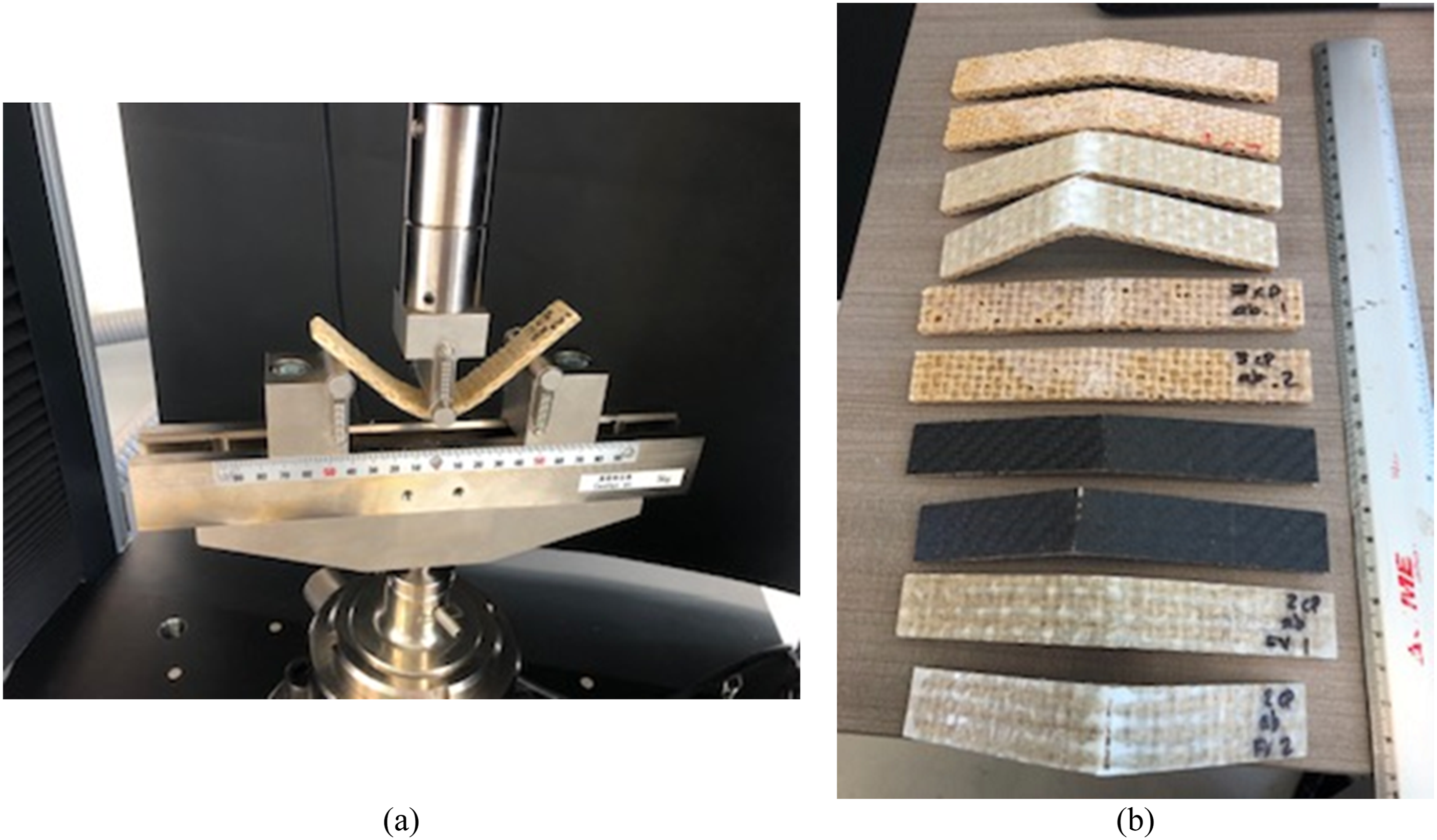
The separation between the supports was established at 91 mm. The beam specimen was positioned in the three-point bending apparatus and tested in flexure by applying a load at a rate of 1 mm/min until the specimen failed. The flexural stress (σ) and strain (ε) were calculated using the following mathematical expressions:
37


Dynamic mechanical analysis test
A dynamic mechanical analyzer (TA Instruments DMA Discovery 850) was used to obtain the viscoelastic behavior of the laminates, and experiments were performed according to ASTM D7028. 38 To achieve this objective, experiments were carried out on samples with nominal dimensions of 45 mm × 10 mm using a simple cantilever geometry. Special care was taken to ensure that the experiments complied with a temperature range from room temperature to 220°C, with a heating ramp applied at a rate of 5°C/min.
Charpy tests
The procedure for the Charpy test requires striking a sample with a pendulum hammer and recording the energy dissipated by the material during fracture. Unlike the standardized Charpy impact test,
39
the hybrid composite specimens were not notched; only the pendulum was used to apply the load and measure the absorbed energy. For the test, the span length was set at 40 mm; once again, the layer of synthetic fibers was positioned on the tensile side of the specimen. The Charpy impact test setup is illustrated in Figure 4(a). (a) Charpy impact test setup, (b) tested samples under impact loading.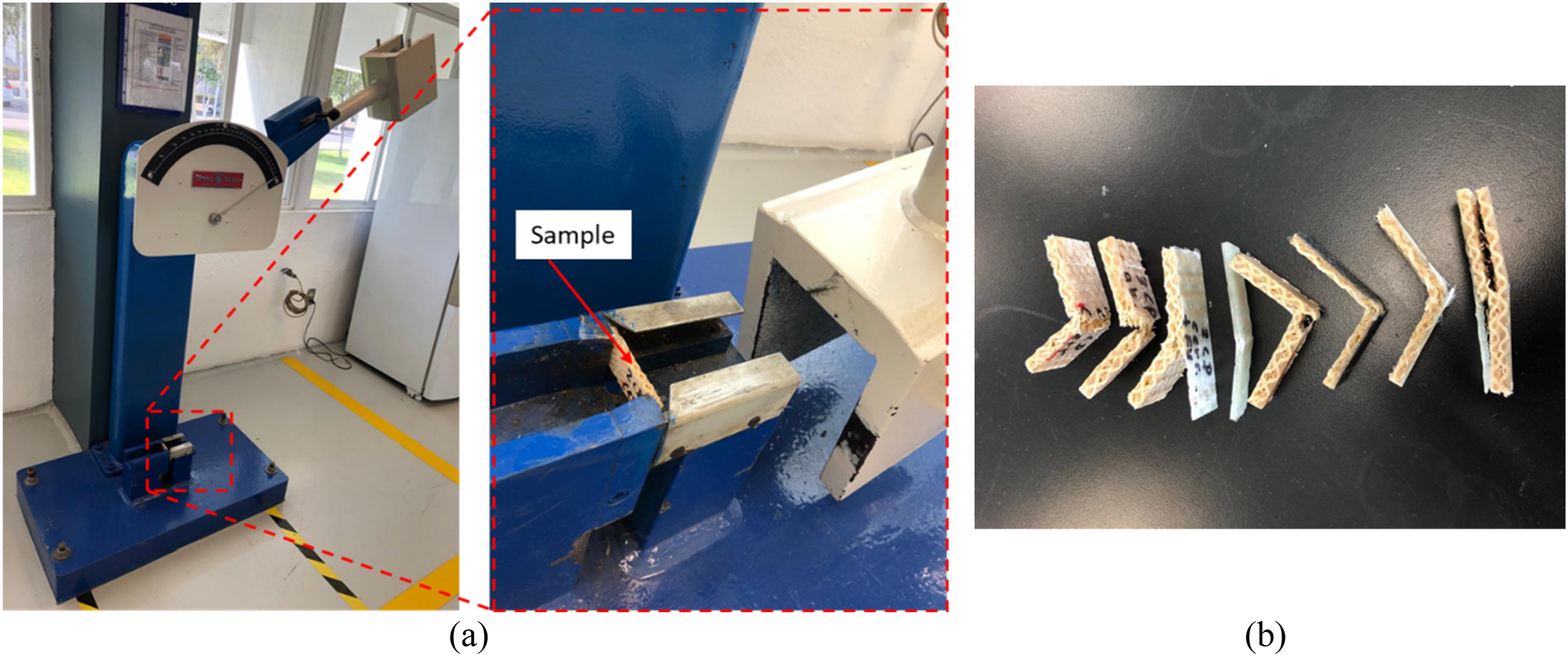
Impact experiments under low-velocity conditions
Hybrid henequen fiber-reinforced laminates with dimensions of 150 mm × 100 mm were tested under low-velocity impact conditions following the ASTM D7136 standard.
40
The tests utilized an impact drop-weight tower supplied with a 16 mm diameter hemispherical steel impactor, and a crosshead of 5.3 kg mass. The drop-weight tower apparatus is presented in Figure 5(a). A flat base plate having a rectangular aperture (100 mm × 75 mm) was utilized to support the specimens during the impact loading, as depicted in Figure 5(a). By setting the optimal drop height, the impact energy was adjusted. Impact energy levels of 15 J and 20 J were used, and the test specimens were positioned so that the impact occurred on the natural-fiber side. A load cell of 22 kN positioned between the crosshead and the impactor was employed to register the force-time variables.41,42 Following the impact tests, force-displacement curves were calculated through numerical integration of the force as a function of time, F(t), in accordance with ASTM D7136.
40
The test displacement (δ(t)) of the impactor can be determined by the following formula:
40
(a) Drop-Weight impact device, (b) low velocity impact specimens.
Damage characterization
A failure analysis of the natural fiber hybrid composite laminates was performed by scanning electron microscopy (SEM) using a JEOL JSM-6610LV system. For this purpose, the flexural beams were segmented into 20 mm specimens. These samples were coated with a thin layer of gold by sputtering. SEM micrographs of these specimens at 30 × and 100 × zoom levels were obtained.
Results and discussion
Flexural loading
In order to evaluate the effect of hybridization on the flexural mechanical properties of natural fiber composites, the quasi-static stress-strain response and flexural strength were quantified by the three-point bending test following the guidelines of ASTM D7264.
37
The resulting bending stress (σ) versus strain (ε) curves of the tested samples are displayed in Figure 6(a). These curves demonstrate that the tested samples initially exhibit linear-elastic behavior, which evolves to a nonlinear response until complete failure of the sample occurs. It is noteworthy that the synthetic fiber fabric was placed on the tensile surface of the hybrid natural fiber composite beam. Upon reaching the maximum flexural stress, the flexural stress–strain response of all hybrid laminates exhibits a pronounced drop, except for the specimens incorporating a glass fiber layer (2FM_GF and 2CM_GF), which retain their load-carrying capacity up to flexural strain levels of approximately 12–14%. Results of three-point bending tests. (a) Flexural stress-strain curves of hybrid natural fiber composites, (b) Flexural Strength, (c) Strain energy.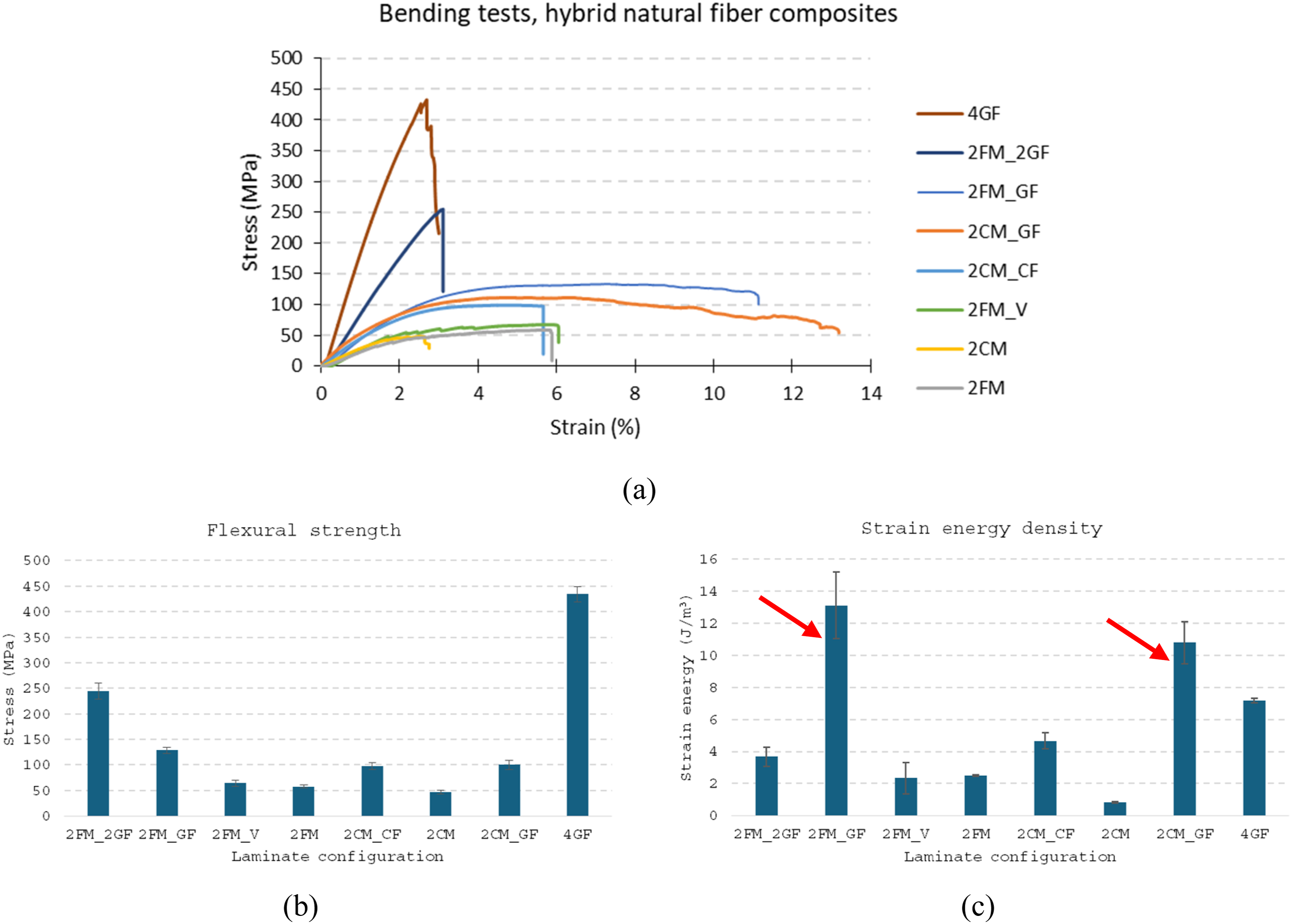
Flexural strength of all hybrid natural fiber laminates and the only laminate with four fiberglass layers, including the associated error bars for each laminate configuration is shown in Figure 6(b). With the exception of laminates with 4 layers of fiberglass, the greatest flexural strength observed in hybrid laminates is attributed to the 2FM_2GF configuration, due to the placement of both fiberglass layers on the outer surface, where maximum bending stresses occur under three-point bending. This configuration favors load transfer to the glass fibers, while the henequen fiber layers, located closer to the neutral axis, experience lower levels of deformation. This result was anticipated due to the superior strength of fiberglass layers compared to henequen fiber layers. Configurations with a single layer of fiberglass (2FM_GF and 2CM_GF) follow in flexural strength values, with the fine mesh (FM) henequen fiber samples exhibiting greater strength.
The enhanced strain energy observed in the hybrid laminates (Figure 6(c)) is primarily associated with their ability to sustain significant load levels over an extended flexural strain range. In particular, the 2FM_GF and 2CM_GF configurations exhibit a pronounced nonlinear response after reaching the maximum flexural stress, maintaining load-carrying capacity up to flexural strain levels of approximately 12–14%. This extended deformation regime leads to a larger area under the flexural stress–strain curve, despite these laminates not exhibiting the highest peak flexural strength. The presence of synthetic fiber layers on the tensile surface delays crack propagation and promotes load redistribution, while the henequen fiber layers contribute to progressive damage mechanisms such as matrix cracking and fiber pull-out. The combined action of these mechanisms results in improved energy absorption under quasi-static bending, highlighting the beneficial role of hybridization in enhancing damage tolerance and energy dissipation.
Thermomechanical characterization
To elucidate the influence of hybridization on the thermomechanical response, the viscoelastic properties of the composites were characterized via DMA. The resulting spectra for storage modulus (E′), loss modulus (E″), and damping factor (tan δ) are presented as a function of temperature in Figure 7, affording a detailed understanding of the material’s elastic, viscous, and damping characteristics. The key quantitative data extracted from these spectra are summarized in Table 2. Results of the dynamic mechanical properties of the hybrid natural fiber composite. (a) Storage modulus E′, (b) loss modulus E″, (d) tan δ. Summary of Dynamic Mechanical Analysis results for henequen hybrid composites.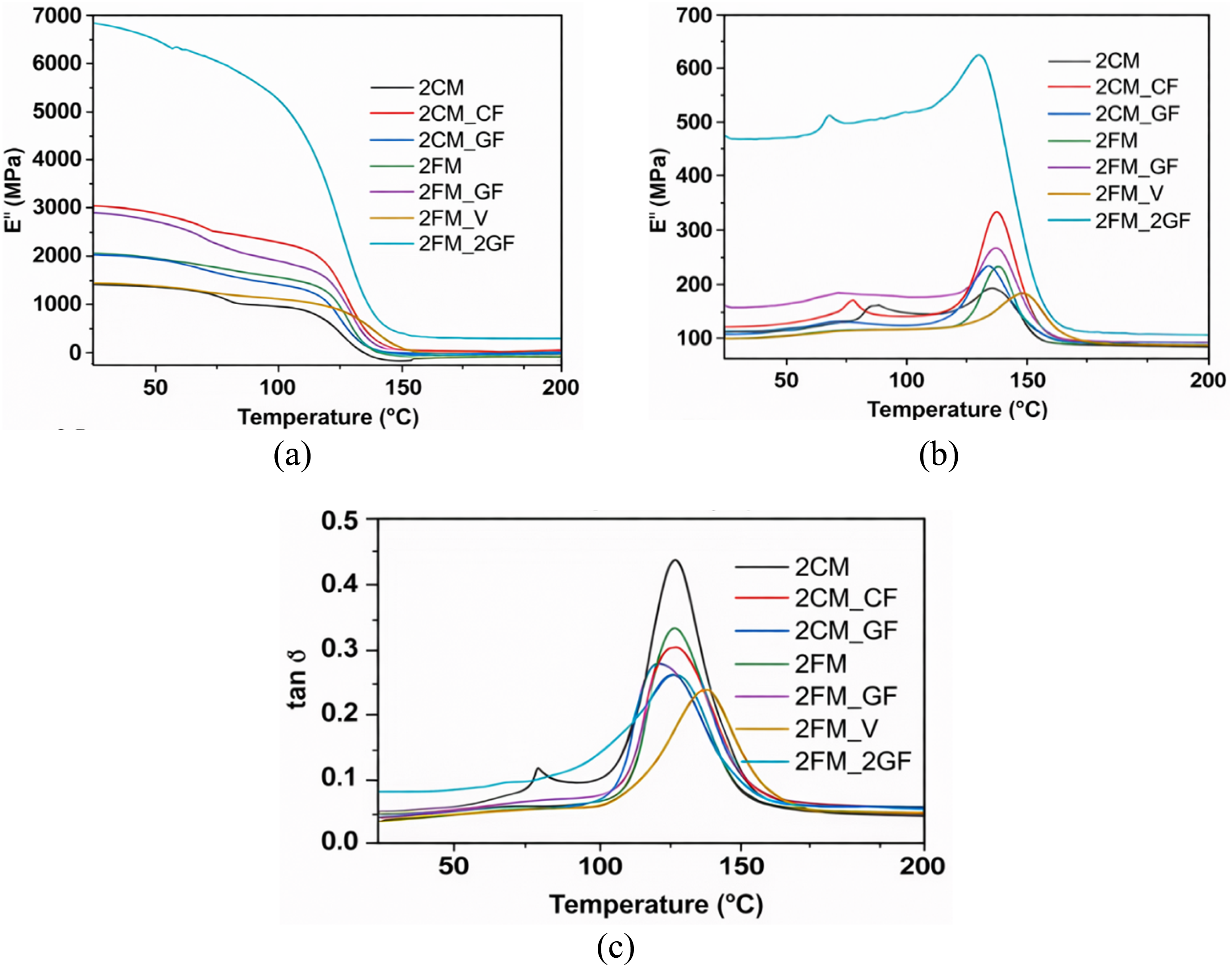
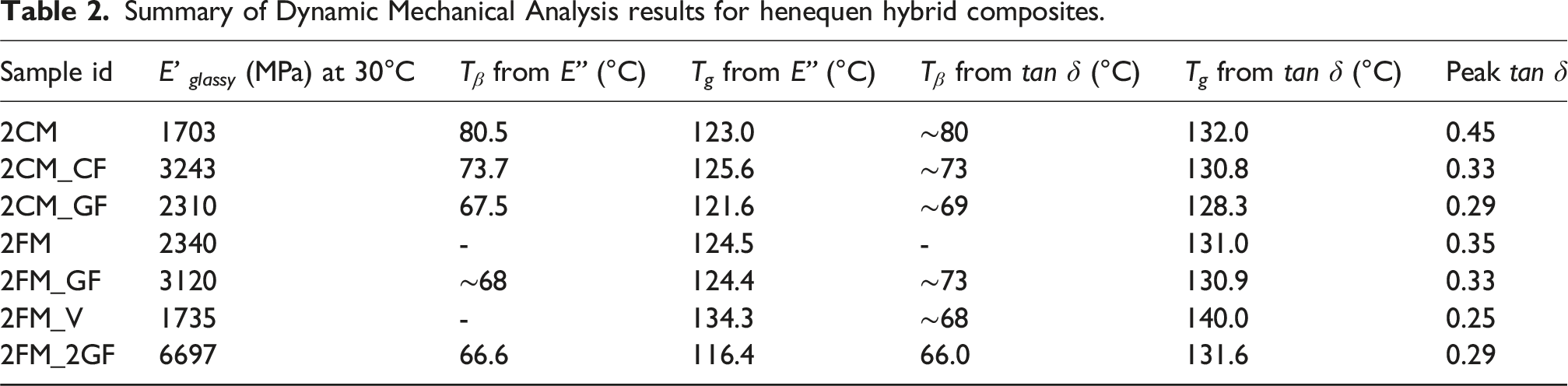
The E′ profiles (Figure 7(a)) reveal a distinct hierarchy in material stiffness, directly correlated with the intrinsic modulus of the constituent reinforcements. As quantified in Table 2, the 2FM_2GF laminate, engineered with external glass fiber plies, exhibits a superior glassy modulus of 6697 MPa at 30°C. This represents a nearly four-fold increase over the baseline 2CM natural fiber composite (1703 MPa), unequivocally demonstrating that the composite’s elastic response is dominated by the high-modulus synthetic reinforcement. The efficacy of hybridization is further underscored by the performance of single-ply hybrids; incorporating either carbon fiber (2CM_CF) or glass fiber (2FM_GF) elevates the storage modulus to 3243 MPa and 3123 MPa, respectively. This potent reinforcing effect confirms that hybridization is a viable strategy for enhancing the structural performance of natural fiber composites.
The DMA spectra are characterized by two principal molecular relaxation processes. The primary alpha (α) relaxation, corresponding to the large-scale, cooperative segmental motion of the polymer backbone, defines the glass transition (T
g
). The remarkable consistency of this transition across all configurations, with the Tg from the tan δ peak spanning a narrow range from 128.3°C to 140.0°C (Table 2), signifies that it is an intrinsic, matrix-dominated property. This uniformity indicates a consistent degree of cure across the laminates and establishes a common upper service temperature. Of particular mechanistic importance is the secondary, or beta (β), relaxation, which manifests as a broad, low-intensity transition in the sub-Tg region, most clearly resolved in the loss modulus spectra (Figure 8). This relaxation is characteristic of amine-cured epoxy networks and is attributed to localized, non-cooperative motions, such as the crankshaft rotation of hydroxyether moieties. The morphology of the β-relaxation provides insight into the dynamic heterogeneity of the matrix environment. In the 2CM composite, this transition appears as a relatively sharp peak centered at 80.5°C. In contrast, for hybrid systems like 2CM_CF and 2FM_2GF, the peak broadens and shifts to lower temperatures (73.7°C and 66.6°C, respectively). This broadening indicates a wider distribution of relaxation times, a phenomenon attributed to the nanomechanical confinement of the polymer within the constrained interphase created by the stiff synthetic fibers. Conversely, for the fine-mesh henequen composites (2FM and 2FM_V), this relaxation is almost entirely suppressed, suggesting that the dense natural fiber network severely restricts the localized motions responsible for the β-transition. The presence and nature of this relaxation are significant, as it is directly correlated with the material’s toughness and energy absorption capabilities at temperatures within the glassy state. SEM images of fracture surface of hybrid natural fiber composite sample 2FM_GF subjected to flexural loading.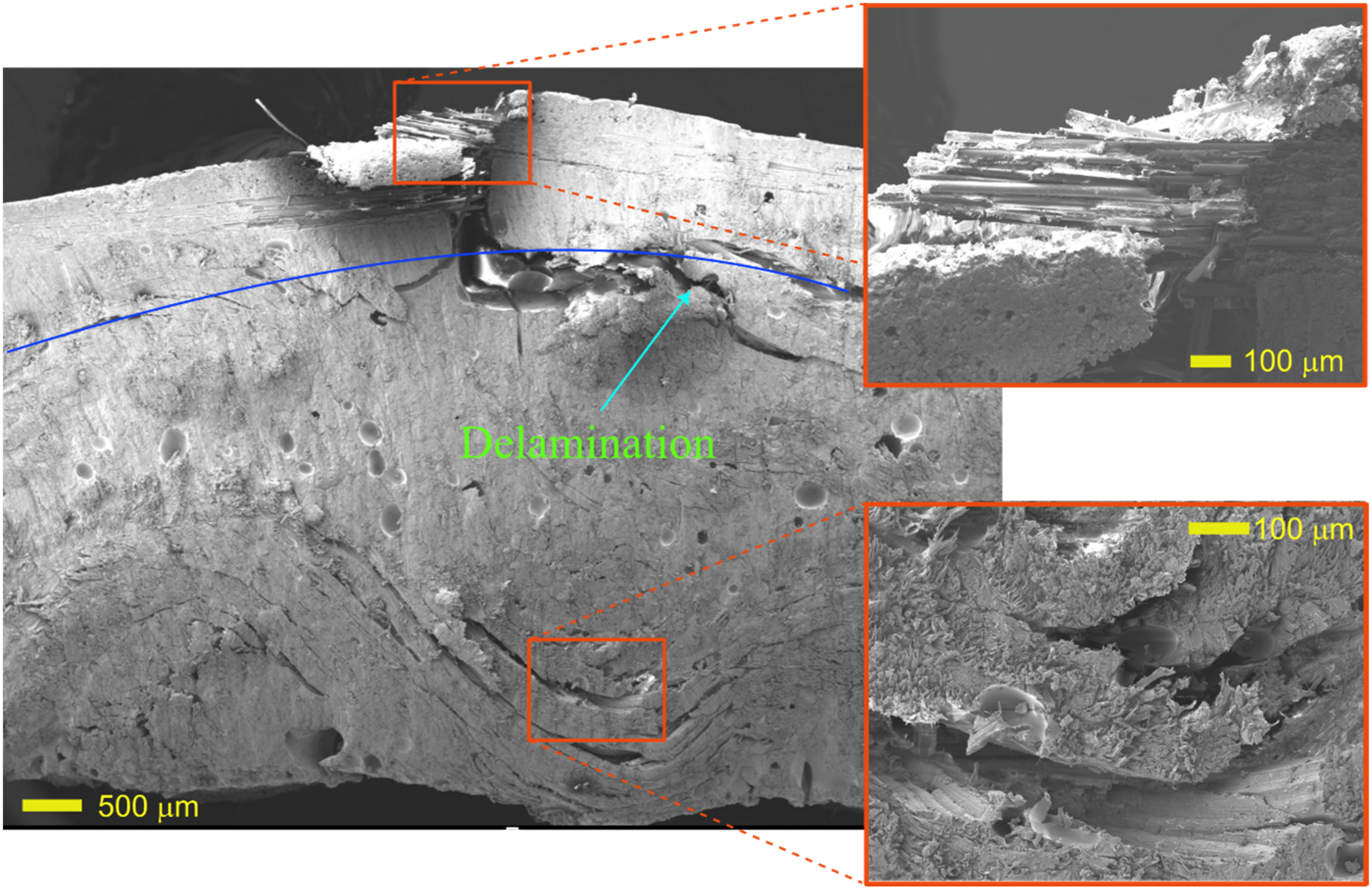
A limitation of this study is that, although DMA measurements were performed on the all-glass fiber laminate, these data are not reported. Due to its distinct viscoelastic response, the laminate was used only as an internal reference.
Impact loading by a pendulum hammer
Small samples of hybrid laminates composed of henequen fibers and various synthetic fibers were subjected to impact loading using a Charpy pendulum tester. The purpose of this test was to quantify the absorbed energy for each laminate configuration. Figure 9 presents the results, with the absorbed energy normalized by the thickness and width of each sample. Notably, the 2FM_GF and 2CM_GF configurations exhibit the maximum absorbed energy, surpassing the performance of laminates made solely of henequen fibers (2CM and 2FM). This exceptional energy absorption capacity under impact loading is consistent with the behavior observed under quasi-static bending loading. The addition of a single glass fiber fabric layer notably enhances the performance of natural fiber composites. This finding further demonstrates the beneficial influence of hybridization in natural fiber composites. Absorbed energy of hybrid natural fiber composites impacted by a pendulum hammer.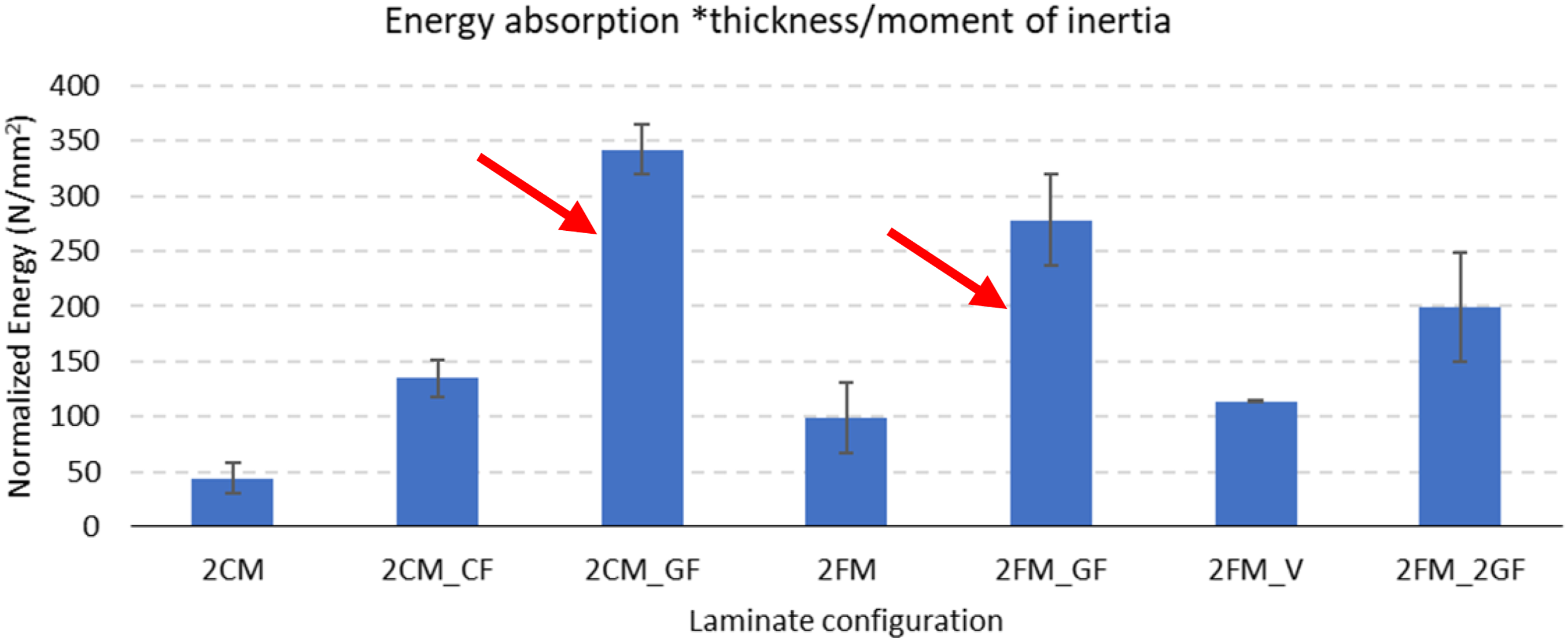
Low velocity impact loading
To assess the impact of hybridization on the maximum force, maximum displacement, and absorbed energy of various laminate configurations, force-time and force-displacement trends were plotted and contrasted. Figure 10 displays the force-time and force-displacement profiles for natural fiber reinforced composites with one or two layers of glass fiber fabrics subjected to 15 J and 20 J of impact energy; only henequen fiber fabrics with fine mesh (FM) were used. For comparison, the behavior of glass fiber reinforced laminates (4GF) under impact loading is included. (a)-(b) Force-time curves of hybrid natural fiber composites subjected to low velocity impact, two impact energies 15 J and 20 J. (c)-(d) The corresponding force-displacement curves.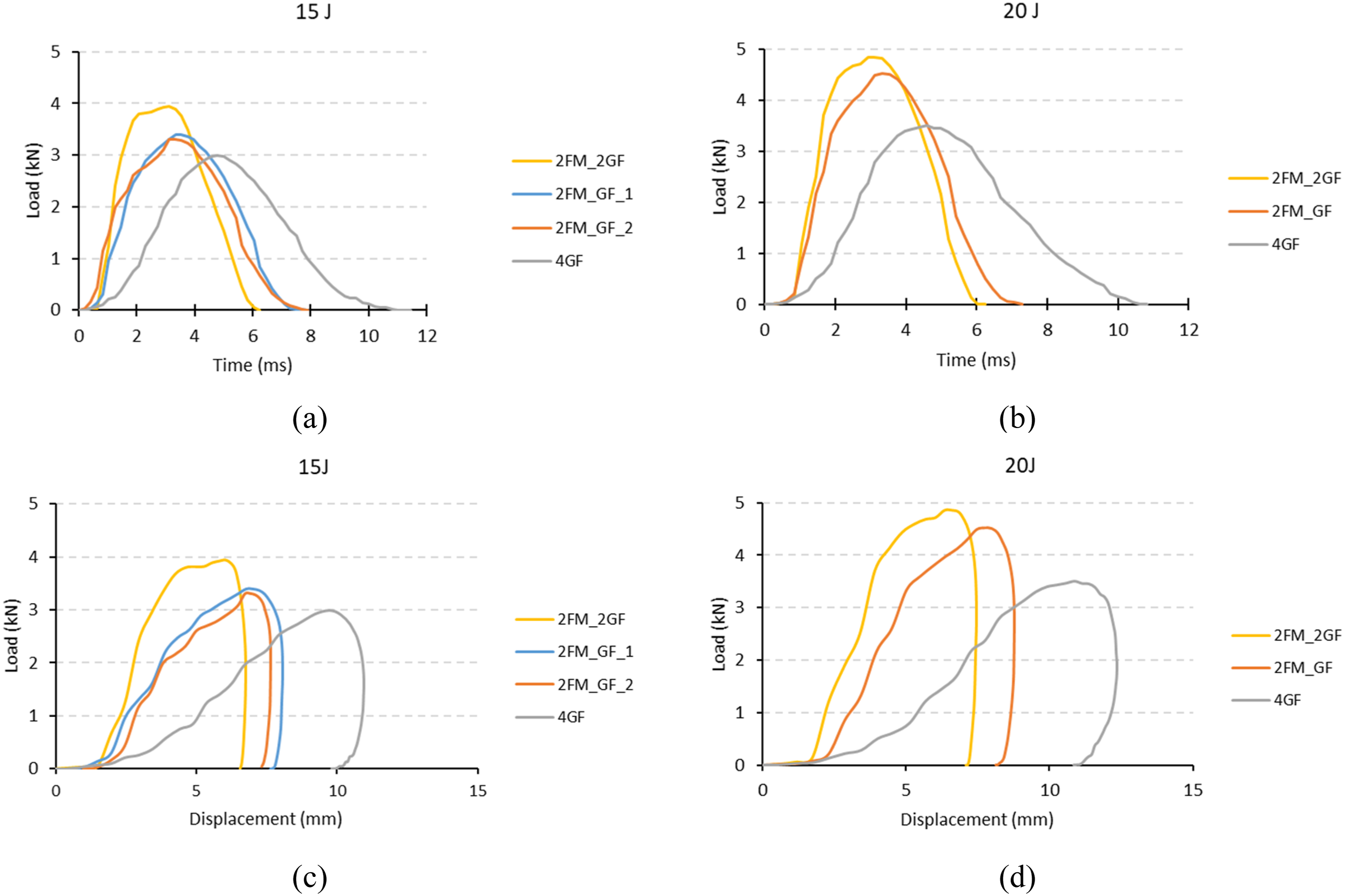
From Figure 10, it is evident that the hybrid laminates with two layers of glass fiber fabric exhibit a higher impact peak force at both 15 J and 20 J impact energies compared to the other laminate configurations, indicating superior mechanical performance. This is because, due to their nature and location (back side to the impact), fiberglass has greater tensile strength than henequen fibers, which delays the initiation and propagation of tension damage, allowing it to act as a structural containment element that distributes the stresses. 14 Two samples of 2FM_GF were tested to verify repeatability at 15 J, as shown in Figure 10. Notably, glass fiber reinforced laminates (4GF) demonstrate lower peak force compared to the hybrid laminates but have a longer contact time. Figure 10 shows that the peak force of the hybrid sample with one glass fiber layer (2FM_GF) is about 4.7 kN, which is higher than the values reported for natural fiber reinforced composite laminates, 3 where peak contact forces for 20 J impact energy were 3.6, 2.02, 1.71, and 1.71 kN for linen/epoxy, bamboo/epoxy, jute/epoxy, and hemp/epoxy, respectively. This demonstrates the beneficial effect of hybridization in henequen fiber/epoxy composites; adding just one glass fiber layer significantly enhances the load-bearing capacity under low-velocity impact compared to other natural fiber reinforced laminates. Henequen fiber composites with one glass fiber layer exhibit higher resistance to impact damage, showing an ability to withstand loads before failure. Figure 10 also indicates that adding two layers of fiberglass fabric further increases the peak force in the low-velocity impact experiment of the hybrid composite (2FM_2GF) both for 15 J and 20 J impacts.
Figure 10 illustrate the force-displacement plots of natural fiber hybrid composites tested under to low-velocity impacts with energy values of 15 J and 20 J. Generally, the displacement at failure of hybrid samples is lower (approximately 30% to 50%) than that of glass fiber reinforced laminates (4GF), which is attributed to the lower thickness of the latter and, consequently, lower stiffness. The force-displacement curves for all samples analyzed show that displacement increases with the maximum force and does not decrease to zero during unloading, suggesting permanent deformation after impact. An increase in displacement is observed in the 4GF samples at the time of failure (δ = 11 mm).
Figure 11 presents the absorbed impact energies of hybrid henequen fiber composites and glass fiber laminates. It is noted that the absorbed energy of henequen fiber composite laminates with one or two glass fiber layers (approximately 19.7 J at 20 J impact energy) is higher than that of composites made solely of glass fiber fabrics (4GF). Adding one or two glass fiber fabrics to the henequen laminate does not significantly impact the energy absorption of the hybrid composite tested under low velocity impact loading. Comparing the energy absorption of different natural fiber/epoxy composites at 20 J impact energy, it was reported that bamboo had the highest energy absorption (19.55 J),
3
followed by jute, hemp, and the lowest corresponding to linen. Thus, the energy absorption capacity under impact loading of the hybrid composite of henequen fiber and fiberglass is equal to or greater than that of laminates made of other natural fibers. Absorbed energy of hybrid natural fiber composites subjected to low velocity impact, two impact energies, (a) 15 J, (b) 20 J.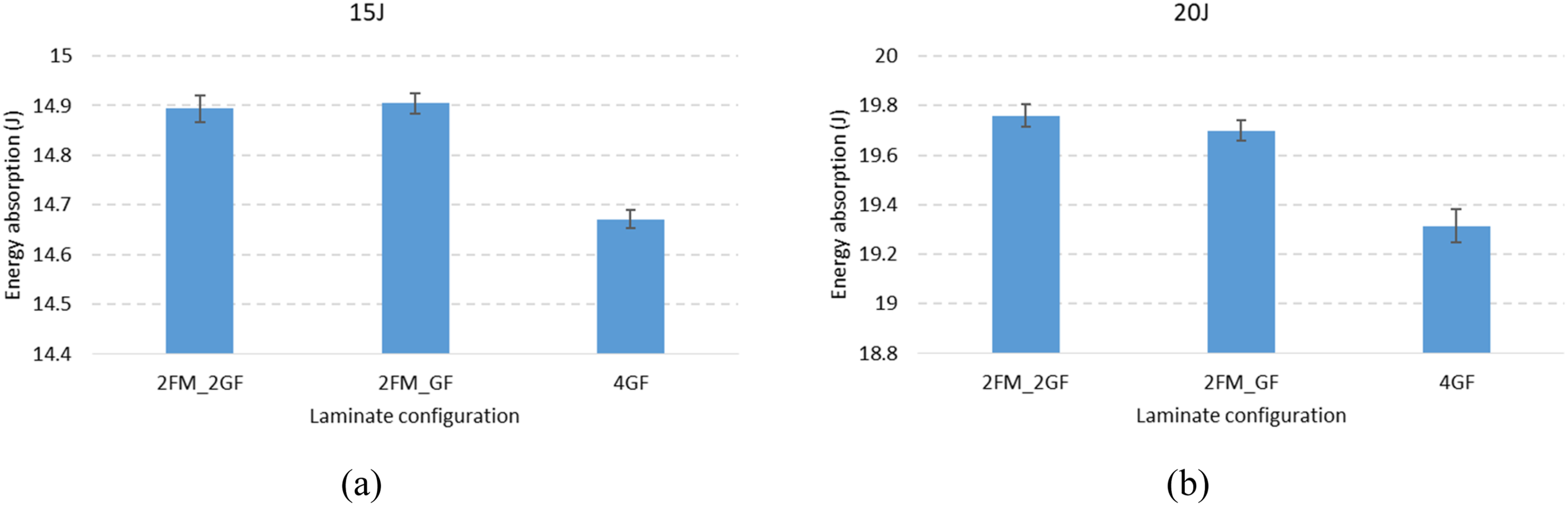
Damage analysis
The identification and analysis of failure mechanisms in henequen and synthetic fiber composite specimens subjected to bending were performed using scanning electron microscopy (SEM). Microstructural analysis was carried out in the fractured zones. Figures 8 and 12 present SEM micrographs of the fractured hybrid composite beams 2FM_GF and 2CM_GF, respectively, after subjecting them to bending tests. In general, a flexural tensile failure mode was observed in all tested beams. The SEM images indicate that material failure occurred on the tensile side due to the greatest normal stress located near the base of the beam. SEM images of fracture surface of hybrid natural fiber composite sample 2CM_GF subjected to flexural loading.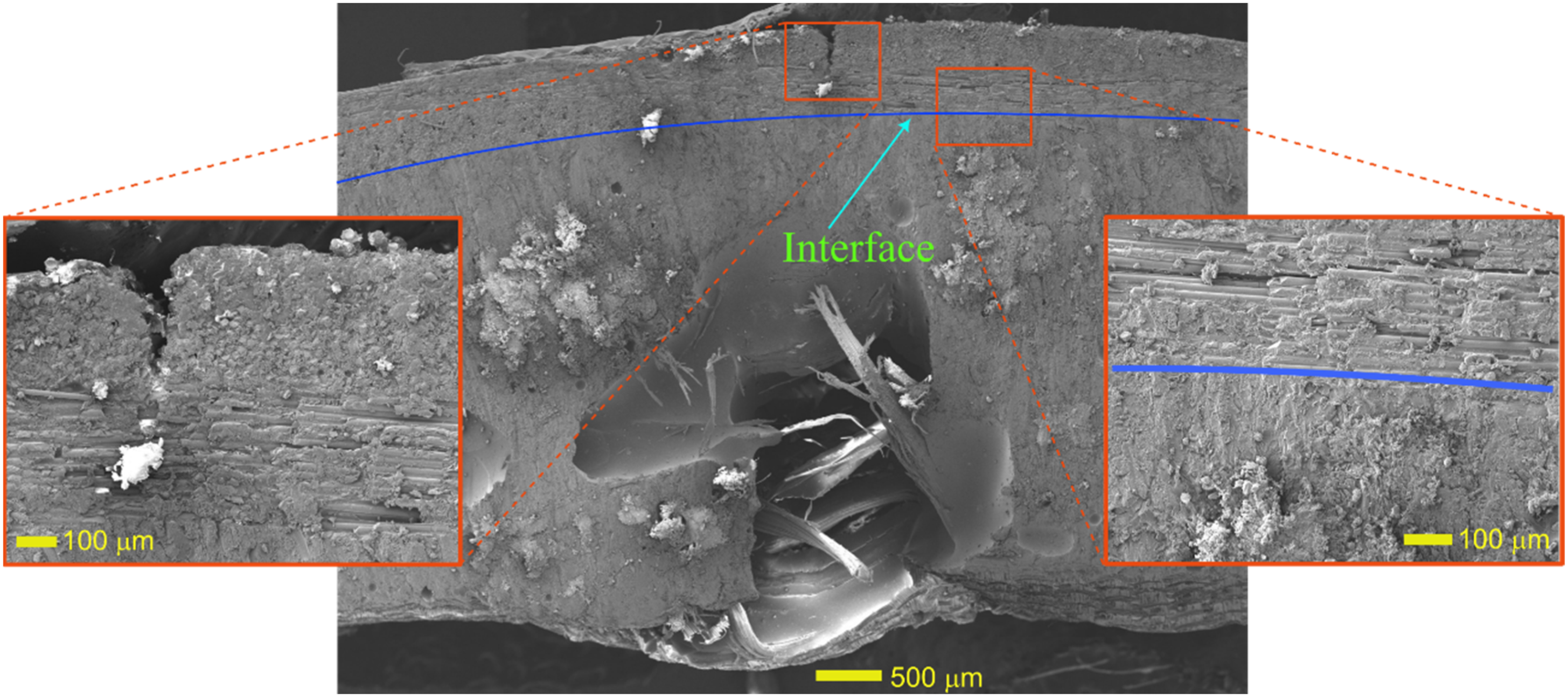
The images shown in Figure 8 reveal a combination of damage mechanisms, such as matrix cracking, fiber-matrix debonding, and delamination. Slip bands are noted on the lower part of the specimen, indicating delamination. In the upper part, the fiberglass layer shows numerous exposed and fractured fibers. It is worth noting that a limited degree of delamination is observed at the interface between the fiberglass and natural fiber layers, which may be attributed to the fact that a significant portion of the damage energy is absorbed by the natural fiber fabrics. The micrographs shown in Figure 12, corresponding to the hybrid composite with coarse-mesh henequen fabric, reveal some voids generated during the manufacturing process. The blue line indicates the interface between the glass fabric layer and the henequen layers, and no appreciable delamination is observed, demonstrating good adhesion between the dissimilar materials. A crack is observed in the upper part of the sample, originating from the 90° glass fiber layer, which represents the weakest fiber orientation.
The absence of significant delamination between the fiberglass fabrics and the henequen layers, as observed in Figures 8 and 12, suggests strong interfacial bonding and good compatibility between the synthetic and natural fibers. Nevertheless, the limited extent of delamination may be primarily associated with other damage mechanisms occurring within the natural fiber layers such as fiber breakage, matrix cracking, and local plastic deformation rather than being solely governed by interfacial compatibility.
Conclusions
This study successfully demonstrated that hybridizing henequen natural fibers with synthetic fibers is a highly effective strategy for developing sustainable composites with enhanced performance for structural applications. The inclusion of even a single layer of glass fiber fabric creates a significant synergistic effect, substantially improving the flexural strength, load-bearing capacity, and energy absorption of henequen composites under both quasi-static and impact conditions. Notably, hybrid configurations outperformed composites made solely of glass or henequen fibers in several key metrics, particularly in strain energy storage and impact energy absorption. Dynamic Mechanical Analysis (DMA) confirmed that while hybridization is a potent method for increasing material stiffness (storage modulus, E′), it comes at the cost of reduced intrinsic damping capacity (tanδ). This inverse relationship is a critical design consideration for applications requiring both structural rigidity and vibration absorption. The consistent glass transition temperature (Tg) across all laminates confirmed that the upper service temperature is dictated by the epoxy matrix, independent of the reinforcement type. Microstructural analysis via Scanning Electron Microscopy (SEM) revealed excellent adhesion at the interface between the henequen and glass fiber layers. The absence of significant delamination validates the manufacturing process and underscores the strong compatibility between the natural and synthetic constituents, which is fundamental to the enhanced mechanical performance observed. Overall, the results indicate that hybrid henequen–glass fiber composites may represent a promising, cost-effective, and more sustainable alternative to conventional synthetic composites. The enhanced energy absorption and load-bearing trends observed under quasi-static bending suggest their potential for lightweight, energy-absorbing structural applications, particularly in the automotive sector. Nevertheless, further experimental validation under service-relevant loading conditions and long-term durability assessments are necessary before definitive conclusions regarding their structural applicability can be drawn. A potential future research direction involves optimizing the balance between stiffness and damping capacity in hybrid laminates, as hybridization enhances strength and energy absorption but reduces vibration dissipation. This could be addressed by evaluating new stacking sequences, adjusting the volumetric fraction of the reinforcement in each configuration, and incorporating intermediate or graded layers between natural and synthetic fibers. Furthermore, it would be valuable to investigate their response under cyclic or vibratory loads to assess performance and durability under real-world conditions, particularly in automotive applications.
Footnotes
Acknowledgements
The authors want to thank Víctor Villagómez for the technical assistance in sample preparation. The authors also would like to acknowledge Maria Guadalupe Mendez for her technical assistance in conducting the Dynamic Mechanical Analysis (DMA). The authors thank the Laboratorio Nacional de Materiales Grafénicos for providing access to its facilities.

Author contributions
Carlos Rubio-González: conceptualization, methodology, investigation, funding acquisition, data curation, methodology, writing – original draft. José de Jesús Ku-Herrera: data curation, conceptualization, review and editing. Eduardo José-Trujillo: methodology, data curation.
Funding
The authors disclosed receipt of the following financial support for the research, authorship, and/or publication of this article: This work was financially supported by the Tecnológico de Monterrey México
Declaration of conflicting interests
The authors declared no potential conflicts of interest with respect to the research, authorship, and/or publication of this article.
Data Availability Statement
The data supporting this study are available from the corresponding author upon request.