







Abstract
This study investigates the mechanical properties of novel, biodegradable polylactic acid (PLA) and short flax fiber composite sandwich structures with chiral architected cores, fabricated via additive manufacturing. Three core geometries were designed and tested: tetrachiral, anti-tetrachiral, and a novel anti-tetrachiral arrowhead configuration, each with one- and two-unit cells in width. Experimental results from tensile, compression, and three-point bending tests revealed that these lattices exhibit auxetic behavior (negative Poisson’s ratio), driven by the rotation of cylindrical nodes and the flexure of connecting ligaments. The mechanical performance was highly dependent on the core geometry and relative density. The anti-tetrachiral arrowhead core, in its two-cell configuration (AT4CA2), demonstrated superior tensile stiffness (Young’s Modulus of 423 MPa). In compression, anti-tetrachiral cores (AT4C2, AT4CA2) showed exceptional energy absorption capacity (93 J and 90 J, respectively), significantly outperforming their tetrachiral counterparts despite similar relative densities. Flexural tests confirmed that the sandwich structures provide a high stiffness-to-weight ratio, with the arrowhead geometry (AT4CA1) achieving the highest peak load, underscoring the critical role of microstructural engineering over mere material quantity. This work establishes that these bio-composite metamaterials, particularly the innovative anti-tetrachiral arrowhead design, offer a promising and environmentally friendly alternative for lightweight, high-performance structural applications.
Keywords
Introduction
The escalating demands of latest engineering spanning aerospace, automotive, and biomedical sectors for materials that are simultaneously lightweight, strong, and sustainable have fundamentally shifted research paradigms from seeking new base materials to designing novel architectures.1–3 This has catalyzed the emergence of metamaterials, whose macroscopic properties are not an inherent characteristic of their constituent material but are derived from their meticulously engineered internal geometry.4,5 This architectural prowess allows for the creation of structures with previously unattainable mechanical behaviors, including tunable stiffness and multifunctional integration.6,7 Within this vast design space, a particularly fascinating class of materials has emerged: those exhibiting a negative Poisson’s ratio (NPR), colloquially known as auxetic materials.8,9 Unlike conventional materials, which thin when stretched and bulge when compressed, auxetic materials expand transversely under tensile loads and contract laterally under compression. This counter-intuitive behavior often confers a suite of enhanced properties, including superior fracture resistance, enhanced energy absorption, improved indentation resilience, and superior shear modulus.10–14
The scientific pursuit of auxetic materials has evolved from initial discoveries in re-entrant foam structures to the rational design of intricate lattice architectures. 15 Among these, chiral metamaterials have risen to prominence due to their deformation mechanism and high designability.16,17 Chiral structures, characterized by a network of central nodes connected by curved or straight ligaments, achieve their auxetic response not through bending-dominated deformation like re-entrant honeycombs, but through a coupled mechanism of ligament bending and nodal rotation. 18 When uniaxially loaded, the ligaments transmit forces that induce a rotation of the nodes, which in turn drives the lateral expansion or contraction of the entire lattice. This rotational mechanism is highly effective at dissipating mechanical energy and accommodating large deformations, making chiral structures exceptionally suitable for applications in impact protection, vibration damping, and compliant mechanisms. 19
The exploration of chiral geometries has been rich and varied. Foundational work established the basic behavior of two-dimensional tetrachiral (four ligaments per node) and anti-tetrachiral layouts. The profound geometric tunability of a trichiral core has been shown to enable a metamaterial with Poisson’s ratios spanning the entire range from −1 to 1.20–23 Xu et al. 24 and Zhang et al. 25 have proposed modular design strategies and 3D curved chiral beam lattices, respectively, significantly expanding the design freedom and revealing novel properties such as compression-torsion coupling, as explored by Hao et al. 26 Zhang et al. 27 offer a robust theoretical framework for a novel composite structure, developing analytical models for both quasi-static and impact loading that are validated by simulation. Zeng et al. 28 address a key manufacturing challenge with an efficient interlocking assembly method, providing valuable experimental and numerical data on the critical yet often overlooked out-of-plane properties. Gupta et al. 17 effectively bridge the gap between simulation and real-world application, using additive manufacturing to validate the superior performance of a chiral structure.
Despite these significant advancements, a critical challenge persists: many existing designs, while innovative, often rely on a limited set of deformation mechanisms or face a trade-off between geometric complexity and manufacturability, particularly when sustainability is a key concern. A substantial portion of the literature focuses on polymers derived from petrochemicals or high-performance metals, with less emphasis on fully biodegradable systems. Furthermore, the quest for higher performance often leads to increased relative density, counteracting the primary goal of lightweighting. There exists a compelling scientific and engineering need to develop novel chiral architectures that can achieve superior mechanical efficiency maximizing properties like specific stiffness and energy absorption.
To address this gap, this paper introduces a novel, sustainable material system and a groundbreaking chiral geometry. We present a comprehensive experimental investigation into the mechanical properties of sandwich structures with architectured cores made from a fully biodegradable composite of polylactic acid (PLA) reinforced with short flax fibers. Within this eco-friendly framework, we propose and rigorously characterize a new, innovative core design: the anti-tetrachiral arrowhead architecture. This novel geometry represents a significant departure from conventional chiral designs. It ingeniously combines the rotational nodal mechanism of anti-tetrachiral structures with a unique, tapered “arrowhead” ligament configuration. This hybrid design is conceived to foster a more complex and synergistic deformation mechanism. Under load, the arrowhead ligaments are anticipated to promote a combination of controlled bending and axial stretching, working in concert with the nodal rotation to redistribute stresses more efficiently and activate multiple energy dissipation pathways simultaneously. This stands in contrast to standard anti-tetrachiral structures, which are primarily bending-dominated.
The primary objective of this work is to provide a definitive, experimental evaluation of the static and dynamic mechanical performance of these biodegradable chiral sandwich structures. We systematically compare three core architectures tetrachiral, anti-tetrachiral, and the novel anti-tetrachiral arrowhead each fabricated with varying unit cell densities. Our investigation is structured around a multi-faceted experimental campaign designed to probe their behavior under different loading conditions. ⁃ Tensile Testing: To quantify the fundamental elastic properties, including the structural Young’s Modulus and the crucial auxetic response (Poisson’s ratio), directly linking the geometric design to the NPR effect. ⁃ Quasi-Static Compression: To assess the core’s compressive strength and, most importantly, their energy absorption capacity a key metric for protective applications. ⁃ Three-Point Flexural Testing: To evaluate the performance of the full sandwich composite, measuring its bending stiffness, peak load, which are critical for panel-like structural elements.
Materials, design, and methods
Base material and manufacturing process
The investigated material consisted of a blend of polylactic acid (PLA) and short flax fibers. It demonstrated a density of 1000 kg·m-3, a Young’s modulus of 3400 MPa, and a Poisson’s ratio of 0.3. Flax fibers accounted for 20% of the material’s total volume fraction. The PLA/flax composite filament was supplied by NANOVIA., 29 where it has a diameter of 1.75 mm. This biodegradable and renewable composite was designed for additive manufacturing purposes. Being biodegradable, renewable, and recyclable, this material provides an environmentally friendly alternative for engineering parts.
3D printing parameters.

A comprehensive CAD model of the metamaterial was developed, which included specific geometric parameters of the metamaterial’s chiral core structure, namely the node radius and ligament length. The constructed CAD model was imported into Idea Maker software, which transcribed the.stl file into G-Code file instructions for the RAISE3D Pro2 Plus printing system. The object was then manufactured by running a composite filament through a heat block assembly into a nozzle for a layer-by-layer additive manufacturing approach to forming the metamaterial. The printing process followed the programmed/constructed G-Code path for material deposition.
During the printing process, important parameters including extrusion flow rate, layer thickness, and cooling rate were continuously monitored and modified to ensure print quality. After printing, the printed specimens were carefully removed from the build plate and underwent essential post-printing processes such as cleaning and inspection. 30 The combination of precise CAD modeling, innovative 3D printing techniques, and controlled fabrication conditions helped to create metamaterials with precisely defined structural cell densities, specific to the aims of the current research.
Chiral honeycombs
This research investigates the mechanical behavior of three architectured lattice cores-tetrachiral, anti-tetrachiral, and a novel anti-tetrachiral arrowhead-fabricated via 3D printing from a PLA matrix reinforced with short flax fibers. Each core architecture was produced with varying unit cell densities to evaluate the effect of geometric design and structural compactness on performance metrics such as stiffness, strength, and energy absorption.
Tetrachiral lattice
Figure 1(a) illustrates the geometry of the tetrachiral structure. The specimens were designed and 3D-printed in two distinct unit cell sizes, resulting in cores composed of either one or two periodic cells in width, as detailed in Table 2. The relative density of these cores was calculated using equation (1). Chiral lattices (a) Tetrachiral, (b) Anti-tetrachiral, (c) Anti-tetrachiral arrowhead. Tetrachiral lattice geometry parameters.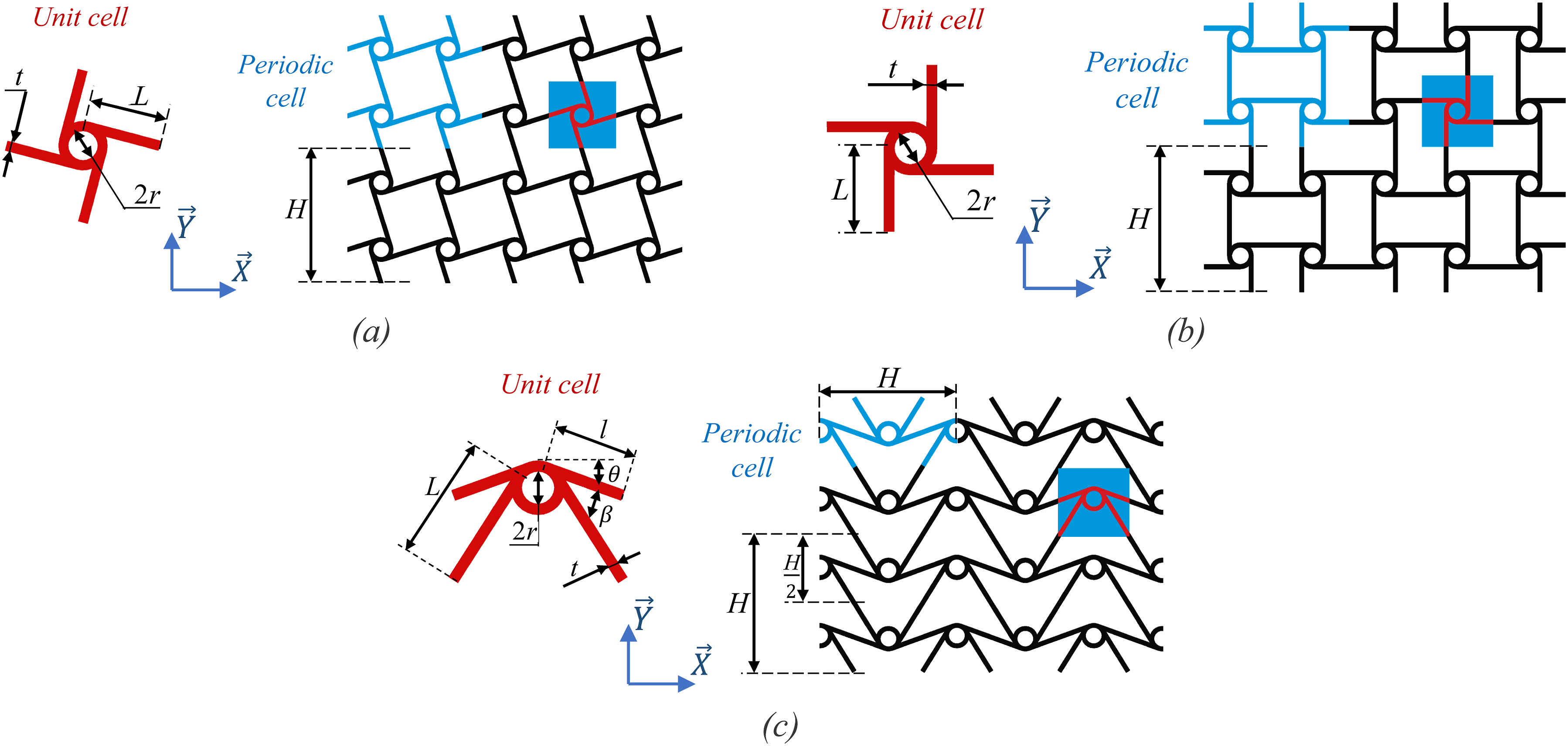

The unit cell of this structure is inscribed within a square of side length (H/2), where H represents the periodic cell length in the Y-direction. The ligament length L is defined by equation (2). Here, r and t denote the cylinder radius and the cell wall thickness, respectively. The cell plane lies along the (X, Y) directions, while the specimen thickness (e) extends along the Z-direction. The specimen width along the Y-axis (b) is fixed at 25 mm.

Anti-tetrachiral lattice
The anti-tetrachiral architecture is also investigated in this work. Figure 1(b) displays the geometry and key parameters of this structure. Static tests are conducted on specimens comprising either one or two cells along their width (b). The anti-tetrachiral unit cell is inscribed within a rectangle with a side length of H/2.

Anti-Tetrachiral lattice geometry parameters.

Anti-tetrachiral arrowhead lattice
In this work, a novel architecture referred to as the anti-tetrachiral arrowhead structure is investigated for the first time. This design combines the elements of a chiral lattice with an arrowhead-like form. The unit cell is inscribed within a square of side length H/2. It consists of a cylindrical node with radius r and two pairs of ligaments, one of length L and the other of length l. This configuration is illustrated in Figure 1(c). The relative density of this core architecture is calculated using equation (5).


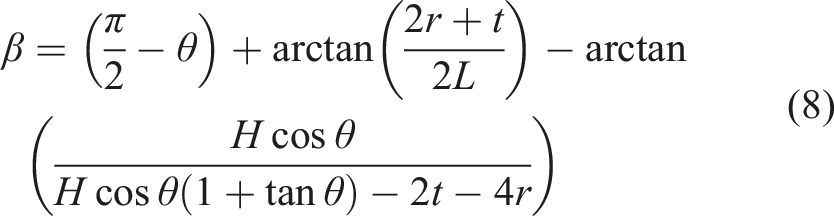
Anti-Tetrachiral arrowhead lattice geometry parameters.

Experimental protocols and FEM model
To characterize the mechanical response of the architected cores described in chiral honeycombs section, tensile tests are first performed directly on the core structures to evaluate their intrinsic architectural properties. Additionally, to gain a complete understanding of the static performance of the resulting sandwich panels, complementary compression and three-point bending tests are conducted.
Tensile test
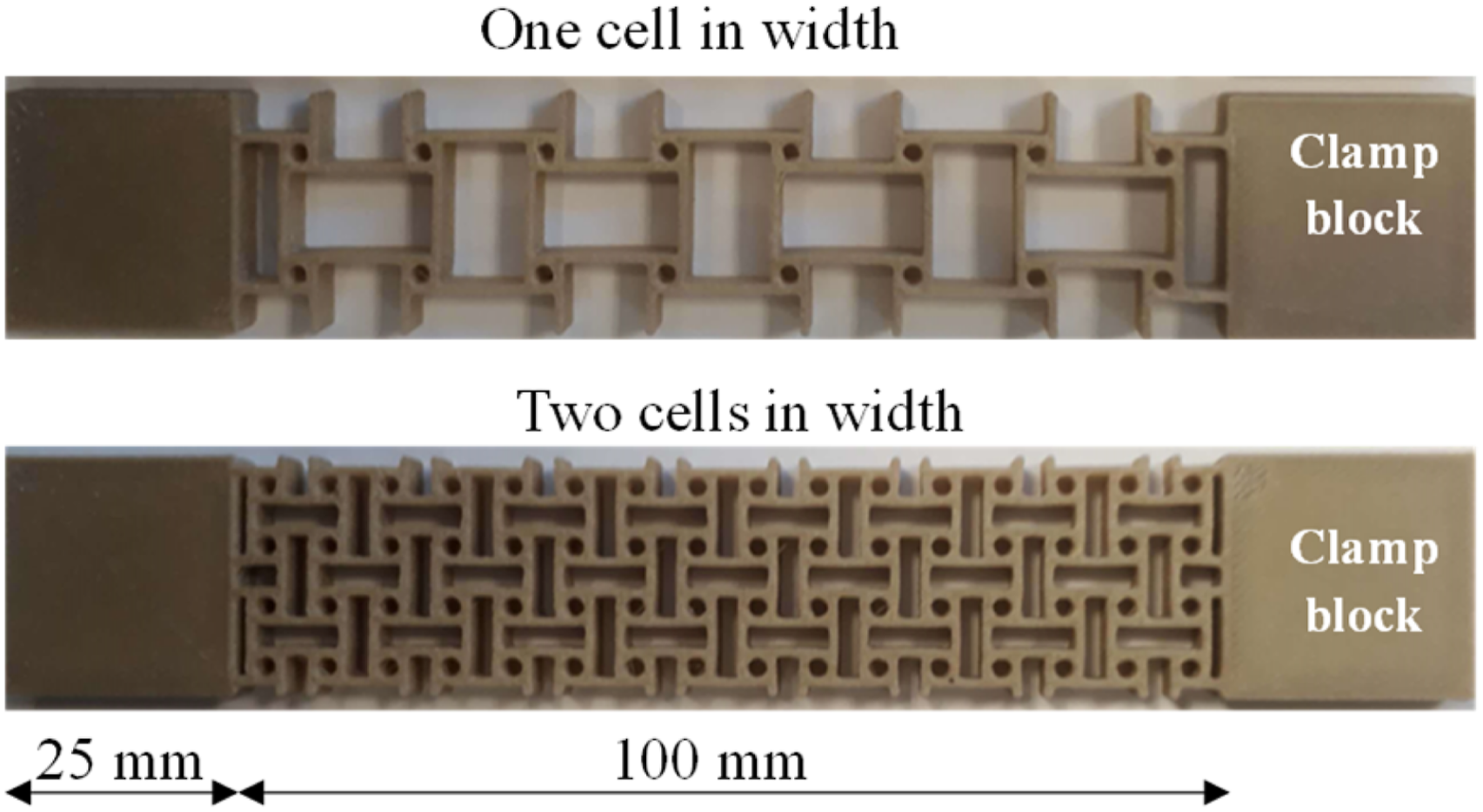
The static properties of the architected cores are analyzed through tensile testing. These tests are conducted using a standard hydraulic testing machine with a 1 kN load cell, as shown in Figure 2, at a constant crosshead speed of 1 mm/min. Fabricated according to the parameters detailed in manufacturing process section, the core specimens feature a usable gauge length of 100 mm, illustrated in Figure 3. Two 25 mm-long gripping blocks, integrated with the architected core pattern, are printed at each end to secure the specimen during testing. All specimens are loaded under the X-direction. Transverse strain is measured directly using an extensometer, while longitudinal strain is derived from the crosshead displacement. To ensure statistical repeatability, a minimum of five specimens per configuration are printed and tested. The transverse strain measurements were performed at the mid-height of the specimen and averaged over a periodic cell comprising between 2 and 4 cells, depending on the specimen geometry, namely for specimens with one and two cells across the specimen width. In addition, the extensometer used in this study is highly sensitive to transverse displacements; however, this sensitivity does not affect the validity of the obtained result Experimental tensile device. Tensile test specimens.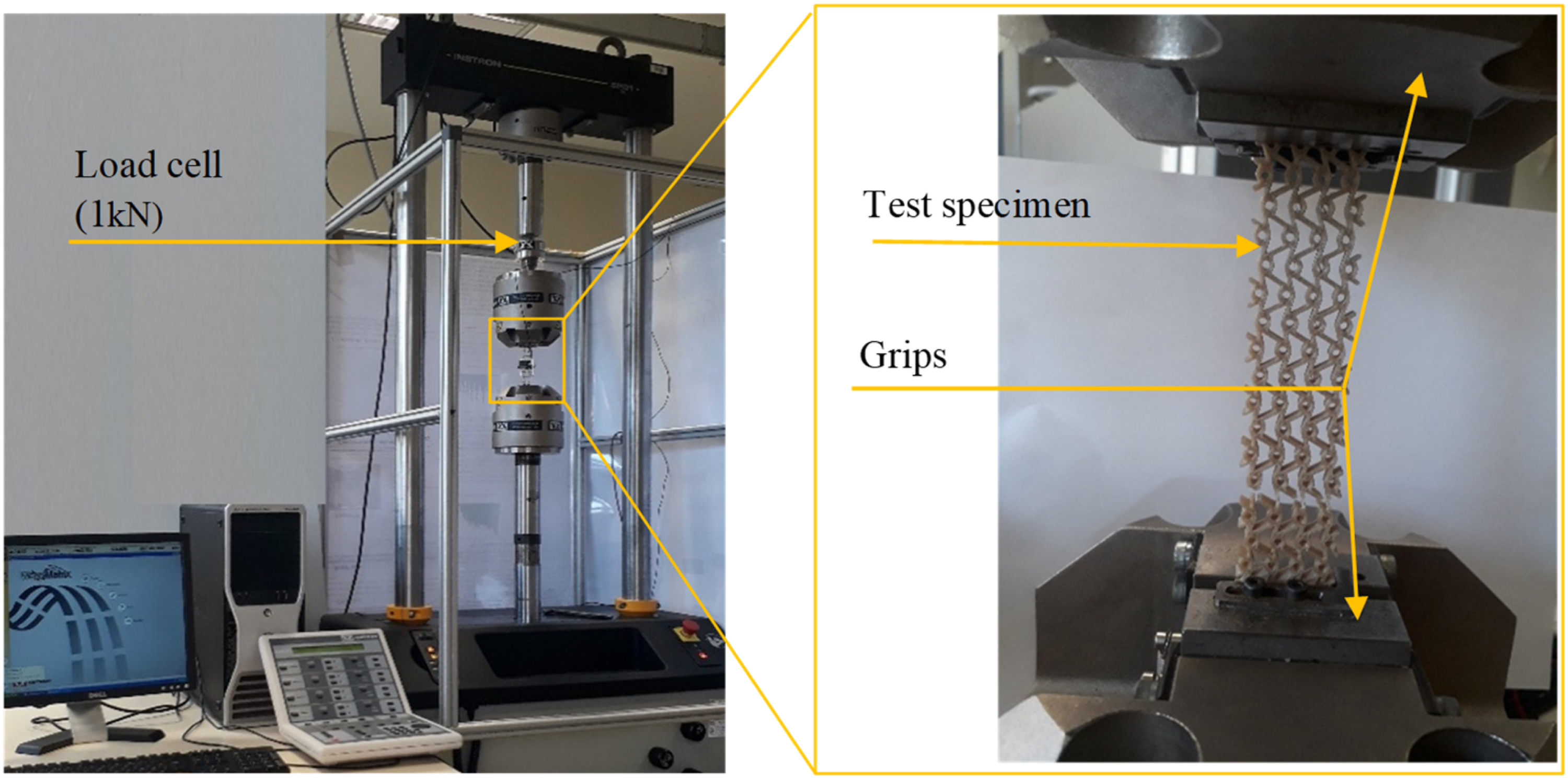
Compression/crush test
Compression tests are conducted using sandwich panels with the geometries and parameters specified in paragraph 2.1 to characterize the stiffness and strength of the structured cores and, specifically, their energy absorption capacities. A machine with a compression device and 100 kN load cell is operated in accordance with ASTM C365
31
(Figure 4). The compressive force is applied by two rigid plates. The test specimens are printed to dimensions of 25 × 25 × 7 mm as shown in Figure 4. Experimental compression device.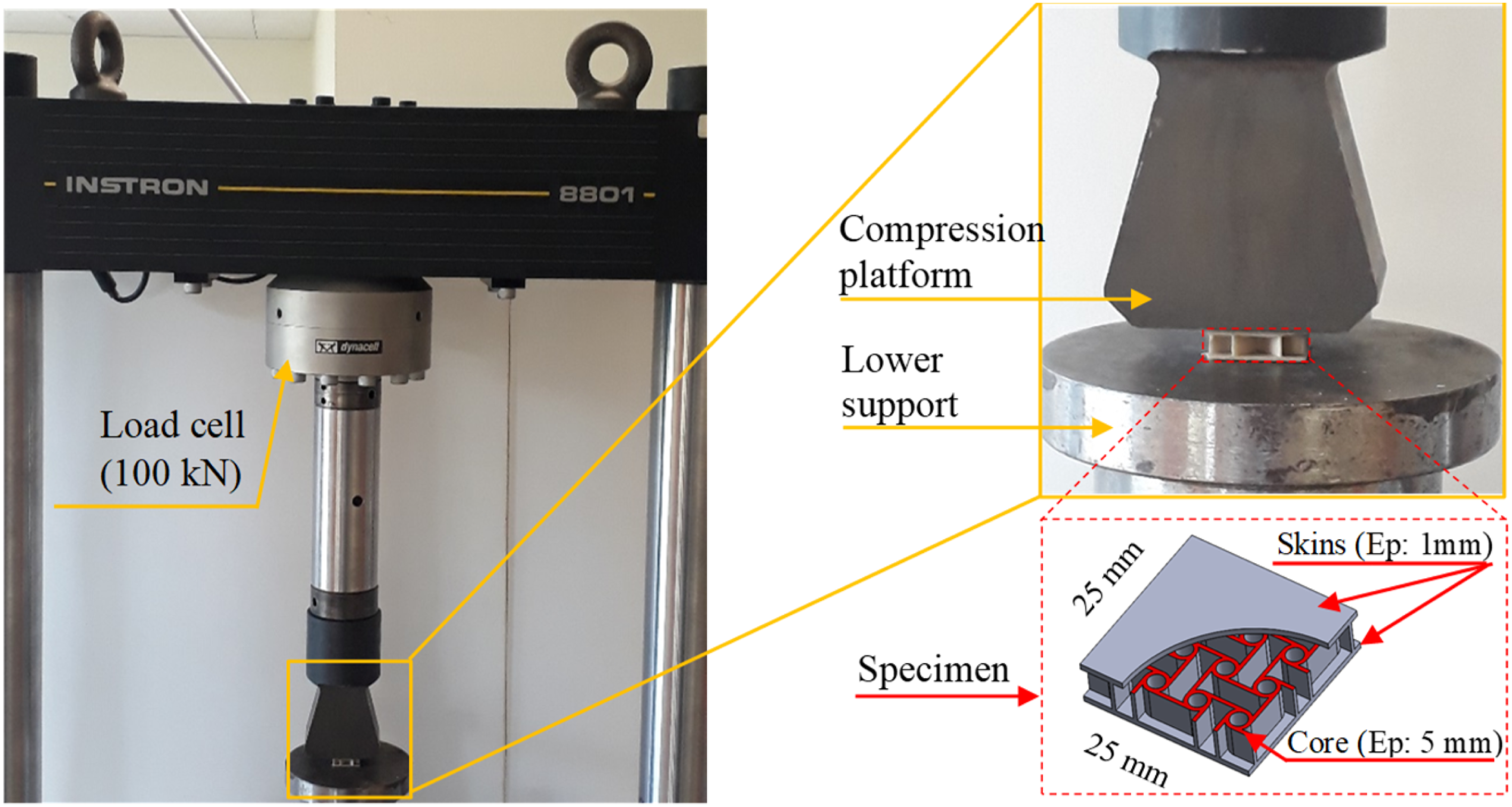
Three-point bending test
The three-point bending performance of the sandwich panels is assessed following the ASTM C393 standard,
32
utilizing a standardized INSTRON testing machine with a 1 kN load cell, as depicted in Figure 5. Tests are conducted on specimens featuring various core architectures and geometric parameters to evaluate their structural behavior. Each architected sandwich beam, with an overall length of 130 mm and a support span (d) of 110 mm, is loaded to failure to determine its ultimate bending properties. To ensure statistical reliability, a minimum of three samples are tested for every core configuration. The sandwich panels are fabricated with a uniform width of 25 mm and a total thickness of 7 mm, which consists of a 5 mm architected core bonded between 1 mm thick composite face sheets. During testing, a central load P is applied at a constant crosshead speed of 5 mm/min. The corresponding mid-span deflection is measured based on the displacement of the loading nose. Experimental three-point bending device.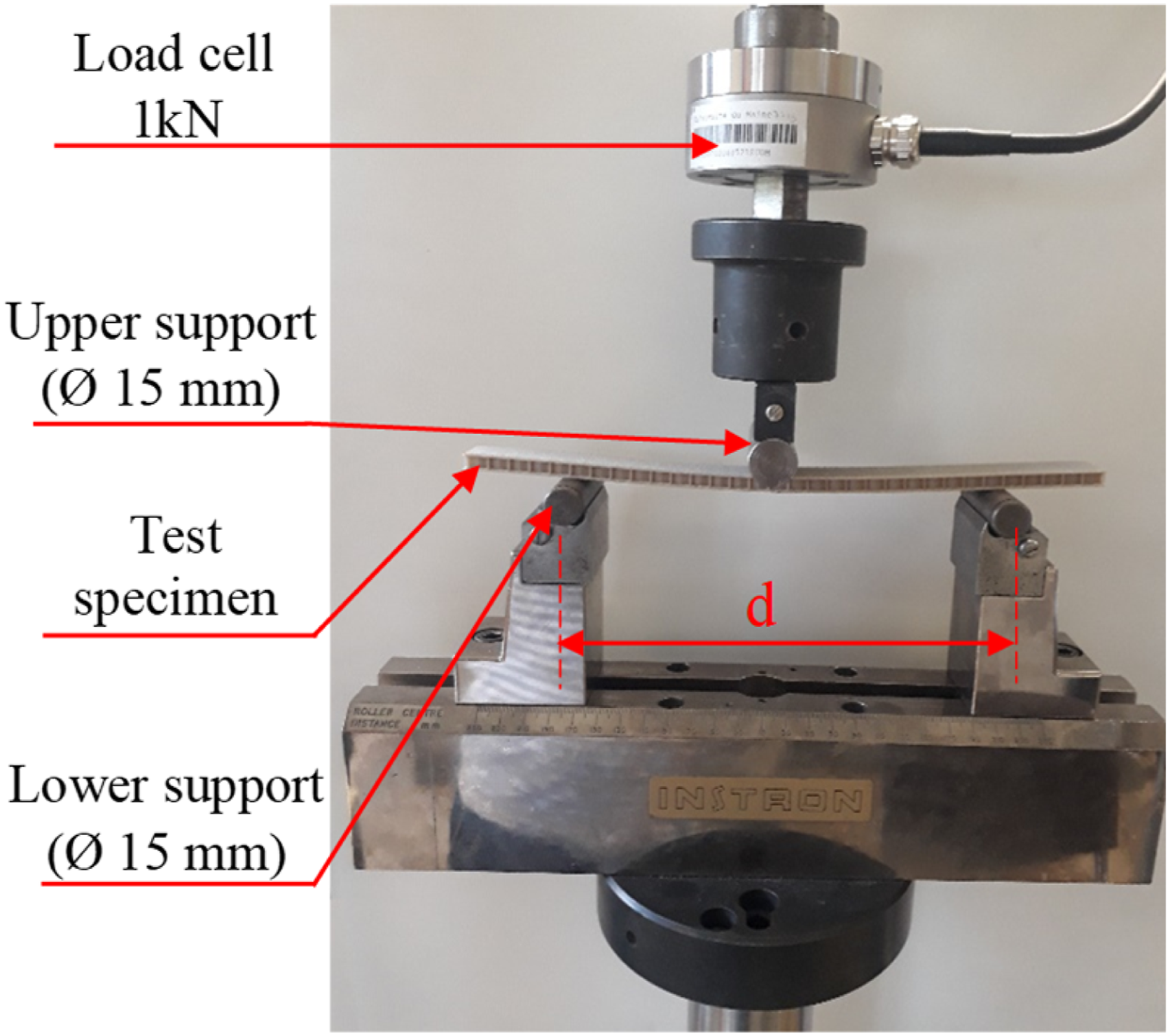
FEM tensile model
Numerical tensile simulations were then conducted to validate the experimental results. This model confirms those findings and enables determination of the static properties of the cores. The complex architecture of the auxetic material was designed using CAD software, after which the tensile model was exported as instructions compatible with ABAQUS/Standard software. The raw core material was modeled as an elasto-plastic material. To this end, experimental tensile tests were performed on 3D-printed specimens conforming to the ASTM D638
33
Type I standard. The average mechanical properties from these tests, intended for numerical models, include a Young’s modulus of 3.2 GPa, ultimate strength of 39 MPa, yield strain of 0.025, plastic strain at failure of 0.06, and Poisson’s ratio of 0.3. The core cell walls were assumed to be isotropic in the present model. This assumption is consistent with the high-precision printing process, although possible printing-induced anisotropy cannot be fully excluded. The core was meshed using tetrahedral quadratic elements. The element count for each architectural core varied based on its unit cell’s geometrical parameters, ranging from 63,214 elements for the T4C1 core to 98,215 for the AT4CA2 core. Figure 6 illustrates the geometry, loading and boundary process for tensile test, where core specimens measured 100 mm in length, 25 mm in width, and 5 mm in thickness. FE model of tensile test specimens with boundary and loading conditions.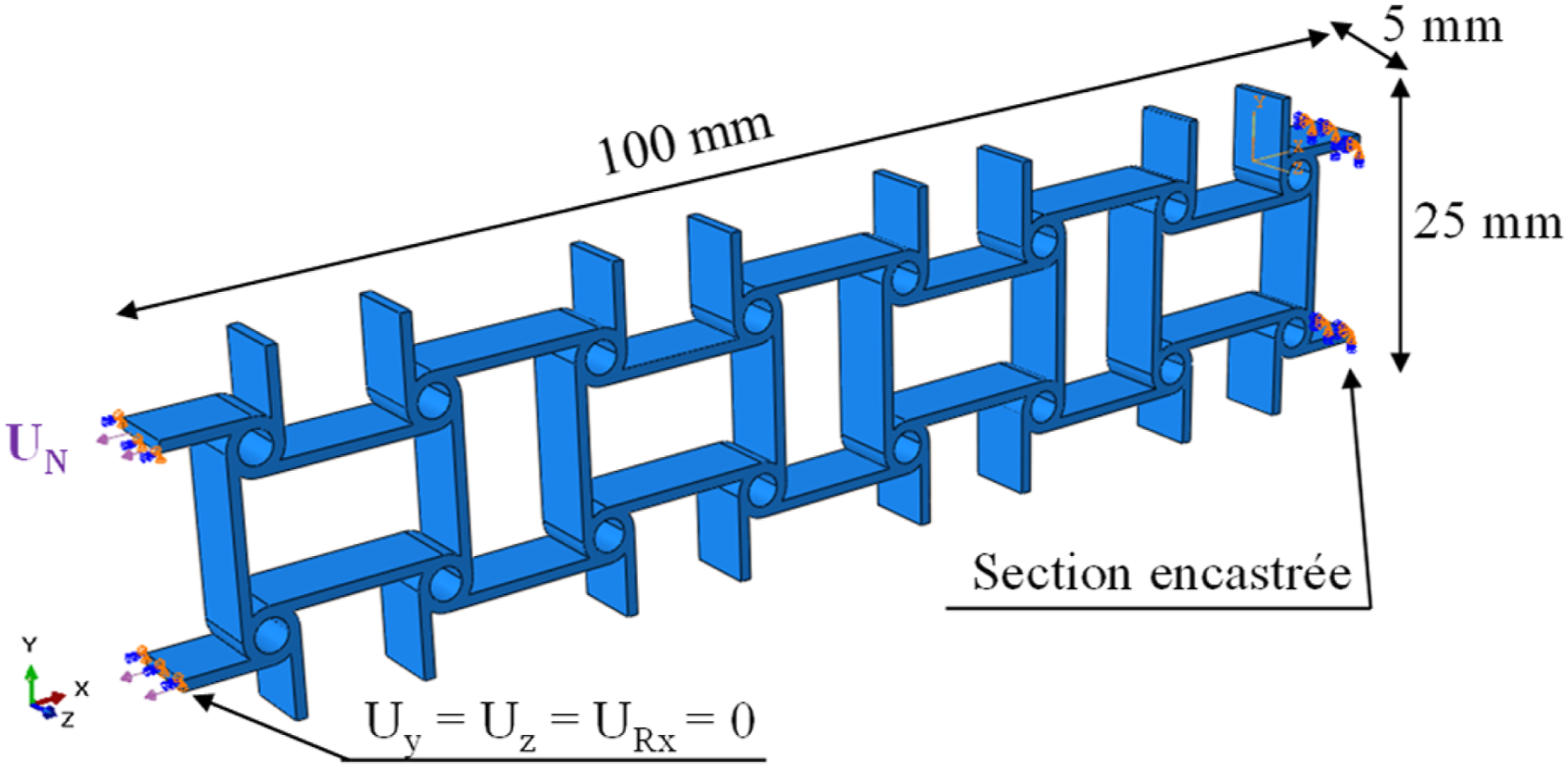
Results and discussion
Cores properties under tension
This study investigates the effect of the structural diversity of chiral and anti-chiral cells on the elastic properties of core materials. Each structure is designed and evaluated according to precise geometric parameters, including a cylindrical node of radius r = 2.4 mm. The homogenized longitudinal stress was computed by dividing the measured axial force by the initial cross-sectional area of the core specimen (b*e). The homogenized longitudinal strain was obtained as the ratio of axial displacement to initial height, while the transverse strain was the ratio of lateral displacement to initial width.
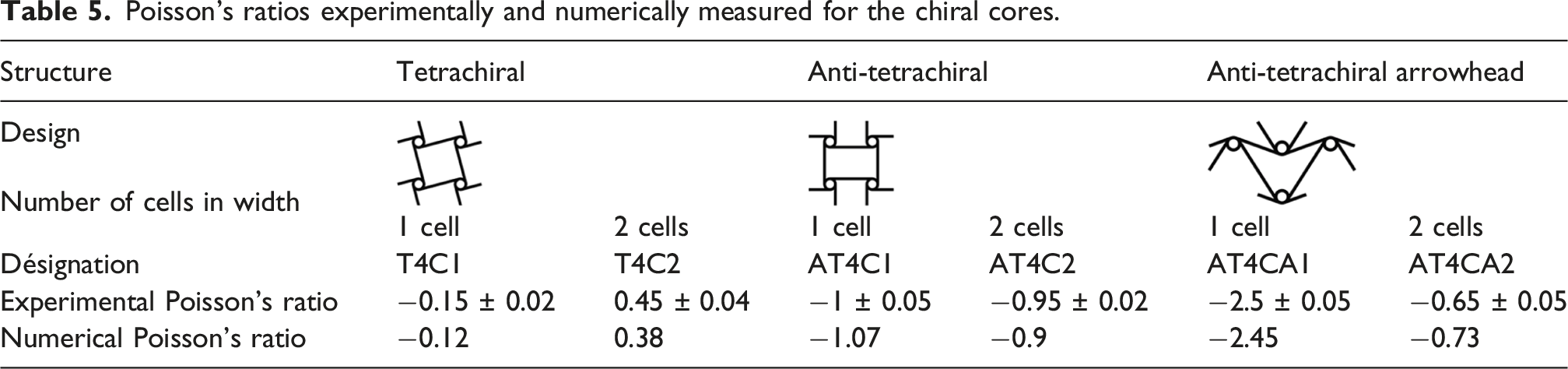
Figure (7) reveal how cell topology and width significantly influence the mechanical behavior of chiral and anti-chiral cellular structures under tension. The AT4CA and AT4C structure exhibits clear auxetic behavior. Also, the anti-tetrachiral arrowhead structure shows good longitudinal tensile capacity whatsoever. The tetrachiral structure presents an intermediate behavior: both single-cell (T4C1) and two-cell (T4C2) configurations support positive longitudinal stress, but notably, neither exhibits significant transverse deformation, suggesting a near-zero or positive Poisson’s ratio rather than auxeticity. On the other hand, increasing cell width (from one to two cells) generally improves mechanical coherence and delays localized failure in the anti-tetrachiral and tetrachiral cases. The curves shown in Figure (7) were subsequently used to determine the elastic properties. Young’s modulus and Poisson’s ratio were fitted using the linear elastic domain corresponding to a stress range of Experimental stress-strain responses of cores with one and two cells wide: (a) Tetrachiral cell, (b) Anti-tetrachiral cell and (c) Anti-tetrachiral arrowhead cell.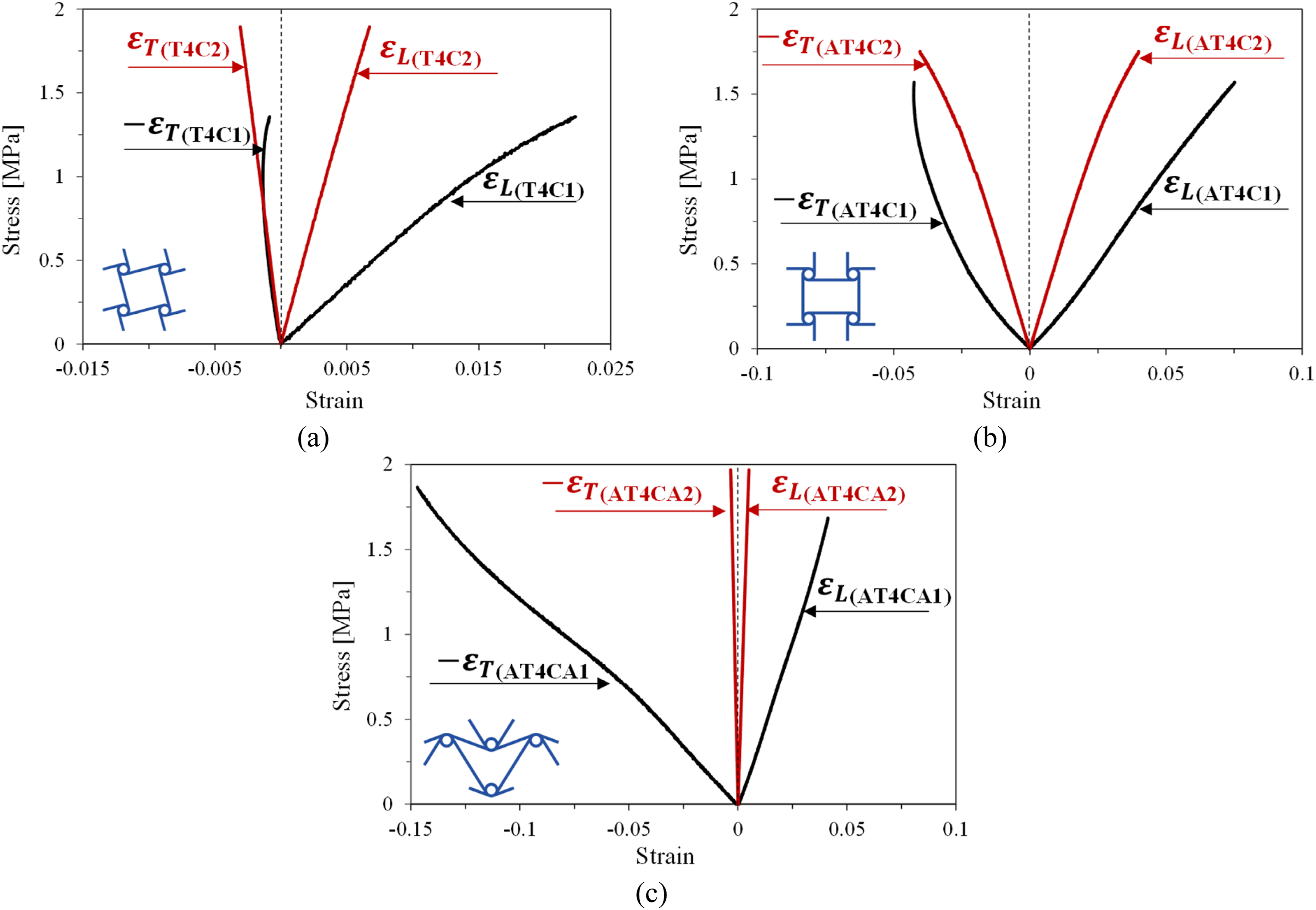
Figure 8 presents the stress–strain responses of the anti-tetrachiral structure under tensile loading, with the longitudinal and transverse strain. In both cases, the finite element model reproduces the experimental response with good overall agreement, confirming that the model captures the global mechanical behavior of the structure. The nearly symmetric V-shaped response indicates a coupled deformation mechanism typical of auxetic-like architectures, where the internal geometry governs the load transfer and deformation pattern. The stress increases almost linearly with strain in the initial regime, suggesting a predominantly elastic response dominated by node rotation and bending of the ligaments rather than by material nonlinearity. Small discrepancies between the numerical and experimental curves appear mainly at larger strains, where the numerical response is slightly stiffer than the experimental in some regions. These differences may be attributed to manufacturing imperfections, geometric tolerances, boundary-condition effects, or material heterogeneity not fully captured in the numerical model. Stress-strain curves of the anti-tetrachiral core (one cell wide): experimental results versus numerical predictions.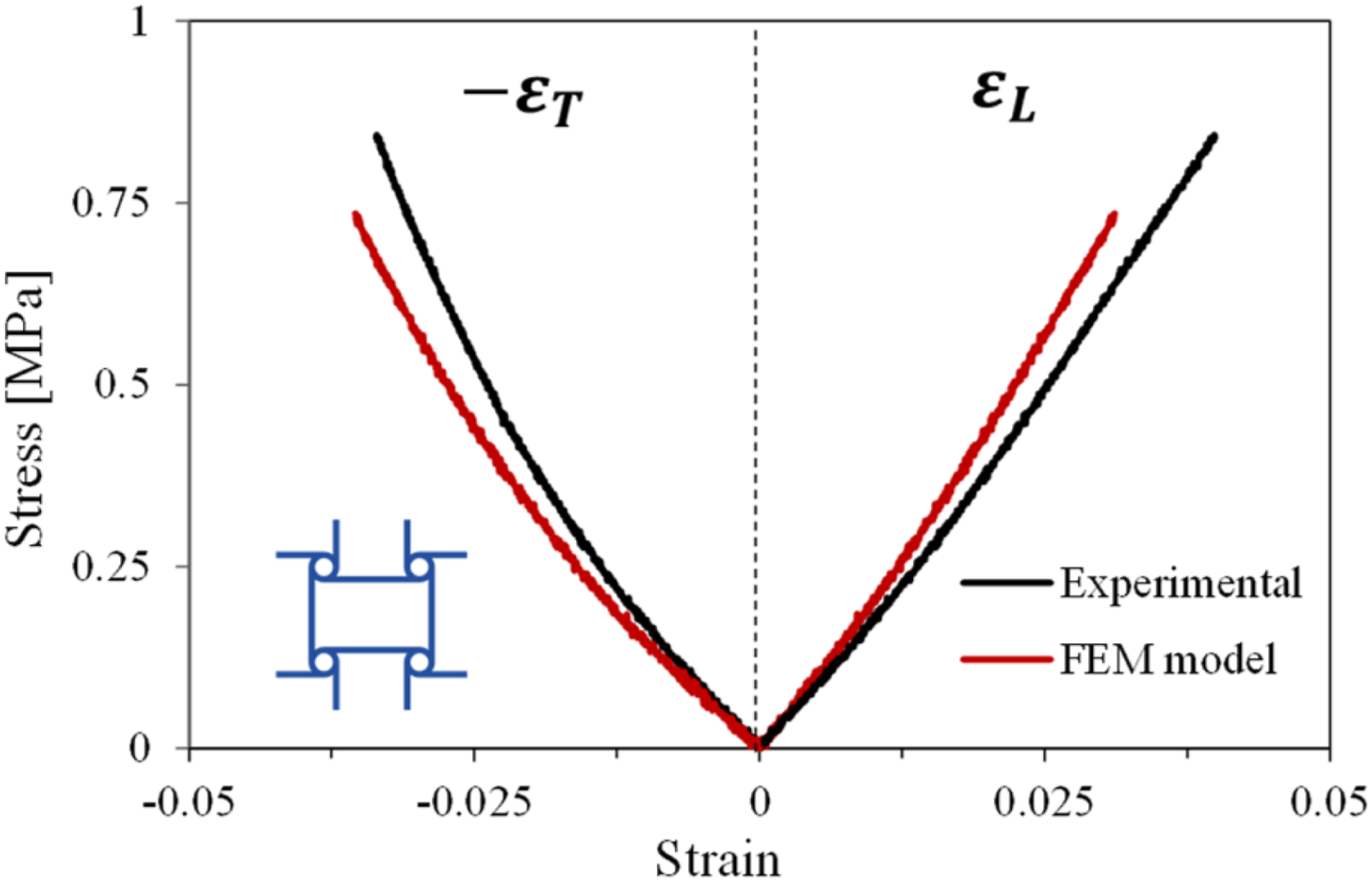
Poisson’s ratios experimentally and numerically measured for the chiral cores.
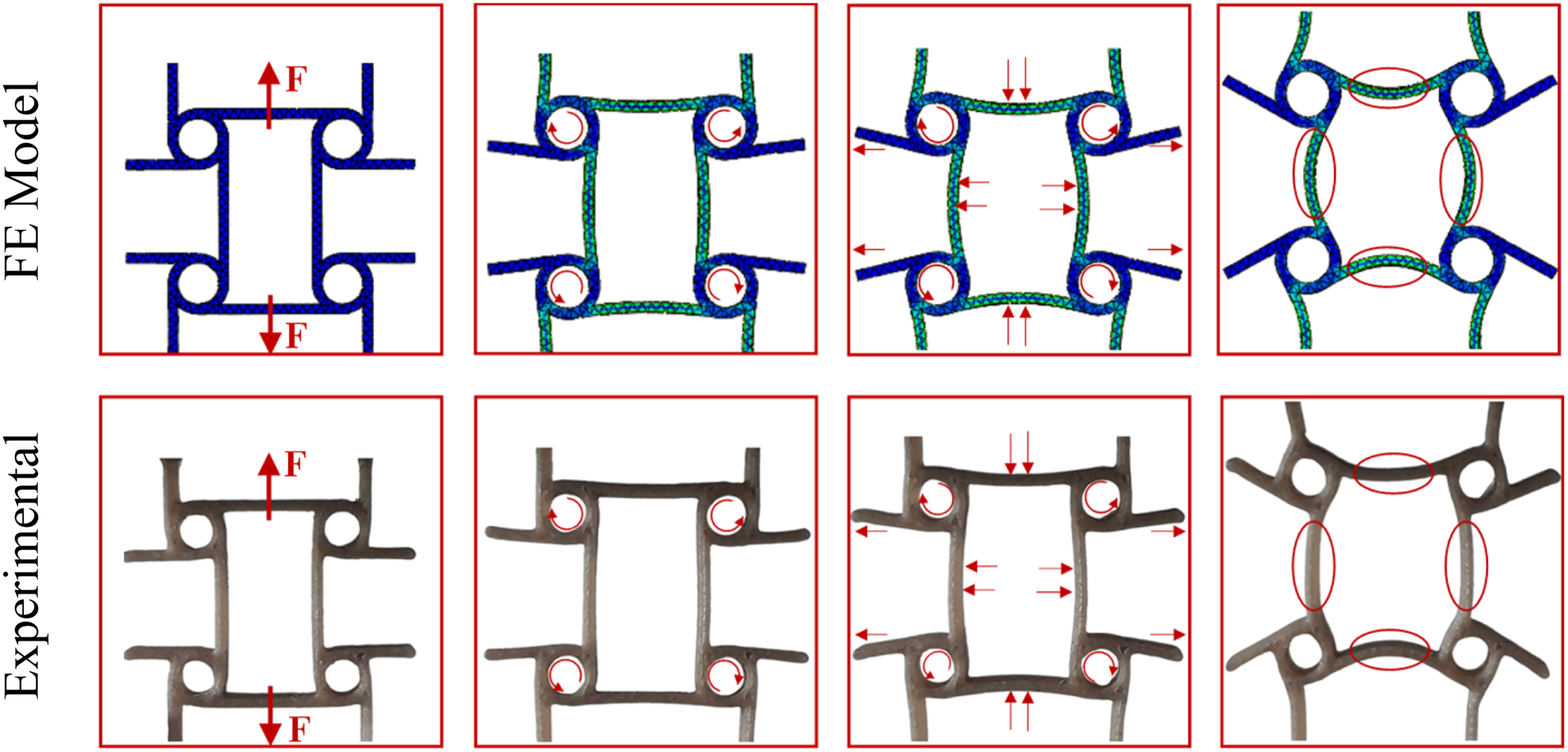
Experimental and numerical deformation capture of an anti-tetrachiral core at different loading levels.
Furthermore, the relative density and the number of cells influence the freedom of node rotation and consequently the bending of the ligaments. For example, the AT4CA1 core, with a lower density, allows for freer node rotation, explaining its highly negative Poisson’s ratio (−2.5), indicative of strong auxeticism. Conversely, increasing to two cells (AT4CA2) raises the relative density, which restricts rotation and bending, thereby reducing the magnitude of the auxetic effect (−0.65). Thus, the geometry of the nodes and ligaments with their rotation-bending mechanism combined with the structural density that controls this mobility, defines the final mechanical properties.
Figure 10 presents the experimental stress-longitudinal strain curves for three chiral topologies. For one cell wide, results shows that T4C1 has the highest initial stiffness, reaching about 1.35 MPa at 0.02 strain, compared with about 0.85 MPa for AT4CA1 and 0.42 MPa for AT4C1, meaning T4C1 is roughly 60% stiffer than AT4CA1 at that strain level and about 220% stiffer than AT4C1. The transition from one to two cell rows significantly enhances the load-bearing capacity and initial stiffness of all architectures, owing to improved lateral confinement and a more distributed load transfer that delays local buckling. Among the three topologies, the anti-tetrachiral arrowhead arrangement (AT4CA) provides the highest initial stiffness. Experimental stress-longitudinal strain responses of cores with varying cells widths: (a) 1 cell and (b) 2 cells.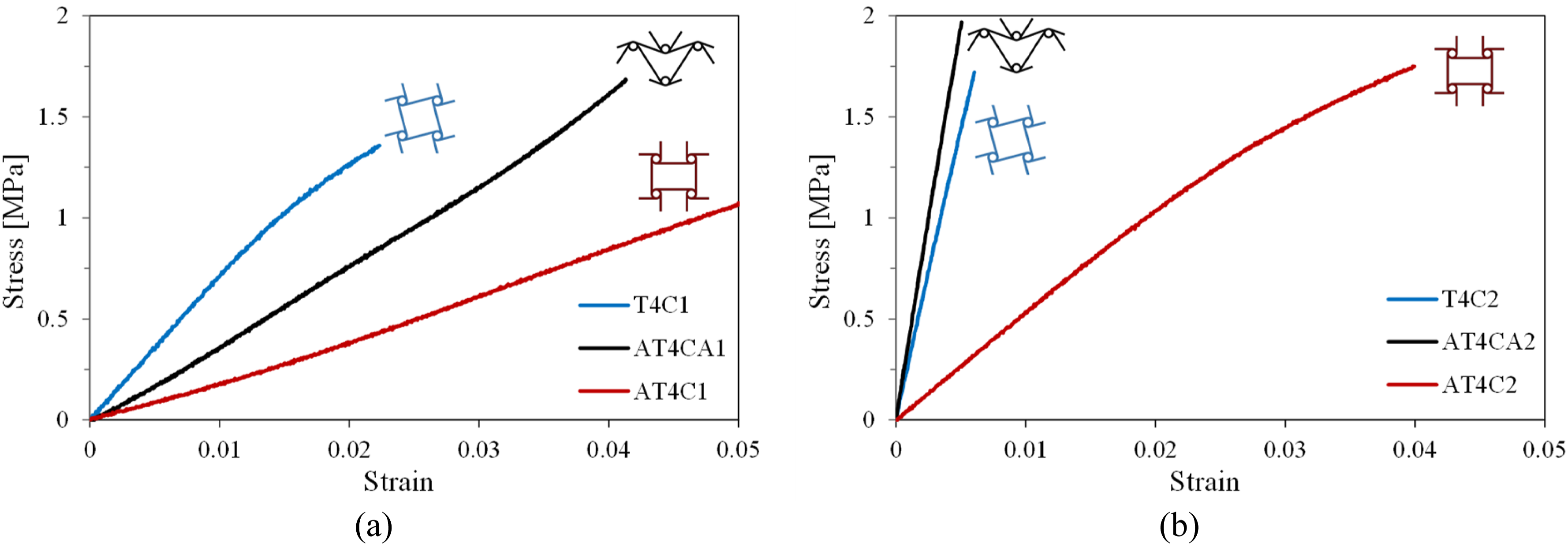
Figure 11 presents the structural Young’s modulus results obtained both experimentally and through numerical simulation for various single- and double-cell cores. The analysis reveals a good agreement between the experimental and numerical values, confirming the reliability of the computational model for predicting the mechanical behavior of the lattices. Nonetheless, slight differences are observed depending on the core type, which can be explained by real-world phenomena that are difficult to model, such as geometric imperfections, the local strength of the bonds at the cylindrical nodes, and the effective degree of bending and rotation in the ligaments under axial loading. Experimental and numerical young’s modulus results compared for (a) one-cell and (b) two-cell cores.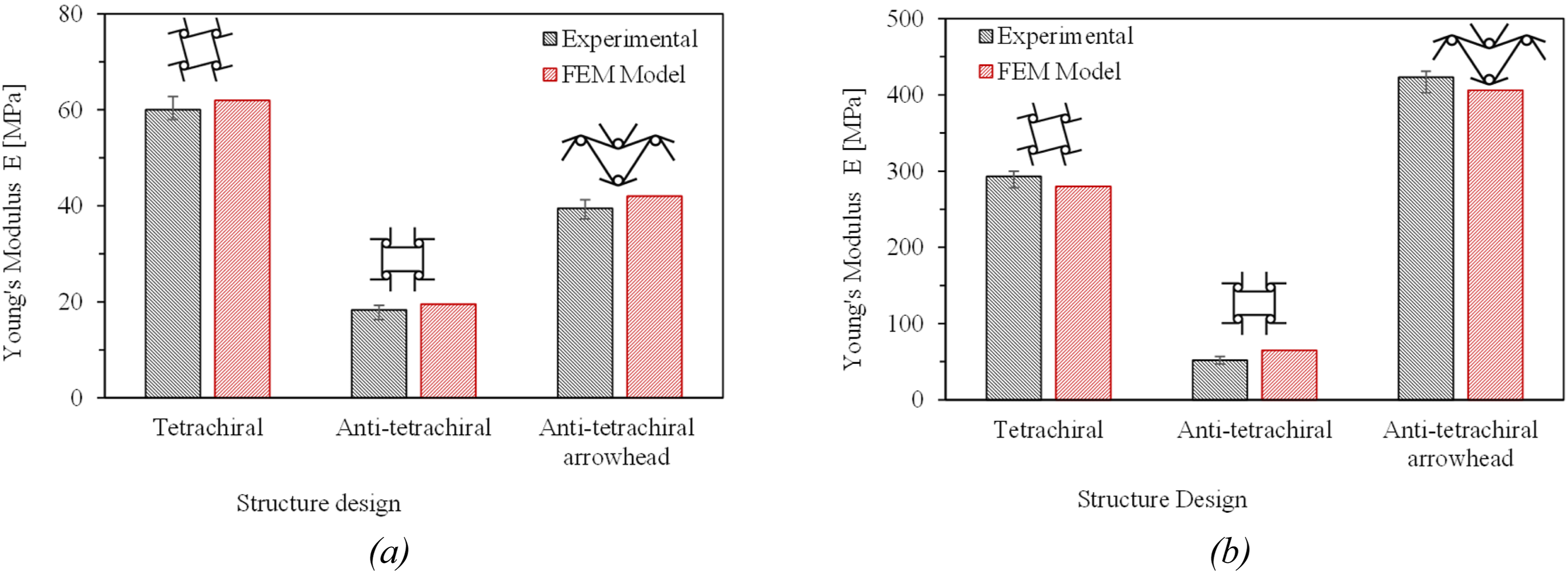
The Young’s modulus results for the different structures show marked differences based on core geometry and cell count. For the single-cell structures, the Young’s modulus is highest for the tetrachiral core (T4C1, 60 MPa), compared to the anti-tetrachiral (AT4C1, 18.3 MPa) and the anti-tetrachiral arrowhead (AT4CA1, 39.5 MPa). This difference is explained by the denser and more regular ligament configuration in the tetrachiral design, which limits node rotation and ligament bending, resulting in a stiffer structure. The anti-tetrachiral and arrowhead cores, where node rotation and ligament bending are more pronounced, naturally exhibit lower stiffness, as their design favors energy absorption and strain redistribution through local ligament bending.
When the cell count increases to two (Figure 12), the effect is amplified and sometimes reversed depending on the structure. The Young’s modulus of the tetrachiral core rises to 293 MPa, the anti-tetrachiral to 52 MPa, and the anti-tetrachiral arrowhead to 423 MPa. The increase in modulus for each type is attributable to the higher relative density, which enhances overall rigidity. Notably, the anti-tetrachiral arrowhead (AT4CA2) becomes the stiffest structure in the two-cell configuration (423 MPa), even surpassing the tetrachiral core. This phenomenon reveals that in more complex architectures, the addition of cells allows the structure to better mobilize its local deformation and locking mechanisms, limiting auxetic behavior and promoting rigidity. Comparing one-cell to two-cell configurations for each type demonstrates that the increase in density and the interconnection between cylindrical nodes and ligaments raises the Young’s modulus, confirming that geometric configuration and structural density are the key parameters for tuning the stiffness of these lattices. Comparison of experimental results: Single-cell versus double-cell Cores.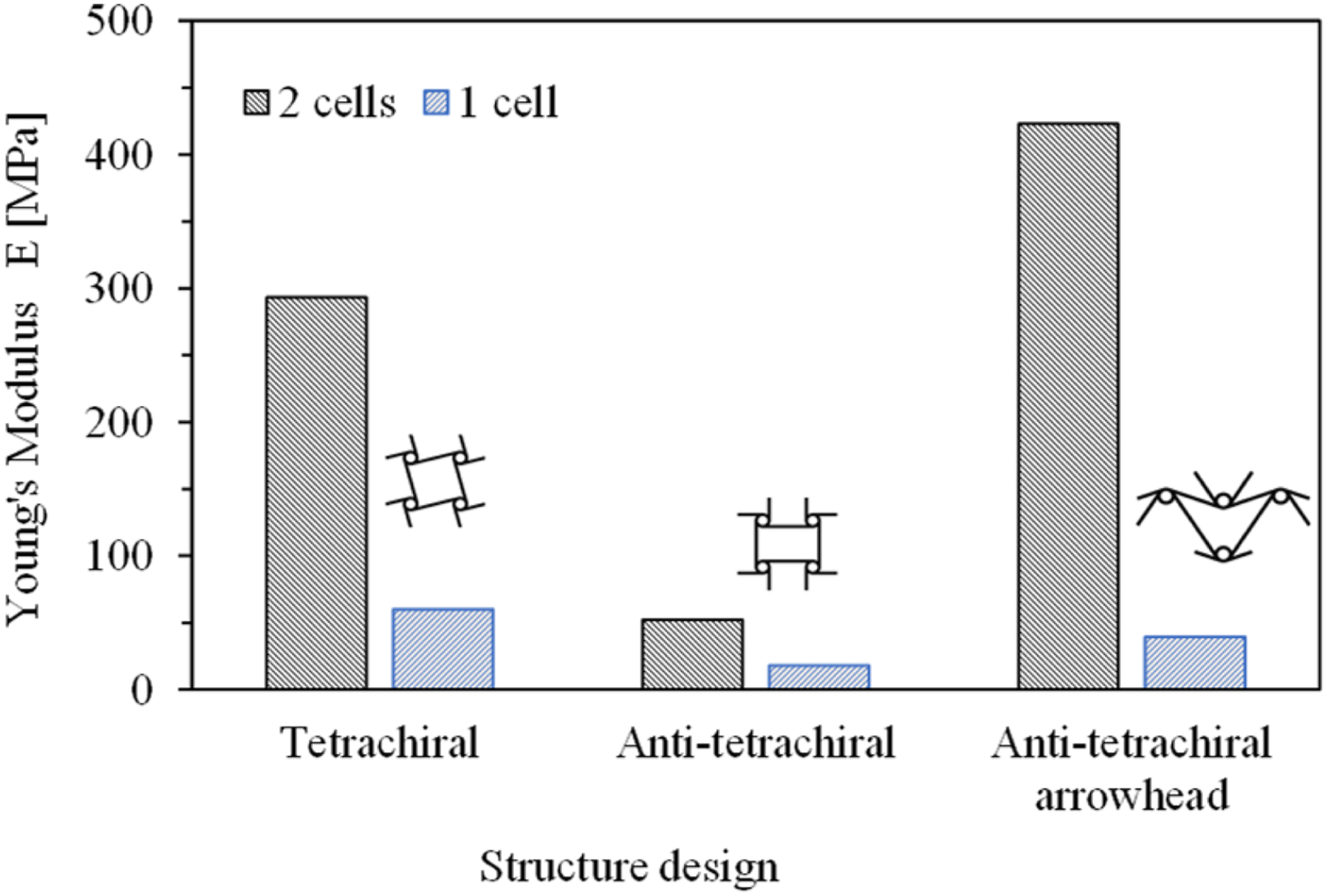
Sandwich properties under compression
Compression testing of the architected structures reveals fundamental differences in their mechanical behavior based on geometry (tetrachiral, anti-tetrachiral, anti-tetrachiral arrowhead) and the number of unit cells. Tests were conducted according to the ASTM C365 standard,
34
using an INSTRON machine equipped with a 100 kN load cell. Square samples measuring 25 mm × 25 mm x 7 mm were printed for each core architecture type and tested in compression at a displacement rate of 1 mm/min. The samples were compressed until cell crushing occurred, following the buckling of the cell walls. Figure 13 presents the load-displacement responses of one-cell-wide sandwich structures under compression. All specimens exhibit an initial elastic rise, followed by peak load and subsequent softening associated with the onset of local instability and progressive collapse. At larger displacements, the curves increase sharply, indicating densification of the crushed cellular architecture. Load-displacement curves for one-cell-wide structures under compression testing.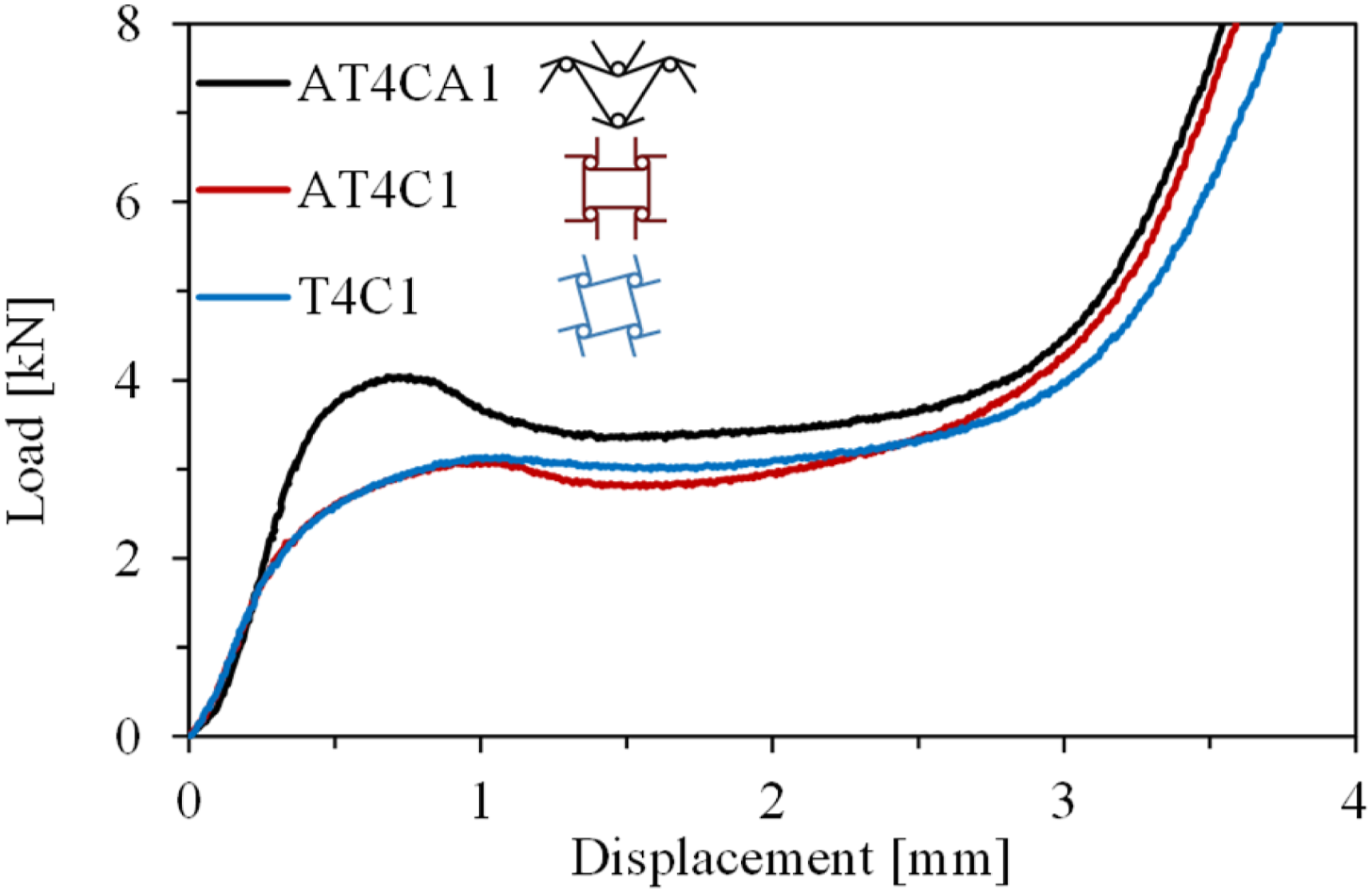
The results presented in Figure 14 show that the compressive modulus for the Tetrachiral (T4C1, T4C2), Anti-tetrachiral (AT4C1, AT4C2), and Anti-tetrachiral arrowhead (AT4CA1, AT4CA2) cores varies significantly with topology and cell count. For a single cell, the Tetrachiral T4C1 and Anti-tetrachiral AT4C1 cores exhibit similar moduli of 49 MPa and 47 MPa, respectively, indicating comparable stiffness despite different deformation mechanisms. The more open and flexible Anti-tetrachiral arrowhead core (AT4CA1) shows a lower modulus of 33 MPa, reflecting its greater capacity to bend under compression. When transitioning to two cells, a general increase in stiffness is observed across all structures, but with distinct behaviors. The Anti-tetrachiral core (AT4C2) sees its compressive modulus double to 110 MPa. The Tetrachiral (T4C2) and Anti-tetrachiral arrowhead (AT4CA2) cores evolve more modestly, reaching 55 MPa and 40 MPa respectively, retaining a relatively flexible structure. Compressive modulus of sandwich structures with architected cores.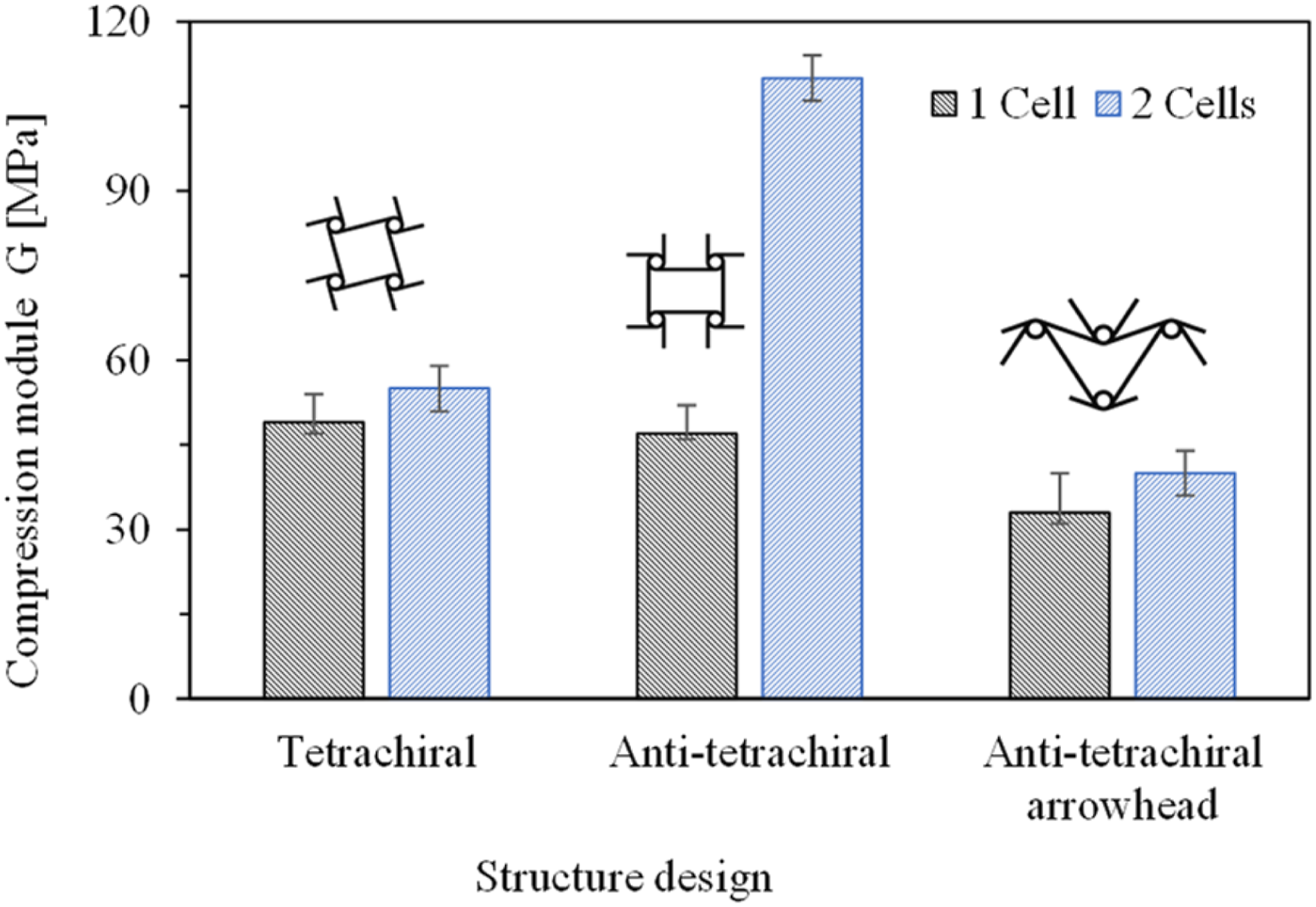
The studied lattice cores possess cell walls with a thickness of 0.6 mm and a height of 5 mm. These dimensions make them notably susceptible to buckling under compression, particularly given the slender nature of the walls. Buckling, an instability caused by axial compression, manifests as a transverse displacement of the wall prior to failure, thereby limiting the structure’s effective load-bearing capacity. In our structures, the severity of this instability varies depending on the core geometry and the spatial distribution of the cell walls.
In the Tetrachiral and Anti-tetrachiral cores (T4C1, AT4C1), the cell walls are distributed more uniformly, providing better mutual support that delays local buckling and allows for higher stiffness. In contrast, the more open wall distribution in the Anti-tetrachiral arrowhead cores (AT4CA1, AT4CA2) creates zones where local buckling can initiate more easily. Increasing the number of cells enhances the mutual support effect between walls. This is particularly evident in the two-cell Anti-tetrachiral core (AT4C2), which explains its substantial increase in compressive modulus. Therefore, the combination of geometric properties and buckling phenomena critically governs the overall performance of these architected lattices.
Compression testing highlighted the crucial impact of cellular geometry and relative density on energy absorption. For single-cell structures, performance was comparable, with T4C1 (9.28% density) absorbing 40 J, closely followed by AT4CA1 (14.65%) at 38 J and AT4C1 (12.50%) at 34 J (Figure 15). Conversely, the transition to two cells revealed pronounced differences. While T4C2 (22.69%) saw its capacity double to 82 J, consistent with its increased density, the anti-tetrachiral geometries demonstrated significantly superior efficiency. AT4C2 (30.77%) and AT4CA2 (31.86%) dissipated 93 J and 90 J respectively-values substantially higher than that of T4C2 despite similar relative densities between the anti-tetrachiral cores. This suggests that the anti-tetrachiral and arrowhead geometries promote a more efficient deformation mechanism, likely through enhanced cell interaction and more progressive plastic crushing. This explains their optimal performance, indicating that energy absorption depends not solely on the amount of material, but also on the engineering of its microstructure. Energy dissipated in the sandwich structures.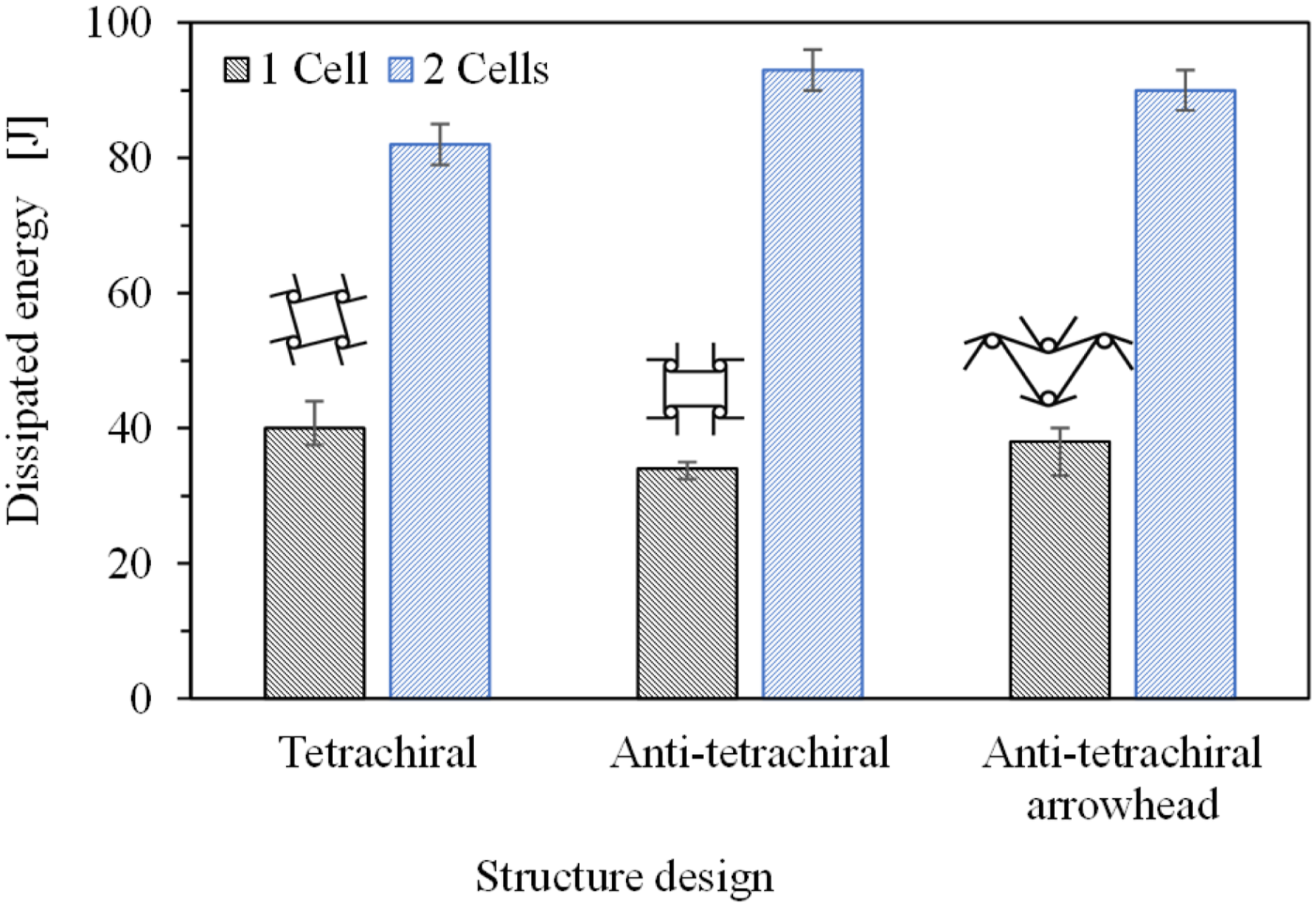
Sandwich properties under bending
Sandwich panels are primarily designed to withstand bending loads and are widely used in industrial applications, such as in partitions or flooring systems. Their key advantage lies in their high moment of inertia, achieved by placing a thick, lightweight core between two thin, stiff face sheets. This configuration significantly enhances flexural rigidity while maintaining a low overall mass. In this section, biocomposite sandwich panels with various types of architected cores are subjected to quasi-static three-point bending tests, in accordance with the ASTM C393 standard. 35 The three-point bending tests performed on sandwich specimens with PLA/Flax composite faces and lightweight cores revealed highly promising mechanical properties for applications requiring a high stiffness-to-weight ratio. The length of the sandwich specimen is along the X-axis. The stress-strain curves exhibited a linear elastic behavior up to a maximum stress peak, followed by a sudden failure, which is characteristic of sandwich structures.
Figure 16 presents the experimental load/displacement curves of the sandwich panels with different types of crosswise-oriented core structures. The results show that mechanical performance is not solely a matter of material quantity, but particularly of its arrangement. The AT4CA1 structure, with the highest relative density of 14.65%, exhibits the highest stiffness and peak load, reaching approximately 270 N. This superiority can be attributed to its “arrowhead” geometry, which not only incorporates more material but is also likely oriented to optimally resist shear stresses in bending through a wall-stretching mechanism-far more efficient than the simple bending of ligaments. In contrast, the T4C1 structure, with the lowest relative density of 9.28%, logically shows the lowest initial stiffness and peak load (approximately 165 N). The AT4C1 structure, with an intermediate relative density of 12.5%, displays a behavior that reflects its intermediate characteristics: its stiffness and peak load (approximately 175 N) are slightly higher than those of the T4C1 structure. load-displacement curves from bending tests of sandwich structures with various architected cores: (a) Tetrachiral, (b) Anti-tetrachiral, (c) Anti-tetrachiral Arrowhead.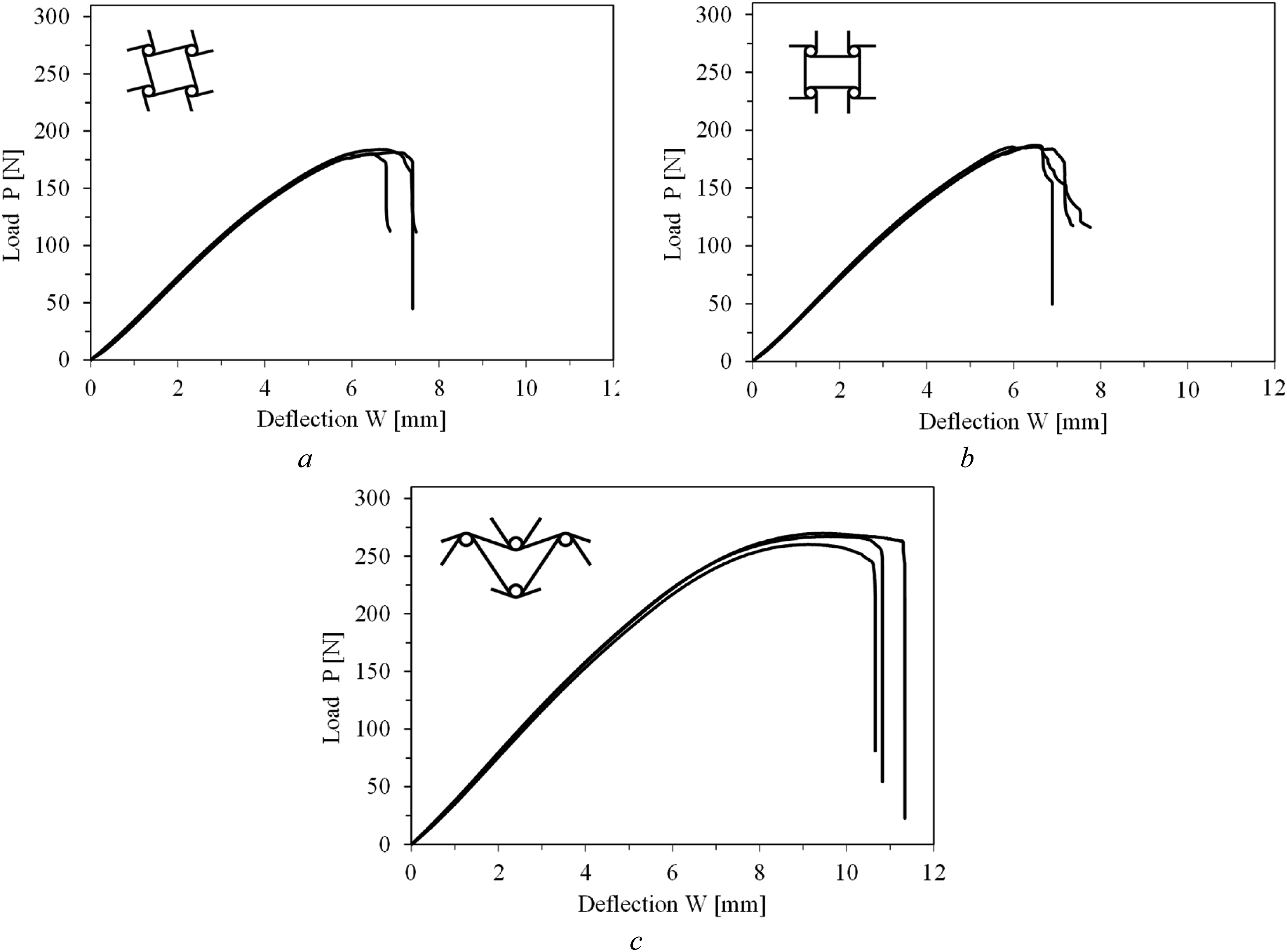
While relative density explains the general hierarchy of performance, it is the specific geometry of each core that dictates the deformation mode and the fundamental trade-off between strength and ductility. Consequently, the innovative “Arrowhead” geometry (AT4CA1) demonstrates exceptional mechanical performance, setting a new benchmark for bio-based sandwich composites. With the highest mechanical strength in the study, this novel architecture proves its structural superiority by efficiently concentrating material in strategic zones. Its remarkable stiffness, combined with an optimized density, makes it an excellent compromise for demanding structural applications where lightweight properties and high performance are crucial.
According to Figure 17, the comparison between the AT4C1 and AT4C2 structures reveals the significant impact of cell density on mechanical properties. The AT4C2 structure, with two cells across the width, demonstrates superior mechanical performance by achieving a maximum load of approximately 280 N, compared to 175 N for the single-cell AT4C1 structure. This substantial increase in strength is accompanied by a significantly higher initial stiffness for the AT4C2 configuration. Load-displacement comparison for anti-tetrachiral cores (1 vs. 2 cells).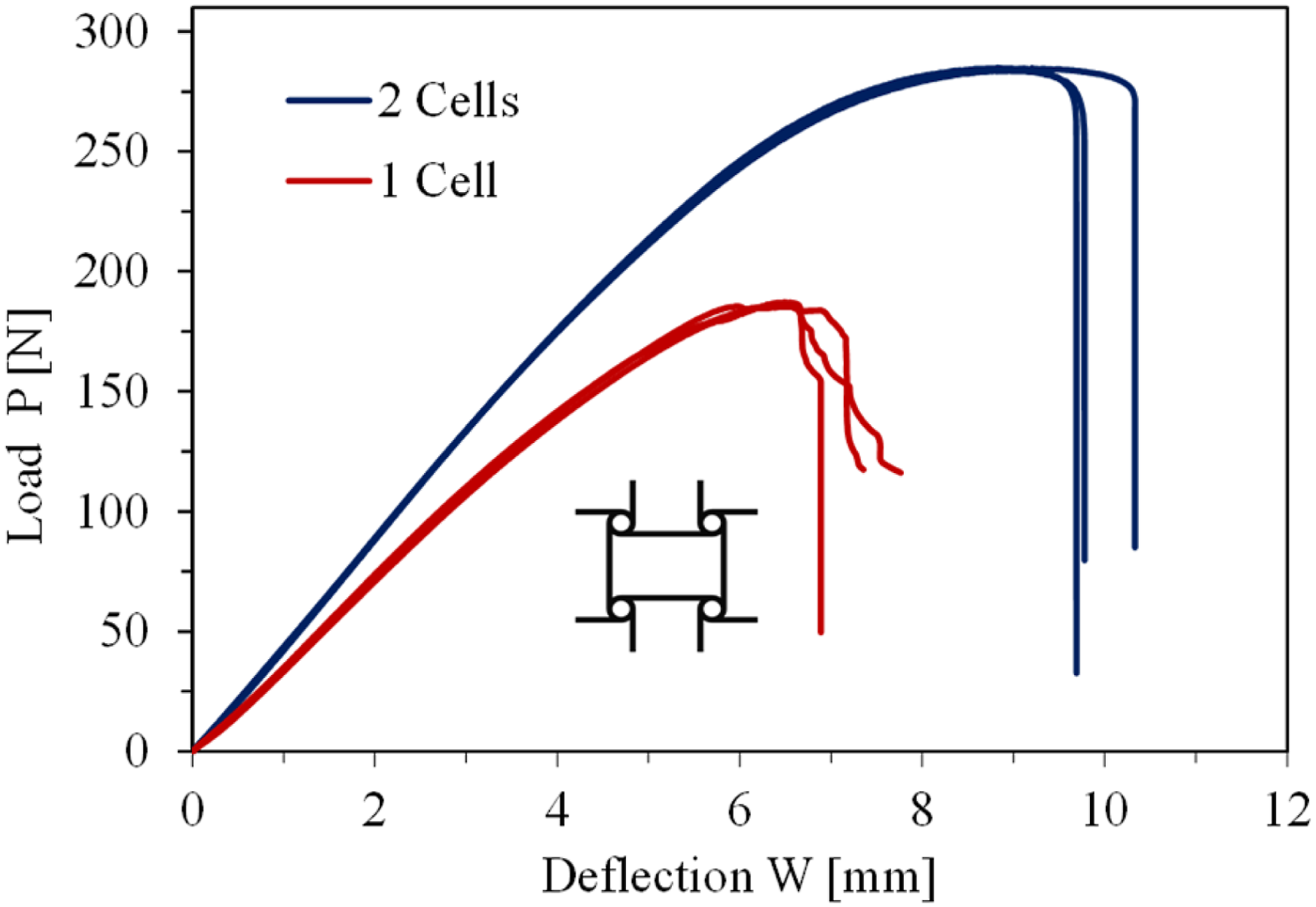
Conclusion
The mechanical performance of innovative biodegradable chiral sandwich composites, featuring chiral core architectures, has been comprehensively investigated through a experimental campaign in this study. Three distinct core topologies, tetrachiral (T4C1/T4C2), anti-tetrachiral (AT4C1/AT4C2), and the groundbreaking anti-tetrachiral arrowhead (AT4CA1/AT4CA2) were designed with varying unit cell densities (one or two cells across 25 mm width) and fabricated via high-precision 3D printing with PLA matrix reinforced by flax fibers. Core and sandwich intrinsic properties were evaluated via tensile, compression and three-point bending tests.
Key findings include: (a) Structural density strongly influenced stiffness: single-cell T4C1 reached 60 MPa Young’s modulus, while two-cell configurations amplified this (e.g., AT4CA2 at 423 MPa > T4C2 at 293 MPa), with geometry dictating tensile resistance. (b) Pronounced auxetic behavior (NPR down to −2.5 for AT4CA1) arose from node rotation and ligament flexion, modulated by cell design. (c) Compression tests revealed geometry-dependent cell-buckling behaviors: the anti-tetrachiral core demonstrated superior compressive modulus (up to 110 MPa for AT4C2) compared to tetrachiral (55 MPa for T4C2) and arrowhead designs (40 MPa for AT4CA2). (d) The anti-tetrachiral arrowhead cores demonstrated a synergistic deformation mechanism nodal rotation coupled with arrowhead ligament bending and axial stretching yielding superior energy absorption (e.g., 90 J for AT4CA2) (e) Bending tests highlighted arrowhead superiority (peak loads 270-280 N for AT4CA1/AT4C2), with linear-elastic response, optimizing stiffness-to-weight via resistant wall buckling.
In summary, these biodegradable chiral architectures advance sustainable metamaterials by precisely tuning geometry and relative density to achieve enhanced negative Poisson’s ratio (NPR), superior stiffness, and exceptional energy dissipation capabilities. The novel anti-tetrachiral arrowhead design emerges as a benchmark for bio-based lightweight structures, offering synergistic deformation mechanisms that outperform conventional tetrachiral and anti-tetrachiral topologies. Future investigations should explore dynamic impact loading, indentation resistance, fatigue performance under cyclic loading, and acoustic emission analysis to characterize failure precursors and microstructural damage evolution, enabling applications in protective systems, and vibration-damping components.
Footnotes

Ethical considerations
Not applicable. This study involves computational simulations and material testing without human participants, human data, or human tissue.
Author contributions
Anis Hamrouni: Investigation, Writing - original draft. Kamel Bousnina: Methodology, software. Jean-Luc Rebiere: Data Curation, Visualization. Abderrahim El Mahi: Review & Editing. Moez Beyaoui: Review & Editing. Mohamed Haddar: Review & Editing.
Funding
The authors received no financial support for the research, authorship, and/or publication of this article.
Declaration of Conflicting Interests
The authors declared no potential conflicts of interest with respect to the research, authorship, and/or publication of this article.
Data Availability Statement
Data sharing not applicable to this article as no datasets were generated or analyzed during the current study.