






Abstract
Glass/vinylester composite tubes are widely used in chemical processing pipelines due to their excellent corrosion resistance and mechanical performance. However, their behavior under long-term exposure to strong acids remains insufficiently characterized. This study investigates the hygrothermal ageing effects of 10% HCl at 25°C, 50°C, and 85°C on the flexural mechanical response of filament wound glass/vinylester composite tubes. Specimens, with and without protective coating, were immersed for 6 months and then tested under four-point bending. Full-field strain analysis was performed using 2D Digital Image Correlation (DIC) complemented by X-ray microtomography for internal damage assessment. Results show that ageing significantly reduces mechanical properties, particularly at higher temperatures. Uncoated specimens are the most affected, highlighting the coating’s role in limiting acid penetration. DIC analysis reveals that ageing alters the damage scenario, shifting from a localized fracture to multiple strain concentration zones. While unaged and 25°C aged specimens fail via a single dominant crack, higher temperatures induce earlier crack initiation and multiple localization zones, indicating increased embrittlement. Tomographic observations confirm a consistent failure mode: tensile rupture of the anticorrosion layer followed by delamination. However, this damage becomes more severe with ageing due to matrix cracking, interfacial debonding, and fiber bending.
Keywords
Introduction
Glass fibre-reinforced Vinylester composite tubes are extensively utilized in piping networks, storage vessels, and industrial infrastructure, primarily owing to their high specific strength, excellent corrosion resistance, and long-term durability.1,2 However, these structures often operate under complex mechanical and environmental loads that can significantly degrade their long-term performance. In pipeline networks, bending is a commonly applied stress that generates substantial stress concentrations, potentially compromising structural integrity.3,4 In addition, composite pipelines are exposed to moisture, elevated temperatures, and corrosive agents, which accelerate degradation mechanisms in service environments, commonly referred to as hygrothermal ageing. These include polymer plasticisation, moisture-induced swelling, fibre–matrix interfacial debonding, microcracking, and fibre corrosion5–7 As a result, these degradation mechanisms lead to a reduction in mechanical properties through matrix softening and microstructural damage.1,8,9 These effects become even more severe in highly acidic environments commonly encountered in industrial applications, further exacerbating the deterioration of the flexural mechanical performance of the tubes.
Despite these considerations, the influence of environmental factors on the flexural behavior of composite tubes remains insufficiently understood. Most studies have examined the bending response of simple composite tubes using theoretical and numerical approaches10–12 These approaches rely on analytical formulations that are often validated by limited experimental data. However, they do not adequately address the dependence of this mechanical behavior on environmental conditions.13,14 This represents a key shortcoming, as the lack of experimental validation, particularly under environmental loading, to predict the in-service behavior of composite tubes.
Moreover, most of existing researches in hygrothermal ageing of composite material has been conducted in environments other than acidic solution. Recent studies have focused on water, humidity, or seawater effects15–18 or have involved acidic media with other polymer matrices, such as polyester or epoxy7,19–21 In contrast, the durability of glass/vinylester tubes in aggressive environments, particularly hydrochloric acid (HCl), remains poorly documented. This lack of data constitutes a major gap, especially considering the widespread industrial use of these materials in acid transport and storage systems
Furthermore, the combined influence of HCl exposure and vinylester matrices, particularly in tubular geometries, is still not well understood. The few available studies on glass/vinylester systems have mainly focused on pultruded profiles22–27 or reinforcing bars axposed to other acidic media.28,29 However, these configurations differ significantly from filament-wound tubes in terms of architecture, stress distribution, and damage evolution, limiting the direct applicability of their findings.
Nevertheless, previous studies have reported significant reductions in flexural strength for composites exposed to nitric and sulfuric acids, where matrix degradation, hydrogen-ion penetration, and diffusion-driven damage progressively deteriorate mechanical performance30–32 These findings are consistent with observations of interfacial weakening, micro-pitting, cavity formation, ion-exchange processes, fibre corrosion, and delamination in acidic environments.3 33 Therefore, investigating the durability of filament-wound composite tubes under hydrochloric acid exposure remains essential.
Beyond understanding the chemical effects, accurately characterising the resultant deformation and damage during bending is essential for clarifying the underlying failure mechanisms. Digital Image Correlation (DIC) has emerged as a powerful, non-contact technique for full-field strain analysis in composite materials34–36 offering detailed monitoring of deformation and crack initiation37–39 However, the application of DIC in ageing studies and, specifically, for the flexural testing of filament-wound composite tubes is limited40–42 This limitation restricts the ability to capture strain heterogeneity and localized damage induced by environmental degradation, which are critical for understanding failure mechanisms. Further exploitation of this technique is necessary to capture the inherent strain heterogeneity and damage progression in tubular composites after environmental ageing.
Therefore, the main scientific objective of this study is to establish a clear relationship between acid-induced ageing, deformation kinetics, and damage evolution in filament-wound GFRP tubes under bending loading. In light of the identified gaps, the present study provides a DIC-based experimental investigation of hydrochloric acid ageing effects on the mechanical behavior of glass/vinylester composite tubes. The ageing effects were analyzed under different hygrothermal conditions (various temperatures) to capture accelerated degradation mechanisms. Both coated and uncoated samples were studied to evaluate the role of surface protection and diffusion pathways. The flexural response was investigated using four-point bending tests, combined with full-field strain measurements obtained via DIC. Damage scenarios were analyzed using strain vector maps and complemented by X-ray tomography observations to identify microstructural degradation mechanisms. This multi-scale and multi-technique approach aims to overcome the limitations of previous studies by providing both qualitative and quantitative correlations between environmental degradation, mechanical response, and damage mechanisms.
Experimental investigation
Materials and test specimens
The experimental work was carried out on representative specimens cut from GFRP composite tubes. These tubes were manufactured by the CTRA company through the filament winding process using E-glass fibres and MFE-711 vinylester resin.
The GFRP tubes consist of two distinct layers: the anti-corrosion (AC) layer and the mechanical resistance (MR) layer.
First, AC layer was formed by manually winding glass fibre mats impregnated with vinylester resin around a rotating mandrel. Then, the MR layer was created by an automatic filament winding of E-glass fibres impregnated in a vinylester resin bath. The fibres were wound at an angle of ±55° relative to the tube axis.
The AC layer was cured at ambient temperature, whereas the MR layer underwent post-curing in an oven at 85°C for 2 hours. The total wall thickness of the tubes was 5 mm, equally distributed between the AC and MR layers, as illustrated in Figure 1. Geometric specification of GFRP composite tube specimen.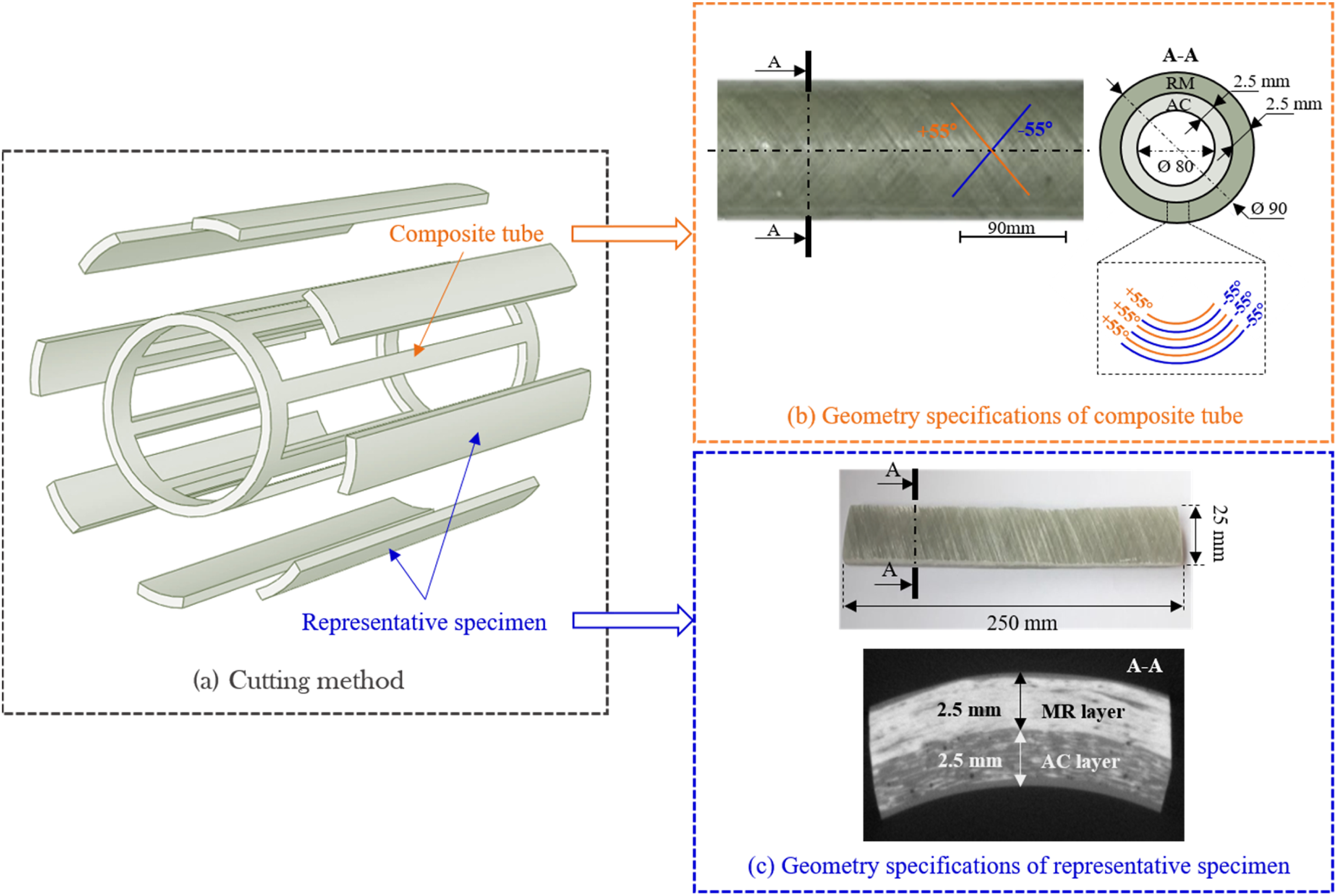
The specimens were cut in accordance with EN ISO 14125 43 and ISO 8513 44 standards. They had a prismatic shape with nominal dimensions of 250 mm in length, 25 mm in width, and 5 mm in thickness (cf. Figure 1(c)).
Test methods
Aging tests
The long-term effect of aggressive environments on the mechanical performance of composite tubes was investigated. For this purpose, aging tests were conducted in a 10% hydrochloric acid (HCl) solution. This medium was chosen to reproduce the harsh conditions encountered in chemical industry applications. Following the guidelines of ISO 175 45 and ASTM C581, 46 the representative specimens were immersed for 6 months at different temperatures namely 25°C, 50°C, and 85°C.
For each temperature, two batches of specimens were prepared, as depicted in Figure 2. The first batch consisted of three specimens without edge protection, representing real operating conditions where all tube surfaces are exposed to the aggressive environment. The second batch included three specimens with protective coatings, representing pipeline service conditions in which only the inner surface of the tube is in contact with the transported fluid. In this case, three additional layers of vinylester resin were applied to the outer and side surfaces to restrict acid uptake and ensure predominantly unidirectional diffusion (cf. Figure 3). Ageing test strategy. Schematic of coated specimens ensuring unidirectional acid diffusion.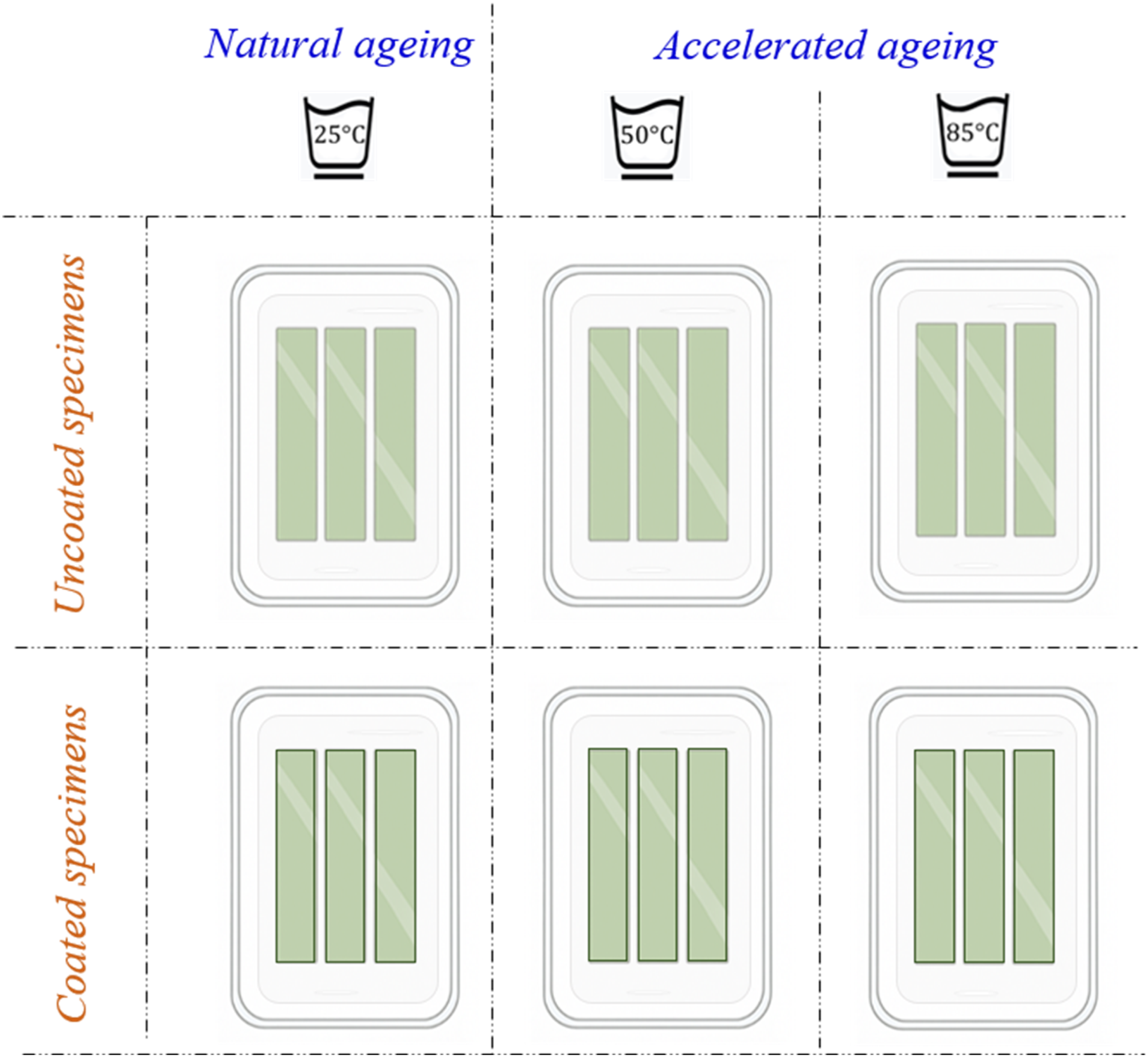
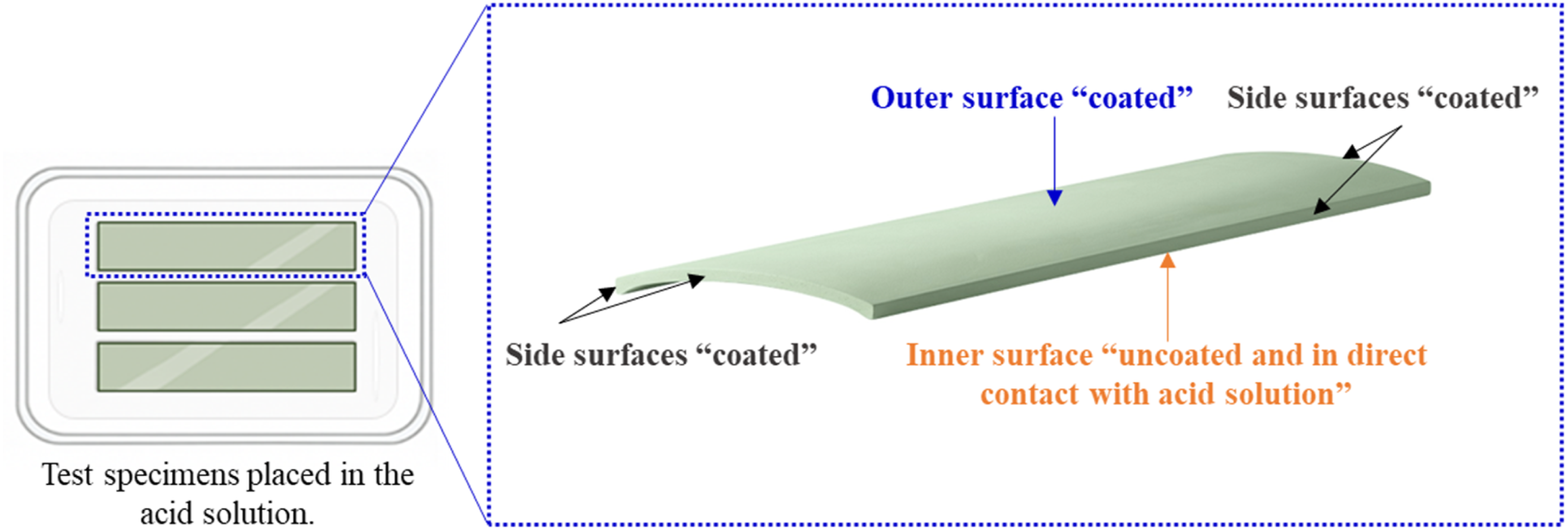
Prior to immersion, all specimens were oven-dried at 50°C until residual moisture was eliminated and a constant initial mass was obtained. During exposure, the test specimens were placed in the acid solution with the inner surface of the tube facing the solution and spaced a few millimeters apart. The acid solution in each container was renewed every 2 days to prevent changes in concentration in the immersion medium.
Four points bending tests
Four-point bending tests were performed to assess the effect of hygrothermal aging in an acidic medium on the mechanical properties of composite tubes. For comparative purposes, both aged and as-received specimens were examined. The tests were carried out using a Shimadzu universal testing machine, available in the SYMME laboratory in compliance with EN ISO 14125.4
43
Between three and five specimens were tested at a displacement speed of 5 mm/min until the final fracture of the specimen. The span was set at 150 mm, and the loading elements were spaced at 50 mm, as shown in Figure 4. Load and displacement data were recorded by the machine’s acquisition system. Next, in accordance with EN ISO 14125 standard,
43
the flexural modulus E
f
, flexural stress σ
f
, and flexural strain ε
f
were measured. Four-point bending test device: (a) Testing machine; (b) Specimen positioning relative to the loading and support elements.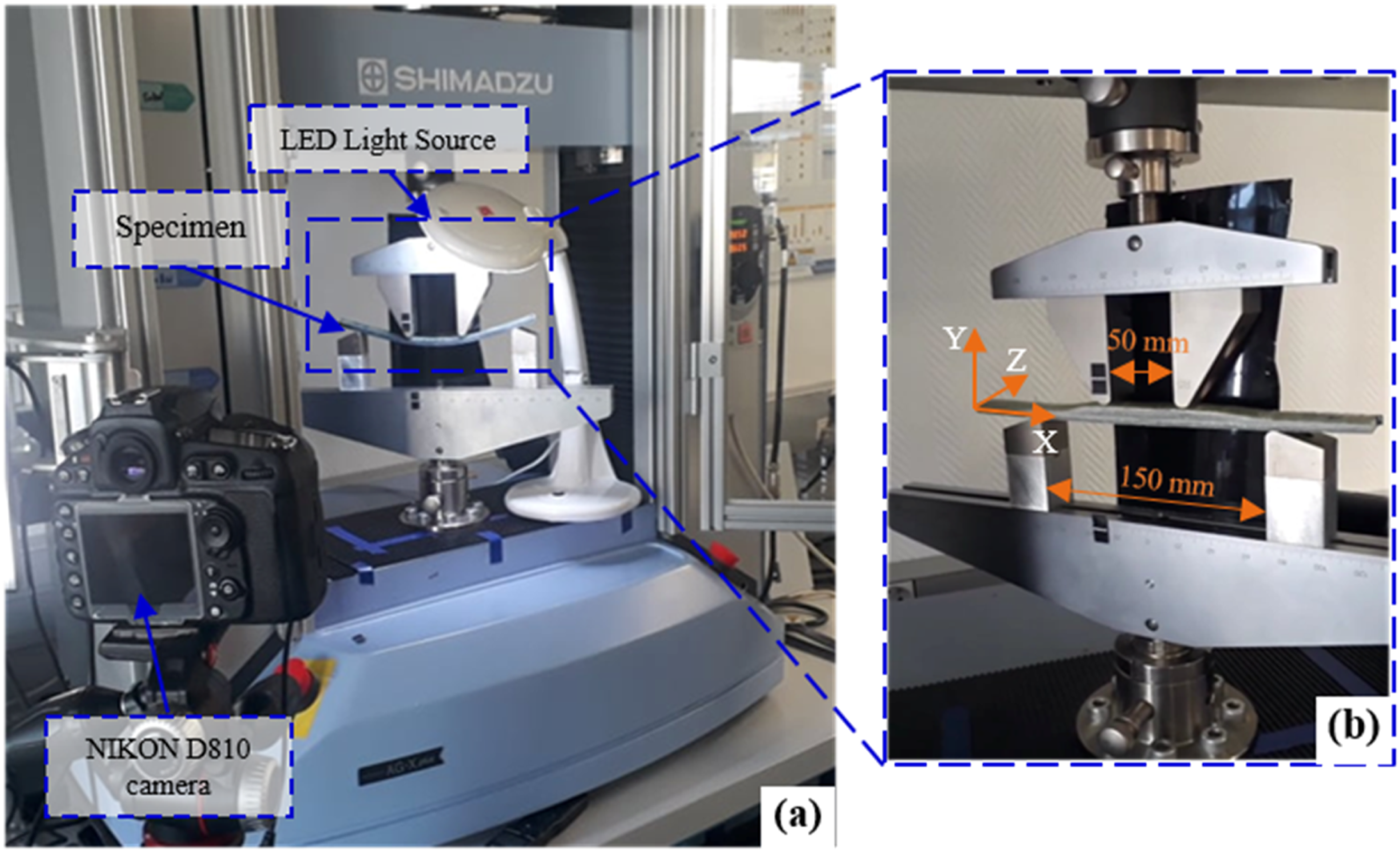
Monitoring by 2D Digital Image Correlation (DIC) technique
To investigate the effect of ageing on the deformation kinetics of GFRP tubes, four-point bending tests were monitored using two-dimensional (2D) Digital Image Correlation (DIC) technique. Unlike conventional measurement techniques that provide only global responses (load–displacement curves), DIC enables full-field measurement of displacement and strain. This allows the identification of local strain concentrations, damage initiation zones, and their evolution during loading, which is particularly relevant for analysing the effect of ageing on deformation kinetics and failure mechanisms.
This method requires the application of a random speckle pattern on one lateral surface of the specimen, which was created using black and white spray paint. The resulting pattern exhibited a random distribution of grey levels suitable for correlation analysis.
As presented in Figure 5, image acquisition was performed with a Nikon D810 digital camera (3680 × 2456 pixels) equipped with a 105 mm lens. The camera was positioned approximately 400 mm from the bending device, perpendicular (90°) to the observed surface. A uniform illumination of the measurement zone was ensured by an LED light source. The acquisition frequency was set to one frame every 2 seconds, providing high-resolution images throughout the test. DIC technique steps: (1) speckle application; (2) Image acquisition; (3) Image processing step.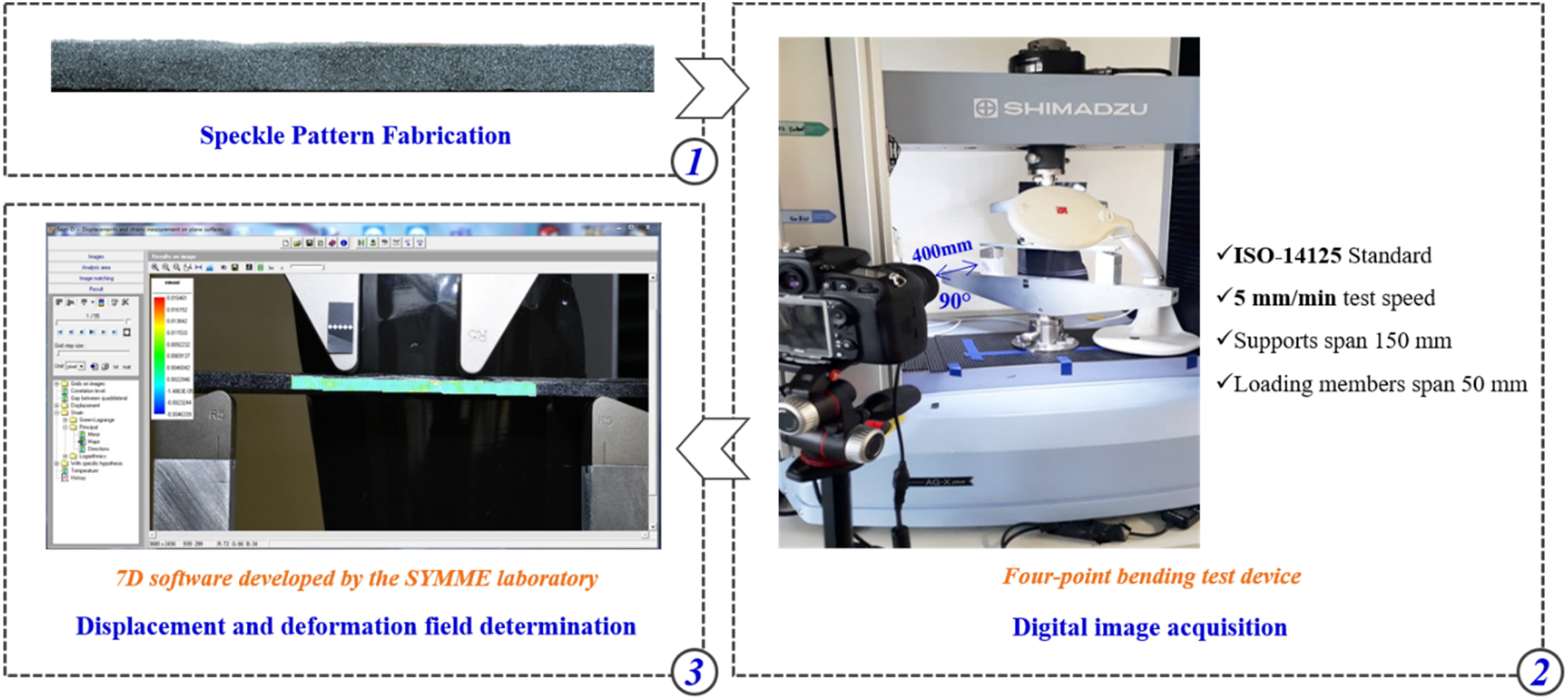
Displacement field maps were generated using the “7D” correlation software developed by the SYMME laboratory. 47 These full-field measurements provide detailed insight into the strain distribution and its evolution, making it possible to better assess the influence of ageing on the mechanical response of the composite tubes.
Microscopic observation: X-ray tomography
Microscopic examinations were performed before and after hygrothermal ageing, following the four-point bending tests, to analyze ageing-induced damage. The observations were conducted with the EasyTom XL 150 tomograph available at the SYMME laboratory (cf. Figure 6). The system was controlled by using X-Act software, which enables specimen segmentation and 2D image acquisition. An enhanced scanning mode that focused on the area of interest (average focal point), was employed. The X-ray tube settings were fixed at 140 kV and 210 µA, providing micro-focused imaging. The voxel resolution obtained was 60 µm. Particular attention was given to areas where fractures occurred. X-ray tomography equipment.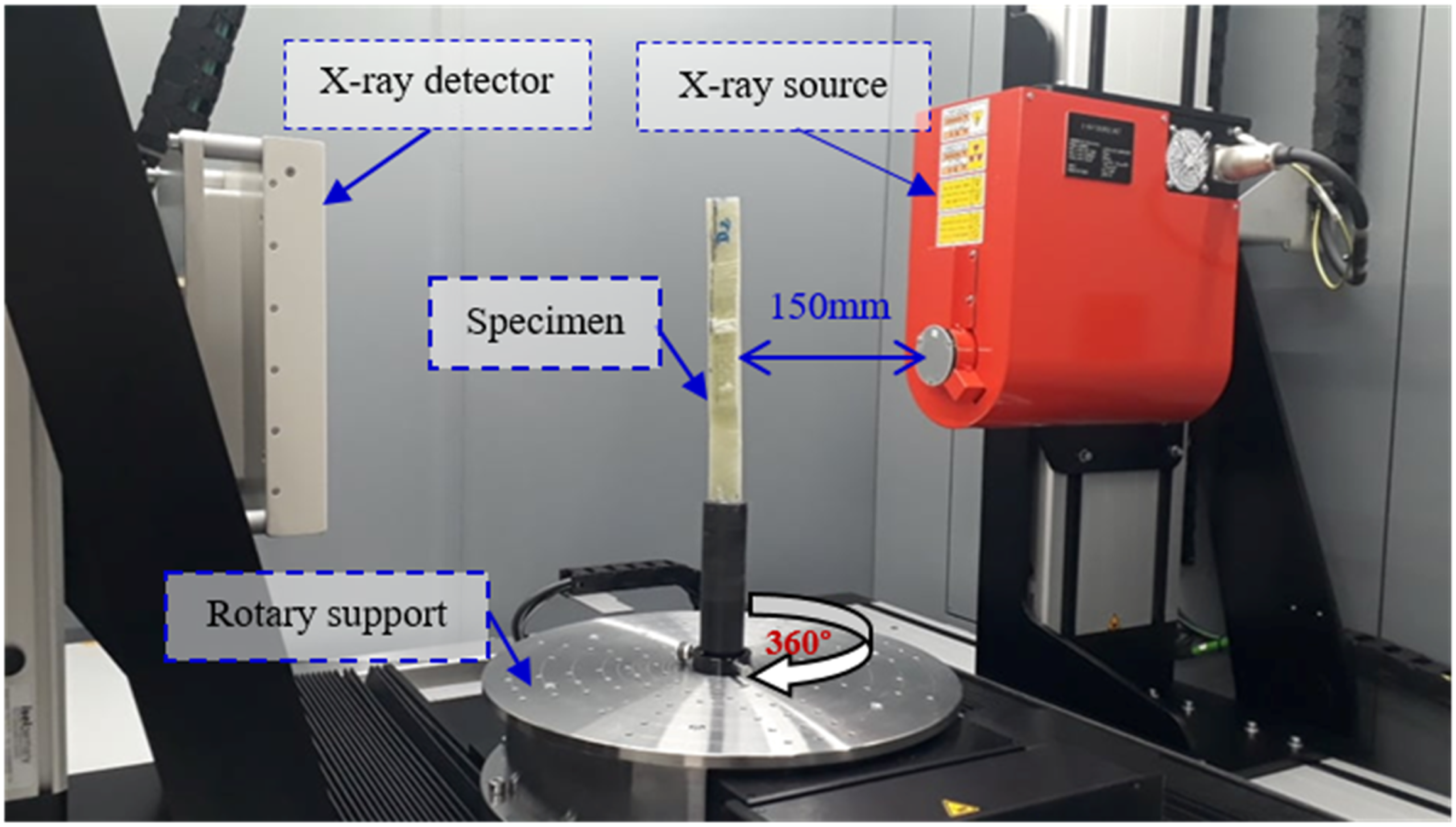
The 2D projections acquired with X-Act were subsequently reconstructed into 3D images of the tested specimens. The reconstruction was carried out with ImageJ software using the “3D Viewer” plugin applied to the 2D image stacks.
Results and discussions
The effect of hygrothermal aging on the bending behavior and mechanical properties
The four-point bending results are presented in Figure 7. The reference specimens (unaged) were compared to the aged one, with and without protective coating. Stress-strain curves evolution for unaged and aged specimens with coated (c-sp) and uncoated (unc-sp) edges in 10% HCl solution.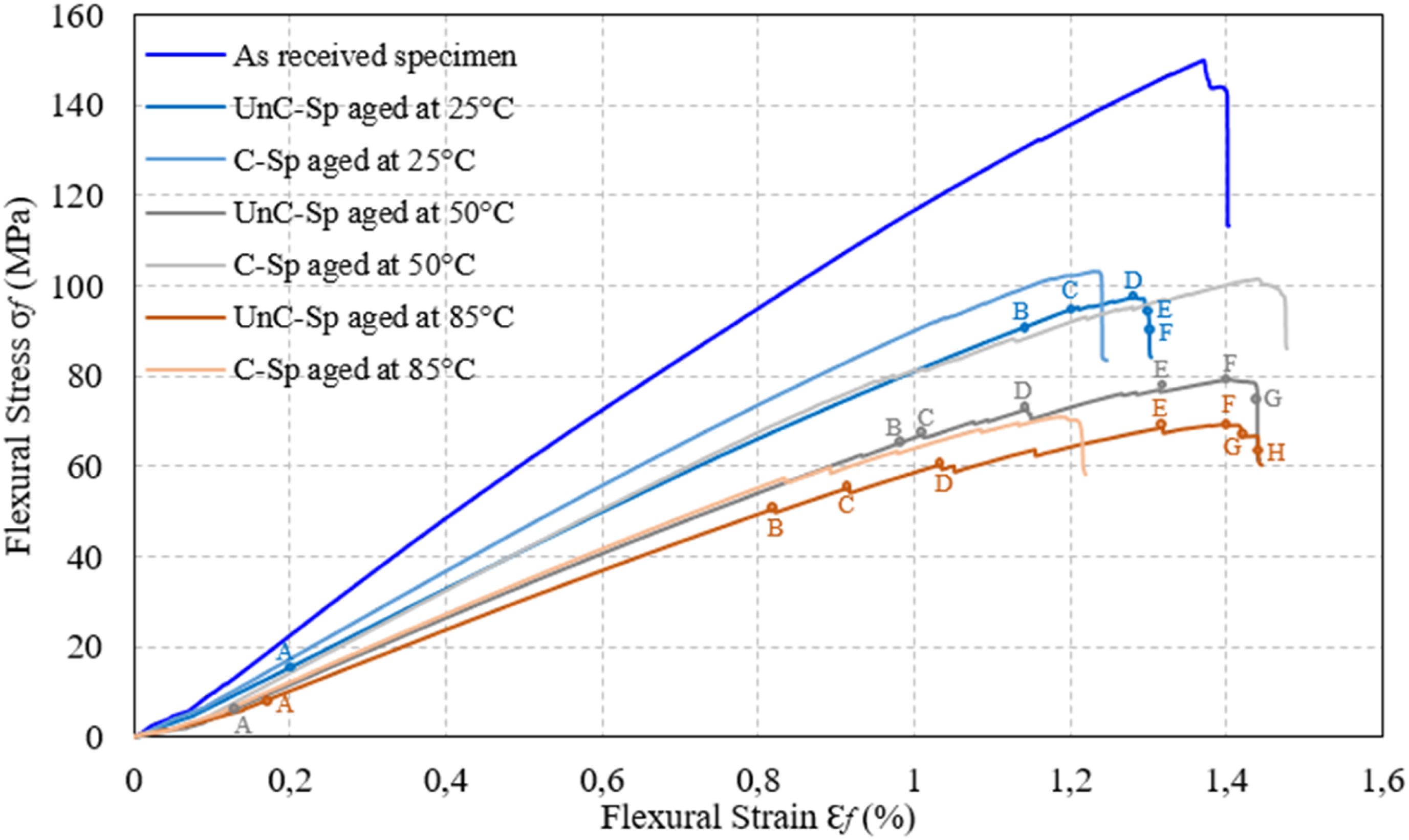
The comparison between the curves shows a reduction in mechanical performance after ageing. The specimens exhibited a brittle behavior in all cases. At room temperature, the stress–strain response maintained its general shape compared to the unaged specimen curve. In contrast, at 50°C and 85°C, the curves exhibited multiple abrupt stress drops before final failure. These variations can be explained by the microscopic damage mechanisms, namely matrix cracking and interfacial debonding, caused by the acid ageing at elevated temperatures.
It is also noticed that the degradation of the mechanical performance was more severe in uncoated aged specimens than in coated ones. This effect is mainly explained by multidirectional acid diffusion through the specimens’ edges, which accelerates internal damage. Acid diffusion occurred both through the exposed fibre ends at the specimen edges and via the AC layer, leading to a significant reduction in flexural properties. This alteration was quantified by the decreases in the flexural modulus E
f
, maximum stress σfmax, and strain at failure εfmax. Figures 8–10 illustrate, respectively, the histograms of E
f
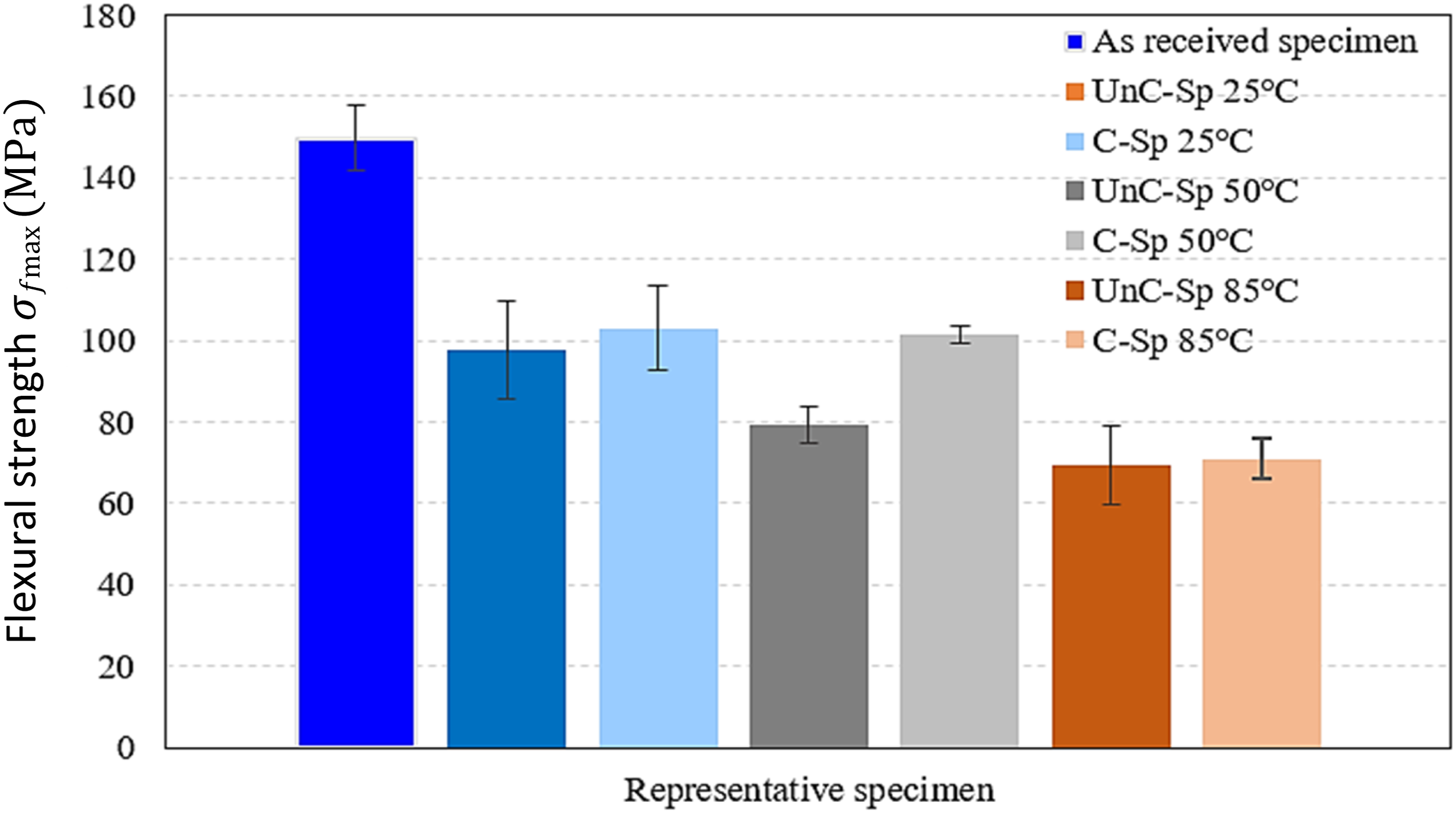
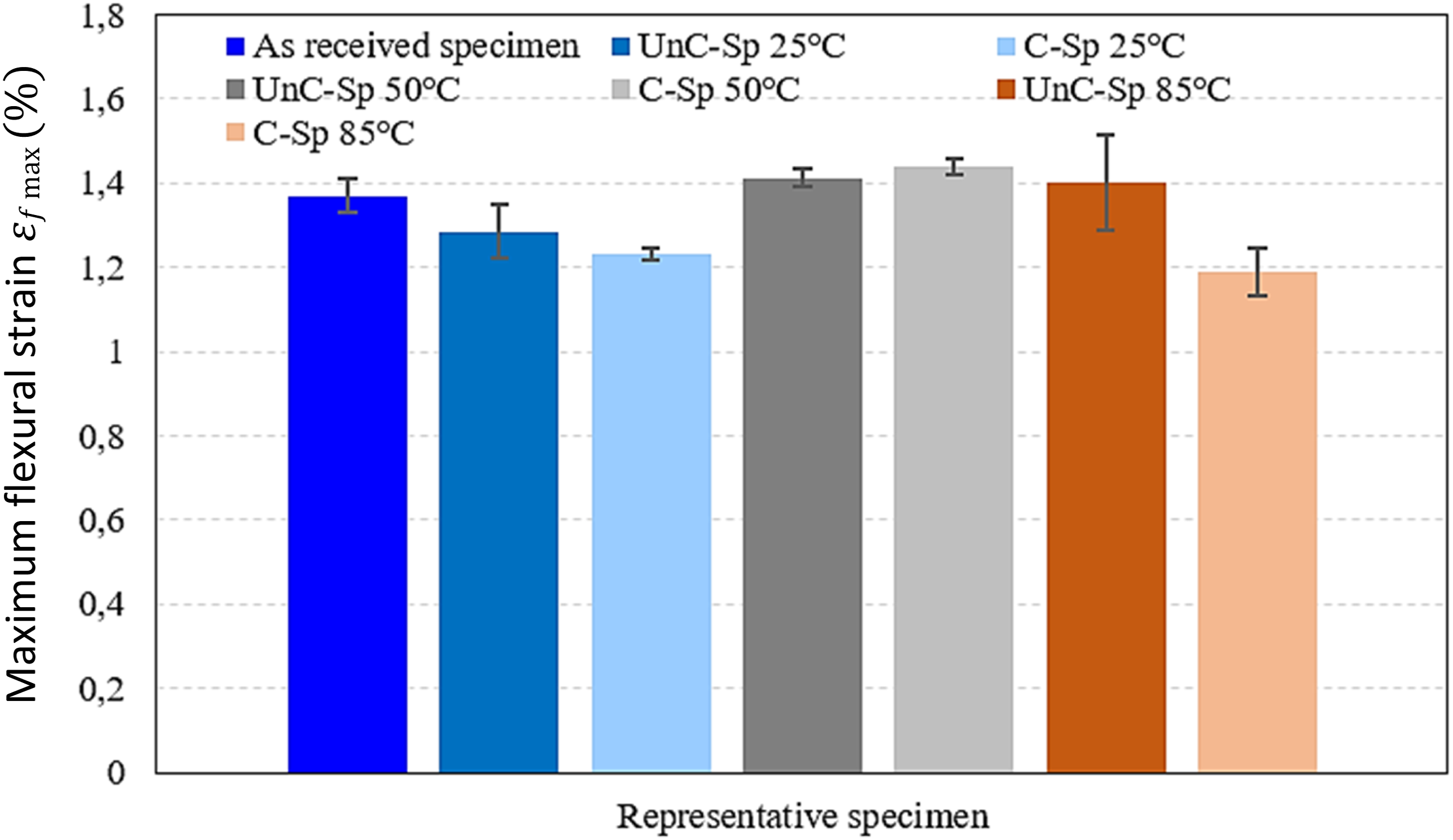
, σfmax, and εfmax as a function of the immersion temperature. The results highlight the role of edge protection in limiting acid-induced aging. Flexural modulus evolution during aging in HCl acid solution (10%). Maximum flexural strength evolution during aging in HCl solution (10%). Maximum strain evolution during aging in HCl solution (10%).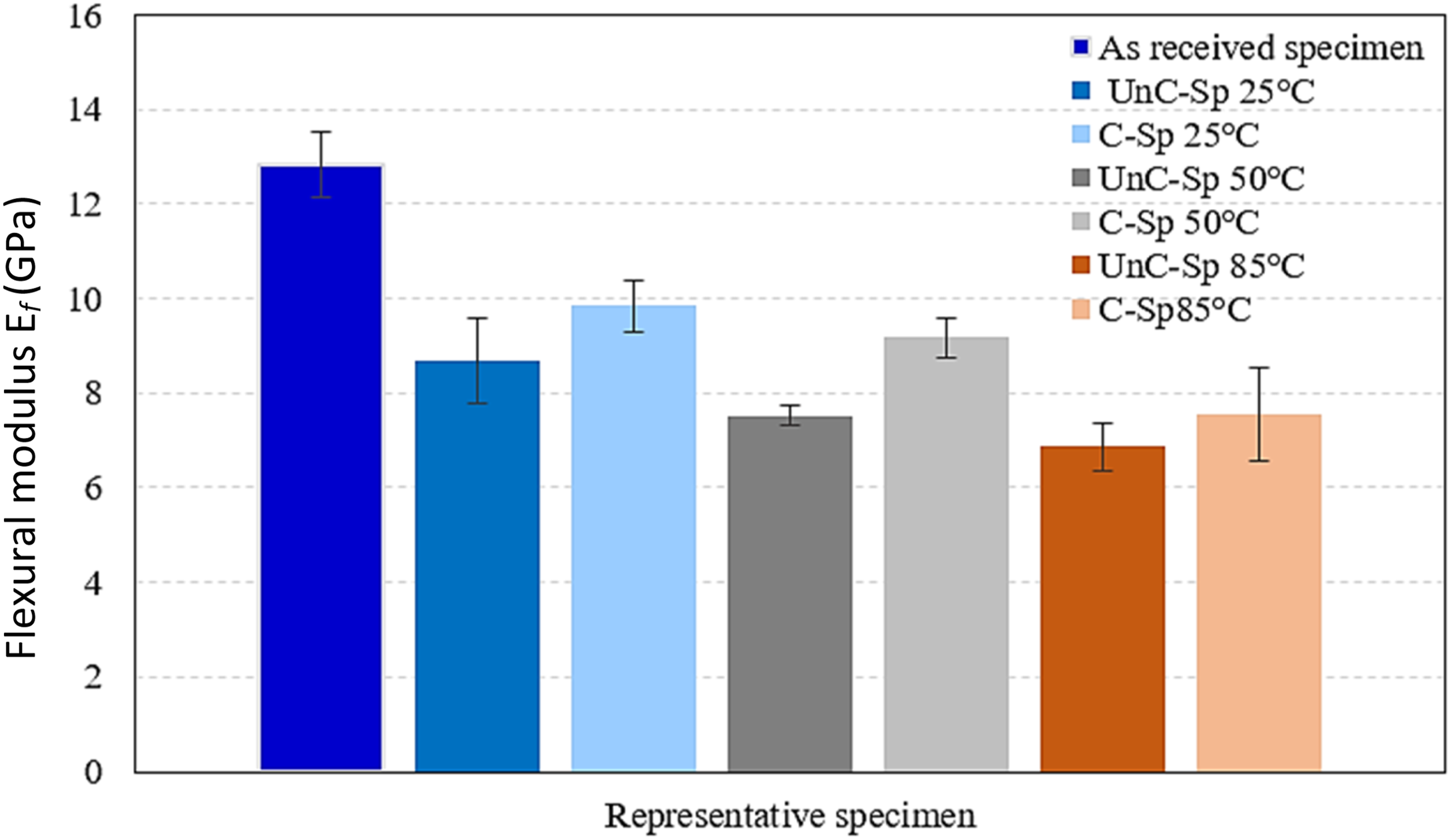
According to Figure 8, the flexural modulus exhibits a significant drop that becomes more important with higher immersion temperatures and greater acid uptake. The flexural modulus of unaged specimens was 12.83 (±0.7) GPa. After ageing, it decreased rapidly to 8.7 (±0.9) GPa at 25°C, 7.52 (±0.2) GPa at 50°C, and 6.9 (±0.5) GPa at 85°C. In contrast, coated specimens retained higher stiffness, with values of 9.83 (±0.5) GPa, 9.16 (±0.4) GPa, and 7.53 (±0.9) GPa at ambient temperature, 50°C, and 85°C, respectively. This improved performance confirms the protective role of the coating layer, which limits the loss of rigidity under acid ageing.
The decrease in flexural modulus is accompanied by a reduction in maximum flexural strength, as shown in Figure 9. This reduction becomes more pronounced with increasing temperature and is more severe in uncoated specimens. At ambient temperature, the maximum strength fell from 149.75 (±8) MPa in the unaged state to 97.7 (±12) MPa in uncoated specimens, compared with 103.1 (±10) MPa in coated ones. At 50°C, the strength decreased further to 79.4 (±4) MPa for uncoated specimens, while coated specimens maintained 101.4 (±2) MPa. At 85°C, the decrease was even more pronounced, reaching 69.3 (±9) MPa and 70.9 (±5) MPa for uncoated and coated specimens, respectively.
Concerning the maximum deformation at failure, Figure 10 illustrates a slight drop at room temperature. For uncoated specimens, the deformation dropped from 1.37 (±0.08)% to 1.28 (±0.06)%, while for coated specimens it increased to 1.23 (±0.05)%. A further reduction was observed for coated specimens aged at 85°C, where the deformation decreased to 1.19 (±0.05)%. This reduction in deformation capacity indicates that the material is becoming more fragile. Interestingly, the reduction was more noticeable in the coated specimens, indicating that absorption was mainly governed by the matrix.Consequently, the properties of the matrix were more strongly affected than those of the fibres, resulting in a greater loss of ductility.
Nevertheless at 50°C, there was a small increase in strain at failure. The strain increased from 1.37 (±0.08)% to 1.41 (±0.02)% and 1.44 (±0.01)% for the uncoated and coated specimens, respectively. A similar trend was observed at 85°C for the uncoated specimens, with strain reaching 1.40 (±0.07)%.
These results are in accordance with previous studies, which attribute the significant loss of mechanical properties at higher temperatures to the increased acid penetration into the material.20,27,30,33 Chemical reactions between the acid, the vinylester matrix, and the glass fibres specifically at the fibre–matrix interface cause the decrease in flexural modulus and strength. As reported by Gasem et al.,9 9 the mechanical deterioration of GFRPs is mostly controlled by fibre degradation. When compared to unaged specimens, acid-induced interface damage significantly decreases stiffness and flexural strength by reducing load transfer efficiency and encouraging the formation of microcracks.
In our case, HCl penetrates the anticorrosion layer through the polymer matrix on the tube’s inner surface, thereby initiating degradation mechanisms within the material. As highlighted by Arun et al. 48 and Hammami et al., 30 such immersion promotes pitting in the matrix which generates additional stresses in the composite.
At the molecular scale, reactions between polymer chains and H+ and Cl- ions induce ester hydrolysis, chain scission, and a reduction in molecular weight, which together decrease the mechanical properties of the composite.26,27 The acid then propagates further through porosities, matrix cracks, and along the fibre network via capillary action in the case of the uncoated specimens, facilitating ion exchange between metallic cations (Na+, Ca2+) on the glass fibre surface and hydrogen ions. This process promotes leaching of the fibre surface, cavitation, and microcrack formation, 49 while chloride ions simultaneously migrate through matrix voids to the fibre–matrix interface, weakening adhesion and thus lowering ultimate strength. 33
As for deformation behavior, exposure to acidic or humid environments can either decrease rupture strain, due to resin embrittlement9,50,51 or increase it under elevated temperatures, where matrix plasticization and softening dominate, leading in parallel to a reduction in flexural modulus and strength.52,53
To elucidate the origin of this variability, flexural tests were monitored using Digital Image Correlation (DIC), and the corresponding results are presented in the following section.
The effect of aging on the deformation kinetics of aged specimens
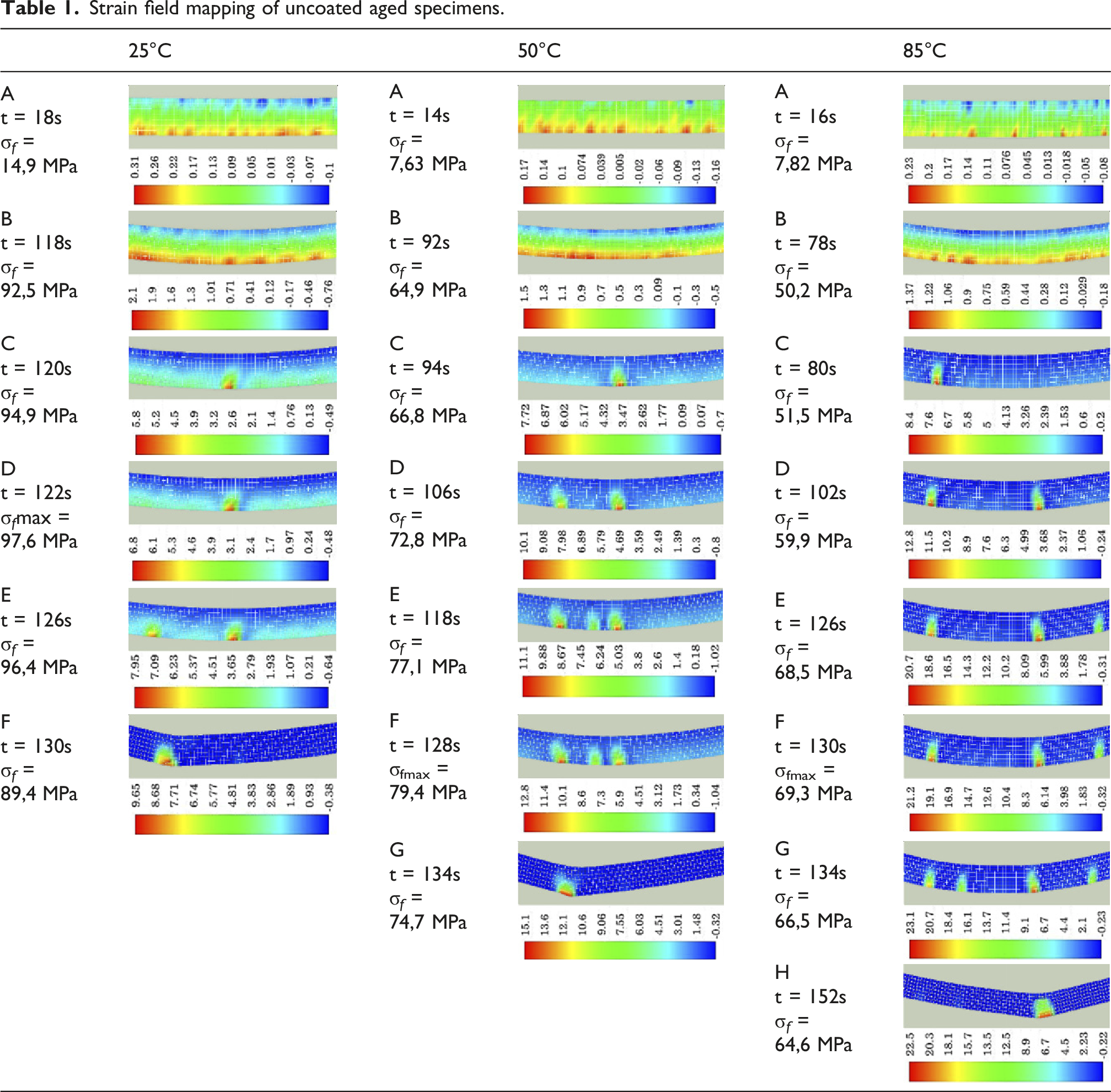
Strain field mapping of uncoated aged specimens.
Strain field mapping of coated aged specimens.
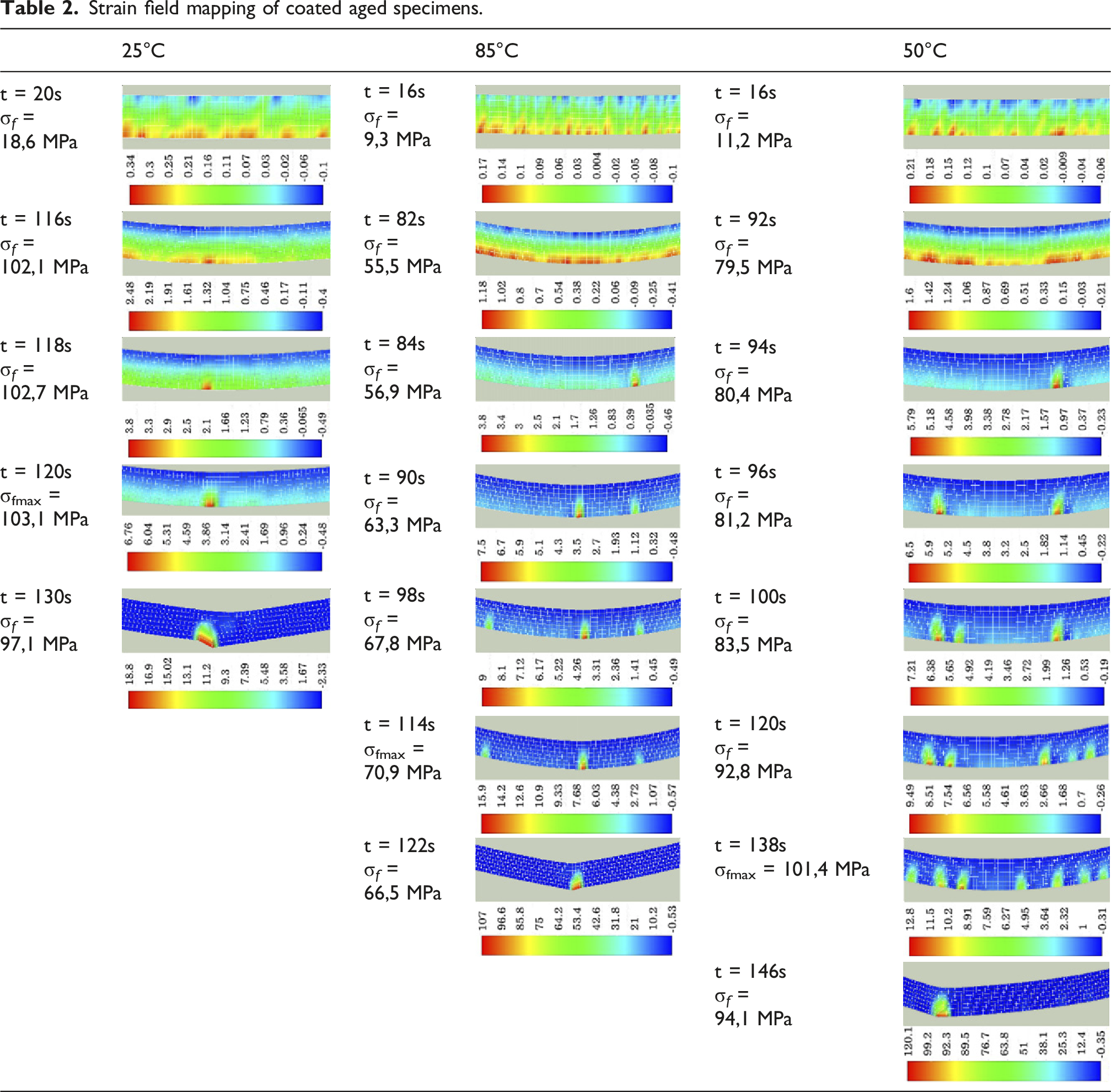
The full field strain maps revealed that aged specimens retained a non-uniform distribution, with the upper region of the section under compression and the lower region in tension, consistent with earlier findings by Brahem et al. 41 However, this heterogeneity appeared earlier in aged specimens, particularly at high temperatures. This led to major strain localization at relatively low stresses. This behavior is consistent with the premature deviations observed in the stress–strain curves (Figure 7), especially for specimens aged at 50°C and 85°C. These deviations occurred at lower stress levels for uncoated specimens compared to coated ones. This suggests that damage initiation (deviation from linearity) occurs earlier due to HCl diffusion, which in turn reduces both strength and mechanical resistance.
With increasing load, maximum strain generally remained concentrated at the lower surface, as observed in unaged specimens. Yet, in most aged cases, the deformation extended beyond the loading span with reduced spread across the thickness. Only coated specimens aged at room temperature preserved the same localization pattern as the unaged material. This morphological change is mainly attributed to accelerated acid diffusion through edges and inner surfaces at elevated temperature, which intensified local degradation.
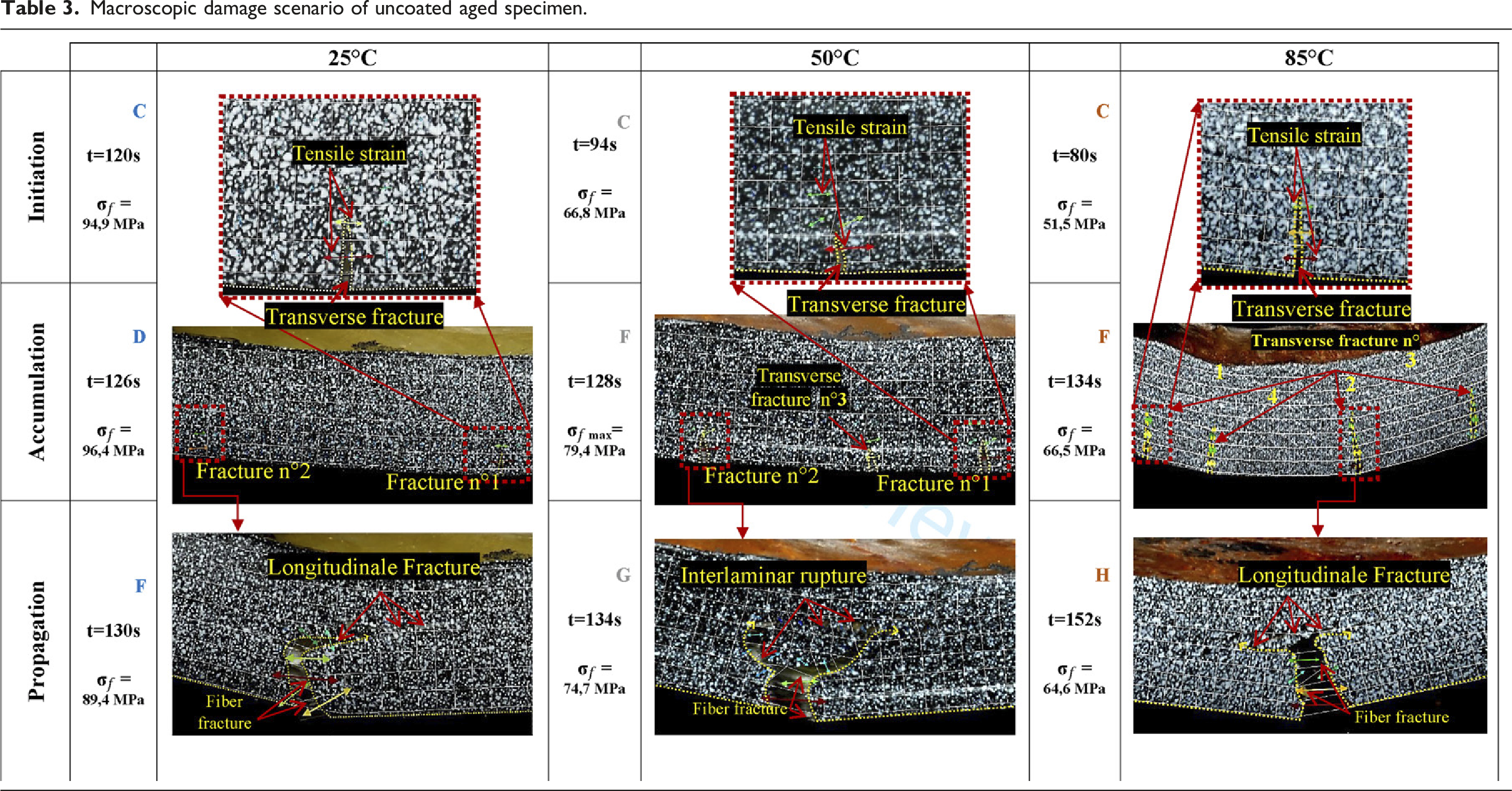
As loading progressed, major strain zones became more confined and concentrated in the most stressed areas, initiating cracks at relatively low stress levels. At room temperature, crack initiation occurred at 94.9 MPa (t = 120 s) for uncoated specimens and 102.7 MPa (t = 118 s) for coated ones. At higher temperatures, rupture initiated earlier, and the onset of localized deformation corresponds to the first stress drops observed in the curves (Figure 7)
The evolution of strain fields also depended on temperature. At room temperature, the initial strain concentration expanded through the thickness at peak stress, leading to progressive crack propagation until final failure. In contrast, specimens aged at elevated temperatures exhibited several strain localization zones. This indicates multiple crack initiations occurred before reaching maximum stress. This observation explains the successive abrupt stress drops recorded in Figure 7, which reflect the activation of multiple damage events prior to final failure. Beyond this point, a dominant zone propagated until final rupture. Specimens aged at 85°C showed more localized zones than those aged at 50°C.
In summary, only specimens aged at 25°C followed a strain development scenario similar to that of unaged material. At higher temperatures, the presence of multiple localized strain zones confirmed the embrittlement and progressive damage induced by HCl diffusion. The observed increase in average strain at rupture under these conditions results from accumulated damage events rather than plasticization. To further evaluate these accumulated damage events, their macroscopic manifestations in the aged specimens are analyzed below.
The effect of aging on the damage scenario
Analysis of macroscopic damage of aged test specimens
Macroscopic damage scenario of uncoated aged specimen.

Macroscopic damage scenario of coated aged specimen.
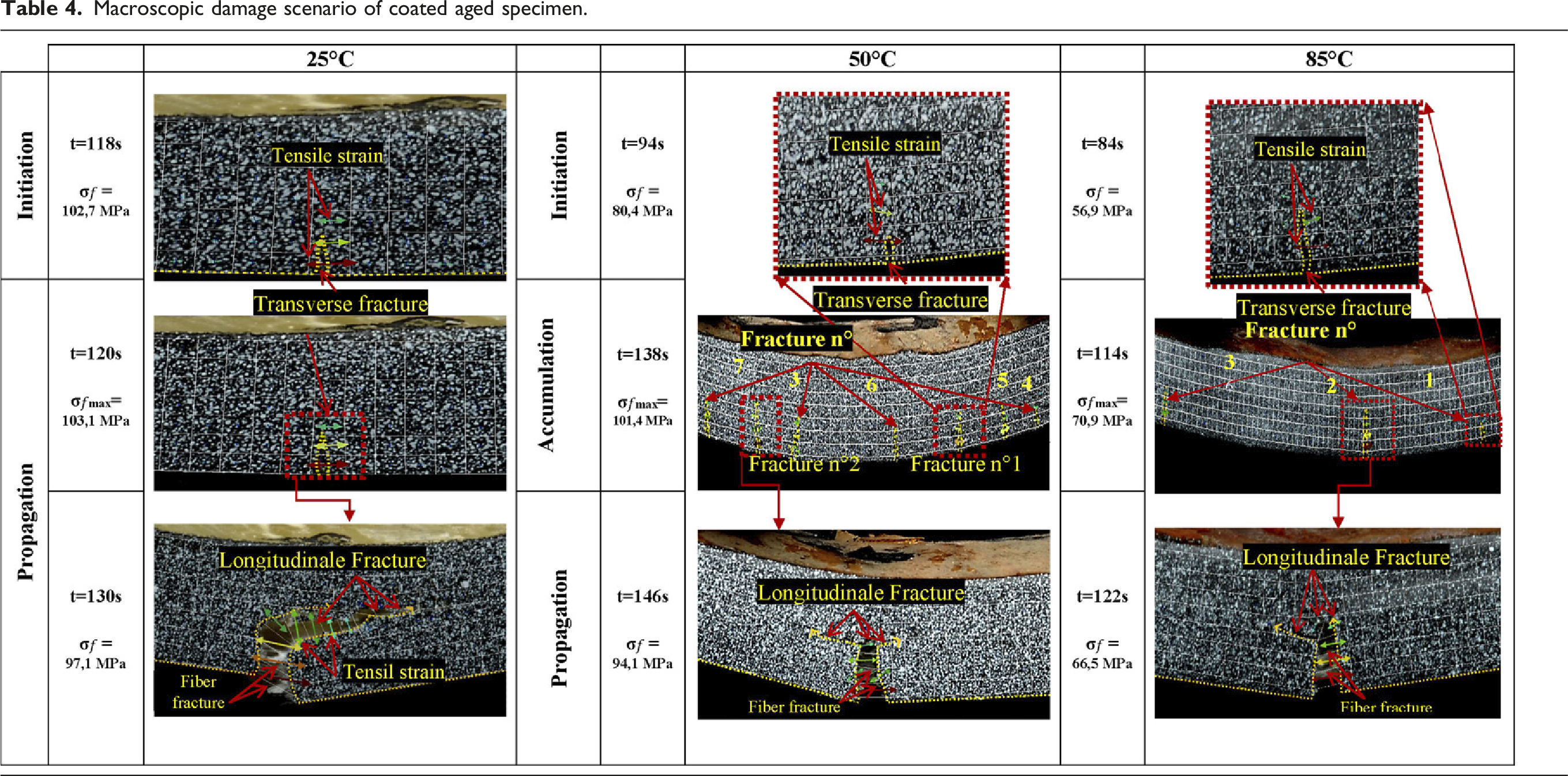

In the first stage, microcrack initiation corresponds to the initial deviation from linearity observed in the stress–strain curves (Figure 7). Regardless of aging temperature, specimens systematically exhibit a transverse crack in the cross-section. This initial crack originates from tensile strain concentration on the lower surface of the specimen, as illustrated in Tables 3 and 4
In the second stage, the accumulation of multiple cracks is associated with the successive stress drops observed in the curves, particularly for specimens aged at elevated temperatures. Additional transverse cracks nucleate alongside the initial rupture, corresponding to the multiplication of damage initiation zones. This occurs as new tensile strain concentration zones emerge. This phase is unique to specimens aged at elevated temperatures. In contrast, unaged specimens follow a two-stage process consisting only of primary crack initiation and propagation. For most aged specimens, however, final failure is governed by the propagation of a secondary transverse crack. The only exception is found in overlapped specimens aged at ambient temperature, which maintain the two-stage failure scenario characteristic of unaged samples.
Finally, in the third stage, crack propagation leads to the abrupt stress decrease corresponding to final failure in the stress–strain curves (Figure 7). The transverse crack propagates further across the specimen width, promoting longitudinal interlaminar decohesion. This arises from a reorientation of the tensile strain, turning from the longitudinal to the transverse direction, as revealed by the strain vector maps. For specimens aged at elevated temperatures, the failure becomes more abrupt and driven by rapid crack propagation. Notably, no strain vector propagation was observed through the specimen thickness at this stage. This absence can be attributed to fibre/matrix interfacial degradation at high ageing temperatures, which hinders load transfer to the reinforcement and directly precipitates catastrophic failure.
In summary, hygrothermal ageing in HCl increases the sensitivity of the specimens to fracture through interfacial fibre/matrix degradation. Moreover, it alters the overall damage scenario by introducing an additional stage characterized by the multiplication of crack initiation sites. Overall, the combination of DIC full-field measurements and macroscopic stress–strain analysis (Figure 7) provides a comprehensive understanding of the damage mechanisms and their evolution during hygrothermal ageing.
Although macroscopic findings describe the overall failure patterns, a microscopic investigation is essential to resolve the degradation mechanisms occurring at the constituent level (fibre, matrix, and interface).
Analysis of microscopic damage of aged test specimens
To better assess the effect of ageing in acidic solution, microscopic observations were performed. X-ray tomography was carried out on aged specimens after flexural testing, and the results confirmed that the initial fracture systematically initiated at the lower surface. This observation is consistent with the tensile stress distribution and the strain localization zones identified by DIC, as well as with the initial deviation from linearity observed in the stress–strain curves (cf. Figure 7). Multiple rupture sites were detected in this region, although the analysis was restricted to the final fracture zone, so only cracks occurring near this area were highlighted.
Microscopic damage mode of aged specimens: uncoated specimens, and coated specimens.
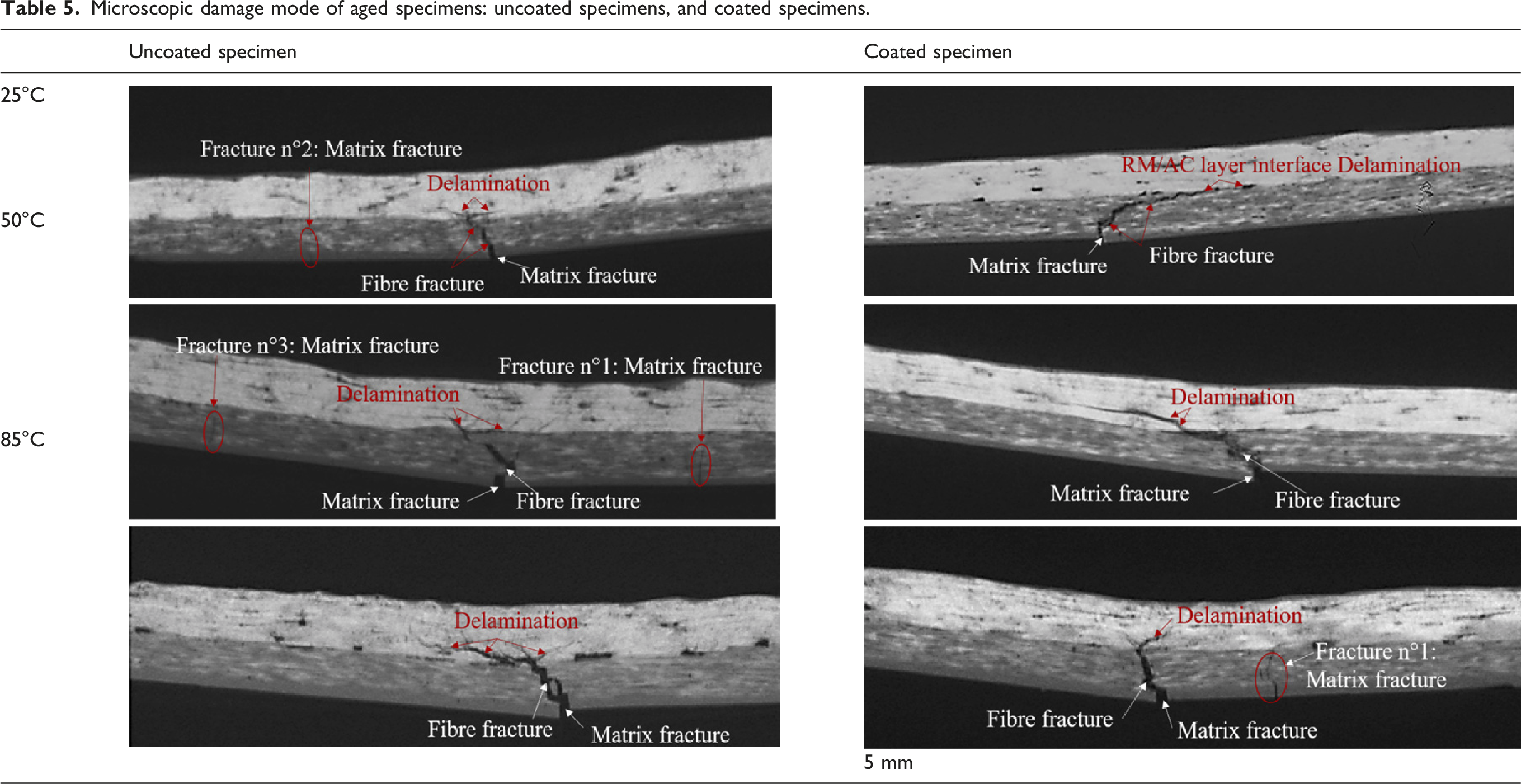
Following this initial stage, tensile damage of the anticorrosion layer triggered delamination and ultimately led to final failure. The onset of delamination corresponds to the successive stress drops observed in the stress–strain curves (cf. Figure 7), reflecting the activation of multiple damage mechanisms at the microscopic scale. The extent of delamination was strongly influenced by the ageing temperature. As shown in Table 5, specimens aged at elevated temperature exhibited pronounced interlaminar separation, particularly in the case of simple specimens without overlapping. This increased delamination contributes to the earlier failure and reduces maximum stress observed macroscopically at 50°C and 85°C.
In most specimens, this interlaminar fracture was confined to the mechanical resistance layer. However, delamination was observed at the interface between the mechanical resistance and anticorrosion layers in uncoated specimens aged at 50°C and coated specimens aged at 25°C, as detailed in Table 5. According to these observations, this behavior can be explained by the presence of porosities and their distribution relative to the crack propagation paths. These defects act as stress concentrators, facilitating crack initiation and accelerating damage propagation, which further explains the increased brittleness observed in aged specimens.
Overall, these results indicate that ageing did not fundamentally change the damage modes of specimens but increased their brittleness by reducing their mechanical resistance. Ageing accelerates damage initiation, promotes crack multiplication, and enhances interfacial degradation. These mechanisms explain the earlier onset of non-linearity, the occurrence of stress drops, and the reduction in ultimate strength, as shown in Figure 7.
Conclusion
The present study systematically investigated the mechanical degradation and damage evolution of filament-wound glass/vinylester composite tubes exposed to hydrochloric acid under different temperature conditions. By combining four-point bending tests, Digital Image Correlation, and X-ray tomography, the relationships between environmental ageing, flexural performance deterioration, and microstructural damage development were quantified. From the results obtained, the key conclusions are as follows: • Exposure to hydrochloric acid significantly reduces flexural properties that scale with temperature. For uncoated specimens, the flexural modulus decreased by 32 %, 41 %, and 46 %, while the flexural strength dropped by 35 %, 47 %, and 54 % at 25°C, 50°C, and 85°C, respectively. • Protective coating limits acid penetration and mitigates degradation. Coated specimens showed improvements of up to 22 % in stiffness and 28 % in strength compared to uncoated specimens, particularly at moderate temperatures. • Digital Image Correlation revealed early heterogeneous strain distributions in aged specimens, especially at elevated temperatures. Crack initiation occurred at 94.9 MPa for uncoated specimens and 102.7 MPa for coated ones at room temperature, confirming earlier damage onset in uncoated materials. Multiple localized strain zones developed before peak stress at 50°C and 85°C, indicating premature microcracking and interfacial debonding. In contrast, room-temperature-aged specimens exhibited strain patterns similar to unaged material, showing that harsher conditions accelerate damage accumulation. • Both macroscopic and microscopic observations showed that failure consistently initiated at the lower tensile surface, followed by matrix cracking, fibre bending, and rupture of the anticorrosion layer. Elevated temperatures promoted additional transverse cracks and interlaminar delamination, leading to more brittle fractures. Coated specimens resisted damage better, though internal microcracking still occurred, affecting both the matrix and fibre–matrix interface. • Tomography revealed complex crack propagation pathways and porosity-related weakening at the fibre–matrix interface. These mechanisms explain the observed reductions in mechanical performance and demonstrate how acid exposure impairs load transfer within the composite.
These findings indicate that both temperature and surface protection are the key factors controlling acid penetration and failure behavior, providing important guidance for improving the long-term reliability of composite piping in aggressive chemical environments.
Footnotes
Acknowledgments
Authors are thankful to the University of Monastir and the Tunisian Ministry of Higher Education and Scientific Research for their support (LGM: LAB-MA-05). We are also grateful to the University of Savoie Mont Blanc- France (SYMME: LAB- F-74000) and to the whole staff of the CTRA TUNISIA Company for their great collaboration.

CRediT authorship contribution statement
Nessrine Brahem: Writing – original draft, Methodology, Investigation, Funding acquisition, Formal analysis, Data curation, Conceptualization. Faten Chaouch : Writing, Formal analysis. Sonia Braiek: Validation, Supervision, Methodology. Ated Ben Khalifa: Supervision, Project administration, Validation. Manuel Lagache: Validation, Supervision, Project administration, Investigation. Mondher Zidi: Validation, Supervision, Project administration.
Funding
The authors received no financial support for the research, authorship, and/or publication of this article.
Declaration of Conflicting Interests
The authors declared no potential conflicts of interest with respect to the research, authorship, and/or publication of this article.
Data Availability Statement
The datasets generated and/or analyzed during the current study are available from the corresponding author on reasonable request.