






Abstract
Rotating laminated shells are widely used in engineering structures, where their vibration behavior is jointly affected by material anisotropy, centrifugal stiffening, gyroscopic coupling, and boundary flexibility. For moderately thick and thick shells, these effects become more complicated and may not be captured accurately by equivalent single-layer models. Accordingly, this paper presents a semi-analytical formulation for the traveling-wave vibration analysis of rotating laminated cylindrical shells with general elastic end restraints based on a full layerwise shell theory and the boundary spring technique. The governing equations are derived from Hamilton’s principle, in which the Fourier series and one-dimensional finite elements are employed to discretize the circumferential displacement field and axial domain, respectively, while a mass-weighted modal assurance criterion is introduced to track the continuous modal branches under rotation. The validity of the proposed method is verified through convergence studies, comparison with experimental results, and benchmark solutions available in the literature. The results show that the present formulation can accurately capture the forward and backward traveling-wave branches, together with the associated frequency splitting and mode veering phenomena induced by rotation. The effects of elastic end restraints and stacking sequence on the traveling-wave vibration characteristics are further clarified. The proposed method provides an efficient and accurate tool for the vibration analysis of rotating laminated cylindrical shells under general elastic support conditions.
Keywords
Introduction
Composite laminated cylindrical shells are key load-carrying and motion-transmitting components in many aerospace, turbomachinery, marine, and energy systems because of their high specific stiffness, tailorability, and favorable dynamic performance. In practical service, such shells often operate under rotation and are rarely subjected to ideal classical end conditions. Instead, the supports are more realistically represented by finite elastic restraints, and the resulting vibration response is strongly influenced by the combined effects of laminate anisotropy, gyroscopic coupling, centrifugal stiffening, and boundary compliance. These features make accurate prediction of the free-vibration characteristics of rotating laminated cylindrical shells both scientifically challenging and practically important.
The theoretical development and numerical analysis of plate and shell structures have been extensively documented in the fundamental works of Reddy, 1 Qatu, 2 Soedel, 3 Amabili, 4 Carrera, 5 and Le. 6 In recent years, a substantial amount of literature has been devoted to the vibration of composite laminates with increasingly complex geometries7–15 and advanced material systems.16–20 For the present problem, the most relevant developments mainly concern boundary modeling, rotation-induced vibration behavior, and refined laminate theories. Regarding boundary modeling, practical shell structures are rarely subjected to ideal classical constraints. Therefore, spring-based techniques have been widely used to represent elastic restraints, boundary flexibility, and coupling effects in a unified manner. 21 In this context, a variety of semi-analytical methods have been proposed for shell structures with arbitrary or elastic boundaries. Jin et al. 22 proposed a unified Fourier solution within the first-order shear deformation theory for the vibration analysis of composite laminated shells of revolution with general elastic restraints, in which artificial springs were introduced to represent both classical and non-classical boundary conditions in a unified framework. Zhang et al. 23 developed an improved Fourier-series method for the free and forced vibration of circular cylindrical double-shell structures under arbitrary boundary conditions, where boundary and coupling springs were employed to model elastic and rigid restraints conveniently. Choe et al. 24 presented a unified Jacobi-Ritz method for coupled composite laminated axisymmetric doubly curved shells with general boundary conditions, combining Jacobi polynomials in the meridional direction and Fourier series in the circumferential direction to achieve efficient semi-analytical modeling. Li et al. 25 proposed a semi-analytical Rayleigh-Ritz formulation for functionally graded porous cylindrical shells with arbitrary boundary restraints, in which unified Jacobi polynomials and Fourier series were adopted together with penalty-based spring modeling. Zhang et al. 26 developed a dynamic stiffness method for coupled conical-ribbed cylindrical-conical shell structures with general boundary conditions, where the global dynamic stiffness matrix was assembled from exact component solutions. Overall, these studies demonstrate that spring-based semi-analytical modeling provides an effective and flexible framework for shell vibration analysis under general boundary conditions, although most of these formulations are still based on equivalent single-layer (ESL)-type shell kinematics.
In many engineering applications, composite laminated structures operate under rotating service conditions. Vibration behavior under rotation becomes considerably more complicated than that of stationary ones, because centrifugal stiffening and gyroscopic coupling must be taken into account simultaneously. As a result, the modal frequencies may split into forward- and backward-traveling branches, accompanied by mode shifting, frequency veering, and mode-shape transfer. 27 Accordingly, increasing attention has been paid to rotating structures. Early studies mainly focused on isotropic28–33 and laminated34–36 rotating cylindrical structures, while later work was extended to functionally graded,37,38 graphene/CNT-reinforced,39,40 stepped,41,42 sandwich,43,44 and multi-component coupled shells.45–47 In parallel, the methodological development evolved from conventional finite-element and shell-theory toward Rayleigh-Ritz, orthogonal-polynomial semi-analytical methods, and more recently nonlinear,48–50 traveling-wave-based51–53 and multi-mode coupling analyses.54,55 Recent nonlinear studies on composite cylindrical shells have further shown that porosity, elastic foundations, magneto-electro-thermo-mechanical loads, thermal environments, and multi-harmonic excitations may induce complex amplitude-dependent responses, internal resonances, and nonlinear forced-vibration characteristics.56–59 These studies highlight the significance of geometrically nonlinear models for composite shells under severe operating conditions, although the present work focuses on the linear small-amplitude free-vibration characteristics of rotating laminated cylindrical shells.
As indicated by the above literature review, although extensive studies have been conducted in this field, most existing formulations are based on ESL theories, including classical laminated shell theory (CLST), first-order shear deformation theory (FSDT), and higher-order shear deformation theory (HSDT). These ESL-based descriptions are generally adequate for thin shells, but may become insufficient for moderately thick and thick laminated shells, where transverse shear effects, thickness-wise deformation, and material heterogeneity become more significant. 60 To overcome these limitations, several refined laminate theories have been developed, such as Carrera’s Unified Formulation (CUF), 61 zig-zag theories, 62 and layerwise theories. 63 A recent layerwise study 14 also showed that layerwise kinematics can improve free-vibration predictions for medium-thickness heterogeneous shells by more accurately describing thickness-wise deformation. CUF provides a general hierarchical framework for refined thickness expansions, while zig-zag theories efficiently represent slope discontinuities and transverse shear effects across layer interfaces with relatively few unknowns. In the present study, Reddy’s full layerwise shell theory is adopted not because it is universally superior to other advanced theories, but because it is suited to the rotating laminated cylindrical shell problem considered here. Its independent through-thickness interpolation of displacement components enables a direct description of thickness-wise deformation and interlaminar continuity in moderately thick and thick laminates. Moreover, the layerwise nodal variables allow the stiffness, centrifugal-stress-induced geometric stiffness, mass, and gyroscopic matrices to be constructed in a consistent and physically transparent manner, which is important for capturing forward- and backward-traveling-wave splitting and mode veering. In addition, LWST can be naturally combined with the present circumferential Fourier expansion, axial finite-element discretization, and end-spring modeling strategy. However, the combined treatment of full layerwise kinematics, rotation-induced gyroscopic/centrifugal effects, and spring-based general end restraints within an efficient Fourier-FE framework remains limited.
Accordingly, this study develops a layerwise semi-analytical formulation for the free vibration analysis of rotating composite laminated cylindrical shells under general elastic end restraints. The proposed formulation combines circumferential Fourier expansion with axial finite-element discretization, thereby retaining the high modal resolution and computational efficiency of semi-analytical methods while offering the geometric flexibility and systematic convergence properties of the finite-element method. This Fourier-FE framework is particularly advantageous for shell vibration problems because it naturally exploits the periodicity in the circumferential direction, reduces the computational cost of full two-dimensional discretization, and facilitates the treatment of traveling-wave characteristics in rotating shells. In addition, by introducing spring-based elastic restraints at the shell ends, the present model can represent a broad range of practical boundary conditions within a unified formulation, which further enhances its applicability to engineering shell structures.
The remainder of this paper is organized as follows. The second section presents the proposed Fourier-FE semi-analytical formulation based on full layerwise mechanics and Hamilton’s principle, followed by the solution procedure and the MAC-based mode-tracking method. The third section provides the convergence study and further verifies the accuracy and effectiveness of the proposed approach through comparisons with experimental results and benchmark solutions from the literature. The fourth section presents a parametric investigation of the effects of rotation speed, elastic end restraints, and stacking sequence on the free-vibration characteristics of rotating composite laminated cylindrical shells. Finally, the main conclusions are summarized in the last section.
Theoretical formulations
Displacements and strains of layerwise kinematics
The geometrical configuration, coordinates, through-thickness layerwise approximation, and end restraints of a rotating multilayered cylindrical shell are schematically depicted in Figure 1. Specifically, Figure 1(a) defines dimensions, and the adopted coordinate systems for the laminated shells under a constant rotational speed Schematic of the rotating laminated cylindrical shell model: (a) geometry and coordinate systems; (b) layerwise through-thickness discretization; (c) spring-stiffness model for general elastic end restraints.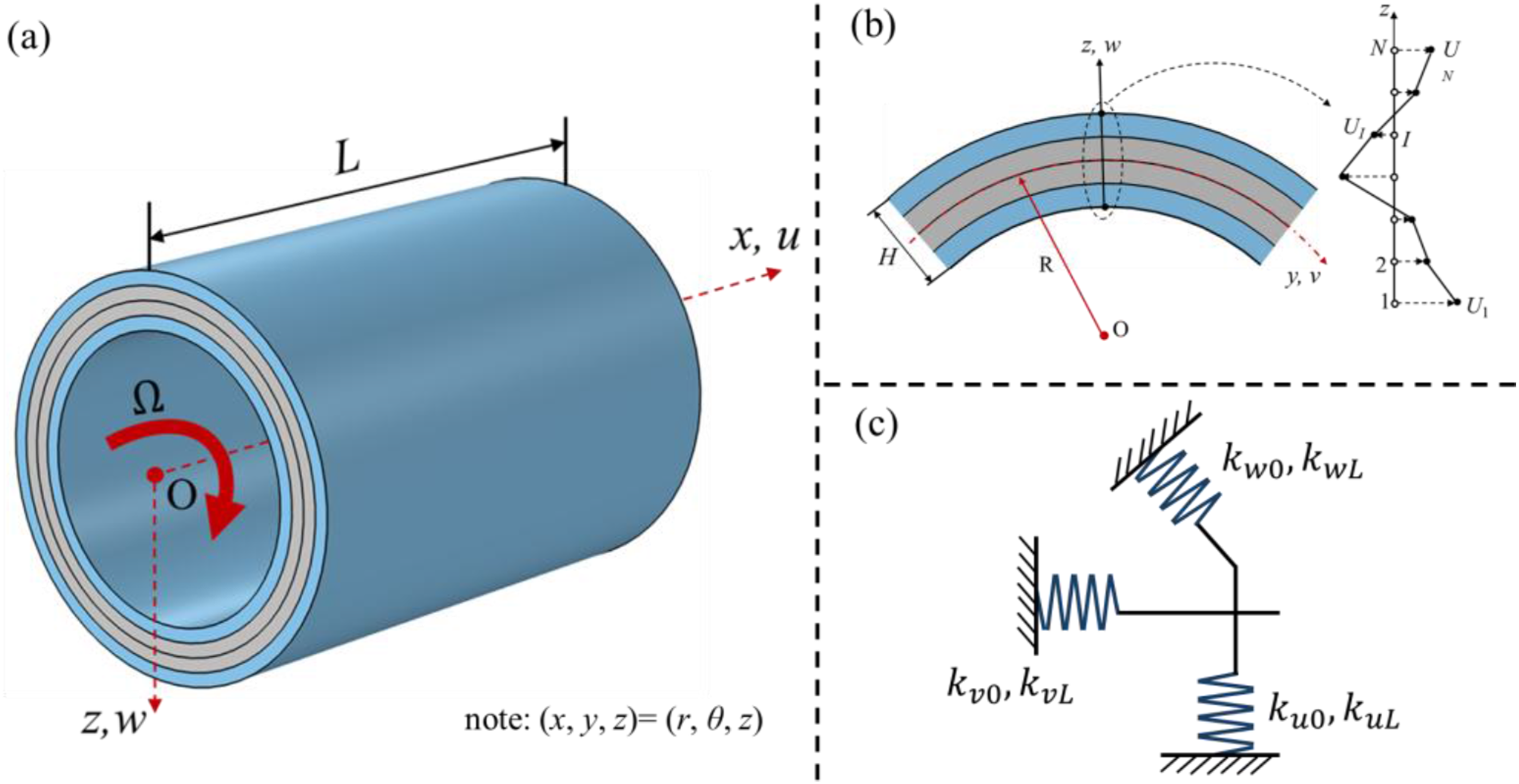



The strain components of the cylindrical shells associated with the full layerwise theory
63
of equations (1a)–(1c) are derived as follows:






Hamilton’s principle and equations of motion
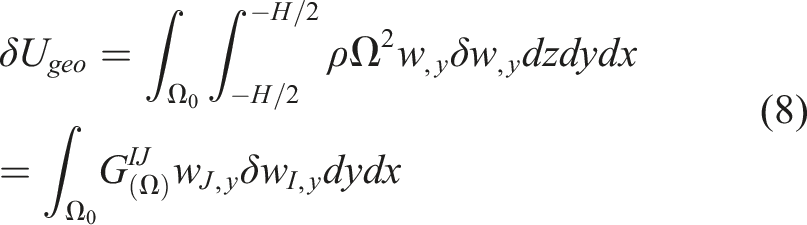
The governing equations for free vibration of rotating laminated cylindrical shells with general elastic end restraints based on the full layerwise shell theory can be derived by means of Hamilton’s principle,

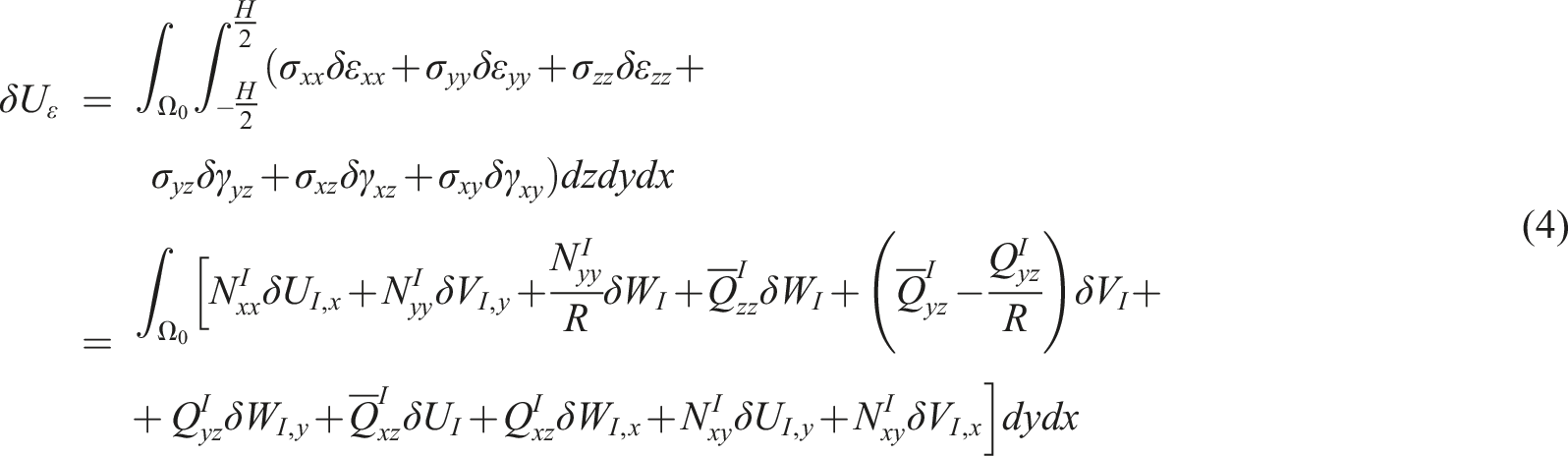
The virtual elastic strain energy
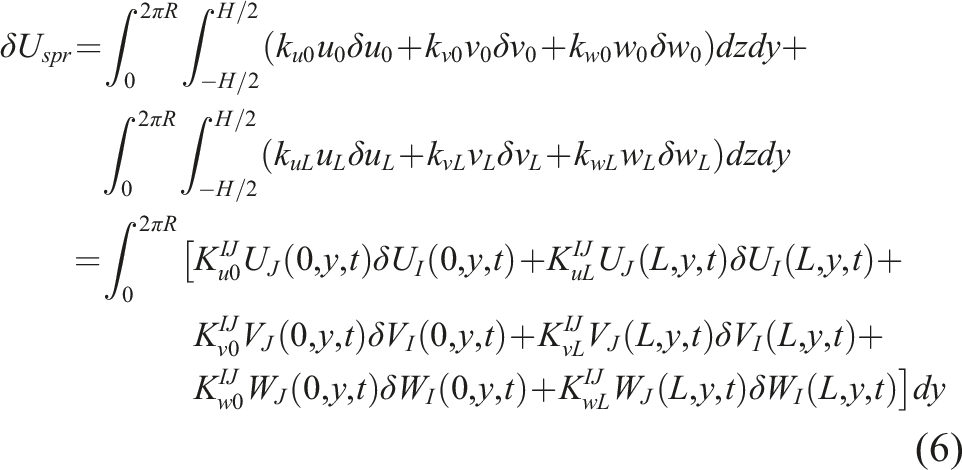
The virtual elastic end restraint energy


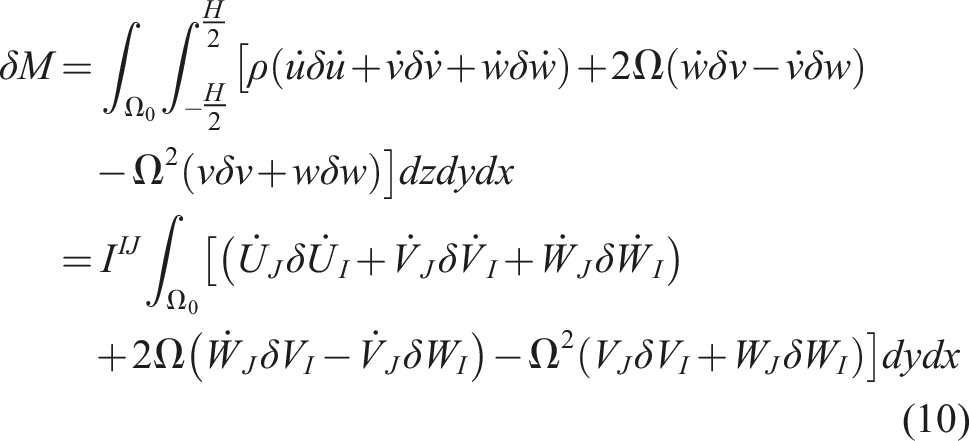
The virtual kinetic energy

Substituting for the



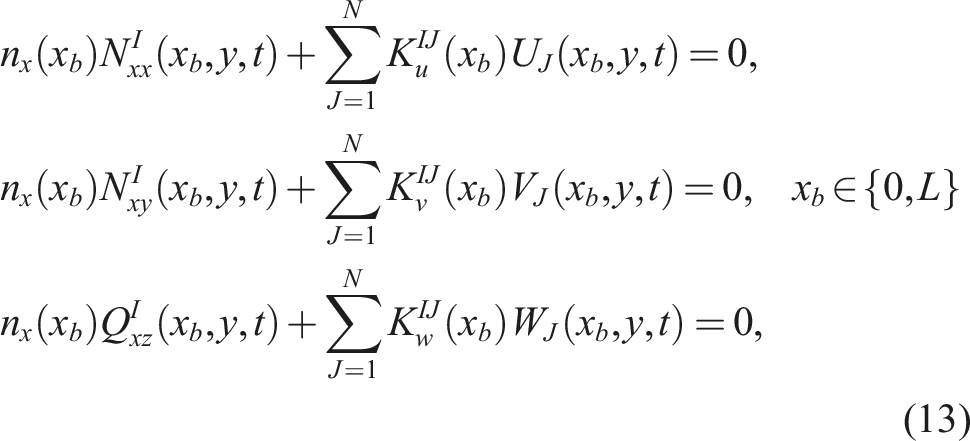
The natural boundary conditions of the shell are:
Laminate constitutive equations
The 3D stress-strain relations of the
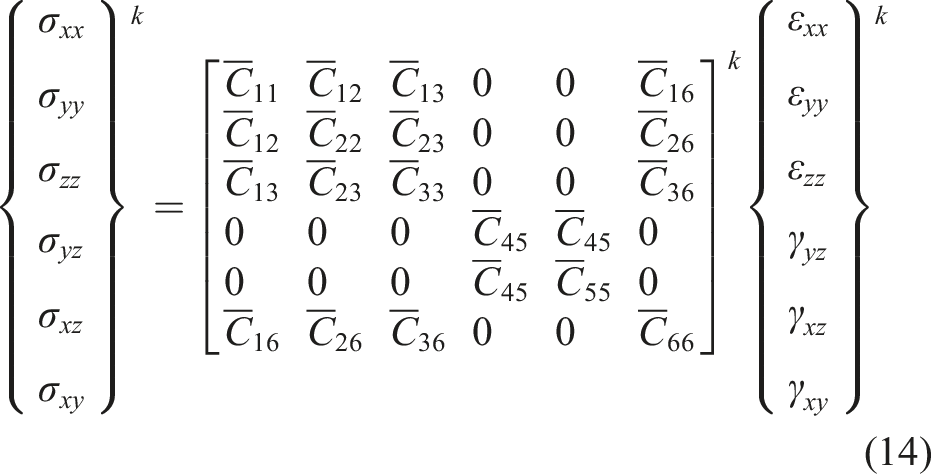
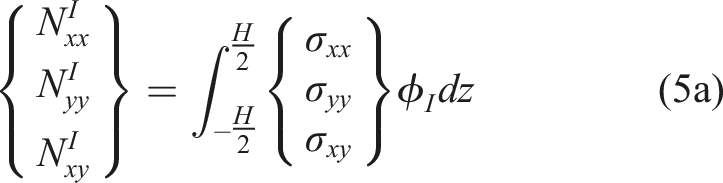
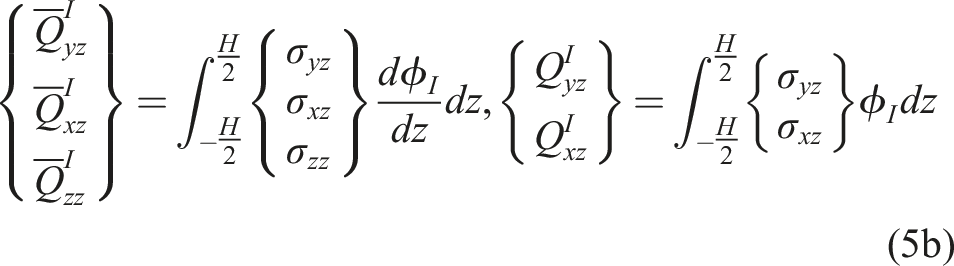
By integrating the stresses through the shell thickness and using the constitutive relation in equation (14), the stress resultants appearing in equations (5a)–(5b) are defined as:
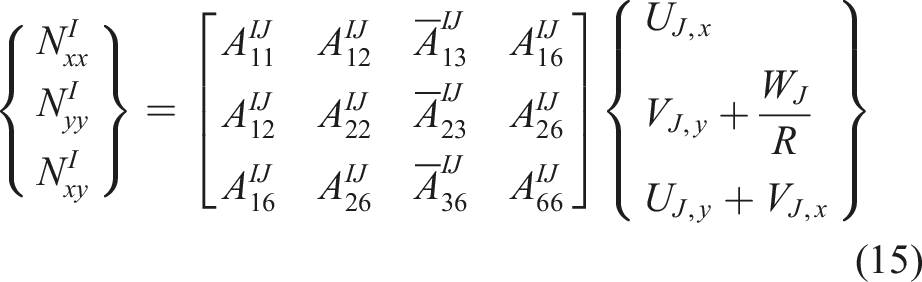
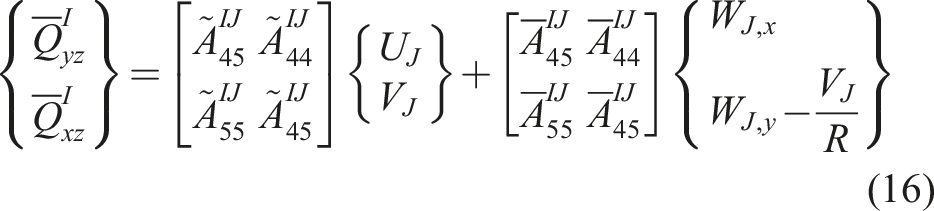
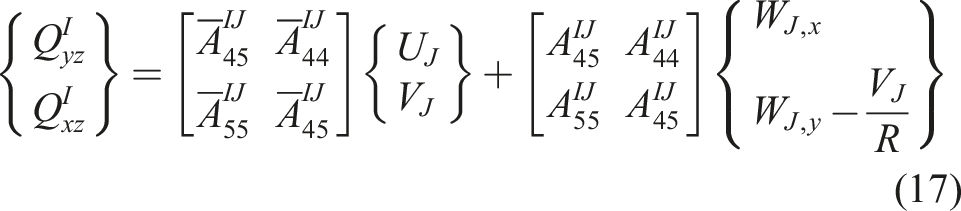

The laminate stiffnesses are defined as follows:



Fourier-FE formulation
To efficiently solve the Euler-Lagrange equations in equations (12a, 12b, 12c), a semi-analytical Fourier-1D FE strategy is adopted. The circumferential direction of a closed cylindrical shell is periodic; therefore, Fourier expansion naturally represents the circumferential wave field, achieves wavenumber-wise decoupling, and facilitates the identification of forward and backward traveling waves. The axial direction is finite and affected by the elastic end restraints, so one-dimensional finite elements are used to impose general end springs conveniently and allow mesh refinement. The proposed discretization functions are defined as follows:



Substituting the proposed Fourier-FE discretization equations equations (20a)–(20c) into the Hamilton’s principle in equation (3), the semi-analytical FE governing equations yield the following time-domain equation of motion for a given circumferential mode n and rotation speed

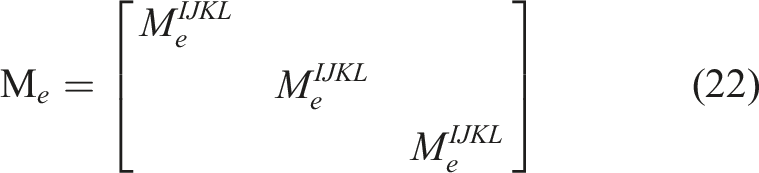
The mass matrix

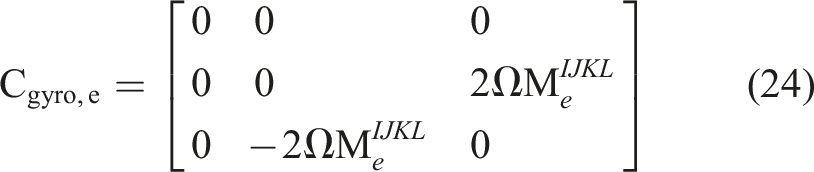
The gyroscopic coupling matrix
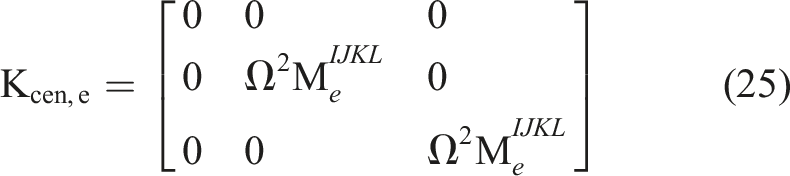
The centrifugal stiffening stiffness matrix
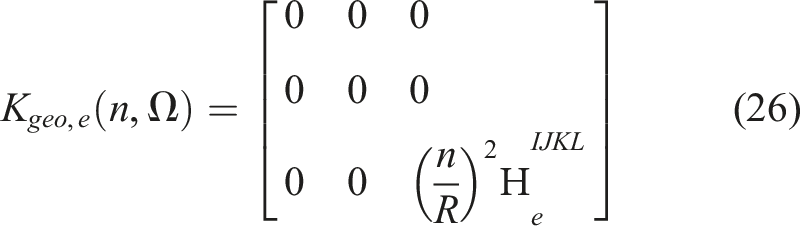
The initial hoop stress geometric stiffness

The boundary end restraint stiffness matrix
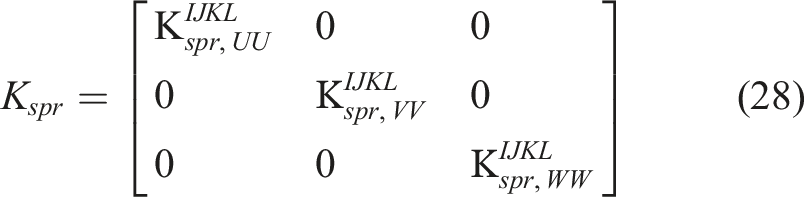



The strain stiffness matrix
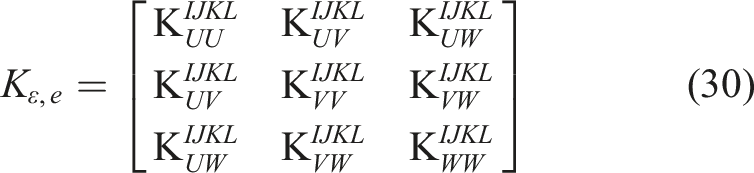
Assuming harmonic motion

Equation (31) yields the natural angular frequency
Solution algorithm and MAC-based mode-tracking technique
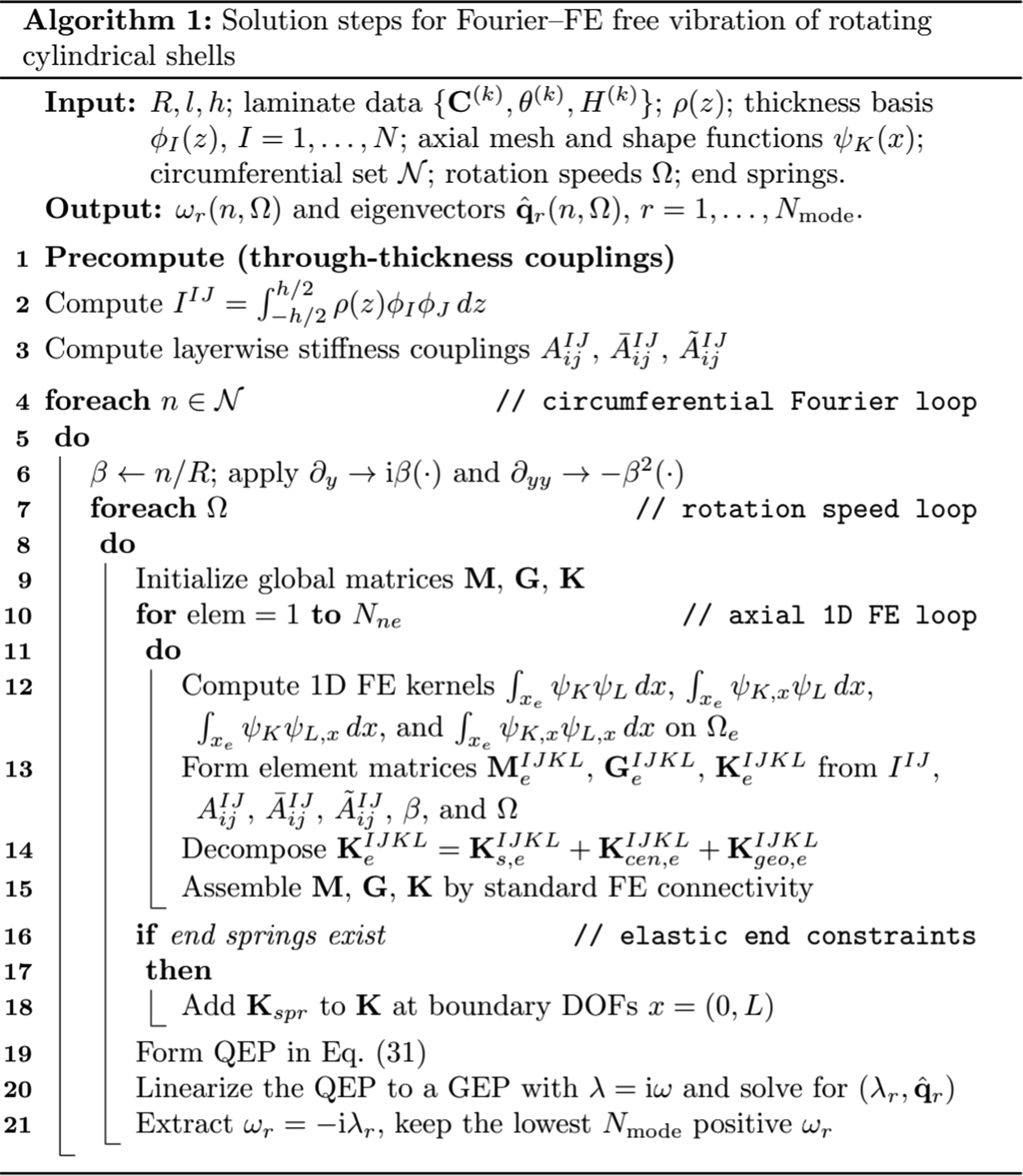
This section describes the computational procedure adopted in this work, including the Fourier-FE solution algorithm and the mode tracking technique used for rotating shells. The governing equation in equation (31) is reduced by a circumferential Fourier expansion and discretized in the axial direction using one-dimensional finite elements, leading to a quadratic eigenvalue problem characterized by the circumferential index n and rotational speed
Algorithm 1 provides, at each prescribed rotation speed
First, to remove the arbitrary scaling of eigenvectors and enable a consistent similarity evaluation between adjacent speed points, all retained eigenvectors are mass-normalized using the consistent mass matrix

The similarity between mode
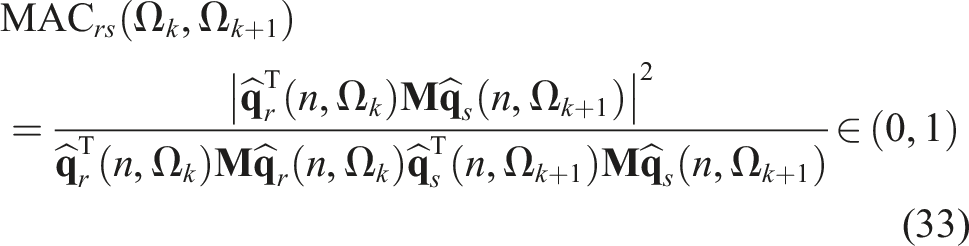
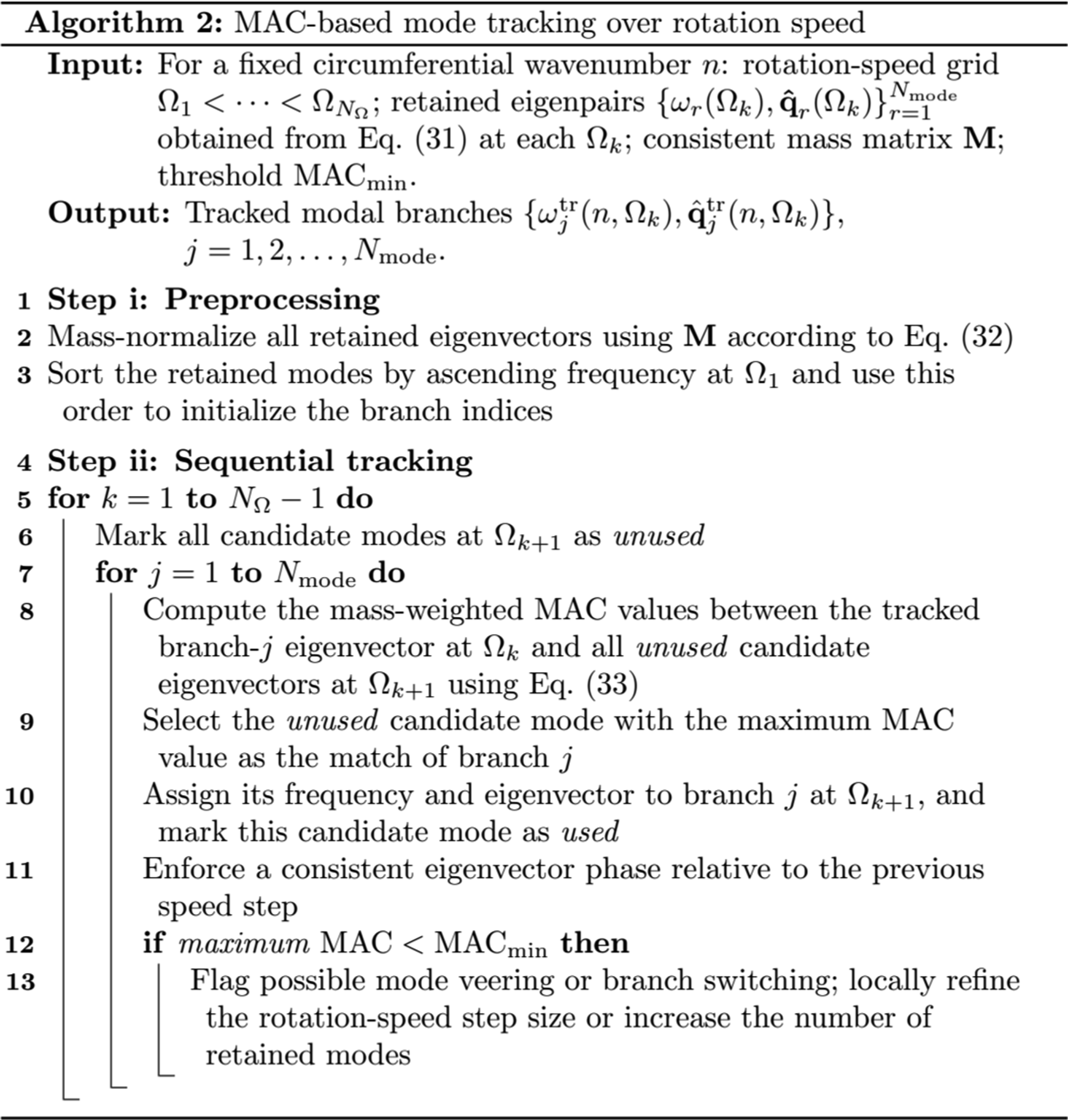
The Schematic of MAC-based mode tracking between two adjacent rotation speeds.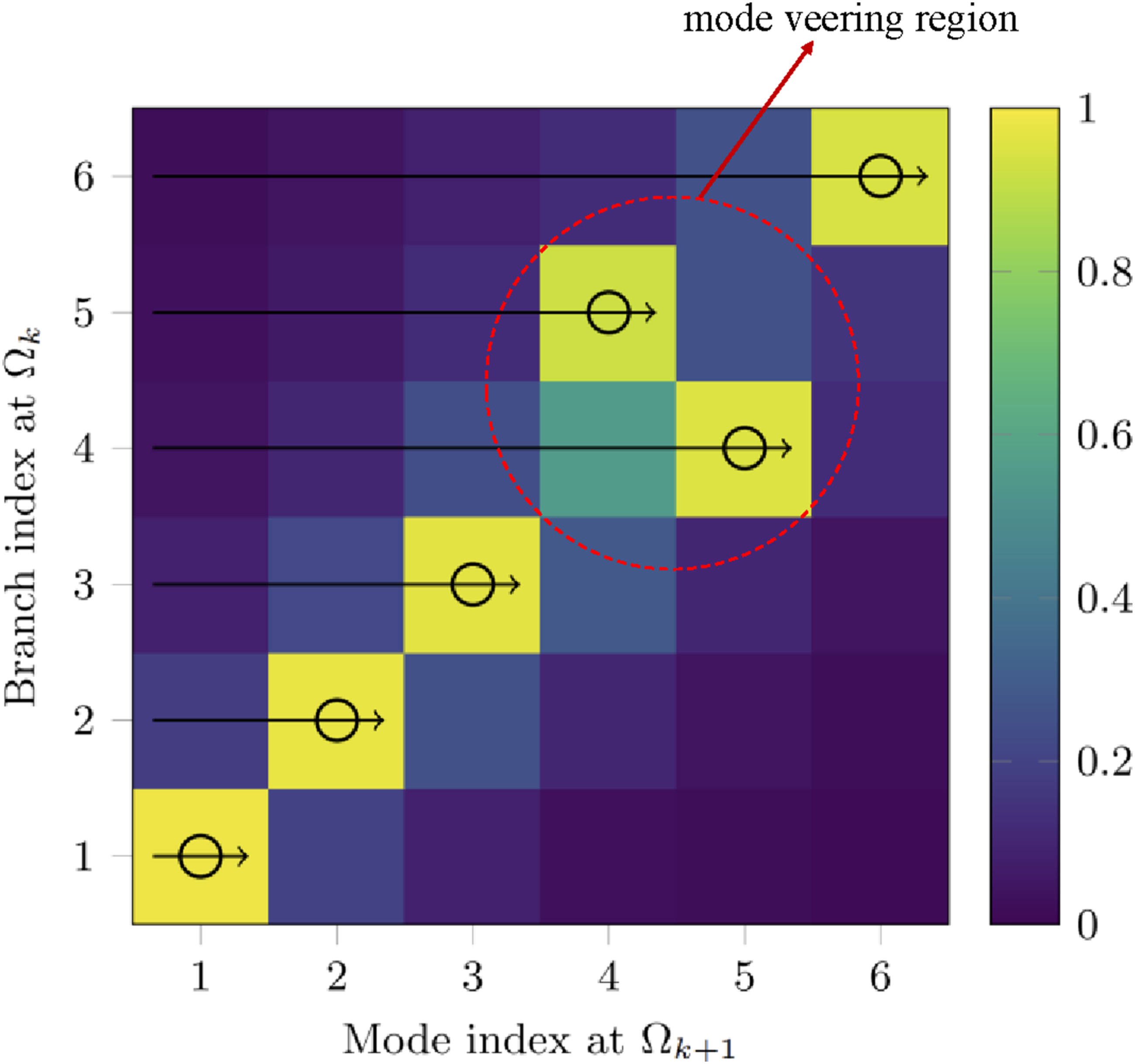
In the present calculations,
Convergence study and model verification
Convergence study
To assess the numerical convergence of the proposed layerwise semi-analytical Fourier-finite element formulation, a computer program implementing the numerical algorithm is developed to analyze the free vibration characteristics of moderately-thick composite laminated cylindrical shell with general elastic end restraints. The considered shell is a symmetric laminate with stacking sequence [45°/-45°/45°/-45°]s, and all plies are assumed to have equal thickness. Its geometric parameters are L = 0.48 m, R = 0.12 m and total thickness H = 0.5 mm. The mechanical properties of the selected orthotropic lamina are
Figure 3(a) and (b) show the non-dimensional natural frequency versus the number of axial elements Convergence of the proposed layerwise Fourier-finite element formulation with respect to the number of axial elements 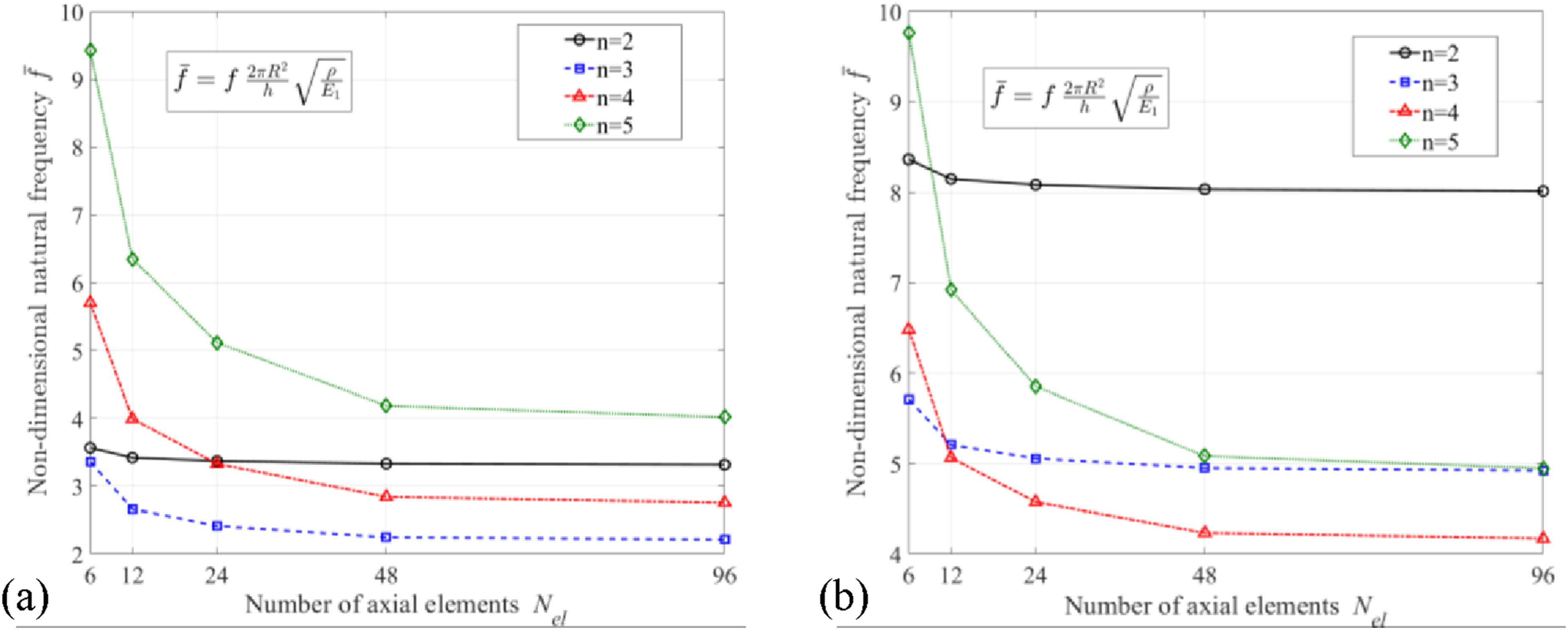
Moreover, higher circumferential wave numbers exhibit a stronger sensitivity to coarse axial meshes, particularly for both axial wave numbers, whereas the low-n modes converge more quickly. Based on these observations,
The convergence with respect to the through-thickness layerwise resolution is examined by increasing the number of through-thickness interpolation nodes Convergence of the proposed layerwise Fourier-finite element formulation with respect to the number of through-thickness interpolation modes 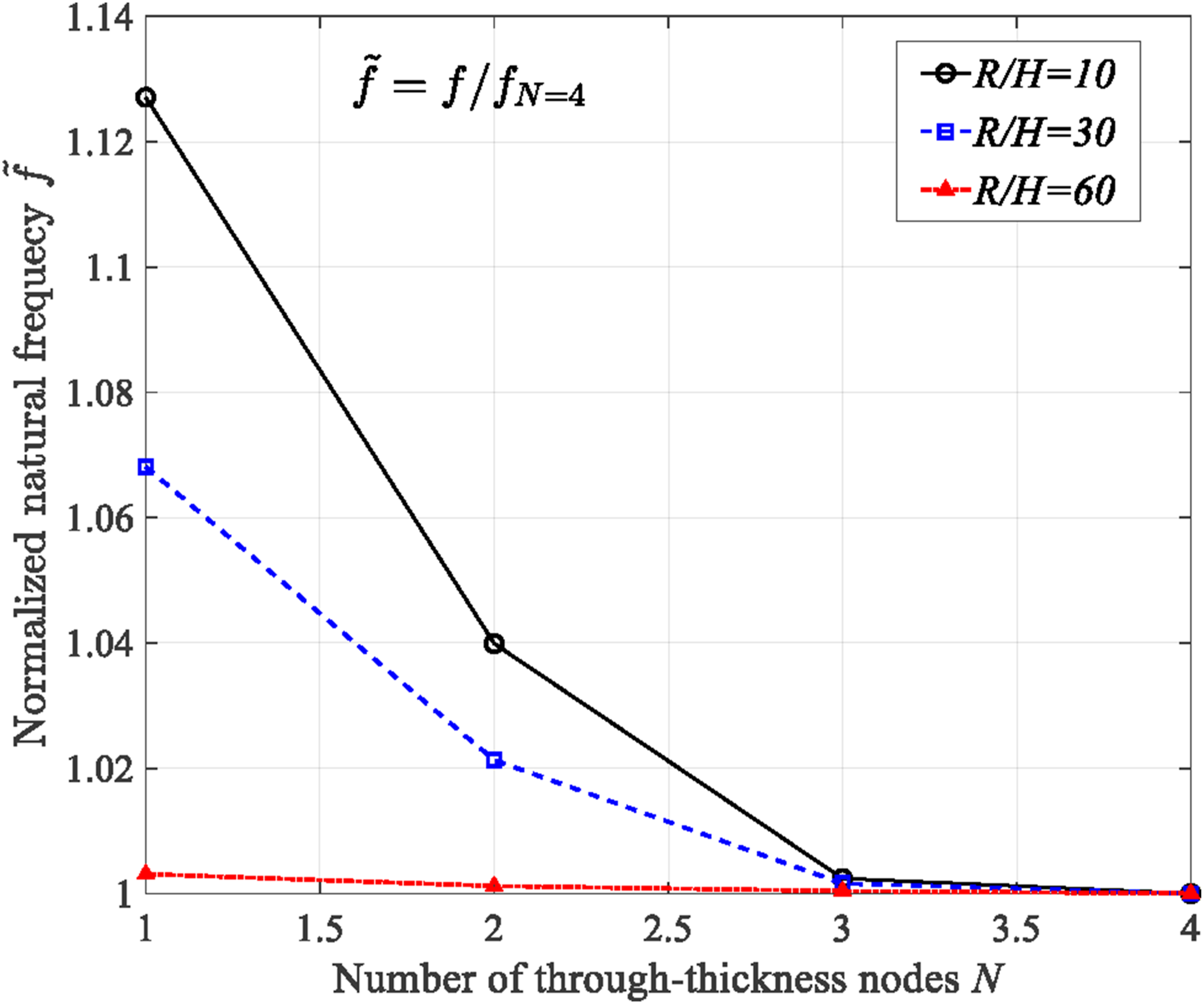
To further quantify the advantage of the present layerwise formulation over ESL-type models, a representative comparison with an FSDT-based model is conducted for the laminated cylindrical shell used in the above study. The converged present solution is taken as the reference, and the relative difference of the FSDT prediction is defined as:
Natural frequency comparison between present method and FSDT for laminated cylindrical shells with different thickness ratios.

The convergence with respect to the elastic end restraints is next investigated by varying the end spring stiffness over several orders of magnitude. For each stiffness level, the relative error to the asymptotic (fully restrained) limit is evaluated as Convergence of the proposed layerwise Fourier-finite element formulation with respect to the end spring stiffness 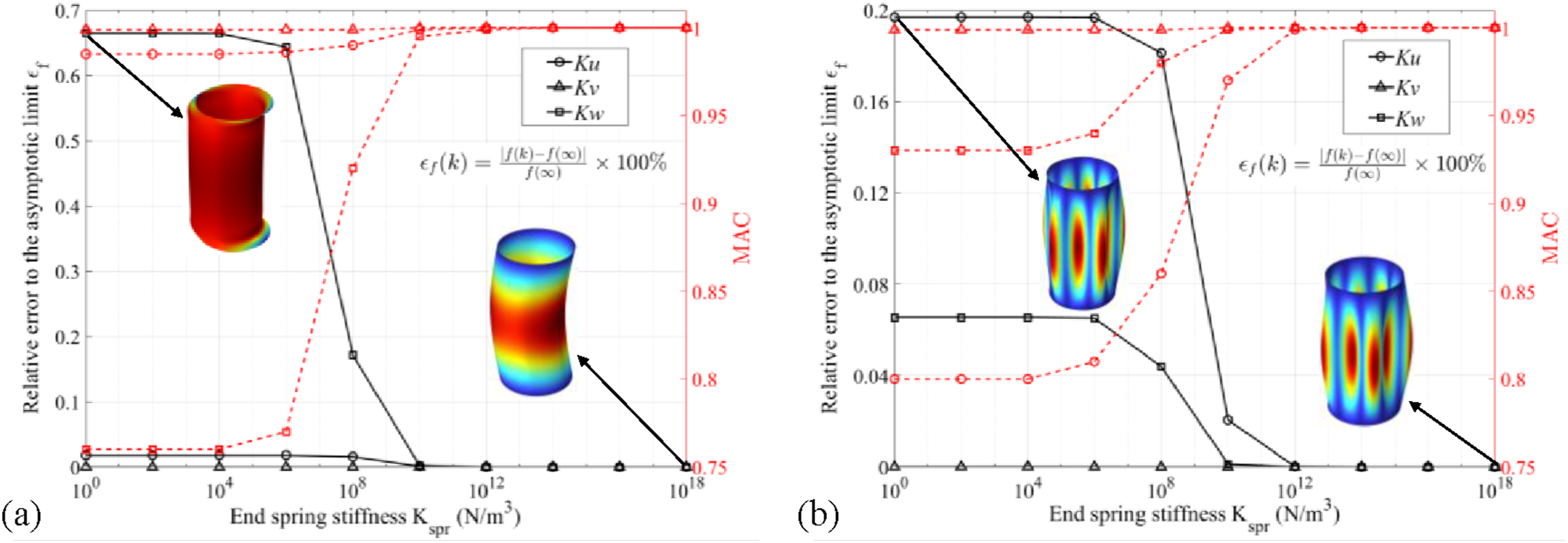
Importantly, the stiffness sensitivity is mode dependent. For the (1, 1) mode in Figure 5(a), the frequency is most sensitive to the radial restraint
Model verification
The previous subsection was performed to identify the suitable numerical settings through convergence study. With these parameters fixed, this subsection focuses on numerical verification of the proposed semi-analytical method by comparing the predicted natural frequencies and representative mode-shape characteristics with the results reported in the open literature.
Comparison of natural frequencies of isotropic cylindrical shells.

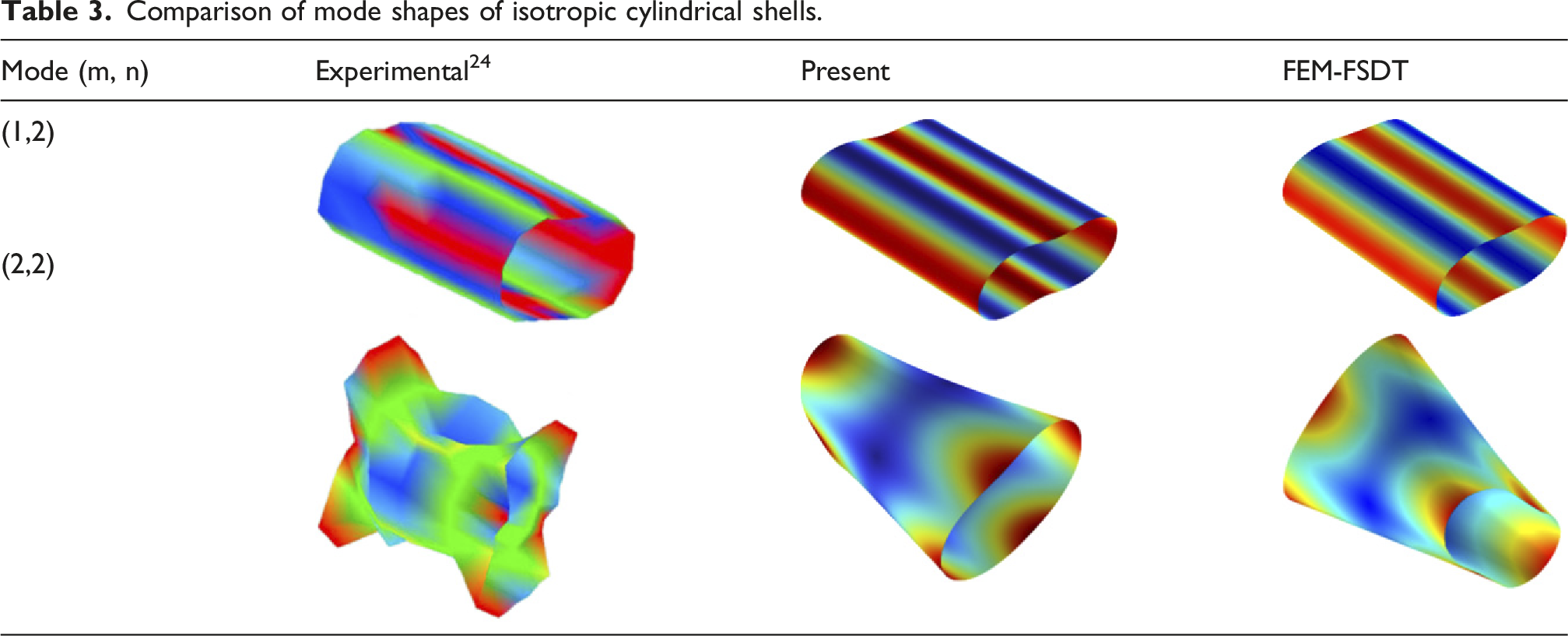
Comparison of mode shapes of isotropic cylindrical shells.
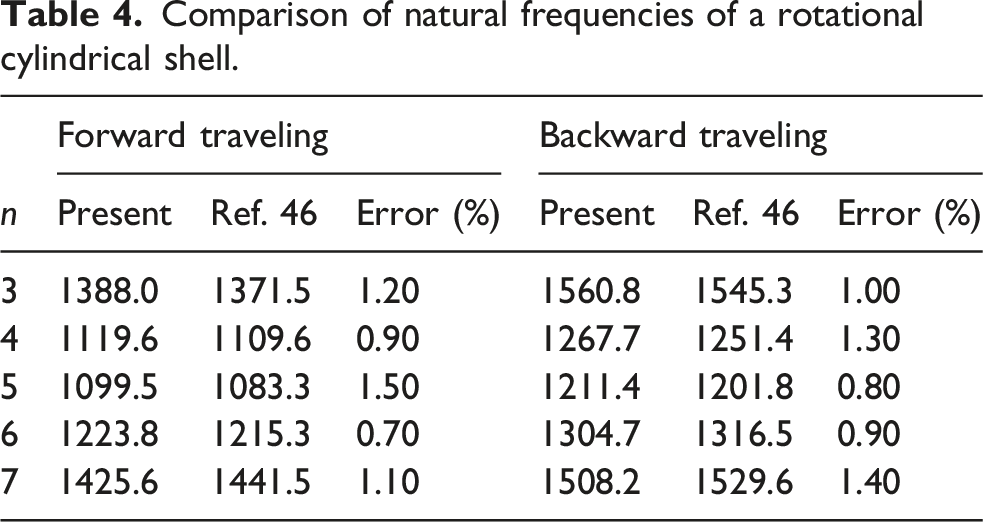
Comparison of natural frequencies of a rotational cylindrical shell.
Comparison of mode shapes of a rotational cylindrical shell.
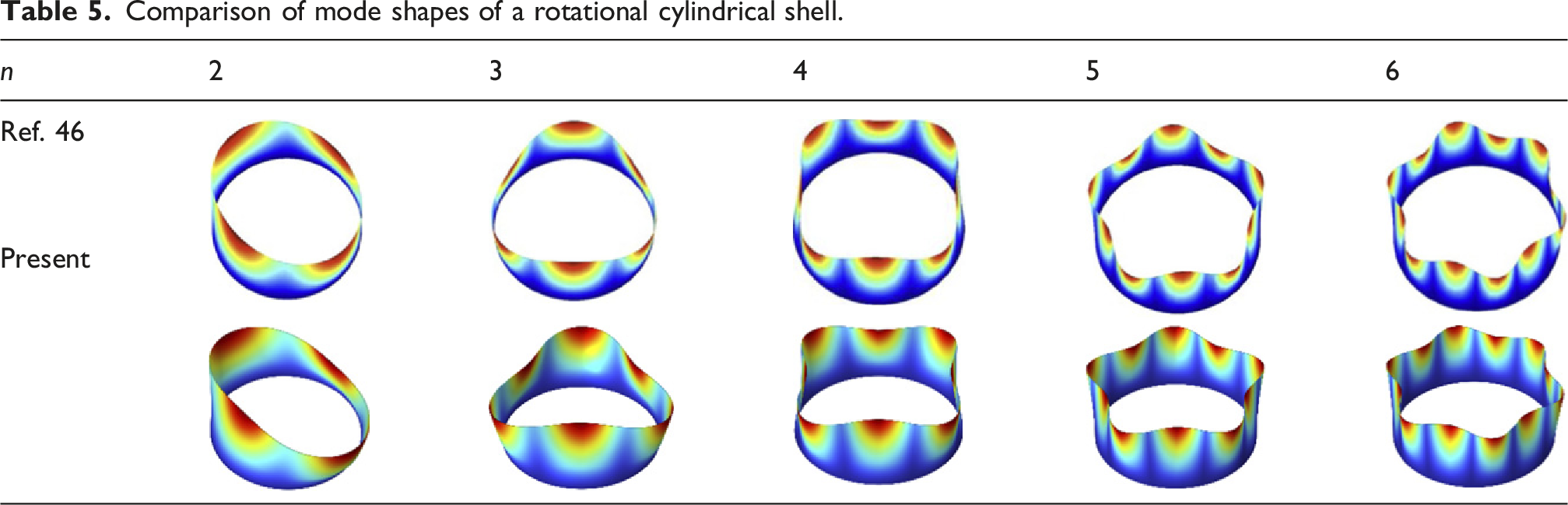
Specifically, Table 4 compares the natural frequencies of the forward traveling and backward traveling branches for several circumferential wave numbers n. The present predictions agree closely with Ref. 46, with deviations generally within about 1.5% for both FW and BW branches, showing that the proposed model accurately captures the rotation-induced frequency splitting into FW and BW branches. In addition, Table 5 compares the corresponding mode-shape patterns. It is obvious that the present predictions exhibit the same modal characteristics and circumferential wave distributions as those in Ref. 46, providing further validation of the proposed approach for rotating cylindrical shells.
Parametric investigation
This section presents a parametric investigation of the free vibration characteristics of rotating laminated cylindrical shells using the proposed layerwise semi-analytical formulation. The cylindrical shell considered in this section adopts the same geometric dimensions and material properties as those used in the
Influence of rotation speed
Figure 6(a) and (b) show the variation of natural frequencies with the rotation speed The influence of rotational speed on the natural frequency of the shell with C-C boundary conditions: (a) m = 1; (b) m = 2.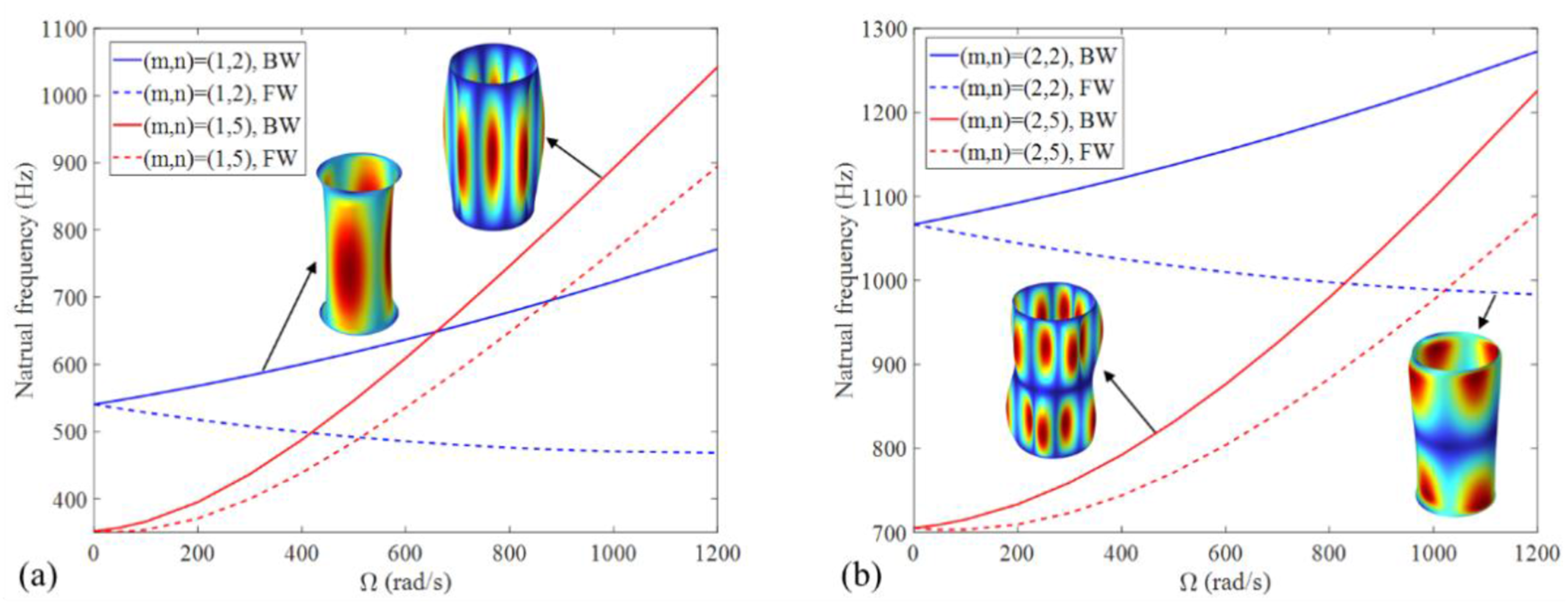
It can also be observed that higher circumferential wavenumbers are more sensitive to the rotation speed. For both axial modes, the frequency shift and the FW/BW splitting are more pronounced for higher n than for lower n. From a mechanical viewpoint, higher circumferential wavenumbers correspond to shorter circumferential wavelengths and larger circumferential curvature. Therefore, the modal deformation becomes more strongly affected by hoop stress, circumferential stiffness, and Coriolis coupling. This explains why high-n traveling waves are more sensitive to rotation effects and require particular attention in the modal prediction of high-speed rotating shells.
To better illustrate the behavior at lower rotation speeds, Figure 7 provides a zoomed-in view of the low- The zoomed-in diagram of natural frequency variation under low rotational speed: (a) m = 1, n = 4; (b) m = 1, n = 5; (c) m = 1, n = 6; (d) m = 2, n = 4; (e) m = 2, n = 5; (f) m = 2, n = 6.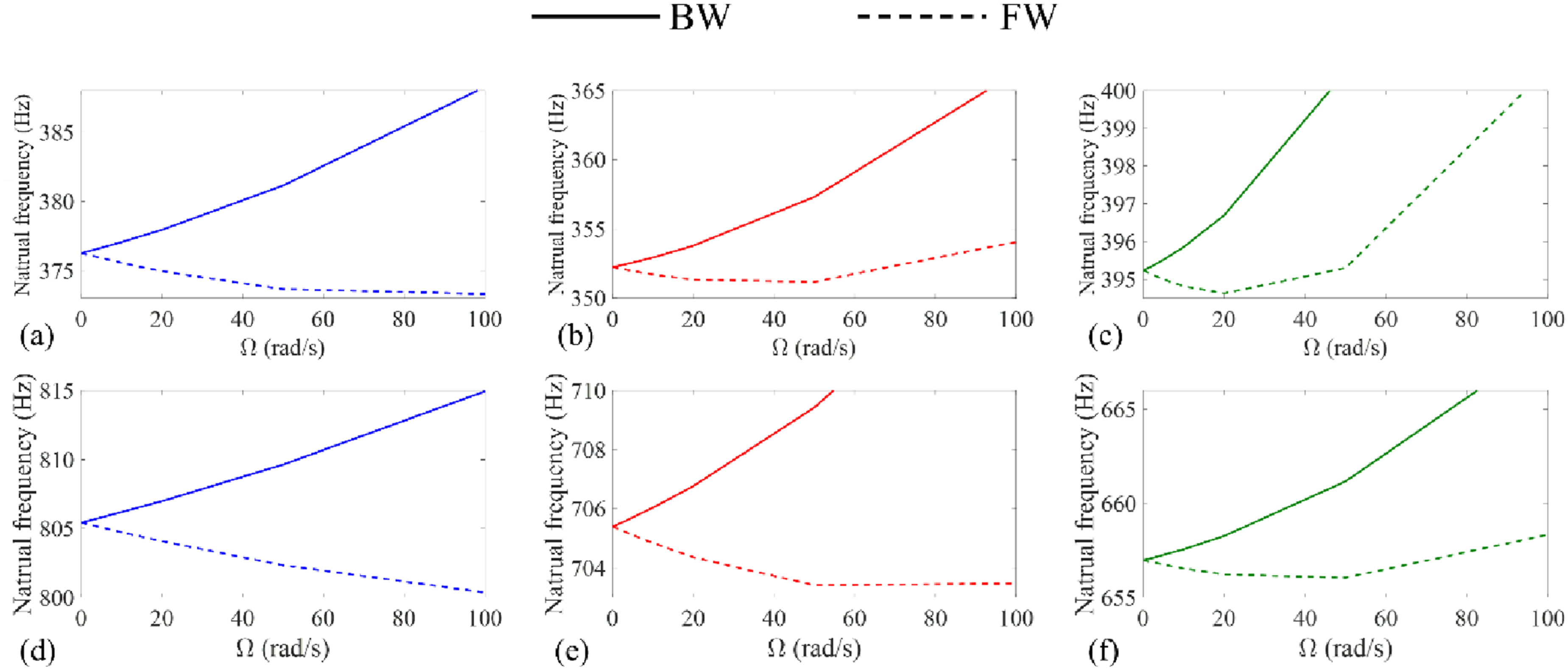
This asymmetric behavior results from the competition between gyroscopic coupling and centrifugal stiffening. The gyroscopic matrix in equation (24) produces opposite frequency shifts for waves traveling in opposite directions: it tends to lower the FW frequency at small
Figure 8 further presents the variation of the center frequency The center frequency variation curves: (a) m = 1; (b) m = 2.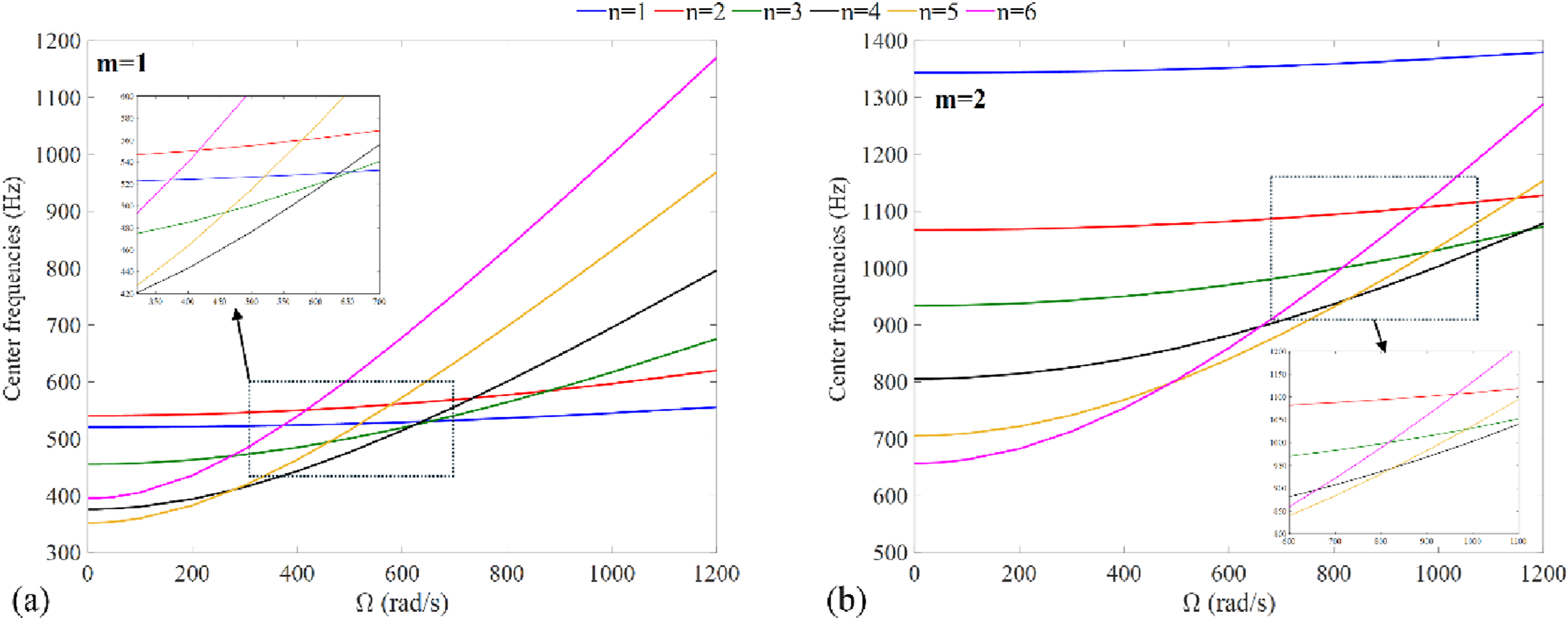
The insets in Figure 8 also reveal mode shifting and frequency veering between neighboring circumferential branches. As the rotation speed increases, adjacent modal branches approach each other but do not cross directly; instead, they undergo an avoided crossing and exchange their relative frequency ordering. This behavior indicates strong modal interaction in the corresponding speed range. From the viewpoint of mode shapes, such veering is usually accompanied by an exchange of modal characteristics between the interacting branches. In other words, the branch that follows the lower-frequency path before the veering region may gradually acquire the deformation pattern of the neighboring branch after passing through the veering region, and vice versa. This modal-character exchange explains why simple frequency-based sorting may lead to incorrect branch assignment near veering regions. Therefore, the MAC-based mode-tracking strategy is necessary to preserve the continuity of modal branches. From an engineering perspective, such localized modal interactions should be considered carefully, because operating near a veering region may cause abrupt changes in modal characteristics and vibration sensitivity.
Influence of boundary spring stiffness
In this subsection, the influence of the elastic end restraints is investigated by varying the radial stiffness component
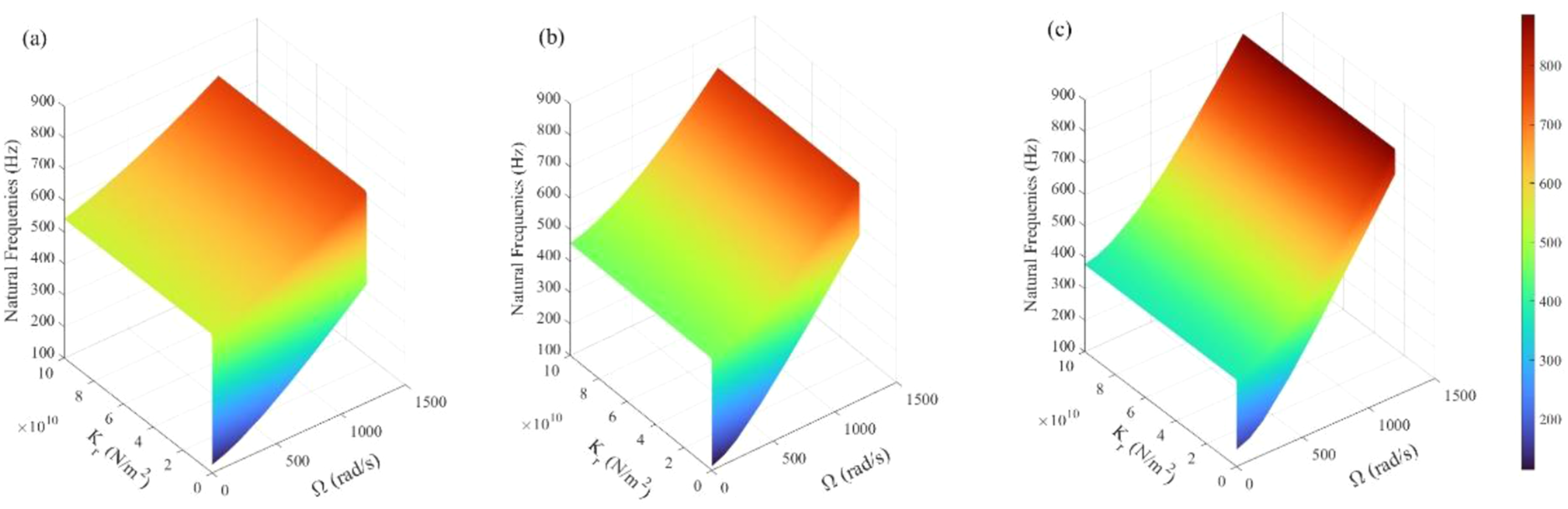
Figures 9 and 10 illustrate the combined effects of The influence of elastic end stiffness and rotational speed on the BW natural frequencies for m = 1: (a) n = 2; (b) n = 3; (c) n = 4. The influence of elastic end stiffness and rotational speed on the FW natural frequency for m = 1: (a) n = 2; (b) n = 3; (c) n = 4.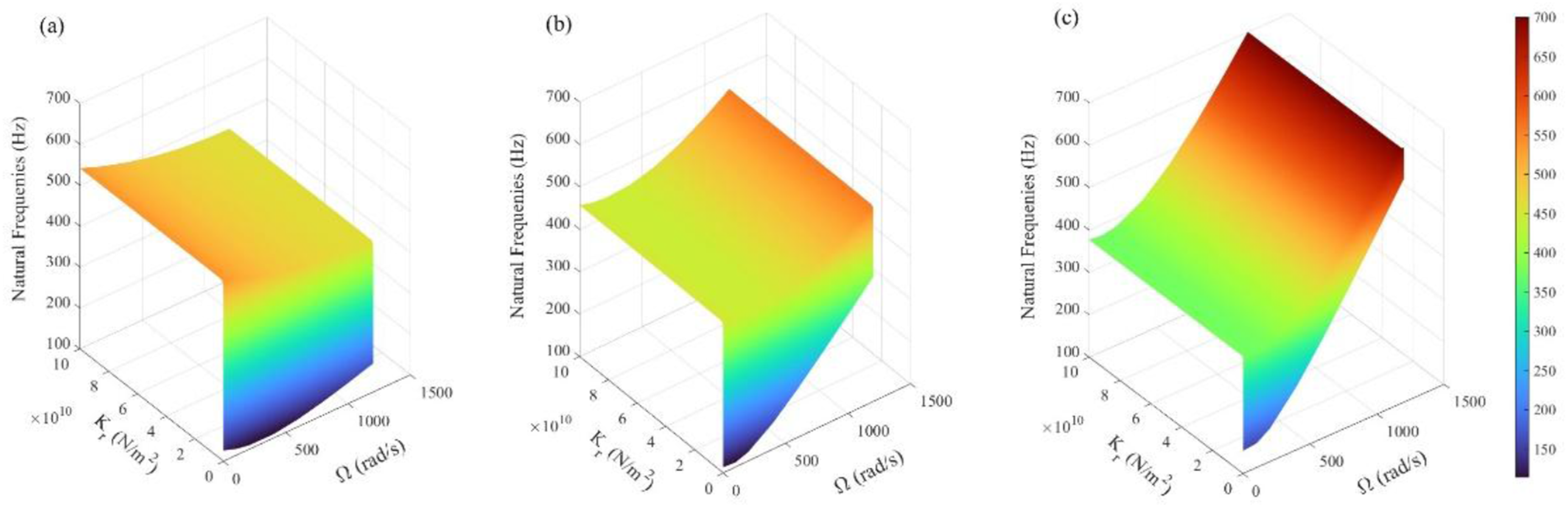
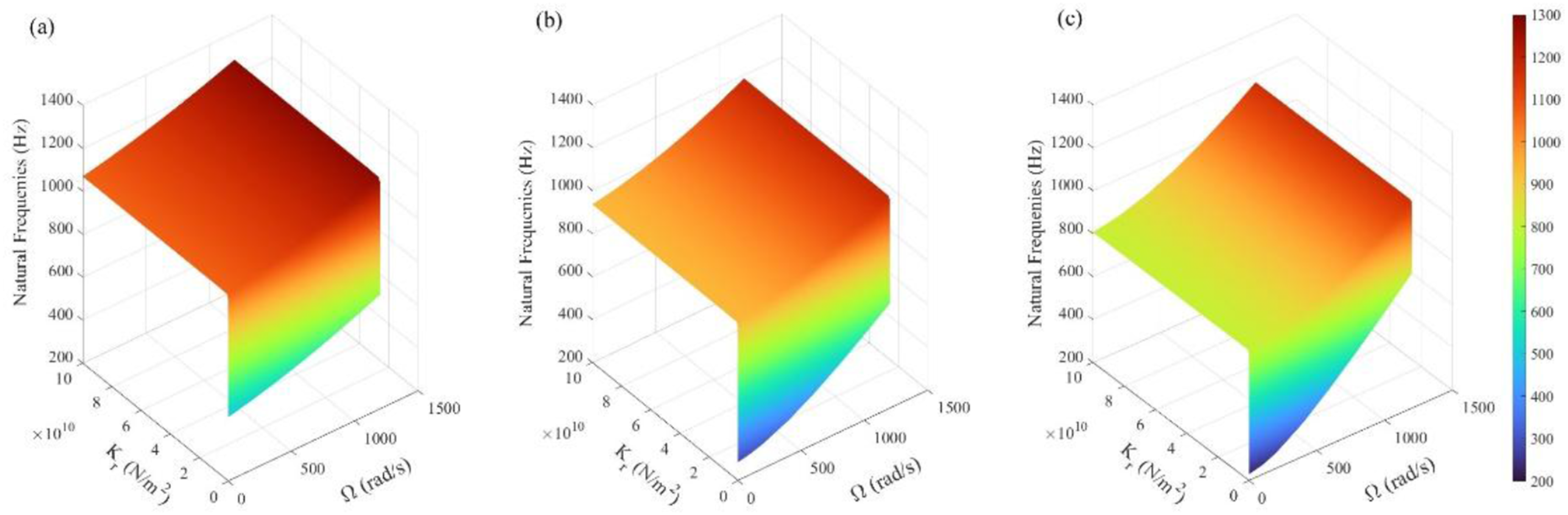
The corresponding result for m = 2 is presented in Figures 11 and 12 for the BW and FW, respectively. Similar qualitative trends are observed: the frequencies increase monotonically with The influence of elastic end stiffness and rotational speed on the BW natural frequency for m = 2: (a) n = 2; (b) n = 3; (c) n = 4. The influence of elastic end stiffness and rotational speed on the FW natural frequency for m = 2: (a) n = 2; (b) n = 3; (c) n = 4.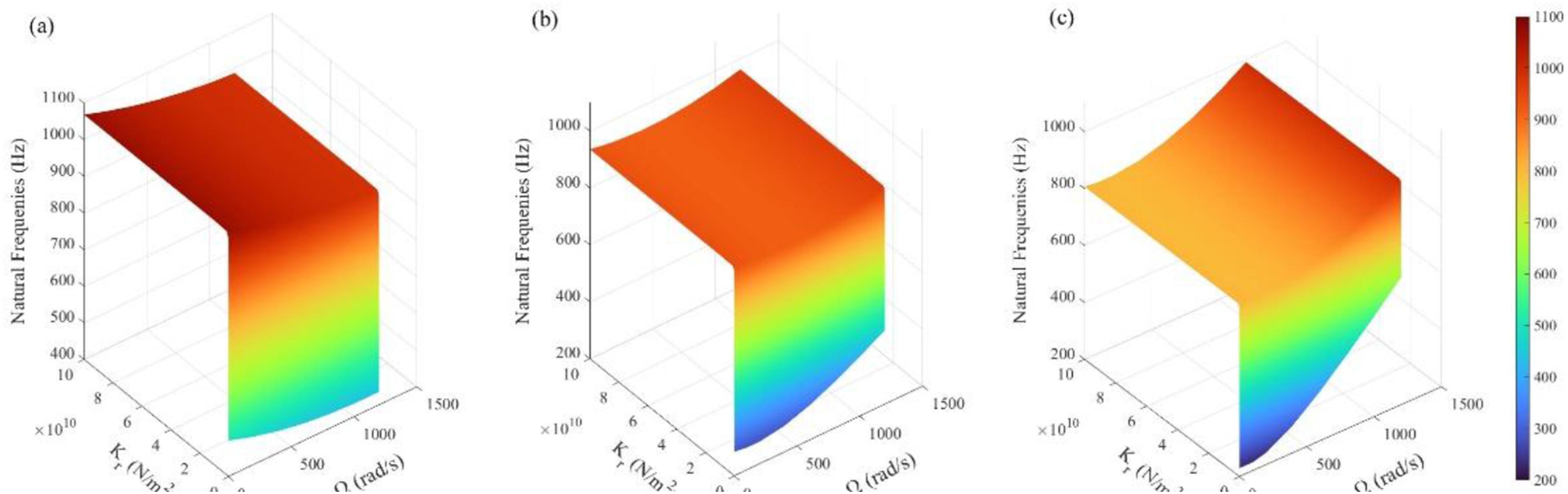
Influence of the end-support stiffness on the selected mode shapes.
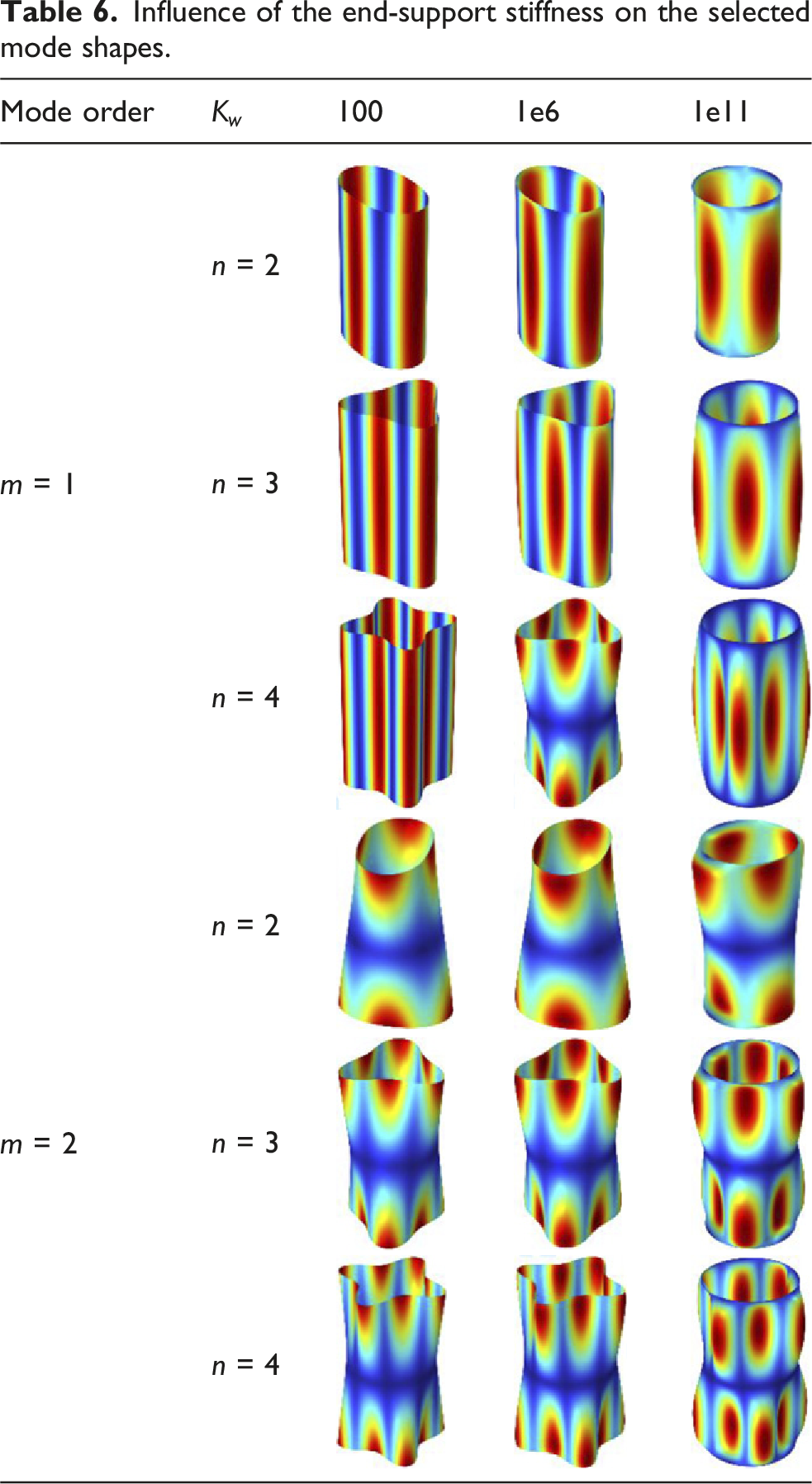
From a mechanical viewpoint, increasing the end-spring stiffness progressively suppresses the displacement components at the shell ends, thereby increasing the effective constraint level and raising the natural frequencies. The influence is more pronounced in the low-to-intermediate stiffness range because the boundary condition changes rapidly from a compliant support to a nearly restrained state. Once the stiffness is sufficiently large, the boundary behaves close to the clamped limit, and further stiffness increase produces only negligible frequency changes. The different sensitivities to the radial, axial, and circumferential springs are mode-dependent, because each modal family contains different proportions of radial bending, axial deformation, and circumferential deformation.
Influence of stacking sequence
This subsection investigates how laminate tailoring affects the traveling-wave frequencies of the rotating cylindrical shell. Four baseline symmetric stacking sequences are considered, namely [0°/0°/0°/0°]
s
, [45°/-45°/0°/90°]
s
, [45°/-45°/45°/-45°]
s
, and [90°/90°/90°/90°]
s
. Figures 13–15 summarize the dependence of the natural frequencies on the circumferential wave number n for three representative speeds, Variation of natural frequencies with circumferential wavenumber n for different stacking sequences at Variation of natural frequencies with circumferential wavenumber n for different stacking sequences at Variation of natural frequencies with circumferential wavenumber n for different stacking sequences at 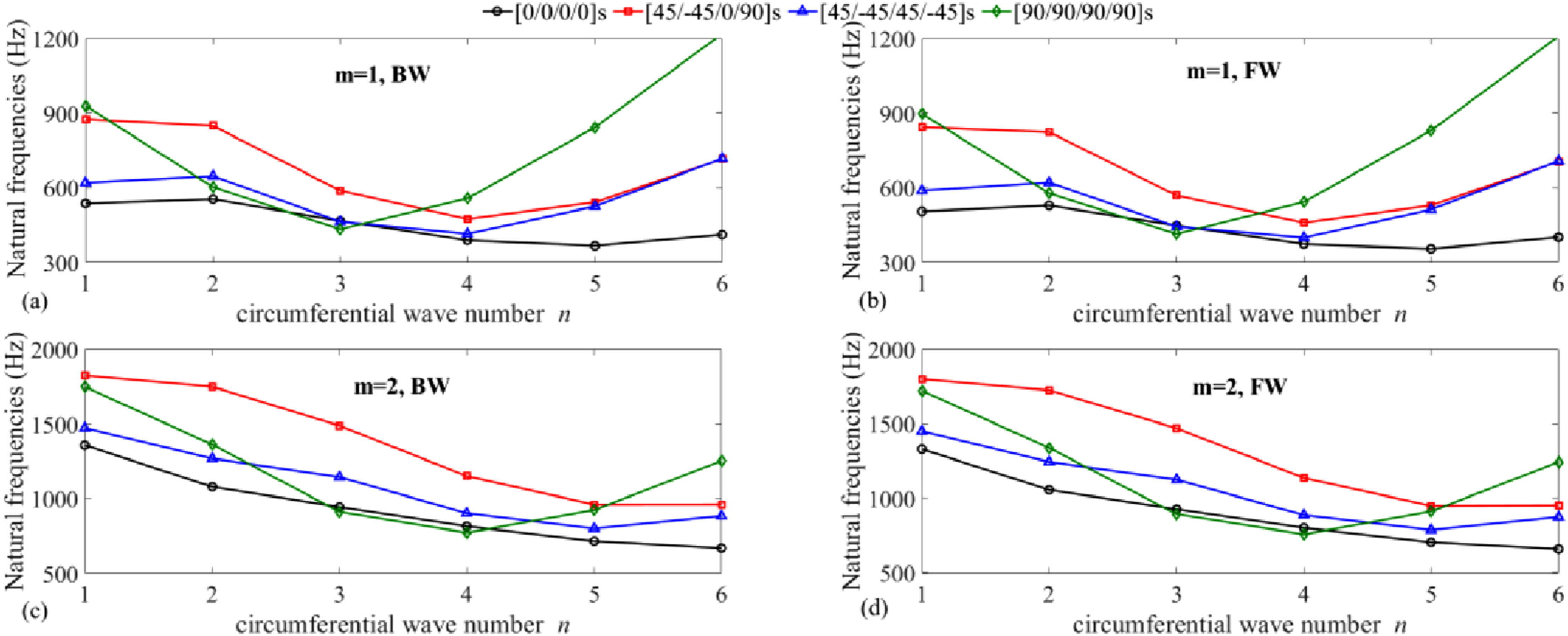
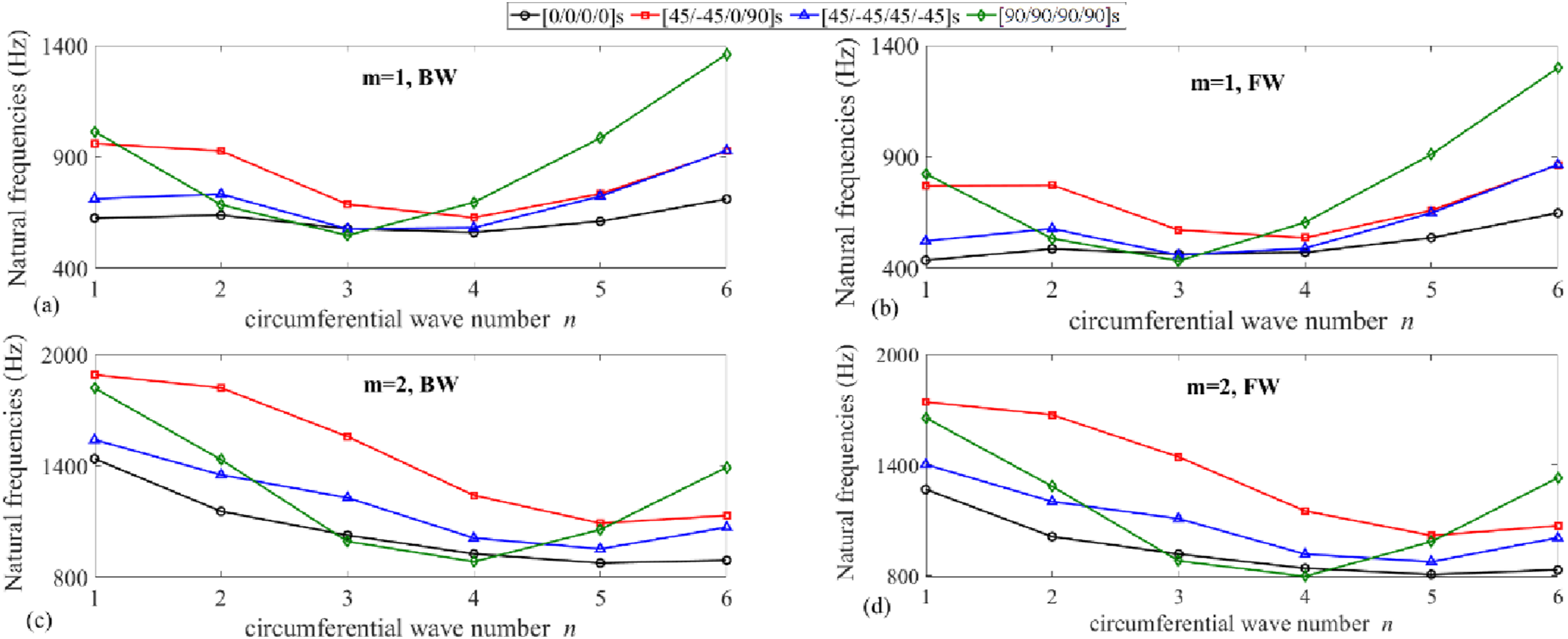
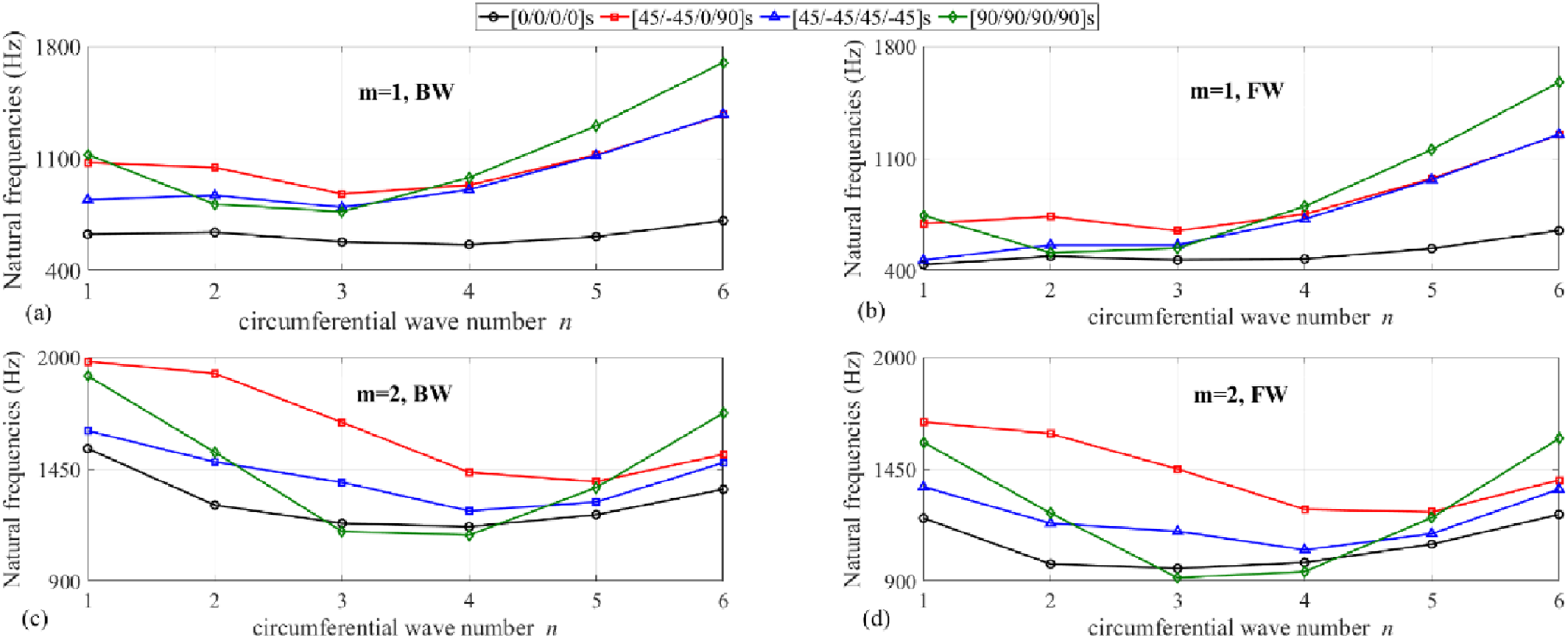
The ranking among laminates is strongly n-dependent. The hoop-dominant laminate [90°/90°/90°/90°] s becomes increasingly stiff with growing n and ultimately yields the highest frequencies at large circumferential wave numbers. This behavior is consistent with high-n modes being governed by circumferential deformation, for which hoop-reinforced laminates provide the largest effective circumferential stiffness. In contrast, the axial-dominant laminate [0°/0°/0°/0°] s generally forms a lower bound for the frequencies, especially at higher n, reflecting its comparatively reduced resistance to circumferential deformation. The quasi-isotropic [45°/-45°/0°/90°] s and the shear-dominant [45°/-45°/45°/-45°] s cases lie between these two extremes and may interchange their ordering depending on n and m. Notably, for lower n = 1, 2 and higher axial order m = 2, the quasi-isotropic laminate can exceed the hoop-dominant case, suggesting that the governing stiffness contributions in this regime involve coupled axial-circumferential effects rather than purely hoop-controlled response.
As
The stacking-sequence effect can be interpreted through the directional stiffness contribution of different ply orientations. For higher circumferential wavenumbers, the modal deformation varies more rapidly along the circumferential direction, and the response becomes more sensitive to the effective hoop stiffness. Therefore, hoop-dominant laminates tend to produce higher frequencies at large n. In contrast, axial-dominant laminates provide less resistance to circumferential deformation and usually lead to lower frequencies in the high-n range. For low circumferential wavenumbers and higher axial modes, axial-circumferential coupling becomes more relevant, which explains why the frequency ranking among different laminates may change with m, n, and
Conclusions
A layerwise semi-analytical Fourier-finite element formulation has been presented for the free vibration analysis of rotating composite laminated cylindrical shells with general elastic end restraints. The method combines full layerwise shell kinematics with circumferential Fourier expansion and axial finite-element discretization, and a mass-weighted MAC-based mode tracking strategy is introduced to identify continuous modal branches under rotation. The main conclusions are as follows. (1) The proposed formulation exhibits stable convergence with respect to the axial discretization, the through-thickness layerwise resolution, and the end-spring stiffness. The results also indicate that, although ESL-type descriptions may remain adequate for thin shells, a layerwise treatment is required for moderately thick and thick laminated shells to achieve reliable vibration predictions. (2) The present method is validated through comparison with experimental results for stationary laminated shells and benchmark solutions for rotating cylindrical shells. Good agreement is obtained for both frequencies and mode shapes, confirming the accuracy and effectiveness of the proposed formulation. (3) Rotation leads to distinct splitting of the natural frequencies into forward- and backward-traveling branches. With increasing rotational speed, the branch separation becomes more pronounced, and mode veering and branch interaction may occur over certain speed ranges. These features highlight the necessity of reliable mode tracking in the vibration analysis of rotating laminated cylindrical shells. (4) Both the elastic end restraints and the stacking sequence have significant effects on the vibration characteristics. Increasing the boundary stiffness drives the frequencies toward their clamped-limit values in a mode-dependent manner, whereas the stacking sequence mainly affects the frequency level through directional stiffness tailoring. This laminate effect becomes increasingly evident at high circumferential wave numbers and high rotational speeds.
Footnotes

Funding
The authors disclosed receipt of the following financial support for the research, authorship, and/or publication of this article: This study was supported by the National Natural Science Foundation of China (Grant No.52501256) and the Aeronautical Science Foundation of China (No. 2019ZF067004).
Declaration of conflicting interests
The authors declared no potential conflicts of interest with respect to the research, authorship, and/or publication of this article.
Data Availability Statement
Data sharing not applicable to this article as no datasets were generated or analyzed during the current study.
Appendix