






Abstract
Carbon black (CB)-doped Polypyrrole (PPy) composites containing 3 wt.%, 6 wt.%, and 8 wt.% CB were synthesized via UV-assisted in situ polymerization in 1, 2-dichlorobenzene (o-DCB) to investigate electrical conductivity enhancement at low filler loading in the sub-percolation regime.UV irradiation enabled controlled polymer growth and CB dispersion, promoting interfacial interactions within the PPy matrix. UV–visible spectroscopy showed a red shifted π–π* transition (∼300 nm) and enhanced visible absorption, indicating charge delocalization. FTIR and Raman analyses confirmed PPy/CB interfacial coupling and doping induced structural modifications. SEM analysis revealed morphological modification of the PPy matrix with carbon black incorporation, accompanied by changes in aggregation behavior and structural heterogeneity at higher CB loadings. Thermogravimetric analysis demonstrated improved thermal stability due to the barrier effect of dispersed CB particles. Electrical measurements using two probe V–I characteristics (−50 to +50 V) showed an increase in conductivity from 4.61 × 10⁻⁷ to 9.52 × 10⁻⁷ S·cm−1 with increasing CB content, despite remaining below the percolation threshold. These results highlight UV assisted synthesis as an effective approach for developing multifunctional PPy/CB nanocomposites for antistatic coatings, resistive sensing materials, and low-leakage flexible electronic systems.
Keywords
Introduction
The growing demand for lightweight, flexible, and low energy processing materials has driven interest in polymeric systems that can be synthesized under mild conditions with reduced environmental impact. Conducting polymers have attracted significant attention due to their tunable electrical properties, environmental stability, and potential applications in energy storage, sensing, and electronic devices. Among intrinsically conducting polymers, polypyrrole (PPy) has been extensively investigated due to its facile oxidative polymerization, environmental stability, moderate intrinsic conductivity, and cost effective synthesis.1,2 Its conjugated backbone enables charge transport through polaronic and bipolaronic hopping mechanisms, however, the degree of delocalization strongly depends on chain ordering, dopant distribution, and microstructural continuity. 3 Despite its advantages, pristine PPy suffers from structural disorder, morphology dependent conductivity, limited thermal robustness, and relatively weak optical responsiveness, all of which restrict its performance in device-level applications unless its microstructure is carefully engineered.4–6 One widely adopted strategy to overcome these limitations involves incorporating carbonaceous nanofillers such as graphene, carbon nanotubes, fullerenes, and carbon black (CB). Among these, CB remains particularly attractive due to its high surface area, low production cost, and intrinsic graphitic conductivity.
In polymer–carbon nanocomposites, electrical conductivity is commonly described by percolation theory, where a critical filler concentration is required to form a continuous conductive network. Below this percolation threshold, charge transport is dominated by localized mechanisms such as hopping and tunneling between isolated conductive domains. Recent theoretical and experimental studies have shown that significant conductivity enhancement can still occur at low filler loading through improved filler dispersion, interfacial interactions, and localized charge transport pathways.7,8 In this context, carbon black functions not only as a conductive additive but also as a structural modifier capable of influencing polymer chain organization, thermal stability, and charge transport behavior. The interfacial electronic interaction between the polymer matrix and conductive filler, mediated through π–π interactions and localized charge transport processes, plays a crucial role in determining the overall electrical response of sub-percolative composite systems.9–11 Such low-filler composites are particularly relevant for applications requiring controlled semiconducting behavior, including dielectric materials, resistive sensing systems, and antistatic coatings.
Conventional preparation of PPy/CB composites predominantly relies on chemical oxidative polymerization using strong oxidants such as ammonium persulfate (APS) or FeCl3, as well as electrochemical polymerization. While effective, these approaches often involve harsh reaction conditions, rapid nucleation kinetics, heterogeneous particle growth, and limited control over polymer chain organization.12,13 Such limitations can lead to agglomeration of CB particles, nonuniform polymer coating, and increased defect density, ultimately affecting electrical homogeneity and thermal stability.14,15
Irradiation has emerged as a versatile and tunable strategy for polymer synthesis and modification, wherein electron beam, 16 gamma,17,18 laser, 19 and ultraviolet (UV) irradiation induce reactive species that drive radical-mediated processes such as chain scission, crosslinking, and oxidative doping, thereby governing polymer microstructure and charge transport characteristics. Although UV exposure is conventionally associated with photooxidative degradation, controlled UV-assisted polymerization offers a precise and energy efficient route for directing polymer growth, morphological evolution, and functional property optimization. In conducting polymer systems, UV irradiation can promote uniform polymerization, enhance dopant incorporation, and improve filler dispersion within the matrix. 20 Compared with conventional oxidative routes, UV-induced polymerization can reduce excessive oxidant driven structural defects, promote homogeneous nucleation, and improve dispersion of nanofillers within the polymer matrix.21–24
Equally critical is the choice of solvent environment. Aromatic high boiling solvents such as 1, 2-dichlorobenzene (DCB) are known to influence polymer conformation, dopant distribution, and filler wetting behavior. π–π interactions between aromatic solvents, conjugated polymer backbones, and graphitic CB surfaces can promote improved interfacial compatibility and dispersion stability.25,26 Slower polymerization kinetics in such media may further support controlled chain growth and improved microstructural ordering.
Limited studies have systematically investigated the role of UV-assisted synthesis in modulating electrical conductivity of PPy/CB nanocomposites specifically in the sub percolation regime. Most reported works focus on achieving percolation driven conductivity at higher filler loadings, whereas the mechanisms governing conductivity enhancement at low carbon black concentrations remain less explored. Despite these advantages, systematic investigations that simultaneously integrate (i) UV-assisted polymerization, (ii) carbon black incorporation, and (iii) aromatic solvent environments remain scarce. Most reported studies treat these parameters independently, and the coupled influence of photo initiated kinetics and solvent mediated dispersion on structural, optical, thermal, and electrical properties has not been comprehensively elucidated.27,28
In this context, the present work demonstrates a UV-assisted in situ polymerization strategy for synthesizing PPy/CB nanocomposites in 1, 2-dichlorobenzene, with emphasis on conductivity enhancement below the percolation threshold. Furthermore, a comprehensive correlation between optical, structural, thermal, and electrical properties provides new insights into the design of multifunctional conducting polymer nanocomposites for energy storage and sensing applications.
Materials and methods
Materials
Pyrrole monomer (C4H5N, CAS No. 109-97-7) was procured from Sigma Aldrich and distilled under reduced pressure prior to use to remove trace impurities. Carbon black (CB) powder (high surface area grade, CAS No. 1333-86-4) was obtained from SRL Chemicals. 1, 2-Dichlorobenzene (Merck, analytical grade, CAS No. 95-50-1) and distilled water were used as solvents for dispersion and washing. All chemicals were used as received unless otherwise specified.
Experimental
Carbon black (CB)-doped Polypyrrole (PPy) composites with different CB loadings were synthesized via UV-assisted in situ polymerization. Predetermined amounts of carbon black corresponding to 3 wt.%, 6 wt.%, and 8 wt.% of the total composite mass were dispersed in 25 mL of 1, 2-dichlorobenzene (o-DCB) using magnetic stirring for 30 min. Separately, distilled pyrrole monomer was dissolved in 25 mL o-DCB, after which the CB dispersion was gradually added to the pyrrole solution under continuous stirring to obtain a uniform reaction mixture. No external oxidizing agent was employed in the polymerization process. Polymerization was initiated under UV irradiation, where UV exposure facilitated the activation and growth of PPy chains in the aromatic solvent medium under ambient atmospheric conditions. The resulting mixture was transferred into a quartz petri dish and irradiated using a UV lamp (254 nm, 11 W) fitted inside a wooden enclosure for 1 h at room temperature. The progression of polymerization was indicated by a visible color change from light brown to dark black, confirming the formation of PPy. After irradiation, the obtained composite powder was washed twice with methanol followed by two washings with o-DCB to remove residual monomer and by-products, and subsequently dried at room temperature until constant weight was achieved. For comparison, pristine PPy was synthesized under identical conditions without carbon black incorporation. The prepared samples were designated as PPy (pristine), CPR CB 30 (3 wt.% CB), CPR CB 60 (6 wt.% CB), and CPR CB 80 (8 wt.% CB). The overall synthesis procedure for the preparation of PPy and PPy/CB composites via UV-assisted in situ polymerization is schematically illustrated in Figure 1. Schematic illustration of UV-assisted in situ synthesis of carbon black–doped polypyrrole (PPy/CB) composites in 1, 2-dichlorobenzene.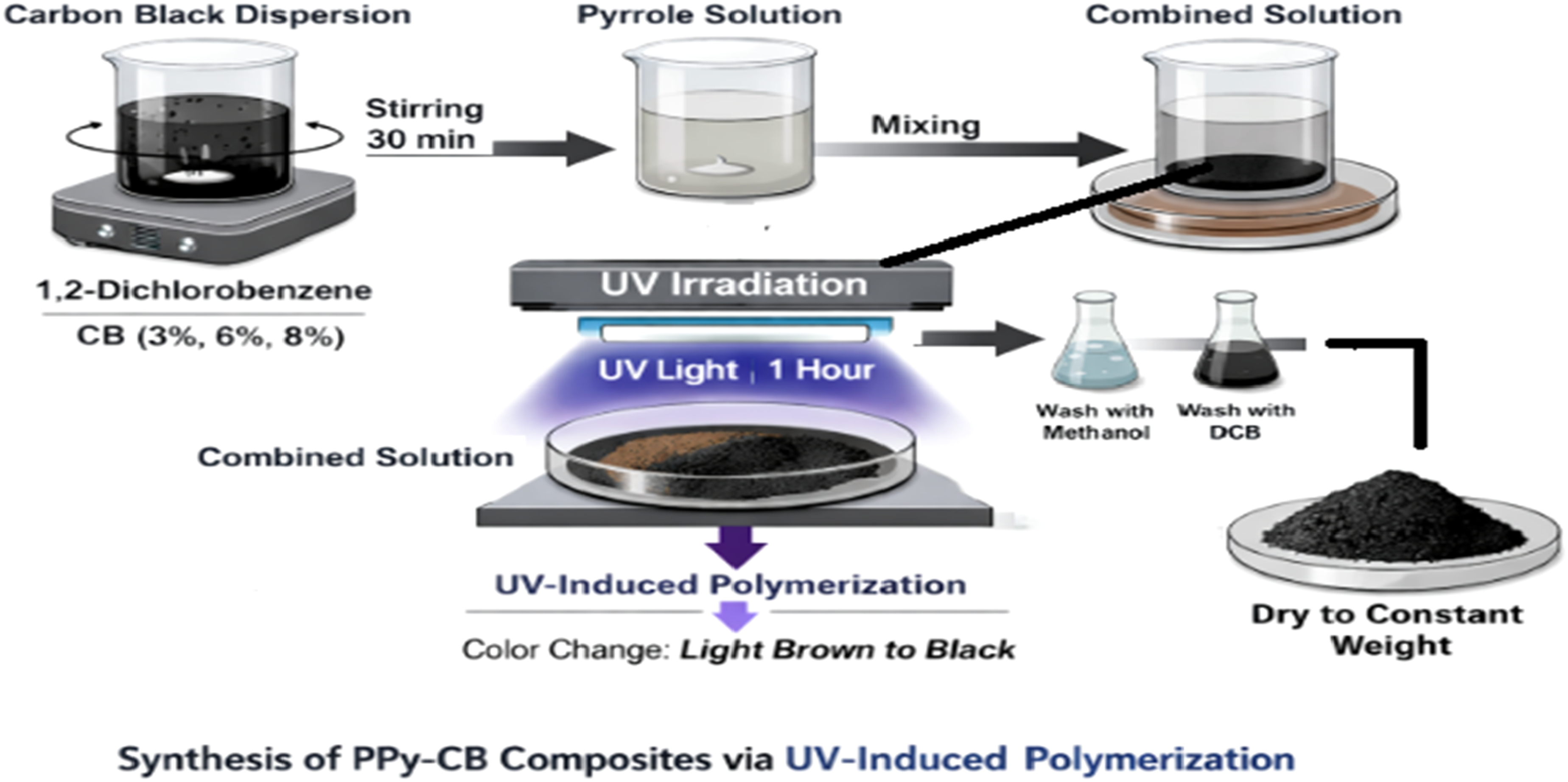
Characterization techniques
To investigate the optical behavior of the composites, optical absorbance spectra in the 200–1200 nm region were recorded using a Shimadzu UV-2600 spectrophotometer. To investigate the vibrational properties and PPy/CB interaction, Raman spectra were obtained using a Confocal Micro Raman Spectrometer (Horiba Lab RAM HR Evolution) with a 514 nm laser excitation. The chemical structure and bonding were verified by recording FTIR spectra in the 4000–400 cm−1 region using a Thermo Scientific Nicolet iS50 spectrometer. XRD data were obtained using Bruker D8 ADVANCE with DAVINCI design X-ray diffractometer. SEM images gathered via Hitachi Model: S-3400N. Thermal stability and decomposition behavior were examined using a TGA device (PerkinElmer STA 8000) in a nitrogen atmosphere. The temperature was raised from ambient temperature to 800°C at a rate of 10°C per minute. Electrical characterization was carried out by recording the voltage–current (V–I) characteristics using a Keithley 2400 source meter. The devices were fabricated on pre-cleaned and pre-patterned fluorine doped tin oxide (FTO) substrates. The active layer was prepared by mixing the sample powder with poly(vinylidene fluoride) (PVDF) in a 9:1 weight ratio, followed by dispersion in isopropyl alcohol (IPA). PVDF, being electrically insulating, may reduce the overall conductivity; however, it is used to ensure film integrity and mechanical stability. The observed conductivity trends are therefore governed by the PPy/CB network rather than the binder itself.The resulting suspension was dropcast onto the FTO substrates and subsequently heat treated at 200°C for 30 min to ensure film adhesion and solvent removal. The schematic representation of the experimental setup is shown in Figure 2. Schematic illustration of the experimental setup used for two-probe V–I measurements of PPy and PPy-CB nanocomposite films fabricated on FTO substrates.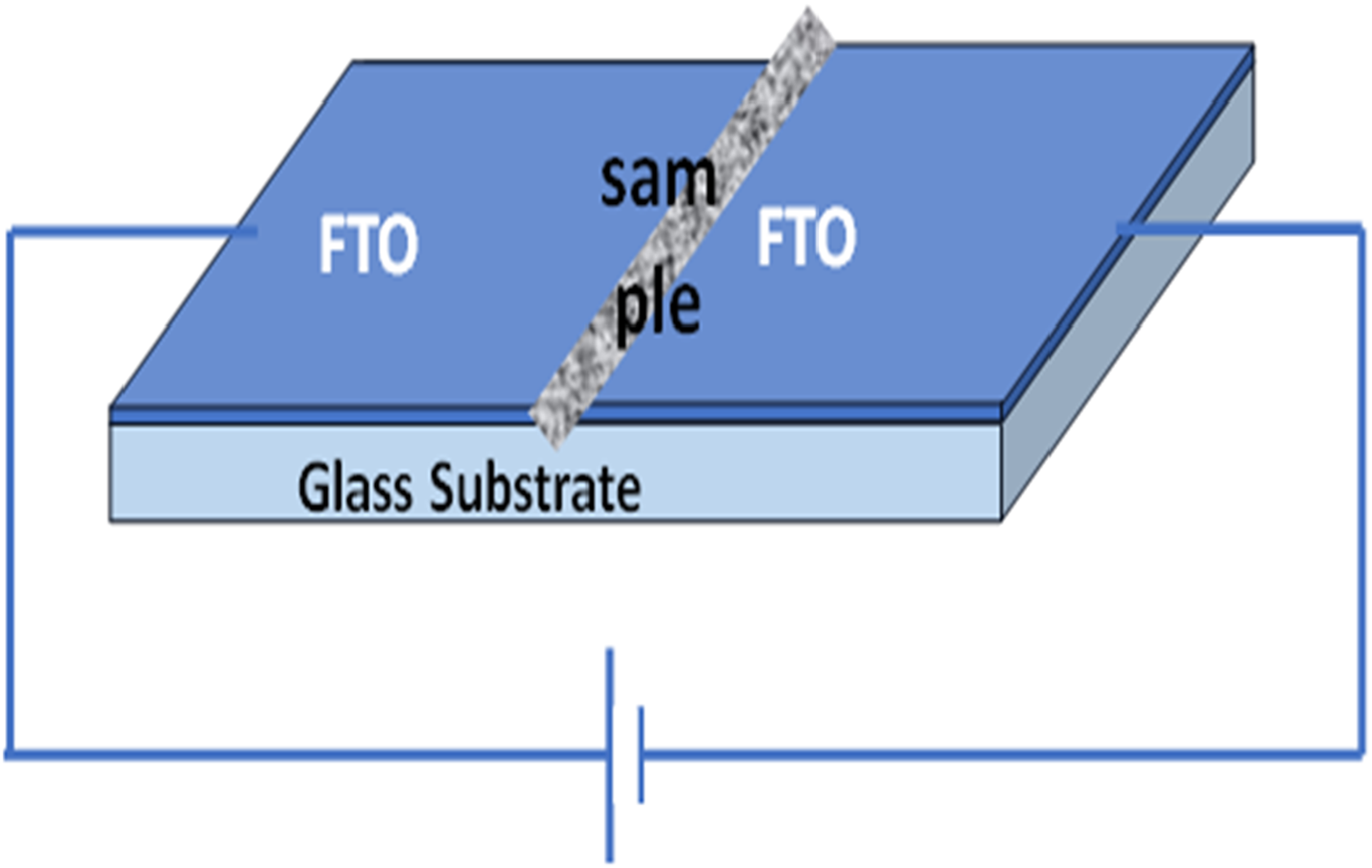
Results and discussions
UV–visible spectroscopic analysis
The UV–visible absorption spectra of pristine PPy and CB doped PPy composites (CPR CB 30, CPR CB 60, and CPR CB 80) recorded in the 200–1200 nm range are presented in Figure 3. Pristine PPy exhibits a prominent absorption band centered at ∼268 nm, corresponding to the π–π* transition of the conjugated pyrrole backbone, confirming successful formation of the conducting polymer framework.
29
A secondary broad absorption extending into the visible region is weak in pristine PPy, indicating limited polaronic charge carrier density and relatively localized electronic states. UV-Vis spectra of pristine polypyrrole (PPy) and PPy/CBNanocomposites (CPR CB 30, CPRCB 60 and CPR CB 80).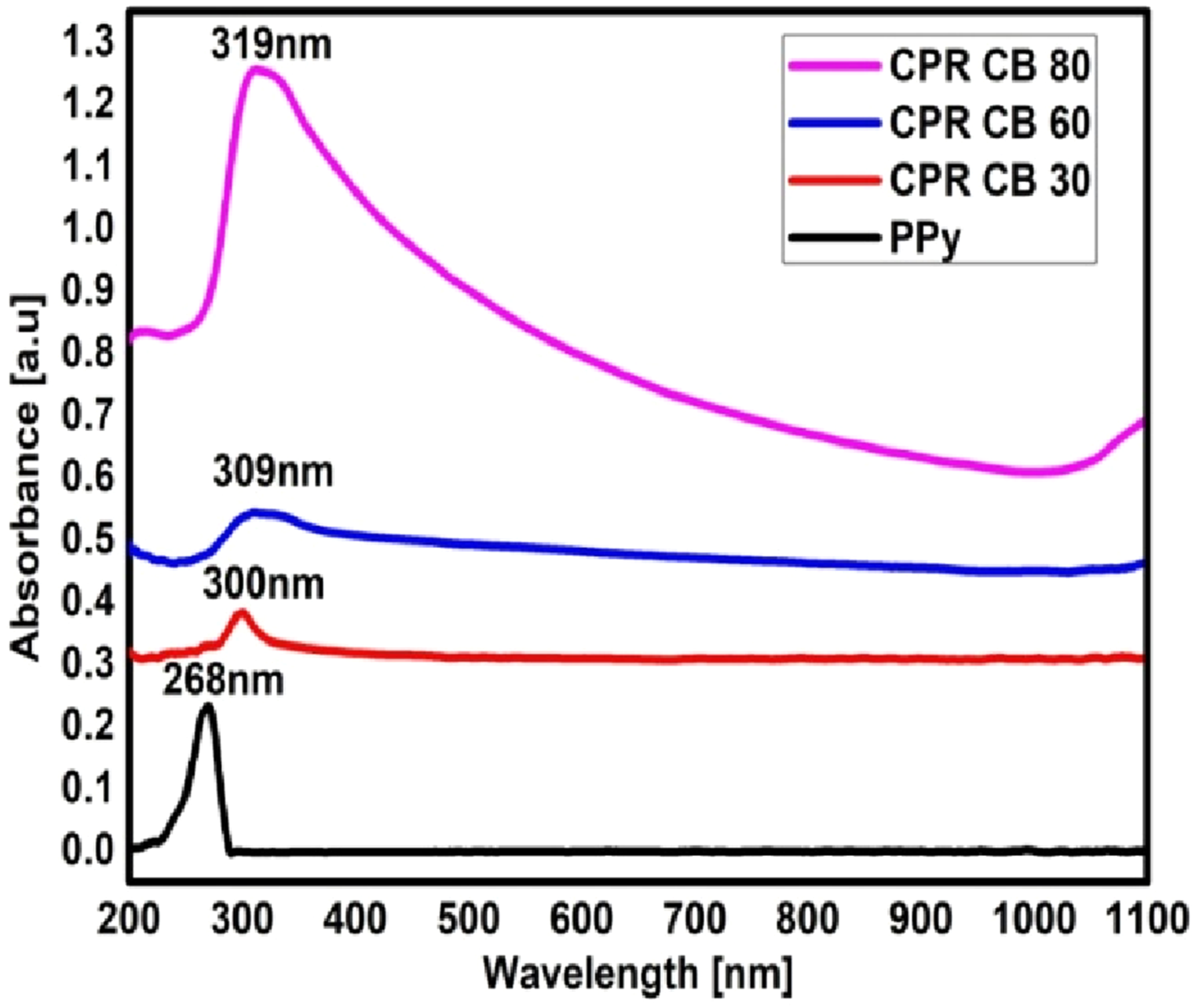
Upon incorporation of carbon black under UV-assisted polymerization conditions, a systematic red shift in the primary absorption band is observed: ∼300 nm (CPR CB 30), ∼309 nm (CPR CB 60), and ∼319 nm (CPR CB 80). This shift (∼51 nm)compared to pristine PPy reflects a progressive decrease in the optical transition energy, indicating enhanced effective conjugation length and improved electronic coupling between PPy chains and the graphitic CB surface. The red shift suggests that UV-assisted growth promotes stronger π–π interactions and better interfacial contact, facilitating partial delocalization of charge carriers across polymer filler interfaces. 30
Furthermore, the composites exhibit a progressively intensified absorption tail extending into the visible and near-infrared regions. This broad absorption is attributed to polaronic and bipolaronic transitions, as well as interfacial charge transfer between PPy and CB. 31 The increase in tail intensity with higher CB loading indicates enhanced charge carrier density and the strengthening of interfacial charge transport pathways within a sub-percolative regime. 30 The extended absorption behavior indicates a transition from predominantly localized states in pristine PPy to a more delocalized electronic structure in CB-rich composites. The combined effects of UV irradiation and the aromatic solvent environment promote homogeneous nucleation and enhanced π–π interactions, resulting in electronic structure modulation, as indicated by a red shift in the UV–Visible spectra accompanied by increased charge delocalization and polaron density. 32 For instance, recent works on PPy/carbon-based composites has demonstrated that UV–Vis spectral changes are directly linked to improved charge transport and interfacial polarization phenomena, where the carbon component facilitates extended conjugation and carrier mobility.33–35
Raman spectroscopy analysis
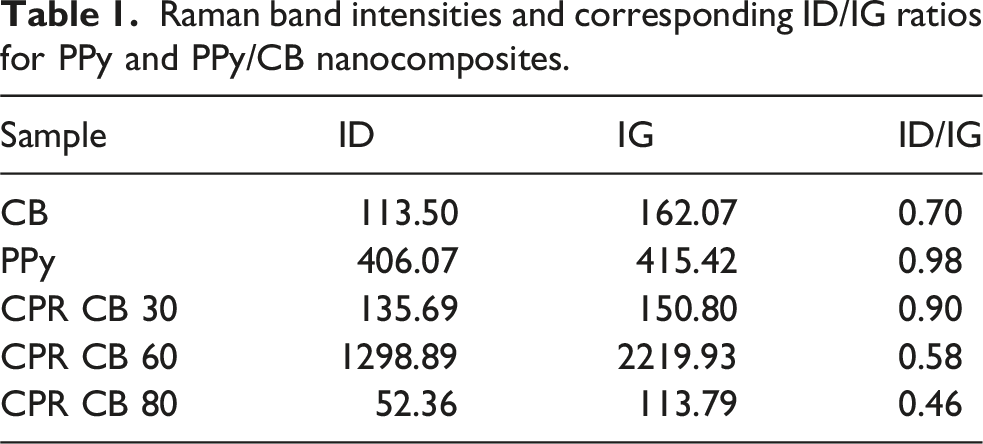
Raman spectra of CB, pristine PPy, and CB-doped PPy composites (CPR CB 30, 60, and 80) are shown in Figure 4. The D band (∼1320–1340 cm−1) arises from disorder-induced vibrations of sp2 carbon, while the G band (∼1560–1580 cm−1) corresponds to in-plane C = C stretching of graphitic domains.36,37 CB exhibits characteristic peaks at 1322 cm−1 and 1580 cm−1 with an ID/IG ratio of 0.70, indicating moderate disorder. Pristine PPy shows bands at ∼1340 and ∼1567 cm−1 associated with C–N+ (polaronic) and C = C backbone vibrations, with a higher ID/IG ratio (0.98) reflecting significant structural disorder and localized charge carriers.38,39 With CB incorporation, the ID/IG ratio decreases progressively (0.90 for CPR CB 30, 0.58 for CPR CB 60, and 0.46 for CPR CB 80), indicating reduced disorder and enhanced graphitic ordering. The pronounced decrease for CPR CB 60 suggests stronger π–π interactions and improved interfacial charge transport, consistent with enhanced electrical conductivity. At higher loading (CPR CB 80), reduced Raman intensity indicates possible CB agglomeration and diminished effective polymer–filler interaction.Systematic changes in band intensities and ID/IG ratios are presented in Table 1. This structural evolution aligns with the observed red shift in UV–Vis spectra, increased charge delocalization, and enhanced electrical conductivity, particularly at optimal CB loading (CPR CB 60).
40
Raman spectra of carbon black, pristine polypyrrole, and CB doped poly pyrrolenanocomposites. Raman band intensities and corresponding ID/IG ratios for PPy and PPy/CB nanocomposites.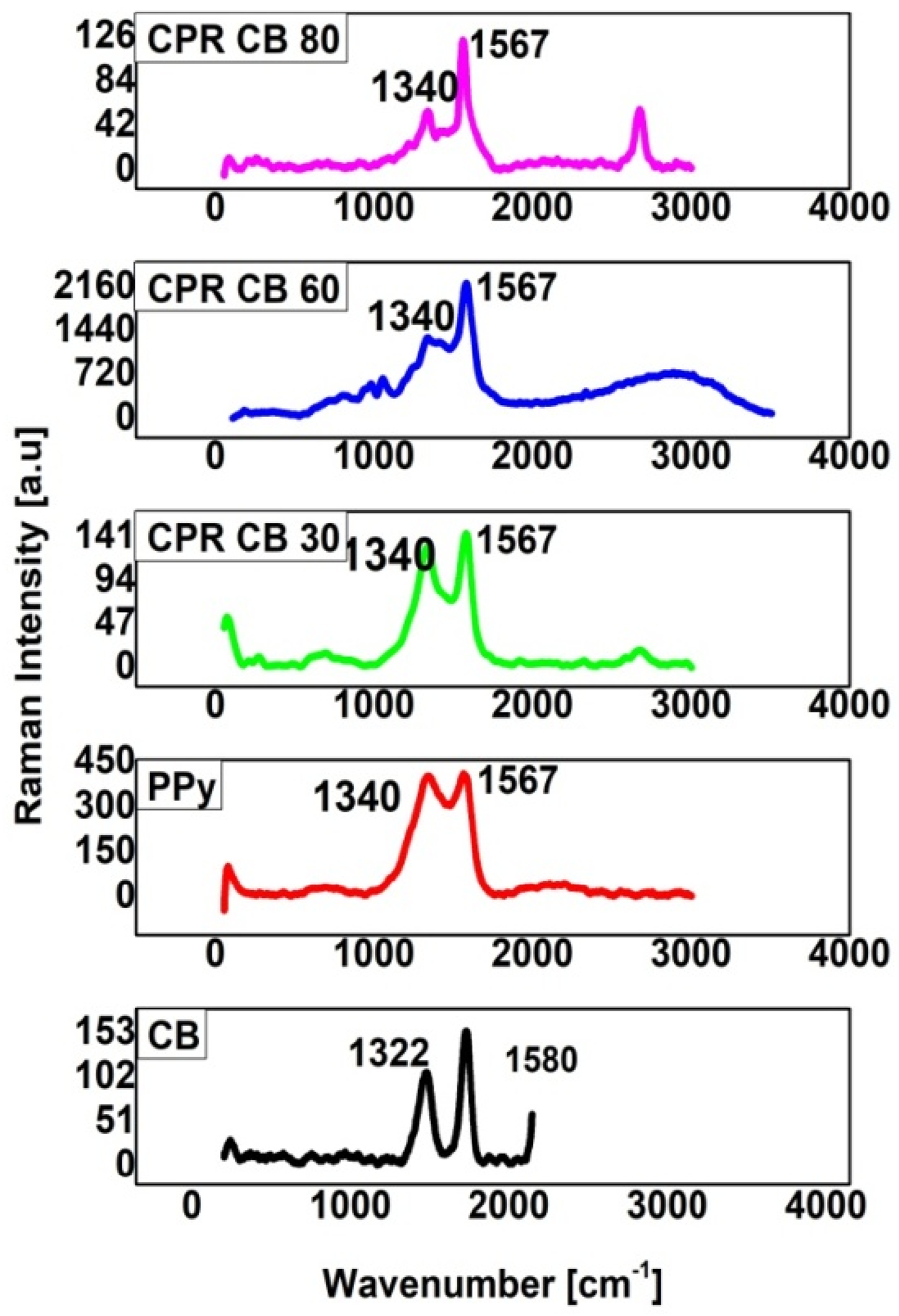
FTIR spectral analysis
The FTIR spectra of pristine PPy and UV irradiated PPy/CB composites (CPR CB 30, CPR CB 60, and CPR CB 80) recorded in the 4000–400 cm−1 region are shown in Figure 5. Pristine PPy exhibits characteristic absorption bands associated with the pyrrole ring and conjugated polymer backbone. The prominent band near 1570 cm−1 is attributed to C = C stretching vibrations of the pyrrole ring, confirming the formation of the conjugated PPy structure. The band observed around 1048 cm−1 corresponds to C–N stretching vibrations, while the feature near 928 cm−1 is assigned to C–H out-of-plane deformation, both typical of polypyrrole.
41
Upon incorporation of carbon black and UV irradiation, the PPy/CB composites clearly retain the fundamental vibrational features of PPy, indicating that the polymer backbone remains intact. However, noticeable changes in band intensity and broadening are observed with increasing CB content. In particular, the C = C stretching band (∼1570 cm−1) shows reduced intensity and slight broadening for CPR CB 60 and CPR CB 80, suggesting strong interfacial interactions between CB and the PPy chains. Such modifications are indicative of π–π interactions between the graphitic CB surface and the conjugated PPy backbone, which alter the local bonding environment.35,42 The band near 1687 cm−1, which becomes more pronounced in CB doped samples, may be associated with oxidized or quinoid like structures formed due to UV assisted polymerization, reflecting increased structural disorder and doping effects.
43
The gradual enhancement of this feature with CB loading suggests that carbon black facilitates charge transfer interactions and modifies the electronic structure of PPy. Weak absorption features observed around 2919 cm−1 are attributed to C–H stretching vibrations, while the broad band centered near 3272 cm−1 corresponds to N–H stretching vibrations of the pyrrole units. The broadening and reduced intensity of the N–H band in CB rich composites imply restricted vibrational freedom due to polymer–filler interactions and partial hydrogen bonding at the PPy/CB interface.
44
Overall, the FTIR results provide strong evidence that UV irradiation promotes effective integration of carbon black within the PPy matrix, leading to changes in vibrational characteristics without disrupting the fundamental polymer structure.
43
FTIR spectra of pristine polypyrrole and PPy/CBnanocomposites.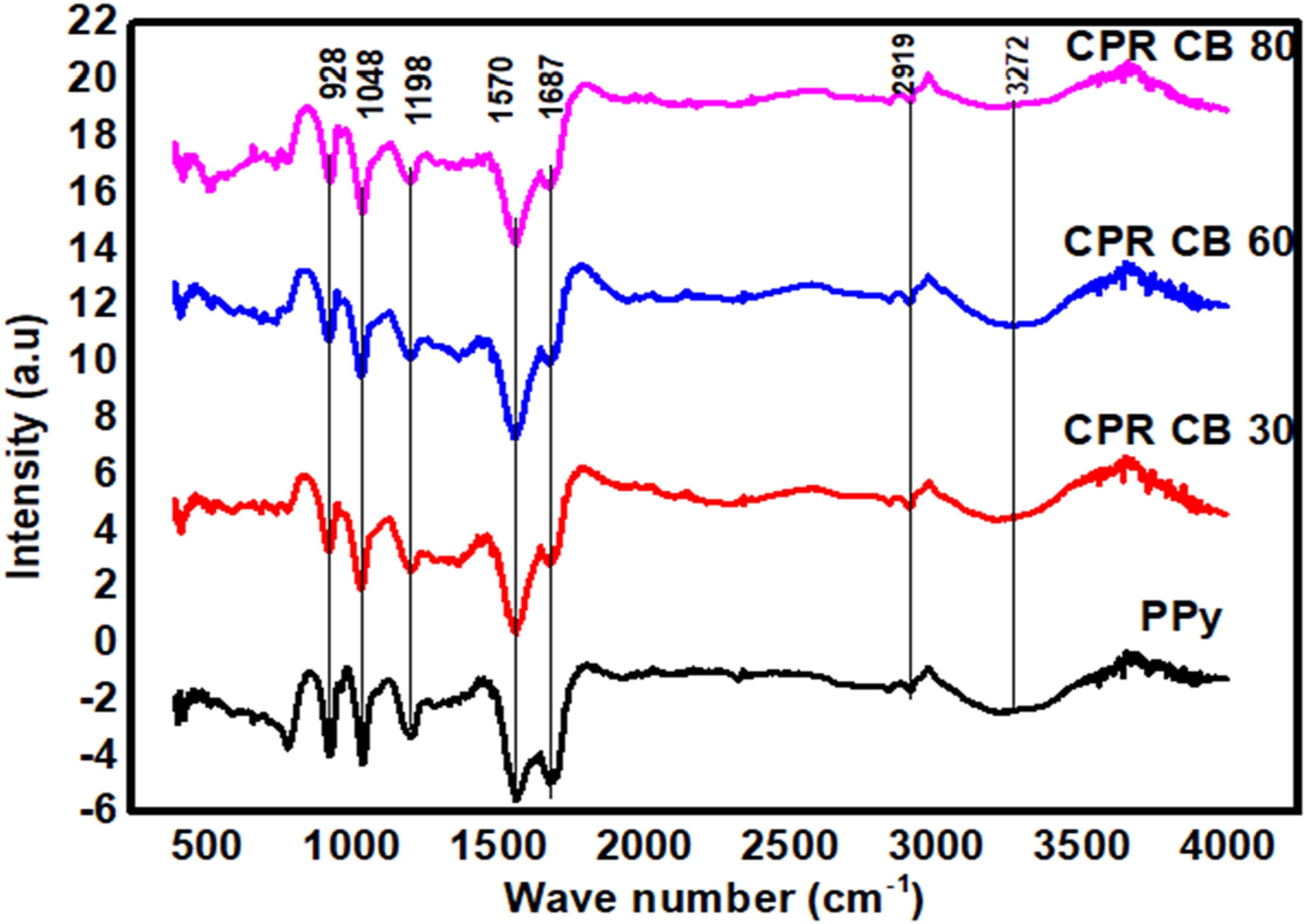
XRD analysis
Figure 6 displays the X-ray diffraction (XRD) patterns of carbon black (CB), UV-irradiated Polypyrrole (PPy), and CB-doped PPy composites in order to evaluate their structural characteristics. The XRD pattern of pristine carbon black exhibits a diffraction peak centered at 2θ ˜ 26.4∘, corresponding to the (002) reflection of graphitic carbon, indicating the presence of partially ordered graphitic domains.45,46 Pristine PPy shows a broad diffraction hump in the 2θ range of 23–24∘, characteristic of its predominantly amorphous nature arising from disordered polymer chains and limited long-range ordering.
47
For the CB-doped PPy composites (CPR CB 30, CPR CB 60, and CPR CB 80), a broadened diffraction feature appears near 2θ ˜ 26.3–26.5∘, overlapping with the characteristic CB (002) reflection. The persistence of this feature in all composites confirms the incorporation of carbon black within the PPy matrix. The broadening of the diffraction profile relative to pristine CB suggests modification of the local structural organization due to polymer–filler interactions. X-ray diffraction (XRD) patterns of carbon black (CB), pristine polypyrrole (PPy), and carbon black doped polypyrrole (PPy/CB) composite.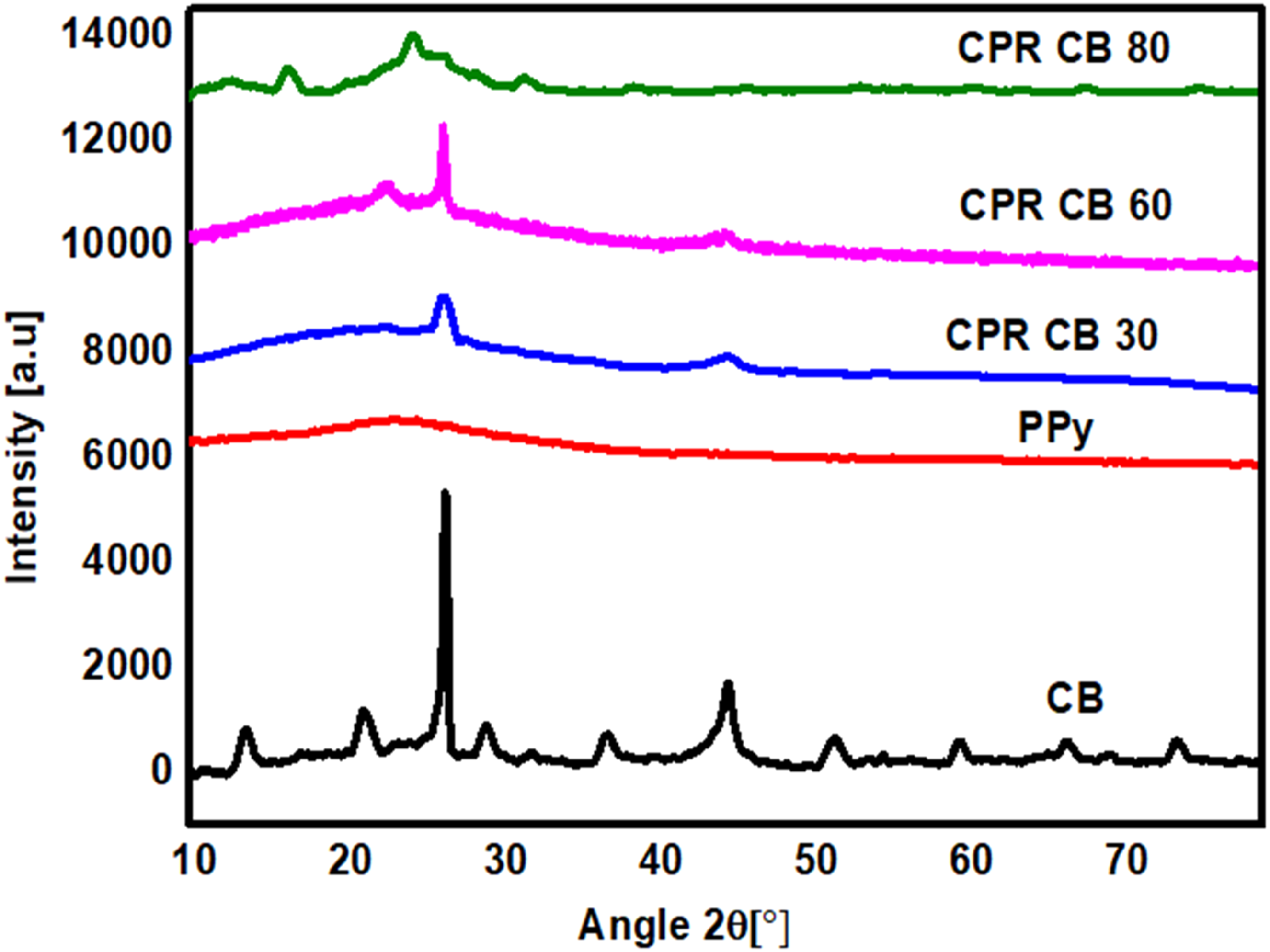
The apparent crystallite sizes associated with partially ordered domains were estimated from the prominent diffraction features using the Debye–Scherrer equation. Pristine CB exhibits an apparent crystallite size of approximately 20 nm, consistent with partially ordered graphitic regions, while pristine PPy shows a much smaller value of about 3.2 nm, reflecting its highly disordered polymeric structure. Upon CB incorporation, the calculated apparent crystallite sizes decrease to 0.97 nm (CPR CB 30) and 1.2 nm (CPR CB 60), indicating increased structural disorder and modification of local ordering within the composite matrix. At higher CB loading (CPR CB 80), the apparent crystallite size slightly increases to 1.45 nm, which may suggest partial restoration of locally ordered graphitic domains at increased CB concentration. However, since PPy is predominantly amorphous in nature, these crystallite size values can be considered as qualitative indicators of relative changes in local structural ordering rather than precise crystalline dimensions. The observed variations may arise from π–π interactions between conjugated PPy chains and graphitic CB domains, as well as heterogeneous nucleation effects during polymerization, which can influence chain organization and polymer–filler interactions within the composite system.48,49
SEM morphological analysis
Figure 7 shows the SEM micrographs of pristine Polypyrrole (PPy) and UV-irradiated carbon black (CB)-doped PPy composites. Pristine PPy exhibits a highly agglomerated granular morphology composed of irregular cauliflower-like clusters, characteristic of chemically polymerized PPy systems.
50
Upon CB incorporation (CPR CB 30), the morphology becomes comparatively less compact with finer granular features distributed throughout the polymer matrix, suggesting modification of PPy aggregation behavior.51,52 However, uniformly dispersed nanoscale CB domains cannot be conclusively identified from SEM observations alone.The CPR CB 60 sample exhibits increased aggregation with interconnected granular regions and comparatively rougher surface features, indicating enhanced structural heterogeneity within the composite.
52
At higher CB loading (CPR CB 80), larger irregular agglomerated and flake-like domains are observed, likely due to partial aggregation of excess CB within the PPy matrix.35,53 Although continuous conductive pathways cannot be directly confirmed from SEM images, the increased presence of CB-rich regions may facilitate localized conductive contacts within the heterogeneous composite structure. Overall, the SEM analysis demonstrates that UV-assisted polymerization and CB incorporation significantly influence the morphology and aggregation characteristics of PPy, while noticeable micro-scale agglomeration remains present in all composites. SEM Micrographsof UV irradiated pristine polypyrrole and CB doped poly pyrrole composites.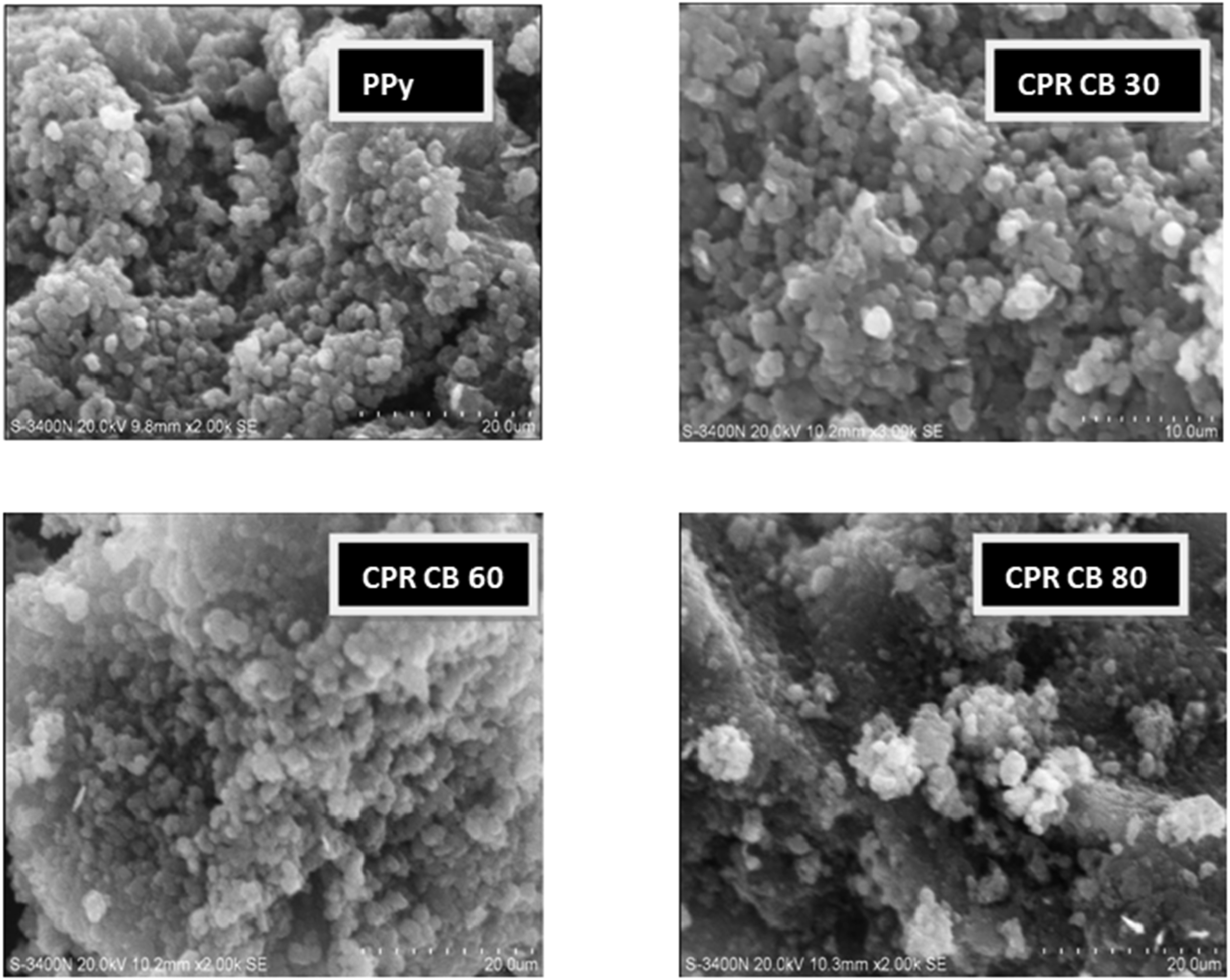
Thermogravimetric and derivative thermal (TGA/DTA) analysis
Figures 8 and 9 presents the thermogravimetric (TGA) and derivative thermogravimetric (DTG) curves of pristine polypyrrole (PPy) and carbon black (CB) doped PPy composites (CPR CB 30, CPR CB 60, and CPR CB 80), clearly demonstrating progressive enhancement in thermal stability with increasing CB loading. Pristine PPy exhibits an initial minor weight loss below ∼200°C, attributed to the removal of adsorbed moisture and residual low molecular weight oligomers. The major degradation stage occurs between ∼300 and 600°C, corresponding to backbone scission and decomposition of the conjugated polymer structure.54,55 At 800°C, pristine PPy retains only ∼42–45% of its initial mass, indicating limited char formation and relatively lower thermal endurance. The DTG curve of PPy shows a broad degradation peak centered around ∼450–500°C, confirming a single dominant decomposition step associated with polymer backbone breakdown.
56
The relatively higher magnitude of the DTG peak indicates a faster degradation rate compared to the composites. Upon CB incorporation, significant modifications are observed in both TGA and DTG profiles. CPR CB 30 exhibits reduced total weight loss and retains ∼55% mass at 800°C. Its DTG curve shows a slightly shifted degradation peak toward higher temperature and a reduced peak intensity compared to pristine PPy, indicating suppression of rapid thermal decomposition due to the initial barrier effect of dispersed CB particles. A more pronounced stabilization effect is observed for CPR CB 60 and CPR CB 80, which retain approximately ∼65% and ∼63–66% residual mass, respectively, at 800°C. In these composites, the onset temperature of major degradation is shifted to higher values, and the DTG peaks are broader and less intense. The observed reduction in the maximum degradation rate, reflected by the lower DTG peak height in the composites, indicates enhanced thermal resistance and slower mass loss kinetics compared to pristine PPy. This improvement arises from multiple synergistic factors. The intrinsically high thermal stability of carbon black contributes directly to increased residual mass at elevated temperatures. Additionally, the formation of a thermally stable carbonaceous network within the polymer matrix acts as a protective barrier, limiting heat transfer and volatile diffusion during decomposition. Strong interfacial interactions between PPy chains and CB particles further stabilize the composite structure by restricting polymer chain mobility and suppressing rapid backbone scission. The presence of graphitic domains also promotes enhanced char formation, reinforcing the structural integrity of the material at high temperatures. Collectively, these effects account for the improved thermal endurance of the PPy/CBcomposites. The higher char yield observed for CPR CB 60 indicates effective interfacial bonding, which maximizes thermal barrier performance. Although CPR CB 80 shows comparable residual mass, slight differences in DTG peak shape suggest that excessive filler loading may induce partial agglomeration, slightly reducing the efficiency of thermal stress distribution. TGA curves of UV-irradiated pristinepolypyrrole and Carbon black (CB) doped polypyrrole composites (CPR CB 30, CPR CB 60 and CPR CB 80). DTA curves of UV-irradiated pristine polypyrrole and carbon black (CB) doped polypyrrole composites (CPR CB 30, CPR CB 60 and CPR CB 80).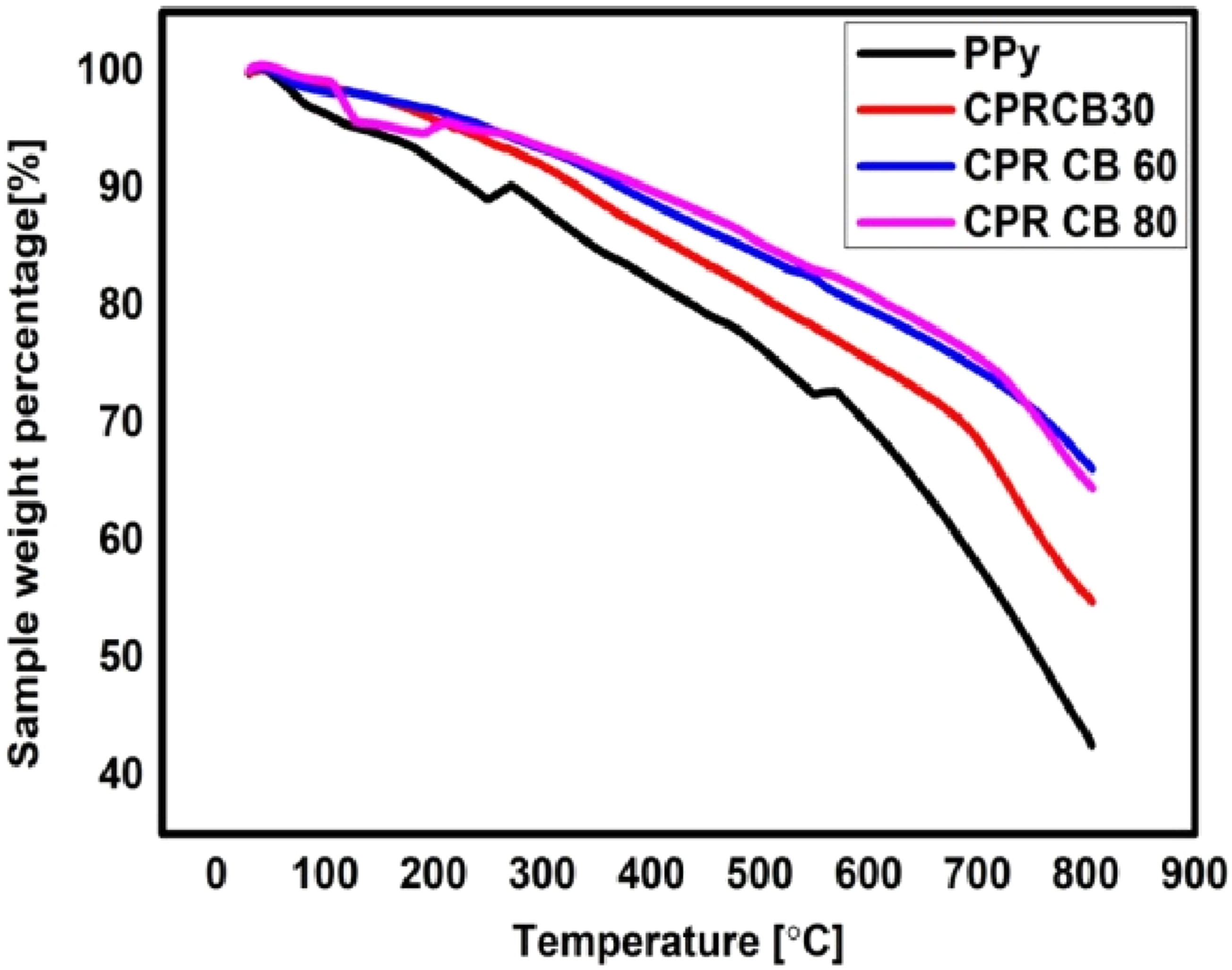
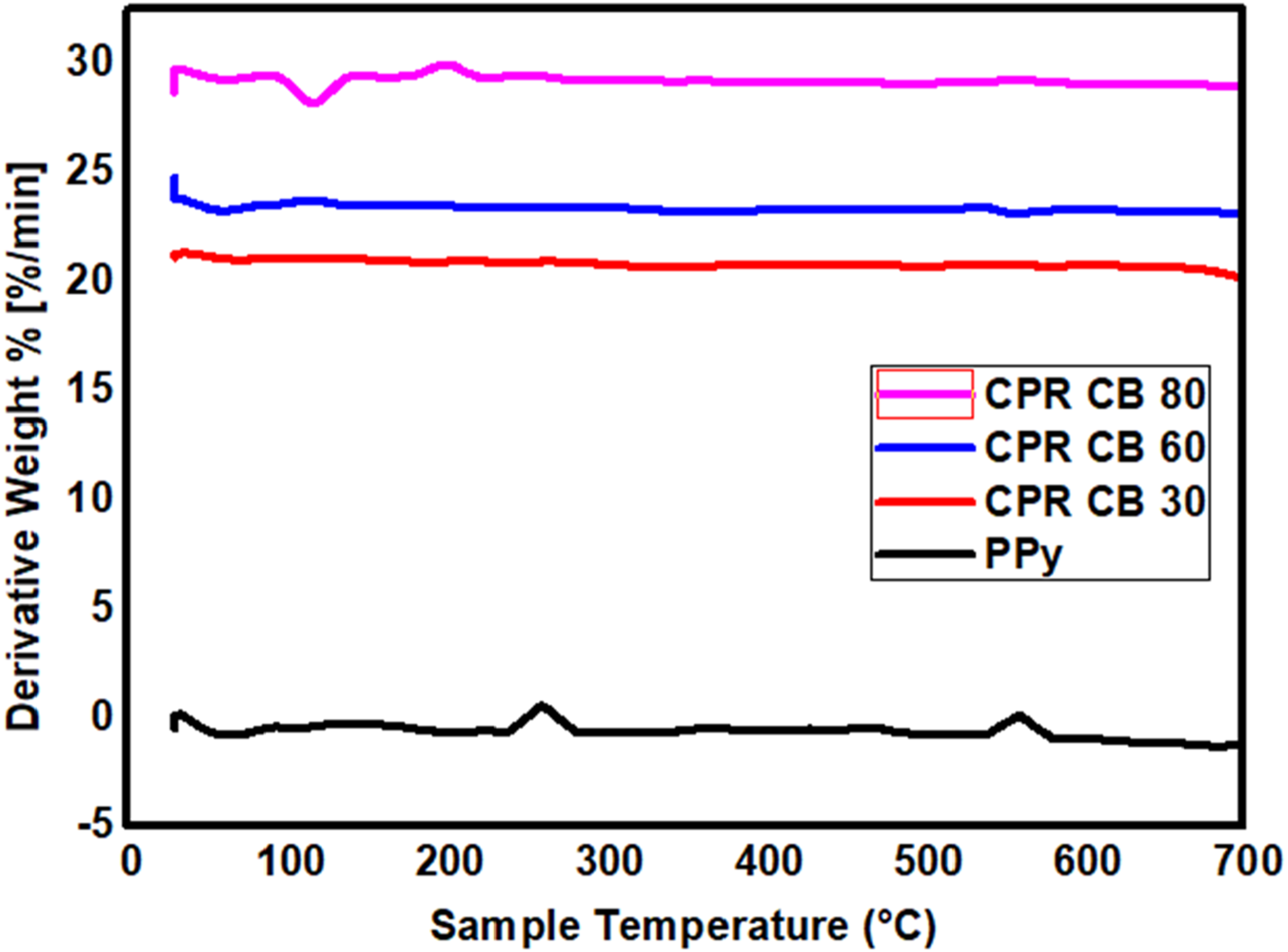
The combined TGA–DTG analysis indicates that UV-assisted in situ polymerization in the presence of carbon black (CB) improves the thermal stability of the PPy/CB composites by reducing the decomposition rate and increasing the residual char yield. These observations are consistent with the structural modifications inferred from Raman analysis, including the gradual reduction in the ID/IG ratio, suggesting improved local ordering and interaction between PPy and CB within the composite system. 57 The enhanced thermal stability and moderate electrical conductivity suggest the potential suitability of these composites for applications requiring controlled semiconducting behavior and thermal durability, such as antistatic coatings and low-current flexible electronic materials.
Electrical transport and conductivity analysis
Figure 10 presents the current–voltage (V–I) characteristics of pristine polypyrrole (PPy) and carbon black doped PPy composites (CPR CB 30, CPR CB 60, and CPR CB 80) measured using the two-probe technique over a voltage range of −50 to +50 V. All samples exhibit a non linear but symmetric V–I response in both forward and reverse bias, indicating bulk dominated charge transport governed primarily by hopping and tunneling mechanisms rather than ideal ohmic conduction. Pristine PPy shows the lowest current response across the applied voltage range, corresponding to a conductivity of 4.61 × 10⁻⁷ S·cm−1, which reflects charge transport through localized states along the disordered polymer backbone. Upon incorporation of carbon black, a systematic enhancement in current is observed. The CPR CB 30 composite exhibits a slightly increased conductivity of 4.93 × 10⁻⁷ S·cm−1, suggesting the formation of initial conductive pathways through PPy–CB interfacial contacts. A more pronounced improvement is observed for CPR CB 60, with conductivity increasing to 8.13 × 10⁻⁷ S·cm−1, indicating the development of a partially percolated CB network that facilitates efficient charge hopping and reduces interparticle tunneling barriers. The highest conductivity of 9.52 × 10⁻⁷ S·cm−1 is achieved for CPR CB 80, where the steepest V–I slope confirms the establishment of a more continuous conductive network within the PPy matrix. The absence of an abrupt increase in conductivity with increasing CB content indicates that the system remains below the percolation threshold, where charge transport is governed by localized hopping and tunneling mechanisms. Two-probe current–voltage (V–I) characteristics of pristine polypyrrole (PPy) and carbon black–doped PPynanocomposites (CPR CB 30, CPR CB 60, and CPR CB 80).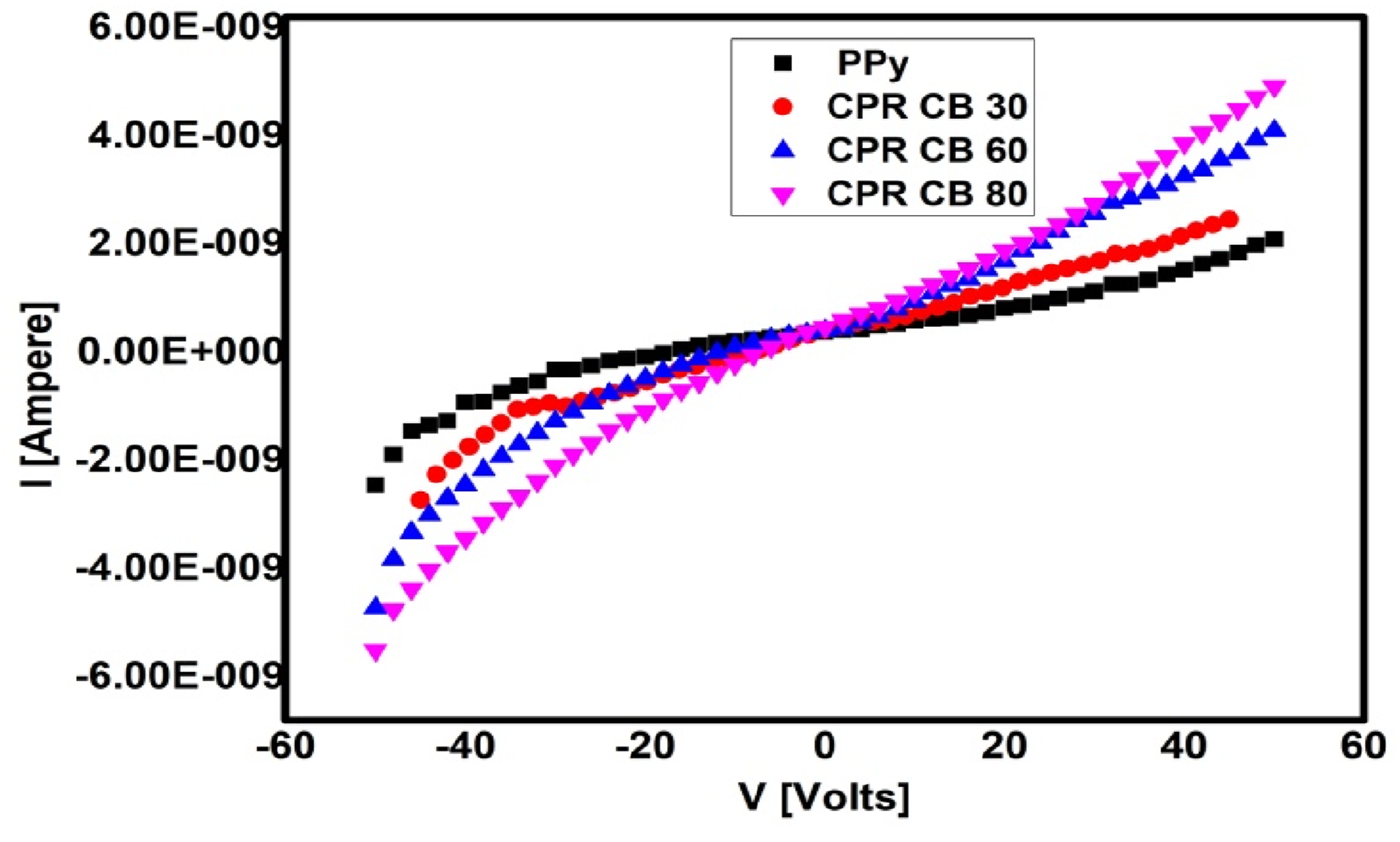
Electrical conductivity and relative conductivity enhancement of UV-irradiated PPy/CB composites.

A conductivity-versus-filler-content plot (Figure 11) was constructed to examine the influence of carbon black loading on charge transport. The gradual increase in conductivity without an abrupt transition suggests progressive development of conductive pathways within the investigated concentration range. Variation of conductivity with carbon black loading.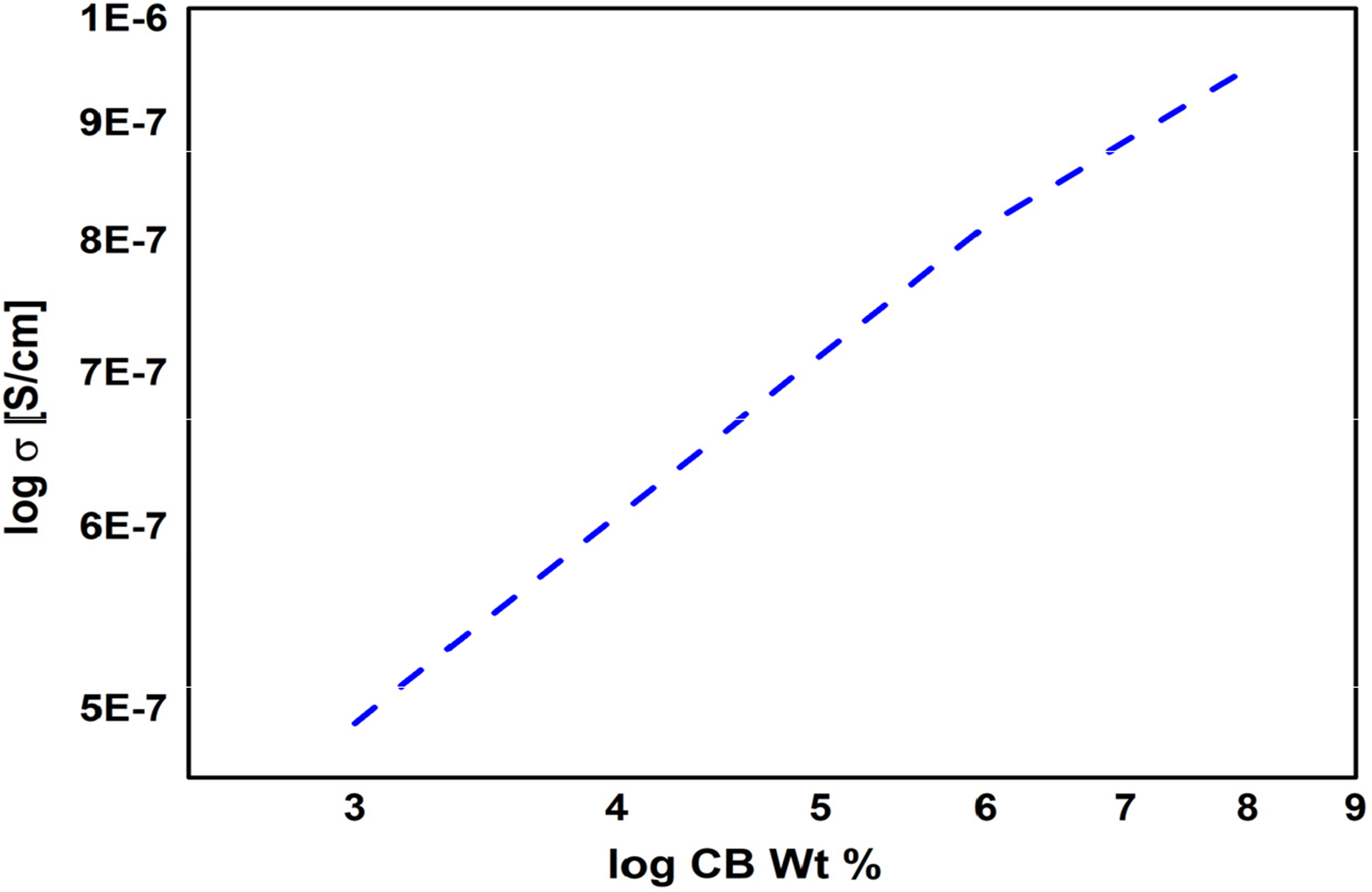
Comparison of electrical conductivity of UV-irradiated PPy/CB composites (this work) with similar PPy/CB systems reported in the literature.
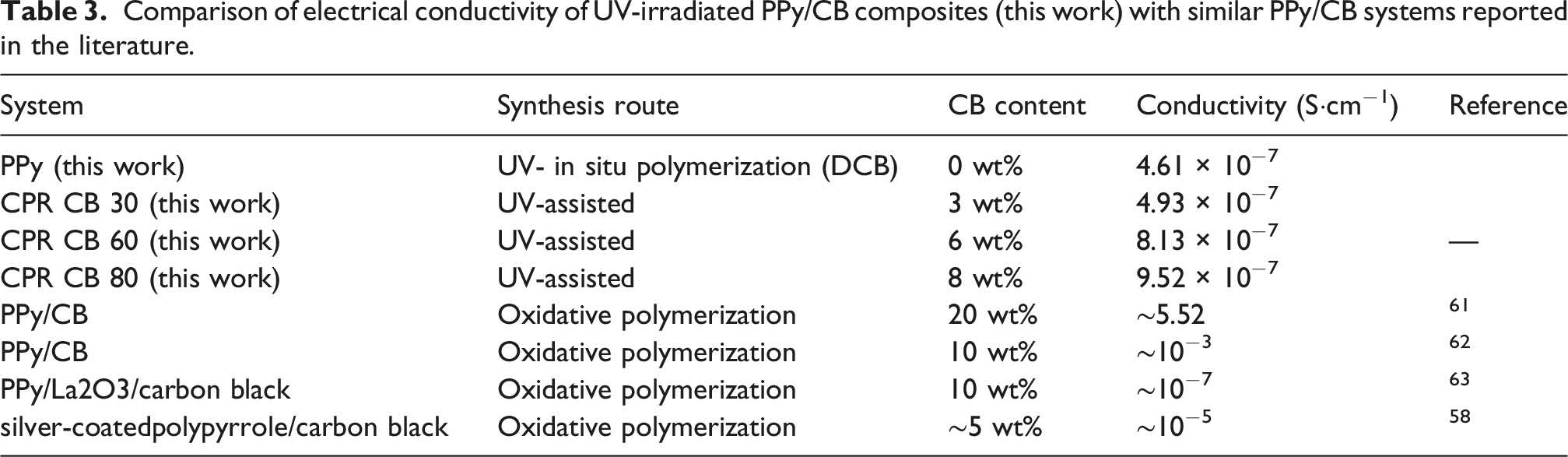
The conductivity of UV-assisted PPy/CB composites in the present study (10−7 S·cm−1 range) is lower than that reported for highly loaded oxidatively synthesized PPy/CB systems (10−3–100 S·cm−1). However, the controlled UV polymerization route enables moderate conductivity enhancement at relatively low CB loading (3–8 wt%) without excessive filler content, indicating improved interfacial dispersion and efficient charge hopping pathways. Although the conductivity values remain within the semiconducting regime, such low-filler conducting polymer composites may be relevant for antistatic materials, resistive sensing applications, and dielectric systems where controlled charge transport is desirable.64,65 In the present study, the observed morphological and conductivity variations suggest that UV-assisted synthesis contributes to modification of the composite structure and charge transport behavior.
Due to limitations associated with sample availability and reproducibility under the present UV-assisted synthesis conditions, electrical measurements were performed on single representative samples for each composition. Therefore, although the observed conductivity trends were qualitatively reproducible, statistical variability between independently prepared samples was not systematically evaluated in the present study and will be investigated in future work.
Conclusion
• Carbon black (CB)-doped Polypyrrole (PPy) composites containing 3, 6, and 8 wt.% CB were successfully synthesized via UV-assisted in situ polymerization in 1, 2-dichlorobenzene (o-DCB). • UV–Vis and Raman analyses indicated modification of the local electronic structure and polymer–filler interaction upon CB incorporation, evidenced by the gradual red shift in absorption features and changes in Raman D and G band characteristics. • XRD analysis confirmed the predominantly amorphous nature of PPy with partially ordered domains. Variations in the apparent crystallite size suggested modification of local structural organization and polymer–filler interaction within the composite system. • SEM observations revealed significant morphological changes with CB incorporation, including modification of aggregation behavior and increased structural heterogeneity at higher CB loading. • Thermogravimetric analysis demonstrated improved thermal stability of the PPy/CB composites, with increased residual mass attributed to the thermal barrier effect and structural contribution of carbon black. • Electrical conductivity increased systematically from 4.61 × 10⁻⁷ S·cm−1 (PPy) to 9.52 × 10⁻⁷ S·cm−1(CPA CB 80) indicating enhanced charge transport upon CB incorporation. • The conductivity behavior is consistent with hopping- and tunneling-assisted transport mechanisms operating below the percolation threshold rather than the formation of a fully continuous conductive network. • The moderate conductivity and improved thermal stability of the low-filler PPy/CB composites suggest their potential suitability for applications requiring controlled semiconducting behavior, such as antistatic coatings, resistive sensing materials, and low-leakage flexible electronic systems.
Footnotes

Funding
The authors received no financial support for the research, authorship, and/or publication of this article.
Declaration of conflicting interests
The authors declared no potential conflicts of interest with respect to the research, authorship, and/or publication of this article.
Data Availability Statement
The data that support the findings of this study are available from the corresponding author upon reasonable request.