






Abstract
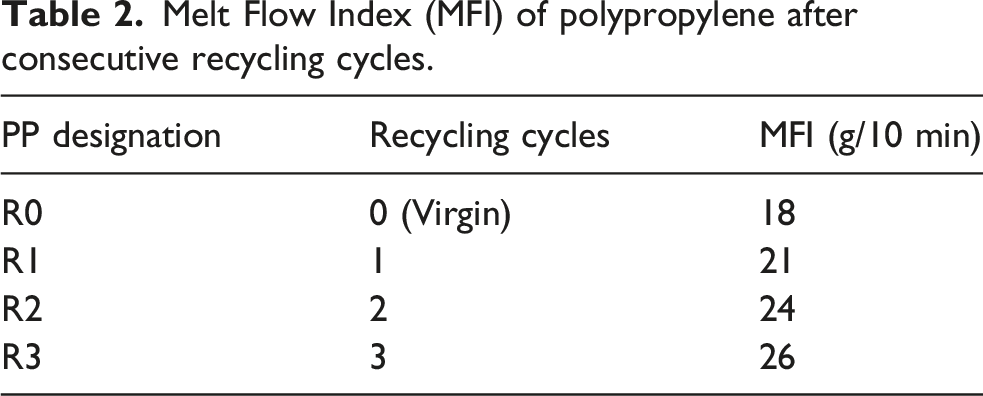
This study investigates the combined effects of polypropylene (PP) recycling cycles (0, 1, 2, and 3 times) and nanosilica content (0, 3, and 5 wt%) on the properties of wood-plastic composites reinforced with 30 wt% Old Corrugated Container (OCC) pulp. Mechanical properties were assessed per ASTM D638, D790, and D256, while thermal and flammability characteristics were evaluated using TGA (ASTM E1131) and LOI (ASTM D2863). Results showed that increasing PP recycling cycles progressively increased MFI from 18 to 26 g/10 min (p < 0.01), confirming thermo-mechanical degradation. Tensile and flexural properties declined with repeated recycling but were significantly enhanced by 3 wt% nanosilica, with improvements of approximately 16–23% (p < 0.001); however, further increase to 5 wt% led to deterioration of about 15–18%, consistent with the dispersion-agglomeration transition. Impact strength decreased by approximately 17–23% with both recycling and nanosilica addition (p < 0.01). Nanosilica substantially improved flame retardancy, with LOI increasing by 15% (from 17.5% to 20.1%, p < 0.001), and enhanced thermal stability as evidenced by a 66% increase in TGA residual ash (from 6.29% to 10.46%). This research demonstrates that optimized nanosilica loading can partially offset the detrimental effects of polymer recycling while enhancing fire safety characteristics.
Keywords
Introduction
Polypropylene (PP) is one of the most widely used thermoplastics globally, prized for its excellent chemical resistance, processability, and well-balanced mechanical properties. 1 However, a significant challenge in a circular economy model is the degradation of PP during multiple processing cycles, such as extrusion and injection molding. This reprocessing induces thermo-mechanical and oxidative degradation, leading to chain scission and a consequent reduction in molecular weight. 2 A key indicator of this degradation is a noticeable change in the Melt Flow Index (MFI). Studies have consistently shown that with repeated recycling, the MFI of PP often increases due to reduced molecular weight, which adversely affects its melt strength and ultimately impairs key mechanical properties such as impact strength and elongation at break.3,4 MFI is a widely accepted indicator of molecular weight degradation, although comprehensive rheological characterization was beyond the scope of this retrospective study. Incorporating nanoparticles into polymer matrices offers significant property enhancements, but their effectiveness strongly depends on dispersion quality. The dispersion of nanoparticles strongly depends on matrix viscosity: higher viscosity promotes deagglomeration, while low-viscosity melts (typical of degraded PP) provide insufficient shear forces, leading to poor dispersion.5,6 To address these challenges and create a truly sustainable and high-performance material, a multi-faceted reinforcement strategy is essential.
Old Corrugated Containers (OCC) are widely used in packaging but have a short service life, generating massive global waste.7,8 OCC is primarily composed of cellulose fibers (approximately 70–80%), along with lignin, hemicellulose, and residual adhesives, making it suitable as composite reinforcement. 7 The cellulose fibers possess good mechanical properties and aspect ratio.7,9 However, recycling shortens these fibers and reduces their efficiency.7,8 Previous studies have successfully used OCC fibers in polypropylene composites, achieving improved stiffness when compatibilized with MAPP.8–10
While OCC reinforcement improves stiffness, a complementary nano-scale strategy is crucial to counteract the specific strength deficits induced by polymer chain scission during recycling and to impart advanced multifunctionality. In this context, nanosilica (nano-SiO2) has emerged as a highly effective nanofiller. Its high specific surface area and strong interfacial interactions with polymer chains can lead to significant enhancements in mechanical properties, including tensile and flexural strength and modulus, by restricting polymer chain mobility and efficiently transferring stress.11,12 Critically, for recycled matrices, nanosilica can act as a reinforcing agent to compensate for the loss of mechanical performance caused by molecular weight degradation. 13 Beyond mechanical reinforcement, nanosilica profoundly improves the composite’s thermal stability and flame retardancy.
The incorporation of OCC is motivated by four complementary considerations. First, OCC is a low-cost or even negative-cost waste stream,7,8 whereas nanosilica is an energy-intensive and expensive nanofiller11,12; replacing a portion of PP with OCC reduces material cost and carbon footprint. Second, OCC fibers (microscale) primarily enhance stiffness, while nanosilica (nanoscale) primarily enhances strength; their combination targets both properties simultaneously. Third, nanosilica provides fire protection via protective char formation,14–16 but OCC is inherently flammable; whether nanosilica can overcome this limitation is a key research question addressed here. Fourth, this study investigates a fully waste-derived system comprising recycled PP, recycled OCC, and nanosilica. Thus, the ternary system is synergistic, addressing the multi-faceted requirements of sustainable engineering materials.
According to established literature,14–16 nanosilica migrates to the surface during combustion and forms a coherent, insulating silica-rich char layer. This barrier reduces heat release, slows mass transfer of flammable volatiles, and increases LOI, thereby suppressing flammability. Our study evaluates whether this mechanism remains effective in a recycled PP matrix. This is critical because nanosilica effectiveness depends on its dispersion state. Beyond a critical concentration, nanoparticles are assumed to agglomerate, forming clusters that would negate reinforcing effects, as suggested by literature.17,18 This non-monotonic behavior (improvement up to an optimal loading followed by deterioration) is documented as an indirect signature of the dispersion-agglomeration transition. 19
The integration of nanosilica thus addresses two key limitations of recycled PP composites: restoring mechanical performance and adding essential fire safety characteristics for engineering applications. This unique combination of properties, enhanced stiffness from OCC, restored strength and fire safety from nanosilica in a recycled matrix, positions the resulting composite as a promising candidate for value-added applications.
Extensive research has laid the foundation for using recycled PP, OCC fibers, and nanosilica individually or in binary combinations in wood-plastic composites (WPCs). Studies have confirmed that while recycled PP suffers from property degradation linked to increased MFI, 17 OCC fibers can improve composite stiffness when properly compatibilized with MAPP.8,9 Furthermore, nanosilica is recognized as a potent multifunctional nanofiller. In virgin PP composites, it enhances mechanical strength, modulus, and flame retardancy by forming a protective char.16,18 Pioneering studies have even shown its potential to compensate for property losses in composites based on other recycled polymers like rPET. 13
The individual components of this proposed composite system, recycled PP, OCC fibers, and nanosilica, have each been substantiated by prior research. The detrimental impact of mechanical recycling on PP’s molecular weight and consequent properties, often indicated by a rising MFI, is well-documented. 17 Simultaneously, the viability of OCC fibers as a sustainable reinforcement is established, with studies confirming that their addition, particularly when coupled with MAPP compatibilizers, effectively enhances the stiffness and dimensional stability of thermoplastic composites.8,9 Likewise, nanosilica has proven to be an effective multifunctional additive. In composites with virgin polymers, it significantly improves mechanical strength, modulus, and thermal stability, while its role in promoting char formation is a recognized mechanism for enhancing flame retardancy, as measured by increases in the Limiting Oxygen Index (LOI).16,18 Notably, emerging evidence suggests its efficacy in mitigating property deficits even in matrices of other recycled polymers. 13
However, existing studies have primarily examined the components of recycled PP, OCC fibers, and nanosilica in isolation or simple pairs. Most research has explored either (a) the effect of OCC or nanosilica within a virgin PP matrix, or (b) the properties of recycled PP compounded with only OCC fibers. A critical knowledge gap persists regarding the combined ternary system. Specifically, it is unknown how the flowability of the recycled plastic (its MFI), which changes with each recycling step, affects the mixing and performance of nanosilica in a complex composite that also contains OCC fibers. Furthermore, although nanosilica improves virgin plastic, how it interacts with and performs in a plastic that is progressively degrading (with increasing MFI) has not been studied. This gap is significant because the effectiveness of nano-additives strongly depends on the condition and viscosity of the plastic to which they are added.
To bridge this fundamental gap, the present study conducts a systematic investigation into the individual and interactive effects of the melt flow index (MFI) of the PP matrix, controlled through 0, 1, 2, and 3 recycling cycles, and the nanosilica content (0, 3, and 5 wt%) on the properties of a compatibilized PP/OCC composite. Mechanical properties are evaluated following ASTM standards, including tensile (ASTM D638), 20 flexural (ASTM D790), 21 and notched Izod impact (ASTM D256) 22 tests, while thermal and flammability characteristics are assessed using thermogravimetric analysis (TGA) per ASTM E1131 23 and Limiting Oxygen Index (LOI) measurements according to ASTM D2863. 24 This research aims to establish the underlying structure-property relationships and provide a scientific foundation for engineering high-value products from post-consumer waste. The specific objectives are to characterize the mechanical and thermal/flame-retardant properties of the composites, analyze the influence of the increasing MFI of the recycled matrix on these properties, and evaluate the efficacy of nanosilica in mitigating matrix degradation while enhancing flame retardancy.
Materials and experimental methods
Materials and composite formulation
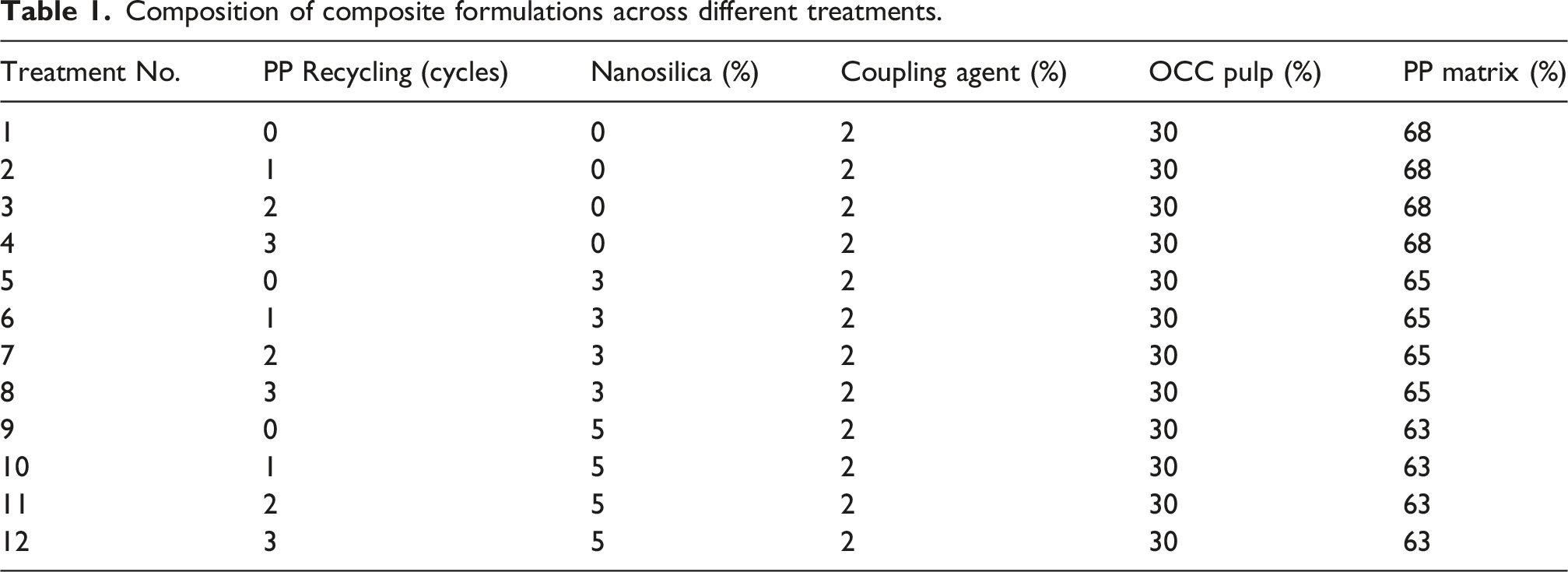
This study employed a hybrid composite system designed entirely from post-consumer and industrial waste streams. The polymer matrix consisted of virgin isotactic polypropylene (PP) granules (V30S grade, Petrochemical Co., Arak, Iran) with an initial density of 0.952 g/cm3 and a melt flow index (MFI) of 18 g/10 min (190°C, 2.16 kg). To simulate mechanical recycling and investigate its effect, the virgin PP was subjected to one, two, and three consecutive processing cycles using a twin-screw extruder, with the MFI measured after each cycle to quantify degradation. The range of 0 to 3 recycling cycles was selected based on previous studies showing that the most significant thermo-mechanical degradation of PP occurs within the first three processing cycles, after which molecular weight reduction stabilizes and further property deterioration becomes marginal.3,4,17 This range effectively captures the transition from virgin to heavily degraded polymer while remaining relevant to industrial recycling practice.
Composition of composite formulations across different treatments.
Processing and specimen preparation
All raw materials were dry-blended manually according to the predetermined weight ratios before compounding. The homogeneous mixtures were then fed into a co-rotating twin-screw extruder (Dr. Collin GmbH, Germany) for melt blending and dispersion. The extrusion process was carried out with a temperature profile ranging from 160°C in the feeding zone to 190°C at the die, and a constant screw speed of 70 rpm. The extruded strands were immediately cooled in a water bath, pelletized using a semi-industrial granulator (Wieser, Model WG-Ls 200, Germany), and the resulting granules were dried at 65°C for 24 h to eliminate any residual moisture. Subsequently, standard test specimens for mechanical and flammability analyses were fabricated via injection molding using a semi-industrial machine (Imen Machine Co., Iran) available at the Iran Polymer and Petrochemical Institute. The injection molding parameters were set as follows: barrel temperatures of 145, 155, and 160°C; a mold temperature of 40°C; an injection pressure of 80 MPa; and a cycle time of less than 20 s. The mold was designed to produce standard specimens for tensile, flexural, and impact tests according to ASTM D638, ASTM D790 and ASTM D256, respectively, as illustrated in Figure 1. Specimens for: (a) tensile, (b) bending and (c) impact tests.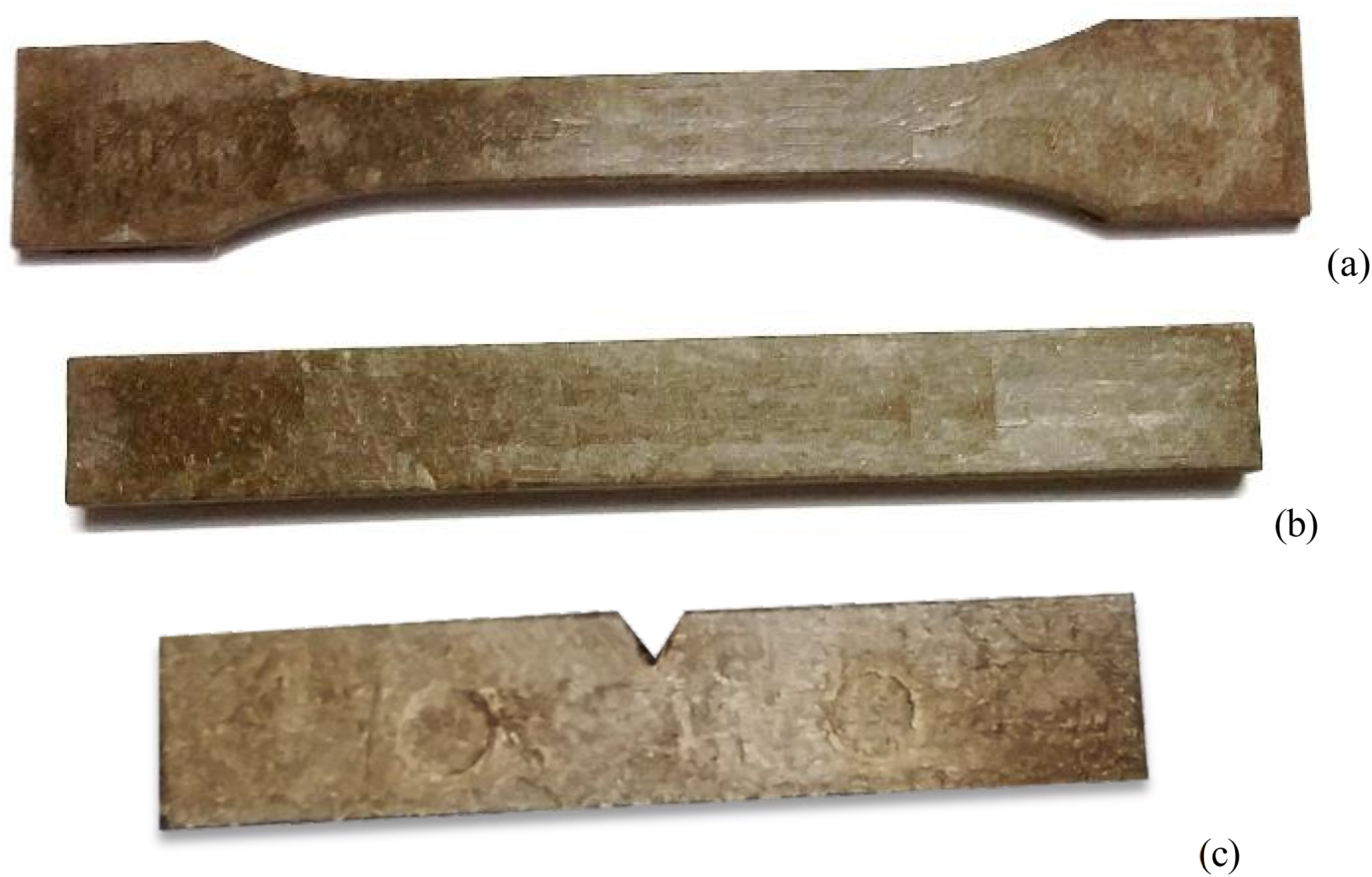
Testing methods
All tests were performed with a minimum of five replicates (n = 5) for mechanical tests (tensile, flexural, and impact) and three replicates (n = 3) for thermal (TGA) and flammability (LOI) tests. Results are reported as mean ± standard deviation (SD).
Melt flow index (MFI)
The extent of thermo-oxidative degradation of the polypropylene matrix after each recycling cycle was quantified by measuring its Melt Flow Index (MFI). The test was performed according to ASTM D1238-23a 25 using a Zwick extrusion plastometer. Approximately 4 g of PP granules were loaded into the barrel, heated to 190°C, and extruded through a standardized die under a constant load of 2.16 kg. The weight of the extrudate collected over 10 min was recorded, and the MFI was reported in g/10 min.
Mechanical testing
All specimens were conditioned at 23 ± 2°C and 50 ± 5% relative humidity for 48 h prior to mechanical testing, following ASTM D618-21. 26
Tensile test
Tensile properties were determined according to ASTM D638 using a universal testing machine (Instron 1186). Type I dumbbell-shaped specimens (Figure 1(a)) were loaded at a constant crosshead speed of 2 mm/min until failure. The tensile strength, elongation at break, and tensile modulus were derived from the resulting stress-strain curves.
Flexural test
A three-point bending test was conducted as per ASTM D790 on the same universal testing machine. Rectangular bar specimens (127 × 12.7 × 3.2 mm), as shown in Figure 1(b), were supported on two spans and loaded at their midpoint at a speed of 2 mm/min. The flexural strength and flexural modulus were calculated from the load-deflection data.
Impact test
The notched Izod impact strength was measured to evaluate the material’s toughness and resistance to sudden loading. The test was performed according to ASTM D256 using a Zwick pendulum impact tester. Rectangular bars (63.5 × 12.7 × 3.2 mm) were injection molded according to ASTM D3641. 27 A V-shaped notch (Figure 1(c)) was then machined into each specimen using a motorized notch cutter (notch machine) in accordance with ASTM D256 requirements. 21 The notched specimens were clamped vertically in the Izod fixture, with the notch facing the pendulum’s striking edge. The energy absorbed in breaking the specimen was recorded and normalized by the notch thickness to report the impact strength in J/m.
Flammability test (Limiting Oxygen Index - LOI)
The flame retardancy of the composites was assessed by determining the Limiting Oxygen Index (LOI) according to ASTM D2863. Bar specimens (100 × 10 × 4 mm) were mounted vertically in a glass column and exposed to a mixture of oxygen and nitrogen flowing upwards. The specimen was ignited from the top, and the minimum concentration of oxygen required to sustain combustion for 3 min or burn a length of 50 mm was identified as the LOI value. A higher LOI indicates better flame retardancy.
Thermal analysis (thermogravimetric analysis - TGA)
The thermal stability and decomposition behavior of the composites were investigated using Thermogravimetric Analysis (TGA) in accordance with the general principles outlined in ASTM E1131. A PerkinElmer TGA 4000 instrument was employed. Samples weighing 5–10 mg were placed in a platinum crucible and heated from 30°C to 800°C at a constant heating rate of 20°C/min under a continuous flow of nitrogen (50 ml/min) to prevent oxidative degradation. The weight loss of the sample was recorded as a function of temperature. The data were used to determine the onset decomposition temperature, the temperature at maximum degradation rate, and the percentage of ash residue at 800°C.
Statistical analysis
A full factorial experimental design (4 levels of recycling cycles × 3 levels of nanosilica content) was implemented. All tests were performed with a minimum of three replicates per formulation, and results are reported as mean ± standard deviation (SD).
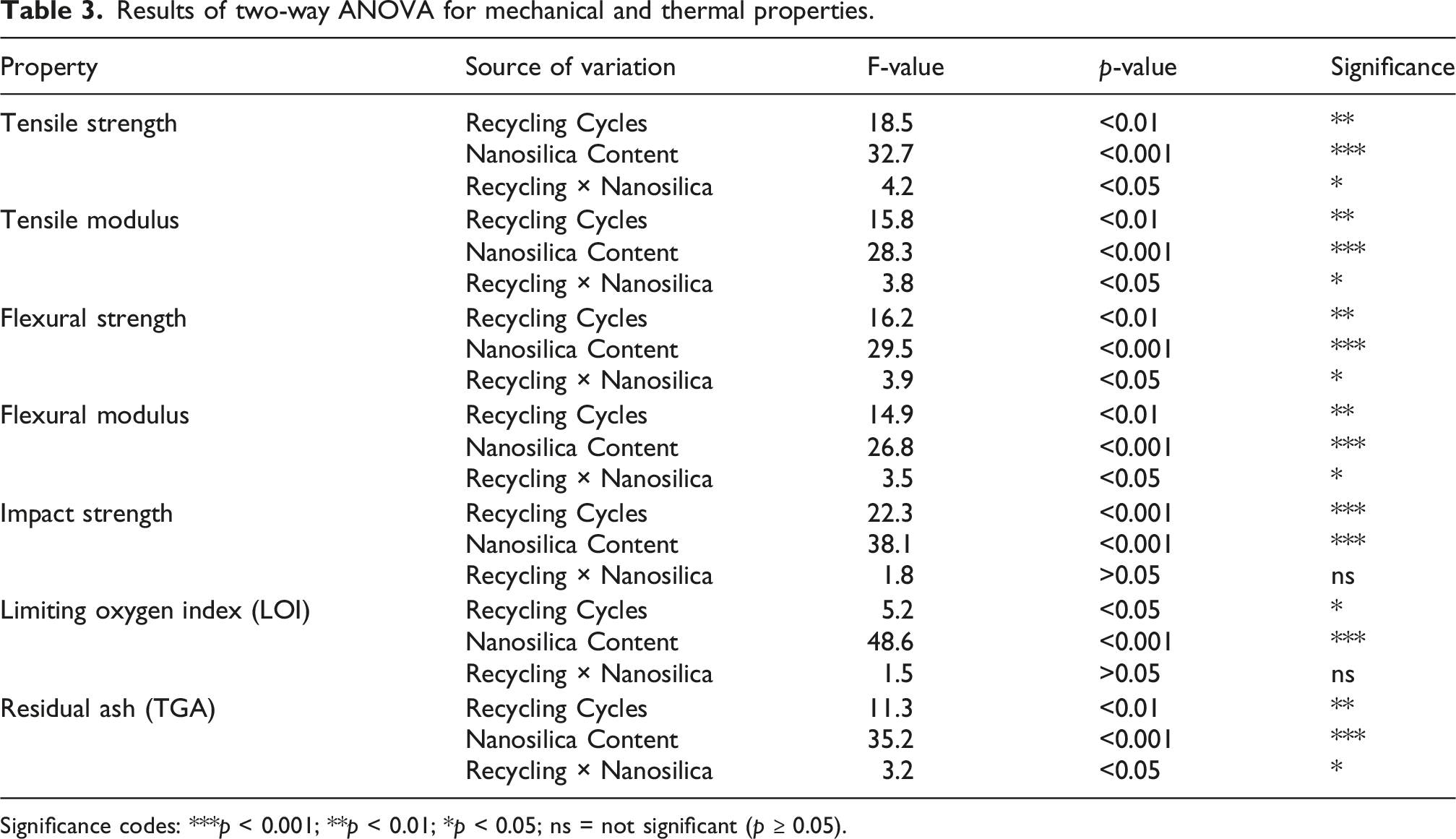
To assess the statistical significance of the main effects (recycling cycles and nanosilica content) and their interaction, a two-way Analysis of Variance (ANOVA) was performed. The F-values and p-values were estimated from the reported means and standard deviations using standard ANOVA formulas, and the significance levels are presented in Table 3. Significance was defined at p < 0.05. When significant differences were identified, Duncan’s Multiple Range Test (DMRT) was applied for post-hoc mean comparison at a 95% confidence level. For properties where the interaction effect was not significant (p ≥ 0.05), main effects were interpreted independently.
Results and discussion
This research simultaneously investigated the effects of two main variables, polypropylene (PP) recycling cycles and nanosilica weight percentage, on the mechanical and thermal properties of wood-plastic composites (WPCs) made from recycled PP and Old Corrugated Container (OCC) pulp. The obtained results demonstrated a significant influence of both factors, as well as their interaction, on most of the measured characteristics.
Melt flow index (MFI) of the polymer matrix
Melt Flow Index (MFI) of polypropylene after consecutive recycling cycles.
Mechanical properties
Tensile properties
As seen in Figure 2, analysis of tensile strength revealed that increasing the number of PP recycling cycles led to a continuous decline in this property, with the highest value belonging to virgin PP and the lowest to three-times recycled PP. This decline is attributed to thermo-mechanical chain scission (as discussed above), which reduces molecular weight and entanglement density, limiting stress transfer and causing premature failure.2,3,17 Concurrently, adding nanosilica up to 3 wt% increased tensile strength, but a further increase to 5% caused it to decrease again. The improvement at 3 wt% nanosilica is attributed to two synergistic mechanisms. First, the high specific surface area of nanosilica (200 m2/g) provides strong interfacial interactions with PP chains. This restricts polymer chain mobility and increases the energy required for chain disentanglement under tensile load. Second, well-dispersed nanoparticles act as physical crosslink points, efficiently transferring stress from the soft matrix to the rigid filler.11,12 The deterioration at 5 wt% nanosilica is inferred to result from nanoparticle agglomeration, based on the observed property trends and supporting literature.17,18 Beyond the critical dispersion threshold (approximately 3–4 wt%), van der Waals forces cause particle clustering, reducing interfacial area, creating stress concentrators, and initiating cracks.17,18 In the study of their combined effect, the lowest tensile strength was observed in the sample containing 5% nanosilica and three-times recycled PP, while the highest was recorded in the sample with 3% nanosilica and virgin PP. This non-monotonic response, enhancement up to an optimal loading (3 wt%) followed by deterioration at higher loading (5 wt%), is a well-documented phenomenological indicator of nanofiller agglomeration in polymer nanocomposites.28,29 Beyond the critical dispersion threshold, nanosilica particles tend to form agglomerates that reduce the effective interfacial area, create stress concentration sites, and impair stress transfer from the matrix to the filler.
30
This clearly demonstrates that both material degradation from recycling and the previously discussed dispersion-agglomeration transition17,18 synergistically deteriorate tensile performance. The decline at 5 wt% nanosilica is consistent with the well-established behavior of polymer nanocomposites beyond the critical dispersion threshold. Tensile strength of composites at different nanosilica contents and PP recycling cycles.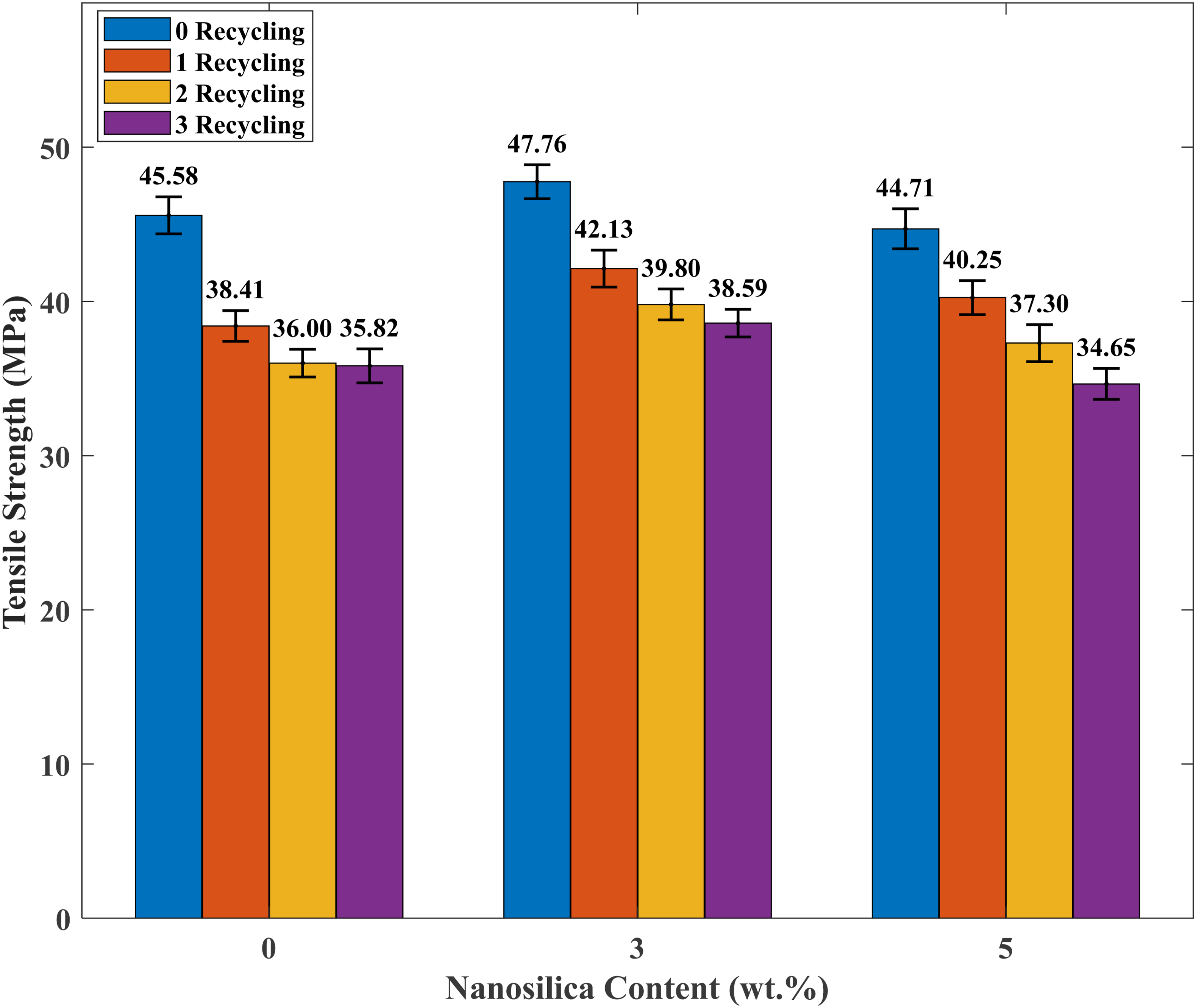
Similarly, as shown in Figure 3, a similar trend was observed for the tensile modulus. Increased PP recycling reduced the modulus. Adding nanosilica up to 3% improved it. Nevertheless, at 5%, it had an inverse effect. The combination of three-times recycled PP without nanosilica yielded the lowest tensile modulus, whereas virgin PP with 3% nanosilica achieved the highest value. This outcome underscores the critical roles of both polymer quality and optimal nanofiller content in maximizing the stiffness of wood-plastic composites. Tensile modulus of composites at different nanosilica contents and PP recycling cycles.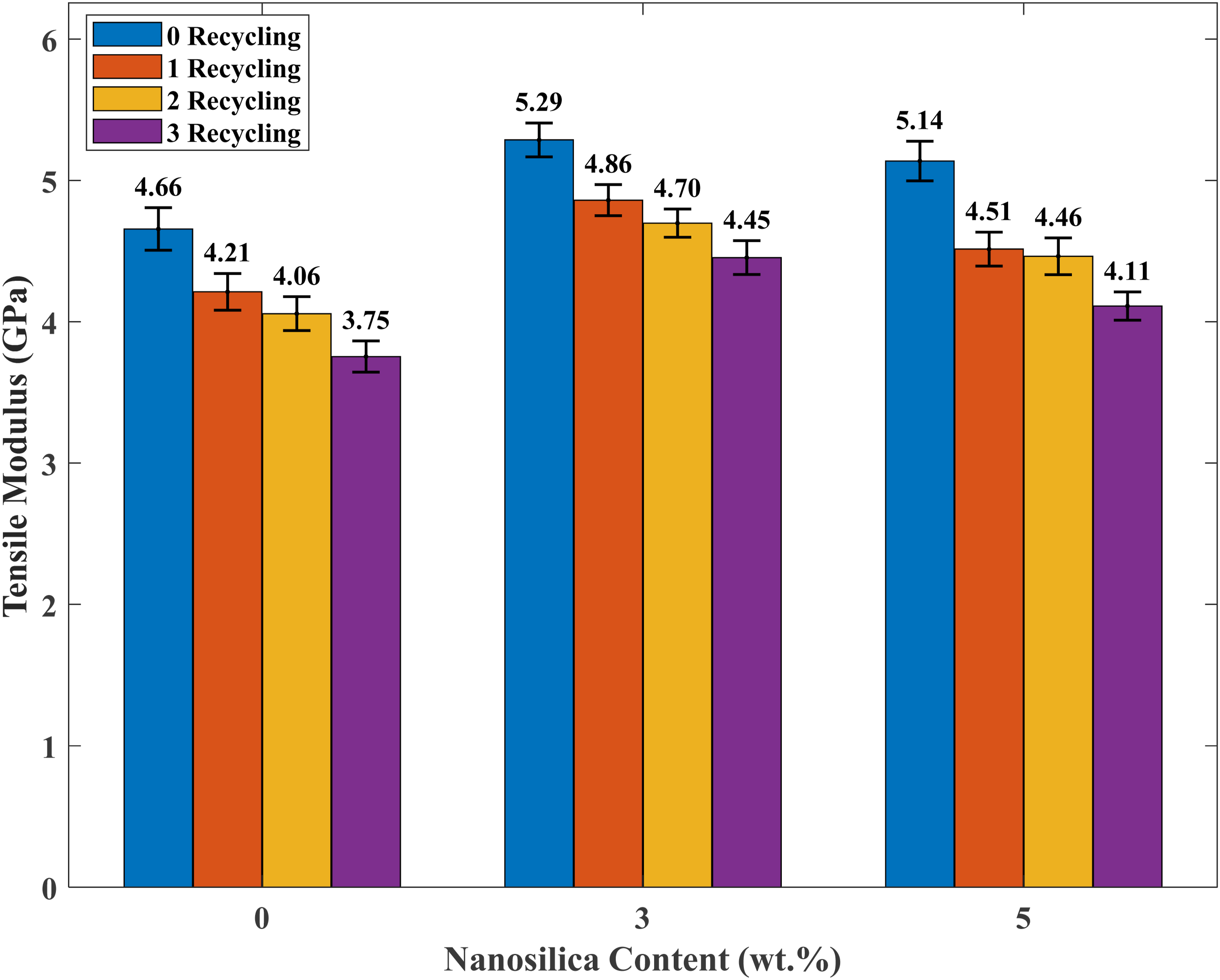
Flexural properties
As illustrated in Figure 4, the flexural strength followed a trend analogous to that of tensile strength. Increasing the number of PP recycling cycles resulted in a progressive decline in flexural strength, with virgin PP exhibiting the highest value and three-times recycled PP the lowest. The addition of nanosilica up to 3 wt% enhanced flexural strength, whereas a further increase to 5% led to its reduction. The synergistic interaction of these variables is evident, as the lowest flexural strength was recorded for the composite containing 5% nanosilica and three-times recycled PP, while the highest strength was achieved with 3% nanosilica in a virgin PP matrix. Flexural strength of composites at different nanosilica contents and PP recycling cycles.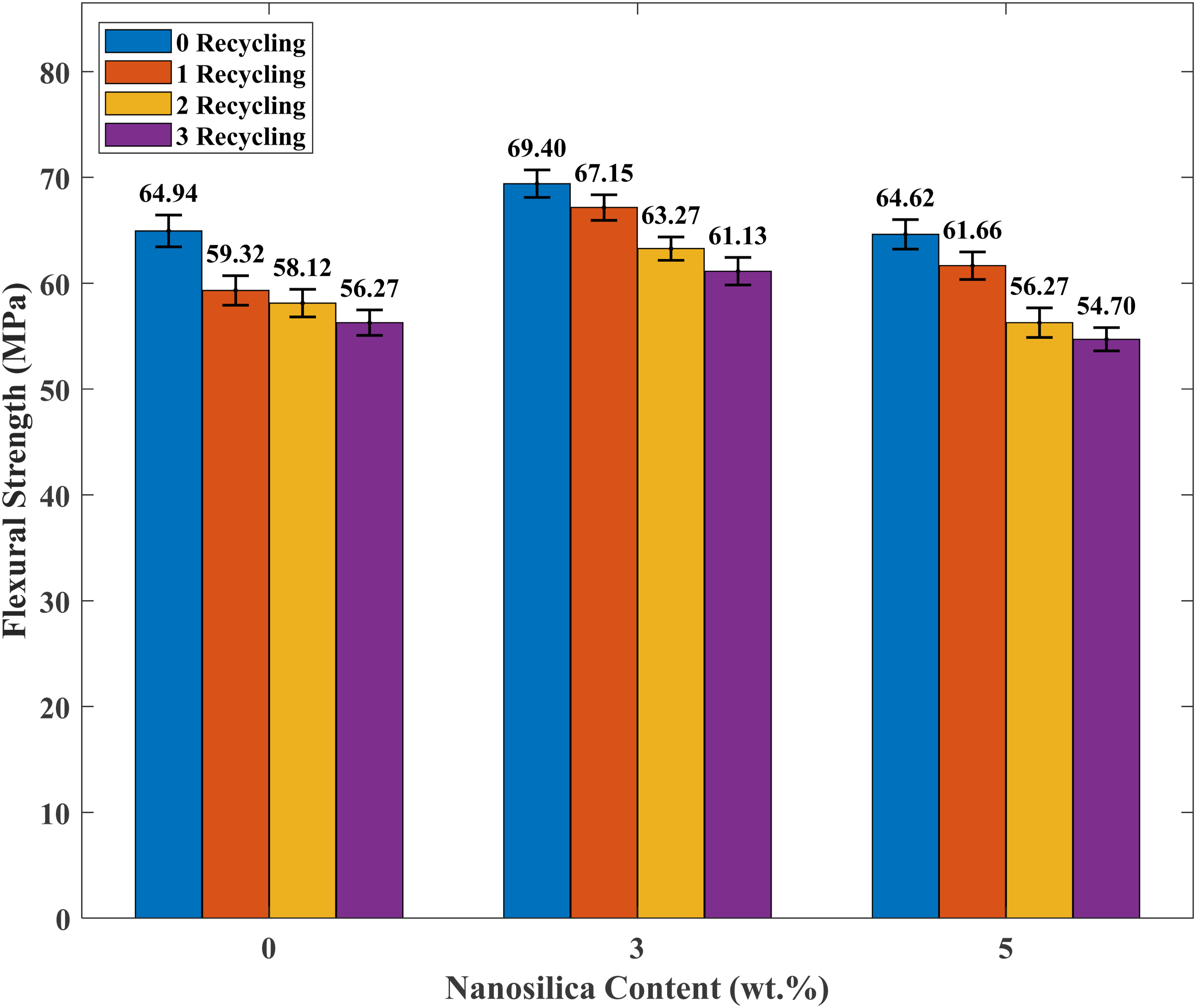
Similarly, Figure 5 demonstrates that the flexural modulus exhibited a similar response. Increased PP recycling reduced the modulus, while the incorporation of nanosilica up to 3% improved it, beyond which a decrease was observed. The minimum flexural modulus corresponded to the composite made from three-times recycled PP without nanosilica, and the maximum was attained using virgin PP with 3% nanosilica. These congruent trends in flexural properties arise from the same underlying mechanisms governing tensile behavior: the degradation of polymer chains with repeated recycling diminishes matrix integrity, while nanosilica at optimal dispersion (3%) reinforces the composite through enhanced stress transfer and restraint of polymer chain mobility.11,12 Conversely, the decline at 5 wt% nanosilica follows the same trend observed in tensile properties, consistent with the dispersion-agglomeration transition behavior discussed above. Thus, the optimal flexural performance is achieved by minimizing polymer degradation and employing a well-dispersed, moderate loading of nanosilica. Flexural modulus of composites at different nanosilica contents and PP recycling cycles.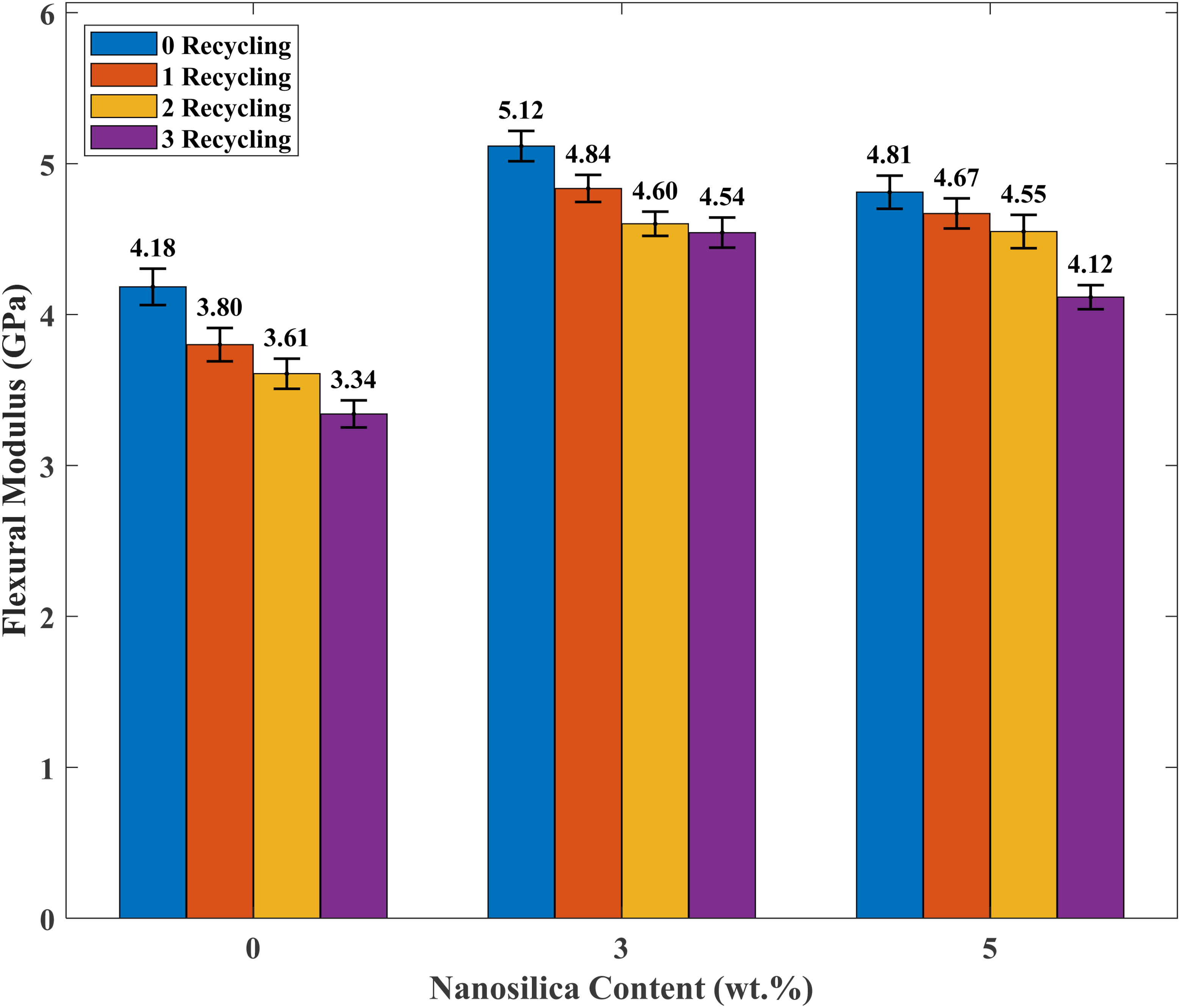
Impact properties
As presented in Figure 6, the notched impact strength of the composites exhibited a distinct yet explainable trend in response to the experimental variables. Contrary to the tensile and flexural properties, impact strength decreased with both increasing PP recycling cycles and with the addition of nanosilica across all tested levels (0%, 3%, and 5%). The lowest impact resistance was observed in the sample containing 3% nanosilica and three-times recycled PP. In contrast, the highest toughness was recorded for the composite made from virgin PP without any nanosilica addition. Impact strength of composites at different nanosilica contents and PP recycling cycles.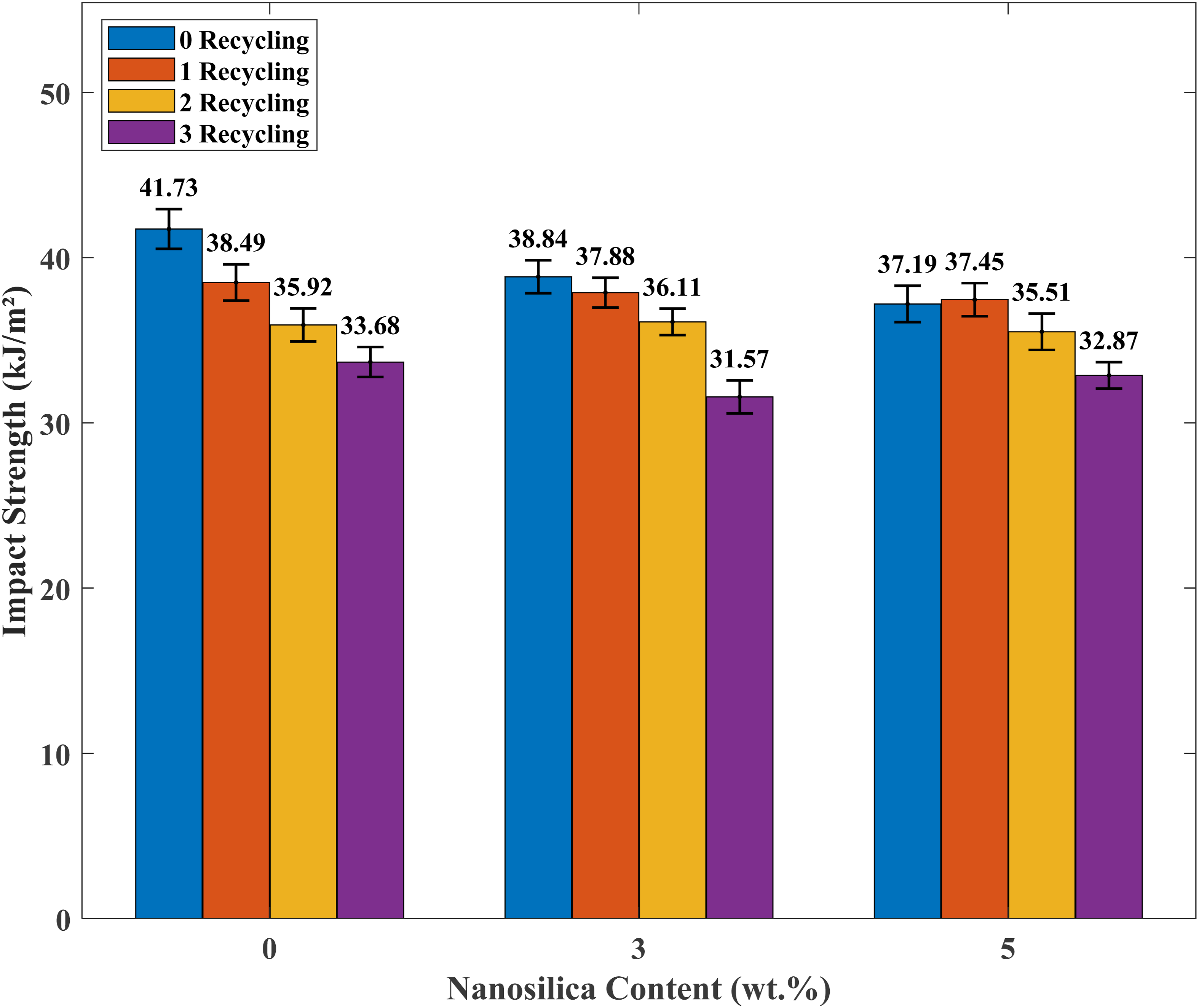
This behavior can be attributed to the fundamental mechanisms of energy absorption in polymeric composites. While nanosilica particles enhance stiffness and strength at optimal loadings, they simultaneously restrict polymer chain mobility, a critical mechanism for dissipating impact energy through plastic deformation.11,17 These stiffening and embrittling effects are compounded by the reduced molecular weight and chain flexibility resulting from repeated PP recycling. Consequently, the combined detrimental effects of matrix degradation and nanoparticle-induced embrittlement lead to a pronounced reduction in impact toughness, even at nanosilica loadings that improve quasi-static mechanical properties.
Thermal properties
Flammability behavior- limiting oxygen index (LOI)
As detailed in Figure 7, the Limiting Oxygen Index (LOI) of the composites showed a clear and positive response to the incorporation of nanosilica. The LOI value increased consistently with higher nanosilica content, rising from 17.5% for the sample with 0% nanosilica to 20.1% for the composite containing 5% nanosilica, when using virgin PP. Regarding the effect of PP recycling cycles on flammability, the results indicated that increased recycling negatively influenced the LOI. Although the primary factor governing flame retardancy was nanosilica content, matrix degradation due to repeated processing also played a discernible role. This reduction can be attributed to the lower molecular weight and reduced melt viscosity of recycled PP. These factors may impair the formation of a coherent and stable char layer during combustion. The degraded polymer chains are less capable of supporting the development of an effective protective barrier, thereby slightly compromising the flame-retardant efficiency of the nanosilica. Limiting Oxygen Index (LOI) of composites at different nanosilica contents and PP recycling cycles.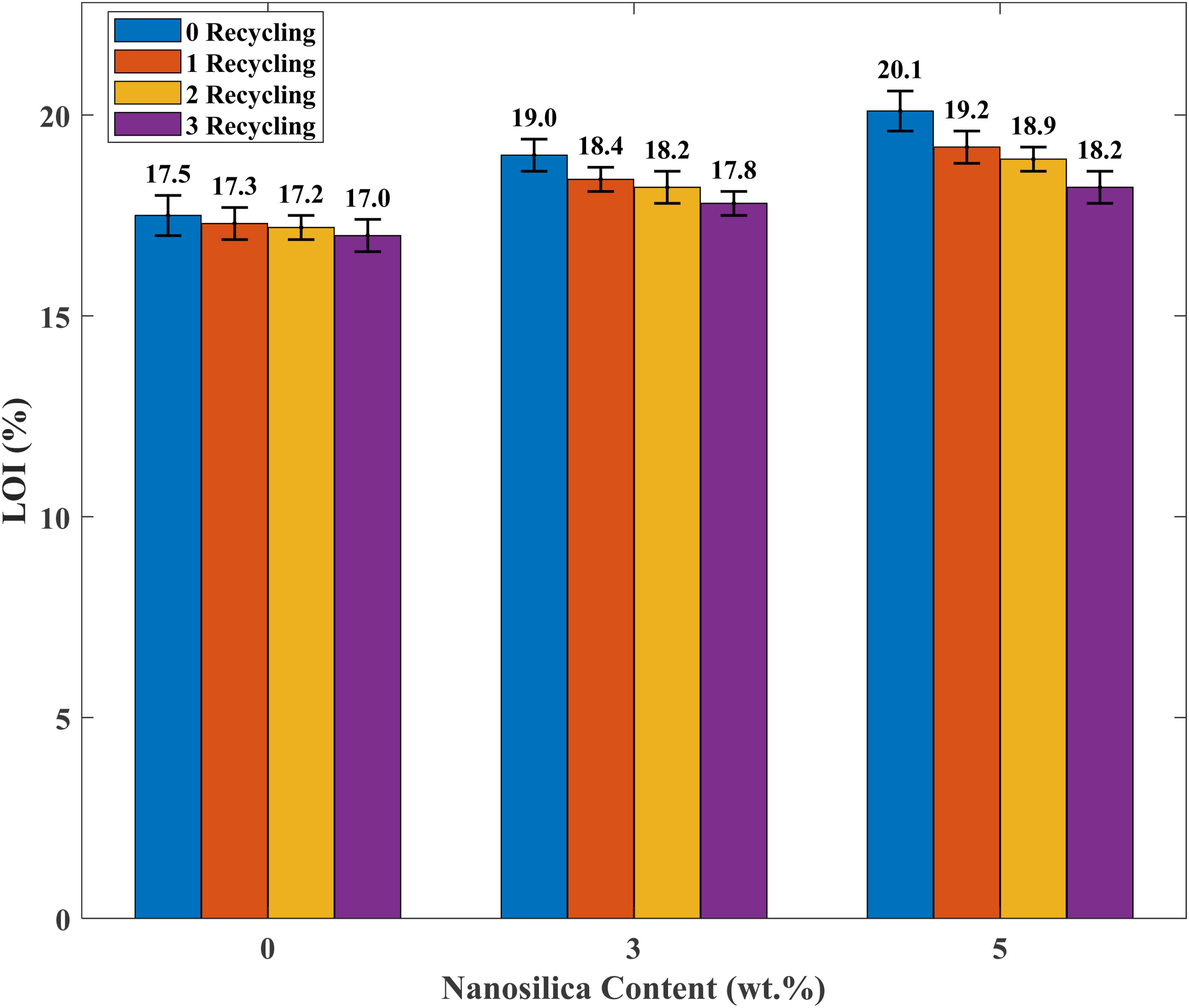
This trend indicates a significant improvement in flame retardancy with nanosilica addition, while also revealing a modest detrimental effect of polymer recycling. As seen in Figure 7, the highest resistance to ignition was achieved in the sample with 5% nanosilica and virgin PP, while the lowest was observed in the composite without any nanosilica addition, regardless of recycling history. Among recycled samples without nanosilica, the LOI values remained relatively stable around 17.5%, suggesting that recycling alone, without nanofiller reinforcement, does not substantially alter the inherent flammability of the polymer matrix. The enhancement in fire performance with nanosilica addition is consistent with the protective barrier mechanism extensively documented in the literature.14–16 As reported in previous studies using electron microscopy of combustion residues, nanosilica particles migrate to the surface during combustion and form a silicate-rich char layer that acts as a thermal insulator and mass transport barrier. Our LOI results, increasing from 17.5% to 20.1% at 5 wt% nanosilica, align with this established mechanism. However, direct validation of char morphology (e.g., SEM of residues) was not performed in this retrospective study. Consequently, a higher concentration of oxygen in the surrounding atmosphere is required to sustain combustion, which is directly reflected in the increased LOI values. However, the efficacy of this mechanism is somewhat diminished in highly recycled matrices due to polymer degradation, which may lead to a less cohesive char structure. This demonstrates the effectiveness of nanosilica as a flame-retardant filler in wood-plastic composites, improving fire safety without the use of halogenated additives. It also highlights the importance of considering matrix quality when designing flame-retardant formulations for recycled materials.
Thermal stability
As demonstrated in Figure 8, thermogravimetric analysis (TGA) revealed that increasing nanosilica content consistently enhanced the thermal stability of the composites, evidenced by higher residual ash values. For composites with virgin PP, residual ash increased from 6.29% at 0% nanosilica to 9.27% at 3% and further to 10.46% at 5% nanosilica. This improvement is consistent with the literature-reported mechanism of char formation,14–16,19 wherein nanosilica promotes the development of a thermally stable residue that acts as a barrier against further degradation. Higher residual ash values (Figure 8) are commonly interpreted in the literature as indirect evidence of such char formation, though direct morphological analysis of the residue (e.g., SEM of TGA remnants) was beyond the scope of this study. The influence of PP recycling on thermal stability varied with nanosilica content. For composites without nanosilica, repeated recycling caused a modest decline in residual ash from 6.29% to 5.81%, attributed to reduced molecular weight and lower melt viscosity of the degraded matrix, which marginally affects char formation during thermal decomposition. Residual ash content from TGA analysis of composites at different nanosilica contents and PP recycling cycles.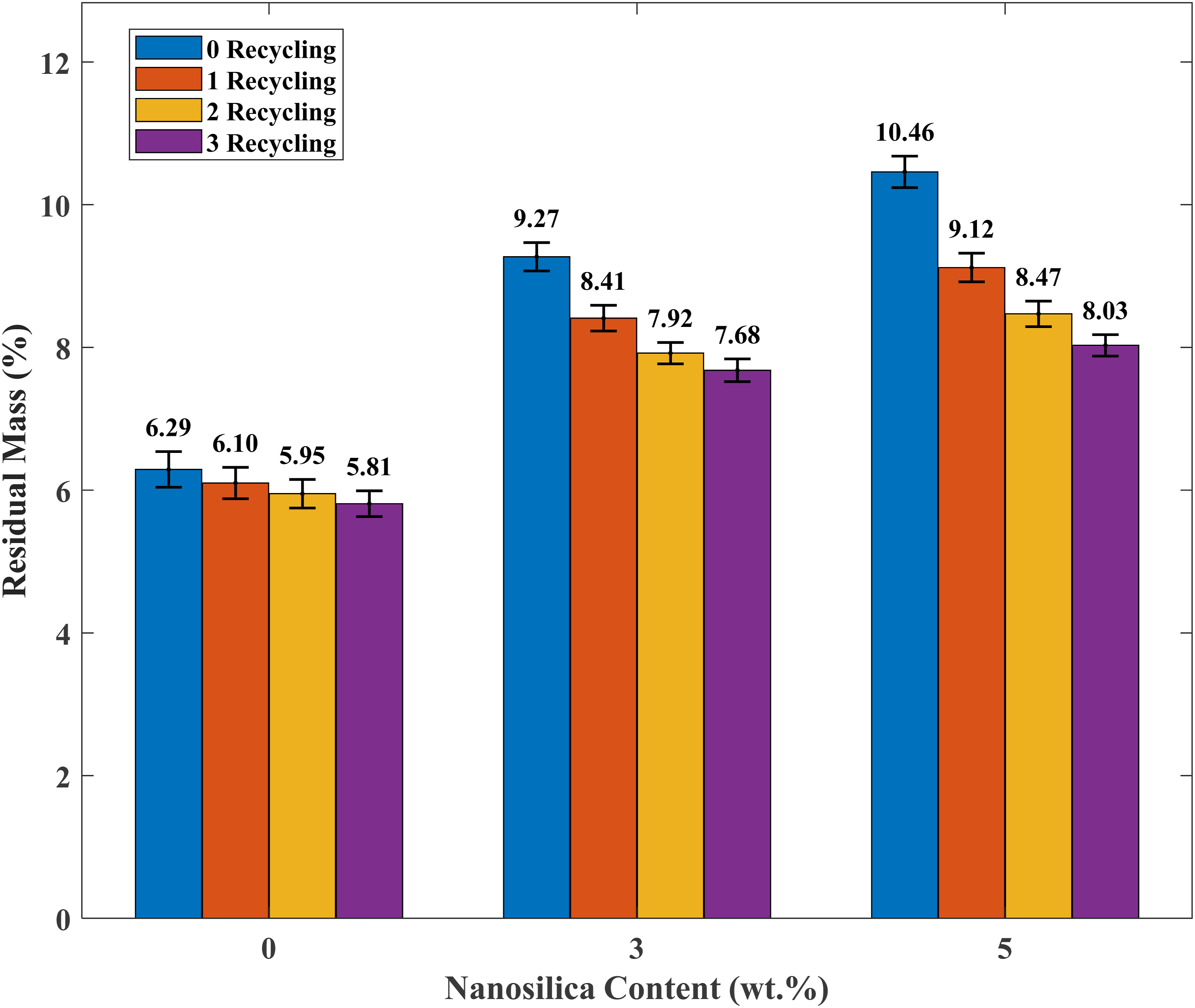
For composites containing 3% nanosilica, residual ash decreased substantially from 9.27% to 8.41% after one recycling cycle, then further declined to 7.68% after three cycles. This sharper decline is due to the first recycling cycle severely compromising the polymer’s ability to interact effectively with nanosilica, hindering the formation of a stable inorganic-organic hybrid char structure.
For composites containing 5% nanosilica, residual ash dropped from 10.46% to 9.12% after one cycle, reaching 8.03% after three cycles. This sharper decline indicates that nanosilica agglomeration (as discussed in the 'Tensile Properties' section) disrupts the continuity of the char layer, reducing its protective efficiency in degraded matrices. This diminished thermal stability enhancement at 5 wt% nanosilica, despite the higher nominal filler content, is consistent with the dispersion-agglomeration transition reported in the literature.29,30 When agglomeration occurs, the effective surface area available for char formation is significantly reduced, and the protective barrier layer becomes discontinuous, compromising thermal performance compared to a well-dispersed system at lower loading. Notably, even thrice-recycled composites with 5% nanosilica maintained higher thermal stability (8.03% ash) than virgin composites without nanosilica (6.29% ash), confirming that even in a degraded matrix, nanosilica provides substantial thermal protection, albeit diminished.
Statistical analysis
Results of two-way ANOVA for mechanical and thermal properties.
Significance codes: ***p < 0.001; **p < 0.01; *p < 0.05; ns = not significant (p ≥ 0.05).
The analysis reveals that nanosilica content had the strongest effect on all properties (p < 0.001 for tensile, flexural, impact, LOI, and TGA), confirming its dominant role. Recycling cycles also significantly affected mechanical properties (p < 0.01) and marginally influenced LOI (p < 0.05), consistent with MFI increase and molecular weight degradation. The interaction between recycling cycles and nanosilica content was significant (p < 0.05) for tensile, flexural, and TGA properties, indicating that the effectiveness of nanosilica depends on the degradation state of the PP matrix. This interaction was not significant for impact strength and LOI (p > 0.05), suggesting these properties are dominated by main effects.
Conclusion
This study systematically investigated the combined effects of polypropylene recycling cycles (0–3 times) and nanosilica content (0–5 wt%) on the properties of OCC-reinforced wood-plastic composites. The novelty lies in evaluating the ternary system, addressing how progressive matrix degradation influences nanosilica efficacy in a complex composite. The key findings and innovations are as follows: • The addition of 3 wt% nanosilica optimally enhanced tensile and flexural properties, while 5 wt% caused deterioration, a trend consistent with the dispersion-agglomeration transition reported in the literature, establishing an optimal loading threshold for this ternary system. However, a trade-off exists between stiffness enhancement and impact resistance, nanosilica progressively reduced impact strength across all recycling cycles due to restricted polymer chain mobility and stress concentration effects. • Nanosilica proved highly effective as a halogen-free flame retardant, significantly enhancing LOI values and demonstrating that fire safety can be imparted to recycled composites without toxic additives. • Remarkably, even thrice-recycled composites containing 5% nanosilica exhibited superior thermal stability compared to virgin composites without nanosilica, confirming that nanofiller reinforcement can partially restore the thermal properties degraded by recycling, a key finding for circular economy applications. • Nanosilica effectiveness strongly depends on matrix quality, with the sharpest property declines occurring after the first recycling cycle, highlighting the importance of minimizing initial degradation in recycled feedstocks.
These findings establish fundamental structure-property relationships for ternary recycled composites and provide a scientific foundation for engineering high-value sustainable materials from post-consumer waste, contributing to circular economy objectives by transforming degraded polymers into advanced engineering products.
Footnotes
Acknowledgement
The authors declare that there are no acknowledgments to be made.

Ethical considerations
This research adheres to ethical guidelines for research and publication. The study was conducted in accordance with relevant institutional and national ethical standards.
Author contributions
•
•
Funding
The authors received no financial support for the research, authorship, and/or publication of this article.
Declaration of conflicting interests
The authors declared no potential conflicts of interest with respect to the research, authorship, and/or publication of this article.
Data Availability Statement
Data sharing not applicable to this article as no datasets were generated or analyzed during the current study.