







Abstract
States endowed with valuable lootable natural resources tend to experience longer armed conflicts, more intense fighting in extractive regions and face a higher risk of recurring conflict than states without such resources. At the same time, many states defy resource-fueled conflict traps and set up institutional arrangements that seem to alleviate the risk of recurring conflict. However, policy makers and academics alike lack a sound understanding of the link between postconflict stabilization and strategies of resource management that often escape the paradigm of “good resource governance.” This article contributes to the questions of how to conceptualize diverse institutional arrangements in the resource sector and how to link these emerging institutions to postconflict stabilization. I develop a theoretical framework that predicts the risk of recurring armed conflict based on lootable resource management strategies and conditioning factors. The framework is then tested on a unique event history dataset. Results support the stabilizing effects of inclusive and publicly accountable modes of resource management as advocated for by proponents of “good resource governance.” Alternative resource management strategies either increase the risk of conflict recurrence or interact with other variables, changing the prospects of postconflict stability in important ways.
Do certain kinds of strategies of postconflict resource management contribute to durable stability after conflict related to lootable natural resources ends? Despite the large body of research linking lootable resources to longer lasting conflicts, more intense fighting in the extractive region, or an overall increased risk of recurring armed conflict (Ross 2003; Fearon 2004; Lujala, Gleditsch, and Gilmore 2005; Bellows and Miguel 2009; Buhaug, Gates, and Lujala 2009), our understanding of postconflict resource management remains limited, preventing a general assessment of the effectiveness of resource management policies. While much of the academic and policy debates tend to be constrained to “good resource governance” 1 instruments, diverse examples of resource management including repressive industrialization and marginalization of small-scale miners in Angola, tolerance toward nonstate actor’s deep involvement in the extractive sector in parts of Burma, or provision of public goods by corporate actors in Democratic Republic of Congo’s (DRC) Katanga or Kasai illustrate the wide array of forms that postconflict resource management can take. This article develops a comprehensive theoretical framework that predicts the risk of conflict recurrence based on the bandwidth of resource management strategies in the hopes of overcoming some of the current limitations.
The argument proceeds in three steps. First, I review the existing literature on causal links between lootable natural resources such as alluvial diamonds, artisanally 2 produced minerals, timber, and drugs and conflict recurrence. Previous research has advanced a multitude of motive- and opportunity-based causal mechanisms that connect resource production with the risk of conflict onset. Translating these mechanisms into the context of postconflict political order illuminates how states endowed with lootable resources can get trapped in resource-fueled conflict.
Second, I propose a framework of postconflict resource management. The framework assumes that the predominant aim of postconflict resource management is the disruption of resource–conflict links in order to attenuate the risk of conflict recurrence. 3 I conceptualize the spectrum of available resource management options along the dimensions of (ex-)rebel inclusion into resource-related decision-making and the distribution of resource-generated costs and benefits according to private or public interest. The resulting four ideal-type resource management strategies highlight the diversity of institutional arrangements in postconflict resource sectors that is often overlooked in current policy and academic debates.
Third, I test the theory on a unique dataset of postconflict lootable resource management from 1945 to 2013. Results suggest that policies advanced by good resource governance advocates contribute to postconflict stability while other strategies show mixed results; however, the overwhelming majority of postconflict settings is characterized by institutional arrangements that diverge from the internationally acclaimed ideal. In terms of policy, findings underline the importance to accept ambiguities in postconflict stabilization rather than advocating for one single pathway of postconflict resource management that remains an elusive ideal in many settings.
Lootable Resources and Postconflict (In)stability 4
While it has repeatedly been argued that resource scarcity is a potential source of armed conflict, robust and consistent evidence on this link is limited (see Koubi et al. 2013 for a review of existing scholarship). This article focuses on the more established relationship concerned with consequences of resource abundance and dependence as opposed to resource scarcity. Resource management in settings of resource scarcity likely follows a different logic than resource management in abundant or dependent settings that is beyond the scope of this article.
Causal Mechanisms
Drawing on a rich literature on mechanisms linking high-value resources with patterns of conflict (see, for instance, Ross 2004, 2012; Humphreys 2005; Weinstein 2005; Basedau, Mähler, and Shabafrouz 2014), I propose a number of mechanisms linking lootable resource endowment to recurring conflict (see Figure 1). The mechanisms can be grouped in opportunity-based and motive-based mechanisms, some of which operate directly and some indirectly through their effects on state or economic institutions.
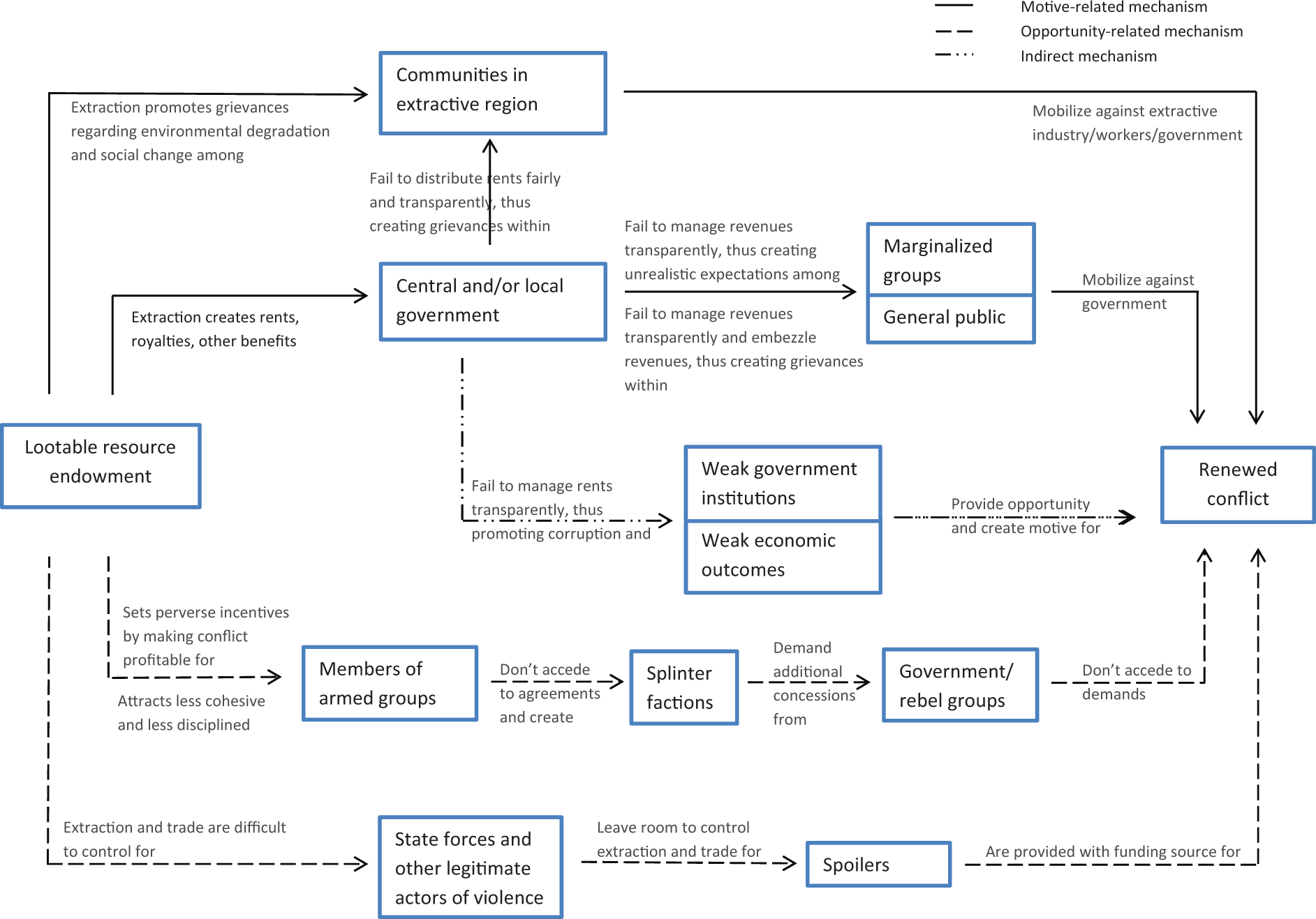
Mechanisms linking lootables with renewed armed conflict.
Direct motive-based mechanisms occur when real or perceived group-based grievances result from resource extraction or the distribution of rents. A number of negative externalities affecting local communities arise with the discovery of high-value natural resources that might provoke (renewed) armed conflict. Contentious land rights, lack of compensation to traditional landowners, environmental degradation, lack of employment of locals, or an influx of foreigners into the community all provide grounds for conflict emerging between local communities and extractive actors or local government (United Nations Environment Programme 2009; United Nations Development Group 2013). Additionally, when such localized problems coincide with an ethnic minority living in the area of production, potential for secessionist or overall ethnic conflict is on the rise (Sorens 2011; Wegenast and Basedau 2014). In postconflict settings, the salience of these motive-based resource–conflict links increases as extractive activities often provide the major source of income to state and citizens alike.
Beyond negative impacts of the extraction process on local communities, the intransparent or insufficient redistribution of revenues from resource production presents another challenge. If expectations about redistribution to local communities bearing the brunt of extraction costs are not met, resistance against government or extractive companies becomes likely. Similar grievances can arise among other groups systematically excluded from the goods generated from resource extraction, particularly where decisions on resource-generated public goods provision are not communicated transparently. Disappointed hopes and perceptions of an unfair distribution of costs and benefits create a powerful motive for challenging the government again and again (Hartzell and Hoddie 2007; Binningsbø and Rustad 2012).
In contrast to motive-based mechanisms, direct opportunity-based mechanisms relate to resource-induced changes in private actors’ ability to wage armed conflict and their cost–benefit perceptions regarding peace or conflict. The challenge to sustain comprehensive state control over a resource that is often spread across the country, easily extractable and transportable, and highly valuable presents one of the most commonly cited conflictinducing and prolonging mechanism (Collier and Hoeffler 2004; Ross 2004; Humphreys 2005; Buhaug, Gates, and Lujala 2009). If states or state-licensed actors cannot curb resource access of nonstate armed actors, rebels dissatisfied with the postconflict arrangements are presented with a template to finance renewed conflict. In addition, those inclined to join rebel groups in settings of lootable resource endowment might at least in part be motivated by personal enrichment from resource extraction (Weinstein 2005). This salience of private gain during conflict puts strain on the postconflict economy to provide comparative benefits to ex-combatants. Additionally, armed movements characterized by weak cohesion and discipline at the onset may be unable to efficiently absorb material benefits from resource extraction, further weakening their cohesion and potentially encouraging the emergence of splinter factions challenging negotiated conflict outcomes (Staniland 2012a).
Indirect mechanisms refer to the effects of resource revenues on government and economic outputs. If a postconflict government manages to sustain control over the extractive sector and receives rents from the export of highly valuable resources, this additional income can have counterintuitive consequences. For instance, a rent-based or “rentier” government will be less reliant on a sound tax base than a state without resource rents and thus place less importance in building up an effective administrative body, resulting in dysfunctional and unaccountable state institutions (Mehlum, Moene, and Torvik 2006; Ross 1999, 2012; Beblawi 1987; Barro 1999). Also, high profits generated in the extractive sector risk crowding out other sectors potentially contributing to economic recovery or create macroeconomic problems, resulting in a lopsided economy that produces low growth rates (Sachs and Warner 1995; Ross 2012, but see Brunnschweiler 2008; Brunnschweiler and Bulte 2009). From these damaging effects on political and economic institutions follow motive as well as opportunity for renewed conflict: inefficient and unaccountable government institutions and a lack of employment provoke dissatisfaction within those groups excluded from rent distribution, while weak institutions and lack of profitable peacetime employment make renewed rebellion rational for many.
To what degree are these mechanisms unique to lootable natural resources? Motive-based mechanisms and indirect mechanisms can be at work in states endowed with any high-value resource. The redistribution of revenues, environmental damage resulting from extraction, or inefficient state institutions caused by exaggerated reliance on rents can provoke conflict in states endowed with onshore oil as much as states endowed with alluvial diamonds. In fact, for resource-related armed conflict to turn against the state, it is necessary that the government or state-licensed actors exert control over the resource or (part of) the revenues. This is more likely for nonlootable resources like oil, gas, kimberlite diamonds, or other deep-shaft minerals where extraction typically occurs though industrial and large-scale companies that are state licensed or partially state owned. Where unlicensed actors control resources and rents, grievances rooted in extraction or distribution of the resource are likely directed against these nonstate actors. Such illicit private extraction is more likely to occur with resources that are easily extracted and transported without state oversight, that is, lootable resources. Potential resource-related conflict then takes on a nonstate character that is not captured in the definitions used for this project.
Opportunity-based mechanisms, on the other hand, speak more directly to the challenges faced by postconflict governments with lootable resources. Governments face challenges to achieve and maintain full control over lootable resource extraction and export. Thus, managing potential spoiler’s access to the value chain is the crucial task after lootable resource-related conflict. This immediate pressure to address opportunity-based resource–conflict links is less prominent in contexts of nonlootable resource endowment where unlicensed resource extraction is restricted by high entry costs. 5 A connected but less immediate difference between lootable and nonlootable resources is tied to the role of small-scale extractive workers. These persons are often at the center of lootable resource-related conflicts due to their role in the extraction process. Making them less vulnerable to exploitation from armed nonstate actors is one element of resource management strategies seeking to disrupt resource–conflict links. For nonlootable resources, typically extracted with less manpower relative to capital invested, the issue of artisanal and small-scale extractive workers is less relevant to create stability after resource-related conflict.
Thus, the resource–conflict links developed here are not exclusively applicable to high-value lootable resources. However, states endowed with lootable resources face particular challenges that command attention to tailor-made resource management strategies.
There is considerable literature on the determinants and effects tools of formal resource management, such as wealth sharing (Hartzell and Hoddie 2007; Binningsbø and Rustad 2012; Ross, Lujala, and Rustad 2012), transparency initiatives (Carbonnier, Brugger, and Krause 2011; Acosta 2013), sanctions (Le Billon and Nicholls 2007; Biersteker et al. 2013), military interventions targeting resource control (Le Billon and Nicholls 2007; Le Billon 2012), or formalization in the artisanal mining sector (Le Billon and Levin 2008; Vlassenroot and Bockstael 2008; Maconachie 2009). Furthermore, some researchers have pointed to stability-inducing potential of lootable or nonlootable resource-funded cooptation or oppression (Snyder 2006; Basedau and Lay 2009; Fjelde 2009).
Despite this growing body of literature on formal tools of resource management, evidence on the effectiveness of these measures in ending armed conflict and stabilizing postconflict situations is mixed. Many studies lack a clear theoretical underpinning that connects resource management to resource–conflict links. Often, the implementation process is not taken into account, making it difficult to distinguish between ineffective resource management tools and defective implementation of beneficial tools (Rustad and Binningsbø 2012). Alternative resource management policies are comparatively underresearched. Overall, there is a lack of theoretical underpinning that unites the spectrum of resource management policies under a general framework that reaches beyond good resource governance.
This article therefore develops a theoretical framework of postconflict resource management that explicitly connects to previous research on the resource–conflict nexus. It proposes four ideal-type strategies of resource management that link to varying prospects of postconflict stability and go beyond the good resource governance paradigm. The data collected to test the framework report de facto rather than de jure postconflict resource management policies after lootable resource-related armed conflict, enabling us to draw conclusions on the effect of implemented rather than planned resource management strategies. Lastly, theory and analysis take into account potentially biasing factors that influence both resource management strategy implementation and postconflict stability.
The Spectrum of Postconflict Lootable Resource Management
I group postconflict resource management tools into four ideal-type categories: exclusionary, shared, transformative, and paternalistic strategies. These types are developed along two dimensions: the degree to which nonstate armed actors have access to decision-making relating to the resource sector (power sharing) and the degree to which the costs and benefits of resource extraction are distributed according to private or public interests (wealth sharing). In this context, power sharing refers to the degree to which (ex-)rebels are able to influence decisions that impact one or several aspects of the resource value chain, without necessarily referring to wider institutional arrangements as proposed by Lijphart (1999) or Hartzell and Hoddie (2003, 2007, 2015). Wealth sharing refers to the provision of resource-generated public goods (such as investment in infrastructure and public services but also the removal of negative externalities of extraction through means of regulation benefiting the public) rather than private goods (such as high-level corruption benefiting the few). Accordingly, wealth sharing refers to a publicly sanctioned distribution of resource-related costs and benefits and uses “the public” rather than rebel groups as a reference group, thus being distinct from the power sharing dimension. 6 Conceptually, I treat these dimensions as dichotomies (inclusive/exclusive; private/public). Empirically, these dimensions are continuous. The distinctions made in Table 1 should thus rather be understood as an analytical tool that helps us to order the fuzzy spectrum of postconflict lootable resource management strategies than a reflection of reality.
Strategies of Postconflict Lootable Resource Management.
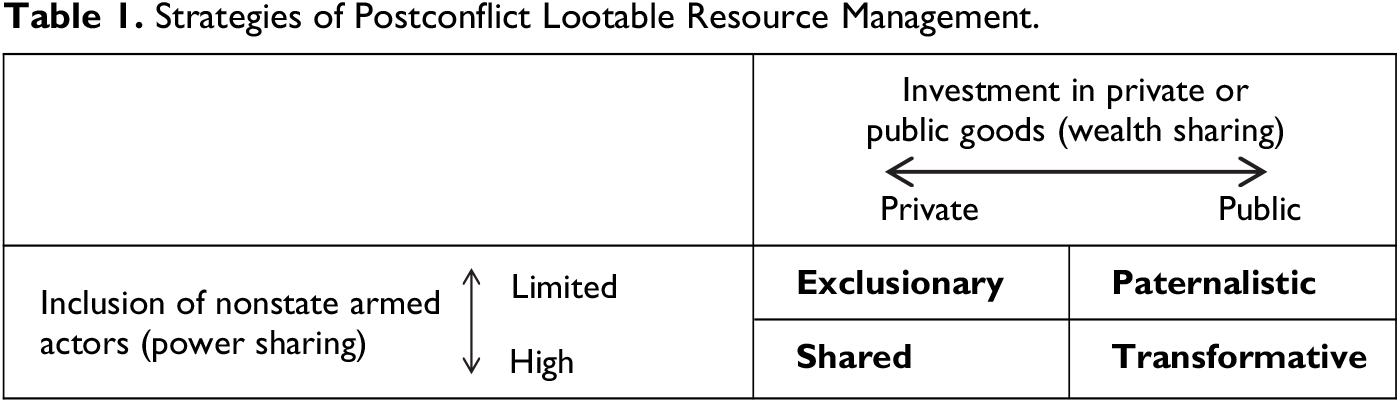

Each strategy attempts the disruption of one or several of the resource–conflict links elaborated above. After describing each ideal-type strategy schematically and linking the strategy to the resource–conflict links detailed above, 7 I elaborate on the strategy’s likely impact on postconflict stability. The discussion also addresses potentially biasing factors that influence the likelihood of implementation and postconflict stability.
Exclusionary Strategies
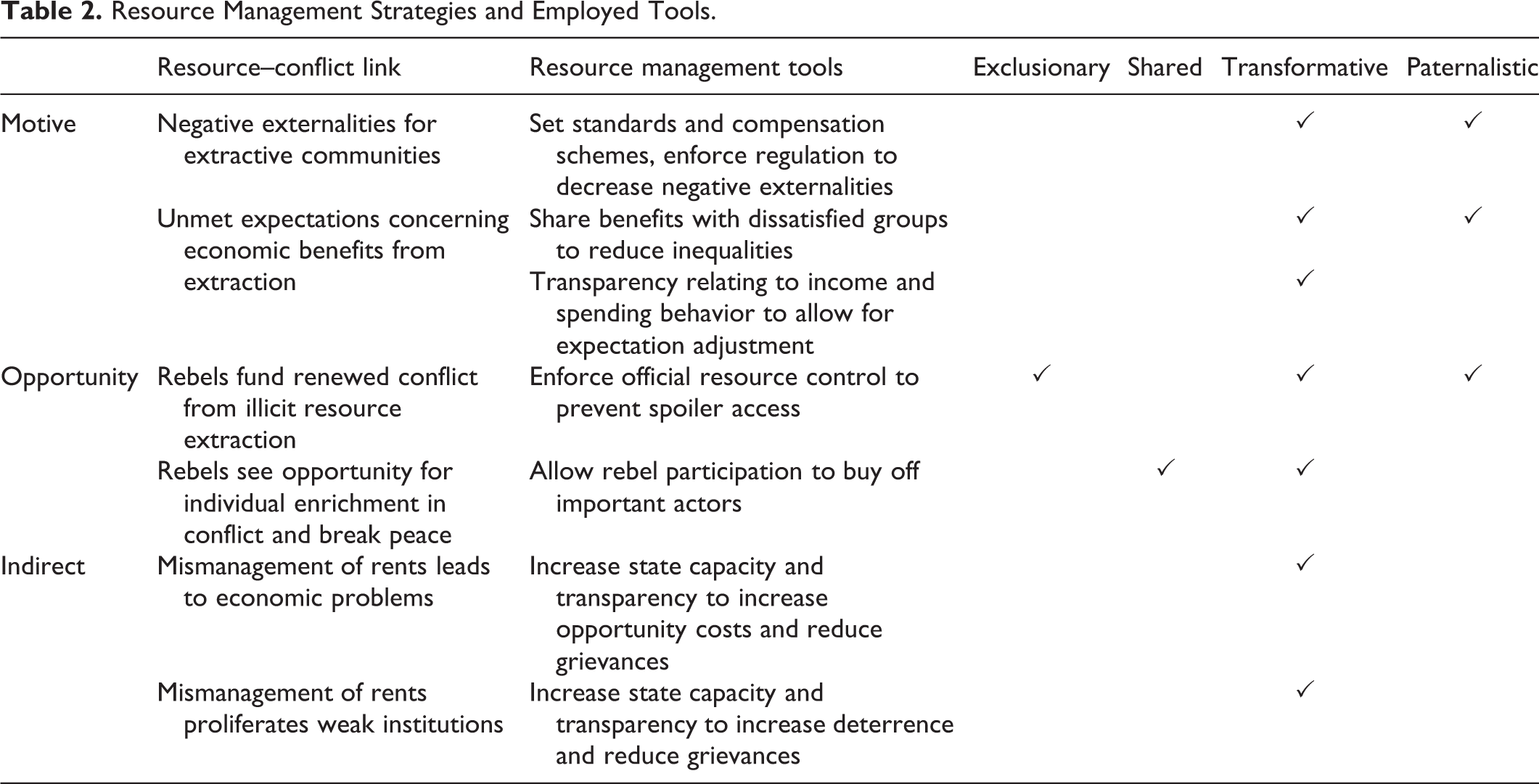
Exclusionary strategies of lootable resource management are characterized by a limited inclusion of former rebels into resource management and the provision of resource-generated private goods. This style of resource management focuses on disrupting opportunity-based resource–conflict links by preventing nonstate actor’s access to the resource value chain without attempting any additional reforms targeting public goods provision or stakeholder participation (cf. Table 2 at the end of this section). I call this strategy exclusionary because it is rooted in widespread exclusion of groups from resource-related decision-making and access to goods resulting from extraction. In order to establish and ensure postconflict government control over the resource, exclusionary strategies emphasize industrialization and militarization of lootable resource extraction at the expense of more difficult to control small-scale miners, loggers, or farmers. Exclusionary strategies rest on corrupt practices of resource extraction and distribution of costs and benefits, resulting in an uneven distribution in all aspects. A pronounced example of such a strategy may be found in Angola’s diamond management strategy after defeating National Union for the Total Independence of Angola (UNITA) in 2002.
Resource Management Strategies and Employed Tools.
Exclusionary Postconflict Stability
What are the implications for conflict recurrence we can derive from this highly imbalanced strategy? The strategy clearly favors the state-affiliated side and its allies at the expense of remaining rebels and the general public. In order to translate into postconflict stability, an imbalanced conflict termination such as a military victory provides conditions enabling the winning side to implement exclusionary strategies without risking immediate conflict recurrence initiated by remaining excluded armed opponents. In such militarily asymmetric settings, states relying on resource-generated wealth that is distributed among specific groups and is invested in the security sector have good prospects at ensuring durable postconflict stability (Basedau and Lay 2009; Magaloni and Kricheli 2010; Colgan 2015). Thus, if the conflict ends in military victory, we are more likely to see exclusionary strategies emerge. This combination of military victory and exclusionary resource management likely translates to immediate postconflict stability.
In the long run, however, the outlook is mixed as grievances in the extractive region might manifest into organized opposition against the state. Corrupt practices relating to rent distribution could erupt into conflict through motive-related mechanisms (Le Billon 2014). Governments adapting international demands for increased transparency and participation in the resource sector may thus be better equipped to prevent the long-term challenges to postconflict instability than those governments who hold on to a pure exclusionary strategy.
The implementation of exclusionary strategies does not only depend on the form of conflict termination. The lack of participation and distribution of resource revenues toward public goods reflects an authoritarian governance style that may impact stability in a variety of ways (Jung 2012; Joshi 2013; Flores and Nooruddin 2008). The divergence of exclusionary strategies from good resource governance ideals likely reflects an absence of international influence on the postconflict regime such as peacekeeping missions or strong economic leverage which aims to influence postconflict stability as well (Fortna 2008a, 2008b; Doyle and Sambanis 2006; Savun and Tirone 2011; Nino and Le Billon 2014). The analysis below will take this endogenous character of resource management into account.
Shared Strategies
Shared management strategies seek to buy peace with the promise of granting decision-making power relating to natural resources to rebel parties while promoting opportunities for private rent-seeking to rebel elites. Such an agreement may include the award of a mining ministry to rebel leaders (cf. Sierra Leone 1999) or an offer to extract and trade resources without state oversight (cf. Burma’s strategy toward the Wa from 1988 onward). On the farthest extreme, shared resource management cements wartime territorial control into postconflict shared sovereignty (Staniland 2012b).
The intuition behind this strategy is one of economic calculation: offering postconflict resource control will increase nonstate actors’ stakes in ending the conflict and keep the peace by promising a present and future share of both, access to resource-related decision-making and the benefits from extraction while externalizing costs. Accordingly, shared management styles predominantly address opportunity-based resource–conflict links by trying to change nonstate actor’s opportunity cost (cf. Table 2). 8
Shared Postconflict Stability
Contrary to exclusionary strategies, shared strategies seek to incorporate nonstate armed actors into resource-related decision-making without imposing oversight mechanisms on their provision of resource-generated goods. Assuming that governments prefer to share rents and political control with as few actors as possible, shared resource management is a less desirable option than exclusionary management. However, conflict outcomes that do not allow for one-sided solutions—such as negotiated settlements, ceasefires, or fading out—call for more inclusive arrangements in order to prevent immediate conflict recurrence (Binningsbø and Rustad 2012). For rebels to accept the peace-for-resource offer implicit to shared strategies, they must be willing to trade political goals for economic benefits (for instance, patronage from control over a mining ministry) or agree to localized solutions (for instance, resource and other control over limited territories), at least in the short run. Shared strategies are thus a more promising strategy when rebels fight for goals such as increased regional autonomy rather than total national government control.
Given the assumption that shared strategies tend to arise in settings where the government is too weak to defeat opponents, a security dilemma arises—a weak, likely undemocratic postconflict government cannot credibly commit to future institutional stability (Walter 1997; Hartzell and Hoddie 2003). Consequently, the peace-for-resource offer loses attractiveness, putting stability at risk. Two ways out of this dilemma exist: either the government, assisted by third parties, chooses a pathway toward increased state capacity and institutional democratic assurances in the resource sector and beyond, or rebels keep standing armies in place as guarantees for future participation. The former strategy is costly to elites and international actors and evokes destabilizing tendencies in itself (Flores and Nooruddin 2008; Savun and Tirone 2011), but is potentially rewarding in the long run (see Transformative Strategies subsection). The latter strategy is risky because it undermines a state’s monopoly of force, leaving opponents with the ability to return to conflict in the future (also cf. Staniland 2012b). However, this ability can provide nonstate actors with the very assurance needed for future stability.
Similar to exclusionary strategies, shared resource management is shaped by a context that influences the prospects of postconflict stability. Apart from a balanced conflict outcome which forces states to accept power sharing in the resource sector, factors such as peacekeeping missions or the secessionist character of the previous conflict impact both resource management and post conflict stability (Sorens 2011) and will be accounted for in the analysis below.
Transformative Strategies
Transformative strategies of resource management are rooted in a commitment to inclusive and participatory resource governance that institutionalizes the inclusion of former rebels just as much as that of other affected groups and invests resource rents according to public rather than private interest. To be effective, this strategy is rooted in a wider process of postconflict democratization that supports the development of a transparent, accountable, and sustainable political culture. In general, a transformative strategy of resource management seeks to change the entire resource sector from an often opaque and informal system to a well-regulated and transparent machine that is embedded in a system of accountable and professional state institutions. This transformation focuses on the disruption of predominantly motive-based conflict–resource links with the goal to sustainably prevent resource-related conflicts in the future, but it also targets remaining opportunity-based and indirect resource–conflict links (cf. Table 2). Any postconflict setting with a multidimensional peacekeeping force present is likely to see attempts at installing transformative resource management strategies. A very pronounced example of implemented postconflict transformative resource management can be found in Liberia post-2005.
Transformative Postconflict Stability
Transformative resource management requires states emerging from violent conflict to remodel much of preexisting resource-related institutions and engage in a wider process of democratization. After civil wars, democratization as a prerequisite for transformative resource management is an unlikely outcome (Armey and McNab 2015; Hartzell and Hoddie 2015). Nevertheless, internal and external factors can contribute to at least minimalist democratization processes. If peacekeepers seek to build state capacity and accountability, it is highly likely that some transformative resource management strategy will be attempted. International actors are often present in the negotiation of settlements, sponsor much of the transition process and thus possess the clout to bring their constitutive norms to the forefront in the postconflict setting. Particularly in states that are dependent on conditional international aid, some compliance with these norms, including resource-related ones, is likely. Where intense assistance coincides with resource reform, long-term stability brought about by the comprehensive disruption of resource–conflict links becomes more likely. The analysis below must account for the elaborated potentially confounding effects of international support to postconflict governments implementing transformative strategies.
Paternalistic Strategies
The last strategy of resource management is called paternalistic due to the restrictions on nonstate armed actor participation in the resource sector while being oriented toward public interest in goods provision. We can imagine a strong postconflict regime, particularly one bolstered by military victory, determined to exclude the nonstate side from resource governance but committed to public interest investing resource rents in public goods like infrastructure or sovereign wealth funds. 9 Similarly, multinationals engaged in resource extraction may be influenced by corporate social responsibility guidelines that compel them to generate public goods for extractive communities or the wider public. Efforts at corporate paternalism could be observed in DRC’s Katanga and Kasai regions after attempted secession in the 1960s or Indonesia’s West Papua region in recent years.
Paternalistic resource management foremost addresses local motive-based conflict mechanisms by targeting communities’ concerns over the distribution of rents or the removal of negative externalities induced by resource extraction. At the same time, preventing nonstate armed actors access to the resource is a central element of paternalist strategies (cf. Table 2).
Postconflict Stability
If the government manages to restrict rebel access to the resource value chain successfully, the simultaneous distribution of public goods is highly likely to reduce the risk of motive-based conflict recurrence in the long run. Therefore, in addition to sharing exclusionary strategies’ short-term stabilizing prediction, paternalistic strategies imply long-term stability.
One potential source of postconflict instability, however, emerges in settings where corporate paternalism fills the void left by a weak state unable to provide public goods and to establish control over the resource. In such settings, renewed conflict against the state may look feasible to dissatisfied nonstate actors. Furthermore, paternalistic strategies are less reliable than other arrangements. Where public goods provision rests on voluntary commitments by private actors, there is little guarantee that the regime will remain in place. Paternalistic resource management thus runs the danger of being changed to less benevolent strategies in the long run, generating new motives for conflict.
Table 2 summarizes the ways in which each resource management strategy attempts to disrupt one or several resource–conflict links in order to increase the prospects for postconflict stability.
Analysis
This section assesses the validity of the framework of postconflict resource management just presented. For that purpose, I construct a dataset of postconflict episodes after lootable resource-related armed conflict from 1945 to 2013. As basis for this dataset, I use UCDP’s Conflict Termination data (Kreutz 2010) and Rustad and Bunningsbø’s collection of resource-related armed conflicts (Rustad and Binningsbø 2012). Drawing on additional literature, I include all postconflict episodes that followed armed conflict that was related to lootable natural resources produced in the country. For each postconflict episode, I code time-varying indicators of resource management as well as hypothesized confounding variables. In total, I arrive at sixty-six postconflict episodes. Accounting for time-varying resource management policies within each episode, the total number of resource management instances amounts to seventy-six.
Data
Data on resource management practices are not readily available and were therefore collected from a variety of sources. Sources typically include government documents relating to the sector, peace agreements, or ceasefires, non-governmental organization (NGO) reports from agencies such as Global Witness, the Natural Resource Governance Institute (NRGI), Human Rights Watch, or Amnesty International, evaluations of resource policies and practices by international organizations such as the World Bank or United Nation Groups of Experts, and academic texts. While the use of varied sources beyond peace agreements and mining codes extends resource management beyond legal mechanisms and allows the construction of de facto resource management indicators, it creates the risk of compiling incomparable data. Where possible, standardized data such as NRGI’s resource governance index were used to cross-check information. Else, coding always relied on a number of independent sources in order to ensure reliable information.
I classify resource management strategies along the two dimensions highlighted in the previous chapter (power and wealth sharing in the resource sector). Both variables range from 0 to 2, increasing in steps of 0.5. Measurement is ordinal, with higher scores indicating a more inclusive resource management and more public distribution practices. A power sharing score of 0 translates to highly exclusive decision-making in the extractive sector; a score of 2 implies full democratic decision-making. Wealth sharing score of 0 describes private allocation of costs and benefits; on the other extreme a Wealth sharing score of 2 translates to the allocation of costs and benefits according to public interest. The intermediate steps describe hybrid arrangements in either dimension. The online appendix provides a brief synopsis of resource management instances for each postconflict episode detailing coding decisions and individual sources.
Using these two dimensions of resource management as the basis, I conduct a k-median cluster analysis in order to assign instances of postconflict resource management to one of the four ideal- type resource management strategies. Based on the theoretical framework remunerated above, I impose certain restrictions onto the clusters explained in detail in the appended material.
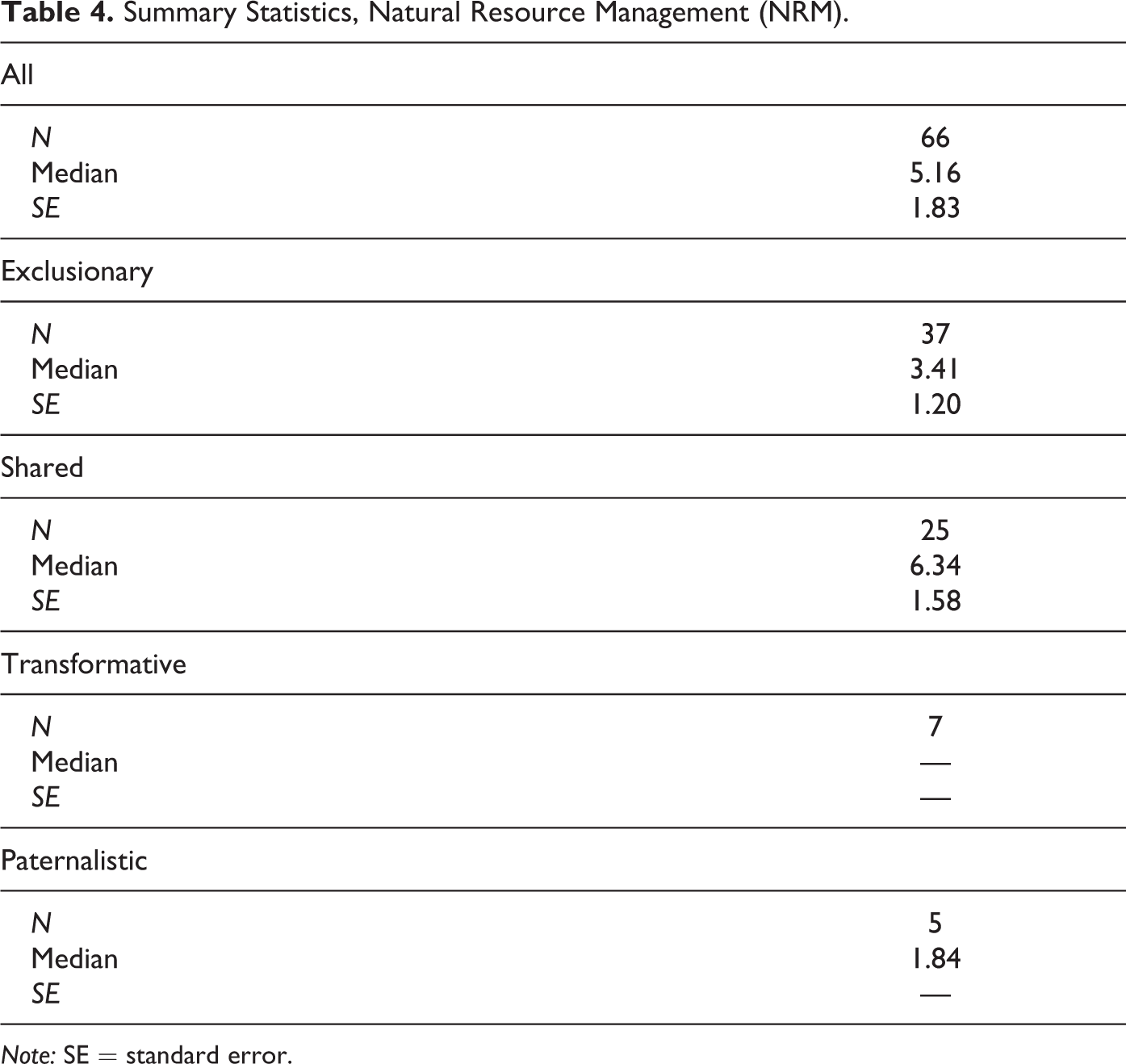
The cluster analysis leaves us with 39/76 instances of exclusionary management and 25/76 instances of shared resource management; 5/76 cases are classified as paternalistic and 7/76 are transformative. The unequal grouping across the four resource management strategies reflects the tendency of postconflict governments to implement policies that least impact their benefits from controlling the resource sector. At the same time, the grouping of cases in four distinct strategy types is somewhat arbitrary for cases that linger between categories due to the nondichotomous character of the data. Below, I therefore exploit the fine-grained character of the resource management data and step beyond clusters of resource management strategies.
The Duration of Postconflict Stability
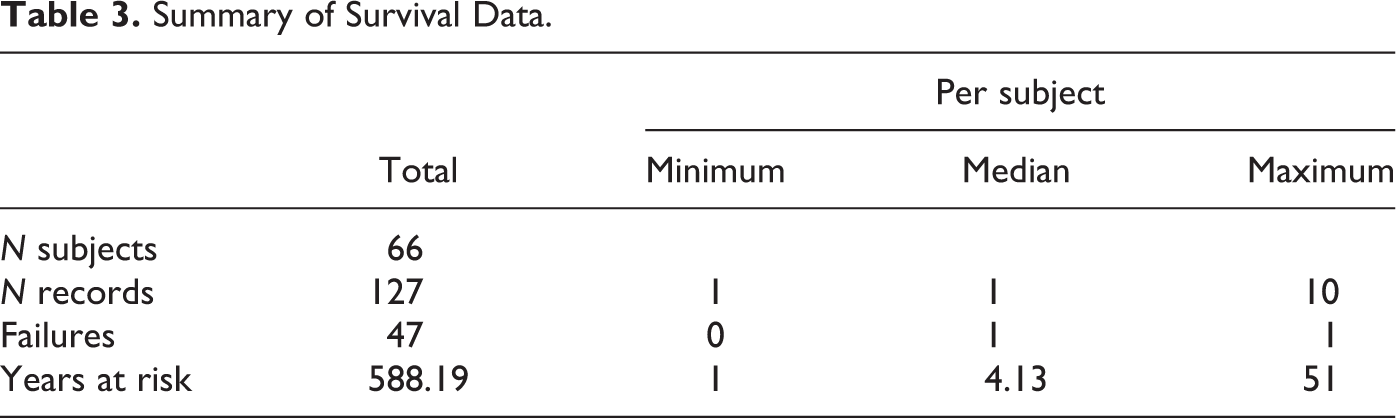
The data are transformed into survival data that record the duration of postconflict stability (the absence of armed conflict after conflict termination) until a conflict recurs or the period is censored (observation ends December 31, 2013). Tables 3 and 4 summarize key characteristics of the survival data. There are sixty-six distinct postconflict periods, of which forty-seven ended in conflict recurrence (failure). In total, the dataset contains 588 years of postconflict time. The total number of records reaches 127, reflecting time-varying resource management strategies and other time-varying covariates.
Summary of Survival Data.
Summary Statistics, Natural Resource Management (NRM).
Note: SE = standard error.
Two of the four resource management strategies analyzed do not lend themselves to a full-fledged statistical analysis due to the small number of cases. Therefore, the analysis primarily focuses on exclusionary and shared resource management strategies. For the following analysis, I use Cox proportional hazard models to assess the effects of natural resource management strategies on the stability of postconflict situations (i.e., on the duration of postconflict stability until a conflict recurs). The model equation is given by

where Resource Mgmt are vectors of resource management and X
Cov are vectors of covariates.
As discussed above, resource management strategies are endogenous to the political environment in which they are adopted, which likely also affects postconflict stability. Covariates included below reflect these confounding factors. I include conflict outcome, 10 secessionist conflict, 11 peacekeeping presence, 12 and economic independence, 13 simultaneous armed conflict involving the government during the postconflict period, 14 a measure of political regime type, 15 membership in international resource-related agreements, 16 drug production, 17 and a decade-based cubic time trend.
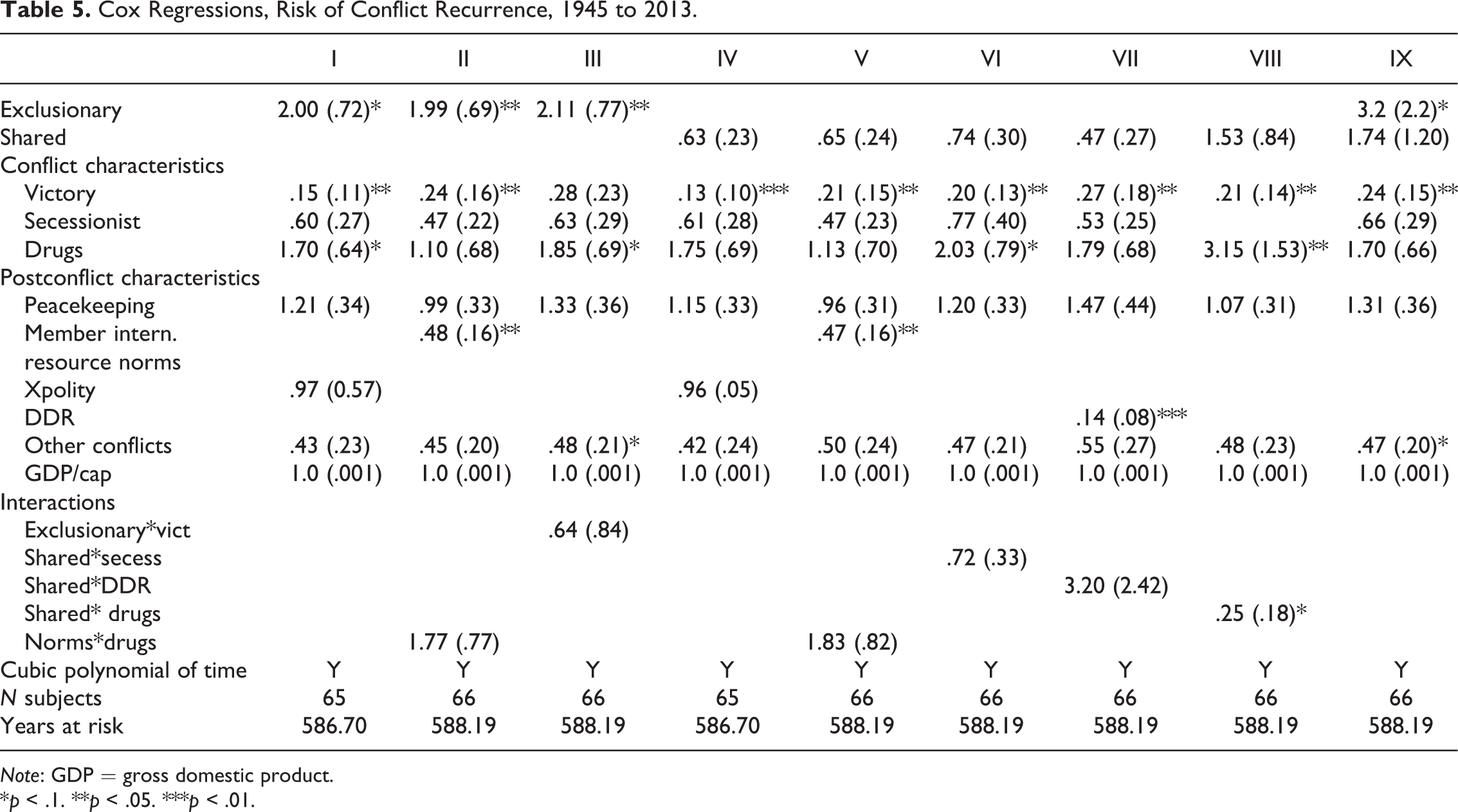
Table 5 reports the hazard ratios of the regressions. Ratios larger than 1 increase the risk of conflict recurrence, hazard ratios below 1 decrease the risk of conflict recurrence.
Cox Regressions, Risk of Conflict Recurrence, 1945 to 2013.
Note: GDP = gross domestic product. *p < .1. **p < .05. ***p < .01.
Models I through III test the effect of exclusionary resource management strategies on postconflict stability. All models point to a destabilizing effect of exclusionary management; these effects are robust to specifications using alternative measures of control variables as well as dropping postconflict episodes that were introduced by fading out. Victories reduce the risk of conflict recurrence, a finding that confirms previous research on postconflict transitions (Licklider 1995; Brandt et al. 2008; Kreutz 2010; Mason et al. 2011). Unexpectedly, exclusionary resource management does not result in more durable postconflict settings when preceded by military victories as predicted in Hypothesis 1a. Rather, postconflict governments employing exclusionary strategies face a more than double risk of renewed armed conflict compared to those employing other strategies regardless of conflict outcome. This finding is independent of event time, that is, the destabilizing effect persists independent of how much time since conflict termination has elapsed. 18 Hypothesis 1a and b are thus rejected.
Shared resource management strategies do not have any independent effect on the duration of postconflict stability, nor does an interaction with secessionist conflicts as proposed in Hypothesis 2a show any significant relationships (model VI). Hypothesis 2b proposes that implementing demobilization, disarmament, and reintegration (DDR) programs might harm the stabilizing potential of shared strategies. Model VII does not support this strong claim, but we see that shared strategies remove the stabilizing effects of disarmament reform. The implementation of DDR reforms without shared strategies improves the duration of postconflict stability, likely a reflection of stabilizing factors that also positively impacts the duration of postconflict peace. When DDR is implemented in combination with shared strategies, this stabilizing effect disappears. It is unlikely that the causal story in the theory section above is the driver of this finding, given that shared does not display any significant effect, neither alone nor conditional on DDR. Nevertheless, the hazard ratios are pointing in the direction aligned with theory, and the effect persists when excluding postconflict episodes introduced by conflict fading out.
Membership in international resource agreements significantly reduces the risk of conflict recurrence (models II and V). This may either be due to an actual causal effect of resource management agreements such as an Extractive Industries Transparency Initiative (EITI) or Kimberley Protocol (KP) membership or be due to the fact that more stable postconflict governments are more inclined to entering such agreements. The bivariate correlation between membership in resource-related agreements and exclusionary (p = .03) or shared resource management (p = .01) is quite low, calling a selection effect into question. Furthermore, logistic regressions reported in the online appendix do not report a significant correlation between resource management strategy implementation and membership. It may be indeed the case that governments entering international resource agreements are nolens volens pressured to adapt more inclusive and distributive resource management strategies which in turn stabilize the postconflict order. The effect is exclusive to postconflict situations without drug production. The illegal character of drugs reduces the impact of international agreements on resource governance in this realm, making the effect much less pronounced than with licit resources.
Lastly, model IX attempts to test all strategies in the same regression. While the bivariate correlation between exclusionary and shared resource management strategies reaches a high level (p = −.72) that may impact the reliability of results, such a comprehensive test with paternalistic and transformative strategies as reference category provides a cautionary glimpse at the framework in its entirety. Results do not differ substantially from those of singular models I–VIII: exclusionary strategies significantly increase the risk of conflict recurrence while shared strategies show no clearly discernible effect on the duration of postconflict stability. The directions and significance levels of covariates remain the same with the exception of the effect of other conflicts within the state’s border.
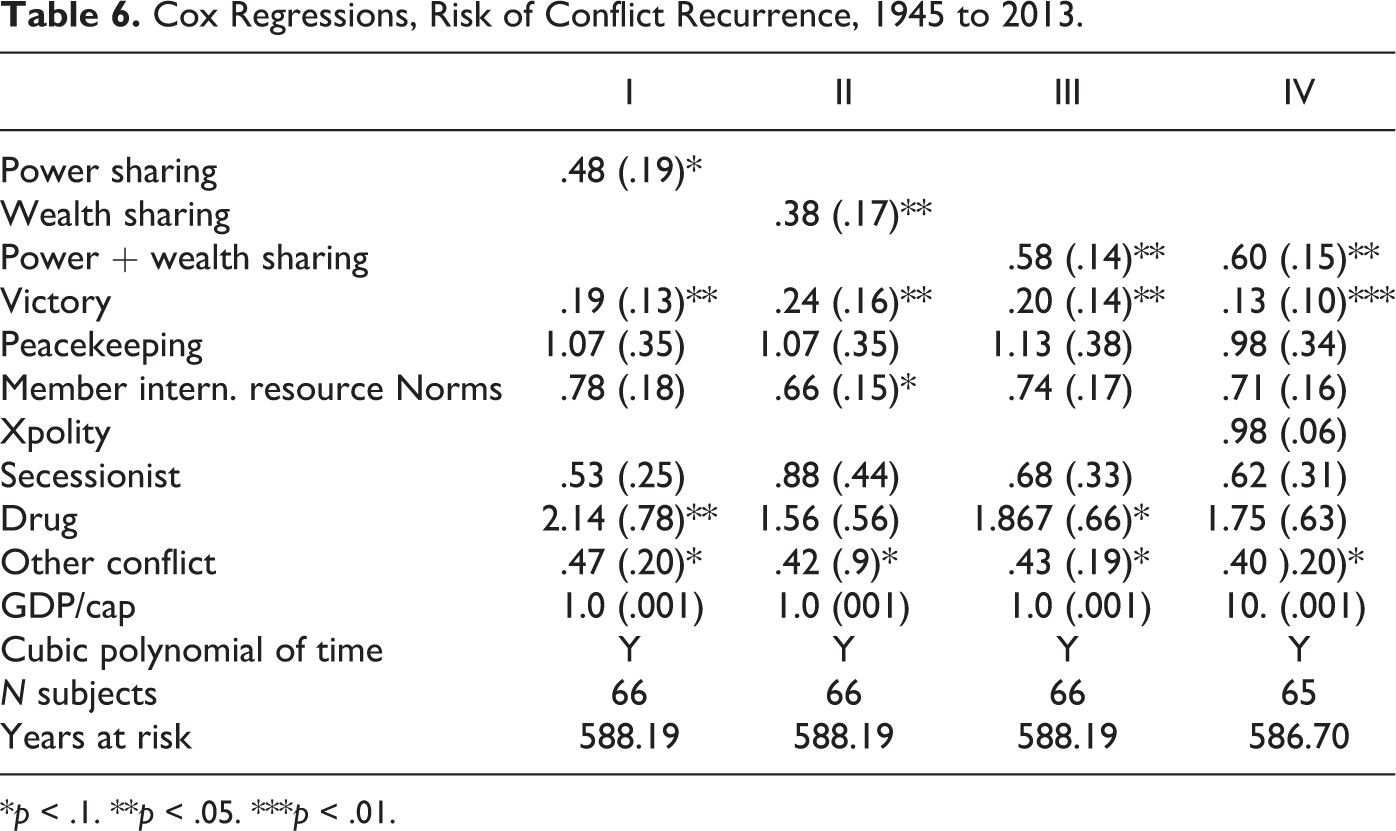
Table 6 explores resource management beyond ideal types, further corroborating the destabilizing effects of limited inclusion and lack of public goods provision. Moving from limited toward higher levels of power sharing in the resource sector reduces the risk of experiencing recurring conflict, just as moving from private toward public goods provision. Alternative model specifications with squared terms of each indicator are not significant (results not reported).
Cox Regressions, Risk of Conflict Recurrence, 1945 to 2013.
*p < .1. **p < .05. ***p < .01.
Model III and IV combine both resource management dimensions in an additive operation. While this crude measure does not allow us to distinguish between paternalistic and shared resource management practices, it still demonstrates the stabilizing effect of moving from exclusionary strategies toward a more transformative framework, providing more support to Hypothesis 3. Figure 2 plots the hazard functions estimated in model III in Table 6 for three values of the combined resource management indicators while keeping all other variables fixed at their mean. The three values displayed roughly display exclusionary management (incl + distr = 0), shared or paternalistic management (incl + distr = 1.5), and transformative management (incl + distr = 3). We see that the baseline hazard of conflict recurrence drops to almost zero after about twelve years of postconflict stability. Resource management strategies based in exclusion and private cost and benefit allocation experience a consistently higher risk of recurrence; inclusive and distributive strategies face a lower hazard of recurrence.
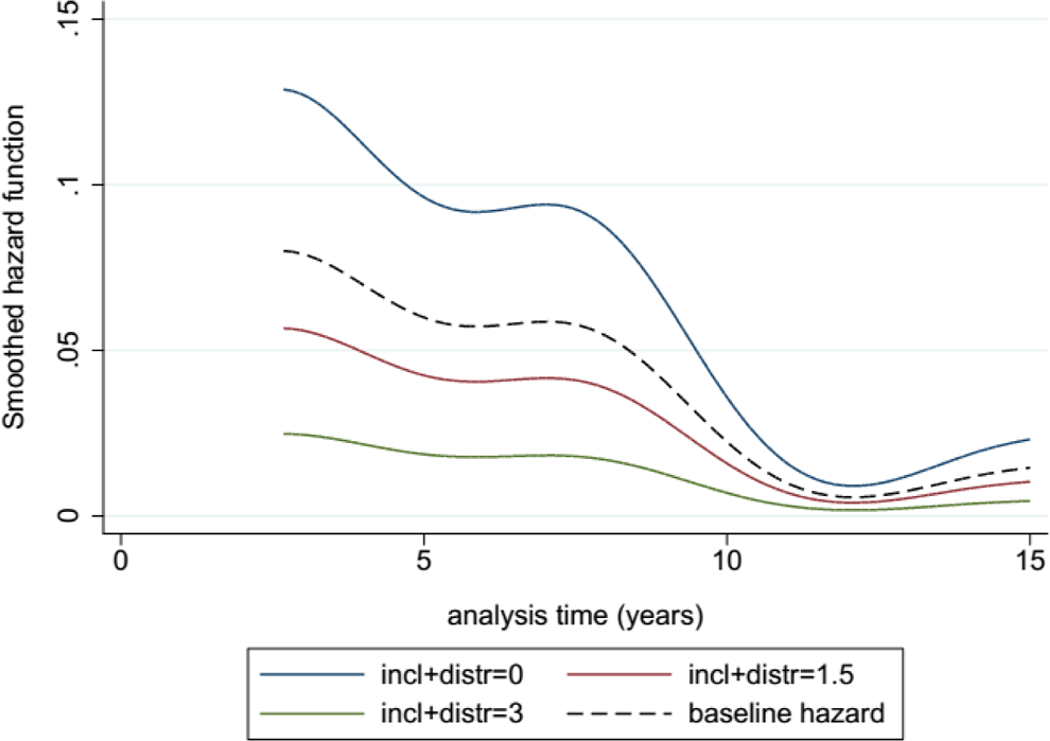
Estimated hazard functions, power + wealth sharing.
Implications
After a resource-related conflict ends, governments choose from a variety of institutional arrangements with the hopes of stabilizing postconflict settings. Selecting the appropriate resource management strategy for a specific environment impacts prospects of postconflict stability significantly and substantially.
Exclusionary strategies are relatively unsuccessful at stabilizing postconflict situations and at preventing renewed armed conflict. This finding is striking given that exclusionary strategies are frequently chosen policies, overall and after military victories. Imbalanced conflict outcomes are a strong predictor of more durable postconflict arrangements. Governments implementing exclusionary strategies after victories, however, tend to be unable to harness these stabilizing powers for their benefit. Rather, findings point toward the stabilizing potential inherent to more inclusive and distributive models of lootable resource management. The more inclusive and the more distributive a postconflict resource management system is, the more likely it is to foster durable stability. This stabilizing effect can be further bolstered by international resource agreements. Broadly speaking, international efforts at preventing resource-related armed conflict by promoting good resource governance seem to push in the right direction.
This general finding of stabilization via power and wealth sharing can be tied into the broader research agenda on postconflict institutional reform. Transformative strategies rely on an environment of wider democratization and state building that interacts on complex ways with stability, peace, and economic recovery (e.g., Flores and Nooruddin 2008; Grimm and Leininger 2012; Joshi 2013; Hartzell and Hoddie 2015; Hegre and Nygard 2015). The small number of successful transformative resource management implementation indicates the level of difficulty in achieving such a conducive environment.
Postconflict lootable resource management interacts with these processes of postconflict reconstruction and adds to trade-offs between stability and peace, short- and long-term challenges, and internal and external pressures. Some of these trade-offs manifest clearly with shared resource management strategies. Shared strategies allocate resource-related decision-making power to (ex-)rebels in the hopes of buying political compliance in the postconflict setting. Disarmament policies, a common tool of peacebuilding, interact counterintuitively with shared strategies. Planning and implementing disarmament policies where shared resource management strategies are employed does not necessarily contribute to postconflict stability. Shared resource management strategies typically operate in the absence of a wider system of checks and balances that could promote trust in postconflict political institutions. Due to this fact, DDR undermines a crucial safety guarantee to nonstate armed actors regarding future participation in the resource sector. Where (ex-)rebels’ ability to wage effective opposition against the government is removed, future participation in resource governance and rent appropriation becomes unreliable, thus removing the central stability-inducing mechanism of shared resource management.
Clearly, practical and normative trade-offs exist between all resource management strategies presented here. While striving for inclusive and distributive resource management strategies is advisable from both a normative and an empirical perspective, the transformative ideal type remains difficult for many postconflict societies to attain. Beyond aiming for a better understanding of factors supporting transformative resource management, future research must take into account diverse institutional arrangements in the resource sector and their potential contribution to durable stability after lootable resource-related armed conflict. An adaptation of the framework to related settings, be it postconflict societies endowed with nonlootable resources, lower value lootable resources, or countries highly dependent on aid, may prove fruitful and contribute to our growing understanding of the role of resource management in bringing about durable postconflict stability.
Supplemental Material
Supplemental Material, OnlineAppendix_final - Managing Resource-related Conflict: A Framework of Lootable Resource Management and Postconflict Stabilization
Supplemental Material, OnlineAppendix_final for Managing Resource-related Conflict: A Framework of Lootable Resource Management and Postconflict Stabilization by Vita Roy in Journal of Conflict Resolution
Supplemental Material
Supplemental Material, ReplicationMaterials - Managing Resource-related Conflict: A Framework of Lootable Resource Management and Postconflict Stabilization
Supplemental Material, ReplicationMaterials for Managing Resource-related Conflict: A Framework of Lootable Resource Management and Postconflict Stabilization by Vita Roy in Journal of Conflict Resolution
Footnotes

Acknowledgments
I would like to thank two anonymous reviewers and the editor for their highly insightful comments. Matthias Basedau, Kai-Uwe Schnapp, and David Simon contributed invaluable suggestions. Many thanks to the participants of the Yale Order, Conflict, and Violence Workshop and the ISA Annual Convention 2015.
Declaration of Conflicting Interests
The author(s) declared no potential conflicts of interest with respect to the research, authorship, and/or publication of this article.
Funding
The author(s) received no financial support for the research, authorship, and/or publication of this article.
Supplemental Material
Supplementary material for this article is available online.
Notes
References
Supplementary Material
Please find the following supplemental material available below.
For Open Access articles published under a Creative Commons License, all supplemental material carries the same license as the article it is associated with.
For non-Open Access articles published, all supplemental material carries a non-exclusive license, and permission requests for re-use of supplemental material or any part of supplemental material shall be sent directly to the copyright owner as specified in the copyright notice associated with the article.
