







Abstract
To what extent does sexual violence influence rebel group fragmentation? A substantial body of research explores wartime rape as a cohesion-building mechanism following forced recruitment. However, the relationship between sexual violence and broader organizational structural integrity has not been systematically tested. Our study on the effects of sexual violence on rebel group fragmentation provides this test. We argue that sexual violence increases cohesion at the battalion level but increases the risk of fragmentation of the broader organization because lieutenants are more likely to split from organizations if they are confident that their subordinate battalions are cohesive and will follow them. We test this argument on a global sample of 105 rebel organizations active between 1989 and 2014. The results provide robust support for the argument showing sexual violence increases the probability of fragmentation by a factor of six. This presents a crucial contribution to our understanding of sexual violence and rebel group fragmentation.
In October 2005, the Sudan Liberation Movement/Army (SLM/A) fragmented and the Sudan Liberation Movement/Army—Mini Minawi (SLM/A-MM) faction emerged. In the preceding two years, Human Rights Watch and the US State Department reported that the SLM/A had perpetrated rapes. This case is not unique; other groups that committed sexual violence have fragmented, such as the United Liberation Movement of Liberia for Democracy (ULIMO), which split into ULIMO-J and ULIMO-K. This sequence and pattern of events seem surprising considering that wartime rape is associated with increased group cohesion (Cohen 2013a, 2016, 2017), and we would intuitively expect groups committing sexual violence to be less likely to fragment. Accordingly, this article examines the question: to what extent does conflict-related sexual violence influence the likelihood of rebel group fragmentation?
Conflict-related sexual violence is now widely recognized as a critical issue of human and international security. A substantial research body has convincingly shown that wartime rape cannot be reduced to the narrative of a weapon of war but that there are conflict, group, and individual combatant factors that shape the perpetration of sexual violence (Eriksson Baaz and Stern 2009; Johansson and Sarwari 2019; Leiby 2009; Loken 2017; Muvumba Sellström 2015; Whitaker, Walsh, and Conrad 2019). One prominent explanation is that a lack of cohesion among combatants increases the likelihood of rape because it helps perpetrators forge social bonds (Cohen 2013a, 2013b, 2016, 2017; E. J. Wood 2009, 2018). Although recent studies have started to examine the effects of sexual violence on conflict management and outcomes (Chu and Braithwaite 2018; Nagel 2019; Kirschner and Miller 2019; Hultman and Johansson 2017), the implicit contention that wartime rape increases groups’ organizational integrity has not been directly empirically tested. In this article, we provide this test with a study on the effects of rebel sexual violence on the event of fragmentation, thereby adding an important contribution to the literature on conflict-related sexual violence.
Rebel group fragmentation shapes conflict dynamics such as the intensity and duration of fighting (K. G. Cunningham, Bakke, and Seymour 2012; Findley and Rudloff 2012) as well as the durability of peace (Rudloff and Findley 2016; Nilsson 2010) making it inherently policy-relevant. Accordingly, a number of studies have investigated which factors contribute to rebel group fragmentation (Asal, Brown, and Dalton 2012; McLauchlin and Pearlman 2012; Staniland 2014; Seymour, Bakke, and Cunningham 2016; Bakke 2014; Tamm 2016). These studies largely emphasize the external shocks or pressures that increase a group’s probability of fragmentation. We contribute to this literature by investigating the intragroup factors that may influence a rebel lieutenant’s decision to form a new armed faction. We highlight the importance of understanding the structure of armed groups beyond the simplified commander–combatant model and emphasize the distinction between intraunit cohesion and organizational structural integrity (Kenny 2010). Specifically, we argue that the increased levels of intraunit cohesion, which result from recent episodes of sexual violence, give rebel lieutenants greater confidence in their ability to mobilize the troops needed to mount a viable rebel splinter faction. This presents a valuable contribution to our understanding of rebel organizations and leadership structures beyond the dichotomy of principal and agent.
To test our theory, we estimate a series of binary logistic regression models with a sample of 105 rebel groups active in fifty-four armed intrastate conflicts between 1989 and 2014. We find support for our argument that rebel groups that have recently engaged in sexual violence are more likely to split into competing factions. We organize the study as follows: First, we outline the existing literature on rebel fragmentation. Second, we offer a summary of the research on sexual violence in armed intrastate conflict and describe how this dynamic can carry unique effects on levels of cohesion and organizational integrity when considering the different tiers of a rebel group. Third, we present our research design and the results of our analysis. Finally, we conclude with a discussion of the results and their implications.
Rebel Group Fragmentation
When Do Rebel Groups Split into Factions?
Civil wars, often conceived of as a dyadic struggle between a rebel group and the government over control of territory or governance of the entire country (D. E. Cunningham, Gleditsch, and Salehyan 2009), are often complicated by rebel fragmentation. By rebel fragmentation, we mean “an event in which a segment of a rebel organization formally and collectively exits the existing rebel organization and establishes a new, independent rebel organization” (Doctor forthcoming; Woldemariam 2018). We treat rebel fragmentation as a dynamic, organization-level event. Rebel fragmentation carries its own implications for other important conflict dynamics, such as the intensity of conflict violence (K. G. Cunningham, Bakke, and Seymour 2012), conflict duration (Findley and Rudloff 2012), and the sustainability of peace (Rudloff and Findley 2016; Nilsson 2010). The literature points to several factors that influence the risk of rebel groups splitting into competing factions.
First, a group’s leadership is crucial in shaping its resilience. A unified leadership structure with strong central control is more capable of managing internal conflicts. On the other hand, if there are competing leadership factions vying for control, the group is vulnerable to outside pressure increasing the likelihood of fragmentation (Asal, Brown, and Dalton 2012). This connects to the second aspect shaping group fragmentation: government repression. Repression increases mobilization costs, aggravates internal disputes about how to respond, and in its most severe form can decapitate the group causing it to crumble (McLauchlin and Pearlman 2012; Staniland 2014; Seymour, Bakke, and Cunningham 2016). Third, when governments engage in talks or offer concessions to groups, it can exacerbate divisions between moderates and hardliners that lead to fragmentation (K. G. Cunningham 2011; Seymour, Bakke, and Cunningham 2016; Fjelde and Nilsson 2018). Fourth, rather than strengthening a movement, external support can cause division and splits when outside sponsors shift groups’ internal power balance, introduce new tactics or ideologies (Bakke 2014; Staniland 2014; Tamm 2016). External support, however, can also increase group cohesion if it maintains and reinforces existing power imbalances favoring the incumbent group leader (Tamm 2016). Relatedly, Ives (2019) finds that the support of coethnic external sponsors can bolster intragroup trust. In contrast, rebel lieutenants may be more likely to question their leaders’ motivations for accepting support from noncoethnic sources. In such cases, increased mistrust weakens lieutenants’ ties to the rebel group and, thus, increases the likelihood that they form a splinter faction (Ives 2019, 7). Fifth, battlefield outcomes shape groups’ internal cooperation between leaders and organizational elites (Christia 2012). Whereas battlefield gains or losses can embolden in-group challengers, military stalemates often promote organizational unity (Woldemariam 2016).
A common theme throughout these studies is the importance of leadership and internal cooperation. Building on this, in the next section, we discuss what leaders do to increase cohesion and prevent fragmentation.
What Do Groups Do to Prevent Fragmentation?
Rebel leaders are aware of their organizations’ inherent frailty (Doctor forthcoming). Leaders face a dilemma, they need their combatants to commit violence (or exercise restraint toward civilians), while being unable to directly supervise them (Hoover Green 2016). This places weapons in the hands of a large group of people who often have different reasons for fighting (Humphreys and Weinstein 2004; Henshaw 2016). Hence, leaders use a number of tactics to ensure greater in-group cohesion.
First, groups try to be selective in their recruitment (Haer, Banholzer, and Ertl 2011). This enables them to exert greater social control over their recruits by offering tailored incentives and building alternative social networks replacing preexisting ties. This connects to a second tactic: building strong in-group networks around ethnicity and ideology (Fjelde and Nilsson 2018). In particular, leftist- or ethnicity-based groups that distribute public goods have strong social ties with the population, are able to ideologically rather than coercively persuade civilians thereby building a consensual relationship with locals, and are more cohesive (Staniland 2014; Mosinger 2018). In line with this, a third tactic groups draw on to ensure greater cohesion is indoctrination and norm internalization (Hoover Green 2016, 2018; Gates 2017). Leaders institute socialization processes that ensure lieutenants, commanders, and combatants internalize group norms through political education and transformational experiences that alter beliefs and promote allegiance to the group. Military training, drills, and exercises play an important role in these socialization processes (King 2006) as well as facing a common enemy and overcoming shared threats (McCarthy and Zald 1977; Brown 2000; Kenny 2011). These tactics of building social bonds around ethnicity and ideology are meant to foster strong horizontal ties that bind members to the group independent of their position in the group’s hierarchy (Otto and Salverda 2018). A fourth tactic that forges ties amongst fighters is perpetrating violence together (Humphreys and Weinstein 2006; Haer, Banholzer, and Ertl 2011). Unlike other forms of socialization, the perpetration of group-based violence does not require any ideological foundation, public goods, or educational material. This enables essentially all groups to fall back on violence to create and maintain social relations within them. Sexual violence plays a particular role in this because of its inherently gendered nature that draws on and communicates norms of masculinity and loyalty (Cohen 2013a, 2016, 2017). In the next section, we develop this discussion of when and why rebel groups perpetrate sexual violence.
Conflict-related Sexual Violence
Why Do Groups Perpetrate Sexual Violence?
Over the past three decades, a narrative painting armed actors’ perpetration of sexual violence as a tactic or weapon of war has emerged (Crawford 2017; Meger 2016). Yet, despite an uptick in reported sexual violence by rebel groups in recent years (Nordås and Nagel 2018), there is very little evidence of group leaders ordering sexual violence or groups considering it as part of a tactical repertoire (Cohen 2016; E. J. Wood 2018; exceptions in which evidence of ordered rape has emerged are conflicts in Bosnia, Rwanda, Sudan, and the Democratic Republic of Congo; see Schneider, Banholzer, and Albarracin 2015; Nowrojee 1996; Loeb 2015).
Rather than tactical considerations, organizational factors drive armed actors’ sexual violence as a policy or practice (E. J. Wood 2018; Marks 2013, 365). The principal–agent relationship is one important aspect shaping sexual violence. Combatants are less likely to perpetrate sexual violence when leaders exert greater control and impose accountability (Butler, Gluch, and Mitchell 2007). These commander–combatant relationships are crucial for creating a permissive environment in which commanders may not directly order rape or sexualized torture but at the same time do not actively take measures to prevent or punish it (E. J. Wood 2018; Marks 2013).
Importantly, however, in addition to these vertical relationships between commanders and combatants, horizontal group dynamics between fighters contribute to this permissive environment (Eriksson Baaz and Stern 2009) and are key factors shaping rebel groups’ propensity to perpetrate sexual violence (E. J. Wood 2018). Group dynamics in which combatants express internalized misogynistic norms and emulate violent behavior exemplified by peer group leaders frequently lead to sexual violence as a group act. Participation ensures a combatant’s place in the gendered hierarchy of the group because sexual violence, particularly gang rape, is often a performance through which perpetrators display their ideals of brutality, virility, and masculinity (Franklin 2004; Loken 2017; E. J. Wood 2014, 2018). Sexual violence then is particularly likely when commanders are either unable and/or unwilling to stop combatants from committing sexual violence, creating an environment in which fighters normalize rape and other forms of sexual violence as a practice.
Internal group dynamics further shape groups’ propensity to commit sexual violence. Specifically, when groups abduct and forcibly recruit combatants, they are also more likely to commit sexual violence (Cohen 2013a, 2016, 2017). Committing group-based violence, particularly gang rape, enables abductees to establish themselves as part of the group and forge social ties with the other combatants, which is instrumental in restoring their self-perception as men after their own humiliation and violent experience of being abducted. Perpetrating sexual violence as part of the group enables combatants to build social cohesion and replace fear and mistrust following their violent introduction into the group (Cohen 2013b, 2016, 2017).
Sexual violence is so effective in building social cohesion because it is potentially costly: Combatants are aware of the dangers of sexually transmitted diseases and the connection between rapes and illnesses (Cohen 2016, 34). Another cost of sexual violence is its traumatizing effects not only on survivors but also on its perpetrators. When forced by other group members to participate in a rape, perpetrators themselves experience the intimate violence as psychological torture (Carpenter 2006). The individually costly and stigmatizing acts promote bonding because group members participating in public acts of sexual violence demonstrate their willingness to bear the costs associated with being a group member. Perpetrating these acts as part of a group thus enables strangers to form previously lacking bonds, to build trust, and develop loyalty to each other (Sanday 2007; Cohen 2017).
Conflict-related Sexual Violence and Group Fragmentation
Who Becomes More Cohesive?
Considering the substantial evidence indicating that violent socialization, and sexual violence in particular, is effective in terms of increasing bonds between group members, one might conclude that it should decrease the risk of group fragmentation. However, we argue that sexual violence can have the opposite effect and increase the likelihood that rebels splinter. Key to the puzzle is understanding who becomes more cohesive and how this filters through internal rebel organizational structures.
The effects of sexual violence on cohesion are well documented: “Interviews with fighters provide abundant detail indicating that rape fostered cohesion, rather than division within the [RUF]” (Cohen 2016, 122). These ties often endure beyond the conflict. For example, in Sierra Leone, combatants of the Revolutionary United Front (RUF) perpetrated sexual violence on a massive scale. After the war, ex-RUF combatants were more likely to stay in touch with other group members than combatants of other armed groups in the conflict (Humphreys and Weinstein 2004). Similar dynamics are observed with ex-combatants from other groups known to have perpetrated sexual violence, for example, in Mozambique and Liberia (Pugel 2007; Wiegink 2015).
At first glance, this might suggest that sexual violence increases cohesion throughout the organization; however, this overlooks how rebel organizations operate and who participates in these acts of sexual violence. Perpetration of sexual violence might be widespread throughout an organization such as the RUF as a result of its forcible recruitment. Yet, in each instance, the perpetrators who commit the act together—and therefore build loyalty and trust with each other—are limited to their fighting unit. In her 2016 book, Cohen (2016) quotes an interview with a RUF ex-combatant describing the bonding effects of gang rape: “the entire unit watches. Everyone laughs and is jubilating. It is a sign of celebration” (p. 122). This illustrates not only the powerful socialization process of committing sexual violence as part of a group, but importantly, it highlights that cohesion building through sexual violence takes place between combatants at the level of their fighting unit rather than on an organizational level.
Sexual violence emerges as a practice out of group dynamics and combatants’ need to form bonds; it is a bottom-up process that is tolerated or at least not actively prevented by commanders (Cohen 2016, 123, 2017; E. J. Wood 2018). In line with this, we argue that cohesion-building effects are also bottom up—encompassing only the fighting unit and their immediate commander. Put differently, the socializing effects of sexual violence are limited to a subgroup of the organization, and therefore, the resulting increase in loyalty lies with this subgroup rather than the overall organization. Top-down socialization processes on the other hand, such as institutionalized drills, training, and ideological indoctrination that are uniform across the organization, are not limited to the fighting unit and promote loyalty to the broader organization (Hoover Green 2016, 2018). Relatedly, Otto and Salverda (2018) argue that stronger horizontal ties—the relationships between all potential individuals within one organization—create “intrinsic incentives for compliance with the rules and norms of the wider group,” which contribute to the structural integrity of rebel groups (p. 7). We argue that the scope of sexual violence’s socialization effects is more limited, where any horizontal ties produced through these practices extend only to fellow unit members and have the potential to undermine the structural integrity of the organization.
Rebel Organizations’ Internal Structures
The principal–agent framework is a predominant and helpful tool for analyzing rebel organizations and their behavior. The fundamental model assumes “the group’s base is centered by its leader or principal. All followers, members of the rebel group, or subordinates are referred to as agents” (Gates 2002, 114; Butler, Gluch, and Mitchell 2007). Elaborating on this fundamental model to reflect more complex hierarchies, we distinguish between three organizational levels: (1) leaders, (2) lieutenants, and (3) battalions (mid-level commanders [MiLCs] and their combatants). As an example, combining findings by Lidow (2016, 118) and Themnér (2015), Figure 1 presents part of the organizational structure of the National Patriotic Front of Liberia (NPFL) rebel group and illustrates its different tiers of command.
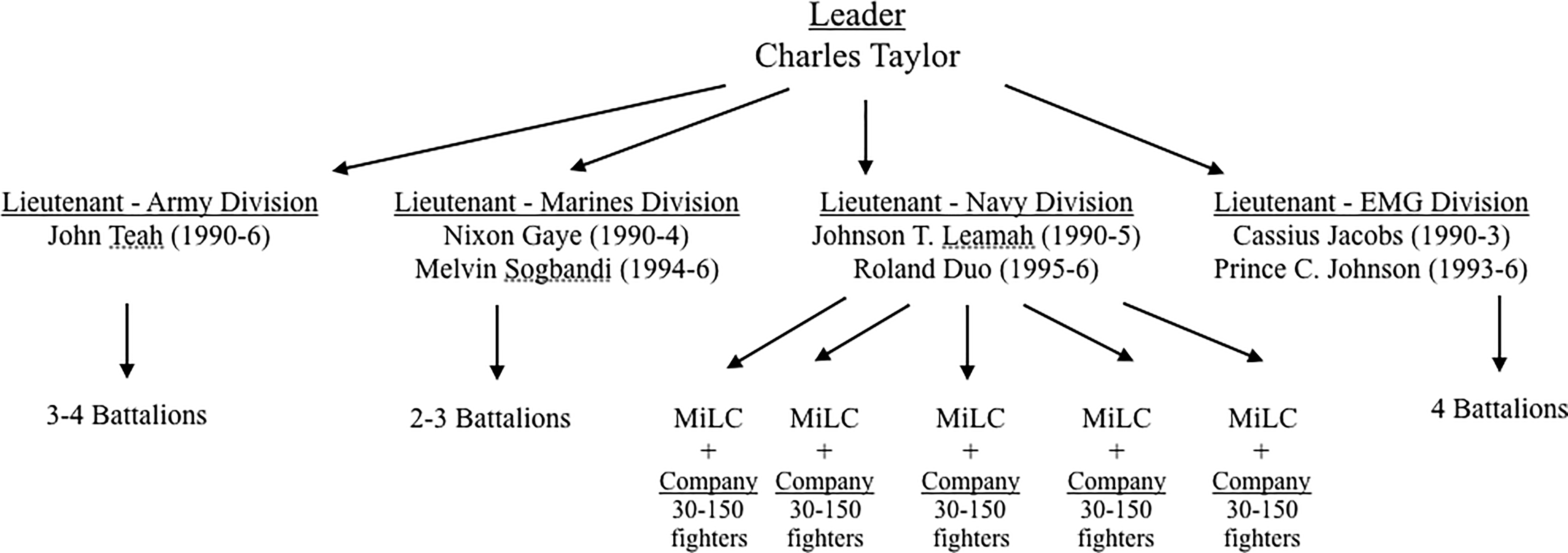
The command structure of the National Patriotic Front of Liberia.
We conceptualize rebel leaders as the ultimate decision-making individual in a rebel organization with respect to operational directives (Prorok 2016; Doctor forthcoming). Indeed, while organizational command structures differ between groups, rebel leaders act as focal points in determining a group’s overall strategic formulation and tactical selection. Rebel leaders play a key role in securing material resources to maintain group military operations and pay fighters (Lidow 2016). They also articulate groups’ ideological or political objectives to further motivate participation and attract outside investors (Mason 2004; Van Belle 1996). Ultimately, fragmentation reflects, in part, a rebel leader’s inability to consolidate the loyalty and confidence of their immediate followers. To illustrate the organizational position of these actors, as shown in Figure 1, Charles Taylor led the NPFL for the duration of the first Liberian Civil War (1989–1996).
Lieutenants represent the second organizational tier and play an important role within rebel organizations. A leader relies on his lieutenants to implement his directives in terms of ideology, strategy, and resources. Leaders can motivate loyalty through monetary payments, political and military training, and the promise of future rewards, for example, conflict spoils or postconflict positions in government. For example, NPFL lieutenant Enoch Dogolea was appointed by Taylor as vice president following Taylor’s national election to the presidency in 1997. Figure 1 shows the NPFL lieutenants 1 in charge of distinct divisions, the time of their tenure, and the approximate number of battalions and fighters under their command based on research by Lidow (2016) and Themnér (2015).
MiLCs occupy a crucial role in the organizational structure of rebel groups because they exercise immediate control over the actual fighting battalions. Themnér (2012) defines MiLCs as “the military personnel [] situated between the rank-and-file combatants and the highest military leadership, and who personally led their subordinates in battle” (p. 222). In this role, they are responsible for recruiting, retaining, training, equipping, feeding, and disciplining fighters. MiLCs are interlocutors between leadership and combatants; functioning “as ‘social membranes’, controlling what will get through the other side” (Themnér 2015, 337). This makes them key players for both combatants who depend on them for their needs and leadership who cannot effectively interact with all fighters and thus have to delegate responsibilities such as feeding and disciplining combatants. Their close relationship with combatants and active participation in battle also mean that MiLCs are part of the intraunit socialization processes resulting from shared perpetration and experience of violence. This gives MiLCs crucial insights into the cohesion and loyalty of their battalions. Rebel lieutenants depend on MiLCs for an upward flow of information and extorted resources (Themnér 2015, 338). Control over information and resources makes MiLCs powerful brokers within the organization during and after the conflict. As a result, combatants frequently rely on their ex-MiLC for support and job opportunities after conflicts end (Themnér 2015).
Who Breaks Away?
Accounts from recent armed conflicts, such as those in Nigeria and Afghanistan, indicate that the most common actor-type behind episodes of fragmentation are the individuals we refer to as “rebel lieutenants,” those persons at the highest level of authority in a rebel organization just under the rebel leader. A rebel lieutenant’s choice to split off from an active rebel group is clouded by high levels of uncertainty and risk. Accordingly, it must represent a sufficiently strong belief that the utility of mobilizing a separate rebel organization outweighs the utility of staying. This belief, we argue, is informed by both external and intragroup factors.
In general, rebel lieutenants leave because they disagree with the leader “over the strategies or the end goals of the group, especially in response to outside hostility” (Rudloff and Findley 2016, 22; McLauchlin and Pearlman 2012). This leads to a simmering division in group leadership. The literature indicates this division is especially likely to follow major external shocks—for example, the onset of peace negotiations, government repression, or changes in conflict intensity. In addition, external sponsorship, lootable resources, and the emergence of conflict economies can alter lieutenants’ incentives for following leaders (Lidow 2016, 7). These events likely put stress on both vertical and horizontal ties within the organization as members start to question their commanders’ and/or their comrades’ motives (Otto and Salverda 2018). These contextual factors are likely to influence leadership unity at the elite tier of the organization. In this article, we do not aim to explain how these contextual factors shape lieutenants’ decision to split. Instead, we generalize across the common flashpoints of fragmentation to focus on and explain how intragroup factors shape rebel lieutenants’ decisions to create a splinter faction.
When making the decision to leave, rebel lieutenants must also consider intragroup factors outside their elite tier. Specifically, they must assess how strong members’ horizontal ties are (Otto and Salverda 2018) and whether they can successfully convince a sufficient number of members to join them in a potentially dangerous exit. In the process of creating a splinter faction, lieutenants may invite other lieutenants to join them, but it is essential that a rebel lieutenant be able to take with them fighters from the rank-and-file to carry out basic military operations. They require loyalty from and within their fighting battalions to ensure the splinter group’s viability. On the elite level, disagreements over strategy or resources can divide the leadership increasing the risk of fragmentation. On the battalion level, strong unit cohesion ensures combatants’ loyalty to their commander, even in the case of defecting from the overall organization.
We argue that lieutenants who want to split from a rebel organization require loyal battalions that will follow them. This necessitates insights into the cohesion of their subordinate commanders and their fighters. To acquire this type of knowledge and information, lieutenants depend on MiLCs who interact with the fighters on a daily basis and have forged strong bonds through shared experiences. We contend that MiLCs are not only aware of when their combatants perpetrate sexual violence (they might even participate) but also observe the resulting socialization effects, which they can credibly communicate to their respective lieutenants. Put differently, MiLCs know whether a battalion’s loyalty lies with them or with the greater organization. In practice, foot soldiers often develop close ties to their respective MiLC and can display large amounts of loyalty to them (Ives 2019, 5; Christia 2012; Rubin 2002). Indeed, it is usually MiLCs who have the most personal interactions with foot soldiers, forging stronger bonds of trust between them. As a result, MiLCs are able to express credibly to lieutenants the degree to which foot soldiers are loyal to the unit. When secure in the knowledge that their battalions are unified and that their fighters are more loyal to comrades in their own units than to other group members, lieutenants have greater confidence in their chances of mobilizing a sufficient number of troops without risking defections.
The example of ULIMO commander Ousman Konneh, also known as “Pepper and Salt,” illustrates how MiLCs can undermine organizational cohesion while increasing unit cohesion through violent recruiting. In 1993, ULIMO leadership sent “Pepper and Salt” and a company of one hundred fighters to loot weapons and ammunition in Lofa County. Instead of returning to base, “Pepper and Salt” remained in Lofa County disobeying orders to show restraint toward civilians, preying on the local population, and recruiting heavily (Lidow 2016, 137). Through his violent recruitment spree, “Pepper and Salt” increased his number of combatants almost tenfold. While looting and preying on civilians, his combatants were building in-unit cohesion to each other and him, they clearly had no greater allegiance to ULIMO. When ULIMO split into the two factions in 1994, “Pepper and Salt” became part of ULIMO-K. The loyal support among his combatants ensured they would follow him, which rendered him an attractive asset; one that Charles Taylor reportedly bought with diamond money later in 1994 to bolster his numbers and weaken his opposition (Africa Confidential 1996; Kamara-Umunna and Holland 2011).
It is possible that lieutenants secretly plotting to split from the organization encourage their MiLCs to recruit new members and perpetrate sexual violence to build social cohesion. However, it is difficult to establish whether lieutenants are strategic or opportunistic regarding sexual violence. 2 Importantly, it does not change the underlying causal mechanism: Lieutenants take advantage of increased cohesion at the fighting unit level resulting from sexual violence to split from the broader organization. 3 In Figure 2, we combine organizational theories of rebellion with the literature on sexual violence to illustrate the two key processes in our theoretical framework, focusing in particular on sexual violence as a socialization process that takes place at the battalion level of the rebel group but influences the likelihood of fragmentation in the higher echelons.
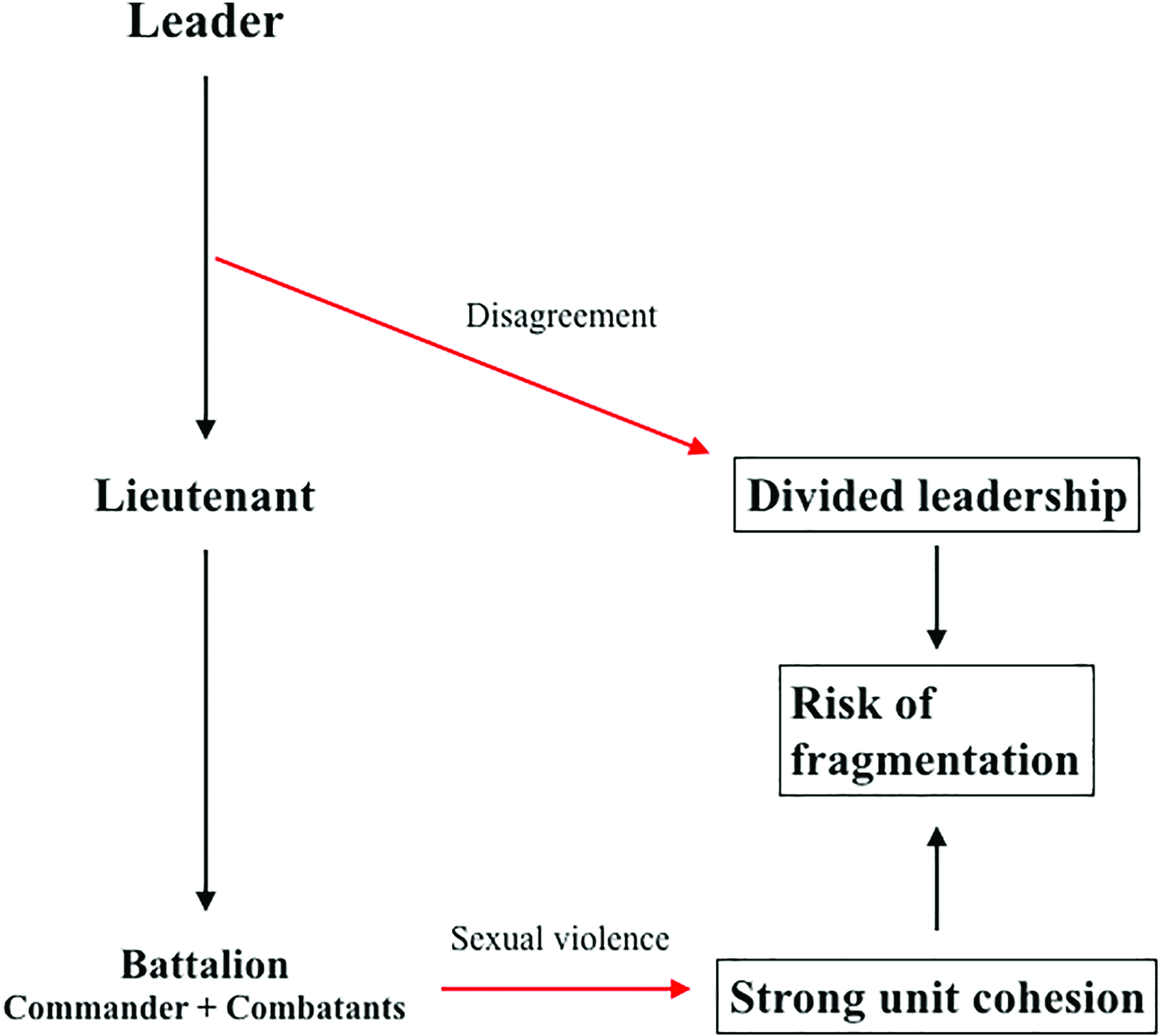
The mechanisms of sexual violence and rebel fragmentation.
Based on the discussion above and the well-established socialization effects of sexual violence (Cohen 2013a, 2016, 2017), we expect that rebel groups, all else equal, will be more likely to fragment following episodes of sexual violence. Based on this expectation, we offer the following testable hypothesis:
Data and Methods
We analyze the influence of rebel-inflicted sexual violence on the likelihood of rebel fragmentation in armed intrastate conflict. To test our hypothesis, we estimate a series of binary logistic regression models with a sample of 105 rebel groups active in fifty-four armed intrastate conflicts between 1989 and 2014. Overall, our data contain 513 observations recorded at the rebel-year level. 4
Dependent Variable
The dependent variable, rebel fragmentation, captures instances in which a segment of a rebel organization formally and collectively exits that rebel organization and establishes a new, independent rebel organization (Doctor forthcoming; Woldemariam 2018). The fragmentation variable is coded 1 if a rebel group splits into competing factions during a given group-year and 0 otherwise. Fragmentation is a relatively rare event, given the unit of analysis, and occurs in only 5 percent of the rebel-year observations. 5 Viewed from another perspective, 30 percent of the sampled rebel groups fragment at least once, and fragmentation is present in twenty-three of the fifty-four conflicts featured in our data. Figure 3 displays the proportion of active rebel groups that have experienced fragmentation (solid line) and the total number of active rebel groups (dashed line), aggregated by year. 6 This figure suggests that rebel fragmentation is increasingly a common dynamic of armed intrastate conflict.
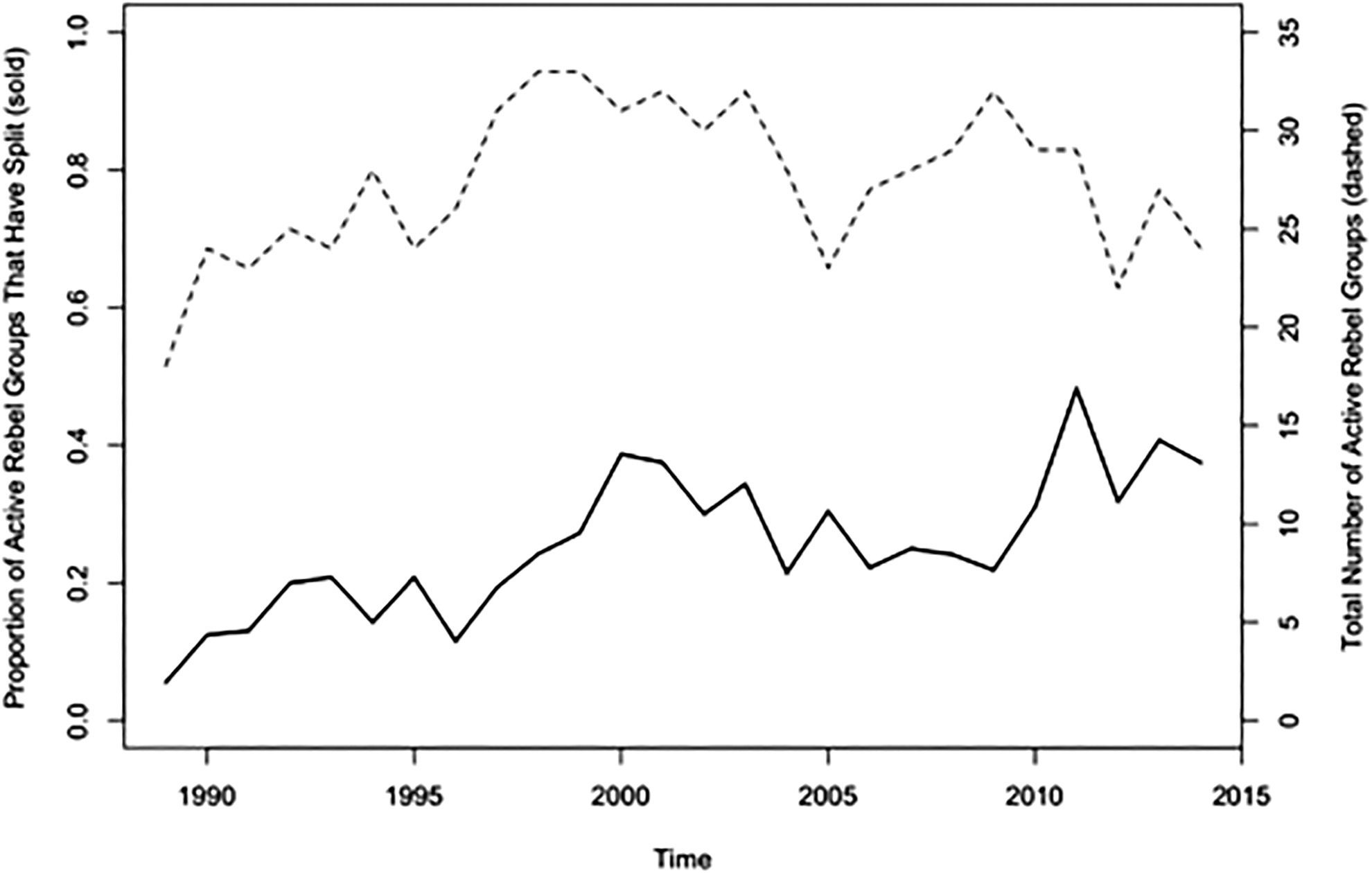
Distribution of rebel fragmentation, 1989 to 2014.
Independent Variable
The primary independent variable—sexual violence—describes the prevalence of sexual-based violence inflicted by a rebel group as recorded in the Sexual Violence in Armed Conflict (SVAC) Dataset (Cohen and Nordås 2014). 7 In the SVAC Dataset, recorded levels of sexual violence encompass seven distinct forms: rape, sexual slavery, forced prostitution, forced pregnancy, forced sterilization/abortion, sexual mutilation, and sexual torture. At the group-year level, the SVAC Dataset offers an ordinal prevalence score of sexual violence (0 = no sexual violence reported, 1 = isolated sexual violence, 2 = widespread sexual violence, 3 = massive sexual violence) based on information from three sources: US State Department (SD) reports, Amnesty International (AI) reports, and Human Rights Watch (HRW) reports.
For this study, we aggregate the ordinal scale provided in the SVAC data to create a dummy variable coded 1 if a rebel group was reported to have perpetrated any sexual violence by any of the three sources in a given conflict year. It is coded 0 otherwise. Collecting data on sexual violence can be particularly difficult as survivors often are unwilling to report it because they fear stigmatization, which can lead to underreporting and biased, low estimates (Davies and True 2017). Simultaneously, the sensationalist nature of sexual violence can serve human rights organizations as a rallying cry to raise awareness and funding providing an incentive to emphasize such acts in their reports (Cohen and Hoover Green 2012). These competing incentives highlight the inherent uncertainty and potential biases in these reports; hence, researchers caution against constructing prevalence levels based on SD, AI, and HRW reports (Davies and True 2017; Hoover Green 2018). To mitigate the uncertainty surrounding reported prevalence of sexual violence, we adopt the conservative approach of aggregating the ordinal scale to a binary variable. Finally, we lag this measure by one year to account for potential endogeneity, where levels of sexual violence in a given group-year are at risk of being influenced by a contemporary episode of fragmentation. In our sample, rebel-inflicted sexual violence is perpetrated by 42 of the 105 rebel groups.
A cross-tabulation of our two main variables suggests the plausibility of our argument. Of the 400 group-year cases with no sexual violence (lagged), 3.75 percent experience fragmentation. Of the 118 group-year cases with sexual violence (lagged), 12.71 percent experience fragmentation. Additional descriptive statistics are provided in the attached Online Appendix.
Control Variables and Alternative Explanations
We include controls for a number of group- and conflict-level factors that are likely to influence the relationships between sexual violence and fragmentation. First, at the group level, we control for rebel group size, suspecting that groups that are larger may have greater capacity to punish defectors and, thus, disincentivize fragmentation. At the same time, larger groups can be more difficult to control and impose administrative burdens and costs that could make an organization more prone to fragmentation. To control for both possibilities, we take the natural log of rebel troop capacity based on the Non-state Actors Dataset (D. E. Cunningham, Gleditsch, and Salehyan 2013). Second, we control for leftist rebel groups, which tend to have a greater capacity for limiting levels of abuse against noncombatants (Hoover Green 2016, 2018) and are more cohesive (Fjelde and Nilsson 2018). Third, we control for secessionist rebel groups, which aim to secede from an existing state in order to establish an autonomous government. Secessionist groups usually have strong social ties to local populations, which enables them to build consensual relationships and contributes to organizational integrity (Staniland 2014; Mosinger 2018). Similarly, secessionist groups, in general, are less likely to violate the statutes of international humanitarian law, including civilian targeting (Fazal 2018). Expressed in two group-level binary indicators, information on both leftist and secessionist rebel groups comes from the Non-state Actors Dataset. Fourth, we include a measure of rebel command structure, which uses the Non-State Actors Dataset to identify armed groups with formal, centralized systems of command. Organizations with more concentrated command structures tend to be less susceptible to fragmentation (Asal, Brown, and Dalton 2012). Moreover, they tend to inflict lower levels of violence against civilians (Humphreys and Weinstein 2006). Finally, using Cohen’s (2016) data, we use a binary indicator to account for rebel groups that abduct fighters into their ranks. Cohen (2013a, 2016) finds evidence that rebel groups that abduct individuals into service are also more likely to perpetrate sexual violence in order to increase levels of group cohesion. Rebel groups that abduct fighters might also be more susceptible to fragmentation, desertion, or other lapses in cohesion because their fighters lack commitment to the group and its cause (Eck 2014). Accordingly, abduction could influence both our dependent and independent variables; to control for this potential confounding factor, we include the variable abducted fighters. In a robustness check, we replicate the model using an alternative measure of forced recruitment.
We include a number of relevant controls at the conflict level. First, long running conflicts give leaders a chance to prove themselves and consolidate leadership by eliminating internal competition. At the same time, long running conflicts imply the possibility of shifting battlefield fortunes, which might lead to internal tensions and splits (Woldemariam 2016, 2018). To account for both possibilities, we include conflict duration, which is measured in years based on the conflict start date specified in the UCDP Armed Conflict Dataset (Pettersson and Eck 2018). Second, we account for conflict-years in which multiple rebel groups are fighting the government over the same incompatibility. We expect that, as the conflict space becomes more crowded with armed parties, the perceived cost of starting a new faction increases and, thus, decreases the probability of fragmentation, all else equal (Fjelde and Nilsson 2018). Moreover, as interrebel competition increases in a conflict, civilians are more likely to suffer greater levels of violence (R. M. Wood and Kathman 2015). Third, the presence of parallel conflicts in a country may cause rebel lieutenants to reconsider their chances of successfully sustaining an armed group in a saturated conflict space. Information on this variable is taken from the UCDP Armed Conflict Dataset (Pettersson and Eck 2018). Fourth, we control for internationalized conflicts, those in which the government side, the rebel side, or both sides, receive troop support from other governments that actively participate in the conflict. These conflicts can be especially violent for local noncombatants (R. M. Wood, Kathman, and Gent 2012) and, moreover, may be likely to disincentivize the creation of new armed groups (Fjelde and Nilsson 2018).
We also issue a number of controls that speak to the context of violence in a conflict. First, recent studies have found that conflict intensity shapes levels of rebel fragmentation (Woldemariam 2016, 2018; R. M. Wood 2014). We include a count of combatant casualties recorded in a dyad-year. For this measure, we use information from the UCDP Battle-related Deaths Dataset (Pettersson and Eck 2018). Second, internal disputes over the targeting of civilians might cause rifts in a group’s leadership (Bakke 2014; Tamm 2016). We control for rebel one-sided violence (OSV) in order to separate the effects of sexual violence from those of other forms of civilian targeting to show the unique effects of rebel sexual violence. To do so, we use the UCDP One-Sided Violence Dataset (Eck and Hultman 2007), which reports intentionally inflicted civilian casualties associated with a conflict actor group in a given year. Third, using the same data, we control for state-perpetrated OSV at the dyad-year level because government violence increases mobilization costs and can aggravate internal disputes facilitating the splintering of groups (McLauchlin and Pearlman 2012; Staniland 2014; Seymour, Bakke, and Cunnigham 2016). Relatedly, we use the SVAC Dataset (Cohen and Nordås 2014) to control for state-perpetrated sexual violence in a given dyad-year. A rebel group’s level of sexual violence against combatants is likely, in part, to be influenced by the level of sexual violence inflicted by state actors. Equally important, governments frequently use sexual violence as part of their repertoire of repression as, for example, in Syria and Peru (Leiby 2009), which could influence the likelihood of fragmentation (McLauchlin and Pearlman 2012; Staniland 2014; Seymour, Bakke, and Cunningham 2016).
In addition to these controls, we account for two common alternative explanations of rebel fragmentation, namely, the availability of “lootable” natural resources (Lidow 2016) and the onset of peace negotiations (Cronin 2006; Fjelde and Nilsson 2018; Lounsbery and Cook 2011). We use the Rebel Contraband Dataset (RCD) as provided by Walsh et al. (2018) to identify groups that gain revenue from the extortion of natural resources. All else equal, rebel lieutenants in groups that have access to and profit from material endowments may be less loyal to their leader (Weinstein 2007) and be willing to form a competing faction in order to increase their own pecuniary gains (Lidow 2016, 222). Moreover, Whitaker, Walsh, and Conrad (2019) find that groups that profit from the extortion of “lootable’’ natural resources are more likely to perpetrate acts of sexual violence. We use the same coding process used in this study to offer a binary indicator for rebel groups which extort any of the thirty-one natural resources recorded in the RCD in a given year.
Another common explanation of fragmentation is that it occurs due to rebel “hardliners” splitting from the more moderate segments of a group that enter into peace talks. Peace talks can result in the creation of splinter factions by disgruntled or more hardline lieutenants who may disagree with participation in negotiation or are unsatisfied with the negotiated outcomes (Cronin 2006; K. G. Cunningham 2011; Seymour, Bakke, and Cunningham 2016; Fjelde and Nilsson 2018; Lounsbery and Cook 2011; Plank 2017; Lidow 2016). Recent research also shows that governments are more likely to enter into mediation when rebels perpetrate sexual violence (Nagel 2019). This implies the possibility that the observed relationship between sexual violence and fragmentation is missing peace talks as a crucial link in the causal chain. Accordingly, we control for the occurrence of negotiations. Our measure of this variable stems from the Peace Negotiations in Civil Conflicts Dataset (Ari 2018), which offers a binary indicator for the occurrence of peace negotiations at the rebel-year level.
Results
In Table 1, we report the regression coefficients and their standard errors from the logistic regression models. The displayed coefficients express the expected change in the log-odds of fragmentation in a rebel-year for a unit change in the associated predicting variable, all else equal. To account for possible sources of within-unit heterogeneity, the coefficient standard errors are clustered by rebel group. In sum, we find robust evidence that rebel groups that have recently perpetrated acts of sexual violence are substantially more prone to fragmentation compared to those that have not.
The Dynamics of Conflict-related Sexual Violence (CRSV) and Rebel Fragmentation, 1989 to 2014.
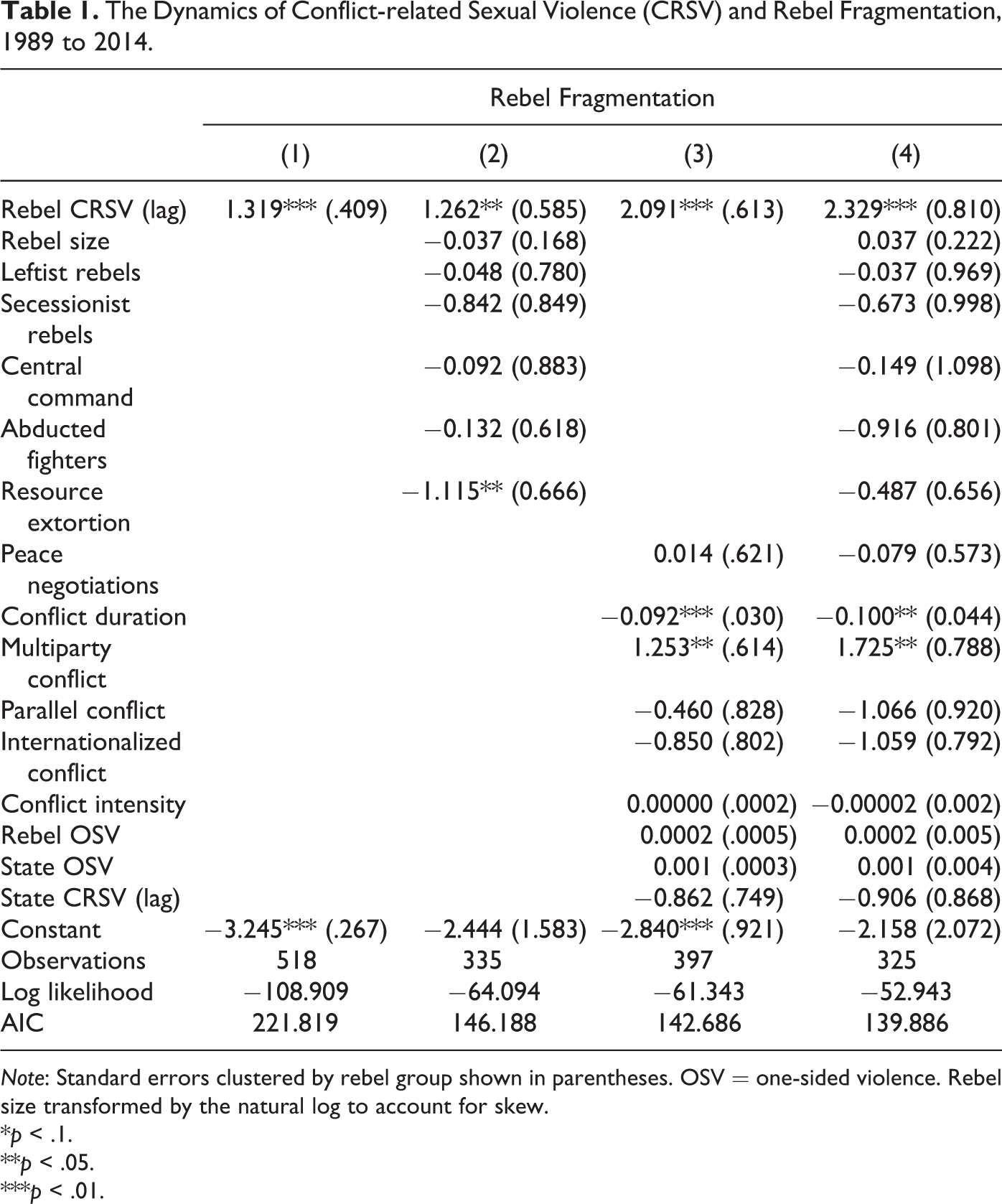
Note: Standard errors clustered by rebel group shown in parentheses. OSV = one-sided violence. Rebel size transformed by the natural log to account for skew.
*p < .1.
**p < .05.
***p < .01.
Control variables can introduce bias to logistic regression models (Clarke 2005). Therefore, model 1 displays the bivariate relationship between our measure of rebel-inflicted sexual violence and the likelihood of fragmentation in the following year without any controls. In support of our hypothesis, this basic regression indicates that these variables are correlated with one another. This relationship is further substantiated in the other reported regression models. In model 2, we include controls for group-level factors which may influence the relationship between sexual violence and fragmentation—that is, group size, command structure, objectives, and source of funding. While accounting for these factors, we find support for our hypothesis: rebel groups that perpetrate acts of sexual violence are more likely to fragment than rebel groups that abstain from sexual violence.
Model 3 regresses rebel fragmentation on the main predictor and includes a set of controls coded at the conflict and country levels. These provide information on structural factors and conflict dynamics which may influence a rebel lieutenant’s strategic assessment of the costs and benefits involved with mobilizing an armed faction. All else equal, we find that rebel groups that engage in sexual violence are more likely to split into competing factions. Finally, model 4 combines these models to control for potential confounding factors at the group, conflict, and country levels. All else equal, when a rebel group engages in sexual violence, their odds of splintering in the following year increase by 927 percent.
Some of our controls produce interesting results as well. First, none of the group level control variables in our models share a statistically discernible relationship with the timing of rebel fragmentation. Importantly, this includes the control for abduction, which does not show a statistically significant relationship with fragmentation. This suggests that a lack of commitment to the group following forced recruitment does not increase the chances of splintering. Furthermore, it indicates that sexual violence is not merely an intervening variable between abduction and fragmentation and that in fact the relationship between sexual violence and fragmentation is independent of abduction. While model 2 indicates that groups that profit from the extortion of natural resources are less likely to fragment, this effect is not discernible when controlling for relevant environmental-level factors. This suggests that the dynamic event of fragmentation, at the group level, may be best modeled not as a function of static group characteristics but based on changes in group behavior. Future studies should investigate this issue further.
Second, as expected, we find that rebel groups are less likely to fragment as duration of a conflict increases. Specifically, for every additional year of ongoing conflict, the odds of fragmentation decrease by 11 percent. This may indicate that the perceived costs of fragmentation for rebel lieutenants increase as the conflict becomes more entrenched. Finally, and contrary to our expectations, the results suggest that rebel groups are more likely to split when active in multiparty conflicts than when they represent the only rebel organization in a conflict. We interpret this to mean that the presence of multiple armed parties reduces the perceived risks lieutenants believe they incur by forming their own factions. As the average number of rebel groups active in a conflict is only increasing (Walter 2017, 480), this issue certainly warrants future attention.
Robustness Checks
To gain a better understanding of how centralized command might affect the relationship between sexual violence and fragmentation, we provide additional information in the Online Appendix. We run robustness checks regressing centralized command on fragmentation excluding sexual violence and do not find a statistically significant relationship. This suggests that sexual violence does not mediate the relationship between centralized command and fragmentation.
We consider a number of alternative model specifications and potential confounding variables. We replicate our findings using both rare events logistic and annual fixed effects models. Our analyses further show that our results are robust to the inclusion of a lagged negotiation variable that indicates ongoing peace talks. Sawyer, Bond, and Cunningham (forthcoming) find that rebel groups that elect their leaders are less likely to perpetrate high levels of sexual violence. We anticipate that a democratic basis for leadership might strengthen organizational integrity. Accordingly, we control at the group-year level for whether or not the current leader was elected to lead the rebel group. 8 The inclusion of this variable in the model has little effect on the size of the main coefficient of rebel-inflicted CRSV.
We also run robustness checks using different sexual violence prevalence levels as the independent variable. Our results indicate that the main findings are robust to the use of ordinal measures and that our findings are not driven by one category over another. Similarly, our results are also robust to using a different cut point for the binary indicator. Additionally, we test our model using a different lag structure. The results further bolster our main finding that recent sexual violence is associated with fragmentation. Our analysis also suggests that if two years have passed, sexual violence no longer increases the likelihood of fragmentation.
Another alternative explanation relates to the role of external support shaping groups’ internal power balance. If external sponsors bolster incumbent leaders, it reinforces existing power structures ensuring lieutenants’ dependence, thereby contributing to greater organizational cohesiveness (Tamm 2016). When external support shifts groups’ internal power away from incumbent leaders by strengthening lieutenants’ positions, this can embolden the latter to challenge the incumbent and ultimately cause division and splits (Tamm 2016). To account for the possibility that external support drives group fragmentation, we run a robustness check using the UCDP External Support Dataset (Högbladh, Pettersson, and Themnér 2011). We find no statistically significant relationship between external support and fragmentation. However, the relationship between rebel sexual violence and fragmentation remains robust and statistically significant.
We also replicate our models replacing abducted fighters with forced recruitment to check whether a broader conceptualization of forced recruitment changes the observed relationships. We find no statistically significant relationship to support this argument and our relationship of interest remains robust.
In Online Appendix Tables 12, 15, 16, and 17, we test the robustness of our results by respectively controlling for or excluding cases of groups that are particularly prone to either fragmentation or sexual violence or both. For example, we rerun our analysis omitting the nine rebel groups reported to have perpetrated sexual violence in every year in our sample. Our findings are robust to these checks. Please consult the Online Appendix for a more detailed discussion of each robustness check.
Predicted Probabilities
In Figure 4, we display the predicted probabilities of fragmentation associated with variation in sexual violence. To calculate these values, we use the coefficients and standard errors from model 4 to predict changes in the probability of fragmentation based on changes in the main predictor while holding all control variables at their mean value. Figure 4 shows the separate predicted values with 0.95 confidence intervals.
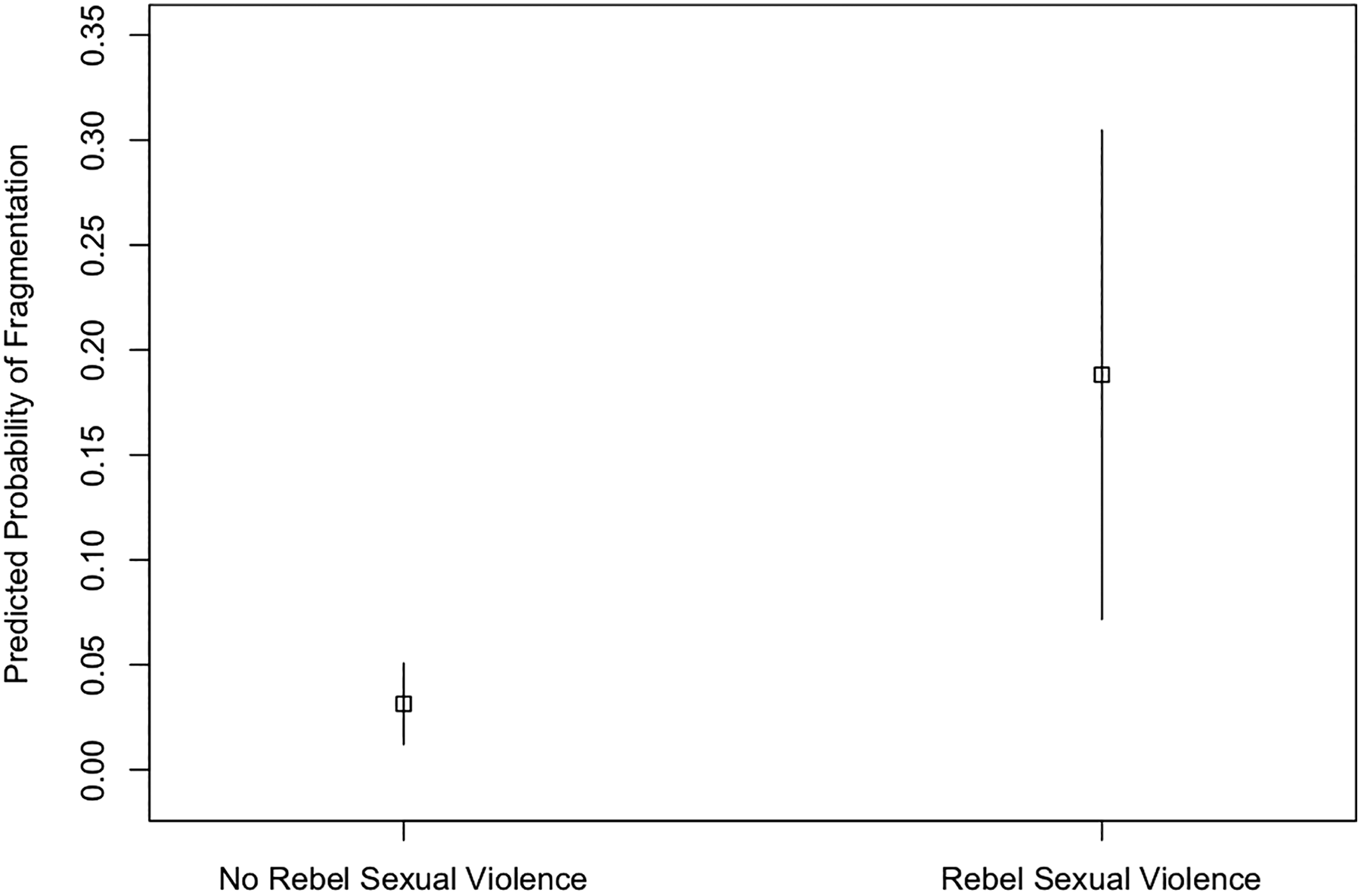
Predicted probabilities of rebel fragmentation, 1989 to 2014.
We find that sexual violence, all else equal, is associated with a .16 discrete increase in the probability of fragmentation in a given rebel-year, a predicted increase of more than 600 percent. This predicted change in the displayed values is statistically significant at the .95 confidence level. Following a year in which a rebel group perpetrates sexual violence, the probability of fragmentation in that group shifts from .03 to .19, all else equal. Given the unit of analysis and the relative rarity of this event—fragmentation only occurs in five percent of our observations—this is a substantial effect. In sum, our results indicate that, while sexual violence should still be understood to increase levels of cohesion between fighters in a battalion, the resulting levels of intraunit cohesion give rebel lieutenants greater confidence in their ability to mobilize a competing splinter faction successfully. The repercussion is an increased risk of fragmentation, all else equal.
Conclusion
We find that rebel groups that engage in sexual violence are more prone to fragmentation. To explain this relationship, we build a strategic logic of fragmentation and emphasize differences in the organization tiers associated with each of these dynamics. The literature stresses that sexual violence has socializing and cohesion-building effects among the rank-and-file, especially at the fighting unit level. Conversely, rebel fragmentation occurs at the highest tiers of leadership in a rebel group, where ranking rebel lieutenants lead a number of their followers away to form an independent armed group. We argue that in the process of mobilizing a splinter faction, rebel lieutenants assess a number of intragroup factors including unit cohesion at the battalion level. They are more likely to attempt this risky endeavor when they believe that their own fighters are loyal to the unit. Holding external pressures constant, fragmentation is more likely to occur in groups that commit sexual violence.
This study carries a number of important implications. First, it indicates that rebel lieutenants consider intragroup factors as well as external pressures when deciding whether or not to enter into the risk-laden venture of mobilizing a rebel splinter faction. Second, this study contributes compelling nuance to the literature on the implications of sexual violence on broader rebel organizational dynamics. Third, this article contributes to organizational theories of armed conflict by showing that studies need to account for organizational hierarchies beyond the dichotomized principal–agent model and by illustrating how the forms of violence that armed groups adopt in war may come back to shape the structural integrity of an insurgency. Lastly, insofar as top rebel leaders order or allow their fighters to conduct sexual violence, our results indicate that they do so to their detriment and to the potential benefit of group lieutenants considering to form their own organization.
This study identifies a crucial aspect of the organizational dynamics which may prompt a rebel lieutenant to form a new armed faction. The odds of fragmentation in a given year increase by a factor of nine for groups that have recently perpetrated acts of sexual violence. This suggests that rebel leaders interested in maintaining their groups’ organizational integrity should disincentivize sexual violence, even if by doing so they forsake potential short-term benefits of creating within-unit social bonds among fighters. From a policy perspective, rebel fragmentation produces longer and more violent conflicts. This study provides a valuable explanation for why this event occurs in the first place and offers policy makers a means by which to assess the structural integrity of insurgencies around the world.
Our results also raise a number of questions for future inquiry. First, what other intragroup factors do rebel lieutenants consider when making the decision to fragment? Second, to what extent are leaders aware of the potential dangers that sexual violence poses for the integrity of the group and what measures do they take to mitigate them? A close examination of cases such as the Lord Resistance Army in Uganda, which formalized and institutionalized forced marriages while severely punishing rapes outside the group (Baines 2014), will be instructive for understanding how leaders manage these intraorganizational processes. Overall, our results indicate the salience of intragroup factors and group behavior in shaping a rebel organization’s propensity for fragmentation.
Supplemental Material
Supplemental Material, sj-pdf-1-jcr-10.1177_0022002719899443 - Conflict-related Sexual Violence and Rebel Group Fragmentation
Supplemental Material, sj-pdf-1-jcr-10.1177_0022002719899443 for Conflict-related Sexual Violence and Rebel Group Fragmentation by Robert Ulrich Nagel and Austin C. Doctor in Journal of Conflict Resolution
Supplemental Material
Supplemental Material, sj-zip-1-jcr-10.1177_0022002719899443 - Conflict-related Sexual Violence and Rebel Group Fragmentation
Supplemental Material, sj-zip-1-jcr-10.1177_0022002719899443 for Conflict-related Sexual Violence and Rebel Group Fragmentation by Robert Ulrich Nagel and Austin C. Doctor in Journal of Conflict Resolution
Footnotes
Acknowledgments
The authors would like to express their sincere gratitude to Amelia Hoover Green, Cyanne Loyle, Meredith Loken, the anonymous reviewers, and the editorial team at JCR for their thoughtful feedback on previous drafts.
Declaration of Conflicting Interests
The author(s) declared no potential conflicts of interest with respect to the research, authorship, and/or publication of this article.
Funding
The author(s) received no financial support for the research, authorship, and/or publication of this article.

Supplemental Material
Supplemental material for this article is available online.
Notes
References
Supplementary Material
Please find the following supplemental material available below.
For Open Access articles published under a Creative Commons License, all supplemental material carries the same license as the article it is associated with.
For non-Open Access articles published, all supplemental material carries a non-exclusive license, and permission requests for re-use of supplemental material or any part of supplemental material shall be sent directly to the copyright owner as specified in the copyright notice associated with the article.
