







Abstract
People on both sides of an intergroup conflict undertake various forms of collective action to seek justice for their own group. Three studies investigated whether modes of ingroup identification promoted distinct preferences for justice, which subsequently shaped the form of collective action people supported. Among Arab (Study 1, n = 148) and Jewish Israelis (Study 2, n = 294), we found that ingroup glorification promoted a desire for retributive justice, which predicted support for nonnormative collective action, whereas ingroup attachment promoted a desire for restorative justice, which predicted support for normative collective action. Further, during a period of conflict escalation (i.e., Palestinian protests at the Gaza Strip), emphasizing retributive or restorative justice produced differential effects on the links from glorification and attachment to nonnormative and normative collective action (Study 3, n = 546). This research advances our understanding of when and how collective action can escalate intergroup conflict.
In protracted intergroup conflict settings, such as in Israel–Palestine, people on both sides often engage in various forms of collective action—which refers to actions undertaken by a group of people to advance the conditions of their group. Collective action can be extremely nonnormative in that they violate the norms of a society; for example, Palestinians targeting Jewish Israelis through suicide bombings in their struggle for self-determination, or Jewish Israelis targeting Palestinians by burning buildings and killing civilians to defend their rights to an independent Jewish state (Bishara 2002). Collective action can also be largely normative in that it conforms to the norms of a society; for example, Palestinians marching down the streets to resist forced eviction from their homes, or Jewish Israelis holding protests to assert their right to live in settler areas (Marteu 2009). What social psychological factors lead people to support nonnormative versus normative forms of collective action?
This question is important because scholars from various fields, including political science, international relations, economics, and sociology who study intergroup conflict have increasingly argued for a social psychological analysis of conflict (e.g., Hatz 2020; Kertzer and Tingley 2018; van Stekelenburg and Klandermans 2013). For one, objective macrolevel factors, such as the occurrence of unitary events or mere membership in a particular group, may not influence all individuals in a group to the same extent (Lyall, Blair, and Imai 2013; McDoom 2012; Shesterinina 2016). By focusing on the subjective perception of individuals, in the present research we aim to identify nuances or variation of attitudes within a group. Additionally, while conflict attitudes can be influenced by self-interest such as seeking material or psychological benefits and coping with economic concerns (e.g., Friedman 2005), group identities and group-based concerns are equally important in shaping how people interpret and respond to conflict (e.g., Tezcür 2016; Sambanis, Schulhofer-Wohl and Shayo 2012; for a review, see Kalin and Sambanis 2018). Relatedly, scholars have begun expanding the traditional scope of security, going beyond a state’s militaristic aspects to include societal security—which is based on defending ingroup identity (Bilgin 2004; Møller 2003; Theiler 2003). In the Israeli–Palestinian conflict, mobilization among both sides is rooted in competing historical narratives about group identities (Kaufman 2009)—which makes it particularly critical to understand group-based responses to conflict.
Thus, the present research aims to contribute to a social identity analysis of the trajectory of conflict. In the context of the protracted Israeli–Palestinian conflict, we focus on how Arab and Jewish Israelis demand justice (i.e., notions of justice) and identify with their own group (i.e., ingroup identification) as a basis for explaining their support for normative and nonnormative collective action. Specifically, we propose two processes: First, believing the ingroup is superior and more respected compared to other groups (i.e., ingroup glorification) will promote a desire to punish the outgroup for intergroup transgressions (i.e., retributive justice) which will subsequently promote more support for nonnormative collective action (e.g., illegal or violent actions). Second, feeling emotionally attached to the ingroup and wanting to contribute to it (i.e., ingroup attachment) will promote a desire to restore shared values that were violated during an intergroup transgression (i.e., restorative justice) which will subsequently promote support for normative collective action (e.g., peaceful protests).
Collective Action
Social movement scholars have differentiated between various forms of collective action. One such distinction is the extent to which collective action aligns with the norms of a society (Becker and Tausch 2015; Tausch et al. 2011; Wright, Taylor, and Moghaddam 1990). As defined by Wright et al. (1990), nonnormative collective actions are those that fall outside the scope of existing laws, customs, and codes of conduct in a society, such as violent street protests and terrorism. By contrast, normative collective actions are those that fall within the laws, customs, and codes of conduct in a society, such as peaceful street protests, sit-ins, and strikes. This conceptualization overlaps with other taxonomies of collective action: illegal and legal (Finkel, Muller, and Opp 1989), activism and radicalism (Moskalenko and McCauley 2009), hostile and benevolent (Zaal et al. 2011), as well as violent and nonviolent actions (Thomas and Louis 2014). Thus, normative and nonnormative collective action differ in terms of other elements, including the legal status, intention, peacefulness, and extremity of an action. It is also important to note that according to Wright et al. (1990), the normativeness of a particular action is defined in relation to the broader social system rather than by the perception of the group undertaking the action. In the present research, Arab and Jewish Israelis are subjected to norms in Israeli society since it is the dominant social system within which both groups live.
Although traditionally the literature has focused on the social psychological predictors of normative collective action, scholars have also begun to examine the predictors of nonnormative collective action. To understand the factors that predict nonnormative versus normative collective action, prior work has investigated group-based efficacy and emotions as two prominent pathways towards nonnormative and normative collective action (for a review, see Becker and Tausch 2015). This research has found that strong beliefs in group-based efficacy and feelings of anger over injustice predict normative collective action. By contrast, lack of group-based efficacy beliefs and, instead, strong beliefs in the efficacy of using aggression to reach group goals and feelings of contempt over injustice predict nonnormative collective action (Saab et al. 2016; Shuman et al. 2016; Tausch et al. 2011).
While there is prior research on how different forms of efficacy beliefs and emotions shape distinct collective action tendencies, perceptions of injustice and ingroup identification have typically been studied as single, unidimensional constructs. There is extensive evidence that stronger perceptions of injustice and ingroup identification motivate greater collective action (for a review, see van Zomeren et al. 2008). However, the literatures on responses to ingroup-committed wrongdoing and ingroup identification have both suggested that people tend to demand for justice and identify with their ingroups in more than one way (e.g., Roccas, Klar, and Liviatan 2006; Wenzel et al. 2008). As we review next, this work has demonstrated that the ways of pursuing justice and identifying with groups can have differential downstream consequences for intergroup relations.
Justice Notions
A prominent explanation behind why people act against injustice is the feeling that one’s group is deprived compared to others. Relative deprivation theory posits that a subjective sense that one’s group is treated unequally or unjustly can motivate collective action (Smith et al. 2012). Material or structural injustice may have little to do with a groups’ grievances and subsequent participation in collective action, which suggests the central role of perceived injustice (Fox, Bader, and McClure 2019). Building on this fundamental idea, we propose that the specific ways in which people demand for ingroup justice may shape support for different types of collective action. When faced with injustice, people may have divergent ideas about how to restore justice. Research on interpersonal and intergroup wrongdoing has found that there are two prominent notions of justice: retributive or restorative justice (Goode and Smith 2016; Wenzel et al. 2008; Wenzel and Okimoto 2010). Retributive justice focuses primarily on unilateral punishment of the offender, while restorative justice focuses primarily on bilateral repair of the relationship between victim and offender by means of compensation, apology, and reaffirmation of shared values between the two parties (Wenzel et al. 2008).
Preferences for retributive or restorative justice have important implications in shaping intergroup relations in the aftermath of intergroup conflict. Although there is some evidence suggesting that retributive justice mechanisms (e.g., international criminal tribunals) can have positive effects in terms of promoting reconciliation (studies 3 and 4, Li et al. 2018), notions of retributive justice have been linked to destructive intergroup outcomes such as aggressive conflict resolution strategies (Leidner, Castano, and Ginges 2013) and support for future violence (Study 1 and 2, Li et al. 2018). By contrast, notions of restorative justice have been linked to peaceful intergroup outcomes such as forgiveness of perpetrators (Regalia et al. 2015) and support for peace deals to resolve conflict (Leidner et al. 2013). Building on this prior work, we move beyond conflict resolution attitudes and policy preferences to investigate collective action outcomes.
Although no prior work, to our knowledge, has examined how justice orientations may predict distinct collective action outcomes, recent work in the Israeli–Palestinian context showed that the motivation to punish the outgroup’s past behavior promoted violent collective action tendencies, whereas motivation to change the outgroup’s future behavior promoted nonviolent collective action tendencies (Hasan-Aslih et al. 2019). While this work did not explicitly examine the role of justice concerns, it is likely that punitive goals mirror the notion of retributive justice, whereas change-oriented goals mirror the notion of restorative justice, thereby providing indirect support for our proposed link between retributive justice and nonnormative collective action, and between restorative justice and normative collective action. In addition to examining the link between justice orientations and distinct collective action outcomes, we further examine the role of different modes of group identification in predicting both justice orientations and collective action.
Group Identification
Group identification—that is, the extent to which people subjectively share an identity with others—plays a crucial role in motivating collective action (for a review, see van Zomeren et al. 2008). When people consciously engage in a power struggle to improve the condition of their group (Simon and Klandermans 2001), or when identities become linked to relevant group norms (Thomas, McGarty, and Mavor 2009), group identification will prompt collective action. While group identification is a central feature of collective action, it has mostly been studied as a unidimensional construct, such that stronger identification with a group promotes collective action to benefit the group. However, the content and meaning of a group’s identity can shape the downstream consequences of ingroup identification on intergroup relations (Kaufman 2009; Livingstone and Haslam 2008). Scholars in the social identity literature have theorized that group identification is a multidimensional construct (Ashmore, Deauz, and McLaughlin-Volpe 2004; Kosterman and Feshbach 1989; Leach et al. 2008; Roccas et al. 2006; Schatz, Staub, and Lavine 1999), such that the different components of ingroup identification can have distinct consequences for intergroup relations.
In the context of intergroup conflicts, ingroup glorification and attachment are critical in shaping relevant conflict attitudes (Castano 2008; Roccas et al. 2006). As defined by Roccas et al. (2006), glorification is based on beliefs in the ingroup’s superiority over other groups, and (unconditional) deference to ingroup authorities, whereas attachment is based on feelings of emotional connection and commitment to one’s group, as well as a desire to contribute to the group. These dimensions of group identity integrate earlier distinctions such as pseudopatriotism and genuine patriotism (Adorno et al. 1950), nationalism and patriotism (Kosterman and Feshbach 1989), as well as blind and constructive patriotism (Schatz, Staub, and Lavine 1999).
Prior research has demonstrated that glorification (but not attachment) predicts hostile intergroup outcomes, such as the denial of ingroup violence against outgroups (Bilali 2013) and dehumanization of victim groups (Leidner et al. 2010), thereby prolonging conflict. There is also empirical support for a positive link between glorification and retributive justice (Li et al. 2018). Since ingroup glorification promotes defensive strategies to protect the ingroup at the expense of the outgroup, high glorifiers may be motivated to punish the outgroup after an intergroup transgression (i.e., demanding retributive justice; Leidner et al. 2013; Leidner et al. 2010). By contrast, attachment promotes greater guilt over ingroup wrongdoings and a motivation to restore the ingroup’s moral image (Roccas et al. 2006). Since those who are highly attached to their ingroup are more critical of ingroup actions and are still committed to improving conditions of their group, ingroup attachment may be related to support for restoring ethical values or principles that were harmed by an intergroup transgression (i.e., demanding restorative justice). Taken together, integrating the literatures on dimensions of ingroup identification and notions of justice to understand support for different forms of collective action, we propose the following hypotheses (see Figure 1):
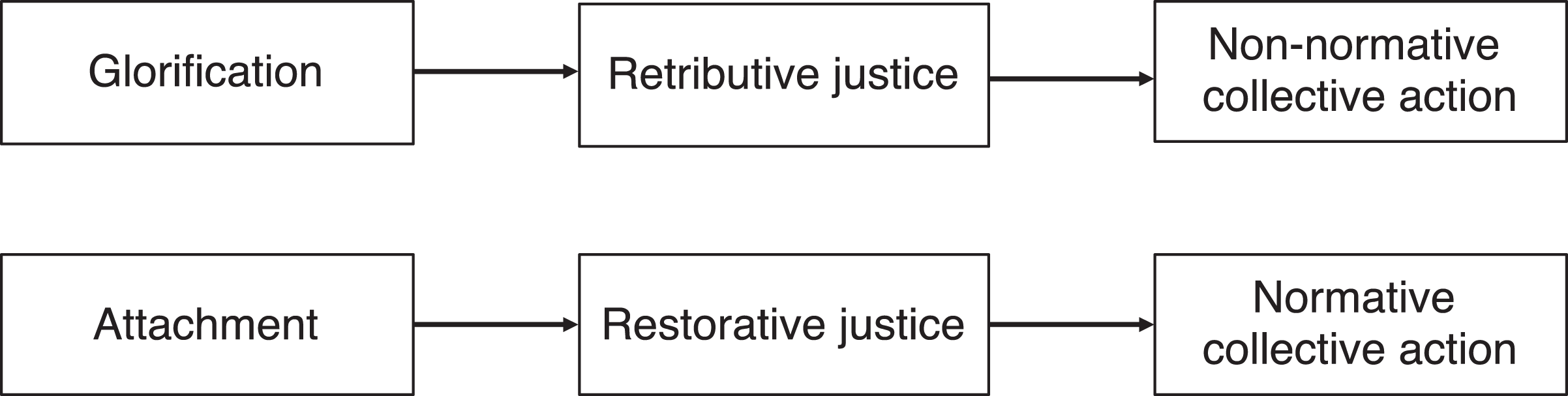
Conceptual model.
Overview of Present Research
We situated the present research around the ongoing intractable and asymmetrical conflict between Israelis and Palestinians (Rouhana and Bar-Tal 1998). Although high and low status groups respond to conflict as a function of their primary role in the conflict (e.g., perpetrators or victims; Shnabel and Nadler 2008; for a review, see Li and Leidner 2019), it is also the case that both sides can view themselves as victims (Leidner et al. 2013; Noor et al. 2012). Indeed, Palestinians and Jewish Israelis continue to undertake various forms of collective action in pursuit of justice for their respective ingroups (Human Rights Watch 2016). The Israeli–Palestinian context therefore provides high ecological validity with strong real-world relevance to study collective action on both sides of an intergroup conflict. To do so, we surveyed Arab (Study 1) and Jewish Israelis (Study 2) to test whether there are distinct pathways from modes of ingroup identification to notions of justice and subsequently to collective action outcomes. Further, during a period of real-world conflict escalation (i.e., the seventieth anniversary of Israeli independence and Palestinian Al-Nakba), we examined the effects of emphasizing retributive versus restorative justice on the aforementioned pathways among Jewish Israelis (Study 3). De-identified data and analysis code are available at the Inter-university Consortium for Political and Social Research at https://doi.org/10.3886/E117101V1. For each study, a convenience sample of participants were recruited through the Midgam Project Web Panel, an online survey research company in Israel. For additional sample demographic information, see Supplemental Material. The online surveys were designed and administered in Hebrew on Qualtrics, an online survey platform. Verbatim survey measures are available as Supplemental Material.
Study 1
Method
Participants and Procedure
One hundred and sixty-five Arab Israelis were recruited to complete an online survey on attitudes toward conflict. 1 Forty-one participants did not complete the survey, leaving 124 participants for analyses (68 males, 56 females; age range = 18 to 57 years, M = 30.79, SD = 8.48). The measures of interest were included as brief scales (two to four items each) as part of a longer survey on Arab Israelis’ sociopolitical attitudes. 2
Measures
Glorification and attachment
Participants were asked the extent to which they agreed or disagreed with each statement about their identity using items from Roccas et al. (2006), on an analog scale of 1 (strongly disagree) to 9 (strongly agree). Four items measured glorification (α = .65; e.g., “The Palestinian people are better than other people in all respects”). Four items measured attachment (α = .89; e.g., “I am strongly committed to the Palestinian people”). Glorification and attachment were positively correlated, r = .54, p < .001.
Retributive and restorative justice
Participants were asked to which extent they agreed or disagreed with statements about how to deal with the Israeli–Palestinian conflict to achieve justice, adapted from Leidner et al. (2013), on an analog scale of 1 (strongly disagree) to 9 (strongly agree). Two items measured support for retributive justice: “For the sake of justice, Jewish Israelis have to suffer” and “The only way to restore justice is to punish Jewish Israelis” (r = .63, p < .001). Two items measured support for restorative justice: “To restore justice, Jewish Israelis and Palestinians need to agree on rules of a peaceful world” and “Without Jewish Israelis giving a sincere apology for having acted wrongly, the injustice is not completely restored” (r = .21, p = .022). Unexpectedly, the two restorative justice items were differentially correlated with the retributive justice items. Whereas the restorative justice item regarding apology was not significantly correlated with retributive justice (r = .14, p = .127), the restorative justice item regarding value affirmation was negatively correlated with retributive justice (r = −.38, p < .001). Given its low correlation with the other intended restorative justice item and the positive (rather than negative) direction of correlation with the retributive justice measure, we dropped the apology item 3 and only used the shared values item as a single-item measure of restorative justice.
Nonnormative and normative collective action
Participants were asked to what extent they supported or opposed various action in the struggle of Arab citizens to improve their situation in Israel, on an analog scale of 1 (strongly oppose) to 9 (strongly support). Two items measured support for nonnormative collective action: “Nonviolent yet unlawful actions of protest (such as participating in unauthorized demonstrations, blocking roads, etc.)” and “Violent actions of protest (physically confronting police, property damage, etc.)” (r = .39, p < .001). Three items measured support for normative collective action: “Actions of protest online (such as signing petitions, sharing information on Facebook, etc.),” “Actions of protest in Israel within the law (such as participating in authorized demonstrations, distribution of informational materials, etc.),” and “Actions of protest abroad within the law (such as participating in demonstrations overseas, meeting foreign politicians, etc.)” (α = .85). Composite scores of nonnormative collective action and normative collective action were not significantly correlated, r = −.12, p = .174.
Data analysis and model specification
To test our hypotheses, we used path analysis because it allows researchers to simultaneously estimate regression coefficients among multiple variables, such as the total, direct, and indirect effects of predictors on outcomes. Overall model fit is assessed with the following indicators: standardized root mean square residual (SRMR), root mean square error of approximation (RMSEA), and comparative fit index (CFI). Path analysis is typically represented in a diagram that depicts the algebraic relationships among variables. Figure 2 shows the path model tested in Study 1. The corresponding regression equations are: Path model tested in Study 1 and 2.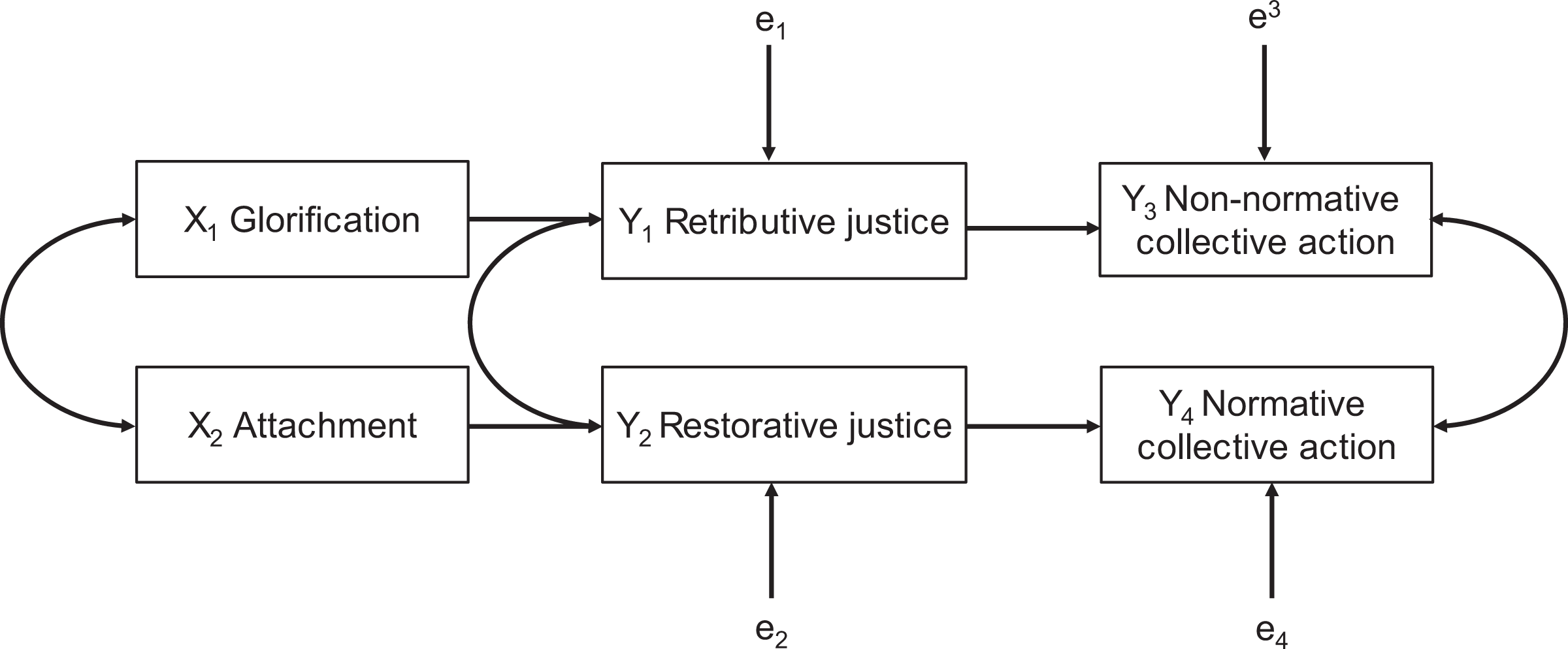
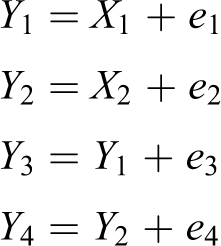
The indirect effects of interest are (bX1Y1) (bY1Y3) and (bX2Y2) (bY2Y4).
Results
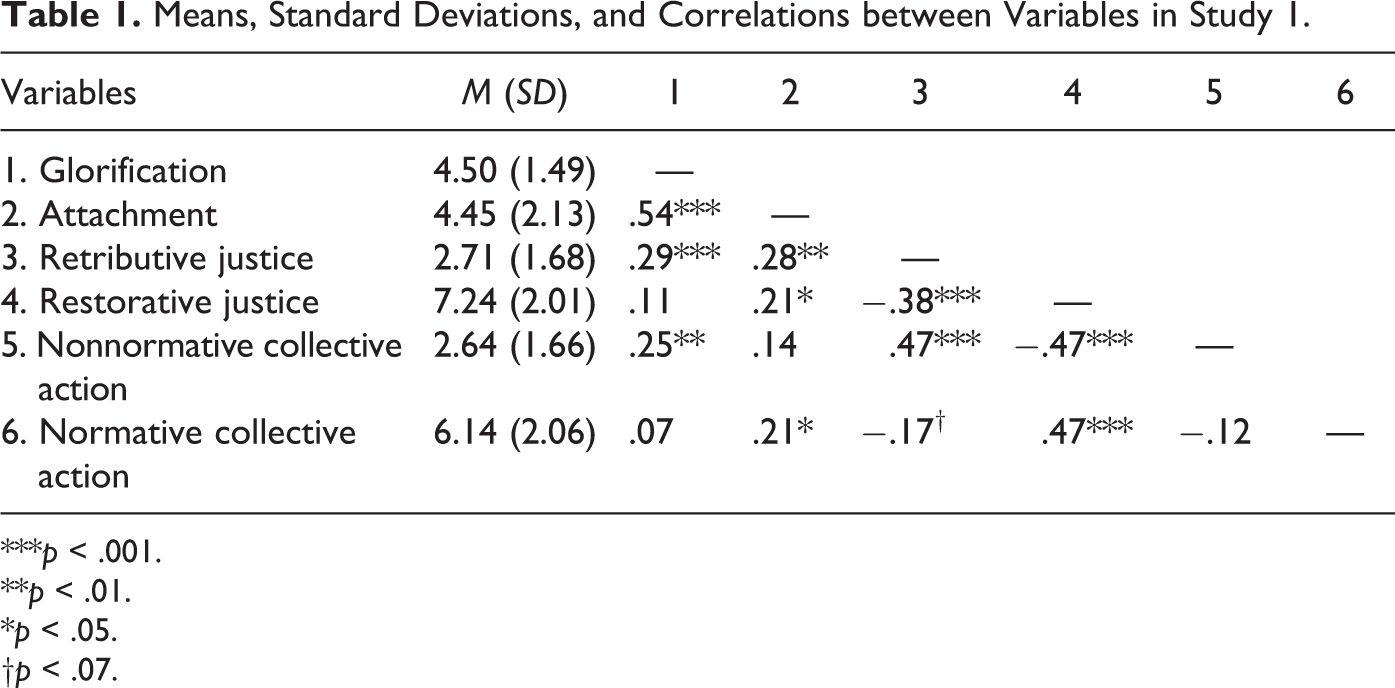
The means, standard deviations, and bivariate correlations among the variables are displayed in Table 1. Consistent with expectations, glorification was positively correlated with retributive (but not restorative) justice and with nonnormative (but not normative) collective action. Attachment was positively correlated with restorative (and also retributive) justice and with normative (and marginally, with nonnormative) collective action. To simultaneously investigate whether glorification predicted nonnormative collective action through retributive justice, and whether attachment predicted normative collective action through restorative justice, we conducted a path analysis using SAS 9.4. The model, depicted in Figure 2, fit the data well, χ2(6) = 5.42, p = .492, SRMR = .04, RMSEA < .01, CFI = 1.00 (n = 124 4 ). We allowed the error terms of glorification and attachment (b = 1.71, SE = .33, t = 5.25, p < .001), retributive and restorative justice (b = −1.48, SE = .31, t = −4.71, p < .001), and nonnormative and normative collective action (b = .31, SE = .22, t = 1.39, p = .163) to correlate, reflecting their theoretical conceptualization as two parts of a broader construct (i.e., group identification, justice demands, and collective action, respectively). As seen in Figure 3, glorification predicted greater retributive justice (b = .31, SE = .09, t = 3.52, p < .001), which, in turn, predicted greater nonnormative collective action (b = .25, SE = .08, t = 2.99, p = .003). Attachment predicted greater restorative justice (b = .26, SE = .08, t = 3.37, p < .001), which, in turn, predicted greater normative collective action (b = .49, SE = .08, t = 6.06, p < .001). The indirect effect from glorification to nonnormative collective action via retributive justice was significant, b = .08, SE = .03, t = 2.28, p = .023, and so was the indirect effect from attachment to normative collective action via restorative justice, b = .12, SE = .04, t = 2.95, p = .003.
Means, Standard Deviations, and Correlations between Variables in Study 1.
***p < .001.
**p < .01.
*p < .05.
†p < .07.
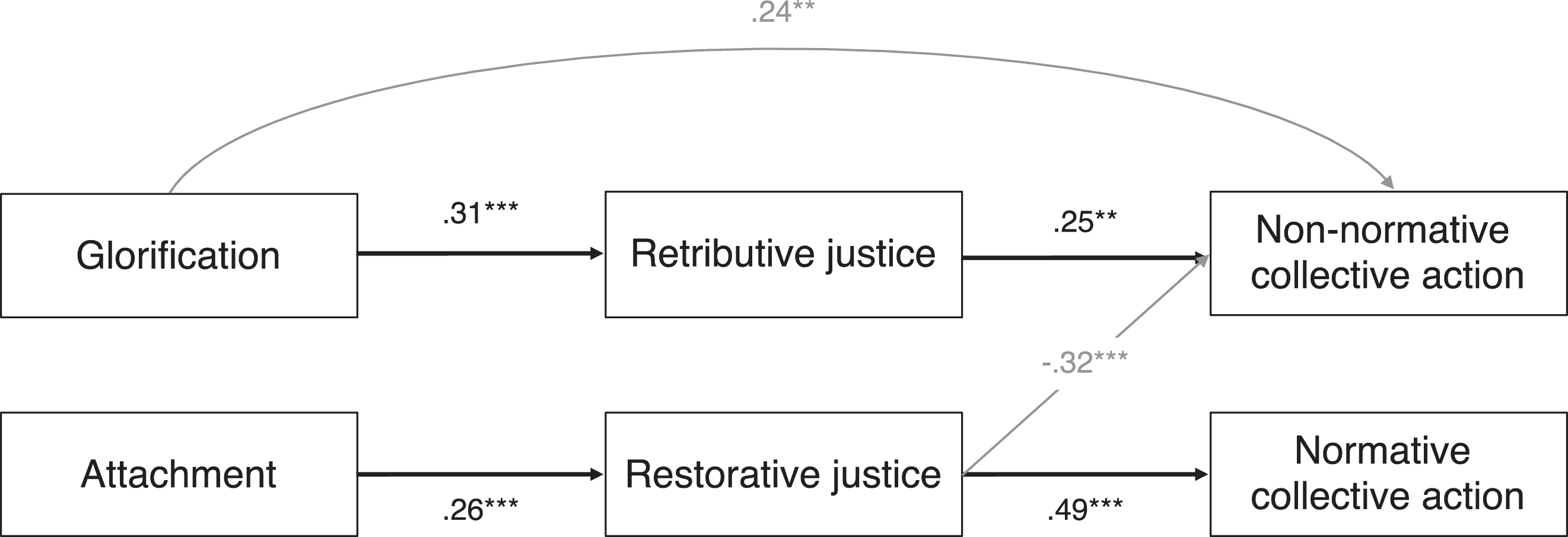
Path model for Study 1. Unhypothesized but significant paths are in gray. Coefficients are unstandardized estimates.
In addition to the indirect pathway from glorification to nonnormative collective action through retributive justice, the direct path from glorification to nonnormative collective action was also significant (b = .24, SE = .09, t = 2.81, p = .005). Further, in addition to the positive path from restorative justice to normative collective action, there was a significant negative path from restorative justice to nonnormative collective action (b = −.32, SE = .07, t = −4.84, p < .001). Although these paths were not hypothesized, their presence is not inconsistent with the hypothesized paths and therefore does not take away from our predicted model. Specifically, these additional paths suggest that the relationship between glorification and nonnormative collective action remained significant even after accounting for the role of retributive justice in predicting nonnormative collective action and that restorative justice, in addition to positively predicting normative collective action, negatively predicted nonnormative collective action. We also conducted separate regression analyses to test the links between (a) glorification and attachment to retributive/restorative justice and (b) retributive and restorative justice to nonnormative/normative collective action. Results of these regression analyses converged with the results of the path analysis reported above.
Alternative Model Testing
It is plausible that people’s support for collective action shapes their notions of justice rather than their notions of justice shaping support for collective action. People may justify or rationalize their support for nonnormative collective action by supporting retributive justice and similarly rationalize their support for normative collective action by supporting restorative justice. Thus, we tested an alternative model in which (1) glorification predicted nonnormative collective action, and nonnormative collective action predicted retributive justice, and (2) attachment predicted normative collective action, and normative collective action predicted restorative justice (i.e., we reversed the order of mediator and outcome variables). Although the model fit was acceptable, χ2(5) = 10.10, p = .072, SRMR = .04, RMSEA = .09, CFI = .97 (n = 124), The Akaike information criterion (AIC) also indicated the empirical superiority of the hypothesized model (AIC = 35.42) over the alternative model (AIC = 42.10). It was not appropriate to conduct a χ2 difference test given that these models were not nested.
Power Analysis
We conducted sensitivity analysis with G*Power (Faul et al. 2007), which indicated that with a sample size of 128, we would have been able to detect a bivariate correlation of at least .24, with a two-tailed α of .05 at 80 percent power, which is slightly below the smallest correlation of interest that we found (r = .20), suggesting that the study was slightly underpowered.
Discussion
Study 1 investigated how different modes of group identification (attachment and glorification) predict distinct notions of justice (retributive and restorative), and how these in turn predict support for different types of collective action (normative and nonnormative), among a sample of Arab Israelis in the context of the Israeli–Palestinian conflict. In line with hypotheses, the results revealed that ingroup glorification predicted more retributive justice, and subsequently more support for nonnormative collective action, whereas ingroup attachment predicted more restorative justice, and subsequently more support for normative collective action. Additionally, we found that restorative justice predicted less support for nonnormative collective action. Although this link was not hypothesized, it is consistent with our theorizing and suggests that restorative justice does not only promote support for normative collective action but also reduces support for nonnormative collective action.
It is important to note that the restorative justice measure used in our model was focused on restoring shared values, not on providing an apology (i.e., symbolic compensation). As in prior research, we had initially measured restorative justice as both offering apology and restoration of shared values (Leidner et al. 2010; Leidner et al. 2013). However, we found that seeking an apology from the other side in the conflict was positively correlated with retributive justice and seeking restoration of shared values between one’s own and the other side of the conflict was negatively correlated with retributive justice. This suggests that participants understood the apology item more in retributive (rather than in restorative) terms. This pattern has also been found in past research; the apology dimension of restorative justice does not always load with restorative justice (Leidner et al. 2013, Study 2) and can sometimes load with retributive justice (Leidner et al. 2010). Consistent with Darley and Pittman’s (2003) theorizing that retributive justice is a combination of punishment and compensation, it is possible that demanding an apology is part of retributive justice because it is a way to hold the perpetrator group accountable and even punish them through public shaming. In line with this, Leonard et al. (2011) found that when victims received an apology from the perpetrator group, their desire for retribution reduced, which indirectly suggests that apology may satisfy some desire for retributive justice.
Study 2
While Study 1 found evidence in support of our model in a sample of Arab Israelis, Study 2 further tested our model with another group involved in the same conflict: Jewish Israelis. The method for Study 2 was largely identical to Study 1. The key difference was that we adapted the measures to the perspective of Jewish Israelis (e.g., promote Jewish Israeli rights). We also added more items to measure our variables of interest, in particular address the acceptable but not ideal reliability of the four-item glorification measure in Study 1. By anchoring on the same conflict, we sought to examine whether the same social psychological processes occurred on both sides of the conflict.
Method
Participants and Procedure
An a priori power analysis conducted using G*Power (Faul et al. 2007) estimated a sample size of 284 to detect a correlation of r = .21 (i.e., the smallest correlation of interest found in Study 1) with 95 percent power, with a two-tailed α of .05. To account for potential attrition and exclusions, we recruited 364 Jewish Israelis to complete an online survey on their sociopolitical attitudes. After excluding 14 participants who did not complete the survey (e.g., dropped out midway), 4 participants who were not Israeli citizens, 40 participants who were not native Hebrew speakers, and 15 participants who were multivariate outliers (see Tabachnick and Fidell 2001), 291 participants were retained for analyses (152 males, 139 females; age 18 to 64 years, M = 38.01, SD = 12.75).
Measures
The survey measures matched those used in Study 1 but were adapted to the Jewish Israeli context.
Glorification and attachment
Participants were asked to what extent they agreed or disagreed with similar statements used in Study 1 adapted for Jewish Israelis, and including additional items from Roccas et al. (2006), on an analog scale of 1 (strongly disagree) to 9 (strongly agree). Specifically, in addition to the four glorification items from Study 1, we included four more items to measure glorification (α = .86; e.g., “It is disloyal for Israelis to criticize Israel”), thereby using the complete eight-item scale from Roccas et al. (2006). Similarly, in addition to the four attachment items from Study 1, we included four more items to measure attachment (α = .85; e.g., “It is important for me to help my country”), thus using the complete eight-item scale from Roccas et al. (2006). Glorification and attachment were positively correlated, r = .53, p < .001.
Retributive and restorative justice
Participants were asked to what extent they agreed or disagreed with similar statements used in Study 1 about how to deal with the Israeli–Palestinian conflict to achieve justice, using additional statements adapted from Leidner et al. (2013), measured on an analog scale of 1 (strongly disagree) to 9 (strongly agree). Specifically, in addition to the two items from Study 1, three more items were included to measure support for retributive justice (α = .91; e.g., “Justice is only fully served when there are punitive measures against the Palestinians for their actions”), thus using the full scale from Leidner et al. (2013). In addition to the two items from Study 1, three more items were included to measure support for restorative justice (e.g., “For justice to be reinstated, Israelis and Palestinians need to agree on which ethical values should not be violated,” “For justice to be fully reinstated, the Palestinians need to express remorse to the Israeli victims and their family members for what happened”), thus using the full scale from Leidner et al. (2013).
Reliability analysis on the five restorative justice items indicated that the item–total correlation for the two items about value reaffirmation was low (r = .25 for both items). Further, exploratory factor analysis with oblique rotation revealed that the compensation items and value restoration items loaded onto two distinct factors. We therefore created separate composite variables for restorative justice through compensation (α = .85) and restorative justice through value restoration (r = .54). Mirroring the patterns observed in Study 1, the compensation and value restoration dimensions of restorative justice were differentially correlated with retributive justice. Specifically, restorative justice through compensation was positively correlated with retributive justice (r = .60, p < .001), whereas restorative justice through value reaffirmation was negatively correlated with retributive justice (r = −.13, p = .027). This suggests that participants saw restorative justice through compensation as more retributive rather than restorative in nature. Thus, we excluded the three items on restorative justice through compensation, 5 and only used the two items on restorative justice through value reaffirmation as our measure of restorative justice (r = .54, p < .001).
Nonnormative and normative collective action
Participants were asked to what extent they supported or opposed various actions in the struggle of Jewish Israelis to support their cause and protect their rights in Israel (adapted from Tausch et al. 2011; Shuman et al. 2016), on an analog scale from 1 (strongly oppose) to 9 (strongly support). Six items were developed to measure support for nonnormative collective action (α = .80; e.g., “Organize disruptive direct actions [e.g., sit-ins in buildings to block entrances, block roads or highways] to advocate for Jewish settler rights,” “Violent protests [physically confronting police, property damage, etc.] to defend the rights of Jewish settlers”). Another six items were developed to measure support for normative collective action (α = .96; e.g., “Sign petitions to advocate for the rights of Jewish Israelis,” “Participate in authorized nonviolent demonstrations to support Jewish settler rights”). The composite scores of nonnormative and normative collective action were positively correlated, r = .41, p < .001. 6
Data analysis and model specification
For Study 2, we tested the same model (see Figure 2) and the same corresponding regression equations that were tested in Study 1.
Results
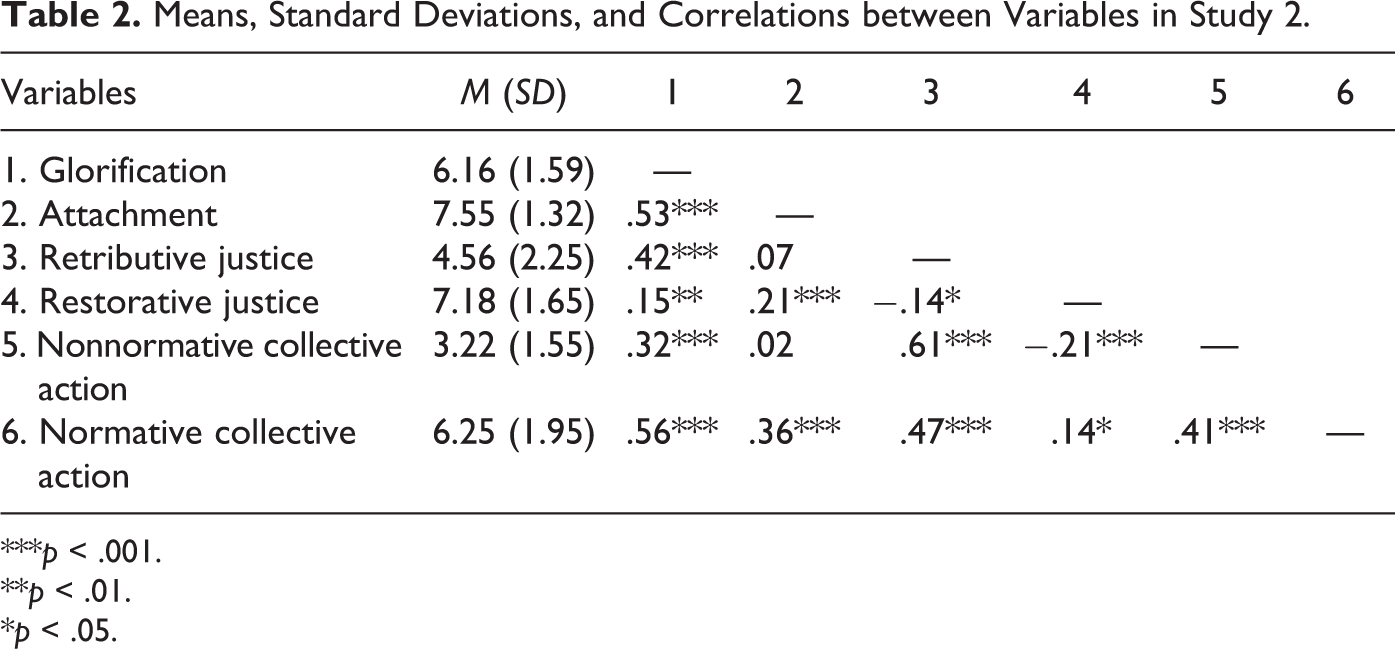
Means, standard deviations, and correlations among the main variables are reported in Table 2. Consistent with Study 1, glorification was positively correlated with retributive justice and with nonnormative collective action; attachment was positively correlated with restorative justice and with normative collective action. To simultaneously test whether glorification predicts nonnormative collective action through retributive justice, and whether attachment predicts normative collective action through restorative justice, we conducted a path analysis using SAS 9.4. The model, depicted in Figure 4, fit the data well, χ2(3) = 8.04, p = .045, SRMR = .02, RMSEA = .08, CFI = .99 (n = 291). As we did in Study 1, we allowed the error terms of glorification and attachment (b = 1.12, SE = .14, t = 8.02, p < .001), retributive and restorative justice (b = −.58, SE = .19, t = −3.09, p = .002), and nonnormative and normative collective action (b = .36, SE = .11, t = 3.31, p < .001) to correlate, reflecting the conceptual idea that they are part of a broader construct (i.e., group identification, notions of justice, and collective action, respectively). As seen in Figure 3, glorification predicted greater retributive justice (b = .76, SE = .09, t = 8.87, p < .001), which predicted greater nonnormative collective action (b = .42, SE = .03, t = 13.21, p < .001). Attachment predicted greater restorative justice (b = .24, SE = .07, t = 3.49, p < .001), which predicted greater normative collective action (b = .12, SE = .06, t = 2.11, p = .035). The indirect effect from glorification to nonnormative collective action via retributive justice was significant, b = .32, SE = .04, t = 7.36, p < .001. The indirect effect from attachment to normative collective action via restorative justice did not reach significance, but it was in the expected direction, b = .03, SE = .02, t = 1.80, p = .071.
Means, Standard Deviations, and Correlations between Variables in Study 2.
***p < .001.
**p < .01.
*p < .05.
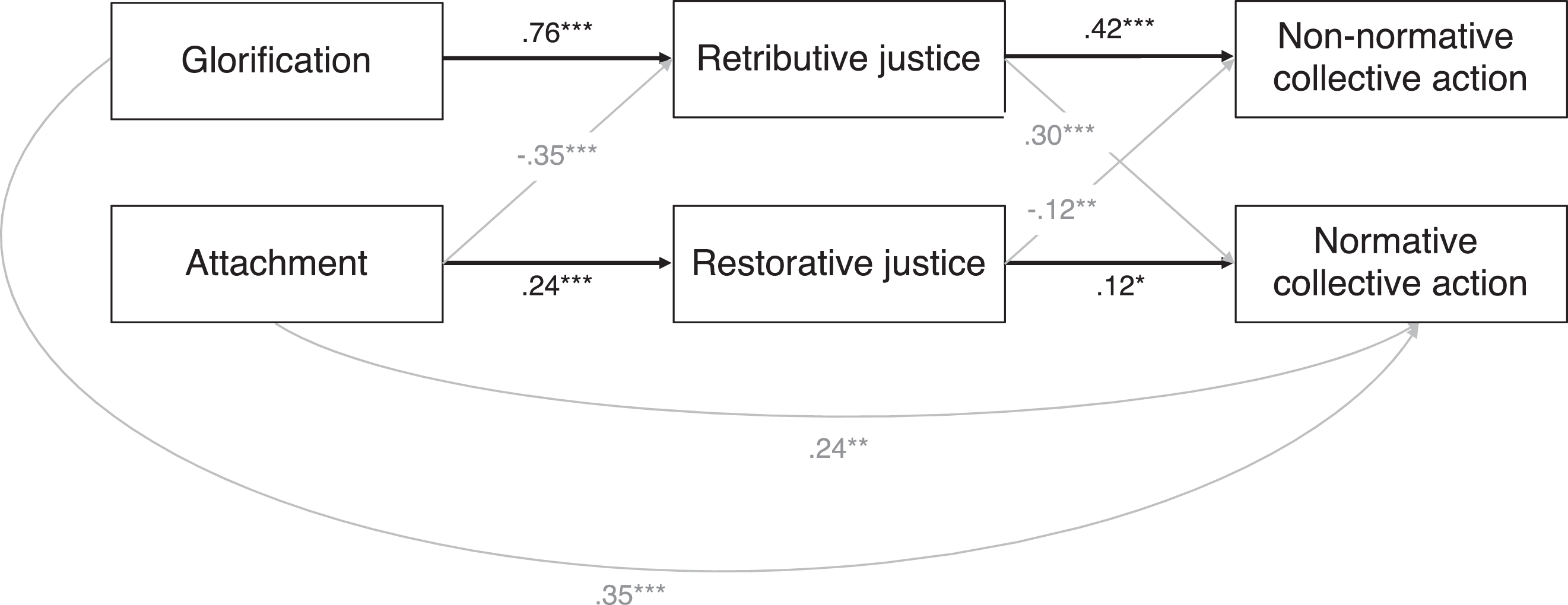
Path model for Study 2. Unhypothesized but significant paths are in gray. Coefficients are unstandardized estimates.
As in Study 1, in addition to the hypothesized effects, several other paths were significant. Again, although these paths were not hypothesized, their presence was not inconsistent with the hypothesized paths. Specifically, these additional paths suggest that there was a negative relationship between attachment and retributive justice (b = −.35, SE = .10, t = −3.41, p < .001), and restorative justice and nonnormative collective action (b = −.12, SE = .04, t = −2.80, p = .005). There was also a positive relationship between glorification and normative collective action (b = .35, SE = .07, t = 4.90, p < .001), and retributive justice and normative collective action (b = .30, SE = .04, t = 6.70, p < .001). As in Study 1, we also conducted separate regression analyses to test the effects of (a) glorification and attachment on retributive/restorative justice and of (b) retributive and restorative justice on nonnormative/normative collective action. Results of these regression analyses again converged with the results of the path analysis. 7
Alternative Model Testing
As in Study 1, we tested an alternative model in which (1) glorification predicted nonnormative collective action, and nonnormative collective action predicted retributive justice, as well as (2) attachment predicted normative collective action, and normative collective action predicted restorative justice (i.e., we reversed the order of the mediating and the outcome variables). The model fit was unacceptable, χ2(7) = 120.39, p < .001, SRMR = .13, RMSEA = .24, CFI = .77 (n = 292).
Discussion
Study 2 replicated and extended the findings from Study 1 using a sample of Jewish Israelis (i.e., members of the other party to the Israeli–Palestinian conflict). We also expanded on our measures of interest (group identification, notions of justice, and collective action) by including more items to improve construct validity and reliability. Study 2 replicated the core findings from Study 1: glorification predicted more retributive justice, and subsequently more support for nonnormative collective action, whereas attachment predicted more restorative justice, and subsequently more support for normative collective action.
It is important to note that we also found several additional pathways that were somewhat inconsistent with Study 1. Specifically, glorification and retributive justice predicted greater support for both forms of collective action. This may be because the social context of undertaking collective action for Arab and Jewish Israelis are in Israel, a Jewish state, which places Jewish Israelis on a higher status compared to Arab Israelis in various areas of public life including socioeconomic and political status. We know from prior work that the “normativeness” of a particular action is related to the social systems in which people are embedded (Wright et al. 1990). Further, our measures of glorification for Jewish Israelis were focused on glorifying Israelis, whereas for Arab Israelis, they were focused on glorifying Palestinians. Thus, for Jewish Israelis, collective action undertaken within the norms of Israel may resonate with glorifying Israel and may still reach their goals of retributive justice. However, for Arabs, glorifying Palestinians and their desire for retributive justice exclusively predicts support for actions outside the norms and laws of Israel.
Additionally, as in Study 1, we found a negative relationship between restorative justice and nonnormative collective action, and a negative relationship between attachment and retributive justice. Although these paths were not hypothesized, they are not inconsistent with our theorizing. These pathways demonstrate that restorative justice and attachment are not only predictive of greater support for normative collective action but also predictive of weaker support for nonnormative collective action.
Study 3
Study 1 and 2 provided correlational evidence for our model from the perspective of Arab and Jewish Israelis, respectively. Both studies provide evidence of mediation through mediational analyses, through which a proposed mechanism is measured (see measurement-of-mediation design in Spencer, Zanna, and Fong 2005). A key issue with correlational data is the presence of potential confounding variables. 8 Study 3 aimed to test our model experimentally to provide causal evidence for the role of justice orientations as the mediator of the link between group identification and collective action. The goal of this approach is to manipulate the mediator by emphasizing different notions of justice, thereby changing the strength of the mechanism between modes of ingroup identification and distinct collective action outcomes (see moderation-of-process design in Spencer et al. 2005, and manipulation-of-mediator design in Pirlott and MacKinnon 2016). This approach is responsive to recent calls by researchers and journal editors in our field to employ experimental designs to provide evidence of mediation (e.g., Jacoby and Sassenberg 2011; Smith et al. 2012).
Study 3 manipulated people’s perceptions of justice orientations by emphasizing retributive justice, restorative justice, or neither (i.e., control) and examined their effect on the link between modes of ingroup identification and different forms of collective action. In the control condition, we expected to replicate the findings from Study 1 and 2, such that glorification would predict increased nonnormative collective action, whereas attachment would predict increased normative collective action. In the retributive justice condition, we expected that glorification would predict increased nonnormative action, but attachment would no longer predict increased normative collective action. By contrast, in the restorative justice condition, we expected that attachment would predict increased normative collective action, but glorification would no longer predict increased nonnormative collective action.
Study 3 was conducted a week before the seventieth anniversary of the Israeli Declaration of Independence on May 14, which is preceded by the 70th anniversary of the Palestinian Nakba Day on May 15. These dates hold radically different meanings for Israelis and Palestinians. For Palestinians, Al-Nakba (“the catastrophe”) is the annual commemoration of the loss of Palestinian land and the expulsion of thousands of Palestinians from their homes during the war in 1948. By contrast, Israelis celebrate the end of the war because it led to the establishment of an independent Jewish State, which ensured a homeland for the Jewish diaspora. In 2018, Palestinians organized the Great March of Return, a series of protests between March 30 and May 15, at the border between Gaza and Israel, demanding that Palestinian refugees displaced during the founding of Israel can return to their land. Clashes between protesters and Israeli armed forces left over a hundred Palestinians killed and thousands more injured (Sanchez and Oliphant 2018). Thus, the timing of data collection during a period of heightened intergroup conflict increased the external validity of our retributive versus restorative justice manipulation, given that the question of how to best respond to Palestinians’ protests was a critical concern among Jewish Israelis.
Method
Participants
An a priori power analysis conducted using G*Power (Faul et al. 2007) estimated that a sample of 165 per condition (495 in total) would be sufficient (80 percent power) to detect differences between three groups, based on the smallest hypothesized effect we observed in Study 2 (r = .14 between restorative justice and normative collective action) with a two-tailed α of .05. 9 To account for potential attrition and exclusions, we oversampled participants. To help ensure we would obtain at least the desired sample of 495 participants, and anticipating a nonnegligible number of participants that would need to be excluded from data analysis due to failed manipulation and attention checks, we recruited 607 Jewish Israeli participants to complete an online survey on their attitudes about the Israeli–Palestinian conflict. 10 Our screening of the data resulted in the exclusion of 34 participants because they did not understand or pay sufficient attention to the manipulation material (as indicated by their incorrect answers to the attention check questions), 26 participants because they spent significantly more time reading the material compared to the rest of the sample, and 1 participant who was not an Israeli citizen. In total, 546 participants were retained for subsequent analyses (Nretributive = 172, Nrestorative = 170, Ncontrol = 204; 276 females, 269 males, 1 other; age 18 to 73 years, M = 43.94, SD = 15.60). With this final sample size, we achieved 84 percent power.
Procedure
Participants were randomly assigned to a retributive justice, restorative justice, or control condition. Participants in the retributive and restorative justice conditions read a fictitious, but allegedly real excerpt from an article written by an ostensibly Jewish Israeli author in which the author addresses other, presumably mainly Jewish, Israelis. In the retributive justice condition, the article argued that the harm that the Palestinians inflicted upon Israelis caused a severe loss of power and status to Israelis. The author of the article then reasoned that restoring justice would require Palestinians to be punished for their actions, proportionate to the harm that Palestinian attacks caused. In the restorative justice condition, the article argued that the harm Palestinians inflicted upon Israelis had disrupted the relationship between the two groups. The author of the article then reasoned that restoring justice would require the relationship between the groups to be repaired by reestablishing shared values and principles that had been violated. In the control condition, participants did not read any article and proceeded directly to the survey questions.
Measures
Manipulation and attention checks
In the retributive and restorative justice condition, participants were asked “According to the author of the excerpt that you just read, which of the following needs to happen in order to achieve justice between Palestinians and Israelis?” The correct answer in the retributive justice condition was “Punish Palestinians for their actions,” whereas in the restorative justice condition, it was “Re-establish the shared values of our communities.” In both conditions, the incorrect answers were “There needs to be a conflict mediation conducted by a third party” and “The author did not discuss this issue.” Participants were also asked “Which group do you think the author belongs to?” The correct answer in both conditions was “Israelis,” and the incorrect answers were “Palestinians” and “Iranians.”
Glorification and attachment were measured using the same items as in Study 2 (glorification: α = .86, M = 6.21, SD = 1.61; attachment: α = .90, M = 7.66, SD = 1.44).
Nonnormative and normative collective action were measured by adapting the items used in Study 2 to be about Jewish Israeli rights more generally, instead of exclusively about Jewish settler rights (which was the focus in Study 2). Participants were asked to what extent they supported or opposed various efforts of Israelis to protect itself from Palestinian attacks, in terms of safety, the well-being and livelihood of Israelis, and the right to a Jewish state, on a (continuous) analog scale from 1 (strongly oppose) to 9 (strongly support). Seven items were developed to measure support for nonnormative collective action (α = .86; M = 4.53, SD = 1.89; e.g., “participate in nonviolent demonstrations to support Israel’s right to defend itself against Palestinian aggression, even if the demonstrations are unauthorized”). Another set of seven items were developed to measure support for normative collective action (α = .87; M = 7.27, SD = 1.35; e.g., “join advocacy groups that focus on the protection of Israel through peaceful means”).
Data analysis and model specification
To test our hypotheses, we conducted multigroup path analysis, which allows researchers to test the same model in two or more groups. By doing so, researchers can simultaneously evaluate the effects of predictors on outcomes across conditions. Further, specific pathways (or regression coefficients) can be systematically compared across groups to examine whether the relationships between variables are different across conditions. Figure 5 shows the path model tested in Study 3. The corresponding regression equations are:
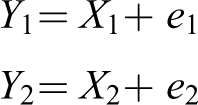
The pathways that we systematically compare across conditions are bX1Y1 and bX2Y2.
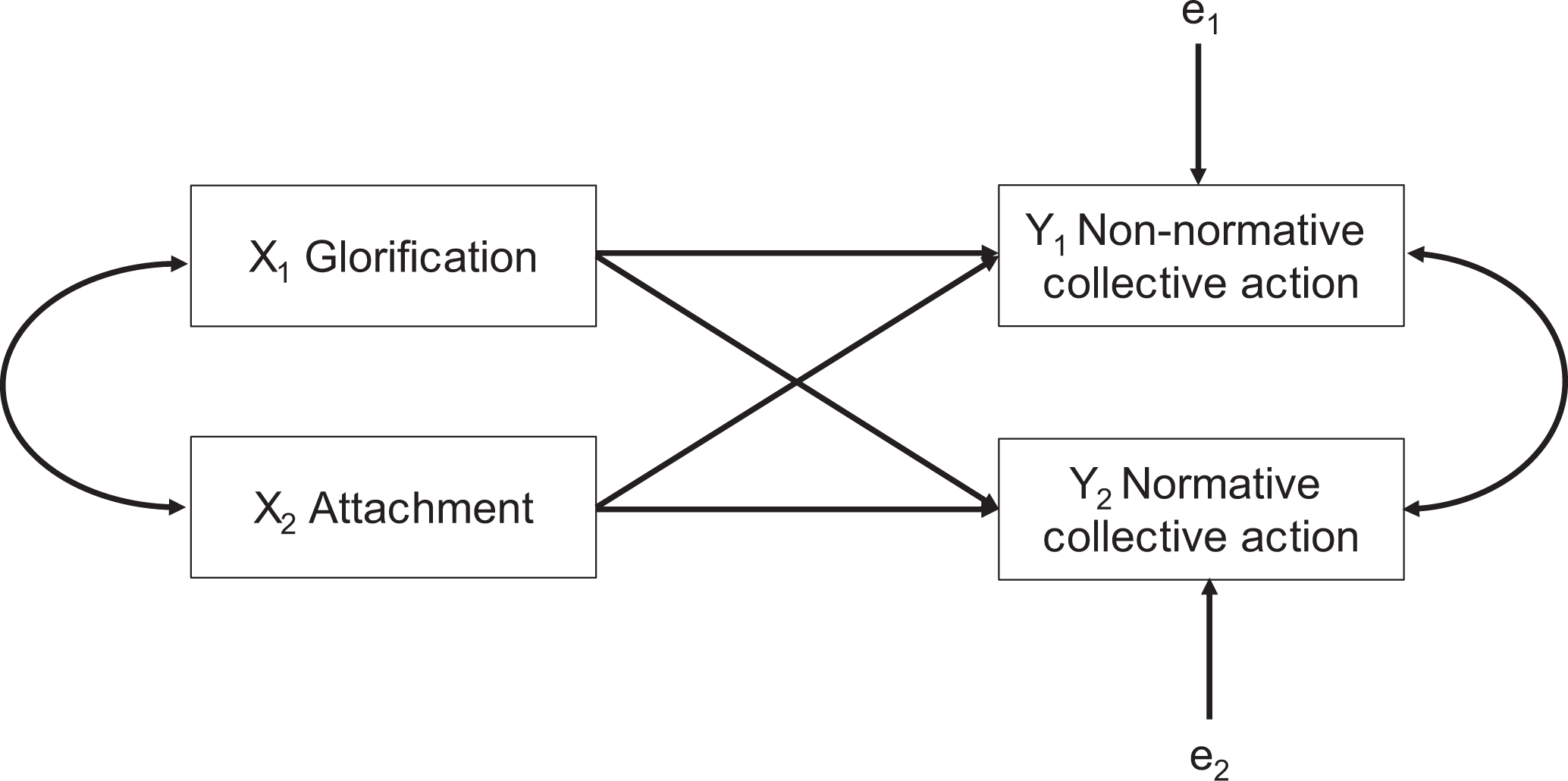
Path model tested in Study 3 across three experimental conditions (i.e., retributive justice, restorative justice, and control).
Results
First, we conducted general linear models to check for any effects of condition (retributive, restorative, control) on our measured variables. Then, we conducted a multigroup path analysis to simultaneously test the hypothesis that glorification and attachment would differentially predict nonnormative and normative collective action depending on condition.
Main Effects of Condition
There was no significant effect of condition on glorification, F(2, 543) = .60, p = .549 (Mrestorative = 6.23, SDrestorative = 1.51; Mretributive = 6.10, SDretributive = 1.73; Mcontrol = 6.28, SDcontrol = 1.58), or attachment, F(2, 543) = 0.36, p = .695 (Mrestorative = 7.69, SDrestorative = 1.33; Mretributive = 7.59, SDretributive = 1.51; Mcontrol = 7.71, SDcontrol = 1.46), supporting our conceptualization of glorification and attachment as independent variables.
There was no significant effect of condition on nonnormative collective action, F(2, 543) = .39, p = .675 (Mrestorative = 4.44, SDrestorative = 1.83; Mretributive = 4.62, SDretributive = 1.89; Mcontrol = 4.53, SDcontrol = 1.92). However, there was a significant effect of condition on normative collective action, F(2, 543) = 4.84, p = .008. Specifically, normative collective action in the restorative condition (M = 7.01, SD = 1.25) was lower compared to the retributive condition (M = 7.35, SD = 1.39), t(341) = −2.30, p = .022, and also compared to the control (M = 7.43, SD = 1.37), t(372) = −2.29, p = .003. There was no significant difference in normative collective action between the control and the retributive condition, t(375) = 0.60, p = .547. Although we did not hypothesize any main effects of condition, the presence of main effects does not preclude our hypothesis, which is that the link between modes of group identification and different forms of collective action would be moderated by condition.
Multigroup Path Analysis
We conducted a fully unconstrained and saturated multigroup path analysis using SAS 9.4 to assess the differences between path estimates across three conditions (i.e., paths from glorification to nonnormative and normative collective action, and paths from attachment to nonnormative and normative collective action; see Figure 6). Since fully saturated models by definition have perfect fit, our main interest was in the significance and magnitude of the path coefficients and their differences across conditions. As in Study 1 and 2, the error terms of glorification and attachment, and the error terms of nonnormative and normative collective action, were allowed to correlate.
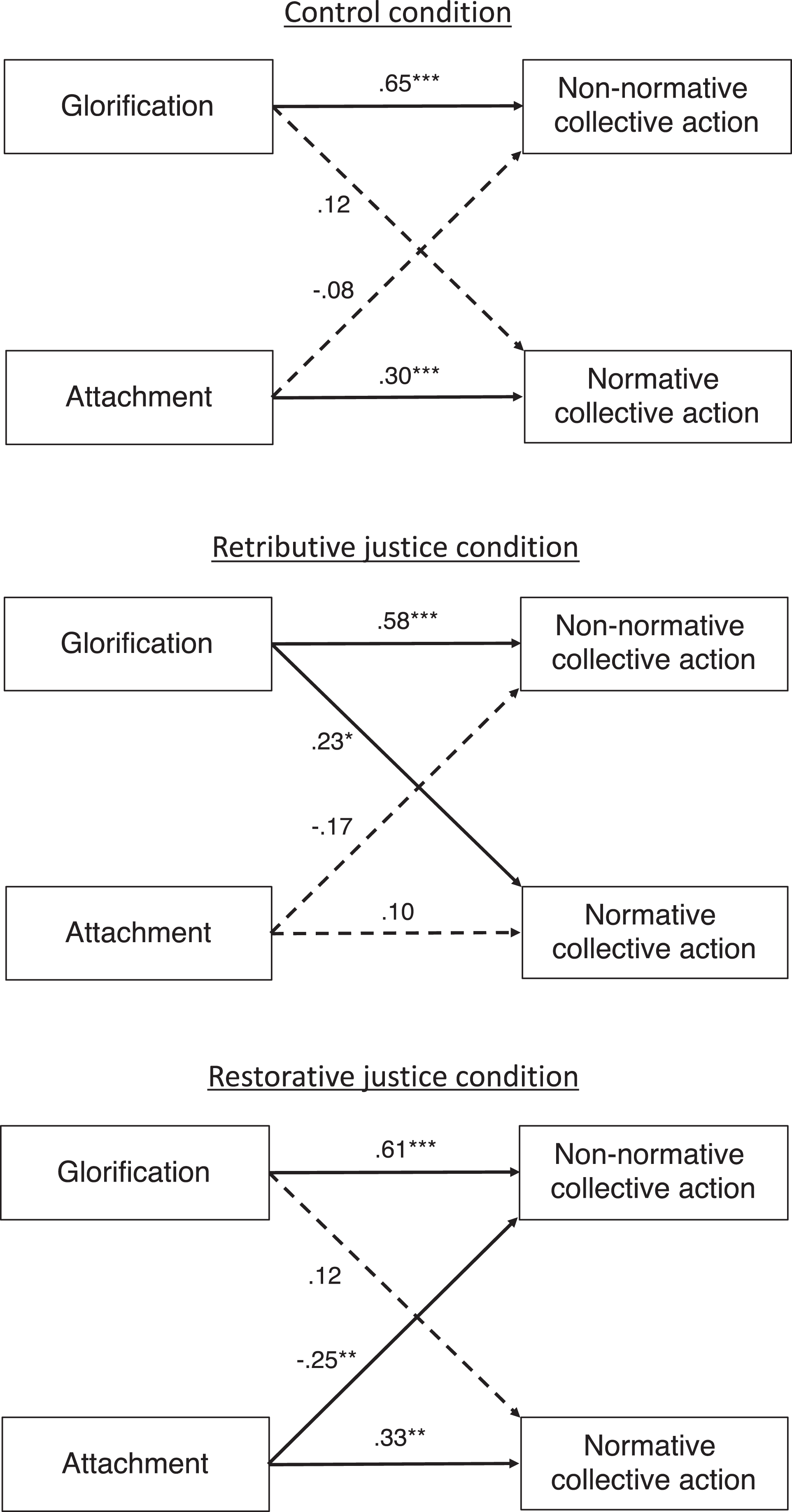
Multigroup path model for Study 3. Nonsignificant paths are in dashed lines. Coefficients are unstandardized estimates.
In the control condition, in line with hypotheses, glorification predicted more nonnormative collective action (b = .65, SE = .09, t = 7.18, p < .001) and did not significantly predict normative collective action (b = .12, SE = .07, t = 1.73, p = .084). The effect of glorification on nonnormative collective action was significantly stronger than the effect of glorification on normative collective action (b = .53, SE = .10, t = 5.09, p < .001). Also as hypothesized, attachment predicted more normative collective action (b = .30, SE = .07, t = 4.09, p < .001), but not nonnormative collective action (b =−08, SE = .10, t = −0.82, p = .411). These findings replicated the correlational findings from Study 1 and 2.
In the retributive justice condition, in line with hypotheses, glorification predicted more nonnormative collective action (b = .58, SE = .09, t = 6.24, p < .001), but it also predicted more normative collective action (b = .23, SE = .07, t = 3.18, p = .002). However, the effect of glorification on nonnormative collective action was significantly stronger than the effect of glorification on normative collective action (b = .35, SE = .11, t = 3.07, p = .002). Further, as expected, attachment was no longer a significant predictor of normative collective action (b = .10, SE = .08, t = 1.21, p = .228) and nonnormative collective action (b = −.17, SE = .11, t = −1.63, p = .103).
In the restorative condition, inconsistent with our hypotheses, glorification predicted more nonnormative collective action (b = .61, SE = .09, t = 6.56, p < .001) and did not significantly predict normative collective action (b = .12, SE = .06, t = 1.84, p = .066). However, the effect of glorification on nonnormative collective action was significantly stronger than the effect of glorification on normative collective action (b = .50, SE = .10, t = 4.74, p < .001). By contrast, as hypothesized, attachment predicted more normative collective action (b = .33, SE = .07, t = 4.53, p < .001) and less nonnormative collective action (b = −.25, SE = .11, t = −2.35, p = .019). The effect of attachment on normative collective action was significantly stronger than the effect of attachment on nonnormative collective action (b = .58, SE = .12, t = 4.89, p < .001).
To test whether the strength of the relationships between modes of ingroup identification and different forms of collective action differed across condition, we systematically tested whether the path coefficients of critical paths differed across condition according to hypotheses. To do so, we used the TESTFUNC statement in SAS 9.4, which uses z-tests to determine whether specific parameters in the model are statistically different from each other. As predicted, we found that the link between attachment and normative collective action was significantly stronger in the restorative condition compared to the retributive condition (b = .23, SE = .11, t = 2.12, p = .034). However, inconsistent with our predictions, the link between glorification and nonnormative collective action did not significantly differ between the restorative and retributive conditions (b = .03, SE = .13, t = .26, p = .795). 11
Discussion
Replicating findings from Study 1 and 2, the control condition in Study 3 found that in the absence of any manipulation of justice notions, glorification predicted more support for nonnormative collective action, whereas attachment predicted more support for normative collective action. Study 3 further demonstrated that emphasizing either retributive or restorative justice can change (or maintain) the link between modes of ingroup identification (glorification and attachment) with different forms of collective action (nonnormative or normative). Specifically, the effect of glorification on greater nonnormative collective action remained unchanged regardless of whether retributive or restorative justice was emphasized, suggesting that the link from glorification to nonnormative collective action is quite stable and difficult to eliminate. Additionally, we found that glorification predicted more normative collective action, suggesting that glorification may be linked to more ingroup-serving actions in general. Attachment, on the other hand, selectively predicted more normative (but not nonnormative) collective action; emphasizing retributive justice eliminated this link, whereas emphasizing restorative justice maintained it.
In understanding the findings from Study 3, it is important to note that we did not measure the extent to which participants agreed with the arguments for retributive or restorative justice that they were presented. The manipulation check questions focused on factual answers to help screen out participants that may not have paid sufficient attention or misunderstood the contents of the article. Given that people’s desire for one form of justice versus another is not likely not be malleable by a brief exposure to an argument in an online survey, we probably did not increase people’s personal endorsement of retributive or restorative justice but merely influenced the relative salience of one type of justice notion versus another. By making different notions of justice more accessible in people’s minds, our manipulation is akin to priming or framing effects rather than persuading or changing participants’ attitude toward justice per se.
General Discussion
People engage in various forms of collective action in pursuit of justice for their respective groups. To further understand this process, we situated the present research in the context of the Israeli–Palestinian conflict to test two central questions using samples of Arab and Jewish Israelis. First, we examine whether distinct dimensions of group identification (i.e., glorification and attachment) would differentially predict distinct notions of justice (i.e., retributive and restorative justice). Second, we examine whether these distinct notions of justice would in turn predict support for nonnormative and normative collective action. By focusing on the subjective perceptions of both sides of an ongoing intergroup conflict, the present work provides a social psychological analysis to understand how the public responds to conflict.
In line with hypotheses, in Study 1 and 2 among Arab and Jewish Israelis respectively, we found that glorification promoted greater retributive justice, which predicted more support for nonnormative collective action, whereas attachment promoted greater restorative justice, which predicted more support for normative collective action. In addition to these hypothesized findings, we found that glorification predicted more support for normative collective action, whereas attachment predicted lower support for nonnormative collective action. Thus, group members who strongly glorify the group tend to support any form of action that benefits the group—both nonnormative and normative actions. Group members who are strongly attached to the group, on the other hand, more selectively support normative actions but not nonnormative actions.
In Study 3, which was conducted among Jewish Israelis during a period of heightened intergroup conflict (i.e., Palestinians’ March of Return at the Gaza Strip), we found that emphasizing retributive or restorative justice produced differential effects on the link between modes of group identification and different types of collective action. Specifically, emphasizing retributive justice eliminated the effect of attachment on greater normative collective action as well as the effect of attachment on lower nonnormative collective action. By contrast, emphasizing restorative justice promoted the effect of attachment on greater normative collective action and the effect of attachment on lower nonnormative collective action. Interestingly, emphasizing either retributive or restorative justice did not change the effect of glorification on greater nonnormative collective action.
Taken together, our hypotheses regarding the effects of attachment were supported, while our hypotheses regarding the effects of glorification were only partially supported. Whereas Study 1 and 2 showed evidence of an indirect effect from glorification to nonnormative collective action via retributive justice, Study 3 did not find direct evidence for a causal effect of glorification on nonnormative collective action via retributive justice. We could not eliminate the link between glorification and nonnormative collective action even when we emphasized restorative instead of retributive justice. By contrast, the positive link from attachment to normative collective action via restorative justice was supported in all three studies. For the prospects of improving intergroup relations, these findings imply that while it may be difficult to diminish the negative consequences of glorification, it is possible to promote the positive consequences of attachment.
Contributions to Research on Conflict and Collective Action
The current work contributes to our understanding of collective action in intergroup conflict contexts. Most social psychological research on collective action has focused on examining collective action from one side of a conflict (e.g., low status group members) or collective action that occurs in societies where engaging in collective action does not involve extraordinary risk (Ayanian and Tausch 2016). By situating the present research in an ongoing, protracted intergroup conflict setting, our research has strong ecological validity and applied value. Further, we examined collective action from the perspective of people on both sides of an intergroup conflict, which suggests that conflict can prolong even when—or because—both groups strive for justice for themselves by engaging in collective action. We also build on emergent studies that have investigated collective action in ongoing conflict settings and used non-Western samples (e.g., Bilali, Vollhardt, and Rarick 2017; Cohen-Chen et al. 2014; Tabri and Conway 2011), which is crucial for providing a more complete picture of the subjective processes involved in collective action.
The present research integrates the literatures on ingroup identification, intergroup conflict, and collective action from a social psychological perspective. By employing multidimensional conceptualizations of ingroup identification and notions of justice, and applying them to the realm of collective action (which has largely treated group identification and justice demands as unidimensional concepts), we show that distinguishing between different modes of ingroup identification and notions of justice is critical in predicting divergent forms of collective action. In addition, by focusing on the microlevel—people’s subjective perceptions as a member of a group—the present research does not assume that macrolevel factors influence all people similarly or to the same extent. This observation is consistent with prior research on armed conflict that has moved beyond aggregate data to identify nuanced trajectories of conflict behavior within a group. For example, in the context of the Afghan war, Lyall et al. (2013) found that civilian perceptions of harm and blame over wartime crimes were shaped by whether the perpetrator was an ingroup (i.e., the Taliban) or an outgroup (i.e., International Security Assistance Force)—rather than the occurrence of war crimes itself. Similarly, it is the form of outgroup threat, not stable preferences or simply being a member of a particular group, that influences individuals’ strategies of mobilization during civil war (McDoom 2012; Shesterinina 2016). Our findings add to this perspective by showing how understandings of ingroup and outgroup actions may meaningfully shape attitudes toward collective action.
Limitations and Directions for Future Research
One limitation of this research is that our conceptualization of the normativeness of collective action was defined in relation to the broader social context, which in the present research referred to the Israeli context. Although this is consistent with the conceptualization in prior research (Becker and Tausch 2015; Tausch et al. 2011), we do not know the perspective of collective actors themselves. While normative and nonnormative collective action might be helpful theoretical labels that help us differentiate between the range of behaviors that manifest during intergroup conflict, these labels may not necessarily reflect people’s personal views. It is quite possible that high glorifiers do not share the consensus view that certain actions are nonnormative. Instead, they may view the actions as appropriate and necessary to achieve ingroup goals. A central feature of glorification is that it is tied to viewing the ingroup as morally superior to other groups, even when presented with evidence of possibly immoral ingroup actions (Roccas et al. 2006). Further, prior research has shown that people can come to view violence as morally justified (Fiske and Rai 2014). Thus, future research might investigate whether collective action that is defined as nonnormative according to broader society would be construed as normative by ingroup leaders that seek to mobilize people for these actions.
Additionally, in the present research, we tested our hypotheses among both high and low status group members advocating for collective action to benefit their ingroup in the context of an ongoing, protracted intergroup conflict. Even though both Israelis and Palestinians may see themselves as victims of the current conflict and perceive each other as perpetrators, they have asymmetrical intergroup relations. Israel occupies Palestinian territories and has a well-armed military force, whereas Palestine does not (Human Rights Watch 2018). Finding consistent patterns among Arab and Jewish Israelis despite these differences attest to the robustness of the model, however the structural power or status of a group may influence the form of collective action that people undertake. High status groups have more opportunities to achieve their demands for justice. For example, Israelis could fulfill their desire for retributive justice by supporting aggressive state policies against Palestinians (Maoz and McCauley 2008) rather than turning to violent protests themselves. By contrast, for Palestinians, collective action may sometimes be the only way to enact ingroup desire for justice (Saab et al. 2016). Future work could investigate how a group’s power and status within society shapes the likelihood that different forms of collective action will occur.
Implications
Our findings point to a novel way of thinking about collective action. If different ideas about how to achieve justice can motivate different forms of collective action, then this suggests that to be responsive and accountable to citizens in conflict societies, policymakers, practitioners, and third-party states should consider people’s concerns for justice when responding to collective action. Effective intervention in nonnormative collective action cannot ignore people’s underlying desire for retributive justice, yet we know that nonnormative collective action may trigger greater suppression from government authorities. However, the use of police force to control protests can further alienate protesters (Drury and Reicher 2000) and increase the likelihood that peaceful protests will turn violent (Sullivan 2019). Additionally, in line with recent work that has called for an expanded definition of state security to include group identity concerns (e.g., Møller 2003; Theiler 2003), our findings suggest that security measures should aim to protect a group’s identity by addressing group-based desires for justice. This is especially important given that Israel’s approach to securing its borders via offensive militaristic strategies can contribute to conflict perpetuation (Maoz 2007; Montgomery and Pettyjohn 2010). For example, even if government policies are labeled as a security measure, such as housing demolitions by the Israeli government, they can trigger resistance because they are seen as punitive by Palestinians (Hatz 2020). The present research offers evidence in favor of conflict resolution strategies that focus on meeting a group’s psychological needs. Strategies such as outgroup acknowledgment of victimhood (e.g., Hameiri and Nadler 2017) and international justice mechanisms (e.g., Li et al. 2018) may help respond to a group’s desire for retribution, which could preempt future violence.
Finally, given that prior research has shown how group identity can be strategically used to rally supporters for a cause (e.g., Reicher et al. 2006), it is possible that how group members frame their ingroup identity can rationalize or justify the type of collective action they are motivated or expected to engage in. Our findings suggest that supporters of the same cause may disagree about ways to achieve justice, which may lead to competing approaches to collectively organize for social change. Specifically, people who glorify their own group may look toward violent means to accomplish their goals and use ingroup-glorifying rhetoric to justify their strategies and mobilize supporters, whereas people who do not glorify their own group but are still strongly attached to it may instead look toward nonviolent means to accomplish their goals and use rhetoric highlighting ingroup attachment to mobilize supporters. In the long term, these dynamics could lead to moderate and radical factions within the same movement or in larger society. Thus, our findings imply that it is not merely the strength of group identity but also the content of group identity—specifically the extent to which people glorify or are attached to their ingroup—that may determine the justice orientation people embrace and subsequently the strategies of collective action.
Supplemental Material
Supplemental Material, sj-pdf-1-jcr-10.1177_0022002720907660 - Modes of Ingroup Identification and Notions of Justice Provide Distinct Pathways to Normative and Nonnormative Collective Action in the Israeli–Palestinian Conflict
Supplemental Material, sj-pdf-1-jcr-10.1177_0022002720907660 for Modes of Ingroup Identification and Notions of Justice Provide Distinct Pathways to Normative and Nonnormative Collective Action in the Israeli–Palestinian Conflict by Hema Preya Selvanathan and Bernhard Leidner in Journal of Conflict Resolution
Supplemental Material
Supplemental Material, sj-xlsx-1-jcr-10.1177_0022002720907660 - Modes of Ingroup Identification and Notions of Justice Provide Distinct Pathways to Normative and Nonnormative Collective Action in the Israeli–Palestinian Conflict
Supplemental Material, sj-xlsx-1-jcr-10.1177_0022002720907660 for Modes of Ingroup Identification and Notions of Justice Provide Distinct Pathways to Normative and Nonnormative Collective Action in the Israeli–Palestinian Conflict by Hema Preya Selvanathan and Bernhard Leidner in Journal of Conflict Resolution
Supplemental Material
Supplemental Material, sj-xlsx-2-jcr-10.1177_0022002720907660 - Modes of Ingroup Identification and Notions of Justice Provide Distinct Pathways to Normative and Nonnormative Collective Action in the Israeli–Palestinian Conflict
Supplemental Material, sj-xlsx-2-jcr-10.1177_0022002720907660 for Modes of Ingroup Identification and Notions of Justice Provide Distinct Pathways to Normative and Nonnormative Collective Action in the Israeli–Palestinian Conflict by Hema Preya Selvanathan and Bernhard Leidner in Journal of Conflict Resolution
Supplemental Material
Supplemental Material, sj-xlsx-3-jcr-10.1177_0022002720907660 - Modes of Ingroup Identification and Notions of Justice Provide Distinct Pathways to Normative and Nonnormative Collective Action in the Israeli–Palestinian Conflict
Supplemental Material, sj-xlsx-3-jcr-10.1177_0022002720907660 for Modes of Ingroup Identification and Notions of Justice Provide Distinct Pathways to Normative and Nonnormative Collective Action in the Israeli–Palestinian Conflict by Hema Preya Selvanathan and Bernhard Leidner in Journal of Conflict Resolution
Footnotes
Authors’ Note
Hema Preya Selvanathan is now affiliated with School of Psychology, the University of Queensland, Brisbane, Australia.
Declaration of Conflicting Interests
The author(s) declared no potential conflicts of interest with respect to the research, authorship, and/or publication of this article.
Funding
The author(s) received no financial support for the research, authorship, and/or publication of this article.

Supplemental Material
Supplemental material for this article is available online.
Notes
References
Supplementary Material
Please find the following supplemental material available below.
For Open Access articles published under a Creative Commons License, all supplemental material carries the same license as the article it is associated with.
For non-Open Access articles published, all supplemental material carries a non-exclusive license, and permission requests for re-use of supplemental material or any part of supplemental material shall be sent directly to the copyright owner as specified in the copyright notice associated with the article.
