







Abstract
This paper revisits the well-known volunteer’s dilemma on the production of a public good when a single participant is sufficient for the task. We propose a cost-sharing model with a volunteering cost that decreases exponentially in the number of volunteers. We show that, at the unique mixed-strategy equilibrium, the probability of production may increase in the number of players for sufficiently low volunteering costs. This provides an alternative account of the fit of the model with some political-military conflict situations: A larger group does erode the individual incentive to volunteer but in an offsetting way that favors the production of the public good. A second result is that the mixed-strategy Nash equilibrium may be more socially efficient than the pure-strategy Nash equilibrium for some parameter values, which is a major reversal with respect to the standard dilemma and many other coordination games.
Introduction
The volunteer’s dilemma (Diekmann 1985) is a n-player, complete-information, simultaneous-move game dealing with the production of a public good or task that requires a single player or volunteer to produce. Each player makes a binary decision to volunteer (at cost c) or not, knowing that a benefit b accrues to each player if the good is produced. The latter outcome requires (at least) one player to volunteer, with more volunteers adding cost without accruing any extra benefit to anyone. To ensure that any player would have an incentive to volunteer if she were the only player in the game, let b > c. However, when other players are present, this incentive might be eroded by the hope that someone else will step in to accomplish the task, yielding the same benefit to others at no cost. In other words, the game provides an opportunity for free-riding, which may lead to socially inefficient equilibrium outcomes.
The volunteer’s dilemma emerges in a diversity of political, military, economic, biological and other conflict settings. Examples include dismantling piracy groups in international waters, whistle-blowing in organizations, reporting an ongoing crime to the police (as in the well-known story of Kitty Genovese, Manning et al. 2007), alarm-sounding in animal societies in response to approaching predators (Archetti 2011), preemptive strikes to neutralize potential raiders (Konrad 2024), and other examples discussed in Konrad and Morath (2021). In some military settings, a volunteer is often needed to carry out a critical and dangerous task that would yield a major benefit to an entire army unit. Such situations include military scouts in low-tech warfare, sentries in nighttime warfare, kamikaze pilots and divers in World War II, and suicide bombers more recently. One might add the story of Pheidippides who ran from the plain of Marathon to the city of Athens in 490 BC to announce the Greek victory at Marathon and warn the Athenians to prepare for a Persian invasion, thus inspiring the modern Marathon competition. 1
The main result of this literature is that, in the unique mixed-strategy Nash equilibrium (MSNE), larger groups reduce both the individual volunteering probability and the likelihood of public good provision, a strong case of free-riding behavior. In later work, Weesie and Franzen (1998) introduced cost-sharing, where costs are split evenly among all volunteers, and showed that the probability of public good provision still declines in group size.
The main goal of the present paper is to introduce synergies in cost sharing and show that the probability of public good provision often increases in group size. Specifically, a participant’s cost decays exponentially with the number of volunteers: c
k
, where c < 1 is a cost parameter and k is the number of volunteers. This exhibits cost synergies compared to the equal split rule (
Cost-sharing synergies arise in many volunteer dilemma settings, for example, in counter-piracy coalitions. Beginning with the notorious episode of Barbary piracy, 3 the more recent Somali piracy is an important example of a prolonged impediment to trade and navigation in the Red Sea, lasting over a decade before being resolved through direct intervention by a coalition of Western navies (e.g., De Luce 2016; Karawita 2019). Each country in the group incurs lower individual costs, as it may patrol only the area of the danger zone closest to its coastline (rather than all of it). Moreover, participation by multiple countries enables task specialization, 4 a key driver of increasing returns to scale in various contexts (e.g., Smith 1776; Andreoni and Levinson 2001), and may generate a deterrence effect that can reduce overall piracy activity, thereby lowering the total patrolling effort required.
Corporate or political whistleblowing offers another example. Potential whistleblowers often hesitate due to fear of retaliation, but as more individuals come forward collectively, the risk to any one person diminishes. Moreover, as the group grows, the resulting increase in corporate oversight creates a deterrence effect, and retaliation by the accused becomes increasingly infeasible, driving the total cost of whistleblowing toward zero. In line with this idea, a group of lawyers recently launched Psst, a nonprofit organization specifically designed to “collectivize” whistleblowing in repressive political environments. 5
The conclusion under cost-sharing synergies, that public goods are more likely to be provided in larger groups, is plausible across many settings. For instance, one would expect a counter-piracy coalition to be more likely to form when a greater number of countries are affected, and corporate wrongdoing may be more likely to be reported in larger organizations. These patterns are consistent with findings from experimental studies on the volunteer’s dilemma and the bystander effect, both with and without cost-sharing mechanisms (Campos-Mercade 2021; Goeree et al. 2017; Weesie and Franzen 1998). Some studies report similar comparative statics but attribute them to alternative explanations, such as incomplete information about players’ valuations or costs (Osborne 2004; Weesie 1994), randomness in individuals’ ability to volunteer (Glazer et al. 2024), or strategic reductions in vigilance among animals in predator-prey contexts (Archetti 2011). Nevertheless, cost-sharing synergies among volunteers offer the most natural explanation for these patterns.
Beyond characterizing individual and collective volunteering probabilities, we also compare utilitarian welfare under PSNE (pure-strategy Nash equilibria) and MSNE. Unlike the classical model (Diekmann 1985), where PSNE always yields higher welfare by avoiding duplicated costs associated with MSNE, we show that the MSNE can sometimes generate higher social welfare due to the cost-sharing synergies. A further departure from the standard model lies in the welfare-maximizing outcome: under our cost-sharing rule, it sometimes involves all players volunteering, in contrast to the traditional setting where a single player volunteering (i.e., the PSNE) is always socially optimal.
The game discussed here—with simultaneous moves—differs from the dynamic waiting game originally described by Bliss and Nalebuff (1984). In their narrative, a “dragon-slayer” must take the lead in providing the public good. Each player, privately informed of their own cost, decides when to volunteer, conditional on no one having acted yet. The key difference is the observability of other players’ actions and the feasibility of delayed responses: if individuals can observe other players’ actions and delay their contribution to the public good, the situation is more aligned with a dynamic waiting game. Common examples include opening a window in a hot room, rescuing a drowning swimmer, and confronting an attacker. 6
In some related models, public good provision depends not on a single player’s contribution but on more complex structures, including aggregate donations (Bergstrom et al. 1986), weakest-link or best-shot rules (Hirshleifer 1983), or a threshold number of contributors (Palfrey and Rosenthal 1984). The present paper focuses on the case where a single volunteer suffices for the task, but additional volunteers reduce individual costs.
Building on Diekmann (1985), subsequent work has extended the model in several directions. Weesie (1993) introduced a volunteer timing game, similar to Bliss and Nalebuff (1984) but with complete information, and players randomize the time at which to volunteer. With asymmetric costs, the most favorable player volunteers immediately, resolving the dilemma. Weesie (1994) compares the static and dynamic versions of the volunteer’s dilemma under complete and incomplete information on costs and finds that with sufficiently high uncertainty, the probability of public good provision may increase with group size. Recently, Shi (2025) introduced hyperbolic discounting into a dynamic volunteering model. Konrad (2025) examined how partitioning volunteers into teams coupled with a coordination mechanism affects individual well-being and social welfare. For repeated game analysis of the cost-sharing model (Weesie and Franzen, 1998), see Amir et al. (2025).
The cost-sharing volunteer dilemma of Weesie and Franzen (1998) falls within the framework of the snowdrift game (Sugden 2004), which is widely used to study evolutionary cooperation in biology and ecology (e.g., Gore et al., 2009; Hauert and Doebeli 2004).
The rest of this paper is organized as follows. Section 2 introduces the model with cost-sharing synergies and derives the Nash equilibrium along with its comparative statics. Section 3 presents a novel formal welfare analysis comparing Diekmann’s model and ours. Section 4 offers a brief discussion of the scope of the model and Section 5 concludes. Proofs not given in the text are deferred to the Appendix.
Volunteer’s Dilemma With Cost Synergies
This section proposes a special form of cost synergies for Diekmann’s volunteering dilemma game while keeping the rest of the game the same. Specifically, we assume the volunteering cost for one player decreases exponentially in the total number of volunteers, which exhibits cost synergies. We show that this cost-sharing synergy has new implications on the comparative statics of the MSNE of the game and on the welfare properties of the MSNE and PSNE. These results indicate a significant departure from the standard model analyzed in Diekmann (1985) under certain conditions.
Cost-sharing is not a new idea in the study of the volunteer’s dilemma. Weesie and Franzen (1998) considered two possibilities of sharing the costs: All volunteers evenly split a constant total cost (i.e.,
In contrast, we show below that as a result of the synergies inherent to the cost function c k , the individual free-riding incentive still declines with group size, but the public good is more likely to be provided in a larger group when the cost parameter c is sufficiently low.
The Game and Our Cost-Sharing Rule
Consider an n-player game (n ≥ 2) wherein each player has two strategies, volunteer (V) or stand by (S). A public good is produced if at least one player chooses to volunteer. 7 The volunteering cost is c > 0 for each player if he is the only player to do so, c k if there are k volunteers (including the player himself), k ≥ 1. If the public good is produced, each player gains a benefit of b. W.l.o.g, let b = 1 and assume c < 1. Thus, every player would volunteer if he were the only participant in the game. However, an incentive to free ride exists whenever other players are present. Also, the individual cost to volunteer c k is a decreasing function of the total number of volunteers. There is no cost to stand by, and no benefit if the public good is not produced, that is, when everyone chooses to stand by. The game is thus a classical symmetric anti-coordination game with binary actions. 8
A key property of this cost function is that it embodies cost synergies as more participants join and these synergies are magnified as the parameter c decreases. Specifically, the elasticity of the cost function c k with respect to k, defined as usual by d log(c k )/d log k, is equal to k ln c, which decreases rapidly as c decreases and approaches −∞ as c converges to zero. These cost synergies form the key qualitative feature that distinguishes our cost function from Weesie and Franzen’s cost-sharing rule, whose elasticity is constant at −1.
A plausible contextualization of this game involves n countries facing a common threat, for example, piracy in international waters. Each country must decide whether to deploy military forces to counter this threat or remain passive, hoping another country volunteers instead. In this context, the volunteering cost c primarily captures the military expenditure incurred, while the benefit represents the economic gains resulting from enhanced maritime security. The piracy activities would be countered by a single country if it alone were affected. However, the presence of other countries under threat of piracy in international waters gives incentives for each to free-ride on others’ military resources and action. In addition, a volunteering country will enjoy a cost reduction if other countries join the anti-piracy coalition, as each one needs to support a fraction of the total task force and provide Navy ships to patrol only a share of the danger zone waters.
While this part of the story may a priori be compatible with equal cost-sharing implied by the cost function
In whistleblowing settings, a whistleblower’s psychological fears and anxiety are reduced when more people step forward to report wrongdoing and their overall credibility is enhanced. In addition, a key drawback is the expected retaliation from their superiors, which also becomes impractical and less likely the larger the volunteering group is.
These efficiency gains often appear together and seem to better align with a cost function exhibiting synergies, such as the tractable exponential function proposed here. 10
Nash Equilibrium and Comparative Statics
We now characterize the Nash equilibrium of the game. With the n-player game being a typical anti-coordination game, a standard game-theoretic analysis leads to the conclusion that every PSNE involves one player volunteering and all others standing by. Specifically, this follows from the observation that each player will volunteer when everyone else stands by and will stand by if at least one other person volunteers. Hence, one and only one player volunteering constitutes the unique Nash equilibrium (up to permutations of the players). With n players in the game, there exist n such PSNE, raising the question of role assignment, or equilibrium selection, as to who should act as the one volunteer.
Alternatively, due to the symmetric nature of the game, a more focal solution concept is (symmetric) MSNE (see Schelling 1960), in which each player assigns the same probability p to action V and probability (1 − p) to action S. The expected payoffs associated with the two strategies can then be written as


Invoking the indifference criterion (i.e., in a MSNE, a player should be indifferent between choosing V or S), equating the two payoffs, 1 − c(cp + 1 − p)n−1 = 1 − (1 − p)n−1, leads to the solution p*. The collective volunteering probability, that is, the probability that the public good is provided (or that at least one player chooses V) is then
Under exponential costs, there is a unique MSNE where the individual volunteering probability (p*) and the probability that the public good is produced (P*) are

The tractability of the analysis here stems from the compatibility of the reciprocal (as in Weesie and Franzen 1998) or exponential functional form with the use of the binomial formula and thus a priori need not extend to other cost functions. 11 Therefore, although there are other possible ways to model a qualitatively similar cost structure, tractability confines us to this specific exponential form, which is, nonetheless, very plausible and sufficient to generate a broader and novel comparative statics pattern.
The equilibrium probabilities have the following properties.
12
1. Both p* and P* globally decrease in c. 2. p* globally decreases in n. 3. There exist 0 < c1, c2 < 1 such that: (i) when 0 < c < c1, P* increases in n for all n ≥ 2. (ii) when c1 < c < c2, P* decreases in n first and then increases in n. (iii) when c2 < c < 1, P* decreases in n for all n ≥ 2. Theorem 2 implies a major reversal to the results drawn in Diekmann’s classic model. Here we provide a quick recapitulation of Diekmann’s (1985) result. In the classic model, the PSNE is the same as the present model, with only one player volunteering. As for the MSNE, the individual’s expected payoffs associated with the two strategies without cost-sharing can be written as Equating the two payoffs gives rise to the solution of the classic model: Both


By comparing (2) and (3), simple calculations show that the public good is more likely to be provided with our cost synergies than without, that is,
Relative to Diekmann (1985), Theorem 2 reflects a major reversal for the comparative statics of the collective volunteering probability: P* increases in n when c is sufficiently small, so that it is maximal with infinitely many players. It also accommodates scenarios where P* decreases with n for larger values of c, with its maximum at n = 1, in agreement with the classical model. For intermediate values of c, P* is U-shaped in n, in line with the case being an in-between scenario of the other two cases.
The result suggests that, with our cost synergies, whether a larger group size favors the production of the public good depends on the magnitude of the cost parameter c. For instance, in the piracy example, if attacks on ships are easily restrained, a counter-piracy coalition is more likely to be established when there are more countries affected by piracy. The opposite holds if piracy perpetrators are well-armed and equipped, split into many groups, and more able to evade search, in which case the free-riding incentive is stronger and a coalition is less likely to emerge when more countries are under threat.
Naturally, the MSNE still reflects excessive volunteering and cost duplication with a significant probability (as only one volunteer is needed). Nonetheless, the strong cost-sharing structure implies that the payoff cost to such mis-coordination remains bounded, so that the probability of the public good being provided ends up being higher with larger group sizes.
Welfare Analysis
In this subsection, we compare the welfare associated with the PSNE and MSNE. In our context, since only one volunteer is needed for the public good to be provided, it is easily seen that MSNE induces a welfare loss as the probability of multiple players volunteering is positive, resulting in cost duplication. The same argument holds if more than one volunteer is needed for public good provision (such as in Palfrey and Rosenthal 1984), as long as every player puts a positive probability on the action of volunteering. To see the welfare loss, we may start with the simple scenario of Diekmann’s model where there is no cost-sharing synergy. Despite being standard, the following welfare analysis of the classic model is novel in the literature to the best of our knowledge.
Diekmann’s Standard Model
Recall that in Diekmann’s model, the unique PSNE outcome involves one player volunteering, paying the cost c, whereas every player gets the benefit of b = 1. Therefore, the corresponding utilitarian social welfare, the sum of all players’ payoffs, is
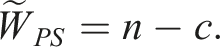
For this basic model, the PSNE is Pareto-optimal. In fact, as is easily seen, it corresponds exactly to the first-best solution one would obtain by a social planner aiming to maximize the utilitarian social welfare (i.e., W = n − kc, in the case that the public good is provided) by picking the number of volunteers to participate. As a consequence, the PSNE delivers higher utilitarian social welfare than the MSNE. Intuitively, the inefficiency of mixed-strategy play stems from the duplication of costs for all the cases with more than one volunteer.
It is of interest to estimate the welfare loss due to the use of the MSNE relative to the PSNE. To this end, observe that with the mixed-strategy play, the expected utilitarian social welfare has the following expression:
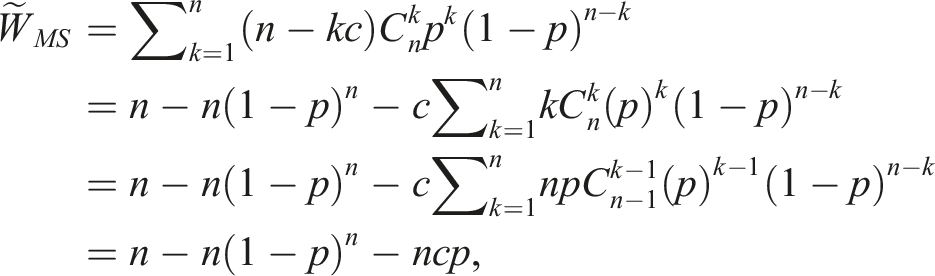

The next result immediately follows:

In Diekmann’s model, the PSNE (one volunteer) is Pareto efficient, whereas the MSNE generates an efficiency loss that increases with n and c.
This conclusion is intuitively expected since the PSNE ensures that the task is accomplished with probability one and does so while avoiding any duplication in volunteering costs. In contrast, neither of these features is satisfied by the MSNE, wherein every number of volunteers from 0 to n arises with positive probability. A no-volunteer outcome reflects a welfare loss and all outcomes with two or more volunteers give rise to varying levels of duplication of volunteering costs, including the maximal level of nc when everyone volunteers. These mis-coordination costs inherent to mixed-strategy play are a pure loss for the group.
In contrast, with cost-sharing synergies, society may benefit from a mixed strategy as more volunteers raise duplication costs but also bring down individual volunteering costs.
Our Model with Cost Synergies
We begin with a characterization of the Pareto-optimal outcome of our game. A social planner maximizes the welfare function W = n − kc k w.r.t. k ∈ {1, 2, …, n}, where n is the total benefit accruing to all players when the public good is provided and kc k is the total cost (we may ignore the case k = 0, since it leads to W = 0, which cannot be a solution).
Clearly, welfare maximization is equivalent to minimizing the total cost kc k of all participants (over k = 1, 2, …, n). As the total cost function kc k increases in k when k < − (ln c)−1 and decreases in k when k > − (ln c)−1, it is a bell-shaped (or quasi-concave) function. As such, it is always minimized at one of the endpoints of the domain, that is, at k = 1 or k = n.
The welfare-maximizing number of volunteers in the game with cost synergies is: k* = n if
In other words, as illustrated in Figure 1, only the two extreme outcomes could be welfare maximizers: Either one volunteers (when the cost parameter is high) or everyone volunteers (when the cost is low). Thus, c plays a key role and n only a minor one, in modifying the cost threshold at which the planner switches between 1 and n volunteers. Along this (knife-edge) threshold or curve, both outcomes with a single and all volunteers are socially optimal. The welfare-maximizing number of volunteers k*.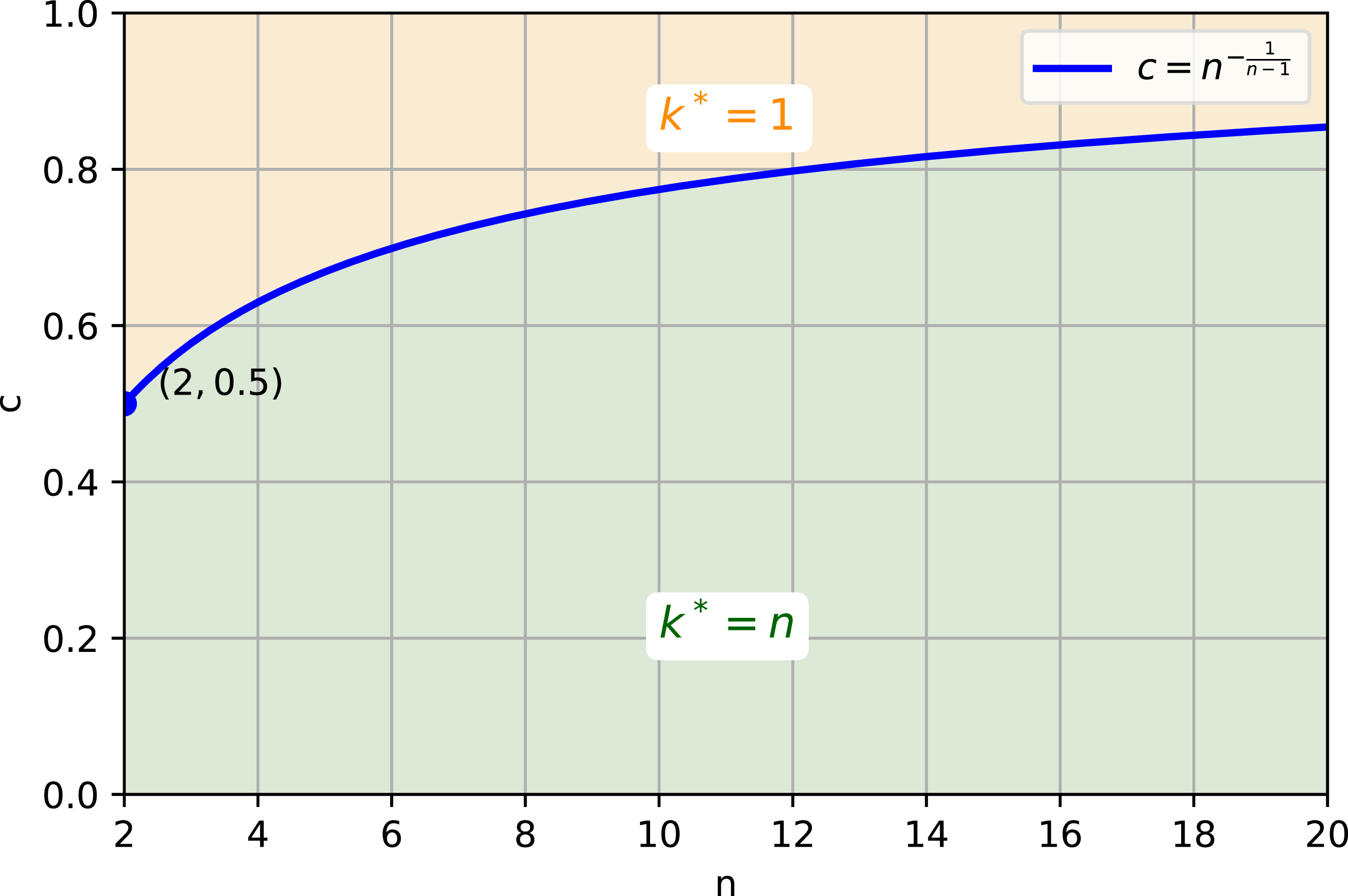
An intuitive account behind the socially optimal solution is that it balances two opposing effects: The first is the need to avoid duplication of effort since the full benefit accrues to all with just one volunteer and the second effect is that adding more volunteers lowers individual costs of coming forward, as well as total costs for sufficiently high values of n. As noted earlier, these cost synergies increase as c decreases. This explains why the first effect is dominant in the high c region and the second in the low c region in Figure 1. Less intuitive is that no interior value of k is ever an optimal compromise between the two effects.
As to welfare properties of the Nash equilibria of the game, it follows from Theorem 4 that, since the PSNE in our model involves one volunteer, the PSNE is Pareto-optimal only when
Let W
PS
denote the PSNE utilitarian welfare, which is easily seen to be

As for the MSNE, its expected social welfare is
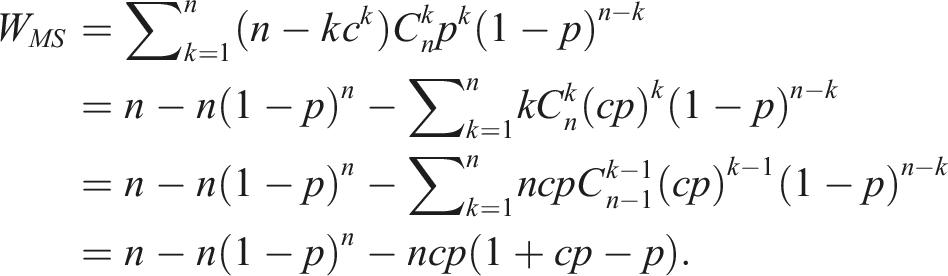
Replacing p with the equilibrium value p* in (2), we get W
MS
as a function of n and c. The functional form of W
MS
does not allow for a tractable comparison with W
PS
. Hence, we resort to graphical simulation to report the values of (W
PS
− W
MS
) by varying the parameters c and n. The simulation results (see Figure 2) indicate that W
MS
> W
PS
when c and n are sufficiently small, and W
MS
< W
PS
otherwise. We provide an analytical proof for the two-player case and an intuitive discussion for the general n-player case in the Appendix. Welfare comparison between PSNE and MSNE.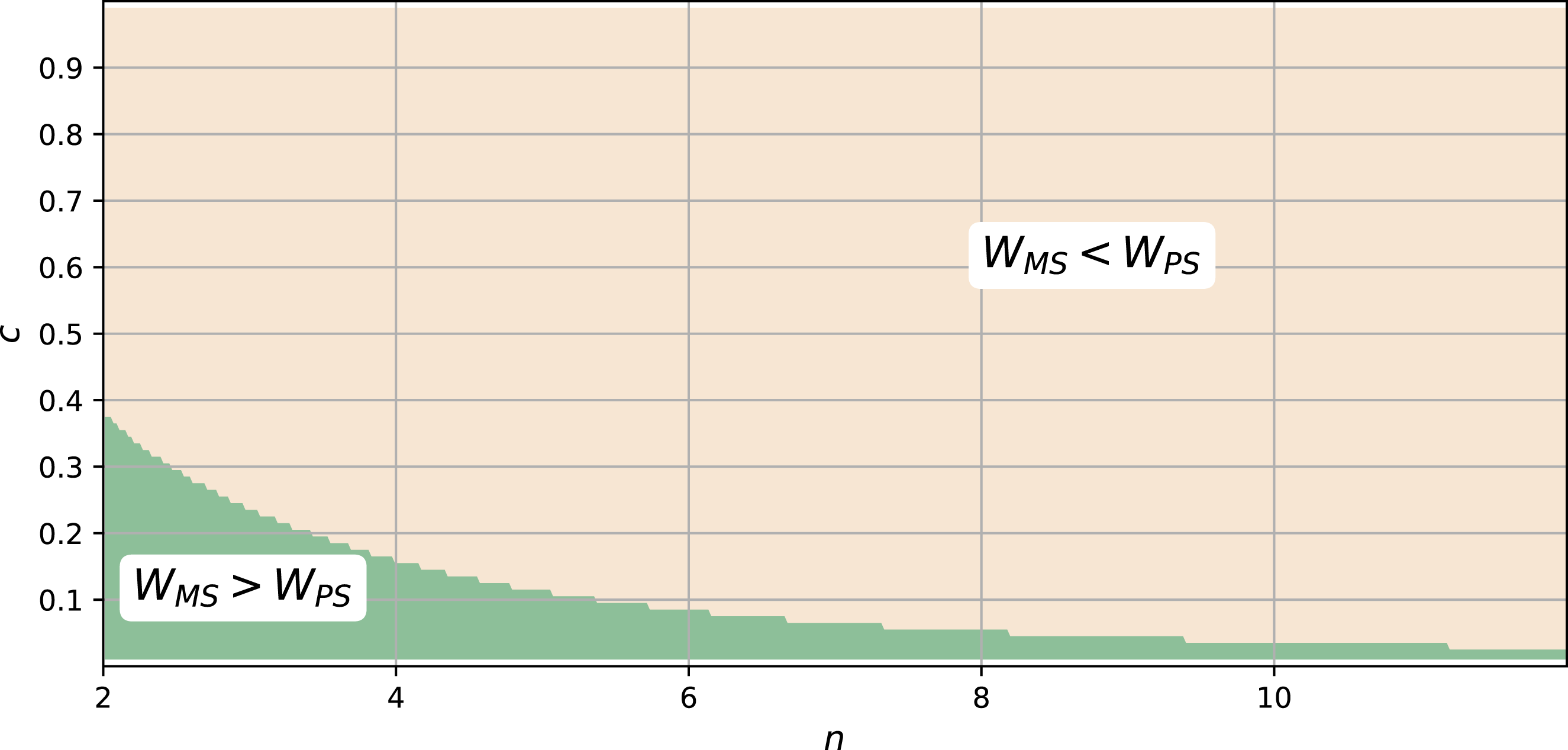
Therefore, for small volunteering costs and group sizes, the MSNE generates higher social welfare than the PSNE, a reversal from Diekmann’s model (i.e., Theorem 3). This is the case when the cost-sharing synergy is rather strong, since the exponential decay of costs is rapid for small c’s, and the cost synergies slow down as k increases, in light of c k being convex in k. This is a strong reversal for coordination games more generally since the reverse conclusion is broadly the norm for a large class of coordination games. 15
In the other parameter region, the PSNE generates higher social welfare than the MSNE, but does not Pareto-dominate it, since the higher welfare is achieved at the expense of the single volunteer in the PSNE. Indeed, the latter bears the full cost c and gets a payoff of 1 − c, whereas everyone else free rides and gets a payoff of 1. The MSNE outcome is fairer in that everyone gets an expected payoff of
On the Scope and Implications of the Results
This section discusses some normative implications of our model and results from a social welfare perspective. To do so, we first recapitulate the main differences between our conclusions and their existing analogs, based on Diekmann’s classical model.
The cost-sharing synergies in our model lead to several reversals of conventional results when the volunteering cost is relatively small. Focusing on the latter case, the reversals of a qualitative nature are three-fold: The main one is that the probability of public good provision increases in the group size; the second is that one volunteer (i.e., associated with the PSNE) is no longer socially optimal; and the third is that a positive likelihood of multiple volunteers (i.e., associated with the MSNE) generates higher social welfare than the PSNE outcome for small values of both the cost parameter and the number of players.
We now discuss the implications of these results in some of the conflict settings mentioned earlier, along with some possible policy prescriptions. As a starting point, we recall that Diekmann’s results, based on the MSNE as a focal equilibrium, are negative from a social efficiency viewpoint, both because of the MSNE not being welfare maximizing and of the strong free riding implied by the comparative statics of the success probability with respect to group size. In other words, volunteer dilemmas may be seen as inherently bad news for society (or the world, in cases of international conflicts) and therefore undesirable situations that should ideally be avoided or remedied by the relevant central authority.
As a key normative implication, a natural idea suggested by the present analysis is to design mechanisms or institutions to make important real-life volunteer dilemma situations appear to their respective participants as being closer to our model with cost synergies than to Diekmann’s classical model. The advantages of changing the perceived game are clear: The probability of the public good being supplied is thereby enhanced (cf. Remark 1) with the further advantage of higher efficiency in the form of cost-sharing with synergies between the participants. While such institutions would always play a constructive role in the sense just described, they would be quantitatively more useful in cases where the unit cost c is low and/or the number of players in the volunteer game high (cf. Theorem 2).
Indeed, we now argue that this key prescriptive idea already has some existing positive content in some of the conflict examples discussed previously. For instance, in the whistleblowing example, the Psst collective serves as such an institution. Indeed, it enhances players’ intrinsic motivation to come forward, due to the moral support they get through their interaction within Psst. This association may be plausibly seen as lowering an individual’s cost of participation (i.e., whistleblowing), which includes individual psychological “coping” costs 16 and retaliation prospects from their hierarchical superiors. 17 Despite the presence of Psst, individuals may a priori be thought of as still engaged in a noncooperative game since Psst is not intended to serve as an enforcement mechanism for any joint course of action or agreement between them, such as verbal promises to come forward.
For the piracy example, the Contact Group regrouping all interested countries may also be seen as such a coordinating cost-lowering collective, much like the previous example. Nevertheless, the Contact Group’s role may be closer to a way of implementing the welfare optimum, rather than a Nash equilibrium. This is due to the fact that it permits various levels of coordination of anti-piracy activities amongst participants, which may be necessary to achieve the highest cost synergies. 18 Nevertheless, the Contact Group does so without having any real coercive powers over its members, who may thus end up choosing to renege on their commitments to the group, as might take place as part of Nash equilibrium play.
In any case, whether one is inclined to see a whistleblower situation in the presence of the Contact Group as a game or as a social planner’s problem (with cost synergies in both cases), the Group’s role is a constructive one. Even if the ex post interaction is seen as a Nash equilibrium, such a collective may serve as a way to coordinate efforts to some extent and thereby achieve some of the efficiency gains alluded to earlier.
A final comment concerns the interplay between equilibrium selection (MSNE vs. PSNE), social efficiency and possible public policy. In Diekmann’s model, the MSNE is a focal outcome, respects the “treat likes equal” principle of fairness, but is socially inefficient. In contrast, the PSNE is socially efficient but treats the single volunteer unfairly in an extreme way. This dichotomy is mitigated in significant ways in the model with synergies since the PSNE is not efficient and sometimes leads to lower welfare than the MSNE. These results enhance the relative attractiveness of the MSNE as a solution concept, from a broader social welfare point of view. Thus, short of implementing the social optimum, policy measures by the central authority to help bring about the MSNE, instead of the PSNE, would be appropriate. In addition to institutions such as those discussed above, such measures may include putting in place rewards or partial reimbursement schemes, nudging campaigns, and mandating some minimal type of participation. In cases where the total number of participants (i.e., n) is itself endogenous, such measures may also have the effect of increasing this number, which would be a positive outcome for the model with cost synergies.
Conclusion
This paper has considered the volunteer’s dilemma with the principal motivation of exploring a plausible modification of the cost structure to integrate cost synergies so as to induce the MSNE to reflect that a larger group size may favor the production of the public good. To this end, the key ingredient is a novel (individual) cost function that decays exponentially in the number of volunteers. This is a plausible and realistic scenario in some novel political conflict contexts for the volunteer’s dilemma game that we identify, including anti-piracy coalitions, whistleblowing, and volunteering in combat situations.
Our results suggest that the characteristics of the individual and the collective incentives to volunteer are not only affected by the absolute magnitude of the volunteering cost but also by the way the cost is shared among all volunteers, that is, how efficiently the volunteers may collaborate with one another. Thus, a key property of our cost function lies in the cost synergies that are substantial for small values of the volunteering cost parameter.
The main result of this paper establishes that this choice of cost function delivers very diverse conclusions on the variation of the collective success probability for the public good with respect to group size, depending on the cost parameter. In particular, when the latter is small, this probability increases in the group size, thus reversing the well-known strong free-riding result of Diekmann’s and of the cost-sharing models.
As to welfare properties, the PSNE (with a single volunteer) is socially optimal only for high values of the cost parameter. For moderate or low values, welfare maximization calls for all players to volunteer. No interior number of volunteers could ever be socially optimal. Finally, the MSNE is more socially efficient than the PSNE for low values of the cost parameter and of the number of players. This is a major reversal from the standard volunteer’s dilemma (as well as coordination games more broadly).
Footnotes
Acknowledgements
The authors would like to thank Kai Konrad, Tatiana Mayskaya, Sven Simon, John Wooders and Myrna Wooders for helpful feedback on the contents of this paper.

Funding
The authors received no financial support for the research, authorship, and/or publication of this article.
Declaration of Conflicting Interests
The authors declared no potential conflicts of interest with respect to the research, authorship, and/or publication of this article.
Data Availability Statement
Data sharing not applicable to this article as no datasets were generated or analyzed during the current study.
Notes
Appendix
This section collects proofs of the theorems (if not self-contained in the main text), and of the welfare comparison between PSNE and MSNE when n = 2.
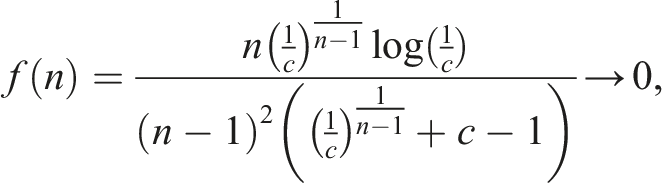
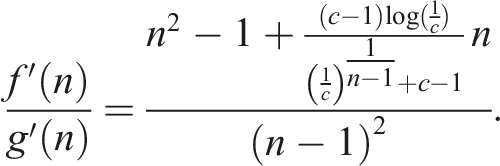
It contains three parts. First, we show that the individual and collective volunteering probabilities, p* and P*, both decrease in the cost c. Second, we show that the individual volunteering probability p* decreases in the group size n (as in the standard model). Lastly, we show that the collective volunteering probability P* may display non-monotonic patterns w.r.t. n, depending on the magnitude of c. Since It follows that P* (as a monotonic transformation of p*) also decreases in c. The preceding expression also shows that p* decreases in n (given that c < 1). Now we proceed with the comparative statics of P* with respect to n. Differentiating P* w.r.t. n in (2) yields Notice that We first show that there exists some c1 close to 0 such that when 0 < c < c1, f(n) < g(n), so that P* increases in n for all n ≥ 3. It is hard to analytically solve the inequality for c1, but we can inspect the values of f(n) and g(n) when c → 0. We now show that f(n) < g(n) for all n ≥ 3 when c → 0 as follows. As c → 0, Thus we can use L’Hospital’s Rule to prove When c → 0, Now that f(n) < g(n) holds strictly for all n ≥ 3 when c → 0, and also f(n) and g(n) are continuous in the parameter c for all 0 < c < 1, there must exist some c1 > 0, supposedly small, such that f(n) < g(n) for all 0 < c < c1. The proof is now complete for this case. Next, we show that there exists some c2 > c1 such that for c1 < c < c2, there exists some To show the third step, we can show f′(2) < g′(2) and f′(∞) > g′(∞) when c is sufficiently small. Then since f(n) and g(n) are smooth convex functions, their derivatives f′(n) and g′(n) must cross at least once when n increases from 2 to infinity. Suppose they last cross at n*, which implies 0 > f′(n) > g′(n) for all n > n*. Now that f(∞) = g(∞) = 0, and g decreases faster than f for all n > n*, it must be that (i) f(2) > g(2), that is, we want to show (ii) f(∞) = g(∞) = 0. When n → ∞, since (iii) f′(2) < g′(2) and f′(∞) > g′(∞) when c is sufficiently small. Since f′ < 0 and g′ < 0, we want to show When n = 2, we can show Now examine the case of n → ∞. Recall Now that for c < c2, we have shown (i) (ii) (iii) for c < c2. Still, we need to verify that c1 < c2. Recall that c1 is a number any close to zero such that when 0 < c < c1, we have f(n) < g(n) for all n ≥ 3 given that (1) limc→0f(n; c) < limc→0g(n; c) for all n ≥ 3 and (2) f(n; c), g(n; c) are continuous in c. Therefore, we only need to verify that f(n) > g(n) for all n ≥ 3 at c2, and then by definition c1 < c2. Recall c2 is defined implicitly by Now we prove the third case, that is, that P* decreases for all n ≥ 3 when c > c2. In the second case, we have already proved that f(2) > g(2), f(∞) = g(∞) = 0, f′(2) < g′(2) for all c, and f′(∞) < g′(∞) when c > c2 (the other case). For smooth convex functions f(n) and g(n) it is only possible that f(n) > g(n) for all n ≥ 2 (which is confirmed by simulation). So 3(iii) is proved, and the proof is complete. Q.E.D.



There are two cases to consider: (i) when c is sufficiently small so that kc
k
decreases in k globally; (ii) when c takes larger values and kc
k
increases in k first before decreasing in k. Let e denote Euler’s number. (i) If