






Abstract
How is AI transforming decision-making in modern conflict? This study provides a unique empirical window into that question by deploying a high-fidelity replica of an AI decision-support system (DSS) used in military targeting. After reconstructing the interface and functionality of the real-world system, we tested its impact on combat decisions in two experiments involving 2,015 Israeli military personnel. Contrary to widespread fears of automation bias, we find strong evidence of algorithmic aversion, especially in scenarios involving high collateral damage. Yet we also show that integrating “explainable AI” features reduces algorithmic aversion and promotes more thoughtful evaluations of algorithmic recommendations. These findings challenge prevailing assumptions, revealing that trust in military AI is dynamic, varying with individual predispositions, perceived operational stakes, and the informational features of the interface. By grounding normative concerns in empirical evidence, our study offers critical insight into the integration of AI in warfare and underscores the enduring importance of human agency in high-stakes military decision-making.
Keywords
Artificial intelligence is transforming the nature of warfare in profound and unsettling ways. The technology is not merely enhancing military capabilities; it is fundamentally reshaping how decisions about life and death, war and peace, are made. AI now penetrates the core of combat decision-making, supplanting human judgment with algorithmic analyses so complex they defy human comprehension (Emery-Xu et al. 2024; Erskine and Miller 2024; Horowitz and Lin-Greenberg 2022; Jensen et al. 2020; King 2025). This technological shift has ignited intense debate. Critics warn of a growing dependence on opaque algorithms that risk displacing meaningful human judgment (Heller 2023; Roff 2014; Shany and Shereshevsky 2025). In response, military institutions have emphasized the principle of “human-in-the-loop”, assuring the public that human supervision is involved in all critical actions (Leveringhaus and De Greef 2014). Yet these assurances demand scrutiny. Do military officials meaningfully evaluate algorithmic outputs when the rationale behind a recommendation is buried in billions of invisible computations? Or is human oversight at risk of becoming purely symbolic, a mere rubber stamp?
The difficulty of maintaining meaningful human oversight stems from a fundamental tension at the heart of military use of AI systems: the quality and sophistication of algorithmic outputs tend to be inversely related to the system’s transparency and explainability (Lindsay 2024). As AI systems become more capable of detecting patterns beyond human perception, their underlying logic becomes increasingly difficult for human operators to interpret. Rather than lifting the “fog of war,” as is often hoped, AI may instead compound it by introducing opaque data streams that complicate rather than clarify the decision space (Goldfarb and Lindsay 2022; Kreps et al. 2026; Whyte 2026).
In recent conflicts, AI-enabled decision-support systems (DSS) have moved rapidly from theoretical possibility to operational reality. During the Israel–Hamas war, systems such as Gospel and Lavender were used to generate targeting recommendations at an unprecedented scale. Lavender alone identified more than 37,000 targets in the early weeks of the campaign (Andersin 2025). While human operators formally remained “in the loop,” approving or rejecting each target before a strike was ordered, reports suggested that trust in the system grew so strong that many operators approved its suggestions in as little as 20 seconds (Layton 2025). AI-supported targeting capabilities have since been integrated into the Russia–Ukraine war and the U.S.–Iran war, where systems such as Project Maven --- developed in collaboration with firms like Palantir and incorporating technologies from companies such as Anthropic --- have been used to generate tens of thousands of strike targets (Manson 2026). Taken together, these developments have intensified concerns that human decision-makers may defer too readily to algorithmic recommendations, raising the possibility that automation bias could undermine meaningful oversight in high-stakes military decisions.
The concern surrounding automation bias highlights a puzzling phenomenon that serves as a central motivation for our study. In recent years, legal and policy scholarship has increasingly expressed alarm about the presumed inevitability of automation bias in military decision-making (Dorsey and Bo 2025; Dorsey and Moffett 2025; ICRC 2024). Yet, these claims are often asserted with little empirical substantiation. This disjoint is particularly perplexing given that the scientific literature on AI and automation bias presents a more nuanced picture. Rather than confirming automation bias, empirical studies frequently report the opposite: algorithmic aversion, in which decision-makers exhibit heightened skepticism or caution toward algorithmic recommendations. We thus observe a critical gap in the dominant narratives surrounding decision-support systems and the findings emerging from relevant empirical research.
Understanding how officials evaluate and approve AI-generated targeting decisions is of clear public significance, yet obtaining credible evidence on this question has proven extremely difficult. These systems remain highly classified, and it is extraordinarily challenging to replicate the psychological and temporal pressures of combat decision-making in an experimental setting. This paper seeks to overcome these barriers by experimenting with several features that mimic operational decision-making as closely as possible.
First, we constructed a high-fidelity replica of a real-world military targeting DSS currently being used by the Israeli Defense Forces (IDF) to generate targeting recommendations. With this prototype, we could generate realistic targeting scenarios that mirror both the informational inputs and the user interface presented to real decision-makers. Second, our study incorporates two experiments with 2,015 active-duty IDF soldiers and veterans. This expert sample provides insights not available in general population studies. Third, we distributed the study against the backdrop of the devastating Israel-Hamas war. Though this setting raises ethical questions (which we discuss in depth in the methods section), it enables us to record responses that reflect the psychological intensity of real-world decision-making. By randomly assigning participants to approve or reject targets from either a human analyst or the AI system, we were able to isolate the effect of algorithmic involvement on decision-making and test targeted interventions designed to reduce cognitive biases.
To preview our pre-registered results: First, we find a pervasive reluctance among military personnel to trust algorithmically generated strike recommendations. In contrast to the anxiety about automation bias, we find that algorithmic aversion is prevalent among participants and is significantly influenced by individuals’ underlying levels of trust in AI. Second, subjects’ willingness to approve strikes proposed by AI systems is sensitive to the perceived stakes of the operation. As the expected level of collateral damage increases, participants become increasingly likely to favor human judgment over algorithmic advice. Third, in a follow-up experiment, we demonstrate that introducing a partial, explainable AI feature that highlights the key inputs contributing to the algorithm’s output can reduce algorithmic aversion. While this intervention does not render the system fully transparent, it promotes cognitive engagement and enhances users’ confidence in their ability to exercise judgment in high-stakes contexts.
These findings make several contributions to the study of decision-making and international security in the age of AI. Theoretically, we challenge the view that automation bias is an inevitable outcome of integrating AI into military decision-making. Instead, we show that responses to AI are more nuanced, and that trust in AI is not static but varies systematically with both individual predispositions and the perceived stakes of a decision. Empirically, we move beyond vignette-based designs by introducing a high-fidelity simulation of an operational decision-support system. Overall, our findings paint a picture of how creeping algorithmic involvement in lethal decision-making influences decisions and offer concrete strategies to strengthen human oversight.
A Dynamic View of Trust and Military Decision-Making Involving Artificial Intelligence
AI-enabled decision-support systems used in military contexts are highly complex and often opaque. These systems rely on probabilistic analytical models trained on large volumes of intelligence data to identify patterns and generate operational recommendations (Michel 2024; Prabhudesai et al. 2023). Rather than producing deterministic judgments, they generate outputs through non-linear computational processes that are difficult for human operators to fully interpret. This “black box” quality complicates military decision-making by placing personnel in the position of authorizing strikes without a clear understanding of how recommendations were produced. In high-stakes environments where decisions carry profound ethical and legal consequences, this lack of transparency creates a fundamental challenge for meaningful human oversight (Shany and Shereshevsky 2025; Zhou 2024).
Under these conditions of uncertainty, how should military personnel decide whether to approve or reject a strike against an algorithmically generated target? A growing body of research points to several factors that guide such decisions, many of which fall under the broad umbrella of trust in the system. Trust plays a central role in shaping human interaction with AI (Göhler et al. 2025; Kreps et al. 2023; Riedl 2022; Sharan and Romano 2020). When users trust a system, they are more likely to rely on its recommendations, reducing the need for time-consuming verification and information-seeking steps – for better and for worse. Individual-level characteristics also influence this decision-making process. Dispositional trust, technological literacy, risk tolerance, and comfort with ambiguity have all been linked to a greater willingness to accept algorithmic recommendations (Goddard et al. 2014; Horowitz and Kahn 2024; Reichenbach et al. 2010; Whyte 2022, 2023). Meanwhile, design features of the AI interface itself, such as how outputs are framed, labeled, or visually presented, can influence perceived credibility and cognitive ease, thereby affecting trust (Bearfield et al. 2024).
One well-documented bias in how people process AI information is automation bias, the tendency to uncritically accept automated information while discounting or overlooking contradictory cues (Horowitz and Kahn 2024; Skitka et al. 2000). To the extent that AI systems are perceived as dispassionate, tireless, and immune to human error, it may seem rational to defer to algorithmic outputs (Geiss and Lahmann 2017). This tendency is particularly pronounced under time pressure, such as in military operations, where rapid decisions are necessary, and algorithmic support can seem like an efficient shortcut (Andersin 2025).
In contrast to automation bias, algorithmic aversion describes the tendency of individuals to reject algorithmic recommendations despite evidence of their accuracy or reliability (Dietvorst et al. 2015; Kreps et al. 2023). A range of cognitive, ethical, and emotional factors drives this aversion. Many people remain skeptical that algorithms can accurately capture the nuances of individual cases, particularly in complex, high-stakes environments such as warfare (Grove and Meehl 1996; Marmolejo-Ramos et al. 2025). There is a common belief that machines are inherently ill-equipped to process complex social cues, interpersonal dynamics, or context-specific scenarios. Ethical discomfort also plays a role, with decision-makers reluctant to defer to algorithms for morally weighty decisions, especially when doing so implies accepting that machines might surpass humans in analytical reasoning (Highhouse 2008; Johnson 2024).
How can we reconcile the seemingly contradictory findings that, in some cases, users exhibit automation bias, while in others they display algorithmic aversion? One possibility is that these dynamics operate at different stages of decision-making (Turel and Kalhan 2023). In some contexts, algorithmic aversion reflects reluctance to adopt an AI system, whereas automation bias describes the tendency to defer to its recommendations once it is in use. Under this interpretation, aversion and bias are not opposing outcomes, but sequential ones that operate at different phases of the AI adoption life cycle. However, this distinction presumes that adoption is an individual choice. In military settings, the use of AI-enabled decision-support systems is not a personal choice, and operators are required to engage with algorithmic outputs without personally traversing the adoption phase during which aversive inclinations are overcome.
In these circumstances, operators face competing behavioral tendencies toward both deference and resistance, and so decisions are shaped both by individual traits, such as dispositional trust or comfort with ambiguity (Riedl 2022; Sharan and Romano 2020), and by the perceived stakes of the decision. Specifically, individuals are generally more risk-averse in high-stakes or high-uncertainty environments (Hedgecock and Sukin 2023; Jardine et al. 2024), which can lead to reduced willingness to comply with AI-generated prompts when the consequences of failure are severe (Kaplan et al. 2023). Under such conditions, decision-makers may favor human-sourced information, which is seen as more context-aware and socially accountable.
Empirical findings align with this theoretical expectation. In low-stakes scenarios, such as selecting music or movie titles, users are more open to AI-generated advice, even preferring it to human input (Logg et al. 2019). However, in higher-stakes contexts such as clinical diagnoses or financial investments, the vast majority of studies have concluded that people currently exhibit significantly greater trust in human experts than in algorithmic systems (Detjen et al. 2025; Larkin et al. 2022; Mendel et al. 2024). This preference is partly due to the absence of social context when engaging with AI: receiving advice from a human implies shared responsibility and collaboration, which can alleviate the burden of decision-making. For instance, Promberger and Baron (2006) found that participants were more likely to accept recommendations from humans because it created a sense of shared moral accountability.
Although military applications of AI raise distinct ethical and legal concerns, the psychological processes through which individuals evaluate and respond to new technologies are likely to be similar across domains. Macdonald and Schneider (2019), for example, show that soldiers’ trust in unmanned aerial systems is not uniform, but instead shaped by experience, perceived reliability, and the operational context in which the technology is deployed (see also Lushenko 2025). Rather than exhibiting blind faith in new tools, military personnel tend to show conditional, context-dependent trust. This pattern is consistent with the expectation that responses to AI-enabled decision-support systems will vary systematically with perceived risk and uncertainty.
Taken together, these arguments suggest that officials will differentiate between high- and low-risk targeting decisions, dynamically calibrating their reliance on AI based on both the perceived gravity of the decision and their own psychological predispositions. This capacity for flexible engagement complicates binary narratives of automation bias or algorithmic aversion and highlights the nuanced way military personnel are likely to interpret and act upon AI outputs. On this basis, we advance our first set of testable hypotheses concerning how military personnel engage with AI systems under varying conditions of trust and perceived risk:
Promoting Thoughtful Engagement Through Explainable Artificial Intelligence
In the worst-case scenario, the cognitive biases that thwart meaningful human oversight of AI outputs facilitate the quiet displacement of human agency in decisions involving life-or-death consequences. How, then, might we address this challenge? To begin, it is worth reiterating the central dilemma. Sophisticated AI systems, particularly those based on deep learning, are fundamentally limited in their ability to articulate the rationale behind specific predictions. The complex and stochastic nature of these models means that there is an inherent tradeoff between analytical sophistication and human comprehensibility, a tension that cannot be fully resolved (Narayanan et al. 2021). This tradeoff is a major barrier to trust. When decisions involve matters of life and death, users are understandably reluctant to approve strikes originating from a system they do not understand.
Why does this opacity matter for human judgment? While it may be unreasonable to expect a military officer to understand the full technical architecture of a neural network, trust in the system nonetheless hinges on a basic appreciation of how it operates. As Von Eschenbach (2021) argues, human evaluation of information depends not only on whether it is objectively correct but also on how the conclusion was reached. This helps to explain distrust of AI: machine learning systems often rely on non-linear processes that lack the causal logic upon which human reasoning is based. Trust is not simply a matter of results; it is grounded in the capacity to follow a chain of reasoning or to have confidence that someone else can. Yet in many AI applications, even the engineers who design the models cannot fully explain how or why a specific output was produced. This lack of causal reasoning fundamentally undermines user confidence.
In an ideal scenario, the solution would be to “open the black box” of machine reasoning and offer transparent, intelligible explanations of how AI systems arrive at their outputs. However, current techniques fall short of this ideal, and researchers remain skeptical that we will ever be able to cast such complex, non-linear analyses in terms that are comprehensible to humans (Castelvecchi 2016). In response, researchers have shifted toward developing “explainable” AI tools that aim for partial transparency. Some approaches provide high-level summaries of the central factors influencing a model’s output, while others aim to generate step-by-step reasoning processes (i.e., “chain-of-thought” explanations). These tools do not reconstruct the full reasoning chain, but they do illuminate aspects of the decision-making process (Lai et al. 2021). By translating elements of the computational process into a causal language that is familiar to humans, such explanations may serve as a critical step toward fostering user trust, even when full transparency remains unattainable.
A growing body of research confirms that offering some level of transparency can help overcome trust deficits by illuminating the algorithmic processes underpinning AI outputs. Lehman et al. (2019) found that users were more likely to trust AI recommendations when accompanied by explanatory rationales, even when those explanations were imperfect. Similarly, Lyons et al. (2016) demonstrated that providing analytical justifications and probability estimates helped calibrate user trust. Transparency, in other words, did not improve the quality of AI outputs per se; rather, it reshaped how those outputs were perceived and acted upon. More recently, Tatasciore and Loft (2025) confirmed that systems offering greater explainability led to more accurate automation use, faster decisions, lower perceived workload, and higher overall trust. These findings underscore that thoughtful explainability can meaningfully improve user engagement with algorithmic systems.
The critical question, then, is whether explainable AI, with all its limitations, can help military operators process algorithmic outputs thoughtfully and critically. We hypothesize that it can. Even in the absence of full interpretability, providing users with some insight into the logic or structure of an algorithm’s thinking can foster cognitive openness. The awareness that a recommendation is the product of a structured reasoning process grounded in the logic of cause and effect may be sufficient to reduce algorithmic aversion and build calibrated trust. On this basis, we offer our third and final hypothesis:
Experimental Methods – Study 1
To examine how decision-makers process targets generated by AI systems, we sought to replicate as closely as possible the form and functionality of the AI systems currently deployed by military officials. While previous studies have primarily examined responses to AI through text-based survey vignettes or hypothetical scenarios (Horowitz and Kahn 2024; Horowitz and Lin-Greenberg 2022; Whyte 2023), our design places participants in an environment that more closely resembles the way AI-generated targeting information is presented in practice. Specifically, we argue that the realism of the military scenarios, the sophistication of the user interface, and the overall design of the decision-support dashboard can significantly shape how individuals interpret and respond to AI-generated outputs. To this end, we drew on information from freedom of information requests, open-source media reporting, and a series of interviews with Israeli military personnel to gain insight into the operational features, visual layout, and informational content of the AI decision-support systems used in real-world targeting by the IDF. Key insights from these sources are summarized in Online Appendix A.
It is important to clarify the scope of this reconstruction. The system used in our experiment is not an operational military platform, and it does not incorporate classified military technologies. Rather, it is a high-fidelity simulation constructed from open-source materials, including investigative reporting, publicly available IDF documents, and responses to freedom of information requests, supplemented by interviews with intelligence officers. The resulting interface is designed to approximate the structure and informational environment of contemporary decision-support systems, but it does not replicate their underlying computational processes. The study was conducted independently of the military and received institutional review board (IRB) approval, with safeguards in place to minimize potential harm to participants (see the Experimental Sample section below for more details about the harm mitigation strategy).
Using this interface, we constructed a series of twelve realistic targeting scenarios in which participants were asked to approve or reject proposed military operations in the context of the ongoing Israel-Hamas war in Gaza and Israel-Hezbollah war in Lebanon. Scenarios included, for example, a missile strike on a weapons cache, a drone strike targeting a high-level militant, or an airstrike on a fortified compound. Each scenario presented relevant information that is typically included in the AI DSS, including an image of the target (when available), a descriptive profile of the target, the proposed method of attack, an accuracy rating of the predicted success, an estimate of anticipated collateral damage, and a confidence assessment for each data point. Two sample scenarios are shown in Figure 1, and a full description of all twelve appears in Online Appendix B. The twelve scenarios were intentionally designed to reflect a diverse range of realistic targeting decisions drawn from ongoing military operations, varying along key operational dimensions such as target type, method of attack, and expected collateral damage. This variation allows us to examine how responses to AI-generated recommendations shift across different contexts while maintaining a consistent structure across treatment conditions. Examples of experimental military strike scenarios. Note. The left-side scenario illustrates a targeting recommendation produced by the AI system. The right-side scenario illustrates a different targeting recommendation produced by human analysts.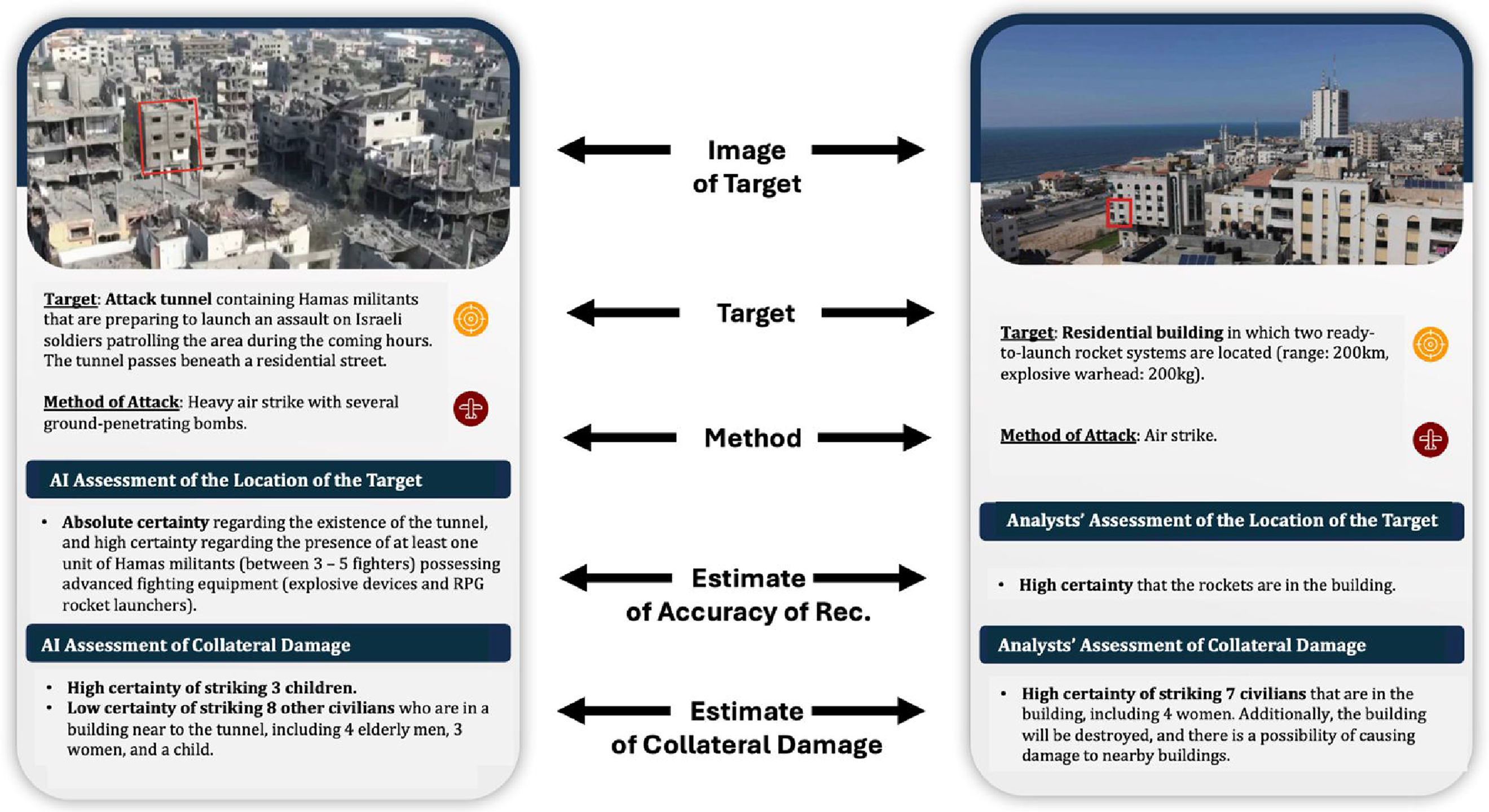
With these high-fidelity, realistic scenarios in hand, we implemented a pre-registered experiment to estimate the causal effect of algorithmic involvement on decision-making. Drawing on a sample of active-duty and veteran Israeli soldiers, we randomly assigned respondents to one of two experimental conditions: an AI condition or a human (control) condition. Participants in the AI group evaluated 12 strike scenarios presented as recommendations generated by an AI decision-support system. Participants in the human group evaluated the exact same 12 scenarios but were told that the recommendations had been compiled by human intelligence analysts, as was standard prior to 2021. Before evaluating the scenarios, participants read a briefing about the AI or human systems emphasizing the artificial or human source of the information. Attention checks were administered to ensure that all participants processed the information (see Online Appendix C). Because all substantive information was held constant across the conditions, this design allows us to causally identify the effect of using AI systems on military decision-making.
Experimental Sample and Timing Considerations
A central feature of this study is its timing: the experiment was fielded in Israel in January 2025, during the height of the ongoing Israel-Hamas conflict. Conducting the study during active warfare allows us to capture the heightened psychological and moral pressures under which military decisions are made, conditions that are impossible to simulate in peacetime environments or using hypothetical actors (Halperin and Piskin 2015; Lin-Greenberg 2022). However, the heightened salience of war-related content also carries risks, including the potential for causing emotional harm. To mitigate this, we implemented strict screening procedures: participants diagnosed with PTSD or who indicated discomfort engaging with military-related material were excluded from the study, and a thorough debriefing was administered at the survey’s end.
In total, study 1 collected responses from 1,001 adult Israeli participants who were either actively serving in the IDF or had previously served. Data collection was conducted by Midgam, a professional Israeli survey firm that maintains a high-quality panel. The mean age of the sample was 36. Approximately nine percent of respondents held officer rank; 30 percent had served in active or reserve duty since the onset of the Israel-Hamas war; 61 percent reported service in combat or combat-support units; and the sample was 60 percent male. Balance tests and additional descriptives of our sample appear in Online Appendix D.
The rationale for our decision to recruit a sample of individuals with direct military service experience is that this population offers unique and essential insights. Such samples are particularly valuable when studying complex, domain-specific decision-making, as they bring relevant training, experience, and institutional knowledge to bear on experimental tasks (Kertzer and Renshon 2022). Unlike members of the general public, military personnel are familiar with the pressures, trade-offs, and operational constraints that shape targeting decisions, including the balance between achieving strategic objectives and minimizing civilian harm. While not all participants have direct experience authorizing strikes from a command room, they serve as informed proxies for decision-makers, grounded in the norms, language, and organizational context of military operations. This expert population is particularly important in the present context, as many of the normative debates surrounding AI in warfare --- especially those concerning accountability and civilian harm --- rest on implicit assumptions about how military personnel actually interpret and act upon algorithmic recommendations.
Dependent Variables and Experimental Protocol
For each of the 12 targeting scenarios, we recorded three outcome variables that serve as our primary dependent measures. First, we captured the binary strike-approval decision: whether the participant approved or rejected the recommended strike. It is important to note that given the inherent ambiguity surrounding the legal, ethical, and operational justification for such strikes, there is no objective ground truth against which we can assess the correctness of these decisions. As such, our analysis of this measure focuses only on the relative effect of whether algorithmically sourced recommendations heighten or reduce the strike approval rate relative to the human group baseline. Second, we recorded participants’ self-reported certainty in their decision, measured on a five-point Likert scale ranging from 1 (not certain) to 5 (entirely certain). Third, we measured the time taken to reach each decision, which serves as a behavioral proxy for cognitive effort and deliberation. While decision time is an imperfect measure, prior research has used response latency as an indicator of cognitive engagement and information processing effort (Miller 2015). We therefore interpret this measure cautiously as a complementary indicator of cognitive effort rather than a direct measure of decision quality.
In addition to our primary outcome variables, we collected a rich set of demographic, psychological, and political covariates. These include trust in government institutions and AI, political ideology, technological literacy, news consumption habits, and militant assertiveness. We also gathered detailed information about participants’ personal experiences during the conflict, including exposure to violence, military service, and levels of vengefulness toward members of the opposing group. A complete codebook detailing all scales and sources appears in Online Appendix E.
Results – Study 1
Before turning to the effects of incorporating AI systems on targeting decisions, we begin by establishing a baseline for understanding how individual-level traits shape military decision-making in wartime. Military strike approvals are not purely technical judgments; they are political acts, influenced by deep-seated beliefs and emotional dispositions. Any analysis of how individuals process AI versus human-generated recommendations must therefore be grounded in this foundational insight. Figure 2 illustrates this point clearly: individuals with more vengeful attitudes (in this case, toward Hamas) and more conservative political orientations are significantly more likely to approve military strikes.
1
Across all operational scenarios, vengefulness is strongly correlated with strike approval (r = .49, p < 0.001), as is political orientation (r = .39, p < 0.001). These findings highlight that even when decisions should ideally be based on objective military criteria, subjective political and emotional factors exert substantial influence. In Online Appendix F, we analyze a broader range of personality and political factors that are associated with strike approval decisions. Political traits predicting strike approval rates. Note. The red line reflects the mean strike approval rates among respondents at each level of vengefulness (panel a) and political orientation (panel b). The shaded green area denotes the 95 percent confidence intervals.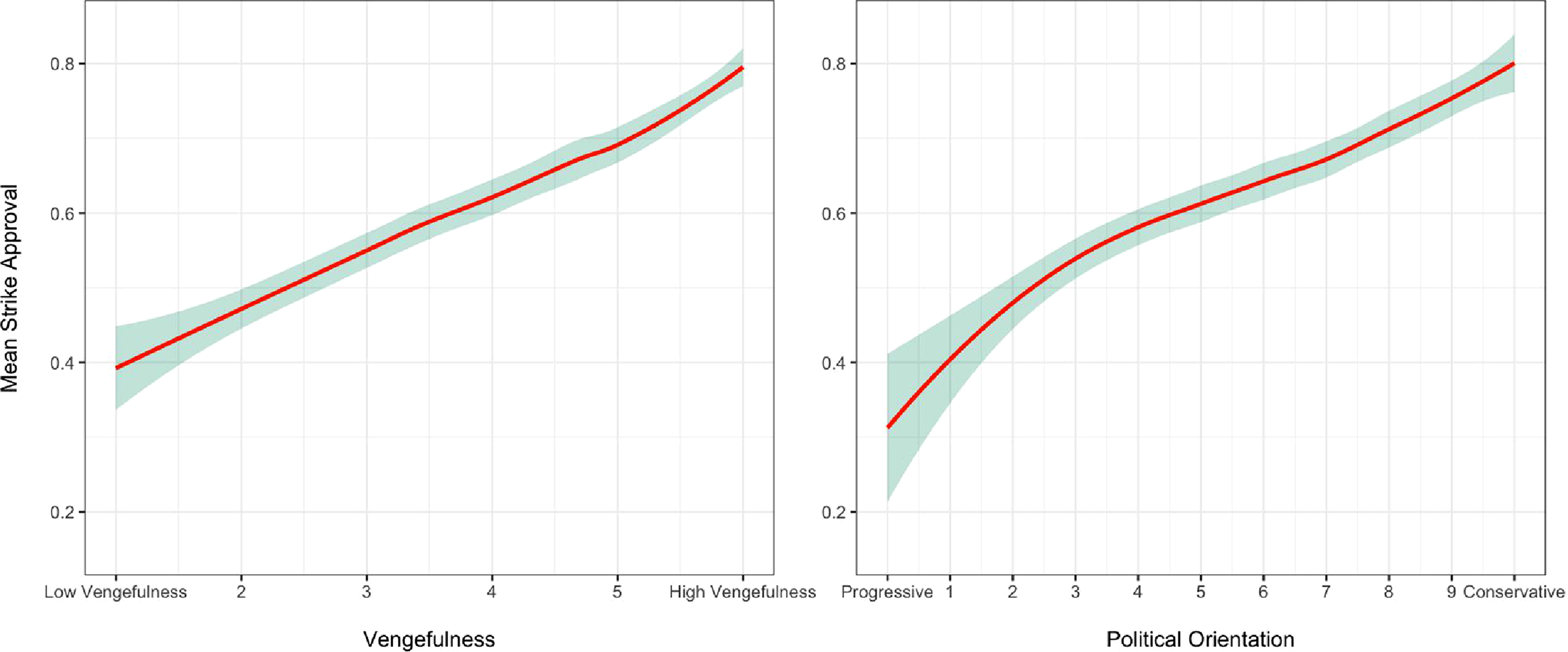
We now turn to the central question of how the use of AI systems affects decision-making. Figure 3 presents the results for our three primary outcome variables. Starting with overall strike approval rates, the data reveal that participants approved, on average, 65 percent of strikes across all scenarios. However, this aggregate figure masks a meaningful difference between treatment conditions as shown in Panel A: 63 percent of participants in the AI treatment group approved strikes, compared to 68 percent in the human group (p < 0.001). Despite the scenarios being substantively identical, recommendations attributed to AI were met with greater skepticism, an effect consistent with algorithmic aversion. These results suggest that the mere presence of an algorithmic source meaningfully reduces willingness to authorize military force. Comparing the effect of AI and human-sourced information on operational decision-making. Note. The three panels display the mean scores and 95 percent confidence intervals for each treatment group across the three outcome variables. In each panel, we report the mean difference between the groups and the statistical significance of that difference, based on independent t-tests.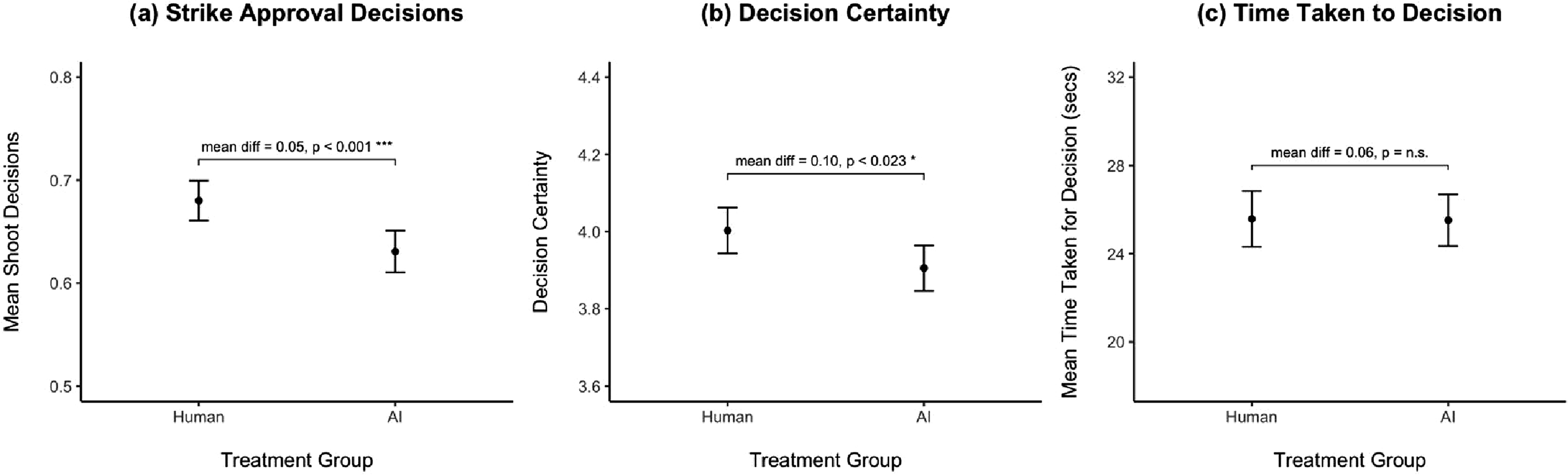
Because the scenarios vary in their baseline likelihood of approval, one concern is that aggregate estimates may be influenced by substantial heterogeneity across targeting decisions. To address this, we estimate models that include scenario fixed effects, thereby comparing AI and human recommendations within identical scenarios. The results remain robust --- and in fact slightly stronger --- under this specification, with participants significantly less likely to approve strikes when recommendations are attributed to AI (see Online Appendix G for full models).
Panel B shows a similar trend in decision confidence. Participants exposed to human-sourced recommendations reported significantly higher certainty in their choices (mean = 4.00) compared to those evaluating algorithmic information (mean = 3.91). When participants cannot fully comprehend how an AI system arrives at its recommendation, they may be less confident in acting on it, even when they ultimately approve the strike. In short, participants appear more reluctant to authorize strikes proposed by AI-DSS systems and less certain when they do. Notably, as Panel C indicates, this lack of trust and heightened uncertainty did not translate into longer deliberation time. Participants in both groups spent the same amount of time evaluating each scenario, 25.5 and 25.6 seconds, respectively.
Regression estimates of AI treatment effects on strike approval, certainty, and decision time (study 1)
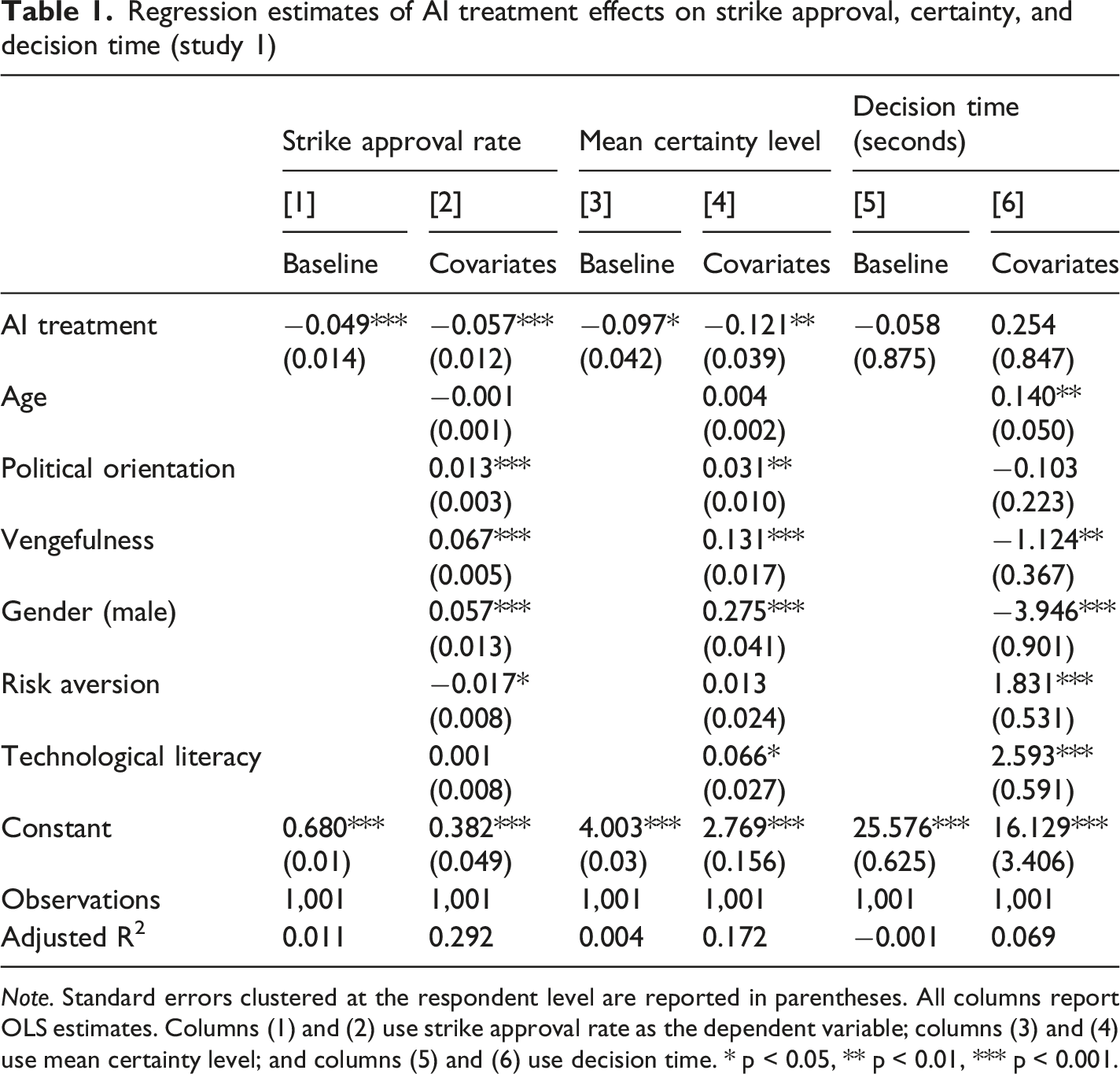
Note. Standard errors clustered at the respondent level are reported in parentheses. All columns report OLS estimates. Columns (1) and (2) use strike approval rate as the dependent variable; columns (3) and (4) use mean certainty level; and columns (5) and (6) use decision time. * p < 0.05, ** p < 0.01, *** p < 0.001.
Beyond these regression results, it is important to consider the broader baseline against which these effects are evaluated. As we saw in Figure 2, deference to human-sourced intelligence is itself shaped by political and affective factors, meaning that the control (human) condition should not be treated as a neutral or bias-free benchmark. Much of the debate surrounding military AI focuses on the risk that operators will defer too readily to algorithmic recommendations, but decision-makers may also defer excessively to human advice. The relevant question, therefore, is not simply whether individuals are biased toward algorithms, but how their willingness to defer compares across human and machine recommendations, and under what conditions one source is trusted more than the other. This complicates the interpretation of our findings. The algorithmic aversion we observe may not represent principled skepticism toward artificial intelligence per se, but rather an implicit and perhaps excessive preference for human judgment. For our purposes, however, the critical takeaway is that the integration of AI into military targeting decisions suppresses strike approval rates and decision certainty relative to a conventional decision environment dominated by human analysts. Whether this reflects aversion to machines or overconfidence in humans, it signals a shift in the psychology of operational judgment that demands further scrutiny.
While our aggregate results reveal a general tendency toward algorithmic aversion, we hypothesized that this aversion would be especially pronounced in high-stakes decisions, particularly those involving significant risk of civilian harm. To test this, we disaggregated the scenarios by predicted collateral damage, distinguishing between high- and low-risk situations.
2
Figure 4 presents the mean strike-approval rates for the AI and human treatment groups in each category. As expected, strike approval rates were higher overall in low-collateral-damage scenarios, and in these low-stakes cases, there was no statistically significant difference between AI and human recommendations. However, in high-collateral-damage scenarios, the source of the recommendation mattered. Participants were significantly less likely to approve strikes when they were proposed by AI (difference = 7.3 percent, p < 0.001). This finding supports Hypothesis 2, suggesting that algorithmic aversion is not uniform but context-dependent, emerging most strongly when decisions carry high ethical stakes. Strike approval rates in high and low collateral damage scenarios. Note. The panel depicts the mean strike approval rate (and 95 percent CIs) for each treatment group, disaggregated by scenarios with low and high collateral damage. Full models – with and without covariates – appear in Online Appendix H.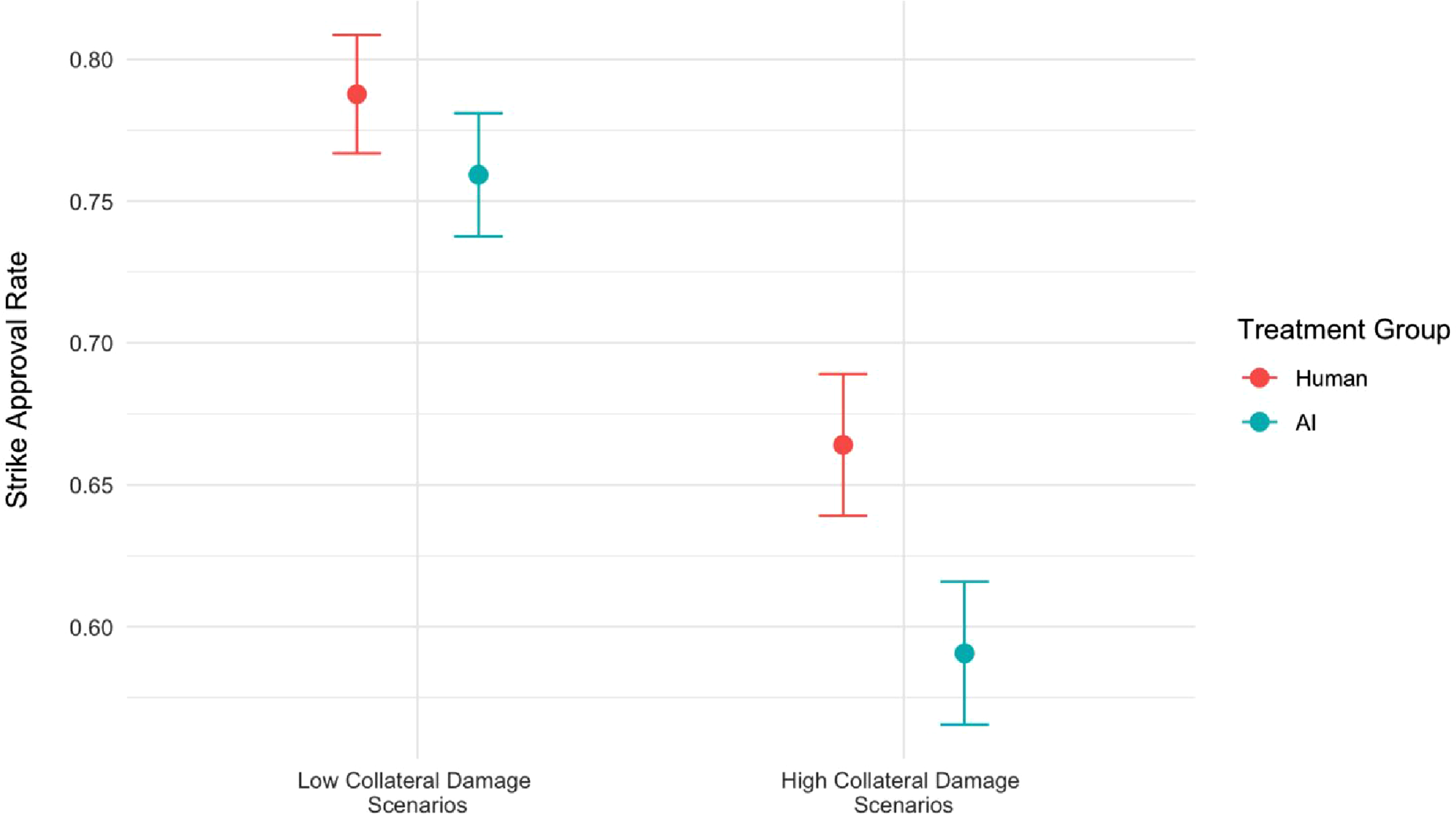
Consistent with prior research demonstrating the influence of personality traits on AI trust, our findings show that respondents’ preexisting attitudes toward AI moderate the effect of receiving algorithmic recommendations. Specifically, individuals who entered the study with low baseline trust in AI exhibited significantly greater algorithmic aversion, approving far fewer strikes when the recommendation came from an AI system rather than a human analyst. Among those with high levels of AI trust, however, the treatment effect disappears entirely. Figure 5 visualizes this interaction (interaction effect β = 0.042, p = 0.016). These findings suggest that preexisting attitudes toward AI also play a significant role in shaping responses to algorithmic recommendations. Treatment effect on strike approval rate moderated by trust in AI. Note. The panel shows the marginal effects of the experimental treatment (with 95 percent confidence intervals) on strike approval rates across values of dispositional trust in AI. The regression analysis for the model is produced in full in Online Appendix I.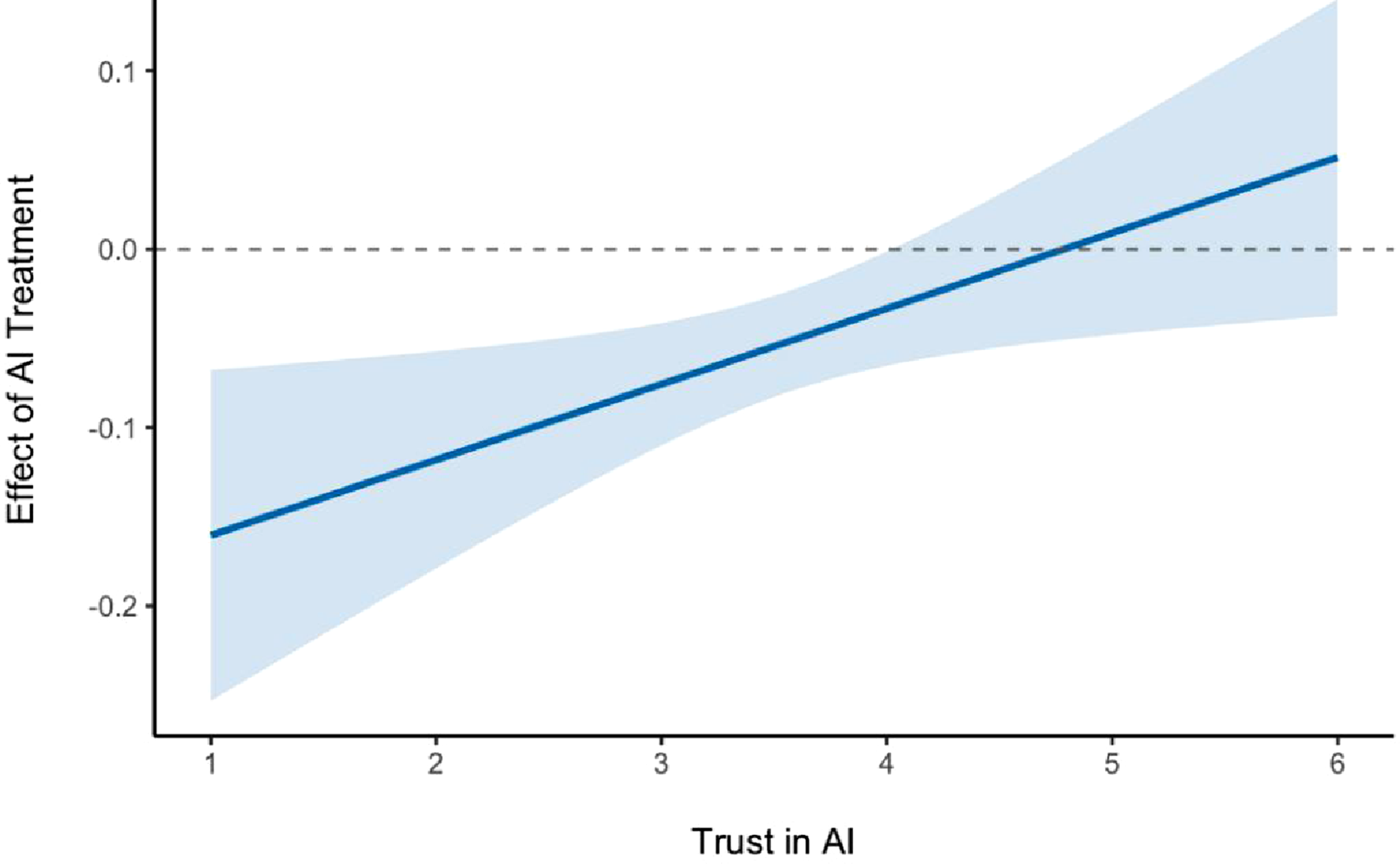
Experimental Methods - Study 2
In our second study, we test a potential remedy for the algorithmic aversion that hinders objective engagement with AI-generated targeting recommendations. Building on the literature on explainable AI, we explore whether greater explainability can foster cognitive engagement and trust. This new study replicates the first experiment in its entirety, with one crucial modification. In Study 2, each of the 12 scenarios (again presented in both AI and human-analyst formats) included a list of three key data points that contributed to the targeting recommendation. These might include intelligence from interrogations, analyses of social media activity, or signals from electronic surveillance. While no short explanation can fully convey the complex internal reasoning of a deep learning model, recent advances in explainable AI have made it possible to isolate the inputs that most influenced a given output. We incorporate this state-of-the-art feature into every scenario in this later study. Figure 6 provides a screenshot of the updated scenarios, with the new data prompt marked at the bottom. Examples of experimental scenarios with added explanatory information. Note. The left-side scenario illustrates a targeting recommendation produced by the AI system. The right-side scenario depicts a recommendation produced by human analysts.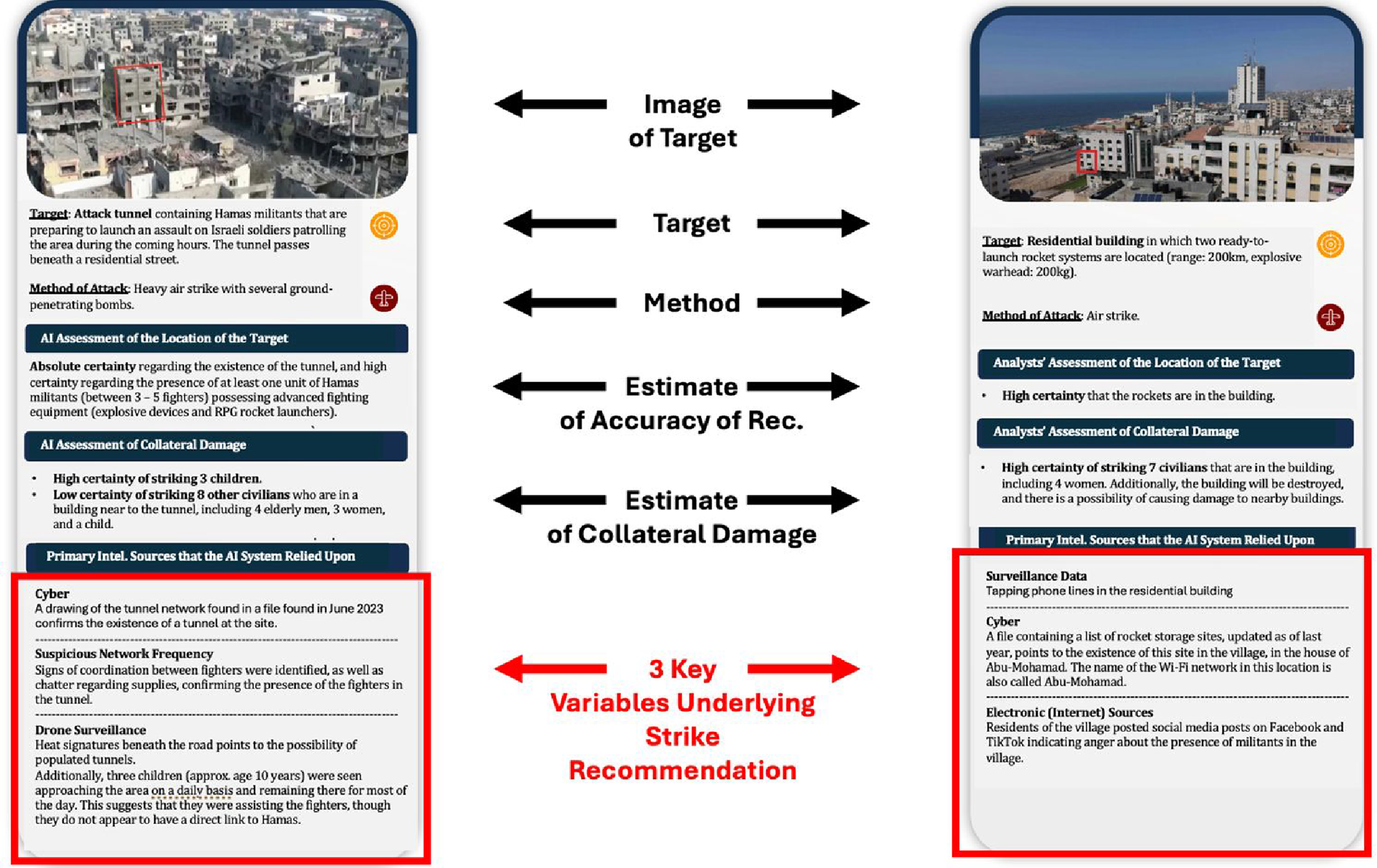
Apart from this single change, all other aspects of the experimental design remained identical to Study 1. We used the same dependent variables, collected the same political, psychological, and demographic measures, and administered the same attention checks. The study was fielded with a new sample of 1,014 military personnel, including both active-duty and former soldiers. As in the first study, the survey was distributed through Midgam’s curated panel, with strict adherence to inclusion criteria (adult Israeli participants with military experience) and exclusion criteria (individuals with a history of PTSD). The average age of participants was 37. Approximately 29 percent had served in active or reserve duty since the start of the current Israel-Hamas war; and 61 percent had served in combat or combat-support roles during their service.
Results - Study 2
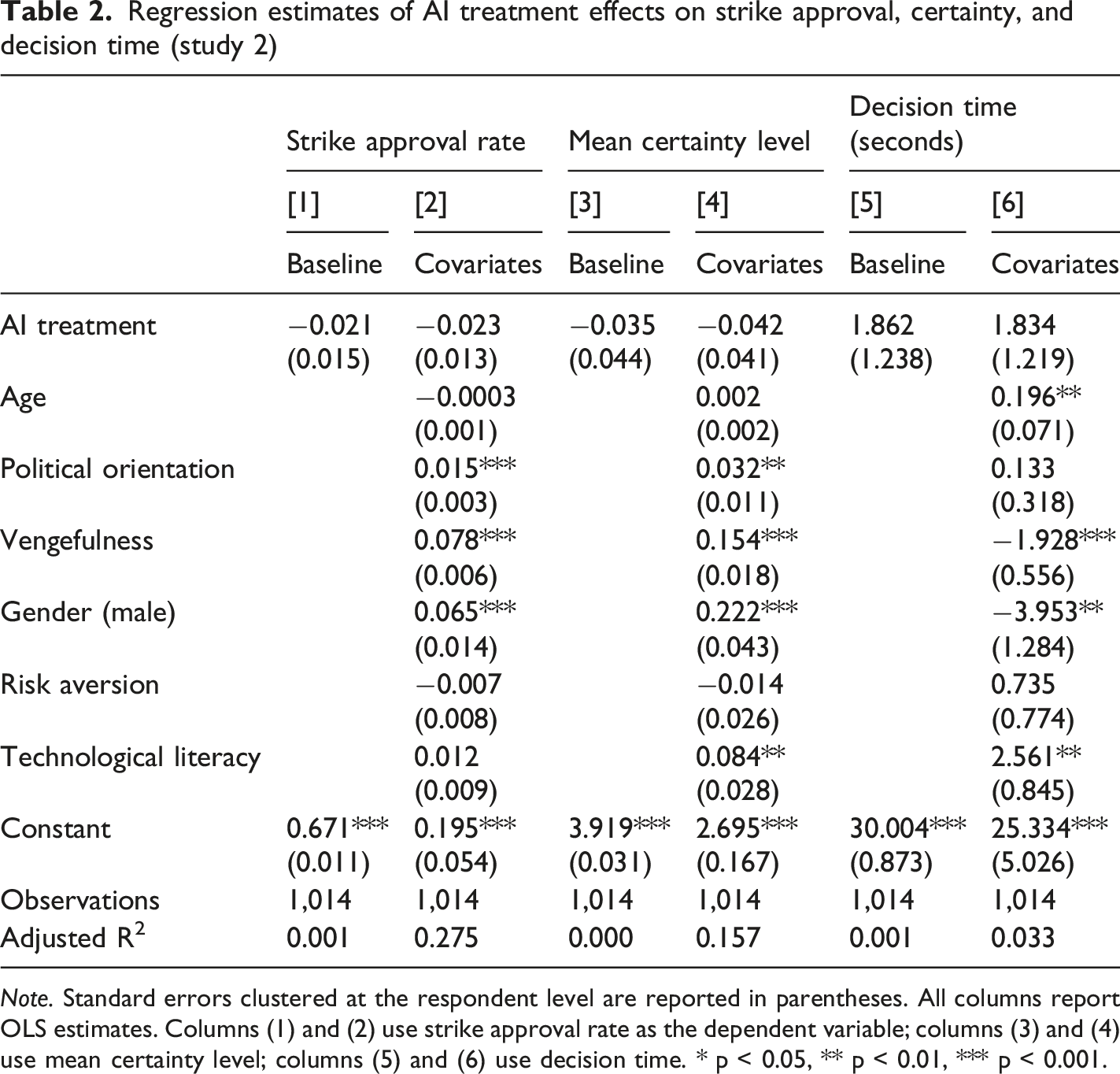
Compared with study 1, where human intelligence was much preferred to AI systems, in study 2 the algorithmic aversion completely disappeared. In Figure 7, the results for our three primary outcome variables show no statistically significant differences between the AI and human groups. Strike approval rates are comparable (67 percent vs. 65 percent), levels of decision certainty are nearly identical (3.88 vs. 3.92), and the time taken to reach a decision is effectively the same (30.0 vs. 31.9 seconds). The only change from Study 1 was the inclusion of three brief data points that identify sources contributing to the targeting recommendation. Yet, this single addition appears to eliminate the previously observed gap in trust. As in Study 1, these results remain robust to the inclusion of scenario fixed effects (see Online Appendix G), and to the inclusion of individual-level covariates (see Table 2), indicating that underlying differences in scenario features or respondent characteristics do not drive the findings. Comparing the treatment effect using scenarios with added information. Note. The three panels display the mean scores and 95 percent confidence intervals for each treatment group across the three outcome variables. In each panel, we report the mean difference between the groups and the statistical significance of that difference, based on independent t-tests. Regression estimates of AI treatment effects on strike approval, certainty, and decision time (study 2) Note. Standard errors clustered at the respondent level are reported in parentheses. All columns report OLS estimates. Columns (1) and (2) use strike approval rate as the dependent variable; columns (3) and (4) use mean certainty level; columns (5) and (6) use decision time. * p < 0.05, ** p < 0.01, *** p < 0.001.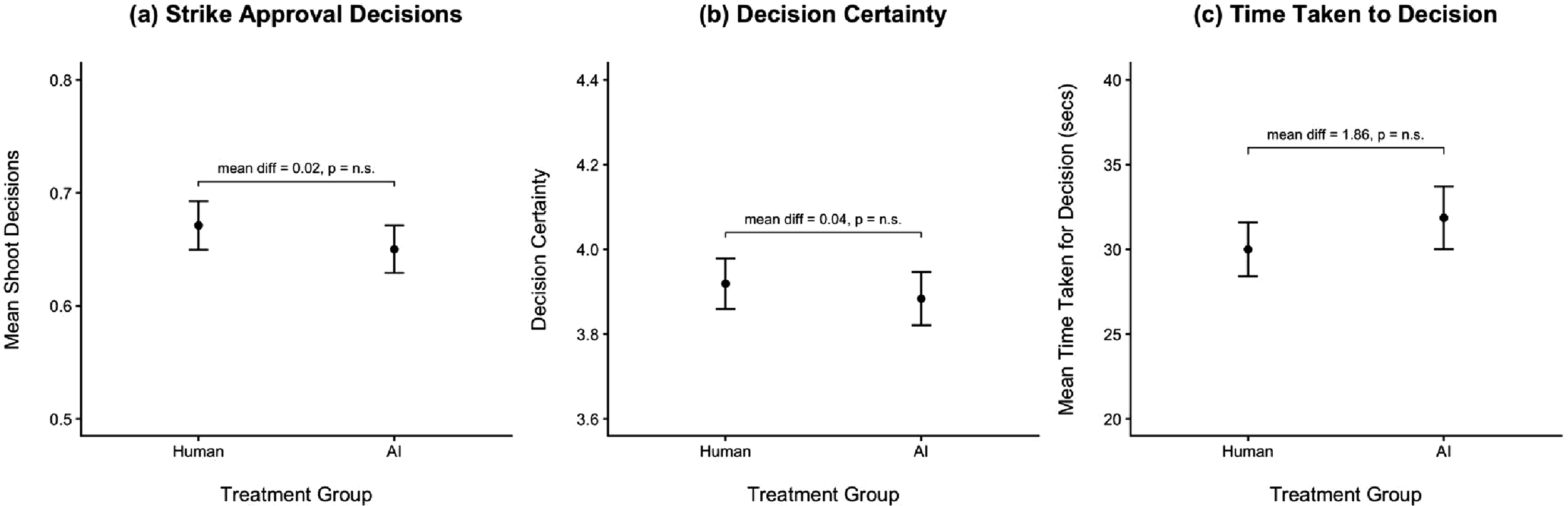
This null effect persists even in high-stakes scenarios with the highest expected collateral damage. As shown in Figure 8, when looking at the high collateral damage scenarios in which algorithmic aversion was previously most pronounced, strike approval rates are now statistically indistinguishable when comparing participants shown AI recommendations (65 percent) and those shown human analyst recommendations (66 percent). In short, the introduction of explainable AI features that highlight the kinds of data inputs behind the targeting proposal appears to neutralize the algorithmic aversion observed in Study 1. Strike approval rates for high and low collateral damage scenarios in study with added explanatory information. Note. The panel depicts the mean strike approval rate (and 95 percent CIs) for each of the two treatment groups, disaggregated by scenarios with low and high collateral damage. Full models – with and without covariates – appear in Online Appendix H.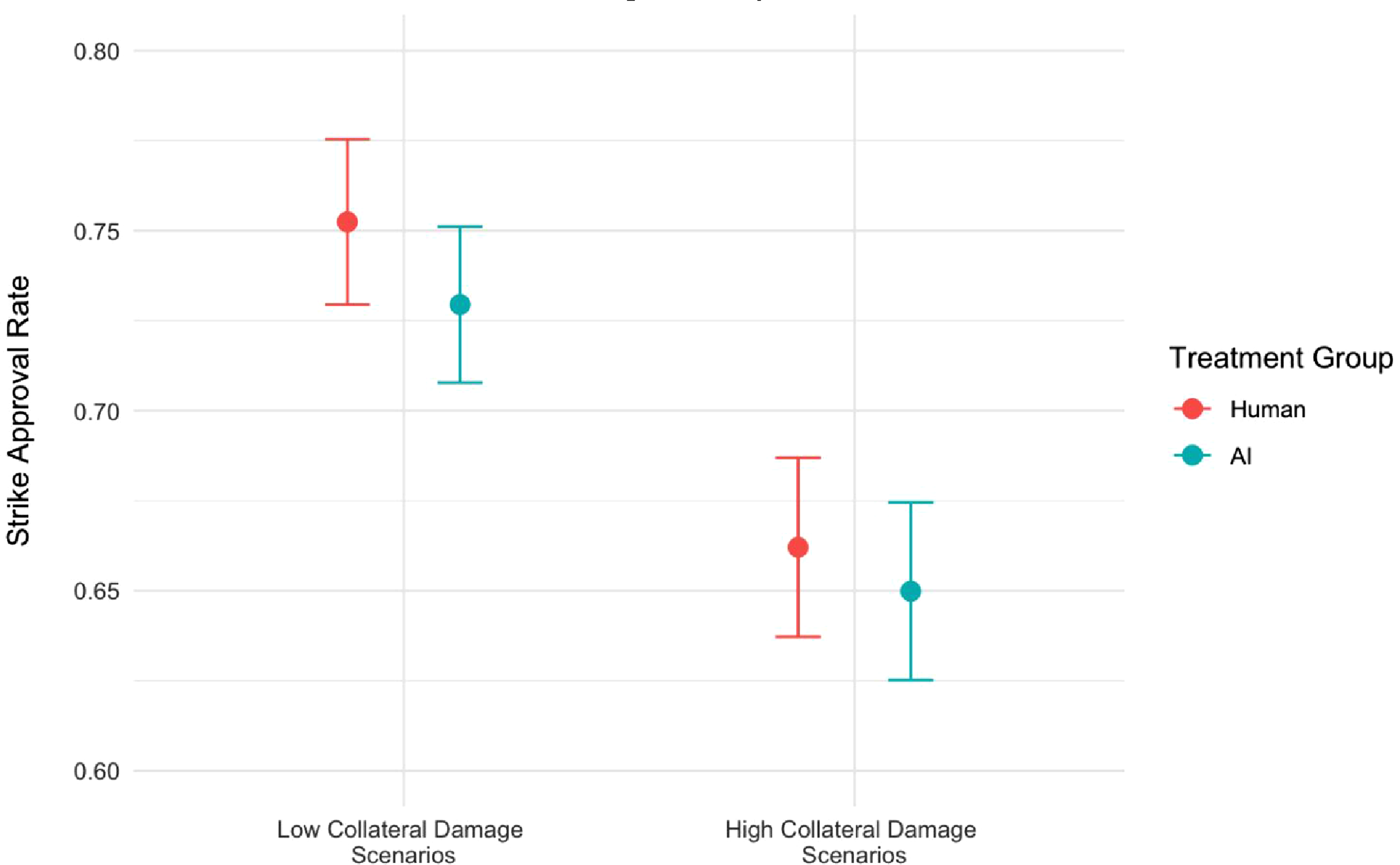
Finally, the results suggest that the informational prompts exert a pacifying effect, even among those inclined to distrust AI. In Study 1, participants with low underlying trust in AI approved significantly fewer strikes when recommendations were algorithmically generated. However, in Study 2, this interaction disappears. Figure 9 suggests that explanatory prompts mitigate the influence of dispositional distrust, such that participants with low baseline trust no longer exhibit a disproportionate reluctance to follow AI recommendations. Moderated treatment effect using scenarios with added information. Note. The panel shows marginal effects of the experimental treatment (with 95 percent confidence intervals) on strike approval rates along the values of dispositional trust in AI. The regression analysis for the model is produced in full in Online Appendix I.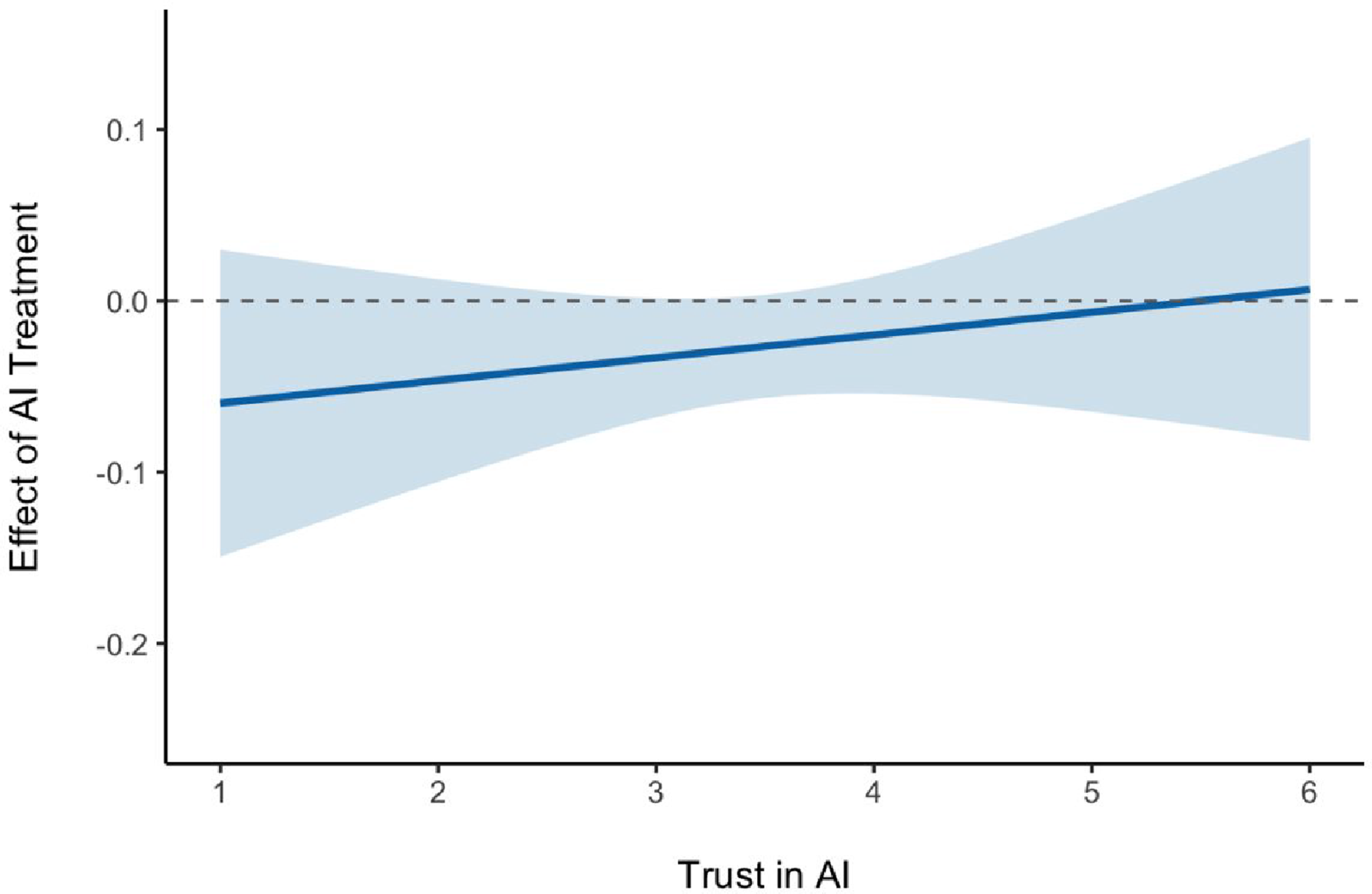
Discussion
The age of AI-assisted warfare is no longer on the horizon --- it has arrived. In future conflicts, military effectiveness will hinge not only on firepower but also on algorithmic power, and, crucially, on the human capacity to harness and scrutinize it (Goldfarb and Lindsay 2022). To rigorously examine how military personnel engage with such systems, we conducted the first experimental study to replicate the functionality and interface of real-world AI DSS tools. Across two large-scale experiments involving 2,015 soldiers, we identified both the psychological roots of algorithmic aversion and practical strategies to counteract it. Our findings reveal a widespread reluctance to trust algorithmic recommendations, particularly in high-stakes scenarios involving extensive collateral damage. This finding runs counter to much of the public, academic, legal, and ethical discourse surrounding DSS, which tends to treat automation bias as an almost axiomatic inevitability. Yet we also find that providing partial explanations about the algorithm’s reasoning can significantly alleviate distrust and restore decision-makers’ confidence in their judgment.
While the empirical contribution of replicating a real-world decision-support system is central to this study, our findings also carry important theoretical implications for the literature on human-AI interaction and international security. Chief among these is the insight that trust in AI is not static or purely dispositional; it is dynamically shaped by both individual psychological traits and the perceived stakes of the decision at hand. While trust in AI influences overall receptivity to algorithmic outputs, it does not predetermine behavior. Our data show that military personnel adjust their level of trust in AI based on situational risk, most notably, the expected level of collateral damage. This suggests that algorithmic aversion is not confined to the adoption stage, but can shape behavior even when AI systems are institutionally embedded in decision-making processes. In other words, even when users are already “in the loop,” resistance to algorithmic recommendations may persist rather than giving way to automation bias.
This is, in many respects, a welcome finding. It suggests that fears of soldiers blindly accepting algorithmic strike recommendations may be overstated. When decisions carry heightened moral or operational consequences, military users become more cautious and more inclined to rely on human sources. We interpret this preference for human input in high-stakes situations as a function of increased risk sensitivity and the human need for social context in morally fraught decisions. To the extent that wartime decisions carry the potential for moral injury (Hertz et al. 2022; Levy and Gross 2024), our findings suggest that human operators seek out the shared ethical responsibility inherent in human judgment.
Yet, even as decision-makers demonstrate an aversion to deferring to AI in high-stakes scenarios, our findings show that this aversion was surprisingly easy to overcome. Brief informational prompts, designed to increase transparency by highlighting key variables underlying algorithmic recommendations, significantly reduced algorithmic distrust and increased users’ willingness to act on AI outputs. That interventions of this sort can shift behavior so significantly underscores a critical theoretical point: algorithmic aversion is not rooted in deep-seated opposition to machine logic per se, but in users’ perceived inability to understand or scrutinize algorithmic reasoning. Transparency appears to restore a sense of agency and evaluative capacity. Crucially, it also enables users to critique the system on substantive grounds, especially when the logic or variables cited do not align with the recommendation itself.
Perhaps most striking, however, is what we did not observe. Our study revealed little evidence that military personnel exhibit a systematic preference for algorithmic recommendations. In fact, only a small subset of participants — those with the highest levels of dispositional trust in AI — showed any inclination to favor algorithmic inputs over human ones. This aligns with a broader empirical pattern in the literature: while automation bias is frequently theorized, it has rarely been observed in practice, especially in high-stakes environments (Detjen et al. 2025; Kaplan et al. 2023; Larkin et al. 2022; Mendel et al. 2024). Instead, what most studies, including ours, find is that people tend to be algorithmically averse when moral or consequential decisions are on the line. Still, we caution against drawing definitive conclusions about the absence of automation bias altogether. Such tendencies may emerge only after repeated exposure to AI systems over extended periods, far beyond the dozen decision points in our controlled experiments. As cognitive and moral load accumulates, users may develop a kind of operational habituation or “muscle memory” that could foster overreliance. While we did not observe that dynamic here, we acknowledge the need for further research exploring the temporal and experiential thresholds at which automation bias may begin to manifest.
The absence of automation bias may appear reassuring at first glance; however, its absence does not eliminate the risks posed by new DSS technologies. One significant concern is the increased number of targets that these systems can generate, which may lead to substantially higher civilian casualties even if targeting officers exhibit restraint (Shany and Shereshevsky 2026). Our findings therefore suggest that concerns about military AI may be misplaced when they focus exclusively on automation bias. The primary danger is not that operators will blindly defer to algorithmic recommendations. Rather, even when human judgment remains firmly in the loop, AI-enabled targeting systems may increase human suffering either by expanding the scale and tempo of military operations or by influencing decisions through inaccurate or otherwise problematic recommendations.
Furthermore, a deeper consideration reveals that algorithmic aversion is not without its own risks. When decision-makers are overly skeptical of high-quality algorithmic outputs, they may dismiss valuable insights that could enhance operational effectiveness. In the military context, this could mean rejecting sound tactical recommendations or missing critical patterns, ultimately compromising mission success. The stakes are equally high in other domains, such as medicine, where distrust of AI has been shown to lead doctors to overlook algorithmically identified diagnoses that are imperceptible to the human eye. What is needed, then, is not blind trust or sweeping skepticism, but calibrated trust --- a balanced stance in which human operators engage with AI systems thoughtfully, weighing their outputs without over-reliance or undue dismissal (Kahn et al. 2026). Our data suggest that enhancing explainability is a promising first step toward fostering this equilibrium.
What makes these findings especially encouraging is that they align the interests of militaries, policymakers, and civil society advocates alike. On the one hand, military institutions are eager to capitalize on AI’s power to detect subtle patterns and accelerate decision-making cycles. On the other hand, they remain committed, at least rhetorically and legally, to preserving human oversight and accountability. For these goals to coexist, decision-making must be calibrated: under-trusting AI deprives commanders of valuable insight, while over-trusting AI risks operational errors, violations of international law, and erosion of public legitimacy. In an era where public opinion strongly disfavors the autonomous use of force absent meaningful human control (Zwald et al. 2025), efforts to promote thoughtful human-AI interaction are not only operationally and ethically prudent, but politically necessary. Our study underscores that explainability-based interventions offer a rare policy tool that can simultaneously promote military effectiveness, legal compliance, and public trust. It should be noted that the attractiveness of such explainability mechanisms depends on their ability to provide accurate insights into the algorithmic process. If the explanation is inaccurate, it would lead to unjustified increased trust, which is highly problematic.
In addition to the algorithmic source of information, our data underscore the importance of psychological traits and political predispositions in shaping strike decisions. Participants with more right-wing political orientations displayed higher strike approval rates than those on the left, as did participants reporting stronger feelings of vengefulness and militancy. These patterns reinforce an important lesson: targeting decisions are not shaped solely by the source of a recommendation, but also by prior beliefs about conflict, the perceived legitimacy of force, and the moral status of those who may be harmed.
Despite observing a general tendency to temper strike approval in scenarios involving high levels of civilian harm, the willingness of a substantial minority of participants to authorize strikes that would cause extensive collateral damage for limited military advantage remains deeply concerning. This pattern suggests that although civilian harm is generally treated as a meaningful cost, the strength of that constraint varies considerably across individuals. The persistence of such variation also underscores that AI systems enter decision environments that are already shaped by political beliefs, emotional dispositions, and moral judgments. AI attribution matters, but it operates alongside other forces that shape perceptions of necessity and proportionality.
Beyond these individual-level factors, targeting decisions are embedded within broader strategic and institutional contexts. Rules of engagement and mission objectives shape both the pool of potential targets and the acceptable level of collateral damage. Our experimental design holds these factors constant in order to isolate how individuals respond to algorithmic recommendations, but this necessarily abstracts from variation in operational doctrine. The effects we identify should therefore be understood as operating within a given decision framework, rather than as a comprehensive account of how AI would influence targeting outcomes across all strategic settings. Different rules of engagement, collateral-damage thresholds, or operational objectives may alter baseline approval rates and the relative weight of political and affective predispositions. Yet the central theoretical point remains: AI-enabled decision-support systems do not enter a neutral decision environment. They interact with preexisting beliefs, institutional rules, and strategic priorities that shape how human operators interpret and act upon recommendations.
Aside from these implications, we hasten to underline the limitations of our experiment and suggest avenues for future research. Our empirical setting, embedded within an ongoing war in Israel, raises questions about generalizability. Would similar patterns of algorithmic aversion and trust emerge in other operational environments, such as U.S.-led strikes in Yemen or Iran, for example, where combatants are geographically and emotionally removed from the battlefield? While the emotional intensity of war is universal, the immediacy of threat and proximity to violence may shape how decision-makers engage with AI systems in distinct ways.
Additionally, it is important to clarify the limits of our experimental interface. While we designed a high-fidelity dashboard to approximate the appearance and informational structure of contemporary military decision-support systems, it remains a static simulation rather than a fully interactive DSS. Participants engaged with fixed scenarios that did not update dynamically or allow iterative engagement, and thus do not capture the full range of behaviors possible in operational systems. This limitation is particularly relevant as these technologies continue to evolve. While our interface captures key features of early-generation AI DSS, newer systems may incorporate greater interactivity, adaptability, and user feedback. We therefore view our design as a step toward more realistic experimentation, while acknowledging that it does not fully capture the complexity of real-world human–AI interaction in military contexts.
A related question concerns the mechanism through which explainability reduces algorithmic aversion. While our findings show that providing explanatory information increases users’ willingness to rely on AI-generated recommendations, our design does not allow us to disentangle whether this effect operates primarily through increased cognitive trust in the system or through a greater sense of evaluative control. Preliminary patterns in our data suggest that confidence in AI declines when information is sparse, but these effects warrant further investigation. Future research could address these issues by directly measuring perceived control and trust, and by systematically varying the quantity and type of explanatory information to better identify the mechanisms through which explainability shapes decision-making.
We are fully aware that this research raises sensitive operational and ethical questions. Yet the reality is stark: AI tools are no longer on the horizon; they are already embedded in military operations. Ignoring this development or dismissing it as a dystopian hypothetical would be misguided. As this technological diffusion accelerates, the central challenge is understanding how human judgment is shaped once AI systems enter the decision-making process. This study offers evidence that military personnel do not respond to AI in a uniform or mechanical way. Instead, trust in algorithmic recommendations is conditional, shaped by individual predispositions, operational stakes, and the information made available through the interface itself. These findings challenge simple narratives of inevitable automation bias while also underscoring that keeping humans in the loop is not, by itself, sufficient to ensure meaningful human judgment. The contrast between these findings and prevailing assumptions about automation bias underscores the need for more rigorous empirical research on human–AI interaction in war. Too much of the current debate rests on supposition rather than evidence. High-fidelity experimentation can help move this debate from conjecture to evidence, clarifying how military AI can be governed in ways that preserve meaningful human control while balancing military necessity with humanitarian constraint.
Supplemental Material
Supplemental Material - Black Box Warfare: Human Judgment and Military Decision-Making in the Age of AI
Supplemental Material for Black Box Warfare: Human Judgment and Military Decision-Making in the Age of AI by Ryan Shandler, Michael Gross, Yahli Shereshevsky in Journal of Conflict Resolution.
Replication Material
Replication Material - Black Box Warfare: Human Judgment and Military Decision-Making in the Age of AI
Replication Material for Black Box Warfare: Human Judgment and Military Decision-Making in the Age of AI by Ryan Shandler, Michael Gross, Yahli Shereshevsky in Journal of Conflict Resolution.
Footnotes
Acknowledgements
We gratefully acknowledge the tremendous research assistance provided by Dari Nof. We received generous feedback from many of our colleagues including Steven Feldstein, Andres Gannon, Nadiya Kostyuk, Jon Lindsay, Asaf Lubin, Harry Oppenheimer, Christopher Whyte, and Josephine Wolff. This manuscript benefited from feedback at several workshops and conferences including Erica Lonergan and Tamar Mitts' Columbia University Emerging Technologies and Cybersecurity Workshop, Security and Human Behavior 2025, MERLIN Symposium 2025, the Tufts University Tech Policy Seminar, the AI & Warfare Workshop at Reichman University, the DRA Lab Seminar at the University of Haifa, and the Digital Democracy Network Workshop.
Ethical Considerations
The study received ethical approval from the IRB offices at Georgia Tech (approval # IRB2024-115) and the University of Haifa (approval # 006/25). We detail a full list of ethical safeguards in the paper.
Consent to Participate
All participants provided informed consent.
Funding
The authors received no financial support for the research, authorship, and/or publication of this article.
Declaration of Conflicting Interests
The authors declared no potential conflicts of interest with respect to the research, authorship, and/or publication of this article.
Data Availability Statement
The experimental datasets and replication code are available on the Harvard Dataverse and can be accessed at this link: https://doi.org/10.7910/DVN/EIBD8U,  .
.
Supplemental Material
Supplemental material for this article is available online.
Notes
References
Supplementary Material
Please find the following supplemental material available below.
For Open Access articles published under a Creative Commons License, all supplemental material carries the same license as the article it is associated with.
For non-Open Access articles published, all supplemental material carries a non-exclusive license, and permission requests for re-use of supplemental material or any part of supplemental material shall be sent directly to the copyright owner as specified in the copyright notice associated with the article.
