







Abstract
Since the Enlightenment, rationality has been set above intuition and associated with male thought, while intuition has become linked with female thought. Do these stereotypes still exist today? If they do, are they the same for different domains of life? And are they stable across age groups, gender, and culture? We investigated these questions in two countries that differ in women’s traditional roles, using representative national samples of 1,016 people in Germany and 1,002 people in Spain. Participants reported their beliefs about men and women’s intuitions for nine personal and professional domains. The main results are as follows: Substantial stereotypes about intuition exist, are highly domain-specific rather than general and, strikingly, do not differ in sign and size between age groups. Moreover, in every domain, substantial in-group preferences exist: Females believe more strongly in the intuitive power of women, and males in that of men. Across domains, stereotypes about gender-specific intuition are more frequent in Germany, even though Spain has a stronger Catholic tradition and political history of conservative gender roles.
In 1904, G. Stanley Hall, president of Clark University and founder and first president of the American Psychological Association, explained how the mind of a woman differs from that of a man:
She works by intuition and feeling; fear, anger, pity, love, and most of the emotions have a wider range and greater intensity. If she abandons her natural naiveté and takes up the burden of guiding and accounting for her life by consciousness, she is likely to lose more than she gains, according to the old saw that she who deliberates is lost. (p. 561)
Hall’s statement stood in a long intellectual European tradition, from Kant’s distinction between men’s mastery of abstract principles and women’s grasp of concrete detail to Darwin’s opposition of male energy and genius to female compassion and intuition (Schiebinger, 1989). This article examines the existence and nature of stereotypes about men’s and women’s intuitions one century after Hall’s pronouncement.
We investigate the existence, strength, and contents of stereotypes about intuitions of men and women in two large European countries that differ with respect to the traditional roles women have in their society, Germany and Spain. Although extensive cross-cultural comparisons of gender stereotypes exist (e.g., Williams & Best, 1990), none dealt with intuition. In contrast to previous studies that relied on convenience samples, we obtained representative national samples from the general population of both countries. Germany and Spain have populations of about 80 and 46 million inhabitants, which amounts to a third of the population in the European Union. The two countries differ in social values and in the relative socioeconomic status of men and women. Germans tend to hold postmaterialist values, such as individual improvement, personal freedom and citizen input in government decisions to a greater extent than Spaniards (Inglehart, Basánez, Díez-Medrano, Halman, & Luijkx, 2004). Gender egalitarianism is more valued in German than in Spanish society, and German women are accorded a higher status in their society (House, Hanges, Javidan, Dorfman, & Gupta, 2004). More women are employed in Germany than in Spain, although they more often work part-time (Eurostat, 2006). Per capita income earned by women as a percentage of that earned by men is higher in Germany than in Spain (57% vs. 44%; Eurostat, 2006). Germany has a higher female literacy rate than Spain and a larger proportion of educated women (Eurostat, 2006). While in both countries women spend more time than men on domestic tasks, from food preparation to child care, German men take on a larger share of household tasks. Whereas German women carry 67% of the daily workload in the household (4 hr 41 min for German women vs. 2 hr 21 min for German men), Spanish women carry 75% (4 hr 55 min for Spanish women vs. 1 hr 37 min for Spanish men; Eurostat, 2006). In sum, these differences in values and socioeconomic indicators suggest a larger gender gap in Spain than in Germany.
These statistics may reflect the history of the two countries. The women’s movement was more active in Germany than in Spain, helping German women to gain the right to vote much earlier (1919 vs. 1931). In the 1930s, both countries’ existing democratic systems were overthrown by dictatorships, the Nazi regime and the Franco regime. Although these differed in important respects, both supported a traditional division of labor between men and women, expecting women to take care of the household and children while men worked (Morant, 2006; Rosenfeld, Trappe, & Gornick, 2004). In Spain, this regime lasted 30 years longer than in Germany, into the mid-1970s. It upheld the Roman Catholic tradition, prohibiting divorce, abortion, and the sale of contraceptives. Even in the present time, divorce statistics indicate that marriage is a more stable institution in Spain than in Germany, where the number of divorces per 100 new marriages is more than twice as high (52 vs. 20; Eurofound, 2002).
Social Role Theory (Eagly, 1987; Eagly, Wood, & Diekman, 2000; Wood & Eagly, 2002) assumes that gender roles lead to the particular gender stereotypes in a society. If the historical gender roles described above are relevant, Social Role Theory would predict that Spaniards should have more conservative stereotypes of gender differences than Germans. This is what we found in past work on gender stereotypes of leadership (Garcia-Retamero & López-Zafra, 2006a, 2006b; Garcia-Retamero, Müller, & López-Zafra, 2011). Yet, as we will see, current gender roles have changed in some domains of life in both countries and more rapidly in Spain. This could reduce or even reverse the differences in gender stereotypes between the two countries.
Gender-Specific Intuitions
We define an intuition as a judgment that has three characteristics: (a) It appears quickly in consciousness, (b) the underlying reasons for it are not in awareness, but (c) it nevertheless guides behavior (Gigerenzer, 2007). Thus, unlike in a conscious process of deliberation, a person cannot explain the reasons for an intuition.
We define a stereotype as an individual’s or a group’s set of beliefs about the characteristics of a target group (Judd & Park, 1993). Stereotypes need not be negative; they can be positive as well as accurate, inaccurate, or not testable (Diekman & Eagly, 2000). The target group can differ from the group holding the belief (e.g., male beliefs about women’s intuitions) or be the same (e.g., female beliefs about women’s intuitions). Because this article discusses both genders’ stereotypes about both genders’ intuitions, we will avoid potential confusion by referring to the target groups as men and women and the subject group, that is, the carrier of the stereotypes, as males and females.
What is known about men’s and women’s intuitions from earlier research? On the one hand, in the large body of literature on gender stereotypes, we could not find any studies on gender stereotypes about men’s and women’s intuitions. On the other hand, in the literature on intuitive judgments, gender is hardly ever an issue (e.g., Epstein, Pacini, Denes-Raj, & Heier, 1996; Evans, 2008; Gigerenzer, 2007; Kruglanski & Gigerenzer, 2011). Thus, there is little connection between research on intuitive judgments and research on gender roles.
Domains of Intuition
In this article, we distinguish between domain-general and domain-specific stereotypes about men’s and women’s intuitions. A domain-general stereotype is of the kind “women are intuitive” or “women have better intuitions than men.” That is, it has the form “group A has attribute X.” A domain-specific stereotype, in contrast, is more differentiated and has the form “group A has attribute X in domain Y.” The belief that women have better intuitions about good leadership, but men have better intuitions about the right business partner, would be an example of domain-specific stereotypes.
We chose nine domains relevant for intuition that can be categorized into three classes: intuitions about personal affairs (choosing the right romantic partner, understanding intentions of women, and understanding intentions of men), intuitions about professional social tasks (good leadership, choosing the right business partner, and political decision making), and intuitions about professional individual tasks (scientific discoveries, reactions to dangerous situations, and investment in stocks). The three classes differ in the degree to which they challenge traditional gender roles. Believing that women have better intuitions in the first set of domains reinforces the stereotype expressed by Stanley Hall and poses no threat to male dominance in professional affairs. However, believing that women have equal or better intuitions than men in the second and third sets of domains is at odds with the traditional division of labor. These nine domains are not exhaustive, but represent a broad variety of tasks. Note that we are concerned with the intuitive competences in each domain, not with deliberate or analytical competences such as in scientific methods or financial calculations.
Research Questions
In this study, we asked our participants whether one of the genders has better intuitions than the other in nine different domains. The participants could vote for either men or women, or say that there is no difference between the genders. We define the strength of a stereotype in a sample in domain i (si) as the difference between the percentage s wi of people who believe that women have better intuitions in domain i and the percentage s mi of those who believe that men have better intuitions:

with −100 ≤ si ≤ 100, and i = 1, . . ., 9. A plus sign means that the stereotype favors women, a minus sign that it favors men. For instance, if all participants hold the belief that there is no difference between the genders, then si = 0; if everyone believes that women (men) have the better intuitions, then si = 100 (−100); if 10% believe that there is no difference, but 60% believe that women and 30% that men have better intuitions, then si = 30. This value of si measures both the intensity and the direction of the stereotype. Note that the si measure does not capture whether a stereotype is empirically correct.
With these distinctions in mind, we formulate four research questions.
Research Question 1: Do stereotypes about gender-specific intuition exist?
In societies with a general sense of gender equality in intuitive judgment, the answer should be negative. If that is the case, then si = 0 for all domains. Note that si = 0 does not mean that every member of the sample believes that there is no difference. If the balance between those who favor men and those who favor women is equal, si would also equal zero. Given that gender roles differ between men and women, Social Role Theory predicts that the answer to this research question is “yes.” If that is the case, then si > 0 for all or some domains.
Research Question 2: If stereotypes about gender-specific intuition exist, are these domain-general or domain-specific?
An example of a domain-general stereotype is Stanley Hall’s claim that women’s minds generally work by intuition, without differentiating the object of intuition. Similarly, some contemporary theories assume an intuitive and a rational system, but do not explicitly distinguish domains and thus implicitly assume domain-general processes (Evans, 2008; Kahneman, 2011). However, to the degree that gender roles differ between domains (as the Social Role Theory predicts), we would expect domain-specific stereotypes about intuition. For instance, given that men still play the leading role in business, politics, and science (Tables 1-3), they should be judged to have better intuition than women in these domains. Domains in which women traditionally play a more active role, such as interpersonal communication, should be those in which women are judged to have better intuitions. A domain-general stereotype is defined as one for which (a) all si ≠ 0 and (b) si should be the same for all i domains. If stereotypes are, in contrast, domain-specific, we should observe that (a) there exists at least one si ≠ 0 and (b) si varies systematically across domains. Note that this definition of “domain-general” refers to whether stereotypes about intuition generalize across specific domains; it does not refer to what answer people would give if they were asked whether men or women have better intuition without a domain being specified.
Employment Statistics for Germany and Spain.
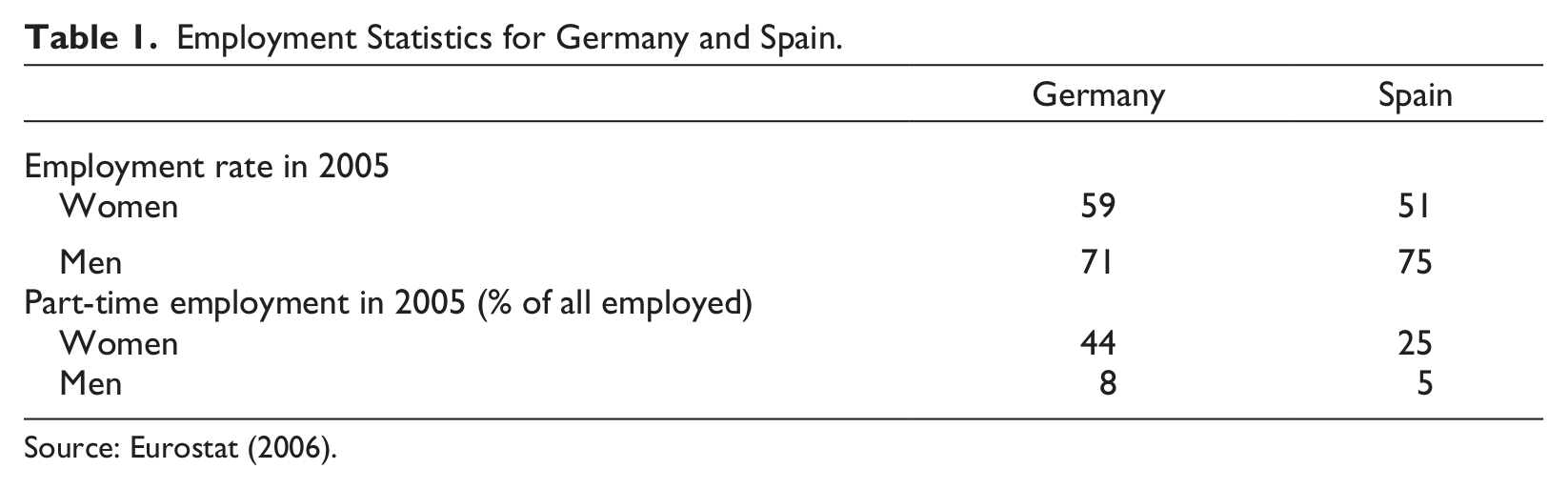
Source: Eurostat (2006).
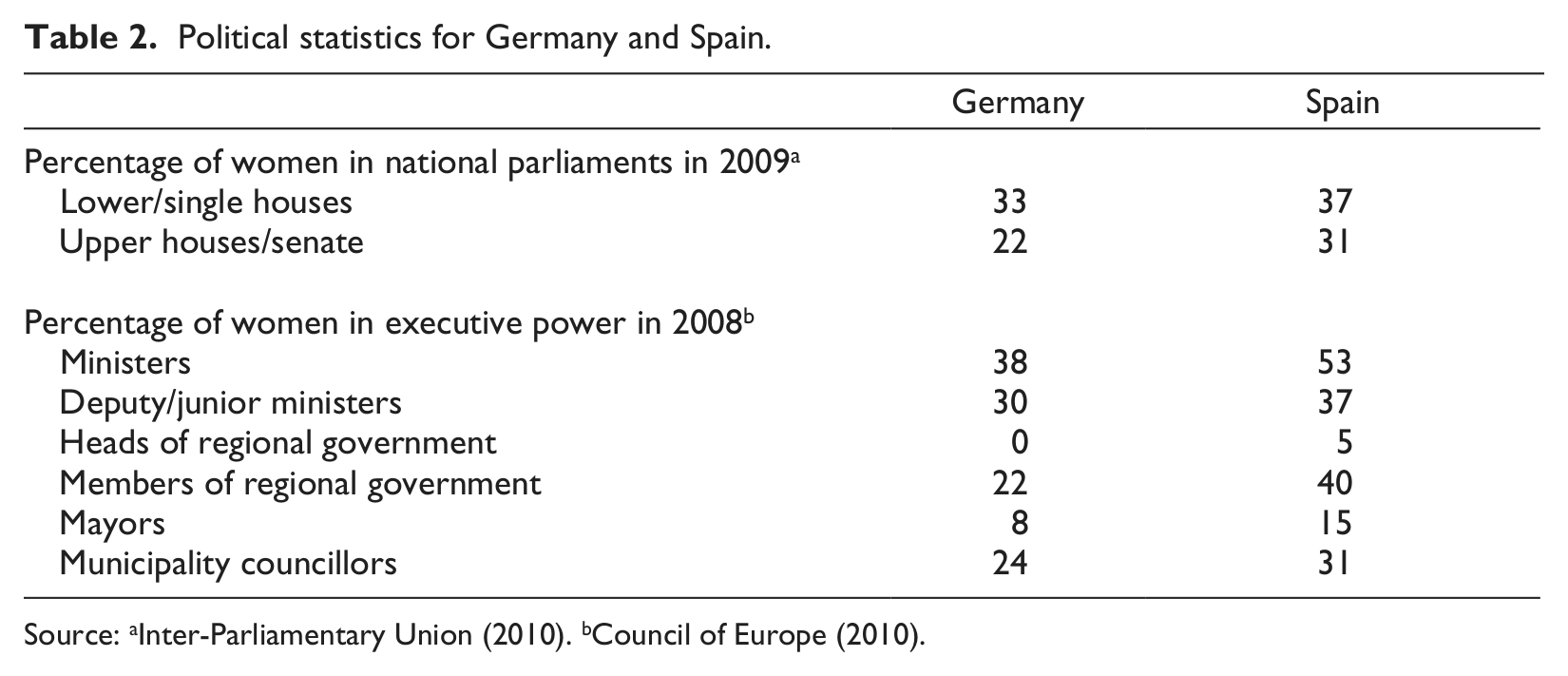
Political statistics for Germany and Spain.
Science statistics for Germany and Spain.
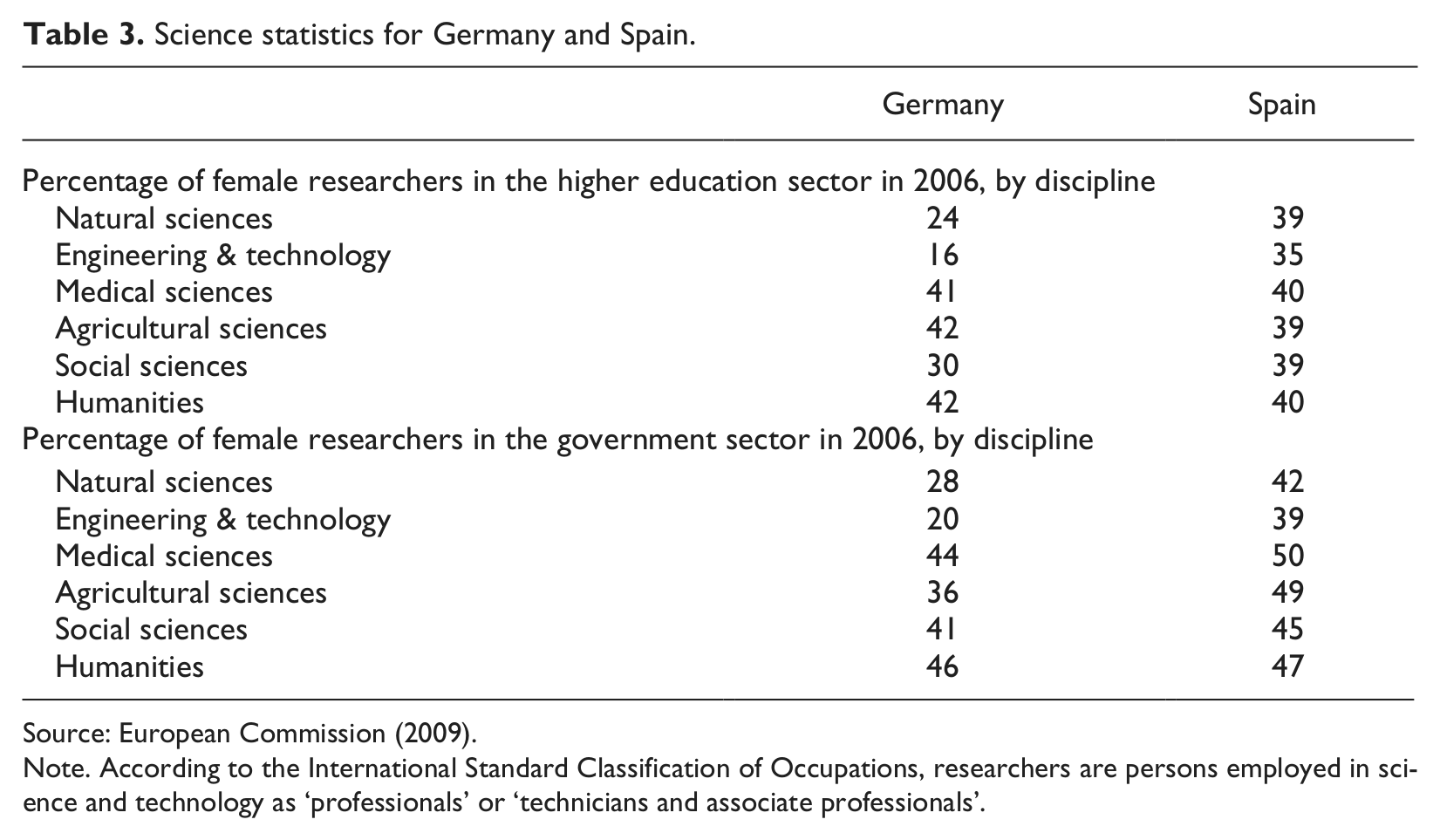
Source: European Commission (2009).
Note. According to the International Standard Classification of Occupations, researchers are persons employed in science and technology as ‘professionals’ or ‘technicians and associate professionals’.
Research Question 3: Do stereotypes about gender-specific intuition differ between Germany and Spain?
To the degree that socioeconomic, political, and historical differences between the two countries affect men’s and women’s judgments today, one would expect more conservative stereotypes of gender differences in Spain than in Germany. Therefore, the hypothesis is that, across domains, si is larger in Spain than in Germany. However, despite the history of greater conservatism in Spain, recent changes suggest that Spain might have overtaken Germany in terms of gender equality in some domains. For example, Spanish women now work more often full-time than German women (Table 1), there is a larger percentage of female politicians in Spain than in Germany at almost all political levels (Table 2), and women comprise a larger percentage of scientists in Spain than in Germany (Table 3). Therefore, in these professional domains, the opposite might be true, namely, si is smaller in Spain than in Germany.
Research Question 4: Do stereotypes about gender-specific intuition exhibit in-group preferences?
In-group preference refers to the phenomenon that members of a group esteem or favor members of their own group more highly than members of other groups (Swim, 1994). If more males than females think that men have better intuitions, and more females than males think that women have better intuitions, this amounts to a case of in-group preference. The key alternative to in-group preference is that males and females share the same average si. We define in-group preference among females by,

where

If stereotypes about intuition exist and these exhibit in-group preference, then we should find that (a) there exists at least one si ≠ 0 and (b) gi > 0. 1 Note that in-group preference can occur for domain-general as well as domain-specific stereotypes.
Research Question 5: Are stereotypes about gender-specific intuition weaker for younger people?
Because of the societal changes after 1945 in Germany and the 1970s in Spain, age appears likely to influence the strength of stereotypes. Given that many women have joined the workforce in recent decades, younger people might show less intensive stereotypes than older ones. This expectation can be formalized in the following hypothesis: The average absolute value of s across all domains i is smaller for younger age groups.
Method
Sample
To ascertain representative samples of the general public, we obtained large nationwide quota samples of 1,016 adults in Germany in December 2006 and 1,002 adults in Spain in May 2009. The data were collected by the international survey company GfK Group, based in Nuremberg, Germany, and Valencia, Spain. The samples were selected according to quotas designed to make the sample representative for the populations of the two countries in terms of four variables: age, gender, region, and size of settlement. Table 4 shows the characteristics of the two samples as well as error margins (95% confidence intervals [CI]) for estimates based on different subgroups of the samples, assuming simple random sampling. When using 95% CI, our sample size of approximately 1,000 participants per country provides a power of .99 to detect a small effect size (corresponding to Cohen’s h = .2) and a power of over .995 to detect a medium effect size (corresponding to Cohen’s h = .5). When using 99% CI, the power is .97 and over .995, respectively (Cohen, 1988). CIs are more informative and robust than significance levels (Cumming, 2008).
Sample Structure and Error Margins for Estimates Based on Different Subgroups, for Germany and Spain.
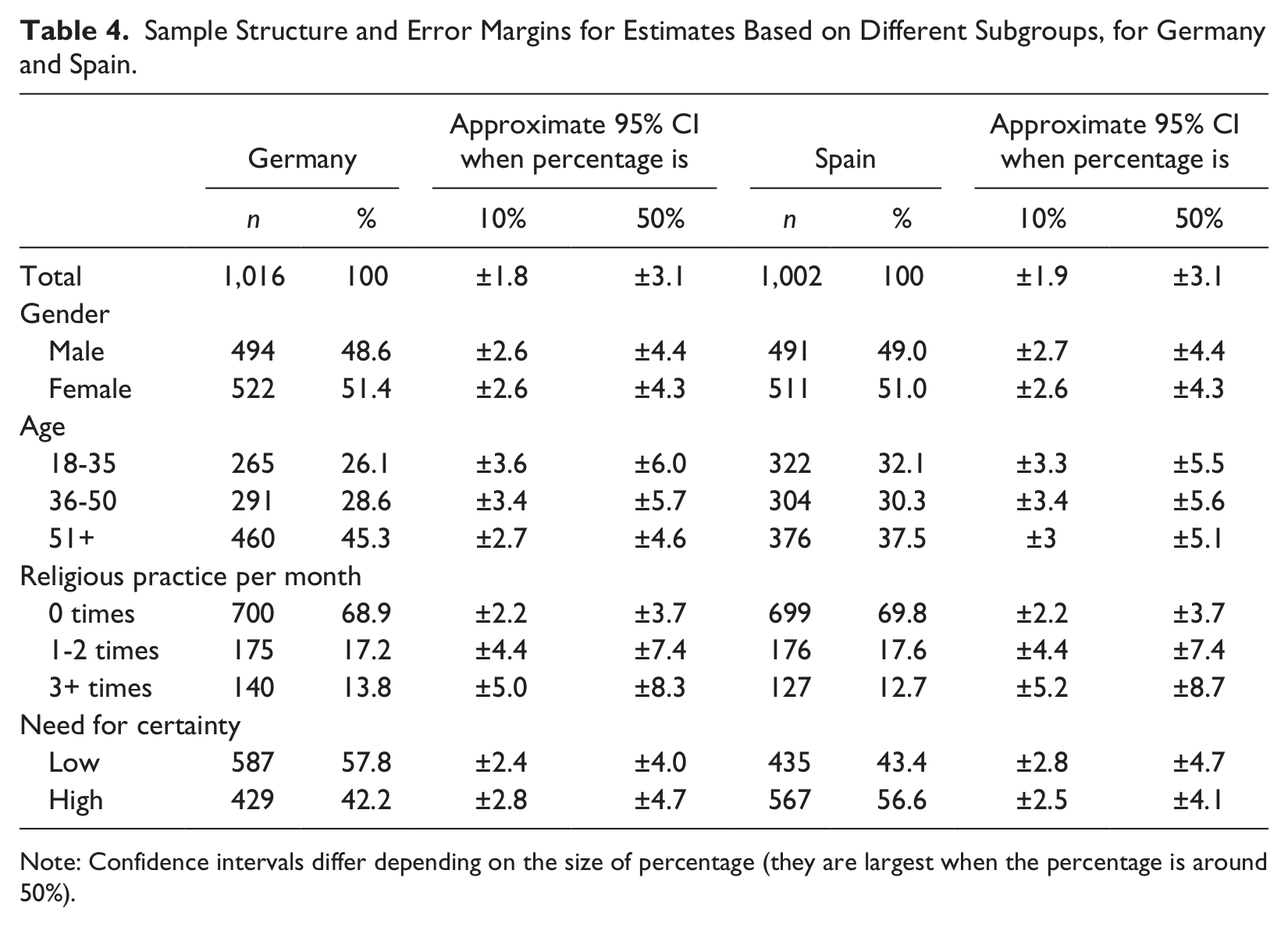
Note: Confidence intervals differ depending on the size of percentage (they are largest when the percentage is around 50%).
Procedure and Materials
Participants were interviewed individually in their homes. We used face-to-face rather than more impersonal survey modes to increase the quality of the data. Face-to-face contact enabled the interviewer to establish rapport with participants, respond to queries, and explain the meaning of the questions when needed. Participants were asked the same question for each of nine domains, “Who has better intuitions about (name of domain)?” The response alternatives were “men,” “women,” and “no difference.” We also collected data about participants’ gender, age, and religious practice (measured as frequency of attending religious services in the last month).
All materials were developed in German, translated into Spanish by a proficient translator, and back-translated for control into German by another person with equivalent language skills. The Ethics Committee of the Max Planck Institute for Human Development and of the University of Granada approved the methodology.
Results
Do Stereotypes About Gender-Specific Intuition Exist? If So, Are These Domain-General or Domain-Specific?
These two questions need to be considered together. The average s-measure across the nine domains, for instance, might be close to zero, apparently confirming the absence of a stereotype. But this could also result from opposing stereotypes in different domains, some of which favor men and others women. Averaged across domains, the size of the gender stereotype was close to zero in both countries, s = −4.0 in Germany and s = 3.9 in Spain, and both CIs included 0 (95% CI is [−23.6, 31.6] in Germany and [−27.4, 19.6] in Spain).
However, as Figure 1 shows, there are large s-values in specific domains favoring either men or women. For instance, the size of the stereotype concerning intuitions about the right romantic partner is as large as s = 53 in Spain, meaning that the difference between the percentage of Spaniards who trust the intuition of women (62%) and those who trust that of men (9%) is 53 percentage points. Consistently in both countries, women are judged to have the better intuitions for each domain within the class “personal affairs.” The average strength of the stereotype in personal domains is s = 37 for Germany and 44 for Spain. In contrast, for most of the other domains, men are considered to have better intuitions: The average strength of stereotypes across the six professional domains is s = −25 in Germany, but only −16 in Spain. In professional social tasks, the average stereotype is in favor of men, with s = −11 for Germany and −13 for Spain. In professional individual tasks, the stereotype is in the same direction, but stronger: s = −38 for Germany and −19 for Spain.
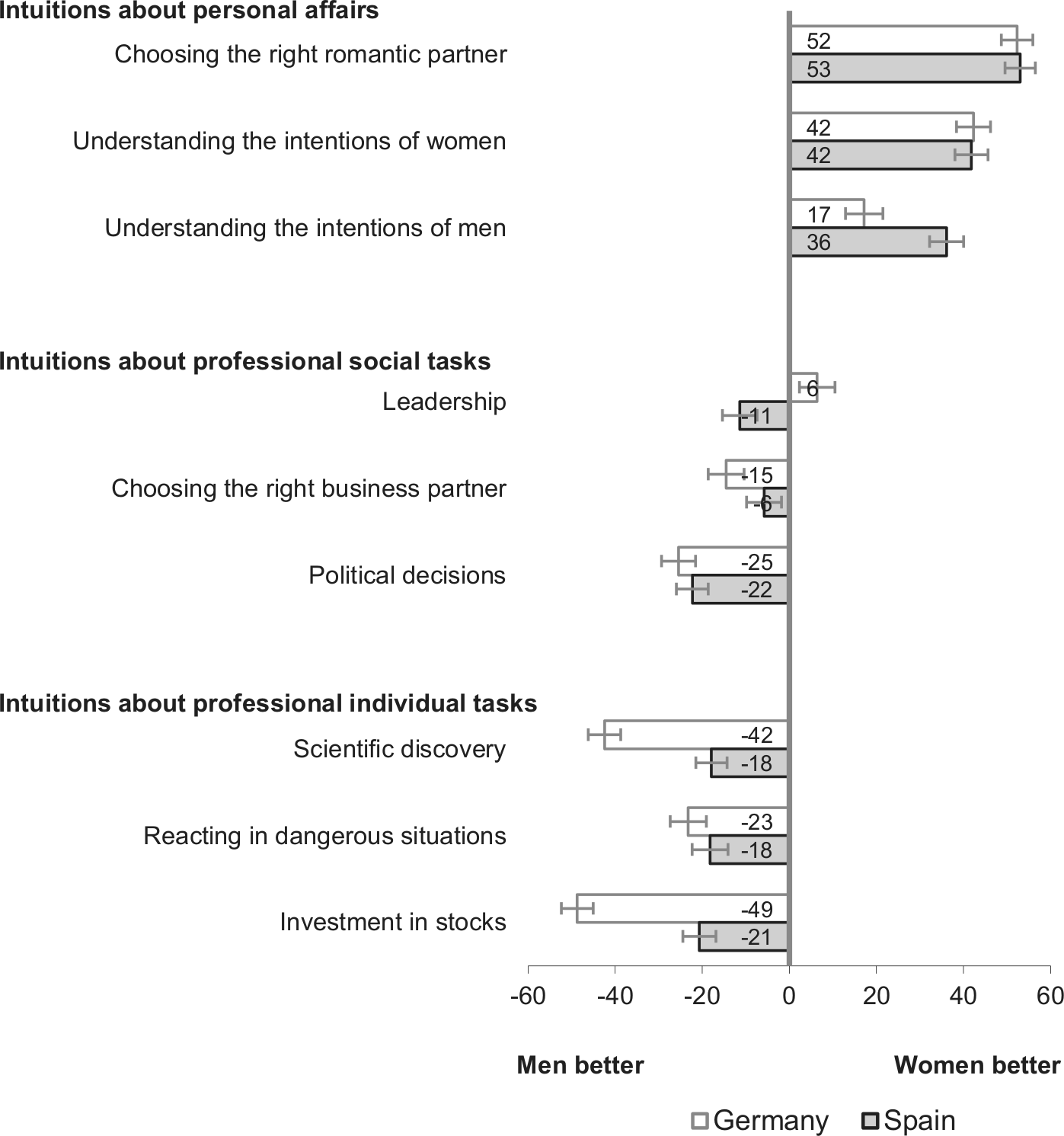
Intensity of stereotypes about intuitions of men and women in Germany and Spain.
Across all domains, 33% of the responses in Germany and 38% in Spain were “no difference.” That is, in two thirds of the cases, respondents believed that there are differences between the genders. Thus, the answer to the first question is “yes”: Stereotypes about gender-specific intuitions do exist. This analysis also provides the answer to the second question: Stereotypes exist, but are domain-specific rather than domain-general.
Do Stereotypes About Gender-Specific Intuition Differ Between Germany and Spain?
Gender-specific intuitions are somewhat stronger in Germany than in Spain, with average absolute values of si of 30 and 25, respectively. However, in neither of the two countries are women or men judged to have better intuition in general. Rather, citizens make sharp distinctions between the domains to which an intuition applies. This result means that we must continue our analysis domain by domain. We begin with the three domains that can be classified as personal affairs.
Choosing the Right Romantic Partner
Figure 1 shows a strong stereotype in favor of women’s superior intuition about the right romantic partner. Sixty-three percent of Germans believe that women’s intuitions are better, 11% men’s, and only 26% think that there is no difference, resulting in s = 52. The numbers are almost exactly the same in Spain. Figure 2 shows that this belief is shared by both genders in both countries: Not only females but also males believe that women have better intuitions about choosing their romantic partners. However, there are also traces of gender in-group preference: More males (14% in Germany and 10% in Spain) believe in men’s superior intuitions than females do (8% and 7%, respectively). Similarly, more females (66% and 64%) believe in women’s superior intuitions than males do (60% and 59%). This leads to values of g = 12 in Germany and g = 8 in Spain.
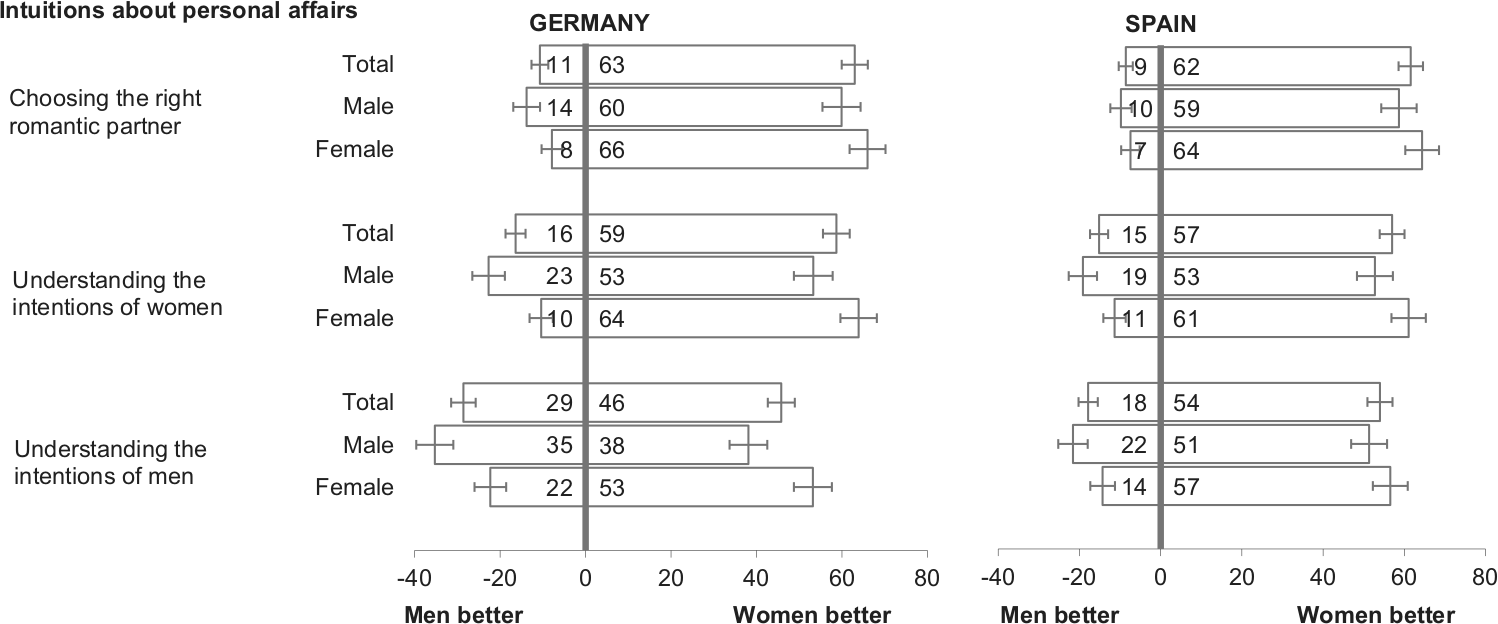
Stereotypes of males and females related to intuitions about personal affairs, by country.
Understanding the Intentions of Women
Figure 1 shows that the stereotype about who best understands the intuitions of women is nearly as strong (s = 42) and in the same direction as that about choosing the right romantic partner. As Figure 2 shows, the majority of males and females believe that women have better intuitions about the intentions of women. Nevertheless, more females than males believe this, and substantially more males than females believe that men have better intuitions. The strength of this in-group preference is g = 24 in Germany and 16 in Spain.
Understanding the Intentions of Men
As Figure 1 shows, the prevailing view is that women, not men, have better intuitions about men’s intentions. This belief is held by both genders (Figure 2). Both countries show in-group preference of size g = 28 for Germany and 14 for Spain. As in the previous domains, g is larger for Germans. Unlike in the previous domains, the strength of the stereotype differs between the two countries and in the direction predicted: The belief that women’s intuitions are superior is stronger in Spain than in Germany (Figure 1). Figure 2 reveals that this difference is largely due to the beliefs of German males, who are the only subgroup where the strength of the stereotype is close to zero.
The next six domains concern judgment in professional contexts, as opposed to intuitions in personal affairs.
Leadership
Leadership is the domain in which gender stereotypes are the weakest (Figure 1), followed by choosing the right business partner—a similarly unexpected finding (see below). More Spaniards believe that men have better intuitions about leadership than women (s = −11), whereas the opposite holds for Germans (s = 6). As Figure 3 shows, underlying the low average s-values is a disagreement between males and females that was absent in the three domains concerning personal affairs. German males believe that men have better intuitions about good leadership, whereas German females believe that women have the better intuitions. A similar pattern of disagreement holds in Spain. This disagreement between genders is reflected in in-group preference values of g = 28 in Germany and 25 in Spain.
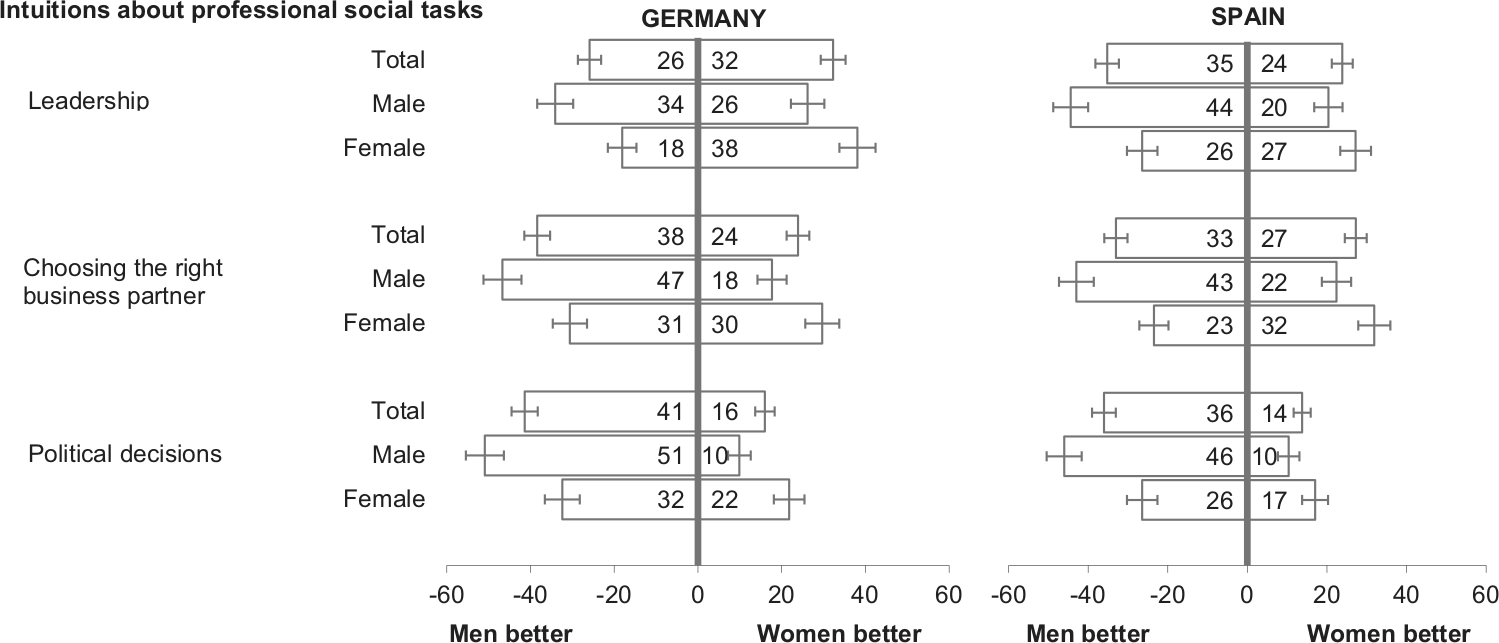
Stereotypes of males and females related to intuitions about professional social tasks, by country.
Choosing the Right Business Partner
The stereotypes in both countries prefer men, but their strength is relatively weak (s = −15 in Germany and −6 in Spain; see Figure 1). However, similar to the domain of leadership and in contrast to the three domains of personal affairs, when it comes to business-related intuitions, males and females disagree about who has the better intuitions. On average, males believe that men are better at choosing the right business partner, whereas females believe that women are better (Figure 3). This disagreement is reflected in a good deal of in-group preference, with g = 28 for Germany and 30 for Spain.
Political Decisions
Men’s intuitions about politics are perceived to be better than women’s in both countries (Figure 1). On average, males and females favor male intuitions in political affairs, and the strength of the stereotype is about the same in both countries, albeit with a higher tendency among Germans (Figure 3). Stereotypes about intuitions in political decision making show a strong degree of in-group preference, with g = 31 for Germany and 27 for Spain.
The final set of three questions concerns competences that differ from personal affairs and professional social decisions in that they are primarily individual professional tasks. This is not to say that social competences do not play a role in these domains, but they are not central.
Scientific Discovery
As Figure 1 shows, the stereotype that men have better intuitions for scientific discovery than women exists in both countries, but is much stronger in Germany than in Spain (s = −42 vs. −18). Both genders share this stereotype, with a certain degree of in-group preference, with g = 28 for Germany and 14 for Spain (Figure 4).
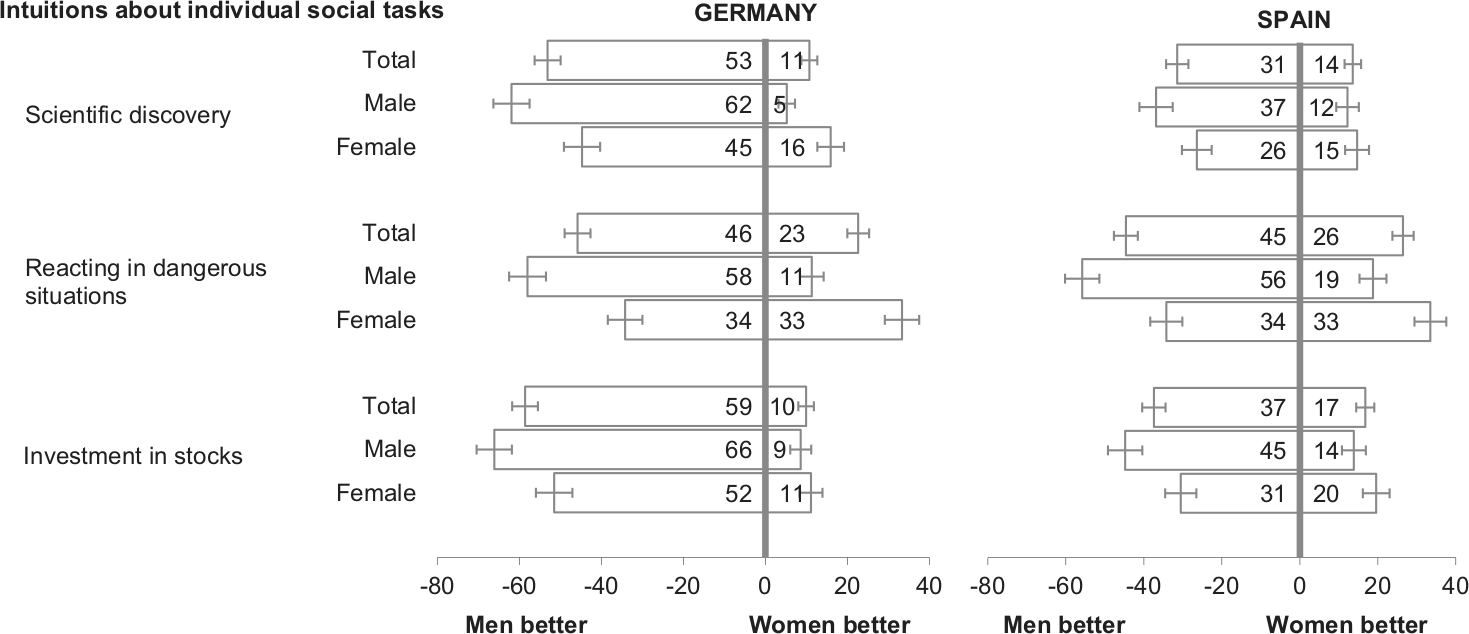
Stereotypes of males and females related to intuitions about professional individual tasks, by country.
Reacting in Dangerous Situations
The stereotypes in the two countries about better intuitions in reacting in dangerous situations favor men (Figure 1). Yet, a closer look shows that this stereotype is based entirely on males’ beliefs alone (Figure 4). Among the females in both countries, the strength of the stereotype is virtually zero (s = 1 in both countries), whereas it is one of the strongest among males (s = 47 in Germany and 37 in Spain). A substantial amount of in-group preference exists, with g = 46 in Germany and 36 in Spain. There is no evidence supporting the historically motivated hypothesis that stereotypes for this domain are stronger in Spain. On the contrary, these stereotypes are less evident among Spanish males.
Investment in Stocks
The final domain we analyze is investing in stocks, where intuition plays as large a role as analytical investment methods. The majority of both Germans and Spaniards believe that men have better intuitions about investing in stocks (see Figures 1 and 4). As for the domain of scientific discovery, the stereotype is shared by both genders, but there is again evidence for in-group preference, with g = 16 for Germans and 20 for Spaniards. Contrary to the historically based hypothesis about national differences, Spaniards show more egalitarian views than Germans. These results reflect the pattern of beliefs for intuitions about choosing the right business partner and about scientific discovery.
Do Stereotypes About Gender-Specific Intuition Exhibit In-Group Preferences?
Although males and females agree on the direction of most stereotypes, they show a preference for members of their own gender. For all nine domains, males favor intuitions of men more strongly than females do, and females favor intuitions of women more strongly than males do. Figure 5 shows the values of gi—the absolute difference between the strength of stereotype si for females and males—for each domain. Overall, in-group preferences are higher for professional tasks (average g is 30 in Germany and 25 in Spain) than for personal affairs (average g is 21 in Germany and 12 in Spain). In both countries, g is highest for intuitions about reacting in dangerous situations (46 in Germany and 36 in Spain) and lowest for intuitions about the right romantic partner (12 in Germany and 8 in Spain). For all professional tasks, in-group preferences are stronger for men’s intuitions than for women’s. In other words, males have stronger in-group preferences than females in these domains. All in all, in-group preferences exist and their size is substantial.
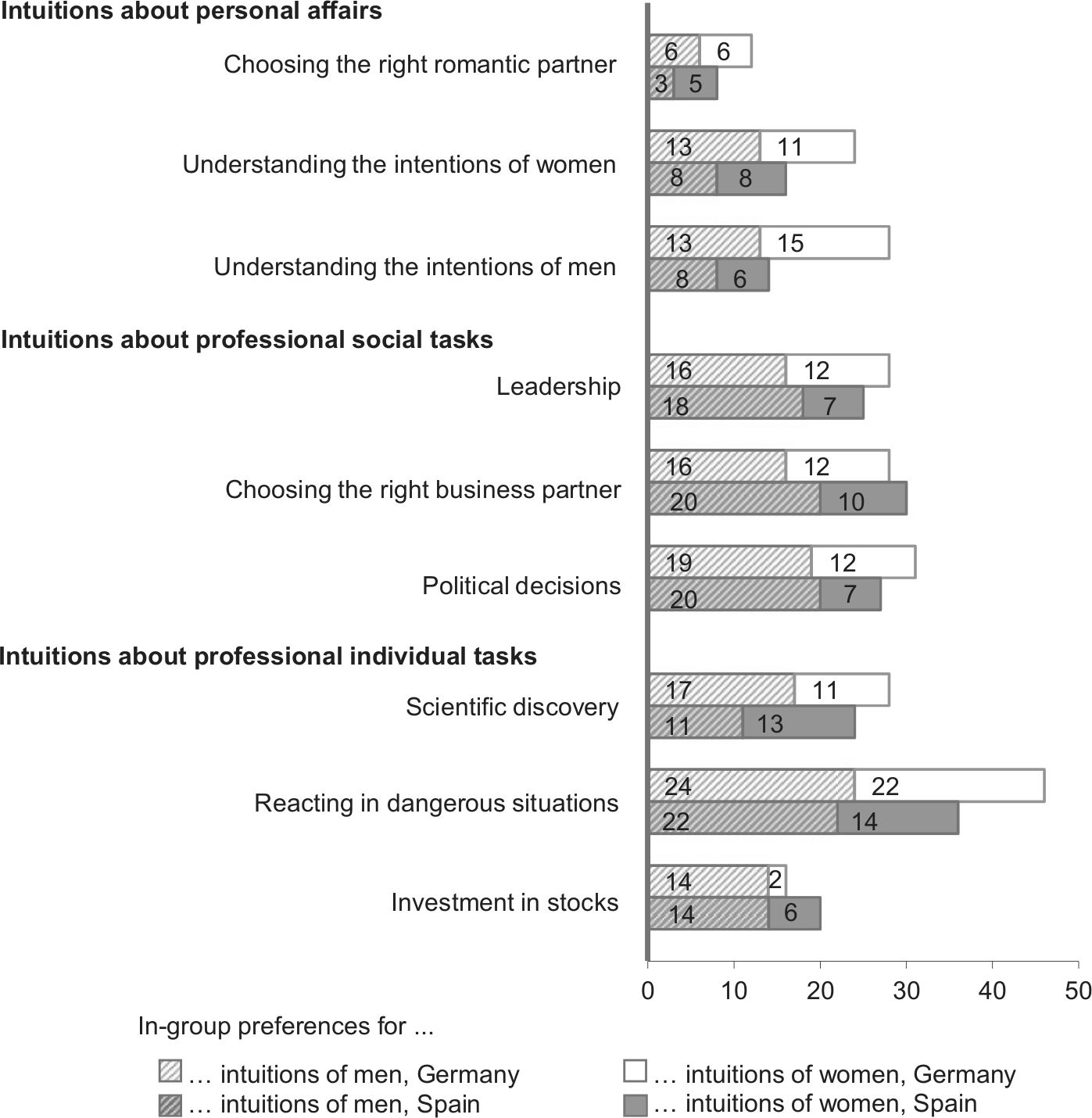
Preferences for intuitions of own gender.
Are Stereotypes About Gender-Specific Intuition Weaker for Younger People?
Contrary to the hypothesis that younger age groups show weaker stereotypes, the average s-values of the three German age groups are 31 (95% CI = [23.4, 38.6]) for the youngest; 29, CI = [21.5, 36.5] for the middle; and 32, CI = [26.2, 37.8] for the oldest age group, thus showing no trend. Similarly, the average s-values for the three age groups in Spain are 24, CI = [17.4, 30.6]; 25, CI = [18.2, 31.8]; and 28, CI = [21.7, 34.3], for the youngest to oldest participants. Among the 18 tests on age differences (nine domains × two countries), only two show a more conservative stereotype with age: The belief that men have better intuitions about political decisions and scientific discovery is strongest in the oldest age group (51+) in Spain. Thus, counter to the hypothesis that the absolute values of s increase with age, the direction and the strengths of gender-specific stereotypes remains constant across generations.
Finally, using multinomial logistic regression analyses, we tested whether the differences in stereotype strength between countries as shown in Figures 1 to 4 depended on age and religious practice and found that these differences remained stable.
Discussion
Research on gender stereotypes has relied mostly on convenience samples of students or highly educated people. To the best of our knowledge, this study is the first that obtained large nationwide samples, representative for the general population of Germany and Spain in terms of age, gender, region, and size of settlement. These samples allow us to describe the entire population of a country and analyze differences between countries. Nevertheless, this study also has its limits. We turn to these, and then to the major results.
Limitations
First, this study does not consider whether stereotypes are the cause or the consequence of gender roles or skills. Second, it does not assess the reliability of participants’ responses, for instance, by repeating questions at different time points. However, we used face-to-face interviews rather than telephone calls to create personal interaction and thus reduced the likelihood of random and false answers (De Leeuw & van der Zouwen, 1988). A third limitation is provided by the s-measure we used throughout this study, which does not distinguish between “no difference” judgments and an equal proportion of responses that favor men and women. For instance, an s-value of 0 (no stereotype) can result from 50% favoring men and 50% favoring women or from 100% answering “no difference.” Nevertheless, the “no difference” proportions can be determined for all domains from Figures 2 to 4. Finally, this study is cross-sectional rather than longitudinal, and thus the finding that the signs and sizes of gender-specific stereotypes were constant over age groups does not allow for the conclusion that they also remain constant across a lifetime.
Stereotypes About Gender-Specific Intuitions Exist and Are Domain-Specific
We found that, in both countries, stereotypes about gender-specific intuitions exist. Yet, these are not domain-general. Between the nine domains, the strength of the stereotypes, as measured by s, ranges from s = −49 to +53 (Figure 1). In the three domains labeled “personal affairs,” women are consistently believed to have better intuitions. In the three domains labeled “professional social tasks,” a different picture emerges. Here, the average stereotype is in favor of men. For the third group, “professional individual tasks,” the stereotype in favor of men is even stronger: Men are consistently believed to have the better intuitions. We next discuss the possible origins of these domain differences.
Personal Affairs
Taken together, the results shown in Figure 2 are surprising: On average, males trust women’s intuitions more, no matter whether they concern choosing the right romantic partner, women’s intentions, or their own (men’s) intentions. Is there empirical evidence to support a general superiority of women’s intuitions about others’ intentions? Although we are not aware of an experimental study that has answered this question, research has addressed a related topic. It is commonly reported that women are better than men at recognizing emotional expressions. Meta-analyses of gender differences in decoding emotional signals revealed small- to medium-sized effects of about d = .40 for nonverbal cues (Hall, 1978) and .13 to .32 for facial cues (McClure, 2000). Female advantage in processing emotion seems to be relatively stable from infancy to adolescence (McClure, 2000). This indirect evidence suggests that women could indeed be better in judging the intentions of other people—both men and women. Thus, the stereotype expressed by the majority of our participants may not be entirely without reason.
As mentioned above, the literature reports that German society upholds gender equality to a greater extent than Spanish society does and that, until the mid-1970s, the role of women in Spanish society was largely confined to home and children. Consistent with the hypothesis stated above, this would lead to stronger stereotypes about gender-specific intuitions for personal affairs in Spain than in Germany. However, this is not the case. The number of participants who believe that women or men have better intuition for choosing the right romantic partner and understanding intentions of women is essentially the same in the two countries (Figure 2). A difference emerges only for understanding intentions of men, with more Germans than Spaniards favoring intuitions of men rather than women.
Professional Social Tasks
For a long time, leadership has been considered to be a male domain (Chemers, 2001). Across different countries, characteristics associated with leadership roles—such as power, competition, and authority—are ascribed more frequently to men than to women (Garcia-Retamero & López-Zafra, 2008; Schein, Mueller, Lituchy, & Liu, 1996; Sczesny, Bosak, Neff, & Schyns, 2004). These studies suggest a strong stereotype that men have better intuitions for leadership than women. However, this is not the case (Figure 1). The general absence of a strong gender-specific stereotype about intuitions for leadership in both countries is supported by empirical evidence for the equal qualification of men and women as good leaders. For instance, studies show that the financial performance of companies employing relatively more female managers is, after controlling for other relevant variables, higher than or at least equal to the performance of companies with fewer women in managerial positions (Krishnan & Park, 2005; Singh & Vinnicombe, 2005). The absence of a strong stereotype may also reflect the fact that males and females practice leadership in different organizational contexts. Men are rated as better leaders in male-dominated environments such as the military, but women are rated better in environments such as educational, governmental, and social service organizations (Eagly, Karau, & Makhijani, 1995). Consistent with our hypothesis about country differences and the results of previous research on the differences between the two countries in gender stereotypes related to leadership (Garcia-Retamero & López-Zafra, 2006a, Garcia-Retamero, Müller, & López-Zafra, 2011), we find that more Spaniards believe that men have better intuitions about leadership than women do (si = −11), whereas the opposite holds for Germans (si = 6). The fact that these differences are small is in line with the available statistics: While the percentage of women in all managerial positions is higher in Spain than in Germany (32% vs. 26%; Eurostat, 2006), in the biggest companies, the reverse is the case (4% vs. 12%; Eurostat, 2008b).
Unlike for intuitions about good leadership, concerning the right business partner, Spaniards do not show a stronger stereotype favoring men as than the Germans, contradicting the general hypothesis based on the two countries’ history. A possible reason is the faster development of gender equality in Spain. As mentioned before, although more women work in Germany than in Spain, German women are much more often employed only part-time (Table 1). This may be linked to the lower use of child care in Germany. In Spain, 38% of children up to 3 years of age are enrolled in formal child care, while in Germany, only 19% of children are enrolled (Eurostat, 2008a). In addition, there is a greater tradition of grandparents and other family members helping young parents with child care in Spain than in Germany. Having children under 12 decreases the employment rate of Spanish women aged 25 to 49 by 11 percentage points compared with women without children; in Germany, this difference is 16 percentage points (Eurostat, 2008a). For men, the difference goes in the opposite direction: Having children increases their employment rate by 7 and 8 percentage points in Germany and Spain, respectively (Eurostat, 2008a). In sum, fewer Spanish women than German women work, but they more often work full-time.
The direction and the strength of the stereotypes about political intuitions are practically the same in Germany and Spain. Although women’s political rights were suppressed for a longer period in Spain than in Germany, this historical trajectory appears to be compensated for by the fact that there is a larger percentage of female politicians in Spain today than in Germany at almost all political levels (Table 2). Although Germany currently has a female chancellor, the majority of politicians in Germany and Spain are still men.
Professional Individual Tasks
Gender differences in prominence and interest in science are well documented. Of 558 Nobel prizes awarded in physics, chemistry, and medicine from 1901 to 2010, only 16 were awarded to women. A longitudinal study showed that males were twice as likely as females to favor investigative interests, whereas women were three to four times more likely to favor artistic and social interests (Achter, Lubinski, & Persson Benbow, 1996). Gender stereotypes appear to play a substantial role in these and similar differences. When children reach the age of 11 to 13 years, their parents believe that science is less interesting and more difficult for girls than for boys (Tenenbaum & Leaper, 2003), and mothers underestimate daughters’ and overestimate sons’ mathematics abilities (Frome & Eccles, 1998). Moreover, science had been closed to women well into the middle of the 20th century, when women were finally able to enter academic careers and take a public part in the scientific enterprise. Based on the historical differences between the two countries described earlier, a stronger stereotype regarding intuitions in science could be expected in Spain than in Germany. As in the fields of business and politics, however, the percentage of women working in almost all areas of science in present-day Spain is similar to or higher than in Germany (Table 3). This discrepancy is particularly high in the areas of natural sciences and engineering and technology. Indeed, the majority of Spaniards believe that men and women have equally good intuitions for scientific discoveries, whereas only one third of Germans think the same (Figure 4). Similarly, 62% of German males, but only 37% of Spanish males, believe that men have better intuitions. These country-specific stereotypes are mirrored among females: 45% of German females agree with the majority of German males and believe in male superiority in scientific intuition, compared with only 26% of Spanish females. This negative self-perception among German females might decrease their interest in science—and thus contribute to the actual difference between professional scientists in the two countries.
As for science, strong stereotypes about the superiority of intuitions of men exist for reacting in dangerous situations and investments in stocks. In popular Hollywood culture, those who master and survive dangerous situations are typically men, be it Tarzan, James Bond, or Spiderman. In real life, an indicator of strong male bias when it comes to working in dangerous situations is the low percentage of women in active military service: Only 6% of active military troops in Germany and 19% in Spain are women. In fact, only since 2001 have women in Germany had entry to military branches involving the use of arms. Accordingly, the stereotypes about better intuitions in reacting in dangerous situations favor men (Figure 1).
As billionaire George Soros (2003) explained his success in stock investments, in addition to his theory, “I relied on my instincts and intuition” (p. 35). These intuitions are believed to be superior in men (Figure 1). Investing in stocks is indeed historically a male domain; for instance, more than two thirds of investment bankers in the United States are men (U.S. Equal Employment Opportunity Commission, 2003). Men are reported to have more investment-related knowledge then women (e.g., Goldsmith & Goldsmith, 1997; Goldsmith, Goldsmith, & Heaney, 1997). This does not imply that men also have more success in stock picking. Ortmann, Gigerenzer, Borges, and Goldstein (2008) found that public stock portfolios based on women’s recognition of stocks made more money than those based on men’s recognition. In sum, although men have more knowledge about stocks on average, there is no firm evidence that men have superior intuitions about investing in stocks.
Stereotypes Are Stable Across Age Groups
The domain-specific stereotypes about women’s and men’s intuitions are stable across age groups. This is an unexpected result. We found no difference in the direction of the stereotype (the sign of s) and in its size in Germany, and little difference in Spain. This result suggests that present day gender roles influence gender-specific stereotypes more than historical trajectories.
Males and Females Share Stereotypes, but Show Strong In-Group Preferences
Our study was not designed to explain these in-group preferences, but there are possible motivational hypotheses, such as self-enhancement (Kruger & Dunning, 1999; but see Krueger & Mueller, 2002). However, what looks like a bias may be a by-product of a rational strategy (Funder, 1987). One rational, ecological explanation of in-group preferences is based on an argument by Fiedler (1996) and Gigerenzer, Fiedler, and Olsson (2012). It begins with the observation that, in most societies, males encounter more males and females more females. To simplify, let us code people’s intuitions as either good or bad and assume that the ratio of good and bad intuitions is the same for both genders. The sample sizes of observations, however, differ between genders. For instance, assume that the ratio of people with good and bad intuitions about business partners is 9 to 4, and the same among men and women. Assume further that a particular male has twice as large a sample of men than of women:
18 good and 8 bad intuitions.
9 good and 4 bad intuitions.
If this male now tested whether there is a difference in the number of good and bad intuitions among men and women, a binomial test would find significantly more good than bad intuitions among men (p = .037), but not among women (p = .13). A female would reach the opposite conclusion, given that she has a larger sample of women than of men. This simple model explains in-group preferences in the absence of real differences between genders. To obtain this surprising result, it is not necessary to assume that people calculate the exact probabilities; an approximate “statistical sense” would be sufficient (Gigerenzer & Murray, 1987).
The same ecological model also implies increasing in-group preferences with increasing sample size differences. To the degree that sample size differences are more extreme in professional domains than in personal domains, for instance, because of professions in which most employees are of the same gender (e.g., pilots, nurses), the in-group preferences will be larger in professional domains. This consequence can explain the observed differences between domains in Figure 5. Finally, the observation that males have stronger in-group preferences than females in professional domains also follows from this model. The necessary condition is that more men are employed than women, which is the case in both Germany and Spain. For instance, if a firm employs 12 men and 3 women, and everyone has a preference toward socializing with one’s own gender and wants to have at least 4 friends, then, for males, the ratio of men to women could be as high as 4:0 but that for females at most 2:2 (not counting oneself as a friend). This implies higher in-group preferences among males than females, as observed in Figure 5 for all professional domains.
Stereotypes About Gender-Specific Intuition Are Stronger in Germany Than in Spain
Across domains, stereotypes about gender-specific intuitions are stronger in Germany than in Spain. Similarly, more Spaniards than Germans see no difference between intuitions of men and women: 38% versus 33% on average across domains.
These results are surprising given that Spaniards have a recent history of a conservative regime that strongly supported traditional male and female roles. However, the current environment appears to have a stronger influence on gender stereotypes. Spain has presently surpassed Germany in the number of women in leadership positions, full-time employment (Table 1), politics (Table 2), and science (Table 3). Women in Spain are also more present in active military service. Although women are far from being equally represented in professional life, more Spanish women participate in professional life than German women. Consistent with this state of affairs, the average strength of stereotypes across the six professional domains is larger in Germany than in Spain.
Social Role Theory (Eagly, 1987) argues that beliefs about gender are derived from observations of actual gender roles and thus reflect the division of labor and gender hierarchy of a society. In this view, stereotypes are a consequence rather than a cause of societal gender roles. Although the present study was not designed to examine causal relationships between stereotypes and gender roles, our results show that the current environment rather than history affects gender stereotypes. Specifically, our findings suggest that people attribute better intuitions to the gender that has more experience in a particular domain. This is in line with studies showing that experts in a certain task are able to find good solutions using simple rules and only a few relevant cues, whereas novices engage in detailed consideration of different options (Beilock, Carr, MacMahon, & Starkes, 2002; Garcia-Retamero & Dhami, 2009; Johnson & Raab, 2003; Shanteau, 1992). Finally, the present study shows that widespread stereotypes about men’s and women’s intuitions still exist even a century after the first president of the American Psychological Association made his infamous statement.
Footnotes
Acknowledgements
We thank Rona Unrau and Christel Anita Fraser for editing the manuscript.
Declaration of Conflicting Interests
The author(s) declared no potential conflicts of interest with respect to the research, authorship, and/or publication of this article.
Funding
The author(s) disclosed receipt of the following financial support for the research, authorship, and/or publication of this article: This research was partially funded by a grant to the third author, PSI2011-22954.