







Abstract
The current investigation sought to (a) report on the prevalence of bullying and cyberbullying perpetration among Turkish youth; (b) test a predictive model of bullying and cyberbullying perpetration, which specifies both direct links and indirect links via low self-control between measures of maternal and paternal parenting and measures of bullying; and (c) examine sex differences in the model. Questionnaire data were collected from adolescents (N = 546; Mage = 15.91; 56.2% female) at two public high schools in a small city in western Turkey. Key measures included low self-control, bullying and cyberbullying perpetration, and parental closeness, monitoring, and peer approval (autonomy granting). Substantial rates of both bullying (72.9%) and cyberbullying (17.9%) perpetration were found in this student population. Based on path analyses, paternal peer approval predicted bullying both directly and indirectly via low self-control. In addition, paternal closeness was found to predict higher levels of self-control; finally, low self-control predicted both bullying and cyberbullying behaviors. Analyses by sex showed that maternal and paternal closeness as well as paternal peer approval predicted low self-control and bullying/cyberbullying behaviors for female youth; however, none of the parenting processes were associated with low self-control or bullying/cyberbullying among male adolescents.
Bullying and Cyberbullying in Turkish Adolescents: Direct and Indirect Effects of Parenting Processes
Bullying perpetration remains a significant problem at schools across the world (Hinduja & Patchin, 2012; Kowalski, Giumetti, Schroeder, & Lattanner, 2014). In the past two decades, the rapid increase in the use of Internet and communication technology gave rise to a new form of bullying, termed cyberbullying. Both forms of aggression are similar in their negative social and psychological impact on victims (Kowalski & Limber, 2013; Menesini, 2012; Smith, 2012; Waasdorp, & Bradshaw, 2015; Ybarra, Boyd, Korchmaros, & Oppenheim, 2012; Ybarra & Mitchell, 2004). Moreover, bullying and cyberbullying have been shown to significantly overlap, suggesting that technology might be just another venue for accessing potential victims (Low & Espelage, 2013). Some authors, however, have pointed out that traditional playground bullying is not identical to cyberbullying. Unlike traditional bullying, cyberbullying is often anonymous, and the victim is accessible at any time; cyberbullying incidents can also reach far larger audiences than traditional bullying behaviors (Aricak et al., 2008; Dooley, Pyżalski, & Cross, 2009; Kowalski et al., 2014; Law, Shapka, Hymel, Olson, & Waterhouse, 2012).
Previous scholarship yielded important insights on the etiology of both bullying and cyberbullying (e.g., Cappadocia, Craig, & Pepler, 2013; Jose, Kljakovic, Scheib, & Notter, 2012; Kowalski et al., 2014; Tokunaga, 2010; Vazsonyi, Machackova, Sevcikova, Smahel, & Cerna, 2012); however, the majority of previous work has been carried out in North America and Western Europe, specifically with regard to cyberbullying. Although the number of studies which have focused on the predictors of cyberbullying in non-Western samples has risen (e.g., Ang & Goh, 2010; Aoyama, Barnard-Brak, & Talbert, 2011; Topcu & Erdur-Baker, 2012), this topic remains understudied. Thus, it needs to be addressed as it is critical to understand whether correlates and predictors of both bullying and cyberbullying vary across cultures. One of the most important reasons to examine these differences is whether and which antibullying prevention and intervention efforts, developed mostly in North American or European countries, can be successfully applied and implemented in different cultural contexts.
In the present study, we aimed to increase our understanding of bullying and cyberbullying perpetration among Turkish youth by (a) investigating the prevalence of bullying and cyberbullying perpetration, (b) testing predictors of bullying/cyberbullying perpetration, and (c) testing for sex differences in hypothesized model. The study was framed by Gottfredson and Hirschi’s (1990) self-control theory which provides an important theoretical framework in understanding and explaining a variety of aggressive, deviant, and problem behaviors, not only in North America but also across diverse cultural contexts (e.g., Özdemir, Vazsonyi, & Cok, 2013; Pratt & Cullen, 2000; Vazsonyi & Belliston, 2007; Vazsonyi & Huang, 2010).
The Effect of Low Self-Control
Low self-control is characterized by impulsivity and shortsightedness. It has been found to consistently predict both aggressive and deviant or delinquent behaviors, including in cross-cultural work (e.g., Chui & Chan, 2013; Miller, Jennings, Alvarez-Rivera, & Lanza-Kaduce, 2009; Özdemir et al., 2013; Rebellon, Straus, & Medeiros, 2008; Vazsonyi & Belliston, 2007; Vazsonyi et al., 2012; Vazsonyi, Pickering, Junger, & Hessing, 2001). Importance of self-control and self-regulation in predicting adjustment outcomes has also been recognized in psychology (Baumeister, Heatherton, & Tice, 1994; Tangney, Baumeister, & Boone, 2004), education (Duckworth & Seligman, 2005), and health-risk research (Griffin, Scheier, Acevedo, Grenard, & Botvin, 2011; Miller, Barnes, & Beaver, 2011).
As both bullying and cyberbullying perpetration are forms of aggressive behaviors, it is not surprising that low self-control has also been found to predict these behaviors (Ando, Asakura, & Simons-Morton, 2005; Haynie et al., 2001; Moon & Alarid, 2015; Unnever & Cornell, 2003; Vazsonyi et al., 2012). Again, this link between low self-control and bullying/cyberbullying has also been established cross-culturally. In an investigation with Macanese males aged 10 to 17, Chui and Chan (2013) found a positive association between low self-control and bullying perpetration. Similarly, based on cross-sectional, nationally representative data from 25,000 adolescents across 25 European countries, Vazsonyi and colleagues (2012) found both direct and indirect effects by low self-control on bullying and cyberbullying, and importantly, few differences in these links across the 25 countries.
The Role of Parenting Processes
One of the most important tenets of Gottfredson and Hirschi’s (1990) theory is that self-control develops as a result of effective parenting practices by a child’s caregivers during the first decade of life. Ineffective parenting was hypothesized to be associated with lower levels of self-control that in turn would predict subsequent bullying behaviors (Vazsonyi & Huang, 2010). Thus, self-control was conceptualized as a mediator between parenting and online and offline bullying behaviors.
Parenting processes (Espelage & Swearer, 2003; Lereya, Samara, & Wolke, 2013) as well as low self-control (Ando et al., 2005; Vazsonyi et al., 2012) have been found to be associated with both bullying and cyberbullying. Parental monitoring and knowledge have been established as one of the most important parenting processes that are associated with both bullying and cyberbullying involvement across youth from diverse cultural and national backgrounds, including the United States (Low & Espelage, 2013; Moon & Alarid, 2015; Shetgiri, Lin, & Flores, 2013; Wang, Iannotti, & Nansel, 2009), Italy (Milani, Osualdella, & Di Blasio, 2009), and Taiwan (Chang et al., 2015). For example, Low and Espelage (2013) found that parental monitoring was associated with bullying involvement; similarly, Moon and Alarid (2015) concluded that when parental supervision and monitoring decreased, middle school students were more likely to bully. Finally, Dehue, Bolman, and Völlink (2008) emphasized the importance of parental Internet use rule setting and monitoring in preventing cyberbullying.
In addition to parental supervision and monitoring, previous research has identified poor emotional bonds with parents as a predictor of both bullying and cyberbullying involvement. For example, low closeness (Rigby, 1993; Ybarra & Mitchell, 2004), missing parental involvement (Barboza et al., 2009; Flouri & Buchanan, 2003; Georgiou, 2008), and a lack of parental support (Holt & Espelage, 2007) were found to be important predictors of bullying. Finally, autonomy support, including parental approval of an adolescent’s peers and friendships, has been found to predict the development of self-regulation skills (Chirkov & Ryan, 2001; Guay, Ratelle, & Chanal, 2008). Moreover, Fousiani, Dimitropoulou, Michaelides, and Van Petegem (2016) found that autonomy support predicted lower levels of cyberbullying in adolescents.
Studies that have utilized self-control theory to explain bullying/cyberbullying behaviors by the combined effects of low self-control and parenting are quite rare (cf. Vazsonyi et al., 2012). However, as a number of studies have provided evidence of both direct and indirect effects by parenting and low self-control on aggressive and delinquent behaviors in general (Cheung & Cheung, 2008; Gibbs, Giever, & Higgins, 2003; Hay, 2001; Miller et al., 2009; Vazsonyi & Belliston, 2007), self-control theory also seems very informative in explaining both bullying and cyberbullying perpetration.
To date, one study has examined direct and indirect effects of parenting and low self-control on problem behaviors in Turkish youth (Özdemir et al., 2013). As Turkish families traditionally value greater emotional relatedness, interdependence, as well as parental control of children and adolescents (e.g., Sunar & Fisek, 2005), Özdemir and colleagues (2013) hypothesized possible variations in the effects of parenting on aggressive behaviors in comparison with youth from North American or European cultures. Based on their findings, and consistent with self-control theory, both parenting and self-control predicted aggressive behaviors in Turkish adolescents, providing some support for the cross-cultural applicability of the theory.
Bullying and Cyberbullying in Turkish Adolescents
Peer bullying has been researched around the world for several decades (Banks, 1997; Fitzgerald, 1999; Kowalski et al., 2014; Olweus, 1979, 1980). Prevalence estimates suggest that bullying is a common behavior at schools in a number of different countries, including the United States (Dempsey, Haden, Goldman, Sivinski, & Wiens, 2011; Hinduja & Patchin, 2010), Canada (Beran & Li, 2005), Singapore (Ang & Goh, 2010), Spain (Calvete, Orue, Estévez, Villardón, & Padilla, 2010), the Netherlands (Dehue et al., 2008), or Turkey (Kepenekci & Çınkır, 2006). In Turkey, bullying has started to receive more research attention approximately a decade ago. Kepenekci and Çınkır (2006) emphasized the need for such studies, given the acute lack of policies focused on dealing with bullying at schools. Scholarship that has followed confirmed the need for interventions as the data showed that bullying was prevalent among Turkish youth (Bayraktar, 2012; Kepenekci & Çınkır, 2006; Özer, Totan, & Atik, 2011).
The widespread use of the Internet and other types of communication technologies equipped bullying perpetrators with new avenues for reaching their victims (Kowalski et al., 2014; Lenhart, 2010; Lenhart, Madden, Smith, & Macgill, 2009). Based on Kowalski et al.’s (2014) meta-analysis, the prevalence of cyberbullying perpetration ranged between 0.9% and 44.1% in samples from around the world, depending on the methods used and participant ages. The available data suggest that in Turkey, there are lower rates of Internet penetration in comparison with other North American or European countries, for instance. Data from Turkey indicate that 51% of population are Internet users as compared with 87.4% in the United States (The World Bank, 2016). However, among the 16- to 24-year-olds, 95% reported to have access to a computer and 89% were active Internet users (Arslan, Savaser, Hallett, & Balci, 2012). This suggests that Turkish adolescents seem to have access to media enabling them to be involved in cyberbullying. Prevalence estimates suggest that cyberbullying perpetration is as common in Turkish youth as among youth in the United States and Europe (between 3.0% and 42.8% of youth reported such behavior; Arslan et al., 2012; Erdur-Baker, 2010; Topçu, Erdur-Baker, & Çapa-Aydin, 2008; Yilmaz, 2011).
Bullying perpetration in Turkish adolescents beyond simple prevalence estimates seems to be associated with the psychological climate of schools, teacher attitudes, peer relationships, parental acceptance versus rejection, social competence (Bayraktar, 2012), self-efficacy, and academic achievement (Özer et al., 2011), hence providing very similar findings as in samples outside of Turkey (e.g., Kowalski et al., 2014). In addition, Erdur-Baker (2010) emphasized frequent and problematic Internet use as a risk factor for being involved in cyberbullying. The predictors of bullying/cyberbullying perpetration in Turkey are, however, still underresearched, and studies focused on examining them are scarce in comparison with those using North American or European samples.
Sex Differences in Prevalence and Predictors
Although not all authors have found sex differences in bullying and cyberbullying involvement (e.g., Li, 2006; Patchin & Hinduja, 2006), the majority of scholars report that boys were bullying/cyberbullying perpetrators more frequently than girls (Olweus, 1995; Scheithauer, Hayer, Petermann, & Jugert, 2006; Solberg, Olweus, & Endresen, 2007; Wang et al., 2009). These findings have largely been confirmed based on Turkish adolescent samples (Aricak et al., 2008; Arslan et al., 2012; Erdur-Baker, 2010; Yilmaz, 2011). In fact, Erdur-Baker (2010) has suggested that these differences might in fact be further exacerbated in the Turkish culture due to traditional gender socialization, where aggressive behaviors in boys may be more likely to be tolerated. In the same vein, based on a survey conducted by the Republic of Turkey Prime Ministry Directorate General on the Status of Women, Jansen, Yüksel, and Çağatay (2009) reported that 14% of female participants found violent behavior from their husbands acceptable. Thus, socialization practices and expectations about aggression may further contribute to differences in bullying/cyberbullying perpetration between Turkish boys and girls.
The Present Investigation
Building on the work by Vazsonyi and colleagues (2012) as well as Özdemir and colleagues (2013), in the present study we aimed to (a) report prevalence of bullying and cyberbullying perpetration in Turkish youth; (b) test a predictive model of bullying and cyberbullying perpetration, which specified both direct and indirect links via low self-control between maternal and paternal parenting, and measures of bullying/cyberbullying; and (c) test for sex differences in the predictive model.
Barber (1997) identified three basic parenting domains as most salient for children’s developmental outcomes, including antisocial behaviors: (a) connection (emotional closeness), (b) regulation (supervision and monitoring), and (c) autonomy support (Barber & Olsen, 1997; Barber, Stolz, Olsen, Collins, & Burchinal, 2005). The importance of these domains has been further supported by findings from Özdemir and colleagues (2013) who identified parental closeness, monitoring, and parental peer approval (a component of autonomy support) as being negatively associated with aggression in a sample of Turkish adolescents. As bullying/cyberbullying is known to covary with other types of antisocial behaviors (Cappadocia et al., 2013; Donovan, Jessor, & Costa, 1988), we selected closeness, monitoring, and parental peer approval as key correlates or predictors in the currently hypothesized model. In the analysis, we controlled for variables that have been found to covary with parenting processes and self-control, including sex, socioeconomic status (SES), and family structure (Chapple, Vaske, & Hope, 2010; Dunaway, Cullen, Burton, & Evans, 2000; Jo & Bouffard, 2014; Mistry, Vandewater, Huston, & McLoyd, 2002; Sampson & Laub, 1994).
Both parenting and self-control have been identified as potential targets of prevention and intervention programs (e.g., Piquero, Jennings, Farrington, Diamond, & Gonzalez, 2016); consequently, understanding whether these variables are associated with aggressive online and offline behaviors in Turkish youth is both consistent theoretically (Gottfredson & Hirschi, 1990) and important as it may provide promising avenues for addressing these issues and improving the lives of adolescents. Although support exists for the cross-cultural generalizability of the self-control theory (Cheung & Cheung, 2008; Miller et al., 2009; Vazsonyi & Belliston, 2007; Vazsonyi & Crosswhite, 2004; Vazsonyi, Ksinan Jiskrova, Ksinan, & Blatný, 2016; Vazsonyi, Wittekind, Belliston, & Loh, 2004), a number of idiosyncratic qualities of the Turkish culture, specifically related to gender socialization or family values (Erdur-Baker, 2010; Sunar & Fisek, 2005), might alter the observed links, and would need to be considered when developing intervention programs.
Based on the previous literature and consistent with the self-control theory, we hypothesized that (a) bullying and cyberbullying perpetration would be present in the investigated sample, (b) maternal and paternal parenting would directly predict low self-control and bullying/cyberbullying perpetration, (c) maternal and paternal parenting would indirectly predict bullying/cyberbullying perpetration via low self-control, and (d) there would be important differences between boys and girls in both the prevalence and predictors of bullying/cyberbullying perpetration.
Method
Participants and Procedures
Data for the present study were collected at two public high schools in a small city in western Turkey. There are two main types of secondary education schools in Turkey, namely general high schools that are usually attended by college bound students and technical or trade high schools that provide specialized education tied to students’ future careers. To include students from both types of schools, we randomly selected one technical school (out of five) and one general school (out of 16) out of a pool of 21 possible high schools in the city where the research was carried out.
In the general high school, 386 surveys were distributed; 88 (23%) students declined to participate or turned in incomplete or invalid surveys, leaving a final study sample of 298 students (77% response rate). In the technical high school, 342 surveys were distributed; 94 (27%) students declined participation or turned in incomplete or invalid surveys, leaving a final study sample of 248 (73% response rate) students. The final total sample included N = 546 adolescents; the mean age of participants was Mage = 15.91 years (SD = 0.95, ranging from 14 to 18 years; Grades 9-11). The sample included n = 239 male (43.8%) and n = 307 female (56.2%) students.
First, surveys were translated from English to Turkish language, and then backtranslated. A standard data collection protocol was used throughout the administration of the anonymous paper-and-pencil survey. Youth verbally consented to take part in the survey before completing it. The surveys were administered in classrooms by teachers who had received extensive verbal and written instructions. Students had 1 hr to complete the survey. The study and the data collection protocol were reviewed and approved by Adnan Menderes Üniversitesi’s research ethics committee; in addition, permission was obtained from the local education authority, the provincial education directorate.
Measures
Control variables
Adolescents reported their sex, family type, and parental education. Sex (male vs. female), family type (dichotomized as two biological parents vs. other), and parental education (computed as a mean of maternal and paternal education levels, coded on a 4-point scale ranging from elementary school to university degree) were used in the path analyses as control variables.
Parenting processes
Adolescent reports of parenting processes were assessed by the Adolescent Family Process (AFP) measure (Vazsonyi, Hibbert, & Blake-Snider, 2003). For the purpose of the current study, we used three parenting dimensions: closeness, monitoring, and parental peer approval, reported separately for both mothers or female caretakers and fathers or male caretakers. Thus, we used a total of six parenting dimensions from the AFP.
The Closeness scale consisted of six items (e.g., “My mother/father often asks about what I am doing in school.”) and was answered on a 5-point Likert-type scale ranging from strongly disagree (1) to strongly agree (5). The Monitoring scale consisted of five items (e.g., “My mother/father wants to know who I am with when I go out with friends or on a date.”) and was answered on a 5-point Likert-type scale ranging from strongly disagree (1) to strongly agree (5). The Parental Peer Approval scale consisted of three items (e.g., “How often does your mother/father approve of your friends?”) and was answered on a 5-point scale ranging from never (1) to very often (5). All scales were computed by mean averaging the answers to their respective items. Higher scores represented higher levels of respective parenting processes, specifically higher levels of maternal or paternal closeness, monitoring, or parental peer approval.
Low self-control
Self-control was assessed by the Low Self-Control (LSC; Grasmick, Tittle, Bursik, & Arneklev, 1993) scale. The LSC scale includes 24 items pertaining to impulsivity, risk seeking, and problems controlling temper (e.g., “I’m more concerned with what happens to me in the short run than in the long run.”). The items were rated on a 5-point Likert-type scale ranging from strongly disagree (1) to strongly agree (5). The LSC scale was computed by computing the mean of the 24 items. Higher scores on the scale indicated lower self-control.
Bullying and cyberbullying perpetration
Bullying and cyberbullying perpetration were measured by a scale developed by Gradinger, Strohmeier, and Spiel (2010), adapted from Olweus’ Bully/Victim Questionnaire (Olweus, 1996). The Bullying scale included four items: one global item (“How often have you insulted or hurt other students during the last 2 months?”) and three specific items for bullying behaviors (e.g., “How often have you insulted or hurt other students by verbally harassing them during the last 2 months?”). Similarly, the Cyberbullying scale included one global item (“How often have you insulted or hurt other students by sending mean text messages, emails, videos, or photos to them during the last 2 months?”) and three specific items (e.g., “How often have you insulted or hurt other students by mean videos or photos during the last 2 months?”). Participants reported the frequency of traditional bullying and cyberbullying during the past 2 months on a 5-point scale ranging from never (1) to nearly every day (5). Bullying and cyberbullying scores were computed by averaging ratings from across the four respective items. Higher scale scores indicated higher rates, levels or frequency of bullying/cyberbullying perpetration.
Results
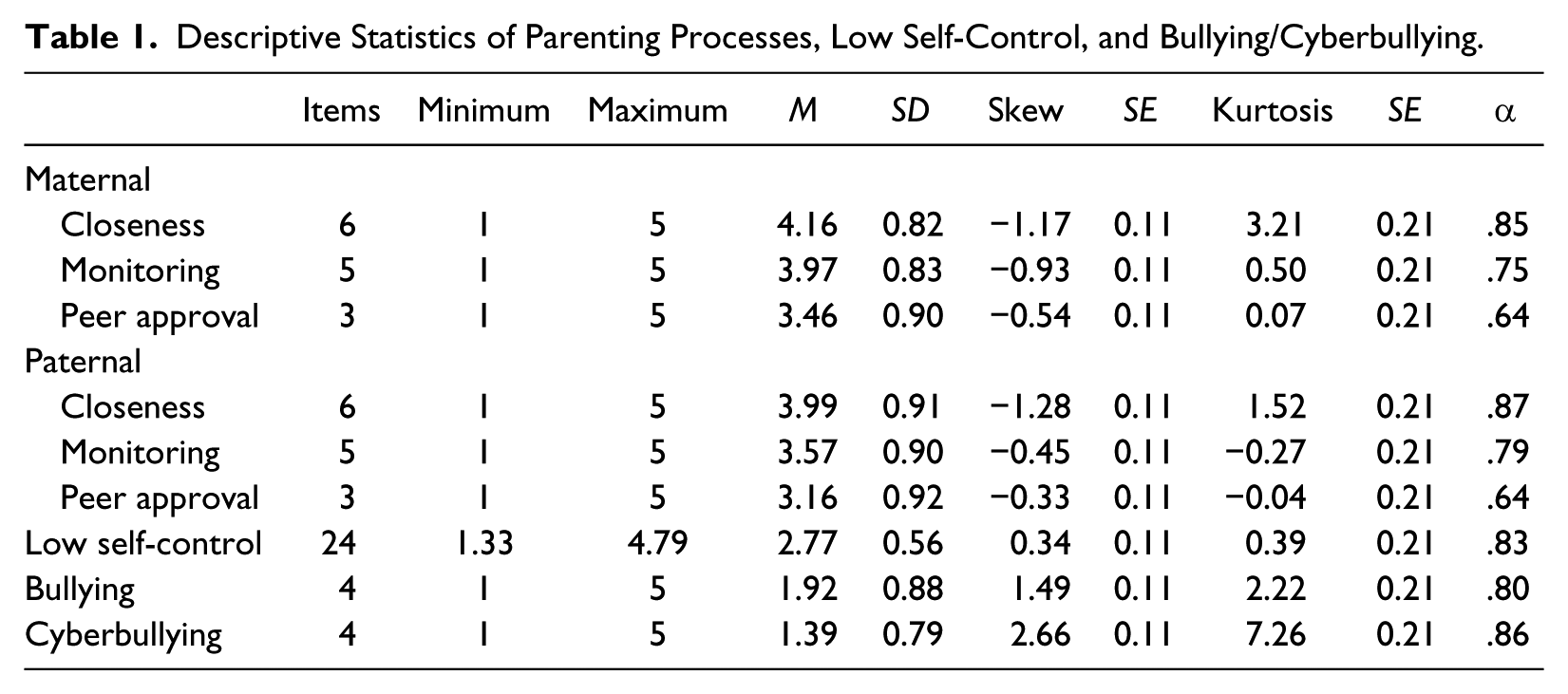
Descriptive statistics and Cronbach’s alpha estimates of the scales are summarized in Table 1. The frequency of bullying and cyberbullying in the sample was assessed as a percentage of answers on scale ranging from never to nearly every day to a global item for traditional bullying: “How often have you insulted or hurt other students during the last 2 months” and cyberbullying: “How often have you insulted or hurt other students by sending mean text messages, emails, videos, or photos to them during the last 2 months.” To the bullying global item, 27.1% of adolescents answered with never, 40.4% of adolescents reported this behavior once or twice, 17.2% once or twice in a month, 9.4% one time in a week, and 5.9% nearly every day. Similarly for cyberbullying global item, 82.1% of adolescents reported that they never engaged in such behavior, 8.3% reported engaging in this behavior once or twice, 3.7% once or twice in a month, 2.2% one time in a week, and 3.7% nearly every day (Figure 1).
Descriptive Statistics of Parenting Processes, Low Self-Control, and Bullying/Cyberbullying.
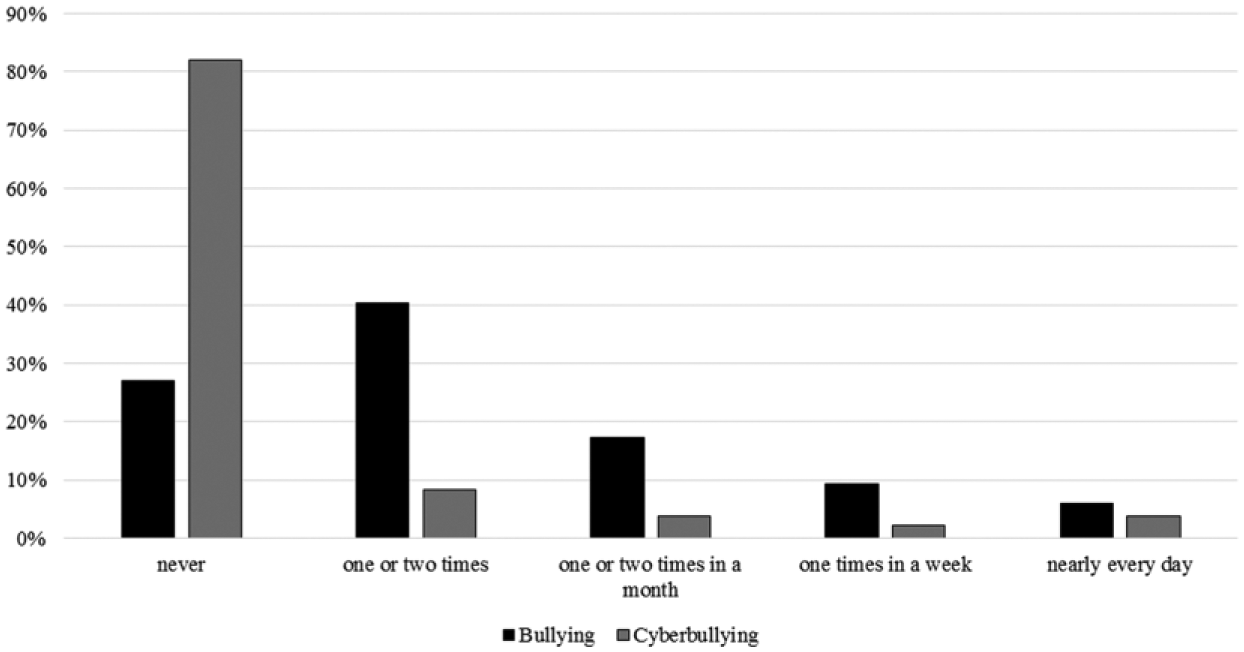
Frequency of bullying/cyberbullying perpetration.
Bivariate correlations between the main study variables (parenting processes, low self-control, and bullying/cyberbullying) and the control variables (sex, family type, and parental education) are summarized in Table 2. All correlations were in the expected direction. Higher levels of paternal and maternal closeness, monitoring, and peer approval were significantly associated with higher levels of self-control, lower levels of bullying, and with the exception of maternal peer approval, with cyberbullying. Furthermore, low self-control was significantly correlated with higher levels of bullying and cyberbullying. Bivariate correlations also revealed some relationships between the control and the study variables. Specifically, sex was associated with all study variables. Girls in comparison with boys reported higher levels of maternal closeness, monitoring, and peer approval as well as paternal closeness and monitoring, higher levels of self-control, and lower levels of both bullying and cyberbullying perpetration.
Bivariate Correlations Between Parenting Processes, Low Self-Control, Bullying/Cyberbullying Scales, and Control Variables.
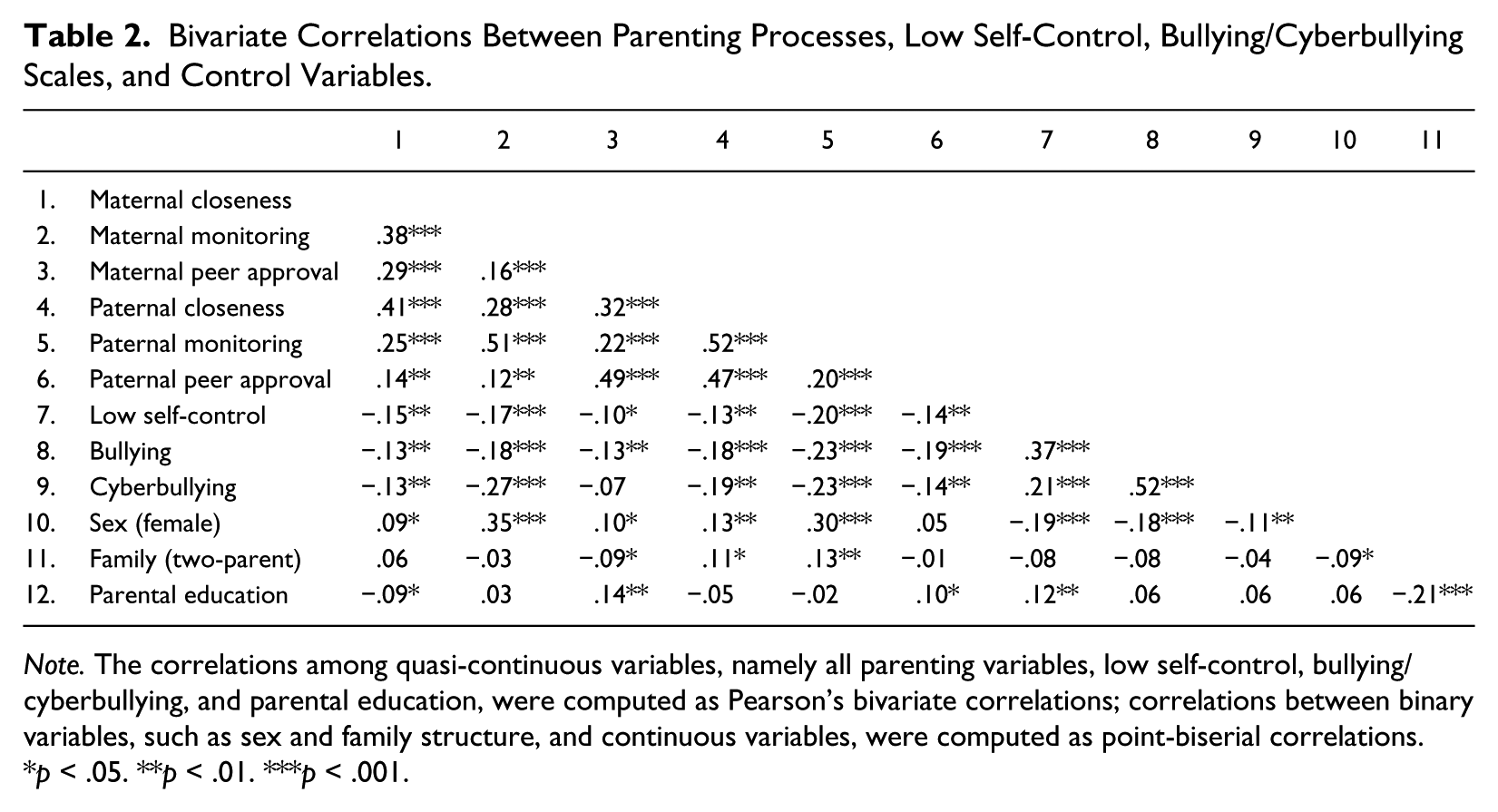
Note. The correlations among quasi-continuous variables, namely all parenting variables, low self-control, bullying/cyberbullying, and parental education, were computed as Pearson’s bivariate correlations; correlations between binary variables, such as sex and family structure, and continuous variables, were computed as point-biserial correlations.
p < .05. **p < .01. ***p < .001.
In a final step, in a path model, we tested direct effects of parenting on bullying and cyberbullying as well as indirect effects of parenting on bullying and cyberbullying via self-control. The path analysis was completed in Mplus 7.4 software (Muthén & Muthén, 1998-2015). There were no missing data in the control variables (sex, SES, and family type). Based on a missing data analysis, between 0.2% (cyberbullying perpetration) and 3.7% (paternal monitoring) of data were missing. The results of the Little’s MCAR test revealed that the data were not missing completely at random (χ2 = 124.06. df = 87; p = .006), suggesting that listwise deletion would bias the results (Kline, 2010). Full-information maximum-likelihood (FIML) estimation was used to address missing data issues.
Both dependent variables, bullying and cyberbullying, departed from normality in their distribution; therefore, maximum-likelihood (ML) estimation with robust standard errors (MLR) was used for the analyses as this provides more precise estimates in nonnormally distributed data in comparison with standard estimation (Muthén & Muthén, 1998-2015). However, MLR does not allow for bootstrapping technique that was needed to estimate the statistical significance of indirect effects. Thus, when computing the estimates and significance of the indirect effects, the ML estimator was used, along with a bootstrapping procedure with 5,000 resamples.
Based on the path analysis, paternal peer approval had direct effect on bullying (β = −.12, p = .046) as well as on low self-control (β = −.15, p = .008). The indirect effect of paternal peer approval on bullying via low self-control was also significant (β = −.05; 95% bootstrapped confidence interval [CI] = [−0.083, −0.012]). Paternal peer approval had also significant indirect effect (but not direct effect) on cyberbullying via low self-control (β = −.02; 95% bootstrapped CI = [−0.049, −0.005]). In addition, maternal monitoring had a direct effect on cyberbullying (β = −.19, p = .001). Finally, low self-control significantly predicted both bullying (β = .30, p < .001) and cyberbullying (β = .14, p = .005). Other paths in the model did not reach statistical significance (Figure 2).
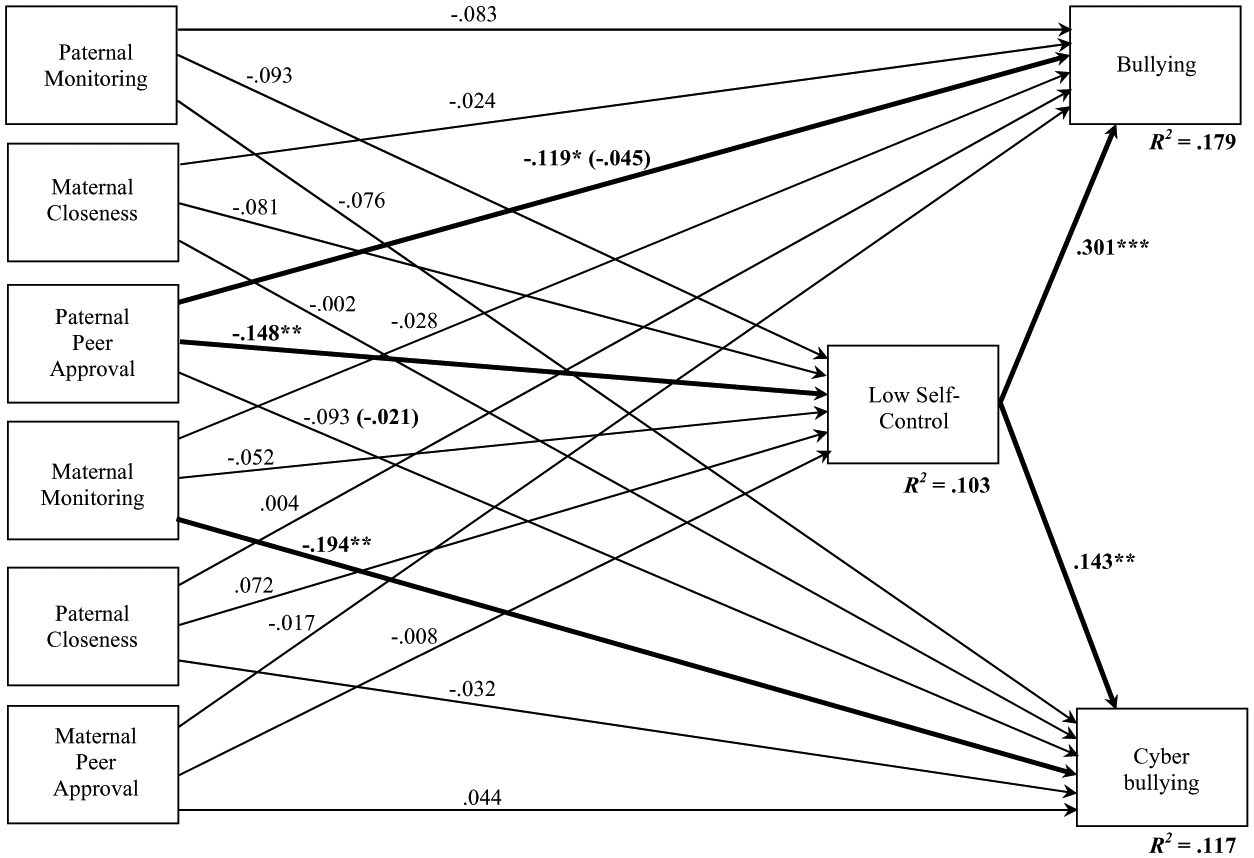
Path model (total sample): Associations between parenting processes, low self-control, and bullying/cyberbullying.
The analyses revealed multiple significant effects of the background variables—mainly adolescent sex—on parenting and low self-control. Girls scored significantly lower than boys on measures of low self-control (β = −.15, p < .001) and higher in maternal closeness (β = .10, p = .024), maternal monitoring (β = .35, p < .001), maternal peer approval (β = .09, p = .031), paternal closeness (β = .15, p < .001), and paternal monitoring (β = .32, p < .001). In addition, higher parental education predicted lower self-control (β = .13, p = .003), and higher maternal (β = .12, p = .005) and paternal (β = .01, p = .024) peer approval. Finally, adolescents from two-parent families reported higher levels of paternal closeness (β = .14, p = .021) and paternal monitoring (β = .18, p = .001) than adolescents from other family types. The model explained 10.3% of the total variance in low self-control, 11.7% of the variance in cyberbullying, and 17.9% of the variance in bullying.
To examine the effect of sex on the associations between parenting, low self-control, and bullying/cyberbullying, we tested the model separately for boys and girls. The path analysis revealed that among male youth, the only statistically significant path was from low self-control to bullying (β = .30, p < .001; Figure 3). In contrast, among female youth, the model predicted outcome variables largely in the hypothesized way. With regard to bullying, higher levels of paternal peer approval reported by girls predicted lower levels of bullying (β = −.14, p = .022). Unexpectedly, higher levels of paternal closeness predicted higher levels of bullying (β = .17, p = .037). In addition, low self-control predicted higher bullying perpetration in girls (β = .37, p < .001). Two significant indirect effects on bullying perpetration were also found. Maternal closeness (β = −.07; 95% bootstrapped CI = [−0.122, −0.024]) and paternal peer approval (β = −.08; 95% bootstrapped CI = [−0.143, −0.029]) predicted bullying via low self-control.
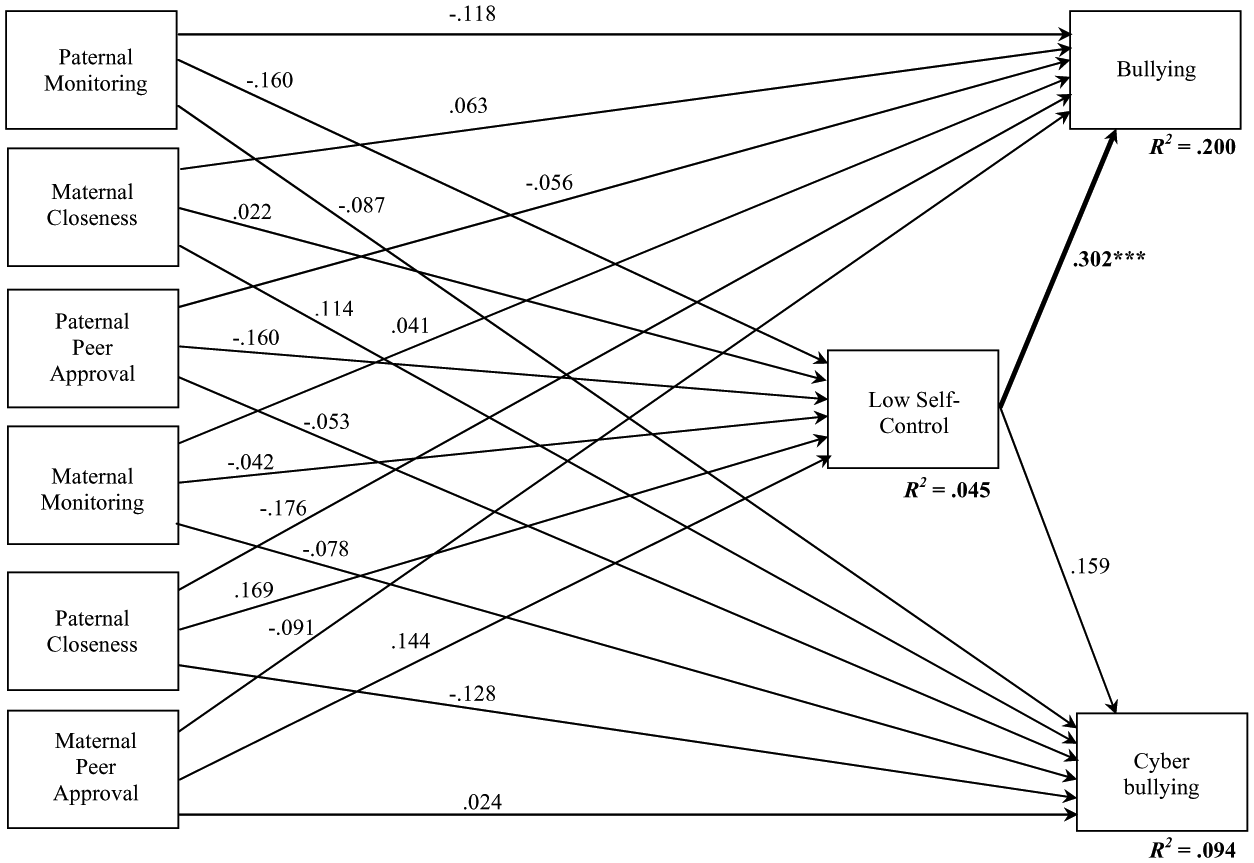
Path model (male youth): Associations between parenting processes, low self-control, and bullying/cyberbullying.
Similar relationships were found also for cyberbullying in girls. Higher levels of paternal peer approval (β = −.17, p = .012) and maternal monitoring (β = −.34, p < .001) predicted lower levels of cyberbullying. Low self-control predicted higher levels of cyberbullying perpetration (β = .13, p = .023). In addition, maternal closeness (β = −.02; 95% bootstrapped CI = −.063, −.003]) and paternal peer approval (β = −.03; 95% bootstrapped CI = [−0.071, −0.004]) predicted cyberbullying via low self-control. Finally, higher levels of maternal closeness (β = −.18, p = .001) and paternal peer approval (β = −.21, p = .001) predicted higher levels of self-control (Figure 4).
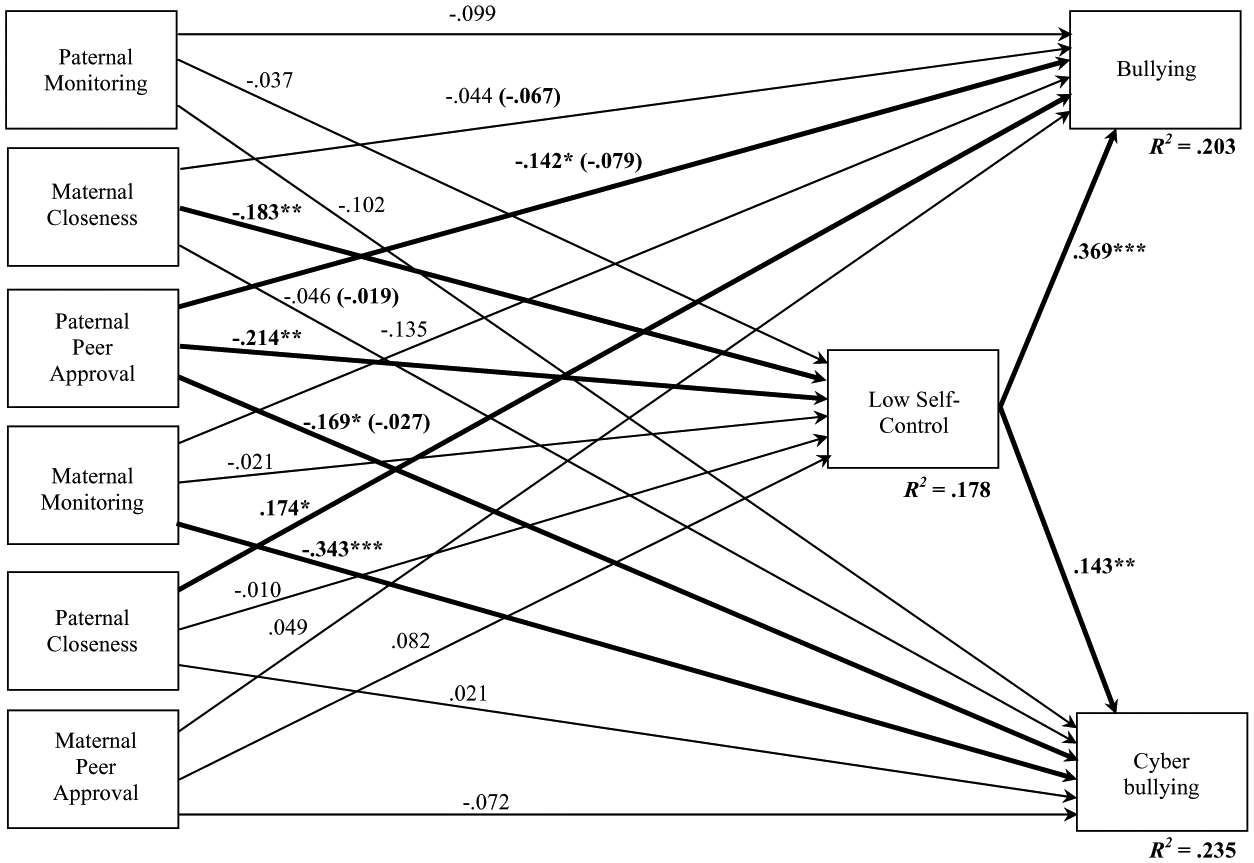
Path model (female youth): Associations between parenting processes, low self-control, and bullying/cyberbullying.
In male youth, the model explained 4.5% of the total variance in low self-control, 9.4% of the variance in cyberbullying, and 20.0% of the variance in bullying. Among female youth, the model explained 17.8% of the total variance in low self-control, 23.5% of the variance in cyberbullying, and 20.3% of the variance in bullying.
Discussion
In the current investigation, we hypothesized that (a) we would find both bullying and cyberbullying perpetration, (b) maternal and paternal parenting would directly predict low self-control and bullying/cyberbullying perpetration, (c) maternal and paternal parenting would indirectly predict bullying/cyberbullying perpetration via low self-control, and (d) there would be differences between boys and girls in the prevalence rates as well as predictors of bullying/cyberbullying perpetration.
Consistent with expectations, a large proportion of students reported that they “insulted or hurt other students during the last 2 months” at least once (72.9%), suggesting that traditional, offline aggressive behaviors were common in the sample. A lower proportion of adolescents (17.9%) reported that they have “insulted or hurt others via text messages, emails, videos, or photos.” Thus, in this sample of Turkish high school students, traditional bullying was more prevalent than an aggression online. These results are consistent with those of previous studies both from Turkey (Arslan et al., 2012; Erdur-Baker, 2010; Topçu et al., 2008; Yilmaz, 2011) and from other countries (e.g., Hinduja & Patchin, 2010; Kowalski et al., 2014; Olweus, 1980). Moreover, the prevalence of bullying and cyberbullying perpetration suggests the need to address this behavior via policy and interventions. It is important to note that the investigated sample consisted of high school students only. Some authors have found higher prevalence rates of traditional bullying in middle school youth (Nansel et al., 2001); however, cyberbullying perpetrators were more likely to be high school aged than middle school aged based on other research (Ybarra & Mitchell, 2004).
The correlations between the tested variables were in the expected directions based on self-control theory (Gottfredson & Hirschi, 1990). First, low self-control was associated with higher levels of bullying/cyberbullying perpetration, similar to findings by Chui and Chan (2013) or Vazsonyi and colleagues (2012). Second, higher levels of maternal and paternal closeness, peer approval, and monitoring were correlated with higher levels of self-control, lower reported rates of bullying, and with the exception of maternal peer approval, also with lower rates of cyberbullying. These results are consistent with those of previous work, suggesting that effective parenting is associated with higher self-control and lower levels of problem behaviors or aggression in adolescents (e.g., Ando et al., 2005; Hay & Forrest, 2006; Moon & Alarid, 2015; Perrone, Sullivan, Pratt, & Margaryan, 2004; Unnever & Cornell, 2003; Vazsonyi & Huang, 2010; Vazsonyi et al., 2012), including among Turkish youth (Özdemir et al., 2013). Finally, the association between traditional bullying and cyberbullying was fairly strong, namely r = .52, suggesting that these manifestations of aggressive behaviors significantly overlap (as previously described by Raskauskas & Stoltz, 2007, for instance).
When testing the effect of parenting on low self-control and bullying/cyberbullying in a path model, while controlling for sex, family type, and parental education, only paternal peer approval, maternal monitoring, and low self-control predicted the bullying/cyberbullying perpetration. Higher levels of maternal monitoring predicted lower rates of cyberbullying perpetration. In addition, higher levels of paternal peer approval, a component of autonomy granting, predicted higher self-control, lower levels of bullying perpetration, and both lower levels of bullying and cyberbullying indirectly via low self-control. Consistent with these results, authors from previous research found an effect of parental monitoring and supervision (Chang et al., 2015; Shetgiri et al., 2013; Wang et al., 2009) as well as autonomy granting (Özdemir et al., 2013, in Turkish sample) on aggression. Maternal monitoring appeared to be a stronger predictor of cyberbullying than paternal monitoring. Given that mothers tended to be primary caregivers in most families, maternal monitoring might directly affect cyberbullying rates by rule setting and supervision of technology use. Interestingly, and contrary to the expectations, we did not find an effect of maternal monitoring on low self-control and traditional bullying, or an effect of paternal monitoring on either of the outcomes. In addition, the lack of associations between parental closeness and low self-control or bullying/cyberbullying was unexpected as previous work has highlighted the importance of parental closeness in decreasing involvement in bullying (Rigby, 1993; Ybarra & Mitchell, 2004).
Low self-control significantly predicted higher involvement in both bullying and cyberbullying. The effect of low self-control on bullying and cyberbullying was previously found in a variety of samples, including cross-cultural ones (Chui & Chan, 2013; Vazsonyi et al., 2012); thus, we expected to find similar associations between low self-control and bullying/cyberbullying among Turkish adolescents. Further analyses, however, revealed that the strength and significance of the tested paths were highly influenced by adolescent sex.
Both correlation and path analyses revealed impressive sex effects on the levels of parenting processes, low self-control, and bullying/cyberbullying perpetration. Girls scored higher than boys on all parenting variables with the exception of paternal peer approval. In addition, they reported higher levels of self-control and lower engagement in bullying and cyberbullying. Path models by sex revealed that the hypothesized model predicted outcomes more efficiently among females than among males. Among female youth, the effects of closeness, monitoring, and peer approval—either paternal or maternal—on low self-control and bullying/cyberbullying perpetration were consistent with previous scholarship (e.g., Özdemir et al., 2013). In contrast, only low self-control predicted bullying among male youth.
These results might be partially explained by the results from previous studies as well as the particulars of the Turkish culture. Previous work has shown that girls score higher on self-regulation and self-control measures than boys in general (Chapple et al., 2010; Jo & Bouffard, 2014). These differences were also found in other samples outside the United States; for example, Jo and Bouffard (2014) found mean-level differences by sex in a sample of Korean youth. In addition, Chapple et al. (2010) found that boys and girls scored differently on well-established predictors of self-control (i.e., maternal monitoring). It is possible that boys and girls elicit different parenting behaviors and, at the same time, react differently to specific parenting practices. In addition, ample research has provided evidence that girls are less likely to be bullying and cyberbullying perpetrators than boys (Olweus, 1995; Scheithauer et al., 2006; Solberg et al., 2007; Wang et al., 2009). This finding was also reported by other investigators who focused on Turkish youth (Aricak et al., 2008; Arslan et al., 2012; Erdur-Baker, 2010; Yilmaz, 2011).
Differences between boys and girls with regard to parenting may be partially due to the specifics of the Turkish culture. Emotional closeness and relatedness among family members are greatly emphasized in Turkish families (e.g., Özdemir et al., 2013), and therefore might be expected to a greater extent from girls than from boys; girls are raised to be more considerate of others, are expected to be less aggressive, and are more closely supervised than boys (Erdur-Baker, 2010). However, neither previous work nor the Turkish cultural environment can fully explain effectively missing associations between parenting, low self-control, and bullying/cyberbullying in boys. Self-control theory was proposed as a universal explanatory framework with regard to sex, race/ethnicity, and culture (Gottfredson & Hirschi, 1990); previous research has also shown its predictive utility in both males and females (e.g., Burton, Cullen, Evans, Alarid, & Dunaway, 1998). To fully understand whether there exist cultural features that might explain some of the current study results or whether they are simply idiosyncratic to our sample, more research needs to be conducted with a focus on potential sex differences.
As we hypothesized, both bullying and cyberbullying were present in the investigated sample, and parenting processes as well as low self-control predicted engagement in this behavior both directly and indirectly. These results can contribute to the development of interventions aimed at preventing bullying/cyberbullying perpetration in Turkish youth. First, as prevalence data suggest, these interventions are needed, given the large proportion of adolescents who reported experiences with these behaviors. Second, in their recent meta-analysis, Piquero and colleagues (2016) concluded that self-control improvement interventions can be effective in lowering the levels of problem behaviors in children and adolescents. Thus, targeting self-control might be one important avenue to target and address rates of bullying/cyberbullying perpetration among youth. Third, potential interventions might also target parenting behaviors as they were correlates of bullying in Turkish youth (Bayraktar, 2012) as well as in youth from a variety of other countries (Barboza et al., 2009; Flouri & Buchanan, 2003; Georgiou, 2008; Holt & Espelage, 2007; Rigby, 1993; Ybarra & Mitchell, 2004). An important first step in developing potential interventions is, however, further examination of sex differences in Turkish adolescents’ aggressive behaviors and evaluating their role in preventing bullying and cyberbullying.
Limitations
The most important limitation of the study is the cross-sectional nature of the data. Although previous studies yielded support to the temporal ordering of parenting affecting self-control that further affected involvement in problem behaviors (e.g., Vazsonyi & Huang, 2010), no causality can be inferred based on the current data. The relationships between the variables might also be bidirectional. For example, it is plausible that parents would adjust their behaviors after learning that their adolescent was involved in bullying either as a perpetrator or as a victim. Longitudinal data could provide further insights into the question of direction of effect.
In addition, the sample was limited to two schools from one small city in Turkey. More data would be needed to generalize the results to the wider adolescent population in Turkey. Larger and more inclusive samples would be necessary to answer whether the revealed sex differences were idiosyncratic to our sample or whether they provide valid insight into cultural specifics, which might affect differential parenting of boys and girls. Third, the current study did not include all possible parenting processes as assessed by the AFP measure (Vazsonyi et al., 2003) or otherwise; for model parsimony sake, we followed recommendations by Barber (1997) and Steinberg and Silk (2002), and focused on three principal parenting domains. This means that additional parenting dimensions, such as communication or measures of dyadic conflict, might also be important correlates to consider and include in work focused on bullying/cyberbullying. Finally, maternal and paternal peer approval measures had low internal consistency estimates (α = .64) which attenuated the observed strength of association between parental peer approval and bullying/cyberbullying. Low reliability could be related to a number of issues, including the modest number of items part of the measure (three items for peer approval). Using an instrument with a greater number of items in future research might remedy this issue.
Conclusion
This study further advances our understanding of offline and online bullying behaviors among youth. We find that rates of reported bullying and cyberbullying perpetration in adolescents from Turkey match previously reported levels of bullying from North America or Europe. In addition, the results highlight the importance of low self-control in explaining variability in bullying/cyberbullying, providing further support for the cross-cultural validity of the link between self-control and bullying/cyberbullying. Finally, we found that the associations between parenting, low self-control, and bullying/cyberbullying were largely moderated by sex in the current sample. Future studies should focus on developing a better understanding of how adolescent sex affects the associations between bullying and measures of individual, family, or social factors across cultures.
Footnotes
Declaration of Conflicting Interests
The author(s) declared no potential conflicts of interest with respect to the research, authorship, and/or publication of this article.
Funding
The author(s) received no financial support for the research, authorship, and/or publication of this article.