







Abstract
A wealth of research has suggested the West tends toward individualism and the East toward collectivism. We explored this topic on an unprecedented scale through two new items in the 2020 Gallup World Poll, involving 121,207 participants in 116 countries. The first tapped into orientations toward self-care versus other-care (“Do you think people should focus more on taking care of themselves or on taking care of others?”). The second enquired into self-orientation versus other-orientation (“Which of the following is closest to your main purpose in life? Being good at what you do in your daily life, Caring for family and close friends, or Helping other people who need help?”). We anticipated that self-care and self-orientation would index individualism (hence be higher in the West), while other-care and other-orientation would index collectivism (hence be higher in the East). However, contrary to expectation, there was greater self-care in the East (45.82%) than in the West (41.58%). As predicted though, there was greater self-orientation in the West (30.20%) than in the East (23.08.%). Greater self-care in the East invites one of two interpretations. Either these items: (a) index individualism and collectivism as anticipated, so in some ways the East is more individualistic and the West less individualistic than assumed; or (b) do not index individualism and collectivism as anticipated, so the concepts are more complex than often realized (e.g., collectivism may involve prioritizing self-care over other-care). Either way, the findings help complexify these concepts, challenging common cross-cultural generalizations in this area.
Introduction
Arguably the most widely studied cross-cultural phenomenon is the distinction between individualism versus collectivism (IvC). In general, this tends to be invoked in relation to another binary distinction, namely, West versus East (WvE), with the former widely regarded as individualistic and the latter as collectivistic. However, as we shall see, there are issues with this pairing as well as with both binary constructions in themselves. First, though, we can introduce these binaries as they are commonly used and understood.
Foundational Binaries
The historical starting point for the IvC distinction was the oft-made observation that the “Western world”—to the extent that such a construct is helpful, which is debatable, as discussed below—is characterized by individualism. This latter term captures a view of the self as an autonomous, discrete unit: “a bounded, unique, more or less integrated motivational and cognitive universe” (Geertz, 1983, p. 59), and a “centre of monological consciousness” (Taylor, 1992, p. 60). The person is regarded as being constituted by a private “inner space,” in which they alone exist, over which they alone have control, and through which they alone act. This stance generally acknowledges that other people exist (excepting philosophies like solipsism), but only either as external objects or as interior mental representations. Crucially, although this might seem a natural way of describing the self to many people, in his influential text Sources of the Self, Taylor suggests it is a construction particular to our current age and cultural context. He argues that it took hold during the cultural ferment and intellectual development in the West known as the Renaissance and Enlightenment. Descartes’ (2008) meditations on the nature of selfhood were especially influential, particularly his conclusion cogito ergo sum (I think therefore I am). Taylor suggests this “reification of the disengaged first-person-singular self” came to dominate Western thinking over subsequent centuries, to the extent that this individualized selfhood is frequently referred to as the “Cartesian I.” Indeed, this perspective dominates contemporary psychology, reflected in the myriad constructs prefixed by “self,” from self-determination to self-esteem, and all related discourses of self, from authenticity to autonomy. With this individualist bias, people are fundamentally seen as distinct agents—unique, autonomous, and self-contained. The social arena, to the limited extent to which it is attended, then tends to be merely constructed as an aggregation of individuals.
So, looking backward, the West has been diagnosed by contemporary theorists as having developed an individualistic mindset. However, this observation was not made in isolation but in contrast to other modes of selfhood identified elsewhere in the world. After all, most constructs only derive their meaning by being juxtaposed with other concepts, and often ones constructed as oppositional in some way; moreover, this selection of contrasts influences qualities discerned or highlighted in the original term. The notion of “man,” for example, takes on different dimensions depending on whether it is contrasted with “woman,” “boy,” or “animal.” With our understanding of individualism, here is where collectivism enters the picture and relatedly the WvE distinction. As scholars began to study other cultures, there emerged the impression that, contrary to Western individualism, Eastern societies in particular seemed more communal or collective in their orientation. Arguably one can trace the modern roots of this contrast to a mode of discourse Said (1979) influentially denoted as “Orientalism.” This refers to the process by which 19th-Century Western thinkers came to understand themselves and their society by contrasting it with the “Other” of the Orient. There were different strains of this thought process. More benevolent, albeit still contentious, were forms of “Romantic Orientalism” in which the East was viewed through a utopian lens as superior in various ways, such as wiser, less materialistic, and more spiritual (Taylor, 2004). Then, far more troubling were discourses used to justify and rationalize imperialism and colonialism, for instance, presenting the East as inefficient and thus apparently “in need” of intervention. Crucially, within this Orientalist frame, the individualism which was often self-consciously celebrated in the West became juxtaposed with a view of the East as more communal and—seen in a negative light—conspicuously lacking in individuality (Martinez Mateo et al., 2013).
Given this background, as scholars in the 20th century reflected on the individualism of the West, the tradition of Orientalist thinking arguably provided a ready dialectical counterpoint, whereby the East could in turn be positioned as collectivistic. In the contemporary era, the IvC distinction was first brought to attention by Hofstede (1980) who developed it initially as a societal identifier (i.e., identifying and differentiating cultural contexts). Subsequently, Markus and Kitayama (1991) shifted the emphasis by viewing it more in terms of self-construal (i.e., how people in different cultures view themselves). As they put it, for example, those with a collectivist orientation have “distinct conceptions of individuality that insist on the fundamental relatedness of individuals,” where the “emphasis is on attending to others, fitting in, and harmonious interdependence with them” (p. 224). Similarly, Triandis et al. (1988) defined collectivism as
a great emphasis on: (a) the views, needs, and goals of the ingroup rather than oneself, (b) social norms and duty defined by the group rather than behaviour to get pleasures, (c) beliefs shared with ingroup rather than on beliefs to distinguish one from the ingroup, and (d) great readiness to cooperate with ingroup members. (p. 74)
Subsequently, this IvC distinction has been explored in hundreds of studies. Indeed, this literature is now so substantial that there are many meta-analyses not only of the IvC distinction in general but of specific facets, including its relationship with subjective well-being (Yu et al., 2018), self-concepts (Oyserman et al., 2002), conformity (Bond & Smith, 1996), social media use (Cheng et al., 2021), ethnicity (Vargas & Kemmelmeier, 2012), socioeconomic development (Santos et al., 2017), cultural products (Morling & Lamoreaux, 2008), cultural change (Taras et al., 2012), and justice (Sama & Papamarcos, 2000).
Critiquing Generalizations
Overall, much of this research appears—at least on the surface—to broadly support the IvC distinction. However, many scholars also take issue with the common stereotype of simplistically mapping the IvC distinction onto the WvE binary—a mapping we might call the standard “IvC-WvE pairing”—and instead call for greater nuance in discussing the topic. Indeed, over 20 years ago, Oyserman et al. (2002) were urging the field to “rethink” the standard IvC narrative. Their meta-analysis of IvC patterns cross-nationally and within the United States revealed many findings that challenge the IvC–WvE pairing—including that European Americans were not less collectivistic than Japanese or Koreans—and appeared to find little convergent validity between Hofstede’s individualism scores and other IvC scales. That said, reviewing this analysis, Schimmack et al. (2005) suggested it relied on uncorrected ratings, and when response styles for the scales Oyserman et al. used were controlled for, Hofstede’s individualism scores were positively correlated with “horizontal” individualism (i.e., people’s tendency to have an independent self-concept and make independent choices, in contrast to “vertical” individualism, which emphasizes competition). Such comments suggest we need caution in interpreting studies like Oyserman et al.’s which appear to undermine the IvC-WvE pairing, a caution we shall similarly embrace with regard to our findings. Nevertheless, the way that Schimmack et al. stress the distinction between vertical and horizontal individualism also highlights another emergent feature of the IvC literature, namely, the way research has sought to “complexify” the IvC distinction by looking into the nuances of these concepts. As Stephan et al. (1998) put it, they are “nonmonolithic,” and their distinction “masks many differences within each category” (p. 731).
One can observe, in the first place, that cultures assigned to a particular category can be very distinct, depending on their particular character and context. Stephan et al. note, for instance, that although Japan and Costa Rica are usually considered collectivistic, they “bear little relationship to each other.” Furthermore, the “nonmonolithic” nature of these categories generates findings that can be surprising and counterintuitive (i.e., contradicting the way one might expect these concepts to manifest). For instance, Triandis et al. (1988) note that self-reliance is a characteristic of individualism. However, this quality—and others like it, such as achievement—often “change their meanings in the context of the two kinds of cultures.” In that respect, “self-reliance for the individualistic cultures implies freedom to do one’s own thing and also competition with others . . . [whereas] self-reliance for the collectivist cultures implies not being a burden on the ingroup” (p. 335). Thus, we should not simplistically associate qualities such as self-reliance with individualism, as it can also manifest—in different ways—in collectivist cultures. Such insights help “complexify” the IvC distinction, as we consider further in the discussion.
Related to this complexification of IvC are calls for the field to move “beyond” IvC by investigating how this binary intersects with other factors (e.g., Montuori & Purser, 2000; Oyserman et al., 2002; Sztompka, 2014; Turiel, 2004; Zabel, 2015). In that respect, Kaasa and Minkov (2022) argue for the general value and desirability of “two dimensional” models for understanding and differentiating cultures (as opposed to more complex multidimensional arrangements). Thus, taking IvC as one dimension, scholars have explored how it intersects with various other second dimensions. One example is Minkov and Kaasa (2021) who juxtaposed IvC with a distinction between types of self-hood referred to as “flexibility” (i.e., “a modest and adaptable self”) versus “monumentalism” (“a self . . . that changes little over time,” akin to a “proud and solid monument”; p. 243). Another example is Gelfand (2018), whose work concentrates on a dimension she conceptualizes as “tight” (i.e., rule-bound and ordered) versus “loose” (i.e., freer and more open). These differences interact with IvC in interesting ways: although many collectivistic cultures veer toward tightness (e.g., Singapore and Japan), so do some individualistic ones (e.g., Germany and Austria); conversely, while many individualistic cultures are loose (e.g., Australia and United States), so are some more collectivist ones (e.g., Brazil and Spain). Of course, cultures can also be assessed on more than two dimensions. Hofstede (2011), for example, has developed a model featuring six: IvC; power distance; uncertainty avoidance; masculinity/femininity; long-/short-term orientation; and indulgence/restraint. Then, adapting this taxonomy, Beugelsdijk and Welzel (2018) collapsed it into three dimensions: IvC, duty-joy, and distrust-trust.
In sum, cross-cultural research is increasingly attuned to the fine-grained complexities of IvC, both vis-à-vis the binary itself and in how it intersects with other aspects of culture. However, research on these nuances is still relatively lacking, particularly at the global scale, with most studies only assessing a limited number of countries. Even the most ambitious—such as Santos et al. (2017), who examined 51 years of data on individualist practices and values across 78 countries, and found that individualism appears to be rising in most (excepting Cameroon, Malawi, Malaysia, and Mali in terms of “cultural practices,” and Armenia, China, Croatia, Ukraine, and Uruguay in terms of “cultural values”)—do not manage worldwide coverage. In light of such issues, a new Global Wellbeing Initiative (GWI) was launched in 2019 by Gallup in partnership with Wellbeing for Planet Earth (a Japan-based research and policy foundation). The Gallup World Poll (GWP) has been collecting data worldwide on well-being—and life generally—since 2005. However, one could argue that its metrics for doing so are relatively Western-centric, characterized by the kind of individualism depicted earlier. As such, the initiative aims to develop new GWP items that reflect non-Western perspectives on well-being (Lambert et al., 2020).
Its initial focus has been on Eastern cultures (with a longer-term goal of expanding to a worldwide scope). As a result, nine new items were introduced into the GWP in 2020, of which two were intended to directly relate to the IvC distinction. Whether they actually do is a topic for discussion below. Nevertheless, they certainly explore people’s perspectives on self and other, asking in two subtly different ways whether people prioritize themselves or other people. The first pertains to caring, asking about preferences for “self-care” (“people should focus on taking care of themselves”) versus “other-care” (“people should focus on taking care of others”). It was envisaged that self-care would index individualism and other-care index collectivism. Besides these two choices, four other response options were offered to participants: “both,” “neither,” “don’t know,” and “refused to answer.” The latter three all had negligible responses so need not detain us here. However, a substantial portion of people answered “both,” a response we characterize as “self-and-other-care.” The second item focuses on purpose, asking if people are driven more by “self-orientation” (“being good at what you do”) versus “kin-orientation” (“caring for family and close friends”) versus “other-orientation” (“helping other people who need help”). For this item, self-orientation was envisaged as pertaining to individualism and the kin- and other-oriented items to collectivism. Three further options were also offered—“I do not know my purpose in life,” “don’t know,” and “refused to answer”—but all had negligible responses, so we did not formulate a label for them. Details about the item development process are provided in the Method section next and also in Supplementary File 1.
Method
Item Development Process
The new GWP items were developed over a 6-month process (as summarized in Lomas et al., in press). First, a summit was convened in Kyoto, Japan, in August 2019 (as described in Lambert et al., 2020). The overarching goal was to develop potential GWP items, with an emphasis on questions that are: (a) capable of augmenting existing measures to create a comprehensive conceptualization of well-being; (b) most pressing to capture, as global data does not yet exist for these; (c) inclusive of a wider, richer, range of worldviews (not currently captured by the poll); (d) useful items from which policymakers and other decision makers could take action; and (e) demonstrative of the complexity of well-being, highlighting cultural differences. After two days of discussions, the third day centered on proposing new topics and items for the GWP. Topics were discussed, debated, and voted upon (ranked in order of importance). Then followed another 3-hr session in which topics were formulated as questionnaire items; again, items were discussed, debated, and voted upon (i.e., in terms of preferred formulation). Topics and items were then ranked, with the top six items selected for inclusion in the GWP. These six covered three main topics: IvC (with one item also indexing purpose in life); low arousal emotions; and balance and harmony (see Lomas (2021) for a review of this topic, and Lomas et al. (2022) for an analysis of the data obtained in the 2020 GWP). Following the summit, weekly discussions took place about the project, refining the items. Following input from funders, it was deemed important to also study well-being at work. Thus, in addition to the three topics selected at the summit, an additional topic of well-being at work was prioritized for inclusion (featuring three questions).
Once the items had been agreed upon, they were tested in the field through in-depth semi-structured cognitive interviews across key demographics, as is standard practice in developing items for the GWP. The aim is to arrive at the least culturally variable and the simplest way to ask about concepts and ideas. Respondents’ thought processes in answering questions can be probed, and they can be interviewed about their reflections on question wording. Through this, Gallup can evaluate how well proposed items perform (i.e., whether respondents understand and interpret them as intended). This way, issues can be identified and adjustments made before the questionnaire is finalized. Participants were interviewed in seven countries, covering six different languages: Columbia (Spanish); Ethiopia (Afan Oromo); Italy (Italian); Japan (Japanese); Kosovo (Albanian); Lebanon (Arabic); and Tunisia (Arabic). In each country, 10 people were usually interviewed, selected as differing on key demographics, including geography (five rural and five urban); gender (five female and five male); income (four low-, three middle-, and three upper-); age (three 18–29 years old, four 30–44, and three 45+); and employment status (five employed full-time, two self-employed full-time, and three out of the workforce).
Following the analysis of cognitive interviews, some items were reformulated in the weekly meetings. Another round of interviews then took place (in the same countries and using the same demographic spread). In subsequent discussions, final item phrasings were agreed upon, which were then translated into relevant languages. Gallup uses a dual translation process in place of a back-translation process. This approach is consistent with best practices for conducting “3MC” (multicultural, multinational, and multiregional contexts) surveys developed as part of the University of Michigan’s Comparative Survey Design and Implementation (CSDI) Guidelines initiative. Recognition of the pitfalls associated with back-translations— such as overly literal translations and a false sense of security—led to the creation of the TRAPD model (translation, review, adjudication, pretesting and documentation), first developed for the European Social Survey. Thus, Gallup’s translation process adheres to this standard best practice. Details of the item development process itself are included in Supplementary File 1.
Data Collection
The GWI module was incorporated into the broader GWP, a survey covering numerous topics which usually takes 15 to 20 min to complete (involving around 60–80 items, with the number varying among respondents based on screener questions, filters and skip patterns, and the fact that some modules are only asked in a subset of countries). The GWP involves nationally representative, probability-based samples among the adult populations, aged 15 and older, involving 1,000 people per country. In 2020, 116 countries were included, representing more than 90% of the global adult population, with 121,207 participants. Basic demographic details about participants are shown in Supplementary Tables 1 (unweighted data) and 2 (adjusted by country weights). For results based on the total sample of national adults, the margin of sampling error ranges from ±1.1 to ±5.5 percentage points at the 95% confidence level. The GWP usually involves face-to-face data collection. However, in light of COVID-19, Gallup prepared a contingency methodology based entirely on telephone interviewing. Thus, although some in-person interviews were conducted in Republic of the Congo, India, Mali, Pakistan, and Senegal, in most countries the survey was conducted over mobile and landline telephones. The sampling frame, therefore, represents adults aged 15 and older with access to a phone (either landline or mobile). In designing the new approach, key considerations were safety of interviewers and respondents, retaining high representativity and high quality of data collection. Countries were selected based on client interest, population size, phone penetration rates, and the local partner’s ability to execute Computer Assisted Telephone Interviewing aligned with Gallup’s quality assurance standards. All samples are probability based and nationally representative of the resident adult population. As all eligible landline exchanges and valid mobile service providers are included, the coverage area is the entire country including rural areas. In countries traditionally covered by a telephone methodology, Gallup typically uses dual-frame (landline and mobile telephone) Computer-Assisted Telephone Interviewing in Northern America, Western Europe, developed Asia, and Gulf Cooperation Council (GCC) countries. In some countries, the sampling frame is mobile telephone only (e.g., Libya and Finland). The split between expected landline and mobile completes in a dual-frame design is based on the information Gallup has on landline and mobile use in those countries from past surveys, other secondary data, and demographic distribution of the final landline/mobile sample in relation to targets. There are a few notable exceptions, including GCC countries. As a result, in 2020, the UAE is exclusively mobile. There are no other changes to the design, stratification, or execution of the telephone samples in traditional telephone countries. Data were collected between February 4, 2020, and March 4, 2021.
Percentage of Respondents for Item 1 by Region.
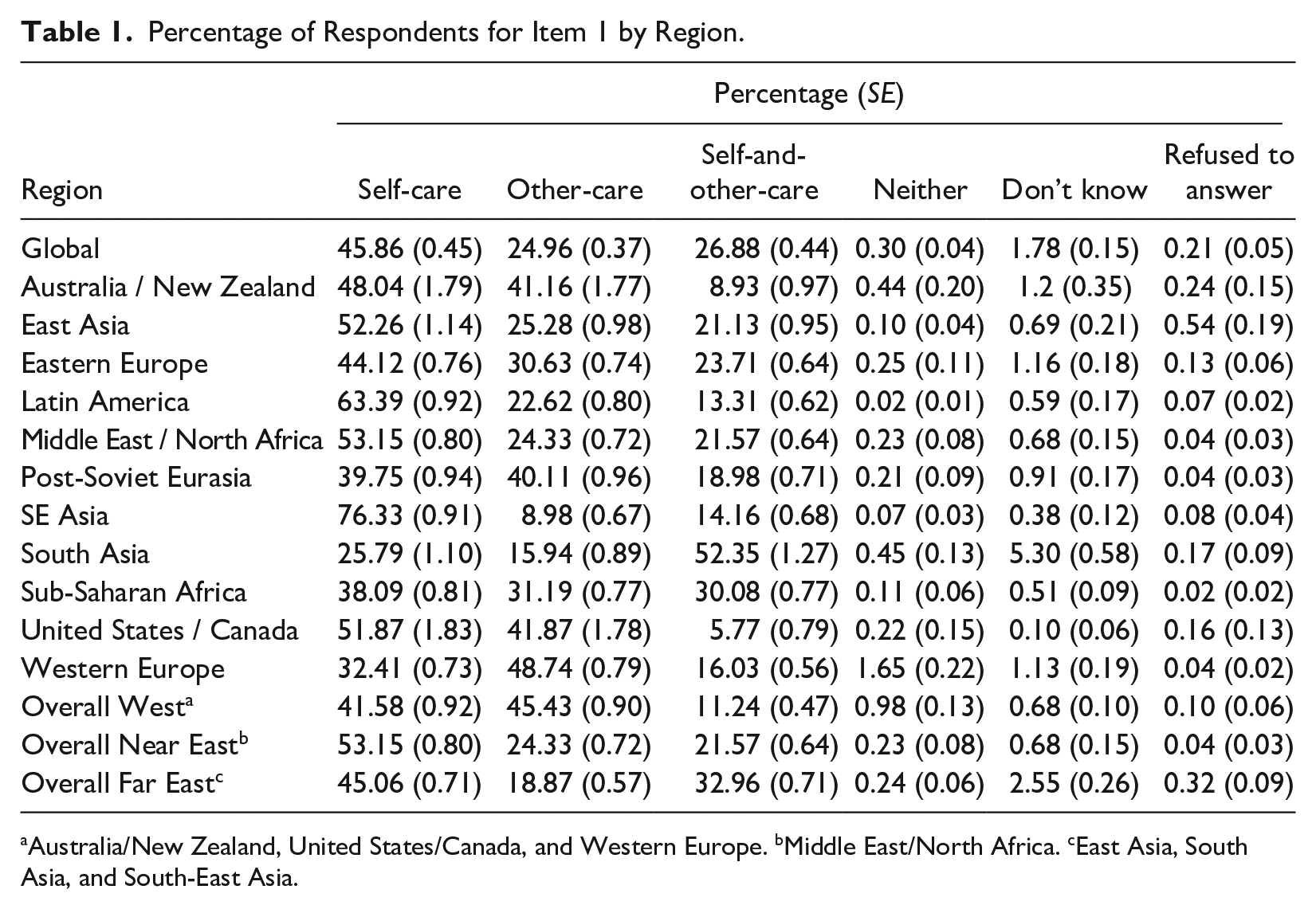
Australia/New Zealand, United States/Canada, and Western Europe. bMiddle East/North Africa. cEast Asia, South Asia, and South-East Asia.
Transparency and Openness
The typical GWP surveys at least 1,000 individuals per country. This sample size is to allow, after accounting for the survey weights, a maximum confidence interval of approximately 4 percentage points, providing enough power (β = .80, α = .05) to detect a group difference of approximately 9 percentage points. The study did not have any data exclusions or manipulations, and we follow JARS (Kazak, 2018). The percentages of responses to the items, as differentiated by country, are available in the Supplementary Tables. Further data, analysis code, and research materials can be made available upon request. Data were analyzed using IBM SPSS Statistics for Windows version 25.0, R, version 4.0.0, and the package ggplot, version 3.2.1 (Wickham, 2016). This study’s design and its analyses were not preregistered.
Results
Item 1: Self-Care Versus Other-Care
Globally, more people by far expressed a preference for self-care (stating that people should focus on “taking care of themselves”), selected by 45.86% of people, far ahead of those choosing other care (“taking care of others”) at 24.96% or “both” (26.88%), as shown in Table 1 and Figures 1 to 3. Contrary to our expectation—based on the standard IvC-WvE pairing—the proportion endorsing self-care is highest in South-East Asia (76.33%), followed by Latin America (63.39%), and Middle East/North Africa (53.15%). To directly investigate our main research questions—that is, regarding WvE differences—we created three broad WvE categories: “Near East” (Middle East/North Africa), “Far East” (East Asia, South Asia, and South-East Asia), and “West” (Australia/New Zealand, United States/Canada, and Western Europe). We conducted chi-square analyses to compare these regions on the main items and found that self-care is significantly higher in the East—both Near (53.15% of respondents) and Far (45.6%), and collectively (45.82%)—than in the West (41.58%), as illustrated in Table 2. Similarly, when ranking countries on this response (see Supplementary Table 3), the majority in the top 10 were Asian, led by the Philippines (where 88.96 % of respondents selected self-care), followed by Indonesia (84.09), Thailand (81.14), Cambodia (78.40), Mauritius (76.74), South Korea (76.74), Kosovo (74.28), Taiwan (71.38), Malaysia (71.25), and Tunisia (69.82). By contrast, and similarly contrary to our expectation, the proportion selecting other care is highest in Western Europe (48.74%), United States/Canada (41.87%), and Australia/New Zealand (41.16%). Likewise, the chi-square analyses showed that other-care is significantly higher in the West (45.43%) than in the East—both Near (24.33%) and Far (18.87%), and collectively (19.39%). Indeed, Western Europe is the only region where the proportion endorsing other-care (48.74%) is significantly greater than self-care (32.41%). Likewise, countries with the highest proportion selecting other-care are predominantly in Western Europe, including the Netherlands (66.63%), Norway (61.40%), and Italy (60.73%), as shown in Supplementary Table 4 (a global ranking of this response). There were also 10 countries where the predominant response was self-and-other-care (i.e., selecting “both”), as shown in Supplementary Table 5. These countries covered all regions, although South Asia was overrepresented, including Pakistan (60.59%), Lithuania (54.77%), Benin (53.62%), South Africa (52.92%), India (52.21%), Jamaica (46.11%), Bangladesh (44.53%), Tajikistan (44.50%), Vietnam (44.11%), and Nigeria (43.06%).
Chi-Square Tests for the Differences Across Three Regions in the Response Options of the Two Items.
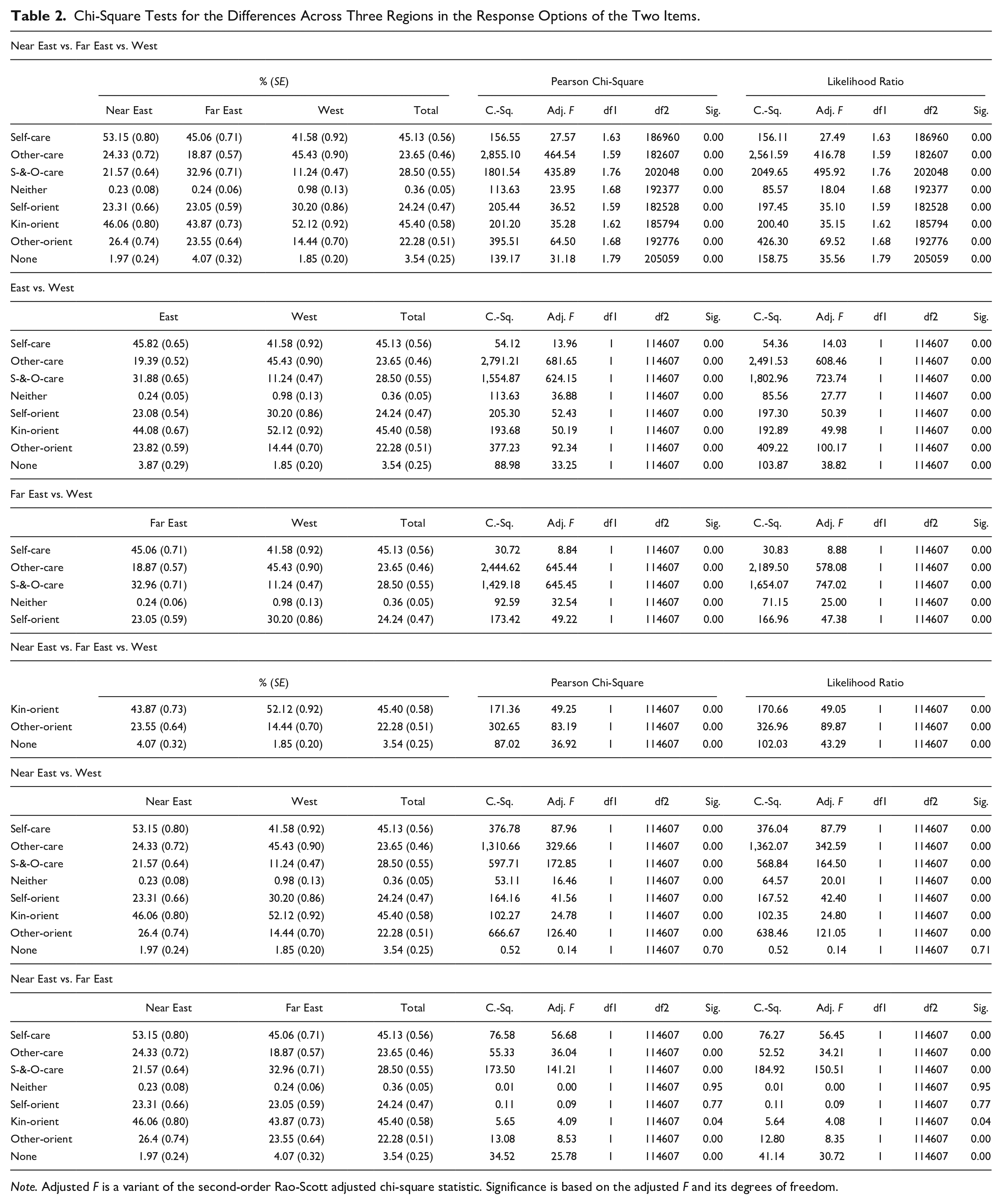
Note. Adjusted F is a variant of the second-order Rao-Scott adjusted chi-square statistic. Significance is based on the adjusted F and its degrees of freedom.
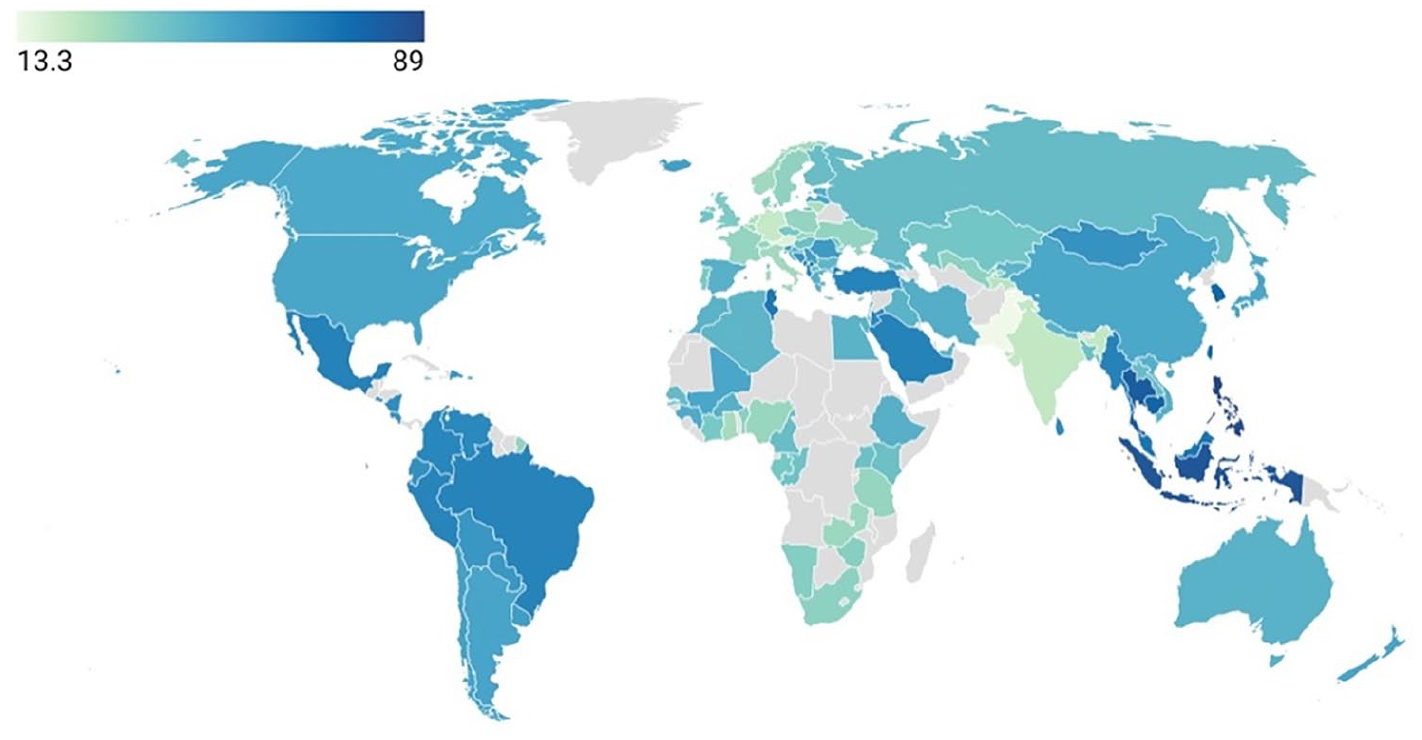
Global Map of Respondents Selecting “Self-Care”.
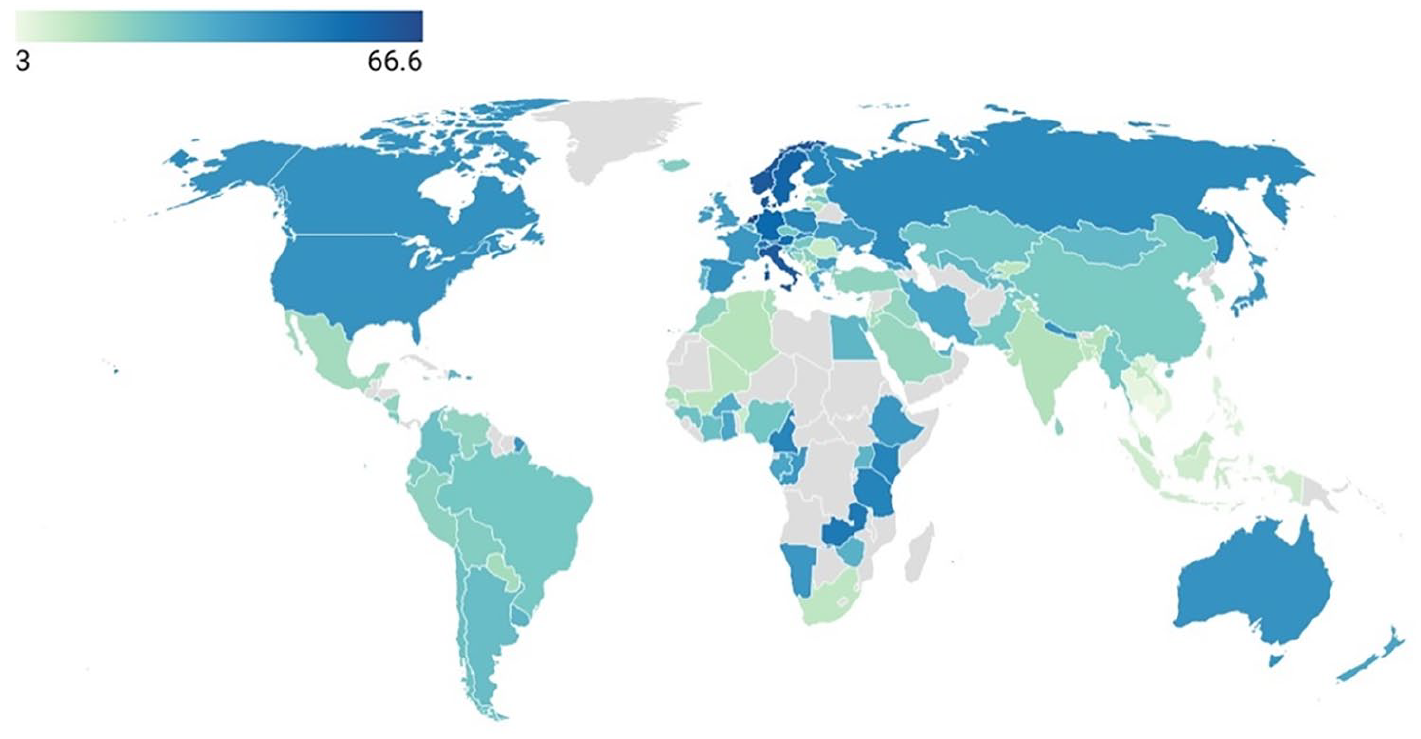
Global Map of Respondents Selecting “Other-Care”.
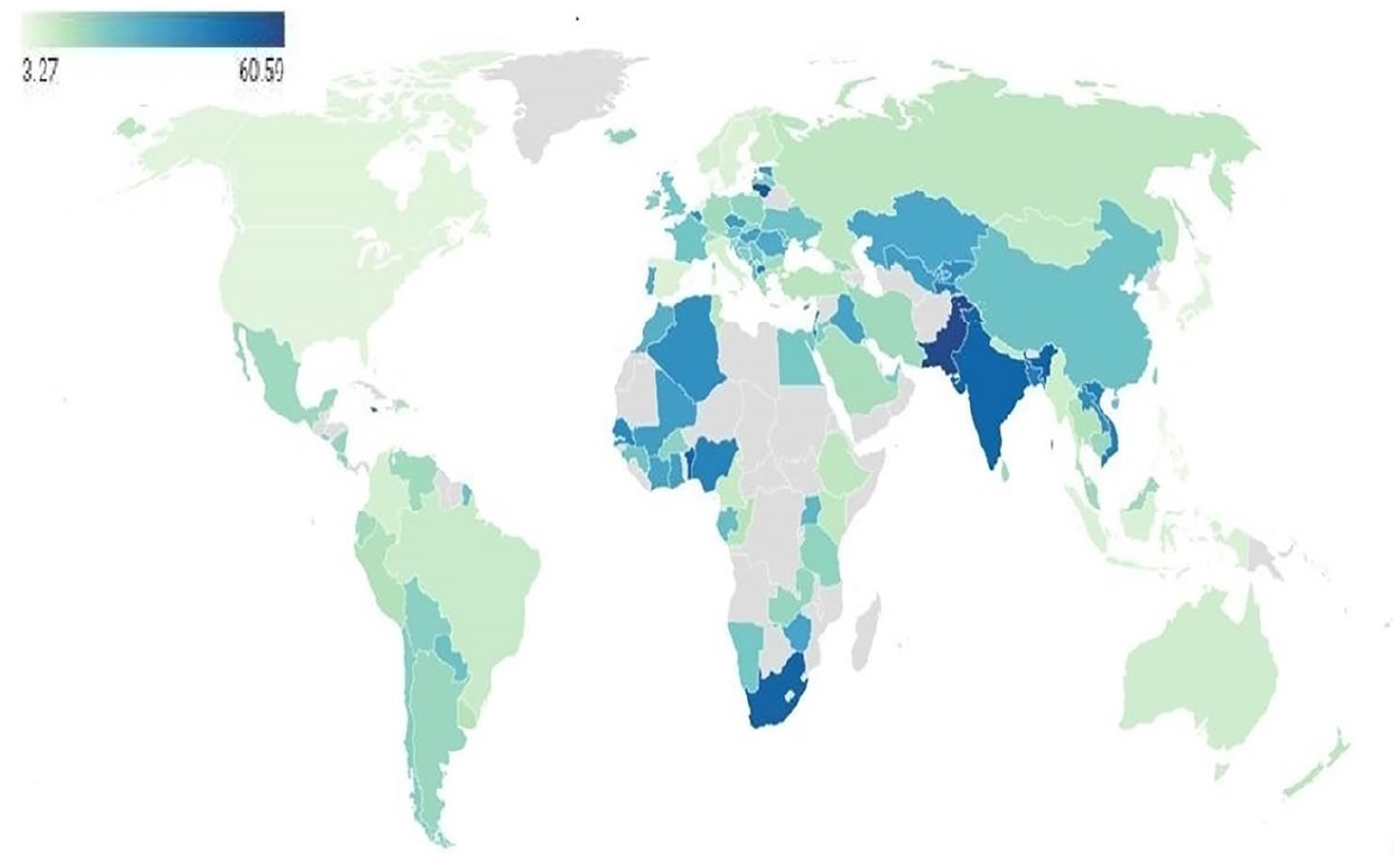
Global Map of Respondents Selecting “Self-and-Other-Care”.
Item 2: Self-Orientation Versus Kin-Orientation Versus Other-Orientation
Globally, the most commonly endorsed purpose in life is kin-orientation (“Caring for family and close friends”) at 46.64%, far greater than self-orientation (“Being good at what you do in your daily life”) at 24.22%, or other-orientation (“Helping other people who need help”) at 22.44%, as shown in Table 3 and Figures 4 to 6 (with country rankings in Supplementary Tables 6–8). In terms of our regional chi-square analyses above, self-orientation is significantly higher in the West (30.20%) than in the East—both Near (23.31%) and Far (23.05%), and collectively (23.08%). Likewise, kin-orientation is significantly higher in the West (52.12%) than in the East—both Near (46.06%) and Far 43.87%), and collectively (44.08%). Conversely, other orientation is significantly higher in the East—both Near (26.40%) and Far (23.55%), and collectively (23.82%)—than in the West (14.44%). Overall, kin-oriented adults predominate in all regions, being highest in Post-Soviet Eurasia (70.02%), Eastern Europe (62.23%), and Australia/New Zealand (56.89%). The proportion of self-oriented adults is greatest in Western Europe (31.64%), followed by United States/Canada (28.75%), and Latin America (27.37%). Finally, the proportion of other-oriented adults is greatest in sub-Saharan Africa (32.86%), followed by South Asia (32.61%), and Middle East/North Africa (26.40%). However, these broad regional aggregations also belie certain complexities and heterogeneities. For instance, although self-orientation is overall highest in the West (e.g., with Western Europe first at 31.64%, followed by United States/Canada at 28.75%), at an individual country level, the top three nations are all in Asia: Thailand (58.86%), South Korea (56.23%), and Sri Lanka (47.38%).
Percentage of Respondents for Item 2 by Region.
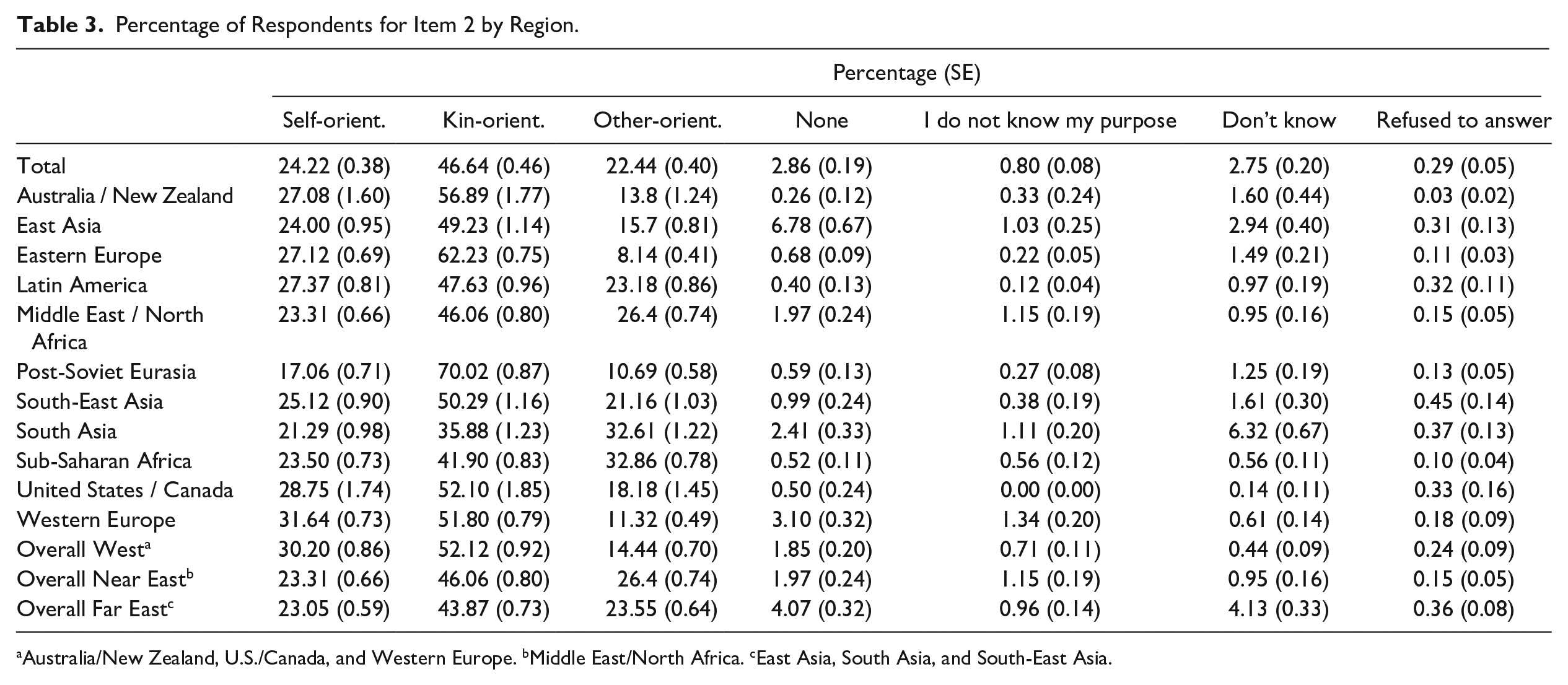
Australia/New Zealand, U.S./Canada, and Western Europe. bMiddle East/North Africa. cEast Asia, South Asia, and South-East Asia.
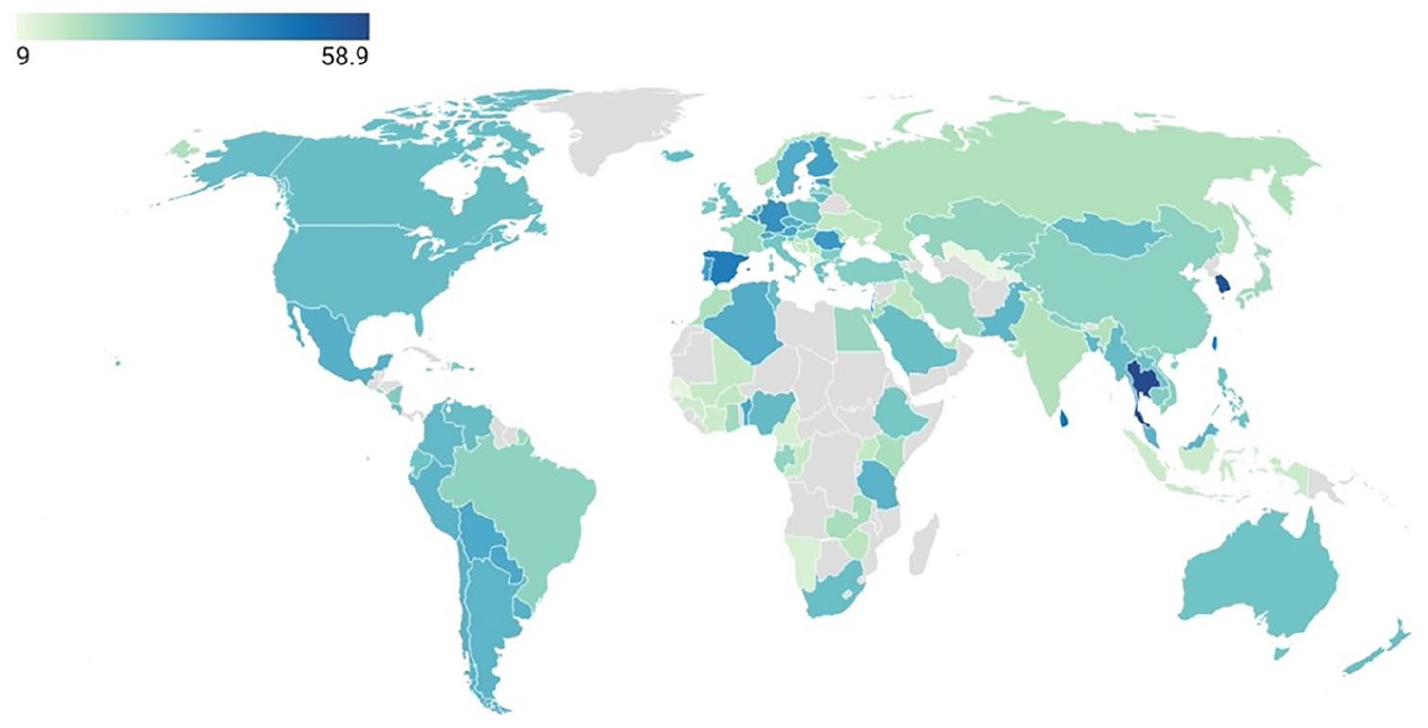
Global Map of Respondents Selecting “Self-Orientation”.
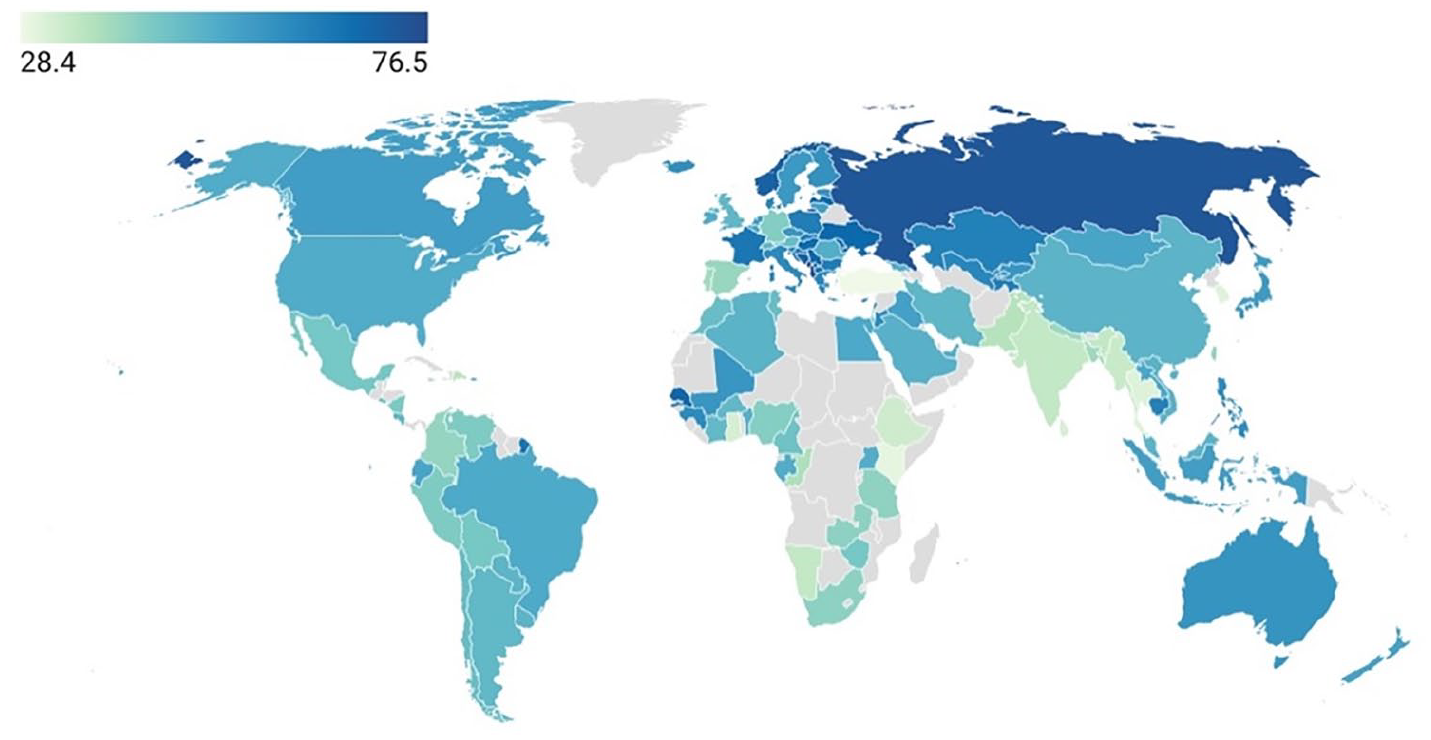
Global Map of Respondents Selecting “Kin-Orientation”.
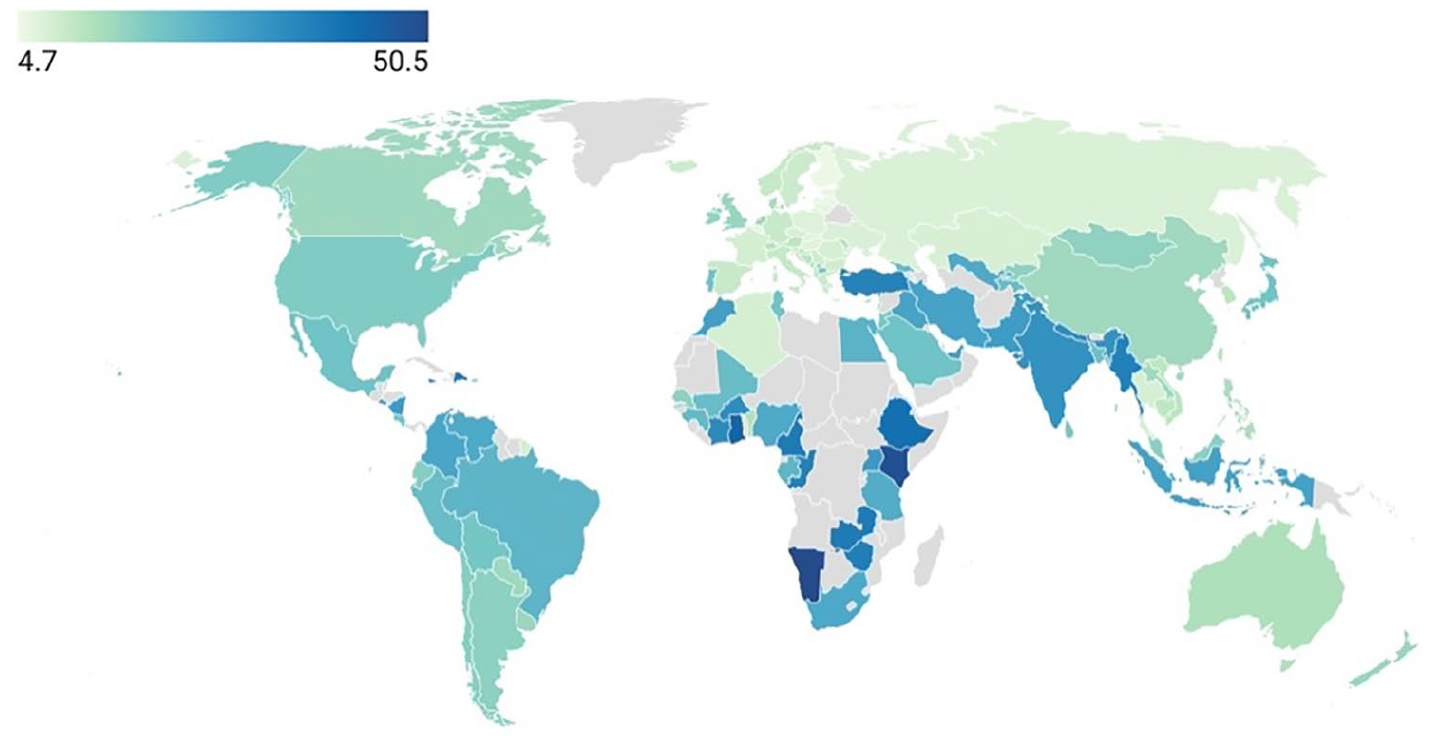
Global Map of Respondents Selecting “Other-Orientation”.
Correlations
We ran correlations between the items, as shown in Figure 7, together with correlations with Hofstede’s (1980) Individualism Dimension—a common metric in prior assessments of IvC—for the 60 countries for which data exist for this variable. Of particular note is that there were no significant correlations between self-care and self-orientation or between other-care and kin-orientation or other-care and other-orientation. This divergence between the two items indicates either that they do not map onto IvC as envisaged or alternatively that they draw out different aspects of individualism and collectivism. We consider both options in the discussion. Another notable finding is that the geographic distribution of self-care and self-orientation appears to contradict Hofstede’s (1980) Individualism Dimension. Indeed, a country-level correlation analysis shows that this dimension is inversely correlated with the proportion selecting self-care (r = −.489, p < .001), as shown in Figure 8. For example, out of 60 countries for which data exist for both variables, the United States has the highest Individualism score (91) but is merely 22nd in the highest proportion selecting self-care (51.78%). Again, out of the 60 countries with data for both variables, the Philippines shows the highest proportion selecting self-care (88.96%) but has a comparatively low Individualism score of 32. By contrast, and similarly unexpectedly, Individualism is positively correlated with the proportion endorsing other-care (r = .577, p < .001), as shown in Figure 9 and 10. Likewise confounding expectations, Individualism has a null correlation with self-orientation (r = −.043, p > .05), while it positively correlates with kin-orientation (r = .482, p < .001); however, consistent with expectations, individualism is inversely correlated with the proportion reporting an other orientation (r = −.457, p < .001), as shown in Figures 11 to 13. That said, the same issue that Schimmack et al. (2005) identified with Oyserman et al.’s (2002) analysis possibly applies here too, as we also relied on uncorrected ratings of Hofstede’s Individualism dimension (unlike his original analysis).
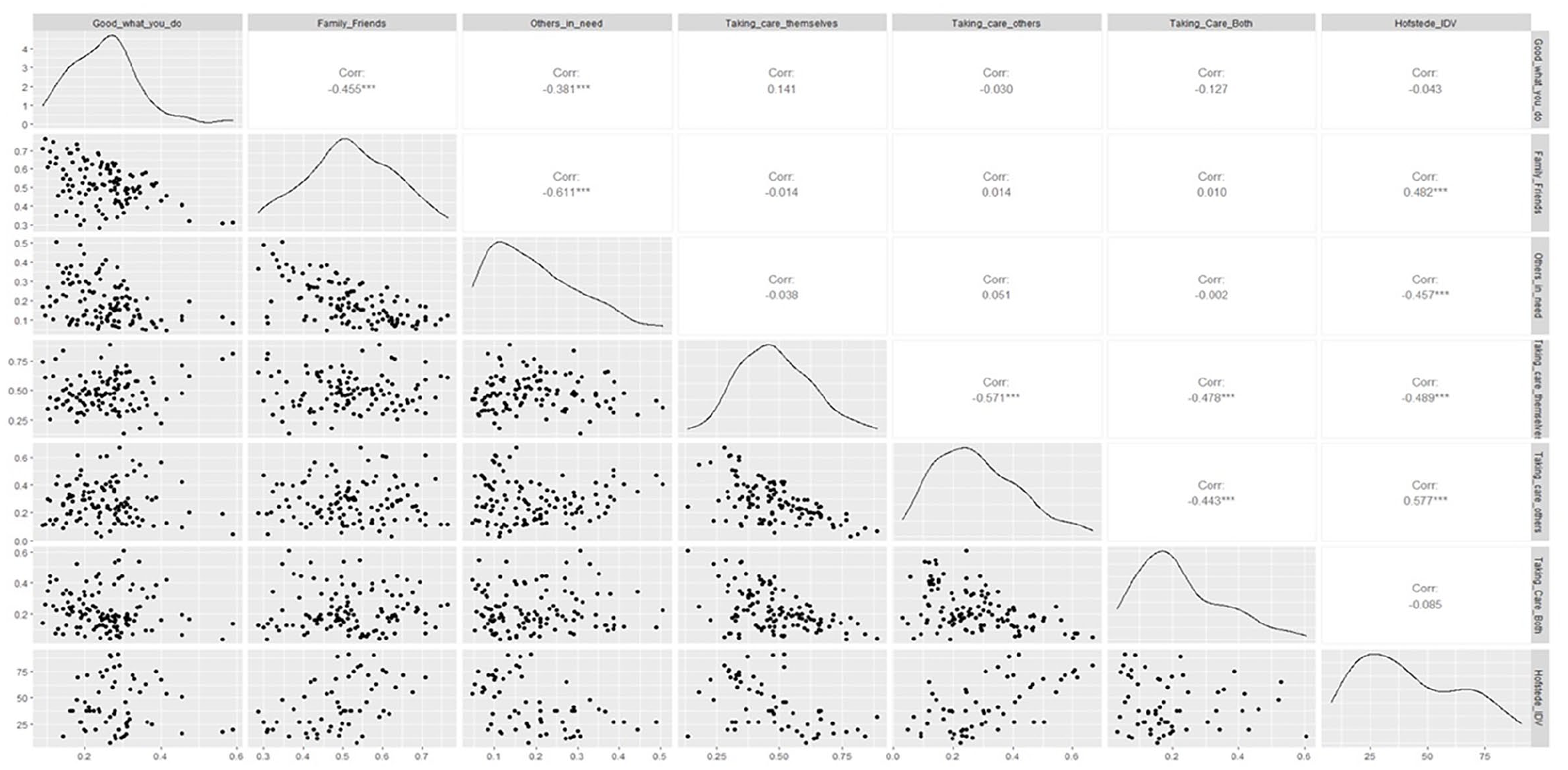
Correlations Between the Items and Hofstede’s Individualism Dimension.
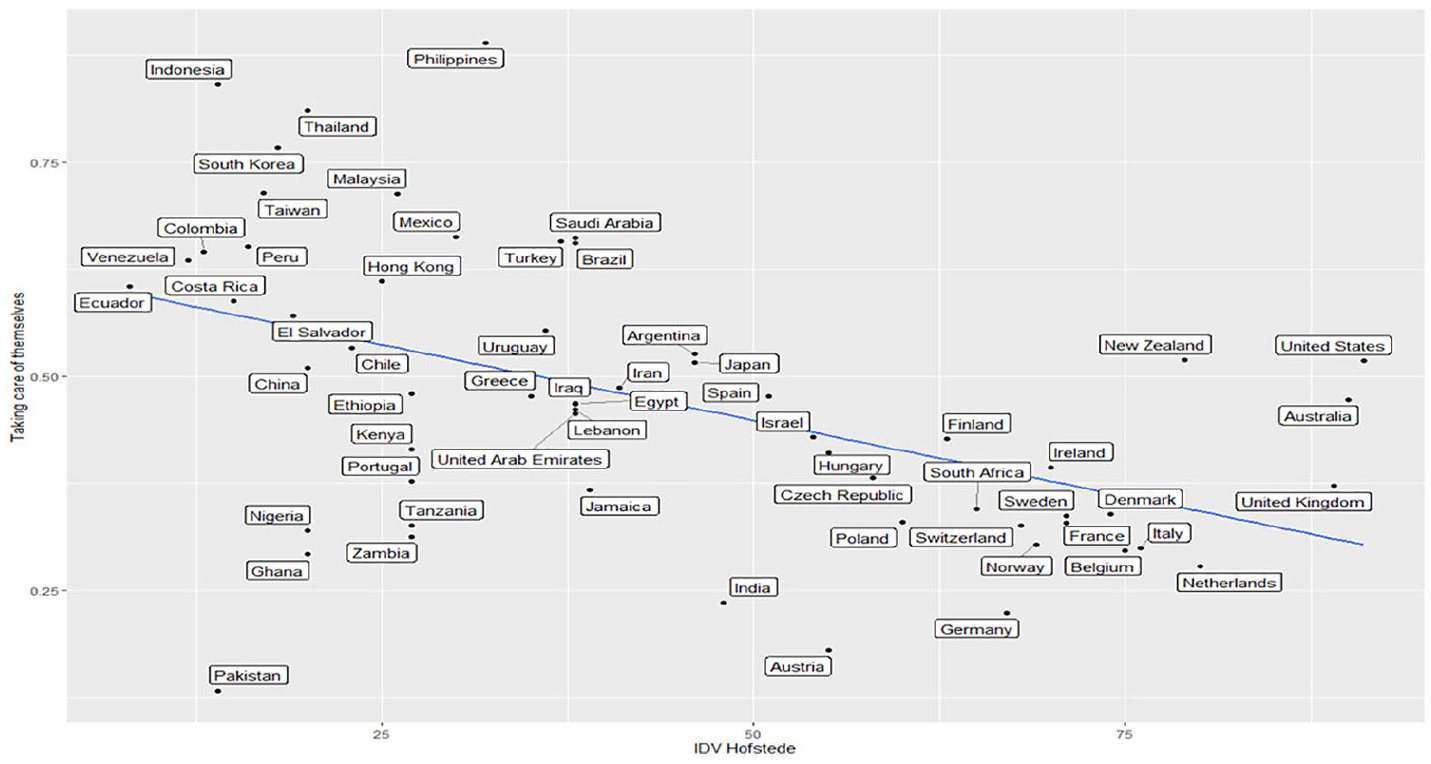
Correlation Between Hofstede’s Individualism Dimension and “Self-Care”.
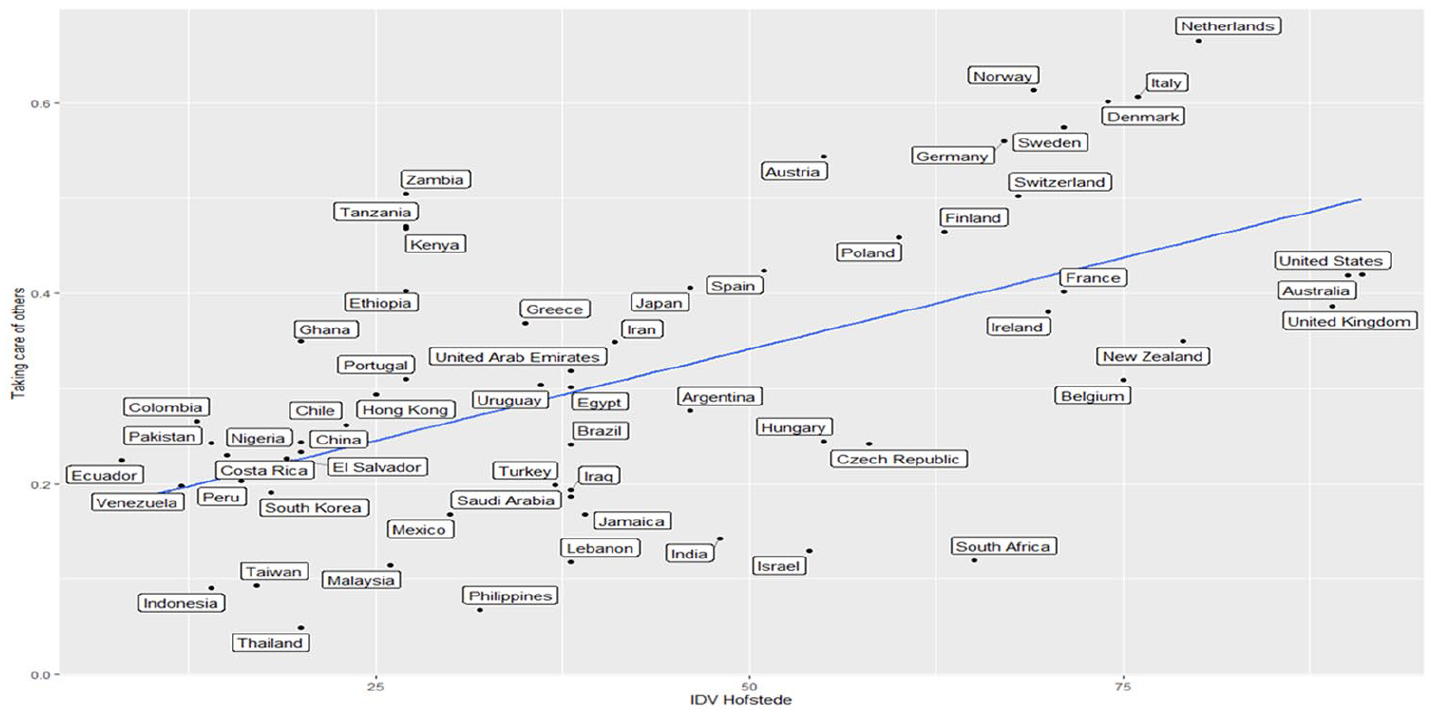
Correlation Between Hofstede’s Individualism Dimension and “Other-Care”.
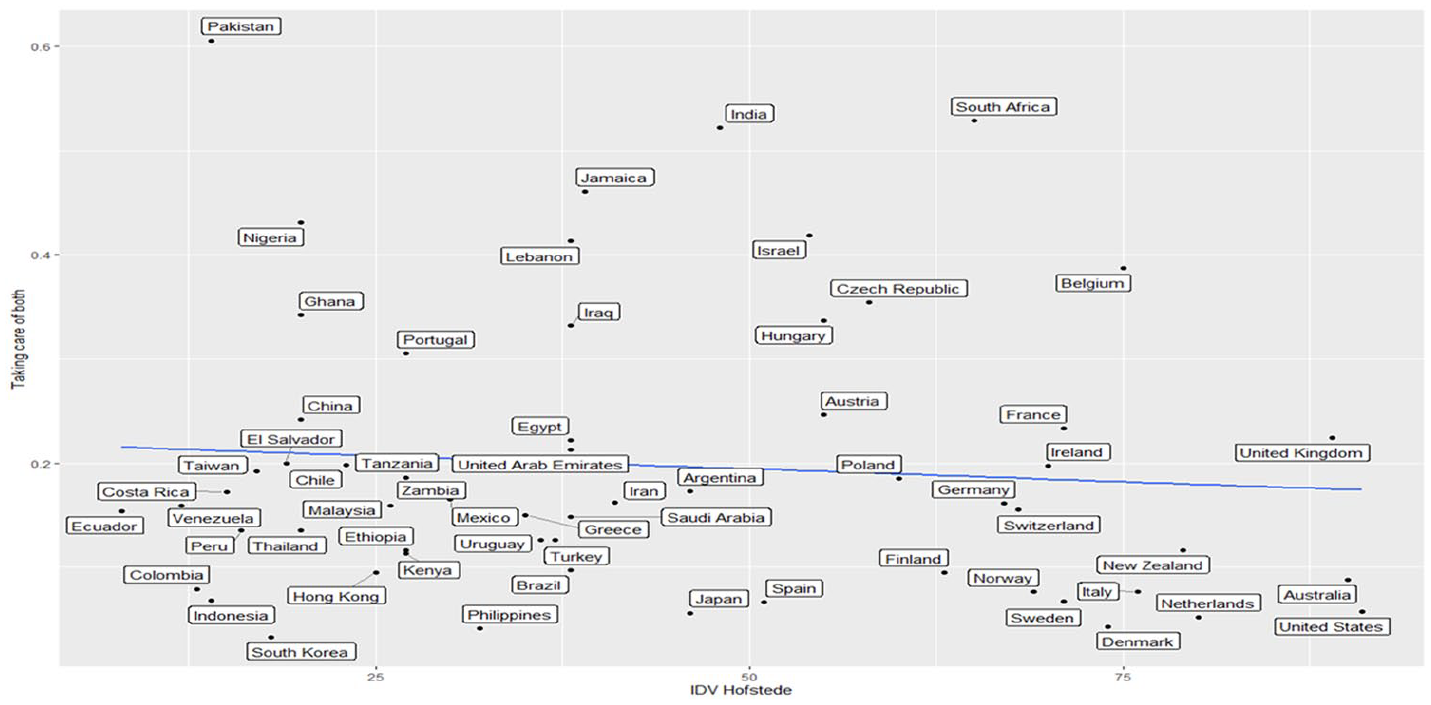
Correlation Between Hofstede’s Individualism Dimension and “Self-And-Other-Care”.
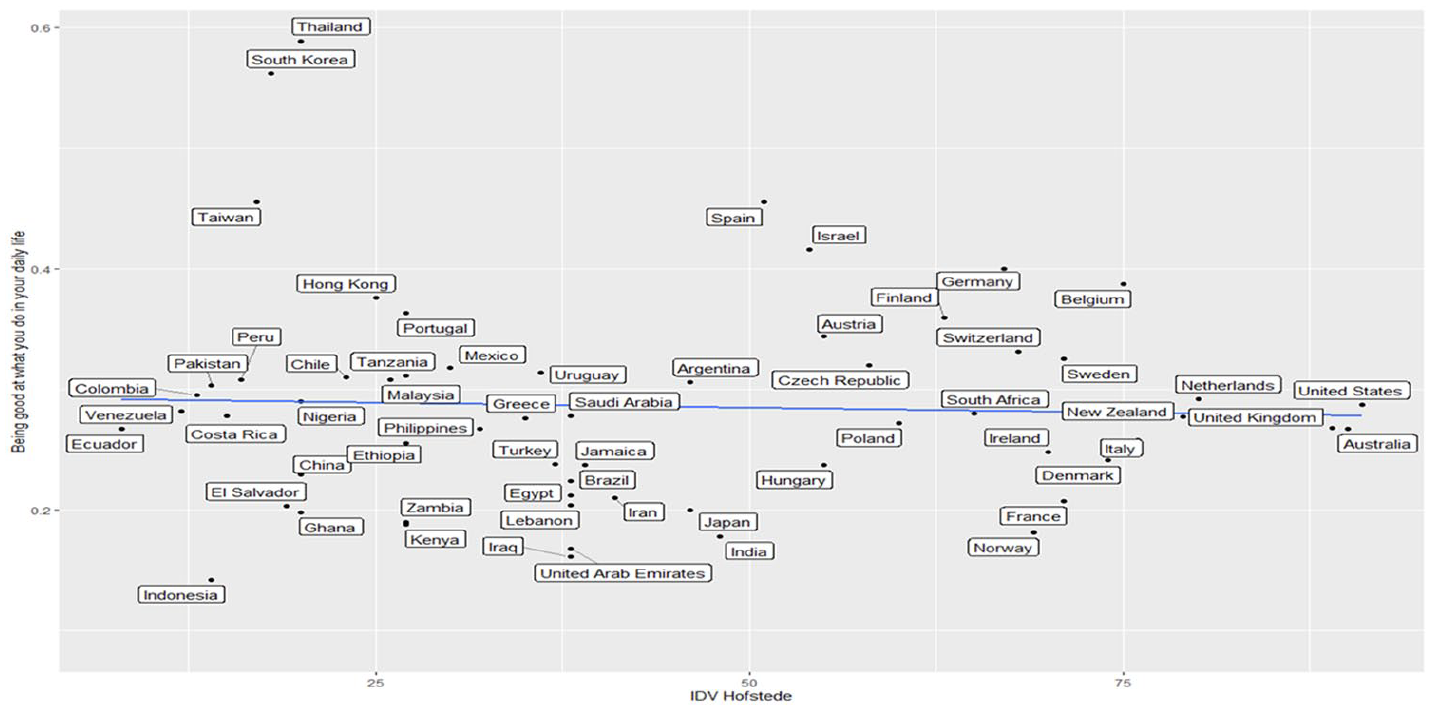
Correlation Between Hofstede’s Individualism Dimension and “Self-Orientation”.
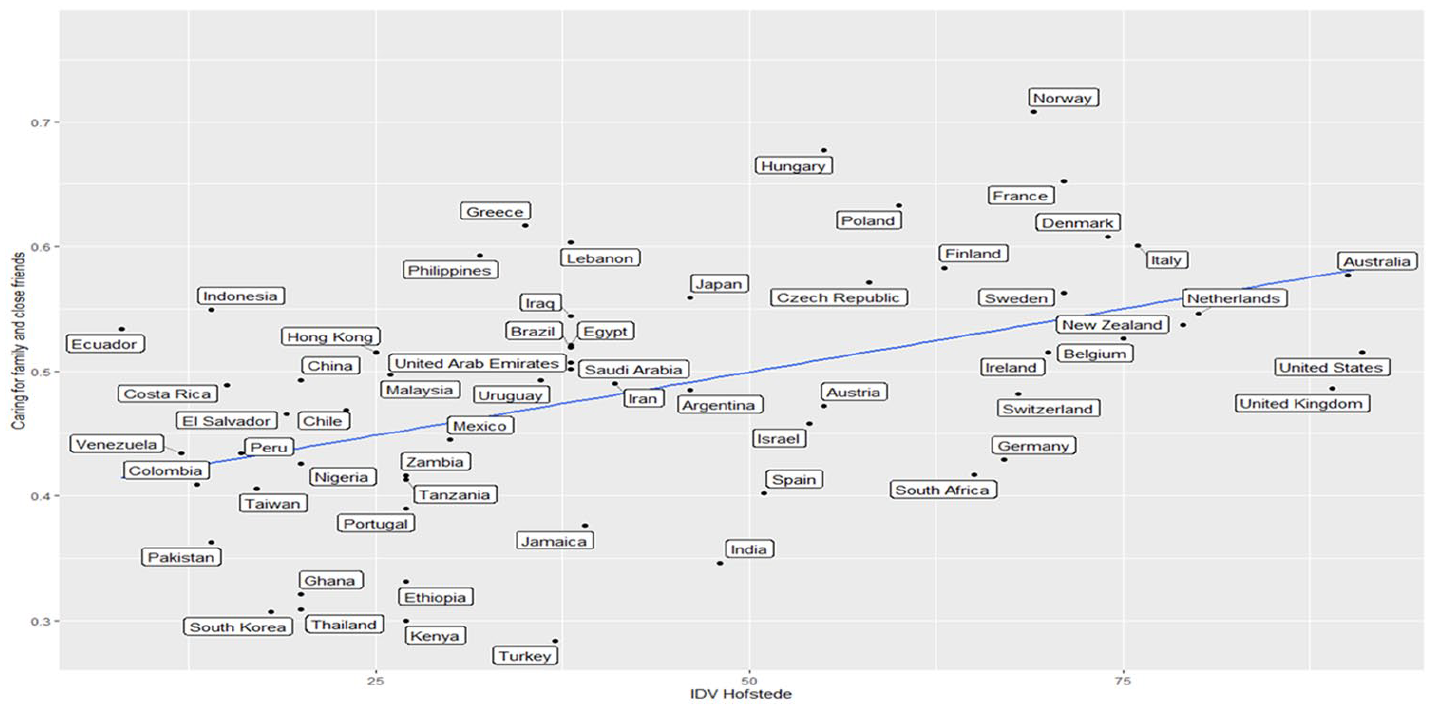
Correlation Between Hofstede’s Individualism Dimension and “Kin-Orientation”.
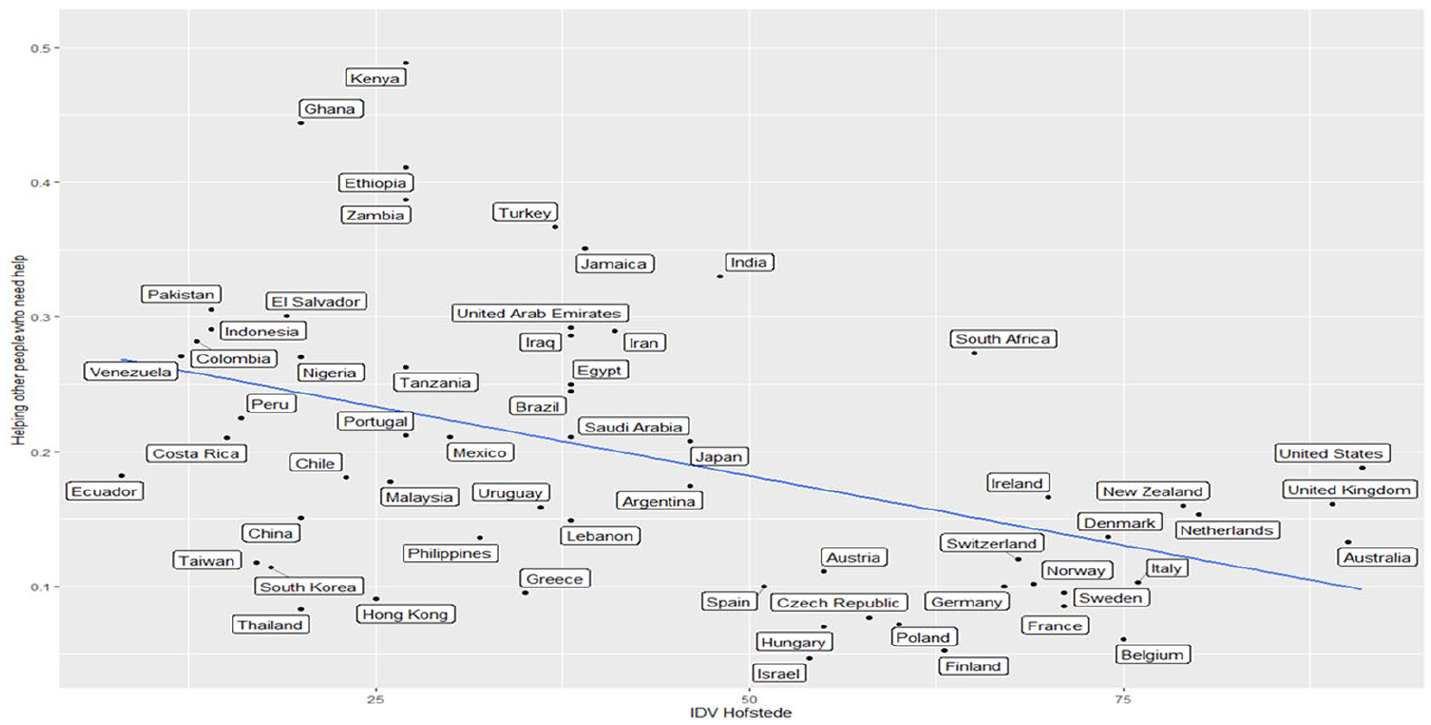
Correlation Between Hofstede’s Individualism Dimension and “Other-Orientation”.
In addition to these correlations, we ran a series of correlations comparing our main outcome responses with a log of GDP per capita, sourced from the World Bank, (indicator “GDP per capita, PPP (current international $)” at https://data.worldbank.org/indicator/). The log of GDP was calculated as the base 10 logarithm of the 2020 GDP per capita, at PPP (in current international $). Note that as these data are revised frequently, the current version available on the World Bank site may not match our data exactly. We opted to run these correlations because socioeconomic development—of which GDP per capita is often used as a gauge—has been associated with increases in individualism (Grossman & Varnum, 2015; Santos et al., 2017). In terms of self-care versus other-care, log GDP had no correlation with self-care (r = −.02), as per Supplementary Figure 1; a positive correlation with other-care (r = .30), as per Supplementary Figure 2; and a negative correlation with self-and-other-care (r = −.030), as per Supplementary Figure 3. In terms of orientation, log GDP had: a positive correlation with self-orientation (r = .37), as per Supplementary Figure 4; a positive correlation with kin-orientation (r = .26), as per Supplementary Figure 5; and a negative correlation with other-orientation (r = −.62), as per Supplementary Figure 6.
Juxtaposed Permutations
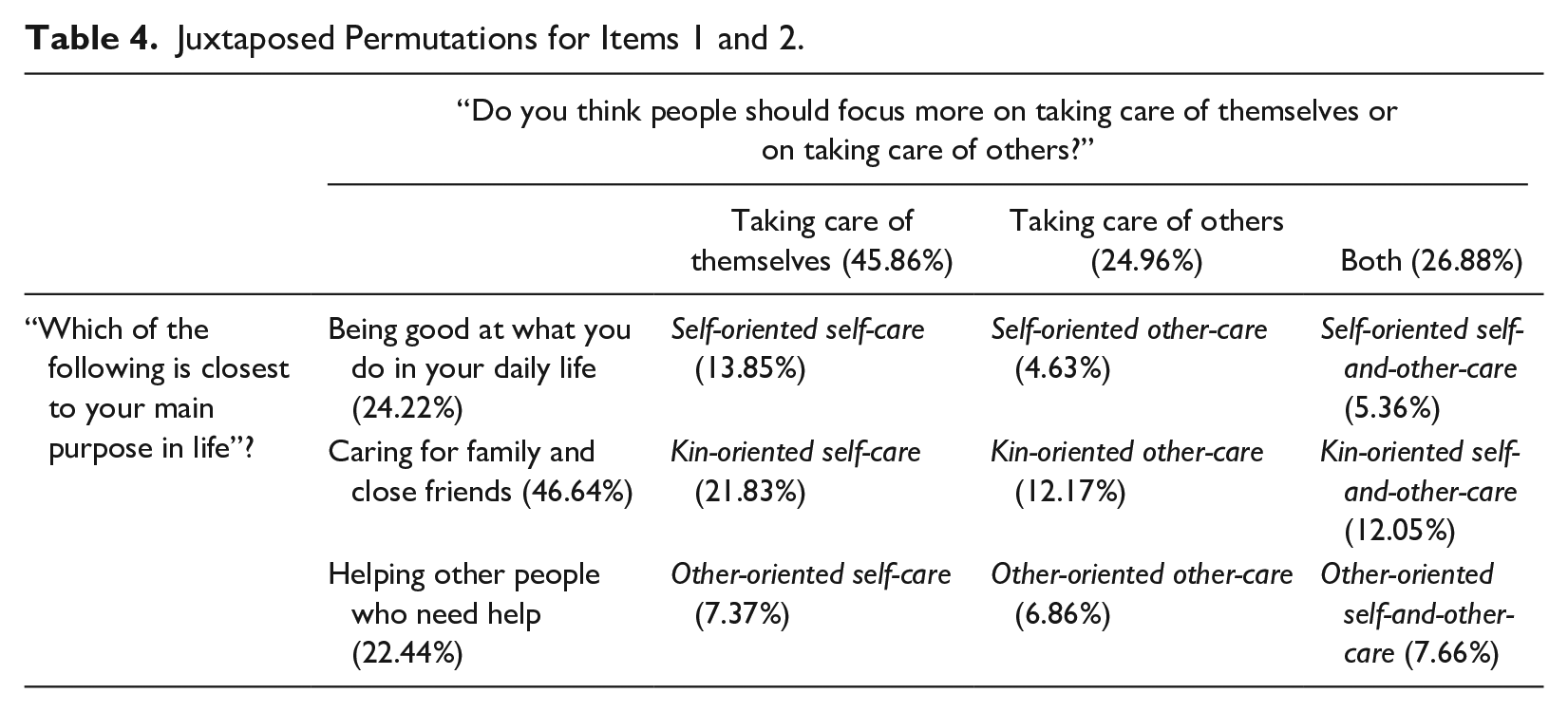
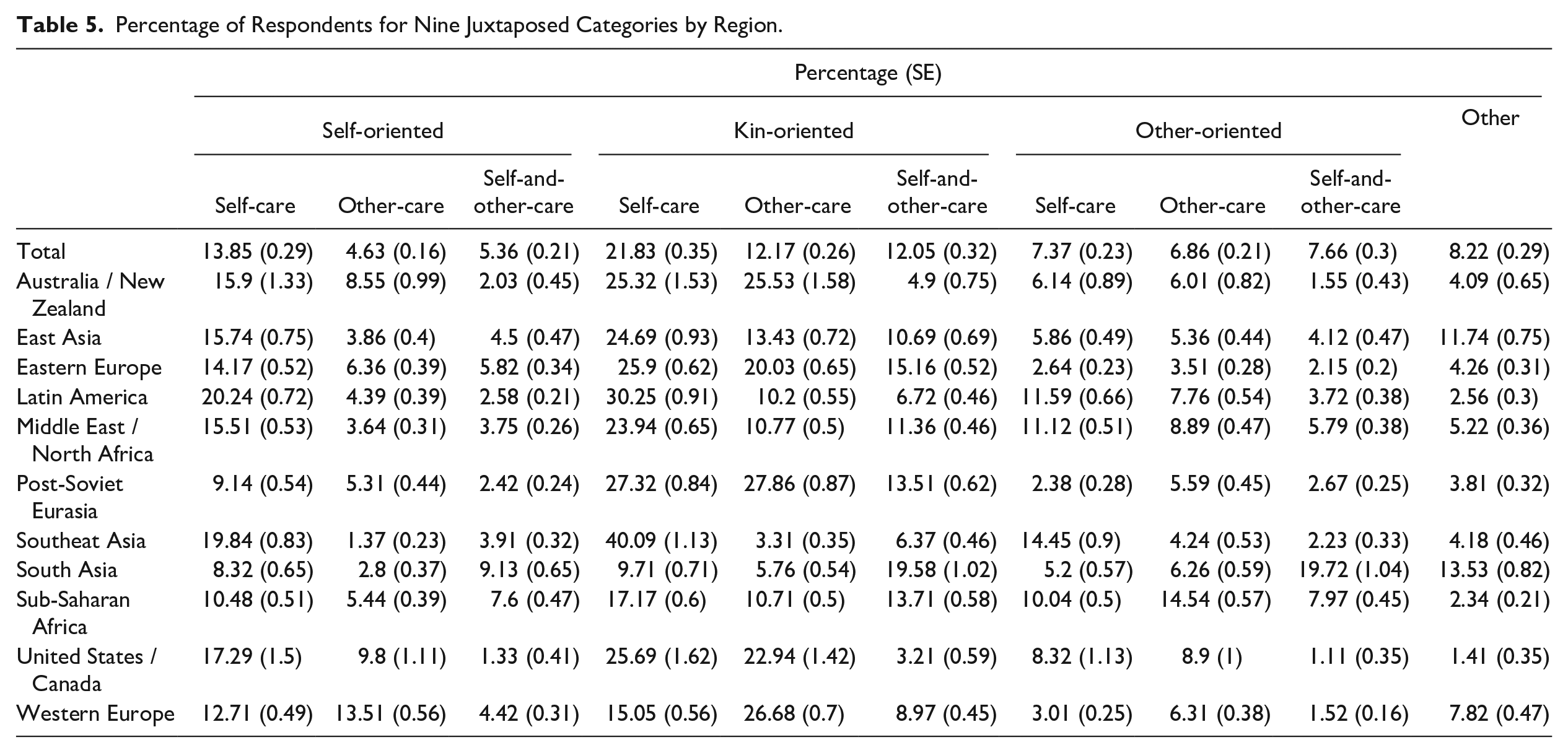
In analyzing the data, we became intrigued by the way the two items did not perform in line with our expectations. We had envisaged that self-care and self-orientation would both index individualism while other-care and kin- and other-orientation would index collectivism. However, while self-care was higher in Eastern compared with Western countries, the reverse occurred with self-orientation. Given such divergences, we had the post hoc idea to juxtapose the items to create a more granular taxonomy, involving 3 × 3 matrix of responses, as detailed in Table 4. With Item 1, the three main response options—self-care, other-care, and self-and-other-care—are configured as three columns. In the cells at the top detailing these options, the global percentage of people selecting each is indicated in parentheses. Then, with Item 2, the three main response options—self-orientation, kin-orientation, and other-orientation—are configured as three rows. Similarly, in the cells toward the left-hand side of the matrix detailing these options, the global percentage of people selecting each is indicated in parentheses. With each item having three possible responses, there are of course nine possible combinations for how any given person responded to both items. The cells of the grid thus show the percentage of people globally for all nine permutations of response. Thus, for instance, the percentage of people who selected self-care for Item 1 and self-orientation for Item 2—a combination we refer to as “self-oriented self-care”—is 13.8%. As one can see, the most populous category is “kin-oriented self-care,” an intriguing combination which we consider further in the discussion. More detailed regional results are shown in Table 5 and Figure 14 (with country rankings in Supplementary Tables 9–17). There are many nuances to the data, but in headline terms, the most populous categories are: Western Europe = kin-oriented other-care (26.68% of respondents); Eastern Europe = kin-oriented self-care (25.9%); Post-Soviet Eurasia = kin-oriented other-care (27.86%); Australia and New Zealand = kin-oriented other-care (25.53%); East Asia = kin-oriented self-care (24.69%); South East Asia = kin-oriented self-care (24.69%); South Asia = other-oriented self-and-other-care (19.72%); Latin America = kin-oriented self-care (30.25%); United States and Canada = kin-oriented self-care (25.69%); Middle-East / North Africa = kin-oriented self-care (23.94%); and sub-Saharan Africa = kin-oriented other-care (17.17%).
Juxtaposed Permutations for Items 1 and 2.
Percentage of Respondents for Nine Juxtaposed Categories by Region.
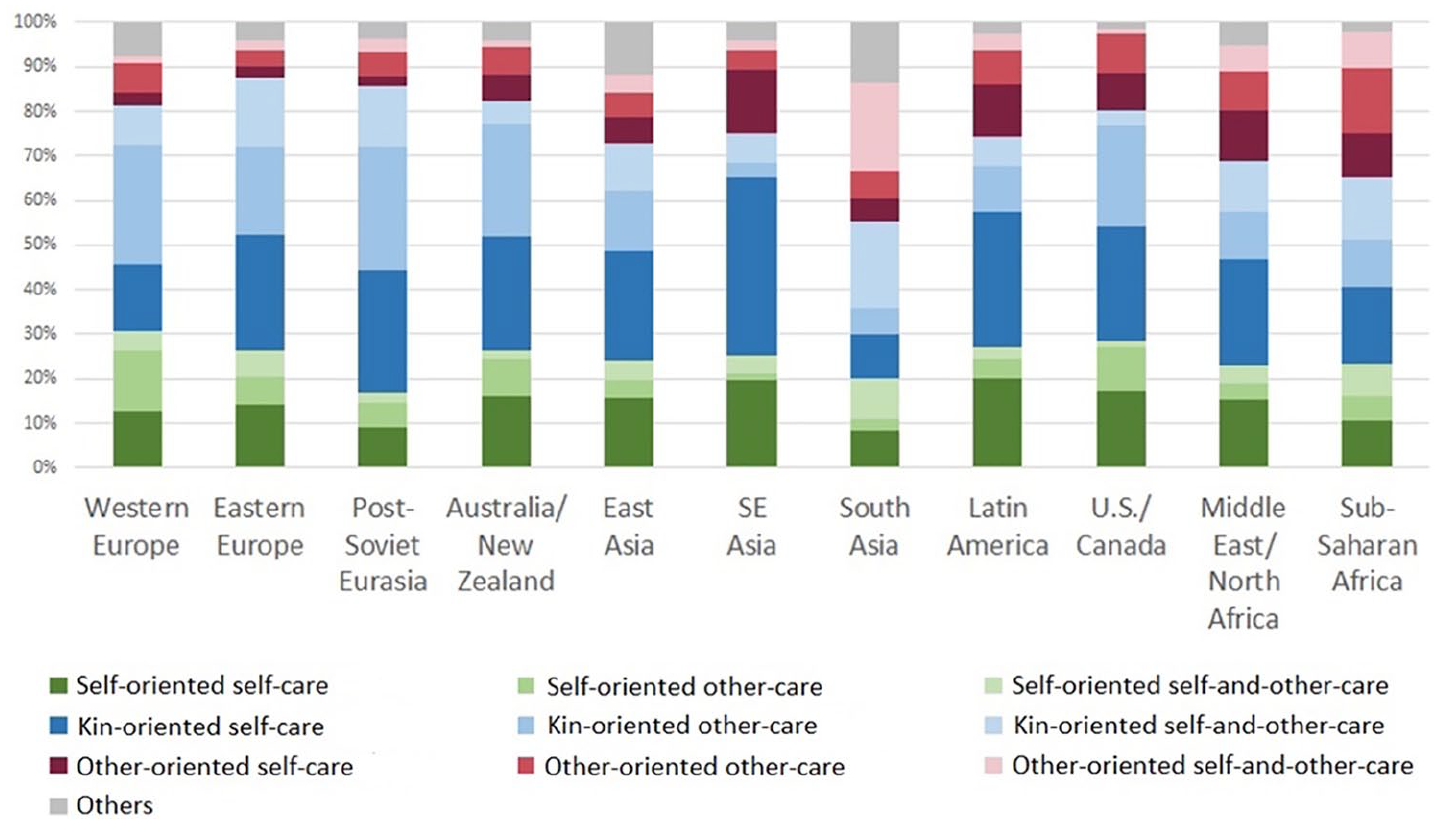
Regional Variation Among the Nine Juxtaposed Categories.
Discussion
Overall Findings: Two Interpretations
This research affords a unique analysis of topics relating to IvC, doing so moreover on an unprecedented global scale. In harnessing the unparalleled reach of the GWP—covering 116 countries—this is, to our knowledge, the most comprehensive international study to date into potential IvC dynamics (e.g., in terms of number of countries studied). Moreover, having two items allowed a nuanced analysis. Each item individually revealed notable patterns of responses, while moreover combining them to create a matrix of nine permutations allowed even more fine-grained analyses. The findings overall were striking and surprising to us: if the items tap into IvC in the ways we envisaged—which we debate below—in some respects Eastern countries seem more individualistic than Western ones. Our original interpretation of the items was that individualism would be indexed by self-care and self-orientation and collectivism by other-care and by both kin-orientation and other-orientation. However, contrary to our expectations, self-care was higher in Eastern versus Western countries. Intriguingly, though, the opposite trend occurred with self-orientation; while kin-orientation predominated everywhere, self-orientation was higher in Western countries than elsewhere, as we had anticipated.
There are essentially two main potential interpretations of these findings, both of which complexify the usual IvC-WvE narrative. First, the items do map onto IvC as we envisaged. If so, based on Item 1 in particular, the West appears less individualistic and the East less collectivistic than we had assumed. Thus, this interpretation challenges the IvC-WvE linking. That said, this interpretation is complicated by the fact that Item 2 did align with our expectations. By contrast, the second interpretation is that the items do not map onto IvC as envisaged. If so, we cannot deem the West less individualistic and the East less collectivistic than expected based on the results from Item 1. However, this interpretation complexifies the IvC binary itself, or at least challenges our expectations of the qualities associated with individualism and collectivism respectively. On its surface, selecting self-care over other-care seems to suggest to us qualities like independence and self-reliance, which we had expected to pertain more to individualism than collectivism. Of course, it may be that our expectations and reading of IvC were faulty. Indeed, as we explore below, there is some research which complicates these expectations (e.g., with interesting dynamics around self-reliance in collectivist cultures). But we would invite readers to reflect—in the absence of our findings—how they would have expected “taking care of oneself” versus “taking care of others” to align with IvC. It may be that digging into the subtleties of the literature—as we do below—one can interpret self-care as reflecting collectivism and other-care as indexing individualism, but we would be truly surprised if many people would have made that counterintuitive assumption initially. So, let us take these two overarching interpretations in turn.
Interpretation 1: Items Aligned With IvC
The first interpretation is that the items do index IvC as we envisaged. If so, our findings from Item 1 challenge the IvC-WvE pairing (although, complicating the picture further, those from Item 2 do not challenge it). In terms of self-care versus other-care, we expected the former to index individualism and the latter collectivism. Thus, based on the standard IvC-WvE pairing, we anticipated self-care would be more common in the West and other-care in the East. However, contrary to this expectation, Eastern countries show a clear preference for self-care. Our chi-square analyses show there was significantly higher self-care in the East—both Near (53.15% of respondents) and Far (45.6%), and collectively (45.82%)—than the West (41.58%). If this item does tap into IvC as envisaged, these patterns are striking, given the reputation of the West as individualistic and the East as collectivistic.
However, a different slant on IvC is offered by Item 2, where the data did align more with our expectations. While Item 1 is an opinion about society (i.e., what people in general should do), this second asks about people’s own priorities. This separation allows for nuances between people’s views about themselves and society. One can feel society itself would run better if people focused on caring for themselves, yet without contradiction prioritize caring for others oneself; conversely, one might prefer people generally to prioritize caring for others yet personally feel no such responsibility. Of the three options, the first was self-oriented (“Being good at what you do in your daily life”), which we envisaged as reflecting an individualist perspective. The other two options pertain to other people—one kin-oriented (“Caring for family and close friends”), one other-oriented (“Helping other people who need help”)—so we envisaged these as reflecting collectivism. In contrast to Item 1, these results aligned more with our expectations, although not totally. It was striking that kin-orientation, which we had coded as collectivistic, predominated in all regions, including in the West, meaning that Western cultures may be less individualistic than we thought. However, as predicted, our chi-square analyses showed that the proportion endorsing self-orientation—which we had coded as individualistic—is significantly higher in the West (30.20%) than in the East, both Near (23.31%) and Far (23.05%), and collectively (23.08%). That Item 2 aligned more with our expectations is intriguing. If this first interpretation is correct, then in terms of self-care versus other care, Eastern cultures are more individualistic and Western cultures more collectivistic. Yet, when it comes to self- versus other-orientation, the West is more individualistic.
Either way though, this divergence points to the potential internal complexity of the IvC categories. As discussed above, they may not be monolithic, but instead feature different dimensions, which would appear to include—based on our analysis—a factor pertaining to care and a factor pertaining to orientation. Similar nuances in relation to IvC have been provided by Vignoles et al. (2016), who observed that a simple differentiation between independence and interdependence—usually coded as reflecting individualism and collectivism respectively—does “not adequately capture the diverse models of selfhood that prevail in different world regions” (p. 960); as a result, the researchers formulated a seven-dimensional model of various ways of being independent or interdependent. Further evidence in support of the divergence between the two items lies in their correlations with socioeconomic development (as indexed by GDP per capita). Several studies—including Grossman and Varnum (2015) and Santos et al. (2017)—suggest that socioeconomic development precedes preference for individualistic values, products, and practices. Thus, if the responses we had envisaged as indexing individualism positively correlated with socioeconomic development, then we could arguably be more assured that our preconceptions were correct. In that respect though, with Item 1, we found no association between development and the response we had coded as individualistic (i.e., self-care). This counterexpected finding aligns with the way that self-care was unexpectedly higher in Eastern cultures, and indicates that this response perhaps is not a good index of individualism, as Interpretation 2 below suggests. However, it is also notable that log GDP was positive associated with other-care (r = .30). One interpretation here may be that when a country is poor (as indexed by log GDP), its citizens are more likely to focus on self-care (i.e., prioritizing their own physical and material well-being), whereas when a country prospers economically, people are more likely to have the resources to take care of others. By contrast, with Item 2, development had an overall moderate positive association with the response we had coded as individualistic (i.e., self-orientation). This might suggest that our expectations regarding the interpretation of Item 2 were more correct.
Interpretation 2: Items Misaligned With IvC
An alternative interpretation is that our items do not tap into IvC as envisaged—as indeed an emergent literature suggests may be a possibility. Although we had interpreted self-care and self-orientation as indexing individualism, there are other possible ways of coding these, such as reflecting self-reliance and self-enhancement rather than individualism per se. One may of course also code these as individualistic, as often occurs. With self-reliance, for instance, Triandis et al. (1988) write “there is more detachment, distance, and self-reliance in individualist cultures” (p. 325). Similarly, Green et al. (2005) used “self-reliance as an indicator of individualism” in their work (p. 322). However, the picture may be more complicated. As noted in the introduction, Triandis et al. also observed that self-reliance can “change [its] meanings in the context of the two kinds of cultures.” While in individualist cultures it “implies freedom to do one’s own thing,” in collectivist cultures it is more about “not being a burden on the ingroup” (p. 335). Similar findings have been reported by others. Studying Asian and Latino American college students, for instance, Chang (2015) found both groups tended to “underutilize social support and rely on themselves.” The main reason was to avoid worrying or being a burden on their parents, although the motivations were slightly different (Asian Americans were primarily keen to “avoid face loss,” while Latino Americans were most concerned about “preserving in-group harmony and not making matters worse”).
Similar nuances can also be found regarding self-improvement. Heine et al. (2001) compared task persistence in North American and Japanese participants and observed that while the former had a “self-enhancement” orientation (persisting longer if receiving success feedback than failure feedback), the Japanese were more likely to exhibit a “self-improvement” pattern (persisting longer following failure than success feedback). Subsequent work has similarly observed a greater drive toward self-improvement among people from collectivist cultures (Gaertner et al., 2012; Heine & Raineri, 2009; White & Lehman, 2005). This work has tended to conclude that such self-improvement is driven by the desire to better serve and align with their group’s standards. In that respect, Talhelm (2021) suggests a better term than collectivism is “responsibilism,” where even if people are guided by self-reliance and self-improvement, these are not in the service of self-aggrandizement but rather the good of the group. Thus, these research efforts suggest self-care and self-orientation are not necessarily associated with individualism, and in some respects can be higher in collectivist cultures. That said, we still have the intriguing divergence between self-care being higher in the East but self-orientation being higher in the West. One might possibly view self-care as pertaining more to self-reliance and self-orientation to self-enhancement, but even were that the case our findings would still contradict those of Heine et al. (as it would mean higher self-enhancement in the West).
Conversely, although we envisaged other-care and other-orientation as pertaining to collectivism, research suggests these can sometimes be higher in individualistic cultures. Allik and Realo (2004) analyzed the relationship between IvC and social capital within the United States and 42 countries and found that social capital—indexed by outcomes like greater civic engagement in political activity, spending more time with friends, and believing most people can be trusted—was strongly associated with individualism. They interpreted the findings as showing that “autonomy and independence are necessary conditions for the development of interpersonal cooperation and social solidarity,” and that “when individuals become more autonomous and seemingly liberated from social bonds, they actually become even more dependent on society” (p. 29). Similarly, focusing on regional variations within the United States, Kemmelmeier et al. (2006) found that charitable giving and volunteerism were greater in more individualist states. Likewise, comparing (more or less) individualistic and collectivistic societies, Henrich (2020) observed,
People from more individualistic countries . . . show less nepotism, meaning that company bosses, managers, and politicians are less likely to hire or promote relatives. Further, more individualistic countries are less inclined to distinguish in-groups from out-groups, [and are] more willing to help immigrants. (p. 29)
Such reflections lend credence to the second main interpretation of our findings: that the two items do not map onto IvC as anticipated, and that choosing other-care over self-care might in fact be a proxy for individualism’s distinctive trait of “impersonal prosociality.”
Even so, we agree with Kemmelmeier et al. (2006) that it is prima facie surprising to find other-care to be higher in Western cultures; as they write “At first blush, the high levels of giving and volunteering in the United States and Canada seem to be incompatible with the idea that both societies are among the most individualist societies on earth” (p. 327). Given this comment, even if this second interpretation is correct, our findings still complexify the concepts of IvC, as indeed do the studies above. It may be that self-reliant self-care is higher in collectivist cultures, and conversely, prosocial other-care is higher in individualist cultures. Such results do not necessarily undermine the IvC distinction per se. Rather, they highlight its complexity, showing the categories are nuanced and evade simple generalizations. However, to say that self-care and other-care are associated with collectivism and individualism, respectively, begs the question of what these categories actually represent. If individualism is associated with lower self-reliant self-care and more with a prosocial focus on caring for others, then that at minimum suggests that this constellation of qualities is less a matter of overtly prioritizing the individual’s own good than of strategies for navigating a world in which individuals are relatively detached from traditional kin-based institutions. However, going further, one might wonder whether this constellation of qualities really constitutes individualism, as classically conceived? Whatever it is, it does not seem to involve prioritizing the individual. In that regard, there is a risk that if concepts become too internally complex, they begin to contain self-contradictions—like individualism prioritizing other-care and collectivism prioritizing self-care—and may cease to function as coherent and useful concepts. At the very least, these broad labels of individualism and collectivism seem to belie the complex pattern of self-other perspectives and behaviors in any given culture. To that point, we were able to bring greater nuance to the analysis by juxtaposing the items to create nine categories, as we discuss next.
Exploring Complexity
Our findings suggest that, in their broadness, individualism and collectivism may obscure nuances in the regions they are often used to describe. We have seen, for example, that while other-care is higher in the West than in the East, the reverse is true for other-orientation. As such, while we do not expect people to cease using the IvC labels, it can be useful to also have a more fine-grained taxonomy. In that respect, our juxtaposition of the items, creating nine response categories, allowed us to explore complexities in the data. Intriguingly, the most populous category, hosting 21.83% of respondents across the entire GWP, was kin-oriented self-care, featuring those who selected self-care (which we had interpreted as individualistic) and kin-orientation (which we had interpreted as collectivistic). Thus, on Interpretation 1 above, one is tempted to see this response as people tacitly acknowledging the value of both individualism and collectivism, and implicitly resisting being pigeon-holed in either camp. Take, for instance, Deci and Ryan’s (2012) theory of self-determination, which holds that people have three fundamental basic needs: autonomy, relatedness, and competence. Self-care would appear to align with autonomy, while kin-orientation taps into relatedness. Thus, one could interpret the overall dominance of kin-oriented self-care as articulating both needs. On Interpretation 2, by contrast, which sees the “self-care” item as in fact tapping into the distinctive psychology of kin-based societies, the overall dominance of kin-oriented self-care might reflect the fact that intensive kin-based institutions were a human universal until the quite recent development of modern Western societies, which are still importantly shaped by that long history.
Following kin-oriented self-care were: self-oriented self-care (13.85%), which is more individualistic; then kin-oriented other-care (12.17%), kin-oriented self-and-other-care (12.05%), and other-oriented self-and-other-care (7.66%), which could all be read as more collectivistic; other-oriented self-care (7.37%), which taps into individualism and collectivism; other-oriented other-care (6.86%), which is more collectivistic; and finally self-oriented self-and-other-care (5.36%) and self-oriented other-care (4.63%), which once again intertwine individualism and collectivism. Moreover, there are interesting and surprising nuances when the analyses are broken down by region, and indeed fascinating intraregional variation, emphasizing their heterogeneity. In Asia, for instance, while kin-oriented self-care was by far the dominant category in South-East Asia, there was a rough tie between kin-oriented other-care and other-oriented self-and-other-care in South Asia, while East Asia had an even spread across many categories. Much more work is needed to delve into these regional differences, for which this research will hopefully provide a stimulus. Overall, though, given the subtleties of these patterns, and the dominance of kin-oriented self-care, it may help to develop ideas around selfhood that tap into individualism and collectivism. Various possibilities have been proposed in that respect, including the intersubjective self (De Quincey, 2000), the transpersonal self (Vaughan, 1985), the dialogical self (Hermans, 2001), the permeable self (Larsen, 1990), interbeing (Nhat Hanh, 2000), and “I-Thou” relationships (Buber, 1958). Each has its differences, but all move us away from what is arguably a false dichotomy in the IvC distinction and may come closer to articulating the nuances of how many people view the relationship between self and other.
Overall then, our findings suggest the common tendency to map IvC onto WvE is not only an overly broad generalization that overlooks nuances in these arenas but may actually be misleading. This applies to whichever of the two interpretations above is correct. If our items do map on to IvC as envisaged, then individualism—at least in terms of self-care—is higher in Eastern than Western countries, so the IvC-WvE pairing is unstable. But if they do not map onto IvC as we envisaged, arguably the IvC binary is itself potentially unstable, as it then includes what appear to be self-contradictions—or at least counter-intuitive patterns—such as individualism meaning greater focus on other people and collectivism involving a greater focus on oneself. Moreover, not only might the IvC dichotomy be unstable, but likewise WvE. As Said (1979) argued in Orientalism, WvE are cultural constructions that homogenize and obscure the heterogeneity and complexity of both arenas. The East includes its own traditions and philosophies of individualism, while conversely, the West possesses collectivist regions and schools of thought. With the latter, consider the difference between the United States and the United Kingdom (which even within the Western world are deemed particularly individualistic) versus the Nordic nations (which are far more communally oriented) (Martela et al., 2020). Moreover, even within the United States, sociodemographic groups vary widely on IvC, and many social institutions such as religion, community organizations, and political groups strongly promote communal values and ways of relating (Bellah et al., 1996). For example, a social movement of “responsive communitarians” has promoted a balancing of individual autonomy and collective responsibility in countries like the United States (Etzioni, 2015, p. 621). Moreover, the WvE binary presents these hemispheres as if discretely bounded and hermetically sealed, overlooking the dynamic intertransmission of people and ideas across boundaries. This criticism is particularly apposite in this era of globalization, with its cross-fertilization of cultures. Thus we have seen apparently Western ideologies such as consumer capitalism finding fertile ground in Asian countries; indeed, the “modernization” theory of cultural change suggests a general global movement toward greater individualism (Hamamura, 2012). Moreover, many countries are very multicultural, characterized by a polyphony of different racial, ethnic, religious, language, and cultural groups, as exemplified by places such as India, which is home to approximately 300 to 400 distinct languages (and thousands more dialects) (Mohanty, 2013). Thus, just as the IvC-WvE pairing may need to be used with caution and caveats, so too may the IvC and WvE binaries themselves.
As ever though, more work is needed to explore these nuances. Although this study is merely the latest in a long sequence that complexifies the IvC-WvE pairing, caution is always warranted in interpreting such findings. First, as discussed, one could question whether our items do tap into IvC as envisaged (though if not, we submit that they still complexify this binary). Then, in terms of other limitations, one may wonder whether single-item measures can do justice to a given construct, although one finds emergent arguments that these can be useful and valid in that respect, especially in large panel surveys (Allen et al., 2022). Queries might also be raised regarding our framework of nine permutations, not least since this is not the only way of approaching the nexus of our two items. In relation to self-care versus other-care, in addition to these and “both” we could also have added “neither” (which we omitted since few respondents selected this option). Then, in terms of orientation, we selected three options we felt covered as much ground as possible. Nevertheless, one could conceivably add other options, such as “caring for the planet,” and “making life better for future generations.” Adding these would generate a response 4 × 5 matrix with 20 permutations, although arguably that would be too differentiated to allow meaningful clustering of countries. Thus, we felt that nine permutations is fine-grained enough to allow greater nuance than the standard IvC binary while not being too granular as to be unwieldy. Nevertheless, we recognize that this schema is somewhat arbitrary, and it is not necessary or inevitable that it should feature nine options specifically. As such, we encourage researchers to further explore the patterns we observed here. Even so, these findings—from the most comprehensive global study on IvC to date—suggest the standard IvC-WvE pairing may not only be a crude generalization but may even be misleading in more fundamental ways. As such, we encourage caution in asserting this linkage and hope this study can help facilitate a more nuanced understanding of these cross-cultural dynamics.
Supplemental Material
sj-doc-1-jcc-10.1177_00220221221130978 – Supplemental material for Complexifying Individualism Versus Collectivism and West Versus East: Exploring Global Diversity in Perspectives on Self and Other in the Gallup World Poll
Supplemental material, sj-doc-1-jcc-10.1177_00220221221130978 for Complexifying Individualism Versus Collectivism and West Versus East: Exploring Global Diversity in Perspectives on Self and Other in the Gallup World Poll by Tim Lomas, Pablo Diego-Rosell, Koichiro Shiba, Priscilla Standridge, Matthew T. Lee, Brendan Case, Alden Yuanhong Lai and Tyler J. VanderWeele in Journal of Cross-Cultural Psychology
Footnotes
Author’s Note
Matthew T. Lee is currently affiliated with Baylor University, Waco, TX, USA.
Declaration of Conflicting Interests
The author(s) declared no potential conflicts of interest with respect to the research, authorship, and/or publication of this article.
Funding

Supplemental Material
Supplemental material for this article is available online.
References
Supplementary Material
Please find the following supplemental material available below.
For Open Access articles published under a Creative Commons License, all supplemental material carries the same license as the article it is associated with.
For non-Open Access articles published, all supplemental material carries a non-exclusive license, and permission requests for re-use of supplemental material or any part of supplemental material shall be sent directly to the copyright owner as specified in the copyright notice associated with the article.
