






Abstract
Emotion socialization goals (ESGs) refer to parental expectations and aspirations for their children’s emotional development. This research aims to explore what ESGs are held by contemporary Chinese parents, and how different ESGs relate to parental emotion-related socialization behaviors (ERSBs) and child outcomes in China. Three empirical studies were conducted. In Study 1, parents’ (n = 150, 78% females, 36–57 years old) written responses to an open-ended question about their emotion socialization goals were analyzed using a hybrid inductive-deductive coding approach, with the aim of identifying emergent themes and confirming the theorized dimensions of ESGs. In Study 2, a survey-based study involving parents (n = 1,417; 57.66% females, Mage = 41.94 years old, SD = 4.52) was conducted to examine the basic psychometric properties of the newly developed scale using factor analyses and test its criterion-related validity. Factor analyses revealed three factors: extreme self-oriented, balanced, and extreme other-oriented ESGs. The results showed that parents with balanced ESGs tended to exhibit more supportive ERSBs and experienced less emotional dysfunction, while parents with extreme ESGs tended to display more nonsupportive ERSBs and have more emotional dysfunction. Even after controlling parental socialization goals or parents’ own emotional dysfunction, the three kinds of ESGs explained additional variances in predicting parental ERSBs. Based on parent-child dyads (n = 483; for children: Mage = 14.01 years old, SD = 0.93, 41.03% females; for parents: Mage = 42.05 years old, SD = 4.60, 49.90% females), Study 3 explored how ESGs relate to children’s psychosocial problems. The results showed that balanced ESGs were linked negatively with children’s psychosocial problems. Extreme self-oriented ESGs but not extreme other-oriented ones had significant positive associations with children’s psychosocial problems. Moreover, ERSBs significantly accounted for the relations between ESGs and children’s psychosocial problems. The findings suggest that ESGs of Chinese parents are multi-dimensional and have close relevance to parental ERSBs and child outcomes.
Introduction
Parental emotion-related socialization behaviors (ERSBs) have been a central area of study within developmental psychology since proposed by Eisenberg and colleagues (Eisenberg, 2020; Eisenberg et al., 1998). Research in the past decades has documented that some parents predominantly utilize more positive/supportive ERSBs that benefit children’s and adolescents’ adaptability; in contrast, other parents habitually use negative/nonsupportive ERSBs that can harm children’s and adolescents’ development. The variations in ERSGs can be evident both at the individual level and across different cultural contexts (Cole & Tan, 2015; Raval & Walker, 2019). A critical question then arises: What factors contribute to these individual differences in ERSBs?
Parents’ socialization goals, which entail the expectations and objectives that parents set for their children’s development, have been documented to significantly shape the way parents guide and interact with their children (Goodnow, 2002; Raval & Walker, 2019). Extant research linking parental socialization goals to ERSBs has largely focused on parental general socialization goals, especially the independent goals (i.e., hoping the child to develop independence and self-confidence) and interdependent goals (i.e., expecting the child to respect elders, do what parents say). We argue that parental emotion socialization goals (ESGs), which specifically reflect parental expectations and aspirations for their children’s emotional development, may relate more closely to ERSBs, but their nature and impact remain largely underexplored. To fill this gap, we propose that ESGs can be categorized as either self-oriented (independent) or other-oriented (interdependent), reflecting emotions’ roles in both personal and social realms. Additionally, taking a non-dichotomous approach to conceptualize culturally shaped ESGs, we introduce a nuanced classification beyond this dichotomy, distinguishing ESGs as either balanced or extreme in their independent versus interdependent orientations, thereby acknowledging the continuum nature of ESGs beyond a binary framework. We conducted three studies in Chinese families to validate this extended non-dichotomous theoretical framework of ESGs.
Parental Emotion-Related Socialization Behaviors (ERSBs) and Emotion Socialization Goals (ESGs)
ERSBs refer to parental behaviors and practices that play vital roles in children’s emotional development, which are multifaceted and are commonly assumed to encompass parental expressivity of their own emotions in the family, parental responses to children’s emotions, and how parents discuss emotions with the children (Eisenberg, 2020; Eisenberg et al., 1998). Across cultures, ERSBs, including parental expression of positive emotions (e.g., happiness, gratitude), supportive responses to children’s emotions (e.g., emotion-comforting, problem-solving), and frequent emotion-related discussions in parent-child dyads, tend to link with children’s socioemotional adjustment; conversely, ERSBs, including expressing negative emotions (e.g., contempt, anger), nonsupportive responses like parental distress and punitive reactions, and limited emotion-related discussions in parent-child dyads, tend to hinder children’s socioemotional development (Cole & Tan, 2015; Eisenberg, 2020; Friedlmeier et al., 2011; Raval & Walker, 2019). Despite largely consistent findings, variations across cultures in ERSBs and their relations to child outcomes cannot be neglected, because cultural norms and values shape how emotions are understood, expressed, and regulated (Raval, 2023). Cultural differences in ERSBs are primarily understood within the cultural framework of independence and interdependence (Markus & Kitayama, 1991), and can manifest both in the frequency (salience) of these behaviors and in their functional relevance to child development (Ding, Bi, et al., 2021; Raval & Walker, 2019). For example, compared with parents with more independent cultural orientations, parents with more interdependent cultural orientations are more likely to show nonsupportive responses and didactic talk and teaching during their discussion with children concerning emotional events (S. H. Chen & Zhou, 2019; Ding, He, et al., 2021; Raval & Walker, 2019; Q. Wang, 2001; Q. Wang et al., 2012). Parental minimizing responses to children’s negative emotions (e.g., it is not a big deal) are detrimental to children’s development in cultures emphasizing independence (e.g., American and European families), but show no significant correlations with children’s maladaptive outcomes in cultures valuing interdependence (e.g., Chinese and Indian families) (Ding et al., 2022; Yeo et al., 2019).
Such cultural differences in ERSBs have been examined both through cross-cultural comparisons (e.g., Western vs. non-Western societies, rural vs. urban regions) and analyses of how individuals’ cultural orientations relate to ERSBs. The latter approach—valued for its capacity to capture micro-level (individual-level) cultural processes—rests on the assumption that cultural orientations can be internalized and expressed through parental cognitions (X. Chen et al., 2015; Erez & Gati, 2004). In particular, parental cognitions that refer to the mental processes guiding how parents interpret and respond to children’s emotional experiences are multidimensional, including (1) present-oriented cognitions (e.g., perceptions, beliefs, attitudes), (2) future-oriented cognitions (e.g., expectations, goals), and (3) novel constructs (e.g., implicit attitudes, mentalizing, mindfulness) (Holden & Smith, 2019). Commonly studied cognitions regarding parental emotion socialization include meta-emotion cognition (i.e., emotion coaching or dismissing attitudes toward children’s emotions; Gottman et al., 1997), beliefs about children’s emotions (e.g., negative emotions are valuable or problematic; Halberstadt et al., 2014), and socialization goals (Chan et al., 2009; Raval et al., 2014). ESGs reflect parents’ future-oriented priorities regarding the emotional qualities and competencies they want their children to develop, whereas meta-emotion cognition and beliefs about children’s emotions capture how parents understand, value, and evaluate children’s emotions in the present. Furthermore, emotion socialization goals are more focused on the child’s development, whereas meta-emotion cognition and related beliefs encompass parents’ broader attitudes toward emotions in general, not limited solely to their children.
Of note, cultural priorities for independence versus interdependence are reflected in cultural norms and values about emotional functioning (Mesquita & Albert, 2007; Trommsdorff & Rothbaum, 2008). For instance, in independence-focused cultures, expressing negative emotions may be seen as a form of personal authenticity, while in interdependence-focused cultures, emotion control and suppression are valued to maintain group harmony (Rimé et al., 1998; Taylor et al., 2004). Consistent with these cultural variations on emotions, past literature has documented close relevance between independence- versus interdependence-oriented socialization goals and ERSBs (Raval et al., 2014; Yeo et al., 2021). However, existing studies do not suggest that either orientation is inherently more or less adaptive than the other. For instance, Chinese and Indian mothers who endorsed relational socialization goals (e.g., emphasizing filial piety) were more likely to respond to their children’s negative emotions with supportive reactions and culturally salient responses of training and explanation-oriented responses (Raval et al., 2018). Chan et al. (2009) identified two types of ESGs among Hong Kong Chinese parents—individualistic ESGs that promote children’s self-esteem and relational ESGs that promote social harmony—and found that both were positively associated with coaching and emotion-enhancing approaches, whereas only individualistic goals were negatively associated with emotion-dismissing approaches.
Because both independence- and interdependence-oriented socialization goals—whether general or specific to emotions—may be associated with more supportive and fewer nonsupportive ERSBs in Asian cultures, we argue that independence-oriented goals should not be seen as inherently negative, nor interdependence-oriented goals as universally positive, and vice versa. Given the universal importance of both self-development and relational connectedness, the associations between independence- and interdependence-oriented ESGs and ERSBs may vary as a function of how well these goals are balanced and integrated. Indeed, critiques have arisen against the dichotomous portrayal of value systems and developmental goals as purely independent or interdependent, pointing out that this view is simplistic, especially in the current era marked by increased globalization and a more complex understanding of child development (Tamis-LeMonda et al., 2008). Instead of viewing independence and interdependence as mutually exclusive, contemporary research acknowledges that the value systems of individualism and collectivism, and differences in developmental goals such as autonomy and relatedness, not only coexist within communities and individuals but are often actively balanced (Raval et al., 2018; Tamis-LeMonda et al., 2008). For example, Smetana (2002) noted that children in all cultures valued autonomy, although European-American children expected and asserted more autonomy than Mexican, Asian-American, and African-American children. Likewise, research on emotion socialization indicates that balancing collective ideals with individual autonomy has become increasingly prominent in urban, middle-class families across Asia in recent decades. For example, Indian parents commonly strive to guide their children in expressing emotions in ways that reflect cultural values of interdependence, while also respecting and fostering their children’s sense of individual agency (Tuli & Chaudhary, 2010). Acknowledging the limitations of the traditional dichotomy between independence and interdependence, this research seeks to expand existing theoretical models by conceptualizing independent and interdependent ESGs along a continuum—encompassing both extreme and balanced orientations.
Balanced and Extreme Self- and Other-Oriented ESGs
Undoubtedly, emotional functions can be categorized into two types along the independence and interdependence continuum, with some being more conducive to personal gains (such as enhancing self-esteem) and others potentially more conducive to social interactions (such as maintaining relationships) (Mesquita & Leu, 2007; Tsai & Lau, 2013). For instance, expressing negative emotions such as anger is more beneficial for asserting self-autonomy, thereby aligning with independent values, while expressing gratitude is typically seen as beneficial for maintaining and improving social relationships, which is more in line with interdependent values. Among emotional functions that may primarily benefit the individual versus social harmony, there are nuances in their effects on the self and social interactions. For instance, expressing hostile emotions such as anger and feeling proud may both align with an independent cultural orientation by stressing self-autonomy and self-esteem (Kitayama et al., 2006; Mascolo et al., 2003), but the former disrupts social harmony more significantly than the latter. Similarly, feeling ashamed and feeling calm/peaceful may both reflect an interdependent cultural orientation to protect social order and social connection (Bedford & Hwang, 2003), but the former may be detrimental while the latter may be conducive to an individual’s self-esteem and sense of autonomy.
Given the aforementioned nuanced differences, we propose to distinguish balanced from extreme orientations when examining ESGs. Balanced orientations reflect a well-adjusted integration of independence and interdependence—for instance, achieving personal goals while preserving social ties, or supporting others without compromising autonomy. In contrast, extreme orientations lean heavily toward one end—for instance, pursuing autonomy at the cost of relationships, or conforming to interdependence at the expense of self. Considering both the emphasis on independence versus interdependence (i.e., self vs. other) and the degree of the emphasis (i.e., balanced vs. extreme), four distinct types of ESGs may be identified.
First, Self-Oriented ESGs focus on fostering the development of the child as a separate and self-contained individual, and valuing self-worth and internal attributes as desirable developmental outcomes. Parents with self-oriented ESGs encourage children to freely express emotions, facilitate their own emotion regulation, and take pride in themselves. Such ESGs may involve two types:
a. Extreme Self-Oriented ESGs: Emphasizing emotional functioning that promotes self-autonomy and well-being, potentially at a high cost to interpersonal relations. An example is encouraging the free expression of hostile emotions like anger.
b. Balanced Self-Oriented ESGs: Aiming to promote self-autonomy and personal well-being with a low cost to interpersonal relations. An example is encouraging feelings of self-pride and happiness.
Second, Other-Oriented ESGs focus on expecting children to adjust themselves to fit in and maintain interdependence with others, and emphasize the importance of understanding interpersonal relationships and others’ needs. Such goals include being sensitive to others’ emotions and avoiding the expression of negative emotions, particularly hostile emotions to others, and may also involve two types:
c. Balanced Other-Oriented ESGs: Aiming for emotional functioning that benefits social harmony and interpersonal relations but with a low cost to self-autonomy or self-esteem. An example is being able to comfort others when other people are unhappy.
d. Extreme Other-Oriented ESGs: Focusing on emotional functioning that benefits social harmony and interpersonal relations, even at a high cost to self-autonomy and personal well-being. An example is suppressing dissatisfaction even if offended by others.
From the perspectives of Social Domain Theory and Self-Determination Theory, balanced socialization goals are more conducive to children’s development than extreme goals. Social Domain Theory posits that children organize their social understanding across distinct but related domains, including the moral, societal, and psychological domains (J. Smetana, 2006). The personal (psychological) domain refers to matters of individual preferences, emotions, and choices that are under personal jurisdiction and should be guided by autonomy. The moral domain concerns issues of justice, fairness, harm, and others’ welfare, which are viewed as universally obligatory and independent of social conventions. The societal (conventional) domain involves socially constructed norms and rules that regulate social order and coordination, such as etiquette, classroom rules, and cultural practices. Effective social development requires not only distinguishing among these domains but also coordinating them appropriately in complex or emotionally charged situations.
Similarly, Self-Determination Theory (Deci & Ryan, 2012) suggests that optimal development depends on the fulfillment of children’s basic psychological needs for autonomy, competence, and relatedness. Self-Determination Theory further suggests that balanced goals may be more likely to satisfy children’s basic psychological needs for autonomy, competence, and relatedness by validating emotions, scaffolding regulation, and fostering emotional connection. Integrating these perspectives, balanced ESGs are particularly conducive to development because they allow parents to respect children’s emotional autonomy while simultaneously guiding them to consider moral concerns and social norms, thereby supporting both effective domain coordination and the fulfillment of basic psychological needs of children. Whether focusing on self or others, balanced ESGs may predict more positive and supportive, while extreme ESGs would predict more negative and nonsupportive, emotion socialization behaviors. This expectation is grounded in the idea that parents’ ESGs reflect their underlying emotion-related beliefs and cognitions, which in turn shape their parenting behaviors. Parents with balanced ESGs can integrate multiple perspectives on emotions, allowing them to respond to children’s emotional experiences in a flexible and supportive manner. In contrast, extreme ESGs often reflect rigid or one-sided beliefs about emotions, which are more likely to translate into negative and nonsupportive responses. Balanced ESGs, representing a well-adjusted approach to emotion socialization, may effectively integrate and value both self-oriented and other-oriented emotional competencies of children and are likely to be more beneficial for child development than extreme ones.
ESGs and Parental Emotion Socialization During Adolescence
Adolescence is a developmental period marked by heightened emotional intensity, increasing autonomy, and expanding social demands, all of which shape parent–child emotion-related interactions (Kenny et al., 2013; Klimes-Dougan et al., 2007). Compared with childhood, adolescence involves a shift in the primary sources of emotional regulation, with adolescents relying less exclusively on parents while continuing to seek parental guidance in situations involving intense or ambiguous emotions. This developmental transition requires parents to recalibrate their emotion-related responses, balancing adolescents’ growing need for autonomy with ongoing parental involvement. At the same time, adolescents’ increasing cognitive maturity and expanding social worlds add further complexity to parents’ emotion socialization efforts. As adolescents become more capable of perspective taking and are increasingly embedded in multifaceted peer and social contexts, parents’ emotional responses may also need to promote adolescents’ consideration of both their own emotional experiences and the perspectives and needs of others. Within this developmental context, ESGs become particularly salient. ESGs reflect parents’ overarching priorities regarding the functions of emotions during adolescence, such as promoting emotional autonomy, supporting self-regulation, and facilitating sensitivity to others and social norms. These goals provide a guiding framework through which parents interpret adolescents’ emotional expressions and select emotion socialization strategies, thereby shaping how parents respond to adolescents’ emotional experiences.
Although ESGs are oriented toward adolescents, they also reflect parents’ own emotional perspectives about the functions of emotions and priorities regarding emotional expression, regulation, and social adaptation. Parents with balanced ESGs may respond in ways that acknowledge their own emotions, respect the child’s perspective, and support both adolescents’ emotional autonomy and social competence. Such goals may be particularly adaptive during adolescence, as they enable parents to validate adolescents’ emotions while guiding them to consider moral concerns, social norms, and relational implications—an especially important balance during youth when emotional autonomy and social responsibility are developing. In contrast, extreme ESGs—whether overly controlling or excessively permissive—may lead parents to respond in more rigid, inconsistent, or emotionally dismissive ways. Such responses can limit adolescents’ opportunities to practice flexible emotion regulation, reduce social understanding, and undermine the development of autonomy and relational competence, as parental reactions are either overly directive or insufficiently supportive.
The Current Research
The current research aimed to investigate the proposed four-factor classification of ESGs in mainland China. Chinese culture was focused on, given its unique cultural, social, and economic landscape that provides a distinct context for examining this issue. In the past decades, Chinese societies have undergone profound economic and demographic shifts (Sun & Ryder, 2016). Despite maintaining a traditional cultural heritage that prioritizes interdependence and interpersonal relationships, changes have been occurring in increasingly valuing independence and autonomy (Xu & Hamamura, 2014; Zeng & Greenfield, 2015). For instance, X. Chen et al. (2005) mentioned that in modern Chinese societies, traditionally virtuous behaviors such as shyness, anxiety, and restraint are becoming less favored, while assertiveness and initiative are increasingly valued for achieving personal goals. We anticipated that the four types of theoretically hypothesized ESGs are highly likely to co-exist in contemporary China and are closely related to parental emotion socialization behaviors.
To achieve our research aims, we conducted three interrelated empirical studies. Study 1 utilized a qualitative open-ended response methodology with a hybrid inductive-deductive coding approach to explore the content of Chinese parents’ ESGs and validate the proposed four-type framework. Building on these findings, Study 2 developed a novel quantitative scale to measure these ESGs, tested its factor structure, and examined its criterion-related and incremental validity in relation to ERSBs and parents’ own emotional functioning. Finally, Study 3 employed a dyadic design to investigate the implications of these ESGs for adolescents’ psychosocial adjustment, specifically testing whether parental ERSBs mediate the relationship between ESGs and adolescent outcomes. Three empirical studies were conducted in China among parents and their offspring, all of whom were native Chinese speakers. These studies focused particularly on the adolescent age period. As children enter adolescence, the frequency and importance of social interactions in their adjustment increase significantly (Anttila et al., 2017), making it a crucial time to examine how ESGs involving self- and other-orientations may relate to parental ERSBs and children’s socioemotional adjustment. Indeed, adolescence entails exposure to a range of new social interactions and social roles, presenting challenges for many teenagers (de Armas & Kelly, 1989). Consequently, parental ESGs and ERSBs may be particularly critical in shaping adolescents’ abilities and skills to cope with new social demands and transitions.
Study 1
This study aimed to validate the hypothesized four-factor classification of ESGs, extending prior theoretical frameworks contrasting independence and interdependence. Open-ended response methodology, a valuable approach for generating rich qualitative data, is often used in prior research to construct and validate theoretical frameworks (Ji et al., 2023; Makri & Neely, 2021). Utilizing this method, the present study solicited open-ended responses from parents about their emotion socialization goals and then applied content analysis to examine whether these responses reflected the currently theorized balanced and extreme self-oriented and other-oriented ESGs. As noted in prior research (Elo & Kyngäs, 2008; Hsieh & Shannon, 2005), content analysis can be conducted using either an inductive (conventional/emergent) approach or a deductive (theory-driven/directed) approach. The former allows themes to emerge from the data without predefined categories, whereas the latter uses an existing theoretical framework to guide the analysis. This study adopted a Hybrid analysis (Proudfoot, 2023; Swain, 2018), which incorporated both inductive/deductive approaches, to provide a rich sense of ESGs. This means that the theoretically proposed four types of emotion ESGs served both as a basis for and a result of the data analysis.
Method
Participants
A total of 150 parents were recruited from Guangdong, China. Mothers constituted predominantly 78% of the participants, with the mean age being 43.94 years (range: 36–57 years, SD = 6.02). Their children were aged between 10 and 19 years (Mage = 16.60 years, SD = 1.64), with a majority (79.3%) being girls. Concerning parental educational attainment, 4.0% had primary school education, 13.3% completed junior high school, 30.7% finished high school, 48.7% received a college education, and 3.3% held a master’s degree or higher degree. About 91.33% of the parents are married, while 8.00% are single due to divorce or the loss of their partner.
Procedure
The study was carried out using an online survey developed on “Wenjuanxing,” a popular survey platform in China. Parents were prompted with the question: “As a parent, what kind of emotional competence do you hope your child develops? Please share your thoughts.” Participants were informed they could either type their response or use the microphone for voice input, which could be transcribed into text. In the case of parents with multiple children, they were asked to focus their responses on one child, specifically one who is currently in their adolescent years. These open-ended responses were later coded to understand parents’ emotion socialization goals.
Coding Process and Results
The coding procedure was carried out by two well-trained coders, both being graduate students majoring in psychology. The two coders are both Chinese, fluent in written Chinese, and familiar with the cultural context of the participants.
Data Preparation
Coders were instructed to identify responses that contained elements of ESGs. Responses that did not involve any emotional content—for example, “I anticipate my child to get into a prestigious university” or “engage more in athletic activities”—were deemed irrelevant and excluded from further analysis. Among all responses collected, 22 were judged irrelevant, resulting in 128 valid responses for subsequent analysis.
Given that individual responses could reflect multiple parenting goals, each response was decomposed into separate units. For instance, the response, “I hope my child can openly express their feelings and understand the emotions of others,” was split into two distinct segments: one representing “openly express their feelings” and the other representing “understand the emotions of others.” As a result, the 128 valid responses were segmented into 703 discrete instances of emotion socialization goals, forming the dataset for subsequent coding and analysis.
Inductive and Deductive Coding
A hybrid coding approach was adopted, first using inductive coding to allow themes to emerge from the data, followed by deductive coding to map these themes onto a pre-established framework of four parental emotion socialization goals. During the inductive and deductive coding period, any coding disparities were collectively deliberated upon until a consensus was achieved. The coding procedure was facilitated using MAXQDA version 2020, a specialized software intended for qualitative data analysis methods.
In inductive coding process, the coders reviewed the transcripts and organizational documents without predefined codes, aiming to capture categories and themes emerging naturally from the data. This approach allowed new, unexpected themes to surface directly from the participants’ narratives, ensuring that the coding reflected the actual content and context of the data. Following past literature (Davies et al., 2024; Vears & Gillam, 2022), we adopted the following steps in conducting the coding procedure. Meaningful units of text were first independently reviewed and compared by two coders. The coders then met to discuss and reconcile similarities and discrepancies, and collaboratively organized the meaningful units into sub-categories, which were named and subsequently assembled into generic categories. After the initial structure of generic categories and sub-categories was confirmed, the two coders independently re-coded all instances according to the agreed definitions. During this iterative process, if new sub-categories or generic categories emerged, the coders discussed and refined the coding scheme until no new categories appeared and full agreement was reached. Finally, the coders reviewed the entire dataset again to ensure consistency, completeness, and theoretical coherence of the final coding structure.
During the inductive coding process, five generic categories were identified, each containing two to four sub-categories (see Table 1). The five generic categories were positive emotional experience/state (n = 178), emotional cognition/understanding (n = 91), emotional expression (n = 82), emotional management/regulation(n = 228), and personal growth and social adaptation (n = 124). To be specific, positive emotional experience/state refers to children’s subjective happiness, optimism, and psychological resilience, encompassing positive affect and emotional stability (e.g., “be happy and calm”). Emotional cognition and understanding involves awareness and interpretation of emotions in oneself and others, including self-awareness, social awareness, and general emotional insight (e.g., “be aware of own feelings, understanding causes of emotions”). Emotional expression reflects the ability to express emotions authentically without suppression (e.g., “showing joy openly”). Emotion management/regulation describes the capacity to manage and adapt emotional responses to stress or adversity, supporting resilience and effective functioning (e.g., “accept emotions,” “use distraction”). Finally, personal growth and social adaptation encompass moral character, personal competence, and prosocial interpersonal skills, including kindness, responsibility, self-improvement, and harmonious social interaction (e.g., “handle relationships with surrounding people well” and “strive to be the best self”). Together, these dimensions provide a comprehensive framework for understanding children’s socio-emotional competence. Details of their corresponding sub-categories, including definitions, examples, and representative instances, are shown in Table 1. Cohen’s kappa coefficient, calculated using SPSS, was used to examine inter-coder reliability between the two coders. The reliability for the generic categories was robust (κ = 0.926, p < .001), and for the sub-categories was good (κ = 0.863, p < .001).
Inductive Coding for Parental Emotion Socialization Goals: Dimensions, Definitions, and Frequencies.
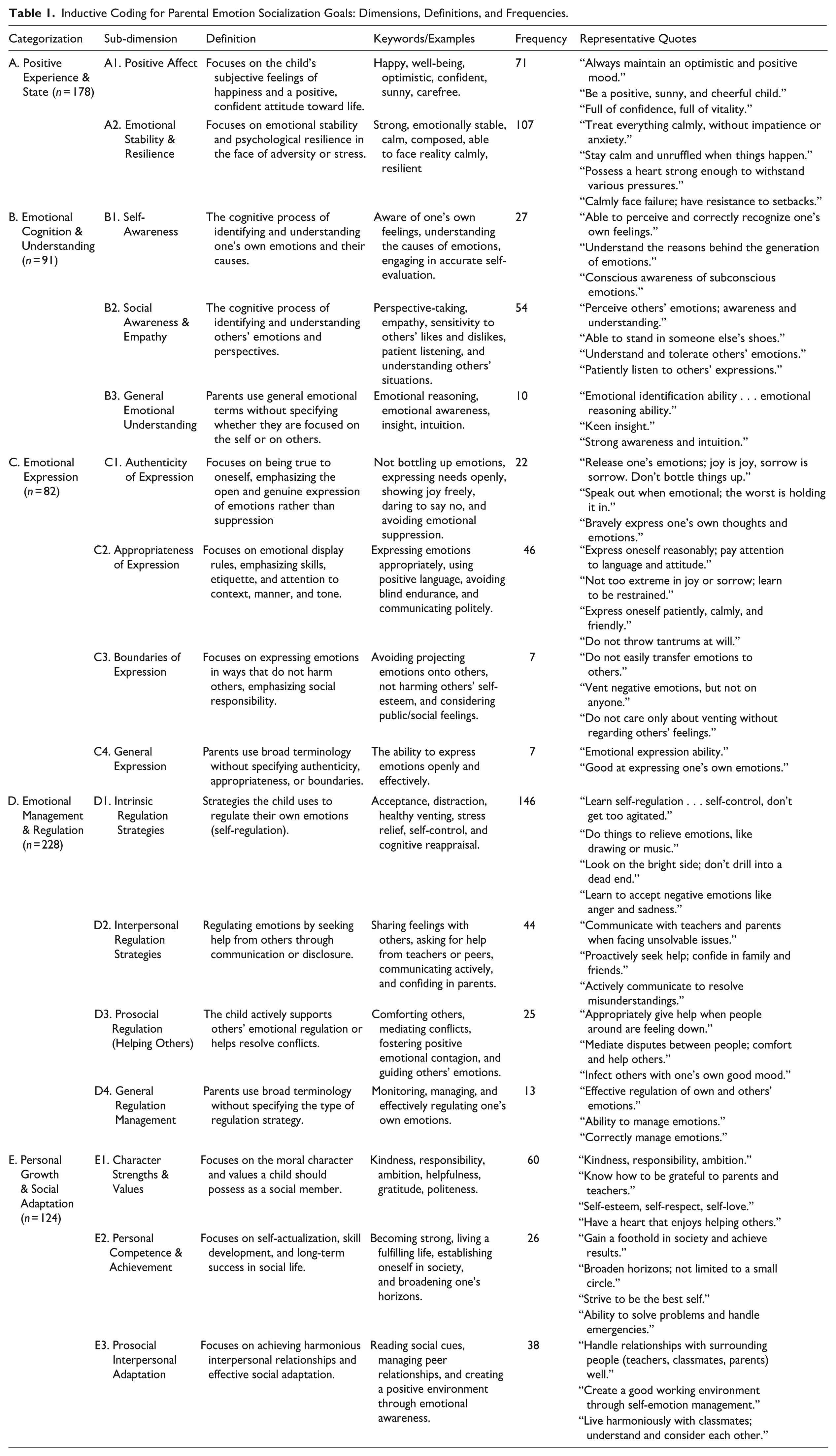
Following the inductive phase, a theory-driven deductive coding procedure was applied. Each of the 703 individual meaningful units identified during the inductive coding phase was independently re-coded by the two coders and categorized according to the theoretically postulated four-factor classification of emotion socialization goals (See Table 2). Following the procedures from existing literature (Eller et al., 2023), the coders underwent comprehensive training to ensure reliability and accuracy. Upon completion of training, the coders independently carried out all their ratings while supervisors (i.e., the corresponding authors) continuously monitored their coding. The results were as follows: codability (whether an instance could be classified vs. unclassifiable), κ = 0.800, p < .001; four axial dimensions (the four theoretically postulated ESG categories), κ = 0.837, p < .001; orientation (Self vs. Other focus of the ESG), κ = 0.834, p < .001; and intensity (Balanced vs. Extreme expression of the ESG), κ = 0.819, p < .001. The overall consistency of the ESG coding scheme was κ = 0.822, p < .001, indicating high inter-rater reliability across all coding dimensions. As shown in Table 2, the majority of parental emotion socialization goals were balanced and self-oriented (n = 330), followed by balanced and other-oriented (n = 267). Extreme self-oriented (n = 10) and extreme other-oriented (n = 8) goals were also observed, but were relatively few in number.
Theory-Driven Coding for Parental Emotion Socialization Goals: Frequency and Example.
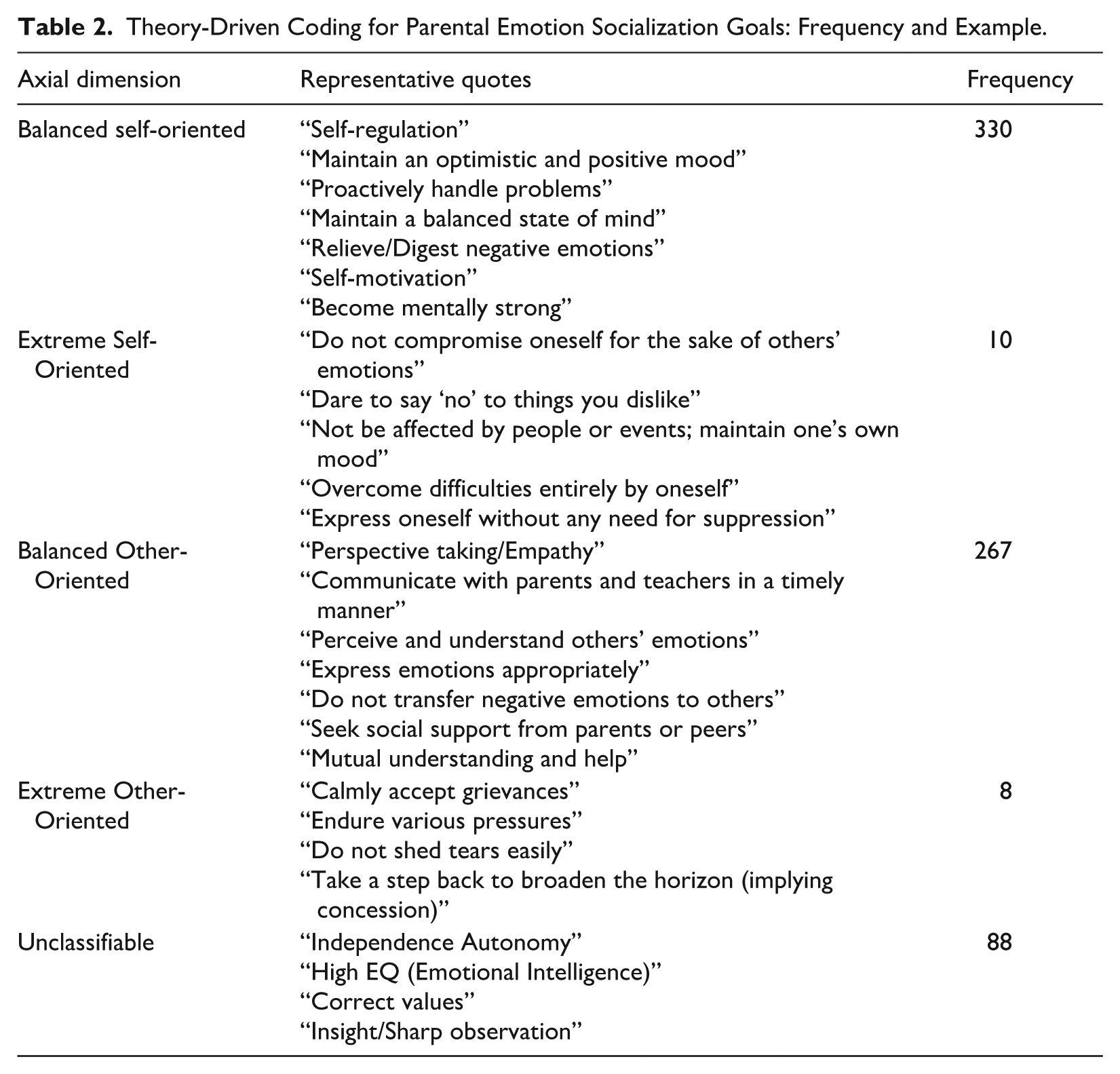
We further presented the cross-tabulation of balanced versus extreme and self- versus other-oriented ESGs across the five categories derived from the inductive coding, illustrating how each emergent category maps onto the theoretically proposed ESGs framework. Table 3 presents the distribution of balanced versus extreme, self- versus other-focused ESGs across five categories derived from inductive coding. As shown in Table 3, the vast majority of responses represented by the five inductively derived categories could be mapped onto the self–other and extreme–balanced dimensions, with only 88 responses remaining unclassified.
Distribution of Balanced Versus Extreme and Self- Versus Other-Focused Parental Emotion Socialization Goals Across Five Generic Categories Derived From Inductive Coding.
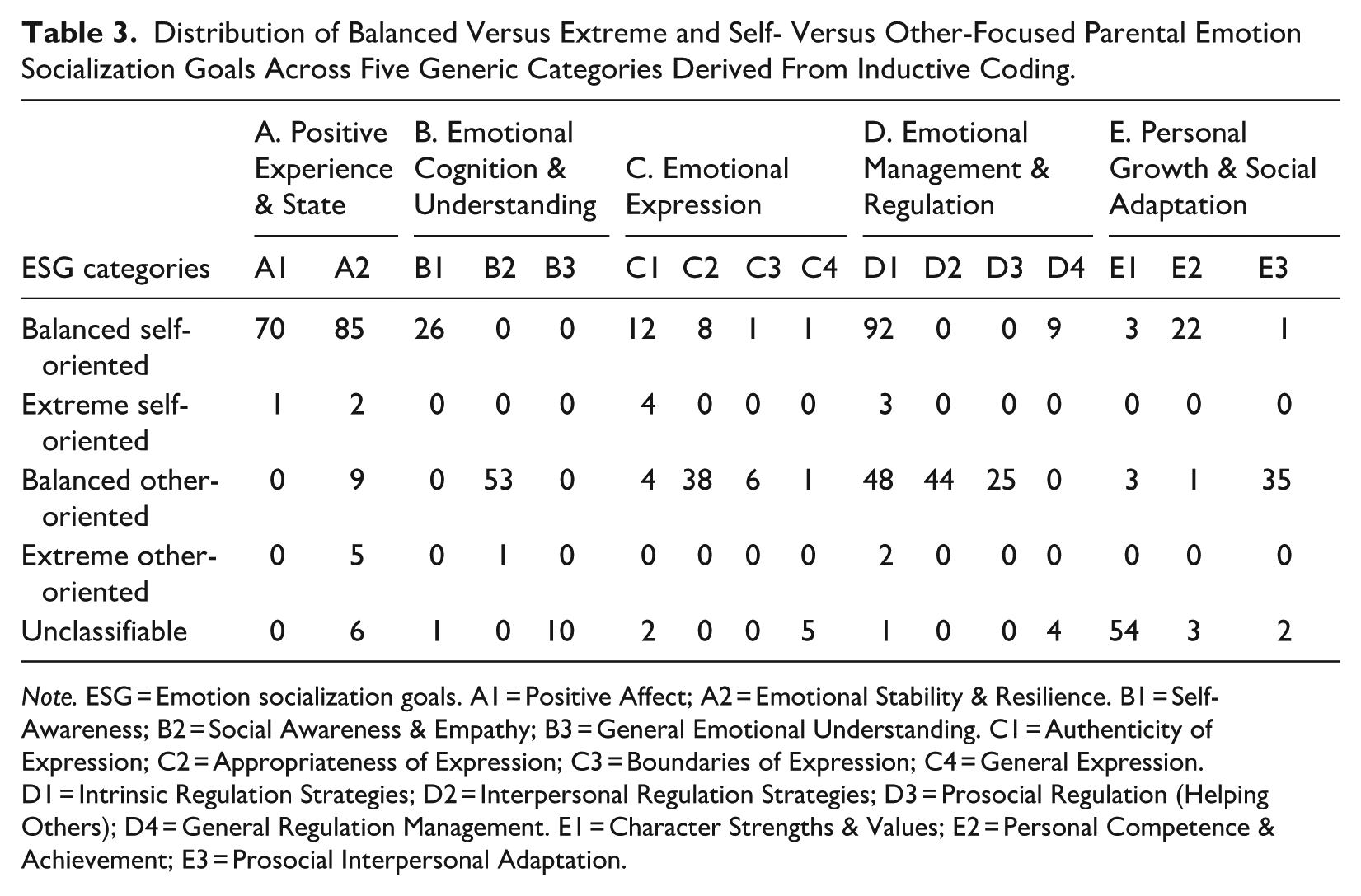
Note. ESG = Emotion socialization goals. A1 = Positive Affect; A2 = Emotional Stability & Resilience. B1 = Self-Awareness; B2 = Social Awareness & Empathy; B3 = General Emotional Understanding. C1 = Authenticity of Expression; C2 = Appropriateness of Expression; C3 = Boundaries of Expression; C4 = General Expression. D1 = Intrinsic Regulation Strategies; D2 = Interpersonal Regulation Strategies; D3 = Prosocial Regulation (Helping Others); D4 = General Regulation Management. E1 = Character Strengths & Values; E2 = Personal Competence & Achievement; E3 = Prosocial Interpersonal Adaptation.
Discussion
The results confirmed the four theoretically assumed ESGs, which are extreme self-oriented goals, extreme other-oriented goals, balanced self-oriented goals, and balanced other-oriented goals. A significantly larger proportion of instances demonstrate balanced goals than extreme ones, which suggests that parents generally adopt a well-adjusted approach in guiding their children’s emotional development, balancing between self-oriented and other-oriented emotional competencies. This analysis of parents’ open-ended responses provides evidence that the theoretically hypothesized four types of ESGs exist, offering content validity for the framework. The observation that only a small percentage of parents exhibit extreme ESGs is noteworthy. Despite their rarity, it is important to examine these extreme goals, as they may be reflective of parents’ own dysfunctional functioning. In cases where parents exhibit extreme ESGs, their approaches to teaching and guiding their children in emotional matters are likely to be distorted due to their own difficulties with emotions or social interactions. This distortion can lead to parenting behaviors that are either overly permissive or excessively strict, possibly failing to provide the child with an adaptive model for understanding and managing emotions. By understanding these extreme cases, researchers and practitioners can gain valuable insights into the range of parenting behaviors and their potential impacts, and develop targeted strategies to support better-adjusted and effective emotion socialization practices.
Importantly, the integration of inductive and deductive coding provides a more nuanced understanding of how parents conceptualize these goals. The inductive coding identified five broad themes of socialization goals: positive emotional experience and state, emotional cognition and understanding, emotional expression, emotion regulation and coping, and personal growth and social adaptation. For instance, parents’ goals regarding “emotion regulation and coping” were not merely about the act of regulating emotions, but were fundamentally tied to why the emotion should be regulated—either to preserve one’s own well-being (self-oriented) or to maintain social harmony (other-oriented). Similarly, goals within “emotional expression” illustrate the balanced–extreme continuum: a balanced self-oriented goal may involve expressing one’s feelings honestly while remaining mindful of others’ reactions, whereas an extreme self-oriented goal might entail expressing anger freely regardless of the interpersonal consequences. Furthermore, these themes illustrate the continuum of balanced versus extreme orientations. For example, a goal within “emotional expression” could manifest as a balanced self-oriented goal (e.g., expressing oneself authentically without intentionally hurting others) or an extreme self-oriented goal (e.g., expressing anger regardless of the interpersonal consequences). The fact that all five inductively identified domains of socio-emotional development were represented across the self–other and extreme–balanced orientations suggests that the theoretical ESG framework is comprehensive, capturing the full spectrum of children’s socio-emotional competencies in real-world parenting contexts.
It is also crucial to address the 88 meaningful units that remained unclassified under the four-type ESG framework. The vast majority of these unclassified responses were coded under the subcategory “character strengths and values” within the broader theme of “personal growth and social adaptation” (e.g., hoping the child becomes an honest, resilient, or kind person). While these aspirations are central to parental socialization, they reflect broader moral or character-driven developmental goals rather than specific emotion socialization goals. The emergence of these responses indicates that for many Chinese parents, emotional development is deeply intertwined with moral and character development. Future modifications of the theoretical framework and corresponding measures could explore how parents’ broader character and moral socialization goals interact with, or serve as a foundation for, their specific emotion socialization goals, particularly in cultural contexts that heavily emphasize moral cultivation.
Drawing on the responses provided by parents in Study 1 and existing literature on cultural differences in emotional functioning, particularly between cultures emphasizing independence versus interdependence, the first and third authors, who are both native Chinese speakers and associate professors of psychology, developed an initial scale to assess the theoretically expected four types of ESGs. The items were designed to capture various facets of emotional functioning identified in inductive coding. The item pool was generated in Chinese, based on the coded segments from the open-ended responses in Study 1 that mapped onto the four types of ESGs. This helped ensure that the items reflected the core themes and authentic language used by parents in real life. The initial pool contained slightly more than 68 items. Through iterative revision and refinement, including rewording and removal of redundancy, this study finalized a 68-item version of the scale.
Study 2
This study had two objectives. The first was to examine the factor structure and internal reliability of the newly developed scale. The second goal was to test its criteria-related validity by examining its correlations with parental general socialization goals, one widely studied dimension of ERSBs-parental responses to children’s negative emotions, as well as parental own emotional functioning (i.e., emotion regulation difficulties and depression). We assessed one kind of independent socialization goals: self-development, which focuses on prioritizing the self, and two kinds of interdependent socialization goals: filial piety, which stresses respect for elders and honoring the family, and collectivism, which extends beyond the family and tune in collectivistic demands of the society through emphasizing social harmony, cooperation, and group orientation (Chao, 2000; Li et al., 2010). We expected that self-development goals would have positive associations with extreme and balanced self-oriented ESGs, whereas filial piety and collectivism goals would have positive associations with extreme and balanced other-oriented ESGs.
Furthermore, we expected that balanced self- and other-oriented ESGs to be associated with greater parental autonomy support, more supportive responses to children’s negative emotions, and lower levels of parental emotion regulation difficulties and depression. Namely, parents with balanced ESGs that incorporate both self- and other-oriented perspectives may have less difficulty managing their own emotions and lower levels of depression, and thus give more autonomy support to children and be more empathetic and supportive in responding to their children’s negative emotions. In contrast, extreme self- and other-oriented ESGs may result in parents overemphasizing either their children’s emotional needs or social relations, potentially neglecting one of these two contrasting aspects. Such an imbalance may interfere with parents’ ability to effectively manage and regulate both their own and their children’s emotions, potentially leading to increased depressive symptoms in parents and less supportive and empathetic responses to their children’s emotional challenges. In addition, we expected that the ESGs would show incremental validity in predicting ERSBs, surpassing the predictive power of both parental general socialization goals and parents’ own emotional dysfunction.
Method
Participants
Parents, who have children during adolescence (n = 1,417; 57.66% were mothers, Mage = 41.94 years old, SD = 4.52), were recruited from two middle schools in a southern city of China. The ages of their children ranged from 10 to 17 years (Mage = 13.96 years old, SD = 1.04; 41.07% were females). As to their educational attainment, 40.51% of the parents had completed primary or middle school, 31.05% had a high school diploma, 27.73% had achieved a bachelor’s degree or higher, and the remaining provided no information. Regarding their marital status, the vast majority of the parents (96.39%) were married, a smaller proportion (2.32%) were single, and the remaining provided no information.
Procedure
Invitation letters and surveys were sent to participants by the head teachers at the schools via Parents’ WeChat Groups, using a group chat function on the social media platform WeChat. These groups are usually class-based, supervised by the head teachers, and used to share information related to children’s education, activities, and other related concerns. Upon receiving the signed informed consent from the participants, the online surveys, which were created on the survey platform “Wenjuanxing,” were administered for their completion.
Measure
Parental Emotion Socialization Goals
The preliminary scale included 68 items assessing the four types of ESGs. Parents rated the extent to which they hope their child would possess the emotional qualities or competencies described by the items in the future, using a 7-point Likert scale ranging from 1 (totally disagree) to 7 (totally agree).
Parental General Socialization Goals
Parental general socialization goals were measured using the scale developed by Li et al. (2010). This scale included three subscales that assessed socialization goals regarding self-development (4 items; e.g., “I want my children to be unique and be their own individual”), collectivism (4 items; e.g. “I want my child to know the role he/she should play in a social group”), and filial piety (3 items; e.g., “I want my children to respect their elders”). Participants rated how important each goal was from 1 (not at all important) to 7 (very important). Composite scores for the three subscales were computed by averaging their corresponding items. In this research, the Omega reliability coefficient for the subscale ranged from 0.71 to 0.91.
Parental Supportive and Nonsupportive Responses to Adolescents’ Negative Emotions
Parental varied responses to Chinese adolescents’ negative emotions (PVRCANE) scale (Ding, Liu, et al., 2023) was used to evaluate expressive encouragement (4 items; e.g., “encourage my child to express his/her emotions”), emotion-focused responses (5 items; e.g., “tell my child I understand his/her feelings”), problem-focused responses (4 items; e.g., “discuss with the child about how to solve the upsetting issue”), parental distress (4 items; e.g., “become very uneasy and avoid the child”), and punitive responses (4 items; e.g., “threaten to punish the child”). Participants rated the items on a 7-point Likert scale from 1 (very unlikely) to 7 (very likely). A composite score for supportive responses was computed by averaging the scores on expressive encouragement, emotion-focused responses, and problem-focused responses. A composite score for nonsupportive responses was computed by averaging scores on parental distress and punitive responses. In this study, the Omega reliability coefficient for the subscales assessing supportive and nonsupportive responses was 0.94 and 0.94, respectively.
Parental Autonomy Support
Parental autonomy was assessed using items adapted from past research involving Chinese samples (Q. Wang et al., 2007, 2012) (8 items, e.g., “I allow my child to make choices whenever possible). Participants rated the items on a 7-point Likert scale from 1 (very unlikely) to 7 (very likely). A composite score for autonomy support was computed by averaging the scores on all the items. In this study, the Omega reliability coefficient for the scale was 0.94.
Depression
Patient Health Questionnaire-9 (PHQ-9) (Kroenke & Spitzer, 2002) was used. The scale included nine items (e.g., little interest or pleasure in doing things). Participants rated each of the items based on how much a symptom had bothered them over the past 2 weeks on a 4-point Likert scale from 1 (not at all) to 4 (nearly every day). PHD-9 has been translated into simplified Chinese by Chinese researchers and demonstrated good reliability and validity in China (Leung et al., 2020; W. Wang et al., 2014). A composite score was computed for participants’ depression by averaging scores on all the items, with higher scores indicating greater depression. In this study, the Omega reliability coefficient for PHD-9 was 0.93.
Emotion Regulation Difficulties
The short-form of Difficulties in Emotion Regulation Scale (DERS, Bjureberg et al., 2016) was used to evaluate participants’ emotion regulation difficulties. Participants rated each item (16 items, e.g., “I am confused about how I feel”) on a 5-point Likert scale from 1 (almost never) to 5 (almost always). DERS has been translated into simplified Chinese by Chinese researchers and demonstrated good reliability and validity in Chinese samples (Geng et al., 2022; Zhu et al., 2023). A composite score was computed for participants’ emotion regulation difficulties, with higher scores indicating greater challenges in emotion regulation. The Omega reliability coefficient for DERS was 0.97 in this study.
Data Analytic Approach
Invalid Data Checking
Preliminary data checks were carried out to identify and handle invalid data. A “bogus item” was used to spot participants who provided unreliable responses (e.g., answering “yes” to being born on Feb 30). This approach resulted in the recognition and exclusion of 109 participants. Consequently, the valid and cleaned dataset, which was composed of 1,308 participants, was utilized for the following stages of data analysis.
Factor Analysis
Both Exploratory Factor Analysis (EFA, using Geomin rotation) and Confirmatory Factor Analysis (CFA) were conducted using Mplus (version 7.4), employing maximum likelihood with robust standard error (MLR) estimator. The valid dataset was randomly split into two halves, with one half used for EFA and the other for CFA.
In EFA, several criteria were used to determine the number of factors and items. Initially, the number of factors was identified through parallel analysis, in which factors with initial eigenvalues surpassing the eigenvalues produced by random data were preserved (Carpenter, 2018). Subsequently, problematic items were checked and abandoned. Guided by previous research (Worthington & Whittaker, 2006; Yong & Pearce, 2013), problematic items were defined as those with low factor loadings (specifically, the absolute value of the highest factor loading is less than 0.32) or items exhibiting significant cross-loadings. Significant cross-loading refers to an item’s factor loading exceeding 0.32 on more than one factor, and the absolute difference between its highest and second highest loadings being no more than 0.15. Upon identifying such problematic items, they were removed, and the EFA was rerun.
Following the EFA, a CFA was performed to validate the factor structure derived from the exploratory stage. A set of fit indices, including the Comparative Fit Index (CFI), Tucker-Lewis Index (TLI), Standardized Root Mean Squared Residual (SRMR), and Root Mean Square Error of Approximation (RMSEA), was used for this evaluation. According to past literature (Byrne & Byrne, 2013; Hu & Bentler, 1999; Kelsall-Foreman et al., 2020), an acceptable model fit is indicated by CFI ≥0 .90, TLI ≥0 .90, SRMR ≤0 .08, and RMSEA ≤0 .06. Correlations among items were allowed to improve model fit, particularly when items were theoretically expected to load onto the same factor, as advised by previous studies (Joshanloo, 2017; Schoofs et al., 2010). Factor loadings exceeding 0.40 were retained in CFA according to the criteria suggested by past literature (Kelsall-Foreman et al., 2020; Matsunaga, 2010).
Factor Correlations of ESGs and Criteria-Related Validity
Factor correlations of ESGs were computed. Also, we evaluated the criteria-related validity of ESGs in terms of assessing their correlations with theoretically relevant variables, including parental and adolescents’ characteristics. Mean scores for each subscale of ESGs were computed to assess these correlations. We also derived factor scores of ESGs from the CFA model, and their corresponding correlations with other variables are reported in the Supplemental Materials (Table S2), which were consistent with the correlations computed using the mean scores. The correlations were computed in SPSS (version 27.00).
Incremental Validity
Hierarchical multiple regression analyses were employed to compute the incremental validity of each subscale of ESGs in predicting parental responses to children’s negative emotions, utilizing SPSS (version 27.00). These analyses were conducted separately for two groups of criterion variables: (1) parental general socialization goals (i.e., filial piety, self-development, and collectivism), and (2) parental depression and emotion regulation difficulties. We followed the methodological framework provided by Hunsley and Meyer (2003). During the first step, demographic attributes like the age and gender of children, along with parental age, gender, and educational attainment, were input. In the second step, one of the two groups of criterion variables was added. In the final stage, the variables of ESGs were entered. The dependent variables were set as parental supportive and nonsupportive responses, respectively. The magnitude of the increment was evaluated through the analysis of changes in R2, which represents the percentage of variance accounted for by the variables added to the model (Brackett et al., 2012; Hunsley & Meyer, 2003).
Results
Factor Analysis
The results indicated the suitability of a three-factor solution, as determined by parallel analysis (see Figure 1). The initial eigenvalues of 10.23, 4.37, and 2.00 were found to be significantly greater than those generated from a random data set (1.41, 1.18, and 1.16, respectively). These results diverged from our initial expectation of a four-factor structure for ESGs.
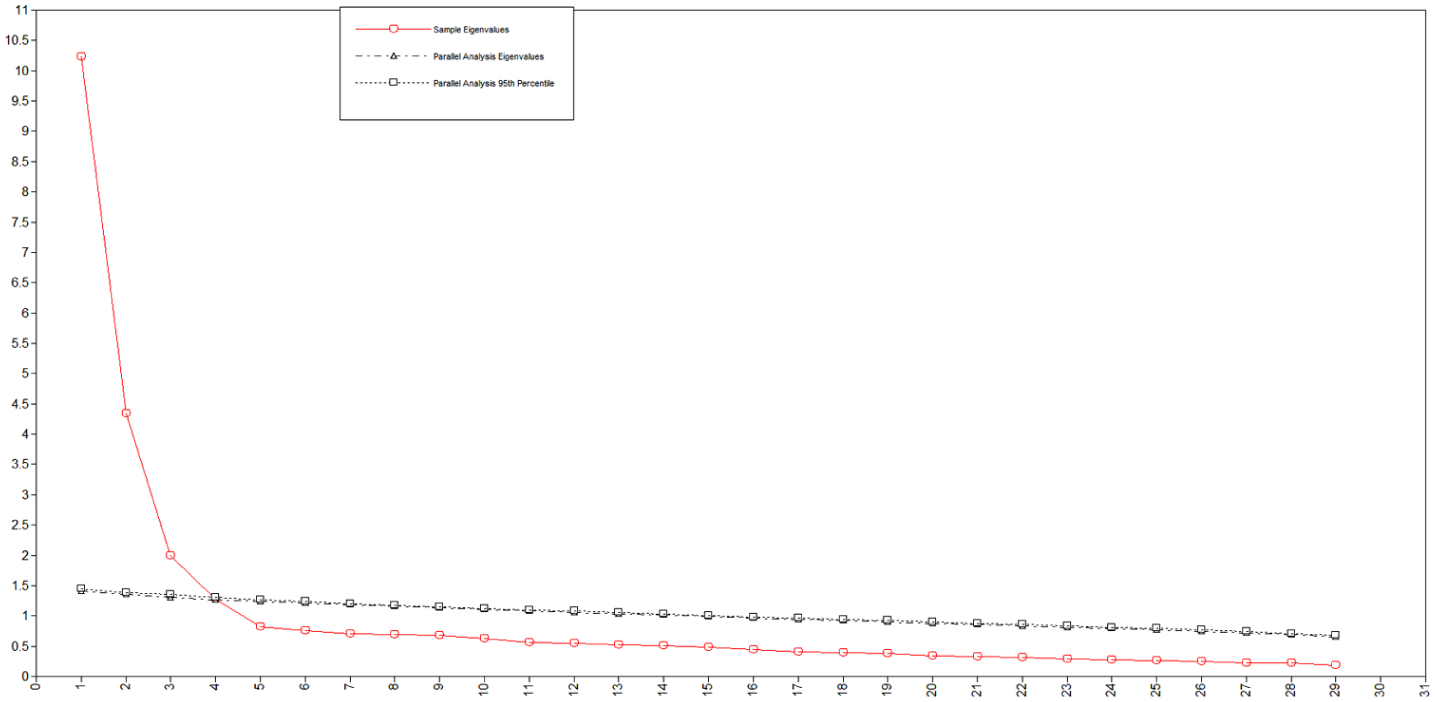
Results of exploratory factor analysis: Eigenvalues.
For the obtained three factors, Factor 1 mainly consists of items probing extreme self-oriented ESGs. Factor 3, in contrast, primarily includes items reflecting extreme other-oriented ESGs. Unexpectedly, Factor 2 includes items pertaining to both balanced self-oriented and balanced other-oriented ESGs. The EFA process led to the retention of 29 items for the three factors. The loadings of the items on their theoretically corresponding factors varied from .44 to .81 (Table 4).
Factor Loadings in EFA and CFA.
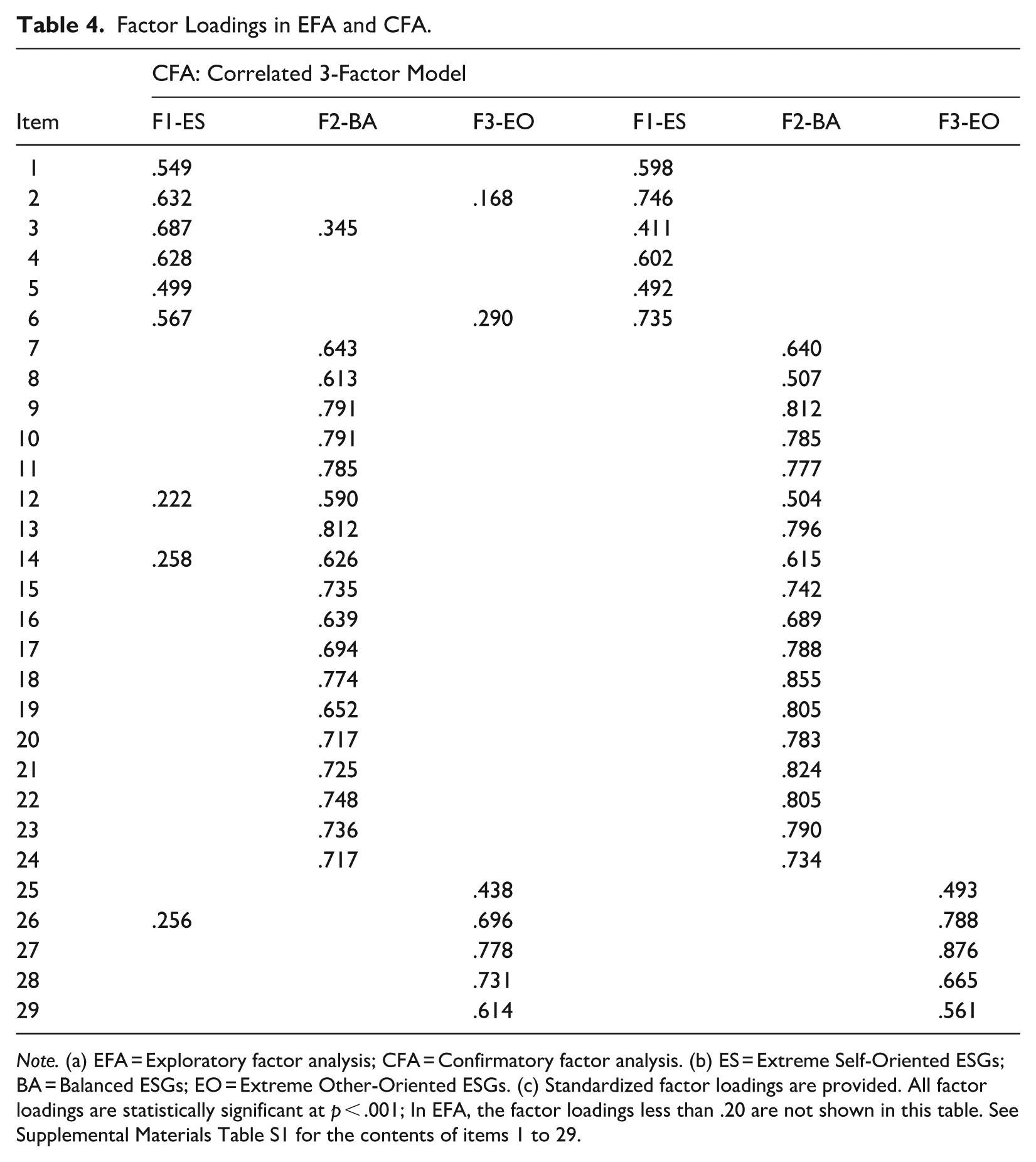
Note. (a) EFA = Exploratory factor analysis; CFA = Confirmatory factor analysis. (b) ES = Extreme Self-Oriented ESGs; BA = Balanced ESGs; EO = Extreme Other-Oriented ESGs. (c) Standardized factor loadings are provided. All factor loadings are statistically significant at p < .001; In EFA, the factor loadings less than .20 are not shown in this table. See Supplemental Materials Table S1 for the contents of items 1 to 29.
To validate the three-factor structure of the retained 29 items, we proceeded with CFA. The initial fit indices of the three-factor model were not within an acceptable range (see Table 5). After allowing for correlations between items belonging to the same factor, as guided by the modification indices provided by Mplus, the fit of the model significantly improved to an acceptable level (see Table 5). The loadings of each item on its respective factor were greater than .40 (see Table 4).
Model Fit Results in EFA and CFA.
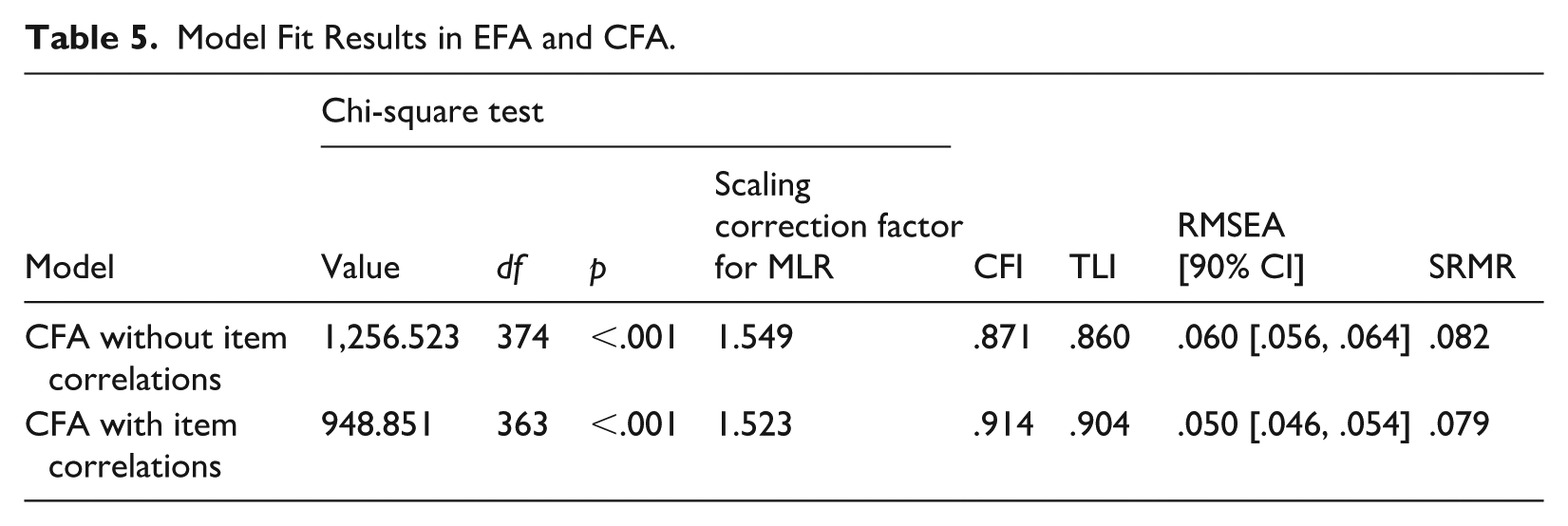
In summary, both EFA and CFA provided empirical support for the validity of a three-factor structure for parental ESGs. We therefore chose to retain this three-factor structure and labeled the factors as extreme self-oriented ESGs (Factor 1), balanced self-oriented and other-oriented ESGs (Factor 2), and extreme other-oriented ESGs (Factor 3). The items of each factor are shown in Table S1.
Factor Correlations of ESGs and Criteria-Related Validity of the ESG Scale
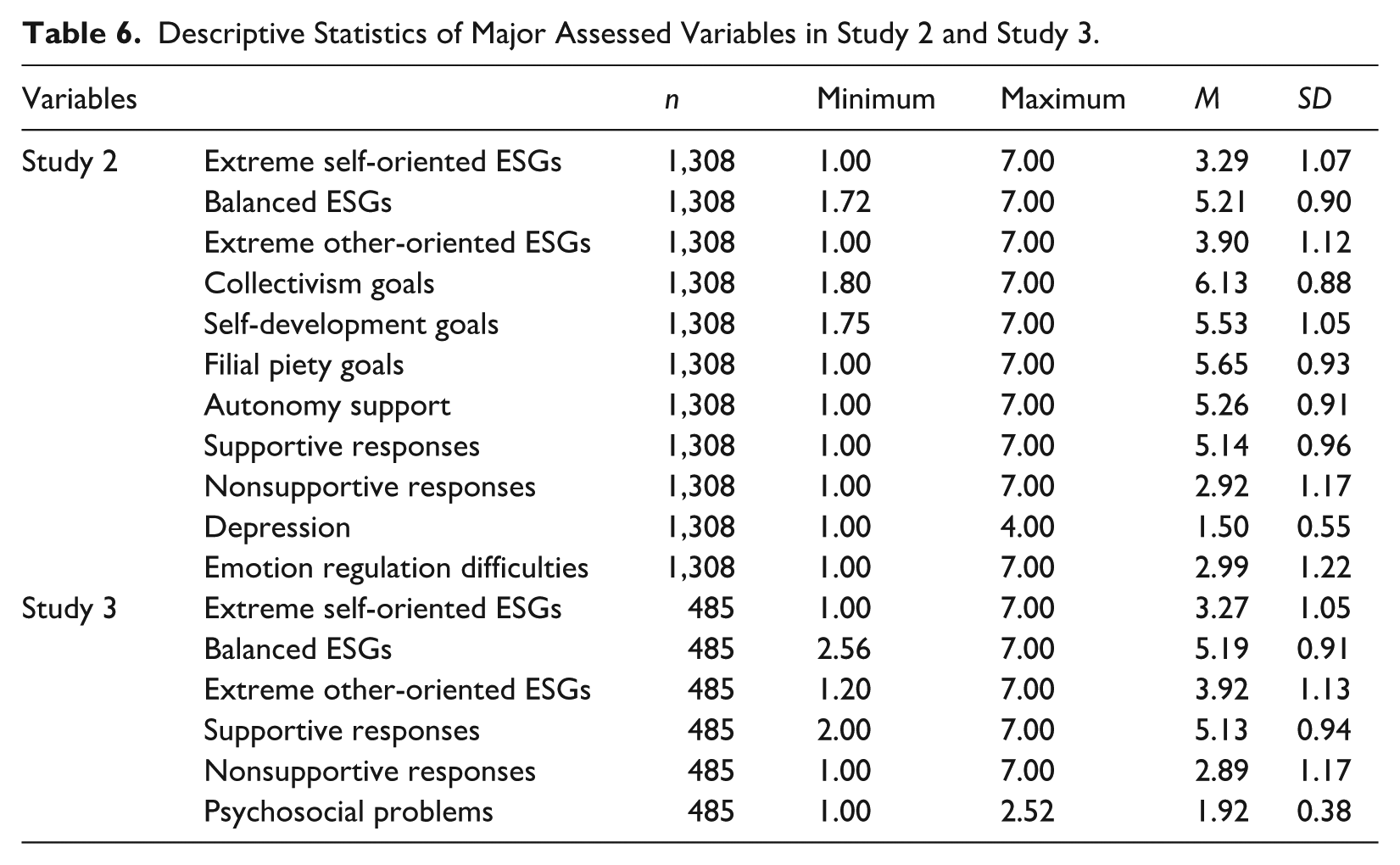
The means and standard deviations of the three factors of ESGs and other assessed variables (see Table 6) and correlations among them (see Table 7) were computed using SPSS (version 27). According to Schober et al. (2018), correlation values in the range of .00 to .10 indicate a negligible correlation, .10 to .39 a weak correlation, .40 to .69 a moderate correlation, and .70 to .89 a strong correlation.
Descriptive Statistics of Major Assessed Variables in Study 2 and Study 3.
Correlations between Major Assessed Variables in Study 2.
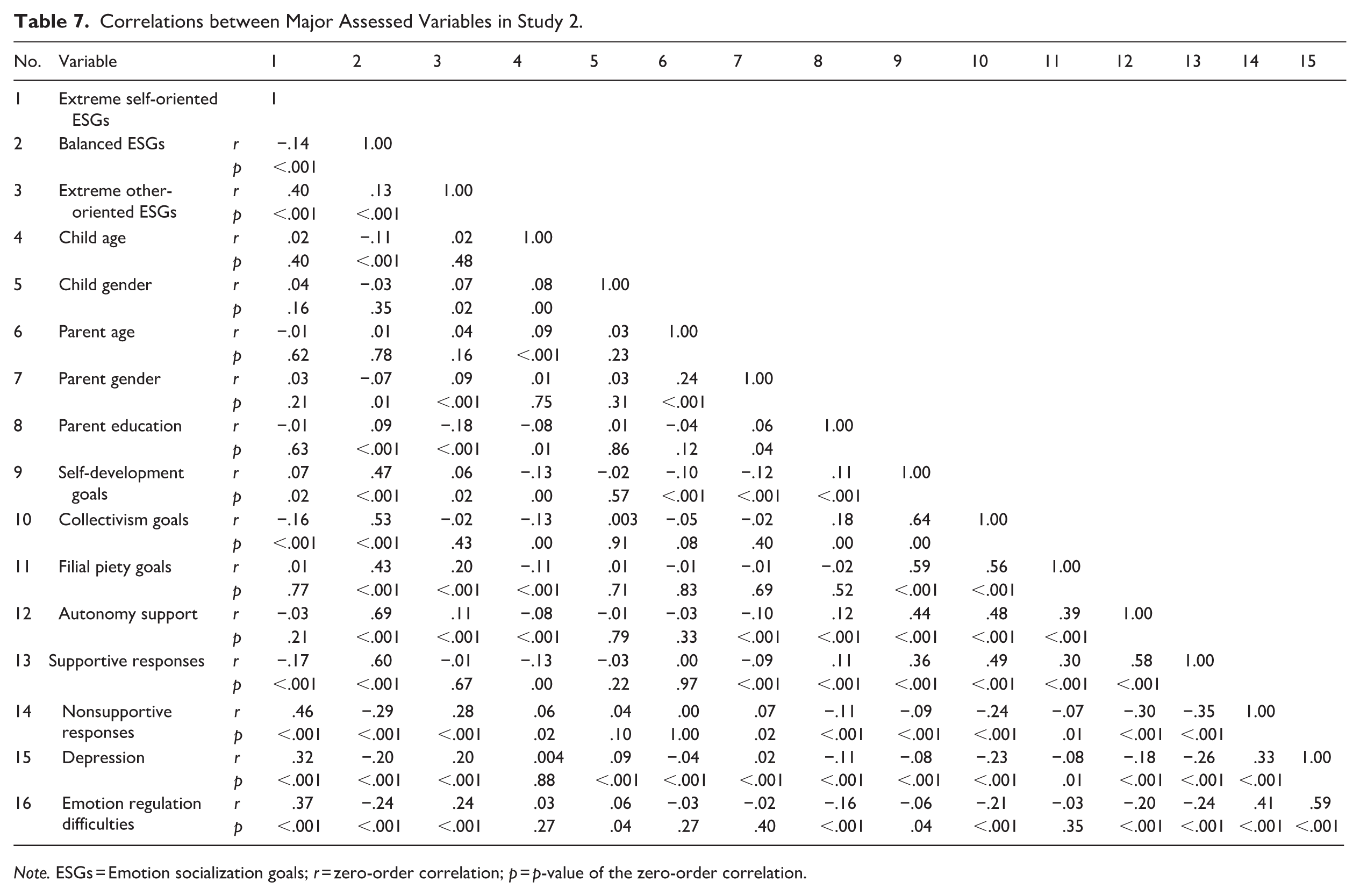
Note. ESGs = Emotion socialization goals; r = zero-order correlation; p = p-value of the zero-order correlation.
Factor Correlations of ESGs
The results showed that extreme self-oriented ESGs had a negative weak correlation with balanced self-oriented and other-oriented ESGs (p < .05), and had a positive moderate correlation with extreme other-oriented ESGs (p < .05). Balanced self-oriented and other-oriented ESGs had a positive weak correlation with extreme other-oriented ESGs (p < .05).
Parental General Socialization Goals
Self-development goals had weak positive associations with extreme self-oriented ESGs and extreme other-oriented ESGs, and a moderate positive association with balanced self-oriented and other-oriented ESGs (ps < .05). Collectivism goals had a weak negative association with extreme self-oriented ESGs and a moderate positive association with balanced self-oriented and other-oriented ESGs (ps < .05), but no significant correlation with extreme other-oriented ESGs (p > .05). Filial piety goals had a moderate positive association with balanced self-oriented and other-oriented ESGS and a weak positive association with extreme other-oriented ESGs (ps < .05), but no significant relation with extreme self-oriented ESGs (p > .05).
Parental Autonomy Support
It was found that autonomy support had a moderate positive association with balanced self-oriented and other-oriented ESGs and a weak positive association with extreme other-oriented ESGs (ps < .05), but no significant correlation with extreme self-oriented ESGs (p > .05).
Parental Responses to Children’s Negative Emotions
Parental supportive responses exhibited a weak negative correlation with extreme self-oriented ESGs (p < .05), a moderate positive association with balanced self-oriented and other-oriented ESGs (p < .05), and no significant relation with extreme other-oriented ESGs (p > .05). Parental nonsupportive responses exhibited a moderate positive correlation with extreme self-oriented ESGs (p < .05), a weak negative association with balanced self-oriented and other-oriented ESGs (p < .05), and a weak positive relation with extreme other-oriented ESGs (p < .05).
Parental Depression and Emotion Regulation Difficulties
Parental depression and emotion regulation difficulties both had weak positive associations with extreme self-oriented ESGs and extreme other-oriented ESGs (ps < .05), but weak negative correlations with balanced self-oriented and other-oriented ESGs (ps < .05).
Incremental Validity
Tables 8 and 9 present the results concerning the incremental validity of the three ESGs in predicting supportive and nonsupportive responses. There was a significant improvement in the R2 value when the three ESGS were added to the model (ps < .05). This was the case regardless of whether parental general socialization goals (i.e., filial piety, self-development, and collectivism) or parental emotional dysfunction (i.e., depression and emotion regulation difficulties) were adjusted for in the analysis.
Regression Analyses Predicting Parental Supportive Responses.
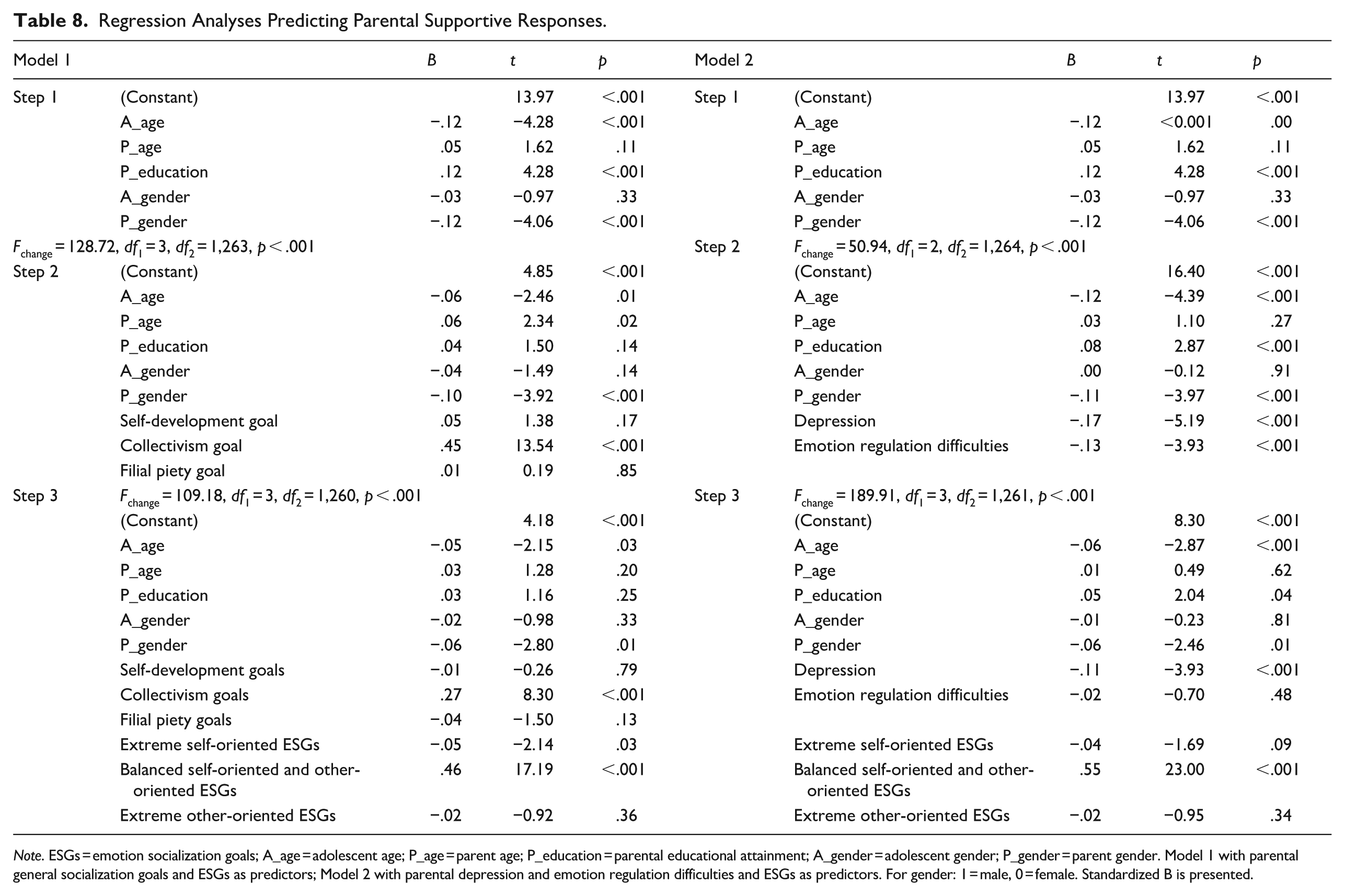
Note. ESGs = emotion socialization goals; A_age = adolescent age; P_age = parent age; P_education = parental educational attainment; A_gender = adolescent gender; P_gender = parent gender. Model 1 with parental general socialization goals and ESGs as predictors; Model 2 with parental depression and emotion regulation difficulties and ESGs as predictors. For gender: 1 = male, 0 = female. Standardized B is presented.
Regression Analyses Predicting Parental Nonsupportive Responses.
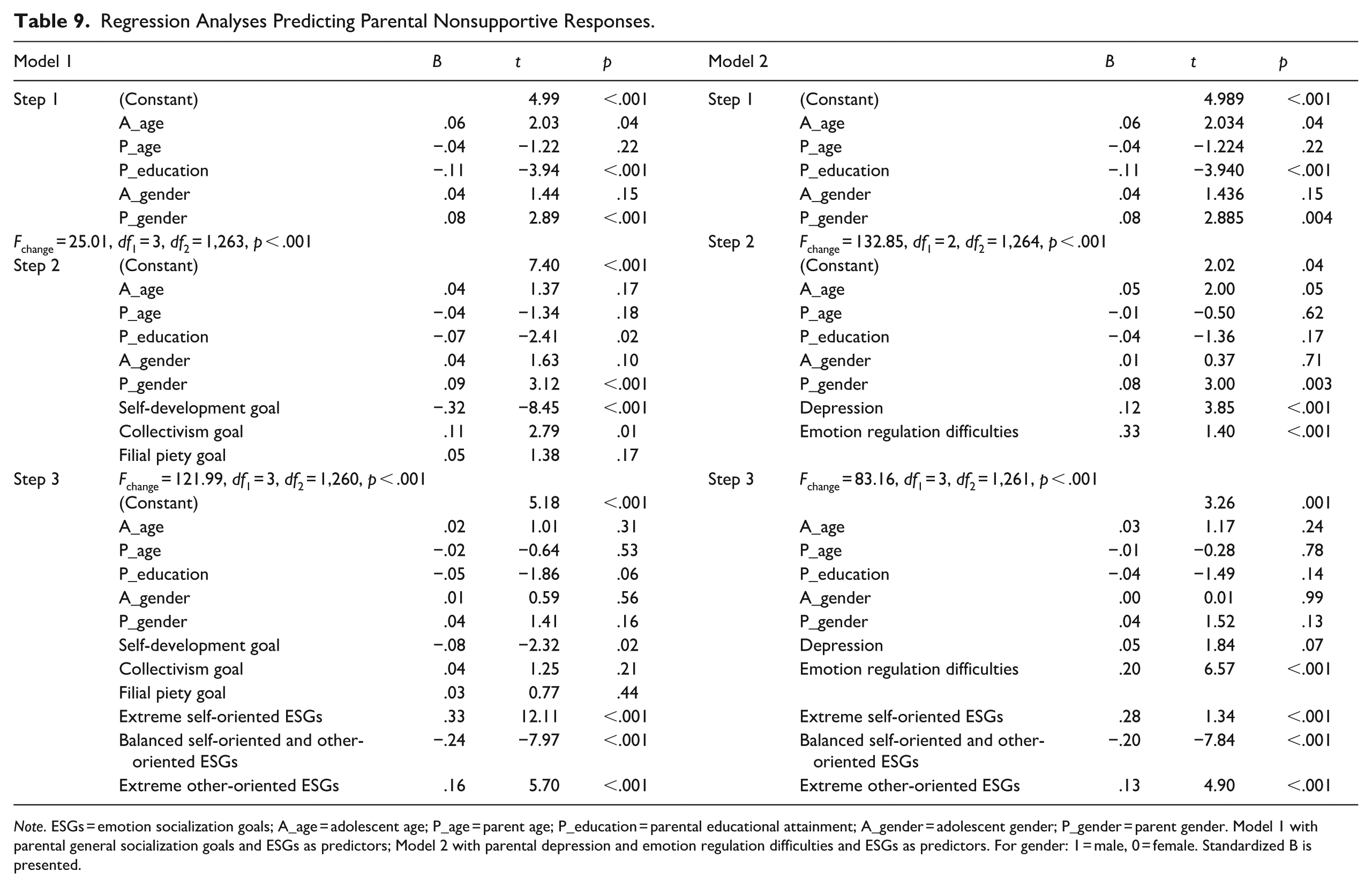
Note. ESGs = emotion socialization goals; A_age = adolescent age; P_age = parent age; P_education = parental educational attainment; A_gender = adolescent gender; P_gender = parent gender. Model 1 with parental general socialization goals and ESGs as predictors; Model 2 with parental depression and emotion regulation difficulties and ESGs as predictors. For gender: 1 = male, 0 = female. Standardized B is presented.
To be specific, after controlling for parental general socialization goals (i.e., filial piety, self-development, and collectivism), parental extreme self-oriented ESGs negatively, while balanced self-oriented and other-oriented ESGs positively, predicted parental supportive responses (ps < .05, see Table 6); and parental extreme self-oriented ESGs and extreme other-oriented ESGs positively predicted, while parental balanced self-oriented and other-oriented ESGs negatively predicted, parental nonsupportive responses (ps < .05, see Table 7). Moreover, after controlling for parental depression and emotion regulation difficulties, parental balanced self-oriented and other-oriented ESGs positively predicted parental supportive responses (p < .05, see Table 6); and parental extreme self-oriented ESGs and extreme other-oriented ESGs positively predicted, while balanced self-oriented and other-oriented ESGs negatively predicted, parental nonsupportive responses (ps < .05, see Table 7).
Discussion
Although not fully consistent with our initial assumption, the three-factor structure suggested by the EFA and CFA is conceptually consistent with our extended theoretical framework of ESGs. That is, ESGs may not be simplistically dichotomized into being self-oriented versus other-oriented. Instead, self-oriented and other-oriented ESGs can be meaningfully balanced and integrated into one factor, in contrast to distinct extreme self-oriented ESGs and extreme other-oriented ESGs. Moreover, the reliability of the three subscales assessing extreme self-oriented ESGs, balanced ESGs, and extreme other-oriented ESGs was acceptable, supporting the psychometric properties of the newly developed scale (see the 29 items assessing the three types of ESGs in Table S1 of the Supplemental Materials).
The results also showed that parental general socialization goals, focusing on either independence (i.e., self-development) or interdependence (i.e., collectivism and filial piety), had moderate positive associations with balanced ESGs. These findings make sense because balanced ESGs indeed entail both independent and interdependent components. The findings that collectivism goals were weakly negatively correlated with extreme self-oriented ESGs, and filial piety goals had a weak positive correlation with extreme other-oriented ESGs, particularly support the hypothesized differentiation between extreme self-oriented ESGs and extreme other-oriented ESGs.
Moreover, the results revealed that parents with balanced ESGs tended to exhibit more supportive ERSBs and experienced less emotional dysfunction, while parents with extreme ESGs tended to display more nonsupportive ERSBs and have more emotional dysfunction. These findings suggest that balanced ESGs, in comparison to extreme ESGs, may represent more adaptive parental goals favoring the family socialization process. Furthermore, even after controlling for parental general socialization goals or parental own emotional dysfunction, the three kinds of ESGs explained additional variances in predicting parental responses to children’s negative emotions. This underscores the unique and significant role of ESGs for investigations on protective or risk factors associated with parental emotion socialization behaviors.
Study 3
This study aimed to understand parental ESGs in relation to children’s psychosocial problems through the mediating role of parental ERSBs. We expected that parental balanced ESGs would relate to dampened psychosocial problems, while extreme self-oriented ESGs and other-oriented ESGs would relate to heightened psychosocial problems in children. These hypotheses are grounded in the idea that effective emotion socialization requires a balance between nurturing intrapersonal emotional competencies and interpersonal socioemotional skills. This balance is essential for children to develop a comprehensive set of abilities and skills, including understanding and regulating their own emotions and relating to others effectively. Moreover, we expected that ERSBs, such as parental supportive and nonsupportive responses to children’s negative emotions, would mediate the relations between ESGs and children’s psychosocial problems.
Method
Participants
Parent-adolescent dyads (n = 483) were recruited from two middle schools in a southern city in China. The age of adolescents ranged from 10 to 17 years (Mage = 14.01 years old, SD = 0.93; 41.03% were female). The age of parents ranged from 32 to 65 years (Mage = 42.05 years old, SD = 4.60; 49.90% were female). As to educational attainment, 41.99% of the parents completed primary or middle school, 32.22% had a high school diploma, and 25.78% had achieved a bachelor’s degree or higher.
Procedure
The procedure was the same as in Study 2. Parents and adolescents filled in online surveys independently. Their responses were matched using the last four digits of the phone numbers of the parents.
Measure
ESGs (Reported by Parents)
The same measure used in Study 2.
Parental Responses to Children’s Negative Emotions (Reported by Parents)
The same measure used in Study 2.
Psychosocial Problems (Reported by Adolescents)
Adolescents’ psychosocial problems were assessed using the Strengths and Difficulties Questionnaire (SDQ) (Goodman et al., 1998). SDQ assesses five aspects of psychosocial outcomes, including emotional symptoms (5 items; e.g., “I worry a lot”), conduct problems (5 items; e.g., “I am often accused of lying or cheating”), hyperactivity/inattention (5 items; e.g., “I am easily distracted. I find it difficult to concentrate”), peer relationship problems (5 items; e.g., “Other children or young people pick on me or bully me”), and prosocial behavior (5 items; e.g., “I try to be nice to other people. I care about their feelings”). Items were scored from 1 (not true), 2 (somewhat true), to 3 (certainly true), with negatively worded items reverse-coded as appropriate. For the present study, prosocial behavior items were reverse-scored and combined with the other SDQ items to form a global psychosocial problems index, which was computed by averaging all items. Higher scores indicate greater psychosocial problems. SDQ has been shown to have good reliability and validity in Chinese samples (Toh et al., 2008). The Omega reliability coefficient of SDQ was 0.81 in this study.
Data Analytic Approach
Invalid Data Checking
The same procedure in Study 2 was utilized. Data from 24 parent-child dyads were identified as invalid and excluded from further analysis.
Descriptive and Correlation Analyses
Descriptive statistics and correlations of assessed variables were computed using SPSS. According to Schober et al. (2018), correlations in the range of .00 to .10 are deemed negligible, .10 to .39 weak, .40 to .69 moderate, and .70 to .89 strong.
Parallel Mediation Analysis
Figure 2 illustrates the model testing whether the relationships between ESGs (extreme self-oriented, balanced self- and other-oriented, and extreme other-oriented) and adolescent psychosocial problems were mediated by parental supportive and nonsupportive responses to children’s negative emotions.
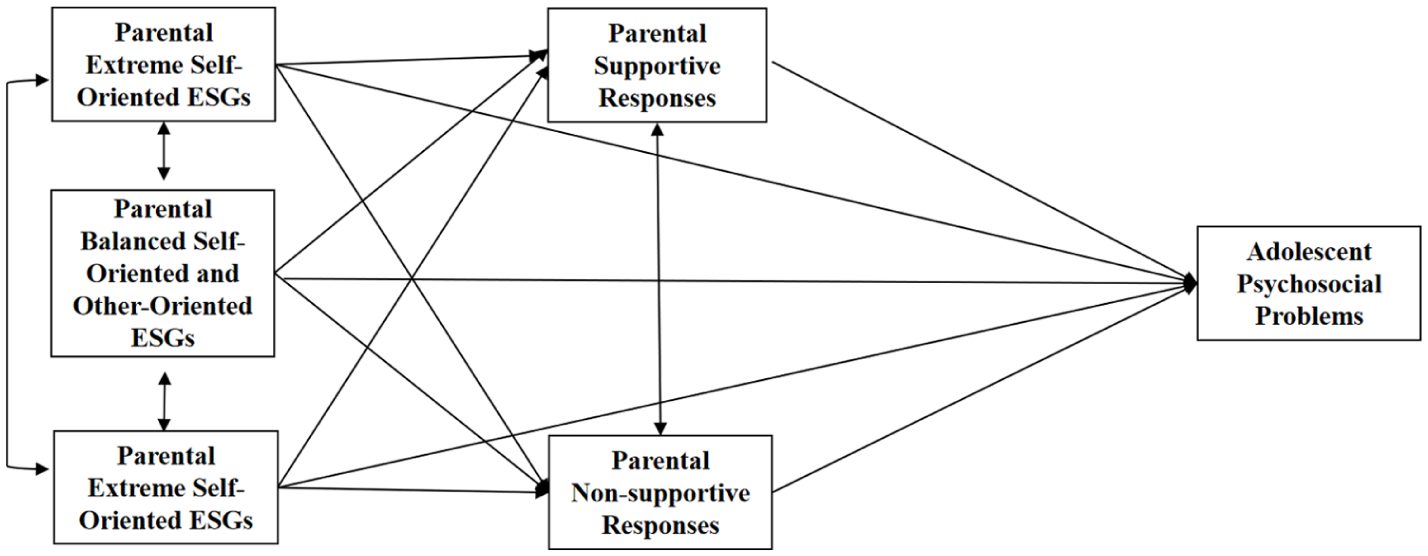
Parallel mediation analysis.
Results
Descriptive and Correlation Analyses
Descriptive statistics and correlations of assessed variables are shown in Tables 6 and 10, respectively. The results showed that extreme self-oriented ESGs had a negative weak correlation with balanced ESGs, and a positive weak correlation with extreme other-oriented ESGs (ps < .05). Balanced ESGs had a positive weak association with extreme other-oriented ESGs (ps < .05). Extreme self-oriented ESGs had a negative weak correlation with parental supportive responses, a positive moderate correlation with parental nonsupportive responses, and a positive weak correlation with adolescent psychosocial problems (ps < .05). Balanced ESGs had a moderate positive association with parental supportive responses and weak negative correlations with both parental nonsupportive responses and adolescent psychosocial problems (ps < .05). Extreme other-oriented ESGs only had a weak positive association with parental nonsupportive responses (p < .05). Parental supportive responses were found to be weakly negatively correlated with adolescent psychosocial problems, while nonsupportive responses showed a weak positive correlation (ps < .05).
Correlations between Major Assessed Variables in Study 3.
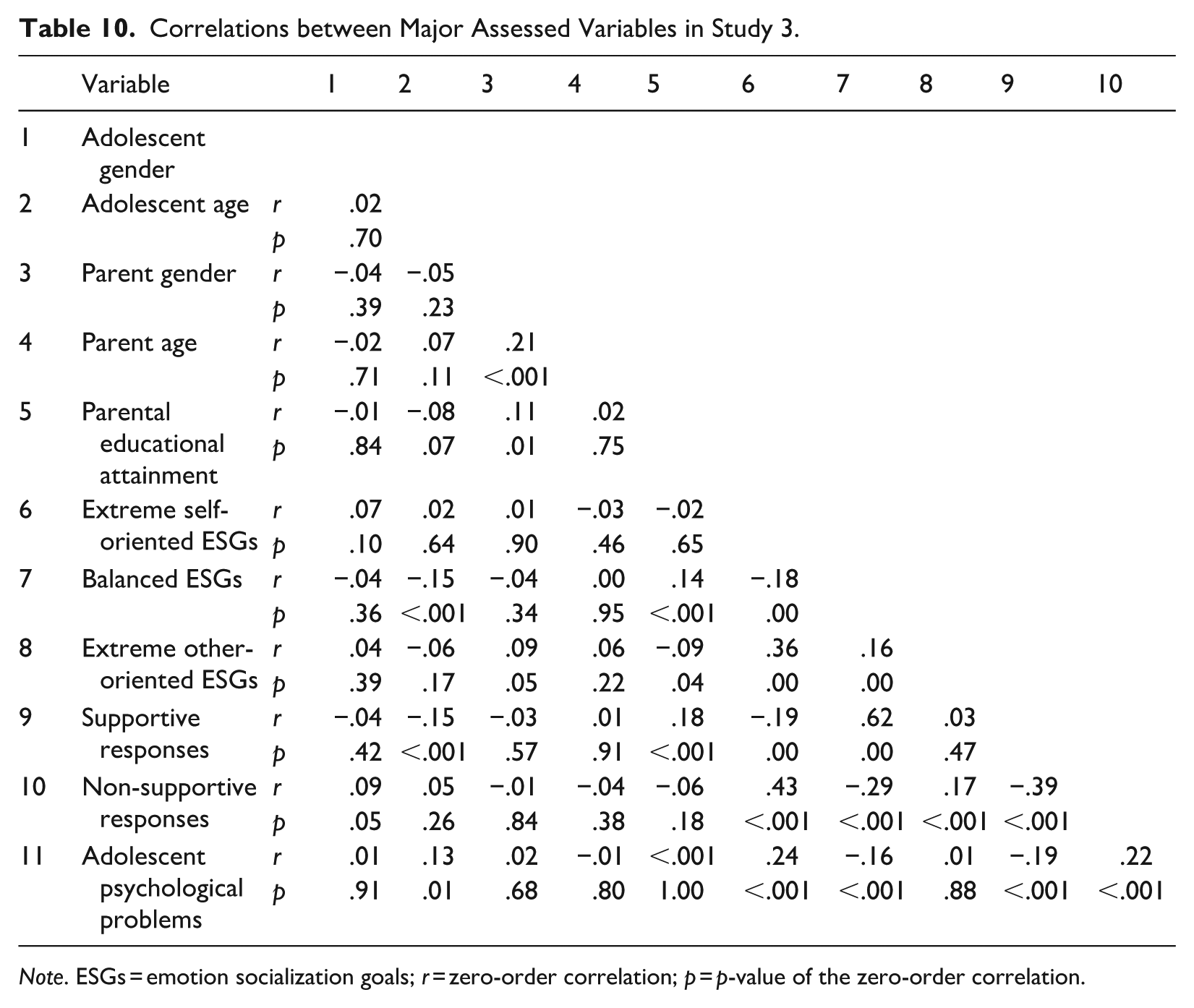
Note. ESGs = emotion socialization goals; r = zero-order correlation; p = p-value of the zero-order correlation.
Parallel Mediation Analysis
The results of the mediation analysis are shown in Table 11. Parental extreme self-oriented ESGs positively while balanced ESGs negatively linked with adolescent psychosocial problems (ps < .05). Regarding the mediation effects, the relationship between parental extreme self-oriented ESGs and adolescent psychosocial problems was partially mediated by how parents responded to their children’s negative emotions (ps < .05). The link between parental balanced ESGs and adolescent psychosocial problems was entirely mediated by parental responses to child negative emotions (ps < .05). However, parental extreme other-oriented ESGs had no significant relation with adolescent psychosocial problems, and parental responses to children’s negative emotions had no mediation effect in this relation (ps > .05).
Parallel Mediation Analysis.
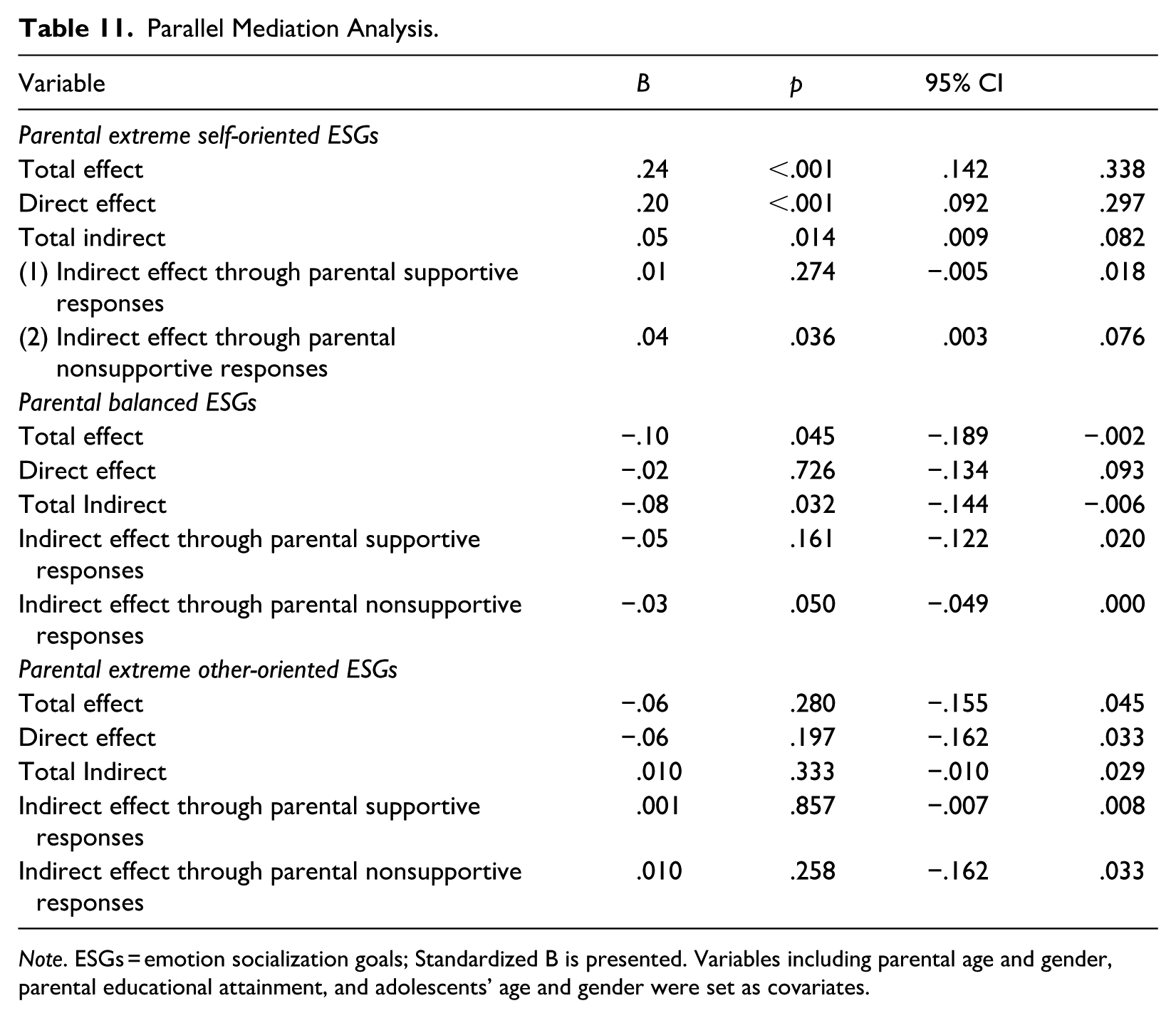
Note. ESGs = emotion socialization goals; Standardized B is presented. Variables including parental age and gender, parental educational attainment, and adolescents’ age and gender were set as covariates.
Discussion
Consistent with the expectation, balanced ESGs were linked with lower levels of psychosocial problems in children. However, our initial anticipation that extreme ESGs would have significant positive associations with children’s psychosocial problems was only partially supported for extreme self-oriented ESGs but not for extreme other-oriented ESGs, suggesting that extreme self-oriented ESGs may be more inappropriate compared to extreme other-oriented ESGs. When interpreting these results, it is crucial to take into account both the cultural factors and the unique developmental characteristics of adolescents under study. In both Study 2 and Study 3 (see Table 4), the mean scores of balanced ESGs were the highest, followed by extreme other-oriented ESGs, and lastly, extreme self-oriented ESGs, which is in line with the idea that Chinese culture emphasizes relationships and social harmony over independence. Thus, the observed pattern, where children’s psychosocial problems were linked with extreme self-oriented but not extreme other-oriented ESGs, may have its roots in the fact that extreme self-oriented ESGs deviate more from cultural norms of prioritizing other-oriented emotional competencies and emphasizing the importance of relationships and social harmony in China. Moreover, adolescence represents a sensitive period for social interactions, such as spending more time with peers and forming more complex peer relationships. Thus, during this period, extreme other-oriented ESGs may not be associated with adverse outcomes, potentially due to their alignment with the developmental emphasis on peer relationships and social skills (Anttila et al., 2017; de Armas & Kelly, 1989). These other-oriented ESGs, despite their extremity, may still support the cultivation of empathy and cooperation, which are vital skills for effective social interactions in this crucial stage of growth.
Furthermore, the results of the mediation analyses indicated that the associations of both balanced ESGs and extreme self-oriented ESGs with children’s psychosocial problems were partially mediated by parental responses to children’s negative emotions. This finding is consistent with the idea that parental socialization goals are linked to parenting practices, which in turn are related to children’s adjustment (Bornstein et al., 2018).
Discussion
This research makzes a unique contribution by extending existing theoretical frameworks on parental ESGs, enhancing prior models that focused on independence and interdependence as two contrasting orientations by incorporating a broader spectrum that includes and differentiates extreme and balanced ESGs. The newly developed scale demonstrates strong reliability and validity in assessing three distinct types of ESGs (i.e., extreme self-oriented ESGs, balanced self-oriented and other-oriented ESGs, and extreme other-oriented ESGs). Moreover, our research suggested that balanced ESGs tended to be associated with positive and supportive parental behaviors and adaptive adjustment in adolescents, while extreme self-oriented ESGs and extreme other-oriented ESGs tended to be correlated with nonsupportive parental behaviors and maladaptive outcomes in adolescents. Significantly, these newly identified ESGs demonstrate incremental validity in predicting parental emotion socialization behaviors, above and beyond general socialization goals that focus on contrastingly independent versus interdependent orientations.
Extending Theoretical Perspectives on Parental ESGs: From Dichotomizing to Integrating Independence and Interdependence by Differentiating Balanced and Extreme Orientations
Our framework for ESGs is fundamentally based on the widely acknowledged cultural framework of independence and interdependence. Previous literature has established the predictive validity of contrastingly independence- versus interdependence-oriented socialization goals in shaping parental emotion socialization behaviors. However, there is an increasing awareness that such dichotomous depictions of value systems and developmental goals are too simplistic and fail to accurately capture the complexities of parental socialization, particularly in today’s era of heightened globalization and increasingly intricate views on child development (Tamis-LeMonda et al., 2008). Despite widespread acknowledgment of the limitations of the dichotomous framework, few scholars have proposed an alternative.
To address this, our research introduces a new typology for understanding how parents navigate the developmental goals of independence and interdependence for their children. The extreme ESGs and balanced ESGs identified in this research suggest that parents’ viewpoints regarding desirable outcomes for their children in China, a cultural context traditionally perceived to prioritize interdependence over independence, indeed go beyond a dichotomy. There are parents endorsing extreme self-oriented ESGs or extreme other-oriented ESGs, who may perceive developmental outcomes that facilitate independence as conflicting with developmental outcomes that maintain and promote interdependence, or vice versa. In contrast, parents endorsing balanced self-oriented and other-oriented ESGs tend to embrace both independence and interdependence in their aspirations for desirable outcomes for their children, viewing children’s development of attributes and competences that enhance autonomy and self-development versus relatedness and social harmony as compatible rather than contradictory. Notably, recent research on parental emotion socialization, including both cognitions and practices, has increasingly recognized and emphasized a balanced perspective on independence versus interdependence in Asian cultures. For example, studies have shown that Indian mothers, in addition to using enhancing and dampening responses, also employ balancing strategies—such as encouraging adolescents to “enjoy but not lose control”—in response to their children’s positive emotions (Aggarwal et al., 2022; Wick et al., 2024). Another study examined mothers’ individualistic versus relational emotion socialization goals in Indian mothers of toddlers (Kathuria et al., 2021). Using a median split on both dimensions (i.e., individualistic vs. relational emotion socialization goals), these Indian mothers were classified as relational, individualistic, or balanced in goal orientation, with the majority (58%) showing a balanced orientation, while 22% endorsed individualistic goals and 20% relational goals. Overall, our framework of ESGs, together with past literature, challenges the oversimplified view of cultural orientations as being either independent or interdependent. Indeed, our results show that within a single cultural context, there can be a spectrum of parental aspirations for children that integrate, instead of dichotomizing, independence, and interdependence. These findings are particularly relevant in the era of globalization and increasing cross-cultural exchanges, as they underscore the complexity and diversity of cultural values upheld across generations within any given society.
Studying parental goals is valuable for comprehending how independent and interdependent orientations are valued and cultivated in children, both within and across cultures (Holden & Smith, 2019; Ramirez et al., 2017). In particular, the current research found that balanced self-oriented and other-oriented ESGs were endorsed most strongly by parents, followed by extreme other-oriented ESGs, and extreme self-oriented ESGs. These findings indeed reflect the dynamic and evolving nature of Chinese parents’ aspirations for children’s emotional competence in response to shifting cultural norms and the impact of global influences. Although we did not directly investigate cultural changes in valuing independence and interdependence in China, the prevalence of balanced self-oriented and other-oriented ESGs among Chinese parents documented in the current research shows that individualism and collectivism are not necessarily incompatible in contemporary China. As highlighted by prior literature (Xu & Hamamura, 2014; Zeng & Greenfield, 2015; Zhang & Weng, 2019), changes are happening in the direction of increasingly valuing independence and autonomy, but a traditional cultural heritage that emphasizes interpersonal relationships and social harmony persists in Chinese societies.
While empirically supported among Chinese parents only in the current research, our framework of ESGs may well apply to other cultural contexts. Indeed, there has been growing recognition of both the intertwined nature of independence and interdependence, and the universality of core emotional and social developmental needs across different cultural contexts. For example, the meta-analysis of Oyserman et al. (2002) highlights notable similarities between European Americans and East Asians in terms of interdependence, especially concerning the need for ingroup belonging. This analysis also reveals that these groups display less significant differences in individualism than previously thought, with comparable levels of competition and goal-driven behavior (Oyserman et al., 2002). Furthermore, Park et al.’s (2014) analysis of survey data from 1989 to 2010 challenges the belief that East Asian parents predominantly favor collectivist socialization goals over individualist ones compared to their Western counterparts. These findings evidence the coexistence and integration of independent and interdependent orientations in diverse cultural settings, thereby supporting the applicability of our ESGs framework beyond Chinese societies.
Moreover, the socialization goals identified in this study encompass multiple dimensions of emotional functioning, including emotional experience, expression, understanding, regulation, personal growth, and social adaptation. These findings suggest that parental ESGs are not limited to promoting a single aspect of children’s emotional development but instead reflect a holistic approach that integrates intrapersonal and interpersonal competencies. From a theoretical perspective, this multidimensionality underscores the importance of considering emotion socialization goals as complex, multifaceted constructs. Practically, it highlights that interventions or parental guidance programs should address diverse aspects of emotional functioning, supporting children not only in regulating and understanding their emotions but also in developing autonomy, personal growth, and adaptive social skills. This broad perspective aligns with contemporary views on children’s and adolescents’ socioemotional development that emphasize the interplay between emotional, cognitive, and social competencies in fostering well-rounded and resilient individuals (Domitrovich et al., 2017).
Implications for Parental Emotion Socialization
Understanding parental socialization goals is critical as they represent the mental processes guiding child-rearing and greatly influence parental socialization behaviors (Holden & Smith, 2019; Rowe & Casillas, 2011). The current research indicates that Chinese parents who endorse balanced ESGs, which focus on nurturing both self-oriented and other-oriented emotional abilities and skills in children, are more likely to engage in positive emotion socialization behaviors compared to those holding extreme self-oriented ESGs or extreme other-oriented ESGs. ESGs may reflect not only parental aspirations for children’s emotional development but also parents’ own emotional functioning. For instance, parents with predominantly self-oriented goals might encourage their children to express negative emotions as well as enjoy positive emotions freely, while also being self-focused on their own emotional needs during interactions with their children, potentially exhibiting hostile emotions toward their children, showing distress, taking punitive actions against their children, or disregarding their children’s feelings. Indeed, Study 2 found correlations between extreme self-oriented ESGs and parents’ personal challenges in terms of depression and difficulties in emotion regulation.
Moreover, our findings reinforce the idea proposed by Holden and Smith (2019) that parental cognitions such as socialization goals play a crucial role in children’s development. Specifically, in Study 3, we found that balanced self-oriented and other-oriented ESGs were associated with fewer psychosocial problems in children, whereas extreme self-oriented ESGs correlated with more psychosocial problems in children. Additionally, the relations from parental ESGs to child outcomes were mediated by parental responses to children’s negative emotions. These findings highlight the importance of understanding and proactively shaping parental ESGs, which may reduce the risk for children to develop psychosocial problems by fostering supportive parental emotion socialization behaviors.
Beyond the four-type framework of ESGs, our qualitative findings in Study 1—specifically the 88 unclassified responses related to “character strengths and values” (e.g., hoping the child becomes honest, resilient, or kind)—offer important implications for understanding the broader context of emotion socialization. These responses suggest that for many Chinese parents, aspirations for children’s emotional competence are not isolated but are deeply embedded within broader moral and character development goals. While our current ESG framework effectively captures the self-other and balanced-extreme dimensions of specific emotional competencies, future theoretical models and measurement tools could be expanded to explicitly integrate these character-driven goals. Exploring how parents’ moral and character socialization goals interact with their emotion-specific goals may provide a more holistic picture of family socialization.
In summary, understanding the processes through which children and adolescents in globally diverse communities develop emotional competence is critical to building a scientific knowledge base that is inclusive and applicable to promoting youth well-being worldwide (Raval, 2023). This research underscores that independence and interdependence are not mutually exclusive, but may both play important roles in emotion socialization—even in Asian cultures, where interdependence is often assumed to be dominant. These findings have important clinical implications in facilitating culturally sensitive interventions. For example, by identifying and rectifying maladaptive emotion-related socialization goals (e.g., extreme self-oriented ESGs), we may effectively direct parents toward engagement in supportive emotion socialization practices. Although our findings, based on cross-sectional data, could not establish causality, they do suggest that extreme self-oriented ESGs and extreme other-oriented ESGs may be identified and moderated, while balanced self-oriented and other-oriented ESGs may be encouraged among parents to better promote positive emotional development in children.
Limitations and Future Research
The interpretation of our findings should be considered within the context of certain limitations and avenues for future research. First, the present findings provide a preliminary understanding of the relations among parental ESGs, ERSBs, and children’s psychosocial problems. However, given the concurrent data, the current findings cannot establish the direction of effects. Longitudinal studies are thus needed to better understand the cause-and-effect relations among these variables. Second, our findings from exclusively urban Chinese families may not be fully generalizable to rural communities, as social and cultural changes in China over recent decades have progressed unevenly between urban and rural areas. Indeed, urbanization and socioeconomic development can lead to a shift in family socialization practices toward emphasizing children’s autonomy and independence (Aycicegi-Dinn & Kagitcibasi, 2010; Kagitcibasi, 2005). Empirical research has consistently shown that compared with rural children, urban Chinese children are typically raised to value independence, assertiveness, and self-reliance, often with permissive or authoritative parenting (X. Chen & Li, 2012; Ding, He, et al., 2023). This points to the need for future research to explore ESGs more thoroughly in diverse settings (e.g., rural vs. urban regions), both within and across cultures.
Third, parental emotion socialization behaviors are multifaceted (Eisenberg et al., 1998). However, we only examined the relations between ESGs and parental responses to children’s negative emotions. A more comprehensive investigation of the relations between ESGs and additional dimensions of parental emotion socialization practices will deepen our understanding of the roles of ESGs in child-rearing, thus warranting further attention in future research. Fourth, parental cognitions are also multi-dimensional, encompassing not only socialization goals, but also beliefs about emotions, perceptions of children’s emotional needs, and parents’ self-efficacy in emotion-related parenting. Future research could benefit from examining how ESGs interact with other cognitive components to shape parenting behaviors. Fifth, a wider range of developmental outcomes, including nuanced aspects of socioemotional functioning in children, beyond the psychosocial problems under study in the current research, should be examined in the future. For example, parents with extreme other-oriented ESGs may excessively emphasize attuning to others’ needs, potentially shaping their children to be overly sensitive to others’ emotions and prone to self-blame when experiencing negative emotions. In contrast, parents with extreme self-oriented ESGs may excessively focus on self-centric values, potentially leading their children to overly prioritize personal emotions and interests, thereby developing a strong sense of self-importance but reduced empathy as well as a tendency to blame others during emotional situations. Such predictions are worth exploration in future research.
Sixth, this research employed a directed content analysis approach to examine the presence of theoretically derived types of ESGs in Study 1. A few parents gave responses related to general goals (e.g., academic or athletic success) without emotional content, which were excluded from the data analyses. This is a known issue in online open-ended surveys, where irrelevant or off-topic responses may occur without interviewer guidance (Reja et al., 2003). To address this limitation, future studies could use interviews or clearer prompts to prevent non-relevant responses and better elicit and capture emotion-related responses. Seventh, some extreme ESG items may appear non-neutral in tone (e.g., items reflecting goals such as “my child can feel jealousy toward others”). We note that this non-neutrality reflects the construct itself, as extreme ESGs inherently involve rigid or one-sided beliefs about emotions. These items are not socially desirable or leading, but rather capture the intended variation in parents’ emotion socialization goals. Nonetheless, future research could consider developing items that maintain the construct’s integrity while using more neutral phrasing to further examine extreme ESGs in a way that minimizes potential bias in interpretation. Lastly, although inductive coding identified five generic categories of parental emotion socialization goals (i.e., including positive emotional experience/state, emotional cognition/understanding, emotional expression, emotional management/regulation, and personal growth and social adaptation), quantitative analyses relied on the four-type ESG classification to maintain theoretical continuity. Consequently, some nuances captured by the inductive categories were not fully reflected. Future research should develop and validate a scale to directly measure these five domains.
Conclusion
To conclude, the current research introduces a framework that describes three types of parental ESGs in China: Extreme self-oriented ESGs, balanced self-oriented and other-oriented ESGs, and extreme other-oriented ESGs. The results reveal that balanced ESGs correlate with parental supportive responses to children’s negative emotions and fewer psychosocial problems in children, while extreme ESGs are linked to parental nonsupportive responses to children’s negative emotions and more psychosocial problems in children. Crucially, these ESGs have incremental power in predicting parental emotion socialization behaviors beyond parental general independent and interdependent socialization goals, expanding and refining the understanding of parental impact on adolescent emotional and social growth.
Supplemental Material
sj-docx-1-jcc-10.1177_00220221261458351 – Supplemental material for Balancing Self- and Other-Orientations in Parental Emotion Socialization Goals and Implications for Child Development in China
Supplemental material, sj-docx-1-jcc-10.1177_00220221261458351 for Balancing Self- and Other-Orientations in Parental Emotion Socialization Goals and Implications for Child Development in China by Ruyi Ding, Yunbei Xie and Qian Wang in Journal of Cross-Cultural Psychology
Footnotes

Funding
The authors disclosed receipt of the following financial support for the research, authorship, and/or publication of this article: The research was funded by Young Scientists Fund of the National Natural Science Foundation of China [No. 32300894] and Guangdong Basic and Applied Basic Research Foundation [No. 2025A1515010907] awarded to Ruyi Ding.
Declaration of Conflicting Interests
The authors declared no potential conflicts of interest with respect to the research, authorship, and/or publication of this article.
Data Availability Statement
The data, study materials, and analysis code are available from Ruyi Ding.*
Supplemental Material
Supplemental material for this article is available online.
References
Supplementary Material
Please find the following supplemental material available below.
For Open Access articles published under a Creative Commons License, all supplemental material carries the same license as the article it is associated with.
For non-Open Access articles published, all supplemental material carries a non-exclusive license, and permission requests for re-use of supplemental material or any part of supplemental material shall be sent directly to the copyright owner as specified in the copyright notice associated with the article.
