






Abstract
Diabetes is associated with a high prevalence of periodontal disease, but little is known about the effects of periodontal disease on incident diabetes. In total, 5848 non-diabetic individuals aged 30-59 yrs who completed a health examination were analyzed in this study. They were divided into three categories: no pathological pockets, moderate periodontitis, or severe periodontitis. Incident diabetes was defined as newly diagnosed cases with fasting plasma glucose > 125 mg/dL. Cox proportional hazards models estimated the effect of periodontitis on incident diabetes during a seven-year follow-up period. Moderate and severe periodontitis was significantly associated with an increased risk of diabetes in unadjusted analyses, but the magnitude of the association decreased after full adjustment [hazard ratio (HR) = 1.00, 95% confidence interval (95% CI) = 0.77-1.30 and HR = 1.28, 95% CI = 0.89-1.86, respectively]. Our findings do not indicate an apparent association between periodontitis and incident diabetes, although there was a tendency for increased risk.
Introduction
The prevalence of diabetes is increasing globally, and it is now a major public health concern, with projected greater severity in the future (Wild et al., 2004). Diabetes and periodontal disease are both common chronic illnesses. There has been increased interest in a possible link between periodontal disease and diabetes because of the resulting social burden. Associations between the two diseases have been recognized to be biologically plausible, and related antecedent conditions including obesity, inflammation, and insulin resistance are thought to play an important role (Amar and Han, 2003). Indeed, several epidemiologic studies have suggested that diabetes increases the risk of periodontal disease (Mealey and Oates, 2006; Mealey and Ocampo, 2007; Taylor and Borgnakke, 2008). Clinical and epidemiologic findings also suggest that periodontal infection contributes to worse glycemic control in patients with diabetes. Nevertheless, relatively little is known about the effects of periodontal diseases on the occurrence of diabetes in the general population.
The Hisayama Study in Japan found that a mean pocket depth greater than 2 mm was associated with the development of impaired glucose tolerance, but not with the occurrence of diabetes, as compared with those with shallow pockets (Saito et al., 2004). However, the periodontal status was not evaluated at baseline, and the findings were not based on a prospective study. In a large diabetes-free cohort study based on a nationally representative sample in the United States, baseline periodontal disease was found to be an independent predictor of incident diabetes (Demmer et al., 2008). Compared with participants with healthy periodontal conditions, participants with intermediate levels of periodontal disease had a two-fold greater risk for incident diabetes, indicating a non-linear association. However, that study was limited because of the lack of fasting plasma glucose measures to exclude undiagnosed diabetes at baseline, and fasting plasma glucose was not used to identify incident diabetes cases during the follow-up period.
When evaluating the effects of periodontal diseases on the occurrence of diabetes, we should consider the common risk factors for diabetes. The prevalence of diabetes increases with age. Obesity is a major risk factor, and body mass index (BMI) can predict incident diabetes. In addition, recent studies have suggested other novel factors that are potentially involved in the pathophysiology of diabetes, such as adipokines and liver enzymes (Sattar et al., 2008). Therefore, when relevant factors arising from the same source are overlooked in evaluations of the potential association between periodontal disease and diabetes, the confounding effects are inadequately controlled, resulting in residual confounding. The aim of this study was to examine the effect of periodontal disease at baseline on the subsequent occurrence of diabetes in middle-aged Japanese civil service officers without diabetes, after adjustment for several confounding factors, such as triglyceride, high-density lipoprotein cholesterol, and γ-glutamyl transpeptidase levels.
Materials & Methods
Details of this worksite cohort study have been published elsewhere (Ide et al., 2007, 2009). Briefly, the civil service officers received annual health examinations and biennial oral examinations. Because periodic worksite health examinations are mandatory in Japan, almost all of the participants had completed a health examination at the time of the study. The check-up items included height and weight, blood pressure, chest x-rays, and blood tests. Blood samples were collected after an overnight fast and were used to measure plasma glucose, high-density lipoprotein cholesterol, γ-glutamyl transpeptidase, and triglyceride levels. The examinations were performed with standardized methods, in accordance with the Labor Safety and Health Law in Japan. The oral examinations were carried out by seven trained dentists, but the values of inter- and intra-examiner reliability were not recorded. Periodontal status was defined according to the Community Periodontal Index (CPI) (Ainamo et al., 1982), and the highest of possible scores from all sextants was used. In our study, scores of 3 and 4 were assigned to moderate and severe periodontitis, respectively. The occurrence of decayed, filled, or missing teeth was recorded separately for each tooth, excluding the third molars (World Health Organization, 1987). Information on personal smoking habits, self-rated oral health, and the medical history of diabetes and liver and heart disease was obtained from a self-administered questionnaire completed during the oral examination. There were no data on detailed medication status, such as diabetes control. The data were owned by a mutual aid association that administered various social welfare programs for the civil service officers. The data analyzed in this study were derived from health examinations performed in 2000–2007 and oral health examinations performed in 2000, which were linked by ID number.
The present study was approved by the Ethics Committee of Medical Care and Research, University of Occupational and Environmental Health, Japan. Informed consent was obtained at the group level after the study objective was explained and the confidentiality of the data was guaranteed to the respective leaders.
The disposition of the study participants is shown in the Fig. Of 11,979 eligible individuals who were registered with the mutual aid association for civil service officers in 2000, 8752 completed the oral examination. Most workers retire at 60 yrs of age in Japan, and blood tests at worksite health examinations were often excluded for participants aged < 30 yrs. Therefore, only participants aged 30-59 yrs were selected. Of those, after some exclusions, 5848 non-diabetic individuals (males, 3883; females, 1965) provided fasting plasma glucose values at least once during follow-up.
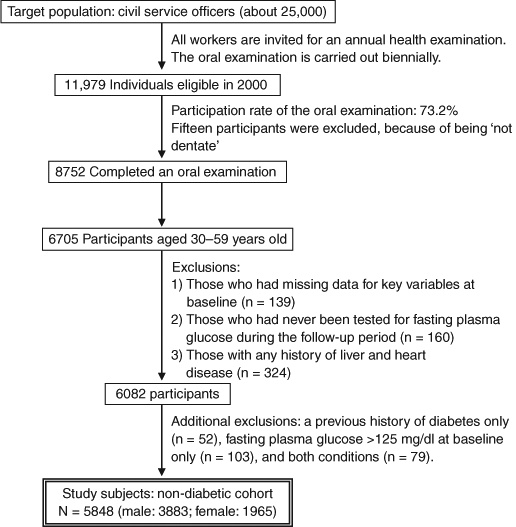
The disposition of study participants.
The participants were divided into three categories according to their periodontal status: no pathological pockets (CPI score: 0, 1, or 2), moderate periodontitis (CPI score: 3), and severe periodontitis (CPI score: 4). We also classified the participants by number of missing teeth: none, 1-3 missing, and > 3 missing. Incident diabetes was defined as newly diagnosed cases with fasting plasma glucose > 125 mg/dL. We recorded the duration of follow-up (person-years) for each participant as the time from baseline to: (1) the development of diabetes, (2) the time of leaving the mutual aid association, or (3) the end of the follow-up period, whichever came first. We used the Cox proportional hazard model to estimate the hazard ratio (HR) and 95% confidence interval (95% CI) of periodontal status and missing teeth for incident diabetes. Potential confounding factors related to diabetes risk were recorded during the baseline evaluation and included age (yrs), sex, smoking (current, past, or never smoker), high BMI (BMI: ≥ 25 or < 25 kg/m2), high triglyceride level (≥ 150 or < 150 mg/dL), hypertension (systolic blood pressure ≥ 140 or diastolic blood pressure ≥ 90 vs. neither), low high-density lipoprotein cholesterol level (< 40 mg/dL in males or < 50 mg/dL in females vs. neither), and high γ-glutamyl transpeptidase (> 60 IU/L in males or > 40 IU/L in females vs. neither). All calculations were performed with Statistical Analysis System (SAS) version 9.1.
Results
During a mean follow-up period of 6.5 yrs, we identified 287 incident cases of diabetes (231 in males and 56 in females). The proportions of individuals with six- and seven-year follow-up periods (range 2 to 7 yrs) were 14.7% and 84.3% of the study participants, respectively. In principle, health examinations are performed every year, and 82.0% of participants underwent fasting plasma glucose tests more than 6 times during follow-up.
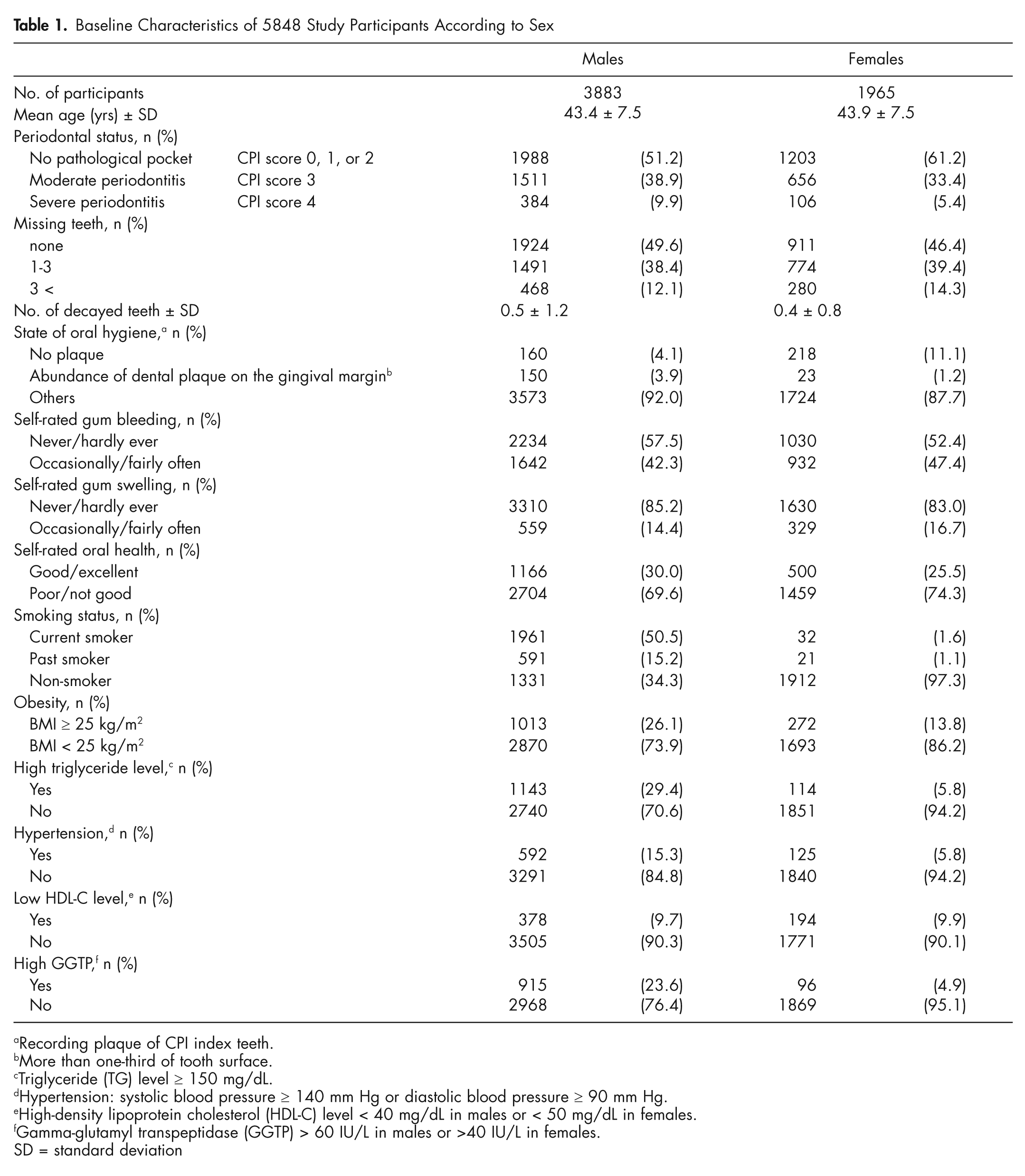
The proportions of participants with severe periodontitis were 9.9% and 5.4% in males and females, respectively. The mean number of decayed teeth was small (< 1) in both sexes. Approximately half of the participants in both sexes had a set of 28 teeth, excluding the third molars (Table 1).
Baseline Characteristics of 5848 Study Participants According to Sex
Recording plaque of CPI index teeth.
More than one-third of tooth surface.
Triglyceride (TG) level ≥ 150 mg/dL.
Hypertension: systolic blood pressure ≥ 140 mm Hg or diastolic blood pressure ≥ 90 mm Hg.
High-density lipoprotein cholesterol (HDL-C) level < 40 mg/dL in males or < 50 mg/dL in females.
Gamma-glutamyl transpeptidase (GGTP) > 60 IU/L in males or >40 IU/L in females.
SD = standard deviation
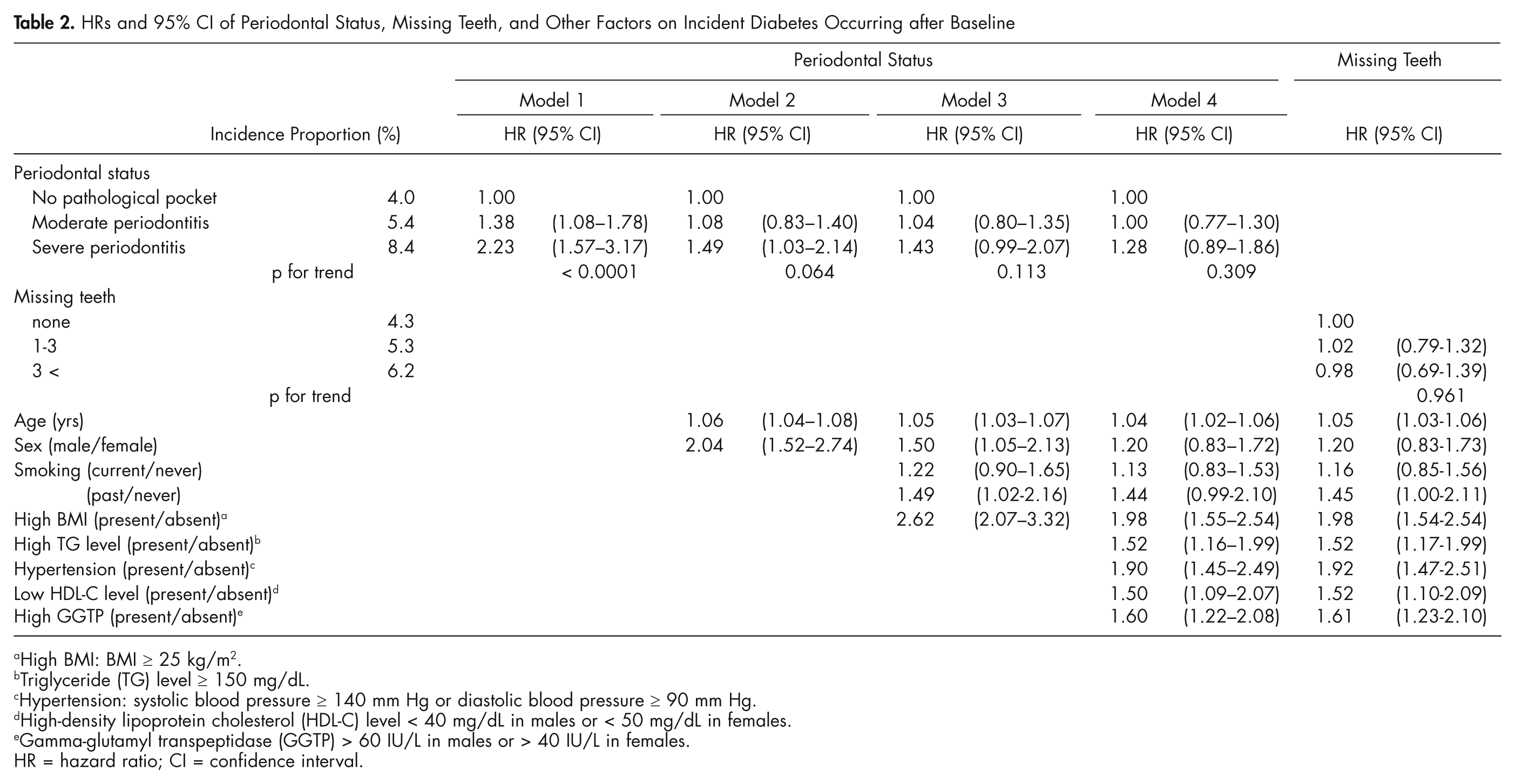
Moderate and severe periodontitis was associated with an increased risk of diabetes in the unadjusted model (model 1) [moderate periodontitis, HR = 1.38, p = 0.011; severe periodontitis, HR = 2.23, p < 0.001)] (Table 2). Although adjustment for age and sex (model 2) attenuated the effects of moderate and severe periodontitis, the association between severe periodontitis and incident diabetes remained (HR = 1.49, p = 0.033). When we added both smoking and high BMI to the model (model 3), severe periodontitis was no longer significantly associated (HR = 1.43, p = 0.056). The final model (model 4) included all of the covariates considered to be potential confounders in the pathway between periodontal disease and incident diabetes. The magnitude of the association between the two diseases decreased (severe periodontitis: HR = 1.28, p = 0.189). In this model, a significant association with incident diabetes was evident for age, high BMI, high triglyceride level, hypertension, low high-density lipoprotein cholesterol, and high γ-glutamyl transpeptidase. More than 3 missing teeth was associated with an increased risk of diabetes in the unadjusted model (HR = 1.53, p = 0.015), but there was no association in the full adjusted model (HR = 0.98, p = 0.899).
HRs and 95% CI of Periodontal Status, Missing Teeth, and Other Factors on Incident Diabetes Occurring after Baseline
High BMI: BMI ≥ 25 kg/m2.
Triglyceride (TG) level ≥ 150 mg/dL.
Hypertension: systolic blood pressure ≥ 140 mm Hg or diastolic blood pressure ≥ 90 mm Hg.
High-density lipoprotein cholesterol (HDL-C) level < 40 mg/dL in males or < 50 mg/dL in females.
Gamma-glutamyl transpeptidase (GGTP) > 60 IU/L in males or > 40 IU/L in females.
HR = hazard ratio; CI = confidence interval.
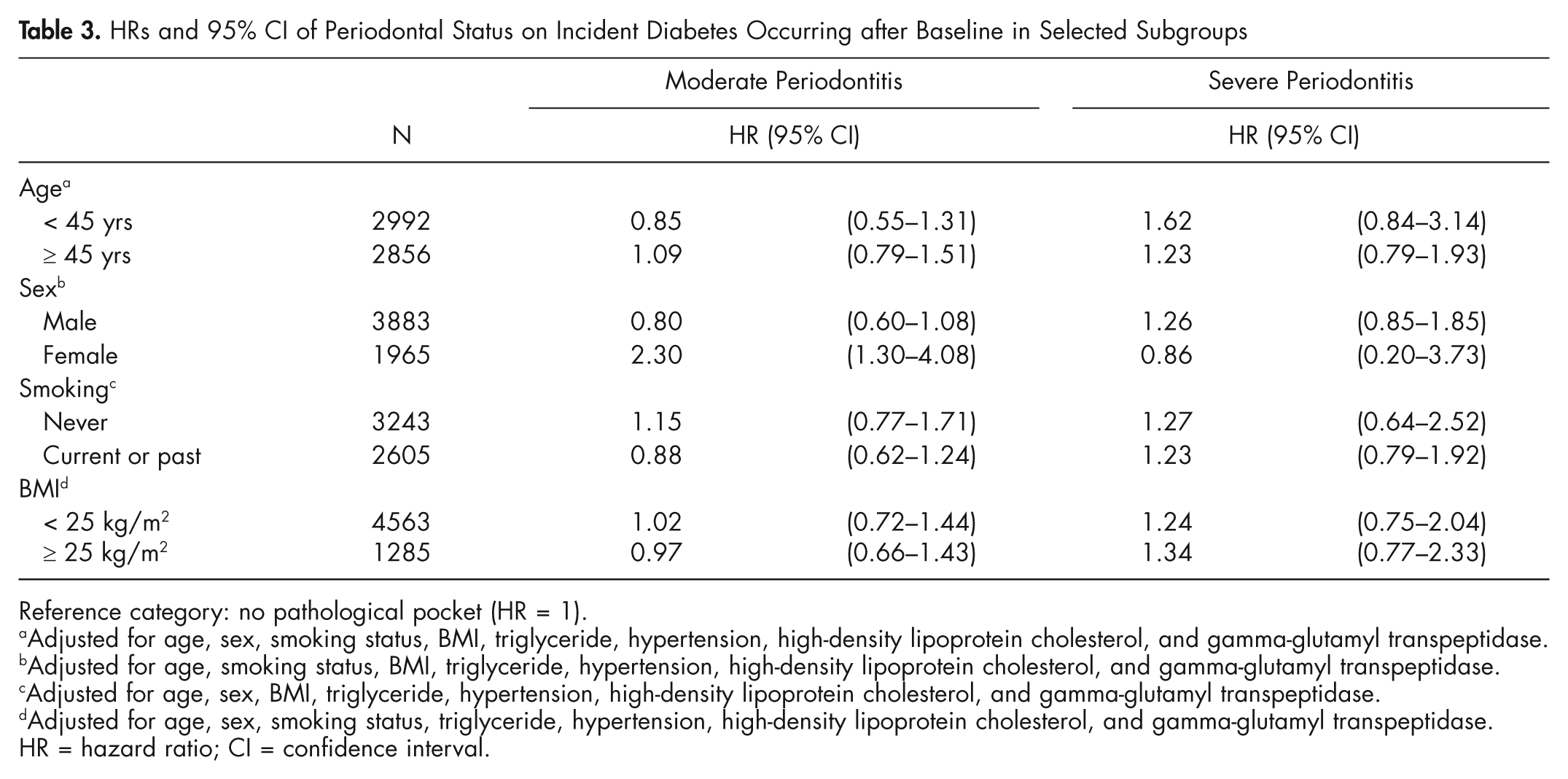
We further estimated the HR for incident diabetes after stratification for age, sex, smoking status, and BMI (Table 3). A two-fold increase in diabetes HR was observed among females with moderate periodontitis, but not among those with severe periodontitis. However, when we combined the two categories of periodontitis into a single category, compared with females with no pathological pockets, females with moderate or severe periodontitis had a HR of 2.15 (95% CI; 1.22-3.78, p = 0.008). In participants aged < 45 yrs, those with severe periodontitis had a moderately, but not significantly, increased risk of incident diabetes compared with those aged ≥ 45 yrs.
HRs and 95% CI of Periodontal Status on Incident Diabetes Occurring after Baseline in Selected Subgroups
Reference category: no pathological pocket (HR = 1).
Adjusted for age, sex, smoking status, BMI, triglyceride, hypertension, high-density lipoprotein cholesterol, and gamma-glutamyl transpeptidase.
Adjusted for age, smoking status, BMI, triglyceride, hypertension, high-density lipoprotein cholesterol, and gamma-glutamyl transpeptidase.
Adjusted for age, sex, BMI, triglyceride, hypertension, high-density lipoprotein cholesterol, and gamma-glutamyl transpeptidase.
Adjusted for age, sex, smoking status, triglyceride, hypertension, high-density lipoprotein cholesterol, and gamma-glutamyl transpeptidase.
HR = hazard ratio; CI = confidence interval.
Discussion
This is a prospective cohort study of middle-aged adults to report an association between periodontal conditions and incident diabetes confirmed by more objective measurement of fasting glucose levels. We found that having periodontitis at baseline was not an independent risk factor for incident diabetes in Japanese civil service officers.
In our study, moderate and severe periodontitis was significantly associated with an unadjusted increased risk of diabetes compared with no periodontitis. After full adjustment for potential confounders, the statistical significant association disappeared. The association between periodontal disease and diabetes is more complex in epidemiologic studies, even though some researchers have suggested mechanisms for the associations between these diseases (Lalla, 2007; Nelson, 2008). Notably, the effect of periodontal disease on incident diabetes is unclear. The risk for diabetes associated with periodontal disease may be confounded by multiple risk factors, such as age, sex, obesity, and some metabolic biomarkers (Doi et al., 2007; Wilson et al., 2007; Sattar et al., 2008). Our results support these findings. Age, high BMI, hypertension, and high triglyceride, low high-density lipoprotein cholesterol, and high γ-glutamyl transpeptidase levels were associated with excess risk for diabetes in our multivariate analysis, but the association was not observed with periodontitis. Factors associated with metabolic status and hepatic function appeared to confound or mediate the association. However, the results should be interpreted with some caution. Because the adjusted factors are likely to be intermediate variables on the causal pathway, these results may be over-adjusted. Since “associations” are distinct from “causality”, we cannot exclude the possibility that periodontal disease is an etiological factor for diabetes. In fact, a study of middle-aged Japanese women revealed that periodontitis is associated with an increased level of resistin (an adipocyte-secreted hormone), which suggests its important role in inflammation and immune responses (Saito et al., 2008).
A variety of methods has been used to diagnose diabetes in epidemiologic studies. Some have used self-report or new medical care, including prescriptions, but few have used standardized biochemical confirmation. A prospective study in the United States revealed a clear relationship between baseline periodontal disease and incident diabetes, although it was limited by the lack of fasting glucose measurements (Demmer et al., 2008). However, our study failed to find such an association between periodontitis and incident diabetes. We excluded participants with confirmed diabetes and those with undiagnosed diabetes based on fasting plasma glucose level, providing a non-diabetic cohort at baseline. Accordingly, reverse causation—that is, the effects of diabetes on periodontal status—would appear to be impossible. Moreover, deterioration in glycemic control can be tracked, because most participants underwent annual fasting plasma glucose tests. Consequently, it would have reduced diagnostic flaws during the follow-up period.
Because the periodontal conditions are based on baseline data, we cannot definitively conclude that periodontitis is not an independent predictor of incident diabetes. During the follow-up, periodontal status could change, such as after visits to a dentist or deterioration in periodontal disease. Consequently, misclassification of the diagnosis of periodontitis is possible, which would have weakened the association found in our study, since the bias introduced is toward null. In addition, we found that missing teeth were associated with fewer effects on incident diabetes than periodontitis, which seemed to make periodontitis more specific to incident diabetes. Overall, the true association may be stronger than that shown in our findings.
Our stratified analysis showed an association between moderate periodontitis and incident diabetes in females. This finding was consistent with a previous finding that periodontal disease was more strongly associated with diabetes in females than in males (Demmer et al., 2008). In contrast, an association between periodontal disease and atherosclerosis, which is a common complication of diabetes, was reported in males but not in females (Desvarieux et al., 2004). Furthermore, the influence of periodontitis on incident diabetes was stronger in the younger age group (< 45 yrs) (HR = 1.61, p = 0.157). The association between periodontal disease and incident diabetes may vary by age, sex, and race. These findings need to be confirmed in further studies with different population subgroups.
There are some factors that limit the conclusions that we can derive from our analyses. First, the study population was a specific group of civil service officers aged 30 to 59 yrs working in one prefecture in Japan, which may not be representative of the general population in Japan. In a nationwide survey of Japan, the proportions of males and females aged 30 to 59 yrs with severe periodontitis (CPI code 4) were 11.1% and 6.3%, respectively (Health Service Bureau, 2001). Considering that the study participants were non-diabetic at baseline, they could be moderately representative of Japanese adults with respect to periodontal conditions. Second, CPI may not fully represent the severity of periodontal disease (Baelum and Papapanou, 1996). A recent study performed more extensive diagnostic evaluations that included both pocket depth and clinical attachment loss (Lai et al., 2007). Third, socio-economic and lifestyle-related factors, such as education, income, alcohol drinking, and physical activity, were not recorded in this study, so we could not include them as confounding factors in this analysis. Finally, given that continuous variables were dichotomized in the models, the possibility of residual confounding might not be excluded.
In summary, there did not appear to be an association between periodontal disease and incident diabetes in this study. Our findings were evaluated prospectively in middle-aged adults with a more objective measure of fasting plasma glucose to avoid potential reverse causation and diagnostic flaws. The association was mostly explained by confounding factors, particularly those relating to metabolic disease. Future studies should minimize random errors and misclassification to allow for confirmation of the true nature of the association between periodontal disease and incident diabetes.
Footnotes
Acknowledgements
Support for this study was provided by a Grant-in-Aid for Scientific Research from the Japan Society for the Promotion of Science (JSPS.KAKENHI) (No. 19592421).