






Abstract
Tilted implants have been proposed as an alternative to traditional protocols in the rehabilitation of edentulous maxillae. The aim of this meta-analysis was to evaluate the outcomes of upright and tilted implants supporting full-arch fixed dentures for the immediate rehabilitation of edentulous maxillae, after at least 1 year of function. An electronic search of databases and a hand search of relevant journals in oral implantology were performed according to PRISMA guidelines through August, 2011. The literature search yielded 1,069 articles. Eleven articles were available for analysis. A total of 1,623 implants (778 tilted, 845 upright) were inserted into the maxillae of 324 patients. Seventeen tilted (2.19%) and 16 upright implants (1.89%) failed during the first year. No significant difference in failure rate was found between tilted and upright implants (p value = 0.52). Marginal bone level results were obtained from 6 studies. A non-significant mean difference between tilted and upright implants was found with regard to bone loss. Tilted implants demonstrated a favorable short-term prognosis in full-arch immediate loading rehabilitations of the maxillae. Randomized long-term trials are needed to better elucidate long-term success of tilted vs. upright-positioned implants.
Keywords
Introduction
In recent years, numerous articles have focused on the treatment of edentulous maxillae with immediately loaded implant-supported prostheses (Degidi et al., 2005; Ibañez et al., 2005; Collaert et al., 2008; Bergkvist et al., 2009).
However, the presence of the maxillary sinus usually precludes the insertion of long implants into the distal areas of resorbed maxillae. Short implants (< 10 mm) have been proposed (Degidi et al., 2007; Telleman et al., 2011; Annibali et al., 2012), but it is the authors’ opinion that these may inhibit high levels of initial primary stability, considered one of the most important factors for successful osseointegration of dental implants in immediate loading protocols (Nedir et al., 2004).
Bone-grafting procedures to increase bone volume may be a viable treatment option, but they often imply demanding surgical procedures and can be associated with complications, morbidity, and high costs. Moreover, they usually preclude the attainment of sufficient primary stability, and delayed loading protocols are needed.
To overcome such limitations, implants could be placed in specific anatomical areas, such as the pterygoid region, the tuber, or the zygoma (Bahat, 1992; Balshi et al., 1999; Brånemark et al., 2004). Any of these procedures has considerable surgical risks and possible sinus complications. Moreover, implant emergence is usually unfavorable from the prosthetic point of view, since it is too palatal.
Tilting of the implants parallel to the anterior maxillary sinus wall may represent a feasible treatment option (Krekmanov, 2000; Krekmanov et al., 2000; Aparicio et al., 2001; Fortin et al., 2002; Malò et al., 2005; Koutouzis and Wennström, 2007). Long tilted implants (≥ 13 mm) placed in residual bone have been advocated to obtain high levels of initial primary stability, avoiding bone-grafting procedures. Improved implant anchorage can be achieved by benefiting from the cortical bone of the anterior wall of the sinus and the nasal fossa. Additionally, tilting implants can optimize the anterior-posterior spread of the implants to provide satisfactory molar support for a full fixed prosthesis (FFP) of 12 masticatory units (Krekmanov et al., 2000; Bevilacqua et al., 2011). This FFP design also eliminates or reduces the number of cantilever extensions generally seen with vertical implants to obtain the same number of masticatory units.
The purpose of the present systematic review was to evaluate the prognosis of immediately loaded full-arch prostheses supported by both upright and tilted implants in the maxillae, after at least 1 yr of function. Implant cumulative survival rate (CSR) and peri-implant bone resorption were investigated.
Materials & Methods
This review is reported in accordance with the guidelines of Transparent Reporting of Systematic Reviews and Meta-analyses (PRISMA statement: Liberati et al., 2009; Moher et al., 2009).
Search Strategy
Three Internet sources were used to search for English- or Italian-language papers that satisfied the study purpose. These included the National Library of Medicine (MEDLINE - PubMed), the Cochrane Central Register of Controlled Trials (CENTRAL), and EMBASE (Excerpta Medical Database by Elsevier). The last search was done on August 11, 2011.
The search was complemented by manual searches of the reference lists of all full-text articles selected. In addition, we hand-searched contents pages of the most relevant journals in the field.
We used the following search terms to search all databases: tilted implants, angled implants, inclined implants, off-angle implants, angulated implants, non-axial implants, oblique implants, and offset implants. Neither publication date nor publication status restrictions were imposed.
The search was limited to studies involving human participants. Participants of any age receiving an immediate loading rehabilitation of the edentulous maxilla supported by both upright and tilted implants were considered.
The additional inclusion criteria for study selection were:
minimum of 10 patients treated
minimum of one-year follow-up
loading applied within 48 hrs after surgery
survival rate and/or peri-implant bone resorption for tilted and upright implants clearly indicated or calculable from data provided
Publications that did not meet the above inclusion criteria and those that were not dealing with original clinical cases (e.g., reviews, technical reports) were excluded. Multiple publications from the same pool of patients (redundant publications) were also excluded. Exclusion criteria were: studies dealing with orthodontic implants, mini-implants, zygomatic implants or pterygoid implants, partial rehabilitation, removable prosthesis, rehabilitation of the lower jaw, delayed loading, and early loading.
Screening and Selection
Titles and abstracts of the searches were screened by two independent reviewers for possible inclusion. The full texts of all studies of possible relevance were then obtained for independent assessment by the reviewers. Disagreements between reviewers were resolved by discussion between the two review authors; if no agreement could be reached, a third author decided.
Data Extraction
Data were extracted independently by two reviewers using a data extraction form.
Information was extracted from each included trial on: (1) characteristics of trial participants (including age, gender, smoking habit, parafunctions, type of antagonist, cause of tooth loss); (2) clinical procedures (number of implants, timing of extraction, use of a surgical template, timing of prosthetic loading, prosthesis material, prosthesis design); and (3) outcomes (implant survival rate, peri-implant bone resorption, prosthesis survival rate, adverse events, complications, patient satisfaction, length of follow-up, number of drop-outs).
Disagreement regarding data extraction was resolved by consensus. One author was contacted for further information. The author responded and provided numerical data that were not present in the published paper (Tealdo et al., 2011).
Statistical Analysis
Differences between tilted and upright implants were assessed on survival and on bone loss at 1 yr by means of meta-analysis.
Mean and standard deviation (SD) of differences at 1 yr compared with baseline for bone loss and number of implants failed at 1 yr for survival outcome and sample sizes were extracted for each type (tilted and upright) of implant for each trial.
The estimates of effects of angulation were expressed as Risk-Ratio (RR) for survival outcome and as Mean Difference (MD) for bone loss. RR values more than 1 indicated that the tilted group failed more than the upright group, while for MD, values more than 0 indicated higher bone loss in tilted compared with upright implants.
The presence of heterogeneity among studies was assessed by means of H and I2 coefficients (Higgins and Thompson, 2002), and p values associated with the heterogeneity Q test were also shown.
I2 represents the percentage of variability in point estimates due to heterogeneity rather than to sampling error.
For I2 values more than 50%, a considerable heterogeneity among studies could be present (Higgins and Thompson, 2002).
When high values of heterogeneity were found, a random-effects model was preferred to combine all studies in a pooled effect; otherwise the most conservative model was used.
R software (v.2.13, R core team, Vienna, Austria) was used to summarize the effects and construct the forest plots for overall analysis.
Results
Search and Selection Results
The search initially yielded 1,069 titles, from which 26 full-text articles were obtained and assessed for eligibility.
After examining the full texts of the 26 articles, we excluded 15 of them from the review (Fig. 1). Finally, 11 studies were considered for the meta-analysis. No relevant unpublished studies were obtained.
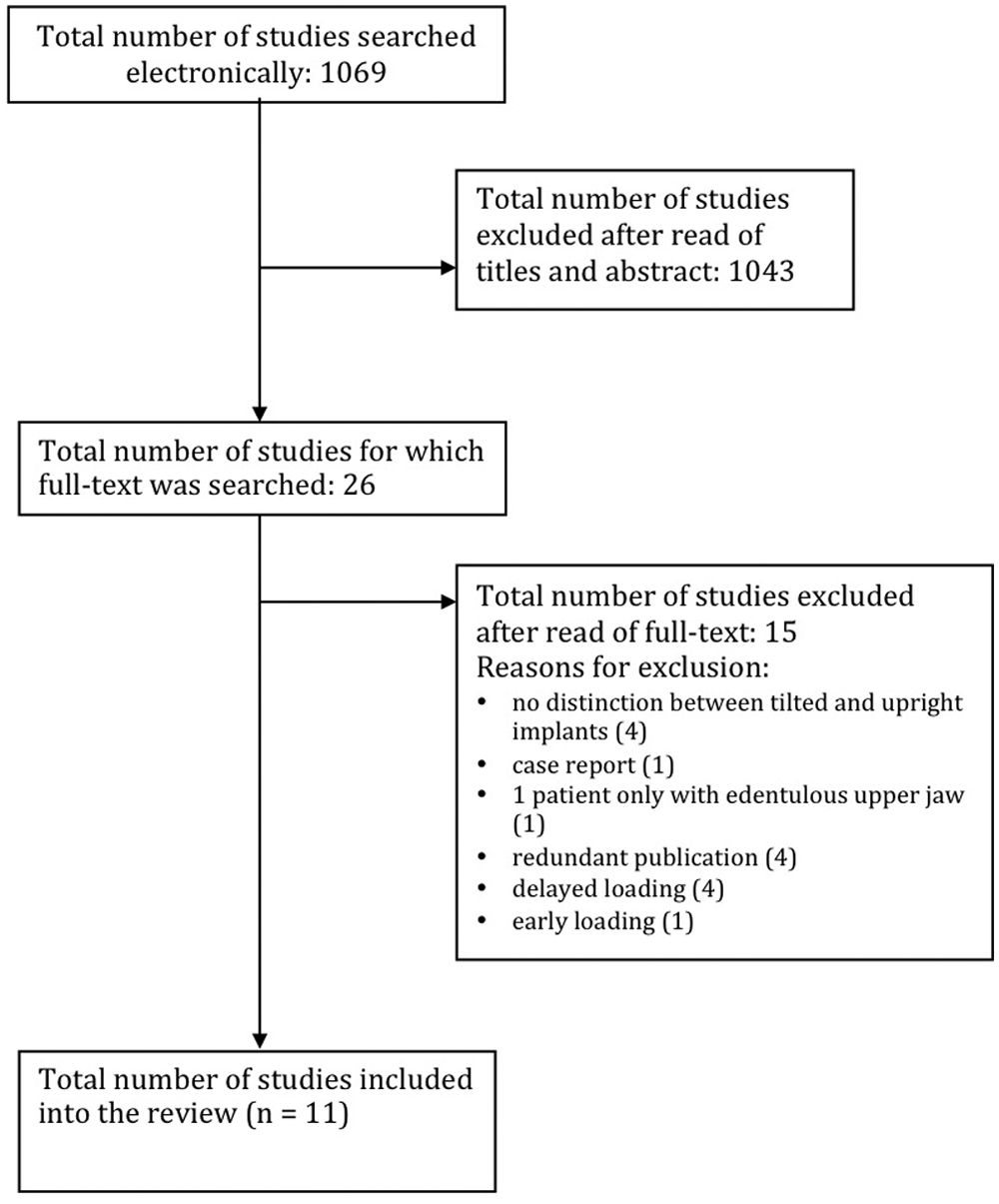
Flow chart representing search and selection results. Reasons for exclusion were: no distinction between tilted and upright implants (Meloni et al., 2010; Degidi et al., 2010b; Franchini et al., 2011; Alves et al., 2010), case report (Bedrossian et al., 2008), one patient only with edentulous upper jaw (Kawasaki et al., 2011), redundant publication (Tealdo et al., 2008; Testori et al., 2008; Agliardi et al., 2009; Corbella et al., 2011), delayed loading (Mattsson et al., 1999; Krekmanov et al., 2000; Aparicio et al., 2002; Pomares 2009), and early loading (Calandriello and Tomatis, 2005).
No RCTs were found. Of the 11 remaining articles, 3 were retrospective studies, 7 were prospective single-cohort studies, and 1 was a prospective controlled study (Appendix 1).
The year of publication for included studies ranged from 2005 to 2011.
As per the inclusion criteria, all the studies reported the 1-year follow-up results. Seven studies had a 1-year follow-up (Malò et al., 2005, 2006, 2007; Agliardi et al., 2008, 2010; Hinze et al., 2010; Pomares, 2010), two studies had a 3-year follow-up (Degidi et al., 2010a; Tealdo et al., 2010), another study had a 40-month follow-up (Capelli et al., 2007), and another study reported a 22- to 40-month follow-up (Francetti et al., 2010).
The geographic origins of the included studies were: Italy (Capelli et al., 2007; Agliardi et al., 2008, 2010; Degidi et al., 2010a; Francetti et al., 2010; Tealdo et al., 2011), Portugal (Malò et al., 2005, 2006, 2007), Germany (Hinze et al., 2010), and Spain (Pomares, 2010).
Outcome Results
In total, 1,623 implants were inserted into the maxillae of 324 patients. Of these implants, 778 (47.9%) were tilted and 845 (52.1%) were upright.
Eight of the included studies (Malò et al., 2005, 2006, 2007; Agliardi et al., 2008; Francetti et al., 2010; Hinze et al., 2010; Pomares, 2010; Tealdo et al., 2011) reported no drop-out patients. One author (Capelli et al., 2007) reported one drop-out patient. A female patient who was rehabilitated in the maxilla died 4 mos after surgery because of a car accident and was therefore omitted from the study. The remaining two included studies (Appendix 1) did not report the number of drop-out patients.
Implant CSR was available for all 11 trials. In the first year, a total of 17 tilted and 16 upright implants failed. The global implant CSR was of 1,590 implants out of 1,623 (97.97%), with an overall weighted CSR of 98.62% (Fig. 2).
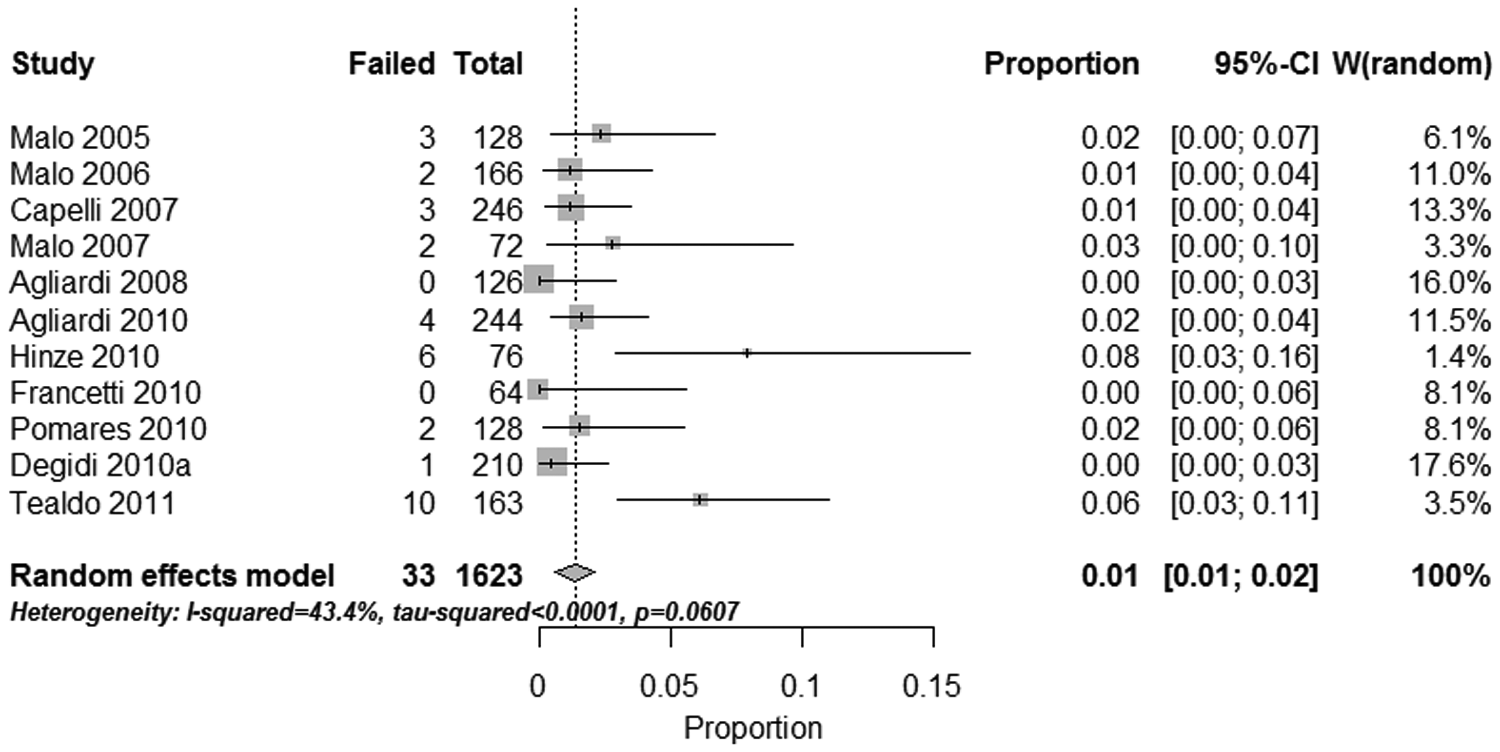
Forest plot of proportion of total implants failed. High heterogeneity among studies was observed, and a random-effects model was used for meta-analysis of all studies. Proportions of implants failed and corresponding 95% confidence intervals (CI) were reported both for each study and for pooled estimation. At the bottom, a heterogeneity estimation with opportune indices and associated statistical tests were also reported.
Four (Malò et al., 2006, 2007; Agliardi et al., 2010; Hinze et al., 2010) of the 11 included papers reported that all of the failed implants were successfully replaced by new implants. In total, 22 implants of the 33 failed implants were replaced. No author reported an impairment of prosthetic function because of an implant failure.
In Fig. 3, a forest plot of meta-analysis for the comparison between tilted and upright implants with implant survival as outcome is presented.
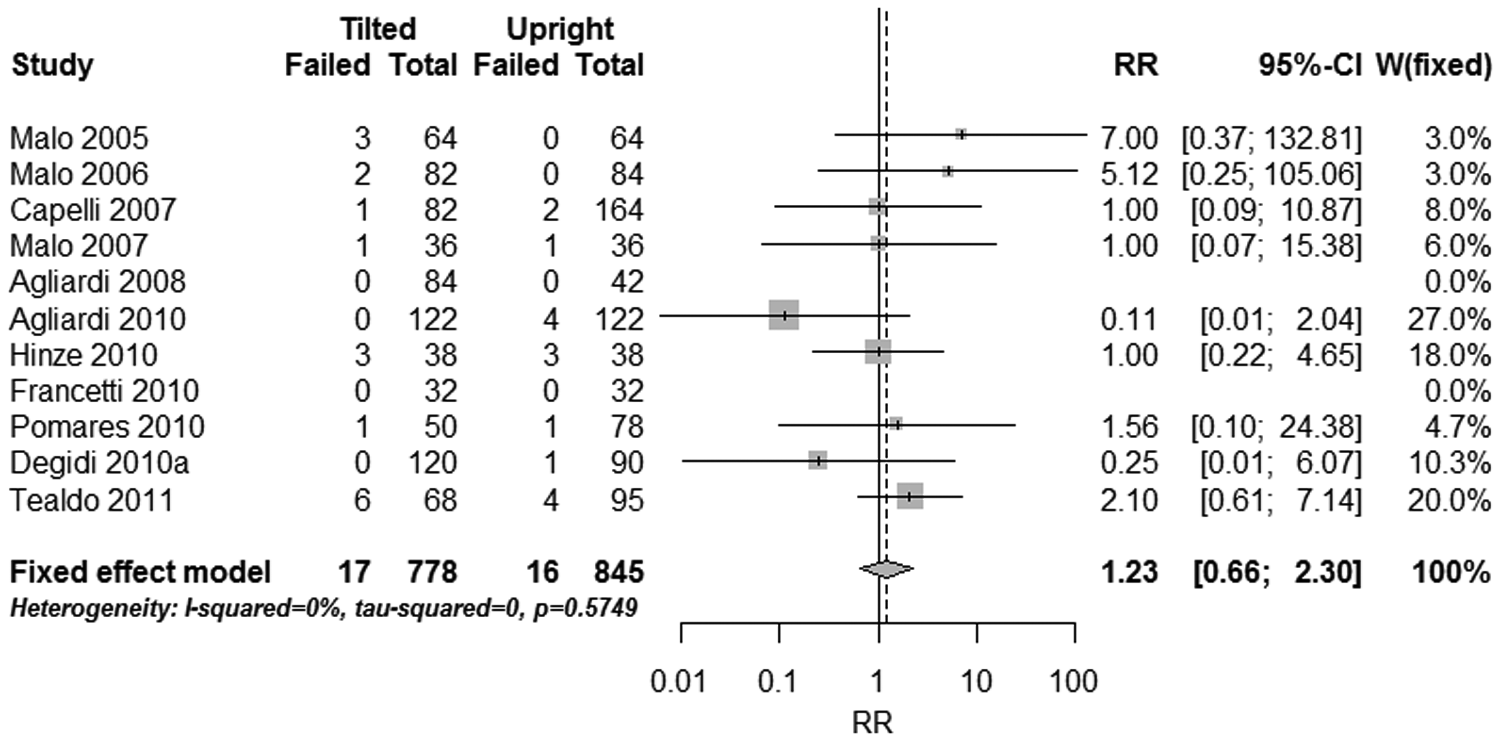
Forest plot for comparison between tilted and upright implants regarding the risk of failure. Total numbers of implants and failed implants are shown separately for tilted and upright implants. Risk ratio (RR) for proportion of failed tilted compared with upright implants and its corresponding 95% confidence interval (CI) are shown. Pooled estimation of RR (95% CI) performed with fixed-effects model is reported, and weights [W (Fixed)] of each study for the pooled estimation are also shown. No statistical heterogeneity among studies is highlighted.
A non-significant difference between tilted and upright implants was found [Pooled RR = 1.23 (95% CI: 0.66-2.30); p value = 0.52], and no heterogeneity among studies is highlighted (I2 = 0%).
For the same outcome, but considered on a patient basis (Fig. 4), non-significant differences were shown between tilted and upright implants (RR = 1.06; 95% CI, 0.57 – 1.96; p value = 0.86).
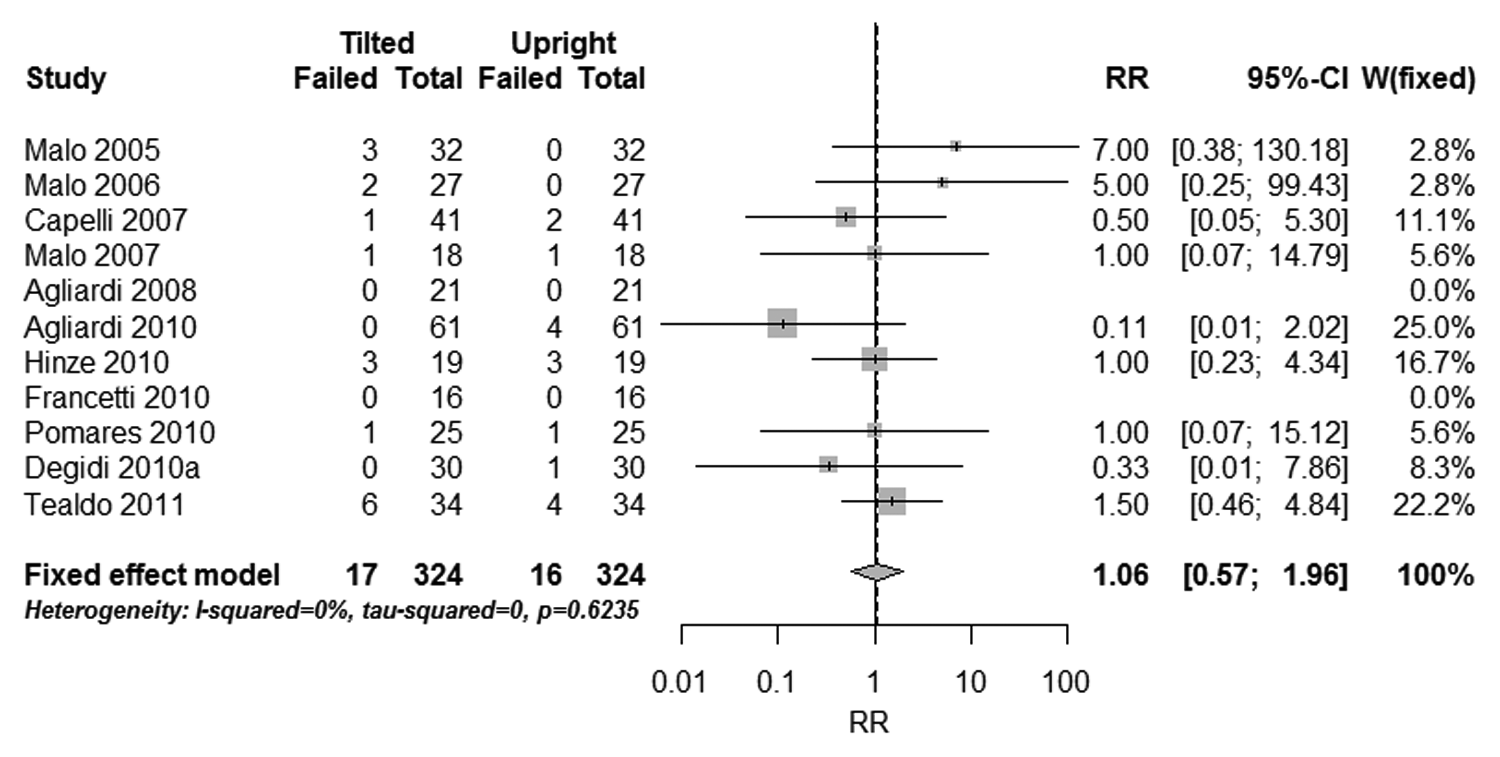
Forest plot for patient-based comparison between tilted and upright implants regarding risk of failure. Total number of failed implants and number of patients involved are shown separated for tilted and upright implants. Risk ratio (RR) for proportion of failed tilted compared with upright implants and corresponding 95% confidence intervals (CI) are shown. Pooled estimation of RR (95% CI) performed with a fixed-effects model is reported, and weights [W (Fixed)] of each study for the pooled estimation are also shown. No statistical heterogeneity among studies is highlighted.
Five studies reported reasons for implant failure: bruxism (5 implants in five patients; Malò et al., 2005, 2006, 2007), insufficient primary stability due to soft bone (2 implants in two patients; Malò et al., 2005, 2007), and “mobility” (11 implants; Agliardi et al., 2010; Hinze et al., 2010).
No authors reported a correlation between smoking and implant failure. However, two authors excluded heavy smokers from the study (Degidi et al., 2010a; Pomares, 2010).
Marginal bone level results were obtained from 6 studies (Capelli et al., 2007; Agliardi et al., 2008, 2010; Degidi et al., 2010a; Francetti et al., 2010; Tealdo et al., 2011) that showed results separated for tilted (n = 536) and upright (n = 539) implants in the maxilla.
In one study (Degidi et al., 2010a), the SD for bone loss at 1 yr was not directly obtained but was calculated from the SD of bone loss from baseline to 6 mos and from 6 mos to 12 mos.
A non-significant mean difference (Fig. 5) between tilted and upright implants (MD = 0.02; 95% CI, -0.05-0.09; p value = 0.58) was found.
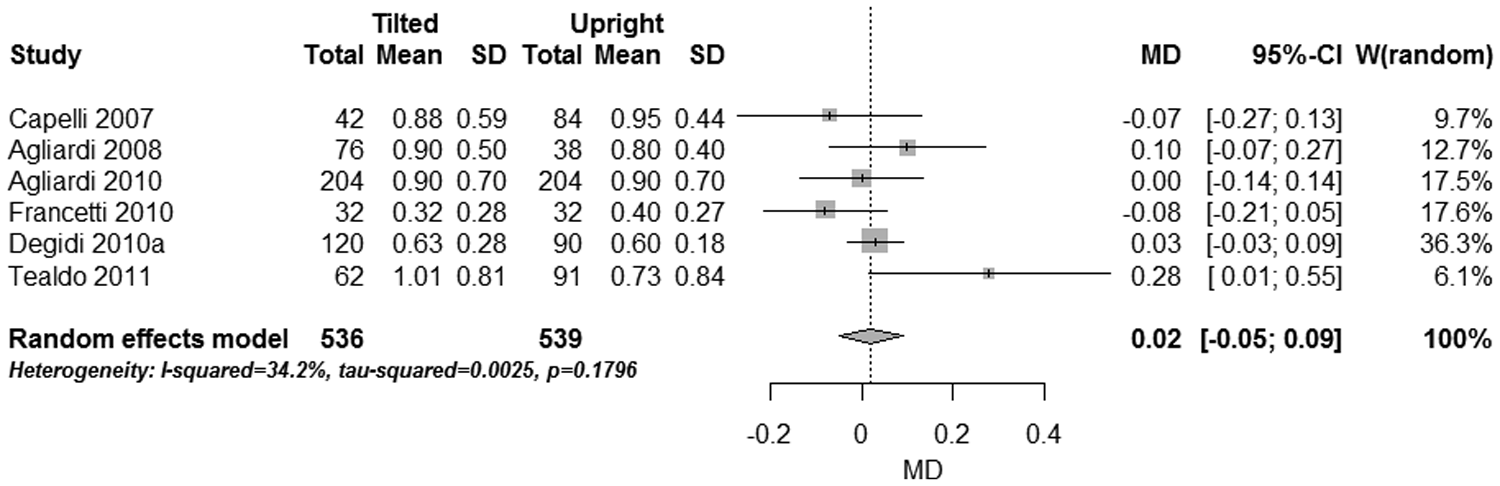
Forest plot for comparison between tilted and upright implants regarding mean bone loss. Total number of tilted and upright implants considered and mean bone loss with standard deviation (SD) for each group of implants are reported. Mean difference (MD) for each study and pooled with corresponding 95% CI are also plotted. A random-effects model was used for pooling.
Some amount of heterogeneity between studies (I2 = 34.2%) was shown, but no differences between results from fixed or random-effects models were found.
Fracture of the temporary acrylic prosthesis (Malò et al., 2005, 2007; Agliardi et al., 2010; Francetti et al., 2010; Hinze et al., 2010; Pomares, 2010) and prosthetic screw-loosening (Malò et al., 2006, 2007; Hinze et al., 2010) were the most common complications described. Some authors observed that these complications were more common in bruxers (with opposing dentition presenting wear patterns; Malò et al., 2005, 2006, 2007) and in patients who did not follow instructions regarding the soft food diet in the first few mos (Malò et al., 2007; Pomares, 2010).
Two authors (Agliardi et al., 2010; Hinze et al., 2010) reported that these complications were easily adjusted by the clinician without sending the prostheses back to the laboratory.
Two other authors (Francetti et al., 2010; Pomares, 2010), despite reporting fractures of the acrylic provisional prostheses, did not consider these cases as prosthetic failures.
Severe parafunctions such as bruxism and clenching habits were considered an exclusion criterion in 6 studies (Capelli et al., 2007; Agliardi et al., 2008, 2010; Degidi et al., 2010a; Francetti et al., 2010; Hinze et al., 2010).
All of the studies included both edentulous patients and patients with hopeless dentition (except for Degidi et al., 2010a, where completely edentulous patients were included, and Capelli et al., 2007, where teeth were extracted 2 mos before implant placement). Therefore, post-extraction implants were inserted. But no studies reported on survival rates and peri-implant bone resorption of implants placed in healed bone vs. post-extraction sites.
Three of the selected studies anecdotically reported high degrees of patient satisfaction as related to the applied clinical procedure (Malò et al., 2006; Agliardi et al., 2010; Pomares, 2010).
Patient satisfaction was measured in two studies only (Capelli et al., 2007; Agliardi et al., 2008) by means of questionnaires, with good results.
Some authors reported that, at request of the patients, their provisional prostheses were not replaced (Malò et al., 2006, 2007), demonstrating a high level of patient satisfaction in terms of esthetics and function.
Some heterogeneities were found in the surgical and prosthetic protocols applied in different studies, including: number of implants used, prosthesis material, prosthesis design, whether a surgical template was used, and whether flapless surgery was used.
The majority of the studies used 4 implants per maxilla (2 anterior upright implants, 2 distal tilted implants). But some studies used a greater number of upright implants with 2 distal tilted implants (Malò et al., 2006, 2007; Capelli et al., 2007; Tealdo et al., 2011). One study (Agliardi et al., 2008) applied the so-called V-II-V technique, with 4 tilted implants and 2 upright anterior implants per maxilla. As compared with other procedures, such as the Columbus Bridge Protocol™ (Tealdo et al., 2008, 2011) and the All-on-4 technique (Malò et al., 2005), providing for the insertion of 4 implants, in the V-II-V technique, the prosthesis is supported by 2 additional distal tilted implants parallel to the posterior wall of the maxillary sinus. Similarly, Degidi and co-workers (2010a) inserted 3 anterior upright implants and 4 distal tilted implants.
Three authors (Capelli et al., 2007; Degidi et al., 2010a; Tealdo et al., 2011) used a full-arch provisional prosthesis provided with a metal framework and an acrylic resin veneering material, while the other authors used all-acrylic prostheses.
Seven of the 11 included papers (Malò et al., 2006, 2007; Agliardi et al., 2008, 2010; Degidi et al., 2010a; Hinze et al., 2010; Tealdo et al., 2011) reported the use of screw-retained prostheses, while the other papers did not specify the retention mechanism.
Three authors (Degidi et al., 2010a; Hinze et al., 2010; Tealdo et al., 2011) reported that provisional fixed prostheses were manufactured without distal cantilevers, while the other authors did not specify whether distal cantilevers were present.
All of the papers except 4 (Capelli et al., 2007; Agliardi et al., 2010; Degidi et al., 2010a; Hinze et al., 2010) reported the use of a surgical template during implant insertion and angulated abutment positioning. However, the surgical templates used by the different authors included in this review varied greatly in both design and purpose. Therefore, a comparison between papers using and those not using a surgical template was not performed.
Two of the 11 studies used computer-guided flapless surgery and reported favorable results (Malò et al., 2007; Pomares, 2010). These papers reported that patients with insufficient mouth-opening to accommodate surgical instruments (minimum, 40-50 mm) were excluded from the study.
All authors suggested achieving an insertion torque of at least 30 Ncm to allow for immediate rehabilitation.
Discussion
The present systematic review focused on the immediate loading rehabilitation of the edentulous maxilla using upright and tilted implants. Studies dealing with orthodontic implants, mini-implants, zygomatic implants or pterygoid implants, partial rehabilitation, removable prostheses, rehabilitation of the lower jaw, delayed loading, and early loading were excluded.
Investigating the available literature on this topic, we found no RCTs. There is a need for additional studies that ideally randomize assignment to alternative treatments.
Only one paper (Tealdo et al., 2011) reported a controlled study. That paper had a prospective case-control design but lacked randomization and evaluated two unmatched groups.
Additionally, long-term clinical data about this treatment modality are still lacking. In fact, immediate loading of maxillary full-arch prostheses supported by tilted implants is a recent technique. To the authors’ knowledge, the first patients treated according to this kind of protocol date back to 2000. Some of the included studies (Capelli et al., 2007; Degidi et al., 2010a; Francetti et al., 2010; Tealdo et al., 2011) reported a follow-up greater than 1 yr (up to 36 or 40 mos). However, because of the limited number of studies reporting the 3-year follow-up results, only the 1-year follow-up data were considered for meta-analysis.
Survival rates and incidence of biological and technical complications over a long term are needed before definitive conclusions can be drawn (Papaspyridakos et al., 2012).
Given these limitations, the preliminary results indicate that such a technique may lead to an excellent prognosis, at least in the short term. In fact, a global CSR of 97.97%, with a mean peri-implant bone resorption of 0.75 mm (tilted, 0.77 mm; upright, 0.73 mm), was found at 1 yr of function. These data do not seem to be affected by an excessive number of drop-out patients. In fact, 8 of the included studies reported no drop-out patients; one author (Capelli et al., 2007) reported one drop-out patient, and only 2 of the included studies did not report the number of drop-out patients.
Fracture of the temporary acrylic prosthesis was the most common complication described. Only three authors (Capelli et al., 2007; Degidi et al., 2010a; Tealdo et al., 2011) used a full-arch provisional prosthesis provided with a metal framework, instead of an all-acrylic prosthesis. According to Tealdo et al. (2011), the metal framework may be particularly important to improve the stiffness and rigidity of the structure splinting the implants, which may affect the favorable outcome of predictable osseointegration.
Many of the failures and technical complications were attributed to bruxism or failure to follow dietary recommendations in the first few mos (Malò et al., 2005, 2006, 2007). Moreover, five authors (Capelli et al., 2007; Agliardi et al., 2008, 2010; Degidi et al., 2010a; Francetti et al., 2010; Hinze et al., 2010) considered severe parafunctions as exclusion criteria for patient selection. Analysis of these data underlines the importance of overloading as a risk factor in implant prosthodontics. In particular, overloading can potentially jeopardize the attainment and maintenance of osseointegration.
In the present review, distal tilted vs. mesial upright implant outcomes were evaluated. However, the minimum angulation required to define an implant as tilted has not yet been established (Del Fabbro et al., 2010). Seven of the 11 included papers (Malò et al., 2006; Capelli et al., 2007; Agliardi et al., 2008, 2010; Degidi et al., 2010; Francetti et al., 2010; Hinze et al., 2010) reported the degree of angulation that constituted tilting, which was approximately 30 to 45°. The author of another paper (Tealdo et al., 2011) was contacted for further information on this topic and reported that tilted implants were considered those having an angulation greater than 30°. However, as reported by Hinze and co-workers (2010), the 2 anterior implants may incline marginally mesiodistally as well as buccally, but usually never approach the degree of tilting of the posterior implants.
In 2010, a meta-analysis of the outcomes of tilted implants in immediate loading rehabilitations was published (Del Fabbro et al., 2010).
Del Fabbro’s review included studies published up to March 2009. The present review included 6 studies that were already present in the pre-existing review (Malò et al., 2005, 2006, 2007; Capelli et al., 2007; Agliardi et al., 2008, 2010), plus 5 more recent studies (Degidi et al., 2010a; Francetti et al., 2010; Hinze et al., 2010; Pomares, 2010; Tealdo et al., 2011; number of implants in the 5 new papers: 641).
One of the main differences between the two systematic reviews is that the present review focused on maxillary rehabilitations only, while the review by Del Fabbro and co-workers (2010) included both maxillary and mandibular rehabilitations. This explains the majority of the differences between the papers included in the two reviews. A study by Calandriello and Tomatis (2005) was included by Del Fabbro but excluded in the present review. In fact, in that paper, an early loading protocol instead of an immediate loading protocol was applied in the upper jaw.
Moreover, Del Fabbro et al. performed a meta-analysis for 1-year implant survival, but a meta-analysis for 1-year peri-implant bone loss, as performed in the present review, was lacking.
In addition, Del Fabbro did not report a quality and bias assessment of included studies, as we did in the present review (see Appendices 1, 2).
That being said, the present meta-analysis confirms the conclusions of Del Fabbro et al., since the use of tilted implants to support immediately loaded fixed prostheses for the rehabilitation of edentulous jaws was considered a predictable technique, and no significant differences in failure rates were found between tilted and upright implants.
As underlined by Del Fabbro and co-workers (2010), one limitation to the widespread use of this technique could be the relative difficulty in inserting posterior tilted implants. Pomares (2010) suggested that this technique could be sensitive to the experience of the surgeon, and that a learning curve is required. Capelli et al. (2007) recommended that this technique be adopted by expert clinicians. In 5 included studies (Capelli et al., 2007; Agliardi et al., 2010; Degidi et al., 2010a; Francetti et al., 2010; Hinze et al., 2010), the operator was reported to be expert.
Del Fabbro et al. (2010) maintained that, with computer-guided implant planning and the use of a surgical template, the placement of tilted implants became easier in recent years. However, difficulties could be found in patients with limited mouth-opening.
No randomized controlled trials were present, and only short-term (1-year) outcomes could be evaluated. Definitive conclusions cannot be drawn because there are too few reliable studies.
More high-level evidence-based studies are needed to demonstrate the merits of this protocol compared with other procedures.
A next step for future trials would be the comparison of this protocol with an immediate loading protocol using upright implants to see whether the use of distal tilted implants determines different outcomes compared with distal upright implants.
Footnotes

References
Supplementary Material
Please find the following supplemental material available below.
For Open Access articles published under a Creative Commons License, all supplemental material carries the same license as the article it is associated with.
For non-Open Access articles published, all supplemental material carries a non-exclusive license, and permission requests for re-use of supplemental material or any part of supplemental material shall be sent directly to the copyright owner as specified in the copyright notice associated with the article.
