






Abstract
The aim of this systematic review and network meta-analysis was to summarize the direct and indirect clinical evidence on the effectiveness of professionally applied and self-applied topical fluorides in preventing dental root caries. Controlled clinical trials with any follow-up duration were included. MEDLINE, PubMed, Embase, Scopus, and Cochrane Library were searched. Two reviewers independently carried out the selection of studies, data extraction, risk-of-bias assessments, and assessment of the certainty in the evidence using the Grading of Recommendations Assessment, Development, and Evaluation (GRADE) approach. Fixed effects model and frequentist approach were used in the network meta-analyses. Nine clinical trials involving 4,030 participants were included. Five professionally applied and 7 self-applied topical fluoride agents or combinations were included in the meta-analyses. Compared to control group, 38% silver diamine fluoride solution, 5% sodium fluoride varnish, and 1.2% acidulated phosphate fluoride reduced root caries increment after 2 y (ranging from 0.59 to 0.85 mean decayed or filled root [DF-root]). Fluoride mouth rinse and fluoride toothpaste, used alone or in combination, reduced root caries increment after 1 y (ranging from 0.29 to 1.90 mean DF-root). Among the professionally applied topical fluorides reviewed, an annually applied 38% silver diamine fluoride (SDF) solution combined with oral health education is most likely to be the most effective in preventing dental root caries. Among the reviewed self-applied topical fluoride methods, daily use of a 0.2% sodium fluoride (NaF) mouth rinse is most likely to be the most effective, followed by 1100 ppm to 1500 ppm fluoride toothpaste plus 0.05% NaF mouth rinse, and 1100 ppm to 1500 ppm fluoride toothpaste.
Introduction
Life expectancy of people around the world is increasing (United Nations 2015). Older adults nowadays retain more teeth and need more dental care. Dental root caries is common with nearly 33% of the global elderly population being affected (Gati and Vieira 2011). It can lead to pain, tooth loss, and affect the quality of life (Gregory and Hyde 2015). A number of associated factors and risk predictors of root caries have been identified in systematic reviews (Ritter et al. 2010; Zhang, Leung, et al. 2019; Zhang, Sardana, et al. 2019). Older age, poorer oral hygiene, lower socio-economic status, and tobacco users are associated with higher risk.
Adoption of effective root caries prevention strategies by the dental profession and the public is important. Among the agents or combination of agents for preventing root caries, topical fluorides such as silver diamine fluoride (SDF) solution, sodium fluoride (NaF) varnish, and fluoride toothpaste are commonly recommended (Gluzman et al. 2013; Schwendicke and Göstemeyer 2017).
Systematic reviews with meta-analyses have reported the effectiveness of non-invasive root caries treatments (Wierichs and Meyer-Lueckel 2015; Meyer-Lueckel et al. 2019). However, only pairwise meta-analyses were conducted in these reviews. When choosing between alternative interventions in health care, direct evidence based on high-quality randomized clinical trials should be used. In addition, indirect comparisons between trials can also provide valuable information (Glenny et al. 2005). In network meta-analyses (NMAs), more than 2 treatments can be compared by connecting evidence from different clinical trials that assessed the same or similar treatments with similar objectives (Salanti 2012; Lee 2016). NMAs estimate the relative effects of all pairs of treatments, taking all direct and indirect evidence into account (Bafeta et al. 2014). So far, no review with NMA on the effectiveness of topical fluorides in preventing root caries has been published. This systematic review aimed to summarize and synthesize the best clinical evidence on the benefits of professionally applied and self-applied topical fluoride treatments for the prevention of root caries.
Methods
This review followed the Preferred Reporting Items for Systematic Review and Meta-analysis (PRISMA) guidelines and the Cochrane handbook. The protocol was submitted for registration in the PROSPERO database (provisional number: 128903).
Inclusion and Exclusion Criteria
Studies included were controlled clinical trials with any duration of follow-up. Laboratory-based studies, in-situ studies, and clinical studies using a split-mouth design were excluded.
Participants included adults of any age. Studies focusing on special population groups with life-threatening diseases (such as cancer) or with a condition that significantly affected salivary gland function (such as xerostomia and Sjogren’s syndrome) were excluded.
Interventions included professional or self-applied topical fluorides. Professionally applied fluorides included those for clinical use, such as NaF varnish, SDF solution, and acidulated phosphate fluoride (APF) gel. Self-applied topical fluorides included fluoride toothpaste and mouth rinse available in stores.
Comparison groups included different concentrations or content of fluoride, placebo, and blank (no special intervention) control.
Outcome was root caries increment, including both decayed root (D-root), and decayed and filled root (DF-root). Studies that used clinical visual and tactile assessments for root caries diagnosis were included while studies which did not report the increment of DF-root or D-root were excluded.
Search Sources and Strategy
Five databases, namely MEDLINE (via ProQuest), PubMed, Embase (via Ovid), Scopus, and Cochrane Library, were searched by 2 independent reviewers (J.Z. and D.S.) up to August 31, 2019. No limitations regarding year of publication and language were set. The full search strategy is presented in Appendix 1. A manual search was performed on the reference lists of previous reviews and the included papers to look for potential papers for inclusion in this review.
Study Selection
After removal of duplicate records, 2 reviewers (J.Z. and D.S.) screened the remaining records with reference to the study inclusion and exclusion criteria. Papers that fulfilled the criteria entered into the full-text reading stage. Inter-rater agreement was measured by Cohen’s kappa. Any disagreement between the reviewers was resolved by discussion with a third reviewer (E.C.M.L.).
Data Extraction
The 2 reviewers used a previously designed form to extract the following data independently: study location, sample size, age of participants, fluoride agent (brand name, manufacturer, concentration), intervention methods used (dose, frequency, mode of application), root caries diagnostic criteria, study duration, follow-up rate, outcome measure, and results.
The mean and standard deviation of D-root and DF-root increment of each group in the included studies were extracted. When information on standard deviation was missing, it was imputed according to the Cochrane handbook (Higgins and Green 2011).
Risk of Bias in Individual Studies
Cochrane risk of bias tool (RoB 2.0) was used to evaluate the included clinical trials. The following domains were assessed: randomization process, deviations from intended interventions, missing outcome data, measurement of outcome, and selection of reported results. One of the 3 levels of bias, namely low risk, some concerns, and high risk, was allocated to each domain. The highest level in these domains was assigned as the overall risk of bias.
Statistical Analysis
The software package Stata (version 16.0, StataCorp, College Station) was used. Two NMAs were conducted, 1 on professionally applied and 1 on self-applied fluorides, using a frequentist fixed-effects approach. Because the number of included trials was relatively small in contrast to the interventions compared within the NMA, it was not feasible to yield a robust estimate for the heterogeneity variance. Stata issued a warning and suggested the use of a fixed-effect model. Inconsistency evaluation was separated into 2 parts. The first part was global incoherence of the network assessed using the design-by-treatment interaction model (Higgins et al. 2012). The second part was the difference in outcomes of direct and indirect comparisons in mixed treatments comparison tested using the loop and side-splitting models. Network graphs were used to explore the network geometries (White et al. 2012; Shim et al. 2017). Each cluster of intervention or control groups was indicated by a node, and direct comparisons between the groups were represented by links between the nodes. Afterwards, network forest plots were drawn. Surface Under the Cumulative Ranking (SUCRA) was used to rank the prevention methods. SUCRA is expressed as the percentage effectiveness of every intervention relative to an imaginary best intervention using 10,000 draws by resampling method. Inconsistency was assessed by comparing direct evidence to indirect evidence.
Certainty in Evidence
Certainty in the evidence for each comparison between interventions was assessed by the Grading of Recommendations Assessment, Development, and Evaluation (GRADE) approach (Guyatt et al. 2008; Brignardello-Petersen et al. 2019) using the GRADE pro software (http://www.gradepro.org/). There were 4 levels of certainty, from “high,” “moderate,” “low,” to “very low.” For direct comparison of 2 interventions using randomized controlled trial design, the level of certainty started at “high.” Afterwards, it could be downgraded due to serious or very serious issues of risk of bias, inconsistency, indirectness, imprecision, and publication bias. For indirect comparison, intransitivity, imprecision, and the lowest-certainty ratings for the direct comparisons formed the first-order loop (Puhan et al. 2014). For the certainty in the evidence in the NMA, the lower level of certainty in the direct and the indirect comparisons was adopted.
Results
Screening of the databases identified 660 records (Fig. 1). After removing duplications, 282 papers remained. Three more papers were identified through manual search. After reading the title and abstract, 53 papers were selected for full-text reading. Finally, 9 papers on 9 clinical trials were included. The excluded papers and the reasons are presented in Appendix Table 1.
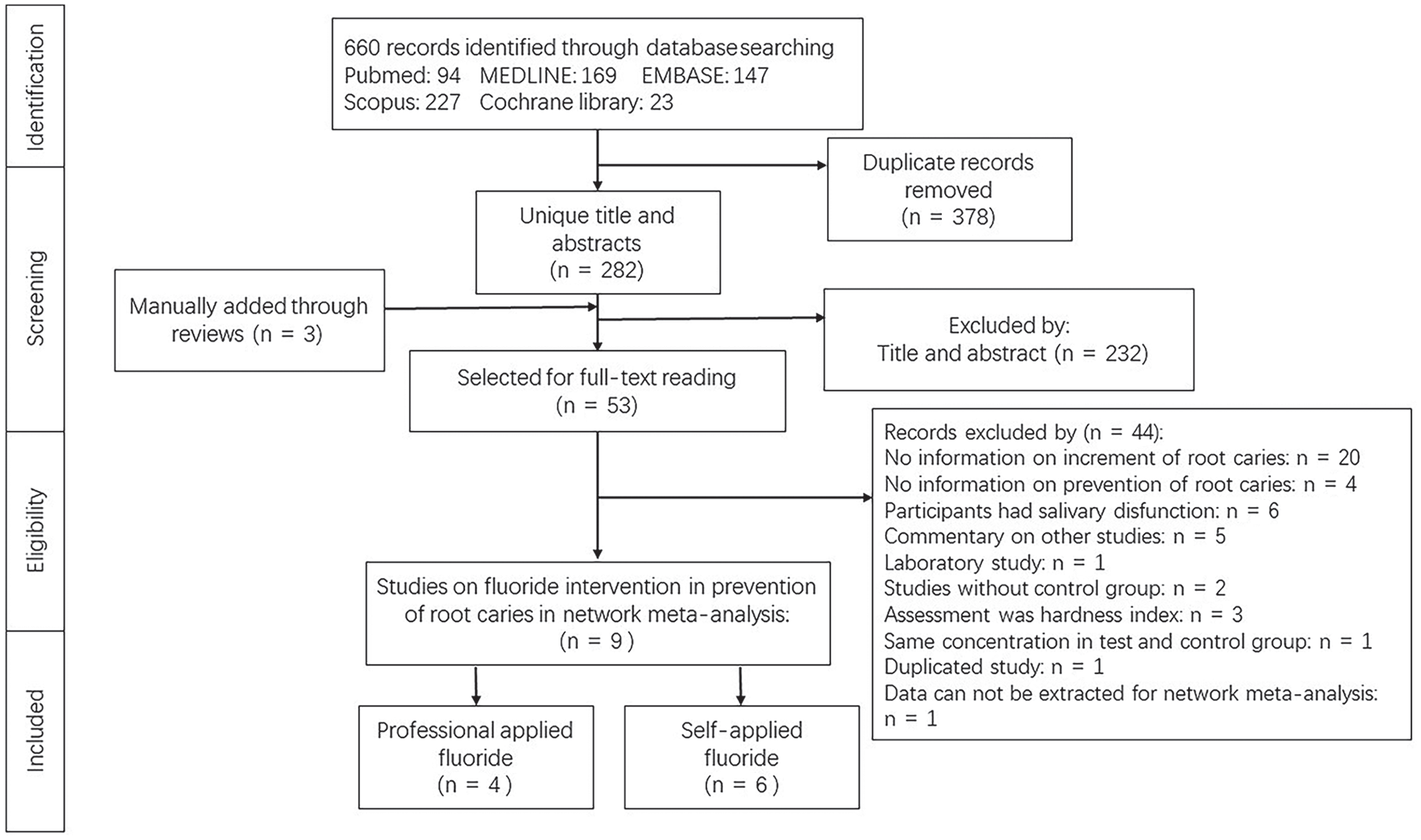
Flowchart of the paper selection process. One of the included studies contained both professionally applied and self-applied topical fluoride.
Included Studies
The 9 included studies were published from 1987 to 2017 and involved 4,030 participants (Table, and Appendix Tables 2 and 3). Among them, 3 were conducted in Hong Kong, 2 in the United States (US), and 1 each in Canada, the Netherlands, Sweden and the United Kingdom (UK). Duration of the studies ranged from 1 to 4 y, with follow-up rates from 31.4% to 100%. The most frequent follow-up time was 2 to 3 y for both the professionally applied and the self-applied fluoride studies. Most of the participants were older than 60 y. Root caries assessment methods and diagnostic criteria differed among the studies.
Information on the Study Population, Study Duration, and Outcome Measure of the Included Trials.
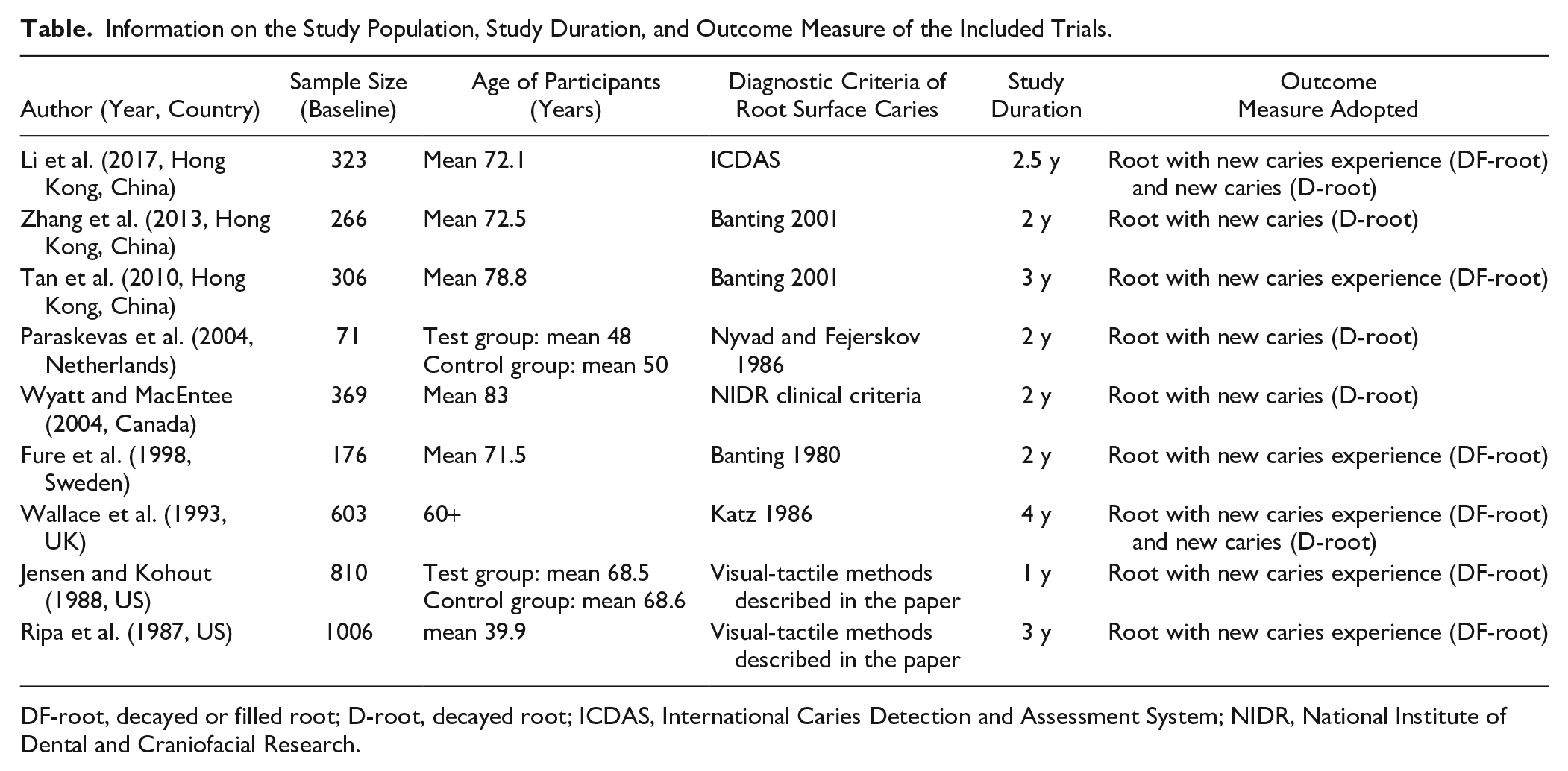
DF-root, decayed or filled root; D-root, decayed root; ICDAS, International Caries Detection and Assessment System; NIDR, National Institute of Dental and Craniofacial Research.
Risk of Bias
Of the 9 included studies, 6 were rated as having “low risk” and 3 as having “some concerns” in the overall risk assessment (Appendix Table 4 and Appendix 2). Among the 3 studies with “some concerns,” the bias came from the randomization process.
Network Meta-analyses
The NMA network maps are presented in Figures 2 and 3. Five arms were included in the NMAs of professionally applied topical fluorides, namely 1) annual application of 38% SDF solution; 2) annual application of 38% SDF followed by potassium iodide (KI) (2.36 mol/L); 3) annual application of 38% SDF solution and oral health education (OHE); 4) 4 times a year application of 5% NaF varnish; and 5) semiannual application of 1.2% APF gel. All 5 interventions were more effective than the control in preventing root caries (Fig. 4). There were no statistically significant differences between them.
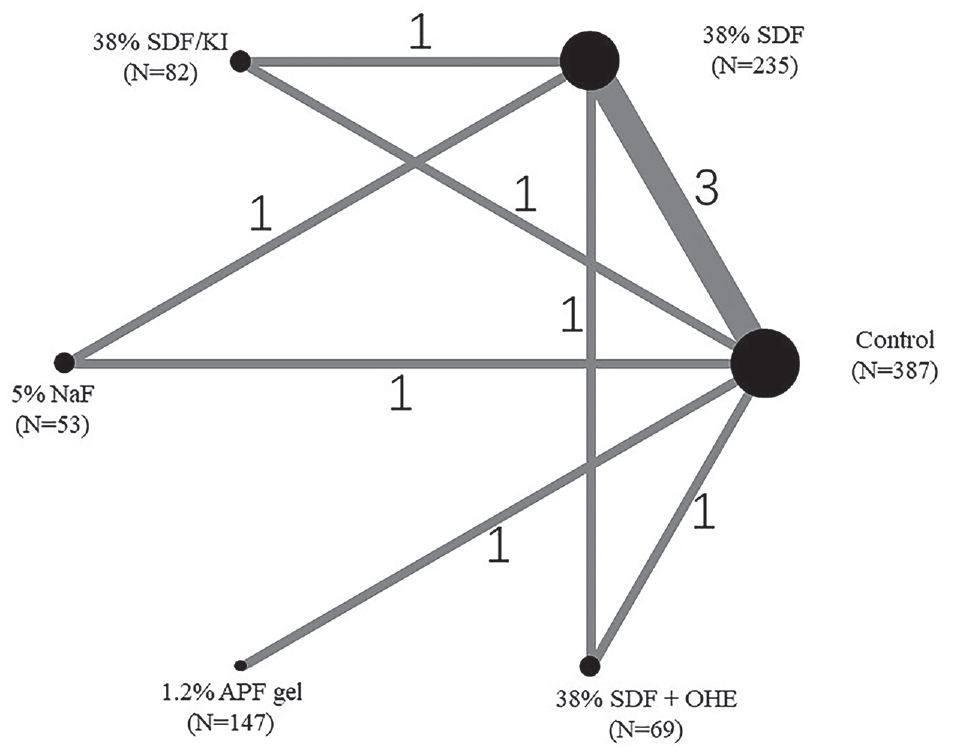
Network map of professionally applied topical fluoride in root caries prevention (n = number of participants). APF, acidulated phosphate fluoride; KI, potassium iodide; NaF, sodium fluoride; OHE, oral health education; SDF, silver diamine fluoride.
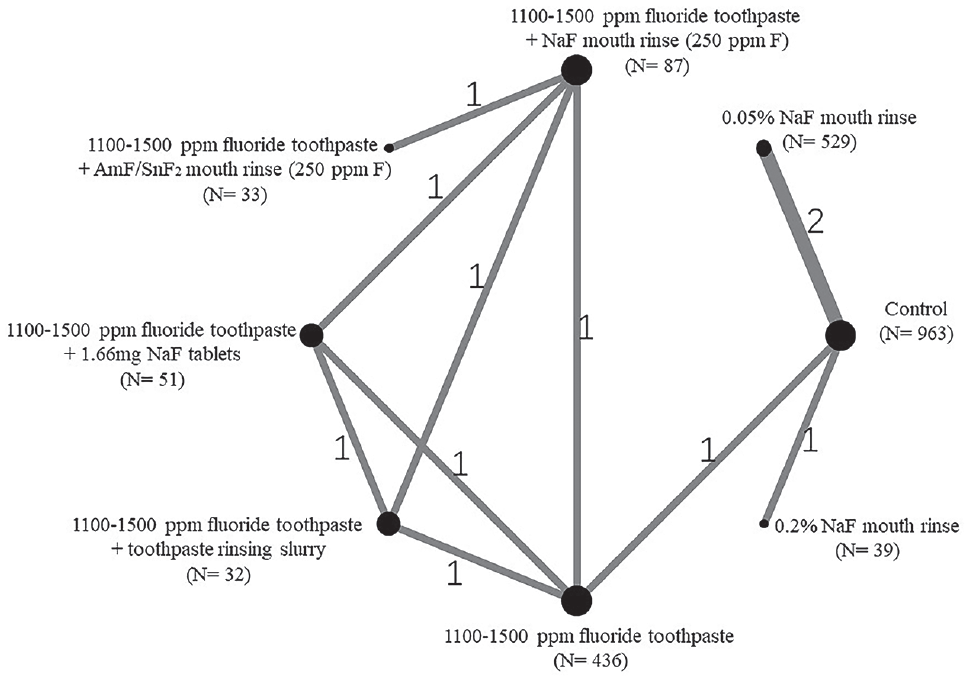
Network map of self-applied topical fluoride in root caries prevention (n = number of participants). AmF, amine fluoride; NaF, sodium fluoride; SnF, stannous fluoride.
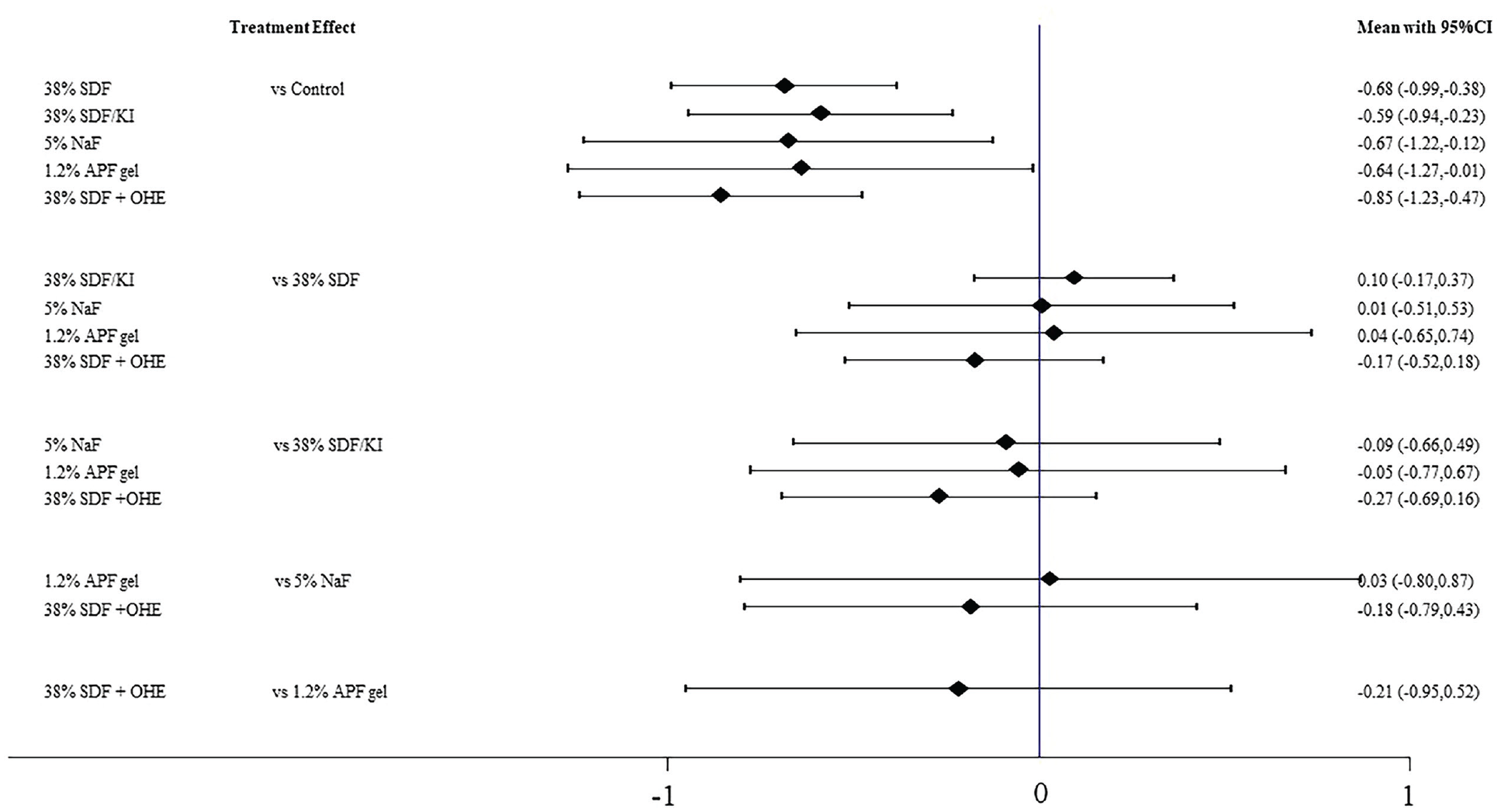
Forest plot of the pairwise comparisons of the professionally applied topical fluorides. APF, acidulated phosphate fluoride; KI, potassium iodide; NaF, sodium fluoride; OHE, oral health education; SDF, silver diamine fluoride.
For the self-applied topical fluorides, 7 arms of interventions were included. Among these interventions, only 3 agents or combinations, namely 1) daily use of 1100 ppm to 1500 ppm fluoride toothpaste; 2) daily use of 1100 ppm to 1500 ppm fluoride toothpaste followed by 0.05% NaF mouth rinse; and 3) daily use of 0.2% NaF mouth rinse, were more effective in preventing root caries compared to the control (Fig. 5). In addition, daily use of 0.2% NaF mouth rinse was more effective than 0.05% NaF mouth rinse. Meanwhile, use of 1100 ppm to 1500 ppm fluoride toothpaste plus 0.05% NaF mouth rinse had lower root caries increment, compared to any of the following 4 interventions: 1100 ppm to 1500 ppm fluoride toothpaste, use of the fluoride toothpaste plus 1.66 mg NaF tablet, rinsing with toothpaste slurry, or using 0.05% NaF mouth rinse alone.
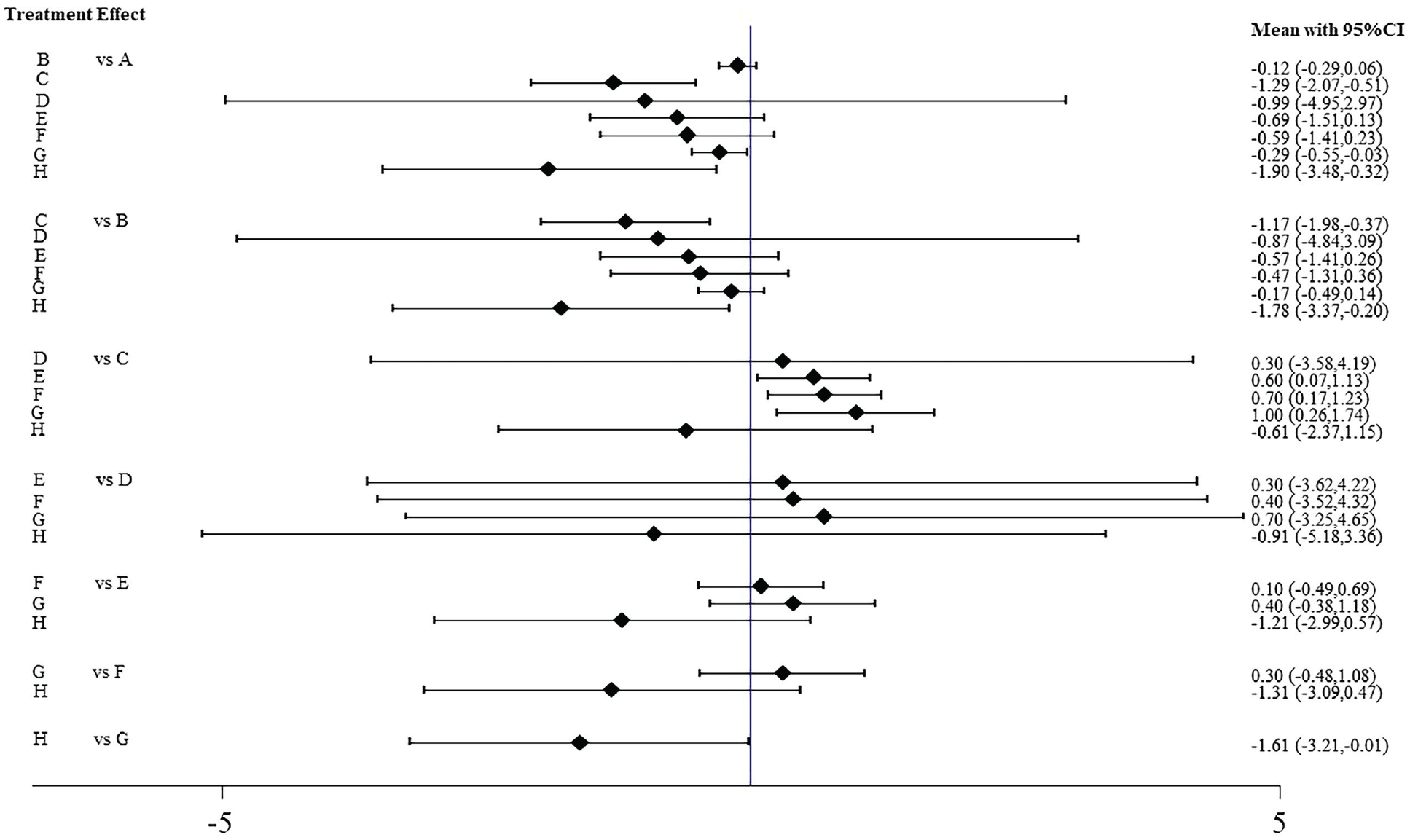
Forest plot of the pairwise comparisons of the self-applied topical fluorides. A = control; B = 0.05% F mouth rinse; C = 1100 ppm to 1500 ppm F toothpaste + 0.05% F mouth rinse; D = 1100 ppm to 1500 ppm F toothpaste + 250 ppm F (AmF/SnF2) mouth rinse; E = 1100 ppm to 1500 ppm F toothpaste + 1.66 mg NaF tablets; F = 1100 ppm to 1500 ppm F toothpaste + toothpaste rinsing slurry; G = 1100 ppm to 1500 ppm F toothpaste; H = 0.2% NaF mouth rinse. AmF, amine fluoride; F, fluoride; NaF, sodium fluoride; SnF, stannous fluoride.
Inconsistency Analysis
Overall inconsistency tests showed that the results of the included studies on professionally applied fluorides (P = 0.094) and on self-applied fluorides (P = 0.450) were consistent. Differences between direct and indirect treatment comparison in each side were not significant (all P > 0.05) (Appendix Tables 5 and 6).
Certainty in the Evidence
Certainty in the evidence ranged from “very low” to “moderate” (Appendix Tables 5 and 6). In 8 out of the 15 professionally applied fluoride comparisons, the certainty was “moderate.” These are all direct comparisons, including 5 comparing with control and 3 comparing with annual application of 38% SDF solution alone.
As for self-applied topical fluorides, only the direct comparison of 0.05% NaF mouth rinse with control reached the “moderate” level of evidence. The level of evidence of the other comparisons was downgraded mainly due to serious issues of risk of bias and imprecision.
Ranking of Interventions by Cumulative Probability
Ranking of the fluoride interventions according to their probability of greater effectiveness in preventing root caries is shown in Appendix Tables 7 and 8. The order from highest to lowest probability of being the most effective in preventing root caries among the professionally applied fluorides was annual application of 38% SDF solution plus OHE, annual application of 38% SDF solution, 4 times a year application of 5% NaF varnish, semiannual application of 1.2% APF gel, and annual application of 38% SDF followed by KI.
Amongst the self-applied topical fluorides, according to their SUCRA values, the highest rank was 0.2% NaF mouth rinse, followed by 1100 ppm to 1500 ppm fluoride toothpaste combined with 0.05% NaF mouth rinse. Both use of 1100 ppm to 1500 ppm fluoride toothpaste plus 250 ppm amine/stannous flouride (AmF/SnF2) mouth rinse, and 1100 ppm to 1500 ppm fluoride toothpaste plus 1.66 mg NaF tablets got the third rank. Use of 1100 ppm to 1500 ppm fluoride toothpaste plus rinsing with toothpaste slurry, and use of fluoride toothpaste alone ranked fifth and sixth, respectively. The lowest rank was assigned to 0.05% NaF mouth rinse.
Publication Bias
We planned to assess publication bias using the funnel plot technique. However, as the number of included studies in the meta-analysis was smaller than 10, power of the test would be too low to detect true asymmetry (Sterne et al. 2011). Thus, this assessment was not conducted.
Discussion
In this systematic review, various topical fluoride agents and combinations were assessed by NMA. Results suggest that combination of annual application of 38% SDF and OHE is most likely to be the most effective professionally applied method for preventing root caries. A similar conclusion was drawn in a previous review (Gluzman et al. 2013). In 2 other systematic reviews, SDF was found to be effective in preventing and arresting root caries (Hendre et al. 2017; Subbiah and Gopinathan 2018). Effectiveness of SDF may be due to its anti-bacterial and remineralization promotion properties (Mei et al. 2018). In addition, application of SDF solution was found to be less costly than other comparators including chlorhexidine varnish and fluoride rinse (Schwendicke and Göstemeyer 2017).
NaF varnish has been used for prevention of dental caries for more than 3 decades. However, only 1 randomized clinical trial had investigated its effectiveness in root caries prevention (Tan et al. 2010). Thus, traditional meta-analysis on its effectiveness was not conducted in a previous review (Wierichs and Meyer-Lueckel 2015). Since indirect comparisons are included in NMA, assessment of the effectiveness of NaF varnish was included in this review and found to be not significantly different from those of other professionally applied topical fluorides. Despite the limited information, application of NaF varnish 4 times a year should be an option for prevention of root caries, especially in places where SDF is not available.
New information on the relative effectiveness of NaF mouth rinse is presented in this systematic review with NMA. Use of 0.2% NaF mouth rinse is most likely to be the most effective self-applied topical fluoride in preventing root caries. However, the certainty level of this evidence is low. In the fluoride mouth rinse studies, the investigators did not control the use of fluoride toothpaste among the study participants. Thus, some participants might use toothpaste that contained fluoride while others did not. The confounding effect of fluoride toothpaste use was not reported in the included studies. The findings on other self-applied topical fluorides in this review are similar to those reported in earlier reviews (Heijnsbroek et al. 2007; Gluzman et al. 2013).
Authors of previous reviews recommended using high fluoride (5000 ppm) toothpaste for management of root caries (Heijnsbroek et al. 2007; Petersson 2013; Ekstrand 2016). High fluoride toothpastes and high fluoride rinses were not included in this review because the clinical studies on these agents aimed at assessing their ability to arrest or remineralize early dental root caries lesions, rather than on primary prevention.
In order to be unbiased by findings on special population groups, studies which only included people with special health conditions such as salivary gland dysfunction (xerostomia and Sjogren’s syndrome) were not included in this review. Thus, the conclusion from this review can be generalized to the majority of adults because they usually do not have special health conditions. However, this is also a limitation of this review as the conclusion may not apply to special population groups.
The time point selected for conducting the network meta-analysis in this review for the professionally applied fluorides was 2 y because the clinical trials lasted for at least 2 y. For better comparison, only the data obtained at or near 2 y were extracted. In contrast, a 1-y time point was chosen for the NMA of the effectiveness of self-applied topical fluorides because 1 of the 6 studies only lasted for 1 y.
All of the studies included in this review used clinical assessment of the appearance (color, contour, cavity) and the texture of the root surfaces for detecting new root caries, Thus, the findings of the different clinical trials are comparable as the criteria they adopted were similar. However, the inclusion of filled root surfaces in the increment of root caries experience is problematic because some of the new root fillings in the studies may not be placed due to development of new root caries. This is particularly so on the buccal surface where root fillings are common in older adults (Tan and Lo 2014).
Limitations
A frequentist approach was used in the NMAs in this review because the networks were sparse, especially for self-applied topical fluorides. Bayesian meta-analysis may be preferred when the number of studies included is small. However, in Bayesian meta-analysis, different prior probabilities chosen may lead to different results (Lewis and Nair 2015). Therefore, the frequentist approach was selected for the NMA performed in this review.
Because the number of included studies was small, room for the heterogeneity test was limited and thus a fixed-effect model was used in this review. However, heterogeneity may exist and the results should be interpreted with this in consideration as the confidence intervals may be misleadingly underestimated. Furthermore, in 6 of the 7 self-applied topical fluoride methods included, the “depth” only amounts to a single clinical trial. For this reason, the results from indirect comparisons and the level of certainty in evidence were frequently graded as low. This affects the strength of the conclusion that can be drawn from this review.
All of the included studies were published in English despite the fact that no language restriction was set when searching the selected databases. Relevant reports written in other languages in other databases may be missed, but this risk is likely to be small (Morrison et al. 2012).
It is noted that the included studies on professionally applied fluorides were conducted in water fluoridated areas and most of them were by the same group of researchers. There may be risk of bias and more clinical trials in different places are needed to verify the findings.
Analysis of the impacts of possible confounding factors, such as smoking and denture wearing, on the fluoride treatments was not performed in this review due to the small number and heterogeneity of the studies, but they should be considered in clinical practice as more intensive prevention should be provided to persons with higher root caries risk. This should also be investigated in future studies.
Strength
This is the first systematic review of topical fluorides on prevention of root caries using network meta-analysis. The studied agents or combination of agents can be identified in the network map and the data from the studies were pooled in the NMA. The information summarized in the paper overview can help researchers to design future clinical trials on root caries prevention. Meanwhile, this review provides dental professionals with valuable clinical information on the effectiveness of the various topical fluoride agents and application methods in preventing root caries.
Results of this review clearly point to the need for more high-quality clinical trials on topical fluoride interventions in prevention of root caries. Although clinical trials are time- and resource-demanding, more trials should be conducted to generate stronger evidence to guide good clinical practice. In addition, there is room for improving the reporting of studies. For example, 1 clinical trial on self-applied fluoride was excluded from the NMA of this review because it only reported the mean root caries increment without reporting the standard deviation.
Conclusion
All the professionally applied topical fluorides reviewed can prevent root caries compared with non-fluoride control. Among them, annually applied 38% SDF solution combined with oral health education is likely to be the most effective. Among the reviewed self-applied topical fluoride methods, 0.2% NaF mouth rinse is likely to be the most effective, followed by combined use of 1100 ppm to 1500 ppm fluoride toothpaste and 0.05% NaF mouth rinse, and 1100 ppm to 1500 ppm fluoride toothpaste.
Author Contributions
J. Zhang, contributed to conception, design, data acquisition, analysis, and interpretation, drafted and critically revised the manuscript; D. Sardana, contributed to conception, design, and data interpretation, critically revised the manuscript; K.Y. Li, contributed to conception, design, data analysis, and interpretation, critically revised the manuscript; K.C.M. Leung, contributed to conception and data acquisition, critically revised the manuscript; E.C.M. Lo, contributed to conception, design, data acquisition, analysis, and interpretation, critically revised the manuscript. All authors gave final approval and agree to be accountable for all aspects of the work.
Supplemental Material
DS_10.1177_0022034520906384 – Supplemental material for Topical Fluoride to Prevent Root Caries: Systematic Review with Network Meta-analysis
Supplemental material, DS_10.1177_0022034520906384 for Topical Fluoride to Prevent Root Caries: Systematic Review with Network Meta-analysis by J. Zhang, D. Sardana, K.Y. Li, K.C.M. Leung and E.C.M. Lo in Journal of Dental Research
Footnotes
Acknowledgements
The authors thank Dr. Yang Weifa for his advice on how to conduct this systematic review.
A supplemental appendix to this article is available online.
This review was funded by the Tam Wah Ching endowed professorship of the University of Hong Kong.
The authors declare no potential conflicts of interest with respect to the authorship and/or publication of this article.

References
Supplementary Material
Please find the following supplemental material available below.
For Open Access articles published under a Creative Commons License, all supplemental material carries the same license as the article it is associated with.
For non-Open Access articles published, all supplemental material carries a non-exclusive license, and permission requests for re-use of supplemental material or any part of supplemental material shall be sent directly to the copyright owner as specified in the copyright notice associated with the article.
